
Strategic
Procurement
i

For Howard, with love
ii

Strategic
Procurement
Organizing suppliers and supply chains for
competitive advantage
Caroline Booth
iii

Publisher’s note
Every possible effort has been made to ensure that the information contained in this book
is accurate at the time of going to press, and the publishers and author cannot accept
responsibility for any errors or omissions, however caused. No responsibility for loss or
damage occasioned to any person acting, or refraining from action, as a result of the
material in this publication can be accepted by the editor, the publisher or the author.
First published in Great Britain and the United States in 2010 by Kogan Page Limited
Apart from any fair dealing for the purposes of research or private study, or criticism or
review, as permitted under the Copyright, Designs and Patents Act 1988, this publication
may only be reproduced, stored or transmitted, in any form or by any means, with the
prior permission in writing of the publishers, or in the case of reprographic reproduction
in accordance with the terms and licences issued by the CLA. Enquiries concerning repro-
duction outside these terms should be sent to the publishers at the undermentioned
addresses:
120 Pentonville Road
525 South 4th Street, #241
4737/23 Ansari Road
London N1 9JN
Philadelphia PA 19147
Daryaganj
United Kingdom
USA
New Delhi 110002
www.koganpage.com
India
© Caroline Booth, 2010
The right of Caroline Booth to be identified as the author of this work has been asserted
by her in accordance with the Copyright, Designs and Patents Act 1988.
ISBN
978 0 7494 6022 8
E-ISBN 978 0 7494 6023 5
British Library Cataloguing-in-Publication Data
A CIP record for this book is available from the British Library.
Library of Congress Cataloging-in-Publication Data
Booth, Caroline, 1958–
Strategic procurement : organizing suppliers and supply chains for competitive
advantage / Caroline Booth.
p. cm.
Includes bibliographical references and index.
ISBN 978-0-7494-6022-8 – ISBN 978-0-7494-6023-5 1. Industrial procurement.
2. Business logistics. I. Title.
HD39.5.B66 2010
658.7'2–dc22
2010013870
Typeset by Saxon Graphics Ltd, Derby
Printed and bound in India by Replika Press Pvt Ltd
iv

Contents
2. Know what your customers value
Your customer value proposition
Indirect or back office expenditure
Activities in the supply chain
Supply chains across organizations
v

vi
Contents
6. What’s the issue? We can all do procurement
Deserve the suppliers you need
The role of the procurement department
7. Executive sponsorship and priorities
Don’t bother me with strategy,I don’t have time
The value of strategy: the symphony orchestra
9. Knowing what the business needs
It’s never too early to know what you need
Bringing suppliers into the mix
The complexities of needs statements
10. Picking the right suppliers
Your supply chain on the maturity curve

Contents
vii
Size matters, but be careful what you measure
13. Sharing the pain in hard times
Getting your own house in order
14. Avoiding the perils of outsourcing
Be careful of getting what you wish for
Getting to a relationship that worked
Defining corporate responsibility
Differentiating corporate responsibility
Embedding corporate responsibility
Health, safety and environment
16. Good procurement across the company
Corporate culture and procurement
17. Becoming important to key suppliers
Getting the organization on side
The same again but on steroids
Still on steroids, but this time even more complex


Figure 1.1 Example of a simple customer-facing supply chain
Figure 1.2 Example of a simple colleague-facing supply chain
Figure 3.1 The stages of the life of an asset
Figure 4.1 Information technology supply chain
Figure 4.2 Organization capability evaluation matrix
Figure 4.3 Supply market capability evaluation matrix
Figure 4.4 Warehouse outsourcing example
Figure 4.5 Consequential supply chain study for oil and gas
Figure 5.1 Supply chains flow across organizations
Figure 6.1 Cross-disciplinary supply chain
Figure 6.2 The bow tie client-supplier relationship
Figure 6.3 The diamond client-supplier relationship
Figure 9.1 Primary supply chain of the Amazon Kindle
Figure 10.1 The market maturity curve
Figure 11.1 Category analysis matrix (Kraljic, 1983)
Figure 11.2 Category analysis of an innovative good
Figure 11.3 Category analysis of a service versus a good
Figure 11.4 A supplier’s analysis of your business
Figure 12.1 Example of total cost of ownership study
Figure 17.1 Supplier relationship strategies
Figure 19.1 The client’s supply chain for a pencil
Figure 19.2 Cost and value drivers in client supply for pencils 161
Figure 19.3 Cost and value drivers of a stationery provider’s
Figure 19.4 Basic supply chain for goods and services
Figure 19.5 Aircraft supply chai
Table 12.1 Product/service cost structure
ix

When you ask successful companies what has made them successful,
very few will include, even on their long list, two rather neglected
factors: third-party expenditure and suppliers. Yet I challenge you to
think of any organization (successful or not) that doesn’t have oodles
of both.
For the last 20 years, one of the most enduring mantras for modern
business has been ‘focus on the core’. As a result, most companies now
concentrate only on those activities that they regard as ‘core’ and rely
on their suppliers to deliver the rest. This has, almost inadvertently,
created a complex web of inter-company relationships that most busi-
nesses struggle to manage or exploit to their full potential. Therefore,
and this is the scary part, very few organizations can truly claim to be in
control of all aspects of their customer value propositions unless they
are also competent at procurement and managing their suppliers. Yet
how many business leaders see procurement or supplier management
as key disciplines? Unless you are a manufacturer, the answer is very
few. While procurement is increasingly recognized as a business disci-
pline for its practitioners (complete with degree courses, thousands of
books and recognized institutes), there is little real understanding of
the true business value of procurement in boardrooms.
Providing a broad sweep across procurement, this book aims to fill
this gap by concentrating on the ‘why’ and the ‘what’ of good
procurement, and less on the ‘how’. It explores procurement’s stra-
tegic value to a business rather than the nuts and bolts of its imple-
mentation. As such I hope this book will be useful to executives and
senior managers in helping them to better understand the often
untapped value that better management of third-party spend and key
suppliers can deliver to their organizations. I also hope that this book
is useful to procurement professionals who want to better articulate
x

Preface
xi
their role in the success of the companies they work in, as well as
those executives who manage them.
To put this into perspective, most organizations, regardless of
industry, now spend more with their suppliers than they do on
employing their staff. This means that they are buying business-critical
goods and services that are intrinsic to their customer propositions.
Company leaders need to recognize supplier relationship
management as a key business lever and to reskill and reshape their
organizations to manage their third-party spend and sources of
supply. Reading this book will help the leaders of any company to
better tap these valuable assets.
The typical situation in most organizations is that the percentage
of resources ministering to its employees significantly exceeds the
percentage managing their external third-party spend and key
suppliers. It is time for organizations to move away from their tradi-
tional internal emphasis and refocus on the extended enterprises
they have created and now need to exploit.
This book provides the rationale for any organization to redirect its
effort to this neglected area of business. It is an area of rich rewards,
where P&L impact is relatively painless and immediate, where benefit
to cost ratios of 10 to 1 are realistic ambitions, where in-year payback
is commonplace, and where both top-line growth and cost reduction
are mutually inclusive.

I feel as though I have been preparing all my working life to write this
book. Therefore I would like to thank everyone I have worked with
over many years and across many companies for helping me to learn
my trade and providing the experiences that contributed to it. Partic-
ularly I would like to thank Chris Miller who first opened my eyes to
the world of procurement as my boss at Shell, way back in the early
days of the North Sea, and Neil Maclean who kindly read and
commented on the manuscript.
Naturally I want to thank my family for their enduring love and
support and particularly my husband, Howard, who kept my feet to
the fire when I would have happily put them up!
xii

‘We spend how much?’ is a cry I have often heard from a senior exec-
utive the first time he or she finds out the true extent of his or her
company’s third-party expenditure.
Years ago, I asked the group finance director of a leading UK
financial services company how much his organization spent with
suppliers. He said that he didn’t know but that it wasn’t much because,
‘we don’t actually make anything. Don’t forget, Caroline, we are a
bank, not a manufacturer’. His company actually spent over £2 billion,
and that was in the late 1990s. What this very capable executive had
forgotten was that the bank had adopted (as most companies have)
the business mantra that it should focus on its core and get other
companies to take care of the rest. The bank therefore didn’t print its
cheque books, fill or service its cash machines, clean or secure its
offices, but paid other companies to do it. Nowadays I could add to
this list; for example, very few banks clear and process their own
cheques. Several others are not even licensed by their central banks
to distribute cash (a pretty fundamental process for a bank) but rely
on another company to have that licence and do it for them.
What is interesting is that the motivation for outsourcing some of
these critical processes is the mitigation of reputational risk in the
event that something goes wrong. The perception is that if a supplier
is fined by the central bank for a breach in the licensing agreement,
this is less damaging than if it were the bank directly. Similarly in the
North Sea’s oil and gas fields, contractors are now responsible for
some of the most critical offshore operations, not only because they
have the expertise but because of the rather misplaced notion that if
1

2
Strategic Procurement
it all goes wrong, the public and the authorities won’t blame the oil
company.
I say ‘misplaced notion’ because, if I turn up at my bank’s cash
machine on a wet Friday evening and it is not working, I don’t think,
‘Oh that must be the fault of Manufacturer A because it makes the
machines or Supplier B because it fills them with money, or Vendor C
because it maintains the software.’ Instead I think, and rightly so, that
my bank has let me down.
It is my bank’s responsibility to provide me with a reliable way of
getting my money out whenever I want it. I don’t care how they do it
but I do expect and need it to be done well. Furthermore, any
company that still thinks that it can shield itself from bad publicity
when something goes wrong is naïve. The supplier may be respon-
sible for the service but the procuring organization is always going to
be accountable. Just look at British Airways in August 2005 when its
catering supplier, Gate Gourmet, in an effort to reduce UK running
costs, triggered industrial action both within its own company and in
British Airways. This led to 900 flights being grounded, 100,000 trav-
ellers delayed, estimated losses for British Airways of £45 million and
weeks of disruption where even after flights resumed there was no
in-flight catering available. Less than three years later this unlucky
airline faced similar public relations and economic damage when in
March 2008 its dedicated and flagship Terminal 5 at Heathrow
opened and suffered catastrophic problems. While the most serious
were caused by the failure of the bespoke baggage handling systems,
very few people know the names of the baggage systems providers,
the construction companies or the programme managers – everyone
remembers the airline.
Third-party spend or expenditure is money paid to other companies
in return for goods and services. It comprises three elements:
1. Direct expenditure – this term covers all goods and services acquired
to be part of the good or service being created for sale. Obviously
this is particularly relevant to manufacturing industry where, for
example, more than 80 per cent of the cost of making a car is
direct expenditure. It would also include all the bits and pieces

No Company is an Island
3
that go into a bank’s added-value accounts where services are
bundled with the bank account (eg travel insurance, breakdown
recovery service), or replacement household contents by an
insurance company.
2. Enabling expenditure – covers all goods and services acquired to
allow the organization to fulfil its customer propositions but
that don’t as such go into the goods or services being sold. This
is often asset-related – the offshore platforms of an oil company,
the lorries and trucks of a haulier, the voice and data network of
a telecommunications company, and the branch network of a
bank. It also covers the research and development of a drug
company or the sales and marketing expenditure of most
organizations.
3. Indirect expenditure – covers all goods and services acquired to
support the business. This is predominantly staff-related expend-
iture – property, facilities management, travel and entertainment,
temporary labour, recruitment and personnel-related IT.
Interestingly, while automotive companies are often seen as the
genesis of good procurement practice, their focus has primarily been
on direct and enabling expenditure. It is only in the last few years that
these companies have realized that there is real value to be harvested
by also managing their indirect expenditure.
Different industries have different spend profiles, but in the
majority of them third-party expenditure will equate to at least half of
their costs. At one extreme sit the manufacturing companies (many
having outsourced most of the manufacturing process itself) at circa
80 per cent, and at the other the oil and gas companies. While the
percentage in oil and gas companies might be relatively small, the
actual expenditure is still significant enough that a reasonable
procurement improvement programme can impact their return on
average capital employed by several per cent.
Management
You are probably wondering by now, what my beef is. If most organi-
zations across all industries are already spending heaps of money

4
Strategic Procurement
getting other companies to do stuff for them – then surely, as a
procurement person, I should be rubbing my hands together and
thinking ‘Job done!’ In fairness I probably could, but not if I am
thinking, ‘Job done well!’ And I suppose that is the nub of this book.
Look at your own organization and ask yourself:
1. Are you happy with the service you are getting from your
suppliers?
2. Are your customers happy with the service you are providing to
them through your suppliers?
3. Do you know how to evaluate the quality of either 1 or 2?
4. Do you know why you asked your supplier to do that for you in the
first place? Was it what you needed and will it still be what you
need in a year’s time when the contract is still running?
The reason I am asking these questions is that in all likelihood few if
any in your organization have ever tried to ask or answer them. We
train our managers to manage employees, not suppliers, and yet very
few managers can deliver their primary business objectives now
without relying on other companies. These other companies don’t
share your culture or priorities; they are almost never focused exclu-
sively on you (and if they are you should worry even more); they don’t
understand your customers or your value proposition – so you have to
wonder how they can ever truly, even with the best will in the world,
do right by you.
There was a piece of research carried out some years ago by Dr Robert
Monckza, Professor of Supply Chain Management at Arizona State
University, which indicated that the further a supplier was from the end
customer in a supply chain then the less that supplier understood the
volatility of that supply chain – particularly in respect of changing
customer requirements. If you consider the complexity of modern supply
chains and ever-more fickle customers, this is pretty scary.
Customer and colleague supply chains
A supply chain is a series of activities that deliver an outcome to a
recipient. That recipient may be internal (a colleague) or external (a
customer). The activities may be undertaken by a variety of entities, once
again both internal (eg your marketing department) or external (eg an
advertising agency). Your supplier is unlikely to be doing everything you
No Company is an Island
5
need and therefore will have other suppliers helping it. These tiers of
suppliers are also important to the supply chain’s outcome.
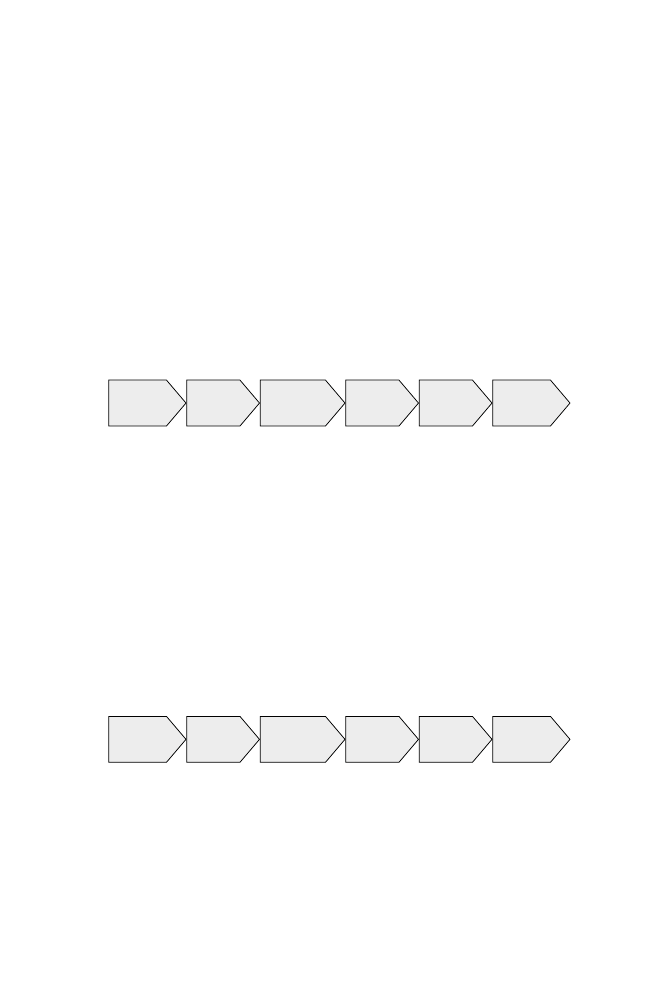
The major activities in a simple customer-facing supply chain are
shown in Figure 1.1. Looking at this supply chain, you can overlay the
specific activities involved in supplying most customer-facing goods
(eg a mobile phone, a new drug or a car). Each supply chain will obvi-
ously vary from this the simple one – for example if this were the
supply of a new car, some luxury car makers such as BMW and
Mercedes would continue the supply chain into resale (as they make
as much money controlling resale as they do selling the car first time
around). With some tweaking, this supply chain could also cover a
customer-facing service (eg a new bank account, insurance cover or
broadband service).
Design
and Plan
Market
Acquire
and/or Make
Move
Sell
Service
Figure 1.1 Example of a simple customer-facing supply chain
With a few more changes, a simple colleague-facing supply chain
could be as shown in Figure 1.2. This would be a good starting point
for most internally oriented goods and services such as a computer
application, desktop services, office accommodation or security
services. As we will see in a later chapter, one of the secrets of a good
supply chain is determining the business need to be satisfied by it
before specifying a solution. For example a business needs cold air,
not necessarily an air conditioning unit – state the latter as your
objective and you are already constrained (air conditioning is speci-
fying how the need for cold air is satisfied) – but more of that later.
Design
and Plan
Specify
Acquire
and/or Make
Use and
Maintain
Dispose
Review
Figure 1.2 Example of a simple colleague-facing supply chain

6
Strategic Procurement
The supply chain, when it’s laid out in this linear and rather graphic
fashion, is obviously a gross over-simplification but it is a useful starting
point for analysis. When you start to overlay business objectives, market
conditions, customer demands, networks of suppliers and staff onto it,
you can begin to understand why, unless you are very clear about what
you are trying to achieve, it can all go horribly wrong. Also, hopefully,
you should be able to see the opportunity: harness the power of your
organization and its suppliers and deliver something amazing. Dell’s
just-in-time supply chain production line for its personal computers
(PCs) is a great example. Dell is able to deliver PCs customized to each
customer’s requirements while keeping its inventories of finished
products to near zero. Another is Wal-Mart’s relationship with consumer
goods manufacturers such as Proctor & Gamble. The retailer is Proctor
& Gamble’s largest customer, and as such they have worked together
for over 20 years. They started with improvements to operational effi-
ciency such as bringing together their point of sales and inventory
replenishment systems and have since collaborated on product
refinement and development initiatives to improve customer satis-
faction and sales. All of these have improved the business performance
of both organizations.
But even this isn’t the true extent of the complexity of your business.
Not only do you have to consider third parties that are suppliers to
you but also suppliers that are your customers. Look at your list of
creditors and debtors in your accounts payable and receivable – you
could be surprised to see how many organizations are going to appear
on both lists.
John Donne wrote that ‘no man is an island’. In the 21st century to
say that ‘no company is an island’ is equally appropriate and no less
profound. To succeed in business is more complex than it used to be
– it is no longer economically desirable to control all the components
of your customer value proposition. Appropriate use of third parties
can provide flexible supply and access to undreamed of innovation or
new markets and scalability: all things that can make your business
greater than the sum of its parts. However, it also requires additional
and different management skills, and many organizations haven’t
really grasped this yet.
After spending half my life working with organizations helping
them to improve, I am increasingly frustrated with my inability to get

No Company is an Island
7
key messages across. For every CEO who gets it, another doesn’t. For
everyone who realizes supplier management is now a core skill,
another will ask me how much we spend on pencils (the answer by
the way is always ‘not much’). For everyone who realizes how important
it is to articulate his or her strategic intent another will say that he or
she doesn’t have time for strategy. And for any of you who are
wondering why I am banging on about strategy in a book about
procurement, I say read on: all will be revealed.

8
This page is intentionally left blank

Years ago, a blacksmith smithed. The blacksmith would buy in the
raw materials and was then responsible for everything to do with
hewn metal – whether it was to make nails or a wheel rim. By the 19th
century this situation was changing – machines were making nails
more cheaply than the blacksmith could. So the blacksmith bought
in the nails (and if he didn’t, the owner of the hardware store did)
and continued to make the wheel rims – for a while at least.
This simple tale is a good analogy for business generally. I can’t
think of any business that does everything for its customers any more
– some hardly do anything at all. This raises lots of interesting ques-
tions such as, ‘What is a company?’ or if you want to personalize it,
‘Why does my company exist?’
What I want to do in this chapter is stress the importance of under-
standing what your customers value about the products or services
you provide, and will start looking at how best to satisfy their needs in
the next chapter. Understanding your customer value is fundamental
to answering that knotty philosophical question about your company’s
continuing existence. We are going to look at customer value because
if you don’t know why you are successful you are unlikely to marshal
the right resources for the right outcome and therefore you are not
going to be successful for very long.
Blindingly obvious you might say, yet a popular conceit in some
companies is that customers value the things that their companies are
good at doing. In reality this couldn’t be further from the truth.
Customers value what the product or service you offer enables them
to do. Your company has a great value proposition if it allows your
9

10
Strategic Procurement
customers to do this thing that they value faster, better or cheaper
than your rivals. Whether you do this yourself or get your suppliers to
do it doesn’t matter to your customers. However, you will come
unstuck if you try to be faster, better or cheaper at something that
does not and never will impact the things that your customers value.
You may think that I am straying from procurement here. But
understanding and satisfying your customers is fundamental to good
procurement. After all, I could save you a fortune and destroy what
your customers most value.
One of my favourite business stories illustrates the importance of
understanding what your customers value. It is about a company in
the 19th century called the Tudor Ice Company. It was established in
1826 by Frederic Tudor, a wealthy Bostonian, and by the1860s was an
international company exporting ice from the lakes in the north of
the United States across the world to the Caribbean and even India.
The industry was by then big business, with two in every three homes
in Boston with ice boxes served by daily deliveries of ice. By the early
1900s the ice industry was in decline, challenged by source waters
that were polluted by industrialization and urban sprawl. The final
nail in the coffin was the introduction of domestic mechanical refrig-
erators around 1910 in the United States.
Commercial refrigeration had been available for several decades,
and my question is, why didn’t the company migrate into chemical
and mechanical refrigeration at some point in the late 1800s when
the writing for the ice industry was on the wall? The future of the
Tudor Ice Company was undermined by its focus on what it was good
at rather than concentrating upon what its customers valued about its
product (Zasky, 2003).
As the company was really skilled at cutting and moving ice around
the world – indeed it had several patents for just that – in the eyes of
its owners its future looked rosy. While the Tudor Ice Company’s
core skills were in cutting and transporting ice without it melting
away, its customer value proposition was extending the life of
perishable goods and providing the opportunity to have the occa-
sional ice cream. If the company had realized the latter was more
important than the former it might have embraced refrigeration as
the new and best way of satisfying its customers’ needs.

Remember the Iceman
11
This is illustrated by another anecdote about the Tudor Ice
Company. When asked whether refrigeration was a threat to the
company and particularly to its method of taking blocks of ice by
horse and cart around major cities and delivering it to the housewives
to put in their ice boxes, the owner said, ‘No. Because what the house-
wives really value is the banter with the iceman as he delivers the ice
to them.’ This is a great example that once again illustrates the folly
of failing to understand what customers truly value about your
products or services.
For a very current example of this confusion we need to look no
further than the internet. Since its earliest days one of the greatest
challenges the users of the world wide web have faced has been their
ability to retrieve pertinent information. In the early/mid-1990s many
companies were created that focused on solving this problem.
Companies like Webcrawler, Magellan, Excite, Lycos and AltaVista
created catalogues of the web by using computer programs called
‘spiders’, which crawled from website to website indexing the pages.
Other companies such as Yahoo looked to solve the same problem by
employing a team of editors who reviewed websites and selected
those suitable for inclusion in an A–Z directory.
Initially they were all successful because, despite the variable quality of
their retrieval capabilities, they were the best in the market and there was
a huge and growing demand. Backed by venture capitalists, one of the
first challenges many of these companies faced was to find a way to make
money, and ultimately most settled on internet-based advertising
revenue. As a result a key objective of these sites was to keep users’
eyeballs focused on the flashy adverts on their busy-looking web pages.
In the meantime, Sergey Brin and Larry Page, two students from
Stanford University, identified a way to improve the retrieval quality
of searches and created Google. Theirs was an ingenious and simple
solution whereby the search engine ranked the number of times a
site had been referenced (on the basis that good sites were accessed
more often than poor quality or niche sites). They considered this as
similar to the way in which the number of citations an academic
paper receives indicates its importance (Nobel Prize winners typically
are cited by tens of thousands of different papers).
Before Google formed as a company its founders met first with
AltaVista, then Excite and finally Yahoo to figure out whether any of
them had an appetite to buy Brin and Page’s search technology for
US$1 million. While these companies recognized that the technology
was superior to their own, they rejected the offer because at that time

12
Strategic Procurement
no one thought that there was any way to make money from a search
engine. The received wisdom was that advertising was the only way to
make money, and these companies were focused on building websites
that would keep users looking at their own pages where they could
present adverts.
Conversely, Brin and Page believed their technology would fulfil a
social need in making the information readily accessible to web users
and they decided to make this their mission. So, having failed to sell
their technology they established Google Inc with private investment
and venture capital. To survive they still needed to make money and,
ironically, advertising proved the best way to do it. They devised a way
of delivering focused advertising that was driven by the customer’s
search keywords. When the customer typed in a search request not
only did he or she get a ranked list of web pages, he or she also
received a discrete list of adverts that might help satisfy his or her
need. Indeed the adverts themselves were ranked by how frequently
users clicked on them, and the less popular ones dropped down the
ranking. In this way Google remained true to its mission of meeting
its customers’ desire for information relevant to their search request
and yet still made money.
One could argue that Altavista, Excite and Yahoo had lost sight of
what their customers valued (high quality information retrieval) and
even who their customers were (the end users or the advertisers),
whereas Google was intent on satisfying its end users’ needs and found
ways of making money while doing it. As Brin asked rhetorically, ‘When
somebody searches for “cancer”, should you put up the site that paid
you, or the site that has better information?’ (Vise, 2005).
In 2004, six years after the company was incorporated, Google
went public with an US$85 per share offer, raising US$2 billion in
capital. In less than a year the price rose above US$300 per share. The
rest, as they say, is history.
These examples show how important it is for a company to really
understand its customer value proposition. The Tudor Ice Company
thought its value proposition was the provision of ice (and perhaps
even banter!) when its real value proposition was extending the life
expectancy of perishable goods. Google on the other hand clearly
understood that its customers wanted help to quickly find infor-
mation pertinent to their searches. Furthermore, while it makes
money from advertising, Google remains true to its customer value
proposition by making sure that the advertising it provides is pertinent
to the search itself.

Remember the Iceman
13
Therefore your company’s value proposition and the way you artic-
ulate it should have a huge influence on how you structure your
company and will help to determine what you provide and what you
source from others. I don’t want to overcomplicate this, but I must
mention that if you have more than one product or service offering
in your organization you are very likely to have more than one
customer value proposition.
Your customer value proposition
Einstein said that things should be as simple as possible but no
simpler. This is the perfect mantra to keep in mind when figuring out
your customer value proposition. I would like to add my own mantra
to that of Einstein: keep it as vague as possible, but no vaguer. What I
mean is that if you make your customer value proposition too specific
you risk boxing yourself into a corner and in the process you could
make yourself obsolete or redundant. However, if you make it too
vague it could mean anything and everything and therefore will not
provide the direction or focus that is so important. An illustration will
help get my point across.
A mobile phone company shouldn’t really see itself as a mobile
phone developer and provider because what happens when mobile
phones becomes obsolete – does the company? For example, its
customer value proposition could be universal person-to-person
connectivity. In this way the company will be interested in all aspects
of interpersonal communication – regardless of the means of commu-
nication. Of course the challenge then is to determine where the
boundaries are going to be for the company. Are the major compet-
itors of the mobile communications industry going to be the fixed-
line telecommunications providers or the computer manufacturers?
A well-articulated customer value proposition is therefore
important for several reasons: it helps to future-proof your organi-
zation from both competition and substitution; it is a rallying cry for
your own employees; it serves as a valuable litmus test when you are
evaluating new ways of satisfying your customers needs; and it is a
navigation aid to your suppliers, helping them to understand what
‘good’ looks like.

14
Strategic Procurement
In summary
Figuring out what your customers’ value now and in the future will
help you to assess and select the best ways in which to satisfy them.
This is fundamental to the success and longevity of your company.
The good news is that you are not alone: when you are absolutely sure
about what you need to deliver, there are lots of companies out there
who can and will help you – these are your suppliers. In the next
chapter we will explore this in more detail.

In a perfect world you would be reading this book on the day you
are starting a brand new venture. You have an absolutely killer value
proposition, no existing infrastructure and a few key personnel: in
essence a great idea and a blank sheet of paper. What a great oppor-
tunity to get it right first time! Right first time has a wealth of
meaning and opportunity. Right first time means that you don’t
need to compromise because of things you are stuck with. Right first
time means that you can implement the best possible supply chain
and optimize costs from day one. In the real world things tend to
work out slightly differently. This is probably because no matter
where you are starting from, it is very difficult to start with a truly
blank sheet of paper. There will be stuff on the page – even if it is
written in invisible ink.
So what does this have to do with your supply chain and third-
party expenditure? The glib answer of course is, ‘everything’. When
you have identified a new customer value proposition and are mobi-
lizing to fulfil it there are lots of things that you need to make deci-
sions on. Some of the most important of these will be what you are
going to buy and from whom. Getting decisions right on what, if
any, assets you are going to build and own and what components
you will make or buy to deliver your new proposition are all key to
how successful and how profitable the venture will become in both
the short and longer term.
Don’t forget that while value propositions can be huge (a new car,
a new oil field or a new passenger aeroplane) they can also be some-
thing much simpler and smaller (a new savings product from a bank,
15

16
Strategic Procurement
a new style of mobile phone or new packaging for an existing product).
So let’s look at this in more detail and break down the opportunity in
line with the types of goods and services we defined in the first chapter
(direct, enabling and indirect). We will start with the most straight-
forward first – and the one that deserves least but often gets more
time: the emotional spend – the ‘indirects’.
Indirect or back office expenditure
This should get the least attention from the CEO and the management
team and yet for some reason all too often it consumes vast amounts
of time. Indirects are all the things that enable the organization to
function – back office systems, accommodation, the dreaded
stationery, etc. The solution should always be to get such things as
cost-effectively as possible and ideally from the parent organization to
ensure that you take advantage of economies of scale. If you must
acquire these for yourself, seek providers that will deliver solutions –
serviced accommodation, payroll services, etc. Your objective should
be flexibility, speed and lowest cost.
There are lots of reasons why indirects become a millstone around
the neck of a new venture. Let’s take the case of a large company that
decides to branch out into something new. It picks one of its best
employees to lead the new venture and expects great things. The
challenge is that the person chosen is best because he or she is
talented and can make things happen in the current organization –
which can be both a blessing and a curse. Where the new venture is
still part of the company this might work out pretty well, but where
the venture is a new company in new territory it is just as likely to end
in tears. The reason is that the new company will take on some of the
best and some of the worst of the old company. A ‘large company
mentality’ can be a weakness if the new organization needs to be
agile, nimble and lean, and especially if the new CEO expects segmen-
tation of duties, with HR people doing HR and Finance doing finance:
suddenly there is a millstone of lots of people in supporting functions
that need to be paid for by an embryonic cash flow.
Worse still is the bear trap of ‘entrepreneurialism’ where the new
CEO decides that after years of being forced to do things the company
way he or she is going to break the mould and do things differently.
No more shared services from the parent company; instead, if he or
she needs some office accommodation – buy a building; back office

Right First Time
17
systems – let’s create some; stationery – no problem, get down to the
shops; consultancy – just write the cheque. This is a CEO destined to
be distracted by the back office.
This takes me back to the dot com days where some of the excesses
of start-up companies were quite staggering. None characterized that
era more than boo.com, a British fashion e-tailer started by two
29-year-old Swedish entrepreneurs. Before going bust, they reportedly
spent US$188 million in six months building a brand name before
selling a single item of clothing, with a large amount of that money
spent on luxury offices, first-class plane travel and five-star hotels
(Sorkin, 2000).
When I was being interviewed by Ernst & Young to join their
management consultancy practice, I made the mistake of saying that
I was keen to join them because I thought they were fleet of foot and
entrepreneurial. The very seasoned partner looked at me over his
glasses and said that he wasn’t sure that ‘entrepreneurial’ was the
right term. After some consideration he said that he thought that his
firm was more ‘entrepreneurialism with lead strings’. Lead strings are
those harnesses that toddlers are put in by their parents so that they
can charge off at their own pace – but remain about two feet ahead of
the adult who is looking after them; or the harnesses that you might
put on a team of horses to make sure they pull in the same direction.
I think this is a great analogy for new ventures.
A new venture should draw succour from its parent organization
where possible or a fit-for-purpose service provider if not, in all the
areas that are not core to its new value proposition. Back office
services, whether they are related to personnel, finance, property,
procurement or admin should be a given. Sometimes the parent
company makes this very difficult because of cost-recovery mecha-
nisms like transfer charging, which can add a huge burden to start-
ups. The parent should take into account that arbitrary recharging
mechanisms can result in the wrong decisions being made, especially
when some of these recharge costs are fixed and therefore are effec-
tively sunk costs and with other ways to recover them. The CEO
should focus on the company’s value proposition and leave the rest
to experts (whether that means the parent company or a supplier).
I remember talking to the country MD of a global IT company who
said that when he joined as MD he was told that he had a choice. He
could take the services from the group’s shared services function (IT,
finance, HR, procurement) and these would be ‘free’ to his balance
sheet, or he could elect to buy these services from elsewhere, in which

18
Strategic Procurement
case he would have to fund them from revenues. Either way he was
going to be judged on his P&L. He said it took him a nanosecond to
sign up to the shared service model.
My advice on indirect expenditure is to take as much as you can
from your parent company and if you do need to acquire other stuff
directly, then buy services not goods and keep them vanilla – don’t
bespoke them. Indirects are the hygiene factor: you need them, but
the success of your venture won’t be because of them – but if you get
too involved with them then your failure might be.
So now we have got rid of the distraction that is indirects, let’s look at
the heartland of what this venture is all about – the customer value
proposition and how to satisfy it. This is your direct expenditure and
covers everything that will be going into your product or service offer.
Chapter 12 is going to go into this in a lot more detail, as picking the
right goods and services from the right suppliers with appropriate
contracts is worthy of some deeper study. However, there are some
fundamental dos and don’ts in respect of direct expenditure that I
want to touch on here.
The first is to ensure you consider very carefully what you make and
what you buy. Once again there is a whole chapter on this later in the
book. But it is also true to say that the decisions you make when
addressing this question right at the start of your venture will have a
more significant impact than any you make later in its life.
Tata Motors recently launched the Nano in its target Indian market.
The project was dreamed up by Ratan Tata when, in 2003, he watched
a young family – father, mother and two young children – balanced
on a motor cycle. As Mr Tata observed, ‘it led me to wonder whether
one could conceive of a safe, affordable all weather form of transport
for such a family’ (Ray, 2008). What I think is interesting in this
statement is that Mr Tata didn’t once mention the word ‘car’. This
resonated with me because I have a friend in London who has invested
£3,000 in a small electric car – to him he hasn’t bought a car but
instead has bought a replacement for his bicycle which, unlike his
bike, will keep him dry on a rainy day. Any automobile manufacturer
who thought my friend needed a car would not necessarily have
developed anything that really suited him (such as the avoidance of
the congestion charges in central London, free parking even at a

Right First Time
19
meter and weaving in and out of traffic – although the last point
might be just him!) because they would have been hidebound by
everything they know about what a car should be (luxurious, capable
of high speed, envy-generating).
Tata, despite owning Jaguar and Land Rover, didn’t fall into this
trap: it didn’t price the Nano by adding up all the likely production
costs and adding a margin. Instead it spotted a price point – just
above that of the motorcycle it was planning to displace – and then
worked with its suppliers to come up with a design that would enable
it to hit the target price and still make a profit. After a few false starts
it decided to ship the Nano as kit cars that could be assembled locally
and in this way avoided all the capital needed for large final assembly
plants as well as the associated follow-on costs such as assembly labour
and transport for final products (Ferrari, 2009).
The suppliers it selected to work with were a mixture of traditional
automotive suppliers (eg Delphi, a spin-off from General Motors that
it has recently reacquired) and others (eg Bosch, which is best known
for manufacturing appliances and motors). It kept revisiting its target
customer needs while looking for cost-reduction opportunities (eg
the engine is small because the traffic jams that are typical in Indian
cities mean that transport mostly moves at average of 10 to 20 miles
an hour) (Scanlon, 2009).
To achieve the target cost, Tata talked to potential customers to
understand what they wanted and what they were willing to pay for it.
This seems a great way of distinguishing between functions and
features. A function is a must have, something that is intrinsic to the
article (eg propulsion and something to sit on). A feature is some-
thing that might help the customer select between two competing
products (eg metallic paint or a sun roof). The basic Tata Nano has
functions; features cost extra. With a target market in India alone of
between 50 and 100 million people, the Nano might be small but it
has strong ambitions.
What this example demonstrates is that direct expenditure should
be optimized to meet the needs of your target market and customer
value proposition. Indeed I might go so far as to say that direct
expenditure that doesn’t meet the needs of its market and value
proposition is wasted, and as such will at best reduce your profit
margin and at worst might compromise the positioning of your
product or service in the eyes of your customer. In this context
‘function’ needs to be the focus of your efforts and ‘features’ need to
be tightly managed. Over time, features might become functions in a

20
Strategic Procurement
highly competitive market when evolution of your product is required
to keep it fresh and attractive to its customers. However, features in a
start-up can be as dramatic a distraction as indirect spend and can
actually compromise the longevity of your product’s attractiveness if
you introduce them from day one. You only need to look at the
products that have great longevity, such as PG Tips and various
washing powder brands, to recognize the truth of this. Their manu-
facturers have lots of features (pyramid-shaped tea bags, soap capsules,
balls and bubbles) up their sleeves, and deciding when to introduce
them is as critical to their product freshness and market share as their
development in the first place.
One area where ‘right first time’ pays incredible dividends is when
the new venture needs assets. One of the first decisions you need to
make regarding any enabling expenditure is whether to lease or buy
something. What in essence you are doing when you make such deci-
sions is determining whether something is going to be a fixed or
variable cost for your business. This is pretty fundamental and can
impact your balance sheet for years – it is therefore worthy of consid-
erable thought and should be scrutinized at the highest levels of your
company.
Hopefully, having read the earlier sections of this chapter, you will
realize that it is usually a very bad idea to buy an office to house your
back office staff. If you need the accommodation at all then the best
thing you can do is to lease or rent. This lesson applies equally to
retail space, manufacturing plants, etc.
Assuming that this thought has resulted in a decision to own the
assets, let’s now look at the implications for that. I can best provide an
illustration of this concept with examples of ‘how not to’ manage
enabling expenditure.
If I had a dollar for every time someone has said to me, ‘Don’t
worry about it, it’s only capital expenditure’, I would now be sitting
on a beach in the Caribbean drinking cocktails. If these companies
had even half-listened to my reply they would be even richer. And I
say this for lots of reasons. For one, capital is still cash, and spending
cash wisely is surely important to everyone. Second, capital expend-
iture (capex) gets ignored because its impact in-year on a company’s
profit and loss statement is limited to depreciation, but don’t forget

Right First Time
21
depreciation goes on for all the years of an asset’s useful life. Finally,
but most important, capital is creating a stream of operating expend-
iture every year the asset remains in use. A typical rule of thumb is
that whatever you spend on an asset (whether it is software, equipment
or physical infrastructure), you are likely to spend at least five times
that amount on operating expenditure (opex) during its life –
installing, financing, using, maintaining and ultimately scrapping it.
This is known as ‘the total cost of ownership’, and I explain it in detail
a little later in this chapter. So in my book: if you can choke capex,
you starve opex. Alternatively, ignore capex and be prepared to pay
the price year after year after year.
Just look at the North Sea. Oil exploitation in the North Sea started
in earnest in the early 1970s just before the 1973 oil crisis, and by the
middle of the following decade some important mistakes had already
been made. Mistakes that mean that for much of the last decade the
North Sea has been only marginally attractive and in decline. Indeed
only the oil price and technical innovation are staving off the inevi-
table. In the late 1990s, when oil was languishing at US$11 a barrel I
was involved in a pan-industry, government-backed task force that
had the lofty remit of figuring out what better supply chain
management could do to help prolong the life expectancy of the
North Sea oil and gas industry. We came up with some great ideas,
many of which are now standard practice in the region – but some of
the core underlying problems remained because it was both too late
and too expensive to tackle them. So what had happened?
I was lucky enough to be involved in the early 1980s in the
construction of one of the North Sea’s oil and gas platforms. The UK
oil industry at the time was how I would imagine the Wild West in the
United States was a century earlier – all about unfamiliar territory:
exploring it, securing it, building on it and producing from it. The oil
price was good, the UK government had awarded licences for blocks
of the North Sea and the driver of the day was to build platforms
quickly in order to get the oil and revenue streams flowing as soon as
possible. The big stick was the fear of ‘deferred oil’, which was used
something like, ‘Well we could do that, but if it means we defer oil
production by a day that would cost us £x million.’
The technical and logistical challenges were enormous – the North
Sea is one of the most inhospitable of regions, with cold waters and
100-foot waves. The oil industry was forced to innovate and adapt to
the new environment, pioneering latest technology and leading edge
processes. There were spectacular leaps forward as well as catastrophic

22
Strategic Procurement
failures, such as the Alexander Kielland accommodation platform
collapse in 1980 and the explosion on the Piper Alpha platform eight
years later.
The combination of the environment, the technical challenges
and the economic opportunity meant that if you look at the infra-
structure that was put into the North Sea you will see that no two plat-
forms are the same, not even two platforms built by a single operator,
whether that is BP, Shell or some other company. There are fixed
platforms built on steel jackets and others with concrete legs, and
here I am talking only of the superficial differences, which in fairness
are probably the least important and more justifiable variances.
However, if you look at the installed equipment (the pumps, valves,
compressors and turbines) then every type of kit and every manufac-
turer are well represented on most platforms.
Before you ask ‘so what?’ or come up with some other egalitarian
comment about spreading the business around, just let me point out
that this means that each platform is weighed down (quite literally)
with a profusion of unique spares and manuals for the variety of
equipment installed on it, and regularly visited by droves of specialists
from each of the manufacturers. Compound this with the cost of
buying, transporting and holding all this inventory and multiply it by
the life expectancy of the original equipment, and you can start to see
a nightmarish total cost of ownership in action. The failure to stand-
ardize on selected specifications, equipment and manufacturers has
driven huge cost into the industry.
When you are designing an asset that has a life expectancy of more
than 30 years the cost of such decisions really can mount up. In this
environment, saying ‘Yes’ to the engineer who wants to ‘try this out’
or to the buyer who can ‘get that at a fantastic price’, is amazingly
costly. Some operators have been able to justify retrospective ration-
alization of the equipment on the grounds of reduced people, time
and spares – but most just had to live with it all. Others have been very
creative in tackling the symptoms, for example identifying the generic
or commonly available spares in the long list of original equipment
manufacturers’ parts list and sourcing them from elsewhere; or
commissioning the manufacturer to maintain the equipment and
paying for the up-time rather than the asset (very good ideas by the
way). All of this is very laudable, but will never equal the total cost of
ownership that comes from getting it right first time.
I would like to think I was wide-eyed and naïve when I encountered
this in the oil industry, but I cannot make that claim the second time

Right First Time
23
I came across this on a pan-industry scale. As a management consultant
I did some work for a cable company that was in the process of laying
fibre cable across the UK to facilitate customer television and tele-
phone services. Once again there was no standardization in any of
the assets: all manufacturers were used with a myriad of equipment.
In this case the motivator was getting the infrastructure out there as
soon as possible and once again it was a sort of Wild West land grab.
While you could argue it wasn’t as bad as the North Sea – you don’t
need a helicopter or a supply vessel when you need to repair or
maintain something – I would remind you that much of the cable
equipment was being put in the ground, under roads and footpaths.
What neither the oil companies nor the cable company were
thinking about was the total cost of ownership. They were thinking
about the project – design it, build it and pass it to the maintenance
department. Total cost of ownership is the cost of the asset throughout
the stages of its life, which are shown in Figure 3.1.
Design
Build
Use
Maintain
Dispose
Figure 3.1 The stages of the life of an asset
If you calculate total cost of ownership and use this as the basis for
figuring out which is the most appropriate solution then you are very
likely to make a significant contribution to your organization’s profit-
ability over the shorter term and, more important, safeguard it over
the longer term. This is because it will force you to think about all
aspects of the asset including its design, up-time, maintenance
routine, cost of spares and useful life. As a simple example, try running
your next photocopier purchase against this model (even one for
personal use) and you will soon realize that the most significant
factors of the total cost of ownership are the ink cartridges and the
necessary paper quality rather than the photocopier machine itself.
The same considerations apply to blades for razors, applications for
iPhones and batteries for appliances.
Numerous countries have public-private partnerships (PPP). These
are typically arrangements between a public sector authority and a
private party, in which the private party provides a public service or
project and takes responsibility for all financial, technical and opera-
tional risk. One good thing about PPP schemes is that they are forcing

24
Strategic Procurement
companies to look more thoroughly at the total cost of ownership
because remuneration is on the basis of the services they deliver and
not the cost of the construction or operation separately. For example,
I was talking to the owner of a new hospital built under a PPP scheme
who told me that the traditional lighting provided in operating
theatres meant that when bulbs needed to be replaced the operating
theatre had to be shut down and specialist engineers and equipment
brought in to effect the change. This had huge cost and service impli-
cations for the owner, both in respect of downtime and expenditure
so, working with the lighting providers, they had invented and
installed a new scheme that made the process much simpler and one
that took hours rather than days. While the construction cost was
higher the running costs were reduced significantly and, because of
the PPP structure, when this total cost of ownership optimization
opportunity had come to light (couldn’t resist the pun – sorry), it
made sense to seize it.
I once worked on a project to procure underground storage tanks
for petrol stations. When we analysed the total cost of ownership we
realized that the biggest costs were associated with digging the original
hole and installing the storage tanks, and then reopening the hole,
remediating any contamination and replacing the storage tanks if
they failed. In this instance the key was to design the tanks so that
their useful life expectancy was at least commensurate with the antic-
ipated longevity of the petrol station.
So getting things right first time applies to lots of things. Whether
you are setting up a new company, subsidiary or venture, make sure
that you think through the consequences of what you are spending
your money on. If you are the CEO of something new, make sure that
you are focusing on the things that are going to make you famous
(hint: it is most likely that this will be something to do with your
customer value proposition). If you have to acquire an asset (and I
suggest you think long and hard about whether you want to own
anything at all) make sure you consider its total cost to your organi-
zation and optimize it – right from the start.
Much of the rest of this book covers both current and new opportu-
nities. I thought this was worthy of a chapter of its own because you
can only be right first time once.

Once you have figured out your customer value proposition, you
need to construct the supply chain that is best able to deliver it. While
doing this you need to decide which activities in the supply chain you
are going to do yourself and which you are going to ask other
companies to do for you. This in essence is what this chapter is all
about.
Before we start it is probably worth laying out some best practices
associated with the supply chain that you are going to create. First, in
order to be successful it is essential that you are able to articulate your
supply chain’s value proposition from a position of profound under-
standing. Second, you must recognize that you are responsible not
only for the customer value proposition but also for the supply chain
itself, even if you plan to do nothing more than manage it. This is
because both your customers and suppliers believe that it is yours.
You and only you can brand, shape and define it. You might take
advice on it (indeed I hope you do) but if there is a casting vote – it is
yours. The final thing that you must bear in mind is that at some
point you are going to delegate responsibility for delivering some
components of your supply chain to one or more of your suppliers.
The way you do that is going to be fundamental to the success or
failure of your supply chain, and is a topic we will come back to.
Now that I have got those points off my chest, let’s get back to the
nuts and bolts of your supply chain and figure out what you are going
to do and what you are going to get someone else to do. To some
extent this should be relatively intuitive because it is something that
we do in our everyday lives. For example, if you love cleaning (perish
25

26
Strategic Procurement
the thought) then you are likely to clean your house yourself; if you
don’t like it or aren’t any good at it then you might look for a cleaner.
Sometimes, even if you like cleaning, you might decide that you
should get a cleaner because the activity is distracting you from some-
thing else that is more important, or because you expect to move to a
bigger house soon where you cannot possibly do it all by yourself any
more. In the world of procurement, what you have just done is assess
the activity in the context of both your short- and longer-term require-
ments and against competing demands.
Another factor in your assessment will be the quality of the supply
market, which in this instance will be the availability and costs of
good cleaners – for example, if you live in the middle of nowhere
then you might not be able to find a cleaner, or you might have to pay
more for the service than you are willing to. What we have just done
in this simple example is also largely what you would do in business:
understand your competence and capacity; assess the current and
future importance of the activity; and review the external market and
its capability to provide you with what you would consider a good
quality and cost-effective service.
Now that we have established the principles, let’s see what this
means in practice. In this chapter we are going to study the supply
chain, review its activities in respect of both your appetite and ability
to complete them, and then go on to assess the supply market’s capa-
bility to undertake any of them for you.
Activities in the supply chain
Over the years I have helped various companies make choices about
what they will do in-house and what they will outsource. These ‘make
versus buy’ decisions are easiest if the business defines the candidate
activities at the right level, and very difficult and even dangerous if
they are either at too high a level or too fragmented. Let me give you
an example. Many companies decide to outsource IT which, in my
experience, is often a knee-jerk reaction to years of confusion and
frustration where the business has faced overruns on project after
project without fully understanding why it is happening. Information
technology is, to many people and especially those in the boardroom,
beyond comprehension. It’s a sort of black box that, in their eyes at
least, more often than not causes pain. At some point the board
members crack and the cry goes up, ‘Outsource the lot.’ The first
Know Your Core
27
mistake has been made and without intervention what the company
will end up with is the black box of pain now managed and controlled
by a third party. It will still have no better understanding of what IT is
all about or what ‘good’ looks like (particularly for its business) and
no idea if it got a good or bad deal from its outsource provider.
This plays into a philosophical debate that has been raging, unre-
solved, for years around the question: ‘Is it best that the owner
improves the process and then outsources or should you outsource
and let the supplier make the improvements?’ On the one hand, if
you streamline the process before outsourcing you are keeping the
value of those improvements in-house and not handing over the
savings to the supplier. On the other hand, the sooner you pass it over
to the supplier the sooner you can focus on your core business and
the sooner the outsourced business can move to its end state. One
way of getting your cake and eating it is to outsource but ensure that
under the provisions of the contract you enjoy the cost benefits that
are delivered through the supplier’s efforts. However, I think this
debate is still probably raging unabated because there is actually no
one right answer and it is very much horses for courses.
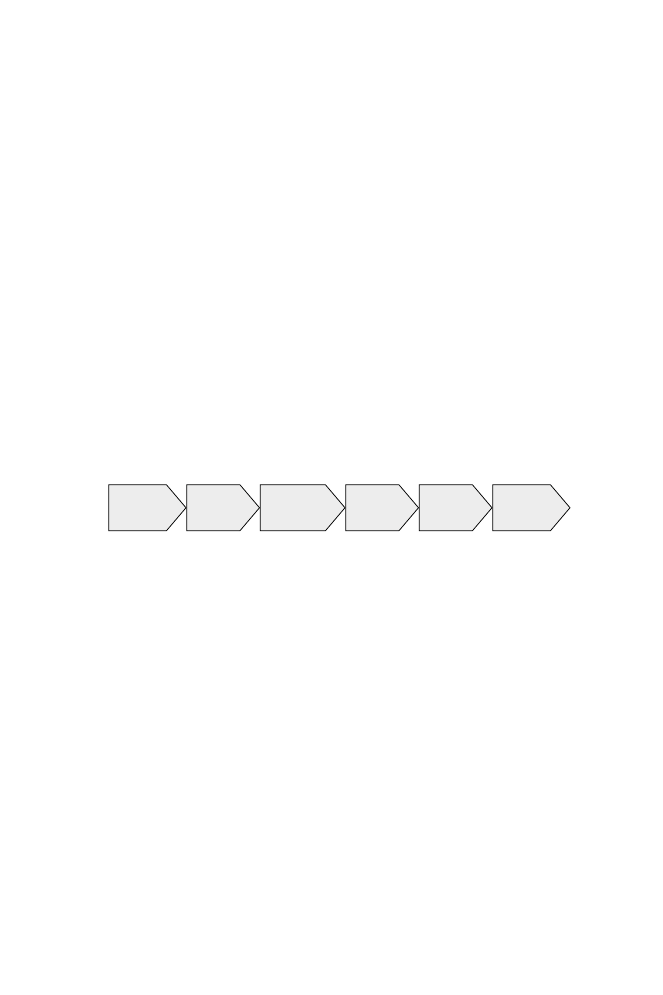
Design
& Specify
Build &
Test
Implement
Use
Maintain
Dispose
Figure 4.1 Information technology supply chain
However, what I would say is that IT as a single black box should
never be outsourced. Instead you need to look at the supply chains
that cover IT infrastructure and applications (such as the one illus-
trated in Figure 4.1) and consider the options of outsourcing for
each of the activities on its own merits. This is the sort of analysis that
we are going to look at over the next few pages.
Once you have looked at your supply chain or business process and
identified its constituent activities, then it is important, as in the
example we looked at for cleaning, to evaluate how well you perform
each of the activities currently and assess how important each is to
your business. Figure 4.2 provides a framework to support this

28
Strategic Procurement
assessment. The idea is that you assess the activities currently carried
out by your organization against two dimensions and plot the results
on the matrix. If you assemble a cross-disciplinary team that under-
stands the supply chain under review, this exercise can generate a lot
of useful information and analysis. You can also repeat the exercise to
differing levels of accuracy. For example you could start with a
workshop where you discuss the activities and plot more by knowl-
edgeable gut feel than data. If you decide to take any action as a result
of the work, you will probably want to validate the initial view with
some more detailed due diligence.
High
High
Execution
capability
Importance/
core to business
Your Organization
Low
Low
Divest
Core
Eliminate
Partner
Figure 4.2 Organization capability evaluation matrix
Let me first explain in more detail the two dimensions against which
we are going to plot the various activities: execution capability and
importance/core to the business.
Execution capability
This is an assessment of how good your company is at performing the
activity. This should be evaluated against your current capability,
because it is important that the assessment is objective. Obviously the
only exception to this would be if there are known changes already
under way that will alter your execution capability for better or worse.

Know Your Core
29
It is also important that you have some sort of benchmark against
which to assess your organization’s capability. These benchmarks
need to be identified with care as there is little point in evaluating
yourself against a mediocre organization if there are world beaters
out there.
Importance/core to the business
Against this dimension you need to evaluate the contribution of
each activity to the success of your customer value proposition or
business objective. A good way to think about this is to assess what
the consequences would be for the business if the activity failed or,
with more optimism, what the uplift could be to the business if the
activity were executed flawlessly. The sort of questions you are likely
to ask yourself will include consideration of the activity’s impact
upon your profitability, customer proposition, market share, cost
base, operational integrity and reputation. Whereas on the first axis
it was important to assess current performance, plotting on this axis
should be against the activity’s future importance to the business, as
this could change over time in response to new opportunities,
markets or competition.
Within the model, the four quadrants show the strategies you
should take for the activities that plot within them. They are elim-
inate, divest, partner and own.
Eliminate
The extreme response to anything that plots into this quadrant will
be that as you aren’t very good at the activity and it isn’t at all important
to your supply chain or company, then the activity should be a
candidate for elimination. After all, why do it in the first place if it is
non-added value and executed poorly? More realistically, an activity
that plots into this quadrant will be something that is of low value to
the organization and not executed particularly well. So, while it might
not be a candidate for extermination it is one for which you could
seek an alternative provider, especially if someone else can do it
better than you in terms of quality, cost or time. If you do decide to
seek an alternative provider then the business risk is going to be low
and therefore your selection criteria for the service provider are likely
to be largely ones that would deliver operational excellence and cost-
effectiveness to your organization.

30
Strategic Procurement
Divest
An activity will be plotted into this quadrant if you are very good at it
but its outputs are not particularly important to the success of the
value proposition. In such a situation you could consider selling off
that part of your company, together with its processes and systems, to
another entity for which the activity is core. You could even negotiate
a deal whereby you sell the business and then buy back the services –
it may not be important to you but it is probably still something that
you need to have done. What it does mean is that in an environment
of scarce resource, you don’t need to do it yourself. This type of sale
and buy-back construct is one that is particularly popular, especially
to smaller organizations that need critical mass, or start-ups that are
backed by venture capitalists and keen to kick-start a business around
their acquisition. By contracting to become a customer of the entity
you are providing an important revenue stream that can have a signif-
icant impact on the sale price you receive.
If you look now at the right hand side of the diagram – things that
have been plotted in these two quadrants are very important to your
business.
Partner
If something is plotted into this quadrant then you are recognizing
that you aren’t very good at the activity but it is critical to your propo-
sition. In such a situation, it is important to improve your performance
and you can do this either alone or with someone to help you. For
example, you could invest in the activity – buying skills, processes,
tools, systems, etc and really boost your in-house capability. Alterna-
tively, you could look to collaborate with a company that is already
very good at doing it. In this scenario you might still want to outsource
the activity, but you will want to select your provider very carefully,
ensure that you are strategically aligned, incentivize them appropri-
ately and manage them closely – because their success and yours will
be inextricably linked.
Core
If an activity is plotted into this quadrant, congratulations are in
order. What you are saying here is that the activity is both important
to you and something you are already very good at. Therefore I
suggest that you will want to do nothing other than continue to invest
appropriately in the activity to ensure that you remain in this strong

Know Your Core
31
position. After all, the activities in this quadrant are important to your
success and they are things that you excel in, and as such you should
nurture and relish them.
Once you have plotted things onto this diagram, you will have a
clear understanding of what activities you are good at and which ones
are important to your success. For activities that plot into three of the
four quadrants, you might consider getting suppliers to help you,
either through outsourcing, collaboration or sale and buy-back
arrangements. I say that you ‘might consider’ doing this because
actually your options are going to be influenced by the capability and
willingness of the supply market to help you. There is little point in
outsourcing an activity to a third party if it is going to be more
expensive and of poorer quality than in-house provision.
As we have seen there are many reasons to want to outsource an
activity. Two of the more strategic reasons for doing it are that you are
not very good at the activity yourself or that the activity is relatively
unimportant to your value proposition. Outsourcing it will allow the
organization to concentrate on other added-value activities and
create capacity, for example by freeing up management time,
investment, property, research and development effort and people.
However, the desire to outsource something can only become a
reality if there is a supplier capable of taking on the activity for you.
Not only that, but ideally the supplier will be able to offer you some-
thing extra, something that you couldn’t achieve by doing the work
in-house. The most obvious of these would be things like lower costs,
better quality, greater delivery certainty and reduced risk. In certain
circumstances, an organization might be willing to outsource some-
thing and receive the same quality service for the same total cost
(often to free up capacity to concentrate resources on more important
matters), but I have rarely seen an organization willing to pay a
premium to receive that which it used to do just as well in-house.
Consequently, the deciding factors are likely to be the quality and
compatibility of the supply market. I would like to introduce Figure
4.3 to help with this market analysis. Once again I will start by
describing the two dimensions against which to assess the suppliers
and the supply market.

32
Strategic Procurement
High
High
Market
maturity
Scale
Supply Market
Low
Low
Niche
Industrial
Emerging
Advantaged
Figure 4.3 Supply market capability evaluation matrix
Market maturity
Market maturity is a combination of many things including longevity,
stability and strategies. For example, suppliers and customers in the
world of business process outsourcing (BPO) have been around for
decades. The market is well established and could be considered very
mature. Other examples of mature markets would be in IT infra-
structure such as data centre outsourcing, and in property such as
facilities management and maintenance services. At the opposite
extreme would be knowledge services outsourcing (KSO), which
seeks to take on added-value activities that historically might have
been provided by consultancy companies or legal firms (eg providing
market analysis to facilitate strategic decisions and constructing large
contracts).
Scale
This dimension considers the scale of the market and particularly the
number and size of the suppliers within it. For example, IT infra-
structure providers operate on a large scale with broad geographic
presence whereas a legal firm that provides conveyancing services to
a mortgage underwriter is unlikely to expand beyond its domestic
market or legislative environment.

Know Your Core
33
The quadrants provide the assessment of the market; they are as
follows.
Emerging
Both the market and its suppliers are currently immature. Some
companies are already established but are relatively small. To survive
they are likely to want to grow either vertically or horizontally, possibly
by acquisition – this adds uncertainty to the prospects for companies
in this quadrant. You may consider outsourcing to one of the
companies but not for business-critical services and probably only if
there is something in it for you (eg recognition as a cornerstone
customer with preferential arrangements or shareholding). An
example of this type of company would be one that delivers cloud
computing services; despite the fact that large companies such as
IBM are in this business the expertise and scale is slight. This will
obviously change over time, which is why this quadrant is the most
dynamic.
Niche
Some markets are very mature yet the players in them can still be
niche. This would happen where economies of scale are not available
despite the market’s longevity, and is likely to occur when services
need to be tailored to meet specific requirements. This market is
unlikely to be commoditized as the services delivered are individual
to the client. The client is likely to be attracted by suppliers who have
deep technical expertise, possibly offering leverage and scale in a
declining market. By way of an example: in banking, as customers
move to electronic forms of payment, the demand for cheque
processing and clearing is declining steadily (though will remain for
several years yet) and the service is technically complex and business
critical. Several years ago, to overcome these issues, Unisys, Barclays,
HSBC and Lloyds Banking Group created a BPO joint venture in the
UK called iPSL. This venture would plot into this quadrant as it is
highly skilled, complex and limited in scale.
Advantaged
The market is immature but the companies that operate in it have
already acquired scale and are recognized leaders. Companies in this
quadrant are likely to be operating in areas that lend themselves to
scale either through process efficiency or the use of automation. As

34
Strategic Procurement
the market matures, it could still offer opportunities for growth, but
the companies are already cost advantaged. Growth is more likely to
come through new geographies or expanded service offerings. The
benefits on offer from these suppliers (in terms of scale and
investment) will encourage you to consider contracting with a
supplier in this quadrant for even your most critical applications. You
will want to enjoy economies of scale and might want a contract that
allows you to share in the benefits as the market matures. For example,
suppliers in this quadrant might have at their disposal levers of value
(such as technology platforms that can be shared across clients) that
are as yet unexploited because of the immaturity of the market.
Industrial
Suppliers in this quadrant will be world-class service providers that
have grown to scale in a mature market. Companies that provide IT
infrastructure and software development services such as IBM,
Accenture, TATA and Wipro are obvious examples. Other suppliers
might be contract manufacturers in the pharmaceutical industry or
payroll service providers.
This tool helps you to assess the supply market’s maturity and its
capability to operate at scale. Not even the combination of imma-
turity and lack of scale need be a show-stopper as the supplier’s posi-
tioning must be seen in the context of your requirements. However,
it will influence your outsourcing strategy. For example, if the activity
isn’t particularly core to you, you might be happy to become a corner-
stone customer to one of the emerging suppliers, effectively allowing
the supplier to use your requirements, volume and existing capability
to grow its service offer. This can be commercially attractive, with
options ranging from low-cost service provision to shareholding.
Similarly some niche suppliers will never achieve substantial scale,
even in a mature market, but have expertise that is valued and needed
by the client for its more critical requirements.
At other times the scale of the suppliers might influence your
decision making, as it is important that you can find at least one
supplier to which your volume is important but not crucial. If your
requirements are low volume, a small or medium-sized supplier might
best meet your needs as your requirements may not be attractive to
an industrial-strength player. Conversely, if your requirements are
significant then you probably need a supplier or two that can readily
absorb your volume and still have two-thirds of their business from
other customers.

Know Your Core
35
In summary, the positioning and options are relative to your scale
and requirements and therefore both elements need to be considered
in conjunction with each other.
Years ago I outsourced a warehouse and logistics operation for an oil
company. The warehouse operation itself was something of a sleepy
hollow and had been rather neglected for some time. The facility was
used to hold and manage the owned inventory for a large fleet of oil
and gas supertankers and act as a collection point for other materials
and spares before they were bundled up and freighted to rendezvous
with the various tankers as they sailed the oceans of the world.
The problem of the neglected warehouse was identical to that
experienced by most activities that are not seen as core to the business.
Despite the warehouse staff’s best intentions (and even the best inten-
tioned can only remain enthusiastic for a certain time in such an envi-
ronment), execution had slipped from good to poor and, with no
investment in its methods, equipment and capabilities, the whole
operation had become outdated. This meant that by the time I came
along, the only viable option was to outsource. I embarked on this
with gusto as I firmly believed that if I could pick the right company
to outsource to then I would improve the service and at the same time
give the people in the operation the opportunity to move to a company
that would value their skills as core to its business and therefore
nurture both the people and the operation. My ambition was to
deliver a real win-win-win for the warehouse staff, the fleet and the
acquirer.
The warehouse wasn’t important in its own right as it provided
little more than a storage facility and collection point for materials.
However, the warehousing and logistics operation together supported
the maintenance and repair operation for a fleet of oil and gas super-
tankers, so the operation was business critical to the fleet because it
held, consolidated and delivered vital equipment to the vessels, and
the mail and billet doux to their crews, finding them in port anywhere
around the world. The logistics was already outsourced albeit in a
piecemeal fashion to a rather under-scale company and, as mentioned,
the warehouse was dusty to say the least.
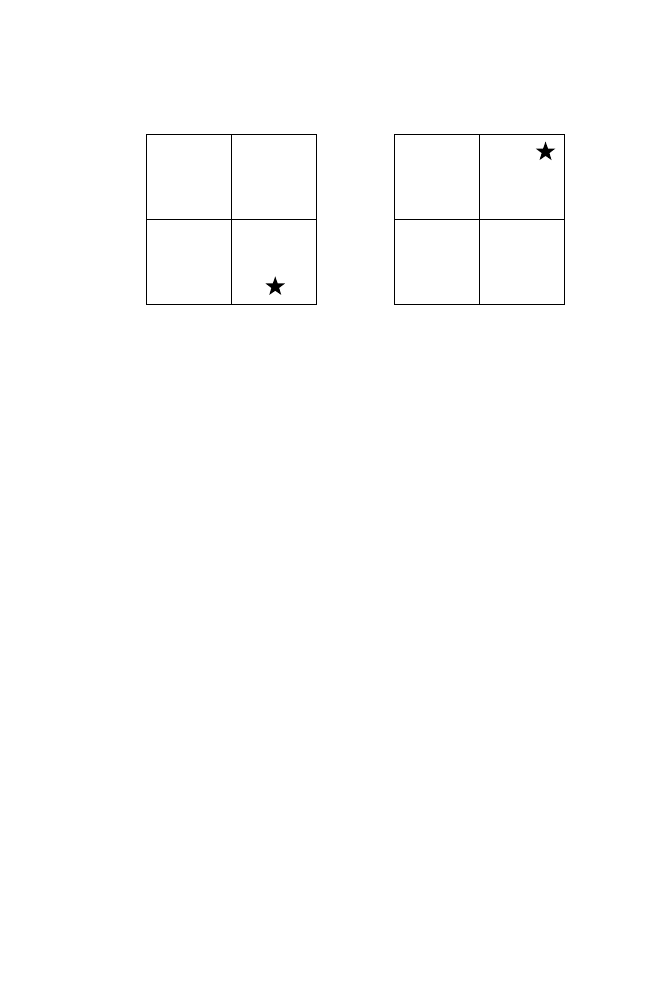
36
Strategic Procurement
High
High
Execution
capability
Importance/
core to business
Your Organization
Low
Low
Divest
Core
Eliminate
Partner
High
High
Market
maturity
Scale
Supply Market
Low
Low
Niche
Industrial
Emerging
Advantaged
Figure 4.4 Warehouse outsourcing example
The logistics market was mature and there were several global
suppliers capable of supporting our needs. One of the challenges we
faced was making our requirements significant enough to be
important to one of these large suppliers. To do this we expanded the
scope of our requirements to include the inbound logistics opera-
tions (from the parts manufacturers and suppliers to the warehouse).
This increased the attractiveness of our business to our provider as
there was a significant increase in its revenue opportunity in an area
that was its bread-and-butter activity and a real sweet spot. An addi-
tional benefit of this to the oil company was that the logistics provider
would have sole accountability for the end-to-end operation – from
factory gate to supertanker.
The oil company picked a good supplier and incentivized its
performance through the terms of the contract and a gainshare
agreement. It retained ownership of the warehouse and leased it to
the new supplier. The warehouse staff transferred to the supplier and
became core to their new employer, and overall the costs of the oper-
ation were slashed as waste was eliminated.
This appears to be a relatively simple example, so let’s up the ante.
The oil company only needed the warehousing and logistics oper-
ation because it had to transport oil and gas around the world in
supertankers. As the product is being transported its value can soar
or plummet depending upon the market. It can be bought and sold
many times over while on the high seas and therefore reliable and
Know Your Core
37
cost-effective pick-up and delivery are essential. What would have
happened if I had screwed up the logistics operation and as a result
one of the supertankers had broken down? Let’s talk consequences
and what I like to refer to as ‘consequential supply chains’.
A word of warning before we start: everything has consequences and
if we aren’t careful this could be a brilliant excuse for inaction. This is
not what I am advocating. Instead, my premise is that if we look at the
bigger picture before we start then we can take into account the core
operations and ensure they are safeguarded. Let’s look again at
supply chains.
Plan &
Mobilize
Primary Supply Chain – Collect and Deliver Oil and Gas
Secondary Supply Chain – Collect and Deliver Stuff
Load
Transport
Maintain
Off-Load
Dispose
Schedule
Collate
Move
Deliver
Collect
Complete
Figure 4.5 Consequential supply chain study for oil and gas
In Figure 4.5 we can see the primary supply chain – the objective of
which is to collect and deliver oil and gas to various time, quality,
safety and cost parameters. The secondary supply chain is to drop off
to, and pick up goods and equipment from, a vessel in port. The cost
of the primary supply chain is probably hundreds of millions and its
opportunity to contribute to the reputation and profitability of the
company is high. If I do a great job optimizing the secondary supply
chain in isolation (eg only meeting vessels when they pass through
Singapore), I could really screw up the primary supply chain (eg the
crew down tools because there is no mail; the vessel breaks down on
the high sea and cannot be repaired; or the crew’s productivity is
limited because there is no maintenance to do on a leg of a voyage as
the spares aren’t on board). Beyond losing my job, the consequences
are significant because I wouldn’t have thought them through.

38
Strategic Procurement
Luckily this didn’t happen, but unfortunately this sort of thing does
happen every day: the high-tech equipment sea freighted from China
that is obsolete before it arrives; the cash machine that runs out of
money because it can’t hold enough to meet regular demand; or the
brand damage caused by using unsustainable or unethical sources of
supply.
The challenge is to understand enough about the primary supply
chain to optimize the secondary supply chain in the context of its
ambition. Once you know the parameters, you can be pretty radical
in your optimization of the secondary supply chain and know that
you will at worst be doing no harm to the primary, and potentially
adding huge value to both.
In summary
The decision about what you as a company will do and what you ask of
your suppliers is one of the most strategic you will ever need to make.
My aim in this chapter has been to provide you with a framework to
analyse the activities in your supply chain and categorize them in
various ways. Once you have evaluated you own capability and your
appetite to undertake an activity then you need to study the potential
suppliers that are capable of supporting you, using the two frame-
works I have described. As shown in the case of outsourcing ware-
housing, part of the dynamic is to find appropriate suppliers and
make your business attractive to them. Taking the time to study all
the sourcing options available to you is time well spent in shaping the
future success of you organization.

In the first chapter I mentioned that no company was an island and
introduced the idea of supply chains and how the success of any
business venture hinges on how well the owner of the supply chain can
harness the capabilities of both his or her organization and its key
suppliers to deliver the value proposition and delight its customers. In
this chapter I want to explore this interconnected world in much more
detail and provide some hints and tips on how best to manage it.
Anyone who has ever watched starlings flocking at sunset can’t
have failed to be amazed at how beautiful, harmonious and compli-
cated their movements are. The flocks can comprise hundreds if not
thousands of birds, and these creatures are not considered to be
particularly intelligent (no offence intended). Despite this I have
never seen two birds crash into one another, indeed the most
discordance I have ever seen is the odd one flapping its wings madly
to catch up with the rest. There has been copious research into how
these birds can achieve such cohesion, and what is interesting is that
flocking behaviour can be simulated using three simple rules: sepa-
ration (avoid getting too close to its neighbour); alignment (fly in the
same direction as its neighbours) and cohesion (steer towards the
average position of its neighbours). Studies have upheld these rules
as accurate in the real world.
The rules that apparently harmonize the collective behaviour of
birds, ants, bees and fish have been used to create agent-based systems
that in turn have been applied to predict complex business situations
(Bonabeau and Meyer, 2001). For example, the study of ants and
their pheromone trails has been used to improve the routing of
39
40
Strategic Procurement
packages of data across telecommunication networks, and other
models have been used to successfully predict the impact on the
NASDAQ of changes to things such as the tick rate.
I was lucky enough to be involved on the periphery of this when as
a consultant with Ernst & Young I worked with the BiosGroup
(co-founded by Stuart Kauffman and Ernst & Young) to use these
agent-based systems to develop the model for complex downstream
oil distribution networks in the United States. I mention this because
I think it illustrates that even the most complicated of interactions,
involving hundreds of autonomous decision makers, can be modelled
and forecast provided you can understand the motivations and objec-
tives of the individuals involved.
Supply chains across organizations
So now let’s now move on from starlings to look at how businesses
organize themselves. Supply chains involve multiple disparate entities,
and if you think about a supply chain as I have explained it so far, you
can see that it is a series of activities carried out across different organi-
zational entities where each produces a deliverable that is passed to the
next entity and so on until finally the completed product or service is
delivered to the customer. These ‘organizational entities’ can be your
suppliers and their suppliers, but they can also be the different depart-
ments within your company. These internal departments can typically
be defined as functions, product lines or business units.
Tier 2
Supplier
Primary Supply Chain
Tier 1
Supplier
Function
Product
Line
Your Organization
Business
Unit
Customer
Deliverable
Deliverable
Deliverable
Deliverable
Deliverable
Deliverable
Deliverable
Deliverable

Handling the Complexity
41
Figure 5.1 illustrates the complexity of these interactions. The chal-
lenge this complexity presents and the ways in which it can be
overcome are the subjects that I will tackle in this chapter. Before we
start exploring that, let’s look at some of the entities depicted in the
diagram, starting with those that are within the organization.
Functions
Functions are a great way of enabling centres of excellence and
creating talent pools that the company can draw on and to which
individuals feel a sense of belonging. Functions are typically organiza-
tional entities like marketing, operations, IT, HR and so on. Many
organizations have outsourced some of these functions either in
whole or in part. The attraction is that functions are self-contained
units with clear management structures. The challenge is that the
services of these functions are utilized by other parts of the organi-
zation in support of their supply chains, meaning that outsourcing
along functional lines can inhibit the subsequent optimization of the
supply chains and the other processes that they support.
One multinational found, after applying functional outsourcing,
that it could not achieve transformational change because it had too
many stakeholders and third parties involved, each of which had little
vested interest in re-engineering. After much deliberation the multi-
national was forced to bring back in-house the work that it had
outsourced, transform along supply chain lines and then later
outsource to new vendors with new scopes of work and service levels.
This is an extreme example but not uncommon. It can be difficult
enough to get your own organization to operate in the best way to
support your supply chains; when activities are undertaken for you by
a variety of third parties, each of which has competing priorities, your
attempts at radical re-engineering or transformation that also
threaten their revenue streams can become almost impossible.
You might at this point be wondering why this is so important. It is
because functions do not just support one supply chain or process
within your organization: rather they support many, often with
competing priorities and objectives. Therefore getting a function,
whether owned or outsourced, to support a particular supply chain
can be more complex than a single-point solution between a supplier
and a supply chain.

42
Strategic Procurement
Product lines
In most companies part of the business will be organized along
product lines. These are specialist units focused on producing
products or services. Even consultancies that are purely people organ-
izations will typically be split into product/service lines and customer-
facing units.
Business units
A business unit is a customer-focused part of the organization that is
responsible for selling its product or service to the customer. As such,
most customer-oriented companies give accountability for the
delivery of the customer value proposition to the business unit. Units
are typically aligned to the market segments to which they market
and sell the company’s product or services.
Supplier tiers and tears
Suppliers can deliver directly to functions, product lines and business
units within your organization. Furthermore your suppliers will more
than likely have their own suppliers that are supplying components
that will be contributing to the supply chain. Therefore the third
parties associated with the supply chain are also interrelated and can
be structured logically into various tiers. A tier one supplier is one
that has a contractual relationship with the owner of the supply chain,
and a tier two supplier will have a contractual relationship with the
tier one supplier (as shown in Figure 5.1). For example, an auto-
motive manufacturer could have a contractual relationship with a tier
one supplier for the provision of an anti-lock braking system (ABS)
and that supplier will have contractual relationships with other
suppliers for the delivery of the various components of the ABS.
Tier one suppliers therefore are often responsible for the delivery
of a service or a system and in support of this their tier two suppliers
will provide tier one with a variety of components. The relationships
between the supply chain owner and the tiers of suppliers can be
both beneficial and detrimental and as such either a huge source of
value or of frustration. When I worked in the oil industry a lot of the
big construction projects were subcontracted to service companies
such as Halliburton, KBR and Schlumberger. The operators (Shell,

Handling the Complexity
43
BP, etc) would run huge sourcing exercises to select the most appro-
priate subcontractor for a particular project. In responding to the
tender, the service companies would, in turn, run huge sourcing
exercises with their supplier shortlists, and this would repeat down
the tiers of supply. At some point these shortlists would converge and
tier two and three suppliers would end up receiving tender invita-
tions (all slightly different) from four or five different sources for the
provision of the same good or service. It doesn’t take a genius (thank
goodness) to figure out that this process created a huge burden and
cost both to the suppliers and ultimately for the supply chain owner
(after all, someone has to pay for it).
This takes me nicely to my next hobby horse in respect of supplier
tiers – laying off risk. Oil is an expensive, complex and physically dirty
business with huge opportunities and significant risks. What a lot of
supply chain owners like to do is lay off risk to their service providers,
which in turn cascaded the risk into their supply base. Ultimately this
risk (a premium for which will have been added each time it is laid
off) is going to rest with a two-bit company that has no assets and is
quite happy to say ‘Yes’ to the risk and go bankrupt if that risk materi-
alizes. The extreme outcome of this is that the supply chain owner, by
laying off the risk, has achieved nothing but increased cost.
Enough of this negative frame of mind – let me put on my happy
hat and talk now about all the good things supplier tiers can bring. By
assigning a first-tier supplier, the client can harness its significant
knowledge and experience to bring together the best combination of
suppliers to deliver what is required. The expert supplier bringing
together a group of other suppliers to deliver the required systems or
services (as opposed to the components or activities that would be
delivered by individual suppliers) can make an enormous contri-
bution to the supply chain.
For example, in the last chapter we discussed consequential supply
chains and the fact that the organization must optimize its secondary
supply chains in the context of the primary supply chain to safeguard
the overall value proposition. In the automotive example, the ABS
will be a secondary supply chain and the primary supply chain will be
the vehicle being manufactured. Optimizing the secondary supply
chain in such a way that it adds value to the vehicle manufacture
could add significant ‘consequential’ value.
These supplier groupings can also work together for a variety of
clients, thereby transferring and honing knowledge over time. Simi-
larly a client can encourage a coalition of the suppliers it believes are

44
Strategic Procurement
most likely to meet its needs rather than rely on historic relationships
or chance.
Let’s recap: we have a primary supply chain and lots of secondary
supply chains. The activities in these supply chains will be undertaken
by a variety of in-house functions and business units and by third
parties. The third parties themselves are organized into various tiers
and, other than with the tier one suppliers, the supply chain owner
doesn’t have a formal (contractual) relationship with any of them.
When you bring all this together it can look overwhelming and the
challenge is obvious: how on earth can the owner of the supply chain
make sure that all these moving parts work together to delight the
organization’s customers? My answer is that you can do this more
easily than you might think and the silver bullets, if there are any, are
labelled ‘functional requirements’ and ‘outcome specifications’.
Functional requirements
Clients have a responsibility to specify what they need and they should
do so with a great deal of precision. If it is for a piece of equipment,
they might want to specify its capabilities, dimensions and character-
istics. If it is for a service, they will want to define what ‘good’ looks
like in respect of quality, output and timeliness. These are all func-
tional specifications – because what the client is doing is specifying
what the good or services should be capable of delivering. What the
clients are not doing is specifying how the supplier goes about satis-
fying the requirement. The client wants cold air, not necessarily that
air conditioner, or personal computing, not necessarily that laptop.
Functional requirements help the supplier to understand what the
client needs and values – they do not constrain the supplier in respect
of applying its expertise to meet that need. In this way they provide
the directions that will help to create the desired result.
Outcome specifications
In Chapter 2, we recognized that the key to any organization’s success
is a clear understanding of what its customers value now and in the

Handling the Complexity
45
future about the good or service they buy. We also exposed the danger
of mixing up what customers value with what your company is good at
delivering. Success requires that you clearly articulate your customer
value proposition and use that as a rallying crying for your organi-
zation and its suppliers.
Outcome specifications are an extension of this and can be used to
draw together disparate stakeholders and suppliers to deliver what
your supply chain needs. I remember someone complaining to me
years ago that a design engineering firm had not delivered what he
had asked for. Apparently he wanted a simple design made of standard
components and what he received was a complex design with a
plethora of bespoke features. I suggested to my friend that if he had
wanted something simple he should have clearly specified the
outcome he required and offered a fixed price for the work and not
paid for time and materials.
This can happen a lot. Less than 10 years ago, advertising agencies
were remunerated in the form of sizeable commissions payable
against the customer’s media spending and production costs. This
meant that the more the ad agency spent on its customer’s behalf the
more it earned. Proctor & Gamble pioneered a different reward
structure and caused a furore when it decided to tie the agency’s
remuneration to the campaign’s impact on global brand sales. P&G
did this because, as its Director of Public Affairs and Media, Gary
Cunningham, acknowledged, ‘companies advertise to sell more
products’ (Curtis, 2000). What he had specified was his desired
outcome specification.
While this example is almost 10 years old, it is interesting that by
2007 this type of payment by results (PBR) reward mechanism is still
only used by slightly over half of all customers of marketing-related
services. The approach to advertising by Proctor & Gamble is a great
example of an outcome specification – understanding what you will
value from the service you receive and using that to specify your func-
tional requirements and shape the reward structures.
Focusing on outcomes also helps the client to transfer responsi-
bility for the design of the solution to the supplier, which should be
much more capable of figuring out how best to deliver the desired
outcome than the client. Which takes me to another of the truisms of
good procurement: that the customer knows best what he or she
needs and the right supplier knows best how to satisfy that need.
There will of course be a variety of outcome specifications asso-
ciated with even the simplest of supply chains and the challenge is to

46
Strategic Procurement
ensure that they are compatible both upward and downward. A good
outcome specification will detail all the elements that will define
success to its requester (whether that be the supply chain owner,
business unit, product line, function or tier one or two supplier). It
will contain the measure of success and enabling criteria. For example,
the outcome specification for P&G could be something like: ‘To
improve our brand recognition by 5 per cent in our key markets by
the end of 2011 while reducing our total advertising expenditure by 5
per cent above market norm.’ This should then be enshrined in the
contract and drive the financial reward structure as well as the service
levels. When the media agency then contracts with its suppliers, the
outcome and functional specification for the goods and services
being supplied should be compatible with this broader ambition.
Using outcome and functional specifications in this way helps all the
moving parts of the supply chain to remain focused on the same goals
while obviously their contribution to the success will vary dependent
upon their capability and role.
In summary
There are likely to be various organizations involved in delivering
your customer value propositions. More than likely there will tiers of
suppliers external to your company, each with their own goals and
objectives, culture and values. There will also be different units within
your own organization, each with its own specialist skills and ambi-
tions. You can’t combine these organizations in order to deliver your
customer value proposition but you can align them. Like starlings
flocking in the sky they remain individual entities but need to operate
homogeneously by following some basic rules. Your primary weapons
for aligning all these disparate elements will be the outcome and
functional specifications. By knowing what it is that your customer
values and translating this into clear requirements for each entity,
you establish the framework under which they will flock harmoni-
ously to deliver it.

I really want to agree with this statement! By now, you probably feel
that procurement is too important to be left with the procurement
department, and you are absolutely right. As soon as you bought into
the concept of core versus non-core, you moved procurement centre
stage in the attainment of your company’s business strategy. However,
you probably didn’t notice this and probably neither did your
procurement department.
Procurement isn’t order-taking or even order-placing any more: it
is a key business competence. Effective supplier management isn’t
just a hygiene factor; instead it is about excellence and flawless
delivery of your customer value proposition.
So, if procurement is a strategic competence in your organization,
who is going to do it? You could look to your corporate strategy team,
or what about R&D, the marketers, the procurement department,
the design engineers, the logistics providers, the sales force? The
answer is of course, ‘Yes’ to all the above: what you really need is a
cross-disciplinary team. The answer lies in your supply chain and the
disciplines involved in it; see Figure 6.1.
Design
& Plan
Market
Acquire
&/or Make
Move
Sell
Service
Figure 6.1 Cross-disciplinary supply chain
To optimize your supply chain you need to involve the people who
play a part in all aspects of it. That means the engineers who design
47

48
Strategic Procurement
the product, the marketers who develop the advertising campaign,
the plant managers who manufacture it, etc. If you have outsourced
some of the activities you will also at some point need to involve your
suppliers.
In this chapter we will explore the role of the organization in good
procurement, the role of the procurement department in good
procurement, the value of a cross-disciplinary team and the impor-
tance of recognizing and valuing the contribution of each discipline
in the process. We will also look at the role of the board in helping to
get this right.
Everyone loves to buy and it’s not just about getting something that
we have been yearning for: we love the whole process of buying. We
love thinking about something new. We like the sales people who
enthusiastically tell us how our lives will be transformed and describe
the features that we hadn’t even considered but soon become
convinced that they will become essential to our well-being. We like
the break in the routine of our day job and we love the fact that it is
our decision to make and that the fawning sales person knows it.
There is very little difference in the levels of enjoyment between
whether we are spending our own money or our company’s money –
other than that the scale of the company’s spending is likely to be
much different to our own.
Suppliers have always known this fundamental truth and for years
have designed their sales structure to exploit it. Thousands of hours
are spent every year by suppliers’ sales staff trying to figure out your
company: identifying the decision makers, understanding the politics,
managing the key stakeholders and closing the sale. I certainly know
that a good way to find out what is happening in my own organization
is to ask a well-connected supplier.
Client organizations have taken years to wake up to this and start
attempting to even up the stakes. You only need to look at the sales
effort a key supplier dedicates to you as a customer (lots) and the
resources you as a customer dedicate to managing it as a supplier
(less) to know this is true. Evening up the stakes doesn’t start with
getting more people involved in managing the supplier (this comes
later); instead it starts with management information and coordi-
nation. What you need to do is start asking and answering questions.

What’s the Issue?
49
Who do you spend your money with? Which departments are spending
the money? What are you buying and are you getting value for
money?
Deserve the suppliers you need
A good test of the maturity of the client organization’s management
of its suppliers is to look at the account teams that the suppliers
deploy. When the account team come in to see you, ask yourself how
much of the time is spent discussing the value you are getting from
the things you have already bought and how much time is spent on
what they want to sell to you next. In my experience, encouraging the
supplier to focus on the former often means that it has to change the
composition of its team to include operational delivery people –
which is a great first step. If it is any consolation, the most gullible
buyers are usually the most successful sales people!
One of the key ways a supplier manages its customers is to divide
and conquer. The more avenues a supplier has into the organization
the more it understands what is going on and the more it safeguards
its revenue stream. This is achieved in several ways: the client never
gets an holistic view of its spend with the supplier and therefore the
relationship stays below the radar and isn’t scrutinized; when a rela-
tionship sours in one part of the organization, others continue to
flourish unaffected; if there is a dispute in one part of the organi-
zation, the supplier’s exposure is likely to be the revenue associated
with that particular relationship and not the whole shebang.
You are probably wondering at this huge change of tack: for
several chapters I have been banging on about the importance of
suppliers to your success and now I am having a dig at them. This
couldn’t be further from the truth – what I am trying to say is that a
customer gets the suppliers it deserves and the first thing you need
to do is to deserve the suppliers you need. Getting to bedrock in a
client/supplier relationship is vital to ensuring that your strategic
alliances are not built on shifting sand. Once you have hit bedrock,
you can build lasting and mutually beneficial relationships – not
before. Sometimes this requires you to excavate away years of
mismanagement, over-pricing, under-performance and unequal
relationships.
This means that your organization (and I am using this word
advisedly as I don’t mean a bit of it, I mean the whole) needs to get its

50
Strategic Procurement
act together. You need to manage the suppliers holistically – whether
this is across departments or geographies – and this must start with
knowing as much about your relationships with them as they know
about their relationships with you.
This discipline has to start at the top. I don’t think as many deals are
done on the golf course as they used to be (though I do play golf just in
case) but it is true that getting the attention of a CEO or board member
is worth its weight in gold to a supplier – whatever its agenda. If there is
a procurement policy about how the procurement process is conducted
across the company, it has to be complied with across the whole
company and not just by the rest of us. I have worked in too many
consensus-oriented companies to think that getting the buy-in of the
CEO and the board is the panacea for all ills, but getting them on side
for good procurement is an essential first step in most of them.
The buy-in of your CEO works for your external stakeholders too –
never underestimate the power of an on-message statement delivered
to a supplier by the CEO. For one, it shows the supplier that the
organization has its act together when a supplier hears the same
message from the bottom to the top of the tree. The ‘CEO’s attention’
is probably an as yet undocumented law of physics – I for one subscribe
to the adage: what interests my boss fascinates me.
So you have the boss interested; what’s next? I always think the
biggest challenge to ensuring an organization marches to its own
drumbeat is the middle layer of the organization – the layer that is
empowered but doesn’t always see the big picture. Key to this layer is
finding something that is important to them in what you are espousing.
An appeal to support the ‘greater good’ doesn’t always cut it when
you are faced with busy executives struggling to achieve their business
plans, and even if they buy into the principle it won’t get high up on
their agenda unless it contributes to it.
Another reason why you need everyone singing from the same hymn
sheet is that you need to be capable of delivering on your promises and
your threats. When you strike a great deal with your suppliers, part of
the reason for their pricing will have been an expectation of volume.
Now you need to deliver that volume. Conversely, if you remove
business from a supplier then that business has to dry up.
Maverick buying behaviour is a canker to good procurement and
needs a mixture of carrots and sticks to wipe out. The carrots mean
that you need to make the right way the easiest way for everyone. You
need to provide readily available pan-organization, supplier-related
information to the person who is meeting the supplier’s sales team

What’s the Issue?
51
and promote the use of preferred suppliers through easy-to-use
purchasing systems. The sticks are compliance management reports,
objectives on your performance management framework and disci-
plinary processes. The balance between the two will be driven by your
corporate culture. The IBMs of the world operate a ‘three strikes and
you are out’ approach to procurement disciplines, while the BPs let a
thousand flowers bloom. Picking the right line is pretty important to
the overall success of your campaign.
This is where procurement proficiency comes into its own. I have
never seen a procurement department that is more than a fraction of
1 per cent of the total size of the organization. You can have the best
procurement department in the world and it can never have the
impact on the organization’s performance that a procurement-profi-
cient workforce can have. And the big question is, do you want a bow
tie or a diamond?
I think we would all agree that we want to present a united front to
our suppliers; we want to make sure they don’t divide and conquer us
and we want to have as much knowledge of their business with us as
they have. There are two ways of achieving this: restricted access or
informed access.
A company can decide that there will be a limited number of
named contacts in its organization interfacing with a limited number
of named contacts in the supplier organization. This will ensure that
the interface between the two organizations is disciplined and any
deals are executed in line with company policy. Figure 6.2 (our bow
tie) illustrates this relationship. It is unlikely to be as pointed as the
diagram depicts as in reality there will be a variety of nominated
contacts in both client and supplier organizations.
Client
The Bow Tie
Supplier

52
Strategic Procurement
The downside of the restricted relationship is that ad hoc contacts
will be curtailed and that all information between client and supplier
is in effect filtered through the named conduits. This can work for
some relationships, those that are not strategic or business important
for instance, as it removes the noise from what is a commodity trans-
action. At the extreme of this relationship one could imagine that the
conduit is some sort of electronic link between systems.
Now let’s look at the diamond, in Figure 6.3. The premise of the
informed relationship is that contact is varied and vast. This model
works best for strategic relationships where the success of the two
organizations is linked in some way and the measure of success is
more than just commercial.
Client
The Diamond
Supplier
Figure 6.3 The diamond client-supplier relationship
To be successful, participants of the informed relationship must be
just that: informed. They need to understand all aspects of the rela-
tionship that exists between the two organizations. This works better
on a pull rather than push model, by which I mean that the infor-
mation should be available as required (pulled) rather than pushed
out to the people involved in the relationship. This is because all
these touch points are likely to be for different purposes and dura-
tions and therefore information must be pertinent and timely.
The people involved in this relationships model must be
procurement savvy. They must know what they should and should not
discuss with the supplier and when (eg no commercial conversations
if a tender is under way), their company’s procurement policy (eg
what the thresholds are for involving the procurement department in
the deal), to always use their company’s standard terms of business
and not the suppliers’, and to never pay again for something that is
already provisioned in the contract.

What’s the Issue?
53
The role of the procurement department
If you look at your direct costs you will probably find that you spend
as much with your suppliers as you do on your staff. There are some
organizations that are either more outsourced or more in-sourced –
but as a rule of thumb this will be in the right ballpark. Now look at
your HR department and it is probably much larger than your
procurement department – yet your HR department is all about
getting people who are inside your organization and who share your
reward and value structure to do the right thing over a long period of
time. Your procurement department on the other hand is about
getting suppliers (aka people) who belong to other organizations
with different and sometimes conflicting reward and value structures
to do the right thing over a long period of time. Key in both functions
is selecting and attracting the right people in the first place and
rewarding the behaviours you value.
I am sure that last paragraph incensed quite a few of you – espe-
cially when I mentioned the responsibility of the HR department.
You are thinking that HR, though it has a valuable role to play, is not
responsible for selecting talent nor is it responsible for performance
management of individuals, nor their training and development –
you are. You are the line manager and you know what skills you need
now and in the future. You use professional help (your HR team) to
help understand the personnel market and what it takes to attract the
right talent; to provide the structure of performance management
and talent development and to ensure you comply with legislation
and regulations.
Now let’s translate that to the world of procurement. In my expe-
rience there are two models for involving the procurement
department. There are the organizations that ignore the procurement
team until everything is decided and they need either a contract set
up or some help in getting out of one that was ill-judged. Then there
are the organizations that involve procurement from the get-go. You
will not need a crystal ball to realize that I subscribe to the second of
these models. What you should also realize is that this model is not
suggesting, even for a nanosecond, that the procurement department
is the decision maker. What I am suggesting is that it is used in the
same way you use HR. Like HR, the procurement department has a
vital role to play as part of the team: the cross-functional team.

54
Strategic Procurement
In summary
This chapter has been all about getting you organization match-fit to
deserve the suppliers it needs. Suppliers invest a great deal of time
and effort in getting to know your organization. If you leave them to
it, you will get what they want you to have, on their terms, and not
what you need on your own terms. Complex organizations have
complex relationships with their most important suppliers. Many
people within both organizations talk to each other on a regular basis
and do deals in isolation of each other. Only by garnering all the
participants in the relationship, and that means everybody from the
top of your organization down, and by coordinating their interac-
tions with the supplier holistically to make sure that each deal is
achieving your organization’s goals, will you get your suppliers to
dance to your tune.

If, as I hope is the case, you are starting to think that your company
could reap rewards from better management of its third-party expend-
iture then this chapter is pretty critical to the success of the next stage
in our journey. This chapter is all about the importance of your spon-
sorship and direction setting.
I touched upon executive sponsorship in the last chapter and will
now expand on it some more in this. What I want to start to explore is
what your priorities are going to be for your procurement-proficient
organization. Setting your priorities is a bit like fixing a compass.
Improved procurement can deliver lots of different things to the
organization and only you as one of its leaders can figure out what is
most important and when.
So first of all you probably need to figure out what would deliver most
value to your organization and the best thing to look at is its strategic
imperatives.
If you need to improve profitability quickly then there are few
better places to start than on your external expenditure. It is nearly
always much easier, less costly and more immediate to change your
supply arrangements than it is to reduce your staff size. I will go into
much more detail about this in Chapter 13.
55

56
Strategic Procurement
You might be going through a merger or acquisition. What I have
just mentioned holds good here too. The bigger cost reduction
opportunities are going to come from rationalizing your IT, your
property footprint and your operating model, but they will come
further down the line and will require considerable investment. The
power house that will deliver the synergies you promised to your
investors in the first year or 18 months will be procurement: moving
volume to the best contracts, leveraging your new-found scale and
simply turning off duplicate spend (for example you aren’t going to
need two sets of audit fees or all those insurance premiums). Obvi-
ously procurement will also play a key role in your merger or acqui-
sition over time as you start to streamline and re-engineer supply
chains, decide whether you are going to in-source or outsource key
activities, design your target operating model and generally implement
the to-be organization.
On the other hand, you might be most worried about supply conti-
nuity, especially in uncertain economic times when your key suppliers
might be vulnerable. You need to look no further than the upheaval
of 2008–2010 and its attendant credit crunch to know that even the
most invulnerable of companies suddenly looked shaky, and if these
companies supply something that is critical to you then it is well worth
focusing some attention on this. Managing supply continuity will
require you to mobilize not only your procurement people but also
finance and risk departments, and those involved in managing the
suppliers. There are lots of lag indicators obviously, but the most
important ones to supply continuity are the leading indicators, those
signs of stress such as early payment requests, disappearing staff,
hunger for additional work with clear revenue streams attached, and
a reluctance to go the extra mile without visible and tangible reward.
Alternatively your priority might be to grow revenues: through
developing new customer propositions; introducing or evolving
products; growing market share; or entering new territories. In this
case the right focus for your procurement efforts is likely to be on
your supply chains and the selection and management of your key
suppliers. You might want to run supply chain innovation or collabo-
ration workshops where you and your key suppliers share ambitions
and capabilities in order to identify opportunities for you to develop
deeper and broader relationships for mutual gain.
You will see, even from this short list, that each strategic ambition
will require a somewhat different approach to the management of
your third-party spend and key suppliers. Each will also require the

Executive Sponsorship and Priorities
57
mobilization of different stakeholders within and outside your organ-
ization that are appropriately incentivized to deliver specific
objectives.
What this should make clear is that it is vital that setting the
procurement priorities for your organization is a job that has to be
done by you and your board. Leaving direction setting to your middle
managers, or worse still your procurement department, will not
deliver you the outcome that you need. There are lots of reasons for
this but the key one is once again that procurement might not be
rocket science but it is very difficult to do well. Wherever procurement
sits within your organization there will be lots of competing voices
both for its attention and its priorities. Without board-level attention,
direction setting and support then procurement is unlikely to fulfil
its promise in your organization.
While Jean-Luc Picard from ‘Star Trek’ may not be the leader you
are, he did have a great and meaningful punch line that is very
relevant to any business: after determining a course of action he adds,
‘Make it so.’ This type of sponsorship, your sponsorship, is important
regardless of the sort of organization you run or its culture.
Obviously if you are in a centralized organization where decisions are
made at the top and then implemented without question, your identifi-
cation of and overt sponsorship of your procurement agenda are critical.
If you haven’t endorsed the agenda, it will not happen. What is less well
recognized is that if you are in a more laissez-faire organization,
procurement effectiveness is likely to be a pipedream without your exec-
utive-level endorsement. This is because good procurement is tough. It
is tough because there are lots of moving parts.
First of all there is your ‘organization’ – don’t be fooled by this
single, rather misleading word, which implies order and cohesion.
Your organization comprises people who sell, who deliver and who
support, and they may well be organized like this in various depart-
ments and functions. These departments are likely to have many
objectives in common but they will also have some that are different.
The juxtaposition of these objectives and their relative priority within
your organization is going to determine success or failure. There is a
wonderful story of John F Kennedy visiting NASA at the height of the
space race. He encountered a man sweeping the floor and asked him

58
Strategic Procurement
what his job was. ‘I’m putting a man on the Moon, Mr President,’ the
janitor replied. Not many organizations have the luxury of such clarity
but those that do have it because the leaders of their organization
have it and have clearly communicated this understanding to all
those who work with them.
Second, there are your suppliers and as we have already discovered
they are probably better connected across your organization than
many of your employees. Just ask yourself how many of your employees
have the same level of access to your diary as some of your suppliers –
especially those from the major consultancy and accountancy firms.
Furthermore, suppliers are rather like an iceberg: the ones you see
are not the only ones there. Behind each of your tier one suppliers
(ie those suppliers with whom you have a direct contractual rela-
tionship) are all their suppliers (your tier two) and their suppliers’
suppliers (your tier three). Suppliers are also like ice-crystals in that
they are interconnected in intricate and not immediately visible struc-
tures – one company can be on each tier simultaneously as the goods
and services it supplies are mixed and matched to meet your needs.
Then there are your other stakeholders: your customers, share-
holders, regulators, legislators and pressure groups, both at home
and abroad. Perhaps surprisingly many of these stakeholders will
have something to say about why, what, how, when and where you
buy. So if you don’t set some direction and make it very vocal and
crystal clear, these competing voices will fill the void.
Once you have determined how procurement can best support the
achievement of your strategic ambition you need to keep at it. You
need to particularly work the treacle layer (ie the stratum that exists in
many organization where there is both empowerment and an incom-
plete view of the whole). Unless you win over or at least neutralize the
treacle layer, procurement isn’t going to play out exactly as you might
have wished. When I was working as a consultant, I remember being
very pleased when one of the senior stakeholders who sat in the treacle
layer, said ‘Yes’ to something I was proposing. Pleased that is, until one
of the client team told me that ‘Yes’ in his organization really meant
that the stakeholder wasn’t yet ready to say ‘No’. Another tactic, which
I am sure will be familiar to all of us, is for the stakeholder to say abso-
lutely nothing – even to the most black and white of questions.

Executive Sponsorship and Priorities
59
Therefore, I encourage you to cascade your sponsorship overtly
and unequivocally. What this requires is that you ‘walk the talk’. The
treacle team is always looking out for the slightest sign that the boss
doesn’t really mean it! So if you say that cost-cutting is important then
please cut cost; or if you say that we must act in a united fashion in
respect of a supplier, make it so.
Similarly, if you can, measure the success of the initiative – whether
that is cost-reduction, supplier management, innovation or some-
thing else. If it is measured, it can be managed. If it is managed,
everyone in the organization will take it more seriously. If it is
measured on the scorecard of the people who can make a difference
to its success or failure, it is much more likely to be a success.
In summary
While this has been a short chapter, it is one of the key chapters to
delivering success with procurement. It is both short and key because
actually there isn’t much to say about executive sponsorship beyond
how critical it is, and always will be, to the success of procurement.
You need to decide how procurement can best contribute to the stra-
tegic ambitions of your company, find the right way to communicate
this to stakeholders within and outside the organization, and ensure
that achievement of your procurement agenda is a measure that
matters.

60
This page is intentionally left blank

Don’t bother me with strategy,
A couple of years ago I was talking to the corporate strategy team of a
FTSE20 company in the UK and they were explaining their role to
me. They said that in addition to developing group strategy, one of
their key roles was going into individual business units (many of them
equivalent in turnover to a FTSE100 company in their own right, by
the way) and creating business strategies for the MD and their exec-
utive committee because, and here is the rub, they didn’t have the
time to do it for themselves.
Many of us don’t have the luxury of a corporate strategy team but
we do have access to consultants and it is often these consultants that
lead our strategy formulation. Both corporate strategy teams and
management consultants have a role to play in providing input to the
top team as they determine their strategies. This input can be drawn
from the analysis of the market, the competition and your existing
capabilities, and will help the top team to determine their strategic
response to the current and forecast environment. But let’s face it, in
a fast-paced business world where the market is primarily interested
in our next quarter’s performance, operational problem solving is a
core competence and top priority of the modern business leader.
The ability to fire-fight is often more highly prized in an organization
than the creation of flame-retardant strategies.
61

62
Strategic Procurement
In this chapter I will make the case for strategy. After all, if you
don’t have the time, patience or expertise to clearly articulate what
‘good’ looks like to your organization over the next five years, don’t
expect your organization and especially not its suppliers to either
know or care. Therefore, we are going to explore the importance of
articulating strategies for your organization, your supply chains and
your suppliers; and particularly we will consider how these strategies
can bind your suppliers to your success.
Imagine a company is like a symphony orchestra: various groups of
well-trained specialists spread across a stage; musicians, some of whom
are old-timers to the orchestra and others that are contract or guest
artists; sheet music that shows bits of the whole; a paying and fickle
audience; and the opportunity to cement or weaken the orchestra’s
reputation every time it performs. The challenge for the orchestra is
how to make beautiful music and not just noise, and how to get
everyone to play their part at the right time and to the best of their
ability. What it needs is a strategy and this comes in the form of the
score, the conductor, the principals and the oboe.
The score provides the blue print for the music that will be played
by the entire orchestra. The full score is used by the conductor, while
each musician will have sheet music for his or her part in the whole.
The conductor is responsible for the interpretation of the music
through rehearsals and performances as well as for cueing performers.
He or she is visible to the whole orchestra and will provide cohesion
and rhythm. Each section has a principal or leader to whom the rest
of the section will look for leadership and upon whom the conductor
will focus his or her instructions. The principal oboe is the one to
whom the whole orchestra will tune their instruments.
Now imagine that the score is the strategy as agreed by the board;
the conductor is the CEO bringing that strategy to life with his or her
nuanced interpretation and communicating it through the layers of
the organization, wielding a baton and cueing the activities of the
various teams; and perhaps the oboe is the culture or values and, as
such, provides the heartbeat and cohesion for the whole enterprise.

Strategy in Context
63
As with the score for an orchestra, a clearly articulated strategy can be
a unifying theme: a way for a high-performing organization to capture
the hearts and minds of its employees, its customers and its suppliers.
Without clear strategies, people who are further down the organi-
zation and trying to make sense of the whole will fill the void with
partial solutions. Without clear strategy the whole is going to be less
than the sum of its parts.
The process of formulating the strategy will also enable key
personnel in the organization to test its appropriateness and veracity
through a variety of lenses. In this way the strategies of the organi-
zation will be well thought through and their implications tested for
their appropriateness to all areas of the company, its ambitions and
the market within which it operates.
Strategies are a way of setting out for the whole world to see what is
going to differentiate your company from the rest and what is
important to you as an organization. They are the ‘what’ and not the
‘how’, the path and not the destination. Some contend that strategies
are secret, something to be considered commercially sensitive and
therefore given a blanket top secret stamp, but in reality there needs
to be room for some flexibility here, depending upon their detail and
specificity. A strategy could be to ‘build deep customer-centred rela-
tionships’, to ‘concentrate on core activities’, or to ‘enter new markets
in the emerging economies’. These strategies are ones that provide
direction, approach and priorities and to my mind can and should be
shared. The strategies that are commercially sensitive and need to
played close to the chest are those that provide the ‘how’: buy this
company or form a strategic alliance with that company, and I would
suggest that there are not many people in an organization that need
to be privy to these types of strategies before they are executed. Simi-
larly, strategies on new product developments can be particularly
sensitive and will be shared on a need-to-know basis. Interestingly, the
need-to-know community will involve not only people within the
organization but also key suppliers and manufacturers. The security
around such initiatives will be achieved through various legal
constructs such confidentiality and non-disclosure agreements.
So, direction-setting strategies should be shared openly with your
employees, shareholders and suppliers. What you are letting them
know is what ‘good’ looks like to your organization, which will help

64
Strategic Procurement
such stakeholder groups to figure out what their contribution could
and should be to the attainment of the strategies. There is a great
deal said about employees and suppliers not being proactive enough
in their support of the organization they work with. Sometimes this is
unfair criticism, especially if they are engaged with a company that is
secretive about its business ambitions. Instead, sharing clear direc-
tional strategies that reveal what your priorities are and what you
value will help stakeholders to figure out how best to make a contri-
bution that could be meaningful to you. For example, your suppliers
are more likely to bring their latest innovation to you if they know
that your strategy is to differentiate your services by providing leading-
edge solutions to your customers. Alternatively, they might propose
ideas about process improvement and efficiency if they know that you
want to achieve cost leadership above all things.
Delivery of the strategy is going to involve people and teams within
the organization and outside. Cascading the strategy is the primary
tool the top team have at their disposal for directing the activities of
these units so that they operate in synchronization. By cascading
strategies down through the organization, the top team can unify the
company and its suppliers. For example, if the company wants to
enter emerging markets this will be important information for various
teams across the organization. The sales force may want to commission
research into the customer response to their product in these new
markets and, if there are vacancies, it might be best to recruit people
who have experience of them. Similarly, the procurement department
might be able to put business into these countries to help create a
bridgehead to the new markets. The cascading process is one whereby
the individual units take on board the overarching strategy and
develop their own strategies to determine how their unit will
contribute to the overall. A sound translation from the top team’s
overarching strategy to the specific strategies of functions and business
units will increase the chances of achieving cohesive change across
the organization.
Where strategies are not clearly articulated and communicated,
functions and business units could inadvertently undermine each
other and the overall company by developing incompatible and
competing strategies. However, company-wide strategies that are

Strategy in Context
65
clearly articulated and understood enable functions and business
units to align their strategies in such a way that the overall ambitions
of the organization are more likely to be achieved.
Cascading strategies into the extended enterprise
We have already established that you probably spend 50 per cent of
your cost base with your suppliers and are therefore in effect spending
as much with your suppliers as you do with your staff. While it is true
that you are buying goods and services from these suppliers, what you
are really doing is buying their expertise. Therefore when you are
evaluating your ability to achieve your strategic ambition you must
include your suppliers in your assessment. Consider this as your
extended enterprise, and if you don’t include your suppliers when
doing this you are potentially underestimating the assets at your
disposal by 50 per cent.
It makes it even crazier if you have decided that you are not going
to share your strategies with your suppliers – effectively you have just
tied one hand behind your back. If your suppliers understand what it
is that you are aiming to achieve it stands to reasons that they are
better placed to help you to achieve it. Knowing your strategy should
give them the incentive to look for greater opportunities, and ones
that you may not have considered yourself, for them to add value to
your organization.
Collaborating strategically with key suppliers will also help you to
better understand one another. It is very easy, because you have a
commercial relationship with suppliers, to assume that you know who
they are. However, suppliers are often more complex organizations
than you might think and just because you buy one service from them
in one country doesn’t mean that they don’t have other services in
other geographies that might be helpful to you. A simple example of
this is the expansion of companies that started life as IT outsource
providers, such as Infosys and Wipro, who are widely recognized for
providing IT services and back office processing in India but who
now have operations spread across other geographies and have
started expanding into added-value services such as the world of
management consultancy.

66
Strategic Procurement
Cascading strategy into your supply chains
It is also important that you evaluate the supply chains you are respon-
sible for in pursuit of the company’s strategies. You need to assess
whether or not your supply chains are capable of furthering the
company’s ambitions. For example, your strategies may require
changes in technology (delivering product innovation or process
improvement), volume (either growing or shrinking) and
geographical focus (new or existing markets). Similarly, you will need
to decide whether or not you need to construct additional supply
chains in pursuit of new strategic objectives.
As was mentioned in an earlier chapter, research has revealed that
the further away in the supply chain a supplier is from the customer
the more static the supply chain seems to that supplier. This rein-
forces the importance for any organization of proactively communi-
cating its strategic priorities to suppliers that are fundamental to its
success and encouraging them to inform their own suppliers.
While I have talked a lot about cascading strategies in this chapter,
it is worth noting that, especially while the strategies are being formu-
lated, there will be a lot of information ascending from the supply
chains, suppliers, functions and business units to ensure that the
strategies being formulated in the upper reaches of the organization
are appropriate.
In summary
An overarching strategy for your company provides the guidance
that your stakeholders need to determine how they can contribute
effectively to your success. It is important that the strategies are
owned and disseminated by your executive. While some compo-
nents of your strategies will be confidential, the rest should be
cascaded widely to all stakeholders, including your suppliers. The
time needed to develop and disseminate strategy to your extended
enterprise may be difficult to find when faced with operational
concerns, but time spent on strategy is likely to be the most valuable
moments in your working day.

It’s never too early to know what you need
To know and articulate what you need seems very simple, yet it can be
the first hurdle that trips us up. Just ask yourself how often you have
called for help before you either know what the problem is or what
you would most value from any solution. Similarly, how many projects
fail because you didn’t really know what you set out to do in the first
place or what ‘good’ would look like once it was done?
This goes back to some of the themes we explored earlier in this
book: our job as leaders is to lead, and beyond the odd call of, ‘Follow
me people, I am right behind you!’ this usually requires us to know
where we are going. However, as leaders we are often very action-
oriented and this unfortunately can mean that we act before we
think. If we do so, then at best our teams, including our suppliers, will
think for us and potentially deliver something that is ok but not really
what we needed. At worst, no one thinks, we all act, and as a result no
one gets anything of value apart from you – a big bill and not much to
show for it.
My husband Howard was in a meeting some years ago pitching to
deliver an IT solution to a blue chip company. His colleague took two
things into the meeting: a 200-page response to the brief he had been
given and a black velvet pouch that clearly had something in it. Over
the course of the meeting Howard’s colleague managed to persuade
the client that he wanted the unknown contents of the pouch rather
than the known contents of the response document. And who
wouldn’t? Most of us like to think that there is something much
67

68
Strategic Procurement
better out there, something that we haven’t thought of yet, the silver
bullet. Of course we don’t want to be closed to new ideas and miss
opportunities, but we have to recognize that suppliers have a product
to sell and will do that by promoting the wonderful features that
differentiate it from its competitors’ offerings. Unless we have a crystal
clear view of our need, we can end up paying for things that may be
nice to have but add little or no value. Too often in business, a supplier
will find and fixate on the solution, and if you as a buyer don’t really
know what you need then you can end up acquiring that solution
because it is there and not because it is the right solution for your
company.
In this chapter we are going to explore the value of clearly estab-
lishing your business need before you start to think about how to
meet it, and how to figure out when you need to standardize and
when you need to innovate.
Taking the time to know what you need will pay dividends. For the
hours, days or months that you spend as an organization figuring this
out, you will benefit a hundred-fold. I am not proposing analysis
paralysis or protracted stakeholder engagement, indeed if you can sit
down and clearly articulate the business need, then do it now. The
challenge is that often this need isn’t properly understood or articu-
lated. A poorly specified need can create an opportunity for your
suppliers to mould it to fit their capability, and your lack of clarity will
deny you the rigour to spot and stop this.
I use the word ‘need’ very carefully: I am not talking about what
you want or wish for (this is where the hobbyists come out to play).
Ask an engineer what he or she wants and you will probably have a
full technical specification in the blink of an eye; or a marketer and
you will probably be given the glossy concepts of a new campaign
launch. Business need is all about avoiding the wishes and the wants
and instead is about distilling the essence of the requirement. A
business doesn’t need an air conditioning unit, it needs acclimati-
zation; a business doesn’t need a laptop, it needs personal produc-
tivity tools; a business doesn’t need an advertising campaign, it needs
increased sales and greater brand awareness.
At times it can be as important to express what it is that you don’t
want as it is to say what you do. A couple of years ago I listened to J K

Knowing What the Business Needs
69
Rowling talking about creating and making believable the world of
Harry Potter. She said that what is as important as describing what
can happen in a believable world of magic, is letting the reader know
what can’t happen. In other words, it is vital to establish the bound-
aries. If anything and everything can happen then people will struggle
to believe the world because they cannot understand its parameters.
If the author establishes both what can happen and what cannot,
then the readers can start to understand, and when they can under-
stand they can more easily believe.
The same happens in business when you are launching a new
product offering. Despite the temptation, it can be disastrous if the
product is oversold. I remember a few years ago discussing a new
service offering that we were going to launch in management
consulting. I thought it was a really intriguing service, but the more
questions I asked and the more affirmations I received that ‘Yes, yes,
it could do that,’ the more nervous and sceptical I became. I needed
to know the boundaries and limitations to understand the offer and
make its qualities believable.
Articulating need can be harder to do than you might think (which
is probably why we often don’t do it as thoroughly as we should).
There are several reasons for this. First, it is unlikely that one person
can articulate the need statement in splendid isolation. In reality
there will be a variety of stakeholders that need to be engaged in the
process, and as the conversation evolves our ideas will develop and
change, which is of course a good thing and the real value of the
discussion. That said, corralling and wordsmithing all the stakeholder
views into a single cohesive needs statement can be painful. At times,
trying to nail down a needs statement can be like trying to hit a
moving target.
Second, people tend to think in solutions by imagining what the
end result will look like. Once again, that shouldn’t be a problem as
long as the solution isn’t then specified as the need. Rather, the spec-
ification should be used to test the appropriateness of the needs
statement – not replace it. Finally, it is easy to get your need statement
tangled up with research and development.
Research and development (R&D) is a much used and abused term.
Contrary to popular belief, R&D happens all over the place and not

70
Strategic Procurement
just in the R&D departments. It can pop up all over your supply
chains and your organization (which is a good thing if it is recognized
and controlled).
As the phrase implies, research should come before development,
but the two can get jumbled up with sometimes disastrous conse-
quences, especially to budgets and timescales. This happens when
you think you have nailed the need (possibly with input from the
research stage) and you are now in development, and suddenly more
research is commissioned. An obvious example of this is where, after
the functional specifications (needs statements in our speak) has
been signed off, the enhancements keep coming.
I think it is useful to see research and development as a three-step
process rather than the two it claims to be. Research is the time for
the blue sky thinking, the gestating of ideas and the scientific investi-
gation. It can result in solutions looking for problems or hypotheses
waiting for evidence. It can also start with a needs statement or be the
research undertaken to discover and articulate a need.
The second step in the process is the stage gate. This is the hurdle
that has to be jumped before serious time, money and effort are
committed to develop it into a full-blown solution or product. The
key to this stage is to have a clearly articulated needs statement. To
progress through the stage gate and pass onto the third step in the
process, development, you have to have a well-defined need and
corresponding solution with a fully scoped out budget. The final
stage, development, is then the step where the serious investment is
made and from which you are looking to deliver a proposition that
does what it’s supposed to do, within the time frame and to the
budget you have agreed.
In 1942, during World War II, chemists were working in Eastman
Kodak trying to make an extra-clear plastic for precision gun-sights. I
don’t know if they ever succeeded in developing the plastic they were
seeking, but one by-product of their research was the invention of
cyanoacrylate adhesive – better known to you and me as ‘super glue’.
In effect they were trying to find a solution for one need and found
something that didn’t have one but was still very interesting. So,
rather than being distracted, this invention was filed away somewhere
for almost 10 years before Harry Coover, its inventor, started work on
it again. Presumably, Mr Coover realized then that he had discovered
a chemical that could meet a real-world need. It took until 1956
before a patent was filed and 1958 before it went into commercial
production.

Knowing What the Business Needs
71
Google, with its reputation for creativity and innovation, also has
an interesting approach to R&D. It famously has a system whereby its
employees have a day a week free to work on whatever they want to.
Google adopted this idea from the academic world, where professors
at universities typically have a day a week free for their own research.
Google has over the years attracted some of the brightest talents
across the world and having one’s own pet research project has
become a must-have if an employee wants credibility and a good
appraisal at the year end. This ticks the research box. What Google
has also introduced is a hopper for these research projects that intro-
duces increasingly rigorous hurdles to be overcome before the idea
can gestate into a development project. Google has a very active
research mentality but it also has a rigorous mechanism to ensure
delivery of high quality products that satisfy the company’s needs
(Vise, 2005).
Bringing suppliers into the mix
So, R&D occurs across your organization and structuring it with stage
gates helps to improve the quality of the deliverables. Understanding
where you are in the process will also promote fruitful interaction
with your suppliers. When you ask a supplier to deliver innovation to
you, make sure that it clearly understands your requirements and the
problems you are trying to solve. In this way the supplier will focus its
energy on things that are important to you and hopefully come up
with something that will work for you and for it.
Sharing information on strategies, priorities and process will
encourage suppliers to participate in your projects. Sharing infor-
mation can be very difficult to do appropriately and well. When we
are immersed in our own organization, its vision, strategy and prior-
ities, we can assume that our suppliers already know this stuff, or we
are nervous of sharing information outside the company, which
makes us appear secretive and remote. All this means that we just
don’t share as much timely information as we could. However, there
is evidence to indicate that if we did share information more appro-
priately, suppliers could add much more value to our business and its
relationships.
A few years ago, Proctor & Gamble (P&G) was known as one of the
more private organizations and, like many large, long-standing
companies, distrusted things that ‘were not invented here’. In 2000

72
Strategic Procurement
less than 15 per cent of its innovations involved outside parties, but by
2008 this had grown to 50 per cent. The credit for this transformation
rests with A G Lafley, who adopted a variety of strategies on becoming
CEO in 2000. These included putting the consumer at the heart of
everything and embracing the concept of ‘open innovation’, whereby
P&G sought to attract innovation from outside the company. In an
interview with the Harvard Business School, Mr Lafley recognized
that, ‘While P&G is very good at developing, qualifying, and commer-
cializing innovation, we’re not necessarily any better than others at
creating it’ (Alumni Achievement Awards, 2009).
Open innovation requires companies that embrace the philosophy
to make themselves easy to do business with and more communi-
cative in respect of ambitions and strategies than they might have
been in the past. P&G has developed Open + Develop, which is its
programme of open innovation. This is a process for sharing both
inbound and outbound innovation. On the inbound side, P&G
publishes its needs on the Open + Develop website (www.pgcon-
nectdevelop.com) for potential partners to browse and submit their
solutions. It is worth looking at the website to see examples of well-
defined needs statements. On the outbound side, P&G publishes a
list of the assets it has available for partners to license. P&G has
come a long way since 2000, and by 2009 it had over a 1,000 agree-
ments with its partners, which range from individuals to Fortune
500 companies.
One of the most challenging aspects of shared innovation in my
experience is making sure that priorities and challenges are commu-
nicated effectively. Nine times out of 10 when I ask a colleague what
he or she thinks about a supplier and its contribution to his or her
business, that colleague will bemoan the fact that the supplier isn’t
particularly innovative or proactive in identifying improvement
opportunities. I think this is because this notion of innovation is too
vague for any supplier to do much about.
I have been guilty of expressing similar sentiments to suppliers,
even holding workshops with them and achieving very little. Having
analysed this, I went wrong because I was never very specific about
what the innovation should deliver (eg breakthrough technology,
lower cost, greater productivity) or how I would go about imple-
menting it. With this woolly remit, the suppliers would work very hard
to come up with new ideas – often impacting things that I didn’t care
about, and instead of being proactive and providing this feedback, I
was silent. The suppliers got huffy and it all reinforced my perception

Knowing What the Business Needs
73
that the suppliers just weren’t very good at innovation. This was a
nightmare of my own making.
So, having learnt my lesson, I now ensure that the supplier knows
what is important to the organization and therefore where to concen-
trate its creative energy. Ok, the areas might be routine ones – time to
market, unit cost, increased reliability, and better processing capa-
bility – but if the supplier does come up with good ideas, they are
ones that I can progress because they are tackling the genuine and
recognized challenges that face my business.
The complexities of needs statements
In the 1940s, Abraham Maslow wrote a theory on human motivation,
popularly known as his ‘hierarchy of need’ (Maslow, 1943). In it
Maslow identified five levels of need, from the most basic required to
support life to those that give it meaning and purpose. Briefly these
are physiological (breathing, food and shelter); safety (security and
health); social (friendship and family); esteem (of self and by others)
and self-actualization (becoming all that one can be).
Maslow’s hierarchy of need is used in marketing training to offer
insights into a consumer’s motives for action. The idea is that the
more a developer and marketer can position a product to meet a
recognized need, the more consumers will see the product as valuable
to them.
A similar hierarchy of needs can be constructed for a company and
its supply chains. At the most basic level the company must be capable
of survival – and this is all about revenue, profitability and cash flow.
Then comes the need for market positioning and market share,
followed by brand recognition and product value, and ultimately the
ambition to be the best the company can be. Therefore to be successful
a supply chain must recognize and align with the company’s hier-
archy of needs.
A needs statement will have a variety of components. It should
contain information on what both your customers and you value
about the good or service, reflect any regulatory and environmental
requirements and have something about target profit and cost. The
needs statement should be regularly revisited, especially to reflect
changes in the market. It should not have anything in it that indicates
‘how’ something should be done ; it should concentrate on the ‘what’
and ‘why’.

74
Strategic Procurement
Needs statements are the starting point. Once you know the need,
you can start figuring out (ideally with your suppliers and other stake-
holders) how to satisfy it. And now you can be as true blue sky in your
thinking as you want because the litmus test is defined: does it satisfy
the need?
Primary and secondary supply chains
If you cast your mind back to earlier concepts in this book, you should
have an idea of where I am going with this. There is a hierarchy of
needs statements associated with tiers of supply chains and it is very
important to establish them appropriately before you start to figure
out how best to deliver them. It is important because the value and
cost of the primary supply chain is naturally going to be much greater
than any of the secondary or tertiary supply chains that support it.
Therefore it is the primary supply chain that all others should be
designed to safeguard and enhance in the first instance, and only
then optimized in their own right. One way of ensuring this is to
establish the need of each layer in the context of those above it.
A simple example for a bank would be its cash dispensers. If you
buy cash dispensers that hold so much money that the supplier who
delivers the cash is unwilling to fill it because of security concerns, or
that hold too little money so they run out every weekend and the
bank’s customers have to go elsewhere, then you can imagine that
the consequences on the primary supply chain are going to be signif-
icant and unpleasant.
I came across an interesting example of this type of ‘unintended
consequence’ when I was running a project that I mentioned earlier
in this book. It was the project looking at how supply chain
management could extend the life expectancy of the North Sea oil
and gas industry. As part of this project I met with a wireline operator.
This is a supplier that lowers tools down oil and gas wells in order to
evaluate the reservoirs. The latest, leading-edge (even bleeding-edge)
technology and tools are used to provide information to enable the
oil companies to get the most out of their oil and gas wells. I was there
to help them analyse their supply chain with a view to optimizing it
and to understand how it interfaced with the primary supply chain it
served, which was ‘Drill a well’.
Oil companies that are involved in exploration and production
are, in my experience, unusual in the world of business because they

Knowing What the Business Needs
75
believe that their competitive advantage is in their core business,
finding and extracting oil, and that the best thing they can do about
all the other activities they have to undertake is to make them as cost-
efficient as possible. This means that they are willing to spend zillions
on anything that promises to improve their ability to hone their
competitive advantage and want to spend as little as possible on every-
thing else. Because of this they are by instinct very collaborative organ-
izations. One consequence of this for the North Sea was that several
of the oil companies got together to pool their logistics operations –
particularly aircraft and supply vessels. They agreed ‘milk runs’
whereby the helicopters and ships visited the oil platforms sequen-
tially, regardless of their owners. This significantly reduced the cost
of operation for each participant – so far so good.
However, as I found out when I helped the wireline operator to
analyse its supply chain, these milk runs had unanticipated conse-
quences for both them and the whole ‘Drill a well’ primary supply
chain. One of the implications of the shared logistics was that the
schedule of visits to the various platforms was less frequent than
historically and therefore both people and equipment had to stay
offshore longer. This meant that staff and equipment from the
wireline operator had to stay offshore for several days after they had
completed the job. The unintended consequence of this was that the
supplier was forced to increase inventory to meet its customers’ needs.
The extra cost of inventory meant that the supplier had less money
available to invest in the latest technology, even though the latest
technology was what the oil companies really valued in their mission
to find and extract maximum oil and gas. The oil companies didn’t
know this because they had never really analysed the consequences,
and the supplier didn’t tell them because it might have meant that it
lost the contract or had to share work with rivals.
The Kindle
The Kindle is Amazon’s proprietary reader for eBooks and other
digital media. It was first introduced in the United States in November
2007 and launched internationally in October 2009. The take-up of
eBooks has been rapid, with Amazon reporting that, where e-versions
are available, they already equate to a third of the market. Just after its
publication, sales of the eBook version of Dan Brown’s novel The Lost
Symbol were outstripping demand for the paper version.
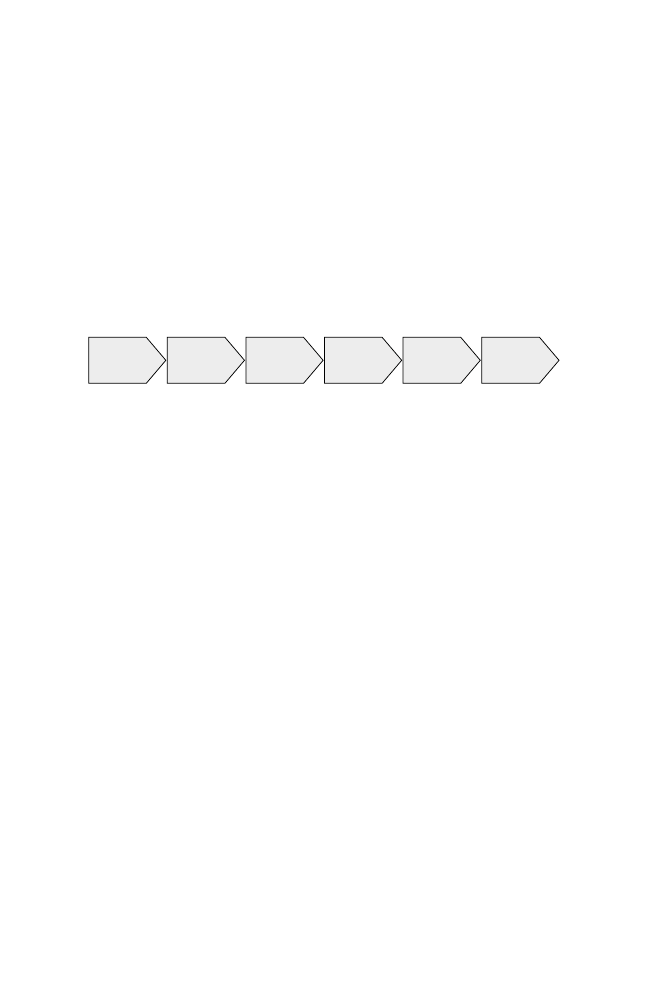
76
Strategic Procurement
In October 2009, Jeff Bezos, the founder of Amazon.com and its
chief executive, said: ‘Our vision for Kindle is every book ever printed,
in print or out of print, in every language, all available within 60
seconds’ (Gallo, 2009). This is a pretty good needs statement for a
primary supply chain (see Figure 9.1) as it establishes some important
parameters. For example, we know that Amazon needs access to elec-
tronic versions of every book, regardless of origin, age or language,
which can then be downloaded to the Kindle within a minute. This,
combined with some cost and development targets, will give all stake-
holders, whether customers, employees or potential suppliers, a
pretty good idea of what is important to Amazon.
Design &
Market
Make
Device
Create
Content
Transfer
Content
Maintain
Device
Dispose
Device
Figure 9.1 Primary supply chain of the Amazon Kindle
Interestingly, the desire to have all the world’s books available to the
Kindle user could have significant implications for the product. For
example, the Kindle uses proprietary software and design formats
and is not as open as other generic readers. The Kindle, unlike other
readers such as the Sony eReader, is tied to Amazon and cannot
receive content that is not produced to its proprietary standards. This
could be a burden in the longer term to the Kindle; if Amazon is to
achieve its vision, it will have to have created unique versions of every
book. If it had adopted an open technology, it could use and sell
e-content created to open standards and tap into the broader
market.
Amazon realizes that customers of the Kindle will value its content
rather than the device, and is using this to lock-in sales for Amazon.
Therefore a design principle of the Kindle is that all content must be
sourced from Amazon because of its proprietary technology. This,
though, has a variety of consequences for the supply chain: it puts a
huge burden on Amazon to become a one-stop shop to meet all its
customers’ needs and it is building in costs that its rivals do not neces-
sarily have to incur. However, it does mean that, at the moment, a
customer who buys a Kindle is tied to Amazon to provide all the
content.
You might be wondering whether Amazon’s strategy is right or not,
and to answer that question I would like to introduce here the element

Knowing What the Business Needs
77
of time. Years ago, products and their associated supply chains lasted
a lot longer than they do now. Products would be launched on the
market (hopefully enjoying premium prices that reflected the origi-
nality and desirability of the gizmo) and over time the supply chain
would be refined to reduce its cost – often with the ambition of safe-
guarding margins as consumer ennui and market competition eroded
the achievable unit price. Nowadays there are some products and
supply chains that have a shelf-life of months rather than years – for
example, cell/mobile phones are only used for an average of 18
months before being replaced.
Against this backdrop I would contest that Amazon’s strategy is
very savvy. Amazon is at the forefront of a new market where both the
equipment and the content need to be designed and built from
scratch and where neither the equipment nor the content is useful in
isolation from the other. Manufacturers of e-Readers play only a part
in the generic supply chain. Amazon owns its supply chain. Sony and
other manufacturers need open standards to stimulate the sales of
their machines as they need to encourage other suppliers to create
content and stimulate the growth of their market. Amazon has propri-
etary standards because it is already known for content, and by owning
the machines and the content it has provided itself with the oppor-
tunity to both create and exploit the full supply chain.
This opens up an intriguing possibility in the way that Amazon
might position Kindle in the future. It could deploy a similar business
strategy to the one used by the manufacturers of the printers that we
use at home. The printers themselves are increasingly cheap to buy
because the supply chain owner makes its money on the proprietary
printer cartridges that we must then purchase. The total cost of
ownership to the customer is driven more by the cost of the
replacement cartridges than it is by the acquisition cost of the printer.
Indeed you could go so far as to say that the print device itself is the
loss-leader in the supply chain.
Over time one could imagine an evolution of Amazon’s strategy
either in line with the printer market, whereby the Kindle becomes
the loss leader and the eBooks the equivalent of the ink cartridge, or
where the Kindle and its owners adopt open standards to exploit not
only its e-Reader market share but also that of their rivals. It’s going
to be interesting to watch what happens.

78
Strategic Procurement
In summary
The more clearly you can articulate what you need to your suppliers,
the greater the chance they have of fulfilling it. The statement of your
needs should focus on describing the ‘what’ and the ‘why’, thereby
giving your supplier the latitude to innovate within clear boundaries
as it consider the best ways it can satisfy your needs.
Research and development are activities that go on throughout
organizations. Separating them with a stage gate process will improve
the quality of new products and services. Explaining where you are in
the research and development process helps when you are involving
suppliers, as does openly sharing information on your intentions,
problems and opportunities. Open innovation is key here.
A complex supply chain is structured in a hierarchy of primary,
secondary and so forth supply chains. Each level in the hierarchy is
designed to satisfy a need and therefore the needs are themselves
structured in a hierarchy. To avoid any unintended consequences of
changes, the needs of each layer in the hierarchy must be established
in the context of the needs of those above it.

Now I want to move on to explore how to pick the best suppliers and
put in place the most appropriate contracts to deliver your value
proposition. It goes without saying that you are always going to select
and reward suppliers that can help to deliver your offer and enhance
your brand. You are going to tell them what you need from them,
when you need it and how much you will pay for it. They will figure
out how best to fulfil this need and make a profit.
The challenge is that you are likely to need different suppliers and
contractual terms at various points in the maturity of the market
within which you are operating. For example, at some point, in order
to avoid being commoditized by your customers you will seek to
differentiate your brand and your solution – in which case you will be
looking for suppliers that can help you to achieve this. On the other
hand, and possibly once your offer has already been commoditized,
you might seek to become cost leaders, in which case you will need
suppliers that can deliver cost advantage.
So, the way you construct your supply chain will be determined by
where the good or service you offer is on its market maturity curve. In
this chapter I am going to introduce a model for mapping your
product or service onto the market maturity curve and then go on to
look at a couple of examples that will show the theory in practice.
79
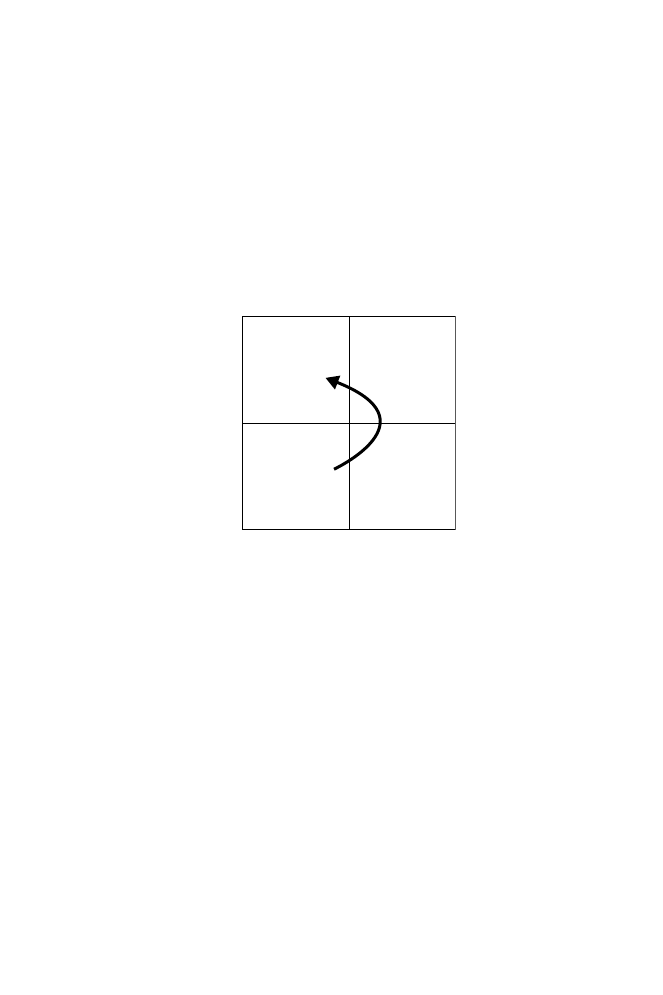
80
Strategic Procurement
Your supply chain on the maturity curve
As an offer travels through its life from inception to retirement, it
moves along a maturity curve. Figure 10.1 illustrates this progress; the
maturity journey is indicated by the arrow. Where your product or
service sits on this journey will have a big influence on your supply
chain, the type of suppliers you want to work with and the contracts
you put in place.
High
High
Market
Maturity
Likelihood
of success
Maturity Curve
Low
Low
Farmer
Hunter
Pioneer
Land grabber
Figure 10.1 The market maturity curve
The two dimensions of the diagram are ‘market maturity’ and ‘like-
lihood of success’. By maturity I mean the position of the good or
service in respect of its customer base – if emerging or embryonic in
the eyes of the customer, it will be low on the axis. If it has become a
‘must have’ it would be very high. By likelihood of success I include
elements like product take-up, degree of competition and your
position in the market (however mature or immature that is).
One of the first things we need to figure out is the market in which
our offer will sit and this is tricky because markets morph, segment
and coalesce. A hundred years ago there was probably a single auto-
motive market and all the automobiles would have been sitting in
‘pioneer’ in Figure 10.1. Today, that market is segmented into a
dozen or so markets such as Sports Utility Vehicles (likely to be a

Picking the Right Suppliers
81
‘farmer’ in the diagram), electric cars (pioneer) and compacts
(hunter); the quadrants are discussed below. As this indicates, you
are probably going to have a better understanding of what market
you are in when it is more mature. In its early stages the market is
almost certain to be more dynamic and ill-defined – both of which
are in themselves characteristics of the pioneer market.
Pioneer
This reflects an exciting and possibly scary combination of immature
market and risky business venture. When you are selecting suppliers
to work in your supply chain they are likely to be very strategically
aligned to your ambitions and leaders in the areas in which you need
their expertise (by the way, don’t be distracted by those suppliers that
are good at things that you don’t really need). Your suppliers are not
necessarily scale players and indeed they might be niche providers or
start-ups. Your contracts are likely to be short in duration, with reward
structures aligned to joint success, and will pay only for what you use.
Land grabber
The market is still relatively immature but you think you are onto
something. You need to get your supply chain well positioned for a
growing market. You will be looking for suppliers that can help you
dominate the market as it matures by providing things like scale and
established distribution channels or routes to the customer. Suppliers
you used in the pioneer phase could be growing with you, but others
might need to be shored up by other sources of supply or even weeded
out. Your contracts are likely to be longer term and reward structures
will still be aligned to joint success (when wouldn’t they?), though
joint success may now look different. While you will probably be still
paying for use, you might also start thinking about paying for
capacity.
Hunter
The market has matured and you are still really well positioned to
make the most of it. However, you might be starting to think about
market segmentation, new geographies and product differentiation –
all to enable you to pick off any high-margin business and premium
custom. Your ideal suppliers will be those that can help you to keep
your product offering fresh and appealing and break into new areas
of the market, thereby keeping your market share relatively high and

82
Strategic Procurement
always profitable. You are honing your supply chain in this phase,
getting it fit for a much more mature market with savvy customers,
smarter competition and more challenging prices. You still have
options on differentiation and cost leadership and you need suppliers
that can support the options you select. However, your contracts will
now vary, depending on your suppliers, which might be agile and
innovative so as to deliver product breakthroughs or productivity-
oriented cost leadership.
Farmer
The market has matured and is probably saturated. Your customers
are more demanding and your opportunities for making money are
becoming harder. Your focus in this market is less about innovation
and more about evolution. You will be evolving your products to keep
them attractive but simultaneously managing your production proc-
esses to ensure you are cost-competitive. Any breakthrough tech-
nology will most likely result in a new supply chain in a new market
– kicking off the whole cycle again. Your suppliers are likely to be
cost-advantaged to ensure your supply chain can remain cost-compet-
itive as the product becomes commoditized. If you haven’t already,
you might consider low-cost sourcing overseas. You might consider
contracting out the whole production to another company, as
happens often in high-tech and pharmaceuticals organizations. The
focus is on cost as well as continuous and incremental improvement.
Obviously, there are huge underlying complexities – both the
benefit and the curse of two-by-twos is that they make things simple
and sometimes too simple. For example, a market can move so rapidly
that to be successful you need to think about the whole lifecycle from
the very beginning of your journey; or a new entrant that has both
attractive products and lowest costs can blow up your game plan at
any moment. That said, let’s look at some examples of how this model
has worked in practice.
Acorn
My first example started life as Cambridge Processor Unit Ltd (CPU),
which was set up in England in the late 1970s. It went from a profit of

Picking the Right Suppliers
83
£3,000 in its first year to £8.6 million in the summer of 1983 on the
back of the success of the BBC Micro, a computer tied into a seminal
British Broadcasting Company (BBC) programme on how to
programme computers. It floated later in that year and changed its
name to Acorn Computer Group plc with Acorn Computers Ltd as its
microcomputer division. Also in 1983 it launched its new PC, the
Acorn Electron, and after a very successful Christmas marketing
campaign had an order book for 300,000 units. Unfortunately,
production line problems meant that its suppliers only managed to
deliver 30,000 units, thereby failing to sate the Christmas demand,
which was soaked up elsewhere when parents bought their children
other home computers such as the Commodore 64 and the ZX
Spectrum (both now icons of a past computer age).
The problems were further compounded in 1984 when the home
computer market collapsed (possibly due to market saturation, as
there wasn’t an awful lot that the typical home user could do with a
computer in 1984 – how the world has changed!) Ironically, this
happened just as Acorn’s production problems were solved and its
300,000 Electrons were successfully made and delivered to Acorn.
Unfortunately the contracts that the company had established with
its suppliers meant that it couldn’t turn off the supply and it very soon
had a huge and costly unsold inventory that it had to house and care
for. All of this contributed to a perfect storm at Acorn and within a
very short space of time the company had sold a majority stake to
Olivetti.
What is interesting though is that the failure of Acorn’s supply
chain in late 1983 and, ironically, the same supply chain’s ‘success’ in
1984, together with poor quality contracts that hadn’t anticipated any
downturn in sales, caused the company to flounder (Shillingford,
2001).
Great things continued to come out of the Acorn stable, many of
them very much ahead of their time. These included set-top boxes
that anticipated the on-demand video market by possibly 20 years and
collaborations in the world of network PCs that must be, at least
partially, the forefather of the latest buzz of cloud computing.
Probably most successful of them all has been ARM, which started life
in 1990 as a joint venture of Acorn Computers, Apple Computer and
VLSI Technologies (a long-term supplier to Acorn). This company
designs low-power microprocessors and licenses the intellectual
property to chip manufacturers. As such it has been market dominant
in the field of mobile phone chips for many years.

84
Strategic Procurement
Tom Hohenberg, Acorn’s former marketing manager and the
man responsible for the campaign that built the demand at
Christmas1983, explained why the Electron foundered: ‘Missing the
boat that Christmas deprived it of the critical mass needed to get the
best software developed for it.’ This statement reflects one of the
basic messages in this book – the need to understand what your
customers value about your product. As I have said already, there
were very limited uses for computers in the early 1980s. What
happened to the Acorn Electron demonstrates that the failure to
create critical mass (‘land grab’) meant that software companies were
unwilling to invest in creating the value-added applications (such as
computer games) it needed for its customers, and as such the market
for the enabling device – the Electron – withered (Sturgeon, 2002).
Interestingly, though possibly coincidentally, ARM Ltd has thrived
partly because of its strategy to downward compatibility, and open
systems mean that the company is no longer tied to software applica-
tions specific to its technology. In an open standards environment it
is able to compete directly based on the attributes of its microproc-
essors (Eda and Shintoh, 2002).
Intel
Intel was formed in the late 1960s and while it was credited with the
invention of the first commercial microprocessing chip in 1971, it
initially made its name as a manufacturer of memory. By the early
1980s increased competition, primarily from Japan, had commodi-
tized the market for memory chips and this was impacting profits – it
was becoming a ‘farmer’s’ market. This, together with the growth of
the PC market, encouraged Andy Grove, Intel’s then CEO, to change
the focus of his company to the development of microprocessors,
which was then entering ‘land grab’.
In 1983, when Intel’s shift of focus occurred, manufacturing of
complex integrated circuits was rather unreliable and therefore every
buyer made sure that it had several suppliers under contract to safe-
guard supply of this critical component. Intel decided that it would
challenge this procurement approach head-on through a dual strategy
of improving the quality of manufacture (it established three large
factories in different parts of the United States) and stopping the
license of its designs to other manufacturers. In effect, Grove’s strategy
was to first ‘land grab’, then ‘hunt’ and, through a variety of strategies,

Picking the Right Suppliers
85
to stay in these highly profitable states as long as possible. These other
strategies included technological advance – after all, Moore’s Law, that
computing power will double every two years, came from the founder
of Intel (see http://download.intel.com/museum/Moores_Law/
Printed_Materials/Moores_Law_Backgrounder.pdf).
The most recent innovations from Intel have been the Intel Atom™
processor used in a variety of products including netbooks, and its
own netbook, the classmate PC. Interestingly, while Intel remains
true to Grove’s desire to keep microprocessor manufacturing in-house
(it now has 15 wafer fabrication plants worldwide), its approach to
the classmate PC is dramatically different. While every classmate PC
marked ‘Intel Inside’, there is a network of country-specific manufac-
turers and other technology partners (referred to as the ‘Alliance’)
to develop and satisfy local demands. For example, in the UK, the
local manufacturer produces them as Fizzbooks; in India as the
Connoi Convertible Classmate PC; in China there are two manufac-
turers; and in the United States four. In all cases, with the exception
of the ‘Intel Inside’, the brand names are different and peripheral
specifications vary.
This is an interesting strategy for ‘land grab’. With a billion school
children globally as the target market for netbooks, Intel is utilizing
local manufacturers, technology companies and distribution channels
to help make its product attractive to the local market, appropriately
supported and with country-specific applications. I suppose this
brings home the point that just because the market is an emerging
one it isn’t necessarily small!
In summary
While puppies may be for life and not just for Christmas, this is not
true for either suppliers or contracts. As the supply chain owner
goes through the market maturity curve, he or she must tailor both
the sources of supply and the contract terms to ensure his or her
offering continues to exploit the opportunities the market presents.
While some suppliers will go on the whole journey, others will come
and go, and success will be determined by making the right choices
along the way.

86
This page is intentionally left blank

You have just found out that you spend millions (if not billions)
with your suppliers. You have zillions of suppliers and thousands of
employees. Your P&L could really do with an injection of cost
reduction to the bottom line and some real innovation to the top.
You have just bought into the concept that procurement may be
able to help and I have just laid the responsibility for direction
setting and sponsorship firmly at your door – but where on earth
should you start?
Don’t panic, help is at hand. The Pareto principle could have
been designed for procurement: its 80/20 rule was rarely more
applicable. Even if you haven’t paid much attention to procurement
in your organization, you are very likely to have 80 per cent of your
spend with no more than 20 per cent of your suppliers and 20 per
cent of that 20 per cent will be important to you.
However, before you start breathing normally again and put the
brown paper bag away, I should also point out that there are lots of
other more important lenses to look through when determining
where you should start; for example your key supply chains and
critical suppliers. You may not spend much money on these and (this
is where the hyperventilation might start again) you may not be that
important to the suppliers of these business-critical services and solu-
tions. You may even have a monopoly supplier who actually doesn’t
care about your organization or its success.
87

88
Strategic Procurement
In this chapter we will explore how you can analyse your external
spend for opportunity and risk, spot the critical suppliers and assess
their attitude to you as a customer.
Imagine that you are an alien approaching Earth for the first time. I
guess that you would begin with having a good look at the whole
planet from space – to get the lie of the land (so to speak). Then you
might start to classify things – land, water, atmosphere; and then to
categorize them further – land into mountains, plains, desert and
icepacks; water into seas, lakes and rivers; atmosphere into oxygen,
nitrogen, etc. At some point you would probably look at how these
things interact, what their uses are and who or what uses them. Ulti-
mately you would figure out what, if anything, was useful to you. I
think this is a pretty good analogy for an organization that is looking
at its third-party spend for the first time: you categorize, classify and
quantify your spend, you figure out how it is used now and ultimately
assess its future usefulness. Assuming the alien has good intentions, it
will probably start to think about how to get what it wants by figuring
out what it has to trade… but I think this is probably stretching the
parallel too far. So let’s abandon the space ship for a moment and
head to the accounts payable team instead.
The first thing you probably want to know is how much you spend
in total. As payments vary through the year – with ad hoc purchases,
monthly and quarterly rentals, etc – you should pick a period that
makes sense as your baseline. I would suggest 12 months. If you
haven’t really studied your spend before, concentrate on the things
you know: the suppliers you pay, the departments that spend the
money and the general ledger codes your company uses to break
down costs for budgeting and tracking purposes.
This is the first ah-ha moment – do you remember the banker who
told me that the bank didn’t spend money because it didn’t make
anything, and the reaction to the news that it actually spent £2 billion
despite not making anything? Trust me, these few snippets of infor-
mation will get a good conversation going in any boardroom. Imagine
the conversation: ‘We spend 50 per cent of our direct costs with over
500 different suppliers but use more than 6,000 suppliers overall;
most of our money is spent by your department, Fred; we are spending
20 per cent alone on travel – particularly the corporate jet is costing

Understanding Your Spend
89
us…’. I jest somewhat – although the only time I got the full attention
of one boardroom was when I was responsible for developing a new
travel strategy and there was a corporate jet at stake!
In reality what you have with these few pieces of information is the
alien’s first step to understanding Earth, its masses and its quantities.
This is the time when you can figure out for yourself whether or not
third-party spend is worth pursuing as an opportunity to reduce costs.
The less this information has been looked at holistically, the greater
the opportunity. Beware the enthusiast who talks about the good
departmental deals that have been done – they will be there, but a
deal done with little knowledge of the bigger company-wide picture
will always have room for improvement.
It is also a good time to look at the suppliers with which you spend
most money – some will come as a complete shock, especially if as
part of your analysis you have linked together all the suppliers that
are part of the same corporation and reported them as one. Don’t be
fooled though: expenditure alone doesn’t always identify which
suppliers are important to your business and your customers, and I
will introduce some other techniques to help with this later in the
chapter. Depending on the business you are in, you could look to see
which of these suppliers are also your customers. I am not keen on
reciprocity as it can drive both entities to making suboptimal deci-
sions – but as a factor, it is important to know.
I am working on the assumption that you don’t have a procurement
system for recording requests, orders and receipts at the moment or
that if you do, it will provide an incomplete picture of your expend-
iture. However if you do, this is obviously a better data source to inter-
rogate for information on who spends what with which suppliers. In
this case you will probably have a formal category structure to help
classify your expenditure. On the assumption that your accounts
payable system and general ledger provide the best overall data
(frequently the case, in my experience), these should, despite the
limitations of all general ledger classifications, provide a reasonable
outline of your spend. The management information will have helped
to identify the departments with the largest spend and this will allow
you to focus on particular stakeholders who you might need to win
over to your procurement improvement exercise.
Regardless of whether you have a purchasing system or have to
rely on other sources, be wary of those areas of spend that are most
scrutinized by the board, such as marketing and consultancy, as you
could find that spend against these lines is slender and, mysteri-

90
Strategic Procurement
ously, the incidence of misclassification is high. I once found the
acquisition of a hot air balloon for marketing recorded as an IT
peripheral.
A few months ago I was completing a crossword. It was not a cryptic
one, which I confess are way beyond my ability, but a simple, complete-
over-coffee crossword that gives you one word or phrase and you have
to identify a word or phrase that has the same meaning. The clue was
‘cost’ and the answer was five letters long. Even after I got the letter
‘p’ as the first letter, I was absolutely stumped. Eventually though I
had to accept that the answer was ‘price’. I was somewhat outraged
because to me the clue was completely misleading. Cost and price are
not the same by any stretch of imagination. In fact I would go so far as
to say that beyond their use in calculating the profitability of some-
thing there is really very little correlation between the two words at
all. To all those crossword compilers out there I would say that the
same applies to the words ‘expenditure’ and ‘value’. These words are
not synonymous and in procurement, woe betide anyone who thinks
that they are.
Once you have classified your expenditure and you know how
much you are spending on particular goods and services (this is
probably the next level of analysis down from your general ledger
codes), you need to understand not only the absolute spend but also
its value to your organization. Figuring out what is important to your
organization about what you buy or who you buy it from is not some-
thing you can or should do in splendid isolation – wherever you sit in
the organization. This is because supply chains exist to meet the
requirements of your customers or colleagues; they involve tiers of
suppliers, some of whom are more visible to you than others; and
they involve various stakeholders across your organization. Not only
is it essential to get all the stakeholders involved, I have found that
there is something really magical about getting them together to
discuss what you are buying and why. Often people involved in the
same supply chains have never even met – and the first added value
you can deliver to the organization is to introduce them to each
other.

Understanding Your Spend
91
Before we go into more detail, I think it might be worth just taking
stock of where we are. There are many ways of cutting the infor-
mation on your cost base and each has a role to play. At a strategic level
there are your supply chains, each one of which is designed to deliver
something important to your customers or your colleagues. We have
already explored how important it is to make sure you understand
the requirements you are attempting to satisfy and ensuring that all
the assets at your disposal are optimized and aligned to meet those
requirements in the most cost-effective way. At an operational level
there are the goods and services that you buy and these can be catego-
rized according to their general function. These goods and services
might support many of your supply chains. An obvious example would
be logistics. Logistics is a category of expenditure and can be broken
down into lots of sub-categories such as air freight, road haulage, sea
freight, courier services and so on. Typically most organizations will
have 30–50 categories and up to 150 sub-categories.
The challenge that always faces you is how to optimize the sub-
category at a general level while also making sure that the supply
chains continue to receive the services they require to function. The
only way to meet this challenge is to look at what you buy through
both operational and strategic lenses. The strategic view will help to
safeguard your value propositions and the operational one will make
sure that you are leveraging the market and supply base effectively.
In this chapter we’ll be looking at what you buy through this oper-
ational/category lens. The connection with the supply chain view is
maintained because the first thing I am going to do is ask what the
sub-category of expenditure is used for and how important it is to the
business.
I am now going to introduce you to some techniques that can get the
ball rolling and help your organization to assess the value and oppor-
tunity associated with the things you are buying and the motivations
and attitudes of the suppliers that you are using. The tools are simple
but can be very powerful, and their value lies not only in the output
but also in the discussion they generate as you go through the process.

92
Strategic Procurement
I know this is less a book for practitioners than it is a book to describe
the art of procurement and its contribution to your organization, but
I have always found that tools such as these shed such light onto the
problems and opportunities of third-party expenditure that they are
worth sharing with all stakeholders, regardless of their roles in any
organization.
After such a fanfare, I am sure you are wondering what mystical
things I am about to unveil, and you might be a little disappointed to
find another two-by-two, in Figure 11.1. First let me describe what you
are looking at and then I will give you some examples, starting with
the two dimensions against which you will plot the sub-category, then
the quadrants in the figure.
High
High
Business
importance
Procurement
potential
Your Expenditure
Low
Low
Bottleneck
Strategic
Routine
Leverage
Figure 11.1 Category analysis matrix (Kraljic, 1983)
Business importance
This is your stakeholders’ assessment of the importance to the
business of the good or service you are buying. A good way of getting
to the heart of this is to ask the question: ‘What would the impact be
of this good or service failing to do what it is supposed to do?’ It is
important that you future-proof answers to this, so some of the ques-
tions you ask must be pitched in such a way that forecast information
can be teased out.

Understanding Your Spend
93
Procurement potential
This is your assessment of your organization’s influence on the supply
market for the good or service you are buying. Key to this are ques-
tions like: ‘How many suppliers are there who can meet our require-
ments?’ and, ‘Do we spend a reasonable amount of money on
acquiring this good or service?’ The positioning on the grid is deter-
mined by the size and appetite of the supply market, the ease of
switching suppliers, and your organization’s leverage and attrac-
tiveness to the supply market. The challenge is in understanding the
supplier market(s) that are capable of delivering the good or service
under review as failure to do this effectively can deliver misleading
results.
Bottleneck
If you don’t spend much money on the good or service, or you are
buying from a restricted or monopoly supplier, or the switching costs
are very high – you are on the left-hand side of the bottom axis. If
what you are buying is also business critical, the item will be plotted
into the top left quadrant – which is the scariest place on this matrix
and is labelled ‘bottleneck’. Your strategy for bottleneck is always to
move the item out of that quadrant, for example, by going for a
standard specification instead of bespoke, or by using an agency (eg
media buying) to increase your market clout.
Routine
If what you are buying is not business critical and you don’t have
much clout in the market then it should be plotted into the bottom
left quadrant, which is labelled ‘routine’ and is likely to be something
that you will only look at when you have nothing else to do. Once you
do look at it then it is likely that you can save more money by stream-
lining your acquisition process than you can from shaving percentages
off the acquisition price. For example, if you are buying a box of
pencils then bear in mind that the typical cost of an order set (request,
order, receipt and payment) is over US$70 (GBP £50).
Strategic
If you spend a reasonable amount of money on the good or service,
have a healthy supply base and can switch suppliers relatively easily,
then the service or good will be on the right-hand side of the bottom

94
Strategic Procurement
axis. If the good or service is also business critical then it should be
plotted into the top right-hand quadrant and will be labelled ‘stra-
tegic’. If you are determined to form a strategic alliance with a supplier,
you should only consider it for a category that sits in this quadrant: it
takes time, effort and commitment from both supplier and client to
form a strategic alliance, and only things that are important to you
and that you have some leverage over warrant this sort of attention.
Leverage
If the good or service is not important to the business but the supply
market is healthy and your position is strong, it should be plotted into
the bottom right-hand quadrant labelled ‘leverage’. If you are going
through this exercise to reduce costs then your eyes should light up
with spinning £££ signs every time something falls into this classifi-
cation because you spend a lot, the supply market is hot and it is easy
to change supplier, which all means you can exploit the market
without fear.
This is a pretty simple technique and you will have great conversa-
tions and a raised understanding of what you buy when you have
gone through this exercise with your stakeholders. Now for some
words of caution – things will move around the quadrants over time;
suppliers will seek to move things around the quadrants and their
ambition is always to be in the top half of the grid – because as already
noted, when they are there you will care about them more!
Let’s explore this in more detail and start by taking a look at inno-
vation. When a good or service is new it is likely that you can only get
it from one supplier, and if it is business critical then this means it is a
bottleneck item.
As you will see from the arrow in Figure 11.2, over time and with
careful management the innovative good or service being procured
will move to the right. This could simply be because when you started
out you were piloting it and now are spending much more on it. It
could also be that there are more suppliers now able to offer the same
or similar service. Ultimately the value of the innovation to your business
could diminish as newer offerings come to market. If you are still
buying the product at this time then it may become leverage or even
routine. This happens especially in those fields that rely on innovation
for market competitiveness (eg in oil and gas – the ability to find and
extract more oil constantly drives the industry to seek out the cutting
edge of reservoir mapping and directional drilling techniques).
Understanding Your Spend
95
High
High
Innovation
Business
importance
Procurement
potential
Your Expenditure
Low
Low
Bottleneck
Strategic
Routine
Leverage
Figure 11.2 Category analysis of an innovative good
Another aspect that you need to be aware of is that services and
systems are often a lot more important to the business than equipment
or goods will be. As you can see in Figure 11.3, a personal computer
(PC) is not important to the business: it is a piece of equipment that
will at best be leverage if you buy lots of them, but could equally be
routine. However, when you look at the supply chain in which the PC
sits and reclassify the PC as part of your ‘desktop services’, suddenly it
is a personal productivity tool, a repository of business critical infor-
mation and it is right up there as strategic. Therefore when you are
looking at the commodities you buy, you need to do this at various
levels – by all means plot ‘desktop services’, but when you come to
look at this in more detail break it down into the constituent parts (eg
PC, software, helpdesk, peripherals) and plot these sub-components
onto the grid too.
So in summary, this is an important and simple tool for you to use
to analyse the goods and services you are buying and to identify those
that you need to manage because they are important to you and those
that will deliver cost-reduction opportunities with little business risk.
96
Strategic Procurement
High
High
Desktop
Services
Business
importance
Procurement
potential
Your Expenditure
Low
Low
Bottleneck
Strategic
Routine
Leverage
Personal
Computer
Figure 11.3 Category analysis of a service versus a good
Now we know what is important to you, let’s look at what your suppliers
think about your business. It is very easy to assume that because a
supplier is important to you, it feels the same way about you; unfortu-
nately this isn’t always the case. Figure 11.4 is a useful way of discussing
and mapping your supplier’s view of you. Let us look first at the
dimensions against which we will plot our suppliers, then at the
quadrants.
Account attractiveness
Measurement along this axis is usually rather subjective and to some
extent will be driven by the alignment of your strategy with that of
your suppliers. The sort of things that should be considered when
plotting this include: if you are a ‘blue chip’ company, does working
with you provide suppliers with a great reference that they can use to
advantage with potential customers; as a pioneering organization you
could be interested in piloting their products or collaborating on
new ventures; or as a multinational you might be willing to take them
into new territories.

Understanding Your Spend
97
High
High
Account
attractiveness
Sales
potential
Your Suppliers
Low
Low
Nurture
Core
Nuisance
Exploitable
Figure 11.4 A supplier’s analysis of your business
Sales potential
Against the horizontal axis you need to plot the suppliers’ view of the
value of your business to them. This is often determined by the
revenue they receive (or think they could receive) from your account.
This is both an absolute measure in respect of your spend with the
suppliers as well as a relative measure in respect of their total revenue
and other large clients.
I remember once talking to a supplier about this diagram and he
said that the measure for his company, against both dimensions, was
revenue. I found then and still find this remark to be rather bizarre
because logically the more important measure to the supplier should
surely be profitability. It is interesting, because as you seek to improve
your relationship with the supplier and cut your costs then the relative
importance of revenue and profit will be critical to the success of your
negotiations. If the supplier is focused upon revenue from your
account and you want to reduce your expenditure (but are happy to
offer greater profitability) it could be difficult to get the supplier to
understand the value of your proposition, and the dialogue is likely
to stall. This is why it is important when selecting suppliers to assess
the shortlist against not only objective but also subjective criteria –
key amongst these will be cultural fit and strategic alignment. In
teasing out the information it is important to discuss how success is

98
Strategic Procurement
measured in the sales force of the supplier and what the supplier’s
business objectives are (to become a million dollar revenue business
is likely to be quite contrary to your ambitions).
Nurture
If the sales potential is low, but the account is attractive to the supplier,
your business will be seen as something to nurture. As a client this is a
good place to be as the supplier will be keen to build your business,
retain your good regard and generally go the extra mile.
Core
If the sales potential is high and the account is attractive to the
supplier, it will view your business as core to its success. As a client you
can expect that the supplier will give your business board-level
attention, which in turn should lead to good service, keen pricing
and a focus on your strategic ambitions and its contribution to them.
As I mentioned before, if the goods and services you are buying from
it are strategic to your business then this is the relationship that you
might want to treat as an alliance.
And now we get to the scary ones – especially if the goods and
services you are buying from the supplier are important to you.
Nuisance
If your business is not valued either from a sales or account point of
view, your custom will be seen as a nuisance. This means that the
supplier will not be that bothered about winning or retaining your
business. You can expect shoddy services, at least in your eyes, and a
limited interest in responding to any tender you issue.
Exploitable
Worse still is if your sales potential is high but your account is not
valued: in these circumstances you will be seen as exploitable. In this
scenario the supplier will be happy to take your business but will not
be particularly bothered about its quality or the delivered value for
money. Your account is likely to be serviced by a slick-suited sales
person rather than a service manager.
The more fragmented your expenditure is or the less you commu-
nicate your strategic ambition to your suppliers, the more likely you
are to be in an uncomfortable position with them. Much of this is

Understanding Your Spend
99
obviously fixable once you have done the analysis and studied the
results. It might also start to answer some of the nagging doubts you
had about the supplier’s regard for your custom. Once you know the
reasons, you can start to address them either by making yourself more
attractive to the supplier or by finding a suitable alternative source
for the goods or services that you need.
In summary
In this chapter we have looked at your spend and supply base through
an operational lens. Where earlier chapters focused upon supply
chains and how to ensure they meet the needs of your customers or
colleagues, this operational analysis has allowed you to look holisti-
cally at what you buy and from whom. Evaluating your expenditure
from this angle is critical in optimizing and leveraging your supply
and its sources.
What you do with this information will be driven by the strategic
imperatives of your business. If poor supplier engagement is creating
problems, you could focus on securing better supplier performance
by improving the suppliers’ view of your business. Alternatively, if
your bottom line performance could do with a boost then you could
deliver cost reductions by better management and leverage of a
specific category of expenditure. In the next chapter we are going to
look at the sourcing process in more detail and how to optimize it to
your benefit.

100
This page is intentionally left blank

I hope that by now you have decided that I am onto something. You
may have figured out what percentage of your cost base is actually with
your suppliers. To give you a sleepless night you may have counted
your suppliers – much more troublesome than sheep, trust me.
Now is the time to talk about some of the sourcing processes that
you need to put in place to make sure that you are getting the most
that you can out of your spend and critical suppliers. You may wonder
why it has taken me until Chapter 12 to get to something that is so
fundamental to procurement and, let’s face it, is the place where
many other books on procurement actually start. My excuse, and I
think it’s a good one, is that this book isn’t really about the mechanics
of procurement; it is more about its value proposition and strategic
potential for your business.
In this chapter, therefore, I am going to briefly describe some of
the critical things that you need to consider when you are deciding
which suppliers’ offers are most attractive and appropriate for your
needs. This is a tale as much about avoiding the pitfalls as it is about
seizing the value. The three areas I want to pick out deal with the
process itself, your requirements and the supply market.
It’s about more than the money
By now a heading like this from a procurement person like me
shouldn’t be such a surprise. We have already established that the
success of your vision, business objectives and five-year plan will
101

102
Strategic Procurement
depend upon the way you manage all the assets that you have at your
disposal. Key amongst these assets will be the external organizations
with which you have a relationship; amongst the most important of
these will be your suppliers. Therefore your success will be partly
dependent upon those suppliers with which you will do business and
particularly upon that subset of suppliers that deliver business critical
goods and services to you and your customers.
This just emphasizes how important it is to have a well-defined
sourcing approach that enables you to meet business needs, whether
balancing short-term need with longer-term flexibility, cost reduction
with added value, or delivery safeguards with innovation. As important
as the process you use are the people that you involve in it. These
supply decisions are too critical for any one person, even the CEO, to
make on his or her own without first consulting others.
Level playing field
I know that many suppliers still don’t really like having to deal with
either a procurement department or a formal acquisition process but
some, those I like to think of as enlightened, recognize that both can
be valuable. They can be valuable because if there is a clear process
there are likely to be agreed business requirements, an established
business case and, most important, earmarked funding.
A clear process will also mean that evaluation criteria have been
agreed before the process kicks off and will guide the selection
process, helping to create a level playing field. Even the simplest of
procurement processes will result in identifying a few criteria, such as
quality, cost and corporate responsibility, which can be used to
consistently evaluate offers. If the service being bought is complex or
business critical, there will be other criteria such as cultural fit, shared
values and some sort of strategic alignment. The criteria will be
weighted and the supplier proposal will be scored against the criteria
to inform the selection process. A level playing field means that
suppliers and their solutions will be evaluated against a mix of
objective and subjective criteria.
What has been proved over and over to me is that whatever precon-
ceptions stakeholders arrive with, a robust procurement process will
help get to the right answer for the business and create buy-in to the
chosen solution – which really helps when implementation starts.
Ultimately, while no one likes to be told they have been unsuccessful,

The Secrets of Sourcing
103
detailed feedback on the reasons for failure to win work is hugely
powerful, and I would encourage all suppliers to ensure they are not
fed any platitudes and really dig deep to fully understand the
reasons.
Reciprocity
This leads me nicely to the last thing I want to explore under this
heading – the lure and pitfalls of creating complex relationships
when you are both a supplier to and a customer of another organi-
zation. Right at the beginning of this book we recognized that in
today’s complex world very few companies have straightforward rela-
tionships with each other. In certain industries, eg financial services,
automotive or energy, it is very likely that you will have suppliers that
are also customers; it is equally likely that you will have suppliers that
you partly own. Regulation will ensure that for some of these relation-
ships, you operate Chinese Walls and this is good. For all other rela-
tionships I suggest that the golden rule is that each of the business
relationships makes sense in its own right.
If you are awarding a contract, the supplier you give the business to
must be the right one for your organization. Similarly, if you are
thinking about investing in a company that is also a supplier to you,
that investment must stand on its own merits. If all things are equal
and the choice is down to two suppliers, then the one you have a
deeper relationship with might win the day. This is as close to the
proverbial win-win as you are likely to get.
Anything more convoluted than this could be a commercial mine-
field. If you award business because your company part-owns the
supplier, you are potentially propping up a supplier that doesn’t
warrant it, and just imagine what happens next if your organization
decides to dispose of its holding – you could be tied into a poor-
quality relationship for years.
Requirements
You need to know what you need. No, I’m not going to go over old
ground. I am well aware that you may think that several of the earlier
chapters in this book have done this topic to death. But this is where
the rubber really hits the road. You have come up with your needs

104
Strategic Procurement
statement, your functional specification and your scope of supply –
those elements that clearly articulate what you and your customers
will value from the thing you are making or buying.
You must also understand your current total costs. You need to
know this because if you are going to make the right decisions when
you come to evaluate alternative sources of supply you must account
for all the costs associated with your proposed solution and compare
them with your current total costs. One of the greatest challenges of
working in global supply markets is making sure that you are
comparing apples with apples when you evaluate them. Figure 12.1
provides a good example of the sort of factors that need to be taken
into consideration. As you will see from the illustration, we have gone
out into the market with the specification of the component that we
want to buy. By going to manufacturers in the emerging markets of
the Far East, it looks like we have found a great source of supply that
will save us 15 per cent on the price paid to the incumbent supplier.
So far so good. However, the picture changes somewhat when we
start to add the costs associated with logistics (we now need to
transport it half-way around the world), inventory (even if we can
leave the ownership with the supplier while in transit, we need to
carry higher levels of both stock and emergency buffer stock because
the inventory lead time is greater), and extra layers of quality control
and higher stock holdings (which in turn increase our risk of obsoles-
cence). In my example this gets us to a neutral cost position. If you go
on to factor in additional costs (albeit shared) of local procurement
and quality assurance resources, this great deal doesn’t look so irre-
sistible any more.
As illustrated in Figure 12.1, some of the elements of total costs
that can be overlooked are longer transportation times (especially if
sea freighting), which mean that inventory and safety stocks might
need to increase, the need to have local offices to manage the supply
base, and currency hedges or other risk management factors. Another
element that needs to be taken into account is the sheer cost of
switching supplier. Sometimes the supplier is so embedded into a
supply chain that the cost of changing becomes prohibitive. You only
need to look at some of the ‘hole in the wall’ operations (effectively
the co-location of key suppliers with their key customer) of some of
the automotive operations to see that this might be an issue. For
example, synchronous delivery operations such as those conducted
at the Nissan plant in the North East of England have many advan-
tages. Under synchronous delivery, a signal is sent from the assembly
Ex-works
comparison to
incumbent
supplier cost
level
Increased
logistics costs
due to
additional
distance
Increased
inventory
holding due to
travel time
Average
obsolescence
risk premium
Incremental
emergency
freight cost
caused by
distance
On-cost caused
by increased
factory
disruption
Local
procurement
and quality
presence
Component
cost
+
–
-15%
7%+
4%+
2%+
2%+
3%+
5%+
Cost Ef
fect
Associated
supply costs
Incumbent
Cost
Figure 12.1 Example of total cost of ownership study
105

106
Strategic Procurement
line that in a matter of hours the next car down the line is going to be
orange. This notification allows the seat supplier to arrange for four
seats with appropriate trim to be delivered from the supplier site to
the exact point in the line where these seats can be bolted into place.
I suggest that in this instance the switching cost associated with the
displacement of the incumbent supplier, the establishment of the
new supplier and the disruption this could cause to the production
line would be disproportionate to any unit cost reduction.
Unfortunately, high switching costs don’t always relate to careful
sourcing decisions such as those in the case of Nissan. Sometimes
they are the by-product of very old sourcing initiatives that have been
ill-thought through. Even some of these hole-in-the-wall automotive
operations will fall into this category. For example, co-location can
mean the manufacturer imposing its inherent cost base on its supplier
because of its geographic location and the conditions of the labour
market. If you remember from Chapter 11, high switching costs can
mean plotting the category into ‘bottleneck’ and recognizing the
incumbent supplier as the only viable source of supply.
Supply market knowledge
Once you have defined the supply market(s) then you need good
market intelligence. Just because you picked a certain supplier last
time around doesn’t mean that it is a shoo-in now. The market might
be changing: there could be new technical innovations or market
entrants that are capable, given the chance, of delivering a step-
change in productivity or customer satisfaction. Your current supplier
might have its hands full with a new client it is on-boarding and
doesn’t have time for you. Or it might have financial challenges that
are going to mean that service, quality or, more worryingly, supply
continuity are going to be threatened. There might be suppliers you
have never heard of emerging in new geographies with cost-advan-
taged capabilities that incumbent suppliers cannot match. You need
all this information and more to even get to your long list of potential
suppliers.
I have always found Michael E Porter’s five competitive forces
that he created to determine industry profitability work very well
when you are trying to figure out the potential supply market to
meet your need. Just to remind you, Porter (1985) states that there
are five competitive forces at work in any industry. These are:

The Secrets of Sourcing
107
existing competition, the power of both buyers and suppliers in the
market, the threat of substitutes, and barriers to new entrants. What
I particularly like about Porter’s model is that it takes account of
substitutes and new entrants. If I were looking at business travel I
would include video and telephone conferencing as potential substi-
tutes to the need of business travel, and their providers as new
entrants alongside the more traditional travel companies. This obvi-
ously assumes that the need is something along the lines of: ‘To
facilitate effective communication within and outside the company
to achieve the business objectives of sales, service, management and
culture.’
Suppliers that differentiate
At some point and perhaps from day one, to avoid being commodi-
tized or disintermediated by your customers, you will seek to differen-
tiate your brand and your solution. This is obviously great stuff. What
you might not have given much thought to is that your suppliers, in
order to avoid being commoditized by you, will seek to differentiate
their brand and their solutions too. The most common way in which
suppliers have differentiated themselves is by delivering higher value,
better service and greater innovation to their corporate customers.
More recently, some suppliers have decided that this isn’t enough or
isn’t delivering what they want, and have sought to differentiate them-
selves directly with the customers of their corporate client.
The most famous, and certainly the most successful, example of
this is Intel when it worked to create a brand that was recognized by
the public (effectively by its customers’ customers). Brought to life by
its marketing campaign at a time when ‘ingredient branding’ was a
relatively new concept, Intel’s logo and its accompanying catchy
jingle were soon widely known.
One of the best and most enduring ways to capture the public’s
attention is to turn your brand into a verb. I always ‘Hoover the
house’ and ‘Google a fact’ and while I haven’t quite got around to
‘Twittering’, that probably says more about me that it does about
Twitter. ‘Intel Inside’ is a pretty good equivalent of this and a shrewd
marketing tactic. In the market for personal computers, which has
itself become heavily commoditized, what better way of safeguarding
your market share and margin than by making the customers of your
customers actively seek out your components in the products they

108
Strategic Procurement
want to buy? Who can watch the adverts for Intel’s corporate
customers’ computer ads and not think of Intel? What Intel did very
smartly is ensure that customers, even fairly ignorant customers (and
I include myself amongst them), know that ‘Intel Inside’ means
quality and faster processing. And don’t you think that, because these
manufacturers and Intel are locked in such an overt and symbiotic
relationship, negotiations on target cost are just going to that bit
more difficult for the manufacturers?
Suppliers that disintermediate
Given the opportunity, your suppliers might also attempt to disinter-
mediate you from your own supply chain and customer base. Look at
the airlines’ websites and high street travel agencies to recognize the
potential for this. The travel agents used to be the airlines’ key
business conduit to the passengers; now some of the low-cost airlines
won’t even deal with travel agents but insist on direct customer rela-
tionships with their passengers through their websites.
Another example is insurance, as providers bypass insurance
brokers to establish direct relationships with the insured. What is
interesting about this is the rise of online comparison websites that
are effectively recreating the broker’s role, albeit through the web.
Disintermediation is intended to cut out the middle man and no one
can argue that the web has made a lot more information universally
available and searchable. However, the limited occurrence of disin-
termediation does make one realize that information overload brings
its own intermediation opportunities.
All that said, when you are constructing your supply chain, a good
test of your value proposition is whether or not someone could do it
without you. If you hold the patents, intellectual property rights or
valued brand in the supply chain – probably not; otherwise, maybe.
We have already established that the health and well-being of your
company is inextricably linked to that of the key suppliers you work
with. This should force your company to look at both the short- and
long-term implications of your actions for the supply markets and
suppliers you work with. Unfortunately, the longer-term implications

The Secrets of Sourcing
109
are something that many organizations are unwilling or unable to
grapple with.
When an organization is facing squeezed margins and tough
competition, it is obviously important that it can meet these short-
term challenges and basically live to fight another day. Compound
this with the fact that many key decision makers in the organization
are likely to have a 12-month performance, appraisal and reward
horizon, and it is easy to see how all these factors encourage us to
make short- or medium-term decisions and leave longer-term issues
for the longer term.
If we are faced with supply choices that put all our eggs into the
best basket today, even recognizing that this is likely to damage the
health of the supply market and the competitiveness of its partici-
pants in the longer term, many of us are likely to take the short-term
view. At best some of us will award small pieces of business to emerging
companies or the also-rans, but this is all too often more of a gesture
than a move of substance.
All of this is understandable. However, if we turn around in five
years and complain because there is no genuine competition in the
market, that the incumbent suppliers have become complacent and
we have no leverage in the face of near-monopoly suppliers, let’s just
remember that we share the blame for this.
One of the biggest challenges facing companies now is to understand
the cost structure of the markets we buy from, so that we know when
we are tapping into a cost advantaged supplier and when the supplier
is slashing its margins and ‘buying the business’. Both of these situa-
tions can be all right – provided that we know what is going on. Who
doesn’t love the occasional loss-leader, the special offer that is there
to hook us in? However, when times are tough and finance is tight,
too many loss-leader contracts can mean danger to both the supplier
and our supply. Therefore we need to understand the cost structure
of the good or service we are buying and the cost advantage of the
suppliers that provide it.
110
Strategic Procurement
Table 12.1 Product/service cost structure
Element
Cost drivers
Labour
Utilization rates
Productivity
Labour costs
Raw materials
Quality
Leverage
Vertical integration
Substitutes
Transport
Bulk and weight
Distance
Energy
Process efficiency
Unit cost
Table 12.1 shows us some of the bigger elements that will make up
the costs of the good or service, such as labour, raw materials, transport
and energy. For example, the cost structure of a consultant is likely to
be predominantly labour-related and the cost drivers will be utili-
zation (the higher the utilization rate the lower the unit cost); labour
cost (the fully loaded cost of the individual – salary and overheads);
and productivity (if the consultant can reuse knowledge on your
engagement it can be completed faster and to higher quality). Alter-
natively, if the product is milled steel, the main costs will be raw mate-
rials, energy and transport, and the cost drivers will be the availability
and cost of the raw materials (quality required and leverage capa-
bility of the supplier); transport (distance from both its source and
destination and mode required); and energy (efficiency of the plant
and the manufacturing process).
Once you have identified the cost profile of the good or service,
you can start to identify suppliers that can offer genuine cost advan-
tages. For example, the milled steel manufacturer that is in close
proximity to the source of its raw materials and its customer market
will be able to offer lower costs than a manufacturer in a remote
location with access to lower cost labour. This is because in this
example, transport costs represent a much higher percentage of the
cost of its production than labour does. This is a simple example of a
more complex exercise, the completion of which will help you to

The Secrets of Sourcing
111
distinguish between suppliers that are buying your business and those
that are sharing the benefits of their cost-beneficial supply chain.
If we understand the cost structure of our suppliers we can also
start to re-engineer our relationship with the suppliers to reduce the
costs for us and for them. This is covered in more detail in Chapter
19. But to whet your appetite: if you knew that a systems integrator (ie
those companies that will implement complex IT systems into your
business and integrate them with existing applications) typically
spends over 25 per cent of its operating costs on bidding for work
(remember the tender process for such pieces of work is often more
than 12 months and can cost millions) then you might think about
re-engineering your contracting process if the supplier will share the
process savings with you.
Just because you are the biggest company in the world doesn’t mean
that when you are looking for a suitable supplier you should only
look at the biggest companies in the supply market. One thing I have
noticed as everything ostensibly becomes global is just how much
actually remains local and even parochial. While it is true that
suppliers will often have global, regional and national accounts, day-
to-day management will almost always be local, with the customer
services director based in the same city as the main client contacts.
The key to me seems to be not so much how large or global you are
as an organization, but how significant and geographically spread
your needs are. In this way, an international roll-out of a new computer
system will probably require an international supplier capable of
providing a consistent and uniform solution globally, whereas a
marketing campaign for China will need high levels of local content.
In all this the important factor is the international or local nature of
your requirements and not the international or local nature of either
your organization or the supply market.
Therefore when you are assembling your supplier shortlist, you
should evaluate their capabilities against your requirements to
determine how appropriate their geography and scale are. If you
select a supplier because it is your equivalent in its market (you are
number one and so is it), you could end up being unimportant to the

112
Strategic Procurement
supplier because while overall you are large, your business needs are
too small to be of interest to it. On the other hand, beware the temp-
tation to give your custom to a smaller organization if it means that
you become more than a third of its business volume. While it might
be nice to know that you are the supplier’s most important customer,
it becomes very uncomfortable if, for whatever reason, you want to
move to a new supplier. It can also be very tempting to give the
supplier more business because you want to become more important
to it (perhaps you are suffering from lack of attention on a critical
service). Once again I advise caution – you must make sure that the
bundle of business makes sense to both of you from the get-go.
In summary
This chapter has been a smorgasbord of some of the things you will
want to consider when making your sourcing decisions. Most particu-
larly, I picked out items associated with specification of requirements,
the procurement process and characteristics and consideration of
supply. Sourcing decisions are key to the success of your supply chain
and therefore a robust process involving the right stakeholders and
evaluating the right elements of both needs and capability, is a vital
step in getting off to a great start and achieving the Nirvana-like state
of getting it right first time.

Years ago I worked as a consultant for a provider of equipment and
infrastructure to the mobile communications sector. The company
had enjoyed years of unprecedented growth and plenty, its market
share was large, 3G technology was on the horizon with untold oppor-
tunities, and the phrase ‘cost management’ was a genuine oxymoron.
My role and that of anyone trying to improve the company’s approach
to third-party spend was a nightmare. I remember being told, ‘If my
new hire wants a Porsche, she gets a Porsche!’ He wasn’t talking
about me by the way.
Anyone who remembers the introduction of 3G technology in
Europe and the bidding wars for licences, particularly in the United
Kingdom, Germany and Italy, knows very well what happened next –
the bubble burst. The companies had taken on huge debt to pay for
the licences; the telecoms industry was regarded as synonymous with
high tech and dot com, and the dot com bubble had well and truly
burst. Suddenly the company I was working for was under huge
pressure and cost management, needless to say, became a key
company strategy.
Interestingly, when the company decided to introduce measures to
substantially reduce its costs, its initial port of call was internal expend-
iture, most particularly to reduce the number of employees it had.
The company actually took advantage of the crisis to drive through
changes that senior management had been keen to do for some time.
One of these initiatives was to remove the back office processes that
113

114
Strategic Procurement
sat in every business unit in every country across the world and create
regional shared service centres. This was a very laudable and appro-
priate thing to do and has continued to deliver value ever since. Even-
tually and to my mind rather late in the day, the company turned its
attention to its third-party expenditure and supply base. What I
thought was fascinating was the genuine but misplaced desire of the
company to absorb the bad times in the same way it had, presumably,
enjoyed the good. Therefore it had looked internally before it had
looked externally for cost reduction opportunities.
It was then that I coined the phrase, ‘Don’t be a shock absorber.’
The market was tight and many customers could no longer pay for
routine services. This effectively shrank the revenues that the company
had always been able to rely on. Crazy prices had been paid for
unprofitable market share and margins were quickly eroding. Despite
this desperate plight, the majority of people I spoke to at all levels in
the business thought that they just had to weather the bad times.
Needless to say, I was trying to get them to share the pain with their
suppliers.
If you think that I was being mean, then let me tell you that these
suppliers had been getting equally fat during the good times and I
was doing them a favour by putting them on a diet! Of course I wasn’t
just telling them to reduce their prices, though I would always
recommend that you get to bedrock pricing before starting to do
anything fancier. I was trying to help the suppliers to reduce their
costs in order to reduce their prices. Before you give me the Nobel
Peace Prize for such altruism, I have to confess that taking cost out
rather than an unending process of slashing prices and margin is
actually the only way to get to real sustainable improvement, which is
what we should all be aiming to achieve.
In this chapter we will explore how to get going when the going
gets tough and how to convince the organization that third-party
supplier and cost management have a major role to play in turna-
round situations. We will then discuss how to make sure that when
the situation, whether specific to the company, the industry or the
economy, improves, you don’t end up back at square one.
Sometimes a crisis of some sort is exactly what an organization needs to
wake up to the opportunities presented by better management of its

Sharing the Pain in Hard Times
115
third-party spend. When the top team discover that fundamental
change is imperative, it provides the focus required to make it happen.
Cost reduction programmes require strong sponsorship from the top.
Any organization that turns the cost reduction lens on only its
internal costs is going to leave lots of value on the table. You only
need to look at the balance sheet to recognize this. As mentioned
before, traditional manufacturing industries such as automotive will
have third-party spend that represents 80 per cent or more of their
total cost base. Even service industries are now likely to have suppliers
representing 50 per cent of their cost base. For the oil majors such as
Shell and Exxon Mobil, whose third-party spend is a small percentage
of their overall cost base (largely because of the oil and gas itself), it is
still going to be several tens of billions of dollars every year. Therefore
any company that doesn’t look at its external as well as internal costs
is going to miss an opportunity. And because it is important to focus
on sustainable cost health for the organization, costs should no longer
be segregated along the lines of internal and external – they should
be oriented towards the processes and supply chains they support.
Allocating your attention along such artificial lines is rather like
trying to optimize a function in isolation from the processes it
supports. It is easy to improve to a point but will inhibit more trans-
formational opportunities.
Even companies that have been recognized as good at procurement
can get a real shot in the arm in tough times. I say this because in
most companies there are usually some areas that will not have been
a focus of attention but which can deliver value. Sometimes these
initiatives have been assessed as delivering only marginal returns on
the effort required; others are just not very palatable. For example, I
don’t think I have ever worked in an organization or an industry that
didn’t have some sacred cows – by that I mean areas of expenditure
that were never going to be managed proactively or professionally. In
the oil and gas industry, the exploration team often have lots of them,
like the relationships that they believe are key to their success in
finding oil and gas reserves and therefore must not be sullied by
commercialism. In the health sector, it has often been those items
required for surgical procedures (partly due to high switching costs)
or others items needed by consultants and doctors.
In many companies, regardless of sector, spend on marketing
would be one such area, though ‘the times they are a-changing’. I was
particularly interested to hear Sir Martin Sorrell, CEO of WPP Group,
which is one of the largest global advertising companies, in June 2009

116
Strategic Procurement
blaming procurement departments in customer organizations for
depressing margins (Bradshaw, 2009). I find that especially inter-
esting as his company has obviously woken up to the value that can be
delivered to its own organization through better procurement. In the
same reporting period, the WPP board said in its mid-year trading
statement that one of its key strategies for WPP was to leverage the
group’s buying power on behalf of its clients (WPP, 2009).
When there is a crisis or something else that means that a business
needs to take a long, hard look at itself, it is often worth looking at
these historically no-go areas. This is partly because there is likely to
be more appetite from the board to tackle these thorny subjects and
partly because the benefits are likely to be more substantial as they
haven’t necessarily been subject to strong commercial scrutiny. This
doesn’t mean that I am suggesting that the procurement department
should be unleashed like marauding hordes on these sacrosanct
areas of expenditure. Instead, whatever the door opener has been, I
consider it a real opportunity to demonstrate that commercialism
and value for money are mutually inclusive. With good procurement
the users will still get the best services from their suppliers, but now
they will also have contracts that protect the interests of the buying
organization, with pricing structures and service levels that reward
the supplier for delivering against the requirements of the organi-
zation. This is one way in which you can deliver and balance both
short- and long-term value.
Another area that is often neglected in many companies is indirect
spend – that part of your spend that doesn’t go into the goods and
services that you sell to clients and customers. Even many manufac-
turers ignore this – they work very hard on their direct spend and
totally ignore the costs in the back office. The great thing about
indirect spend is that much of it is not business critical to your organ-
ization and, if you think back to Chapter 11 where we plotted spend
against the axis of business importance and procurement potential,
you will recall that non-business critical spend can be quite a cash cow
for saving money for your organization. You can be quite aggressive
in striking deals for these goods and services in the knowledge that if
you get it wrong you can painlessly move to another supplier and the
business will not suffer. One of the reasons that indirect spend is
often not as well managed commercially as direct spend is that it
includes some tricky categories, such as travel and consultancy. These
are not strategic to the business but the business can get emotional
about them. As such some of the categories in your indirect spend are

Sharing the Pain in Hard Times
117
likely to be sacred cows. So once again there is a great opportunity
when times are tough to overcome these emotional barriers and
demonstrate that good commercial practices can deliver value on a
number of fronts.
When the going gets very, very tough
Sometimes the environment is so tough and the burning platform so
hot, that you have to take cost out very quickly. Once again, better
management of third-party spend can come to the rescue. If you have
cash flow problems, you might be able to renegotiate payment terms
with some suppliers that aren’t feeling the same pain as you. This
could help you manage your cash conversion cycle (the time from
paying for the creation of your product or service to receiving payment
for it). Obviously, the shorter the cycle the better, and it can be
helped by securing better terms from your suppliers. A rather extreme
example is when Boeing negotiated an agreement with the suppliers
involved in the new 787 Dreamliner that they wouldn’t be paid until
the aircraft was delivered. As the plane is in development this could
be years away; however, recent delays to the launch date have caused
Boeing to revisit these terms with some suppliers (Blackwell, 2009).
At the other extreme you could introduce purchasing cards that
pay your suppliers within a few days but give you two months’ credit –
this is much more of a win-win for both you and your suppliers.
Another opportunity is where customers increase their payment days
but through finance companies, and banks offer online factoring
services such that the supplier can selectively seek early payment of its
invoices for a reduction in the face value of the invoice.
In these situations, some companies ask their suppliers for radical
cost reductions. In recent years the automotive industry has done this
rather regularly, and it is a factor in the collapse of their global auto-
motive suppliers’ average earnings before interest and tax (EBIT) by
about half between 2007 and 2008 (Roland Berger, 2009). Obviously
the relationships between the automotive companies and their
suppliers are rather symbiotic – perhaps too much so. However, while
this type of action is an option, I think it is always preferable to give
something of value to the supplier in return, such as more business,
longer contracts, different payment terms or access to strategic
markets. I prefer this path for a variety of reasons, the primary one
being that while you do have a relationship with your suppliers it is a

118
Strategic Procurement
commercial not an emotional one. A good question to ask yourself is,
if the situations were reversed, how much would I be willing to do for
our beleaguered supplier? The answer might help you assess what
you can reasonably ask of your suppliers now while still maintaining
reasonable, balanced relations with them in the longer term.
Getting your own house in order
A burning platform can enable you to tackle the unthinkable. If
your organization continues to do things the way it always has then
cost reduction has a role, but it is likely to be marginal. If your
organization is willing to do things radically differently then cost
reduction can be huge. After all, taking 10 per cent off the cost of
something has much less impact than eliminating 80 per cent of the
demand for it.
I have already mentioned that one of the things you can do is look
at areas that historically you haven’t managed particularly commer-
cially. This may be because the pay-back seemed small, or because the
stakeholders were too precious. But there are other things you can do
too. You can challenge the demand for and the specification of the
things you are buying: is the policy appropriate, who needs to use it
and how is the demand authorized? Obvious areas of focus include
travel, consultants, temporary resources, office accommodation, IT
equipment and photocopiers. When I was working for the mobile
phone operator, we established that if the entire photocopier estate
were used continuously for just a few hours it would accommodate an
entire year’s worth of printing requirements – in other words, the
company had far too many copiers for the demand and reducing the
estate was an obvious opportunity.
Sometimes you find that the contracts agreed between you and
your suppliers mean that the speed at which you can change direction
and reduce demand is very slow. This is something you should think
about when setting contracts in the first place – never commit to
volumes unless you are absolutely sure that you will need them, and
ideally never commit to volumes full stop. It is amazing how many
buyers are really sure that they need something for certain but within
months the company strategy has changed, customers have turned
against the solution or a merger or takeover happens. The only sure
thing in procurement is the contract and therefore, all things being
equal, make sure there is sufficient flexibility in it – especially in

Sharing the Pain in Hard Times
119
respect of commitments to volume, which are to be avoided ideally or
carefully stress-tested if necessary.
In summary
The journey through both good and bad times is taken hand-in-hand
with your suppliers. When times become more challenging for you,
your first instinct should be to look at all your direct costs and take
the opportunity to challenge demand and the sacred cows of spend
across the organization. You should encourage your suppliers to
help, ideally by working with you to cut costs out of the supply chain –
costs that won’t come back when the good times do.

120
This page is intentionally left blank

Be careful of getting what you wish for
I worked as a consultant to a multinational several years ago and
when I arrived everyone, from the CEO down, said to me, ‘If you do
one thing while you are here, you must change the supplier of our
data centre outsourcing. They provide a dreadful service and are
ripping us off.’ I am going to share with you more of this story during
this chapter, but suffice to say that I ended up doing nothing of the
sort and yet my client was delighted with the solution.
We have talked a lot in this book about the importance of getting
things right first time and about really understanding what you need
and value. All along I have been emphasizing the fact that you need to
do both long before you start talking to potential suppliers. Once you
have selected your supplier, it is equally important that you create a
contract that rewards the supplier for doing what you value, and that
you establish a team that will manage the relationship with the supplier
and ensure that you are getting value for what you are paying for.
If any of these elements is not in place it is likely that the rela-
tionship between client and supplier will break down. And if this
happens, it is quite natural that the client will decide that the rela-
tionship is unsupportable and will seek to break the contract and find
an alternative provider. Unfortunately, and I am sure you can see the
truth of this, even if the client manages to get out of the contract and
the relationship, finds another supplier and enters a new contract,
the odds are that, after the inevitable honeymoon period, the client
and its new supplier will be unhappy with each other. Albert Einstein
121

122
Strategic Procurement
defined insanity as ‘doing the same thing over and over again and
expecting different results’.
In this chapter we are going to explore a process you can follow if
you do find yourself in relationships and contracts which, for whatever
reason, do not meet your expectations. By the way, every good book
has to have a quote from Albert Einstein – this book must be very
good as it now has at least two.
Pretty soon after arriving at the multinational, someone gave me the
contract. It was actually leather-bound (I wouldn’t recommend that
by the way), in a very small typeface and roughly the length of the
entire works of Shakespeare. What I discovered was that the first
problem with the relationship was the contract. It was out of date –
while the contract wasn’t particularly old it hadn’t been future-
proofed. Instead it had been created to cover only the immediate
requirements of the organization, which at the time it was created
had been the provision of mainframe services. Needless to say, tech-
nology had moved on, systems had been replaced and the growth
area in the data centres was mid-range computing.
The next issue with the contract was that it didn’t encourage the
data centre provider to deliver the services that were of value to the
client. For example, the provider was paid by MIPS (millions of
instructions per second) and DASD (directly addressable storage
device), which are both technical terms used to measure the
processing power and amount of data storage – two measures of cost
for the data centre service provider. Essentially these measures meant
that the more capacity there was in the data centre (regardless of its
use) the more the supplier got paid. There was no incentive therefore
for the provider to rationalize the hardware or to better utilize the
assets – in fact it wouldn’t be much of an exaggeration to say that
every new application got its own server. The combination of the
payment mechanism and the proliferation of hardware meant that
the costs to the business units went up and yet the reason for this, the
cause and effect, was not obvious to budget holders.
All these problems with the contract were compounded by the way
the relationship was managed. This only became apparent when I ran
a supply chain analysis workshop with a team of people who were
involved with the supplier and throughout the supply chain. When

Avoiding the Perils of Outsourcing
123
the company had outsourced its IT infrastructure and data centre
requirements it had transferred most of its staff to the supplier and
had decided not to retain any senior people who understood the
services that the organization would now draw down from its outsource
provider. This had lots of implications, one of the key ones being that
effectively the company was not an ‘intelligent buyer’ of IT infra-
structure services.
The process that had been put in place to manage the introduction
of new system requirements into the data centre was complicated. A
requisition was raised by the business detailing the application that
was to be implemented or upgraded. This was passed to the service
provider which then determined (largely independently) the addi-
tional capacity required. As I’ve already mentioned, there was no
incentive for the provider to optimize the environment and therefore
this new requirement almost inevitably led to new hardware being
commissioned. As far as the business was concerned there was no
correlation between the systems being supported in the data centre
and the MIPs and DASD-based costs that were then invoiced. The
costs and frustrations just mounted.
There was no formal supplier or contract management team in the
company managing the relationship with the service provider and no
one who understood the terms of the contract or who could make
sense of the charges. Because there were no IT-savvy people left in
the multinational, or at least none that were involved in managing
the service delivery of the contract, there was no one who was trying
to improve the relationship or manage the costs.
The good news was that the fundamentals of the service were robust
and the reliability of the infrastructure was very high and well within
agreed service levels. This meant that the service provider was good at
its job and capable of meeting the needs of the organization.
Once we had completed the investigation of the contract and the
analysis of the supply chain, we had a clear understanding of the
drivers of cost associated with the service and also an understanding
of how to increase the value that could be delivered to the business.
Getting to a relationship that worked
Supply chain analysis, using a cross-functional team, is a powerful
technique that very quickly provides an end-to-end view of the supply
chain, its cost and value drivers. It also encourages the team to identify

124
Strategic Procurement
hypotheses about the ways in which the supply chain could be
improved.
The hypotheses that we decided were worth pursuing included the
creation of an intelligent buyer role and supplier management
function within the company to manage the contract; the intro-
duction of key changes to the contract that encouraged the provider
to optimize the utilization of, and ultimately support the rationali-
zation of, the equipment in the data centres; modified pricing policies
that forecast for the business the likely cost of the support for its new
applications and introduced a more transparent billing process, both
of which facilitated better cost management by the business; and
finally developed a gainshare arrangement that promoted the opti-
mization of the IT infrastructure and services provided through the
data centres, including reuse strategies and retirement of redundant
equipment. This effectively describes the new arrangements that we
negotiated on behalf of the company with its existing service provider.
The total cost of the service reduced by over 5 per cent, the rela-
tionship improved and the two organizations started to work together
in the pursuit of mutually beneficial strategies. The issues that needed
to be, and were, resolved through this approach related to the
contract, reward mechanism and ultimately the relationship between
the two organizations.
Had we done what the company thought it needed and selected a
new service provider, it is likely that at some point the relationship
would have foundered and the multinational would have found itself
back at square one. This is why this chapter is called ‘Be careful of
getting what you wish for’ and why Einstein isn’t recognized as a
genius for nothing.

How can an organization claim to be a good corporate citizen without
extending its responsibilities into its supply chains? The simple answer
is that it cannot. Corporate responsibility in its widest sense means
the consistent application of ethical and sustainable business prin-
ciples and as such must expand to cover the whole supply chain and
its suppliers. Failure to live up to customer expectations of corporate
responsibility is one of the most damaging things an organization can
do to its brand. Indeed, strong corporate responsibility is a key
enabler to enhancing and, at the very least, sustaining brand and
customer relationships. A strong sense of corporate responsibility is
one of the must-have characteristics that many graduates look for
when determining which company they might want to work for.
By way of example therefore, it is interesting when you consider
that most carbon reduction targets are inwardly focused: they measure
the property and personnel footprints in terms of energy consumption
of buildings such as offices, manufacturing plants and data centres,
travel and miscellaneous elements such as printing and photo-
copying. They don’t consider the demands you place upon your
suppliers.
Going back to our original premise that between 20 and 80 per
cent of your direct costs are through your suppliers, to change the
lens when it comes to corporate responsibility seems, at best, rather
naïve. In fairness, some of the statistics that companies measure do
include suppliers. For example, your carbon footprint is still measured
125

126
Strategic Procurement
for property and transport where you may not own the building or
the manufacturing plant, and you are almost certain not to own the
railways, aeroplanes, vans and cars you utilize. However, other things
such as the transport and distribution of materials and supplies and
contract manufacturing are going to remain on the environmental
scorecard of your suppliers.
If your organization is truly committed to its corporate responsibil-
ities then you need to push out into your supply base. The good news
is that there are many ways of doing this and it doesn’t need to cost
you or the Earth! In this chapter we are going to explore how to use
your power responsibly, expand your corporate values across your
supply chains and reward the services and actions you value.
Defining corporate responsibility
Corporate responsibility covers a variety of things – ethics, envi-
ronment, sustainability, equality and fairness. It is something that in
recent years has come to the forefront of public consciousness and
has become a must-have or hygiene factor for most if not all organiza-
tions. For example, in 2008, Fairtrade-certified worldwide sales were
almost €3 billion and had increased 20 per cent on the previous year.
Across North America and Europe, Fairtrade goods make up between
1 and 20 per cent of the product markets in which they operate (Fair-
trade, 2009). What this seems to demonstrate is that, all things being
equal, consumers are willing to seek out Fairtrade-certified products.
I have used the term ‘all things being equal’ very deliberately
because I think that one of the dilemmas businesses face is the
premium that consumers are willing and able to pay for social and
environmentally responsible supply. While not directly synonymous,
I think the impact of the economic downturn in 2008–2010 on the
organic food market and the increasing prominence of very cheap
clothing retailers puts a significant question mark on consumers’ will-
ingness to do without something rather than risk exploiting either
the environment or a labour force. It is probably easier for a company
in a growing market to set out and live up to its corporate responsi-
bility ambitions. When markets shrink and price becomes the biggest
differentiator, it becomes more difficult but, potentially, no less
important.
What is different is the hubris with which companies embrace the
ethos. I still believe that corporate responsibility is important.

Corporate Responsibility
127
However, I think that it has been moving in the last few years from a
shiny new buzz phrase to something that is more meaningful and
measured. I consider it is a little bit like the dot com phenomenon
that bloomed in the 1990s and burst so spectacularly in 2001, to be
followed by an internet economy that is relentlessly changing our
world.
One of the challenges that must be overcome as we move inexo-
rably forward in the corporate responsibility journey is the fact that,
especially when assessing the environmental impact of certain actions,
the answers are often far from black and white. For example, when
you buy copier paper is there less environmental damage from
recycled paper or from paper created from sustainable woodland?
When you install hand-drying facilities in facilities on your premises
are you better using paper towels, flannel towels or electric hand-
driers? Straight answers to these complex questions will help a lot.
Differentiating corporate responsibility
It is interesting how similar a lot of companies’ corporate responsibility
statements are, despite the fact that they operate in different indus-
tries. There are obviously common elements such as equality and
diversity, but there should also be some differences. A statement on the
environment by an oil company is much more important and profound
than one made by a bank. Similarly, a statement on treating customers
fairly in a bank is more meaningful than it would be in mining company
whose customers are most likely to be metal traders.
Establishing meaningful and differentiated elements of one’s
corporate responsibility agenda is the key to making it count with
stakeholders, whether they are shareholders, employees, suppliers or
customers. It also helps turn rhetoric into practice, as meaningful
and heartfelt measures are more likely to result in concrete and meas-
urable activities.
Embedding corporate responsibility
Once the elements of your corporate responsibility agenda have
been agreed and published it is important to mobilize your organi-
zation to support it. And when you are mobilizing your organization,
don’t forget to engage your key suppliers.

128
Strategic Procurement
Embedding your corporate responsibility agenda is fundamental
to putting your signature on your supply chain. When you mobilize
your suppliers and they mobilize their suppliers and so on, it is very
important to make sure everyone understands what you expect not
only in terms of output but also of acceptability. It would be tragic on
many fronts if any of your suppliers, even inadvertently, betrayed
your ethos and your brand.
A good place to start is at the beginning – and this isn’t as facetious
a statement as it probably sounds. When you are considering
companies to become part of your supply chain, it really helps if you
assess their corporate responsibility approach and track record before
you even think about putting them on your shortlist. You can and
should do this when you are assessing the strategic alignment and
cultural fit of potential suppliers to your organization. While these
are rather subjective criteria, these elements of your assessment can
be as important as their technical capability.
Where the supply chain or the goods and services you need to
acquire are particularly sensitive to elements of your corporate
responsibility agenda, it is appropriate to dig more deeply. For
example, if you are buying office furniture you will want to ensure
that the timber sources are sustainable and do not use endangered
trees from fragile environments. Similarly, if you are buying clothing
from emerging markets, the employment and labour practices of the
manufacturers become very important.
More challenging, but still achievable, will be the checks that your
potential suppliers need to undertake within their own supply chains.
It is not good enough to perform due diligence only on the first tier
of your suppliers and, while you might not do it yourself, it has to be
visibly done.
Once you have made your supplier selection, it is important to
reflect the key elements of your corporate responsibility agenda in
the contract in the same way that you would expect your contract to
reflect compliance with your data security and other company
policies. Where material, this should include physical or at least
desktop auditing to ensure ongoing conformance. I have seen this
done to good effect in the UK public sector, where in some cases the
recognized labour unions were invited to visit the factories in China
to ensure that practices were appropriate. This had the added benefit
of gaining support from yet another stakeholder group to the appro-
priateness of the contract and provided the opportunity to influence
positively the supplier’s working conditions.

Corporate Responsibility
129
When an organization sets its environmental targets they are often
very inwardly focused. For example, a company will assess its carbon
footprint and establish a reduction target against it. However, to
deliver a step change in performance it can be better to look at and
set targets for your key supply chains. In the same way that you would
re-engineer your supply chain to make it more cost-effective or time
responsive, you can do so for environmental effectiveness. What is
interesting is how much a reduction in your carbon emissions can
make commercial sense too.
I have been involved in many corporate responsibility drives over
recent years and they are often cost-neutral if not cost-beneficial. My
experience is by no means unique: there is a not-for-profit organi-
zation in the UK called WRAP. Its stated goals are to divert 8 million
tonnes of waste materials from landfill, save 5 million tonnes of CO
2
equivalent emissions, and to generate £1.1 billion of economic
benefits to business, local authorities and consumers. In relation to
this, many of the UK’s food manufacturers and retailers have signed
up to a voluntary code on packaging reduction known as the Cour-
tauld Commitment. You only need to look at some of their published
case studies to see that an environmental agenda can make real
commercial sense: Marks & Spencer recently introduced new pack-
aging for its joints of beef that both reduced the amount of packaging
by two-thirds and increased the freshness of the meat by up to four
extra days. Britvic plc reduced the height and weight of its plastic
bottles for its Robinson’s soft drinks, reducing plastic and cardboard
usage as well as increasing the number of bottles on a pallet, which
eliminated 1,500 lorry loads each year. Proctor & Gamble has
improved the manufacturing of Arial Excel Gel and has taken over 40
per cent water and energy out of the manufacturing process and a
similar amount from its transport costs. Each of these case studies
shows that economic and environmental common sense go hand-in-
hand (WRAP, 2009).
Health, safety and environment
Long before corporate responsibility became the mantra, most organ-
izations talked about health, safety and environment (HSE). While

130
Strategic Procurement
narrower in focus, many of its aspirations are similar, with organiza-
tions keen to fulfil ethical obligations to employees, the public and
the natural world. Once again the implications of such policies will
vary across industries, and while office-based environments might be
wrestling with the ergonomics of desk configurations, heavy indus-
tries will be facing much more complex and challenging issues.
With significant issues come significant costs. Take a major
construction or production site with a large number of employees
and contractors, where simple health and safety training can costs
thousands of days of downtime to both the site owner and its suppliers.
Factors like this can create barriers to entry that prevent the partici-
pation of smaller suppliers. Equally, they can raise switching costs to
prohibitive levels, as once a supplier’s staff are trained no one has the
appetite to go through the learning process again. This brings me
nicely onto the last theme to cover under the theme of corporate
responsibility.
Since the 1960s the United States has had legislation, particularly
focused on public sector procurement, to promote the use of minority-
owned vendors as suppliers. This type of positive discrimination is
also pursued in other countries such as Canada and Australia, with a
particular focus on aboriginal minorities. Increasingly the private
sector is recognizing the value of supplier diversity to its businesses.
The approach taken in Europe has tended to focus more on the
creation of a level playing field, with European Union legislation
insisting on open sourcing processes.
Every company can benefit from both concentrating the majority
of its expenditure with its key suppliers and seeking niche, local or
emerging suppliers for non-critical and low value spend. In this way
companies can play a part in growing new businesses and supporting
the regional economy.
In summary
In recent years the focus of the public on the behaviour of companies
towards the environment in which they operate has put corporate
responsibility firmly on the agenda of all companies. However, what

Corporate Responsibility
131
each company needs to take responsibility for depends on the nature
of the business it operates within. Corporate responsibility for any
organization cannot stop at its doors. Instead, the corporate responsi-
bility agenda should be pushed through supply chains into the tiers
of suppliers that support it. Careful implementation of your corporate
responsibility agenda can deliver both brand and economic enhance-
ments. Truly, corporate responsibility doesn’t have to cost the Earth.

132
This page is intentionally left blank

If procurement in your organization is in a mess, you need to put
your arms around it. You need to wrest control and sort it out. But
once it has been improved, once you know and are managing every-
thing that you are spending across the organization, once you have
the right contracts in place and the right people, processes and
systems, then you might need to let it go. No, this isn’t as barmy an
idea as you might think. We have already established that procurement
is too important to be left to the procurement department. What we
need to do therefore is create a procurement-proficient organization
and what this requires is controlled delegation.
I remember years ago attending a presentation by IBM to BP. It was
a fantastic procurement story. As everyone knows, IBM had a very
rocky time in the early 1990s and a significant part of its recovery had
been facilitated by the transformation of the way it managed its supply
chains, procurement and key suppliers. The statistics were awesome,
the evidence was clear and the audience was mesmerized and very
keen to do just what IBM had done. Until that is, someone in the
audience asked how IBM managed maverick behaviour (when the
business just does what it wants to, in disregard of existing contracts
and policy). It turned out that IBM had a ‘three strikes and you’re
out’ rule: fail to do the right thing three times and you leave the
company. It obviously worked for IBM: its non-compliance rate was
less than 0.25 per cent (I was surprised it was that high!) But what BP
realized in that moment was that it would never work for them. BP’s
whole culture was, at least at that time, based on the philosophy of ‘let
a thousand flowers bloom’ – in other words, it was a very laissez-faire,
133

134
Strategic Procurement
empowering-the-individual culture. This was the most extreme clash
of cultures that I ever witnessed, with both parties ultimately realizing
that what worked for one would not work for both. What this story
shows is the importance of understanding the corporate culture when
establishing the best way to build procurement sustainability into an
organization.
In this chapter we explore how corporate culture influences the
way procurement will work in your organization over the long term
and some of the models that you might use, complete with their pros
and cons.
Corporate culture and procurement
The story I have just told shows two companies that are almost
complete opposites in terms of culture; most other companies will sit
somewhere in the middle. I spent much of my early career in Shell
and it was exactly that – it had a strong laissez-faire attitude but was by
no means as entrepreneurial in approach as BP. There was always a
feeling that BP at the time was the speedboat to Shell’s supertanker.
One way of thinking about this is to look at the company as though
it were an individual. If you do this and look at the company through
a Neuro-Linguistic Programming (NLP) lens you could consider
whether its orientation is more ‘options’ or ‘procedures’.
An options person is one who likes to consider all the options
before coming to a conclusion and can often be accused of procrasti-
nating or reinventing the wheel. He or she is most likely to create a
new procedure for something and yet the least likely to follow it. A
procedures person on the other hand is one who likes a clear process
to follow. This makes him or her naturally inclined to comply with
agreed procedures, with the danger that the procedure itself becomes
more important than the outcome. As with all things in NLP there is
no right or wrong answer and no better or worse orientation; instead
it is useful to understand this characteristic in order to understand
how best to communicate with and influence the person (Moulden
and Hutchinson, 2006). This is just like a corporation: there is no
right or wrong answer regarding a corporate culture – it just helps to
understand it when you are trying to influence the way it will behave.
Therefore IBM, which had a procedure and measurement-oriented
culture as well as a clear understanding of the value of good
procurement, leant itself well to its ‘three strikes and you’re out’

Good Procurement Across the Company
135
approach to procurement compliance. Whereas in BP, at the time
with its entrepreneurial and options-oriented culture, procurement
compliance for its own sake was anathema and had to be explored
and proved over and over again.
Neither of these models is necessarily optimal for the long haul. I
would definitely subscribe to the former model if you need to drive
procurement improvement quickly and efficiently to maximize value
to the organization. However, the danger is that it becomes too
bureaucratic and self-serving, and compliance to the procedure
becomes the purpose rather than the enabler. In such a situation,
outcomes can deteriorate and fail to deliver true value to the organi-
zation. The latter model, while rather painful if one has to keep
revalidating the appropriateness of the approach, does make sure
that process remains an enabler of value rather than the end in itself.
The optimal model and the one that delivers most to those organiza-
tions that sit between these two extremes (and let’s face it most organ-
izations will be in this middle ground) is one of subsidiarity and
federalism.
According to the Oxford English Dictionary, subsidiarity is ‘the prin-
ciple that a central authority should perform only those tasks which
cannot be performed at a more local level’. This means that activities
and decisions should be performed by those people who rely on the
outcomes or, in other words, performed as close to the coal face as
possible. This works well in a procurement environment, where you
don’t want a central ordering department but want the end users to
call off what they need when they need it. It also means that when
there isn’t an agreed contract in place, the end user should be
equipped to make his or her own procurement decisions.
Federalism is defined as ‘an agreement amongst parties that they
will work together on things that are of mutual concern or interest’.
In a procurement environment this would apply to company-wide
contracts, management of common suppliers, processes and systems
– everything where economies of scale and sharing can be beneficial
to the constituent parts.
The dual features of subsidiarity and federalism mean that the
organization can be flexible and agile yet benefit from the organiza-
tion’s scale and collective power in the marketplace. However, they
also demand that the people involved in this model are appropriately
equipped to make the right procurement decisions locally (whether
to approach suppliers or utilize company-wide contracts). This is why
we need the organization to be procurement proficient.

136
Strategic Procurement
A few years ago I worked in an organization of over 60,000 people.
On a bad day, I sometimes thought that there were 60,000 people
who believed they were buyers. In reality and on the good days, I
acknowledged that less than 10 per cent of the people in the organi-
zation were empowered to sign procurement contracts – but this was
still thousands of staff. In addition, at least 40 per cent of the total
organization could log onto our procurement systems and call off
against existing contracts, which ranged from significant business-
critical supply to low-value items such as stationery, or travel arrange-
ments like booking flights, rail journeys and hotels. The good thing
about the procurement systems was that they empowered people to
call off against existing commercial deals, thereby encouraging
compliance to contracts and making maverick behaviour more
difficult. However, it still leaves unanswered the question of need and
whether they really needed the things they bought – which company
hasn’t had a stationery amnesty where people are encouraged to
bring out of their desk drawers all the unused pens and pencils they
have stockpiled over the months and years?
Anyway, back to the thousands in the organization who were
authorized to sign new contracts. The challenge was that we needed
to equip these colleagues to understand the implications of the
demand they generated, the contracts they signed, the suppliers they
selected and the goods and services they acquired. My team was less
than a quarter of a per cent of the total organization, with the vast
majority of procurement decision makers sitting elsewhere. Imagine
the improvement in procurement practices that we could deliver to
the company we all worked for if we could improve the procurement
proficiency of the whole organization, starting with those with the
authority to sign contracts. This is more than merely about what we
buy and from whom. We need people to spend money wisely but also
to make sure that the terms and conditions under which we buy are
protecting the interests of our organization and encouraging our
suppliers to deliver the things that we value.
Over the years I have seen some really terrible contracts that organ-
izations have signed up to, for example, the tiny supplier suddenly
granted exclusive rights to supply a particular service to a huge organ-
ization with unlimited liability and no rights to terminate, not even
for breach. Or the contract that guarantees volume or income to the

Good Procurement Across the Company
137
supplier for a service the organization no longer needs or wants. I
don’t think anyone ever signs these contacts maliciously, but sign
them they do. In an ideal world, also known as a procurement profi-
cient company, no one would be allowed to sign a contract until he or
she had been given at least some rudimentary training in contract law
and therefore understands the implications of the pages of small
print.
There must also be an agreed hierarchy that means that all people
across the organization use group-wide contracts and preferred
suppliers wherever they exist. This in turn requires that the requisi-
tioner’s starting assumption is that his or her needs can be met by the
goods and services that are already available in existing contracts.
This would help ensure that the requisitioner only thinks about
looking for alternative specifications or sources of supply when all
other avenues are exhausted. Sometimes it feels like the opposite is
true. You need only look at the number of active suppliers in your
purchase order and accounts payable systems to realize that variety
and not consistency is the norm.
Many organizations have thousands of suppliers – yet probably
fewer than a hundred of them are significant in terms of expenditure
or important in respect of delivered value. This can be doubly frus-
trating when you think of the effort you have put in to establishing
commercially attractive contracts for fit-for-purpose, good quality
goods and services from reputable, financially sound suppliers – only
to see the spend going elsewhere. It can also be commercially cata-
strophic because your preferred vendors will have offered their cost,
service level and quality commitments based on an expected volume
of business. Maverick behaviour means that this volume can be
compromised, which in turn will damage relationships with key
suppliers and mean that when re-tendered the suppliers are less
interested in the work.
Whenever I embark on a procurement transformation programme
I make sure that I get three things agreed by the board. The first is a
mandate from them (it is not a panacea but it does help), the second
is a budget that will achieve the goals of the transformation, and the
third is a budget that will enable a step-change in people skills, proc-
esses and systems that will ensure sustainability of the benefits and
new ways of working. The outcome of under-funded and under-
supported programmes is usually a hockey stick-shaped cost profile –
where the value is delivered in the short term but all the costs creep
back up as soon as the programme is finished and the senior attention

138
Strategic Procurement
moves onto the next priority. I remember years ago talking to a senior
exec in an organization who said that he thought he could take 7 per
cent off his third-party budgets just by telling his direct reports that
he was scrutinizing those costs lines. I am sure that he was right – but
as soon as his attention waivered, those costs would be back in a nano-
second plus extra in the form of a bow wave to compensate for the
period of artificially suppressed demand and its related spend.
In summary
Driving cost out isn’t difficult; keeping it out is the real challenge and
for that the improvement programme needs a different focus. A key
component of any sustainable transformation programme therefore
has to include a procurement proficiency drive. A good procurement
proficiency programme will effectively teach people to fish rather
than throw them one.

Do you remember the power dressing of the 1980s? Its proponents
used to say that the power symbols for men were ties and belts, and
for women they were earrings and lipstick. I suppose that is probably
why I like to make sure that I have my lipstick on when going into
tough meetings.
However, that isn’t really what I mean by getting your lipstick on in
this chapter; instead it is all about creating relationships with and
making yourself attractive to your important suppliers. I used to use
the words, ‘Get your lipstick on’ pretty regularly until the furore in
September 2008 during the US Presidential race when the then
Senator Obama said in a speech, ‘You know, you can put lipstick on a
pig, but it’s still a pig,’ and then continued, ‘You can wrap an old fish
in a piece of paper called “change.” It’s still gonna stink after eight
years’ (Earle, 2008).
Since all the fuss, I now use the phrase more circumspectly, but it
probably makes the message more meaningful than ever. A lot of
people pay lip-service (with or without the lipstick) to their supplier
relationships and don’t actually mean very much by it. This is rather
crazy when key suppliers are integral to the success of both your value
propositions and your organization.
In this chapter we are going to explore how you can make your
organization attractive to your suppliers throughout your rela-
tionship with them and how you can ensure that both you and your
suppliers do everything possible to make these relationships
139

140
Strategic Procurement
mutually beneficial. Interestingly, smaller companies are often
better at creating sustainable relationships with their suppliers than
larger ones are. Large companies sometimes take a step backward
rather than forward when dealing with their suppliers – keeping the
relationships at arm’s length. The smaller, more entrepreneurial
companies, however, will constantly ask their suppliers questions
such as ‘What can you do for me?’; ‘What can we do together?’ and,
‘What have I got to trade?’
In an earlier chapter we explored what suppliers want from their
customers and recognized that while revenue is important, many
other factors such as profit, shared strategic ambition, cultural fit,
brand recognition and the A-list status of their customers all played a
part. We are now going to explore some of the ways in which you, as a
customer, can tap into these other aspects and ensure that you are as
attractive as possible to the suppliers you want to do business with.
A lot of suppliers go to the trouble of commissioning independent
researchers to find out what their customers think of them. I think
this is great. Unfortunately, not many customers commission surveys
to understand what their suppliers think of them. However, there are
some pan-industry surveys, such as the Annual North American Auto-
motive OEM – Tier 1 Supplier Working Relations Study conducted
by Planning Perspectives Inc, which is now in its ninth year. This
survey investigates tier one supplier relationships with North
American domestic original equipment manufacturers (OEM) of
GM, Ford and Chrysler and the foreign domestic OEM of Toyota,
Honda and Nissan. Interestingly, the survey recognizes clear value for
the OEM of being preferred customers of their tier one suppliers in
terms of receiving lower costs, higher quality and innovation than
unfavoured rivals (PPI, 2009).
Tangible value can be generated through good relationships
because, while some companies are naturally very good at working
with their suppliers, others are not. There are lots of reasons for this
and we are going to explore some now.

Becoming Important to Key Suppliers
141
In the beginning
I think that by now you probably know exactly what I am going to
say about this. The start of any good relationship with your supplier
must be that both of you clearly understand what need you are
trying to satisfy. This has to happen right from the beginning of the
tender process. You articulate what you need and the suppliers tell
you how they could satisfy it. You evaluate each of the suppliers’
solutions against your requirements and pick the one that seems
most appropriate. A needs statement will have many facets and be
supported by different criteria such as compatibility of your
corporate responsibility agendas, business strategies and culture.
The process will hopefully result in your selecting supplier(s) that
you feel will meet your requirements over both the short and longer
term, as well as understanding and complementing your strategic
priorities. So far, so good.
At this point don’t be fooled by camaraderie and good will. What
you have been through is a courtship – both organizations have seen
the best of each other. You will have obviously done your due dili-
gence: the reference and site visits, tested the proposed solution, and
met the key people who will be supporting you post-contract award.
All of which is good stuff. However, what you now need is the contract,
that document that will define your relationship with your supplier,
specify the reward for and safeguard the delivery of the things that
you value, and will ultimately provide certain protections to both
parties if things don’t go as planned.
Don’t leave it to the lawyers
The contract is something that you and the supplier are going to have
to live with when the lawyers have gone home. To some extent it is
the cornerstone of your relationship and therefore it is very important
that both you and your supplier are absolutely content with and fully
understand it. It is a constant surprise to me that the client and
supplier organizations often leave this in the hands of others to draft
and finalize. It is almost treated like a prenuptial agreement – in the
eyes of the bride and groom a rather grubby must-have, which if

142
Strategic Procurement
invoked will have demonstrated that the marriage shouldn’t have
happened in the first place.
This is not what a supply contract is all about. It is actually defining
your relationship – what good or service the supplier is going to
deliver to you, when and for what reward, and what you are going to
deliver to your supplier, when and to what end. Imagine the conver-
sations that have gone on during the courtship, starting with the
supplier saying, ‘Well, if you need the first prototype by 1 November,
we need to have your final specifications by 3 March at the latest’ and
the client’s response: ‘No problem. We will have the specs by the end
of February at the latest’, and both parties nodding and smiling and
both knowing that the deadlines are tight and there is no room for
error.
I spent two days a week for almost two years of my life negotiating a
settlement on a contract that had gone wrong. It had gone wrong
because, despite being the size of War and Peace, the contract was
nowhere near the quality of Tolstoy’s masterpiece and, to be quite
honest, most of its contents were subject to interpretation. There was
a whole section of the document that showed the technical specifi-
cation that the supplier had submitted to meet its client’s needs –
which would have been great but actually (by mutual consent) that
wasn’t what it started to deliver. Equally, there were lots of references
to the physical solution and very few to what the client needed the
solution to deliver. And yet, because there were very few people still
around who had been involved in the tender, selection and contracting
process, it was quite literally the only document that both parties had
to go on. In fact one of the few people still around was one of the
third-party lawyers who had been involved in drafting the contract,
which made the whole process even more expensive and convoluted
to resolve.
Another issue we had to grapple with in this particular instance was
that there was really nowhere else to go. The switching costs and time
needed to get another solution with a new vendor were both eye-
watering and totally unfeasible. We had to reach a mutually acceptable
solution and remove the commercial and contractual barriers – that
was what they had become, with both the supplier and client loathe
to have honest conversations about where they were and what they
needed to do in case this became evidence if the whole thing went to
court. If we could not find such a solution, we were just going to stay
in the nightmare where both organizations were losing money and
delivering sub-standard service to their customers.

Becoming Important to Key Suppliers
143
So despite how good you feel about each other in the early days of
the relationship, make sure that your scope of work is robust, articu-
lates clearly both your responsibilities and those of your supplier,
specifies the required outputs and service levels and a payment
structure that rewards their attainment; and ultimately that the terms
and conditions include a framework for dispute resolution and
deliver all the protections that both parties need. Most of all, make
sure that you have an exit strategy and fall-back plan, and that if these
are going to be impossible to make work then ensure that everyone
knows it from the get-go.
It might be painful and time-consuming to get a contract that
makes sense and is acceptable to both parties; it might be difficult
once everything is laid out in the contract to get anyone in either
company to sign up to it – but better that than to sail blithely into a
relationship that is destined to fail. A good contract is worth its weight
in gold and, ironically, by being good, shouldn’t necessarily weigh
much.
Getting what it says on the tin
All of the work that you have put into your requirements specifi-
cation, supplier selection process and contract are building nicely to
the point where you have the right supplier capable of and contracted
to deliver just what your organization and its customers need. So all
we need to do now is make sure that you and your supplier deliver on
your promises.
Ideally the people who are now responsible for delivery have been
involved since this project was just a twinkle in somebody’s eye. Some-
times that just isn’t possible, in which case an in-depth handover will
have been planned. Unfortunately, at other times, what needs to
happen post-contract hasn’t even been thought of and the slick-
suited sales team are replaced by the chumps on the hook for delivery,
and the client organization just breathes a sigh of relief, ticks this off
its to-do list and puts the contract in the bottom drawer with a sense
that the job has been done.
In reality the job hasn’t even started and the lack of focus on
delivery has just made the chances of success take a nose-dive. The
supplier needs a client services manager who understands your oper-
ational requirements in this post-contract period and is on the hook
for making sure that it delivers on its promises, and someone in your

144
Strategic Procurement
organization to work hand-in-glove with to make sure that the objec-
tives of the contract will be secured.
The amount of effort and the criteria for success in this relationship
will depend on how important the good or service you are receiving is
to your business, and this takes us nicely back to one of my favourite
two-by-two models that I introduced in Chapter 11. In Figure 17.1
I have overlaid the model from Figure 11.2 with additional infor-
mation that relates to the type of relationship with your suppliers that
is most appropriate in light of their importance to your business.
Moving from left to right and up the matrix, these are deliver, align
and collaborate.
High
High
Business
importance
Procurement
potential
Your Expenditure
Low
Low
Bottleneck
Strategic
Collaborate
Deliver
Routine
Leverage
Align
Figure 17.1 Supplier relationship strategies
Deliver
The management effort required for suppliers whose goods and
services fall into the bottom left segment on the diagram will be basic
and should be focused on receiving the scope of work as specified in
the contract – basically you just want ‘what is says on the tin’. The rela-
tionship is likely to be rather transactional. You will have a supplier

Becoming Important to Key Suppliers
145
scorecard but it will focus on the more mundane aspects such as
delivery on their side and payment on yours, as well as operational
matters associated with such things as quality, timeliness, corporate
responsibility and health and safety.
Align
Relationships that fall under the broad, middle swathe of the diagram
are, for a variety of different reasons, likely to be complex and require
significant focus. Some might be important because you spend a
fortune with the supplier, and others because you spend little but
what it delivers is absolutely critical to you. The buyer/supplier
dynamic is also likely to range from those that are evenly balanced to
others where the supplier seems to be holding all the cards (for
example, it might be a monopoly provider to you).
However, from a relationship point of view, you not only need
‘what it says on the tin’, you will also want to ensure that there is some
transparency and alignment between your organizations. For
example, you will want to know each other’s business strategies to
ensure that, where appropriate, they are aligned for mutual benefit.
Equally, you will be keen to safeguard continuity of supply and
therefore are likely to study the supplier’s business performance and
other key indicators.
While relationships that fall under ‘deliver’ are likely to be managed
at operational levels in both organizations, those that fall under
‘align’ are likely to have more senior and strategic oversight. In
addition to the hygiene factors mentioned above, the supplier
scorecard is likely to cover dimensions such as continuous
improvement and systems alignment, all of which recognize that the
supplier’s activities on your behalf are important to your business.
Collaborate
The final dimension sweeps across the upper part of the chart, picking
up most of the goods and services that have been classified as ‘stra-
tegic’ and a lot of those in ‘bottleneck’. These are the most critical of
the goods and services that you receive from suppliers and are inex-
tricably linked to your overall success. Therefore, when you manage
the relationship you need to measure not only the hygiene and added-
value features as described under ‘deliver’ and ‘align’, but also

146
Strategic Procurement
promote a more collaborative culture between the organizations.
Continuous improvement as described earlier is still very focused
upon the supplier and the good or service it delivers to you.
Collaboration starts to move towards broader alliances where you
might consider joint ventures and research and development projects.
At its extremes, this is the sort of territory that companies like
Microsoft and Intel inhabit together, where the sum of the parts is
greater than the whole and where the pinnacle of the relationships
will ultimately reside in the boardrooms of both organizations.
Needless to say, there will not be many of these types of relationships
and some will be a little more mundane; nevertheless, the underlying
characteristics and objectives will remain the same.
Wherever the relationship plots on this chart, the ambition should
always be to ensure that the relationship is fit-for-purpose and delivers
appropriately for both the client and supplier organizations. Key to
this will be honesty, respect and mutual value.
Of course it’s never that simple. For example, you are likely to have
many different relationships with some suppliers, particularly the
large ones. These relationships vary in complexity and importance
and could therefore be plotted all over the grid. Similarly, you are
likely to have multi-faceted relationships with some companies where
each of you is both a buyer and a supplier to the other. Finally and
probably most difficult will be the relationships that are critical to you
but invisible – for example a critical sub-component manufacturer
that sits in either tier two or three of your supply chain and with
which therefore you do not have a direct relationship.
There are various things that you can do to manage all of this
complexity – it just needs a bit more attention. Where you have
multiple relationships with the same supplier you need to manage
the contracts separately by following the strategies I have outlined
above. At the same time you need to look holistically at the supplier
and manage the relationship with it as a single entity. In this way you
are probably going to have an executive-sponsor for the supplier
overall and various supplier managers dotted around the organi-
zation, all to ensure that the contracts deliver, on the one hand, and
that you are strategically aligned on the other. One thing that I have
found works very well for the most complex of these is setting up an

Becoming Important to Key Suppliers
147
internal executive committee that leverages the full extent of the
relationship and makes sure that bad and good service are visible and
are being managed holistically. In addition to the internal committee
there is a supplier executive committee where the senior people from
both organizations come together to provide strategic focus and
scrutiny. Being seen to have an understanding of all aspects of a
supplier’s business with you helps to ensure that all of its components
are delivering value to your company.
Where both organizations are suppliers and buyers to each other
this can get a little tricky and sometimes requires the creation of
Chinese Walls between the different relationships. Key to success in
all such cases is to assess each business opportunity separately and
ensure that each stands or falls on its own merits. Obviously, where all
things are equal, it makes sense to let the breadth of the relationship
be the deciding vote, but misery awaits all parties if too much favour
is shown because of it.
Probably the most difficult relationships to manage are those that
are not visible to the client. A few years ago I worked to solve a
problem where a sub-contractor of a systems integrator was in
financial difficulty. Had the company failed, a large part of the inte-
grator’s service to my customer would have ceased and yet, in theory,
we had no relationship with that subcontractor and were reliant on
influencing and auditing the integrator’s contingency arrangements.
What this taught me was how important it is, when reviewing supply
continuity risks, to ensure that you include critical subcontractors in
the process. A slightly longer-term problem that can arise in these
supplier tiers is that they are very far from the customer value propo-
sition and you need to work especially hard to keep them connected
to it, especially if you expect innovation and improvement to come
from that level in the supply hierarchy.
To some extent I think that supplier and contract management is the
final frontier of great procurement because it is something that I am
not yet convinced we do very well in most organizations. Certainly
until a few years ago most procurement departments happily threw
the signed contract over the wall to the business that was destined to
receive the goods and services and just moved on to the next sourcing
assignment. What most of us failed to realize was that nothing of

148
Strategic Procurement
value is delivered to the organization until the contract is being used.
An ignored contract isn’t worth the paper it is written on and an
unknown contract is worth even less. A contract is ignored when the
business carries on buying whatever it wants from its favourite
supplier; this maverick behaviour can be very costly to the organi-
zation. A contract is unknown when the business doesn’t understand
the full provisions of the supply agreement (and let’s face it some are
very complicated), and ends up paying again for something that is
already included in the terms, or doesn’t understand or enforce the
agreed levels of service.
Despite these pitfalls, it is also true that supplier and contract
management is pretty expensive to do well. Even though the rewards
are significant and tangible, many executives believe that ‘costs are
certain and value delivery is just wishful thinking’. This attitude alone
can scupper your chances of proving them wrong if it means that you
cannot secure the correct level of investment. A reasonable rule of
thumb for the cost of managing a complex contract for critical, usually
outsourced, services is that it will cost between 2 and 4 per cent of its
annual value. This would mean that a contract with an annual value of
£10 million will cost between £200,000 and £400,000 to manage.
For such complex contracts the supplier management team is often
referred to as the ‘retained layer’. A retained layer will comprise a
variety of skills including technical understanding of the services
being received. This retained layer is a key way in which the business
continues to understand the services being received and remains an
intelligent buyer over time.
There are several dangers that companies face when they outsource
an activity, the two extremes of which are ‘shadows’ and ‘voids’. Some-
times a company outsources the activity but keeps in-house some of the
people who used to manage the activity. This is a good idea provided
that the people are re-skilled to become the retained layer, but is a very
bad idea if they are just left to shadow the outsourced service providers.
What I have seen happen in such a situation is that the shadow is now
distant from the sharp end of the service, and his or her skills become
outdated, but he or she continues to second-guess and instruct the
service provider on the technicalities of the solution instead of speci-
fying and vetting delivery against the functional requirements. This
can cause frustration on both sides and ultimately may mean that the
solutions implemented are suboptimal.
A void is unfortunately just that – the service is outsourced and all
the experts either move to the supplier or are lost. In such situations

Becoming Important to Key Suppliers
149
the void means that the client neither has the expertise to specify and
vet delivery against the functional specification nor the capability
in-house to define what ‘good’ looks like. This is a dangerous situ-
ation for the client to be in, both during the period of the contract
and especially when the contract is up for re-tender.
An outsourcing contract between Xerox and EDS in the 1990s
stands as one of the notable cases of how it can go wrong. In 1994,
Xerox handed over the responsibility for running its IT systems to
EDS, including critical applications like billing and sales-commission
systems. Xerox’s objective was not to save costs but to ‘enable IT to
focus on new systems and strategies’. Along with the systems, their IT
talent transferred over to EDS and Xerox no longer had the capa-
bility to make any changes to its legacy systems. As the service provision
progressed, EDS discovered it had little scope to make a profit other
than by standardizing technology and by introducing greater
uniformity of systems, so to manage its own costs better it imple-
mented a rigid fixed-cost model for change requests. Xerox decided
that it wasn’t getting the service for which it had contracted and
refused to pay the bills it received, ultimately causing EDS to write off
US$200 million in 1998 and then sue Xerox for non-payment of
invoices. When conditions in its markets changed later that year,
Xerox had to reorganize its sales and marketing operations. The
ongoing dispute between the two companies impacted the imple-
mentation of the required changes to the systems, leaving Xerox
unable to bill its customers and, in reaction to this, its share price fell
dramatically (Strassmann, 2000).
Interestingly, the lawsuit was resolved by expanding the rela-
tionship between the two companies. In September 2001, EDS signed
a five-year, US$50 million contract with Xerox to include Xerox
products and services as part of EDS’s Navy intranet contract. The
following December, Xerox signed a five-year, US$1.5 billion
extension to the outsourcing contract it had signed in 1994 (Greene-
meier, 2001). Over recent years, Xerox and EDS have built strong
alliances for delivering services to corporate customers.
The silver bullet
I suppose the short answer if you are looking for a silver bullet to
make sure that your suppliers live up to their promises is that you also
live up to yours. Sometimes buying organizations can get quite irra-

150
Strategic Procurement
tional about relationships with their suppliers and think it is a one-way
street with the supplier on the hook for everything. A good rela-
tionship is grounded in a full understanding of the job at hand, clear
roles and responsibilities assigned to each party, value for both
parties, and open channels of communication at the right level in the
companies’ hierarchies to keep things on the right track.
In summary
The signing of a contract is the beginning of a relationship between
your organization and your supplier. The nature of that relationship
depends on its importance to you. The types of relationships you may
enter into can range from simple transactional delivery management
to complex multifaceted relationships that need to be managed holis-
tically. However, with all contracts, the reality is that the value is not
delivered until the contract is used, and it is when the contract is used
that issues can occur. It is by active management of the relationship
that problems get resolved and the value you signed up for gets
delivered.
In the next couple of chapters I am going to start to explore the
concept of continuous improvement and re-engineering but to be
quite honest, without getting the relationships on an even keel first,
this is just a pipedream.

You have a good relationship with your supplier that is underpinned
by a great contract that delivers what you need, encourages the behav-
iours you value and contains a clause to encourage continuous
improvement and share the proceeds. All the boxes are ticked and
you are feeling pretty smug.
While I don’t want to rain on your parade, because congratulations
are definitely in order, I do want to introduce a note of caution here.
The existence of a clause in your contract about continuous
improvement and gainshare doesn’t automatically mean that
improvements will be continuously delivered or even delivered at all.
Continuous improvement is difficult to achieve at best and under
some circumstances can actually be counterproductive.
There has been a lot written about the automotive industry and its
relationship with its suppliers. On the one hand you have companies
that are held up as exemplars, such as the large Japanese manufac-
turers that have worked collaboratively with their suppliers for
decades. On the other hand you have the US giants such as GM and
Ford that have a history of more adversarial relationships with their
suppliers (Hannon, 2007).
The cautionary tale that I want to share involved a US automotive
manufacturer that had been running a programme of continuous
improvement with its key suppliers, which successfully delivered a
year-on-year cost reduction. This made and kept the procurement
department, the automotive company and its suppliers happy. Then
151

152
Strategic Procurement
came the dot com era. One of the weirdest phenomena that
happened during all the e-hype was the emergence everywhere of
industry-specific vertical eVentures. One of the first out of the stocks
was Covisint, which was the automotive vertical marketplace. The
concept behind the vertical marketplace was that the member auto-
motive manufacturers could collaborate for mutual benefit.
Whatever lofty ambitions this pan-industry body had, they were
stymied pretty quickly when the US regulators decided that any
attempts to leverage the scale of its member companies would be
anti-competitive. Soon after this ruling, Covisint became little more
than an eMarketplace with tools such as eProcurement and eAuc-
tions available to its members.
To secure value from the vast amounts of money they had sunk
into the venture, several automotive manufacturers started to use the
eAuction product set and within a couple of years, several billion
dollars worth of business had been sourced using it. For those who
are not familiar with the concept of eAuctions, it is basically an online
interactive tool that allows suppliers to bid in real time for a client’s
business. eAuctions can be very sophisticated and involve a variety of
financial and non-financial selection criteria. Some people hate them
and others love them; I for one think they have their place in a
sourcing process but that they should never be used as the sole
decision support tool.
Anyway, back to my story. Everyone was happy with the continuous
improvements that were being made until someone decided to
auction tyres, which had been one of the categories that had been
subject to continuous improvement. After years of achieving gradual
reductions, suddenly, in an event that probably took less than an
hour to complete, the cost of tyres to the automotive manufacturer
went down over 15 per cent. Undoubtedly there were many reasons
for this, including the fact that the event had provided the first
occasion in several years for companies to compete for the business,
and the supply market responded aggressively to this opportunity.
However, it is hard not to think that there must have been compla-
cency creeping into the cosy world of continuous improvement with
both buyers and suppliers going through the motions and playing
the game. It is easy to imagine a situation whereby a manufacturing
breakthrough or the like had significantly reduced tyre production
costs but that the benefits were being drip-fed, little by little, each
year to the client. It probably goes without saying that in a margin-
challenged automotive industry this outcome caused huge ructions
Continuous Improvement
153
and heralded the return of the less collaborative best-of-three quotes
approach to procurement.
In this example, continuous improvement seems to have become a
synonym for incrementalism and mediocrity and is one of the reasons
I say that continuous improvement is a particular challenge. In this
chapter, we are going to explore the true benefits of this value driver
(because there are many) as well as investigating some of the asso-
ciated myths and pitfalls, and with some strategies to avoid them.
Getting the organization on side
I still remember the first time that I had to take a contract that
contained a continuous improvement clause to a board meeting to
get sign-off. The contract itself was quite complicated and the cost to
the company was tens of millions of pounds over its five-year duration.
We had worked out to the nth degree what this meant to the supplier
in terms of both revenue and profit margin. Everything was going
fine, and then we came to the gainshare clause. Basically the idea was
that for anything more than a £100,000 reduction in our annual costs
that the supplier helped us to deliver we were going to give the
supplier 20 per cent of the amount saved. Table 18.1 illustrates the
principle and assumes that the cost reduction initiative delivered
£250,000.
Buying organization
£k
Supplier
£k
profit %
Forecast cost pa
5,000
Revenue
5,000
Margin
250
5
Cost reduction eg
-200
Gainshare
50
Forecast cost pa
4,800
Margin
240
Revised costs pa
4,800
Margin
290
6

154
Strategic Procurement
What the model shows is the cost to the buying organization reducing
by £200,000 (4 per cent) and the supplier receiving £50,000 as a
bonus. The amount the supplier received increased the profitability
of the contract for them by 16 per cent (from £250,000 to £290,000).
To my mind this seems like a real win-win for both the client whose
expenditure was reduced by £200,000 and the supplier whose profit-
ability increased by £40,000. I don’t know if it was the percentages
that got the board spooked (4 per cent cost reduction versus 16 per
cent margin improvement) but whatever it was, it took me ages to
persuade them that it was to their benefit and get the deal approved.
I think this was the first time I encountered the attitude that all the
benefit must belong to the buying organization and that there was
absolutely no need to provide additional incentive for the supplier
because its reward would be winning and potentially keeping the
work. What this example also illustrates is that amounts that seem
quite trivial can have a huge impact on the supplier’s profitability and
as such provide a very strong incentive to improve.
The same again but on steroids
Another example of this on a much larger scale is Chrysler’s Supplier
Cost Reduction Effort (SCORE) programme that was launched in
the late 1980s and ran very successfully until the company was
bought by Daimler over a decade later (see wwww.allpar.com,
accessed February 2010). Over this period Chrysler, more than any
other US automotive manufacturer, embraced the ethos of genuine
collaboration and gainshare with its suppliers. It did this for both
new and existing products and as such reaped significant rewards. I
want to share this example with you despite its age because Chrysler
managed to do something that neither GM nor Ford has ever
managed to do. As illustrated in the previous example, continuous
improvement and gainshare require a huge mindset shift in any
organization. To move a US automotive manufacturer away from
the best-of-three quotes approach and a very old school, adversarial
relationship between buyer and sellers was an incredible
achievement. So how was it done?
One of the first things it did was benchmark itself against Honda in
the mid-1980s. This revealed that Honda’s supplier selection criteria
included factors such as the relationship between the buyer and
seller, the seller’s quality record and its historic ability to meet cost

Continuous Improvement
155
targets. None of this is rocket science to good procurement – but it
was a revelation to Chrysler whose first, second and third selection
criteria had all been price.
Received wisdom at the time was that Japanese approaches wouldn’t
work in the United States. Luckily for Chrysler it had just bought
AMC (at the time the fourth largest car maker in the United States),
which had been dabbling with Japanese techniques and was enjoying
significant success in decreasing development cycle time and getting
new products to market (something that Chrysler desperately wanted
to do better). AMC’s visible success dealt a blow to those sceptics who
challenged the transferability of Japanese practices into US
companies.
Equally important was the fact that the acquisition of AMC had
created Chrysler’s equivalent of a burning platform: the company was
saddled with huge debt and therefore needed to cut its costs. Finally,
there were enough of the very senior leaders of the company,
including Thomas Stallkamp, the then Procurement Director who
ultimately went on to become CEO, in favour of the transformation.
This was important, especially in the early days when many in the
middle layers of the organization did not want to accept or implement
supplier-suggested improvements to either the components they
made or the processes to which they contributed.
The results of the SCORE programme speak for themselves in
respect of new product introduction and collaborative design. By
1996 SCORE initiatives represented a cost reduction to Chrysler of
over US$1 billion in that year alone. This probably brings me to the
final, final reason that SCORE succeeded in Chrysler – it had a robust
and clearly articulated way of measuring benefits, and savings only
counted when cost was visibly removed from the supply chain and not
just reallocated elsewhere (Braun et al, accessed February 2010).
Unfortunately, the footnote to this story is not so positive and is a
salutary tale of the importance of executive commitment to such a
programme. When Daimler bought Chrysler, this approach to
supplier management was gradually unwound and more traditional
procurement practices resumed. It is sad to note that Chrysler is
now the worst OEM as analysed in the Annual North American
Automotive OEM – Tier One Supplier Working Relationship Study
(PPI, 2009).

156
Strategic Procurement
Still on steroids, but this time
As mentioned in the example above, one of the key phases in which
buyer-supplier collaboration can deliver significant value is product
development. However, one of the biggest challenges to true collabo-
ration during the development of a product or solution can be when
the relationship isn’t a linear one between a buyer and a single
supplier. When you look at any supply chain you can see that there
are potentially many tier one suppliers that will have a role to play in
making your product or solution a success, and of course this becomes
even more complex when you start to factor in the various tiers of
other suppliers that are supporting your main suppliers.
One of the biggest challenges that must be overcome in the creation
of a truly collaborative environment is the fact that only one of the
parties holds the purse strings. This might not be too much of a chal-
lenge where that party is fulfilling only the role of the client in the
programme; it becomes much more complicated when the client is
also part of the consortium determining the solution. The challenge
is to make sure that the client doesn’t hold inappropriate sway over
the decision-making process because if it does, the whole spirit of
collaboration and excellence can be undermined.
This happened a lot in the oil and gas industry, with notionally
collaborative programmes kicking off only to founder because the
client ultimately held more of the power and made more of the deci-
sions. One of the operators overcame this with a simple but effective
organizational twist. Effectively it split its roles into two – one as the
budget holder and ultimate client for the programme and the other
as a supplier helping to deliver the most appropriate solution. In its
role as supplier the operator joined other key suppliers in a Camelot-
like round table where all suppliers had equal say on design decisions
and equal call on the gainshare pot generated through the improve-
ments that they delivered. In its other role as operator it continued to
play its traditional role as client to the round table of suppliers. This
worked incredibly well and brought many innovative solutions into
production in the North Sea – usually under budget and ahead of
schedule.

Continuous Improvement
157
The magic ingredients for continuous
I hope, based on these examples, you will agree with me that most
organizations can benefit from the introduction of a programme of
continuous improvement and gainshare. However, there are many
pitfalls, not the least of which can be the buying organization’s
resistance to changing the way that it treats its suppliers.
The success factors include bedrock pricing – making sure that the
original contract already reflects the lowest cost (use all the usual
tools such as should-cost modelling, competitive tendering and nego-
tiation). If the starting point is too high, all you will succeed in doing
is paying the supplier for the privilege of taking five years to get to the
pricing that you should have been enjoying from day one. One of the
most important reasons for getting to bedrock pricing therefore is
that the whole initiative can be undermined if the buying organi-
zation starts to feel that it is being tricked into sharing benefits with
the supplier that should have been enjoyed by it alone.
This brings me nicely on to the second of the success factors, which
is measurement. It is important that there is a robust and agreed
mechanism for the way in which costs are baselined and tested, and
against which savings are identified, quantified and shared amongst
the participating organizations.
I am going to lump together gainshare and culture because getting
the principles of gainshare clearly understood and visibly supported
by the most senior levels in your organization will help to shift the
culture of the organization towards acceptance. In this way you will
tackle head-on any issues associated with the way in which suppliers
are viewed in your organization. If you are really struggling to get the
right levels of collaboration across your organization, don’t be afraid
to take a leaf out of the oil operator’s book and create a programme
structure that is capable of overcoming those problems.
Finally, don’t forget the value of humility and make sure that you
are humble enough to find out what others are doing and be prepared,
where appropriate, to copy them. Don’t forget imitation is the greatest
form of flattery.

158
This page is intentionally left blank

This may seem a rather odd title for this section, but actually it is a
very accurate label for the contents. If you assume that the ‘pie’ is the
total cost of the good or service that you are acquiring for either your
organization or your customers, then ‘shrinking it’ is all about
reducing that total cost. There is a strong relationship between the
continuous improvement that we covered in the last chapter and this,
because shrinking the pie is all about re-engineering activities, which
also happens to be one of the best ways of delivering continuous
improvement. The main difference is that continuous improvement
starts once the contract has been signed, while shrinking the pie can
happen at any point in the procurement process.
As we have already discovered, there are many ways of reducing the
costs of the good or service to the acquiring organization and the
fastest of these is to cut the prices you are willing to pay for it. Initially
this is likely to pay dividends, particularly if you haven’t been managing
the acquisition process very effectively and therefore the supplier is
complacent and its margins are chubby. Similarly, if you manage to
create order out of chaos and commit volume to a supplier or stand-
ardize the things you buy from it, you can expect to secure a unit
price reduction. These are the sorts of opportunities that help you
get to the ‘bedrock’ that we talked about in the last chapter, and as
such these sorts of initiatives are going to get you to the point where
you are comfortable that the margin the supplier is making on your
159

160
Strategic Procurement
business is appropriate. I would always recommend this as a good first
step – using the simple levers initially to cut away the excess.
Obviously you could continue to use these levers, but at some point
their impact will reduce and, if you end up squeezing too hard, will
start to backfire. Either cost will creep in somewhere (after all, the
supplier does have to make a profit) or the quality of what you are
buying and the services associated with it will erode and therefore the
value of what you are buying will diminish. The challenge therefore
is, once you have done the easy and obvious stuff, what to do next.
You might have noticed that in the above paragraphs I have used a
word that I almost never do, which is ‘price’. I hardly ever use it
because good and sustainable procurement improvement isn’t about
price but about optimizing total cost and securing value. This is
where the concept of shrinking the pie comes in. What a great
outcome it would be if you managed to reduce the total cost of the
good or service you are buying and yet enable the supplier to make a
reasonable, even an increased, margin on this reduced spend. If you
think back to one of the examples I went through in the last chapter,
where the costs went down by £200,000 to the client and at the same
time profits increased £40,000 to the supplier – this is exactly what we
did. We shrank the pie through transformation of our own and the
supplier’s costs.
In this chapter we are going to explore the concept of shrinking
the pie in much more detail, starting with total cost.
This term refers to the total cost to your organization of using a good
or a service to support your customer value proposition or for some
other purpose. Everything from the humble pencil to an aeroplane
has a total cost of ownership. Let’s start with the pencil and work our
way up.
Figure 19.1 illustrates the client’s supply chain for the pencil
(starting with the identification of its need and ending with its
disposal) as well as the supply chain of the stationery provider (starting
with product research and finishing with after-sales service). You will
see that the intersection of these two supply chains is the price that
the client is willing to pay. The total cost to the client organization will
be the activities in its supply chain, including the price paid to the
supplier.
Reducing the Total Cost
161
Need
Stationery provider
Client
Acquire
Keep
Use
Dispose
Research &
Design
Make / Buy
Store
Sell
Deliver
Service
Price
Value
Figure 19.1 The client’s supply chain for a pencil
By the way, this example illustrates nicely why ‘price’ is a logical place to
start when trying to optimize your costs as it is the obvious intersection
between the two supply chains. It is also third-party expenditure and as
such is very visible to your organization in a way that internal costs asso-
ciated with a particular supply chain are not. Remember that the execu-
tive’s cry of, ‘We spend how much?’ was all about the expenditure through
accounts payable. It is a much more sophisticated executive who cries, ‘It
costs how much?’ in respect of a supply chain where the costs are going
to be a combination of internal and external expenditure. It explains
why pencils are such a great example because I can guarantee that the
invoiced amount on pencils is going to be only a fraction of their total
cost of ownership to the client. To illustrate this let’s look in a little more
detail at the cost and value drivers in the client’s supply chain.
Need
Client
Acquire
Keep
Use
Dispose
No standard
specification
Anyone can
order from
any supplier
in whatever
quantity
Write order
and manually
authorize
invoice
Never find
any when you
need one
Quality can
be poor
Need a pencil
sharpener
High wastage
Figure 19.2 Cost and value drivers in client supply for pencils

162
Strategic Procurement
What you can see in Figure 19.2 is that there is significant cost being
driven into the client’s supply chain – mainly because of the client’s
own practices and processes. For example, anyone in the organization
can place an order for any type of pencil from any supplier in any
quantity (despite the fact that presumably it has an agreed stationery
list with its preferred vendor). If you factor into the client’s total cost
calculation the fact that each order set (request, order, receipt and
invoice) is likely to be costing you around US$70 (GBP £50) then a
US$1 (GBP 50p) pencil could be costing the client US$71 (GBP £50.50)
to acquire. As there doesn’t seem to be any network of stationery
cupboards, each person is potentially stockpiling pencils. If the user
doesn’t have a sharpener then the pencil’s useful life will end as soon
as it is blunt (ok, that might be a stretch). One of the sobering thoughts
when you look at a supply chain like this is that value is only added to
the organization at the point of use. If the pencil is languishing in a
drawer, unused and unloved, it is just a cost. Only when the pencil is
being used to write, draw or whatever other purpose it was bought for,
is it adding any value.
From this simple example it is fairly obvious that whatever ‘price’
the client is paying for its pencils, the true total cost of ownership is
much higher and it is also obvious that there are a lot of things that
the client could do to re-engineer its supply chain and remove cost. It
could do this in isolation from its supplier but, as we saw with conse-
quential supply chains in earlier chapters, point improvements rather
than holistic change can inadvertently drive cost into related supply
chain – in this case the supplier’s. So, before we decide what improve-
ments to make, let’s look at the stationery provider’s own supply
chain, in Figure 19.3, and analyse the impact the client’s supply chain
is having on it.
Research
& Design
Stationery provider
Make/
Buy
Store
Sell
Deliver
Service
Huge variety
of needs
Non-standard
small
quantities
less leverage
Huge volume
of inventory
items
Small stock
holdings for
each
Manual order
process
Slow/late
payments
Special
orders lots of
delivery
points
Lots of calls
to helpdesk
Poor
customer
satisfaction
Figure 19.3 Cost and value drivers of a stationery provider’s supply
chain

Reducing the Total Cost
163
The fact that the client is requesting lots of non-standard items in
small quantities (sometimes with competing suppliers) is inhibiting
the stationery provider’s ability to predict and leverage volume with
its own suppliers. It is also being forced to keep a broad range of
inventory lines just in case the client wants to order them, which in
turn means that its stock holdings of particular items can be quite low
(as it needs to manage its inventory costs), so there is an increased
risk of stock-outs (which might, in turn, mean that the client is placing
‘special orders’ that are more expensive to both client and supplier).
The order process is manual and clunky and is leading to instances of
late payment, which is impacting the supplier’s cash flow. Finally,
because the process is so fragmented and opaque there are a huge
number of calls to the helpdesk. Overall, the client’s custom is costing
its preferred stationery provider a small fortune to satisfy and, of
course, ultimately some or all of this will be reflected in the price the
customer pays.
This is why total cost is important and why re-engineering of your
supply chain and its interactions with those of your suppliers can help
to ‘shrink the pie’ and deliver radical and sustainable cost reduction.
And if you can collaborate with your supplier to re-engineer your
processes such that both your costs and those of your supplier reduce,
would you really care if its profit margin went up? This is the essence
of shrinking the pie.
Obviously in this example you have already selected your supplier
and therefore it is potentially easier to undertake this analysis and
deliver the value. However, one of the challenges you will face is the
appetite and ability of the supplier to support your re-engineering
ambition. Just staying with our pencils for a moment, if all the other
customers of the stationery provider are as badly organized as the
client we examined, then changing the process for only you might
actually drive cost into the stationery provider’s supply chain. Equally,
once you have fully understood your supply chain and know how to
maximize value at lowest cost, perhaps that supplier is no longer the
best to meet your needs.
I would urge you wherever possible to undertake this type of analysis
as soon as you can when you are embarking on a sourcing process.
Then you can make more informed choices about the suppliers and
the supply chain construct that best suit your needs. Obviously, if you
are already in a long-term contract there is real value to be delivered
by driving through this type of re-engineering project as a continuous
improvement initiative. I am sure you can tell that I am a huge fan of
164
Strategic Procurement
this form of supply chain analysis, and I encourage you to embrace
the technique wherever you are in the procurement cycle, as I am
convinced it is capable of adding value at any point.
It is all too easy when you are trying to optimize costs to erode value.
As we discussed earlier, the organization only acquires pencils because
they are needed and therefore, as you re-engineer the supply chain, it
is as important to safeguard value as it is to reduce cost.
Design
Specify
Acquire
Use
Dispose
Figure 19.4 Basic supply chain for goods and services
Figure 19.4 shows the basic supply chain for goods and services an
organization will buy. When looking at the activities that add value to
the supply chain, you should ask yourself what the activity contributes
to the value proposition of the supply chain. In the example of the
pencils supply chain the proposition could be: ‘To provide staff
members with a writing instrument whose output is erasable at lowest
total cost while meeting health, safety and environmental objectives.’
How important is the activity of design to the delivery of this objective?
I suggest that it is probably important to the pencil manufacturer but
not to either the stationery provider or the client. Specifying what the
organization needs is important – particularly if this activity is used to
standardize the requirement and reduce the varieties on offer. Acqui-
sition is important because you can put in place a slick call-off process
with automated payment that will take 90 per cent off the typical
processing costs. Use is important because this is the heart of the
matter and the whole reason you are buying the pencils. Disposal
probably isn’t important unless there are environmental issues to
consider. From this simple example you will see that at least one if not
two of the activities are unimportant to delivering value (ie design
and disposal). If you have any costs devoted to these activities, I
suggest you shut them down straight away and concentrate on the
others that contribute to your value proposition.
Reducing the Total Cost
165
No one likes variety
While I am on my hobby horse, I would just like to explode a popular
myth – that suppliers like non-standard equipment or services. When
I was working in the oil industry, I assumed that when our engineers
designed non-standard pieces of equipment the suppliers loved it
because they could charge premium prices. ‘Enhancements’ were
endemic by the way, to the point where we used to play a game of
spot-the-compressor – by the time the engineers had finished tweaking
the standard design, it was almost impossible to make out the
compressor underneath all the extra widgets. In fact the suppliers
hated non-standard items because they had to re-tool their production
line and order in lots of one-offs. This meant that while they did
indeed charge more money for bespoke equipment, they actually lost
margin as it was much more profitable for them to churn out their
‘any colour as long as it’s black’ standards.
Aeroplanes and airlines
The process that applies to pencils also applies to aircraft and airlines;
it just happens to be on a rather larger scale. It appears at least super-
ficially rather similar, as you can see in Figure 19.5.
Need
Aircraft manufacturer
Airline
Acquire
Use
Maintain
Dispose
Research &
Design
Make/Buy
Assemble
Sell
Deliver
Service
Price
Figure 19.5 Aircraft supply chain
Let’s look first at the airline’s supply chain. When the airline is calcu-
lating its requirements it will be looking at its current fleet as well as its
future capacity. For example, one of the reasons that Boeing is doing
better with sales of its new freight plane than the competition is that its
customers know that the spares and know-how of their current fleets of

166
Strategic Procurement
747 are transferable. The airline will look at its current and forecast
routes, passenger demand, etc and run various scenarios to cover
economic, environmental and regulatory projections. All of this will
help it to determine whether or not it needs to acquire new planes.
When it starts to look at the make and model of plane it should buy,
the airline will consider factors such as the acquisition cost together
with life-time costs like aircraft availability and reliability; mainte-
nance routines and the cost and accessibility of spares; versatility
(whether the planes can fly all the routes); attractiveness and quality
of customer experience; fuel efficiency, economic life expectancy
and resale value. All of these factors are captured in the supply chain
under the headings of ‘acquire’, ‘use’, ‘maintain’ and ‘dispose’.
Similarly, for aircraft manufacturers, all the activities of the supply
chain hold true. They are just on a totally different scale. If you look
at the supply chain for the Airbus 380 with its multi-country manufac-
turing and assembly model, which necessitated bespoke Airbus
roll-on roll-off ferries, specially constructed barges, widened canals
and strengthened roads, the relative scale and complexity of the
operation is rather underplayed in the supply chain activity typically
labelled ‘Move’.
Obviously, if you were to optimize the supply chains associated with
anything as complex as an aeroplane, its customers, manufacturers
and the myriad suppliers that will be involved, it could take you years
to complete. However, the processes and techniques are fundamen-
tally the same as those you might use for a pencil (honest).
In summary
Negotiating a low price will only get you so far in reducing your costs
– there is only so much you can take out of a supplier’s margin, even
by increasing volume, before it will start to look elsewhere to sell its
wares. To take serious costs out of your organization you need to
understand your total cost, which includes the purchase price but
also all your internal costs. Armed with the total cost and your analysis
of where your costs are incurred, you can open a dialogue with the
supplier to look at re-engineering the supply chain. The aim of
re-engineering is to ‘shrink the pie’ and reduce the total cost of the
supply chain for both you and the supplier, reducing cost for you and
potentially improving margins for the supplier. Once you under-
stand the techniques you can apply them to all things great and small,
complex and simple.

By now you are probably thinking that good procurement is like the
proverbial painting of the Forth Rail Bridge in Scotland – never-ending.
And actually you aren’t far wrong in this assumption. As I have
mentioned before, procurement is not rocket science, it is just very
difficult to do it well, and even in organizations that are already doing
procurement well, their greatest challenge is to keep doing it well.
This is partly due to human nature. Most of us get bored doing
things over and over again. This is also partly the nature of business,
where the priorities change or evolve and, where when something
appears to be ‘fixed’, attention strays to the next opportunity. Another
reason is that as good procurement practice becomes embedded in
everyday business then its value proposition changes. Whereas in the
early days of procurement improvement you could take double-digit
savings out of your third-party expenditure while also improving the
quality delivered and the customer value proposition as well as
reducing time to market, now success might mean resisting infla-
tionary pressures and maintaining service levels. But it doesn’t need
to be like that.
This is why, when the procurement transformation is complete,
the headline improvements have been reported to the stock market
and great performance has been rewarded, it is the time that
procurement needs to work hardest and be most creative. Therefore
in this chapter we are going to figure out how to keep doing great
procurement and keep it at the top of the business agenda.
167

168
Strategic Procurement
The first thing that you need to do to keep at the top of the agenda is
to get there in the first place. If your colleagues do not think that the
original procurement programme was an unadulterated success then
it will be very difficult to keep them onside over the longer term. So,
the first thing I want to cover in this chapter is how to demonstrate
value and ensure everyone recognizes it. The best way to do this is to
baseline, measure and report the improvements.
I ran a programme a few years ago that had a double ambition. The
executive wanted to create a pan-organizational pot of money that
could be used to fund a variety of projects across the company and
felt that a cost reduction in its third-party expenditure was a good way
to release the funds to fill the pot. At the start of the programme, my
team calculated what savings could be delivered across the various
divisions and business units through better procurement. Then,
using this information, the company’s finance department cut
business budgets by the same amounts. The money from the budgets
then went into the pan-organizational pot and my team worked
alongside the businesses to help them do what they needed to for a
lower cost against their reduced budgets.
This approach worked well for a variety of reasons. First, it can be
very difficult to prove that cost has been saved because, if unchecked,
it is easy for the business to just spend the extra money and therefore
any impact on the bottom line is lost. By cutting budgets and trans-
ferring the freed-up funds this could not happen. Second, the
business wanted to draw on the investment pot for its own projects
and therefore had an additional incentive to make sure that the
procurement improvement programme worked. Finally, the organi-
zation benefited from both short- and longer-term value improvement
(the early benefits from procurement initiatives and the longer-term
from the projects funded from the investment pot).
As with the case of Chrysler mentioned earlier in this book, meas-
urement of cost reduction is critical to the credibility of any
procurement programme. Therefore, in the example above, we
established very clear rules about what counted as a benefit and
what didn’t, and created a rigorous audit process run partly by the
finance department and ultimately by the budget holders in the
business, who signed off the benefits. The programme only counted
and reported those benefits that were capable of impacting the

Keeping Procurement on the Agenda
169
profitability of the organization, and other benefits such as cost
avoidance were treated as memorandum items only.
These factors alone gave the procurement programme credibility
across the organization and created a positive atmosphere in which
business people actively sought to involve my team early in any
sourcing project. The death knell of too many procurement projects
has been sounded when the procurement director stands up in the
boardroom and claims to have ‘saved £100 million this year’, and the
finance director stands up and says, ‘Show me where it’s hit the
bottom line.’
Initially the savings formula is likely to be simple, for example unit
cost multiplied by expected volume. However, over time you will
need more complex calculations. As you become more expert at
understanding supply chains and total cost, your longer-term ambi-
tions should be to refine and baseline costs to the point where you
know the unit and marginal cost of the things that are important to
you (I am not suggesting you boil the ocean here). This will allow you
to track the impact on your organization of better management of
your total cost base – the full sandpit of your own and third-party
spend – and use this information to make and implement the best
sourcing decisions. In this way you will move to a world of cost lead-
ership where procurement is just one of the many disciplines your
company excels in.
As you will have recognized from everything that I have mentioned in
the book so far, early cost reduction is a doddle and anyone can do it.
The CEO can dry up third-party expenditure purely by claiming to be
‘interested in it’ and prices, if not always cost, can tumble after a few
stern conversations with your suppliers.
The challenge is not so much to take cost out but to keep it out. As
someone recently said to me, ‘This isn’t about the first £50 million
savings, it’s about the last.’ This is so true, whether it’s the last £50
million or £50, it will be much more difficult to achieve if the
procurement department isn’t world class, if the business is cynical
and unengaged, if the management information and systems are
creaky, if the sourcing decisions taken to date have been sloppy, and
if inferior contracts have been left with middling suppliers for average
goods or services.

170
Strategic Procurement
Therefore, whenever you embark on a procurement programme
of any kind it is always sensible to make sure that your funding will not
only cover the cost reduction exercise but also allow you to upskill the
procurement team and improve their systems, processes and
management information. When the programme is delivering a
return of 10:1 to the organization then there is likely to be a much
greater appetite to invest a bit more at that point than later on when
the going gets tougher and the returns are slimmer.
So it is important that the organization doesn’t just complete the
improvement exercise, get the T-shirt and move on to the next
project, at least not without making sure that the most important of
the new techniques, skills and processes are well embedded across
the organization. Therein lies madness or – if you force me to be less
poetic – at least a hockey stick-shaped upswing in your cost base at
some point in the next few years as all the good work the organization
has done unwinds.
We have already established that it is likely that at least half of the
direct costs in any company, regardless of which industry it is in or
how mature the company is, will be spent with its suppliers, and that
these suppliers will have some responsibility for delivering the
company’s promises and value proposition. This being so, another of
the key areas to invest in during your procurement programme is
supplier and contract management. As already mentioned, there is
no actual value delivered until the good or service you are buying is
being used, and equally there is no value delivered in a contract until
the supplier is delivering the good or service in the way the contract
intended. Supplier and contract management is something that you
should invest in from day one.
It also provides part of the answer to the conundrum being
addressed in this chapter: how you keep delivering real value through
good procurement over the longer term – because supplier and
contract management, combined with commercial acumen, will be
the route to continuous improvement and shrinking the pie. Once
you have put in place the contract that rewards suppliers for what you
value, you can start working with them to improve their service
through changes to both your practices and theirs.

Keeping Procurement on the Agenda
171
Mobilizing the whole organization
No matter how large or efficient the procurement team are, they are
always likely to be a tiny fraction of the workforce. Therefore if you
are determined to hold the gains of any procurement improvement it
is important that the whole company starts to become more aware of
its role in the better management of third-party spend and key
suppliers, and the positive impact that it can have on the company’s
short- and long-term commercial health.
This is at the heart of creating a procurement proficient organi-
zation where informed managers sign appropriate contracts, business
users ensure that key suppliers delight their customers and colleagues,
and fit-for-purpose goods and services are acquired at all levels, with
spend channelled through good company-wide contracts.
Procurement proficiency needs boardroom commitment, slick
systems and processes that deliver timely information into the hands
of the commercial decision makers, and recognition across the organ-
ization that effective management of suppliers and spend is vital to
the company’s success. It delivers sustainable benefits in a way that no
other procurement improvement lever can do. It demands a sophisti-
cated balance of federalism and subsidiarity: where pan-company
suppliers, goods and services are effectively managed for the greater
good while activities and decisions best made locally are completed
with commercial aplomb.
To create a truly procurement proficient organization, the whole
company must understand total cost. It must recognize that success is
measured by the lifetime cost of a good or service and not by its price,
and that the optimization of a function must be achieved in the
context of the success of the supply chains it serves.
Total cost optimization requires cross-functional working to ensure
that the business priority is the supply chain. These cross-functional
teams could be in place for years and will require a strong matrix
management capability across the organization, with multiple
reporting lines. The importance of cross-functional working, where
specialists are brought together to optimize the customer value prop-
osition, cannot be overestimated. It creates an innovative yet focused
environment to both solve problems and add worth.

172
Strategic Procurement
I hope that what you have read in this book will have convinced you
that procurement is too important to be left to the procurement
department and instead is something that merits board-level attention.
This is most obvious when you are figuring out what your customer
value proposition will be and remains true as you design your supply
chain and select your key suppliers. Arguably, it is equally apparent
when you want to reduce your third-party expenditure to improve
your business performance, get the most out of a merger or acqui-
sition, or share the pain of an economic or market downturn.
However, executive sponsorship is probably less obvious but actually
more important when you have made the initial changes, delivered
the expected value, increased your market share or sailed into calmer
economic waters. It might require less time in your diary but it does
require the same level of visible commitment.
Good procurement, especially sustained good procurement, is not
rocket science but it is difficult to deliver because of all the moving
parts, competing interests, changing agendas and organizational
constructs. It is much easier to achieve with your support. Thank you.

bedrock pricing A price recognized as the fair economic value of an
item, based on the cost of the item plus an acceptable margin for the
supplier.
benchmark A measure of performance of your organization in
comparison with other organizations or markets.
bottleneck A term used to describe those items that are critical to
the business where the organization has little leverage with the
supplier.
category A grouping of similar goods or services that enables an
organization to analyse its spend.
client The recipient of products or services from a supplier.
colleague The recipient of the outcome of a supply chain who is
internal to your organization.
consequential supply chain analysis A technique for optimizing
interrelated supply chains such that the most important of them (the
primary supply chain) is not compromised by optimization made to
subordinate supply chains.
core business activities Those activities that are critical to a
company’s customer value proposition.
customer The recipient of the outcome of a supply chain who is
external to your organization.
customer value proposition The functions and attributes of the
product or service your organization supplies that your customers
value because it enables them to do what they do faster, better or
cheaper.
direct expenditure Expenditure on goods and services acquired to
be part of the good or service being created for sale.
173

174
Glossary
enabling expenditure Expenditure on goods and services being
acquired to allow the organization to fulfil its customer value propo-
sitions but that don’t as such go into the goods or services being
sold.
feature An attribute of a product or service that might help the
customer select between two competing products (eg metallic paint
or a sunroof in a car).
function An attribute of a product or service that it must have for it
to function, something that is intrinsic to the article (eg a car must
have propulsion and something to sit on).
gainshare The mechanism for sharing cost reductions between the
client and its suppliers.
indirect expenditure Expenditure on goods and services being
acquired to support the business.
leverage A term used to describe those items on which you spend a
substantial amount of money and which are not business critical.
maverick buying Refers to the situation where someone within the
client organization does not buy from the preferred suppliers with
agreed contracts.
monopoly supplier A supplier who has a dominant position in a
market, restricting client organization choice.
payment by results (PBR) A contractual reward mechanism whereby
what the client pays depends on the level of success of the outcome
that the client derives from the services provided by the supplier.
price The amount paid to the suppliers.
primary supply chain The activities undertaken by the organization
and its suppliers to deliver the customer value proposition. Secondary
supply chains are subordinate to the primary supply chain and can be
defined and optimized in their own right but will deliver most value
when this is done in the context of the primary supply chain. See also
consequential supply chain analysis.
procurement proficiency When everyone involved in the activity of
procurement understands the fundamentals of good procurement
and is supported through effective management information and
systems.

Glossary
175
routine A term used to describe those items where you don’t have
much influence in the market and that are not business critical.
strategic A term used to describe those items where you have a
significant market influence and that are business critical.
strategic alliance A collaborative relationship between a client and
a supplier that furthers the strategic business ambitions of both.
supplier management The activity of managing suppliers and key
contracts to ensure that they deliver the agreed value to the business.
supply chain A series of activities undertaken by a number of entities
both internal and external to the organization that deliver an outcome
to a customer or a colleague.
switching costs The costs involved in changing from an incumbent
supplier to a new supplier.
third-party spend or expenditure Money being paid to other
companies in return for goods and services.
tier one suppliers Those suppliers with whom you have a direct
contractual relationship. Tier two suppliers would be those suppliers
that have a contractual relationship with your tier one supplier from
which you benefit.
total cost of ownership Comprises the life-time costs of the good or
service required by the business. This must include the interactions
with, and goods/services provided by, suppliers and internal stake-
holders involved at all points in the lifecycle (eg transport, storage,
installation, maintenance and decommissioning). Value associated
with total cost of ownership occurs at the time of use and refers to its
contribution to the business need.

176
This page is intentionally left blank

Allpar.com, SCORE: Supplier Cost Reduction Effort, http://www.allpar.
com/corporate/score.html, accessed February 2010
Alumni Achievement Awards (2009) A G Lafley, MBA 1977, Harvard
Business School, October
Blackwell, E (2009) Boeing’s Delays Show Supplier Perils, TheStreet.com
Bonabeau, E and Meyer, C (2001) Swarm intelligence: A whole new
way to think about business, Harvard Business Review, May
Bradshaw, T (2009) Competition and demanding clients hit WPP,
Financial Times, 27 June
Braun, J et al, Chrysler Corporation: Innovations in supply chain management,
University of Michigan Business School, http://www-personal.
umich.edu/~afuah/cases/case3.html, accessed February 2010
Curtis, J (July 2000) Performance related pay, The Guardian, 24 July
Earle, G (2008) Obama: Put lipstick on a pig, it’s still a pig, New York
Post, 9 September
Eda, H and Shintoh, T (2002) ARM CPU Core Dominates Mobile Market,
Nikkei Business Publications, Tokyo
Fairtrade (2009) Facts and Figures, Fairtrade Labelling Organisations
International, http://www.fairtrade.net/contact-us.html
Ferrari, B (2009) Lessons of the Tata Nano and rethinking big three
supply chains, Supply Chain Matters, 24 March
Gallo, C (2009) How Amazon’s Bezos sparked demand for Kindle 2,
Business Week, 24 February
Greenemeier, L (2001) EDS and Xerox end legal spat, extend
outsourcing pact, Information Week, 3 December
Hannon, D (2007) Ford’s Supplier Strategy Proves Difficult,
Purchasing.com
Johnson, G and Scholes, K (1997) Exploring Corporate Strategy, Text and
Cases, Prentice Hall, Harlow
177

178
References
Kraljic, P (1983) Purchasing must become supply management,
Harvard Business Review, Sept–Oct 1983
Maslow, A H (1943) A theory of human motivation, Psychological
Review, 50, pp 370–96
Moulden, D and Hutchinson, P (2006) Brilliant NLP, Pearson
Education, Harlow
Porter, M E (1985) Competitive Advantage – Creating and sustaining
superior performance, The Free Press, New York
PPI (May 2009) Auto Supplier Study, Planning Perspectives Inc, New
York
Ray, D (January 2008) Tata Motors Unveils the People’s Car, Tata Motors
Press Release
Roland Berger (2009) Global Automotive Supplier Industry is Facing the
Biggest Crisis Ever, Roland Berger Strategy Consultants, http://
www.rolandberger.com/contact.html
Scanlon, J (2009) What can Tata’s Nano teach Detroit?, Business Week,
18 March
Shillingford, J (2001) From the BBC Micro, little Acorns grew, The
Guardian, 8 March
Simons, J A, Irwin, DB and Drinnien, B A (1987) Psychology – The
search for understanding, West Publishing Company, New York
Sorkin, A R (2000) Fashionmall.com swoops in for the Boo.com fire
sale, New York Times, 2 June
Strassmann, P A (2000) The Xerox tragedy, Computerworld,
November
Sturgeon, W (2002) Technologies Time Forgot: The Acorn Electron, Silicon.
com, 18 January
Vise, D A (2005) The Google Story, Bantam Dell Publishing, New York
Ward, K (1993) Corporate Financial Strategy, Butterworth-Heinemann,
Oxford
WPP (2009) Annual General Meeting Trading Update for First Four Months
of 2009, WPPP, New York
WRAP (2009) Case Studies: Courtauld commitment, WRAP, Banbury
(http://www.wrap.org.uk/downloads/CC_Case_Studies_16_
dec_2009_final1.7a247242.6249.pdf)
Zasky, J (2003) Cool customer: Frederic Tudor and the frozen water
trade, Failure Magazine, April

Accenture 34
Acorn 82–84
advertising 45
Airbus 166
Amazon 75–77
ARM 83, 84
automotive 3, 42, 80, 104, 117, 140, 151
aviation 2, 165–66
banking 33, 74
Barclays 33
BiosGroup 40
Boeing 117, 165
boo.com 17
BP 22, 43, 51, 133
British Airways 2
Britvic 129
category analysis 91–96
Chrysler 154, 168
continuous improvement 152, 159,
170
contracts 141–43
core business 1, 17, 27, 30, 75, 98, 173
corporate responsibility 126
cost see total cost of ownership
cost reduction 114–18
Courtauld Commitment 129
customer value proposition 13, 25, 29,
45, 46, 167, 171, 173
Dell 6
divesting 30
Eastman Kodak 70
eAuction 152
EDS 149
Ernst & Young 17, 40
evaluation criteria 102
expenditure 175
classification 87–90
direct 2, 18–20, 173
enabling 3, 20–21, 174
indirect 3, 16–18, 116, 174
third-party spend 2
Exxon Mobil 115
Fairtrade 126
federalism 135, 171
Ford 151, 154
gainshare 36, 124, 151, 153, 154, 156,
157, 174
General Motors 151, 154
Google 11–12, 71
Halliburton 42
health care 24
health, safety and environment 129–30
Honda 154
HSBC 33
IBM 33, 34, 51, 133
Infosys 65
Intel 84–85, 107
iPSL 33
KBR 42
Kindle 75–77
Lloyds Banking Group 33
logistics 36
179

180
Index
make versus buy 26
management information 48, 50, 66,
89, 169, 170, 174
Marks & Spencer 129
Maslow, Abraham 73
maverick buying behaviour 50, 133,
136–37, 148, 174
Monckza, Dr Robert 4
Moore’s Law 85
NASA 57
needs statement 73
Neuro-Linguistic Programming 134
Nissan 104–06
North Sea 21, 74, 156
oil & gas 1–2, 21–23, 24, 35–37, 42–43,
74–75, 156
organization 57
business units 42
capability evaluation 27–31
functions 41
product lines 42
outcome specifications 44–46
outsourcing 27, 31, 32, 35, 41, 121–24,
148–49
payment by results 45, 174
pharmaceutical 34
Porter, Michael E 106
price 30, 90, 114, 126, 155, 157, 159,
160, 161, 166, 173, 174
Proctor & Gamble 6, 45, 71–72, 129
procurement 47, 51, 53
acquisition process 102
proficiency 136–38, 171
setting priorities 55
public-private partnerships 23
reciprocity 103
requirements
articulating the need 68–69
functional requirements 44
functions and features 19–20, 174
research and development 69–71
Schlumberger 42
Shell 22, 42, 115, 134
Sony 76
sponsorship
cascading 58–59
executive 50, 57–58, 172
strategy
cascading 64–66
strategic imperatives 55
value of 63
subsidiarity 135, 171
supplier
cost advantaged 109
differentiation 107–08
disintermediation 108
innovation 71–73
management 47, 50, 144–50, 170
partnering 30
relationship management 51–52
sales team 49
selection 79
switching costs 104, 106, 130
tiers 42–44
view of you 96–99
supply chains 4–5, 25, 174
across organizations 40–44
consequential 37, 162, 173
cross-disciplinary 47
primary and secondary 37, 74–75,
76
reengineering 159–66
supply market
capability evaluation 31–35
distortion 108
knowledge 106–07
maturity curve 80–82
Tata 18–19, 34
telecommunications 23, 113–14
third-party spend see expenditure
total cost of ownership 21, 160–64,
171, 175
Tudor Ice Company 10
Unisys 33
value 90, 164, 168
Wal-Mart 6
Wipro 34, 65
WPP Group 115–16
WRAP 129
Xerox 149
Document Outline
- Contents
- List of figures and tables
- Preface
- Acknowledgements
- 1 No company is an island
- 2 Know what your customers value
- 3 Right first time
- 4 Know your core
- 5 Handling the complexity
- 6 What’s the issue? We can all do procurement
- 7 Executive sponsorship and priorities
- 8 Strategy in context
- 9 Knowing what the business needs
- 10 Picking the right suppliers
- 11 Understanding your spend
- 12 The secrets of sourcing
- 13 Sharing the pain in hard times
- 14 Avoiding the perils of outsourcing
- 15 Corporate responsibility
- 16 Good procurement across the company
- 17 Becoming important to key suppliers
- 18 Continuous improvement
- 19 Reducing total cost
- 20 Keeping procurement on the agenda
- Glossary
- References
- Index
Wyszukiwarka
Podobne podstrony:
strategie innowacji w organizacji i regionie zagadnienia ZALICZENIE (1)
BYT 2004 Work organization methods and schemes
Possible Effects of Strategy Instruction on L1 and L2 Reading
Controlling strategiczny wdrożenie i organizacja
Kultura organizacyjna szkoły, Nauka, SEMESTR 4, Strategia rozw organizacji
Zarządzanie strategiczne - wykłady, Organizacja produkcji filmowej i telewizyjnej
Wykład 7 Strategiczna diagnoza organizacji
Kultura organizacyjna strategiczny zasob organizacji przyszlosci
Elementary Striking Strategies For Boxing, Kickboxing And MMA
Strategiczne problemy organizacji i zarządzania w XXI wieku
Non Intrinsic Differential Mode Noise of Switching Power Supplies and Its Implications to Filter Des
organizational silence and hidden threats to patient safety
intra organizational networks and performance
organizational change and development
Work motivation, organisational identification, and well being in call centre work
A Kandzia ANZUS the history, current situation and perspectives of the strategic partnership betwee
więcej podobnych podstron