
Copyright 2003
Silver Bullet Solutions, Inc.
Real-time DBMS for Data Fusion
Dave McDaniel and Gregory Schaefer
Silver Bullet Solutions, Inc.
4747 Morena Blvd., Suite 350
San Diego, CA 92117
davem@silverbulletinc.com
,
gschaefer@silverbulletinc.com
Abstract – As data and information fusion
technology and application evolves, the need is
increasing to cope with large amounts and diverse
types of data. Although there would be many benefits
to employment of Data Base Management Systems
(DBMS) in automated fusion processes the data
access throughput requirements of automated fusion
processes have vastly exceeded the performance of
off-the-shelf DBMS’s. The availability of large
random access memories is allowing the development
of “real-time” data base management systems.
While these are currently being used in financial
market and telecommunications applications, their
ability to bring DBMS benefits to data fusion
applications has yet to be explored. This paper
presents results of experimentation with these
emergent “real-time” DBMS’s for automated fusion
applications. We used algorithms, data
characteristics, and scenarios from deployed and
R&D systems. The applications-dependent data
structures were converted to Entity-Relationship
models and generated into “real-time” and
conventional DBMS’s.
Keywords: Data Fusion, DBMS, real-time,
correlation, knowledgebase, embedded
1 Introduction
Data access demands can be very high for fusion
processes, particularly those defined as Levels 1-3
fusion. For purposes of this discussion, “high-
volume data access” means that the volume of data
access is large enough that the data access time could
cause the input transaction job or processing queue to
exceed operational requirements and that special
design consideration must be given to either special
data access techniques (e.g., hashing) or managing
the job queue (e.g., pruning).
At level 1, it is often necessary to access
many association or correlation candidates for
goodness-of-fit testing. In a system with 2000 track
file capacity, hundreds may fall within an input track
report in dense areas. This happens often because for
applications such as air traffic control, tracks are
clustered in airways and around cities and airports;
they are not uniformly distributed across the
surveillance area. Even in currently deployed
systems, the design must account for thousands of
accesses per second [1]. At level 1, it is also often
necessary to access many archetypes and currently
known instances for target identification processing.
For example, in a theater-level system, hundreds
archetypes and instances can be required to be
accessed per second [2]. Level 2 and 3 fusion
processes can also have high access demands as
reference and track files are referenced to discern
patterns that could lead to level 2 and 3 knowledge.
Because of the high-volume data access for
these types of fusion processes, the data must be
maintained in computer RAM in applications-
dependent data structures and accessed with special
hash and search algorithms. Early radar trackers used
hash by target range and bearing [3]. One system
binned archetypes by their parameter ranges and
intersected the bins to lookup the applicable
archetypes [4]. As the fusion systems evolve to
higher level fusion and the need to input and
reference more types of data in ever greater
quantities, the use of Data Base Management
Systems (DBMS) such as Oracle or Microsoft’s SQL
Server offers many benefits. However, there have
been out of the question for fusion applications
primarily because a single disk access can greatly
exceed the entire timing budget for accessing all
candidates. Note that this does not mean fusion
systems do not employ DBMS’s; many do. However
their use is not in the Level 1-3 fusion processes as
described herein; they are used to reference
information for human analysis, as an augmentation
to a display, and, sometimes, to read-in portions of
data to RAM for use by fusion processes. Because of
this performance limitation, fusion system developers
must build their own data access and handling
software. This paper describes why it would be
better to use a full-featured DBMS and how new
“real time” DBMS’s have been recently developed
that can support fusion processes such as those
described in this paragraph. We also present results
of experimentation with one commercially available
Presented at the 6
th
International
Conference on Information Fusion

Copyright 2003
Silver Bullet Solutions, Inc.
product provided to our lab for experimentation. We
ran typical fusion data access software with this real-
time DBMS and measured performance compared
with the traditional custom data access routines. The
results are presented in the final section.
2 “Real-time” DBMS
“Real-time” is often used synonymously with what
might be called “fast-time”, meaning, the processing
is done quickly, or more precisely, within some
allotted time period [5]. This differs from a more
purist definition of real-time computing that would
address determinism, that is, that ability of the
computing system to respond assuredly at a specified
time, to a specific level of precision less than a
millisecond. For Levels 1-4 fusion there is rarely a
requirement for this type of real-time; rather, ‘fast-
time’ is usually what is required. An example of
several-thousand track fusion systems running in
non-real-time, or “general purpose”, operating
systems are the US Navy’s Multi-input Tracking and
Control System. It receives radar contact reports
from 30 radars and track reports from whomever is
participating in various tactical networks, tracking the
contact reports in a adaptive tracker, correlating all
the independent input sources, and estimating track
kinematics. It runs in a multi-tasking operating
system but not a real-time operating system by the
deterministic criterion just described.
In many respects, real-time DBMS’ often
are fast-time DBMS’ by the deterministic criterion.
However, as described in paragraph 2 and the Navy
example, fast-time is just what is needed for Level 1-
3 fusion. So that we don’t have to debate what truly
constitutes “real-time”, from this point forward we
will use the term “embedded” to refer to the DBMS
under experimentation and “offline” to refer to
conventional DBMS that operate interactively with
the disk drive for data access.
The features of an embedded DBMS are
simply that, (a) data accesses do not require disk
operations, (b) typical DBMS functions are available
such as responsive to the Entity-Relationship model,
access via SQL and extensions such as Procedural
SQL or “record sets”, background archiving and
backup, and so on. In addition, it is beneficial if the
SQL and other data operations software have been
optimized for RAM operation rather than disk data
access; ordinary DBMS’ have been optimized for
disk data access.
3 Benefits of Embedded DBMS’s to
Fusion Systems
DBMS’s provide robust built-in features that can
improve many fusion system performance attributes
such as:
a. System Reliability. System crashes and hangs
caused by data corruption can be reduced
b. Presentation Accuracy. Output data is
consistent.
c. Object Fidelity. The objects of fusion can be
treated with more accurate and complete object
semantics.
d. Inference Execution Accuracy. Inference can
operate with greater completeness and faithful
object inter-relationships.
e. Backtracking and Auditing. Input, state, and
output history can be maintained to a very large
degree.
f. Inference Design Accuracy. Inference design
can be made more logically coherent and
complete.
g. Tractable Data Management. Reference, track
file, sensor file, etc. can be managed in a
systematic manner.
The features of DBMS’s that enable these
types of benefits are described in the following
subparagraphs.
3.1 Structural Data Integrity
The phase “structural data integrity” addresses the
accuracy of the database with respect to its design.
This means the database should be self-consistent and
data values should correspond to the database design.
Data integrity problems cause fusion systems to
crash, hang, output incorrect data, and confuse
operators [7] [8]. Data integrity problems in fusion
systems are common and sometimes crippling to
operations. DBMS’ enable improvements in data
integrity compared to flat, unrelated, and unmanaged
data structures [6] in several ways including:
a. Non-redundancy. DBMS’ support relational
normalization techniques such as third normal
form that avoid redundant storage of values. By
maintaining a value once and once only, there is
no chance of inconsistency between the duplicate
storing of the same value. The relational model
and its implementing DBMS’ achieve this by
referring or pointing to the single value in its
various contexts. Properly implemented, this
would prevent one fusion system screen or
output from disagreeing with another. Because
DBMS’ are not used currently, custom software
has to be developed to address data
inconsistencies on a case-by-case basis [7].
b.
Referential integrity rules. Relational
DBMS’ implement rules that prevent fragmented
objects. An object that must have certain
components to be complete has its components

Copyright 2003
Silver Bullet Solutions, Inc.
related with rules as to the cardinality and null
values permitted. An extension of this feature is
sometimes called cascaded deletes or triggers.
These will cause a complete ‘cleanup’ of the
object once an essential component is deleted.
This prevents ‘ghost tracks’ [8] and software
crashes caused when the program tries to access
components of an incompletely deleted (or
created) track that no longer exists [7].
c.
Data validation rules. These are rules as to
the values that be assigned to object properties.
They can be as simple as range-of-values and
allowed discretes (sometimes called “domain
values” or “enumeration types”). They can also
be context dependent, imposing rules as to the
types of values allowed given other values in
existence. The former improve reliability
because interfacing software can be assured of
the values input. The latter improves object
fidelity because illogical object property
combinations are prevented.
3.2 Semantic
Modeling
DBMS’ implement semantically expressive and
mathematically rigorous data modeling techniques
such as the Entity-Relationship model. As described
in [9], this technique supports the complex semantic
modeling of a fusion domain in a manner sufficiently
rigorous for automatic DBMS data base generation.
Because almost all formal database design is now
done using this technique and so there is a large body
of developed models from which to draw, fusion
systems could benefit. More importantly, employing
this proven powerful technique in fusion system
database design would accrue the same benefits it
does for all the other systems for which it is applied:
more complete and correct expression of the domains
objects, their properties, and their inter-relationships.
3.3 Embedded
Knowledgebase
Typical fusion system architectures treat the
reference and knowledgebase as independent from
the current situation estimate. This is contrary to
human reasoning where the a-priori knowledge of an
environment blends with the real-time observations.
The segregated architecture manifests itself in real
system incongruencies, necessitating special software
to keep the knowledgebase and the track file in
synchronization [7]. In current fusion systems, the
knowledgebase is either non-real-time (i.e., resides
on a disk drive) or is loaded into applications-specific
data structures based on extraction from the complete
set on the disk drive. The applications-specific data
structure typically does not have the robustness of the
DBMS structure and involves significant effort to
construct, operate, and maintain.
3.4 Class-Level Connectionist Structure
As reported in [9], an Entity-Relationship model,
from which the DBMS gets its structure, could be
used as a basis for class-level inference structure that
would provide a framework for more-specific object-
level inferences and promote consistency amongst
inference rules.
3.5 Embedded – Offline Connection
A feature of some real-time DBMS’s is a connection
between the embedded DBMS and a mechanical
DBMS. This allows less-referenced data (e.g., older
track states and sensor reports) to fade out of the
embedded DBMS and onto offline storage. This
feature also allows for greater completeness of the
fusion data without compromising performance.
4 Experiment Descriptions
In the interest of time and getting some early results
to the community, only two types of experiments
were conducted. However, they both employed the
same type and volume of data access from actual
fusion systems deployed either today or in R&D for
possible future systems. Both experiments involved
searching though the entire track file for candidates.
Sequential searching has always been prohibitive,
even in applications dependent structures [4, 10]. In
both cases, techniques for associative memory [11]
approximations are made, that is, where the objects
of interest are referenced by their attributes instead of
their primary identifiers.
The sample product with we experimented
for this paper is TimesTen [12]. TimesTen has been
successfully applied in financial and
telecommunications applications but the
manufacturer reports this is the first experimentation
for data fusion known to them.
Ideally, the embedded DBMS would run
under a real-time operating system such as Lynx,
VxWorks, or Carrier Grade Linux. Since for these
experiments we were interested in relative
comparisons between the offline DBMS, embedded
DBMS, and applications-dependent data structures,
the experiments were conducted under non-real-time
Linux.
4.1 Multi-Source Integrator (MSI)
Correlation Candidates Retrieval
As mentioned previously, hashing by
azimuth and range has been used in radar trackers
since the 1970’s. For theater-level fusion systems,
Copyright 2003
Silver Bullet Solutions, Inc.
latitude and longitude hashing is more typical.
Hashing is a type of associative memory
approximation. An approximation is used because
the number of attribute values that might be used for
a 1,000 nm radius surveillance area would be 40
billion to have resolution cell size of 0.01 nm. To
then associate with these with 2 byte track numbers
would take a lot of RAM, the basic challenge of
associative memory. Most of these would be unused
since, realistically, targets are not nearly uniformly
distributed over this area; they tend to be clumped
around population centers, airports, shipping and air
lanes, seaports, and so on. This presents an
opportunity for reducing the associative memory
problem by conforming the number of resolution
cells to the target density, a technique called
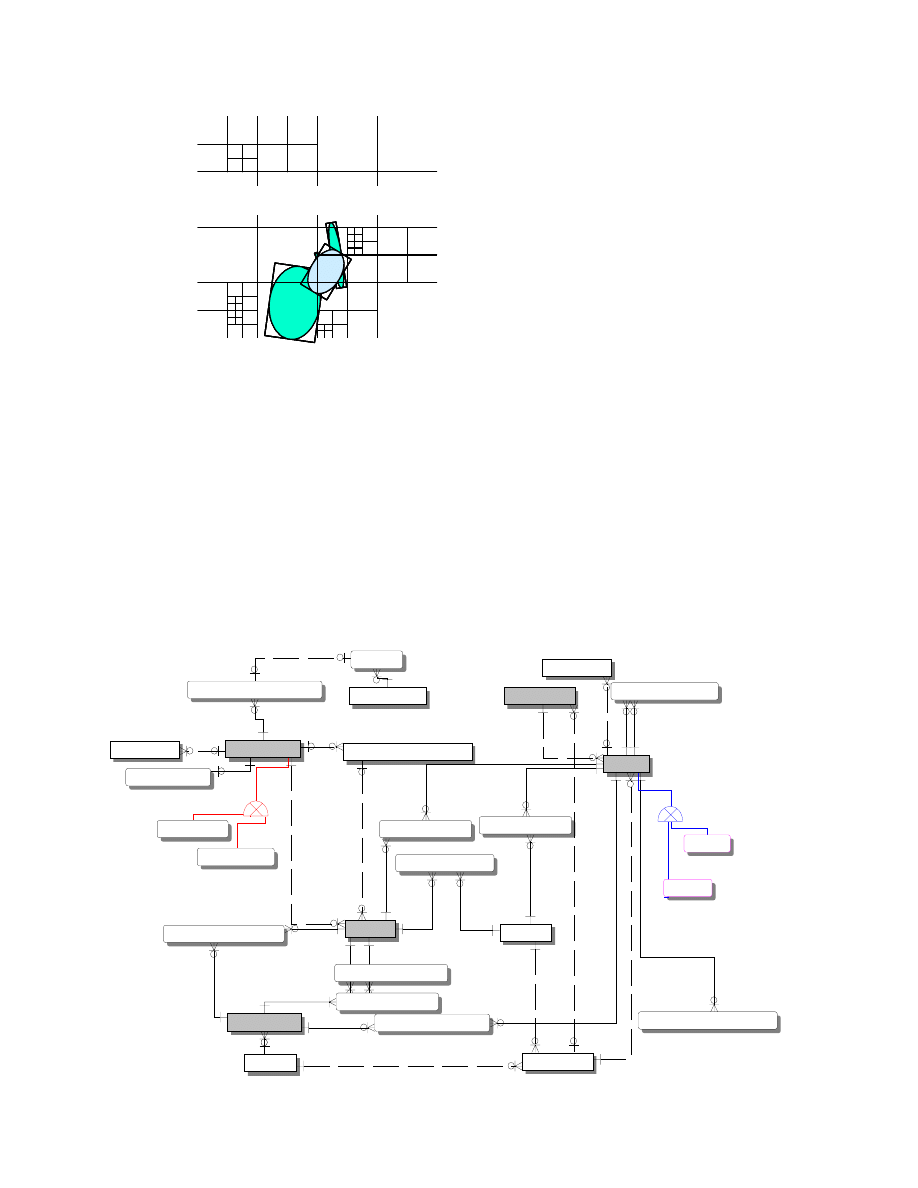
“telescoping” [10]. In this technique, resolution cells
are created and deleted depending on the number
required to their use and need to inscribe a track’s 2-
D 2-
σ
ellipse. Criteria are established for creation
(when an ellipse can’t be adequately described) or
deletion (when few tracks need that degree of
resolution).
The associative memory returned the head
of a link-list. The retrieval candidates were then
processed through a record-by-record gate check. It
is at this point the DBMS is invoked in the gating, by
accessing what we call secondary information for
gross-gating, the associative memory in-effect gating
by primary data. Secondary data for gating in MSI
was:
• state variables
• IFF Modes 1, 2, 3, 4
• Identity
• Category
Given this construct, the associative memory
identifies the retrieval candidates in effect near-
instantaneously. However, the associative memory is
updated as each track is updated. Since a track may
not be updated for a while and it is important that the
associative memory always present a current estimate
may -be-in
identif ies
Z
has
may be a
is location of
is the ty pe f or /rev /
relates to
occupies
is subordinate to
is ordinate to
participates in
is ref erenced by
P
relates to
participates in
may reference
may be ref erenced by
is location of
locates
locates
may be a
is controlled as
is the class for
is identif ied by
may be a
occupies
participates in
is the subject of
is the object of
participates in
may be a
Z
categorizes
EQUIPMENT-TYPE
INSTALLATION
FACILITY
ORGANIZATION
FACILITY-TYPE
GEOLOCATION
LOCATION
MATERIEL-ITEM
MATERIEL-SERIALIZED-ITEM
MATERIEL
FACILITY-ASSOCIATION
FACILITY-MATERIEL
MATERIEL-ASSOCIATION
MATERIEL-ORGANIZATION
MATERIEL-LOCATION
FACILITY-LOCATION
WEAPON-TYPE
MUNITION-TYPE
COUNTRY
ORGANIZATION-NAME
SEAPORT
AIRPORT
VEHICLE-TYPE
ORGANIZATION-FACILITY
MATERIEL-SERIALIZED-ASSET
AIRCRAFT
AIRCRAFT-TYPE
GEOLOCATION-DISCRETE-PDF
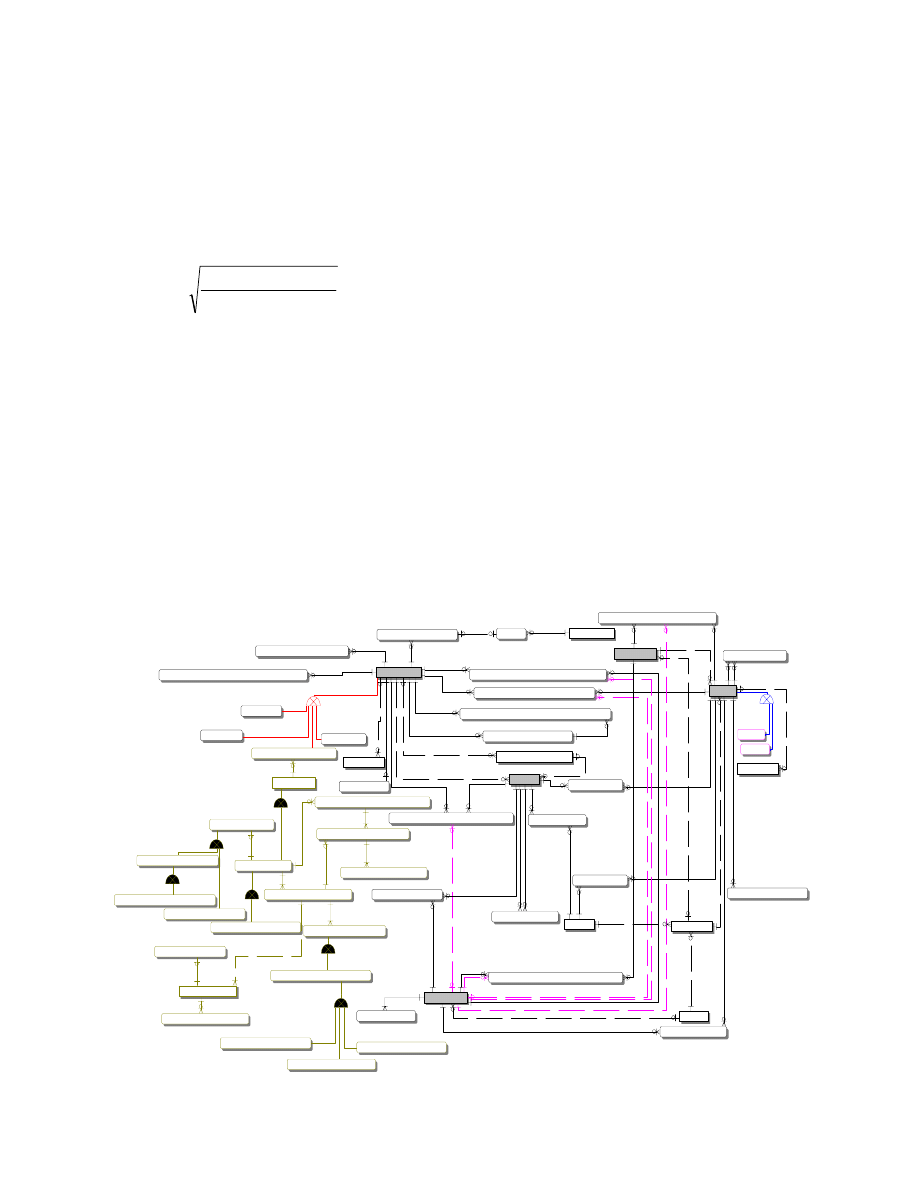
Figure 4-1. MSI Data Structure for Correlation Candidacy
• Start out with 2048X2048 association cells
• 2 bytes per track number = 4 Mbyte AM
• Allow telescoping to 100 Mbyte
-1024 nm
1024 nm
Associative Memory
• Start out with 2048X2048 association cells
• 2 bytes per track number = 4 Mbyte AM
• Allow telescoping to 100 Mbyte
-1024 nm
1024 nm
Associative Memory
Figure 4-2. Multi Source Integration (MSI) Gross Gating
Copyright 2003
Silver Bullet Solutions, Inc.
of possibilities, the associative memory has to be
refreshed periodically, to account for significant
covariance propagations. This is done periodically,
as a background task, scanning the track file to
determine if the associative memory needs updating,
that is, that the 2-D covariance is significantly out of
date. The decision to propagate is when the 2-D
covariance has eroded by 5% or approximately,
(
)
(
)
4
2
2
2
2
2
x
4.41
xy
y
x
a
xy
y
t
σ
σ
σ
σ
σ
σ
σ
−
+
−
≥
(1)
Space)
e,
Land/Mobil
,
Subsurface
Surface,
(Air,
Category
on track
based
selected
constants
system
of
set
a
is
noise
process
in the
on
accelerati
for
sd
the
,
where
a
σ
The performance drivers of the data
manager are the retrieval (or access to) the candidates
by the gross gate function and the maintenance of the
associative memory. The number of retrieval
candidates required varies, depending on the 2-D
covariance of the input track report, the density of
tracks about the input, and their 2-D covariances.
The track sensor update rate characteristics and
densities from the system’s expected operating
environment, the same ones used to determine the
system’s requirements and later to parameterize
timing analyses. We used these to determine the
table sizes (number of instances), track input arrival
rates, and numbers of candidates expected to derive
from the associative memory.
The data structure was made equivalent to
that for the deployed system but using a normalized
E-R model as shown in Figure 4-1, as derived from
the U.S. standard for command and control, the
Command and Control Core (C2 Core) data model
[13] as would be necessary to accrue the benefits
described in paragraph 2, herein. Only the portions
of the model that would be required for gross gating
and associative memory maintenance are included
since only those would be subject to high data rate
retrieval.
4.2 ESM/ELINT
Similar
Source
Integrator (SSI) Classification and
Correlation Candidates Retrieval
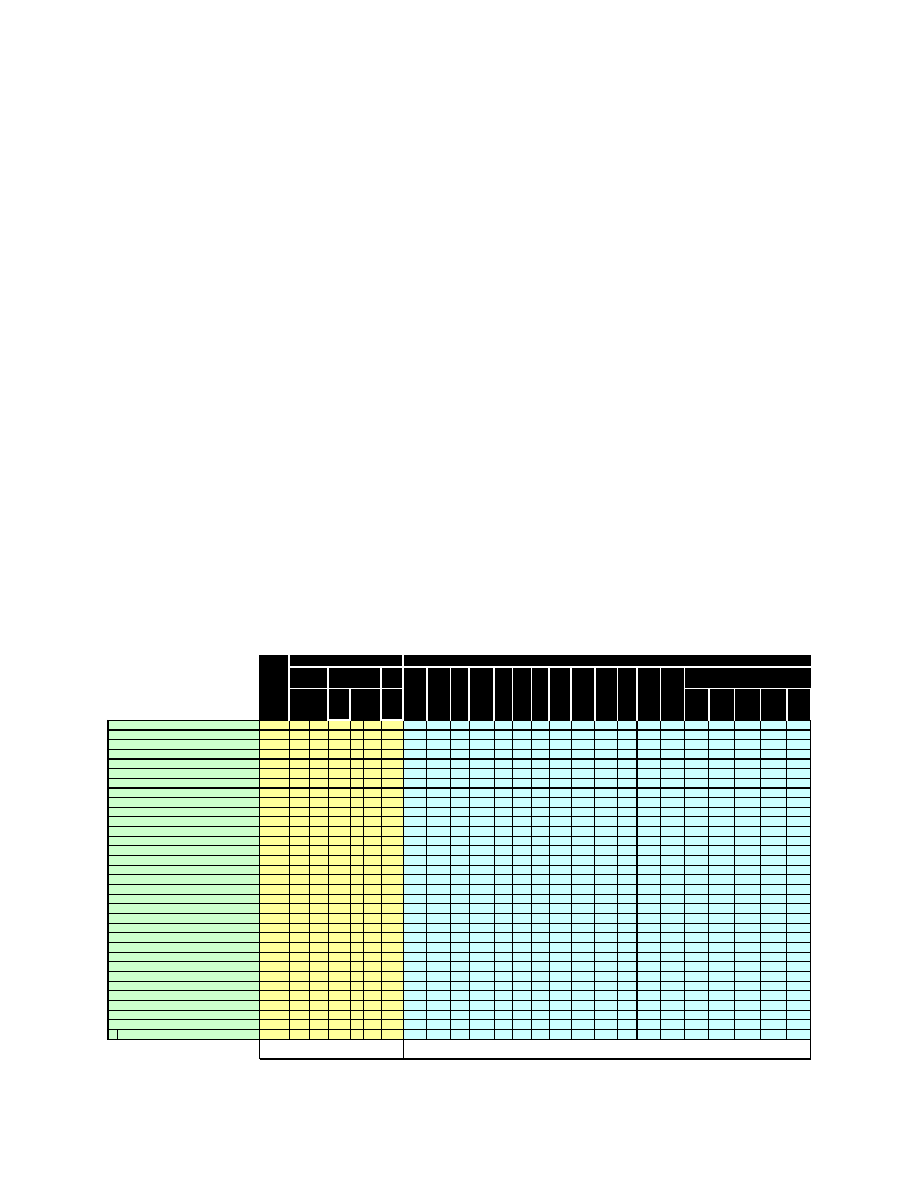
In this test case, based on [2], multi-source
ESM and ELINT reports are input for a theater-wide
area. This experiment is based on an application
developed for multi-source ESM and ELINT fusion
against theater-level Electronic Order of Battle
(EOB). The objective of the system is to correlate
the input parameter reports against an EW reference
file and the theater order-of-battle. Te theater-level
OB provided the initial track file loads of all expected
operates as
Z
operates in
produces
P
is part of
switches frequencies using
P
defines
is used in
P
selects frequency via
P
m odulates signals using
Z
is m odulated by
operates within
P
m ay-be-in
identifies
Z
has
m ay be a
is location of
is the type for /rev/
relates to
occupies
is s ubordinate to
is ordinate to
participates in
is inventoried by
is inventoried by
provides /rev/
provides /rev/
provides /rev/
is referenced by
P
relates to
participates in
is inventoried by
provides /rev/
is inventoried by
provides /rev/
m ay reference
m ay be included in
m ay be included in
performs to
m ay be referenced by
is location of
locates
locates
m ay be included in
m ay be included in
m ay be included in
m ay be a
is controlled as
m ay be included in
m ay be included in
is authorized by
is the class for
is identified by
m ay be a
contains
occupies
participates in
is the subject of
is the object of
participates in
is inventoried by
m ay be a
Z
categorizes
TRANSMITTER-COMB-JAMMER
TRANSMITTER-TYPE
TRANSMITTER-JAMMER
TRANSMITTER-NOISE-JAMMER
RF-EQUIPMENT
TRANSMITTER-SWEPT-NOISE-JAMMER
TRANSMITTER-HOP-FREQUENCY
TRANSMITTER-BAND-SIGNATURE
TRANSMITTER-MODE
FREQUENCY-HOPPING-TRANSMITTER-MODE
TRANSMITTER-FREQUENCY-BLOCK
TRANSMITTER-MODE-BASEBAND
FIXED-FREQUENCY-TRANSMITTER
TRANSMITTER-BAND-PASS-FILTER
TRANSMITTER-HIGH-PASS-FILTER
TRANSMITTER-LOW-PASS-FILTER
TRANSMITTER-TUNING-RANGE-FILTER
BAND-DETERMINATION-DEVICE
FREQUENCY-MODULATION
MATERIEL-ITEM-RF-EQUIPMENT
EQUIPMENT-TYPE
INSTALLATION
FACILITY
ORGANIZATION
FACILITY-TYPE
MATERIEL-ITEM-CAPABILITY-NORM
GEOLOCATION
LOCATION
MATERIEL-ITEM
MATERIEL-SERIALIZED-ITEM
MATERIEL-ITEM-ESTABLISHMENT
FACILITY-TYPE-ESTABLISHMENT-MATERIEL-ITEM-DETAIL
MATERIEL-ITEM-ESTABLISHMENT-MATERIEL-ITEM-DETAIL
MATERIEL
MATERIEL-ITEM-ORGANIZATION-HOLDING-ESTIMATE
MATERIEL-ITEM-MATERIEL-HOLDING-ESTIMATE
MATERIEL-ITEM-FACILITY-HOLDING-ESTIMATE
FACILITY-TYPE-ORGANIZATION-HOLDING-ESTIMATE
FACILITY-TYPE-FACILITY-HOLDING-ESTIMATE
FACILITY-ASSOCIATION
FACILITY-MATERIEL
MATERIEL-ASSOCIATION
MATERIEL-ORGANIZATION
MATERIEL-LOCATION
FACILITY-LOCATION
SENSOR-TYPE
WEAPON-TYPE
MUNITION-TYPE
COUNTRY
ORGANIZATION-NAME
SEAPORT
AIRPORT
VEHICLE-TYPE
ORGANIZATION-FACILITY
MATERIEL-SERIALIZED-ASSET
AIRCRAFT
AIRCRAFT-TYPE
GEOLOCATION-DISCRETE-PDF
Figure 4-3. ELINT SSI Data Structure for Classification and Correlation Candidacy
Copyright 2003
Silver Bullet Solutions, Inc.
but not currently observed tracks. As sensor data was
input, the reports were correlated against this a-priori
knowledge as well as tracks heretofore received. A
multi-hypothesis structure was the basis for a
Bayesian net. All significant hypotheses were
maintained.
All data was maintained in RAM in
applications dependent data structures. The arrival
rates of ESM and ELINT reports were 5/sec. For
each report, the initial lookup involves comparing the
report to emitter reference file variables. The EW
reference file has around 3,000 types of emitters.
Once emitter hypotheses are formulated, then the
order-of-battle candidates are retrieved. There are
often 30,000 platform and facility candidates
corresponding to:
a. Naval ship home ports / anchorages
b. Aircraft types at airbases and airfields
c. Air
bases
d. Radar and SAM sites
e. Headquarters and other military facilities
with emitters
f. Merchant
ships
g. Civilian and general aviation
h. Current live track file
5 Results
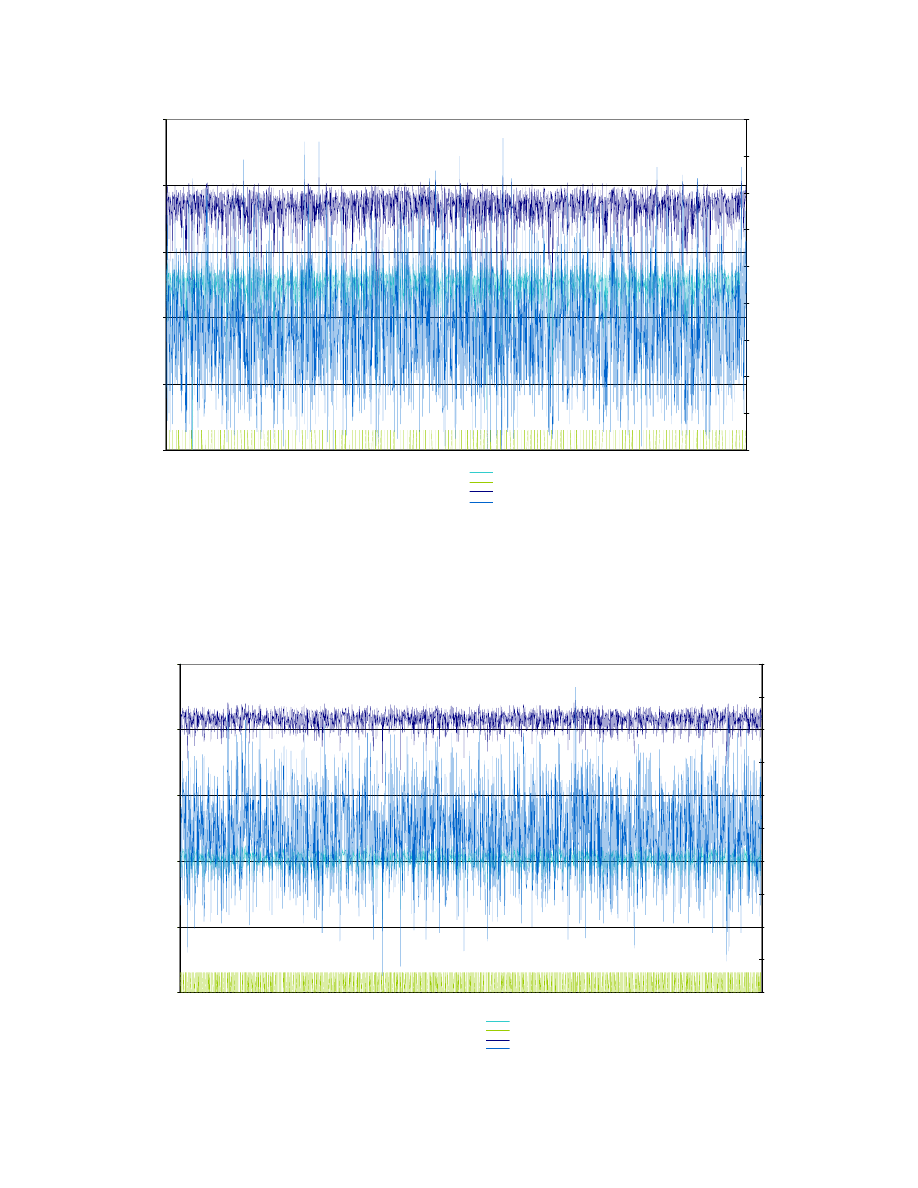
As a result of the procedures described in
the previous paragraph, the MSI and ESM databases
were sized as shown in Figure 5-1. These sizes were
used to populate the data structures shown in Figure
4-1 and Figure 4-3. This would be a very large
fusion database compared to most fusion systems in
existence today. The procedure also resulted in data
update types and rates as shown in Figure 5-1. High
and low arrival rates were estimated and the scenario
operated for 3600 scenario seconds, enough time to
gain associative memory hits for most of the update
types.
The results of the MSI experiment are
shown in Figure 5-2. This shows that the embedded
DBMS is considerably slower than an applications
dependent data access but generally keeping up with
real time. That is, there are very few intervals in
which the data access time exceeds 1 second. In
contrast, the conventional DBMS almost always
exceeds real-time. The two 0 values visible in the
chart probably result from measurement imprecision.
The embedded DBMS access time per update has
mean of 0.98 ms, with sd of 0.17 and range of values
of [0,10] compared to the conventional DBMS access
time mean of 15 ms with sd of 0.015. The high value
probably results from an AM hit for a particularly
demanding update type, e.g., an order of battle
update. A regression analysis of number of AM hits
against total access time shows a Multiple r of 0.99
suggesting a linear loading on the embedded DBMS.
ELINT/ESM
AM
Hits
AM
Hits
# per
object
Materi
el
Typica
#
Materi
el Low
#
Materi
el High
#
Types
Fire Control (JCTN and Fires Net)
5000
TBM
4 0.25 sec
5
0
0
0
4
0.0
0
0
0
Supersonic Aircraft and Missiles
50
1 sec
5
4 sec
30
25
25
2.0
50
15
50
Subsonic Aircraft and Missiles
500
4 sec
5 10 sec
30
450
50
2.0
500
200
500
Gen Av & Helo
400
4 sec
5 10 sec
30
400
2.5
500
250
500
Land Mobile
100
4 sec
5 10 sec
50
100
0.3
9
5
14
Land Fixed
100
10 sec
5 10 sec
20
25
25
25
25
0.5
34
30
37
Tactical Radar
ATC
250
4 sec
10 10 sec
30
225
25
2.5
313
63
313
Surface & Nav
100
10 sec
5 30 sec
50
8
2
90
4.0
400
360
440
Tactical Decision Link (JDN)
0
0
0
Air
500
10 sec
10 30 sec
50
450
50
2.0
500
200
500
Surf
250
30 sec
10
1 min
100
250
4.0
600
0
0
Sub 15
30 sec
5 30 sec
30
15
0.5
2
0
0
Land Fixed
400
10 min
5 10 min
50
40
10
100
75
100
75
0.3
68
34
68
Land Mobile
200
30 sec
20 60 sec
200
200
0.3
19
9
19
Operational Decision Net (JPN)
Surf
500
1 min
40
1 min
50
500
4.0 1200
0
0
Sub
30
5 min
5
1 min
50
30
0.5
3
0
0
Land Fixed
600
12 hr
30
1 min
30
70
30
100
100
200 100
0.3
101
0
0
Land Composite Mobile
300
1 hr
40
1 min
100
300
3.0
338
56
338
Merchant Shipping
10000
1 wk
40
1 wk
40
10000
1.0 5000
100
5000
Order of Battle Net
Airbases
400
1 wk
20
1 wk
30
400
2400
2.0
800
800
800
Aircraft Types per Airbase
6
1 wk
200
1 wk
100
1000
Naval Ports & Anchorages
100
1 wk
20
1 wk
30
100
1.0
100
100
100
Ship / Boats per Naval
24
1 wk
100
1 wk
100
2400
2400
4.0 9600
9600
9600
Electronic Sites
4000
1 wk
20
1 wk
30
4000
2.0 8000
8000
8000
Military Ground Sites
7000
1 wk
20
1 wk
30
7000
0.3 1750
1750
1750
Missile and Gun Sites
3000
1 wk
20
1 wk
30
3000
1.0 3000
3000
3000
Civil Aviation Flight Plans
200
4 hr
20
0 hr
0
200
Airport Flight Scheds - Airports
50
1 wk
10
0 wk
0
50
Active Aircraft Flight Scheds per Airport
100
1 wk
30
0 wk
0 5000
3368
4512 6758 1000 156 13285 600 560 140 7225 3200 4325 200 2400
32886 24572 31027 5000
Updates and AM Hits Per Sec
473
112
Update
Period
Update
Period
Database Quantities
S
h
ip - Facility
A
ssociat
ion
RF Equpment
Ai
rc
ra
ft
# O
b
ject
s
MSI
Update Rates
Ve
h
ic
le
A
ir
por
t
Ai
rc
ra
ft
T
y
p
e
Ai
rc
ra
ft
T
ype -
Facility
A
ssociat
ion
E
lect
ronics
Si
te
Table Sizes
S
eapor
t
G
a
rri
s
o
n
Si
te
M
issile S
ite
other
Facility
W
eapon
Sh
ip
Figure 5-1. Update Rates and Database Sizing
Copyright 2003
Silver Bullet Solutions, Inc.
Results from the ESM/ELINT SSI
experiment are shown in Figure 5-3. As can be seen
the total time required in any one increment is
considerably less than for MSI, due to the lower
update rate for ESM (see Figure 5-1). The embedded
DBMS access time per update have mean of 9.1 ms
with an sd of 0.43 and range of [7.69, 11.48]
compared to mean of 0.011 and sd of 0.005 and range
of [0.005, 0.077] for the application dependent
structures and mean of 137.4, sd 0.11 for the
conventional DBMS. Again, the regression analysis
shows linear performance, with a Multiple R of 0.98.
1
10
100
1000
10000
100000
Scenario Increment (seconds)
ms
0
100
200
300
400
500
600
700
800
900
MSI Number of Updates in Scenario Increment
MSI Total Data Access Time in Increment Application Dependent
MSI Total Data Access Time in Increment ORACLE 9i
MSI Total Data Access Time in Increment TimesTen
Figure 5-2. Access Time Comparison for MSI Gross Gating
1
10
100
1000
10000
100000
Scenario Increment (seconds)
ms
0
200
400
600
800
1000
1200
1400
1600
1800
2000
#
se
n
so
r /
t
rack
r
ep
o
rt
s
ESM Number of Updates in Scenario Increment
ESM Total Data Access Time in Increment Application Dependent
ESM Total Data Access Time in Increment in Oracle
ESM Total Data Access Time in Increment TimesTen
Figure 5-3. Access Time Comparison for ESM/ELINT SSI Classification and Correlation Candidates Retrieval

Copyright 2003
Silver Bullet Solutions, Inc.
6 Conclusion
Powerful information modeling, database, and
Object-Oriented tools and techniques have
evolved over the past 10 or 20 years that can
provide a foundation for large-scale fusion
systems. Because this foundation is relatively
stable, being grounded in the fundamental
semantics of the enterprise, and because it is
transparent, many types of fusion algorithms can
be unified within it and operate in an integrated
manner over a broad spectrum of information.
Algorithms can be updated or changed in a
modular manner, with good assurance that they
will interoperate with the rest of the system.
This enables a broad community of participation
in the fusion system. Due to the broad scope of
modeling that is possible and the ability to
employ custom but modular algorithms, most
suitable to the belief at hand, this approach will
allow the development of very-large fusion
systems.
The results of these preliminary experiments
provide good evidence that, as would be expected,
high-performance embedded DBMS’s have much
higher data access times than application dependent
data structures. However, the results do show that
even under intense scenarios and with massive fusion
on a general purpose medium performance off-the-
shelf computer using a non-realtime operating
system, the embedded DBMS can perform
adequately. The MSI experiment had average sensor
updates of 473/sec resulting in requirements to access
and average of 3,368 complex object structures per
sec. Similarly, the ESM/ELINT experiment had
average 112 updates per sec. resulting in the
requirement to access 4,512 complex objects per sec.
These accesses were against a track, situation
awareness, and intelligence database with
information on over 130,000 complex objects. With
more powerful processors, a realtime operating
system, and a distributed computing environment, the
embedded DBMS could be expected to perform even
better. A key enabler in the experiments was the
associative memory. This kind of layering, of
application-dependent associative memories, with
high-performance embedded DBMS’s, followed a
conventional off-line DBMS for amplifying display
and historical data, can enable the types of fusion
benefits described in [9] and paragraph 0, herein.
7 References
[1] McDaniel, D., Tooey, M., “Advanced Combat
Direction System (ACDS) Block 1 Tactical
Information Integration and Control Group (TIICG)
Algorithms Timing Analysis”, Technical Report,
American Defense Systems, Inc., San Diego, CA,
1987
[2] McDaniel, D., Electronic Warfare IDentification
(EWID) Small Business Innovative Research Final
Report, Space and Naval Warfare Systems
Command, 1996.
[3] “A Simplied Turn Logic”, Note N-1090, Fleet
Computer Programming Center, Pacific, San Diego,
CA 1963
[4] Rawlings, T., “Report on Parameter Search
Methods for EW SSI”, Block 1 Combat Direction
System Engineering Notebook, Hugest Aircraft
Company, Fullerton, CA, 1986
[5] Stankovic, J., Hyuk Son, S, Hansson, J.,
“Misconceptions About Real-Time Databases”, IEEE
Computer, June, 1999
[6] Ramamritham, K., “Real-Time Databases”,
International Journal of Distributed and Parallel
Databases, Vol. 1, No. 2, 1993
[7] Functional Description Document for Track and
Relational Data Synchronization, Version 1.0,
Prepared for Defense Information Systems Agency
(DISA) by FGM, Inc., August 26, 1998
[8] NTDS Functional Allocation Study, Chief of
Naval Operations, 1980
[9] McDaniel, D., “Multi-Hypothesis Database for
Large-Scale Data Fusion”, Proceedings of the Fifth
International Conference on Information Fusion,
International Society of Information Fusion,
Sunnyvale, CA, 2002
[10] Rawlings, T., “Track Position Correlation
System”, Block 1 Combat Direction System
Engineering Notebook, Hugest Aircraft Company,
Fullerton, CA, 1986
[11] Simpson, P., Artificial Neural Systems;
Pergamon Press: Oxford, 1990
[12] The TimesTen Team, “High Performance and
Scalability through Application-Tier, In-Memory
Data Management”, Proceedings of 26th
International Conference on Very Large Data Bases,
September 10-14, 2000, Cairo, Egypt, Morgan
Kaufmann, 2000
[13] Walker, R., Loaiza, F., Simaitis, E.,
“Development of a Far-Term Data Model for the
Global Command and Control System (GCCS)”, IDA
Paper P-3047, Institute for Defense Analyses,
Alexandria, VA, 1995.
Wyszukiwarka
Podobne podstrony:
C Documents and Settings Administrator Ustawienia lokalne Dane aplikacji Mozilla Firefox Profiles de
C Documents and Settings kudlaty Ustawienia lokalne Dane aplikacji Mozilla Firefox Profiles o8lk6zcs
C Documents and Settings kasia Ustawienia lokalne Dane aplikacji Mozilla Firefox Profiles f8lorgll
C Documents and Settings Ewa Ustawienia lokalne Dane aplikacji Mozilla Firefox Profiles 49a8beki
C Documents and Settings Ustawienia lokalne Dane aplikacji Mozilla Firefox Profiles 552u6abw
C Documents and Settings Derek Ustawienia lokalne Dane aplikacji Mozilla Firefox Profiles rdo3pn9d
C Documents and Settings admin Ustawienia lokalne Dane aplikacji Opera Opera profile cache4 opr0IUEP
C Documents and Settings Aneta Ustawienia lokalne Dane aplikacji Opera Opera profile cache4 opr0QL8Q
C Documents and Settings User Ustawienia lokalne Dane aplikacji Opera Opera profile cache4 opr024L5
C Documents and Settings czytelnia Ustawienia lokalne Dane aplikacji WKPolska siplex download 64253
ARTER Reg C Documents and Settings renifer Ustawienia lokalne Dane aplikacji Opera Opera cache opr0
C, Documents and Settings Jaro Pulpit Projekt 1 MG JArek początek Model (1 )
C Documents and Settings Prezes Ustawienia lokalne Dane aplikacji Opera Opera cache opr0BY13
C Documents and Settings dejvid Moje dokumenty Rysunek1 Model (1
Documents and SettingsVincMoje dokumentyKorozja, Studia, SEMESTR 1, NOM
C Documents and Settings czytelnia Ustawienia lokalne Dane aplikacji WKPolska siplex download 50424
C Documents and Settings Prezes Ustawienia lokalne Dane aplikacji Opera Opera cache opr0I1QY
więcej podobnych podstron