1
The Ultimate Fretboard
Guide
By
Andrew Koblick

2
Table of Contents
1. The 5 Basic Chord Forms
2. The Major scales of the 5 Basic Chord Forms
3. Linking the 5 Major Chord Forms
4. Fleshing out the Skeleton
5. The Modes
3
The 5 Major Chord Forms:
The guitar when tuned to standard (this is the most basic) tuning:
E (Thickest String)
A
D
G
B
E (Thinnest String)
Can be covered by knowing the 5 Basic chord Patterns:
The Chord Patterns are laid out to Spell C-A-G-E-D
These chords can all be played in the open position:
Open position refers to a chord played on the far left (for right handed guitar) portion of the
fretboard.
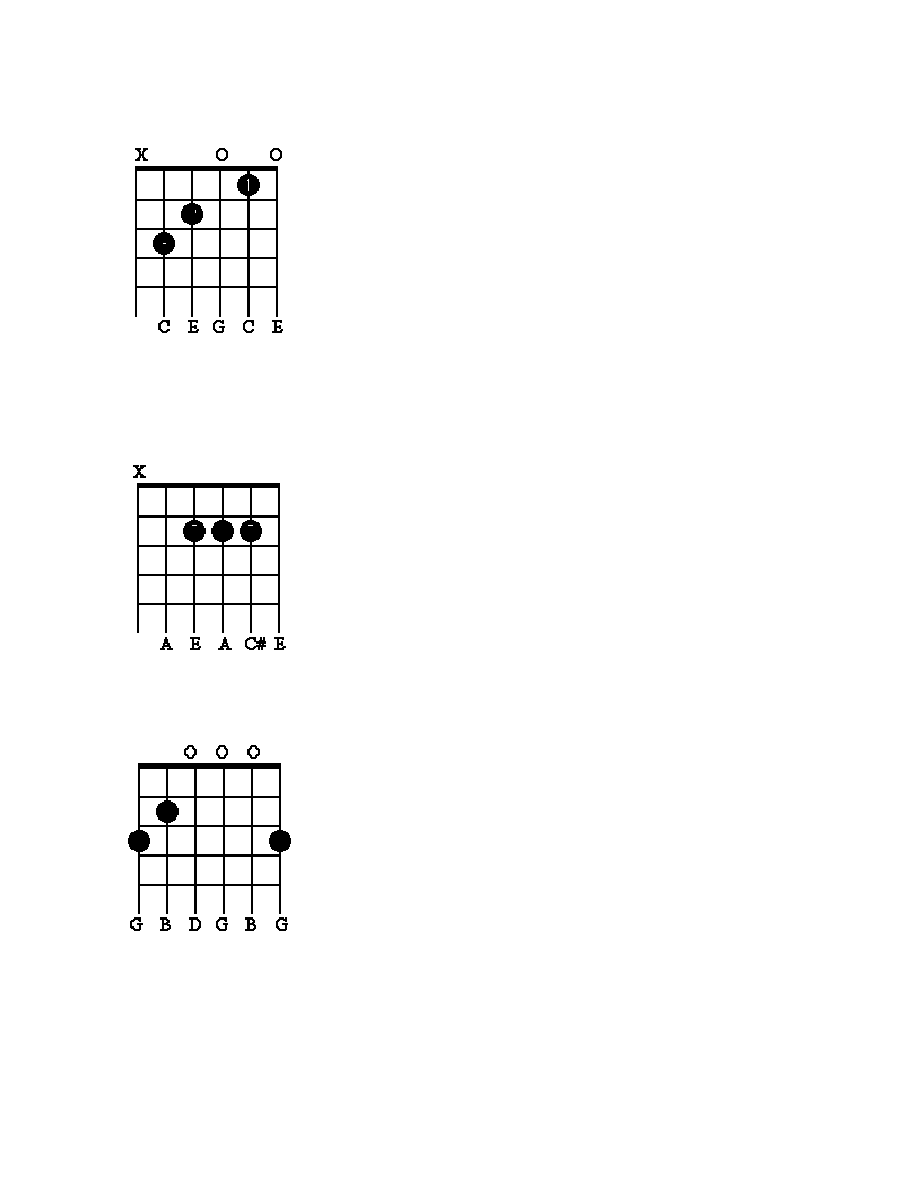
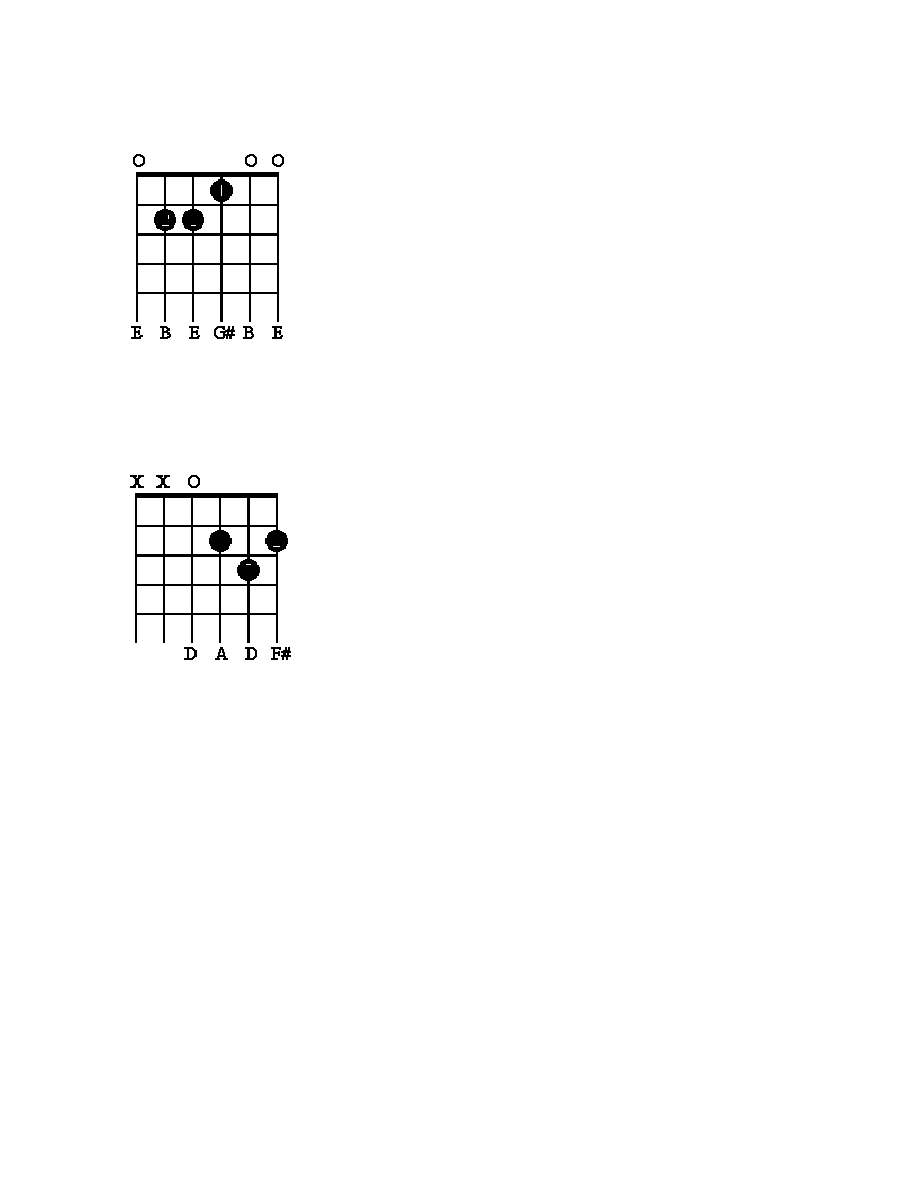
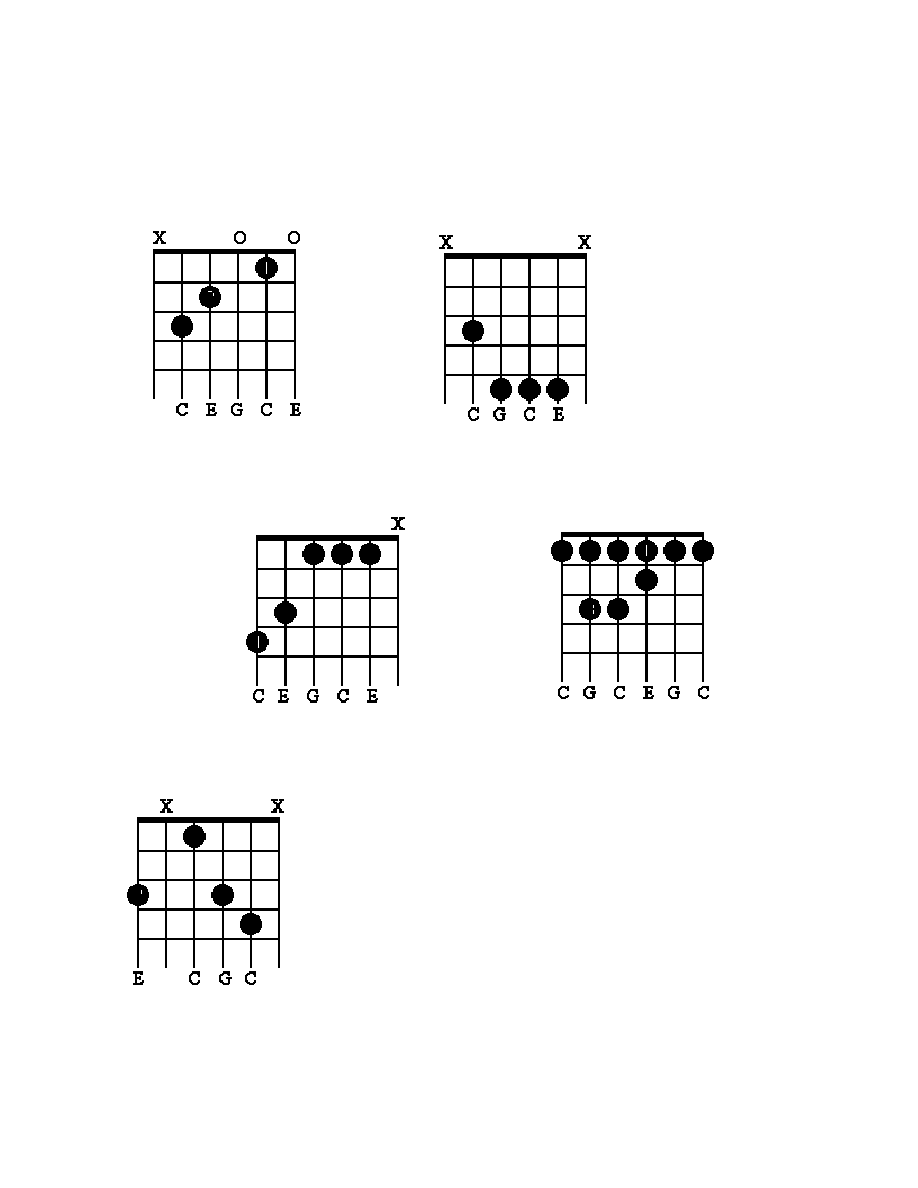
Here are the diagrams for these Chords:
Basic Major Chords
Major Chords
C
6 5 4 3 2 1
______o___o
|_|_|_|_o_|
|_|_o_|_|_|
|_o_|_|_|_|
|_|_|_|_|_|
|_|_|_|_|_|
A
6 5 4 3 2 1
__o_______o
|_|_|_|_|_|
|_|_o_o_o_|
|_|_|_|_|_|
|_|_|_|_|_|
|_|_|_|_|_|
G
6 5 4 3 2 1
____o_o_o__
|_|_|_|_|_|
|_o_|_|_|_|
o_|_|_|_|_o
|_|_|_|_|_|
|_|_|_|_|_|
E
6 5 4 3 2 1
o_______o_o
|_|_|_o_|_|
|_o_o_|_|_|
|_|_|_|_|_|
|_|_|_|_|_|
|_|_|_|_|_|
D
6 5 4 3 2 1
x___o______
|_|_|_|_|_|
|_|_|_o_|_o
|_|_|_|_o_|
|_|_|_|_|_|
|_|_|_|_|_|
4
C Major
A Major
G Major
5
E Major
D Major
These are the Chord Forms that will out line the Fretboard.
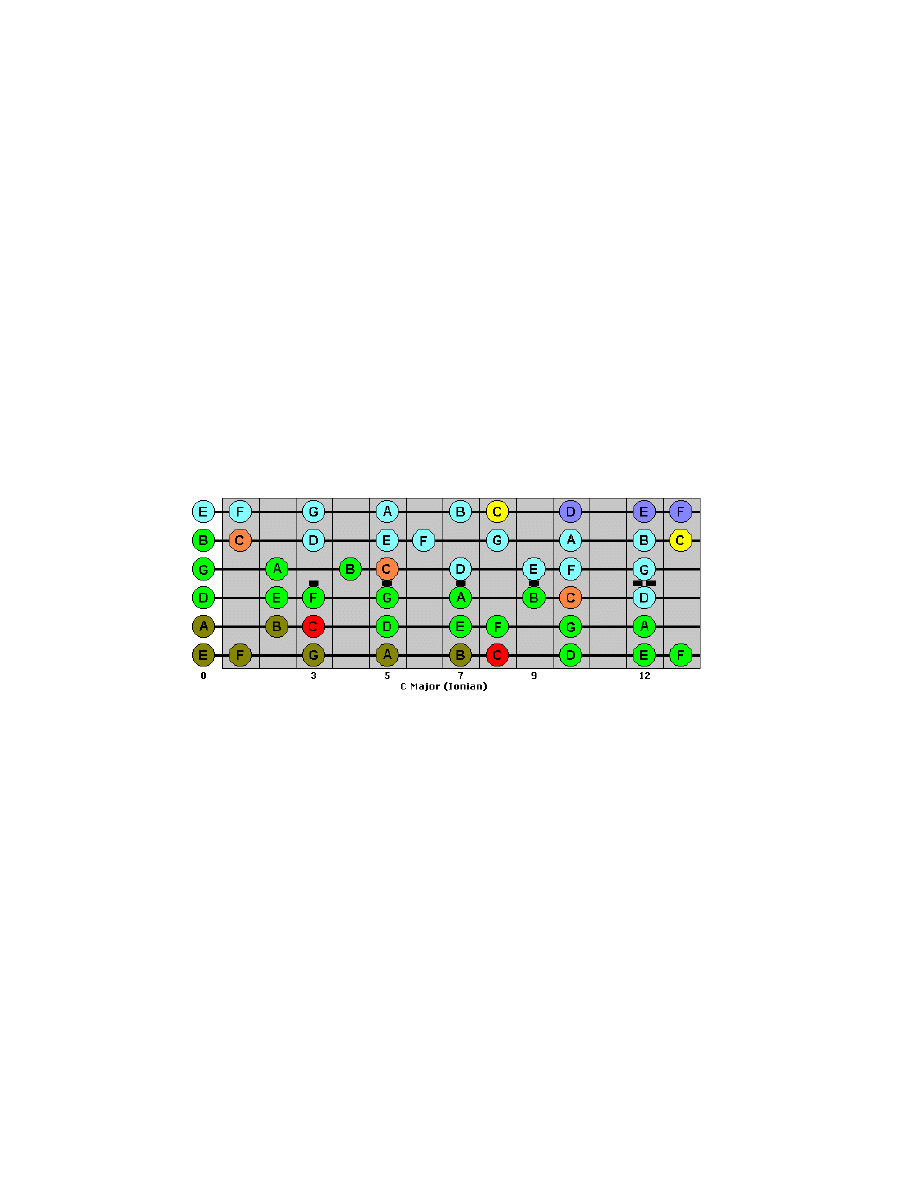
Now Lets put them together on the Fretboard for the Key of C
6
At the Open Fret We see the C Form Position and the A Form Position
(Note the A form is usally a Bar Chord)
At the 8
th
Fret we See the G Form Position and the E Form Position
And Finally at the 10
th
Fret the D Position
All of these are C Major Chords
7
It is very important that you learn these chord Forms and Positions.
Remember there are only 5 chord Forms to remember
Lets talk about how the chords link together.
KEY OF C – C Major Chord
The C Position has the third finger on the Root (A string 3
rd
Fret)
The A Position has the First finger on the Root (A string 3
rd
Fret)
The A Position has three notes in the fifth fret played with the THIRD Finger
The G Position has three notes in the fifth fret played with the FIRST Finger
The G Position plays the 8
th
Fret with the 4
th
Finger (Root)
The E Position plays the 8
th
Fret with the 1
st
Finger (Barred)
The E Position plays the 10
th
Fret with the 4
th
Finger (On the D String)
The D Position plays the 10
th
Fret with the 1
st
Finger (On the D string)
So you see each of the chord Positions has part of the other Chord Positions
Now the only thing to do is to flesh out the skeleton with scales.
You guessed it. There are 5 basic Major Scale Forms
NOTES:
8
The Notes of the Scales
By Now we already know where part of each scale is because
Each chord is made up of the 1, 3, 5 or the Do Mi Sol of each scale.
The Major Scale: Do Re Mi Fa Sol La Ti Do
1 2 3 4 5 6 7 8
Key of C: C D E F G A B C
Note the 8=1 Just up an octave.
Note: Between each note is either a:
•
Half step (One Fret) or
•
Whole Step (Two Frets)
Notice how above I placed the 3 and 4 closer together and the 7 and 8
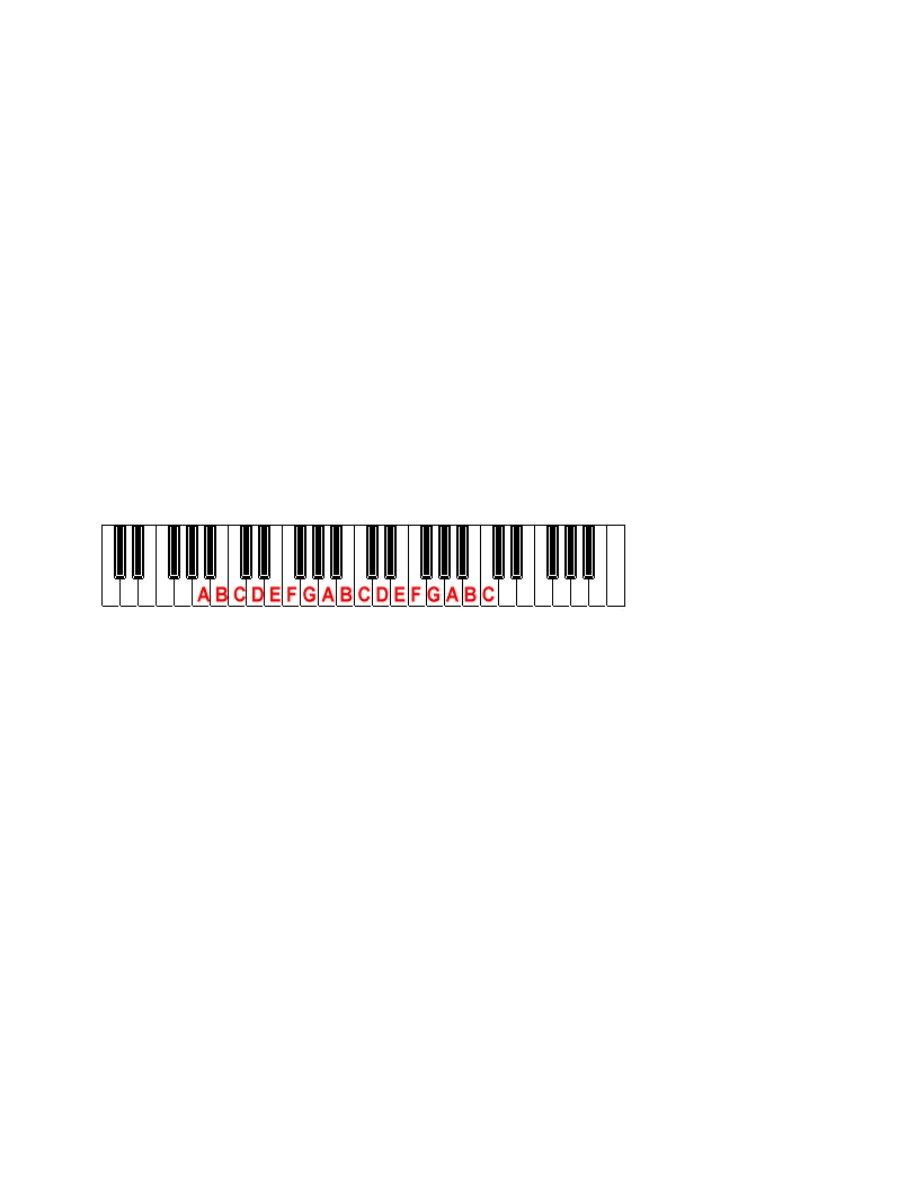
Look at the piano graphic below notice the black keys
You will notice there is no black key between the B and C and
Between the E and F
In the C Major Scale:
C D E F G A B C
1 2 3 4 5 6 7 8
I want you to visualize the Major Scale for a moment.
Think Spacially. Think how the 3 and 4 are closer together.
9
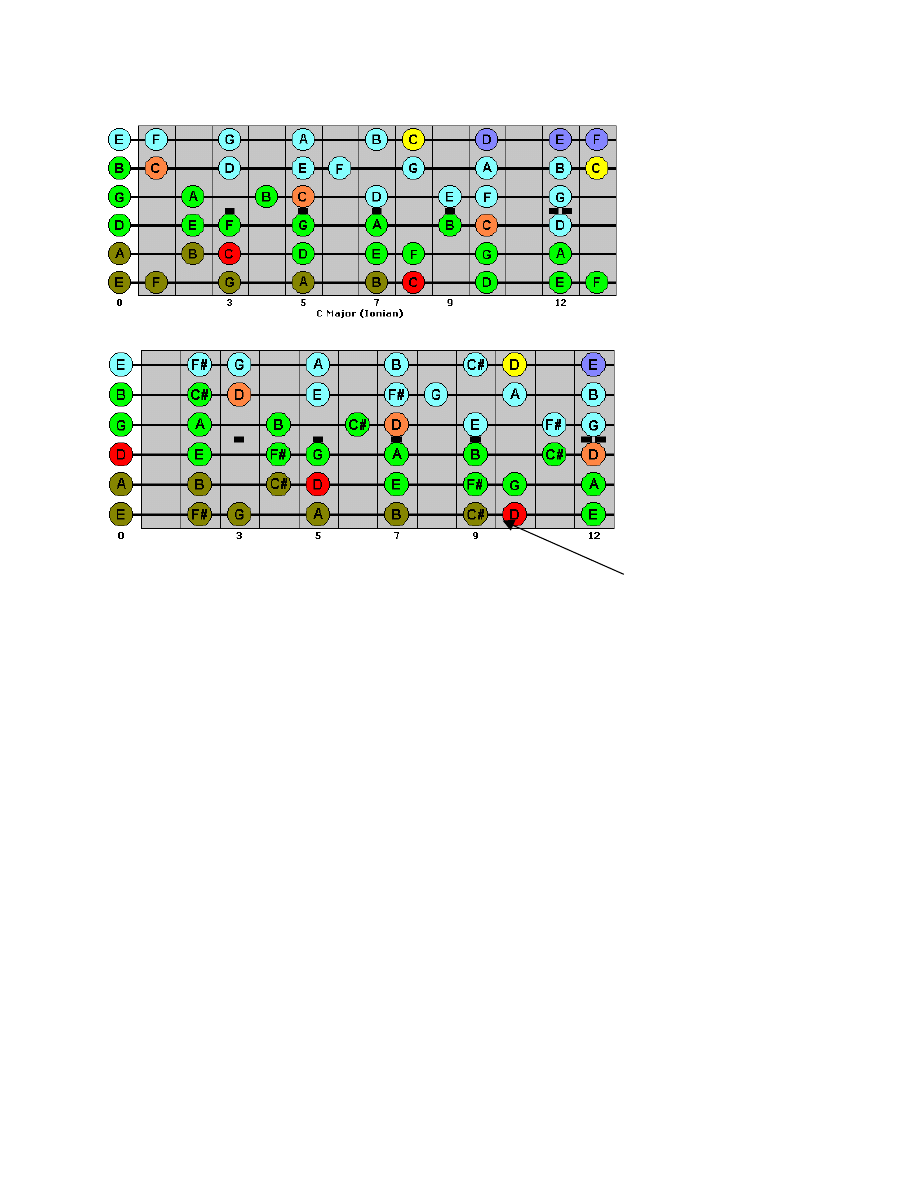
Now lets look at the 5 Major Scale forms:
D Major (Ionian) ***
That is sure a lot of notes you must be saying to yourself. Lets break it down.
THIS IS VERY IMPORTANT:
When discussing notes/sounds I will use “Scale” or “Chord” or “Note”
When discussing position or fingering I will use “Form” or “Position”
Read this a couple of times and make sure you understand.
So when I say play the D “Chord” in the G “Form” I mean the notes making
The D chord played at the 10
th
Fret ***
I will also say play the D “Scale” in the G “Position. This means the Notes in
the D Scale played between the 7
th
and 10
th
fret.
LETS GET STARTED ON SCALE POSITIONS
10
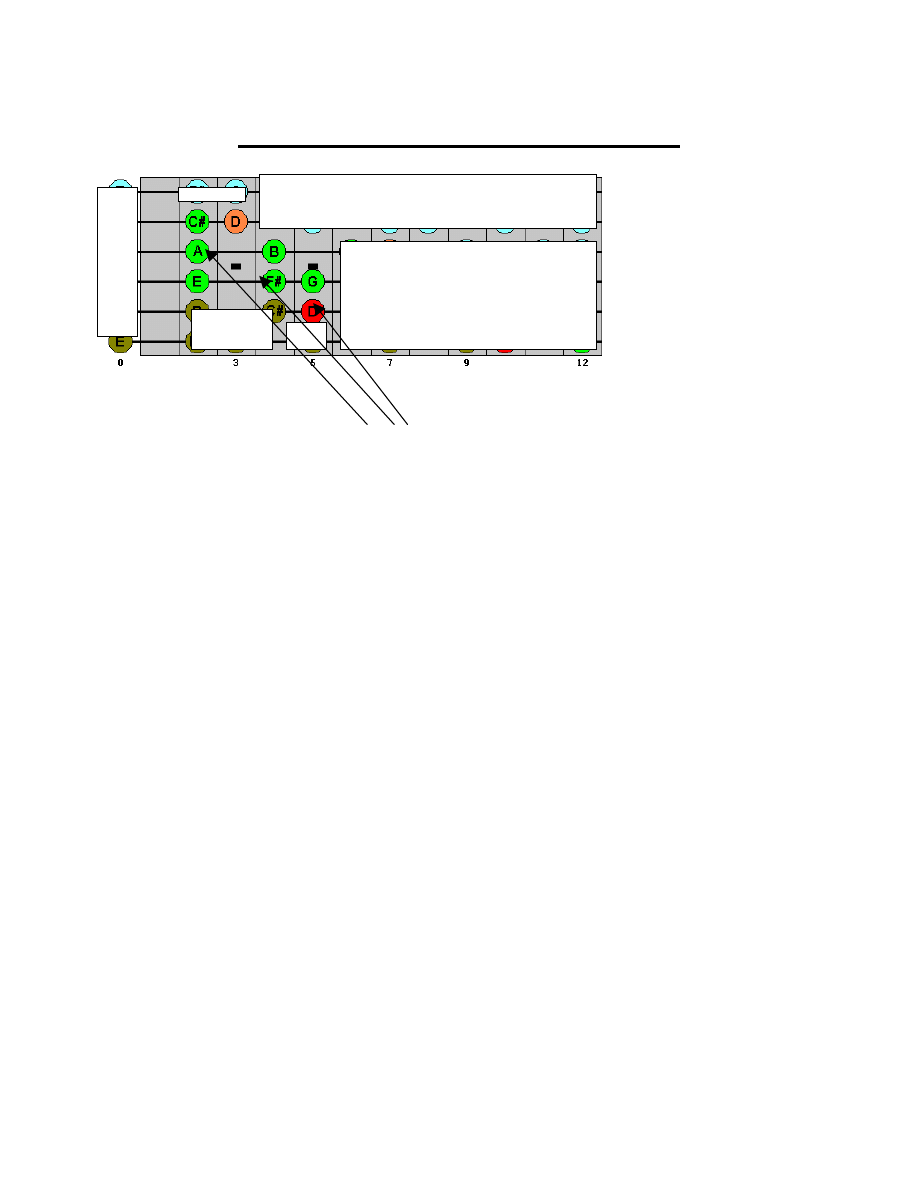
The C ”Form” of the D Major “Scale”
The first Thing to note is the C Chord Form.
Can you play a D Bar chord using the C Form
Can you see the chord D F# A (1,3,5 or Do Mi Sol of the scale)
Now we just need to add the 2,4,6 and 7 ( Re, Fa, La and Ti)
Find the E
Find the G
Find the B
Find the C#
Now how do we finger the scale
Starting on the A String:
Put your first finger on the 2
nd
fret
Put your second finger on the 3rd fret
Put your Third finger on the 4th fret
Put your Fourth finger on the 5th fret
•
The First note (D) is played with the 4th finger (5
th
fret) on the A string
•
The Second note (E) is played with the 1st finger (2nd fret) on the D string
•
The Third note (F#) is played with the 3rd finger (4
th
fret) on the D string
•
The Fourth note (G) is played with the 4th finger (5
th
fret) on the D string
•
The Fifth note (A) is played with the 1st finger (2nd fret) on the G string
•
The Sixth note (B) is played with the 3rd finger (4
th
fret) on the G string
•
The Seventh note (D) is played with the 1st finger (2
nd
fret) on the B string
•
Which will bring us back to Do a deer…..
•
The Eighth note (D) is played with the 2nd finger (
3
rd
fret) on the B string

11
GREAT!! YOU KNOW THE D “SCALE” IN THE C “POSITION”
NOW here is a great exercise to make you a Pro at this scale”
Do this very slowly at first until you get it perfect.
Simply tap each note (Forget using your picking hand!) 8 times up the scale
Do Do Do Do Do Do Do Do
Re Re Re Re Re Re Re Re
Mi Mi Mi Mi Mi Mi Mi Mi
Fa Fa Fa Fa Fa Fa Fa Fa
So So So So So So So So
La La La La La La La La
Ti Ti Ti Ti Ti Ti Ti Ti
You get the idea.
Now go back down the scale tapping 8 times each.
You should feel pretty much in control of this after doing this simple exercise a few times.
A great resource for exercises that will help you conquer the Fretboard is
The Amazing Guitar Plan. Just follow this link:
12
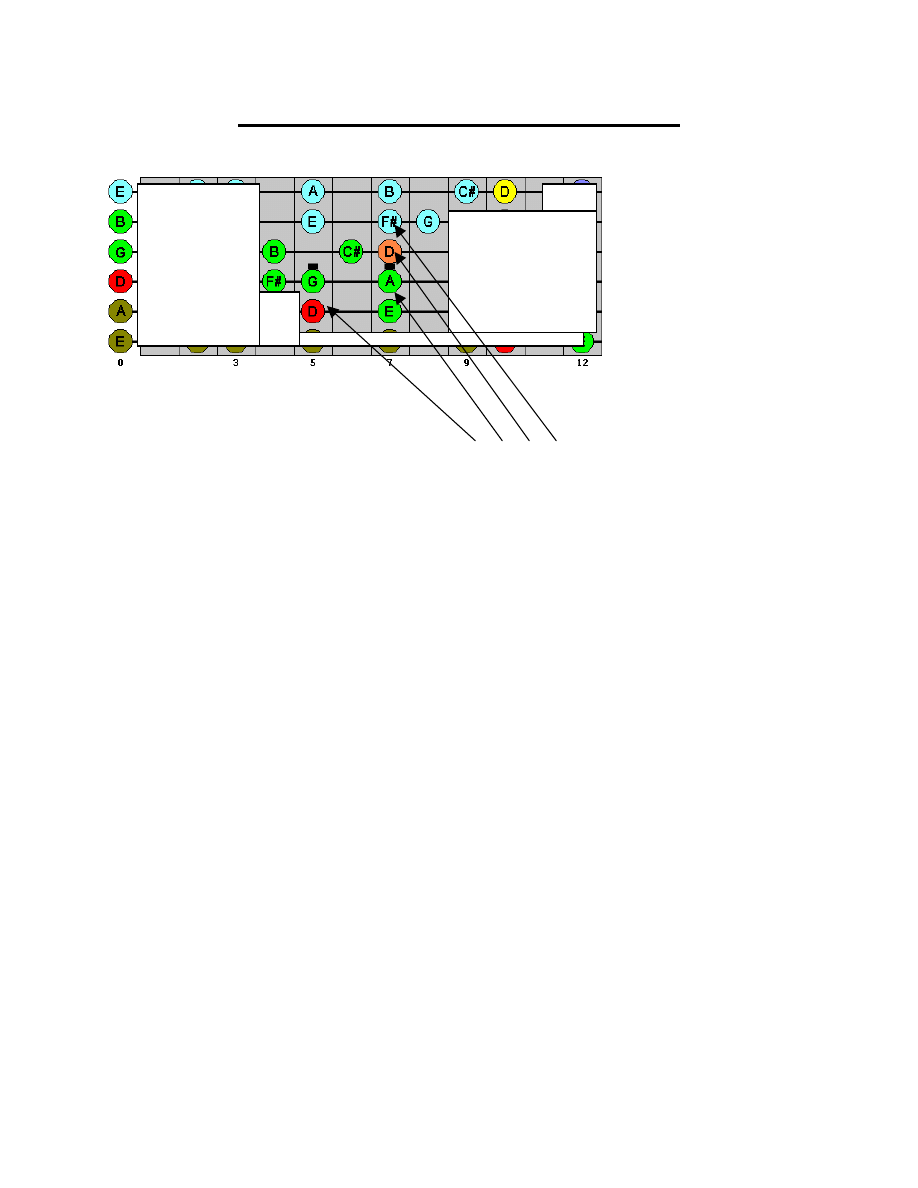
The A ”Form” of the D Major “Scale”
The first Thing to note is the A Chord Form. D A D F#
Can you play a D Bar chord using the A Form
Can you see the chord D A D F# (1, 5, 1, 3 or Do Sol Do Mi of the scale)
Now we just need to add the 2, 4, 6 and 7 ( Re, Fa, La and Ti)
Find the E
Find the G
Find the B
Find the C#
Now how do we finger the scale
Starting on the A String:
Put your First finger on the 5
th
fret
Put your Second finger on the 6th fret
Put your Third finger on the 7th fret
Put your Fourth finger on the 8th fret
•
The First note (D) is played with the 2nd finger (5
th
fret) on the A string
•
The Second note (E) is played with the 4th finger (7th fret) on the A string
•
The Third note (F#) is played with the 1st finger (4
th
fret) on the D string
•
The Fourth note (G) is played with the 2nd finger (5
th
fret) on the D string
•
The Fifth note (A) is played with the 4th finger (7th fret) on the D string
•
The Sixth note (B) is played with the 1st finger (4
th
fret) on the G string
•
The Seventh note (D) is played with the 3rd finger (6th fret) on the G string
•
Which will bring us back to Do a deer…..
•
The Eighth note (D) is played with the 4th finger (
7th fret) on the G string

13
NOTES
_____________________________________________________
_____________________________________________________
_____________________________________________________
_____________________________________________________
_____________________________________________________
_____________________________________________________
14
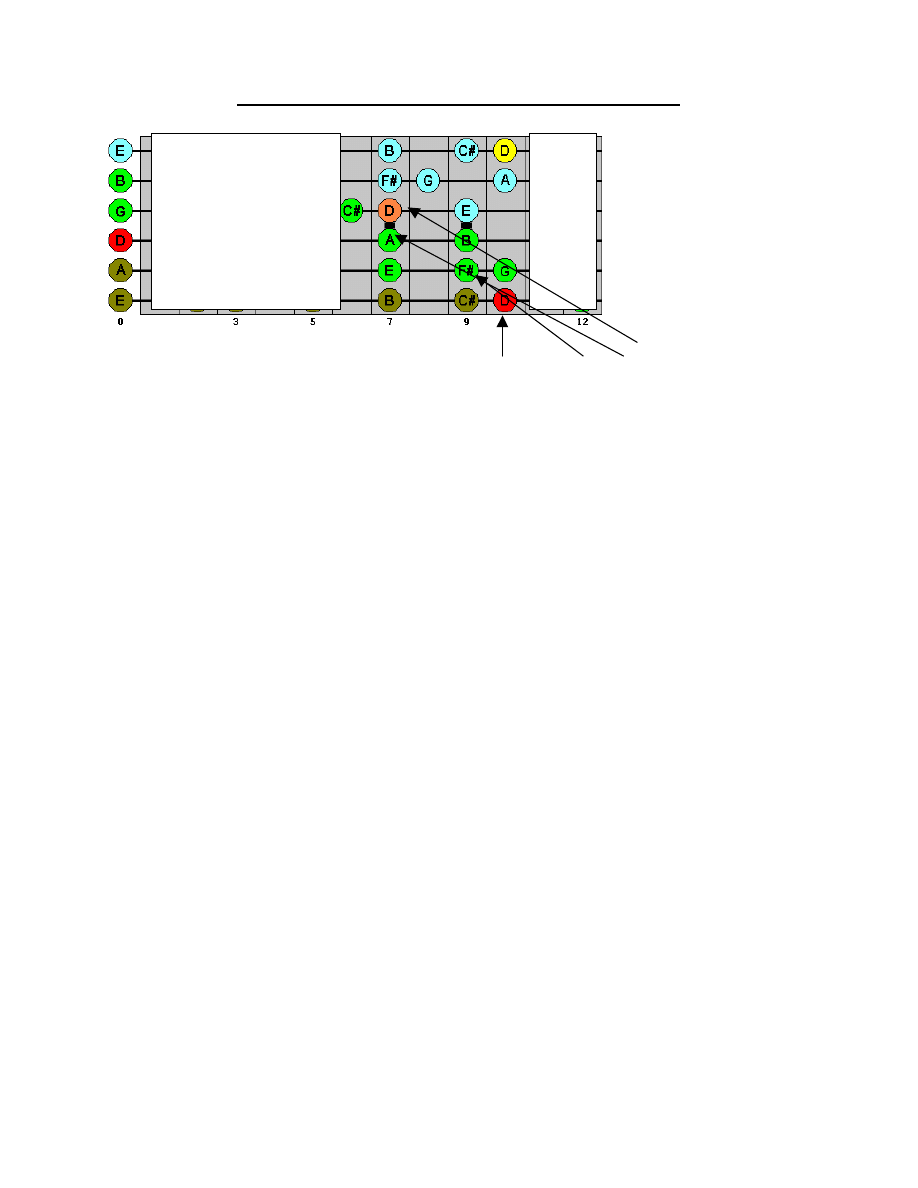
The G ”Form” of the D Major “Scale”
The first Thing to note is the G Chord Form. D F# A D
Can you play a D Bar chord using the G Form?
Can you see the chord D F# A D (1, 3, 5, 1, or Do Mi Sol Do of the scale)
Now we just need to add the 2, 4, 6 and 7 ( Re, Fa, La and Ti)
Find the E
Find the G
Find the B
Find the C#
Now how do we finger the scale
Starting on the E String:
Put your First finger on the 5
th
fret
Put your Second finger on the 6th fret
Put your Third finger on the 7th fret
Put your Fourth finger on the 8th fret
•
The First note (D) is played with the 4th finger (10
th
fret) on the E string
•
The Second note (E) is played with the 1st finger (7th fret) on the A string
•
The Third note (F#) is played with the 3rd finger (9
th
fret) on the A string
•
The Fourth note (G) is played with the 4th finger (10
th
fret) on the A string
•
The Fifth note (A) is played with the 1st finger (7th fret) on the D string
•
The Sixth note (B) is played with the 3rd finger (9
th
fret) on the D string
•
***Note: This is different***
•
To play the next note you will slide your hand down one fret to the 6
th
Fret
•
The Seventh note (C#) is played with the 1st finger (6th fret) on the G string
•
Which will bring us back to Do a deer…..
•
The Eighth note (D) is played with the 2nd finger (
7th fret) on the G string
WOW!! We have covered 3 of the 5 Major Forms/Positions!!!
15
Remember C-A-G- E- D.
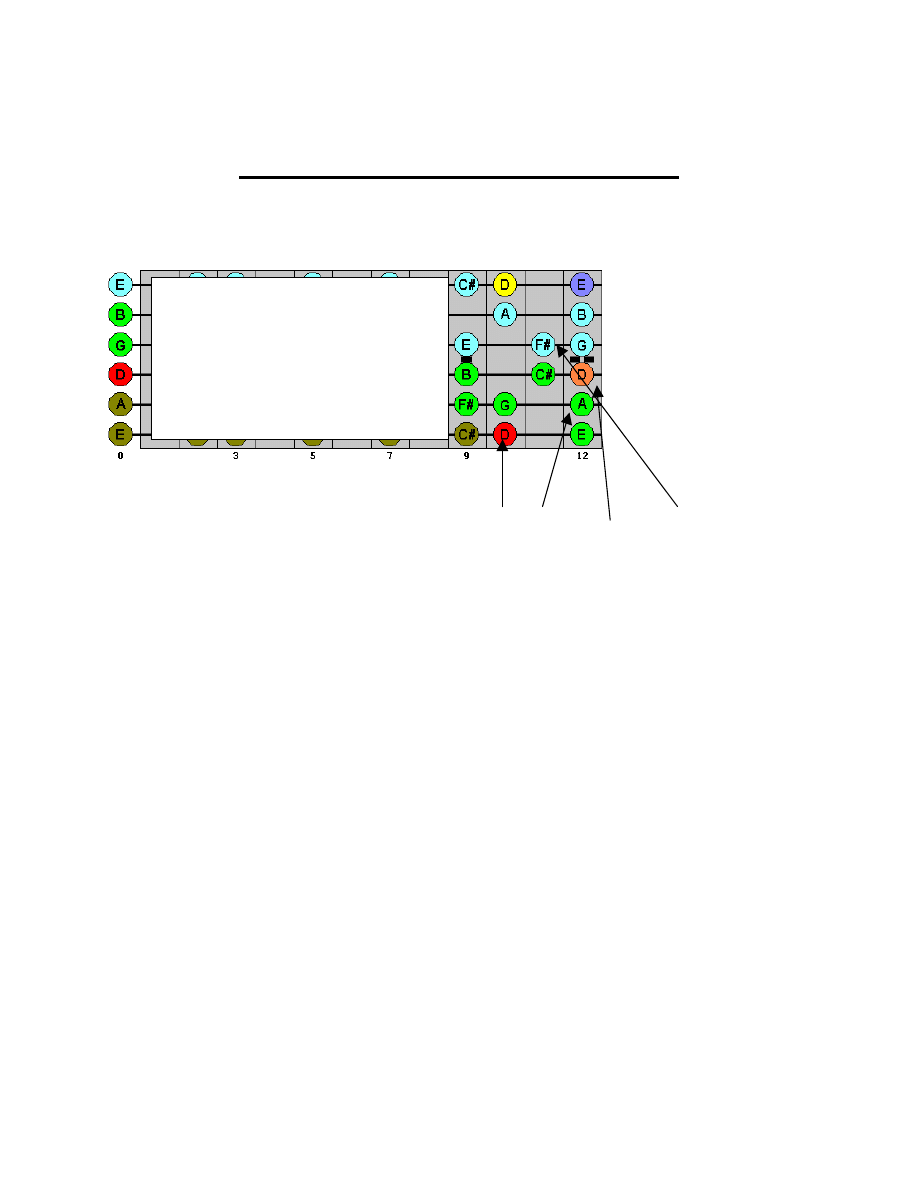
The E ”Form” of the D Major “Scale”
The E Form is probably the form most people start with. When you learn the Basic Blues scale or
Pentatonic Minor the notes are part of the E Position.
The first Thing to note is the E Chord Form. D A D F#
Can you play a D Bar chord using the E Form?
Can you see the chord D A D F# (1, 5, 1, 3, or Do Sol Do Mi of the scale)
Now we just need to add the 2, 4, 6 and 7 ( Re, Fa, La and Ti)
Find the E
Find the F# (The first F3 is not used in the chord)
Find the G
Find the B
Find the C#
Now how do we finger the scale?
Starting on the E String:
Put your First finger on the 9
th
fret
Put your Second finger on the 10th fret
Put your Third finger on the 11th fret
Put your Fourth finger on the 12th fret
Continued on next page

16
The E ”Form” of the D Major “Scale”
continued
•
The First note (D) is played with the 2nd finger (10
th
fret) on the E string
•
The Second note (E) is played with the 4th finger (12th fret) on the E string
•
The Third note (F#) is played with the 1st finger (9
th
fret) on the A string
•
The Fourth note (G) is played with the 2nd finger (10
th
fret) on the A string
•
The Fifth note (A) is played with the 4th finger (12th fret) on the A string
•
The Sixth note (B) is played with the 1st finger (9
th
fret) on the D string
•
The Seventh note (C#) is played with the 3rd finger (6th fret) on the D string
•
Which will bring us back to Do a deer…..
•
The Eighth note (D) is played with the 4th finger (
12th fret) on the D string
•
Now Lets Look at the second Octave:
•
The First note (D) is played with the 4th finger (
12th fret) on the D string
•
(8
th
note of 1
st
Octave)
•
The Second note (E) is played with the 1st finger (9th fret) on the G string
•
The Third note (F#) is played with the 3rd finger (11
th
fret) on the G string
•
The Fourth note (G) is played with the 4th finger (12
th
fret) on the G string
•
The Fifth note (A) is played with the 2nd finger (10th fret) on the B string
•
The Sixth note (B) is played with the 4th finger (12
th
fret) on the B string
•
The Seventh note (C#) is played with the 1st finger (9th fret) on the High E string
•
Which will bring us back to Do a deer…..
•
The Eighth note (D) is played with the 2nd finger (
10th fret) on the High E string
This Form is probably the most popular.
Then Why didn’t you teach this one first?
I don’t like to teach this one first because so many people only learn this form and get stuck and
never progress. Also E-D-C-A-G isn’t a word.
We are almost Finished!! We have covered 4 of the 5 Major Forms/Positions!!!
NOTES
_________________________________________________
_____________________________________________________
_____________________________________________________
_____________________________________________________
17
Remember C-A-G- E- D.
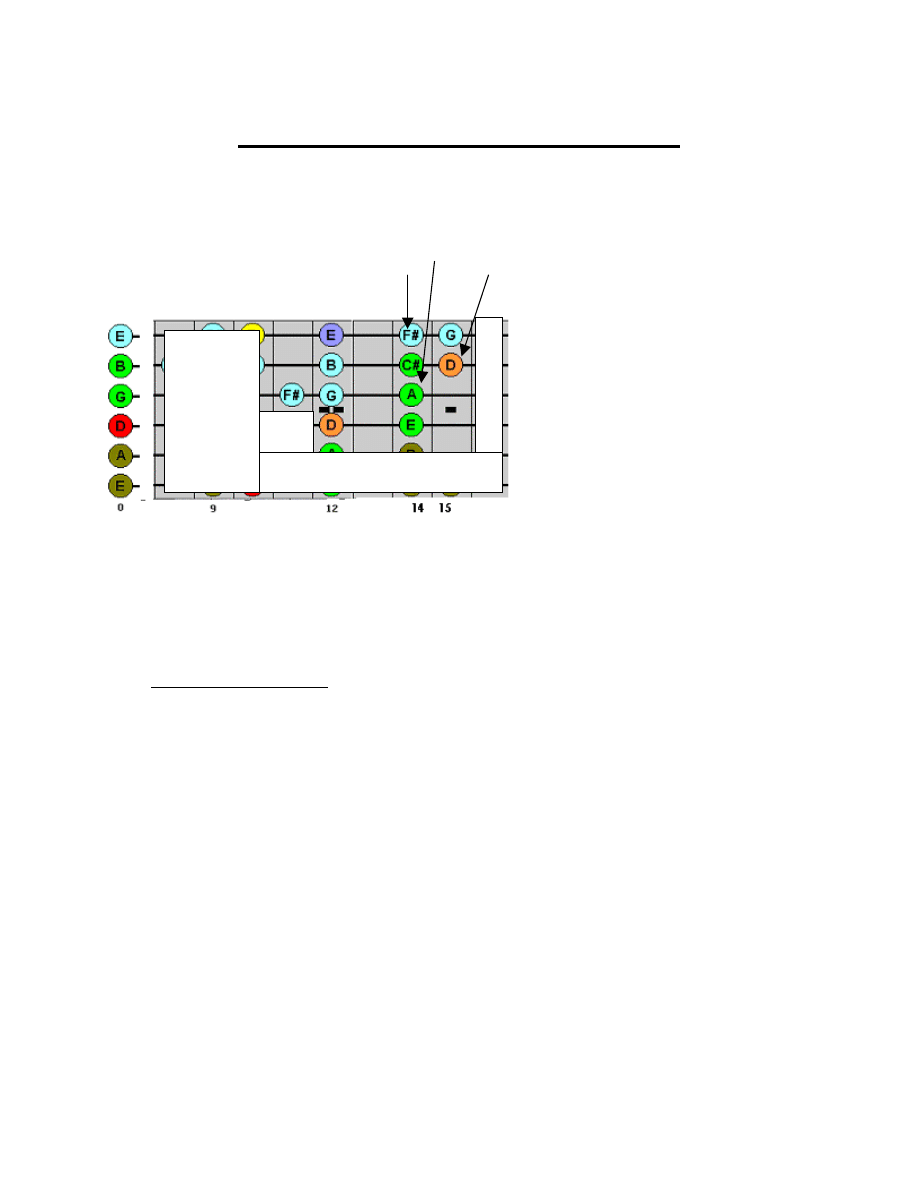
The D ”Form” of the D Major “Scale”
The D Form is probably the least used form but the D Form really holds the key to connecting the
entire fret board together.
Notice the F# A and D are part of the C Form Also
•
The First note (D) is played with the 2nd finger (
12th fret) on the D string
•
The Second note (E) is played with the 1st finger (14th fret) on the D string
•
The Third note (F#) is played with the 1st finger (11
th
fret) on the G string
•
The Fourth note (G) is played with the 2nd finger (12
th
fret) on the G string
•
The Fifth note (A) is played with the 4th finger (14th fret) on the G string
•
Now you shift up 1 Fret
•
The Sixth note (B) is played with the 1st finger (12
th
fret) on the B string
•
The Seventh note (C#) is played with the 3rd finger (14th fret) on the B string
•
Which will bring us back to Do a deer…..
•
The Eighth note (D) is played with the 2nd finger (
15th fret) on the B string
•
And You can add the first three notes of the next octave:
•
The Second note (E) is played with the 1st finger (12th fret) on the High E string
•
The Third note (F#) is played with the 3rd finger (14
th
fret) on the High E String
•
The Fourth note (G) is played with the 4th finger (15
th
fret) on the High E String.
You have done it!!
If you study these 5 Forms and scale Positions you will have complete access
To the Fret Board.

18
The Modes:
I. Instruction
What are modes?
You hear a lot of talk about Modes in music and they seem
mysterious at first but once you learn what they are and how
to use them they add a whole level of texture to your music.
The simplest description of modes would be the scales inside
the major scale.
Let me demonstrate:
The major scale has 8 notes Do Re Mi Fa So La Ti Do
1 2 3 4 5 6 7 8 (or 1)
To play a mode you simply play from a number to the same number
an octave higher.
An example the Dorian mode: Re Mi Fa So La ti Do Re
2 3 4 5 6 7 8 2
Lets take the Key of C C D E F G A B c
The Dorian mode (Key of C) D E F G A B C D
So what does that Do?
(Stay with me here)
Well the next step in understanding modes is to
know the relationship of each note to the Tonic or first note.
In the major scale it goes like this:
Do 1 - Tonic
Re 2 - Major 2nd - 1 Whole step (2 frets)
Mi 3 - Major 3rd - 2 Whole steps (4 frets)
Fa 4 - Major 4th - 2 Whole steps plus one half step (5 frets)
So 5 - Major 5th - 3 Whole steps plus one half step (7 frets)
La 6 - Major 6th - 4 Whole steps plus one half step (9 frets)
Ti 7 - Major 7th - 5 Whole steps plus one half step (11 frets)
Do 8 - Octave 6 Whole steps (12 Frets)

19
The relationship between the notes is also important:
Remember a whole step is 2 frets. A half step is 1 fret
Key of C
C D E F G A B C
Do Re Mi Fa So La Ti Do
Whole Whole 1/2 Whole Whole Whole 1/2
If you have access to a Piano note the White and black keys
the black keys are in sets of 2two and threes.
Now MODES:
The names of the modes:
Ionian From 1 to 1 AKA Major
Dorian From 2 to 2
Phrygian From 3 to 3
Lydian From 4 to 4
Mixolydian From 5 to 5
Aeolian From 6 to 6 AKA Natural Minor
Locrian From 7 to 7
Note:
Ionian, Lydian and Mixolydian are Major Modes
because the 3rd is major
Dorian, Phrygian and Aeolian are Minor
because the 3rd is minor
Locrian is Diminished minor - Scarey!
because the 3rd is minor and the 5th is diminished
20
In the key of C: Comments
Ionian: C · D · E · F · G · A · B · C Major
Dorian: D · E · F · G · A · B · C · D Minor 3rd - Major 6th
Phrygian: E · F · G · A · B · C · D · E Flat 2nd
Lydian: F · G · A · B · C · D · E · F Sharp 4th
Mixolydian: G · A · B · C · D · E · F · G Flat 7th
Aeolian: A · B · C · D · E · F · G · A Natural Minor
Locrian: B · C · D · E · F · G · A · B Diminished 5th
When to use different modes
Ionian: Sweet Pop sound
Dorian: Latin sound
Phrygian: More Latin Sound
Lydian: Major Jazz
Mixolydian: Major Blues
Aeolian: Minor sound (sad)
Locrian: Mysterious
NOTES
More Resources Next Page:
21
Additional Resources:
This Easy Guitar Lesson Video Will Show You How To:
"Learn Quicker, Play Faster And Sound Better. It's No Accident. In 5 Days, I Can Show You
How To Amaze Your Friends with Your Guitar Playing..."
http://guitar5day.com/aktop100.html
The above link will bring you to the Top 100 Guitar Sites
Plenty of great guitar information
Online Courses:
GUITAR TIPS:
http://www.guitar5day.com/gtlink.html
Guitar Tips is an excellent resource for learning
How to play the Guitar Online.
I will teach you a brand-new, comprehensive, hands-on approach that shows you the hottest guitar
techniques available today, and has you playing the guitar in no time!
Guitar Alliance:
http://www.guitar5day.com/gall.html
A little More Advanced with over 100 online lessons, tracks to practice with, Diagrams and
The Actual Sounds so You know what to Sound like!
Document Outline
- Table of Contents
- Basic Major Chords
- Major Chords
- The Notes of the Scales
- The C ”Form” of the D Major “Scale”
- Put your Fourth finger on the 5th fret
- The A ”Form” of the D Major “Scale”
- Put your Second finger on the 6th fret
- The Seventh note (C#) is played with the 1st finger (6th fret) on the G string
- Now how do we finger the scale?
- Put your Fourth finger on the 12th fret
- Then Why didn’t you teach this one first?
- Now you shift up 1 Fret
- This Easy Guitar Lesson Video Will Show You How To:
Wyszukiwarka
Podobne podstrony:
BBQ The Ultimate Grilling Guide
The Ultimate Uplink Guide
THE ULTIMATE?GINNER'S GUIDE TO HACKING AND PHREAKING
Guide The Ultimate Blackhat Cash Machine
Forex24 lv Copy Trading The Ultimate Guide Into Social Investment Networks
The Ultimate Guide To Growing Marijuana
The Ultimate Guide To Job Interview Answers Cv Mini 1
The Ultimate Enlarged Manual QKVHX2PTU7Y7DR6HM4ZYZ77FQ3IKDMIGCSHE76A
20140418 The Ultimate 2 fold Te Nieznany (2)
20140418 The Ultimate Twofold T Nieznany (2)
20140418 The Ultimate Twofold T Nieznany (3)
The Symposium A Philosophers Guide to Love
Ultimate Moraw Guide 2011, Prawo UMK 4 rok, filozofia prawa
Men & Supermen The Brand X Hero's Guide
eBook Sex The Ultimate Female Orgasm
Nijs L , de Vries The young architect’s guide to room acoustics
Lyle McDonald The Ultimate Diet 2 0
The Monk study guide?br
więcej podobnych podstron