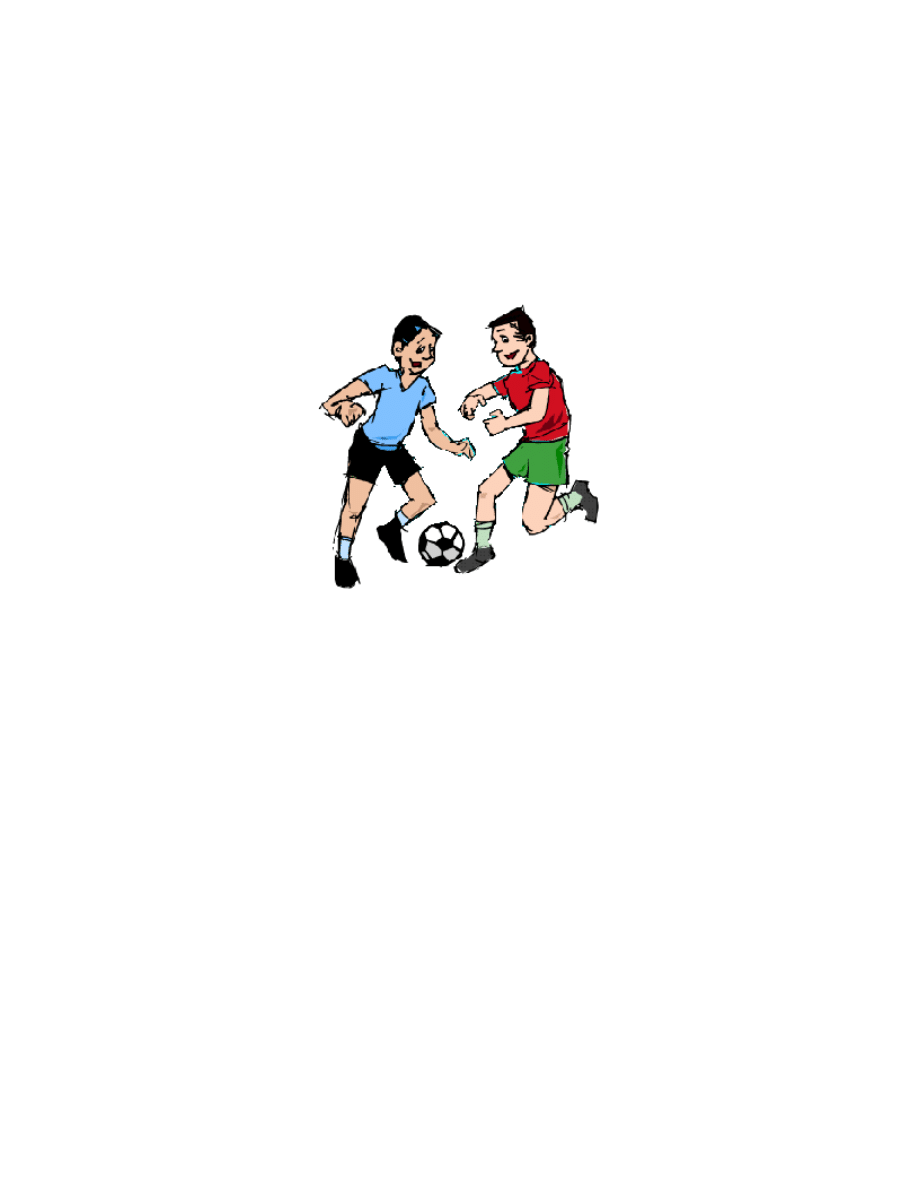
Coaching at the Gras Roots
C
C
o
o
a
a
c
c
h
h
i
i
n
n
g
g
a
a
t
t
t
t
h
h
e
e
G
G
r
r
a
a
s
s
s
s
s
R
R
o
o
o
o
t
t
s
s
IT’S PRACTICE TIME!
10-12 year olds
Season II, Part 4
Passing and Receiving
Key Factors:
1. Accuracy, eye on ball
2. Part of foot and ball
3. First touch – decision-making
4. Attack the ball
Let’s Practice!
10-12 year olds
EQUIPMENT CHECK: Balls, bibs and cones.
The Canadian Soccer Association
Page 1 of 5

Warm-Up (10 minutes)
Set-Up:
Four players in one box. A ball between two.
A B
C D
Receiver comes forward to accept the ball. The passer moves back to regain
space. Passing and control that create space for both players. All practices
alternate right and left feet.
Variety of passing and control:
• “feint’ to deceive your opponent before passing the ball
• swerve the ball inwards or outwards when passing
• chip passes, knee to waist high, backspin
• lateral control touch
• random passing – try putting it all together!
Coach, encourage your players to
• be creative in feints and tricks to deceive opponents
• “swipe” the ball to create a swerve
• strike underneath the ball to create height and backspin
• select appropriate body part for control – feet or thigh
• strive for top quality controlling touch to set up the return pass
Skill – Early Touches (10 minutes)
Set-Up:
Group players in pairs. One ball for each pair. Players facing each other.
Pairs practice a variety of control chips and volleys. Come forward to control the
ball and regain space after striking the ball. All practices alternate use of right
and left feet. Chips and volleys are between head and shoulder height.
Sequence:
• start with chip. Receiver allows one bounce, makes half volley back.
• control with feet before bounce, chip return.
• control with thigh before bounce, chip return.
• control with chest before bounce, half volley or full volley return.
The Canadian Soccer Association
Page 2 of 5
• random – try putting it all together use a variety of chip, contol, volley
Coach, stress:
• head still, eyes on the ball when striking it.
• correct body shape when striking the ball.
• moving towards the ball when receiving it.
• striving for top quality control and strikes.
• players practicing on their “weak” sides.
REMEMBER - ACCURACY OVER POWER!!!
Technique Development (10 minutes)
Set-Up:
Players in pairs, each player standing by a cone opposite each other, one ball
between them.
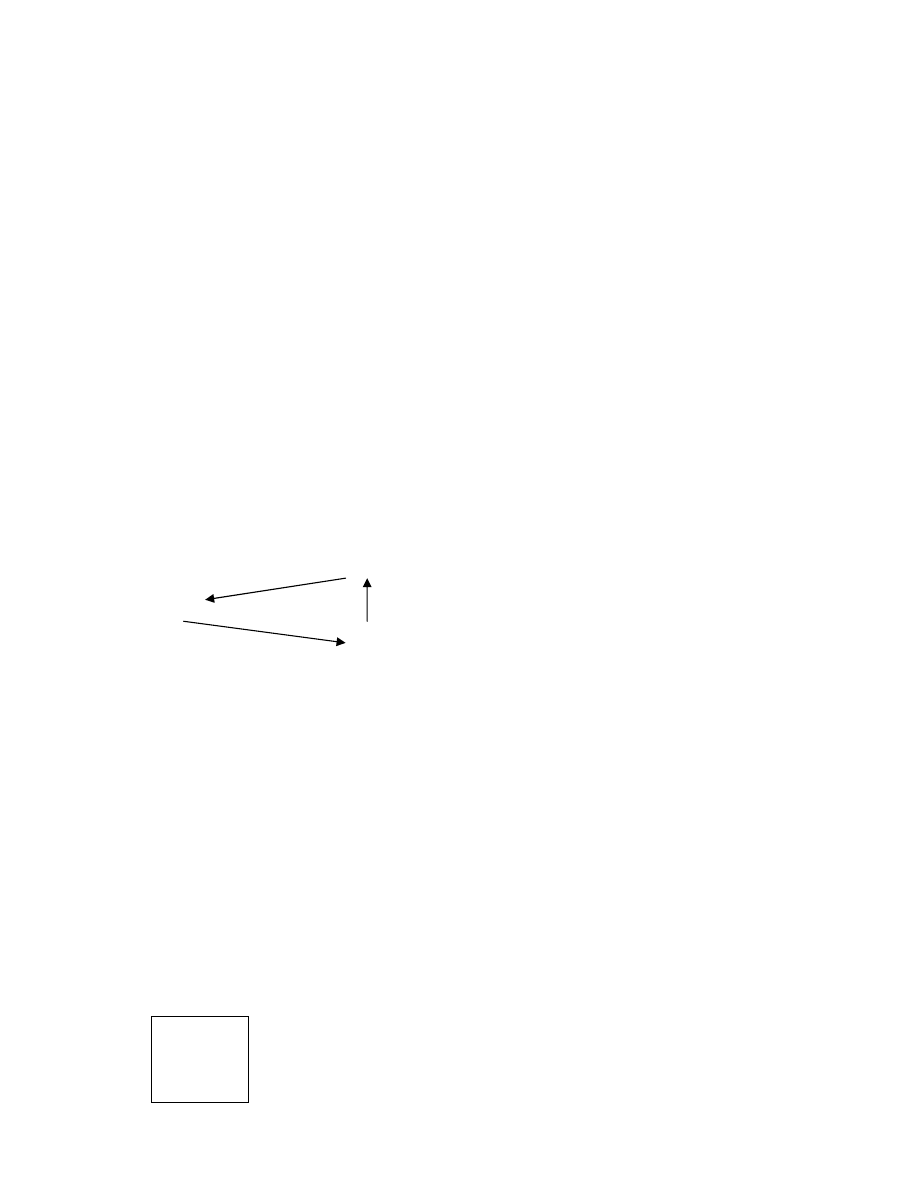
“A” passes to “B”. “B” takes a touch past the marker and passes back to “A”.
Repeat. Switch after several repetitions.
^
A
O
^
B
Coach, stress
• taking the first touch with outside or inside of foot.
• passing back with inside of foot if the first touch is outside and vice
versa.
• developing a good first touch
Progressions:
• ball is served two-handed (underhand) in the air
• control with: 1. feet, 2. thigh, 3. chest, 4. head
Skill: Passing (10 minutes)
Set-Up:
4v1 in a 15m square, one ball.
X
X
O X
X
The Canadian Soccer Association
Page 3 of 5
Have the players use the techniques worked on earlier in the practice by passing
the ball between them while keeping it away from the player in the middle.
Coach, encourage the players to pass and move.
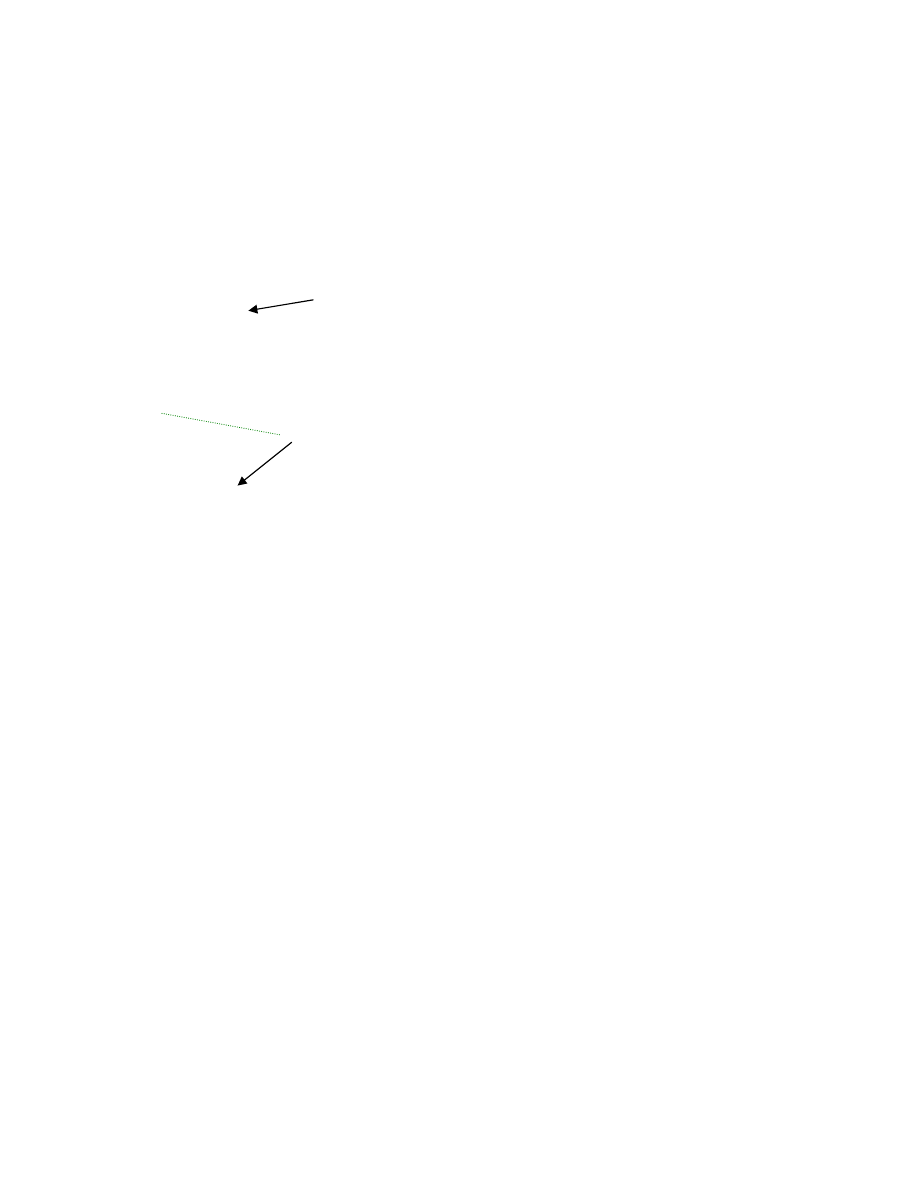
Encourage them to give wide-angle support.
X2 - - - - - - - - - - - X1
O
Above, X2 is giving narrow angle support – so the pass is easily
intercepted.
X2
X1
O
Above, X2 is giving wider support - so the pass is not easy to intercept.
Rotate the man in the middle every two minutes.
Small-Sided Game (20 minutes)
Set-Up:
25m x 35m rectangle, small goals. Divide team into four small groups. Play 4v4
or 3v3. Coach decides whether to use keepers or not. If there are no keepers,
use even smaller goals.
Coach, encourage passing and support and movement off the ball.
Rotate teams after five minutes.
*We cannot over-emphasize the use of small-sided games in developing
the skills needed for playing the game:
• decision-making
• head up
• first touch
• movement off the ball
• passing surfaces (inside, outside, top of foot)
• support
The Canadian Soccer Association
Page 4 of 5
In the small-sided game as opposed to a game with large teams, each
player will get many, many more touches on the ball, thus developing
confidence.
In order to develop skilled, thinking soccer players, the most important
thing is to let the children PLAY!
Warm-Down (5 minutes)
Follow the established routines for warming-down and completion of practice.
This should now be a habit. Players always assemble around the coach at the
end of the warm-down for final instructions, announcements and reminders. No
one just runs off!
Practice is over!
Did everyone stay active, involved and motivated?
Coach, use this reflections on this session to help you plan the next one.
Remember to adjust the practices to suit the needs of your players.
If you have any questions, comments or feedback about this document, or anything
involving the Coaching Centre, please send an email to:
The Canadian Soccer Association
Page 5 of 5
Document Outline
Wyszukiwarka
Podobne podstrony:
10 12 lat 12
10 12 lat 11
10 12 lat 9
10 12 lat 7
10 12 lat 1
10 12 lat 10
10 12 lat 6
10 12 lat 13
10 12 lat 8
10 12 lat 10
Program zajęć sportowo rekreacyjnych piłka nożna chłopców 10 12 lat mgr Dariusz Waryszak
10 12 lat 11
10 12 lat 9
2012 10 01 Czesław Kowalczyk 12 lat za kratami za nic
więcej podobnych podstron