
ACADEMIC LISTENING PRACTICE TEST 1
SECTION 1 Questions 1 - 10
Questions 1 - 5
Complete the form below.
Write
NO MORE THAN ONE WORD OR A NUMBER for each answer.
PAN ASIAN AIRWAYS
LOST PROPERTY REPORT FORM
Surname
Allen
Address
(1) ____________________ Windham Road
Richmond
Postcode
(2) ____________________
Home tel.
020 8927 7651
Mobile tel.
(3) ____________________
Flight Number
(4) ____________________
Seat Number
(5) ____________________
From
New York
To
London Heathrow
Page 1
Example
Answer
First Name
Kirsty
ieltshelpnow.com ACADEMIC MODULE
PRACTICE TEST 1
Academic Test 1; Page 1
© ieltshelpnow.com

Questions 6 - 8
Circle THREE letters
A - F.
What items did Kirsty’s bag contain?
A
17 pounds
B
pens
C
her passport
D
a book
E
200 dollars
F
her house keys
Questions 9 and 10
Choose a letter (
A - D) that correctly answers questions 9 and 10.
9
What has Kirsty done regarding the loss of her credit card?
A
Informed the police but not the credit card company.
B
Informed the credit card company but not the police.
C
Informed both the police and the credit card company.
D
Informed neither the police nor the credit card company.
10
What must Kirsty do after the call regarding her lost handbag?
A
Call back after 11⁄2 hours.
B
Just wait for a call back.
C
Call back after 11⁄2 hours if she has heard nothing.
D
Call back the next day if she has heard nothing.
Academic Test 1; Page 2
© ieltshelpnow.com

SECTION 2 Questions 11 - 20
Questions 11 - 14
Label the locations on the map below.
(14)
_______________
_______________
_______________
Main
Lecture
Hall
WE ARE
HERE
Car Park
(11)_______________
__________________
__________________
(13) ______________
__________________
__________________
Hall
of
Residence
(12)
____________
____________
____________
Refectory
Academic Test 1; Page 3
© ieltshelpnow.com

Questions 15 - 20
Complete the notes below.
Write
NO MORE THAN THREE WORDS OR A NUMBER for each answer.
Notes on Student Facilities
Students’ Union
Very cheap
Bookshop
Food and drink available
Parties!
Offices - travel, welfare etc.
Open 8am - 12 midnight
Library
Must register
Tours every (15) ____________________ for 2 weeks.
Open 9am - 9pm (later during (16) ____________________)
Refectory
Cheap meals
Lunch 12 noon - 3pm
Dinner (17) __________ - 8.30pm
Types of food -
favourites
healthy
ethnic
(18) ____________________
vegan
Sports Hall
Must join Athletic Union which - lets me use facilities
lets me play for teams
(19) ______________ me all year
Discount Card
Costs (20) £_______________
Gives me discounts on all uni. services
Academic Test 1; Page 4
© ieltshelpnow.com

SECTION 3 Questions 21 - 30
Questions 21 - 25
Complete the table below.
Write
NO MORE THAN THREE WORDS for each answer.
John
Jane
Day of Arrival
Thursday
(21) _______________________
Subjects Studying
economics
maths
french
(22) _______________________
history
music
Monday’s 9am lecture
french
history
Monday’s 2pm lecture
maths
(23) _______________________
Wednesday afternoon sport
selected
(24) _______________________ volleyball
Location of Sport
sports hall
(25) _______________________
Questions 26 - 29
Write
NO MORE THAN THREE WORDS OR A NUMBER for each answer.
26
Students can choose from how many essay titles for their first assignment?
_________________________________________________________________________
27
Where did John travel during the summer?
_________________________________________________________________________
28
What is the word limit for the essays?
_________________________________________________________________________
29
When must the first essay be handed in by?
_________________________________________________________________________
Question 30
Circle the correct letter
A - C.
30
Where will John and Jane meet up later that day?
A
the economics course office
B
the economics common room
C
the campus cafeteria
Academic Test 1; Page 5
© ieltshelpnow.com

SECTION 4 Questions 31 - 40
Questions 31 - 34
Choose the correct letters
A - C.
31
Japan relies on oil tankers because...
A
the country consists of islands.
B
the country has no pipeline network.
C
the country has no natural oil resources.
32
Professor Wilson says that oil tankers are...
A
very safe.
B
quite safe.
C
quite unsafe.
33
According to Professor Wilson, the main cause of oil slicks is...
A
accidents while loading and unloading oil.
B
collisions.
C
deliberate releases of oil.
34
According to Professor Wilson, slicks are rarely burned off nowadays because...
A
the oil is refined.
B
it usually doesn’t work.
C
it creates too much air pollution.
Academic Test 1; Page 6
© ieltshelpnow.com

Questions 35 - 39
Complete the notes below.
Write
NO MORE THAN THREE WORDS.
Oil exploration clean-up techniques
Techniques
Advantages
Disadvantages
The Containment Boom
Cheap and easy
Only good when there are
(35) ________________
____________________
Chemical Detergents
Good for treating (36) _________
___________________________
Chemicals remain in the water +
kill marine life.
The Sponge
Oil remains permanently in the
sponge.
The sponge mats turn into
(37) _______________________
___________________________
Bacteria
Cheap
Easy to administer
Totally (38) _________________
___________________________
(39) _______________________
Question 40
Complete the notes below.
Write
NO MORE THAN THREE WORDS.
Optional essay question.
Remember to check out the faculty’s notice boards. You will find:
*
reading lists
*
essay questions
*
(40) __________________________________________________
Academic Test 1; Page 7
© ieltshelpnow.com

ACADEMIC READING PRACTICE TEST 1
READING PASSAGE 1
Questions 1 -13
You should spend about 20 minutes on
Questions 1 – 13 which are based on
Reading Passage 1 below.
THE BIG CATS AT THE SHARJAH BREEDING CENTRE
It is one of the few places where you will be able to spot them all at the same time… the
Arabian wolf, an African cheetah, an Arabian leopard, an oryx, a gazelle. These are just some of
the animals, which, on the brink of extinction, are now getting a new lease of life thanks to the
exemplary work being done at the Breeding Centre for Endangered Arabian Wildlife in Sharjah.
Sharjah is one of the seven emirates that make up the United Arab Emirates. The Breeding
Centre’s expertise and facilities have made it a prime destination for illegally imported animals
confiscated by UAE and Sharjah authorities. In the last four years, more than 900 mammals and
reptiles and 969 birds have arrived at the centre, including 25 North African cheetahs, Houbara
bustard and falcons, lions, a baby Nile crocodile and a Burmese python that was left in a rental car
at the airport.
The 25 cheetahs were all imported illegally into the UAE and were intercepted at the UAE
harbour and airport entry points. They nearly all arrived malnourished, dehydrated and highly
stressed after long voyages stuffed into boxes, crates and suitcases. Now they are bright and full
of energy. The Centre’s efforts have also been rewarded when the first cheetah mating took place
at the end of 2002. Playing matchmaker with these beautiful creatures is no easy task – successful
breeding requires considerable patience and intimate knowledge of each animal’s personality, and
it is the result of intensive and expert management of each animal within the group as well as of the
group as a whole.
Because this group was still young and inexperienced in courtship matters, the keepers had
to make the introductions only after careful planning and management, much like the lead role in
a Jane Austen novel. The female cheetahs were initially intimidated by the presence of the male;
however, as they advance to oestrus, the roles are reversed and the male cheetah becomes too
wary to approach during the female’s most receptive phase of the cycle. It is the responsibility of
the keeper therefore to monitor each individual and to be able to respond to any indication from
the cheetahs that the time is right for introducing a pair. The close bond that invariably develops
between the keeper and the cheetahs enables the keeper to spot even the most subtle signs from
the animals in their care. The trust between keeper and animal has also allowed the opportunity to
study cellular changes in the sexual organs of the females during the hormonal cycles that occur
prior to reproduction.
The Breeding Centre’s cheetahs are also participants in the European breeding programme,
which aims to ensure that the genetic diversity of this endangered species is maintained and
expanded by breeding as many founder animals as possible to introduce new bloodlines into the
captive population. In this way, the group held at the centre plays a very important role in the future
health of the international captive population, as they are potentially all new founders.
Also very important for the Sharjah Breeding Centre is the leopard-breeding programme.
Academic Test 1; Page 8
© ieltshelpnow.com

The Arabian leopard, Panthera pardus nimr, is critically endangered around the world and
particularly in the Arabian peninsula, where it was once found throughout the coastal mountain
ranges. Activities like hunting, trapping and habitat destruction has reduced their range to a few
isolated and fragmented populations in Oman, Yemen and Saudi Arabia.
In the 1980s, a captive breeding programme was established near Muscat with the capture
of three leopards in southwestern Oman. The breeding programme in the UAE was initiated by
the Arabian Leopard Trust and started with the arrival of two mature specimens: a male Arabian
leopard from Yemen and a female on breeding loan from Oman in 1995. The arrival of these two
animals led to the construction of the Breeding Centre in which the leopard has played the role of
flagship species.
Today there are twelve leopards at the Breeding centre, eight of which have been born at
the centre since the first cub in 1998. Once more, the secret to the centre’s success is the close
relationship between animal and keeper. The leopard is usually shy and secretive with people
around, but here they react positively to the presence of their keepers, approaching the fence so
they can be talked to or scratched behind an ear.
The bond is particularly important during breeding season, when keepers decide to
introduce pairs to each other. Male leopards are known to have killed their partners on introduction,
so it is essential for the keeper to understand the leopards’ behaviour to decide when it is safe to
do so. The trust is also important if keepers need to enter dens to check on and monitor the cub’s
growth. Leopard females have been known to kill their cubs if the dens have been disturbed, but
the centre’s leopards are quite comfortable with the staff handling the new generation of cubs.
Questions 1- 8
Use the information in the text to match the statements (
1 – 8) with the animals
(
A – D). Write the appropriate letter (A – D) in boxes 1 – 8 on your answer sheet.
Write:
A
if the statement refers to cheetahs at the Breeding Centre.
B
if the statement refers to leopards at the Breeding Centre.
C
if the statement refers to both cheetahs and leopards at the Breeding Centre.
D
If the statement refers to neither cheetahs nor leopards at the Breeding Centre.
Example
Answer
These animals are endangered
C
1
These animals were smuggled into the UAE.
2
At first these animals did not adapt to life at the Sharjah Breeding Centre
3
These animals are regarded as the most important animal at the Centre.
4
Half of these animals were born at the Breeding centre.
Academic Test 1; Page 9
© ieltshelpnow.com
Source: The Gulf News, UAE

5
These animals can be dangerous to one another.
6
The role of the keeper is vital in the breeding programme of these animals.
7
The first of these animals at the Breeding Centre were relatively young.
8
It is normally difficult for humans to approach these animals.
Questions 9 – 13
Complete the summary below.
Choose your answers from the box below the summary and write them in boxes
9 – 12 on your answer sheet.
NB There are more words than spaces, so you will not use them at all.
Example
Answer
The Sharjah Breeding Centre now has a __________ of
variety
animals including birds,…
SUMMARY
The Sharjah Breeding Centre now has a variety of animals including birds, mammals and
(9) __________. As its name suggests, the Centre is primarily involved in breeding and
(10) __________ the numbers of the species housed there whilst still maintaining the (11)
_________ of bloodlines in order to retain genetic health. In spite of problems involving
the complex (12) __________ of the animals, a fair amount of (13) __________ has been
achieved with North African cheetahs and Arabian leopards.
reptiles
variety
behaviour success
creating
expanding difficulty
diversity
action
habitat
season
fish
change
working
programme
Academic Test 1; Page 10
© ieltshelpnow.com

READING PASSAGE 2
Questions 14 - 27
You should spend about 20 minutes on
Questions 14 – 27 which are based on
Reading Passage 2 on the following pages.
INSOMNIA – THE ENEMY OF SLEEP
A
It is not unusual to have sleep troubles from time to time. But, if you feel you do not get enough
sleep or satisfying sleep, you may have insomnia, a sleep disorder. People with insomnia have
one or more of the following: difficulty falling asleep, waking up often during the night and having
trouble going back to sleep, waking up too early in the morning and unrefreshing sleep. Insomnia
is not defined by the number of hours you sleep every night. The amount of sleep a person needs
varies. While most people need between 7 and 8 hours of sleep a night, some people do well with
less, and some need more.
B
Insomnia occurs most frequently in people over age 60, in people with a history of depression, and
in women, especially after menopause. Severe emotional trauma can also cause insomnia with
divorced, widowed and separated people being the most likely to suffer from this sleep disorder.
Stress, anxiety, illness and other sleep disorders such as restless legs syndrome are the most
common causes of insomnia. An irregular work schedule, jet lag or brain damage from a stroke or
Alzeimer’s disease can also cause insomnia as well as excessive use of alcohol or illicit drugs. It
can also accompany a variety of mental illnesses.
C
The mechanism that induces sleep is not known. When it becomes dark, the pineal gland in the
brain secretes a hormone called melatonin, which is thought to induce sleep. Exactly why sleep
is necessary for good health and efficient mental functioning is unknown. We do know that sleep
consists of two very different states: rapid eye movement (REM) sleep and non-REM sleep. In
REM sleep, dreams occur, the eyes move under the closed lids and there is an increase in oxygen
consumption, blood flow and neural activity. REM sleep occurs four or five times during a night.
Beginning periods last about ten to fifteen minutes but the periods get longer as the night goes on.
The periods of REM sleep alternate with longer periods of non-REM sleep, when body functions
slow. Non-REM sleep has four stages. During the deepest stages (3 and 4) it is hard to rouse
a sleeper. As the night goes on, the periods of non-REM sleep become progressively lighter.
Sleep in stages 1 and 2 are felt to be restorative as during this time the body repairs itself utilising
a hormone called somatostatin. Lack of stage 4 sleep is believed to be important in chronically
painful conditions such as fibromyalgia.
D
Healthcare providers diagnose insomnia in several ways. One way is to categorize insomnia
Academic Test 1; Page 11
© ieltshelpnow.com

by how often it occurs. Another way is to identify the insomnia by what is causing the sleep
deprivation. The two main types of insomnia have been described as Primary Insomnia and
Secondary Insomnia. Primary Insomnia is a chronic condition with little apparent association with
stress or a medical problem. The most common form of primary insomnia is psychophysiological
insomnia. Secondary insomnia is caused by symptoms that accompany a medical condition such
as anxiety, depression or pain.
E
Improving one’s sleep hygiene helps improve insomnia in all patients. Relaxing during the hour
before you go to sleep and creating a comfortable environment suited for sleep can be helpful.
Older people who wake up earlier than normal or have trouble falling asleep may need less sleep
than they used to. Changing one’s sleep pattern, either by going to bed later or waking up earlier,
can be effective in dealing with insomnia in older people. Therapy also depends on the cause
and severity of the insomnia. Transient and intermittent insomnia may not require any direct
action since these conditions last only a few days at a time. However, if insomnia interferes with
a person’s daily activities, something should be done. Usually the best method of dealing with
insomnia is by attacking the underlying cause. For example, people who are depressed often have
insomnia and looking at this problem may eliminate it.
F
Not getting enough sleep can make you less productive, irritable and unable to concentrate.
Lack of sleep can make it seem as if you “got up out of the wrong side of the bed.” Early morning
headaches and waking up feeling as if you never went to sleep can result in frustration. Stress
can cause insomnia but insomnia also increases stress. Insomnia can make driving unsafe as
well. Insomnia can result in missed work, which can cause you to become less productive and
miss promotions. It can leave you feeling as if you just can’t get enough done. Insomnia can also
mask serious mental disorders. People with insomnia may think that not getting enough sleep is
their only problem, but the insomnia may actually be one symptom of a larger disorder, such as
depression. Studies show that people with insomnia are four times more likely to be depressed
than people with a healthy sleeping pattern. In addition, lack of sleep can tax the heart and lead to
serious conditions like heart disease. All of these are important problems that can affect every part
of your life.
G
Establishing certain set routines can help insomniacs get better sleep. Examples of these routines
include: going to bed and getting up at the same time every day, avoiding napping, avoiding
caffeine, nicotine, alcohol and eating heavily late in the day, exercising regularly and making your
bedroom comfortable in terms of the bed, noise and temperature. Insomniacs should also only
use their bedroom for sleep so that their bodies associate the room with sleep. Finally, if you can’t
get to sleep, don’t toss and turn all night. Get up and read or do something that is not overly
stimulating until you feel really sleepy again.
Academic Test 1; Page 12
© ieltshelpnow.com
Source: 4woman.gov + McKinley Health Centre, Illinois

Questions 14 - 19
The reading passage on Insomnia has 7 paragraphs (
A – G).
From the list of headings below choose the most suitable headings for paragraphs
B – G.
Write the appropriate number (
i – xi) in boxes 14 – 19 on your answer sheet.
NB There are more headings than paragraphs, so you will not use them all.
Example
Answer
Paragraph A
iv
i
The Role of Sleep
ii
Insomnia Medication
iii
Habits to Promote a Good Night’s Sleep
iv
What is Insomnia
v
Complications for Insomniacs
vi
Government Action
vii
Available Treatment for Insomnia
viii
The Causes of Insomnia
ix
Therapy Solutions
x
Types of Insomnia
xi
Current Research
14
Paragraph B
15
Paragraph C
16
Paragraph D
Academic Test 1; Page 13
© ieltshelpnow.com

17
Paragraph E
18
Paragraph F
19
Paragraph G
Questions 20 - 27
Do the following statements agree with the views of the writer of the reading
passage on Insomnia?
In Boxes
20 - 27 write:
YES
if the statement agrees with the writer
NO
if the statement doesn’t agree with the writer
NOT GIVEN
if it is impossible to say what the writer thinks about this
20
Someone who only gets four hours of sleep a night must be suffering from insomnia.
21
Travelling can cause insomnia.
22
REM sleep is felt to be the most important for the body’s rest.
23
Secondary insomnia is far more common than primary insomnia.
24
Sufferers of insomnia can attend specialist sleep clinics.
25
Many people suffering from insomnia don’t realise that they suffer from it.
26
There is no actual correlation linking insomnia and depression.
27
Sleeping during the day can make insomnia worse.
Academic Test 1; Page 14
© ieltshelpnow.com

READING PASSAGE 2
Questions 28 - 40
You should spend about 20 minutes on
Questions 28 – 40 which are based on
Reading Passage 3 below.
ALTERNATIVE FARMING METHODS IN OREGON
Onion growers in eastern Oregon are adopting a system that saves water and keeps topsoil
in place, while producing the highest quality “super colossal” onions. Pear growers in southern
Oregon have reduced their use of some of the most toxic pesticides by up to two-thirds, and
are still producing top-quality pears. Range managers throughout the state have controlled the
poisonous weed tansy ragwort with insect predators and saved the Oregon livestock industry up to
$4.8 million a year.
These are some of the results Oregon growers have achieved in collaboration with Oregon
State University (OSU) researchers as they test new farming methods including integrated pest
management (IPM). Nationwide, however, IPM has not delivered results comparable to those
in Oregon. A recent U.S General Accounting Office (GAO) report indicates that while integrated
pest management can result in dramatically reduced pesticide use, the federal government has
been lacking in effectively promoting that goal and implementing IPM. Farmers also blame the
government for not making the new options of pest management attractive. “Wholesale changes in
the way that farmers control the pests on their farms is an expensive business.” Tony Brown, of the
National Farmers Association says. “If the farmers are given tax breaks to offset the expenditure,
then they would willingly accept the new practices.” The report goes on to note that even though
the use of the riskiest pesticides has declined nationwide, they still make up more than 40
percent of all pesticides used today; and national pesticide use has risen by 40 million kilograms
since 1992. “Our food supply remains the safest and highest quality on Earth but we continue to
overdose our farmland with powerful and toxic pesticides and to under-use the safe and effective
alternatives,” charged Patrick Leahy, who commissioned the report. Green action groups disagree
about the safety issue. “There is no way that habitual consumption of foodstuffs grown using toxic
chemicals of the nature found on today’s farms can be healthy for consumers,” noted Bill Bowler,
spokesman for Green Action, one of many lobbyists interested in this issue.
The GAO report singles out Oregon’s apple and pear producers who have used the new IPM
techniques with growing success. Although Oregon is clearly ahead of the nation, scientists
at OSU are taking the Government Accounting Office criticisms seriously. “We must continue
to develop effective alternative practices that will reduce environmental hazards and produce
high quality products,” said Paul Jepson, a professor of entomology at OSU and new director of
OSU’s Integrated Plant Protection Centre (IPPC). The IPPC brings together scientists from OSU’s
Agricultural Experiment Station, OSU Extension service, the U.S. Department of Agriculture and
Oregon farmers to help develop agricultural systems that will save water and soil, and reduce
pesticides. In response to the GAO report, the Centre is putting even more emphasis on integrating
research and farming practices to improve Oregon agriculture environmentally and economically.
“The GAO report criticizes agencies for not clearly communicating the goals of IPM,” said Jepson.
Academic Test 1; Page 15
© ieltshelpnow.com

“Our challenge is to greatly improve the communication to and from growers, to learn what works
and what doesn’t. The work coming from OSU researchers must be adopted in the field and not
simply languish in scientific journals.”
In Oregon, growers and scientists are working together to instigate new practices. For example, a
few years ago scientists at OSU’s Malheur Experiment Station began testing a new drip irrigation
system to replace old ditches that wasted water and washed soil and fertilizer into streams. The
new system cut water and fertilizer use by half, kept topsoil in place and protected water quality.
In addition, the new system produced crops of very large onions, rated “super colossal” and
highly valued by the restaurant industry and food processors. Art Pimms, one of the researchers
at Malheur comments: “Growers are finding that when they adopt more environmentally benign
practices, they can have excellent results. The new practices benefit the environment and give the
growers their success.”
OSU researchers in Malheur next tested straw mulch and found that it successfully held soil in
place and kept the ground moist with less irrigation. In addition, and unexpectedly, the scientists
found that the mulched soil created a home for beneficial beetles and spiders that prey on onion
thrips – a notorious pest in commercial onion fields – a discovery that could reduce the need for
pesticides. “I would never have believed that we could replace the artificial pest controls that we
had before and still keep our good results,” commented Steve Black, a commercial onion farmer in
Oregon, “but instead we have actually surpassed expectations.”
OSU researchers throughout the state have been working to reduce dependence on broad-
spectrum chemical sprays that are toxic to many kind of organisms, including humans. “Consumers
are rightly putting more and more pressure on the industry to change its reliance on chemical
pesticides, but they still want a picture-perfect product,” said Rick Hilton, entomologist at OSU’s
Southern Oregon Research and Extension Centre, where researchers help pear growers reduce
the need for highly toxic pesticides. Picture perfect pears are an important product in Oregon
and traditionally they have required lots of chemicals. In recent years, the industry has faced stiff
competition from overseas producers, so any new methods that growers adopt must make sense
economically as well as environmentally. Hilton is testing a growth regulator that interferes with the
molting of codling moth larvae. Another study used pheromone dispensers to disrupt codling moth
mating. These and other methods of integrated pest management have allowed pear growers to
reduce their use of organophosphates by two-thirds and reduce all other synthetic pesticides by
even more and still produce top-quality pears. These and other studies around the state are part
of the effort of the IPPC to find alternative farming practices that benefit both the economy and the
environment.
Academic Test 1; Page 16
© ieltshelpnow.com
Source: Peg Herring / Oregon State University

Questions 28 – 35
Match the views (
28 – 35) with the people listed below.
28
There is a double advantage to the new techniques.
29
Expectations of end users of agricultural products affect the products.
30
The work on developing these alternative techniques is not finished.
31
Eating food that has had chemicals used in its production is dangerous to our health.
32
Changing current farming methods is not a cheap process.
33
Results have exceeded anticipations.
34
The research done should be translated into practical projects.
35
The U.S. produces the best food in the world.
TB
Tony Brown
PL
Patrick Leahy
BB
Bill Bowler
PJ
Paul Jepson
AP
Art Pimms
SB
Steve Black
RH
Rick Hilton
Academic Test 1; Page 17
© ieltshelpnow.com

Questions 36 - 40
Read the passage about alternative farming methods in Oregon again and look at
the statements below.
In boxes
36 - 40 on your answer sheet write:
TRUE
if the statement is true
FALSE
if the statement is false
NOT GIVEN
if the information is not given in the
advertisement
36
Integrated Pest Management has generally been regarded as a success in the US.
37
Oregon farmers of apples and pears have been promoted as successful examples of
Integrated Pest Management.
38
The IPPC uses scientists from different organisations.
39
Straw mulch experiments produced unplanned benefits.
40
The apple industry is now facing a lot of competition from abroad.
Academic Test 1; Page 18
© ieltshelpnow.com
ACADEMIC WRITING PRACTICE TEST 1
WRITING TASK 1
You should spend about 20 minutes on this task.
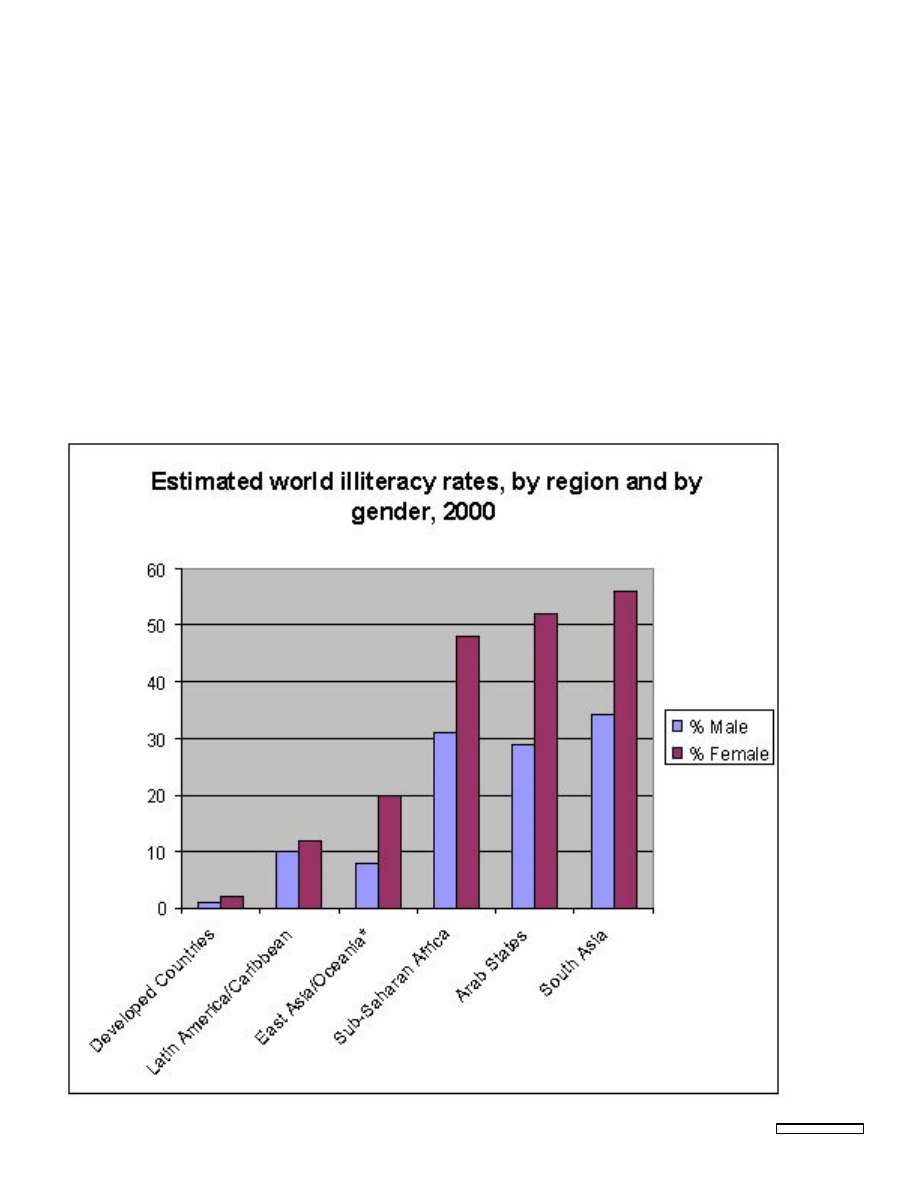
The chart below shows estimated world literacy rates by region and by gender for the
year 2000.
Write a report for a university lecturer describing the information below.
You should write at least 150 words.
Academic Test 1; Page 19
© ieltshelpnow.com

WRITING TASK 2
You should spend about 40 minutes on this task.
With the pressures on today’s young people to succeed academically, some people
believe that non-academic subjects at school (eg: physical education and cookery)
should be removed from the syllabus so that children can concentrate wholly on
academic subjects.
To what extent do you agree or disagree?
You should write at least 250 words.
Academic Test 1; Page 20
© ieltshelpnow.com

ACADEMIC SPEAKING PRACTICE TEST 1
Section 1
*
Tell me about your family.
*
Where do they live?
*
What do you like doing when you are with your family?
Topic 1
Health and Exercise
*
What sorts of things do you do to keep healthy?
*
What other sorts of things are popular in your country to keep healthy?
*
What sorts of exercise do you not like doing?
*
How can we get young people to do more exercise?
Topic 2
Music
*
What is your favourite type of music and why?
*
Do you think that a country’s traditional music is important for its culture? (Why?)
*
Why do people’s tastes in music often change as they get older?
*
What are some of the different uses of music in your country?
Describe your favourite film or television programme
You should say:
when you watch it
who is in it
what happens in it
and explain why you particularly like it
Section 2
Section 3
Topic 1
TV and Radio
*
Why do you think television has become so popular over the last 50 years?
*
Do you think that there is still a future for radio with television being so popular?
*
Which is better for presenting the news: television or radio? (Why?)
*
How can we stop young people today watching too much television?
Topic 2
Films and Cinema
*
Can you compare television and cinema as forms of entertainment?
*
Do people in your country prefer American films or films from their part of the World?
*
How do you think World cinema will develop over the next 50 years?
*
Do you feel that “film stars” are overpaid for what they do?
Academic Test 1; Page 21
© ieltshelpnow.com
Wyszukiwarka
Podobne podstrony:
ac test 5 question paper
ac test 2 question paper
ac test 4 question paper
ac test 3 question paper
gt test 5 question paper
gt test 1 question paper
general training question paper test 9
general training question paper test 7
general training question paper test 8
general training question paper test 10
general training question paper test 6
więcej podobnych podstron