Plants for
wildlife-friendly gardens
working today
for nature tomorrow
English Nature is the
Government agency
that champions the
conservation of wildlife and
geology throughout
England.
This is one of a range of
publications published by:
External Relations Team
English Nature
Northminster House
Peterborough PE1 1UA
www.english-nature.org.uk
© English Nature 2003
Printed on Evolution
Satin, 75% recycled
post-consumer waste paper,
Elemental Chlorine Free.
ISBN 1 85716 708 2
Catalogue code CORP1.31
Designed and Printed by
Status Design & Advertising,
20M, 10M.
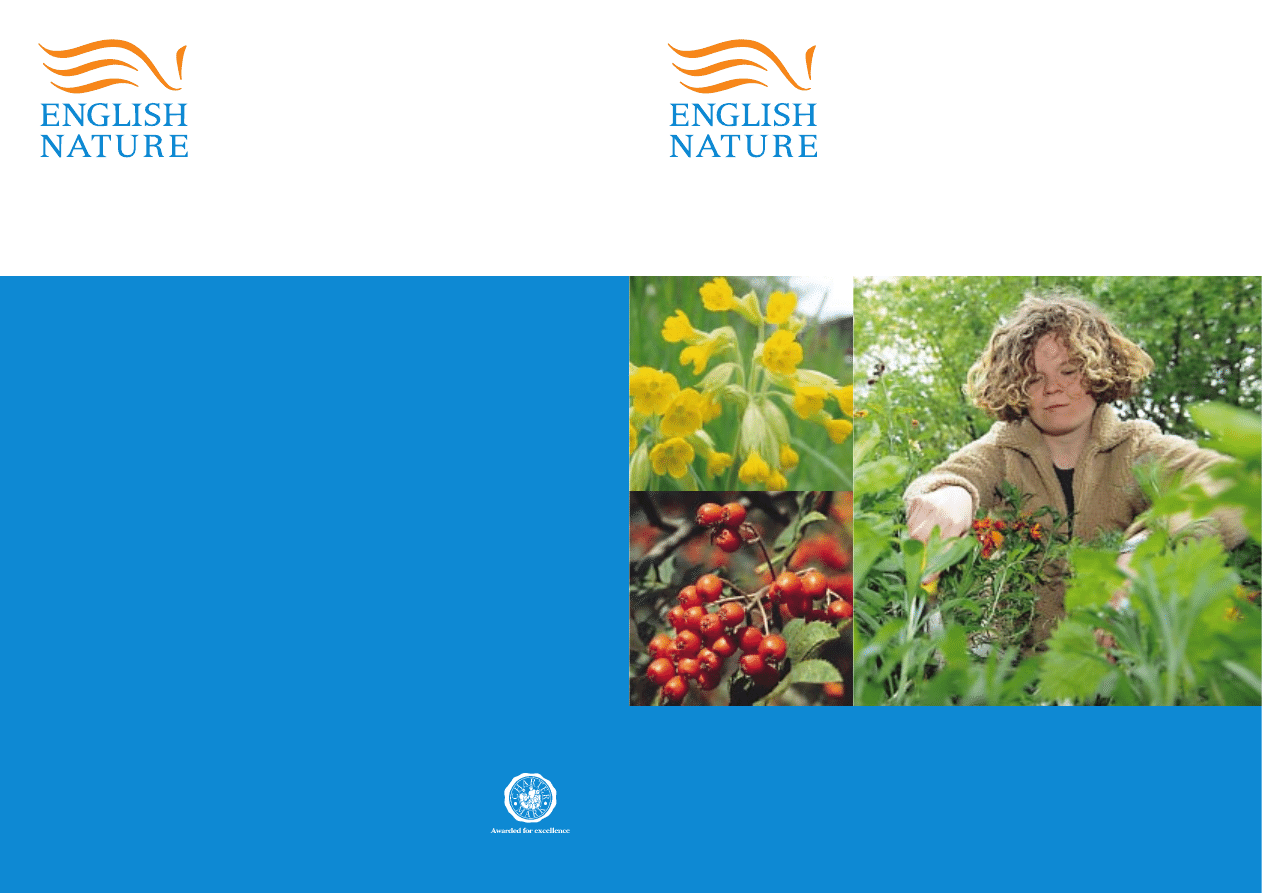
Front cover photographs:
Top left: Cowslips.
Paul Glendell/English Nature 25,309
Bottom left: Rowan berries.
Peter Roworth/English Nature 22,875
Main: Tending flower beds.
Paul Glendell/English Nature 25,301
3
Plants for wildlife-friendly gardens
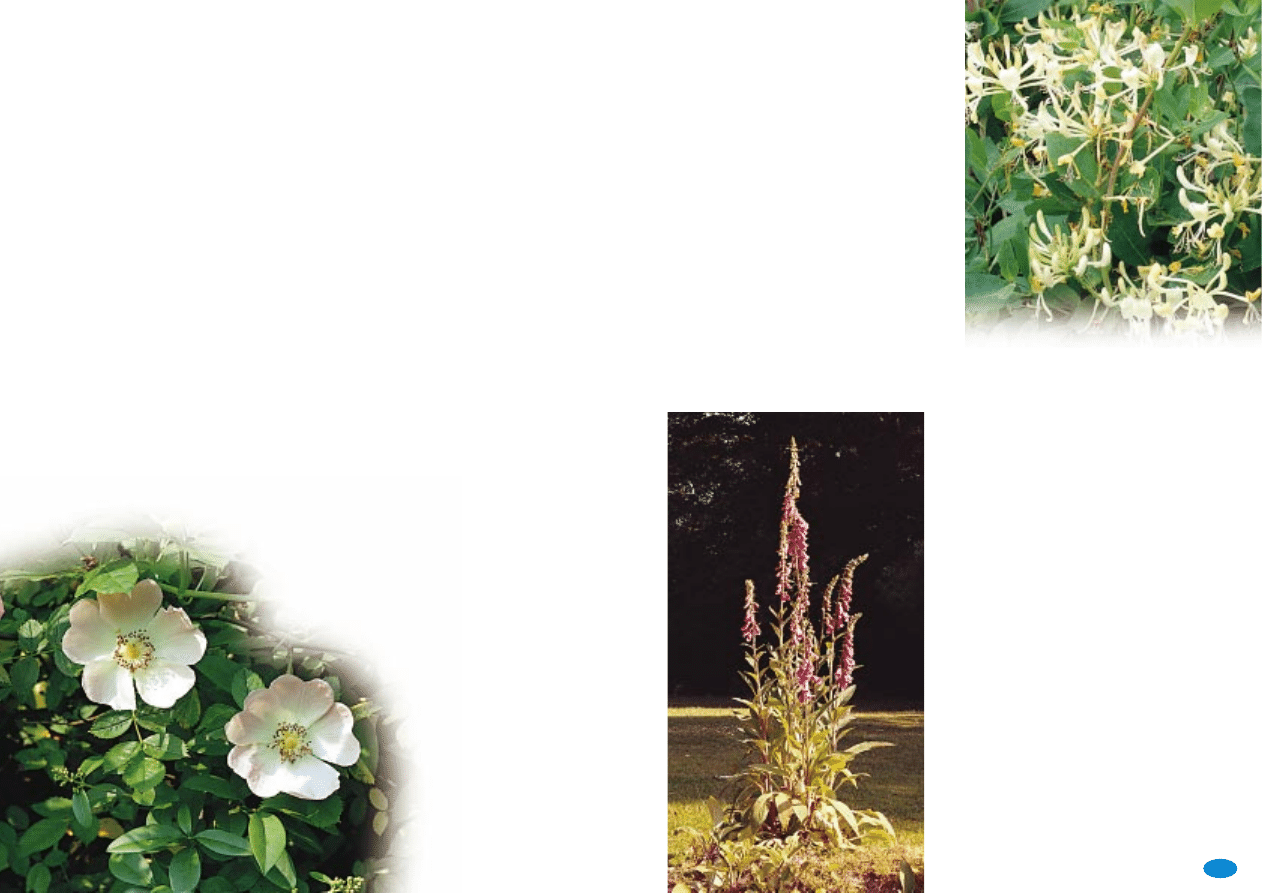
Foxglove. Peter Wakely/English Nature 18,879
Plants for
wildlife-friendly gardens
This leaflet gives an indication of garden plants which provide good
habitats for wildlife. Plants that occur naturally in England generally
provide the best conditions for wildlife in gardens but many
cultivated varieties are good too.
Dog rose.
Peter Wakely/English Nature 607
Trees and shrubs
Large trees
Ash Fraxinus excelsior
Beech Fagus sylvatica
Elm Ulmus procera
Oaks Quercus robur and Q. petraea
Small-leaved lime Tilia cordata
White willow Salix alba
Wild cherry Prunus avium
Medium/small trees
Alder Alnus glutinosa
Aspen Populus tremula
Crab apple Malus sylvestris
Field maple Acer campestre
Holly Ilex aquifolium
Rowan Sorbus aucuparia
Silver birch Betula pendula
Yew Taxus baccata
A combination of shrubs and climbers
can make attractive native hedges of
great benefit for wildlife, as well as
providing an attractive boundary. Beech
and holly also make good hedges.
Native shrubs
Blackthorn Prunus spinosa
Dog wood Cornus sanguinea
Elder Sambucus nigra
Guelder rose
Viburnum opulus
Hawthorn
Crataegus monogyna
Hazel Corylus avellana
Plants for under trees
or shady areas
Archangel Lamiastrum galeobdolon
Betony Stachys officinalis
Bluebell Hyacinthoides non-scriptus
Bugle Ajuga reptans
Foxglove Digitalis purpurea
Ground ivy Glechoma hederacea
Lily of the valley Convallaria majalis
Lords-and ladies/cuckoopint
Arum maculatum
Nettle-leaved bellflower
Campanula trachelium
Primrose Primula vulgaris
Sweet violet Viola odorata
Wild daffodil Narcissus pseudonarcissus
Wood avens Geum urbanum
Climbers
Bramble Rubus fruticosus
Dog rose Rosa canina
Field rose Rosa arvensis
Ivy Hedera helix
Honeysuckle Lonicera periclymenum
Wild privet Ligustrum vulgare
Exotic shrubs for nectar,
pollen or fruits
Serviceberry Amelanchier canadensis
Butterfly bush Buddleja davidii
Japanese quince Chaenomeles japonica
Creeping cotoneaster
Cotoneaster frigidus
Variegated cotoneaster
Cotoneaster horizontalis
Mahonia Mahonia spp.
Mock orange Philadelphus spp.
Firethorn Pyracantha coccinea
Lilac Syringa vulgaris
Bodant viburnum Viburnum bodnantense
Laurustinus Viburnum tinus
Honeysuckle flower. Derek Ratcliffe/English Nature 14,736
5
Plants for wildlife-friendly gardens
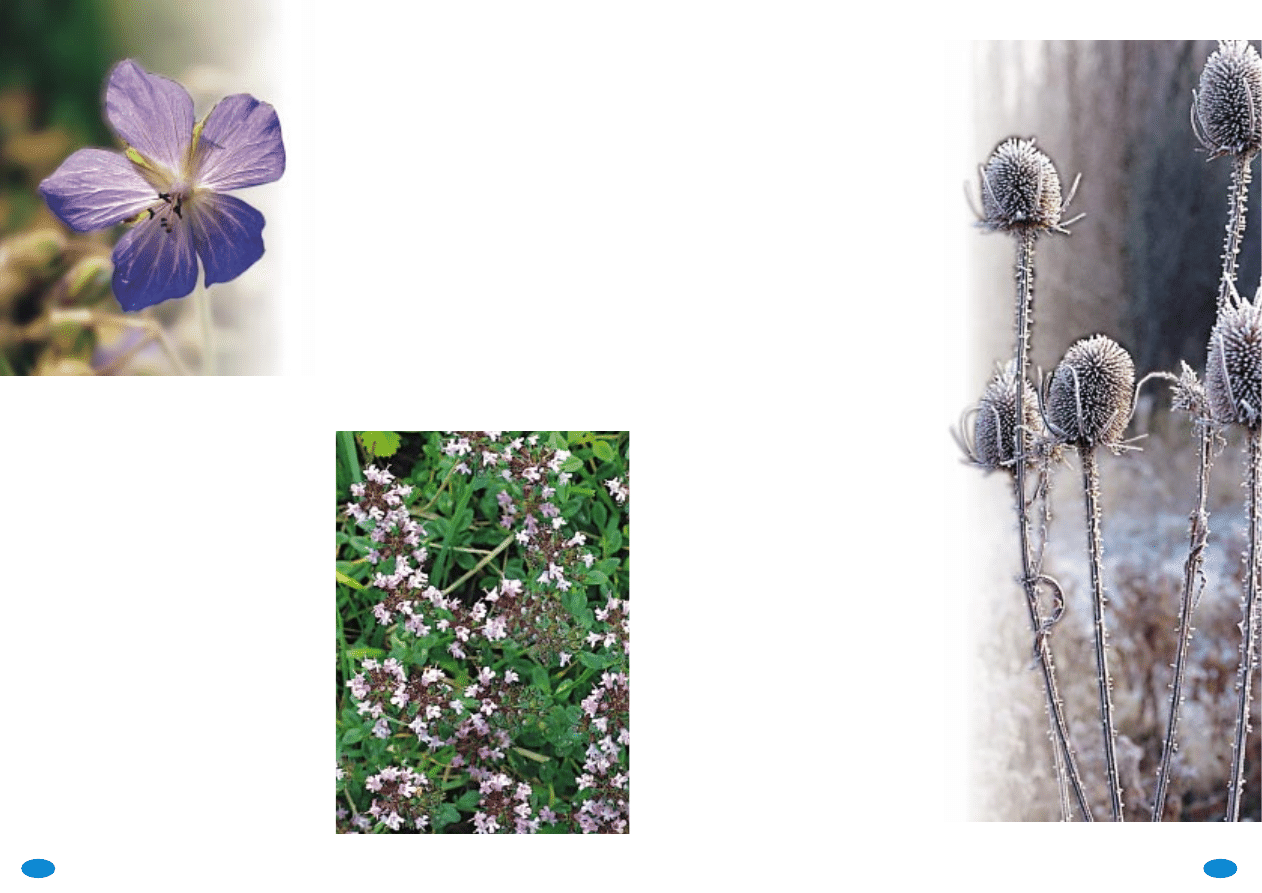
Teasel, with frost. Peter Wakely/English Nature 15,620
Cultivated plants for borders
Grecian windflower Anemone blada
Angelica Angelica archangelica
Aubretia Aubretia deltoidea
California poppy
Eschscholtzia californica
Candytuft Iberis sempervirens
Christmas rose Helleborus niger
Cosmos Cosmos bipinnatus
Evening primrose
Oenothera biennis
Fleabane Erigeron spp.
Forget-me-not Myosotis spp.
French marigold Tagetes spp.
Globe thistle Echinops ritro
Grape hyacinth Muscari botryodes
Hollyhock Althaea rosea
Honesty Lunaria rediviva
Ice plant Sedum spectabile
Lenten rose Helleborus orientalis
Tree mallow Lavatera spp.
Michaelmas daisy Aster spp.
Mint Mentha rotundilfolia
Perennial cornflower
Centaurea montana
Perennial sunflower
Helianthus decapetalus
Phlox Phlox paniculata
Poached-egg plant
Limnanthes douglasii
Red valerian Centranthus ruber
Snapdragon Antirrhinum majus
Spring crocus
Crocus chrysanthus and hybrids
Sweet alyssum Lobularia maritima
Sweet bergamot Monarda didyma
Sweet William Dianthus barbatus
Tobacco plant Nicotiana affinis
Wallflower Cheiranthus cheiri
White arabis (single) Arabis alpina
Winter aconite Eranthis hyemalis
Yellow alyssum Alyssum saxatile
Meadow cranesbill. Peter Roworth/English Nature 22,902
Wild thyme. Peter Wakely/English Nature 18,825
4
Wildflowers
Native wildflowers for borders
Agrimony Agrimonia eupatoria
Betony Stachys officinalis
Bluebell Hyacinthoides non-scriptus
Chicory Cichorium intybus
Chives Allium schoenoprasum
Common poppy Papaver rhoeas
Corncockle Agrostemma githago
Cornflower Centaurea cyanus
Corn marigold Chrysanthemum segetum
Cowslip Primula veris
Cuckooflower Cardamine pratensis
Dame’s-violet Hesperis matronalis
Dandelion Taraxacum officinale
Devil’s-bit scabious Succisa pratensis
Field scabious Knautia arvensis
Foxglove Digitalis purpurea
Germander speedwell Veronica chamaedrys
Goldenrod Solidago virgaurea
Great mullein Verbascum thapsus
Greater knapweed Centaurea scabiosa
Harebell Campanula rotundifolia
Herb-robert Geranium robertianum
Lady’s bedstraw Galium verum
Marjoram Origanum vulgare
Meadow cranesbill Geranium pratense
Common mallow Malva sylvestris
Oxeye daisy Leucanthemum vulgare
Primrose Primula vulgaris
Red campion Silene dioica
Red deadnettle Lamium purpureum
Snowdrop Galanthus nivalis
Spiked speedwell Veronica spicata
Tansy Tanacetum vulgare
Teasel Dipsacus fullonum
Toadflax Linaria vulgaris
White campion Silene alba
White dead-nettle Lamium album
Wild thyme Thymus drucei
Yellow loosestrife Lysimachia vulgaris
7
Plants for wildlife-friendly gardens
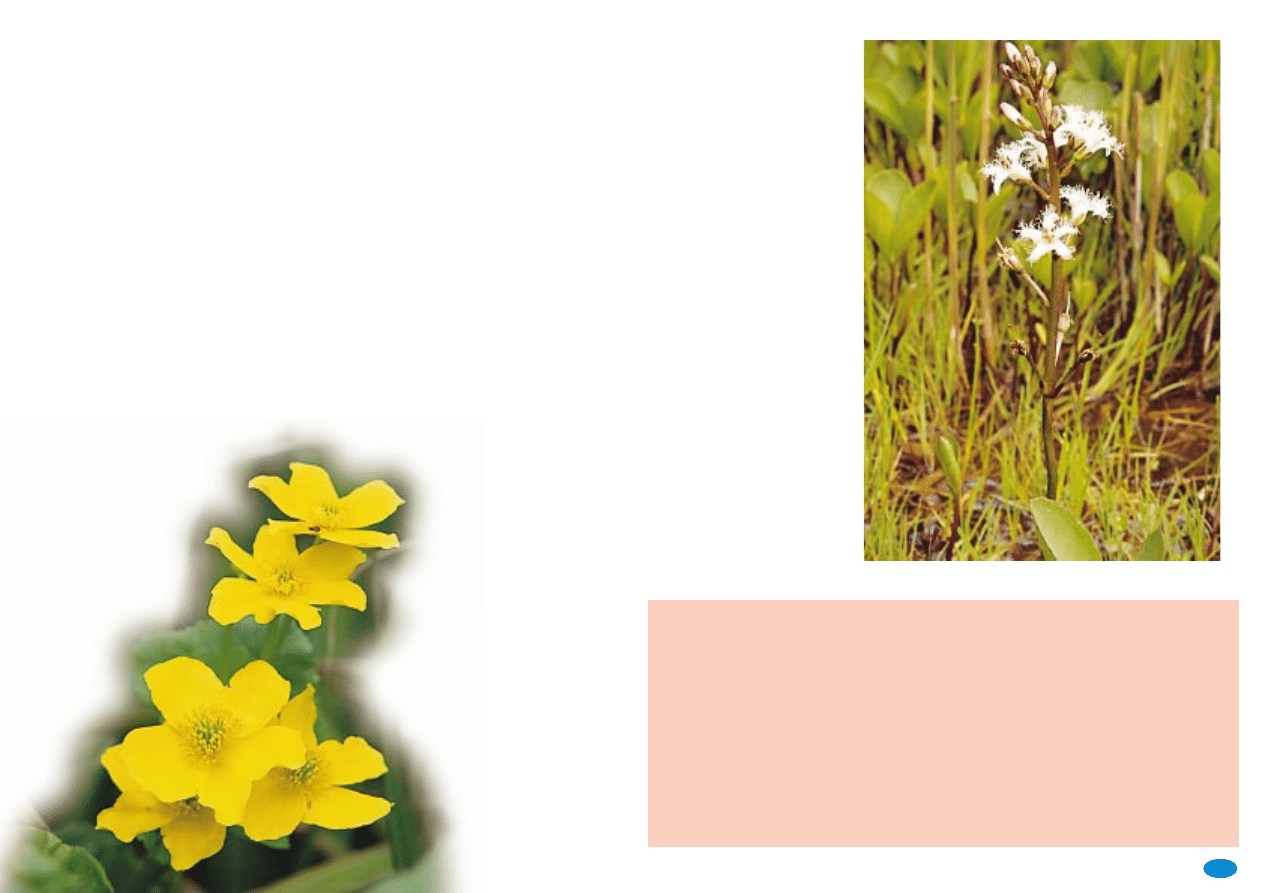
Bogbean. Peter Wakely/English Nature 836
Warning
A number of plants can take over your
pond and are damaging to our native
plants in ponds lakes and rivers. Watch
out for and avoid the following: water
fern, parrot’s feather, floating pennywort,
Australian swamp stonecrop. If you
already have these, get rid of them by
composting or burning. Don’t throw
them out as it might spread the problem.
See our Warning - Invasive Alien Pond
Plants leaflet for more detail.
Please remember, always buy from a
reputable supplier (information available
from English Nature Enquiry Service,
01733 455101). Never take plants from
the wild - it is illegal to uproot any wild
plant. See also our leaflet on
wildlife-friendly gardening.
Marsh marigold.
Paul Glendell/English Nature
25,293
Margins/pond edges
For a good wildlife-friendly
pond and natural look,
make shallow sloping
edges (to help animals get
in and out) and add
plants to provide cover
and interest.
Bogbean
Menyanthes trifoliata
Brooklime
Veronica beccabunga
Bur-reed
Sparganium erectum
Flowering rush
Butomus umbellatus
Greater spearwort
Ranunculus lingua
Lesser reedmace
Typha angustifolia
Lesser spearwort
Ranunculus flammula
Water mint
Mentha aquatica
Water plantain
Alisma
plantago-aquatica
Ponds and marshes
Water is important for wildlife, even a
small area can attract birds, insects and
other animals and creates a nice feature.
The following list indicates plants which
provide suitable habitats for wetland
wildlife.
Plants for marshy areas
Also suitable for pond edges.
Bugle Ajuga reptans
Hemp agrimony
Eupatorium cannabinum
Marsh marigold Caltha palustris
Marsh woundwort Stachys palustris
Meadowsweet Filipendula ulmaria
Purple loosestrife Lythrum salicaria
Ragged robin Lychnis flos-cuculi
Water avens Geum rivale
Water forget-me-not
Myosotis scorpoides
Water mint
Mentha aquatica
Water violet
Hottonia palustris
Yellow flag
Iris pseudacorus
Plants for the pond
Submerged plants
These provide oxygen and cover for
secretive pond life.
Curled pondweed Potamogeton crispus
Hornwort Ceratophyllum demersum
Other pondweeds Potamogeton spp.
Mare’s-tail Hippuris vulgaris
Spiked water milfoil
Myriophyllum spicatum
Water starwort Callitriche spp.
Floating plants
These provide some shade and interest;
you need a balance of floating and
submerged plants to ensure some light
gets to underwater areas.
Amphibious bistort
Persicaria amphibia
Broad-leaved pondweed
Potamogeton natans
Duckweeds Lemna spp.
Fringed waterlily
Nymphoides peltata
Frogbit
Hydrocharis
morsus-ranae
Water crowfoot
Ranunculus aquatilis
White waterlily
Nymphaea alba
Yellow waterlily
Nuphar lutea
Plants for
wildlife-friendly gardens
working today
for nature tomorrow
English Nature is the
Government agency
that champions the
conservation of wildlife and
geology throughout
England.
This is one of a range of
publications published by:
External Relations Team
English Nature
Northminster House
Peterborough PE1 1UA
www.english-nature.org.uk
© English Nature 2003
Printed on Evolution
Satin, 75% recycled
post-consumer waste paper,
Elemental Chlorine Free.
ISBN 1 85716 708 2
Catalogue code CORP1.31
Designed and Printed by
Status Design & Advertising,
20M, 10M.
Front cover photographs:
Top left: Cowslips.
Paul Glendell/English Nature 25,309
Bottom left: Rowan berries.
Peter Roworth/English Nature 22,875
Main: Tending flower beds.
Paul Glendell/English Nature 25,301
Wyszukiwarka
Podobne podstrony:
(gardening) Garden ponds and boggy areas havens for wildli
Plants for Dry Climates
Plants for Dry Climates
A Film For A Few Friends
Letter for your friend(1)
9d plants for food
(Gardening) Native Landscaping For Birds, Bees, Butterflies, And Other Wildlife
Garden fun flowers garden bouquet plants
Gardening for Butterflies
A GARDEN FOR PALNA CHILDREN'S HOME
(Gardening) Improving Your Backyard Wildlife Habitat
Nature within Walls The Chinese Garden Court at The Metropolitan Museum of Art A Resource for Educat
Herbs and Spices for the Home Garden h 221
(Gardening) Backyard Conservation Series Wildlife Habitat
Foundations for light garden walls
(Gardening) Landscaping For Energy Efficiency
(gardening) Insect Pest Management for Organic Crops
więcej podobnych podstron