
Written By
Sean McPheat
Published by Being A Success Ltd
Copyright © 2003
All Rights Reserved

CONTENTS
Introduction and welcome
The secret to making conversation and small talk
How do you get people to talk to you?
How to create a favourable first impression
How to keep conversations going
Awesome one liners for you to use
Learn how to say NO and mean it
How to feel great in an INSTANT
How to complain effectively and get what you want
How to give tough messages and feedback
Advanced Communication Skills
How to speak up at meetings
How to run meetings
Public speaking techniques
How to give winning presentations

Welcome to
HOW TO MAKE GREAT
CONVERSATION & SMALL TALK!
Thanks for purchasing this e-book.
I hope you have as much enjoyment in reading this fantastic product and
in benefiting from the techniques and strategies inside as I did when
putting it together.
The art of conversation is a lost skill in my opinion!
People are far too busy nowadays to take the time to really communicate
with anyone.
Instead people just take it in turns talking and are too busy of thinking of
what to say that they don’t really listen to the other person.
Hence you just get the same old:
PERSON A
“I did this, this and this and then we went here and there and did that and
this and then I did….”
….and then it’s your turn!
YOU
“Oh, that’s great. I did this, this and this………
Argghhhhhhhh!!!!
This is not communicating, this is playing verbal tennis and the match
doesn’t last very long either!
…….and then the dreaded silence appears when you have both exhausted
yourself about talking and ME ME ME!
You are both looking at each other, both feeling uncomfortable – hoping,
no praying, that the other person will say something first!
Well this e-book is all about providing you with the tools, techniques and
strategies to start conversations and continue them!
I will show you specific phrases to use and when to use them.
Soon you will be a communications and small talk master!

Please bear in mind that no one is born with excellent communications
skills.
You don’t just appear out of your mother’s womb with the gift of the gab –
having said that some of the people I have met think…….
I digress!
No instead, all skills can be learned over time.
What I’d like you to do is to try the recommendations that I make in this
e-book but please do not try to do everything at once!
Your mind will turn to mush if you do!
Instead, take one or two techniques at a time and try them out at work,
with your friends and your business associates.
Find out what works for you and what doesn’t.
I can now make conversation and small talk with anyone from any
background – I am quite famous for it!
However, this wasn’t always the case – I have built up my skill over time
and it now it’s your turn to do the same.
So in closing, I would just like to thank you once again for your support,
enjoy this publication and I would just love to hear your successes along
the way.
Just drop me an email – I’d love to hear from you.
Take care and god bless
Sean
Sean McPheat

THE SECRETS TO MAKING
CONVERSATION AND SMALL TALK
Besides feelings of low self worth and speaking in public/groups, meeting
and talking to people is the most common topic that I coach and help
people with in my coaching businesses.
In fact most people would rather pull their toenails out than actually have
to go up to someone they have never met before and strike up a
conversation!
But don’t worry help is at hand!
Throughout this chapter I am going to talk you through how to
communicate with people that you have never met before and teach you
how to drum up conversation with people and make small talk.
The techniques work equally well with people whom you find
communicating to very difficult or awkward.
Are you one of those people who meets someone new for the first time,
you get past the “Hello” and then a tumbleweed breezes across the floor?!
If so, you are not alone.
Meeting people for the first time and striking up conversations can be a
very daunting task, but it need not be the case.
If you understand all about other people and how they like to
communicate and what they like to talk about, then striking up a
conversation can be an enjoyable experience.
Honestly!
Here’s how.
The problem with meeting new people or people who you do not know
very well is that you tend to find that you put yourself under pressure to
talk.

YOU PROBABLY ASK YOURSELF:
What should I talk about?
What shall I say?
How will I fill this silence in the conversation?
You enter into these meetings and encounters with ME ME ME on your
mind!
You forget about communicating with the other person because you are
too busy thinking of what to say!
In fact you don’t end up communicating you just end up taking it in turns
talking!
Let me tell you something now that may shock you.
The best conversationalists in this world are the best listeners NOT the
best talkers.
In fact, the person who says the least is often the best communicator yet
you are there racking your brains thinking of things to say all of the time!
It took me years to finds this out and it would have saved me a lot of time
and heartache if only I had known it sooner!
Having said that this is the BEST tip I could ever give you if you want to
be an excellent communicator
=
BECOME AN EXPERT LISTENER
Let me explain why.
When you become an expert listener is means that the other person is
doing most of the talking.
When you go into a situation where you are meeting someone for the first
time, meeting a business associate or need to start a conversation go into
that encounter with only one thing on your mind – THEM.
You must treat that person as they are the most important person in the
world, because to them they are!
To build up rapport and to engage in a conversation ask questions and be
intrigued about the other person not you.
So, what do you talk to the other person about?
Well, like I said before, you don’t!

You let them do most of the talking and by doing this they will think that
you walk on water and will in turn ask about you and that’s when YOU
talk!
I’ll illustrate this by telling you a short story:
My wife Donna and I went to a social occasion a few years back.
It was one of those functions where Donna knew everyone and I knew
No-one!
Sound familiar?
I bet you’ve been in those situations as well haven’t you?
So there we were walking up to the function room and Donna was looking
forward to meeting the family members she hadn’t seen in ages and to
catch up with the gossip from friends and here was good old Sean along
for the ride!
I’ll put my hand up and admit it was one of those functions when at the
same time there was a very important game of football on the TV and
here was me stuck there when I wanted to be watching the game with the
guys!
I knew I had 5 hours at the function and that there was no escape so I
said to myself “Come on Sean practise what you preach, let’s practise my
small talk techniques!”
So I did!
I went up to any one and everyone with the mindset that I wasn’t going to
talk about ME whatsoever and that I would just be interested in THEM!
First off, I need a starting line!
You know that question, or phrase that starts the conversation going.
So before I went up to anyone I thought to myself:
What common themes does everyone have in common within the room?
We are all there for a reason? What is the reason and what is the
commonality?
You see, there is always something to talk about no matter where you
are, you just need to find out what the commonality is about the situation
that you are in and use this to your advantage.

So, in my case I thought:
• We were all invited along to the same function, how did the person
know the invitor?
• Practically everyone in the room knew my wife Donna
• The people in the room would either be having a good time or a bad
time
• We are eating the same food and drinking the same wine
The list went on…….
So with my preparation complete it was time to make some conversation
starters!
Here are few that I used on the night:
“Hi my name is Sean, good party isn’t it? How do you know James and
Claire?”
THIS QUESTION WAS ABOUT THE PEOPLE WHO INVITED BOTH OF US
And then go into the conversation with just them in mind.
They responded with:
“I work with James at McCranors”
NOW THIS IS WHERE I BET YOU DRY UP? WHAT NEXT I HEAR YOU CRY?
Seeing as I did not know anyone there I went on to say:
“McCranors? Sounds interesting? What do they do?”
Always listen out for clues and snippets of information that the other
person says, because if they say something it must mean that it is
important to them.
This lady could have just said:
“I work with James”
but she actually said
“I work with James
at McCranors
”
So I used this to generate more conversation!
Another question I could have asked could have been:

“Do you enjoy it there?”
I hope you are with me on this?
Another conversation starter I used were:
“Hi, I’m Sean, Donna McPheat’s husband – please to meet you!”
THIS IS A GREAT ONE TO USE AFTER I HAVE SEEN DONNA SPEAK TO
THIS PERSON BECAUSE I KNOW THAT SHE KNOWS HER!
The following morning when we had breakfast together Donna told me
that everyone she had spoken to have said what a nice guy I was and that
I was really interesting.
The point of the matter is this; I hardly said a word myself all night!
So, I have mentioned a little about starting conversations - you need to
find some commonality between where you are, why you are there and
make a mental note of these.
Then you talk to the other person as though they are the most important
person in the world – because to them they are!
Let’s take this a step further and look at the TOP 5 topics of conversations
that people like to talk about.
So how do you engage the other person into talking?
To do this it is important to understand what other people like to talk to
about.
Here is the TOP 5 in order:
1. THEMSELVES!
People love to talk about themselves.
It’s a fact and bet you are not an exception to that rule either!
Want to know how to build rapport with someone and to hold a
conversation?
Get them to talk about their favourite subject – THEMSELVES!
“What are YOU currently doing career wise?”
“Do YOU enjoy it?”
“Tell me about this…..”

“I hear YOU have been doing this……”
At a party:
YOU - “Hi, how do you know the “party host”?
THEM - “I know him because we went to school together”
YOU- “What school was that?”
THEM - “Gosford Park”
YOU - “Did YOU enjoy it there? What did YOU study?”
Ask question to get them to talk about themselves and then ask some
more questions, and then some more!
He or she will love you for it!
2. THEIR OWN OPINIONS
Second only to talking about themselves, people love to air their opinions
on anything and everything.
Ask these questions as well and your new friend could be talking for
hours!
“What do you think of the way Manchester United have played this
year?”
“What is your opinion on the strike?”
“What do you think of XYZ programme?”
However, whatever you do, don’t get into an argument if your opinions
differ, unless of course you want to make a sharp exit!
3. OTHER PEOPLE
People love to talk about other people.
Some people call this gossip; other just call it talking about other people!
“What do you think of xyz person?”
“Hasn’t xyz person got great interpersonal skills”
“Isn’t xyz person a real laugh?”

4. THINGS
Next on the pecking order is talking about things.
No matter what it is your friend will have an opinion on it.
“I love YOUR car, how long have YOU had it?”
“What do YOU think of this widget?”
“I love YOUR jacket, where did you get it from?
5. YOU!
All together now – ahhhhhhhhhhhhhhhh!
It’s a horrible thing to say but the last thing people want to talk about is
YOU!
Keep the conversation centred around the other person until they ask
about you and then it is your turn.
To keep their full attention wait until they have finished talking about
themselves and they have asked you a question.
Then you can talk.
When you do talk however, link it into what the other person has already
said and you will really be making magical rapport.
ACTION PLAN
• Don’t worry about what to say just go into each conversation with the
other person in mind.
• Listen and ask questions about the other person.
• Then ask some more questions!
• Think about “YOU” instead of “I”
• Talk about the other person’s favourite 5 subjects in order!
• Don’t talk about yourself until the other person asks
• Have fun!

Making the first move
So there you are at a party or function and you want to make the first
move, but you are scared.
You are scared that they will not like you, that you will be rejected, that
you will have nothing to say – the list goes on!
Guess what?
They are probably thinking exactly the same thing so don’t worry about it!
Instead, take a deep breath, go over to the person and ask them an
opening question.
The fact that you are both there in the same room means that you have
got something in common.
Other than that, bear in mind what we have covered to date and get them
to talk about their favourite subjects!
It’s always best to start off with small talk and then build on this
foundation.
Start on simple topics of conversation and then move on.
“There are no uninteresting people,
only disinterested listeners!”

HOW TO GET OTHERS TO WANT TO
SPEAK WITH YOU
We’ve all been there.
We’ve seen a person enter the room and we then we say:
“I hope he/she doesn’t come over to me”
Now why would we say that?
Well, we say that because of the first impression that we have of that
person.
We don’t even know this person yet we have made up our mind about him
or here!!!
It’s crazy I know and you should “never judge a book by it’s cover” but
whilst we can learn to accept people for what they are others do not.
So just live with it!
The way that you move your body and walk has an enormous effect on
the way that you feel and how others perceive you.
Think back to that person again.
What did we rate them on?
Let’s list them below:
• Their looks
• Their clothes
• Their facial expressions
• The way that they behaved
• The way that they walked
……and they haven’t even opened their mouth yet!!!
You see, we make our impression up of someone within the first 15
seconds of meeting anyone and this is largely due to the above factors
and your body language.
If you seem friendly, open, honest, trustworthy and good company to be
with then it is most likely that people are going to want to talk to you
If you look cold, closed, self centred and stand offish, people are not going
to go out of their way to speak to you.

Let’s complete an exercise!
Imagine that there are two people that have just entered a room and one
looks like a person you would have no problem in talking to and the other
“never in a million years!”
I’d now like you to write down what you are observing with each of these
people.
Person you would
talk to
Person you would feel
uncomfortable with
How are they standing?
Where are their eyes
looking?
Where have they got
their head?
How are they talking?
How are they moving?
What are they wearing?
What are their facial
expressions like?
Now think about yourself when you meet someone for the first time, and
answer the questions that are in the boxes once more.
Are you in the “Person I would talk to” or the “Person I would not talk to”
column?
Think about changing your body language and you will have awesome
results – I can guarantee it!
You will actually make someone want to talk to you!

Right now in the box below, jot down all of the body language movements
that will make you will look confident and approachable to other people:
The way that you move sends subconscious messages to your mind and
this either helps or hinder the way that the feel.
Emotion is created by motion.
If you sit still for a long period of time your natural energy levels
automatically lower.
And what happens when you get up, walk around and return to your seat?
Yes, you have more energy and you’re given a boost.
I can’t stress how important it is to move and act confidently and
positively.
You will give off all the right vibes to everyone around you and it will
make them think that you are confident even if you’re not feeling it inside.
Yes, that’s right.
Even if you’re not feeling confident, act as though you are.
So, how do you do this?
Well, walk fast and with a purpose.
Don’t saunter along, walk like you know exactly where you are going and
when you get their you mean business!

Gesture with your hands as you talk, it will create motion and you know
what that leads to – EMOTION!
The right gestures also have a major impact on building rapport as long as
you’re not shaking your fist!
All it takes is a smile!
It may sound silly, but there is a lot of power associated with a smile.
What I would like you to do is to start smiling more often.
Now, that doesn’t mean that you have to walk around with a silly grin on
your face all of the time.
But smile as you walk down the street, when you talk to someone, even
when you look in the mirror at yourself.
You will be surprised at how better you will feel for it, and it will project a
positive image to all others - one that will attract opportunities and
people.
Remember that confident people are happy people and negative people
are not.
Happy people are also seen as more attractive than unhappy and sad
people so that is an added bonus!
You know, the way that we communicate in our appearance, posture,
gesture, gaze and expression can be such a powerful tool in the way that
we feel and when communicating with others.

HOW TO CREATE A FAVOURABLE
FIRST IMPRESSION
As I have said before, whether you like it or not, first impressions
account for whether people instantly take to you or whether you
have got some winning around to do!
The first 15 – 30 seconds of any encounter are vital and it is very
important that all of the stages of this process are managed
correctly to save you a lot of work later on!
So how do you create a favourable first impression?
Read on!
Let’s cut to the chase straight away!
When you meet someone for the first time they will make their minds up
about you based upon:
1. YOUR APPEARANCE
2. YOUR BODY LANGUAGE
3. HOW YOU SOUND
4. WHAT YOU HAVE GOT TO SAY
The list above is in order of importance as well!
YOUR APPEARANCE
The way that you look and your grooming all have a lasting impression on
the other person when you meet them for the first time.
There is an old saying that goes ”Dress for where you are going, not from
where you have been”
Is your dress appropriate for the occasion?
Formal? Casual? What is it?
Do the best that you can with what you have got.
To fit in appearance wise doesn’t mean that you have got to wear Armani
suits and look like George Clooney – although both would be an
advantage!

It is the little things such as:
Are you wearing the rights colours to complement your skin tone and
colouring?
Are your shoes nice and clean and shiny?
Are you well groomed?
Are you wearing the right attire for the occasion?
- There is a big difference between what you would wear for an
interview and what you would wear of you were going out
bowling!
Do your clothes complement your body shape and build?
Is your skin looking vibrant and healthy or are you looking washed out?
Are you clean shaven or have you got stubble?
All of the above, and there are many others, will contribute to the first
impression.
Bear in mind that most of the people who meet you will have formed an
impression of what you look like beforehand.
That is, if you have spoken to them before on the phone or have
communicated via letter/email etc.
Some people may say, “You were not what I was expecting”
Respond to this statement with “What WERE you expecting?”
BODY LANGUAGE
The main things to bear in mind are:
Smile!
A smile is very very powerful.
People who smile a lot are naturally more attractive and people warm
towards people who are happy.
Who would be drawn to a miser?
That doesn’t mean walking around with a stupid grin on your face but you
should look happy and assure and in your first encounter with the other
person when you say hello to them, SMILE! ☺

Eye Contact
When speaking to your friend, look them directly in the eye.
Making eye contact builds up trust and is a sign of confidence.
People will like you for it.
You know yourself the power of trust and how you feel towards a person
who looks you in the eye.
Stance and Posture
If you are walking, stand tall and proud.
If you are sitting imagine you have got a ruler down your back and sit up
straight!
Walk with a purpose and as though you have got the most important
place to go, because you have remember!
Don’t be slouched over like a couch potato!
Act confidently even if you don’t feel it.
No-one will know the difference!
Handshakes
There is only ONE WAY to shake hands, so I will keep this simple!
When you greet someone for the first time:
- Shake their hand firmly but not too hard
- Look them in the eye
- Smile
- And say “Hello, nice to meet you”
That’s it, nothing more to say!
HOW YOU SOUND
The natural tendency is to talk at a thousand miles per hour when you are
a little nervous.
Pace yourself and speak a little slower.
Take a couple of deep breaths and relax.
How you sound is important so sllllllllooooooooowwwwwwwww down and
talk confidently!

WHAT YOU HAVE GOT TO SAY
Well, this had to come into it somewhere but it’s not as important as you
think.
Apart from a job interview, you will actually be doing less of the talking
yourself if you are an excellent communicator.
Note how I said excellent communicator and not excellent talker!
A lot of people just take it in turns talking when they meet rather than
communicate.
I bet you all know of people who can run their mouths off and never
listen!
IN SUMMARY
When meeting anyone for the first time 93% of the communication and
impression that they make of you will be down to the way that you look,
your body language and the sound of your voice.
Only 7% will be down to the words that you use.
Have you been concentrating on the 7%?
If so, don’t worry.
You now have some excellent techniques and knowledge to be able to
create that positive first impression with anyone that you meet.
Good luck, I’d love to hear how you get on.

HOW TO KEEP CONVERSATIONS GOING
Someone came up to me not so long ago and said:
“Sean, you are so lucky to have the conversation
skills that you have got, what is your secret?”
This reminded me of a story about Gary Player, the famous South African
golfer.
Gary Player had just won yet another major and was being interviewed by
the world’s press.
Reporter -
“Yet, another major Gary - congratulations. A lot of people
around the world say that you are the luckiest golfer they have ever seen
– what’s your secret?”
“My secret is practice and preparation”
replied Gary Player
Reporter -
“No, I’m on about the luck that you have when you play, you
seem to get ALL of the breaks, ALL of the lucky bounces – wouldn’t you
agree?”
At this point, Gary Player, took his baseball cap off, scratched his head
and said:
“You know what? It’s really weird. Because the harder I practise
and prepare for my matches, the luckier I become!”
Never has a true word been spoken.
No-one is ever born with talent or with the ability to be a great
conversationalist – you just ask any 3 month year old baby and they will
tell you!
With practise and preparation you too can be what ever you want to be in
life and that includes being a master communicator.
When you go into any conversation from now on, I want you to really
listen hard and communicate rather than just talk and pass the time.
Be prepared, think of what you are going to say and how you are going to
say it.
Think about your first impression and your opening conversation starter.
Focus on the other person and what he/she is saying.

Stick to these rules and you will be bale to keep conversations going no
problem.
Below are some more tips for winning conversations:
INVOLVEMENT
I mentioned earlier the importance of both people being involved in the
conversation.
For example, if you are asked for your opinion, give it! But also spin it
around to ensure that communication take places about your opinion.
Let’s look at an example:
PERSON:
“What did you think of George Bush’s speech last night?
YOU:
“I thought it was good, I thought he came across well and motivated me.
He told us what the troops were doing and what the current state of play
was – which I thought was good”
Now, the problem with that reply from you is that it is a DEAD END
STATEMENT.
That means that there is no natural flow to the conversation and it could
just stop there and one of those DEADLY silences comes along!
Instead there are several opportunities for a better reply that involves the
other person – let’s look at a few:
PERSON:
“What did you think of George Bush’s speech last night?
YOU:
“I thought it was good, I thought he came across well and motivated me.
Did you think so?”
or
“
YOU:
“I thought it was good, I thought he came across well and motivated me.
He told us what the troops were doing and what the current state of play
was – which I thought was good, did you think that way as well? Did you
think he covered everything that you needed to know?”

With the alternative replies above you are engaging and continuing a
conversation rather than just answering questions like at an interview!
Try it yourself.
Next time this happens, answer the question and then spin it around so
that the other person has to share their opinion.
DON’T INTERRUPT
When the other person is talking, I know it is hard at times, but please do
not interrupt them when they are having their say.
What they are talking about is important to them so please respect this.
Also, if you do interrupt you get back to the “taking it in turns to talk”
scenario!
HOW YOU SAY THINGS IS MORE IMPORTANT THAN WHAT YOU
ACTUALLY SAY!
Remember the importance of your body language signals that you are
giving out all throughout the conversation.
Not only when you are talking but also when you are listening as well.
Vary the tonality and inflection in your voice – do not sound monotone.
It you are saying, “That’s really interesting” I would expect you to say
that in an energetic way that made me believe that you meant what you
were saying.
So many conversations break down due to the lack of positive vibes and
body language from the other person.
Make sure you are not one of them!

AWESOME ONE LINERS FOR YOU TO USE!
Here are some witty one liners that you can drop into your conversations.
They’ll get a giggle and people will think you are so sharp that you could
cut yourself!
Use them sparingly otherwise they will lose their impact!
AGE
Be nice to your kids, they'll choose your nursing home!
Few women admit their age, few men act it!
I intend to live forever! So far so good hey?
I started out with nothing and still have most of it
One good thing about losing your memory is that you get
to meet new people everyday!
The tragedy with life is that it ends so soon, but that we
wait so long to begin it!
You know you're old when everything on you either dries
up, leaks or shrinks!
CAREER/WORK
I always try to do the extra mile at work but my boss
finds me and brings me back
I have not failed - I have just found 5,000 ways that will
not work!
I know hard work never killed anyone - but why chance
it?

I pretend to work, they pretend to pay me
If at first you don't succeed, redefine success
If work is so terrific, why do they pay you to do it?
Multi-tasking is screwing up several things at once
The only person getting all of his work done by Friday is
Robinson Crusoe
Work fascinates me; I could sit and watch it for hours!
CHILDREN
A babysitter is a teenager pretending to be an adult while
the adults are out pretending to be a teenager
Kids in the back seat cause accidents, accidents in the
back seat cause kids
DIETS
A balanced diet is having as much dark chocolate as white
I'm on a 30-day diet. So far I've lost 15 days!
MONEY
A bargain is something you can't use at a price you can't
resist
All I'm asking for is the chance for me to prove that
money can't make me happy!
Always borrow money from pessimists - they never expect
it back!

I have enough money for the rest of my life....as long as I
pass away next week
I wish the buck stopped here.....I could do with a few!
Money isn't everything but it's right up there with oxygen
LIFE
A status symbol is a symbol, not status.
Life is all about common sense, but common sense is not
common
Always remember that you are unique, just like everyone
else!
Half of being smart is knowing what you're dumb at!
Everyone know what to do in life but they don't do what
they know
He who laughs last, thinks slowest
If you tell the truth you don't have to remember anything
It's better to remain silent and let people think you are
stupid rather than speak and remove all doubt!
Never miss a good chance to shut up!
No sense in being pessimistic, it wouldn't work anyway
Remember that it's the second mouse that gets the
cheese!
The secret to getting ahead is getting started

LEARN HOW TO SAY “NO” AND MEAN IT!
How can you confidently respond when someone makes a request you’d
prefer not to accommodate?
This article shares some ideas you can use to make sure you don’t find
yourself doing something you’d very much prefer not to do.
The question has just been posed. Pause.
Was your inclination to say yes, even though there’s a voice deep down
saying “no.”
Well, let’s raise the volume on that voice.
What possible reasons could there be for saying no?
It’s beyond your means?
It’s beyond your comfort level?
You have no interest?
Identify all the reasons you have for saying “no.” Identify which stem
from a lack of confidence, versus a sincere disinterest in fulfilling the
request.
What would happen if you said yes? Perhaps:
You would be considered a teamplayer
It would make your boss happy
Your visibility with higher-ups would be improved
It’s comes down to a simple cost/benefit really.
Would the discomfort involved in saying yes outweigh the benefits of
possibly going along with the request?
Or, do the benefits outweigh your temporary discomforts?
The role of guilt
Saying “no” is hard for many of us.
Guilt often comes into play.
Whether this guilt has its foundation in religion, a proper upbringing, or a
worldview that simply says “it’s not nice to say no”, we often recognise it
and make decisions we’d rather not be making, based upon it.
Saying “NO”

You’ve made the decision, after scientifically weighing the results of your
cost/benefit analysis, do honestly say “NO”.
Well, go ahead and say it clearly, and self-assuredly...in the mirror.
Look yourself in the eye, and do it. Just say “NO.”
Say it like you really mean it, and then say it again as you would to
whomever made the request of you. When you pretend you’re speaking
to the person who made the request, does it come out differently?
Practice and experiment with different ways to say “NO” until you find one
you’re comfortable with.
Then go, and say “NO.”
After you say “NO”
If you’re used to giving in to others, then guess what?
After all that practice, you may just be surprised to find that they are not
willing to accept it!
They may push, rephrase the question, or make a new, not altogether
different, request.
Be prepared for this! Know your boundary—what ARE you willing to do?
Revisit the questions you asked yourself before—what would happen if
you said no, or yes?
If you are serious about saying “NO” then stick to your guns.
Tell the individual making the request that you would appreciate it if they
respected your wishes, and ask them to refrain from pursuing it further.
If you are comfortable expressing your “reasons why” then do so speaking
from your personal perspective.
Tips on how to say your ”NO!”
1. The “Wet lettuce NO”
If you are going to say NO, you must say it in a way that means NO!
Saying NO in a quiet, unassuming voice is like a hand shake that is floppy
and limp.
By saying NO in a non-confident manner it will make you feel as though
you have got to convince the other person about your decision and the
reasons why you have said it!

2. The “Mr Angry NO”
This is at the other end of the spectrum in how to say NO.
It is done in an aggressive manner and usually said with contempt.
It is not an effective way to communicate your NO.
Here are a couple of examples:
“NO. I’m not doing that rubbish. You’ve got to be joking aren’t you”
“NO. I wouldn’t lower myself to do that piece of work”
3. The assertive NO
This is the best way to say NO!
In a firm, yet polite voice say:
“No. I will not be able to do that for you”
Also, if you want to say the reasons why, keep it short and sweet.
“No. I will not be able to do that for you. I will be having my hair done at
that time”
4. Use effective body language
When saying NO remember the power of non-verbal communications.
Look the person in the eye when you say the NO.
Shake your head at the same time as saying NO.
Stand up tall.
Use a firm tone in your voice.
5. When all is said and done
Don’t forget that when anyone asks a question of you, you are perfectly
OK to say, “Can I think about that and get back to you”
No-one should be pressurised into giving an immediate answer, even if
the delay is only a couple of minutes. It will give you some time to think it
through and to gather your thoughts.
It will also give you some time to think about how you are going to say it,
the words to use and your body language.

Saying NO exercise
Practice makes perfect as they say!
What I would like you to do for the next 7 days is to start to say NO more
often.
So whether it is the double glazing salesman, the cold call, “Would you
like fries with that” or the shop assistant – practice saying NO to one
person for at least the next 7 days.
You will be an expert come the end of the week!
What will happen?
You will feel much more confident and proud.
You will find that practice makes perfect—the more you confidently
say “NO” the easier it becomes.
Others will respect your wishes and take you seriously the first time
you say “NO.”
You won’t find yourself doing things you never wanted to do in the
first place.
You’ll have more time to focus on the things you do want to be
involved in.
The list goes on from there…

HOW TO FEEL GREAT IN A MOMENT!
The power of the mind is a truly remarkable thing.
How you feel in any given moment is linked to:
- What you are focussing on
- The way that you are moving and using your body
- The language you are using
Your mind controls all three!
If you are feeling lethargic or need an instant confidence/energy boost
just remember that you can change the way that you feel by changing the
above 3 points.
1. What you are focussing on
Be aware of what you are focussing on in that very moment.
Are they negative and lethargic thoughts?
Low in confidence?
You might fail?
I bet you are saying to yourself that you feel low in energy!
What would you have to focus on to feel vibrant and full of energy?
What would you have to focus on to FEEL confident?
If you could feel vibrant and energised right now, what you be thinking
about?
2. The way that you are moving and using your body
This is also called your physiology.
Emotion is created by motion.
The fewer movements you make the less energy you will have!
And also the type of movements that you make will have an impact on
whether you feel juiced up or whether you want to get back into that bed!
When you are feeling low in confidence notice how you are moving your
body.
Are you sat down?

Is your head up or down?
Are your shoulders back or slouched?
Are you walking slow or quick?
Are you moving your facial muscles?
What are you doing with your hands?
Are you moving the way a person with confidence moves?
Write down below all the characteristics of a confident person. If you saw
one right now how would they be moving their body?
Want to feel energised and confident?
Copy the movements that you have written above when you are feeling
low and YOU WILL become confident!

3 The language that you are using
The words that you say to yourself in your mind and out aloud will have
an impact on how you are feeling.
What words do you use to describe negative emotions?
Do you use:
“I’m feeling tired”
“I’m stupid”
“I’m angry”
“I’m livid”
“I’m overwhelmed”
“I’m feeling insecure”
“I’m depressed”
Write down some more of the common phrases that you use like those
above:
The intensity of those negative sayings will have an effect on how you feel
and whether you feel confident or not.

Just imagine that instead of saying –
“I’m really nervous”
You said to yourself –
“I’m really excited”
Do you think it would make you feel better?
Of course it would. The feelings and emotions linked to nervousness and
excitement are actually the same.
So, what other words could you replace the negative sayings with:
Try swapping :
“I’m feeling tired” to “I’m feeling unresourceful”
“I’m stupid” to “I’m learning”
“I’m angry” to “I’m a little annoyed”
“I’m livid” to “I’m a little miffed”
“I’m overwhelmed” to “I’m feeling busy”
“I’m feeling insecure” to “I’m questioning”
“I’m depressed” to “I’m feeling I’m not on top of things”
When you lower the intensity of the words and phrase you lower the
intensity of the feeling.
Write down 5 old negative sayings or phrases that you say on a consistent
basis and replace them with new empowering and less intensified ones:
OLD NEGATIVE PHRASES
1.
2.
3.
4.
5.

NEW EMPOWERING/LOW INTENSITY PHRASES
1.
2.
3.
4.
5.
How to feel magnificent and confident every single day!
We have talked about how changing the vocabulary you use have an
impact on how you feel.
Lower the intensity, lower the feeling when you use negative words.
The opposite can be said when you want to feel great.
Increase the intensity, increase the feeling when you use positive/good
words.
What do I mean by this?
Well, instead of saying –
“I feel good”
say
“I feel fantastic!”
Here are some more –
Change:
“I feel ok” to “I feel awesome”
“I feel motivated” to “I am driven”
“I feel confident” to “I feel unstoppable”
“I feel energised” to “I feel juiced”
Write down some of the “good” words that you have been using in the
past and replace them with “magnificent” words that you will use in the
future.
When you start to use this the impact will be AWESOME!

OLD “GOOD” PHRASES
1.
2.
3.
4.
5.
NEW “MAGNIFICENT” PHRASES
1.
2.
3.
4.
5.

HOW TO COMPLAIN EFFECTIVELY
A lot of people settle for sub-standard service because they
haven’t got the confidence or communication skills to complain.
Rather than sticking up for themselves they allow the retailer or
restaurant to get away with providing faulty goods or bad
customer service.
So how do you complain with confidence?
Right from the outset, this article is not about any Trades Description acts
or any legislation. This article has been written on how to prepare and
complain with confidence.
If I had a pound for every time that I have heard the term “The customer
is always right” I would be a very rich man!
However, despite this saying, I’d bet that sometime or another we have
all experienced poor customer service or faulty goods.
But don’t you tend to complain to your spouse or friends about it rather
than tell the company!
This is a fact of life – people are not very good at complaining and most
people do not have the confidence to do it.
Because his marriage isn’t working, a man will complain down the pub to
his mates rather than complain to his wife!
The same can be said in the majority of cases when you SHOULD
complain to a company that have not met your standards.
Companies should be made aware of sub-standard services and goods –
they cannot correct a problem if they are unaware that one exists in the
first place!
Effective complaining is a survival skill that anyone can master and
everyone should.
You are in the driving seat, so drive!
If you need any reason to pluck up the courage to complain just
remember that you have or are going to part with your hard earned cash
for this service or good and:
* THAT GIVES YOU EVERY RIGHT TO COMPLAIN *
Also remember that you will not be the first person to complain and you
will not be the last so don’t worry about that.

As long as you complain assertively and don’t show anyone up by
shouting or losing your cool, then both you and the company will come
out of this with a win.
You will come away having had your complaint dealt with effectively and
the company will come away with some excellent feedback to improve the
goods and services that they provide to the customer.
In fact, they should thank you for your complaint – which in the majority
of cases they actually do.
Deal with facts not opinions
One of the most important rules when complaining is to have all of the
facts.
So, if you have purchased faulty goods, have you got the receipt, date,
time, price any further details relating to the purchase.
If you are receiving service, what specifically are you complaining about?
Be specific. Don’t use comments like “This is rubbish” or “This person
needs a personality transplant!”
Instead, use specific statements like:
“Excuse me, we have been waiting for 30 minutes for our order and it
hasn’t arrived yet. We also waited for 40 minutes for the Starters, could I
please speak with the Manager?”
With regards to being specific and factual based, you are more likely to
get good service in response and a sympathetic ear.
Think about the outcome you would like
Before you complain, think in your mind how you would like the matter to
be resolved:
• Full refund?
• Replacement?
• Free dessert?
• An apology?
And to be afraid to ask for the outcome either!

Complain assertively, not angrily
Don’t go shouting or being nasty to anyone. Instead keep things factual
and explain the situation in a calm yet firm manner.
Shouting the odds will put the other person on the defensive from the
outset.
Instead try saying something like:
“Excuse me, I’ve got a problem with these shirts. Could you help me with
it?”
Even if you do feel angry, avoid the temptation for a row no matter how
tempting it is!
You want a speedy resolution to your problem and this is best done with
sticking to the facts, not being personal and having an outcome already in
your mind.
If at first you do not succeed!
If the person you are dealing with in person or on the telephone cannot
help you or is not responsive to your needs then ask to speak to the
manager.
However, don’t do this in an aggressive way. Instead ask for the manager
in a firm but polite voice.
“I appreciate that you have done all that you can do to help me and I
thank you for that. But could I please speak to the manager?”
Explain what will happen if you don’t get a positive response
If you are not getting what you want from the company, explain what will
happen if you don’t get the action that you want.
Have you been a loyal customer?
If so, tell them and also tell them that they will no longer have your
business unless this is sorted out.
If you have referred others to them, point that out as well
The last word
Don’t think that complaining is wrong, view it as providing feedback rather
than a complaint.
If you were running a business and one of your customers experienced
poor service I am sure you would want to know about it and put it right –
wouldn’t you?

Raise your standards as a consumer and stand up for what you and the
law feels is right!
Happy complaining! ☺

HOW TO COMMUNICATE TOUGH MESSAGES
Providing feedback to staff is always tough, but if it’s “constructive,” you
not only get the message across, but, build a more cohesive and capable
team as a result.
Do you remember when your parents told you to eat your veggies
because they were good for you?
Now that you’re an adult, you know they were right.
Well, just as they were right from the beginning, I’m asking you to trust
me when I tell you this: constructive feedback is the only way to learn
and develop—both personally and professionally.
That means, you as Manager, have a responsibility to your staff to help
them develop. That means, you have to give constructive feedback.
What is constructive feedback?
First, I’ll tell you what it’s not.
Constructive feedback is not criticism (which has a negative connotation
because it is so often generalised and personal).
Constructive feedback is a not personal (e.g. you are lazy), but a targeted
response to an individual’s action or behaviour (e.g. you did not
accomplish the task you agreed to complete) that is intended to help them
learn, and is delivered from a place of respect.
Constructive feedback is not “closed” but rather invites the individual
receiving the feedback to shed light, share their perspective, or provide
their response. (E.g. Do you see it differently?)
Constructive feedback does not blame, but presents a collaborative
approach to problem solving. (E.g. If we are all to go home tonight on
time, task A needs to get done. What support can the team offer to finish
task A, so that everyone gets to go home on time.)
Why constructive feedback works
Constructive feedback enables us to give honest, “tough messages” to
those with whom we work.
However, instead of insulting, shutting-down others, or alienating those
who receive the feedback, and thus lowering their morale and their
resulting productivity, it motivates them to ask for help, and acknowledge
a skill or competency deficiency, while feeling supported and respected.

Two of the most important factors influencing employee
retention/satisfaction are: “great boss,” and “feeling part of a team” (Hay
Group Study on retention). Constructive feedback, because it is delivered
out of respect and a genuine desire for the individual to improve,
accomplishes both.
Providing feedback, in this way, enables you to build the competency and
cohesiveness of your team, while effectively managing performance
issues. It also enables you to remain respected, well liked, and overall,
considered “ a great boss.”
Principles of feedback
1. Choose correct timing for feedback
Praise is most effective when given as soon as possible after the
behaviour has occurred.
Immediate feedback will help to reinforce a correct behaviour and make it
more likely to happen again.
When an incorrect behaviour is not corrected with feedback, the staff
member may incorporate it into his or her customer of colleague
interactions unknowingly.
It is highly desirable, when possible, to give corrective feedback before
the situation occurs again.
2. Ask for self assessment
Beginning by asking the person for self-assessment involves them in the
feedback process.
It helps to promote an open atmosphere and dialogue between the person
doing the coaching and the person being coached.
Often the person is well aware of his or her won strengths and
weaknesses.
It is more effective to allow the person to voice opinions before providing
your own assessment of performance.
Through self-assessment, the person can gradually assume more
responsibility for his or her own abilities and performance.

3. Focus on specifics
When you focus on a specific correct or incorrect behaviour, you remove
the feedback from the sphere of personality differences and the other
person will be more willing and able to change.
For example, when providing corrective feedback:
Do: “When you were talking to customer xyz, I noticed that you forgot to
use her name”
Don’t: “You are not building rapport with the customer”
When providing praise:
Do: “When you spoke to customer xyz, I noticed that you used really good
open and closed questioning techniques”
Don’t: “You communicated well there”
4. Limit feedback to a few important points
Good coaches and communicators identify one or two critical areas and
help the person address them one at a time.
It is too hard to examine and try to change many aspects of behaviour at
one time.
Restrict your feedback to one or two important points so that you do not
overwhelm the other person with too many things to consider.
5. Provide more praise than corrective feedback
Positive reinforcement is one of the strongest factors in bringing about
change.
Unfortunately a lot of people always focus on the negative.
When you give corrective feedback, remember to point out corrective
behaviours first. This is as important as pointing out mistakes and areas
that need improvement.
And always end the conversation on a positive.

6. Give praise for expected performance
People deserve to be praised for doing their job to the expected level. Too
many people take the expected level for granted however.
Remember that praising anyone who meets established standards is as
important as praising the exceptional performer.
Praise is a strong motivator, and enough praise may be what it takes to
turn an average employee into an exceptional one.
7. Develop Action Plans
Work together to identify the desired performance or result and how it can
be achieved.
Decide when the steps will be accomplished.
Useful techniques to use when giving feedback
Now that we have highlighted the main principles of giving feedback, lets
look at some useful techniques we can use in feedback sessions:
Open-ended questioning
Use open-ended questions to allow and encourage the person to
give more detail and elaborate.
Open-ended
Questioning
Reflecting
Back
Maintaining
Silence
Active
Listening
Initiating action
& Offering ideas
Gaining
Ownership
Summarising
Being
Sensitive

Use words like:
What?
How?
Who?
Tell me?
Avoid closed questions when you are trying to get more information from
someone.
Avoid words like:
Do you?
Did you?
Have you?
Also be careful when you use the word “Why”.
The person may think that you are blaming them or being critical if you
use it.
They may think that you disagree with them if you use this word.
Reflecting Back
This is about putting what the other person has said into your own
words and reflecting it back.
This is called paraphrasing and by doing this it shows that you are
listening and more importantly that you are listening and understanding!
For example:
Individual – “I always seem to get the rough end of the stick - no-one
listens to me at all……..”
You – “You seem concerned that no-one listens to you and that you seem
to be getting a dumb deal”
Maintaining Silence
Encourage the person to take their time.
Always give the other person time to think through their reply to a
challenging answer.
Do not feel uncomfortable about silences but do be wary that silence can
make people feel very uncomfortable.
Maintain eye contact and demonstrate an interest.

Summarising
Summarise the output of the meeting and action plan to ensure
that you have heard correctly and understood from his/her
perspective.
Restate the key aspects of the feedback discussion
Conclude the discussion and focus on planning for the future.
Example: “The three major issues you raised were……”
“ To summarise then……”
Being Sensitive
Acting sensitive to the needs of the person is important as they may
reject the feedback initially.
Give the person space to think in his/her time. This may help the person
to absorb the feedback
Initiating Action and Offering Ideas
Example:
“Can you think of an action that would help build on your skills in this
area?”
Offer ideas without forcing your personal opinion.
“One thing you might do is….”
“Have you thought about……..”
“Your options include………..”
“What can I do to help?”
Gaining Ownership
Help the person to integrate the feedback into their own
experience and view of themselves.
Link the feedback as much as possible to business results and objectives –
this will help increase ownership.

Any change in behaviour will only occur through acceptance and
ownership of then feedback by that person.
Receiving Feedback
As long as feedback is given in a non-judgmental and appropriate
way, it is a valuable piece of information for learning and for our
continued development as a person.
Constructive feedback is critical for self-development and growth; here
are some points to bare in mind when you receive feedback.
1. Don’t shy away from constructive feedback, welcome it
2. Accept feedback of any sort for what it is – information
3. Evaluate the feedback before responding
4. Make your own choice about what you intend to do with the
information
The feedback emotional rollercoaster
Whether you are giving or receiving feedback it is useful to bare in mind
the following model when it comes to people who receive feedback.
D A W A
DENIAL
When people first receive feedback, they have a tendency to deny it.
Please avoid immediate defensiveness – arguing, denying and justifying.
This just gets in the way of your appreciation of the information you are
being given.
ANGER
After the denial stage comes anger! So you’ve been told that your work is
not as good as what it ought to be. You’ve said, “It’s as good as always”
so you are denying it then you become angry as it stews in your mind and
body. The immediate reaction is to fume!
WITHDRAWAL
After the anger has calmed down, the person has had time to reflect and
ponder on the feedback. “Well, I have been making more mistakes then
normal” This is when time is taken out to mull over the feedback and
think about what it actually means.
ACCEPTANCE
The final part of this model is finally accepting the feedback, assessing its
value and the consequences of ignoring it, or using it. “I HAVE been
making mistakes”

A model for giving feedback
It’s called BOCA!!!!!!
B
ehaviour
- “when you disrupted the meeting”
O
utcome
- “people felt uncomfortable”
C
onsequences
- “as a result, they stopped
contributing”
A
ctions -
“what/how could you have handled it
differently?”
Listening skills are vital for coaching and giving feedback.
But some people listen but they don’t hear!
E
- Encourage
A
- Ask
Questions
R
- Reflect
S
- Summarise

Active Listening Guidelines
1. Use open questions to
encourage the other person to
talk
“Can you tell me which issue you
would like to discuss and why”
2. Paraphrase what they say
“So as I understand it, what you
are saying is……”
3. Reflect the implications
“So that may mean…..”
4. Acknowledge the underlying
feelings
“That must have been really hard
for. How did that make you feel?”
5. Encourage further contribution
“Tell me a bit more about that..”
“What happened next..”
6. Use encouraging non verbal
responses
Eye contact
Nodding
Um humh
Deal With Facts Not Opinions
Below are some examples of statements that managers have used about
their employee’s behaviour at work.
Some statements are descriptions of what the individual actually said or
did.
Others are statements of opinion, rather than genuine observations of
what was actually said or done.
Please read the examples that follow and indicate whether the statement
is FACT (F) or OPINION (O).
1. I consider she was the leader of the group
2. During the discussion she noted that the team was running over time.
She told the group about the time issues and made a suggestion on
how to cover the tasks within the remaining time.
3. It is clear to me that the group situation put her under a lot of stress
4. He came up with some very creative ideas during the meeting

5. Just before the end of the discussion, she summarised the actions that
the group had decided on.
6. She was very good at organising the group to work together on the
task
7. She spotted the key advantages and disadvantages of the group’s
recommendations and explained them clearly to the rest of the group.
8. He was very team orientated
9. When the facilitator asked her to read out her short list of options, she
listed each one in priority order with reasons for her choice. She
suggested different approaches to the task one of which was accepted
by the group.
10.He spoke a lot during the half hour session
11.Her participation in the discussion was very good.
12.He leant across his neighbour and waved his hands in her face in order
to make his point.
13.He was very quiet during the discussions: his contribution consisted of
three questions and a “yes” to indicate agreement to the group
decision.
14.Half way through the discussion, she got up and walked out of the
room.

ADVANCED COMMUNICATION SKILLS
Communication is so vital to everything that anyone does because
we are usually required to seek solutions, information and help
from others.
It is without doubt the most important skill that anyone can improve and
let me tell you that the results of doing so can be outstanding.
The results can improve your relationships with clients and colleagues,
loved ones and associates – you name it!
Everyone can communicate in one shape or form.
But haven’t you seen those people whose communication and
interpersonal skills just seem to be on another level?
They seem to have everyone doing whatever they say, the person is liked
and respected by all, they can talk to strangers and build up rapport
effortlessly!
That’s the difference between communicating and communicating
effectively.
Communication goes far beyond the actual words that you say.
More importantly it’s how you say it and they way that you act while
you’re saying it.
It depends on the other persons view of the world and their preferred
learning style with regards to absorbing information and what you say
that will determine whether you are successful in this area or not.
Effective communicators can elicit all of the action signals and
communication strategies from a person and adopt their style to make
sure that their communications are effective.
This section is all about providing you with the communications armoury
for you to be able to communicate effectively with anyone and at any
level, it goes far beyond a beginners guide to communication and focuses
upon some more of the advanced communication techniques available.
You will learn how other people think and how they prefer to learn and
thus you will be able to tailor your communications to maximise your
effectiveness.

* EXERCISE *
Write down all of the communications that you have with people.
Take a blank piece of paper and write your name in the middle and then
around your name write down everyone who you have communications
with most frequently.
So this will include friends, family, work colleagues, people at your sports
club, at the gym etc.
Please write down their names.
Aren’t they so diverse!
You could have friends, family, the CEO, the cleaner – you name!!!
Each one requires a different communications strategy!
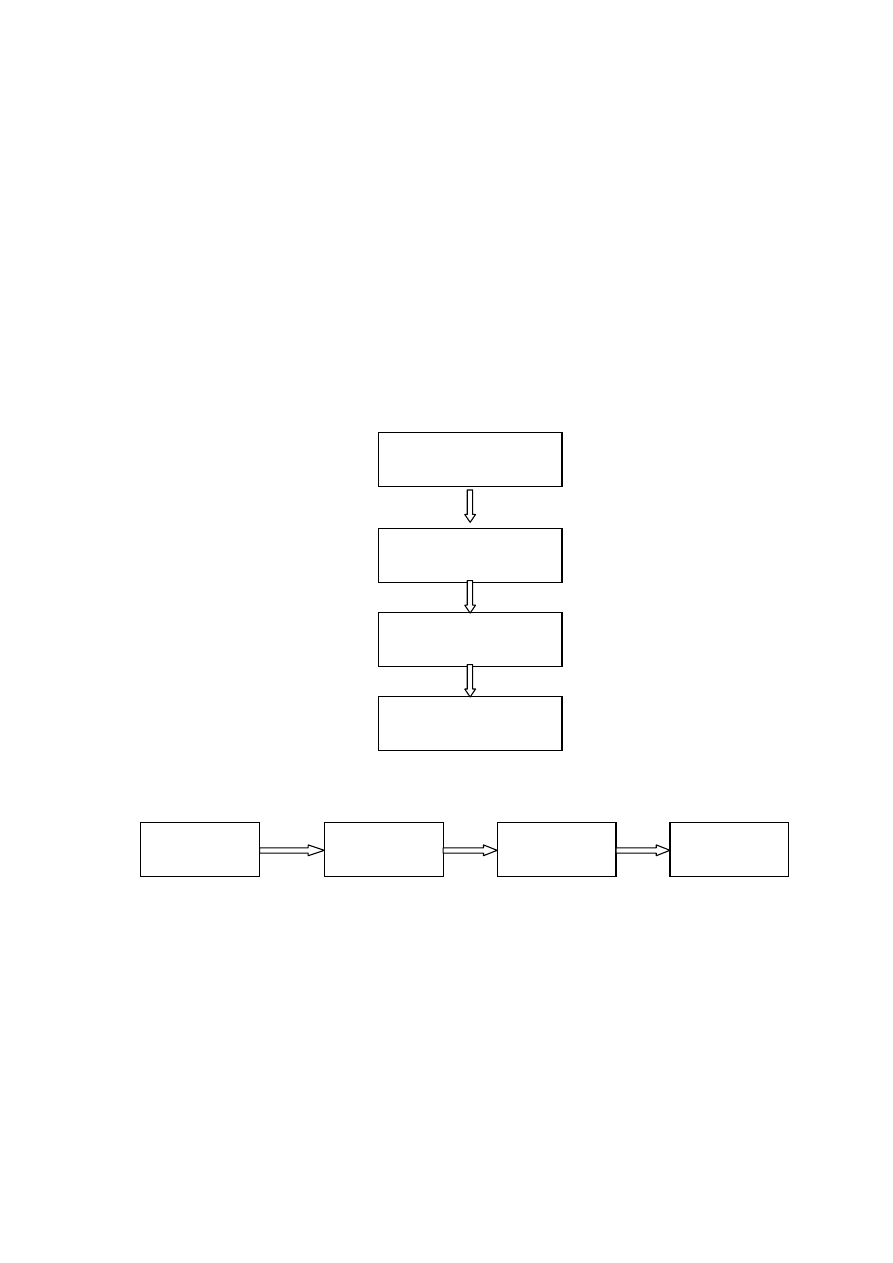
THE COMMUNICATIONS PROCESS
Communication is the transmission of information.
Let’s just think for a moment or two of how the communication process
kicks into action.
Firstly, a person has some thoughts that they want to communicate.
They then put all of these thoughts into a logical sequence.
Then, these thoughts and representations are put into words and then
they are then spoken.
Easy hey!
Ok, so let’s think of the person who is receiving the information.
The words are heard from the second person and then are interpreted to
make some sense.
The sense of the words are now understood by the other persons view of
the world and the filters that they use to understand information and then
these understandings are then expressed as thoughts.
So, if communication is so easy how come confusion, misunderstandings
and miscommunication happy all too often?
Thoughts
Represent
Words
Speak
Receive
Interpret
Understand
Thoughts
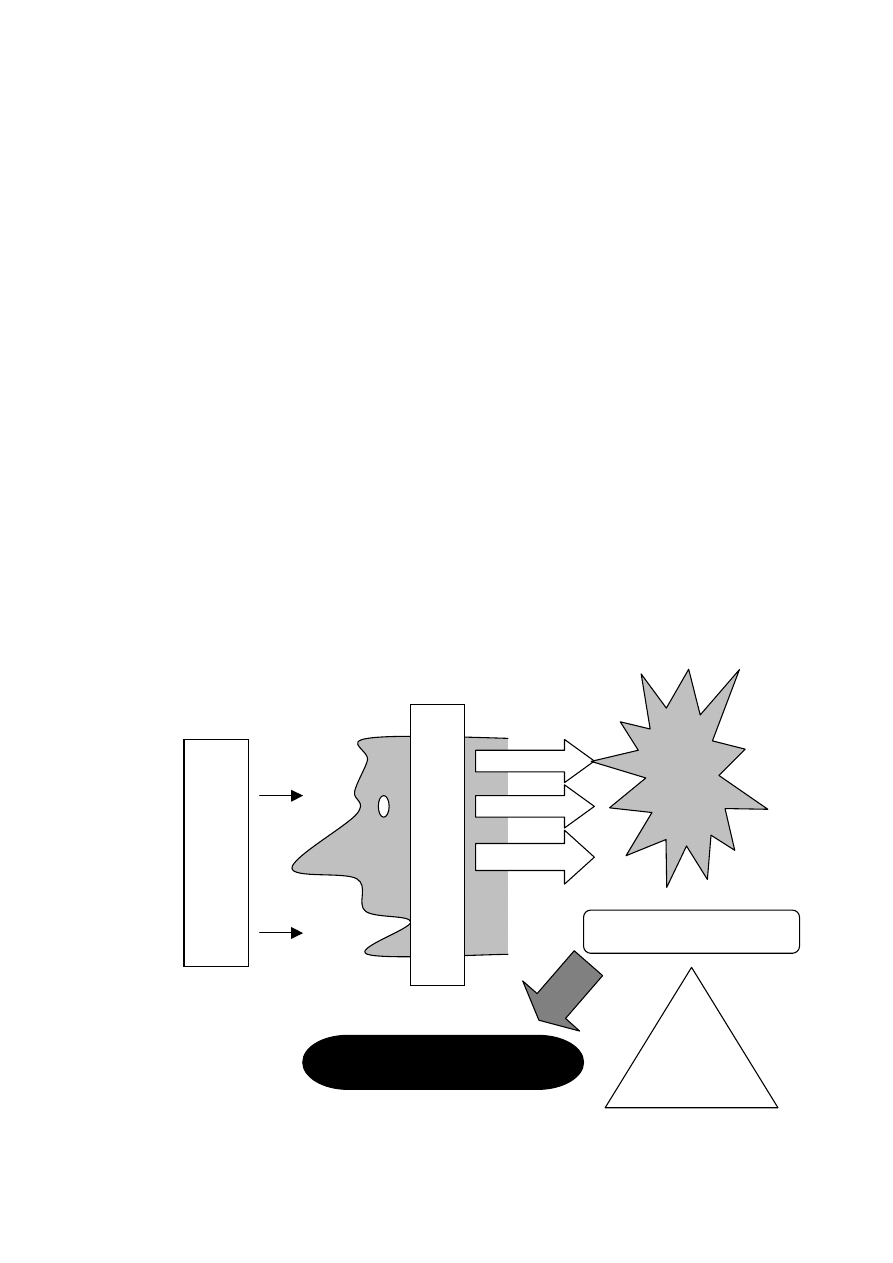
If we look at the two diagrams once more, we can see that there are two
“THOUGHTS” processes – one at the beginning of the cycle with the
communicator and one at the end of the cycle with the receiver of the
communication.
EVERYTHING INBETWEEN THESE TWO PROCESSES ARE INDEED
PROCESSED IN DIFFERENT WAYS BY EVERY PERSON
AND THIS IS WHERE MISCOMMUNICATION COMES FROM!
Let’s have a look to see how this is done.
When someone communicates information to us (through one of the
senses), this information has to pass through an internal filter system,
which is basically how we see the world. (There is a detailed section on
this later)
We then REPRESENT this information based upon our filters.
The way that we are feeling at the time, i.e. are we Motivated? Energised?
Depressed? Pleased? Will have a coupling effect with the representation
that we have just made to create an emotional state.
This state, whether good, bad or indifferent will determine our reaction to
others and the event. This ultimately leads to the behaviour that others
see when we communicate back whether it is through verbal or non-
verbal methods.
F I L T
E R
S
Delete
Distort
Generalise
In
te
rn
al
Repres
en
tati
on
Emotional State
BEHAVIOUR
PHYSI-
OLOGY
INFO
RMATIO
N

Communicating effectively is all about
understanding this process.
Once you know some of the communicating strategies of the other person
and you adopt your style to compliment their strategies you will find that
you will communicate so much more effectively.

FILTER SYSTEMS
As we mentioned before, information comes in through our
sensory input channels.
There are 5 in all but in the context of communication the 3 main
channels are:
Visual
This is what we see and the body language and physiology of others
Auditory
These are the sounds we hear, the words spoken and the way that these
are spoken
Kinaesthetic
These are split into Internal and external feelings.
External feelings include touching someone or something, what it feels
like – texture, pressure etc.
Internal feelings include feelings like hunger, stress, tension, comfort,
pleasure etc
The other 2, which are less significant when it comes to communication,
are:
Olfactory
The sense of smell
Gustatory
The sense of taste
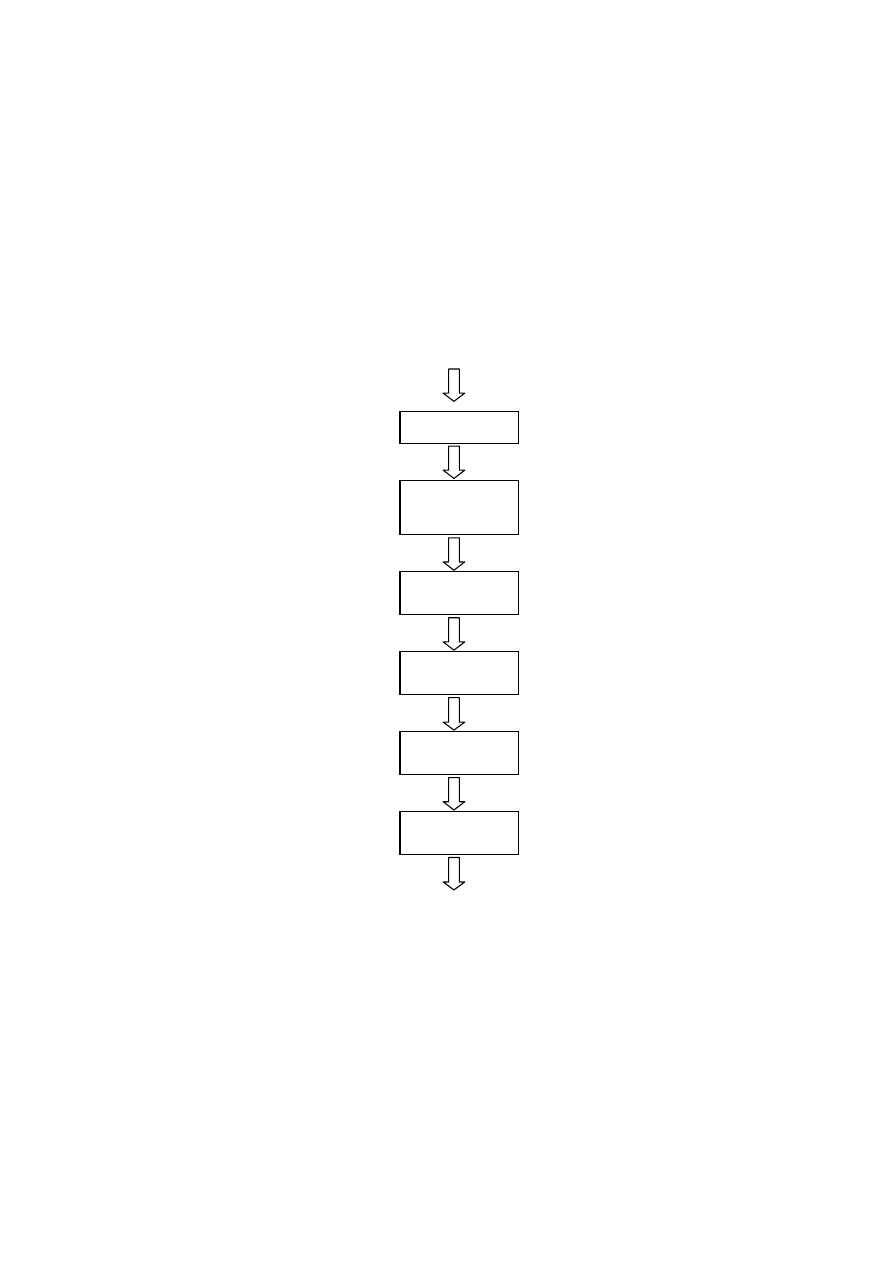
Information In – Information Out
When information comes in through one of the senses we then process
this information as described in the previous chapter – we modify it as we
relate it to our view and understanding of the world.
This understanding is based upon our filters.
The are 6 main filters:
INFORMATION IN
INFORMATION OUT
Language
We interpret words depending on whether we understand them in the first
place and our previous experience of using them.
For some people, let’s say, the term “Outstanding” could mean the same
as another persons “Good”.
Language
Meta
Programmes
Belief Systems
Values
Decisions
Memories

Ask 100 people in a room what “Competitive Advantage” means and
you’re likely to get 30-40 different answers depending on the persons
personal experience with that word and their understanding of what it
means.
Meta programmes
Meta programmes are at the hub of your personality and these
describe the ways that you analyse a situation and information.
When you know a persons meta programmes you will then be able to
predict their behaviour and actions a lot better.
There are no right or wrong meta programmes it’s just the way we handle
information.
As these are so important to effective communications I have included a
special chapter to learn these in greater detail.
Values
The third filter is values.
This is your standards or evaluation filter.
Values are our attractions or repulsion’s in life. They are all about what is
important and what is good or bad for us. Because values are about
things that are important to us, they have a great impact on our
motivation.
Beliefs
A belief is a feeling of certainty of what something means to us.
All human behaviour is belief driven.
Beliefs are the presuppositions that we have about the way the world is.
Depending upon what they are can either create or destroy our own
personal power to do something.
Beliefs are essentially our on/off switch for our ability to do anything in
the world.
There’s an old saying that “Whether you believe you can or your cannot,
you’re absolutely right”
When communicating to someone it is important to elicit their beliefs of
WHY they have done what they have done. On the flip side, when
motivating someone, you might also want to find out the disempowering
beliefs that have stopped him or her from doing what they want to do.

Memories
This filter is all about our recollection of past events.
If someone is saying something to us and we have done it in the past we
are going to make a connection.
And if that same something resulted in a negative experience, we may
have built up a negative belief that it will happen again!
Decisions
The final filter is linked closely to memories and is about the decisions that
we have made in the past.
If we have made some good, bad or indifferent decisions in the past we
may have created some empowering or disempowering beliefs either
about the decision itself or the outcome.
Information Out
Once the information has been filtered through, the information is then
either deleted, distorted or generalised.
We delete certain pieces of information when we only pay attention to
certain aspects of our experiences and not others.
We distort information when we make misrepresentations of reality.
I’m sure we have all seen a ghost’s face on the bedroom wall in the
middle of the night. Or because the bushes in the garden are rustling,
there must be burglars down there!
We generalise information when we draw broad conclusions about what
something means.
For example, if a woman has had a particularly bad relationship with a
man she may say that “All men are the same” and never want to get into
a relationship for a long time.
She has therefore taken one experience and made a generalisation out of
it.

* EXERCISE *
APPRECIATING YOUR OWN VALUES AND THOSE OF OTHERS
Part 1:
I’d like you to write down all of your values.
For example what things do you like to experience and have? Success?
Freedom? Adventure? Security?
Then I’d like you to write a list of the things you want to avoid? Rejection?
Pain? Failure? Boredom? etc
Firstly, I’d like you to look at your two lists and see if there are any
conflicting values.
For example, if you’ve put down success as a value that you want
experience and you’ve put down avoiding failure as something you want
to avoid then this is a conflicting value.
On your way to success to you will fail, so the question you must ask
yourself, id are you prepared to take the risk?
Which of your values is more stronger? The one to achieve success or the
one to avoid failure?
SOMETHING TO THINK ABOUT!
Part 2:
Partner up with a friend or spouse and go through your lists of values
together.
Have you got any conflicting values?
Do you like adventure, but they like security?
Do you like to strive for success, but they like comfort?
Write down you differences and make a list of the possible barriers to
communication that you may have

HOW MISCOMMUNICATION OCCURS
Miscommunication occurs when we delete, distort and generalise
information from the outside as well as our own thought process.
Our every experience is something that we literally make up inside our
heads. We do not experience reality directly, since we are always deleting,
distorting and generalising.
Let’s just recap once more on how we react and respond to any piece of
information.
We receive information via one of our senses.
Our filters then determine our internal representation of that event.
It is our internal representation that puts us in a certain state and this in
turns creates our physiology.
The state in which we find ourselves, will determine our behaviour or
reaction to what happens around us.
Sometimes, the extent of our deletion, distortion and generalisation
causes our version of reality to be sufficiently different to other people’s
for misunderstanding, or even conflict to occur.

EFFECTIVE COMMUNICATIONS
So far we have looked at the communications process and how
miscommunications can occur.
A study at the University of Pennsylvania in 1970 questioned students on
their ability to understand information depending on the deliver of that
communication.
From that study they produced a well know diagram that illustrates what
is the composition of typical face to face communications.
7% of what we communicate is the results of the words that we say, or
the content of the communication
38% of our communication to others is a result of VERBAL behaviour.
This includes the tonality of our voice, tempo, pitch, volume etc
55% of our communication to others is a result of our NON-VERBAL
communication to others. Our body language is so important it makes up
over half of the composition of successful communications. Examples
include facial expressions, posture, breathing, moving etc.
Words
7%
Verbal
Comms
38%
Non-Verbal
Comms
55%

Learning points so far and some rules for EFFECTIVE
communications
1. The other persons model of the world is different to our own
You should respect the other person’s model of the world because to him
or her it’s the way that they see it just as you have your own conclusions
and beliefs.
2. Physiology and the state of the mind
The way that you are moving your body and your posture will have an
affect on the way that you are thinking and the way that you are thinking
will have an affect on your physiology.
3. There are no failures only outcomes
Just like everything in life no matter what you intended by your
communication, there will be an outcome and that will come through the
response you get from the other person. Whatever interpretation they
have made will be true for them.
4. Learn from feedback and modify your approach
Look at the outcomes that you are getting from your communications and
modify your approach. Use the results of communication
as feedback and
learn from it all the time. When your observations or feedback indicates
that the results are not what you intended, do something else.
5. A person behaves the way they do, because they just do
Remember that a person behaves the way that they do because it fits in
with their values. If we cannot understand why someone behaved in such
a way then what we are saying is that we do not understand his or her
values.
6. Behaviour is the result of the thinking process and emotional
state
Behaviour is not the person; you need to look beyond the behaviour at
the beliefs, values and other things that make up the identity of that
person.
7. Flexibility is key
A person utilising a flexible approach to communication will ensure that a
less flexible person is usually responding to them. This is important when
influencing another person
8. Use the ultimate success formula to get what you want
To formulate the outcome that you desire you should first decide what it is
that you want, how you are going to achieve it, execute the plan, work
out what is working and what isn’t and if necessary change your
approach.

THE ULTIMATE SUCCESS FORMULA
The ultimate success formula should form the basis for everything
that you do in life where you need a desired outcome.
It may look like common sense to you but unfortunately, common sense
is not common!
1. Know your outcome
2. Know the compelling reasons why you need that outcome
3. Plan out how you are going to achieve it
4. See what is working and what is not working
5. Modify your approach until it does work
So, with regards to communications, when you need to communicate
anything to anyone you should go down this list beforehand and do some
preparation.
Here are some questions that you should ask yourself in the action
planning stage?
What are this person’s values and beliefs? How can I use these to
communicate more effectively with this person?
What body language should I use? What is this person like? Full of
energy? A go-getter?
Or is this person more shy and timid? How will I have to change my
approach to make them feel comfortable and receptive to what I am going
to communicate?
How will I know when I have got my desired outcome?
* EXERCISE *
USING THE ULTIMATE SUCCESS FORMULA
Based upon what you have learned so far:
Think of an important communication that you need to make.
Follow the ULTIMATE SUCCESS FORMULA to plan out your communication
with this person.
We will come back to this exercise later in the course

META PROGRAMMES
As we mentioned in a previous chapter meta programmes are an
internal filter that we pass information through.
They are specifically related to the way that we sort and categorise
information.
Knowing someone’s meta programmes allows you to predict their actions
but please note that there are no right or wrong meta programmes.
There are many meta programmes but let’s go through the top 6 that are
used in everyday and business contexts.
• Towards/Away
• Frame of Reference
• Sameness/Difference
• Reason
• Chunk Size
• Convincer

TOWARDS/AWAY
Towards people are always striving to achieve an outcome.
They always want to move towards something.
They want to achieve a certain outcome or goal and find it difficult to
recognise what should be avoided. Instead they concentrate and focus on
what they will get when the outcome is achieved.
Other the other hand, Away from people do things because they want to
avoid a certain situation. They don’t want to experience loss or discomfort
and want to move away from something.
Question? How do you know what type of person they are?
Answer - Ask them this type of question:
What do you want? What will having xyz give you? What do you want in
xyz?
What their response will tell you:
Toward people will tell you what they want.
Away from people will tell you what they don’t want.
Using this in the real world:
How to communicate to people who have a TOWARDS and AWAY FROM
strategy.
In Negotiations with these people:
Towards
Work out what the goals are and what you can do to help achieve these
goals. Focus on the outcome and what it will give you.
Away
Work out what you can do to help them avoid what they don’t want. Work
out and anticipate potential problems and assure them that these can be
minimised or avoided.
In Managing these people:
Towards
Offer incentives, i.e an outcome. Emphasis goals and what they can
achieve and attain.
Away

Use sanctions. Be aware that these people are usually the ones to bring
up problems.
Influencing Language
Towards
Get, achieve, attain, include, obtain, have, wants
Away
Not have, avoid, don’t want, keep away from, get rid of,

FRAME OF REFERENCE
The second major meta programme is your frame of reference.
This is all about how people evaluate things and can be split out into two:
• Internal People
• External People
Internal People evaluate on the basis of what they think is appropriate.
They make all of the decisions themselves and can have difficulty in
accepting other people’s feedback and direction.
External People evaluate on the basis of what other people think is
appropriate. They need others to help guide, direct and motivate them.
They cannot decide for themselves that they need external references.
Question? How do you know what type of person they are?
Answer - Ask them this type of question:
How do you know that you have done a good job? How do you know that
…….?
What their response will tell you:
Internal people will tell you that they decide when they’ve done a good
job.
External people tell you that they know because other people or outside
information sources tell them.
Using this in the real world:
In Negotiations with these people:
Internal
Emphasise to the person that they will know inside that you are right. Say
that they have to decide. Don’t bother about external factors or what
other people think, they will not be interested in this.
External
Emphasise what others think. Give them data and information to back
things up. Give them feedback and reassurance.

In Managing these people:
Internal
These people have difficulty in accepted feedback or praise. They like to
decide for themselves and don’t like to be told what to do. They do best
when they have little or no supervision.
External
These people need close management. They need constant feedback and
re-assurance about how well they are doing. They need to be told what to
do, how to do it and how well they are doing it.
Influencing language
Internal
You know best, you’ll know when it’s right, only you can decide, it’s up to
you
External
Can I give you some feedback, I will let you know, the facts show, other
people think that,

SAMENESS/DIFFERENCE
This meta programme is all about people’s perceptions of likeness and
differences.
There are 4 main categories with this:
Sameness People will notice those things that are the same or match
their previous experiences. They dislike change.
Sameness with exception people will first notice the similarities and will
then notice the differences. They prefer slow or gradual change.
Difference with exception people will notice the differences and then
the similarities. They like change and variety.
Difference people will notice those things that are different. They love
change and want it all of the time.
Question? How do you know what type of person they are?
Answer - Ask them this type of question:
What is the relationship between these three objects? What is the
relationship between this X and a previous Y?
What their response will tell you:
Sameness People will tell you how things are the same.
Sameness with exception people will tell you first how things are similar,
then tell you what differences may be.
Difference with exception people will tell you first how things are different
and then the similarities.
Difference people will tell you what the differences are.
Using this in the real world:
In Negotiations with these people:
Sameness
Stress areas of agreement. Do not discuss differences. Discuss areas of
similarities, how you both want the same thing.
Sameness with exception
First stress similarities and then point out the differences. Talk about
change as a gradual slow process.
Difference with exception

First stress how things are different and only then talk about similarities.
Focus on change and new solutions
Difference
Stress how things are totally different. Do not mention similarities. Talk in
terms of massive change and revolutionary.
In Managing these people:
Sameness
Don’t talk about variety. Talk about continuity. Have them do things the
same way.
Sameness with exception
Talk about gradual improvements. Make change a gradual process. Have
them do the same things but with gradual improvements and changes
Difference with exception
Emphasis improvements and changes and downplay commonality. Stress
different ways to do the job and make changes frequently.
Difference
Talk about the differences. Have them do something new all the time.
These people will get bored at repetitive tasks.
Influencing language
Sameness
Same, same as, maintain, keep doing, in common, keep the same, usual
Sameness with exception
Better, more, less, gradual, although, but, same except.
Difference with exception
Different, new, changed, change, unusual,
Difference
Different, new, radical, unique, revolutionary,

REASON
The reason meta programme is all about peoples opinions towards making
choices, developing options and following procedures.
Options People are very good at developing choices. They want to
experiment and are therefore poor at following rules. They are very good
at making improvements and developing new procedures or alternatives
to old ones.
Procedures people are good at following procedures, but they do not know
how to generate them. When they have not got a procedure to follow,
they become stuck.
Question? How do you know what type of person they are?
Answer - Ask them this type of question:
Why did you choose xyz?
What their response will tell you:
Options people will give you the reasons why they did it.
Procedures people will tell you a story about how they came to do what
they did. They don’t talk about choices or options. They give you the
impression that they don’t have choices.
Using this in the real world:
In Negotiations with these people:
Options People
Concentrate on the choices and possibilities. Discuss all the options. Do
not follow a fixed procedure for the negotiation.
Procedures People
Lay out a procedure for the negotiation. Don’t provide them with options
or choices and don’t expect them to decide on alternatives.
In Managing these people:
Options People
Talk about the possibilities and alternatives. Tell them to think of new
ways. Do not expect them to follow routines. Make sure that they do not
violate procedures

Procedures People
Stress the procedures to do the work. Make sure there are procedures in
place and that the person understands them. Be prepared to assist if the
procedure fails.
Influencing Language
Options
Alternatives, reasons, options, choices, possibilities
Procedures
Correct way, procedure, known way, right way, proven way,

CHUNK SIZE
People can be categorised into two when it comes down to details.
They are either a detailed person (specific person) or they prefer large
chunks of information (global person).
Specific People give you all the small details. They like to understand and
go into pieces of work with the minutest of detail.
Global People like to talk in big pictures and are not detailed at all. They
are conceptual and abstract. The give you the overall framework or brief
of what is happening rather than going into details.
You know when someone is specific and when someone is global just by
asking them any question!
What their response will tell you:
Specific people will give you all the details and go to great lengths to
explain everything. They give you more and more detail when you ask
questions. Specific people become frustrated with Global People because
there is no detail in what they say.
Global People give you an overview without details. They tend to use large
generalisations. Global People become frustrated with Specific People
because they go into far too much detail
Using this in the real world:
In Negotiations with these people:
Specific
Avoid generalisations and vagueness. Break things down into the detail
and be specific. Present things in logical sequences.
Global
Avoid details and present the bigger picture.
In Managing these people:
Specific
Tell the person in detail what needs to be done and ensure that there is a
logical sequence. Do not expect them to think about the bigger picture
Global
Skip the details and tell the person a broad overview. Tell them what the
end game is and then let them fill in the rest.

Influencing language
Specific
Next, then, precisely, exactly, specifically, first, second, details,
Global
Big picture, framework, in brief, result, generally, overview

CONVINCER
People make decisions and are convinced for only one of four reasons:
It looks right
It feels right
It sounds right
It makes sense
Question? How do you know what type of person they are?
Answer - Ask them this type of question:
Why did you decide xyz?
What their response will tell you:
Looks right people do things because the representation that they make
to themselves is a picture that literally looks right. They will use visual
words when describing their decision
Feel right people do things because the respresentation they make to
themselves is a sensation in some part of their body which literally feels
right. They use kinaesthetic words when describing their decision
Sounds right people do things because the respresentation they make to
themselves is a series of words which literally sounds right to them. They
will use auditory words when describing their decision
Makes sense people do things because the respresentation they make to
themselves is based on logic which in their own mind they know is correct.
They will use auditory words when describing their decision and they will
use facts, data and reason.
Using this in the real world:
In Negotiations with these people:
Us the appropriate language patterns that match their decision process. If
providing learning materials make sure it is appropriate for that person –
i.e pictures, diagrams, facts, data etc
In Managing these people:
Looks right
Paint a picture in words for them. Draw a picture to explain things. Let
them imagine something. Show them how to do it.

Feels right
Have them internally sense what they have to do. Let them get their
hands on the task under supervision and touch, feel and experience what
needs to be done
Sounds right
Have them describe to themselves in internal dialogue in an appropriate
tone of voice what they are supposed to do. Tell them things. Tell them
what others say.
Makes sense
Give them reasons for what you want them to do. Let them read
instructions on how to do the job. Give them facts, statistics and data.
Influencing language
Appropriate to how they make their decisions. (We are going to look into
this in greater detail in the next chapter)

* EXERCISE *
ELICITING META-PROGRAMMES
Part 1:
Now that you have seen what makes up each of the Meta programmes,
what preferences do you have?
Take time out and have a read through each again and write down below
what your own Meta programmes are for your self-awareness and why?
• Towards/Away
• Frame of Reference
• Sameness/Difference
• Reason
• Chunk Size
• Convincer
Part 2:
Listen up next time you have a conversation with anyone.
Elicit their Meta programmes by asking the relevant questions – you know
what they are!
After you think you have got their preference for each Meta programme,
please provide feedback to each other on what they are and what you
each said.

INTERNAL REPRESENTATIONAL SYSTEMS
We have already talked about making internal representations in previous
chapters and the meta programme called CONVINCER describes the way
that people think and what they base their decisions on.
We have also described that information comes in one of 5 main senses as
well.
Well, it is now time to put all of this together by recognising the thinking
process of a person by listening to the verbal indicators that they use in
everyday speech and then using this information to tailor the way that we
communicate to them.
Remember, people like people who are like themselves!
For example if we meet someone who makes decisions because “It looks
right” and uses mainly visual indicators, we will find it easier to
communicate to and explain things to that person if we show him a
diagram or by painting him a picture in his minds eye.
So below is a list of indicators of the words that people use for the 3 main
modalities:
Visual
Auditory
Kinaesthetic
Unspecified
See Hear Feel Sense
Look Listen Touch
Experience
View Sounds Grasp
Understand
Appear
Make music
Get hold of
Think
Show Harmonise
Slip
through Learn
Dawn
Tune in/out
Catch on
Process
Reveal
Be all ears
Tap into
Decide
Envision
Rings a bell
Make contact
Motivate
Illuminate Silence Throw
out Consider
Imagine
Be heard
Turn around
Change
Clear Resonate Hard Perceive
Foggy Deaf
Unfeeling
Insensitive
Focussed Mellifluous Concrete Distinct
Hazy
Dissonance
Get a handle
Know
Picture Unhearing Solid

Below is a list of indicator phrases that people use, which ones do you use
most often?
Visual
Auditory
Kinaesthetic
An eyeful
Afterthought
All washed up
Appears to me
Blabbermouth
Boils down to
Beyond a shadow of a
doubt
Call on
Chip off the old block
Birds eye view
Clear as a bell
Come to grips with
Catch a glimpse of
Clearly expressed
Control yourself
Clear cut
Describe in detail
Cool/calm/collected
Dim view
Earful
Firm foundations
Flashed on
Enquire into
Get a handle on
Get a perspective on
Give me your ear
Get a load of this
Get a scope on
Give you a call
Get in touch with
Hazy idea
Given amount of
Get the drift of
In light of
Grant an audience
Get your back up
In person
Heard voices
Hand in hand
In view of
Hidden message
Hand in there
Looks like
Hold your tongue
Heated argument
Make a scene
Ideal talk
Hold it
Mental image
Key note speaker
Hold on
Mental picture
Loud and clear
Hot head
Minds eye
Manner of speaking
Keep your shirt on
Naked eye
Pay attention to
Lay cards on the table
Paint a picture
Power of speech
Pain in the neck
See to it
State your purpose
Pull some strings
Short sighted
To tell the truth
Sharp as a tack
Showing off
Tongue-tied
Slipped my mind
Sight for sore eyes
Tuned in/tuned out
Smooth operator
Staring off into space
Unheard of
So-so
Take a peak
Utterly
Start from scratch
Tunnel vision
Voiced an opinion
Stuff upper lip
Under your nose
Well informed
Stuffed shirt
Up front
Within hearing
Too much hassle
Well defined
Word for word
Topsy turvey
* EXERCISE *
YOUR REPRESENTATIONAL SYSTEM
What words do you use the most?
How do you think?
How would you best learn new material? By a diagram? Listening? Doing
and feeling? What category do you fit into the most?
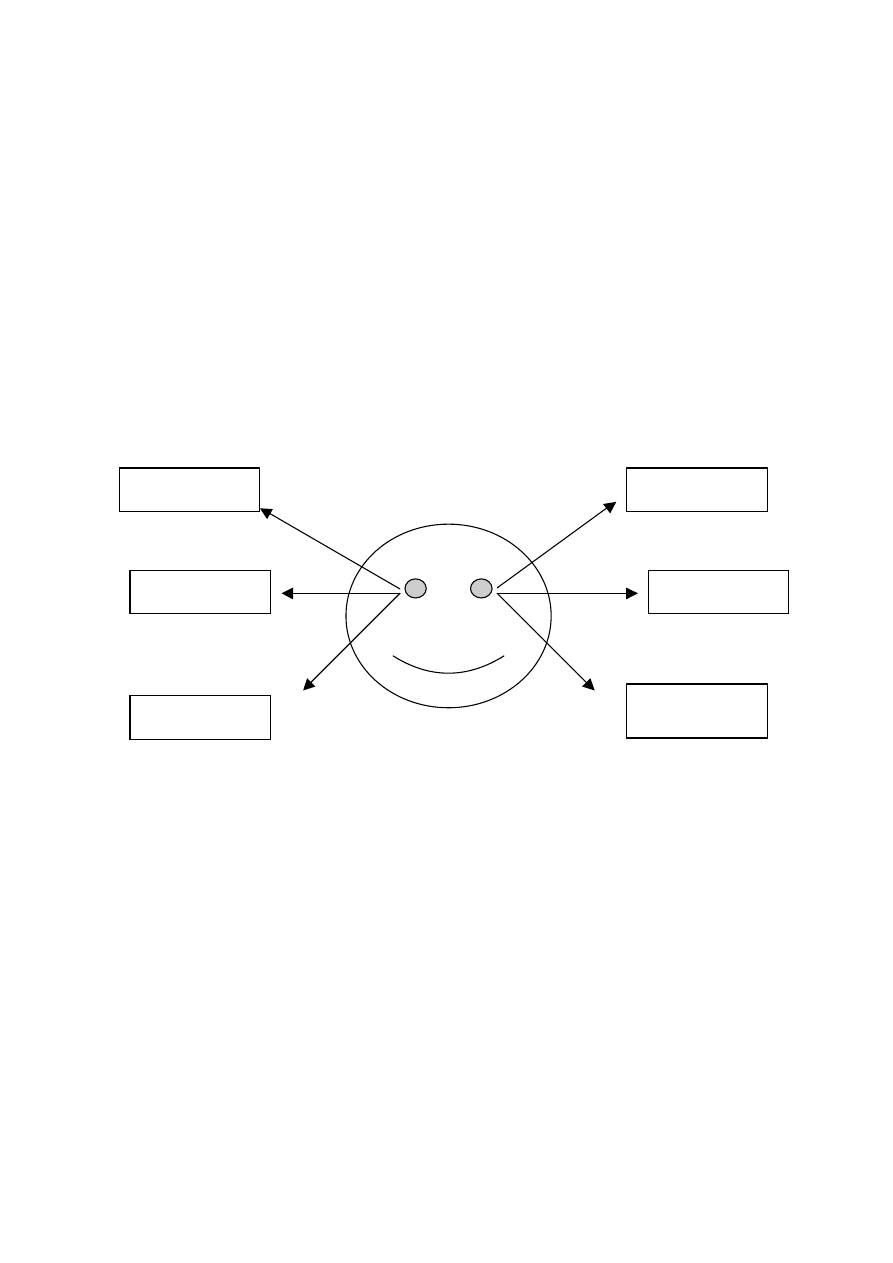
ELICITING THINKING PATTERNS
THROUGH EYE MOVEMENT
In the late seventies and early eighties researchers discovered that people
move their eyes in a certain way when they think.
Students were asked a series of questions and the researchers noticed
that their eye movements, when thinking, followed a structured pattern.
They realised that by looking at someone’s eyes, you could tell HOW they
think.
You can tell the way they are constructing their thoughts.
The above picture is how the person looks when you are facing them.
There is a basic rule that says when:
People are looking up – They are visualising
People look horizontally to the left and right – They are remembering or
constructing sounds
People look down and to their left – They are accessing their feelings.
People look down and to the right – They are talking to themselves
Visual Recall
Auditory Recall
Kinaesthetic
(Feelings)
Visual Construct
Auditory
Construct
Internal Auditory

Visual Recall
This is when you are seeing images from the past. You are recalling them
from memory and are things that you have seen before.
Questions to ask?
“What did your curtains look like when you were a teenager?”
“What does your car look like?”
Visual Construct
When you are visualising something you have never seen before or you
are making something up in your head you are using visual construct.
Sometimes you can use this one to see if people are lying to you!
Questions to ask?
“What would your car look like if it had a soft top?”
“What would you house look like if it were painted red?”
What would you look like if you lost 3 stone in weight?”
Auditory Recall
This is when you are remember sounds or voices that you have heard
before or things that you have said to yourself before.
When you ask someone “What was the last thing I said?” they normally
look in that direction.
Questions to ask?
“Can you remember the sound of your fathers voice?”
“Can you remember what you said to yourself when you did that?”
“What was the last thing I said?”
Auditory Construct
This is when you are making sounds up that you have never heard before.
Questions to ask?
“What would the national anthem sound like if it were played on the
flute?”
“What would I sound like if I were fluent in Spanish?”

Kinaesthetic
When you are accessing your feelings you tend to look in this direction.
Questions to ask?
“What does it feel like to touch this sand paper?”
“What does it feel like to be so popular?”
Internal Auditory
This is where your eyes go when you are having internal dialogue and
talking to yourself.
Questions to ask?
“Can you so over in your mind – All I need is within me now”
“Can you recite to yourself ‘Three Lions’”
We can elicit someone’s strategy then by listening to the words that they
use and how they move their eyes.
In order to communicate effectively we need to absorb these action
signals and then modify our behaviour, physiology and the words that we
use to best mirror and match their preferred learning and thinking style.
After all, communication is all about rapport building – it is a relationship
between two or more people.

BUILDING MEGA RAPPORT
Rapport is the ultimate tool for producing results with other people and
thus it is so vital for effective communications.
Whether you know the person or not, there are 6 main steps to
establishing rapport with anyone.
When you bear in mind that 93% of all communication is down to the
tonality of your voice and your body language, building rapport is far more
than just talking about common experiences.
It’s an important point to remember but people like people when they are
like themselves and when they are not it so much more difficult to have
any sort of relationship with that person never mind an effective one!
Have you ever had times in your past when building rapport was so easy?
I bet you’ve also had times when you thought, “Oh, what am I going to do
and say next?”
We have all been there!
We have also all been there when you’ve wanted to be quiet and relaxed
when all of a sudden a friend or colleague comes jumping in and full of
energy, wanting to talk your head off? How did you feel?
I bet there have also been times when you’ve been full of energy and the
other person wants to relax! You go arrggghhhhh!
Ok, so let’s get to the 6 things you need to do to build rapport.
1. Match the persons sensory modality
What I mean here is to match and mirror the way that they think and talk.
Remember when we were talking about visual, auditory and kinaesthetic
modalities?
Well, this is about putting it into practice.
Listen for the indicator words that the person is using and use
words/phrases from the same modality.
Also, look out for eye movements to spot thinking patterns.

2. Mirror the persons Physiology
By copying the persons posture, facial expressions, hand gestures,
movements and even their eye blinking, will cause their body to say
unconsciously to their mind that this person is like me!
3. Matching their voice
You should match the tone, tempo, timbre and the volume of the person’s
voice.
You should also make use of matching the key words that they use a lot.
Examples of this may be: “Alright”, “Actually”, “You know what I mean”
4. Matching their breathing
You should match the persons breathing to the same pace. Matching the
in and out breath.
5. Matching how they deal with information
You should match persons CHUNK SIZE of how they deal with information.
For example are they detailed or do they talk and think in big pictures.
If you get this wrong you will find it very difficult indeed to build rapport
as the detailed person will be yearning for more information and the big
picture person will soon be yawning!
6. Matching common experiences
After all, what are you going to talk about!
This is all about finding some commonality to talk about. Matching
experiences, interests, backgrounds, values and beliefs.
One point to bare in mind is that you need to be subtle when you are
matching and mirroring. Don’t go over the top!
Typically however, the other person will be focussing so much on what
they have to say that they will not even notice.
Calibration is one way of determining whether you are in rapport with
someone.

This basically means that you need to develop your ability to notice to
such an extent that you can begin to see people’s reactions to
communications.
If the person seems to be comfortable with what you are doing, more
than likely you are building rapport.
Look at for their eye movement, the muscles around the eyes, their lip
movement, and twitches or changes in breathing.
Increasing levels of rapport
Matching Modalities
Matching the persons physiology
Matching their voice
Matching their breathing patterns
Matching how they deal with information
Chunk Size
Matching common experiences
MEGA RAPPORT LEVELS!!!!!!!!

HOW TO SPEAK UP AT MEETINGS
Develop the confidence to speak up at meetings
Are you generally quiet at meetings? Do you tend to observe what's going
on, but hesitate to get involved?
I bet you've gone through the following scenario a hundred times:
There you are in the meeting, listening attentively trying so desperately to
contribute to the conversations that are taking place.
The person with the biggest mouth is having his or her say, the same old
people are talking.
Then "POW! ZAP!" you have a great idea or have a really valuable thing to
say but you don't.
You're too scared. You are frightened that the idea is going to be rubbish
or that it is too obvious.
You decide to say nothing!
Then, all of a sudden, as if someone has read your mind, another person
comes out with exactly what you were thinking and takes all kinds of
credit for it!
"That could and should have been me!" you think and then your
confidence takes a massive blow.
I heard a great quote that went:
"People would rather say nothing and let people think they
are stupid rather than open their mouth and remove any doubt"
The first thing you should think to yourself is that you are at the meeting
for a reason.
That reason is to take in information as well as share information yourself.
Exercise
I'd like you to write down a list of all of the times when you have thought
of something to say in a meeting but didn't.
I bet it will be a long list!
Now, just think of all of the plaudits and credit you COULD have got if only
you had opened your mouth.

Next to each item write down how it would have made you feel if you
would have said it.
What credit would you have got for it?
How does it make you feel now that you have written all of this down?
Confidence starts with making small changes and than making them a
habit.
Next time
Before you go into your next meeting I want you to go over the list you
have written during this exercise.
Get psyched up to make a telling contribution at this meeting but don't
beat yourself up if you don't have any ideas.
Sometimes, you don't have anything to say and that's ok.
Where I am coming from here is if you HAVE got something to say and
DON'T!
Make a decision to say the first idea that you have and see what happens.
At the end of the day, you have got nothing to lose and people will
probably feel better towards you if you say something rather than if you
say nothing at all.
Success breeds success and confidence breeds confidence.
Remember, give it a go - you will be pleasantly surprised at how easy it is
and then you will be wondering about what all of the fuss was about!
The next time will then be a synch!
10 reasons why you can and should confidently speak up at
meetings.
Let me give you 10 reasons why you can, and should speak up at
meetings:
1. The team needs you every individual on a team has a role to play,
something to contribute-even if it's just to play devil's advocate-you
included
2. You're breathing-that means you have an opinion - so share it
3. The constant talkers need a break don't you think?
4. The facilitator might be battling with whether or not to invite you into
the conversation - let her know you're present and paying attention
5. A good facilitator will call on those who are not contributing as much in
an effort to get everyone involved anyway - it might as well be a moment
you choose to get involved
6. The meeting will go faster

7. It's good for your career
8. It's good for you
9. In preparation for the meeting, outline 3 things you want to say
10. You're a brilliant individual, so why not share your brilliance with
others!

HOW TO RUN MEETINGS
Run Meetings Confidently
Effectively run meetings enable managers to accomplish more in a shorter
amount of time, with the added benefit of group involvement and buy-in.
This article highlights a few things to consider as you prepare to
confidently run your meeting.
Running meetings can be time-consuming if they lack focus, the right
members, or effective facilitation tools.
On the other hand, they can also be an extremely efficient way to get
things done quickly, to support building a team environment, and to
enable collaboration among key people to produce a better outcome than
possible working independently.
If you are responsible for running meetings, and aren't quite sure how
best to go about creating an effective meeting experience, you'll be glad
you found this article.
Following are a few key steps to successful meeting management.
Attending to each of these steps will enable you to repeatedly create a
well-organized productive experience, and therefore build your confidence
that you can run effective meetings.
1. Meet with a purpose
If you ask most people, they have been to one too many meetings that
seemed (whether or not accurately so) to have no purpose.
Be sure to call a meeting only if you have a clear reason for doing so.
It doesn't matter what your reason might be.
If you need information from the group, set a clear agenda with key
questions ahead of time.
If you want to share information, draft an outline of your key points. If
you just want to get the team together to allow for bonding time, then
organize it so that an interactive environment will be facilitated (order
pizza, etc.)
2. Communicate your purpose/agenda
So, you know why you're meeting-great!
Now, tell everyone else why you are! Be sure to let all attendees know
how long the meeting will be, where it will be, and what information is to
be covered.

Be sure to let them also know what the goal of the meeting is-what
deliverables, outcomes, etc. are expected so they can come prepared.
Just because you've called the meeting doesn't mean you're the only one
who has to do the talking.
Enable them to participate-sharing relevant information ahead of time, will
ensure they come prepared to contribute, and take the spotlight off of you
at the same time!
3. Supporting materials
Come prepared with the appropriate supporting materials.
If this is an information gathering session, bring forms or tools for
completion. Presentation? Bring slides/handouts, etc.
Whatever will support communication of your key points, gathering of the
required information, or structuring of the discussion should be included
to create a stronger sense that everyone's time is being well spent.
4. Everyone present for a purpose
Please ensure that every single individual invited to the meeting is there
for a reason. And, more importantly, that each attendee clearly
understands his/her specific role.
When planning your meeting consider team members' roles.
How can they contribute?
Do they have key information, skills, experience that you can leverage in
the meeting?
Help them feel useful by letting them know the important role you'd like
them to play.
Also helpful in running effective meetings, is to assign meeting
management roles before you begin the meetings. Some specific meeting
facilitation roles might include:
• Scribe: to record key information, and meeting minutes
• Flipchart recorder: to capture key points, questions visually on
flipcharts
• Timekeeper: to help keep to the agenda
• "Devil's advocate": should the group tend to always passively agree
to all suggestions, it might be helpful (and fun) to assign someone
to play devil's advocate purely for the purpose of creating creative
debate and discussion.

5. Outcomes/agreements captured and reviewed
Before you end the meeting, review the agreed upon action items, along
with the responsible parties for each item as discussed during the
meeting.
If you've assigned meeting scribes or flipchart recorders, then this step
should be relatively simple.
6. Next steps defined
Discuss roundabout timeframes for completion of action items, and also
make sure to review next steps.
Set expectations now for a follow-up meeting, should one be required.
Let everyone know what you anticipate will need to be covered in the next
meeting.
7. Show your appreciation
Every single person's time is precious.
So, be sure to thank them for their participation and contributions.
Motivate key participants by letting them know after the meeting just how
helpful their contributions were during the meeting.
This will help to ensure that next time you need to have a meeting, you'll
find willing participants ready to go.
8. Reflect on your process
Identify what went well, and what didn't.
Learn from your experience and find ways to improve as you move
forward. Don't forget to seek support from your Human Resources
Training group should you be interested in building your facilitation skills.
Following these 8 steps will ensure that with practice, you will be
effectively, and smoothly running meetings-with confidence!

PUBLIC SPEAKING TIPS
Speak in Public with Confidence and Enjoyment
Speaking in public, in front of groups and conducting presentations are
commonly agreed as the least favourite activities that anyone can
perform.
However, if we are well prepared, well equipped and well supported, you
will find that speaking in public really can be quite enjoyable - honest!
Here are some ways to make public speaking an enjoyable experience
both for yourself, as well as for your audience.
Following are some ways YOU can make speaking in public an enjoyable
experience:
1. As much as possible/appropriate, include your audience
You don't always have to be the talking head at a meeting.
Prepare questions in advance that will encourage the audience to
participate.
Consider your audience in advance-Who are they?
What might their histories and/or interests be?
Prepare opportunities in your presentation/speech for audience
participation.
2. Inject appropriate humour in your delivery
It will do you good, enabling you to lighten up and release any tension.
It will also enable the audience to loosen up, pay more attention, and
receive you in a much more favorable way.
3. Share a little known fact
Most audiences are especially grateful to hear something they haven't
already heard before.
One single piece of new information can make the time spent listening
completely worth their while.
If you can find one little known, yet especially relevant fact, you will have
a captive audience.
4. Smile and the world smiles with you
It's true!
Others can sense your discomfort, and despite any earth shattering
information you have to share, your audience is apt to discount your
brilliance if the delivery of your key messages isn't clear and assertive.
Instead remember to smile, make eye contact and believe your own
words-and they will too.
5. Keep it relevant
To the extent possible, make sure your audience is the right audience for
the information you are presenting.

In other words, don't lecture on retirement options to a newly graduating
class.
Know before hand what you want to say and practice until it comes
naturally.
This will enable you to spend more time relating to your audience, than
trying to remember what comes next in your delivery.
6. Create fun visuals (as appropriate)
Some individuals will retain more if they are able to see graphic
representations of the information you plan to deliver.
Consider which parts of your message can be presented visually, and
remember to keep visuals simple, attractive, and large enough so
everyone can see them.
Any fun, relevant clipart or comic can also be a nice perk.
So, what are the qualities of a good speaker?
Here are a list of the qualities and characteristics of a good public
speaker/presenter.
Make sure you include these points when you have to speak in public
1. They talk to us as though we are having a conversation
2. They speak our language
3. They look as though they are enjoying themselves.
4. They inspire us to find out more about the subject
5. They tell stories/use the human-interest angle
6. Someone who conjures up pictures in our mind
7. They don't talk for hours
8. They let us know where we are going
9. They look at us-not their notes
10. They stress important points and pause to allow ideas to sink in
11. The talk appears well prepared but has an air of spontaneity

The importance of body language
Don't forget your non-verbal action signals!
You will want to look confident even though you may not be oo the inside.
Don't just stand there, with your arms by the side of you!
ACT CONFIDENTLY and you will FEEL CONFIDENT!
Try it, it really works.
So, how do you act confidently?
• With your posture - wall tall with your head up.
• Smile
• Maintain eye contact
• Handshake
• Move around
• Gestures
• Relax
Speak with confidence as well.
People will believe what they see more than what they hear, but once you
look confident, you have to sound the part too!
• Breathing
• Sound quality of your voice
• Pitch
• Speed
• Tone
• Pausing
• Listening
• Use confident words
15 Ways to overcome your STAGE FRIGHT!
1. Be well prepared. Rehearse several times
2. Co-operate with your body - rest, eat and sleep well beforehand
3. Dress in clothes that make you feel good
4. Take several deep breaths to relax your body
5. Concentrate on the messages you want to get over to your audience
6. Move around and release your nervous energy.
7. Visualise yourself doing well
8. Remember that your audience want you to do well
9. Think of a similar occasion in the past when you did it before and did it
well. Think about it for a moment.
10. Make no negative confessions "I'm so nervous"
11. Put the situation into perspective

12. If you get nerves during your talk, move around or do something
different to get into a different "state"
13. Pick out some friendly faces and make eye contact with them
14. If you make a mistake you make a mistake, laugh at it and the
audience with laugh with you. Make a joke out of it.
15. The more you do it the better you will become. Practise makes
perfect.

CONFIDENT PRESENTATIONS
Giving confident and powerful presentations
You can deliver confident and powerful presentations!
All it takes is a little preparation, some practice, and a winning mindset.
You've been asked to give a presentation.
Congratulations! This is your chance to shine.
If you're like most people, you probably don't like presenting very much.
So, read on for some simple tips you can use to conquer your worries.
With these simple tips, you'll be ready to go in no time, feeling confident,
and fully prepared.
First, there are a few things I wanted to point out:
1. Know that you were asked to present, because you can do it-you
wouldn't have been asked otherwise.
2. No one really likes presenting. Some of the best, most well known
speakers and actors have confessed to this. So, when you look out at your
audience, know that you're always in good company.
3. What actually comes out of your mouth is only about 10% of what gets
communicated. That leaves 90% to non-verbals. That means if your body
language, expression and gestures communicate confidence, you will
come across as confident.
But just how do you create this confidence?
Here's the secret: being prepared; practising; and having identified
beforehand, instant solutions for de-stressing.
A favourite motto of mine is "If you think you can, you can."
So here is how you're going to get prepared, confidently go in there, and
knock their socks off!
Confidence builder #1: Know your content
Identify your key messages-bullet them in order so they tell a clear story.
Jot down cues for your key messages (e.g. on flashcards, paper, etc.).
Have them ready as back up (but remember to refrain from reading them
word-for-word while presenting).

Enhance your messages with supporting tools, and interesting visuals-it
will be a perk for your audience, and it takes the spotlight off of you.
Be sure to tap into your resources-know a graphic design expert? Ask for
their advice.
Confidence builder #2: Practice makes it a "piece of cake"
Practice delivery of your lines. Do this in the mirror.
You might feel funny talking to yourself, but it works.
Watch your body language.
Find your "confident look."
Standing straight be sure to use smooth hand gestures, and limit
unnecessary movement (e.g. rocking back and forth from one foot to the
other).
Practice until the words flow like water.
When you're ready, practice in front of a friend or two.
Ask them each for 3 things you did well and 1 thing you could improve.
Confidence builder #3: Create your "winning scene"
Visualise yourself delivering your presentation.
Then see your audience's reaction.
What does that "winning scene" look like for you?
Visualise it over and over until you can see it so clearly, you know what
colour socks your boss is wearing!
Confidence builder #4: Go for it!
Identify ways to calm your nerves before you even begin: take deep
breaths, or find whatever works for you (e.g. picture everyone in funny
pyjamas).
Squelch any negative thoughts or concerns by envision your "winning
scene."
Think positive. Remember: "If you think you can, you can."
As you present, keep eye contact with as many people as you can-this
also conveys confidence.
If it helps, determine a shape in your mind and make eye contact around
the room as though you were creating that shape with your line of vision.

Be sure to keep your pace SLOW!
Many of us tend to speedtalk when presenting, and so, often what might
sound slow to us sounds just right to the listener.
And, because you are so well prepared you will make your points
confidently, answer questions clearly, and start to look forward to your
winning scene!
Wyszukiwarka
Podobne podstrony:
How to make
How to make an inexpensive exte Nieznany
how to write great essays id 20 Nieznany
How to Make an Atomic Bomb
How To Make It And Enjoy It
how to make a draino bomb 6W5PMX3CSBHVWUCD22KIJY34P667TPDLPPATGOY
how to make a?ke id D5O42G7A4RE7MNTMEISZ7BJSGUVLODZANAC376Y
How to Make a Solar Cell id 808 Nieznany
How to Make a German Paper Star
How to Make a Complete Map of Every Thought
How to make your own power Bleeder
How to Make Your Own Perfume
How to make perfume
how to make a?lloon bomb XCB7P55Q7X6LGLOJKZ3IQ6OE5ZREAE3OWS62SDI
Do It Yourself How To Make Hash Oil
how to make lsd LDS3NNI4PCNDMCLWMDEAYCQPTBGR4JJXDCRK5KY
Leil Lowndes How to Make Anyone Fall in Love with You UMF3UZIGJVMET6TLITVXHA3EAEA4AR3CAWQTLWA
how to make a scrapbook 1202695580375736 5
więcej podobnych podstron