
1
Embedded Systems Design: A
Unified Hardware/Software
Introduction
Chapter 1: Introduction

2
Embedded Systems Design: A Unified
Hardware/Software Introduction,
(c) 2000
Vahid/Givargis
Outline
• Embedded systems overview
– What are they?
• Design challenge – optimizing design
metrics
• Technologies
– Processor technologies
– IC technologies
– Design technologies
3
Embedded Systems Design: A Unified
Hardware/Software Introduction,
(c) 2000
Vahid/Givargis
Embedded systems overview
• Computing systems are everywhere
• Most of us think of “desktop” computers
– PC’s
– Laptops
– Mainframes
– Servers
• But there’s another type of computing
system
– Far more common...
4
Embedded Systems Design: A Unified
Hardware/Software Introduction,
(c) 2000
Vahid/Givargis
Embedded systems overview
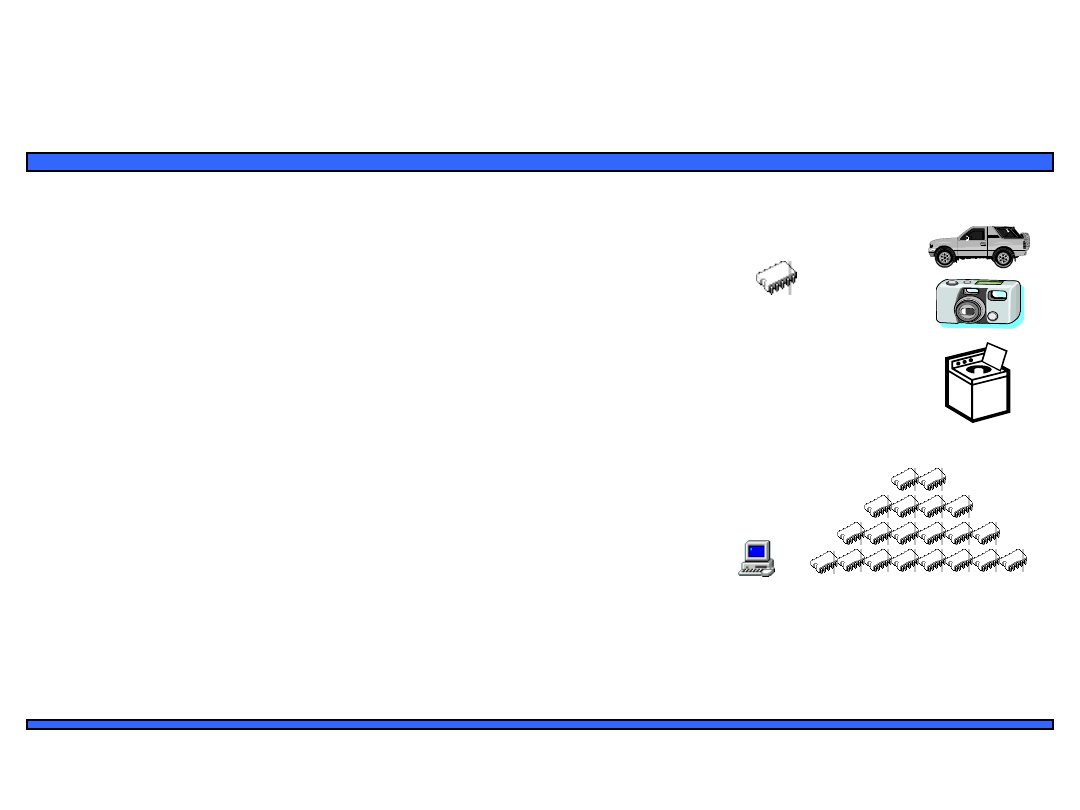
• Embedded computing systems
– Computing systems embedded
within electronic devices
– Hard to define. Nearly any
computing system other than a
desktop computer
– Billions of units produced yearly,
versus millions of desktop units
– Perhaps 50 per household and
per automobile
Computers are in
here...
and here...
and even here...
Lots more of these,
though they cost a
lot less each.
5
Embedded Systems Design: A Unified
Hardware/Software Introduction,
(c) 2000
Vahid/Givargis
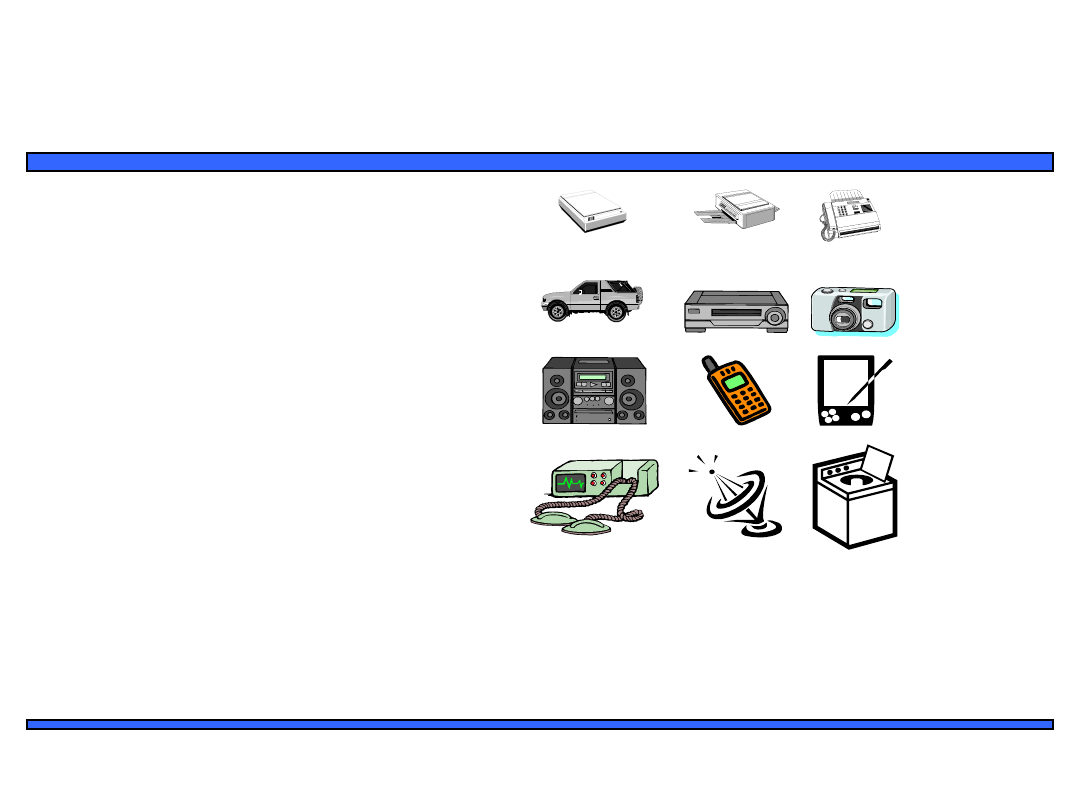
A “short list” of embedded systems
And the list goes on and on
Anti-lock brakes
Auto-focus cameras
Automatic teller machines
Automatic toll systems
Automatic transmission
Avionic systems
Battery chargers
Camcorders
Cell phones
Cell-phone base stations
Cordless phones
Cruise control
Curbside check-in systems
Digital cameras
Disk drives
Electronic card readers
Electronic instruments
Electronic toys/games
Factory control
Fax machines
Fingerprint identifiers
Home security systems
Life-support systems
Medical testing systems
Modems
MPEG decoders
Network cards
Network switches/routers
On-board navigation
Pagers
Photocopiers
Point-of-sale systems
Portable video games
Printers
Satellite phones
Scanners
Smart ovens/dishwashers
Speech recognizers
Stereo systems
Teleconferencing systems
Televisions
Temperature controllers
Theft tracking systems
TV set-top boxes
VCR’s, DVD players
Video game consoles
Video phones
Washers and dryers

6
Embedded Systems Design: A Unified
Hardware/Software Introduction,
(c) 2000
Vahid/Givargis
Some common characteristics of
embedded systems
• Single-functioned
– Executes a single program, repeatedly
• Tightly-constrained
– Low cost, low power, small, fast, etc.
• Reactive and real-time
– Continually reacts to changes in the system’s
environment
– Must compute certain results in real-time
without delay
7
Embedded Systems Design: A Unified
Hardware/Software Introduction,
(c) 2000
Vahid/Givargis
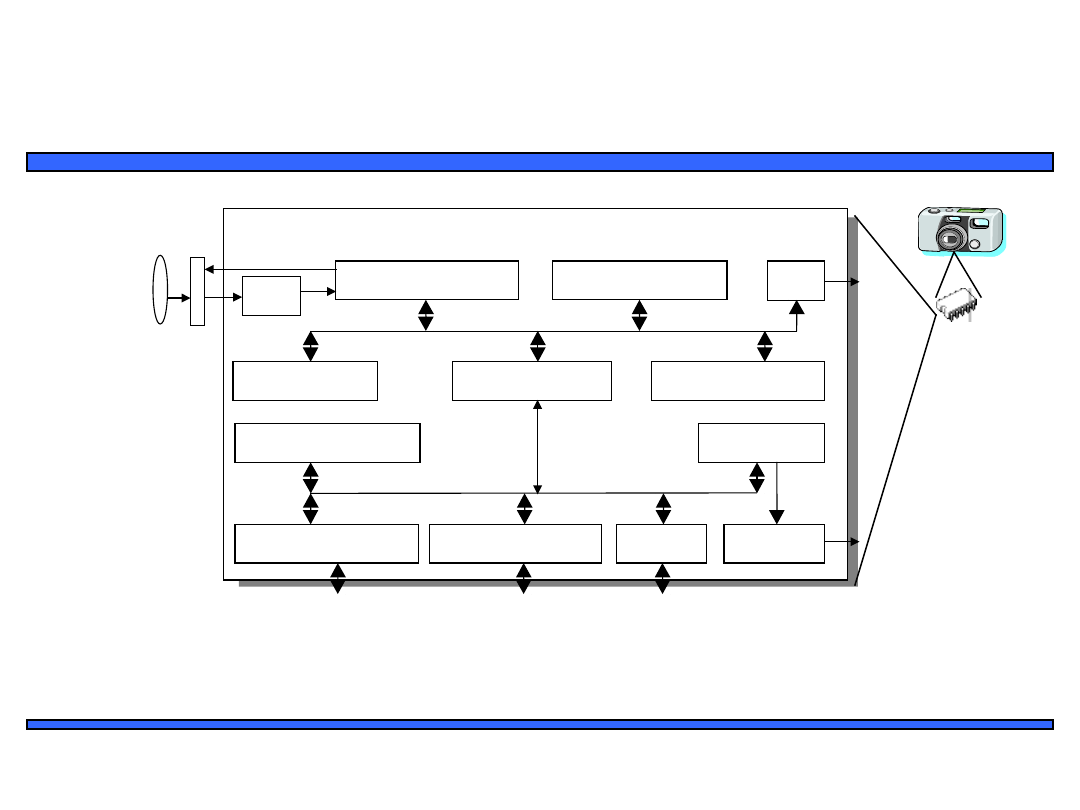
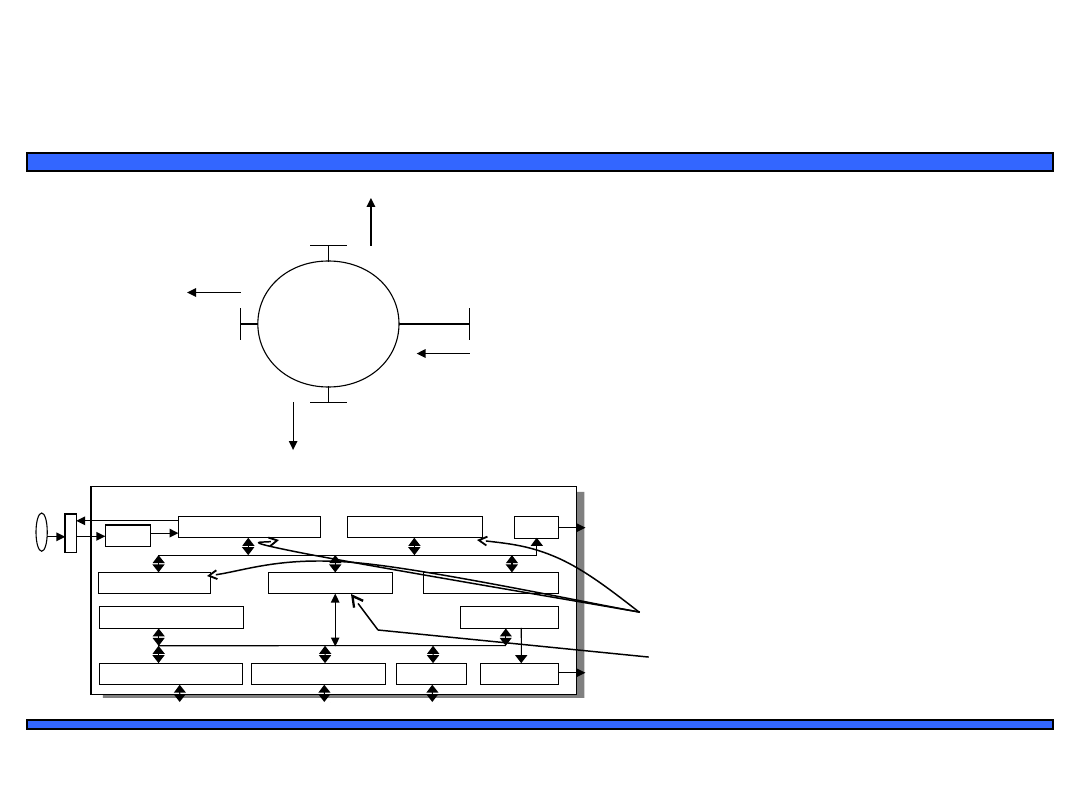
An embedded system example -- a
digital camera
Microcontroller
CCD preprocessor
Pixel coprocessor
A2D
D2A
JPEG codec
DMA controller
Memory controller
ISA bus interface
UART
LCD ctrl
Display ctrl
Multiplier/Accum
Digital camera chip
lens
CCD
• Single-functioned -- always a digital camera
• Tightly-constrained -- Low cost, low power, small, fast
• Reactive and real-time -- only to a small extent

8
Embedded Systems Design: A Unified
Hardware/Software Introduction,
(c) 2000
Vahid/Givargis
Design challenge – optimizing
design metrics
• Obvious design goal:
– Construct an implementation with desired
functionality
• Key design challenge:
– Simultaneously optimize numerous design
metrics
• Design metric
– A measurable feature of a system’s
implementation
– Optimizing design metrics is a key challenge

9
Embedded Systems Design: A Unified
Hardware/Software Introduction,
(c) 2000
Vahid/Givargis
Design challenge – optimizing
design metrics
• Common metrics
– Unit cost:
the monetary cost of manufacturing each copy of
the system, excluding NRE cost
– NRE cost (Non-Recurring Engineering cost):
The one-time monetary cost of designing the system
– Size:
the physical space required by the system
– Performance:
the execution time or throughput of the
system
– Power:
the amount of power consumed by the system
– Flexibility:
the ability to change the functionality of the
system without incurring heavy NRE cost

10
Embedded Systems Design: A Unified
Hardware/Software Introduction,
(c) 2000
Vahid/Givargis
Design challenge – optimizing
design metrics
• Common metrics (continued)
– Time-to-prototype:
the time needed to build a working
version of the system
– Time-to-market:
the time required to develop a system to
the point that it can be released and sold to customers
– Maintainability:
the ability to modify the system after its
initial release
– Correctness, safety, many more
11
Embedded Systems Design: A Unified
Hardware/Software Introduction,
(c) 2000
Vahid/Givargis
Design metric competition --
improving one may worsen others
• Expertise with both
software and
hardware is needed to
optimize design metrics
– Not just a hardware or
software expert, as is
common
– A designer must be
comfortable with various
technologies in order to
choose the best for a
given application and
constraints
Size
Performance
Power
NRE cost
Microcontrol
ler
CCD
preprocessor
Pixel coprocessor
A2D
D2A
JPEG codec
DMA controller
Memory controller ISA bus interface
UART
LCD ctrl
Display
ctrl
Multiplier/Accum
Digital camera chip
lens
CCD
Hardwa
re
Softwar
e
12
Embedded Systems Design: A Unified
Hardware/Software Introduction,
(c) 2000
Vahid/Givargis
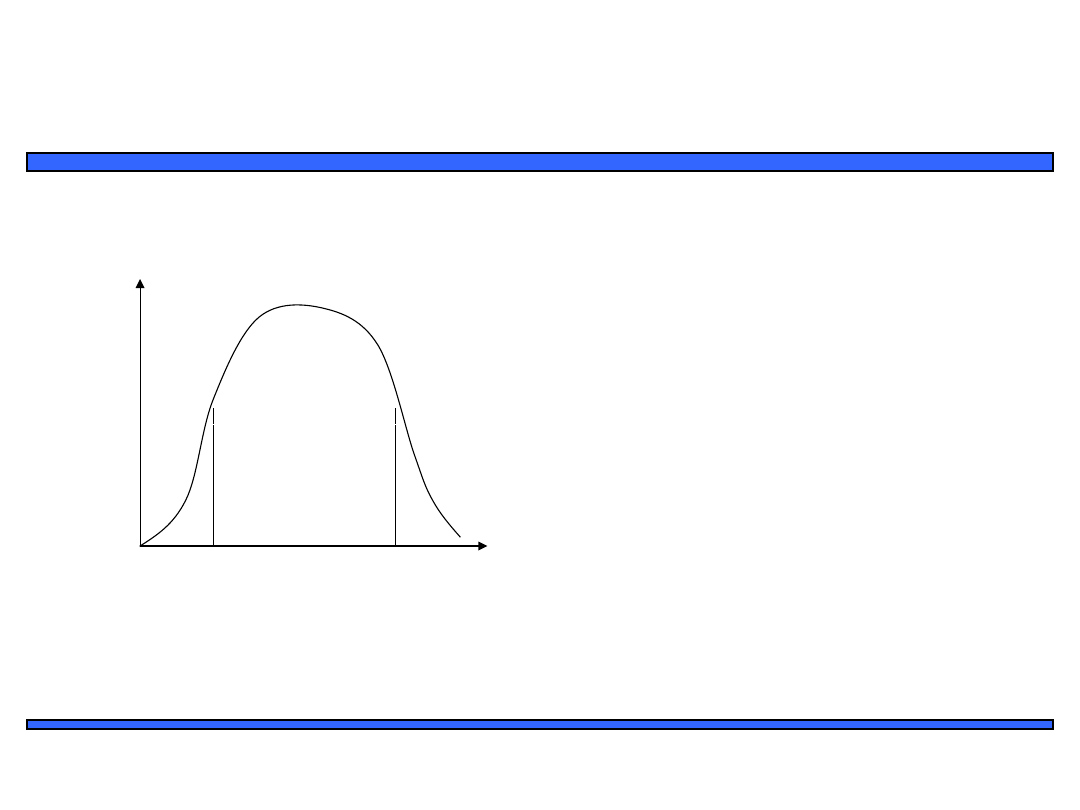
Time-to-market: a demanding
design metric
• Time required to
develop a product to
the point it can be sold
to customers
• Market window
– Period during which the
product would have
highest sales
• Average time-to-market
constraint is about 8
months
• Delays can be costly
Rev
enu
es (
$)
Time (months)
13
Embedded Systems Design: A Unified
Hardware/Software Introduction,
(c) 2000
Vahid/Givargis
Losses due to delayed market entry
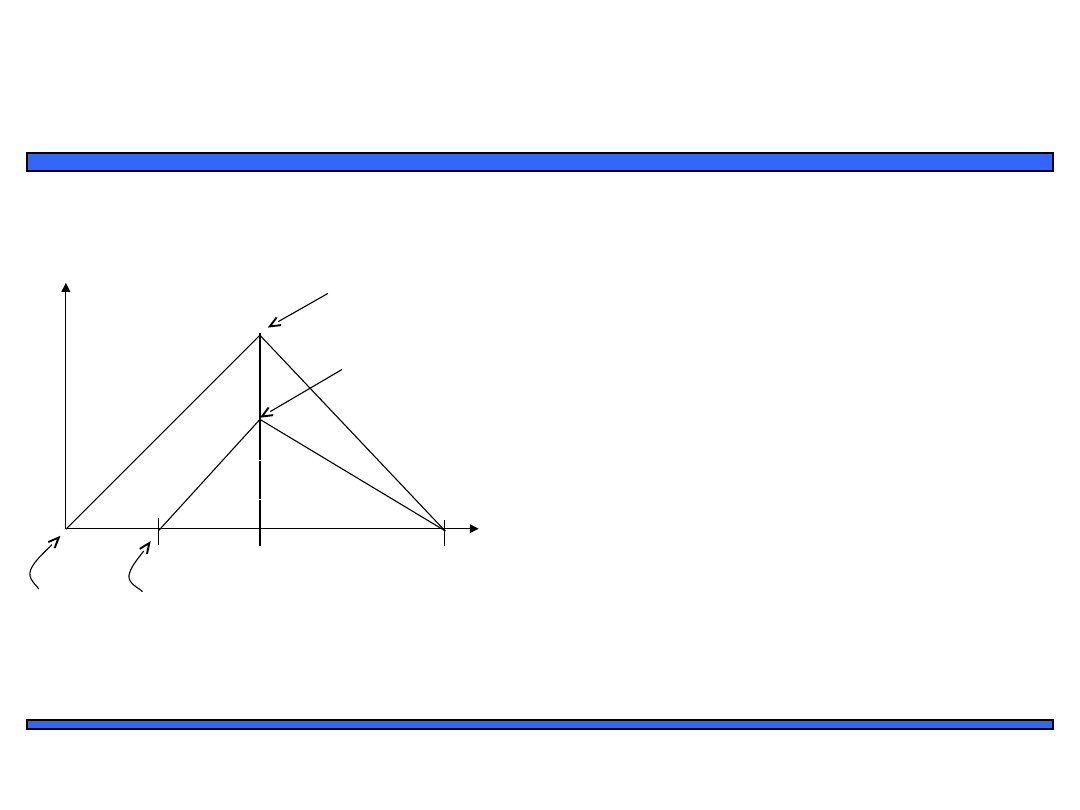
• Simplified revenue model
– Product life = 2W, peak at
W
– Time of market entry
defines a triangle,
representing market
penetration
– Triangle area equals
revenue
• Loss
– The difference between the
on-time and delayed
triangle areas
On-time
Delayed
entry entry
Peak revenue
Peak revenue from
delayed entry
Market
rise
Market
fall
W
2W
Time
D
On-time
Delayed
R
e
ve
n
u
e
s
($
)
14
Embedded Systems Design: A Unified
Hardware/Software Introduction,
(c) 2000
Vahid/Givargis
Losses due to delayed market entry
(cont.)
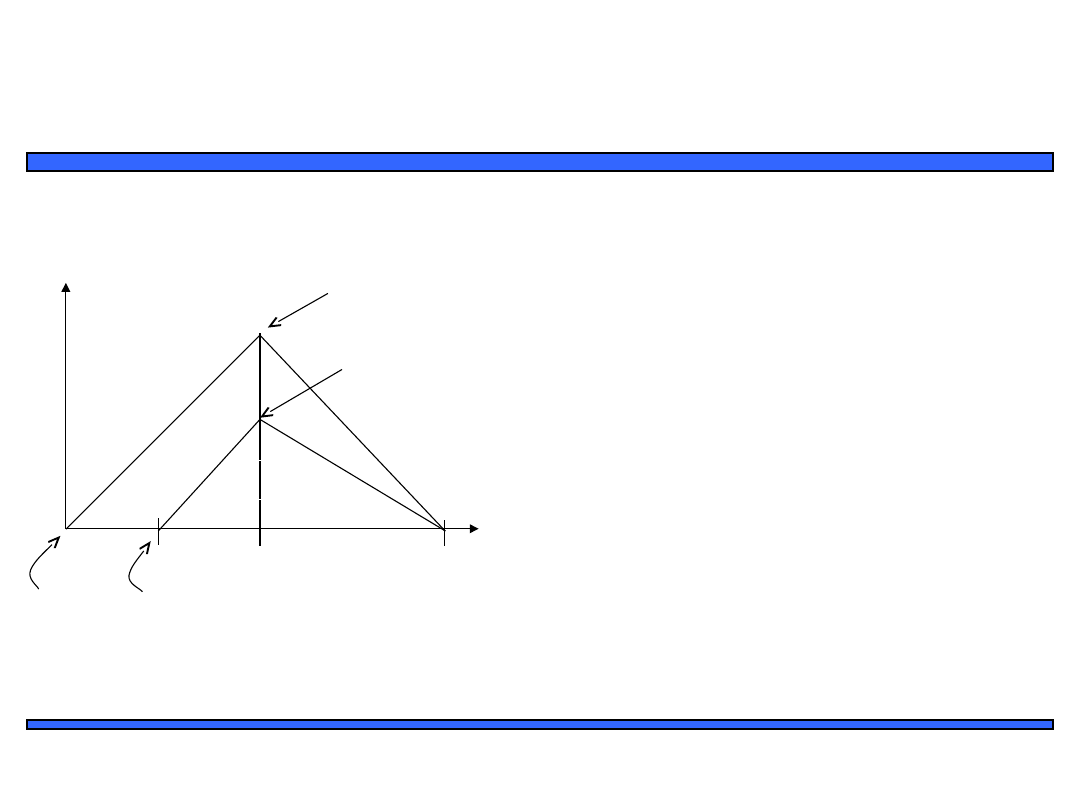
• Area = 1/2 * base * height
– On-time = 1/2 * 2W * W
– Delayed = 1/2 * (W-
D+W)*(W-D)
• Percentage revenue loss
= (D(3W-D)/2W
2
)*100%
• Try some examples
On-time
Delayed
entry entry
Peak revenue
Peak revenue from
delayed entry
Market
rise
Market
fall
W
2W
Time
D
On-time
Delayed
R
e
ve
n
u
e
s
($
)
– Lifetime 2W=52 wks, delay
D=4 wks
– (4*(3*26 –4)/2*26^2) = 22%
– Lifetime 2W=52 wks, delay
D=10 wks
– (10*(3*26 –10)/2*26^2) = 50%
– Delays are costly!

15
Embedded Systems Design: A Unified
Hardware/Software Introduction,
(c) 2000
Vahid/Givargis
NRE and unit cost metrics
• Costs:
– Unit cost: the monetary cost of manufacturing each copy of the
system, excluding NRE cost
– NRE cost (Non-Recurring Engineering cost): The one-time
monetary cost of designing the system
– total cost = NRE cost + unit cost * # of units
– per-product cost
= total cost / # of units
= (NRE cost / # of units) + unit cost
• Example
– NRE=$2000, unit=$100
– For 10 units
– total cost = $2000 + 10*$100 = $3000
– per-product cost = $2000/10 + $100 = $300
Amortizing NRE cost over the units
results in an additional $200 per unit
16
Embedded Systems Design: A Unified
Hardware/Software Introduction,
(c) 2000
Vahid/Givargis
NRE and unit cost metrics
$0
$40,000
$80,000
$120,000
$160,000
$200,000
0
800
1600
2400
A
B
C
$0
$40
$80
$120
$160
$200
0
800
1600
2400
Number of units (volume)
A
B
C
Number of units (volume)
to
ta
l c
o
st
(
x1
00
0)
p
e
r
p
ro
d
u
c
t
c
o
st
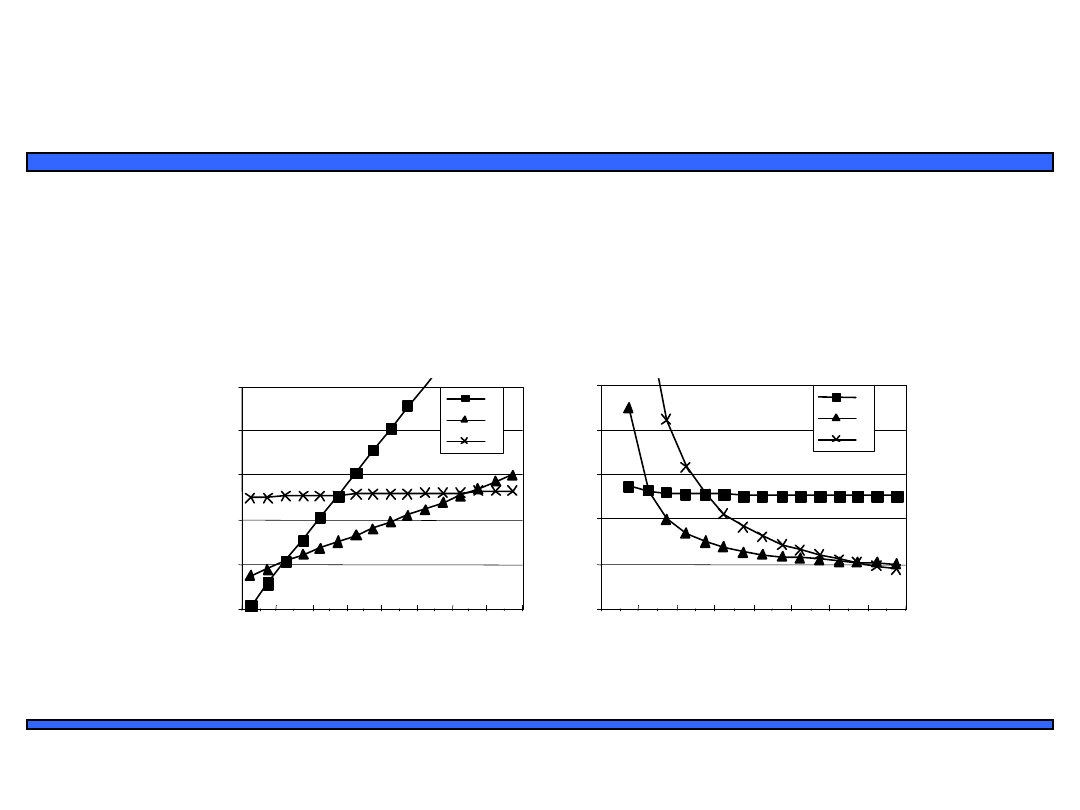
• Compare technologies by costs -- best depends on quantity
– Technology A: NRE=$2,000, unit=$100
– Technology B: NRE=$30,000, unit=$30
– Technology C: NRE=$100,000, unit=$2
• But, must also consider time-to-market

17
Embedded Systems Design: A Unified
Hardware/Software Introduction,
(c) 2000
Vahid/Givargis
The performance design metric
• Widely-used measure of system, widely-abused
– Clock frequency, instructions per second – not good measures
– Digital camera example – a user cares about how fast it processes
images, not clock speed or instructions per second
• Latency (response time)
– Time between task start and end
– e.g., Camera’s A and B process images in 0.25 seconds
• Throughput
– Tasks per second, e.g. Camera A processes 4 images per second
– Throughput can be more than latency seems to imply due to
concurrency, e.g. Camera B may process 8 images per second (by
capturing a new image while previous image is being stored).
• Speedup of B over S = B’s performance / A’s
performance
– Throughput speedup = 8/4 = 2

18
Embedded Systems Design: A Unified
Hardware/Software Introduction,
(c) 2000
Vahid/Givargis
Three key embedded system
technologies
• Technology
– A manner of accomplishing a task, especially
using technical processes, methods, or
knowledge
• Three key technologies for embedded
systems
– Processor technology
– IC technology
– Design technology
19
Embedded Systems Design: A Unified
Hardware/Software Introduction,
(c) 2000
Vahid/Givargis
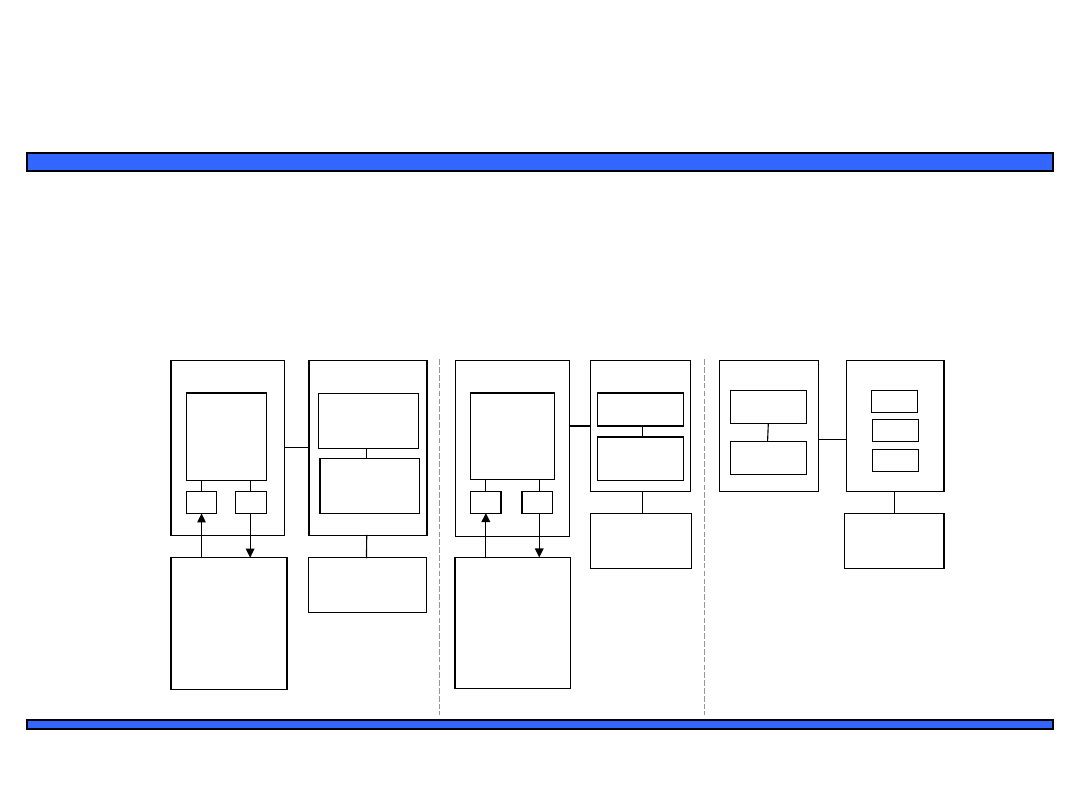
Processor technology
• The architecture of the computation engine used
to implement a system’s desired functionality
• Processor does not have to be programmable
– “Processor” not equal to general-purpose processor
Application-specific
Registers
Custom
ALU
Datapath
Controller
Program
memory
Assembly
code for:
total = 0
for i =1 to …
Control
logic and
State
register
Data
memory
IR
PC
Single-purpose (“hardware”)
Datapath
Controller
Control
logic
State
register
Data
memory
index
total
+
IR
PC
Register
file
General
ALU
Datapath
Controller
Program
memory
Assembly
code for:
total = 0
for i =1 to …
Control
logic and
State
register
Data
memory
General-purpose (“software”)
20
Embedded Systems Design: A Unified
Hardware/Software Introduction,
(c) 2000
Vahid/Givargis
Processor technology
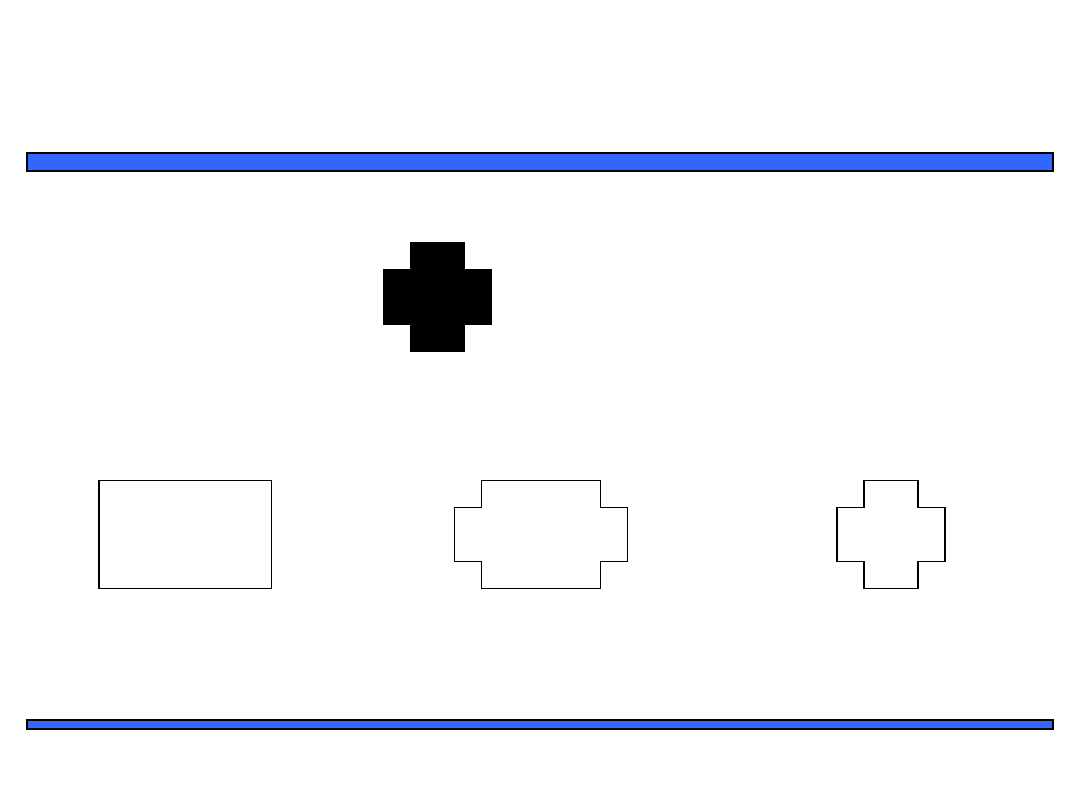
• Processors vary in their customization for the problem at
hand
total = 0
for i = 1 to N
loop
total += M[i]
end loop
General-
purpose
processor
Single-
purpose
processor
Application-
specific
processor
Desired
functionality
21
Embedded Systems Design: A Unified
Hardware/Software Introduction,
(c) 2000
Vahid/Givargis
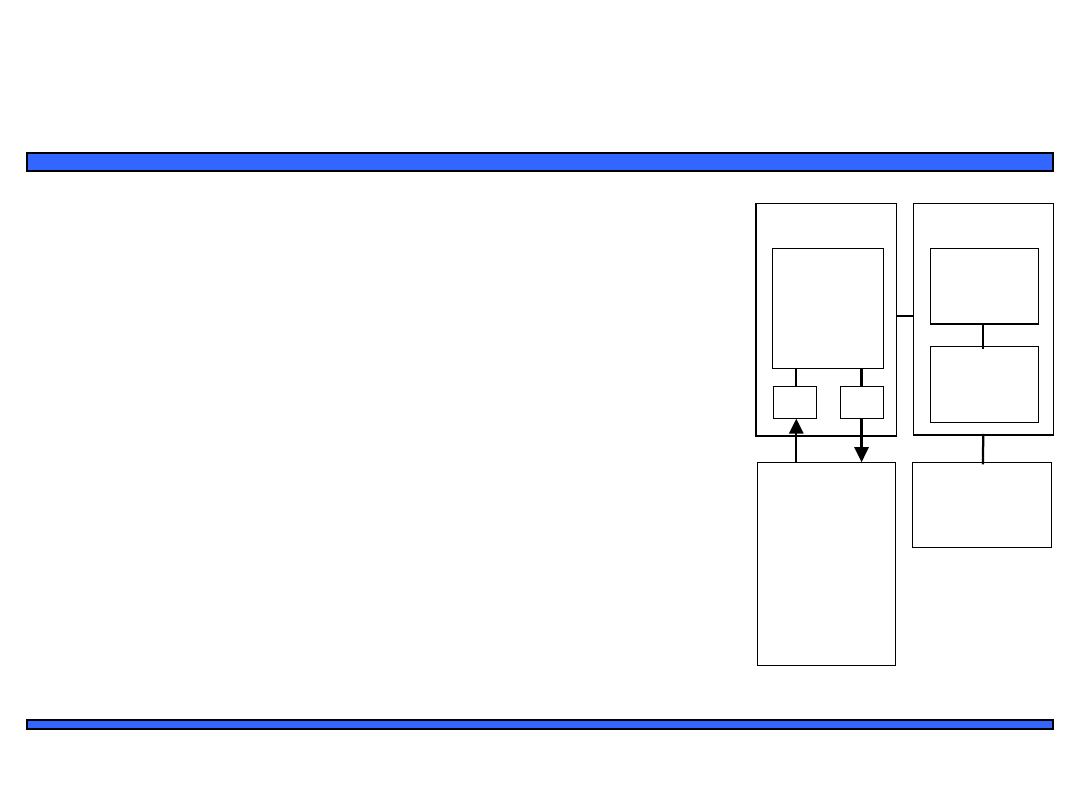
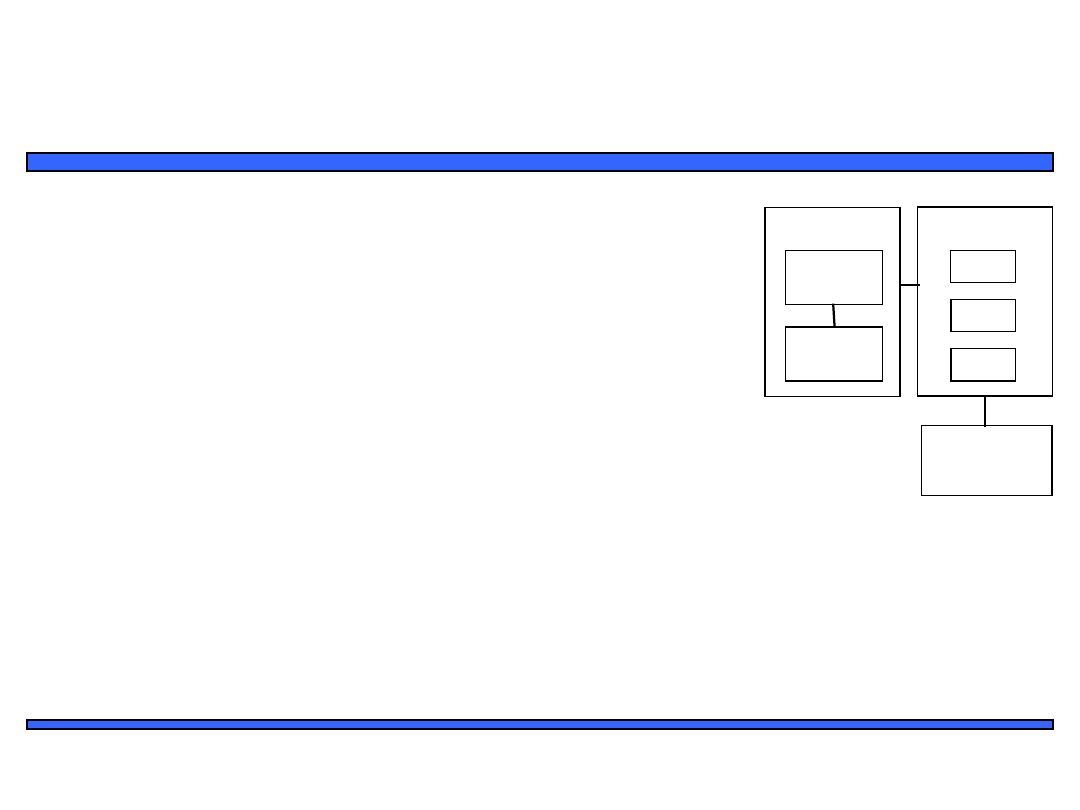
General-purpose processors
• Programmable device used in a
variety of applications
– Also known as “microprocessor”
• Features
– Program memory
– General datapath with large
register file and general ALU
• User benefits
– Low time-to-market and NRE costs
– High flexibility
• “Pentium” the most well-known,
but there are hundreds of others
IR
PC
Register
file
General
ALU
Datapath
Controller
Program
memory
Assembly
code for:
total = 0
for i =1 to
…
Control
logic and
State
register
Data
memory
22
Embedded Systems Design: A Unified
Hardware/Software Introduction,
(c) 2000
Vahid/Givargis
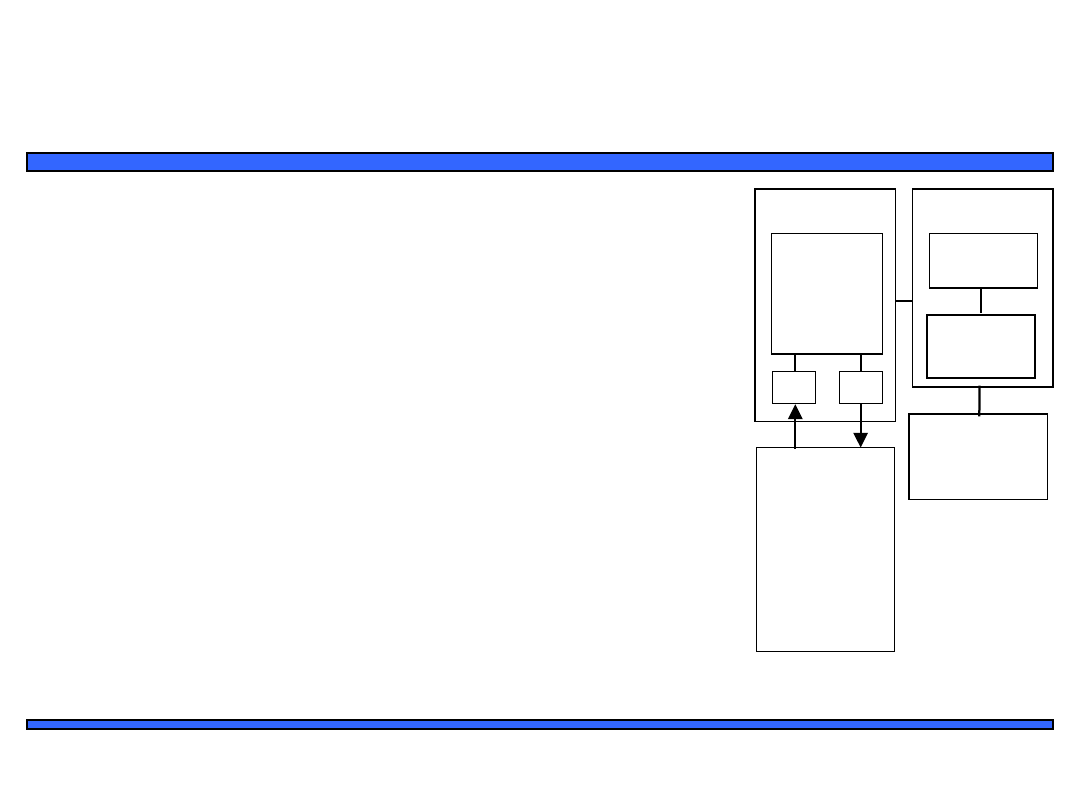
Single-purpose processors
• Digital circuit designed to execute
exactly one program
– a.k.a. coprocessor, accelerator or
peripheral
• Features
– Contains only the components needed
to execute a single program
– No program memory
• Benefits
– Fast
– Low power
– Small size
Datapath
Controller
Control
logic
State
register
Data
memory
index
total
+
23
Embedded Systems Design: A Unified
Hardware/Software Introduction,
(c) 2000
Vahid/Givargis
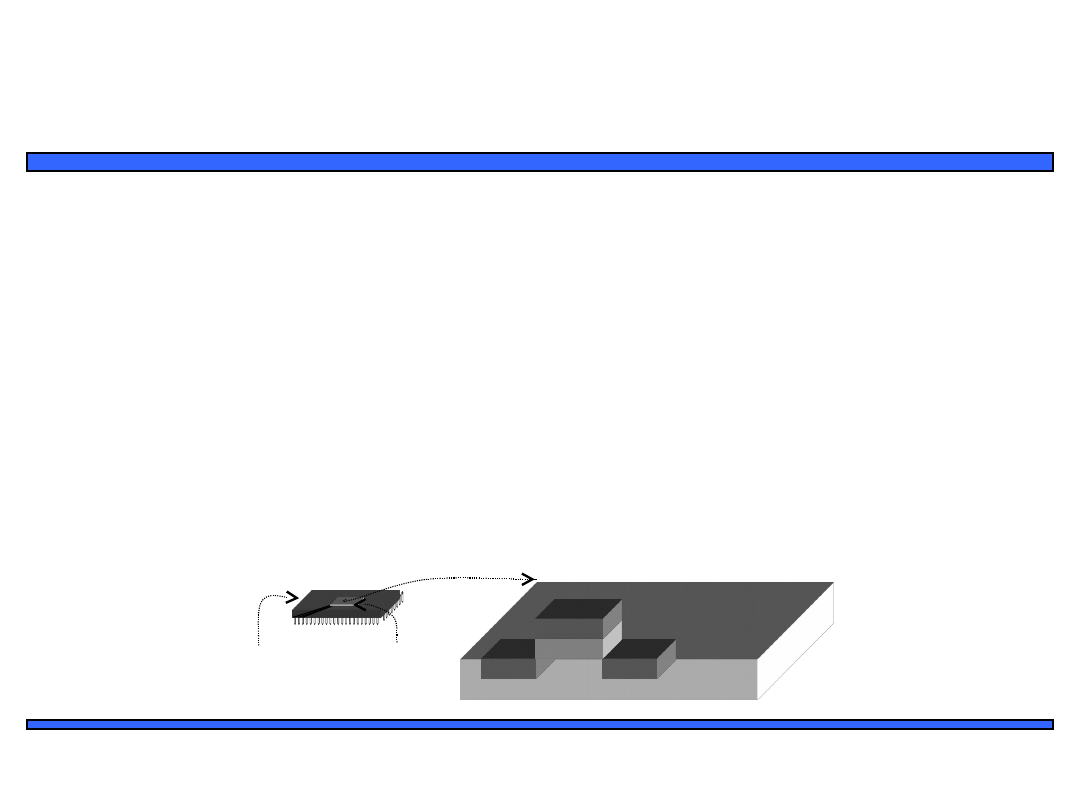
Application-specific processors
• Programmable processor optimized
for a particular class of applications
having common characteristics
– Compromise between general-purpose
and single-purpose processors
• Features
– Program memory
– Optimized datapath
– Special functional units
• Benefits
– Some flexibility, good performance, size
and power
IR
PC
Registers
Custom
ALU
Datapath
Controller
Program
memory
Assembly
code for:
total = 0
for i =1 to
…
Control
logic and
State
register
Data
memory
24
Embedded Systems Design: A Unified
Hardware/Software Introduction,
(c) 2000
Vahid/Givargis
IC technology
• The manner in which a digital (gate-level)
implementation is mapped onto an IC
–
IC: Integrated circuit, or “chip”
–
IC technologies differ in their customization to a
design
–
IC’s consist of numerous layers (perhaps 10 or more)
• IC technologies differ with respect to who builds each layer
and when
source
drain
chann
el
oxide
gate
Silicon
substrate
IC
package
IC

25
Embedded Systems Design: A Unified
Hardware/Software Introduction,
(c) 2000
Vahid/Givargis
IC technology
• Three types of IC technologies
– Full-custom/VLSI
– Semi-custom ASIC (gate array and standard
cell)
– PLD (Programmable Logic Device)

26
Embedded Systems Design: A Unified
Hardware/Software Introduction,
(c) 2000
Vahid/Givargis
Full-custom/VLSI
• All layers are optimized for an embedded
system’s particular digital implementation
– Placing transistors
– Sizing transistors
– Routing wires
• Benefits
– Excellent performance, small size, low power
• Drawbacks
– High NRE cost (e.g., $300k), long time-to-market

27
Embedded Systems Design: A Unified
Hardware/Software Introduction,
(c) 2000
Vahid/Givargis
Semi-custom
• Lower layers are fully or partially built
– Designers are left with routing of wires and
maybe placing some blocks
• Benefits
– Good performance, good size, less NRE cost
than a full-custom implementation (perhaps
$10k to $100k)
• Drawbacks
– Still require weeks to months to develop

28
Embedded Systems Design: A Unified
Hardware/Software Introduction,
(c) 2000
Vahid/Givargis
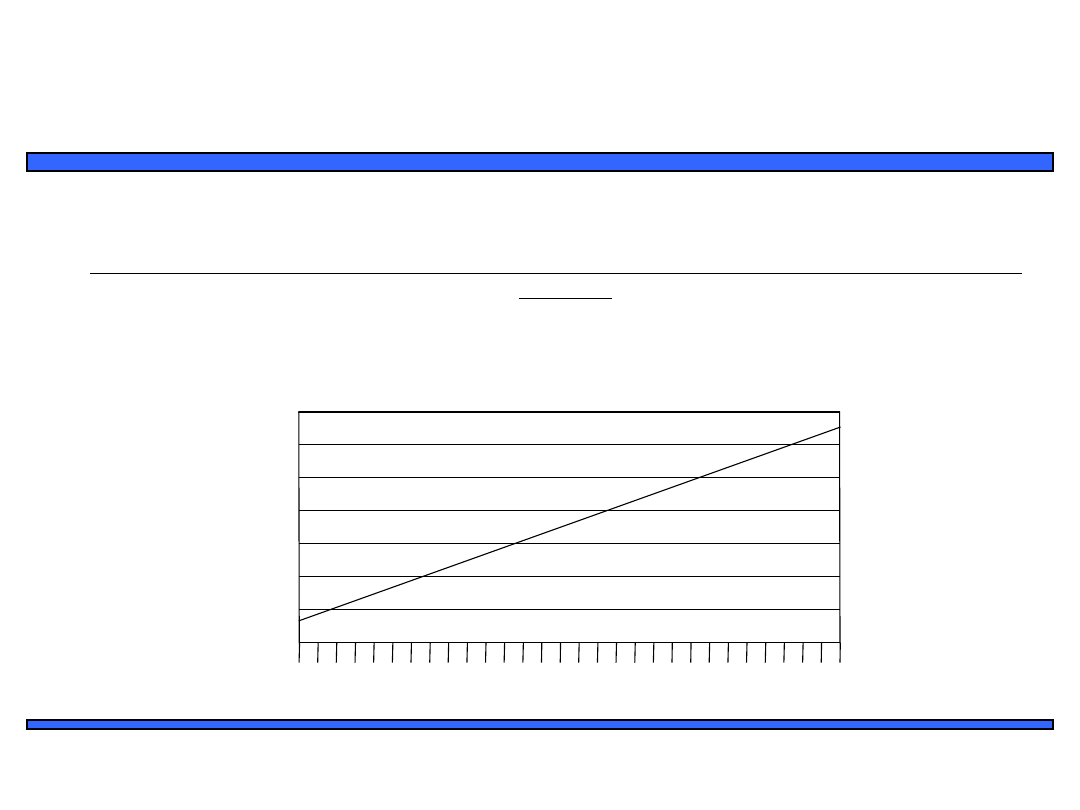
PLD (Programmable Logic Device)
• All layers already exist
– Designers can purchase an IC
– Connections on the IC are either created or
destroyed to implement desired functionality
– Field-Programmable Gate Array (FPGA) very
popular
• Benefits
– Low NRE costs, almost instant IC availability
• Drawbacks
– Bigger, expensive (perhaps $30 per unit), power
hungry, slower
29
Embedded Systems Design: A Unified
Hardware/Software Introduction,
(c) 2000
Vahid/Givargis
Moore’s law
• The most important trend in embedded systems
– Predicted in 1965 by Intel co-founder Gordon Moore
IC transistor capacity has doubled roughly every 18 months for the past several
decades
10,00
0
1,000
100
10
1
0.1
0.01
0.001
L
o
g
ic
tr
a
n
si
st
o
rs
p
e
r
ch
ip
(i
n
m
il
li
o
n
s)
19
81
19
83
19
85
19
87
19
89
19
91
19
93
19
95
19
97
19
99
20
01
20
03
20
05
20
07
20
09
Note:
logarithmic
scale

30
Embedded Systems Design: A Unified
Hardware/Software Introduction,
(c) 2000
Vahid/Givargis
Moore’s law
•
Wow
– This growth rate is hard to imagine, most people
underestimate
– How many ancestors do you have from 20 generations
ago
• i.e., roughly how many people alive in the 1500’s did it take to
make you?
• 2
20 =
more than 1 million people
– (This underestimation is the key to pyramid schemes!)
31
Embedded Systems Design: A Unified
Hardware/Software Introduction,
(c) 2000
Vahid/Givargis
Graphical illustration of Moore’s
law
1981
1984
1987
1990
1993
1996
1999
2002
Leading edge
chip in 1981
10,000
transistors
Leading edge
chip in 2002
150,000,000
transistors
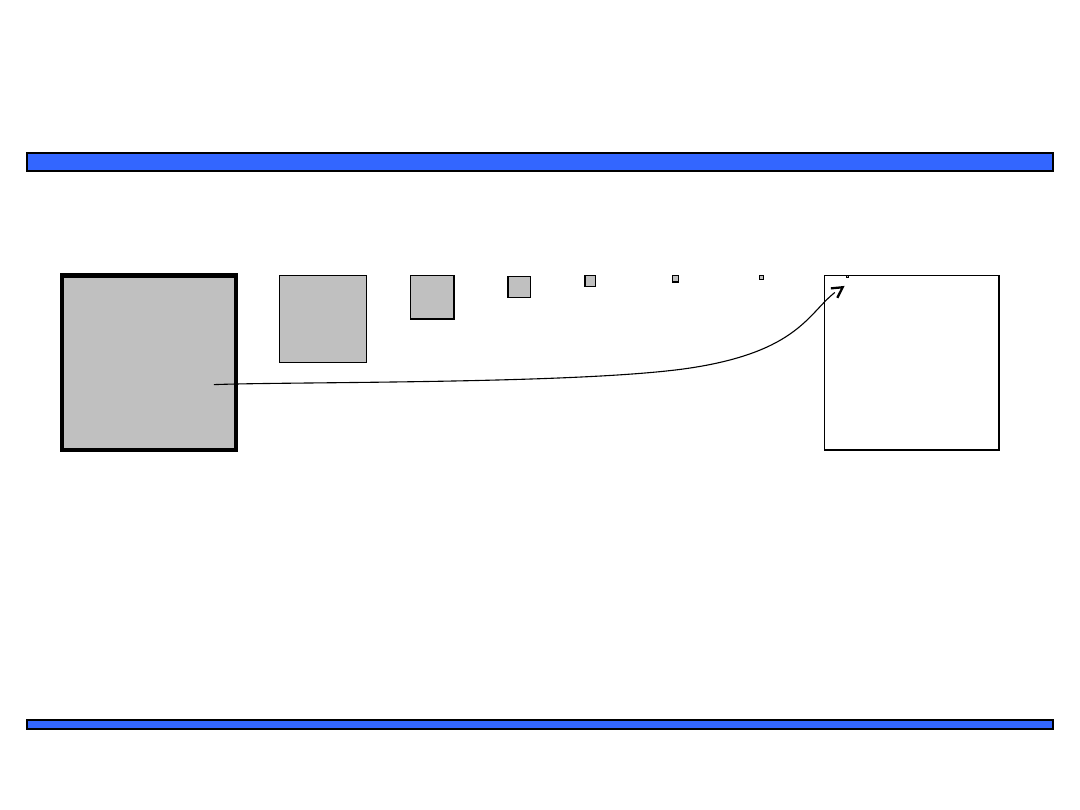
• Something that doubles frequently grows more
quickly than most people realize!
– A 2002 chip can hold about 15,000 1981 chips inside itself
32
Embedded Systems Design: A Unified
Hardware/Software Introduction,
(c) 2000
Vahid/Givargis
Design Technology
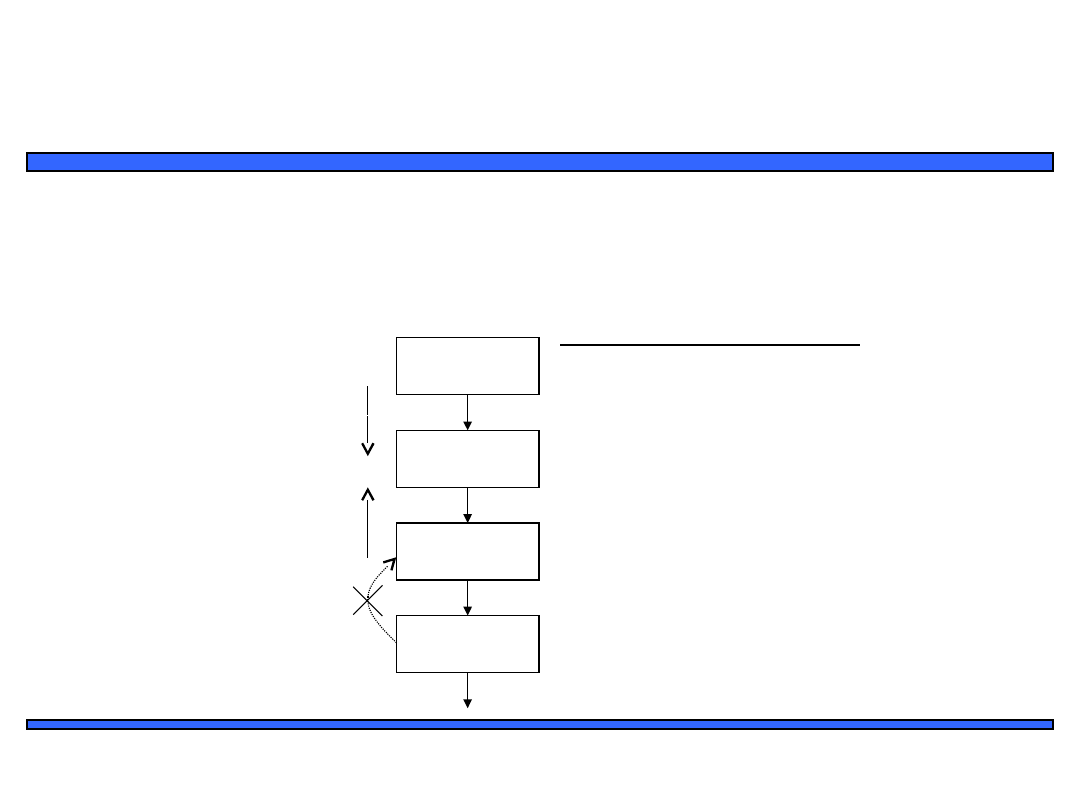
• The manner in which we convert our concept of
desired system functionality into an implementation
Libraries/IP: Incorporates
pre-designed
implementation from
lower abstraction level
into higher level.
System
specification
Behavioral
specification
RT
specification
Logic
specification
To final implementation
Compilation/Synthesis:
Automates exploration
and insertion of
implementation details
for lower level.
Test/Verification: Ensures
correct functionality at
each level, thus reducing
costly iterations between
levels.
Compilation/
Synthesis
Libraries/
IP
Test/
Verification
System
synthesis
Behavior
synthesis
RT
synthesis
Logic
synthesis
Hw/Sw/
OS
Cores
RT
components
Gates/
Cells
Model simulat./
checkers
Hw-Sw
cosimulators
HDL simulators
Gate
simulators
33
Embedded Systems Design: A Unified
Hardware/Software Introduction,
(c) 2000
Vahid/Givargis
Design productivity exponential
increase
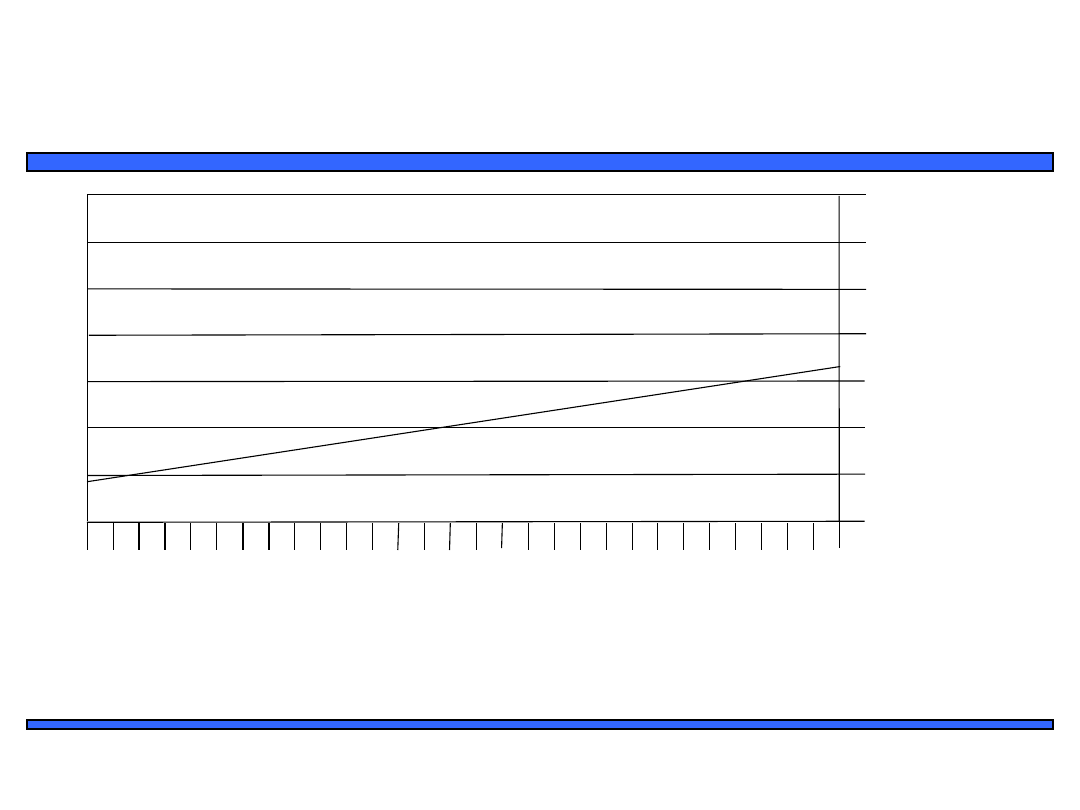
• Exponential increase over the past few
decades
100,000
10,000
1,000
100
10
1
0.1
0.01
19
83
19
81
19
87
19
89
19
91
19
93
19
85
19
95
19
97
19
99
20
01
20
03
20
05
20
07
20
09
Pro
du
cti
vity
(K
) T
ra
ns.
/Sta
ff –
M
o.
34
Embedded Systems Design: A Unified
Hardware/Software Introduction,
(c) 2000
Vahid/Givargis
The co-design ladder
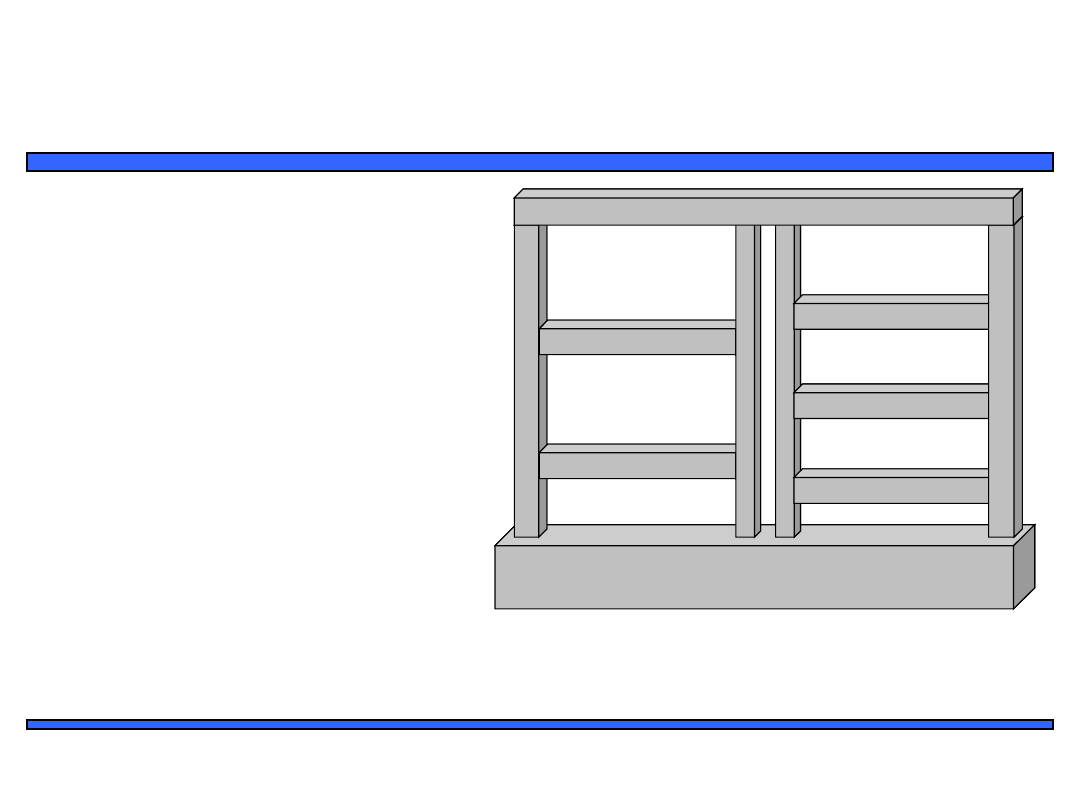
• In the past:
– Hardware and software
design technologies
were very different
– Recent maturation of
synthesis enables a
unified view of
hardware and software
• Hardware/software
“codesign”
Implementation
Assembly
instructions
Machine instructions
Register transfers
Compilers
(1960's,1970'
s)
Assemblers,
linkers
(1950's, 1960's)
Behavioral
synthesis
(1990's)
RT synthesis
(1980's,
1990's)
Logic synthesis
(1970's, 1980's)
Microprocessor plus
program bits:
“software”
VLSI, ASIC, or PLD
implementation:
“hardware”
Logic gates
Logic equations /
FSM's
Sequential program code (e.g., C, VHDL)
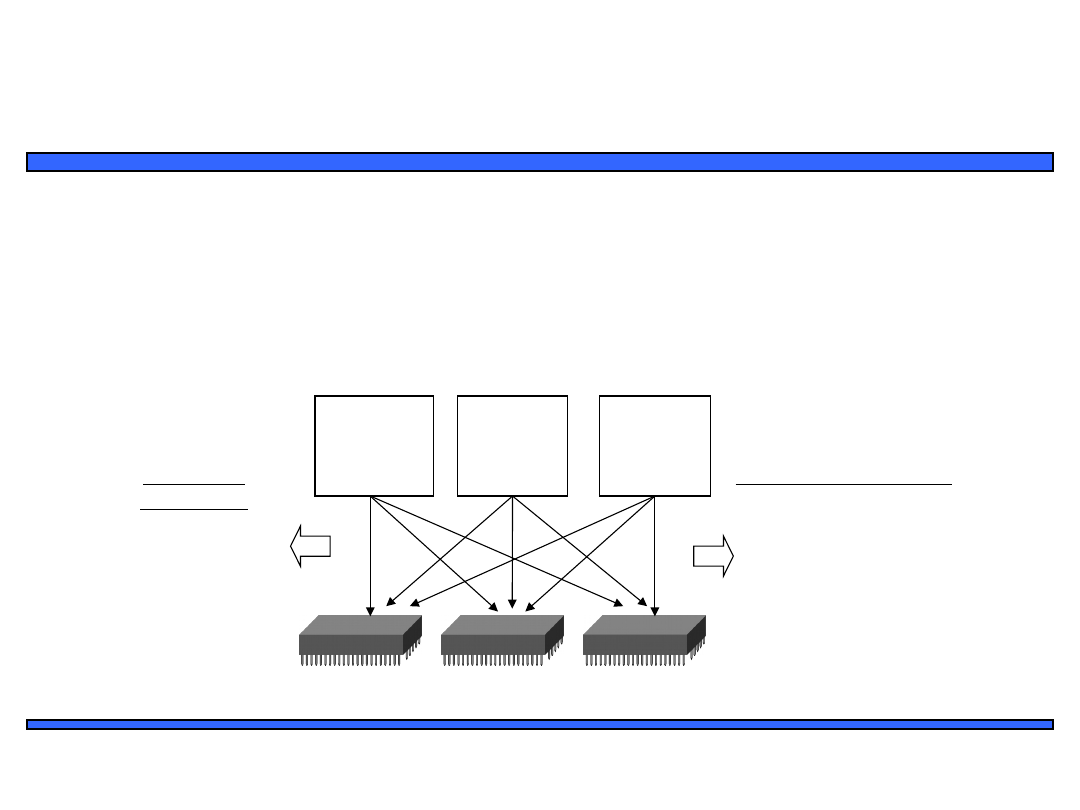
The choice of hardware versus software for a particular function is simply a
tradeoff among various design metrics, like performance, power, size, NRE
cost, and especially flexibility; there is no fundamental difference between
what hardware or software can implement.
35
Embedded Systems Design: A Unified
Hardware/Software Introduction,
(c) 2000
Vahid/Givargis
Independence of processor and IC
technologies
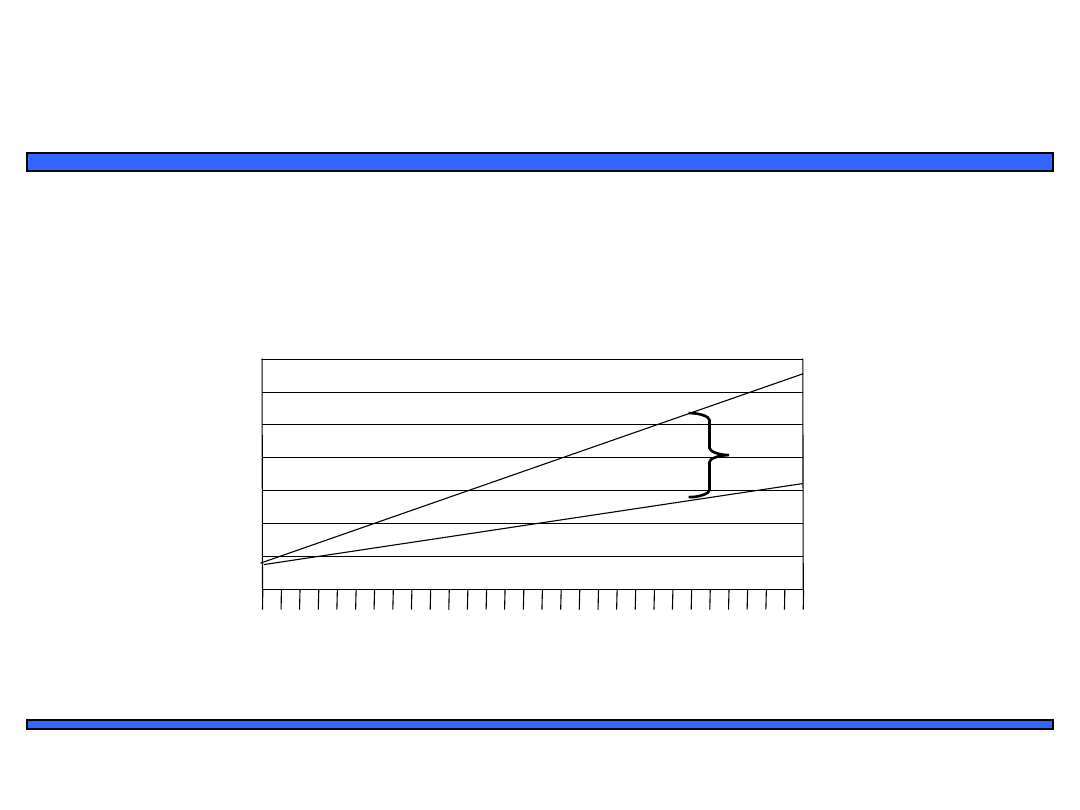
• Basic tradeoff
– General vs. custom
– With respect to processor technology or IC technology
– The two technologies are independent
General-
purpose
processor
ASIP
Single-
purpose
processor
Semi-
custom
PLD
Full-custom
General,
providing
improved:
Customized,
providing improved:
Power efficiency
Performance
Size
Cost (high volume)
Flexibility
Maintainability
NRE cost
Time- to-prototype
Time-to-market
Cost (low volume)
36
Embedded Systems Design: A Unified
Hardware/Software Introduction,
(c) 2000
Vahid/Givargis
Design productivity gap
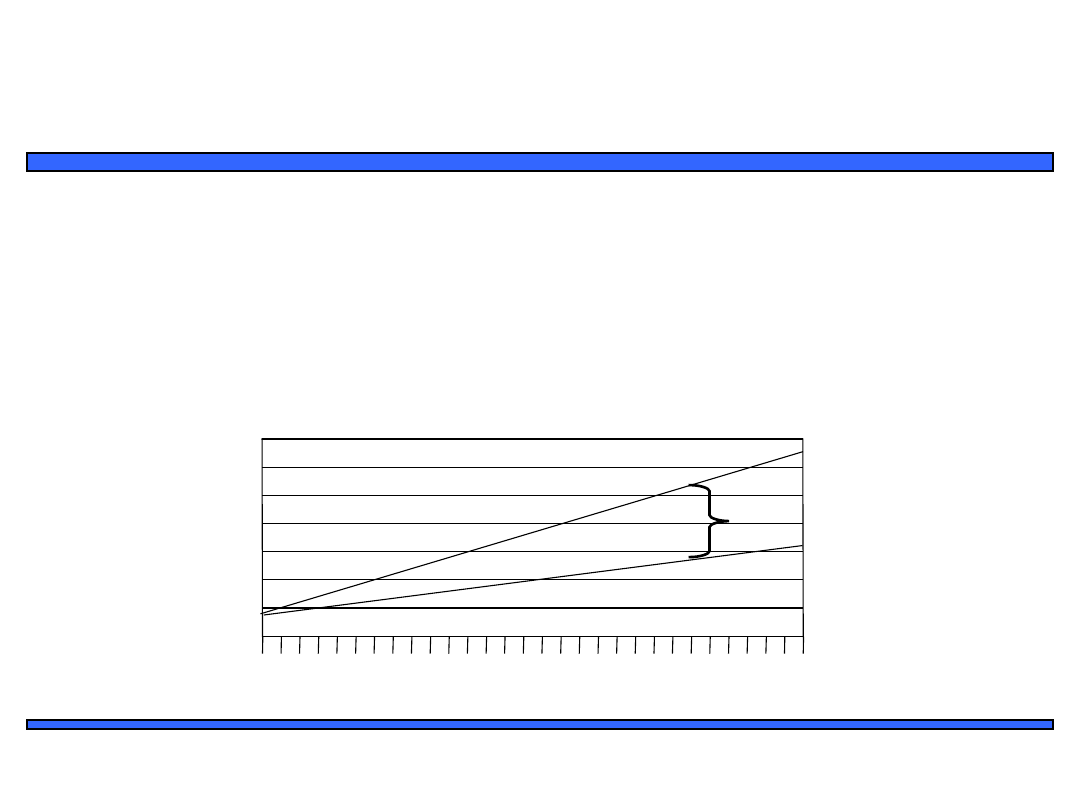
• While designer productivity has grown at an
impressive rate over the past decades, the rate of
improvement has not kept pace with chip capacity
10,00
0
1,000
100
10
1
0.1
0.01
0.001
L
o
g
ic
tr
a
n
si
st
o
rs
p
e
r
ch
ip
(i
n
m
il
li
o
n
s)
100,000
10,000
1000
100
10
1
0.1
0.01
P
ro
d
u
ct
iv
it
y
(K
)
T
ra
n
s.
/S
ta
ff
-
M
o.
19
81
19
83
19
85
19
87
19
89
19
91
19
93
19
95
19
97
19
99
20
01
20
03
20
05
20
07
20
09
IC
capacity
productivi
ty
Ga
p
37
Embedded Systems Design: A Unified
Hardware/Software Introduction,
(c) 2000
Vahid/Givargis
Design productivity gap
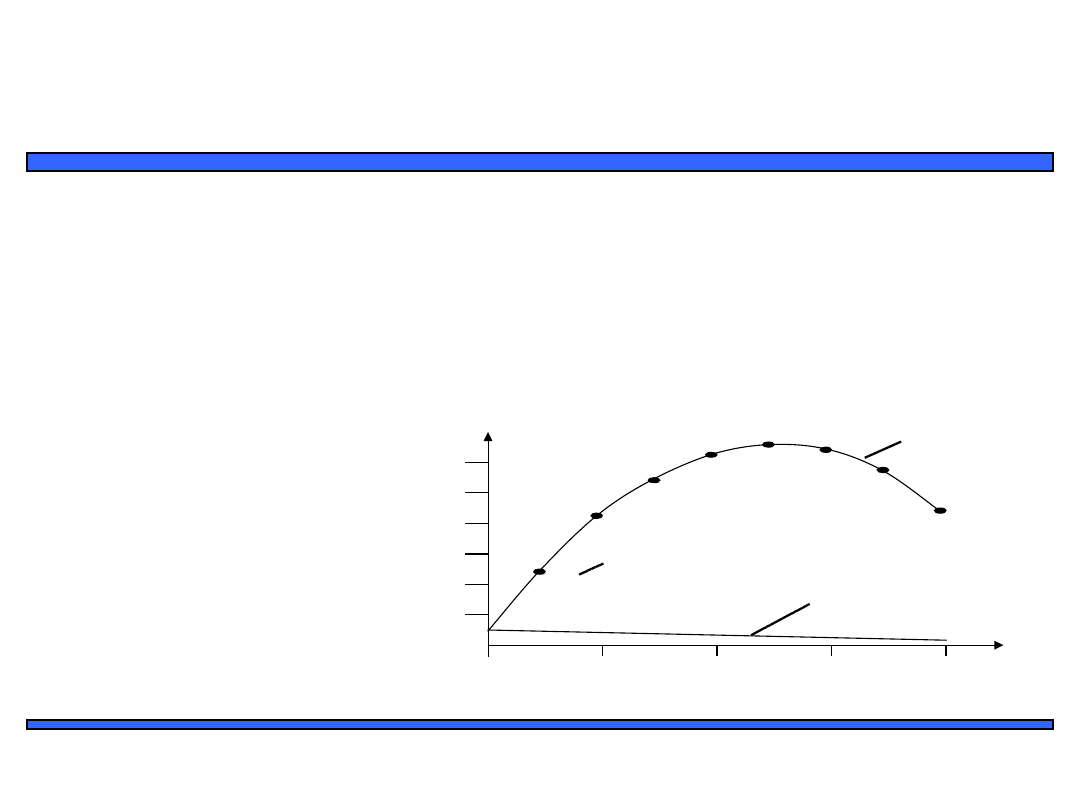
• 1981 leading edge chip required 100 designer months
– 10,000 transistors / 100 transistors/month
• 2002 leading edge chip requires 30,000 designer months
– 150,000,000 / 5000 transistors/month
• Designer cost increase from $1M to $300M
10,00
0
1,000
100
10
1
0.1
0.01
0.001
L
o
g
ic
tr
a
n
si
st
o
rs
p
e
r
ch
ip
(i
n
m
il
li
o
n
s)
100,000
10,000
1000
100
10
1
0.1
0.01
P
ro
d
u
ct
iv
it
y
(K
)
T
ra
n
s.
/S
ta
ff
-
M
o.
19
8
1
19
8
3
19
8
5
19
8
7
19
8
9
19
9
1
19
9
3
19
9
5
19
9
7
19
9
9
20
0
1
20
0
3
20
0
5
20
0
7
20
0
9
IC
capacity
productivi
ty
Ga
p
38
Embedded Systems Design: A Unified
Hardware/Software Introduction,
(c) 2000
Vahid/Givargis
The mythical man-month
• The situation is even worse than the productivity gap indicates
• In theory, adding designers to team reduces project completion time
• In reality, productivity per designer decreases due to complexities of team
management and communication
• In the software community, known as “the mythical man-month” (Brooks 1975)
• At some point, can actually lengthen project completion time! (“Too many
cooks”)
10
20
30
40
0
10000
20000
30000
40000
50000
60000
43
24
19
16
15 16
18
23
Team
Individual
Months until completion
Number of designers
• 1M transistors
,
1
designer=5000 trans/month
• Each additional designer
reduces for 100 trans/month
• So 2 designers produce
4900 trans/month each

39
Embedded Systems Design: A Unified
Hardware/Software Introduction,
(c) 2000
Vahid/Givargis
Summary
• Embedded systems are everywhere
• Key challenge: optimization of design metrics
– Design metrics compete with one another
• A unified view of hardware and software is
necessary to improve productivity
• Three key technologies
– Processor: general-purpose, application-specific, single-
purpose
– IC: Full-custom, semi-custom, PLD
– Design: Compilation/synthesis, libraries/IP,
test/verification
Document Outline
- Chapter 1: Introduction
- Outline
- Embedded systems overview
- Slide 4
- A “short list” of embedded systems
- Some common characteristics of embedded systems
- An embedded system example -- a digital camera
- Design challenge – optimizing design metrics
- Slide 9
- Slide 10
- Design metric competition -- improving one may worsen others
- Time-to-market: a demanding design metric
- Losses due to delayed market entry
- Losses due to delayed market entry (cont.)
- NRE and unit cost metrics
- Slide 16
- The performance design metric
- Three key embedded system technologies
- Processor technology
- Slide 20
- General-purpose processors
- Single-purpose processors
- Application-specific processors
- IC technology
- Slide 25
- Full-custom/VLSI
- Semi-custom
- PLD (Programmable Logic Device)
- Moore’s law
- Slide 30
- Graphical illustration of Moore’s law
- Design Technology
- Design productivity exponential increase
- The co-design ladder
- Independence of processor and IC technologies
- Design productivity gap
- Slide 37
- The mythical man-month
- Summary
Wyszukiwarka
Podobne podstrony:
Elektroforeza DNA komórkowego BioAut1, BioAut2 i Ch1
ch1-pobieranie probek, weterynaria, Analityka, Próbówki
WYKLAD z fizyki atomowej i mol w3-4 2008, Fizyka, 13.Fizyka jądrowa, mat ch1
ch1
Ch1 Q1
Cw ch1, Akademia Morska Szczecin Nawigacja, uczelnia, Tomek, FIZYKA- SPRAWOZDANIA, FIZYKA- SPRAWOZDA
Ch1 FundamentalOfPowerPlant 1 17 1 24
KIMMEL genderedsociety ch1
Ch0 Ch1 RationaleForForestEnergyProduction
CH1
ch1 revised id 110456 Nieznany
przykladowe zadania z fizyki jadrowej, Fizyka, 13.Fizyka jądrowa, mat ch1
cisco2 ch1 focus VRLS2G3H5FTBZYQ74NPB5LY5G4YM4HEVHUCF6TY
Ch1 Q3
Chromatografia cieczowa-CH1-CH2(1), NAUKA, chemia, lab
cisco2 ch1 concept T4CVTHOOK2UP7DYCEZ3YSGBWW62BKATM2APLUMY
cisco2 ch1 vocab HKRKBHHHSRQGUVIAIJ5YHAFAYK6FWYQNS7A2ILA
CH1
CH1 (3)
więcej podobnych podstron