
POST MINING RESTORATION
OF ENVIRONMENT
Acid mine drainage
Lecture #8

Acid Mine Drainage (AMD)
• The majority of extremely acidic
sites now in word-wide have
their origin in human activity,
the mining of metals and coal.
• Acid mine drainage or acid rock
drainage refers to the outflow
water from metal mines or coal
mines.
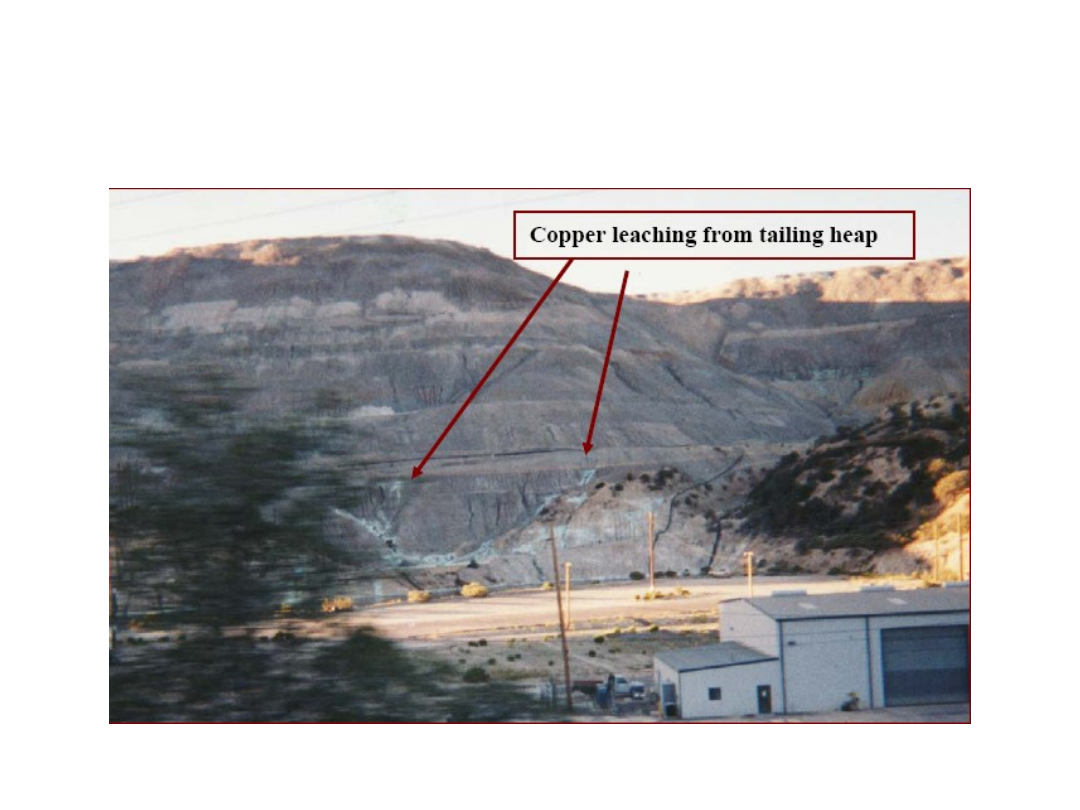
Copper leaching from tailing
heap
Acid mine drainage (AMD)
occurs at about 70% of the
world’s mine site.
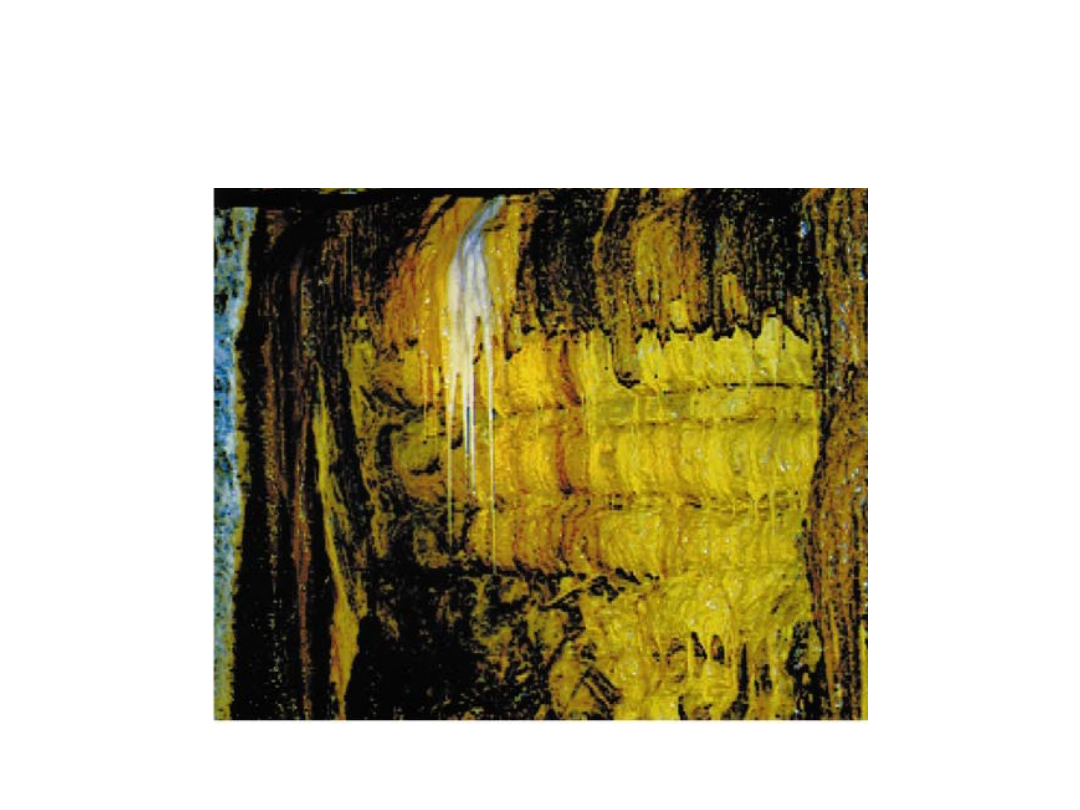
Microbial stalactite
Acid streamer in pyrite mine in
North Wales
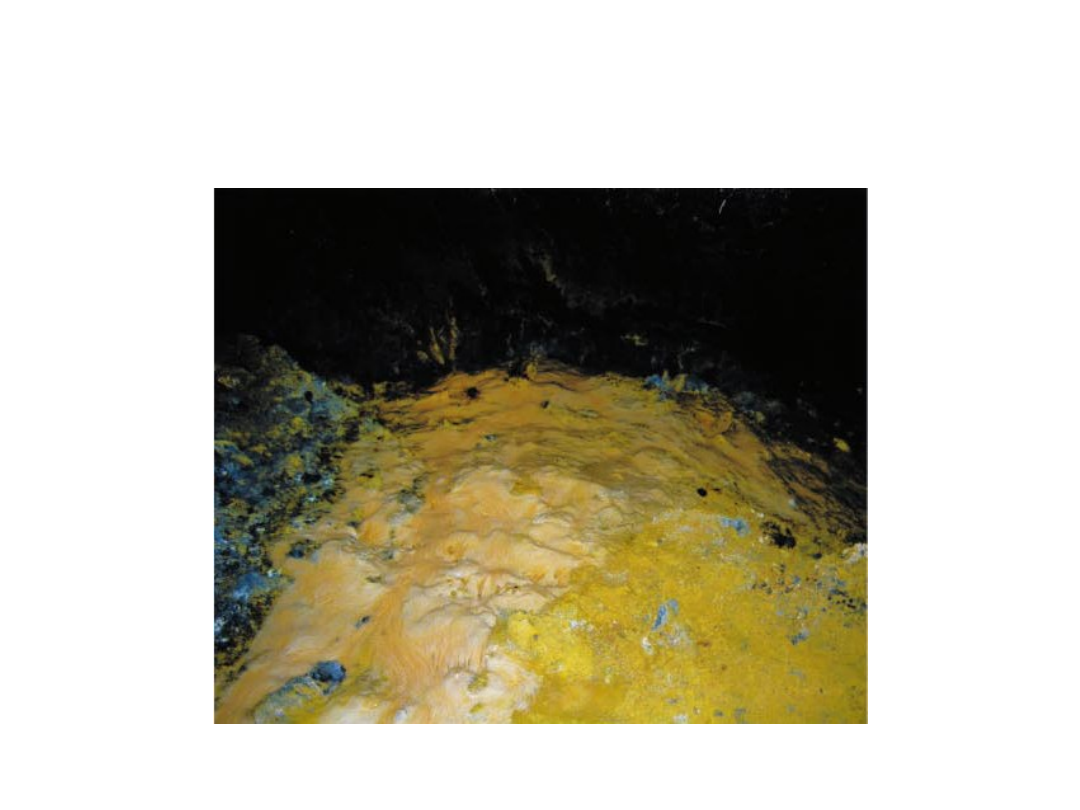
Stream running through
the mine
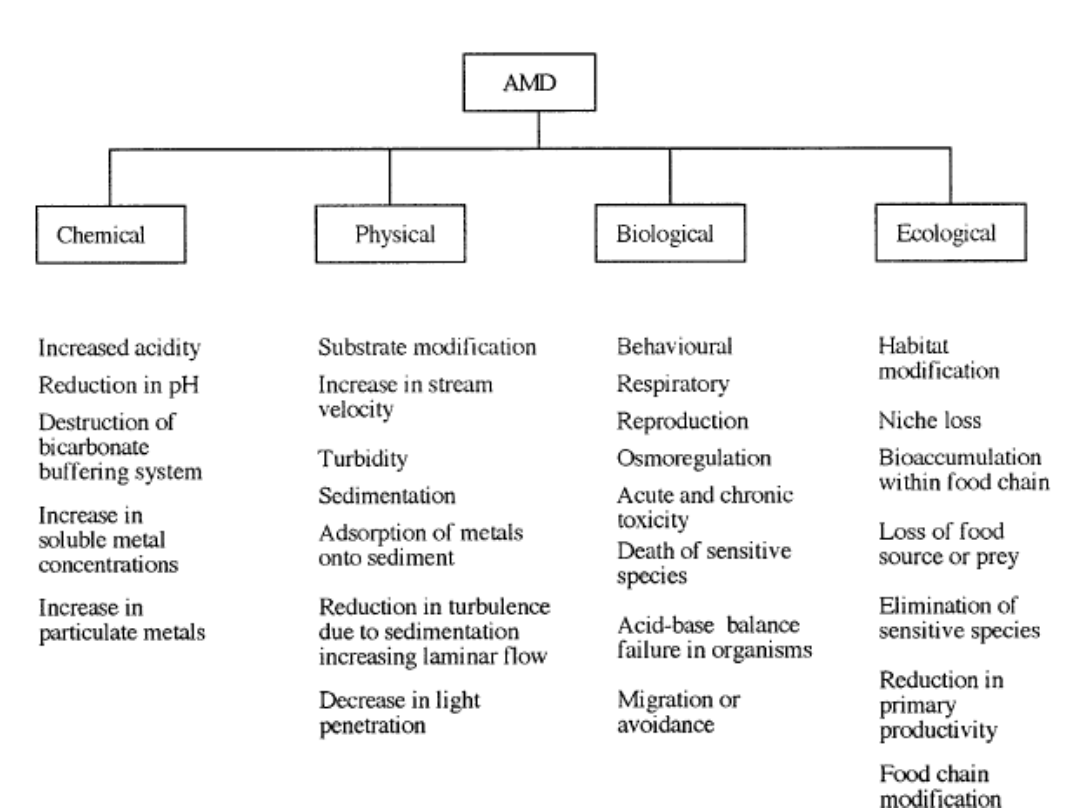

Acid mine drainage (AMD)
• Mining activities result in the
formation of a severe environmental
problem known as acid mine drainage.
• For instance, annually nearly 500 000
000 t waste rock are deposited in
tailing in Canada.
• The chemolithotrophic bacterium
Acidithiobacillus ferrooxidans is one of
the major microorganisms in AMD.

Acid drainage waters
• The acid mine drainage (AMD) is
considered to be the major
environmental problem associated
with mining activities.
• This phenomena is connected with
the biooxidation of pyrite and other
sulphide minerals as a result of which
acidic waters containing sulphuric
acid.
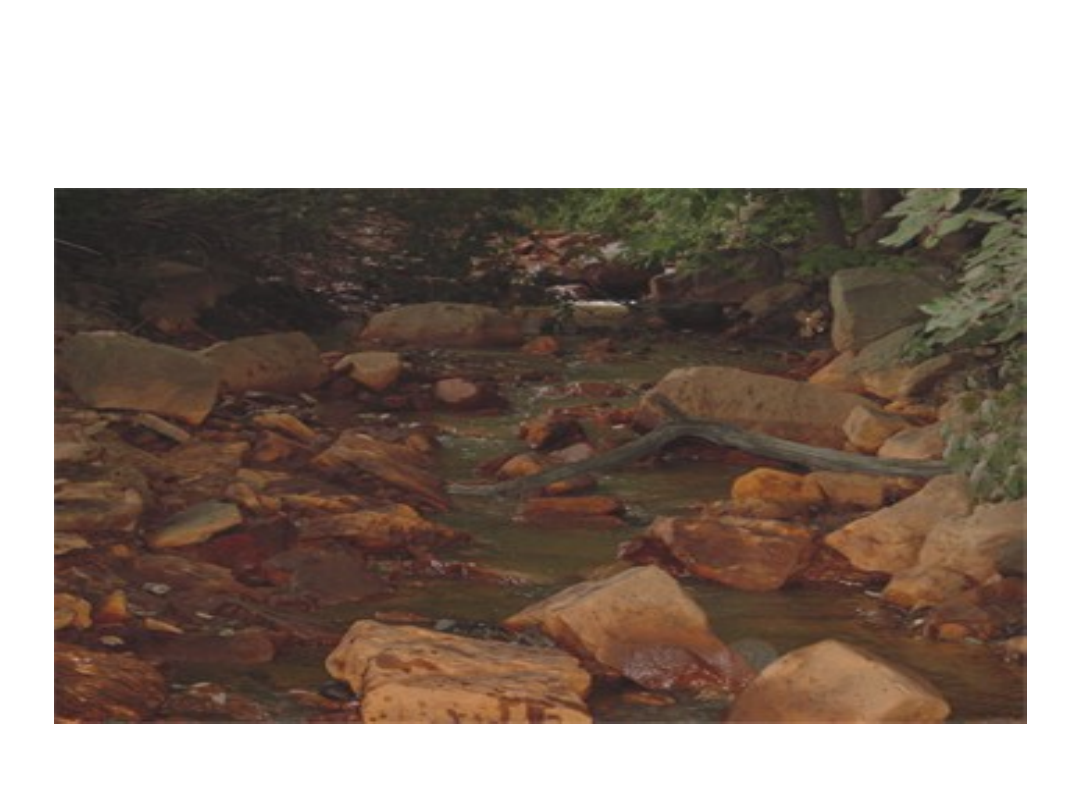
AMD from coal mines
(Western Maryland)

Rio Tinto river
• The Rio Tinto is a long (100 km) river
located in the southwest of Spain,
characterized by a low pH (mean pH -2.3)
and high concentration of transition
metals (iron, copper and zinc) and sulfate.
• The dominant microorganisms in the Tinto
river are all able to catalyse redox
transformation of iron: Leptospirillum
ferooxidans, Acidiphilium Acidithiobacillus
ferrooxidans
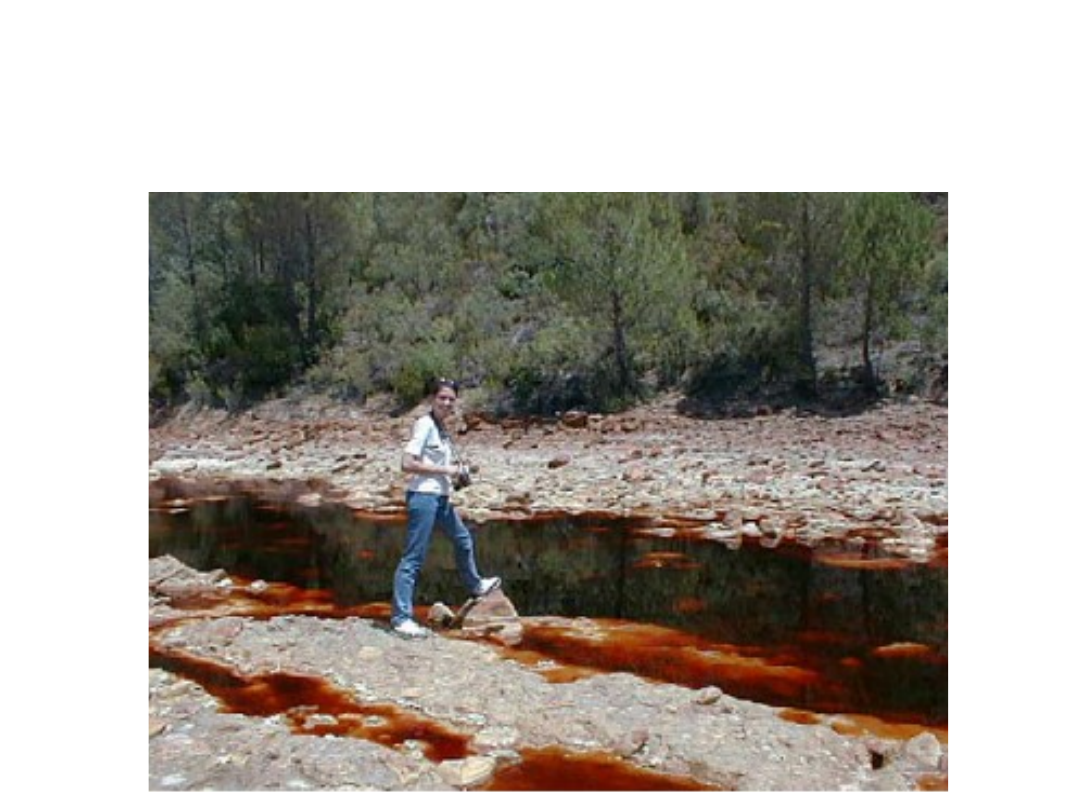
Rio Tinto - Spain
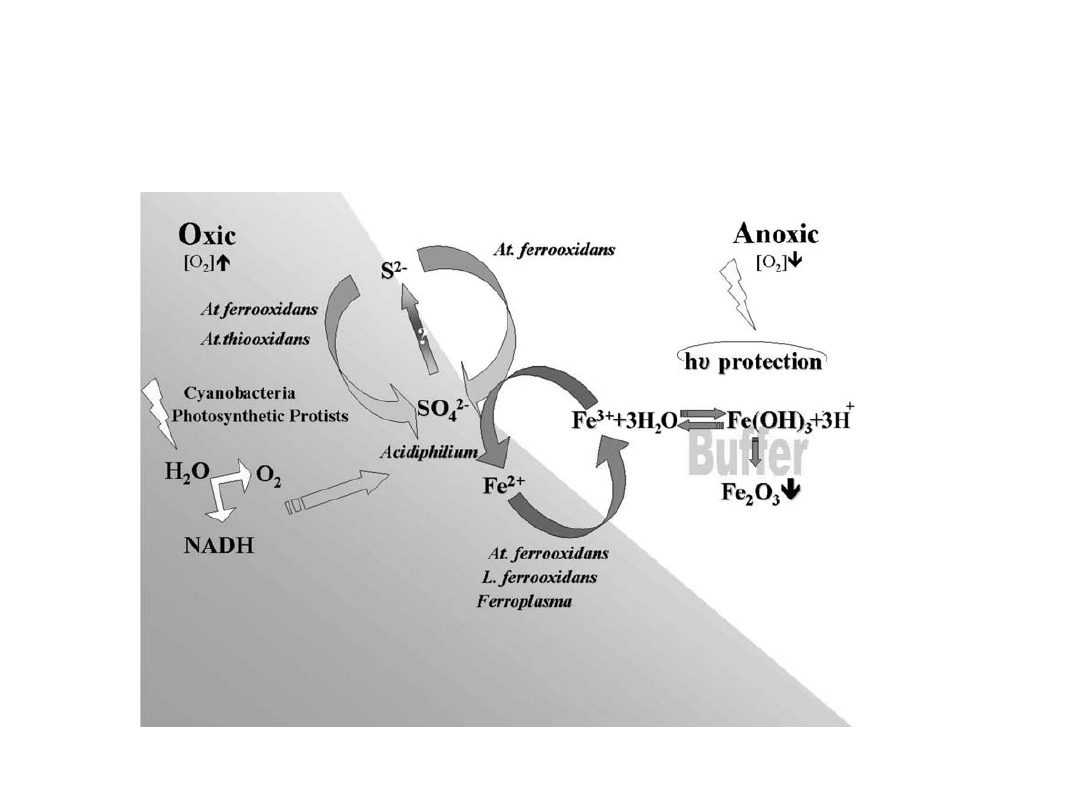
Geomicrobiological scheme
of the Tinto River
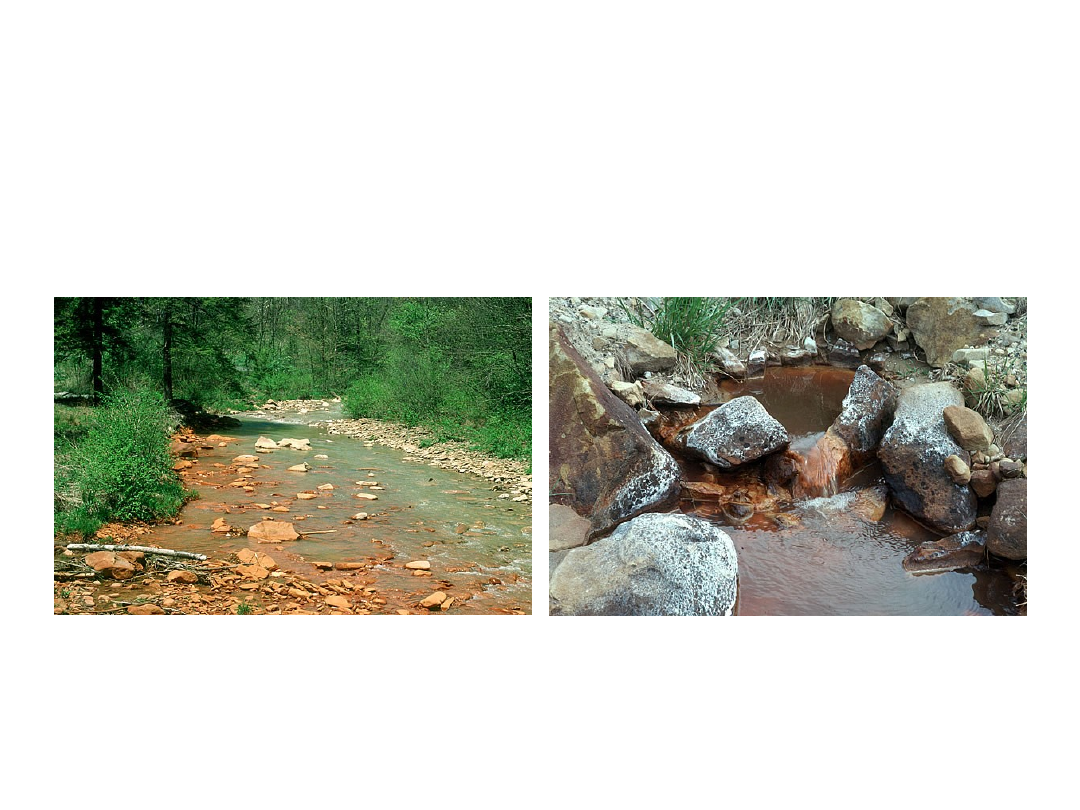
Acid mine drainage

Main factors
The main factors influencing the
generation of acid drainage can be
distributed into three groups:
- characteristic of the mineral substrate
- physical parameters of the acid-
generation system
- microbiological parameters of acid –
generation system.

Uranium in the environment
• Uranium has been released into the
environmental through
Mining operation
Nuclear testing
Accidents in atomic power plant

Uranium waste
• The present inventory of uranium mill
tailings (UMT) in the United States is
about 240 million tons.
• In a reduced valence state (+IV),
uranium is quite insoluble, The
reduction of soluble U(VI) to insoluble
U(IV) prevents the migration of U with
groundwater.

Uranium
• Uranium plays an important role in
mine and drainage waters. Uranium
was separated from the ore body very
often by bioleaching processes were
the U
4+
was transformed into U
6+
.
• The acid mine drainage from the
uranium mines contain, apart from the
iron and other heavy metals, also
radioactive elements such as uranium
and radium.

Reduction of U
6+
to U
4+
• A separation of uranium from the mine water
is possible by a
precipitation
after a
reduction
.
• This reduction can be carried out with sodium
hydrogen sulfide, metallic aluminum or iron.
• [UO
2
(CO
3
)
3
]
4-
+2CO
32-
+ 2H
2
O + 2e
-
[U(CO
3
)
5
]
6-
+ 4 OH
-
• [U(CO
3
)
5
]
6-
+ 4OH
-
+ nH
2
O U(OH)
4
nH
2
O +
5CO
32-

• Processes resulting in the
transformation of U(VI) to U(IV)
decrease uranium mobility in the
environment
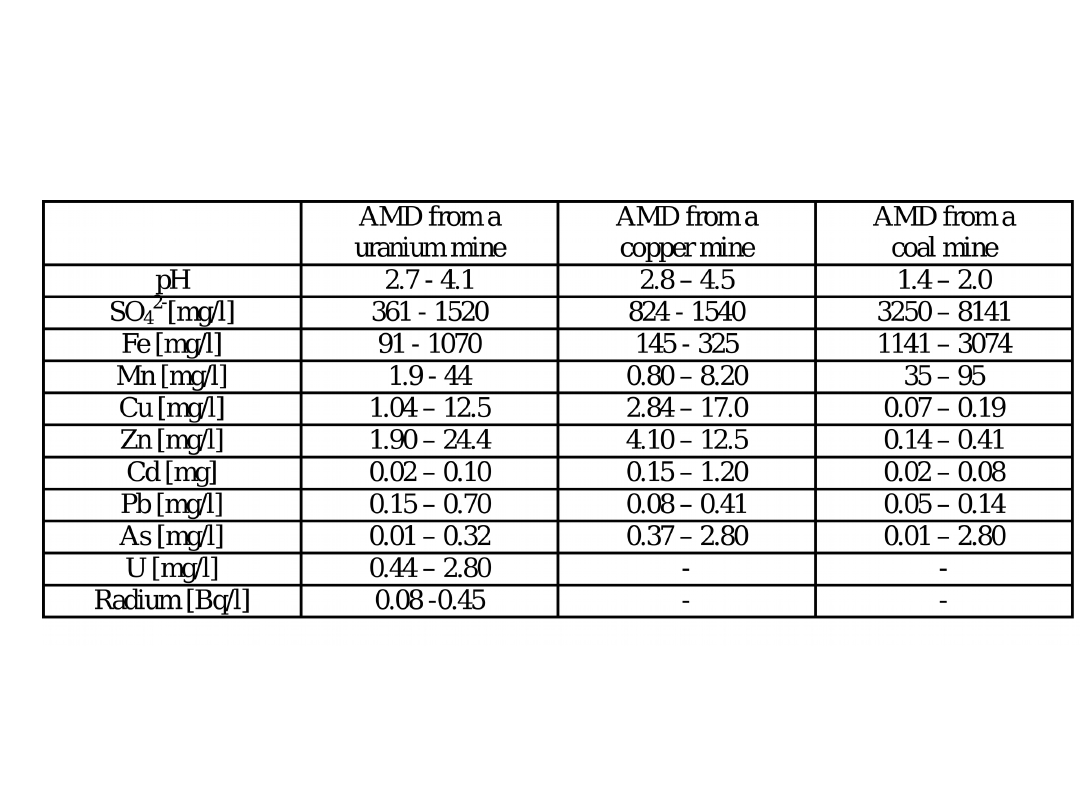
AMD from different mines
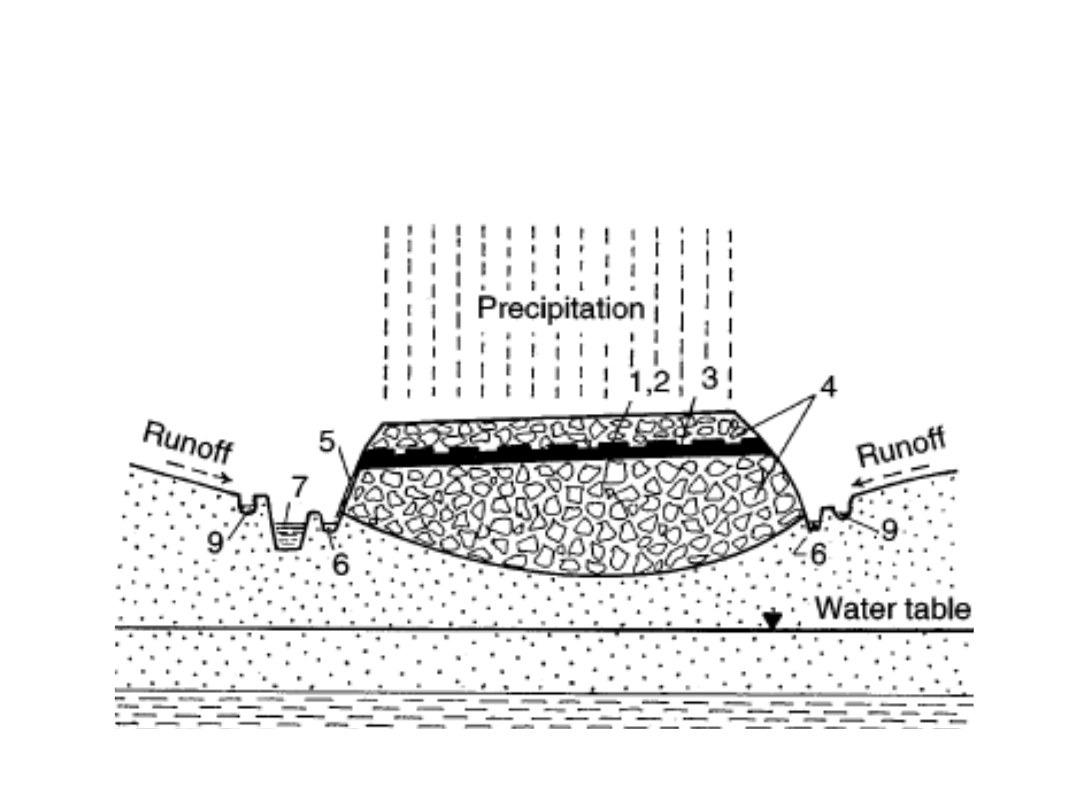
Coal mining dump drainage
system

Bioremediation
• Commercial application of
bioremediation in the mining
environments involve the immobilization
and recovery of soluble metals from
aqueous waste.
• Bacterial sulfate reduction project to
remove metal ions from water.
• The sulfate-reducing bacteria can reduce
H
2
S to precipitate metals as sulfides
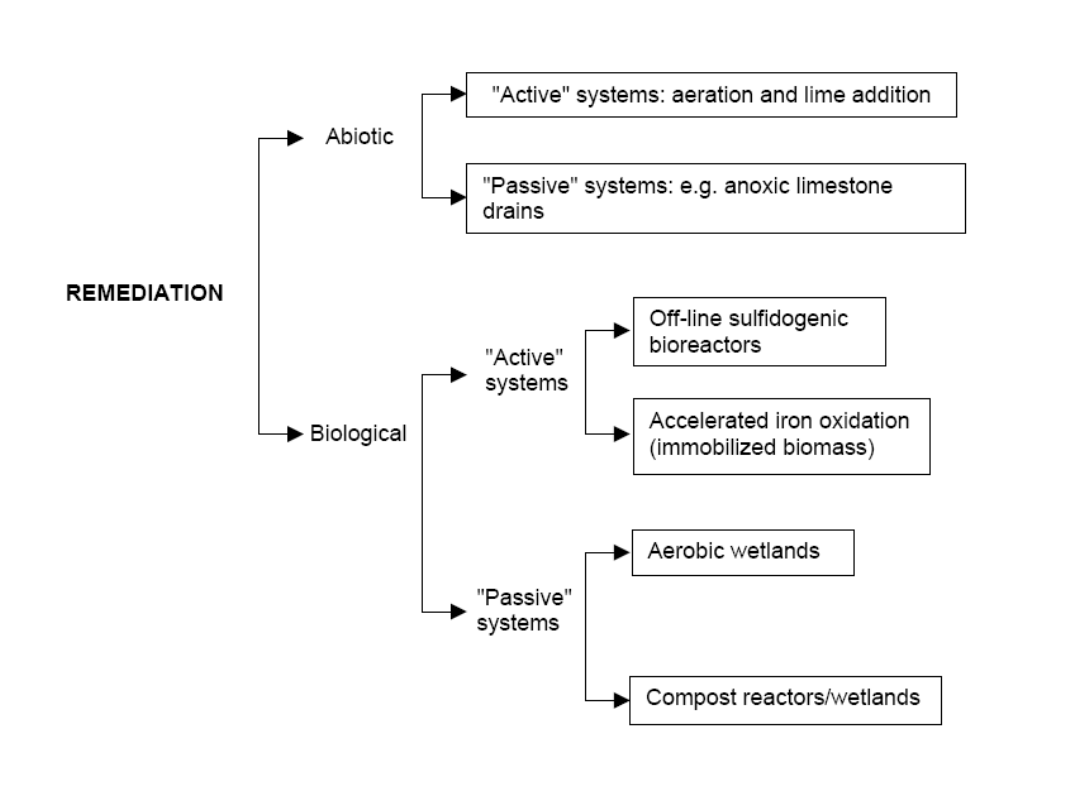

Microbial processes
• Microbial processes that generate net
alkalinity are mostly reduced
processes and include:
Denitrification
Methanogenesis
Sulfate reduction
Iron and manganese reduction
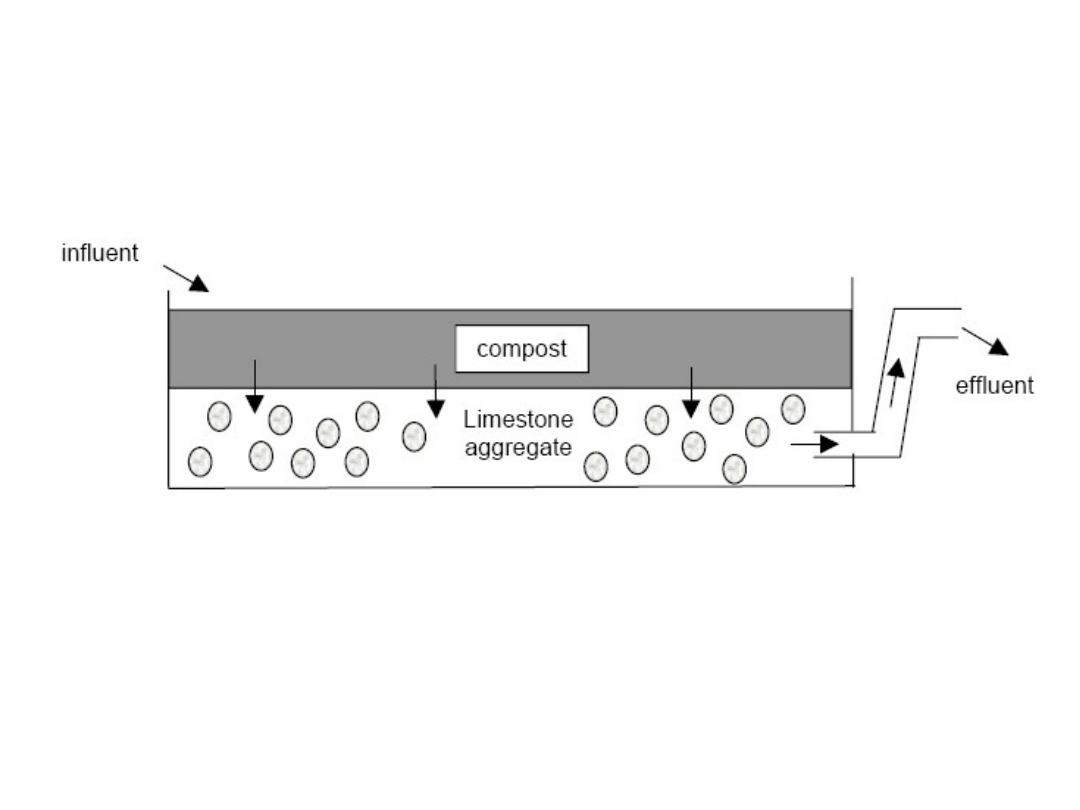
Reducing and alkalinity
producing system (RAPS)
AMD flow is forced downwards through a layer of
compost and then through limestone bed.

BioSulphide
R
Process
• In the process, sulfur-reducing bacteria in an
anaerobic bioreactor produce hydrogen sulfide gas
(H
2
S).
• The gas is transferred to a contactor tank where it
mixes with the water to be treated under controlled
conditions to selectively precipitate metals as metal
sulfides.
• The precipitated metals and water are pumped to a
clarifier tank where the clean water is separated
from the metal solids and discharged or recycled.
• The metal solids are filtered to remove excess
water, producing a high grade metal product
suitable for refining.

BioSulphide
R
Process
• Metals that can be recovered into valuable
products include
copper, zinc, nickel
and
cobalt
.
• Toxic metals such as
arsenic
,
antimony
,
lead
,
cadmium
, and
manganese
are also
removed from the water.
• BioteQ’s BioSulphide® Process is used to
treat acid mine drainage, leach solutions,
industrial wastewater, water in mineral
processing and metallurgical operations,
and contaminated groundwater.
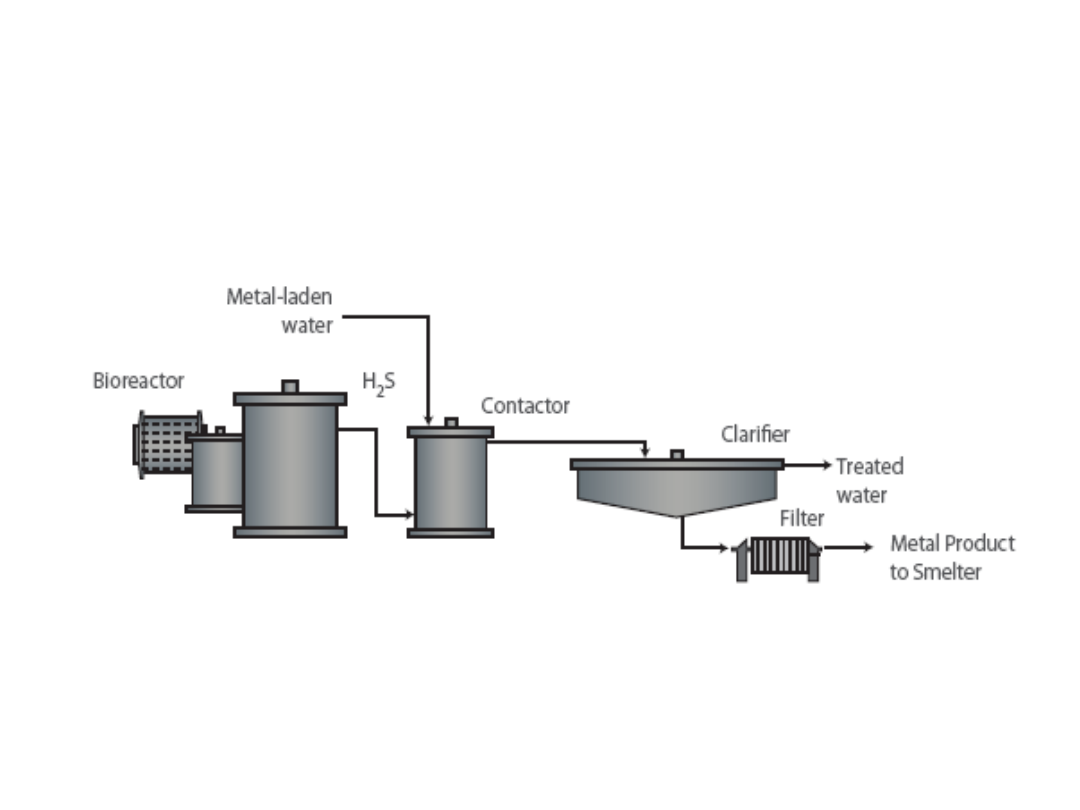
BioSulphide Process
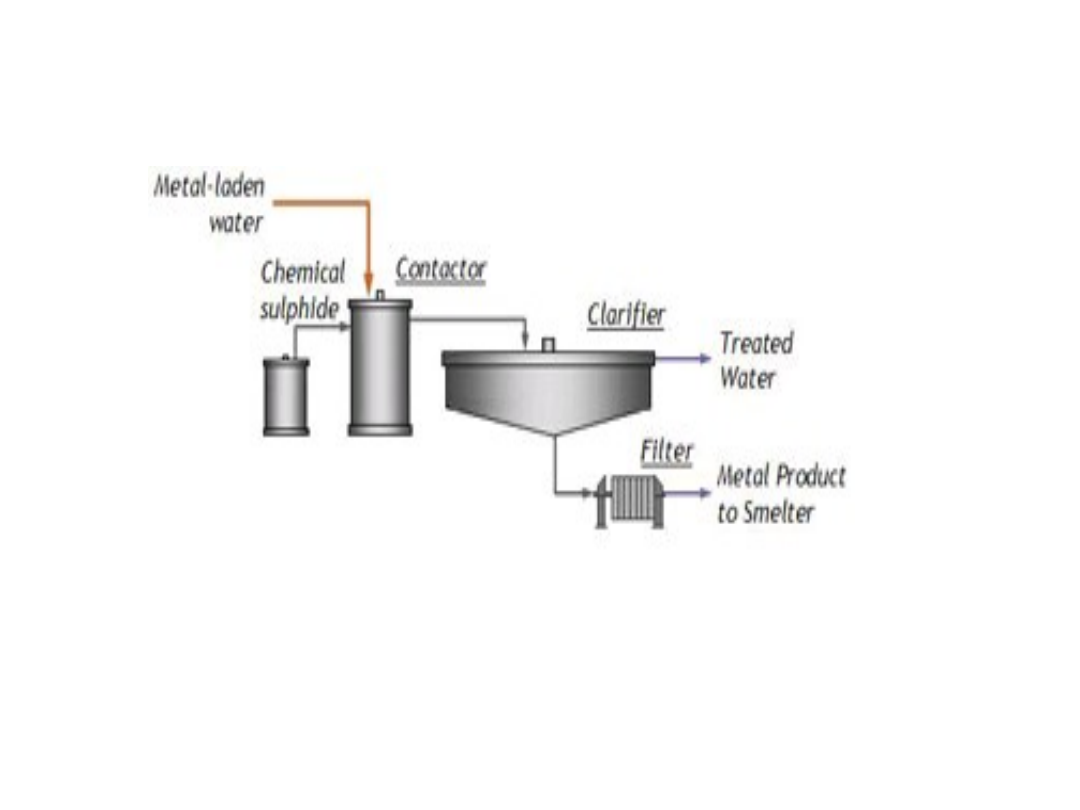
Chem Sulphide
TM
process
Chem Sulphide
TM
process uses chemical sulfide reagents
to remove and recovery metal form solution.
The process operation are the same as in the
BioSulphide
R
Process
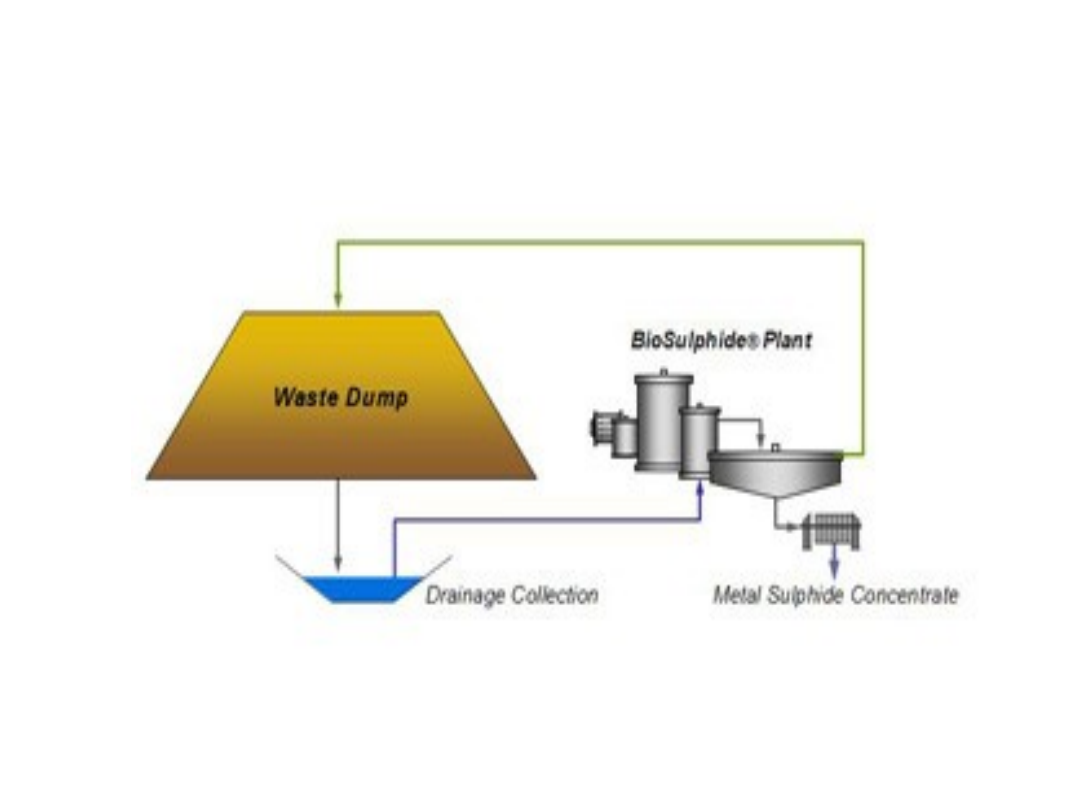
Metal recovery from acid
drainage from a waste rock
dump
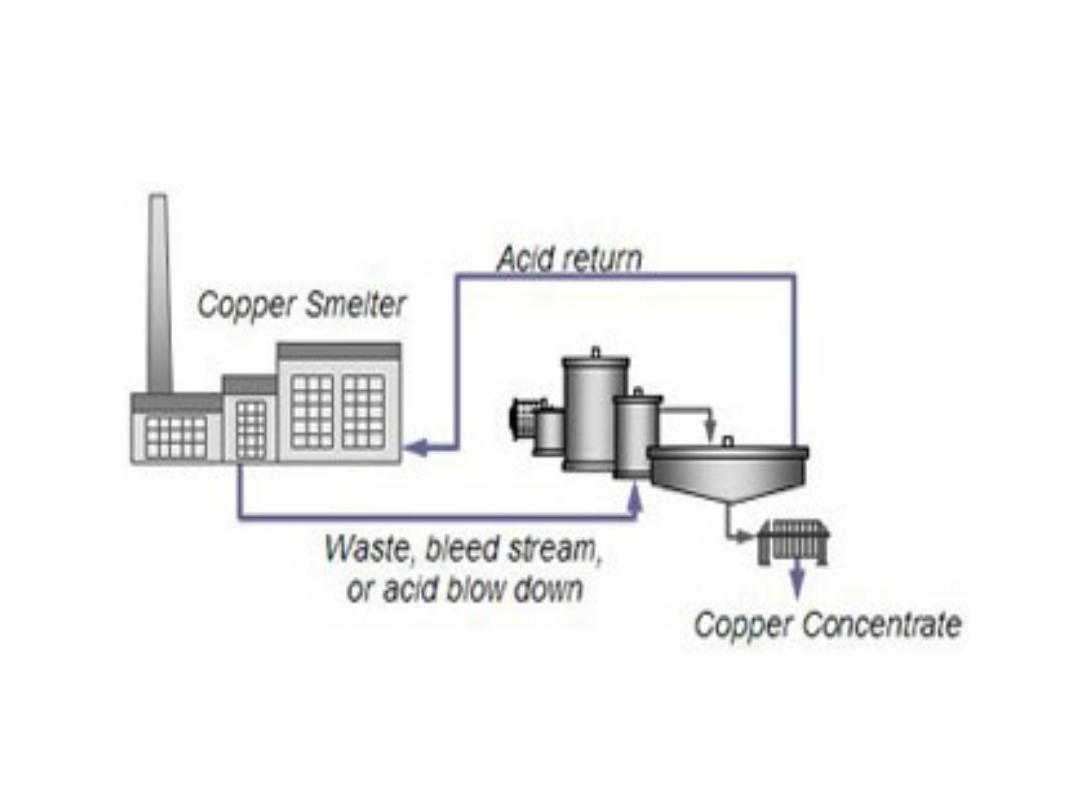
Metal recovery from waste
streams at metal smelters and
refining facilities

Benefits of Biosulphide
process
• Produces a low cost sulfide reagent that can be used
for metal recovery or other industrial applications.
• Eliminates or reduces the environmental liability
caused by metal-contaminated water.
• Metal recovery rate is greater than 99%; recovered
metal products are high grade and suitable for
refining.
• Recovered metals can generate revenue to offset
water treatment costs.
• Produces high quality treated water that can be
discharged safely to the environment.
• Saves money compared to alternative processes.
• Easy to scale up and down over a wide range of H
2
S
production capacities.

Mine Environment Neutral
Drainage
• Through the Mine Environment
Neutral Drainage (MEND) Program,
Canadian mining companies and
provincial/territorial and federal
departments have reduced the
liability due to acidic drainage by at
least $400 million. This is an
impressive return on an investment
of $17.5 million over eight years.

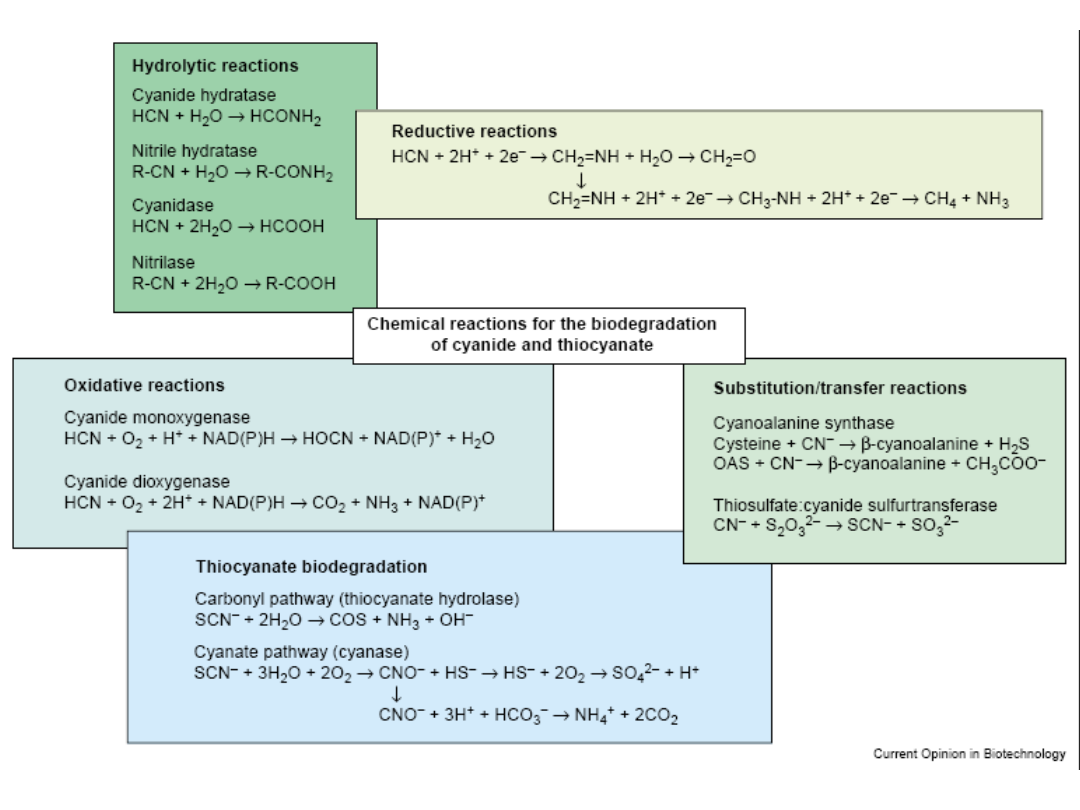
Cyanide degradation
• Homestke Mining Comany,
Lead,South Dakota, USA, developed
and commissioned in 1989 a
microbial cyanide oxidation system.
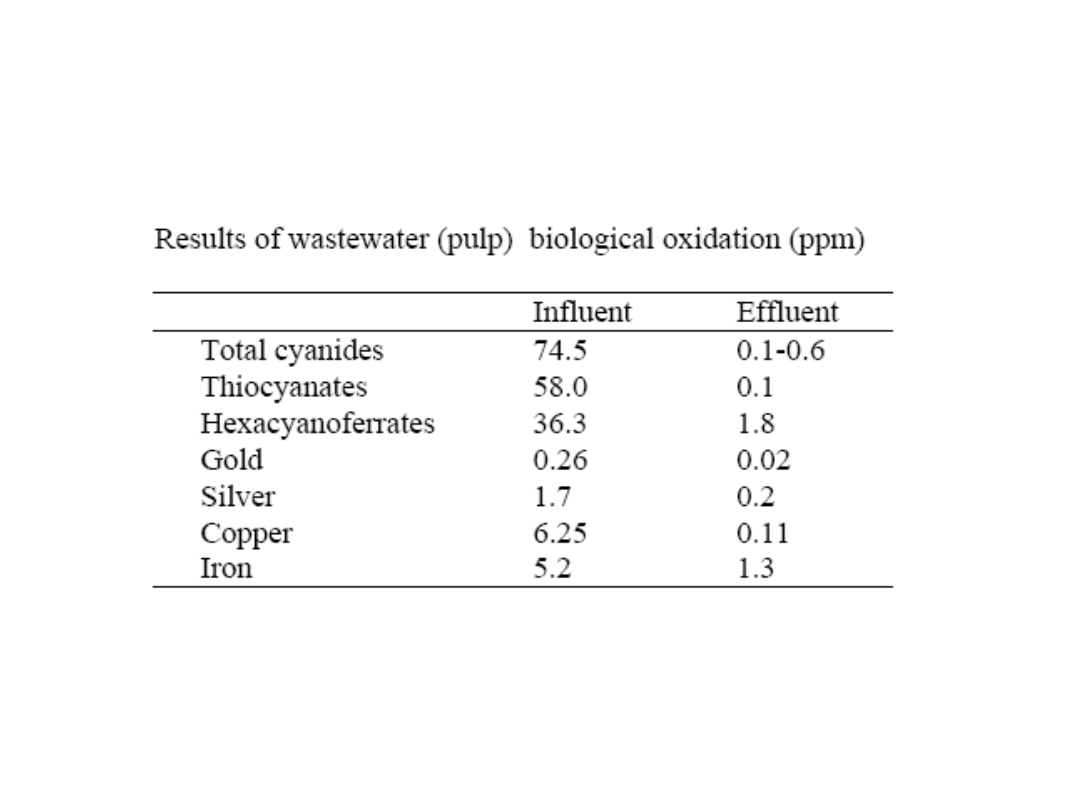
• (850 m
3
/hr of tailings containing 62
mg/L SCN
-
, 4.1 mg/L,total CN
-
).
• The operation cost of the Homestake
cyanide oxidation facility is about
U.S. 0.11/m
3
of effluent treated.
Pseudomonas fluorescens
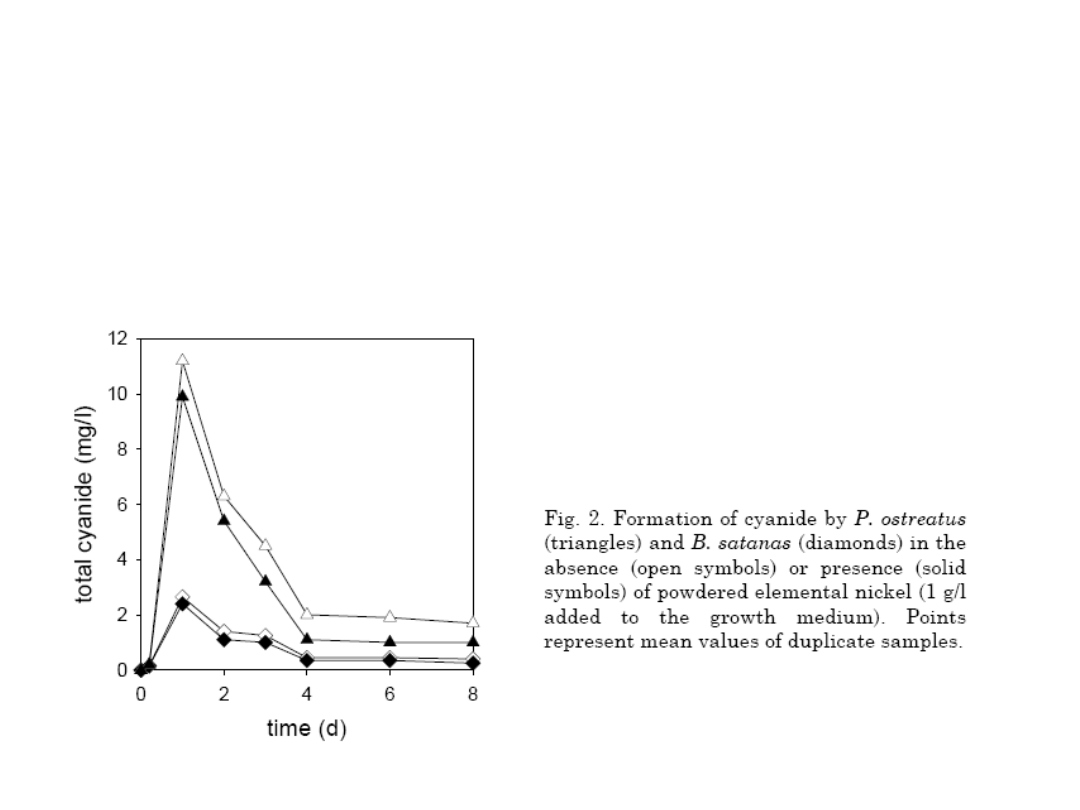
Bioformation of cyanide
• Bakteria: Chromobacterium iolaceum
• Fangy : Pleurotus ostreatus, Boletus satanas

Water resource
• Water is in the present time and in the
future one of the most important and
valuable substance.
• The resource of water including all
reserves in the world have a value of 1.38
10
9
km
3
.
• Only 2.6% of this amount is sweet water.
• 77% of sweet water is mixed in k\glaciers
and the ice of both north and south poles.
Document Outline
- Slide 1
- Slide 2
- Slide 3
- Slide 4
- Slide 5
- Slide 6
- Slide 7
- Slide 8
- Slide 9
- Slide 10
- Slide 11
- Slide 12
- Slide 13
- Slide 14
- Slide 15
- Slide 16
- Slide 17
- Slide 18
- Slide 19
- Slide 20
- Slide 21
- Slide 22
- Slide 23
- Slide 24
- Slide 25
- Slide 26
- Slide 27
- Slide 28
- Slide 29
- Slide 30
- Slide 31
- Slide 32
- Slide 33
- Slide 34
- Slide 35
- Slide 36
- Slide 37
- Slide 38
Wyszukiwarka
Podobne podstrony:
01 Certyfikat 650 1 2015 Mine Master RM 1 8 AKW M
hydrobromic acid eros rh031
07 Aneks 1 Certyfikat 650 1 2015 Mine Master RM 1 8 AKW M (AWK) (nr f 870 MM)
Lesson 14 MY, MINE esp
peracetic acid eros rp034
p toluenesulfonic acid eros rt134
elka mine lab M
MANUAL Antipersonnel Mine M18A1 and M18 Claymore
glyoxylic acid eros rg009
Mine
Acrylic (and Methacrylic) Acid Polymers
elka mine forum, WEiTI - Makro, SEMESTR II, TOB, Laboratorium, Lab 4
formic acid eros rf025
hypophosphorous acid eros rh075
Guns n Roses Sweet Child Of Mine
(01266) Drainage Canal Bridge (Bassett vicinity)id 744
więcej podobnych podstron