
II
22-07-06
A.Rameshwar

Lesson Objectives
• Cell theory
• Cell as a structural unit
• Cell as a functional unit
• Structure of cells
• Cells are a bunch of membranes
• What symbiont theory is about?
• What are the techniques of microscopy
and centrifugation?
.
Robert Hooke
1665
coined the word `cell’ for the box-like structures
of cork
M J Schleiden
a lawyer turned botanist
&
Theodore Scwann
an animal embryologist
met at dinner party in 1837
•1839
formally espoused cell theory
•the cells are of universal occurrence
and
are
•
the basic units of an organism

1849
Cell division described
1858
Rudolph Virchow forcefully
states the paradigm of cell theory
``
All cells come from previous cells’’
Omnis cellula e cellula
Thus:
all individuals derived from a
single celled organism are
related &
all cells in a multi-celled organism
are descended from one fertilized
egg.
.
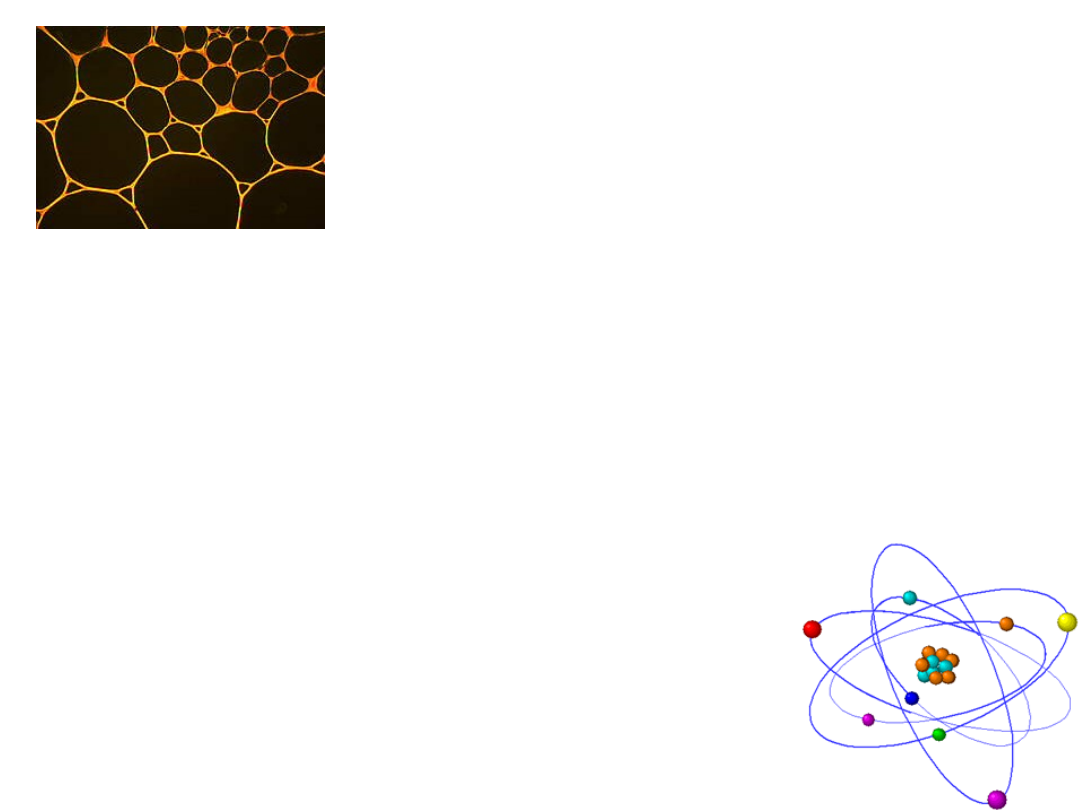
•CELL THEORY is to Biology
as
Atomic Theory is to
physics

Tenets of the Cell Theory
• all known living things
(systems)
are
composed
of cells
• cells
arise
only from other cells
(not spontaneously - experiments of Redi
and Pasteur)
• all
energy flow
(metabolism & biochemistry)
of life occurs within cells
• cells contain
DNA
as genetic info -
(for
subsequent generations)

Some important facts about cells
:
- their
diversity
: many sizes, shapes, and types
(165+ in humans)
- their
similarity
: have same basic structural
plan
- surrounded by
cell membrane
- contain
nuclei
(bacteria =
genophore
)
- similar sub-cell parts (
ORGANELLES
)
- all contain
same macromolecules
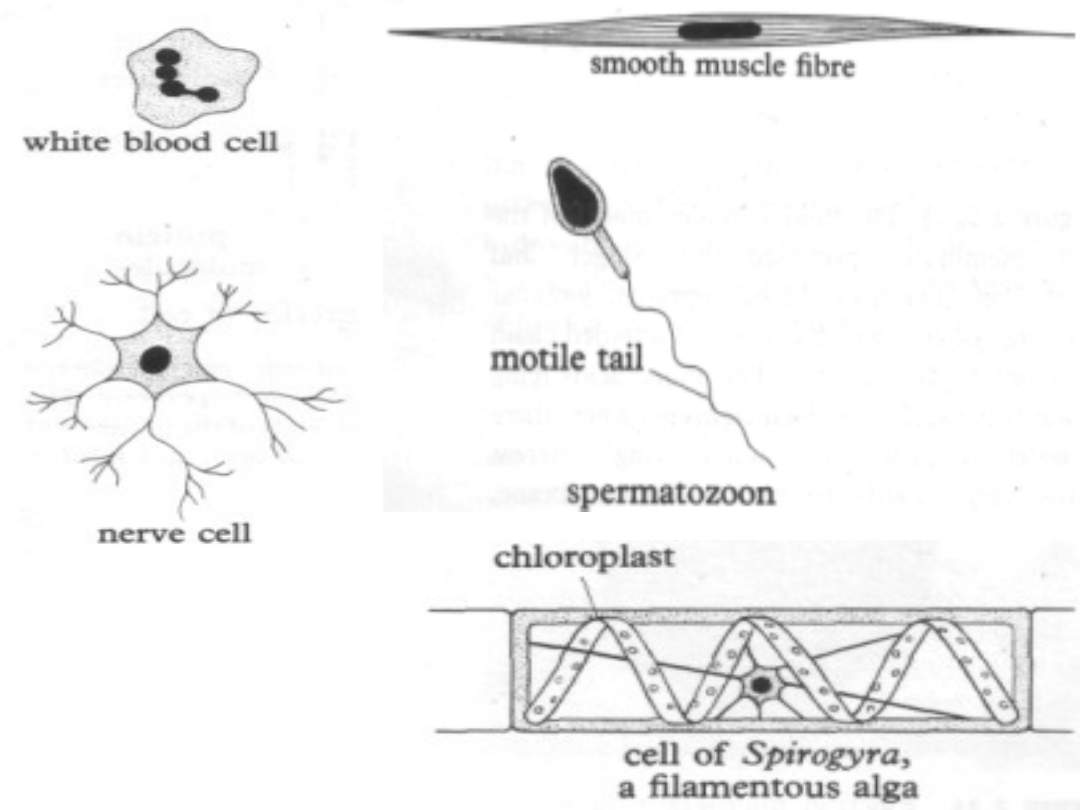
Different Shapes &
Forms
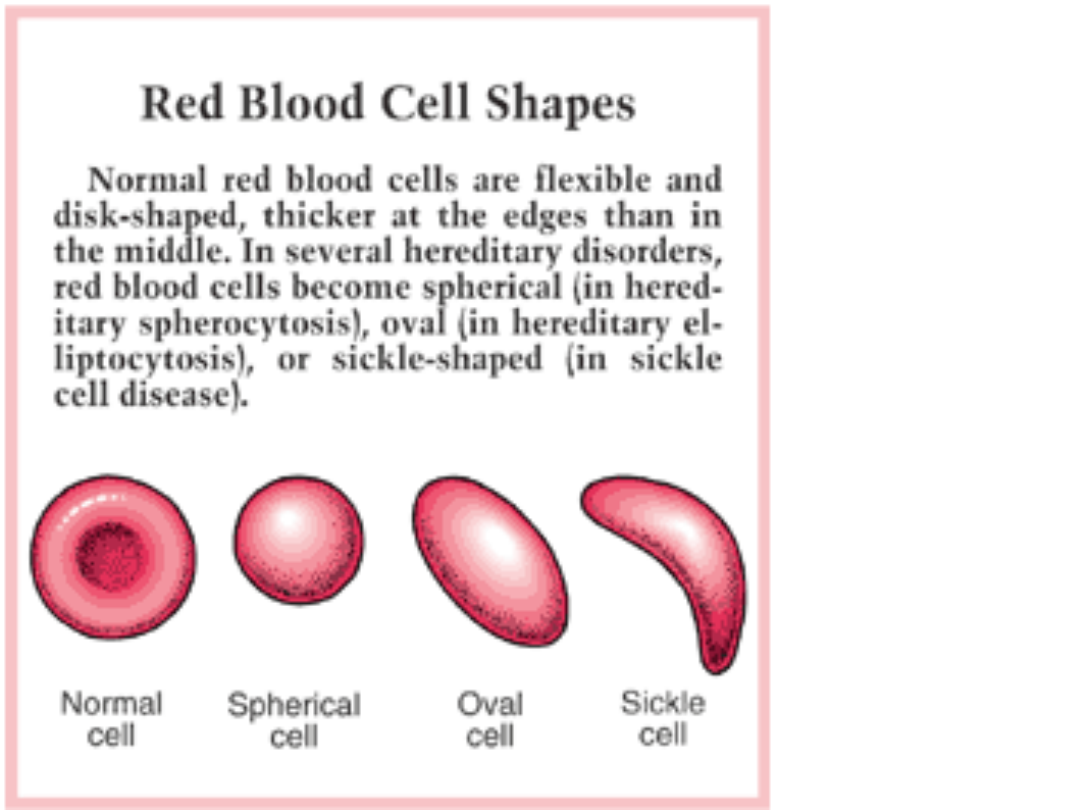
Like a `gare‘
or donut
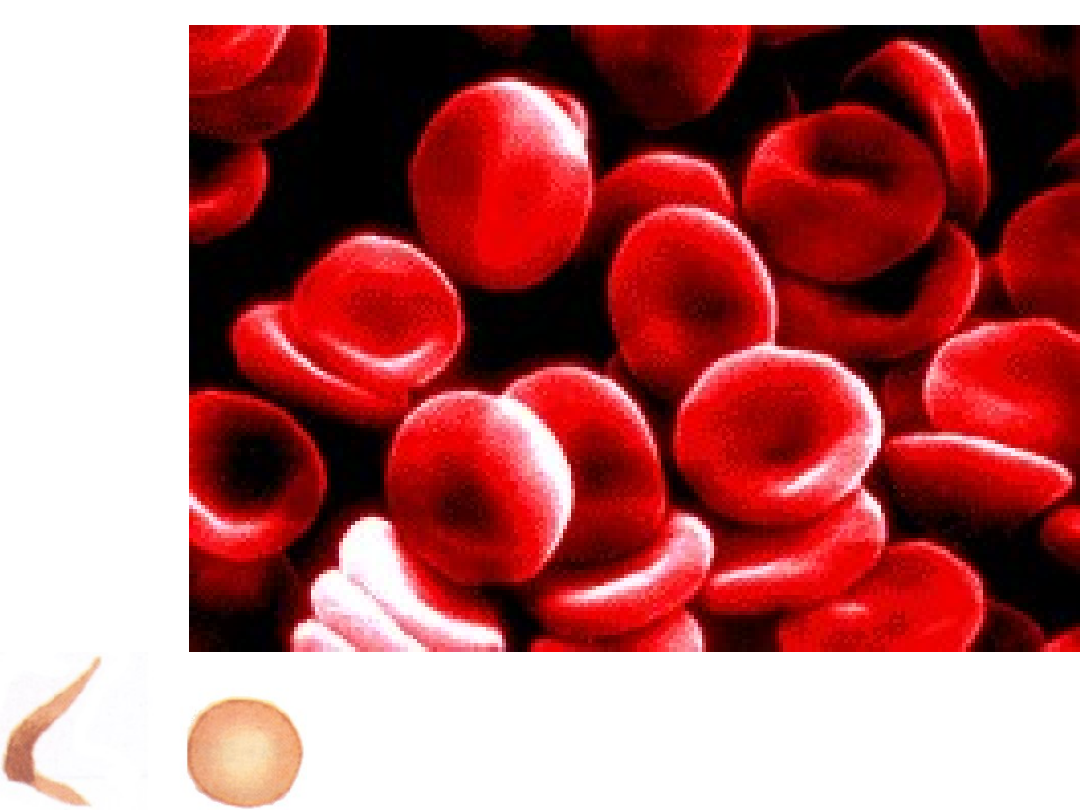
Scanning electron micrograph of
human red blood cells
Sickle cells
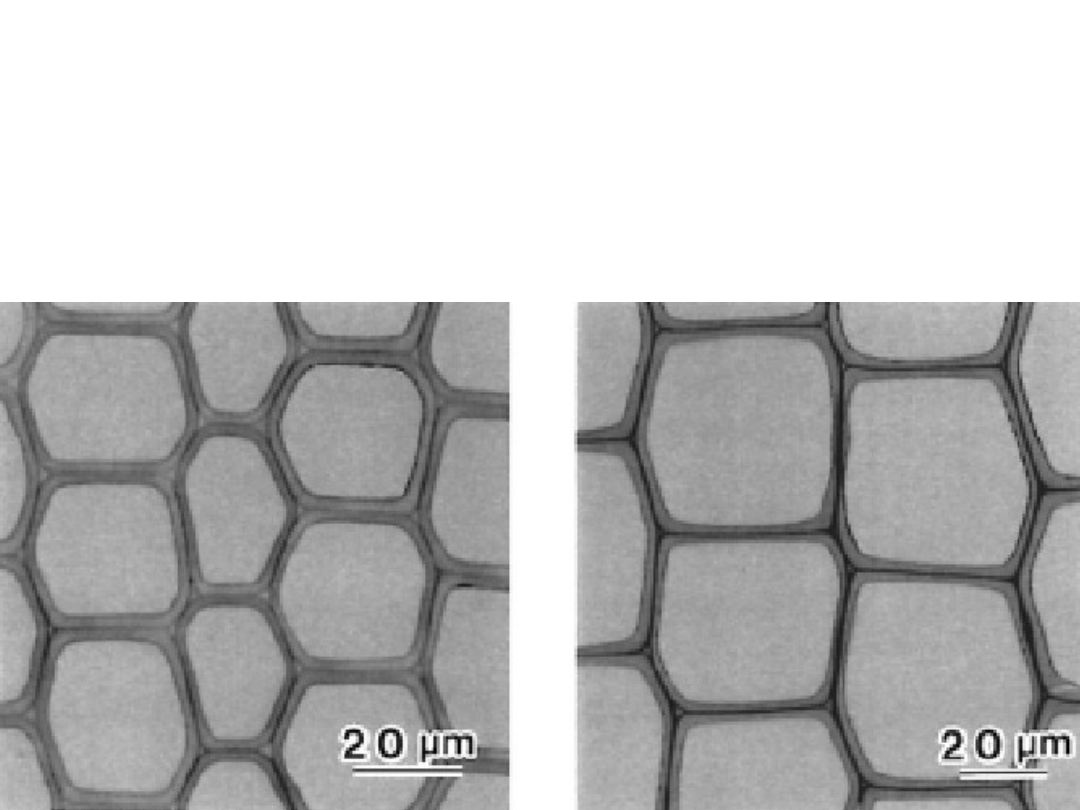
Cell shapes
- conifer early wood

.
• Mechanism of division was selected
during evolution
• Cell has volume (3-D)
• Surface membrane is measured in
square units (2-D)
• Growing beyond limits cause inadequate
supply of nutrition from environment
• Division solves the problem
Why are cells so small?
a. Efficiency: smaller cells have
larger surface area
b. Specialization: Having
numerous small cells permits
specialization
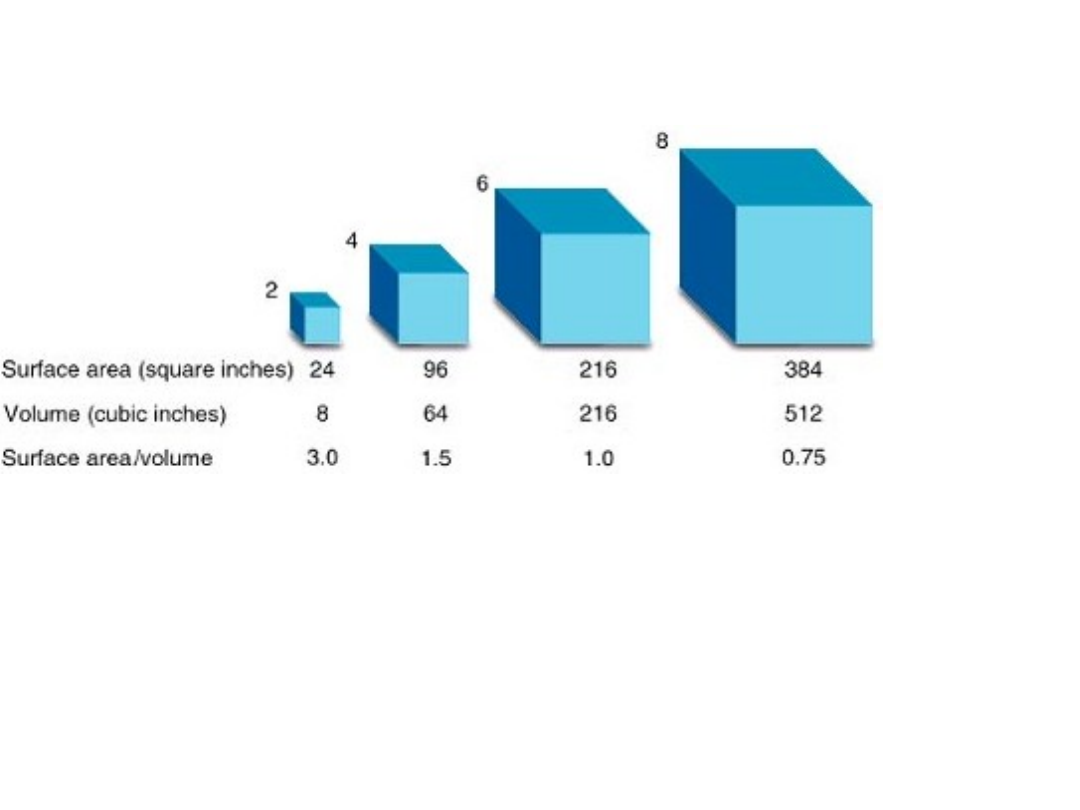
•As an object increases in size its volume increases as the cube of its
linear dimensions while surface area increases as the square
Surface area = L X B Square of two linear dimensions
Volume = L X B X H Cube of three linear dimensions
•As these cubes illustrate the surface area to volume ratio of a small
object is larger than that of a large object of similar shape
•This ratio limits how large cells can be
How large cells can
be?
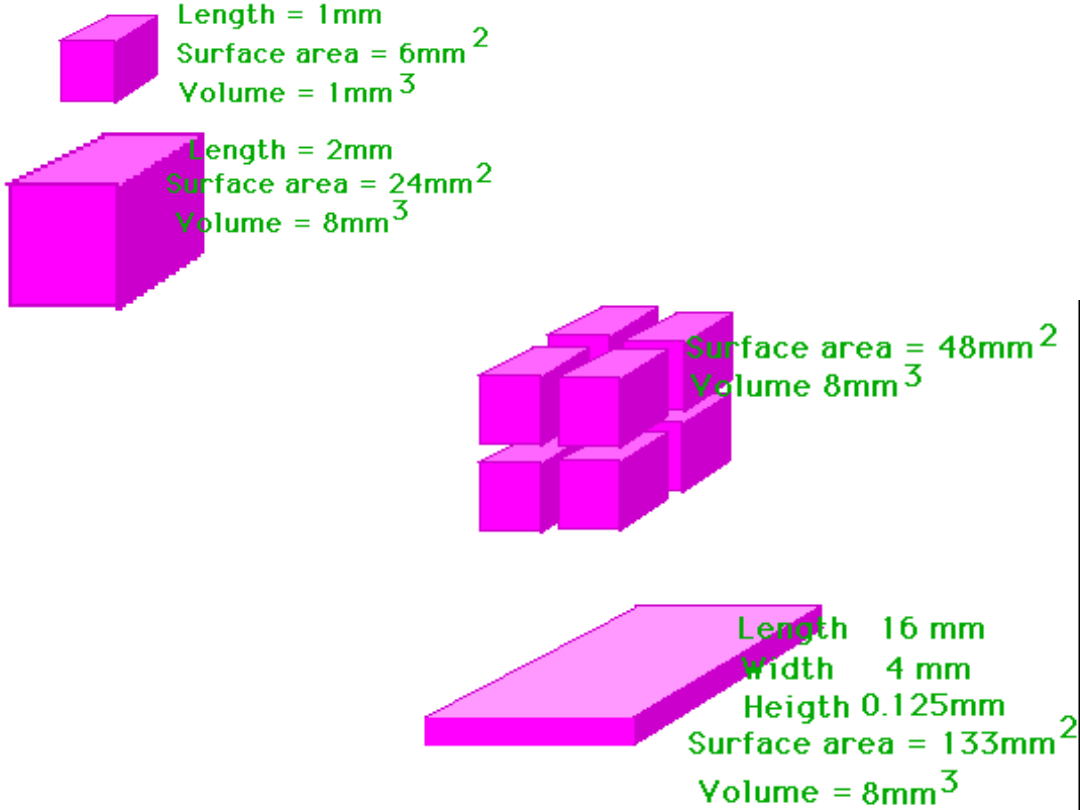
Getting around this problem
Divide to become
multicelled -
Embryo
long and thin or skinny
and flat
many protists, nerve cells,
muscle cells

Smaller Particles React Faster Than
Larger Particles
in Chemical Reactions
• Granular sugar dissolves easier than sugar
cubes
• Everything that the cell needs or has to get rid
of has to go through the cell membrane, the
amount of which relates to the surface area
• Surface must allow sufficient exchange to
support the contents of the cell
• stops growing when its surface area is
insufficient to meet the demands of the cell's
volume
An Early Cell

Microscope
• Scientific discoveries follow the
construction of tools
• Microscope has had a profound influence
on the development of biology
• Light microscope
: Limited resolution ~ 0.2
μm, magnification not > 1500 times
• Electron microscope
: Magnification
500,000 times- a pin head>1 Km
diameter!
Cell ultrastructure
Drawbacks
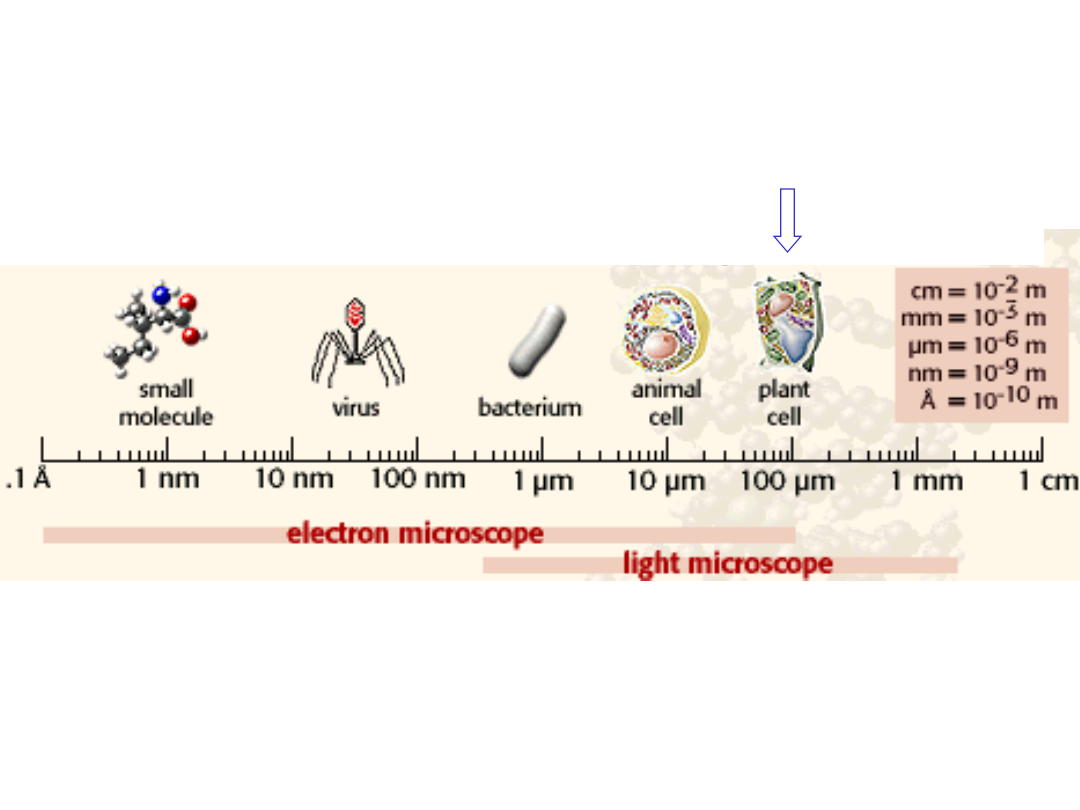
Human eye
limit
Relative Sizes of Cells &
Components
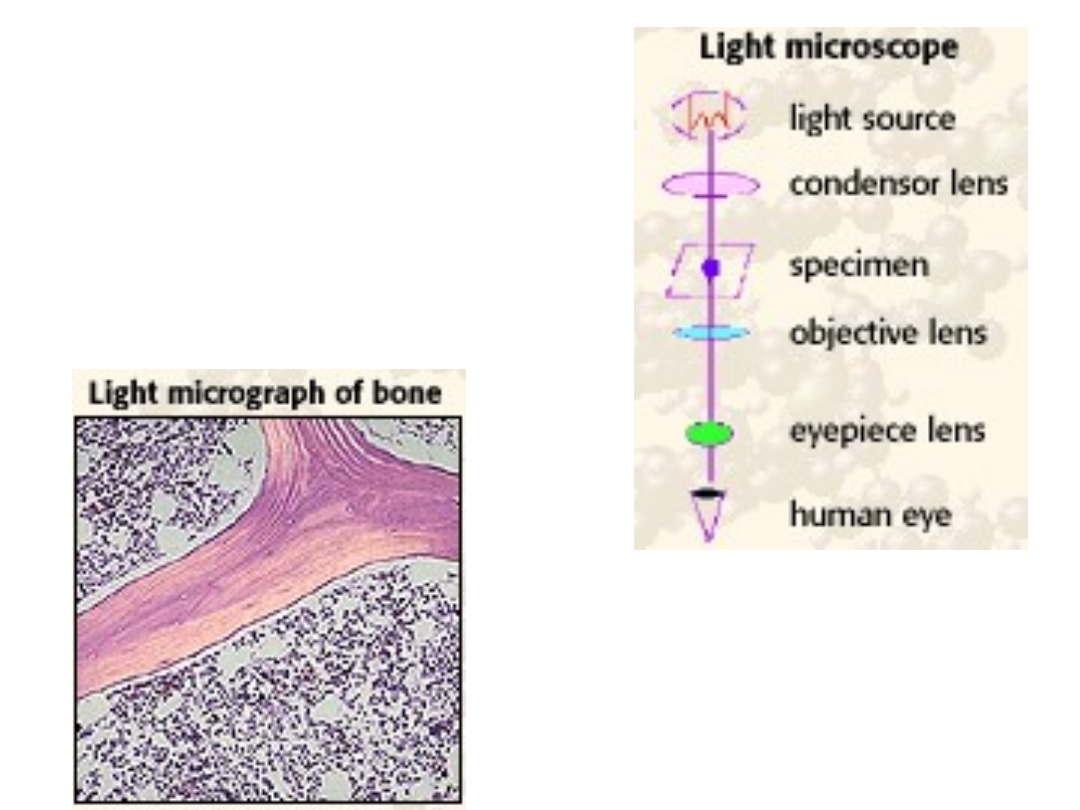
limit of resolution of ~ 200 nm
(0.2 µm)
due to the wavelength of light
(0.4-0.7 µm). Cells observed
under a light micro-scope can be
alive, or fixed and stained
The light microscope
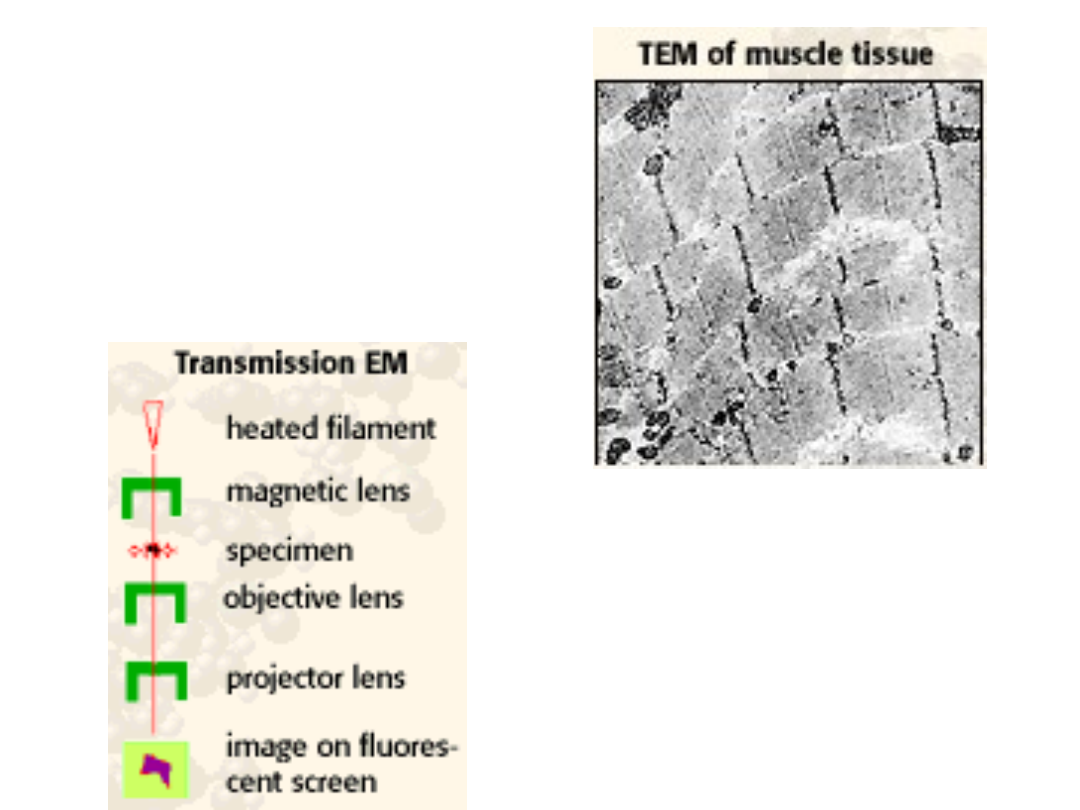
limit of resolution of ~ 2nm.
due to limitations of the lens used
to focus electrons onto the sample.
looks at replicas of dead cells, after
fixation and heavy metal ion
staining
e
-
are scattered as they pass
through a thin section of the
specimen, & then detected and
projected onto an image on a
fluorescent screen.
The Transmission
Electron
Microscope (TEM)
more relevant for
biological samples
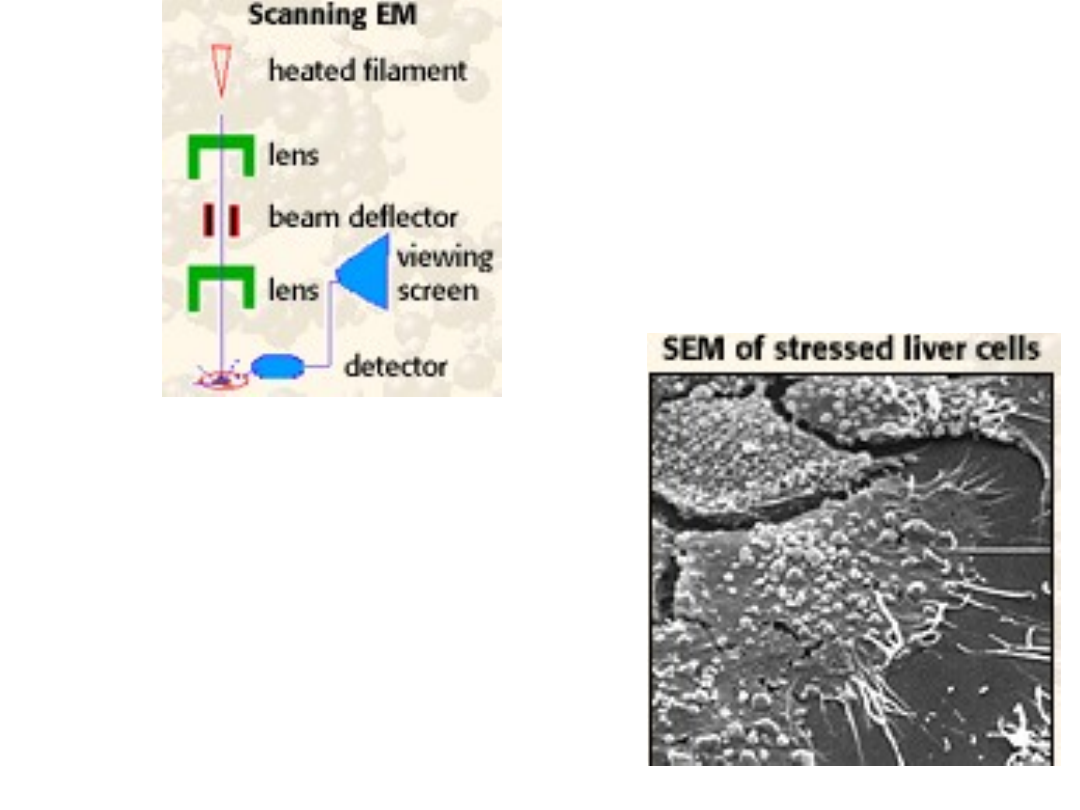
also has a limit of 2nm
Like the TEM, allows to look at
replicas
of dead cells, after fixation and
heavy
metal ion staining
electrons reflected off the surface of
the specimen
The Scanning Electron Microscope
(SEM)
Cells Have Evolved Two
Basic Architectural
Plans
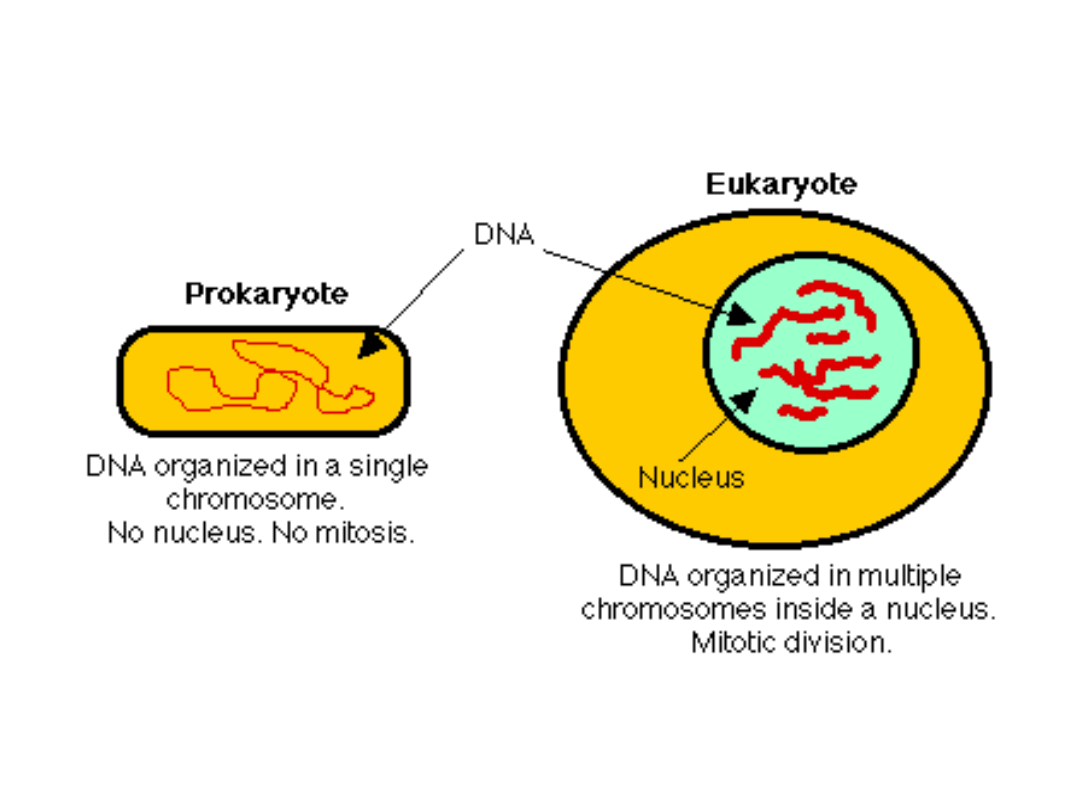
Cells without a nucleus
Cells with a nucleus
“karyon” = kernel or nut; “pro” = before ; “eu” = good or true; • Eukaryotes - “cells with a true
nucleus”
• Prokaryotes - “cells with no defined nucleus”
Prokaryotes
• Cells whose nucleus
is not enclosed in a membrane
• Lack other organelles too
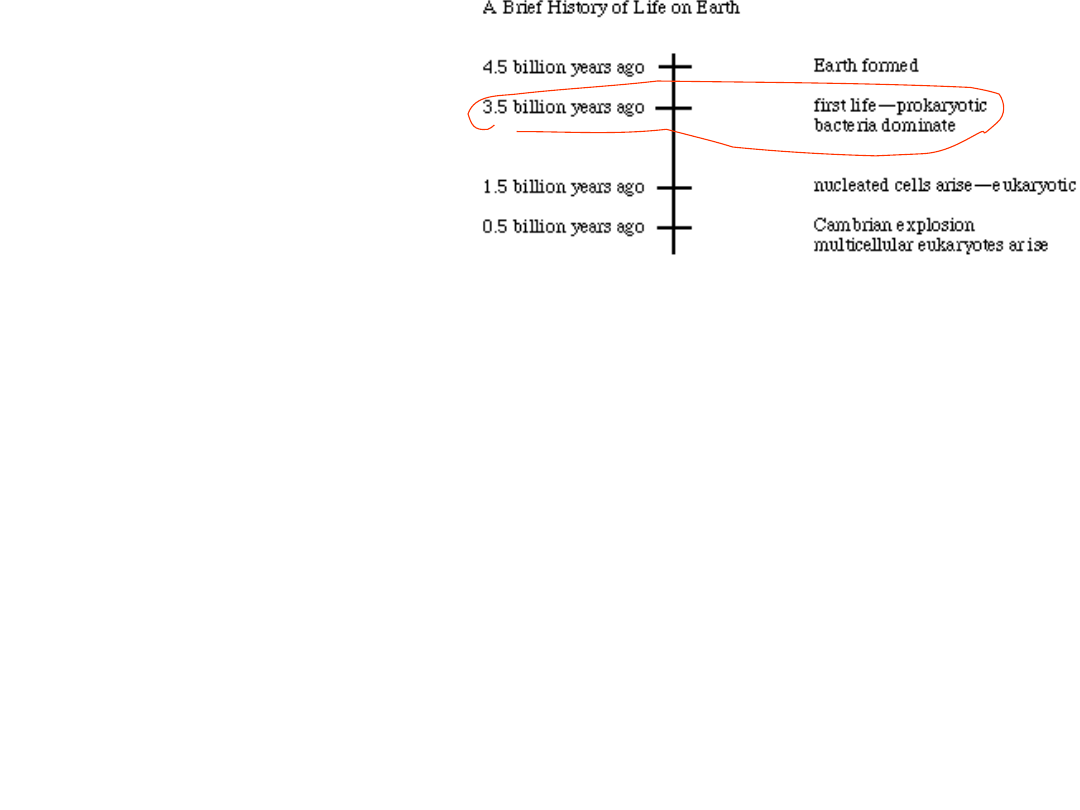
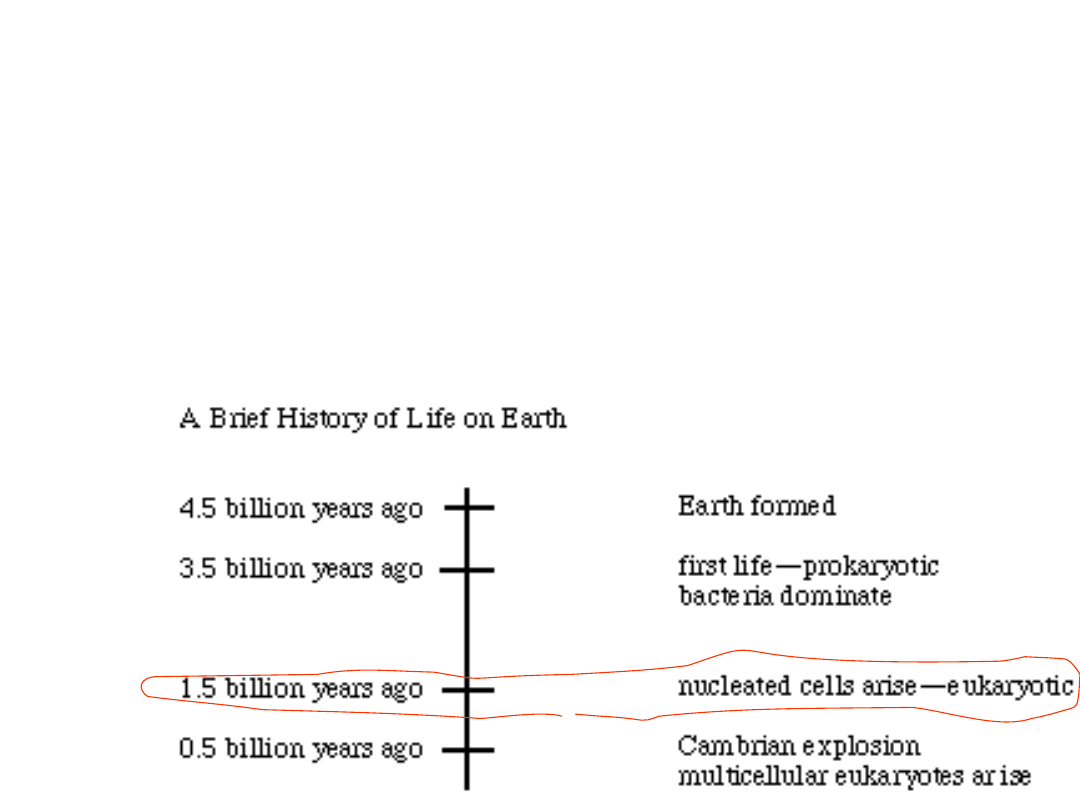
• First to evolve,
The oldest accepted
prokaryote fossils date to 3.5 billion years
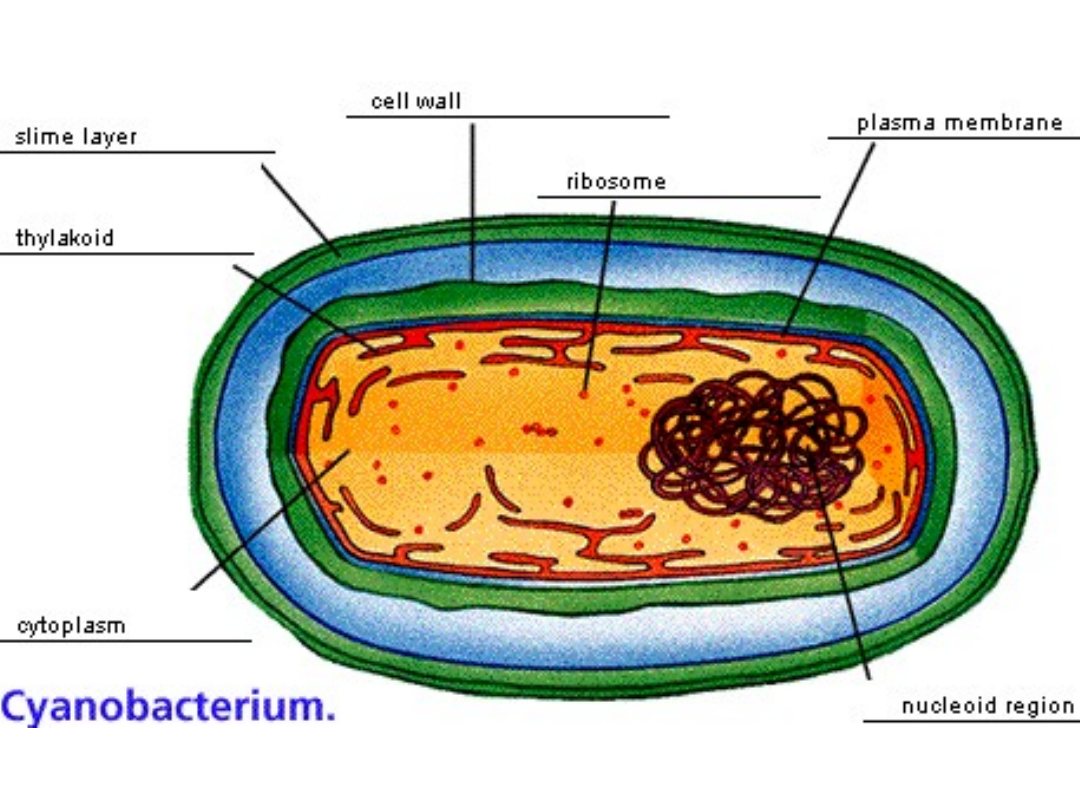
• Contain
a circular chromosome
Plasmids with satellite DNA
Ribosomes
food storage granules
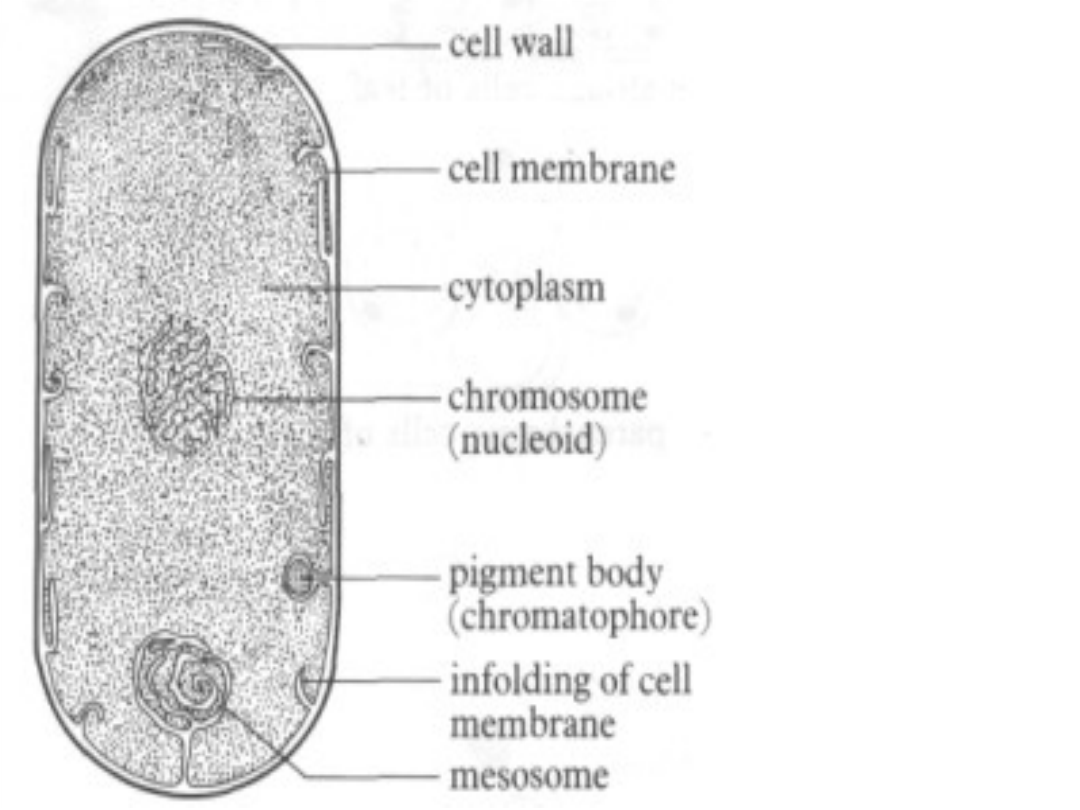
Prokaryotic cell-
Bacterium
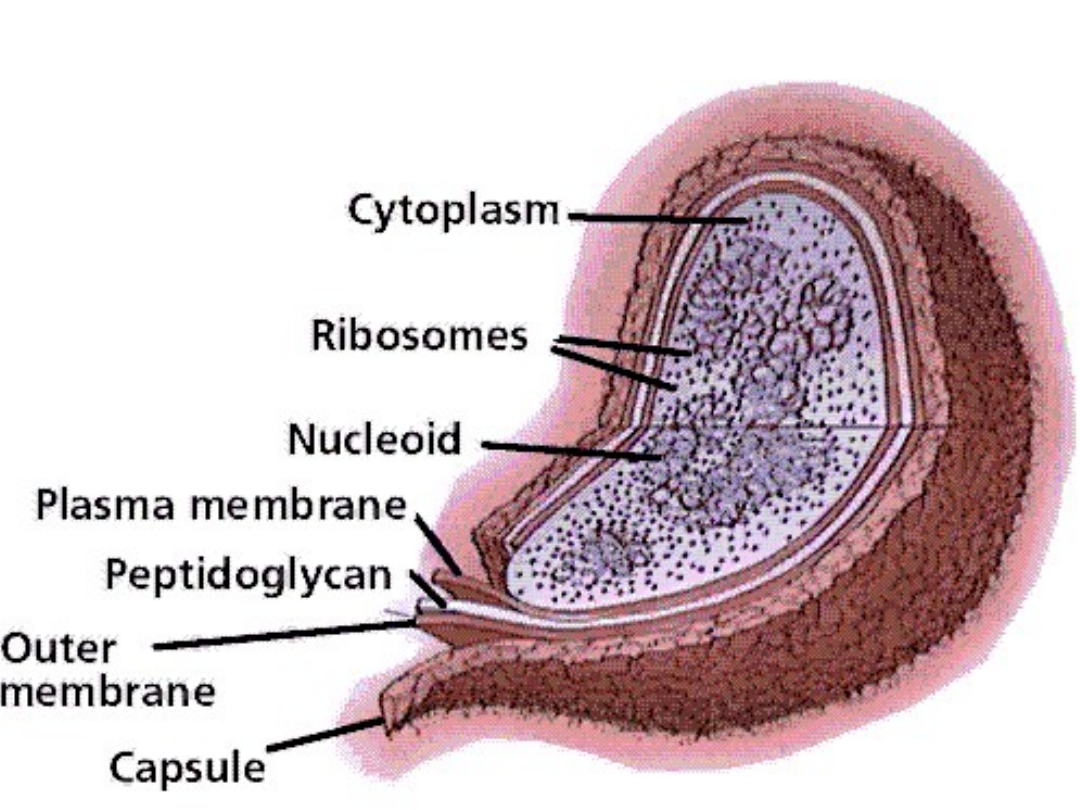
A general prokaryotic cell
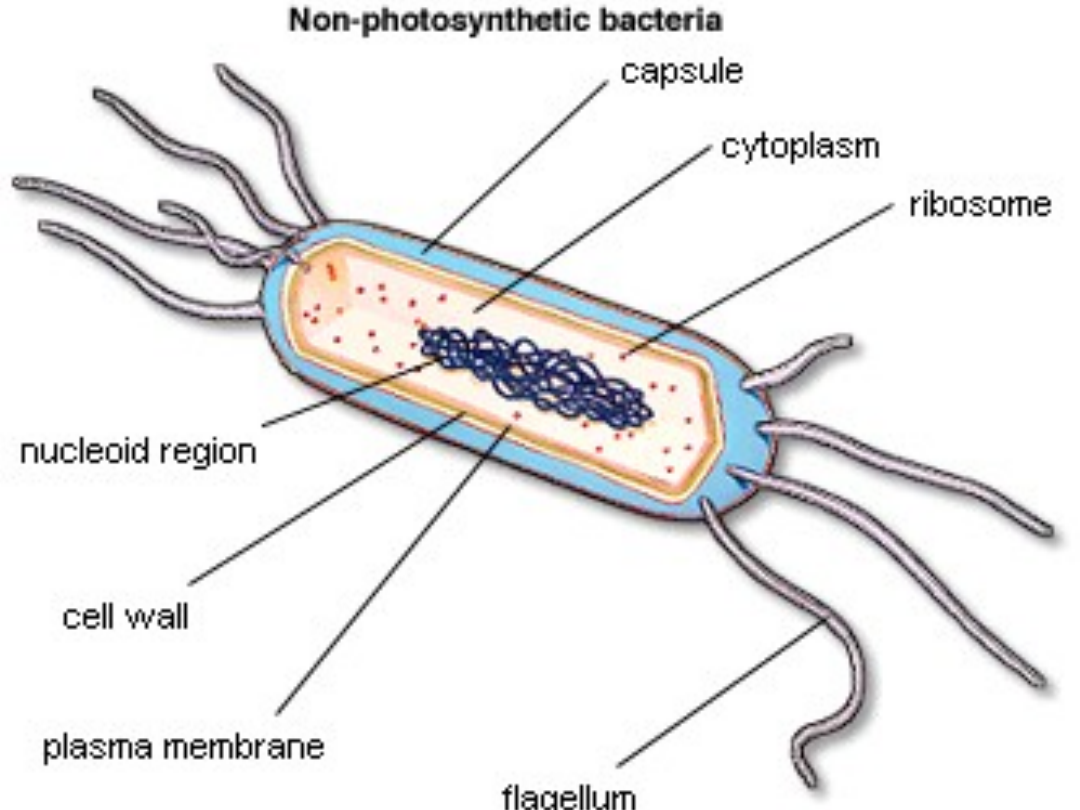
Eukaryotes
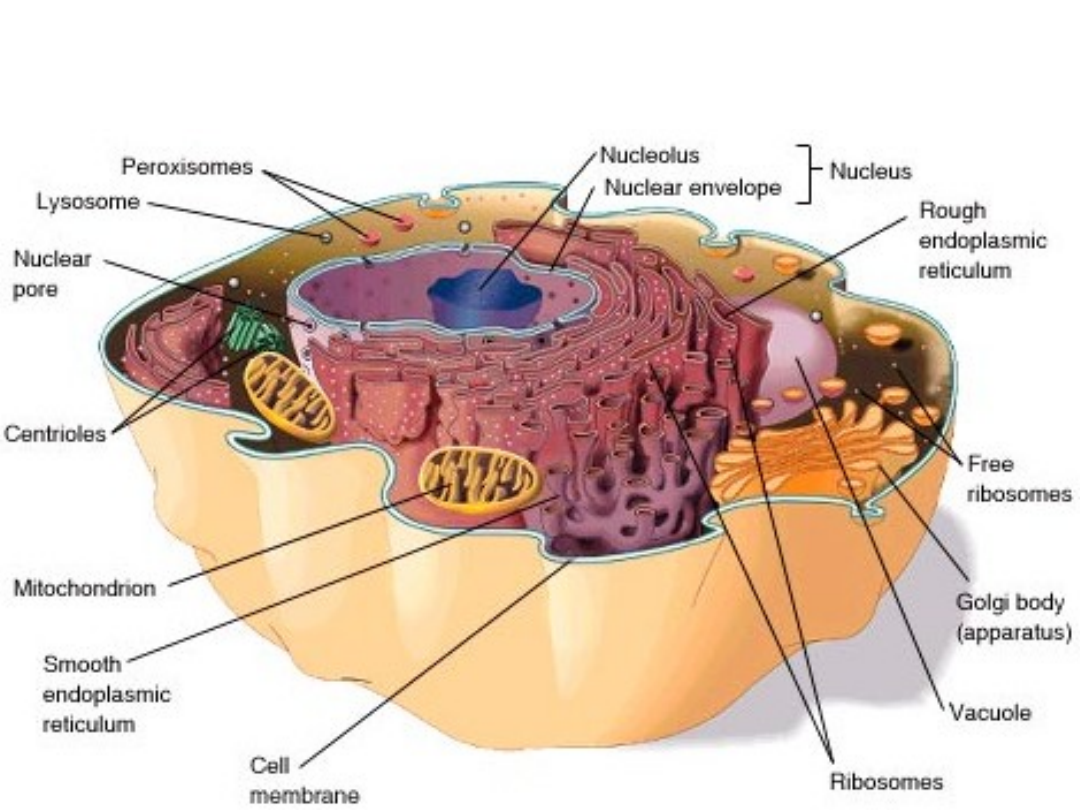
• Cells whose nucleus is enclosed in a
membrane
• Evolved later.
Eukaryotic fossils date to between 750
million years and possibly as old as 1.2-1.5 billion years.
Mango Fruit & Cell
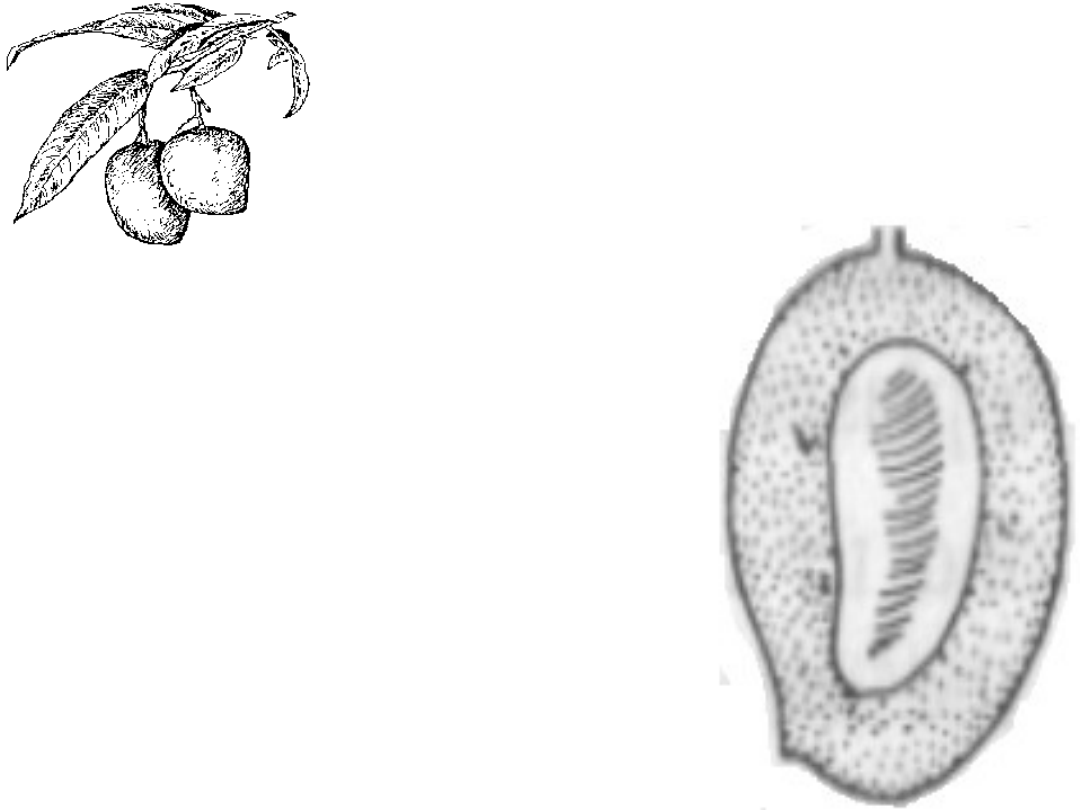
• What will be the
nucleus
counterpart?
• Fruit skin is like ?
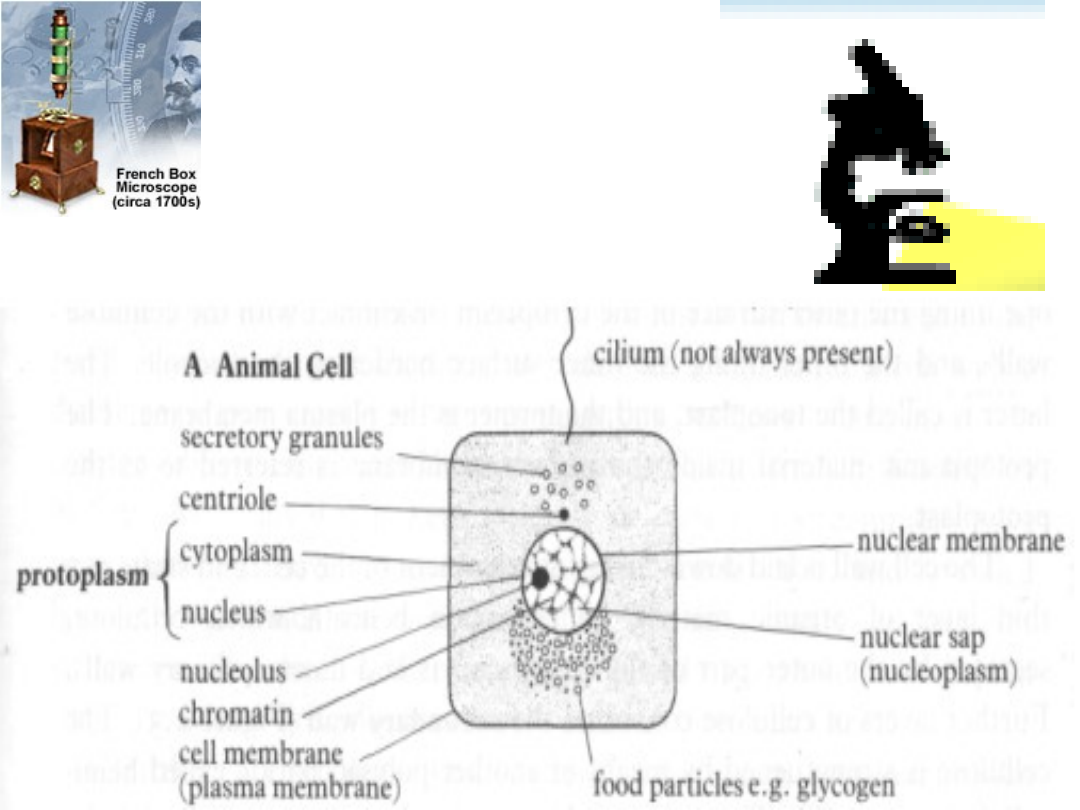
Cell as seen with a light microscope
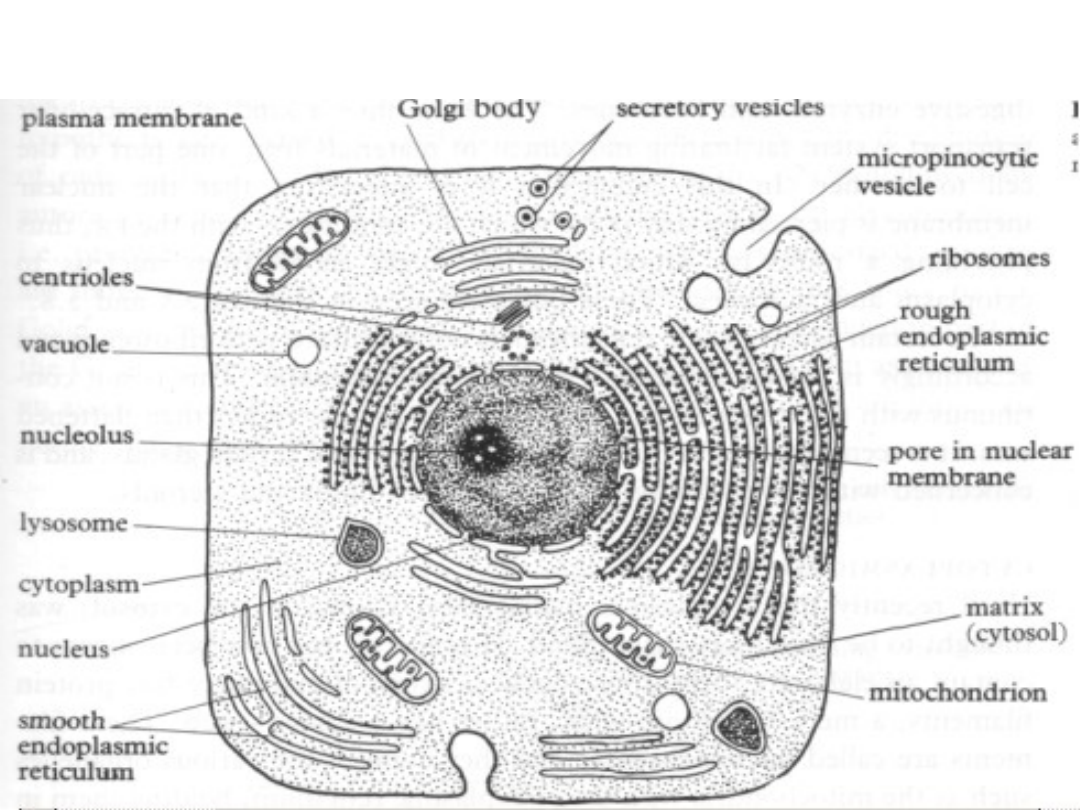
Fine structure of an animal cell- based on
electron microscope
studies
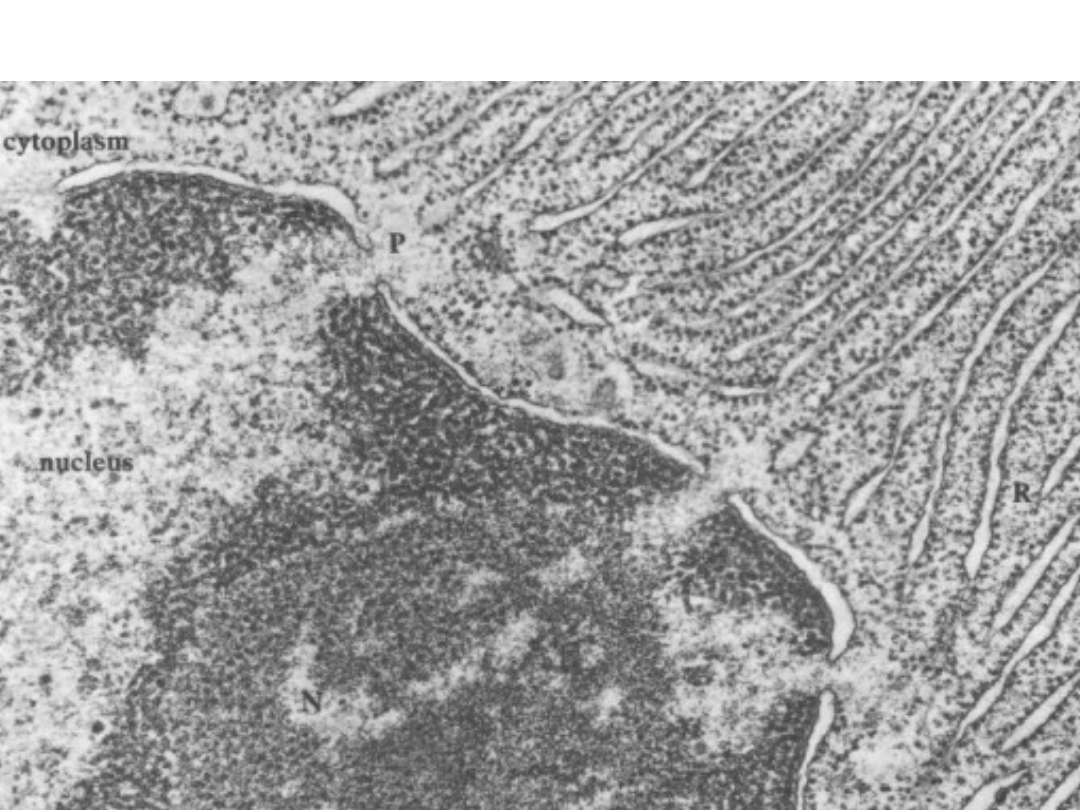
Eukayotic cell as seen with an electron
microscope
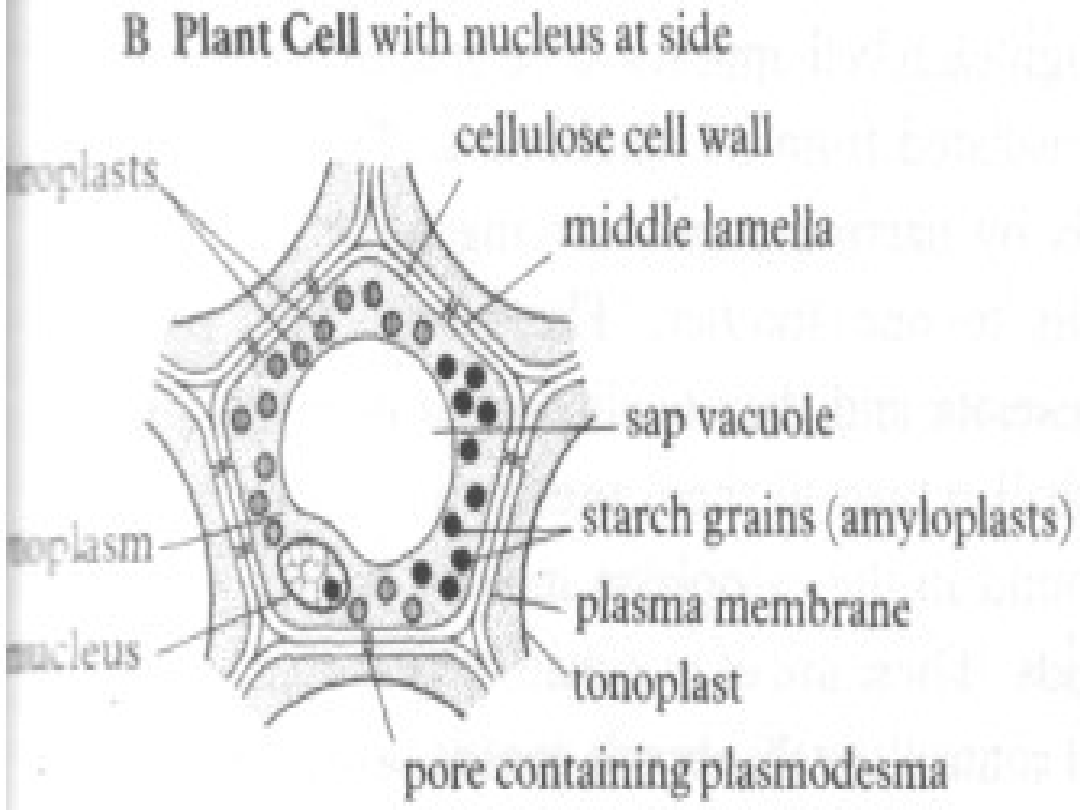
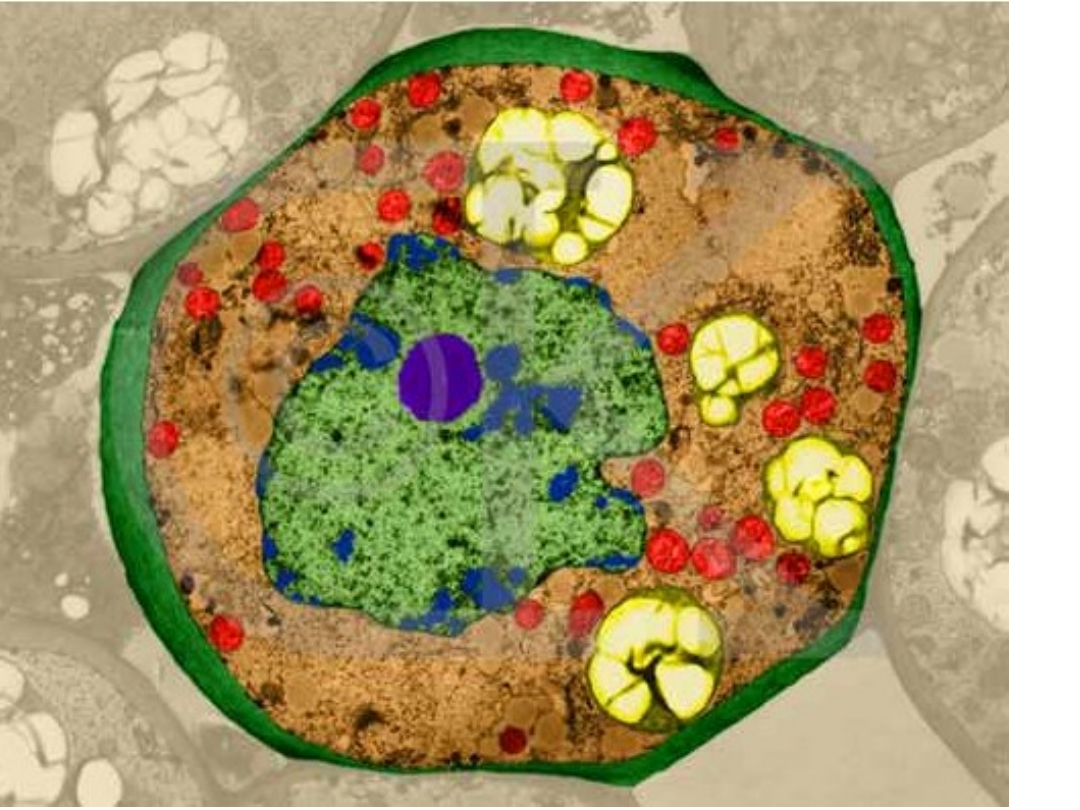
P
L
A
N
t
C
e
l
l

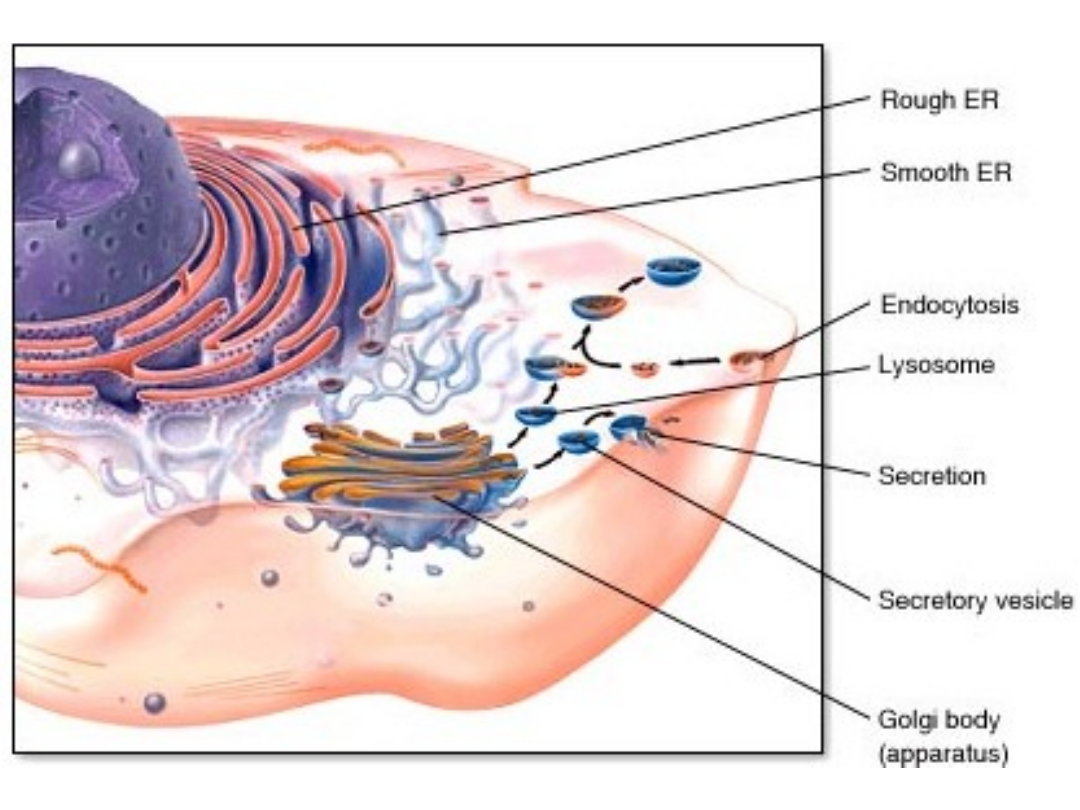
Organelles
• Mitochondria and chloroplasts are
energy-transducing organelles
• Both seem to share many properties
with bacteria:
– contain 70S ribosomes (whereas rest of
eukaryote cells contain 80S ribosomes)
– divide by binary fission
– contain circular DNA without nucleus,
etc.
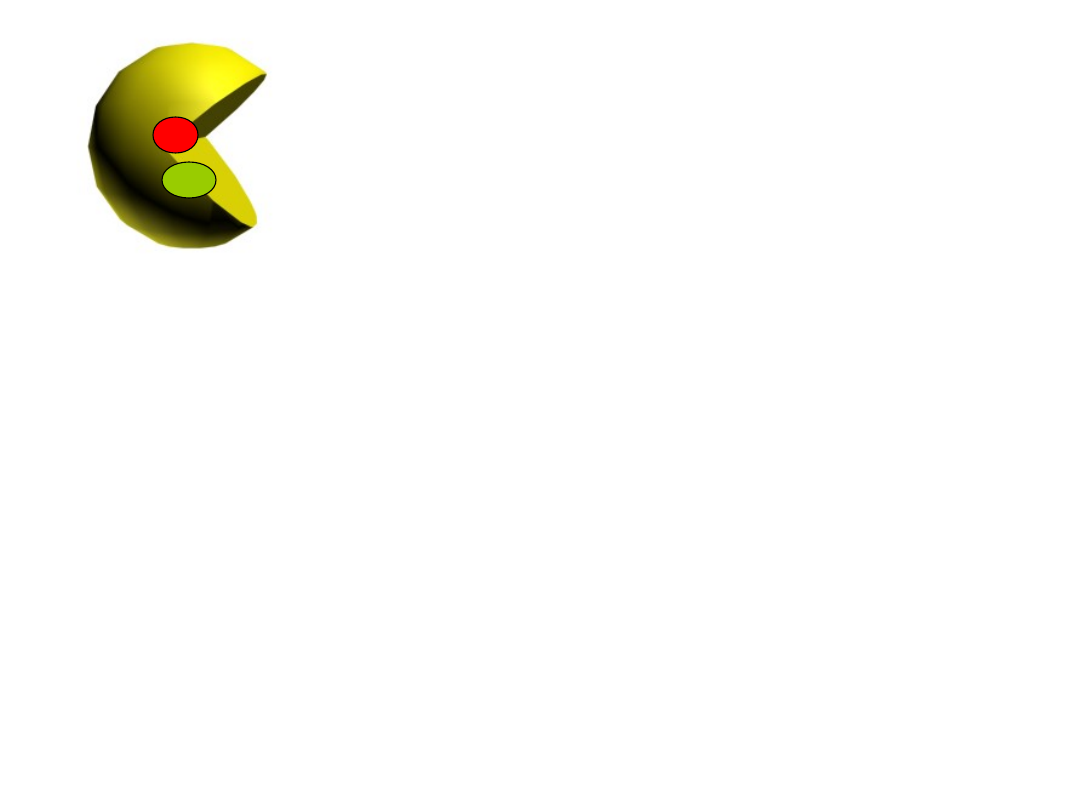
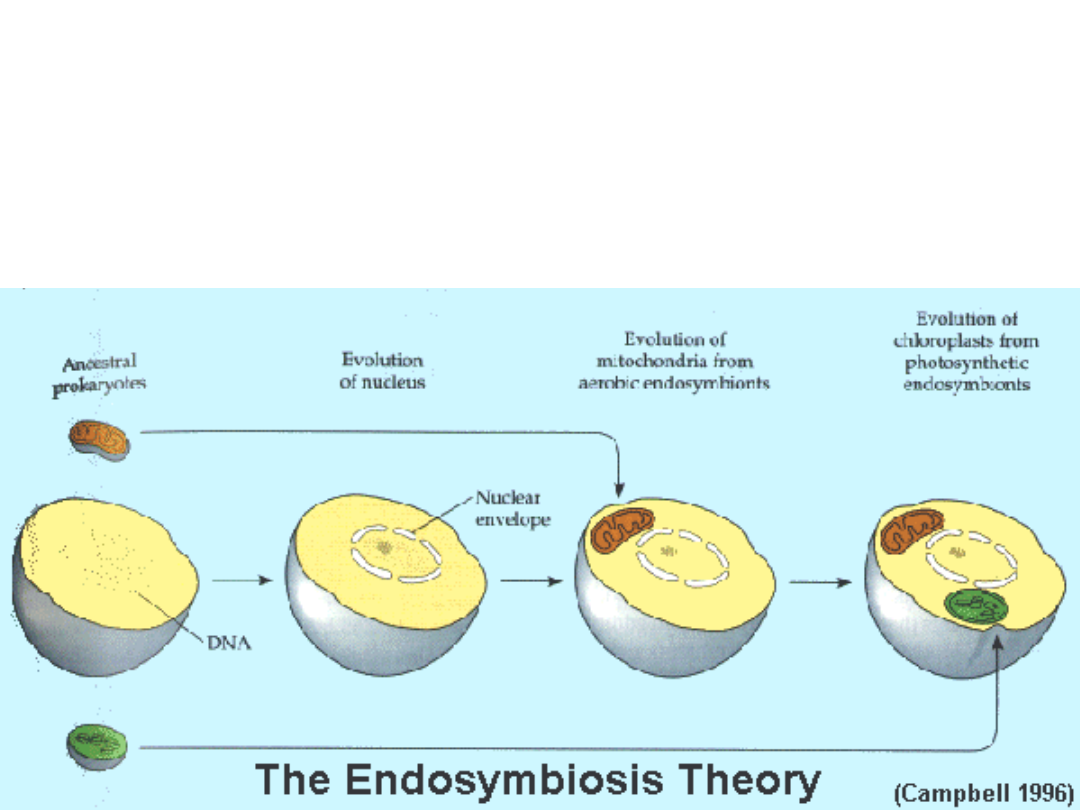
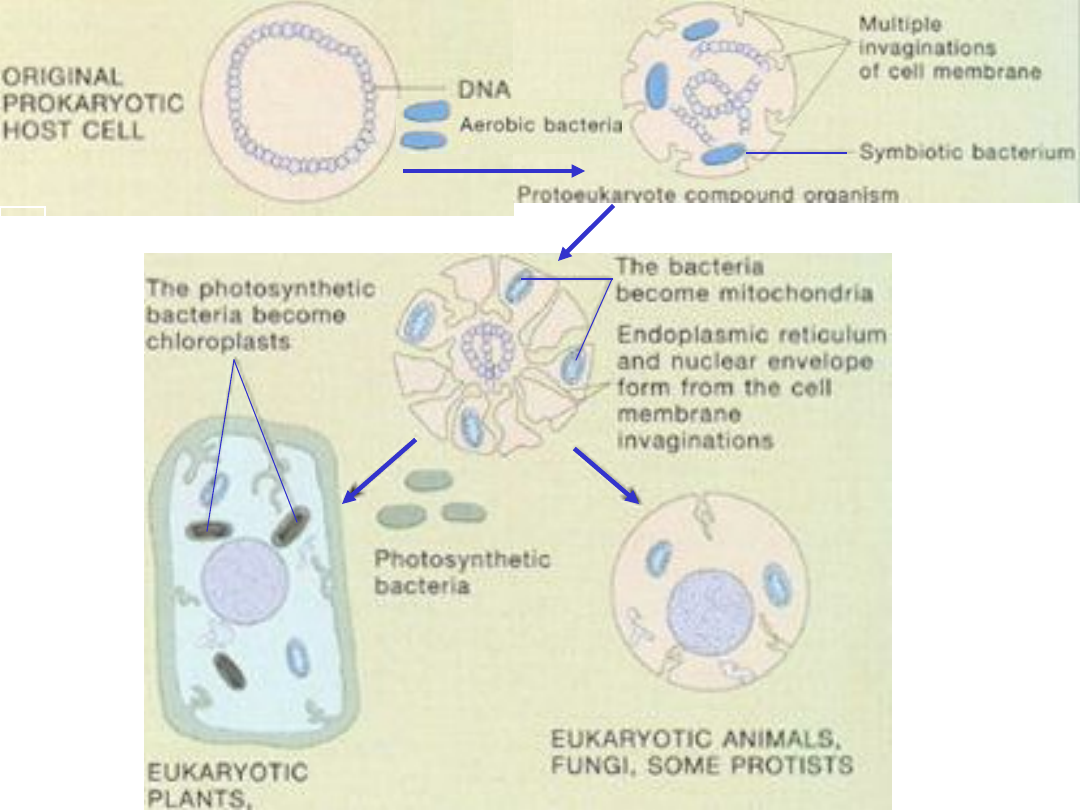
Endosymbiont Theory
Symbiosis = "living together“
Lynn Margulis
1971
• Chloroplasts and Mitochondria
(& undulipodia)
derived
from ancient colonization of large bacteria (became
the eucaryotic cell) by smaller bacteria
• Host cells acquired respiration from the precursor
of the mitochondrion, and oxygenic photosynthesis
from the precursor of the chloroplast
• Also acquired much of their genetic information
• Eventually, organelles lost ability to exist as
separate organisms, cannot have independent
existence from cell
Some protists
E
n
d
o
S
Y
m
b
I
o
si
s
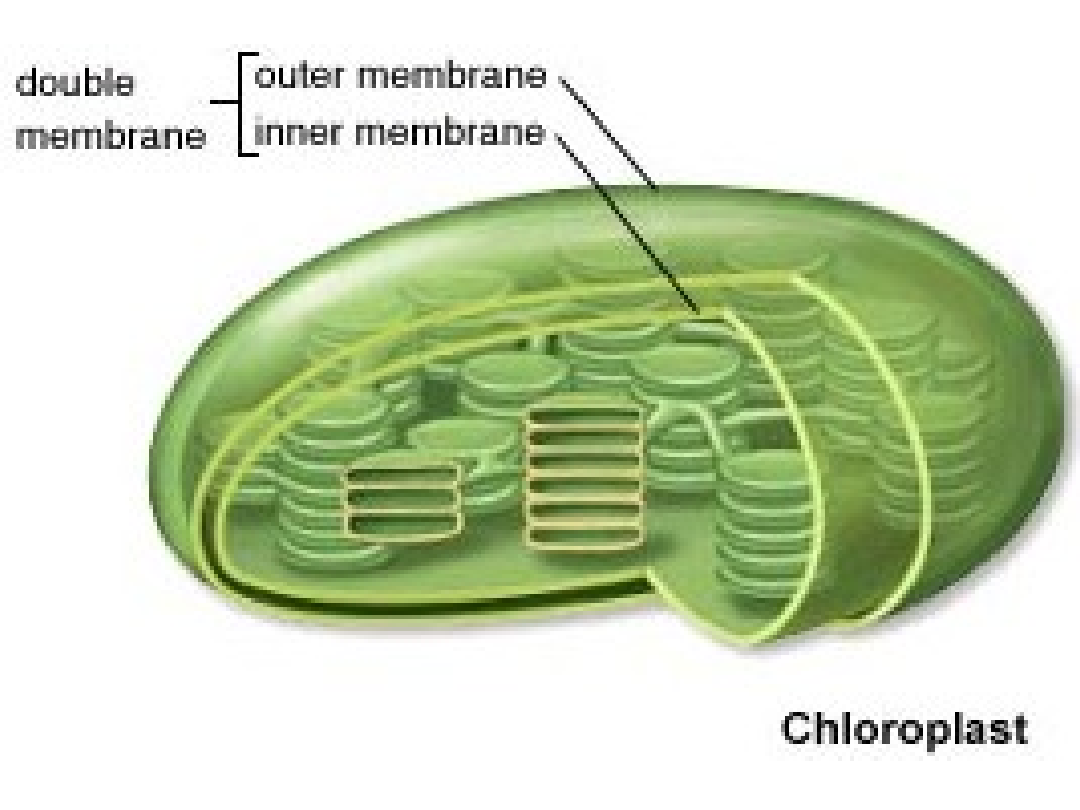
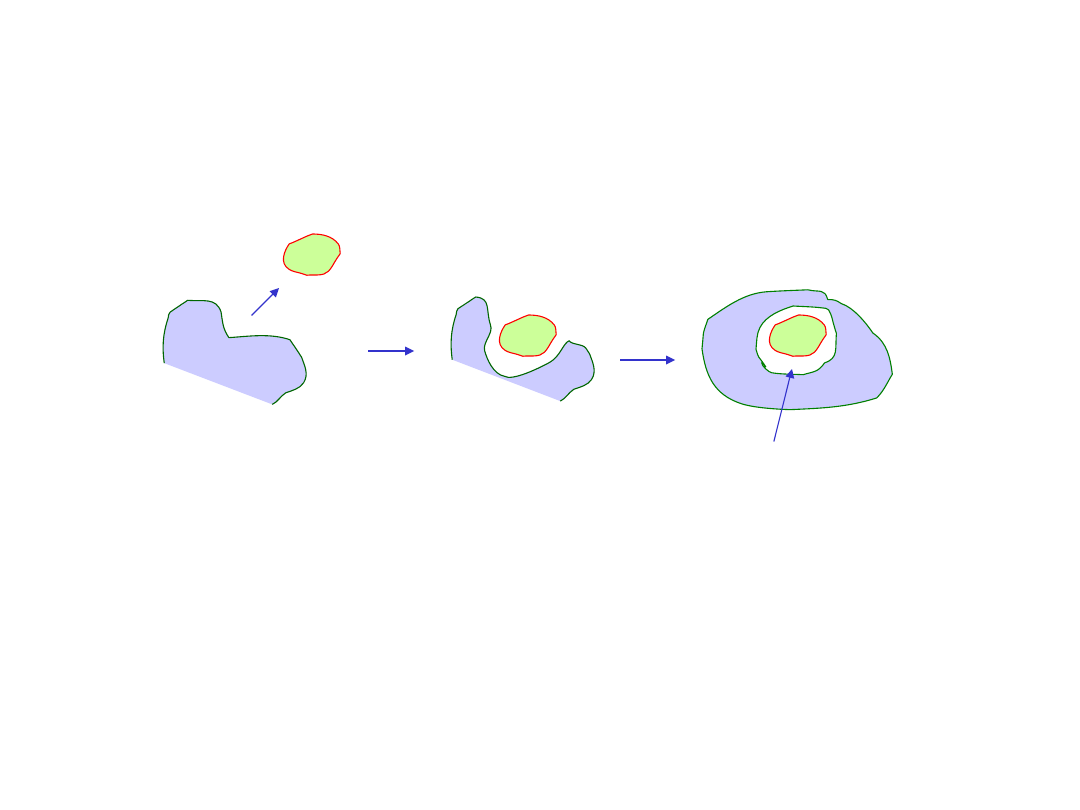
Why double membrane of chloroplast?
Outer membrane of
organelle originally
belonged to the host
cell.
Invagination
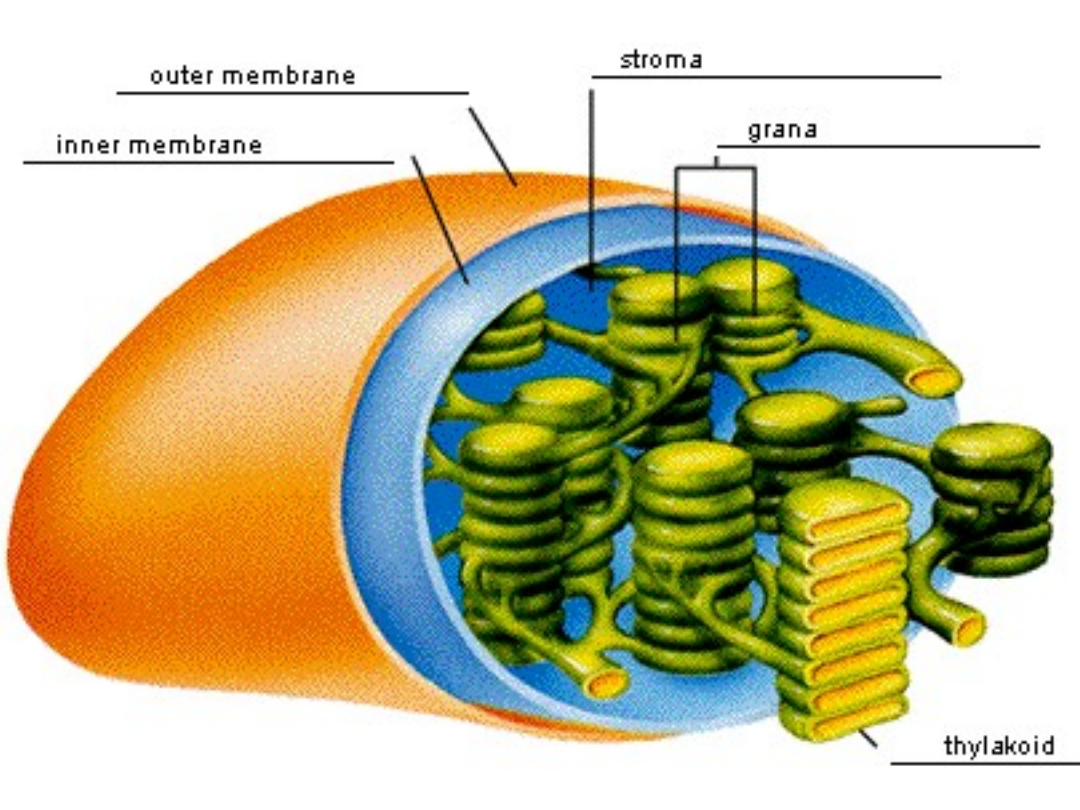
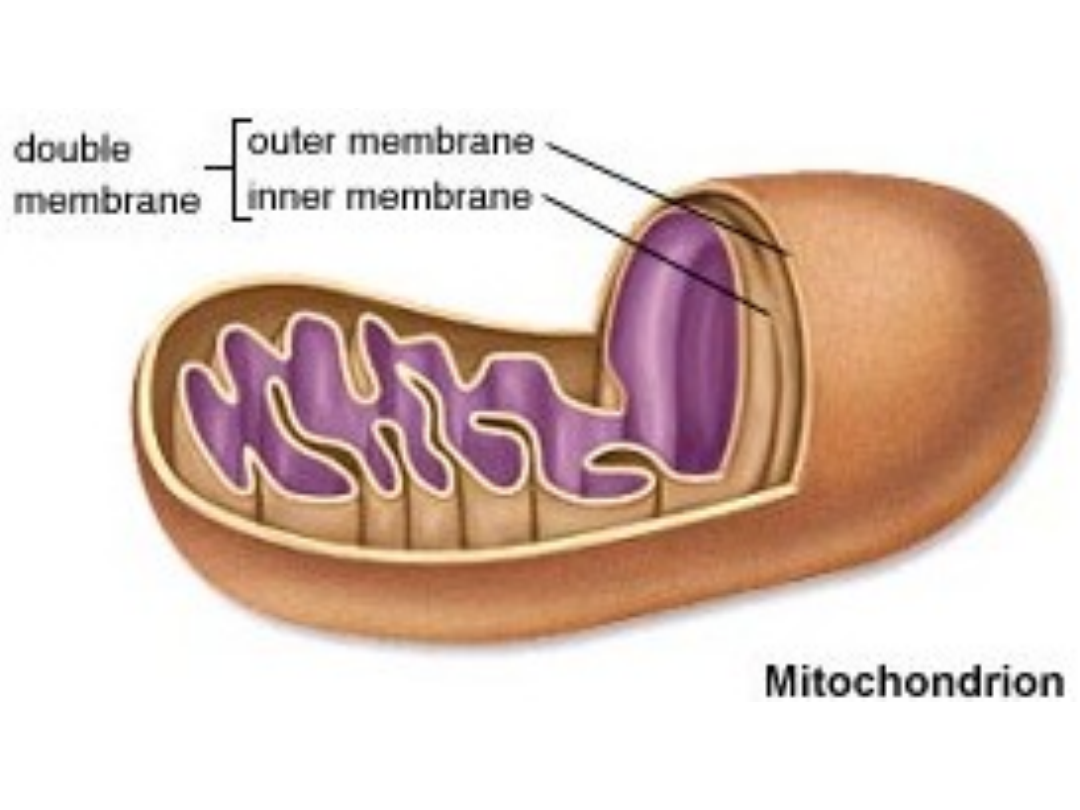
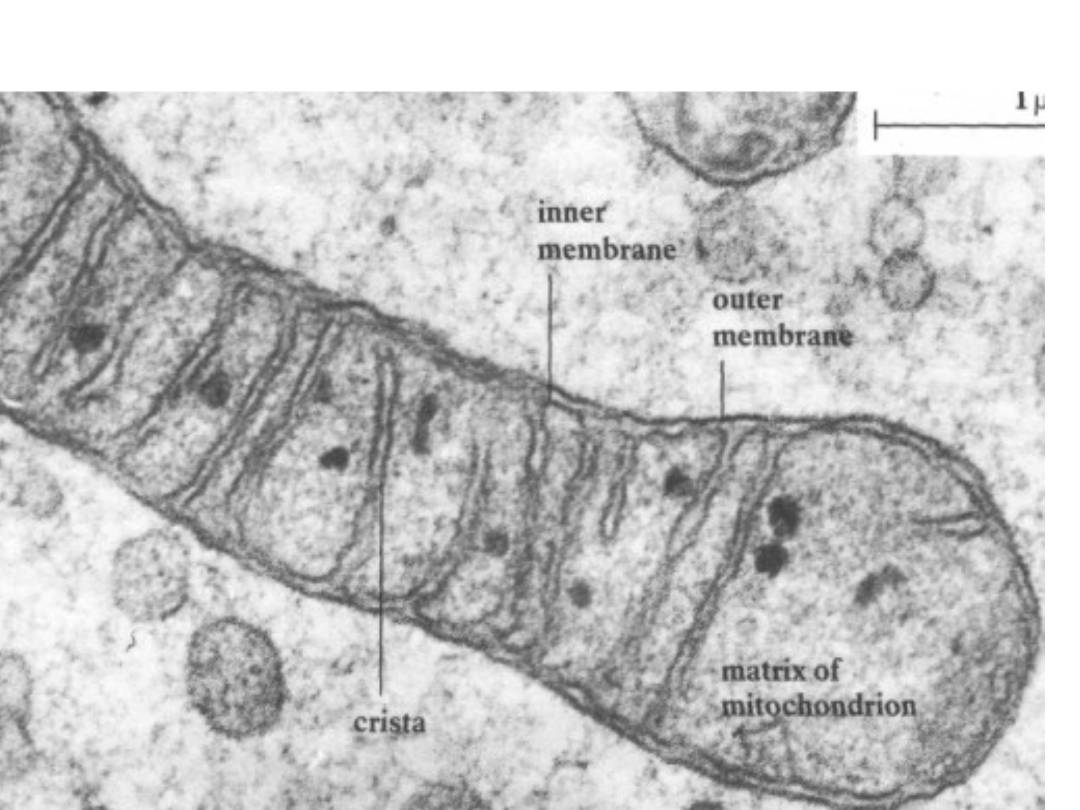
Images with electron microscope
Mitochondrium
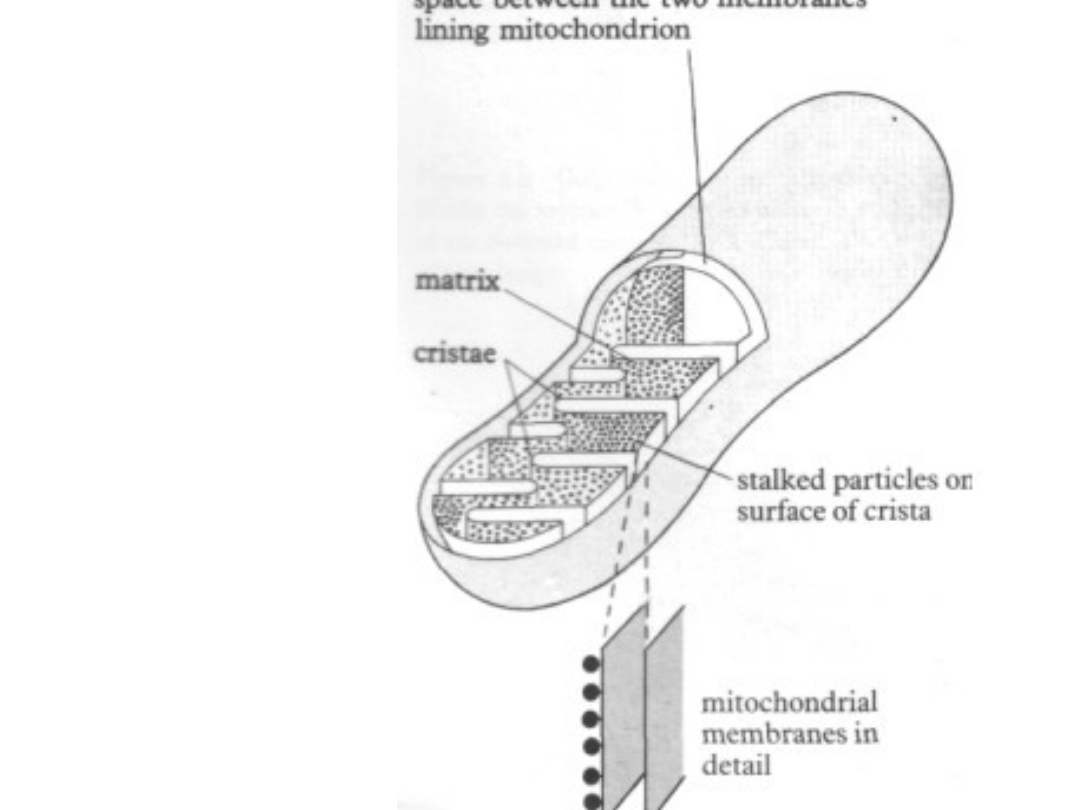
Cutaway view of
mitochondrion
Inner membrane more
active

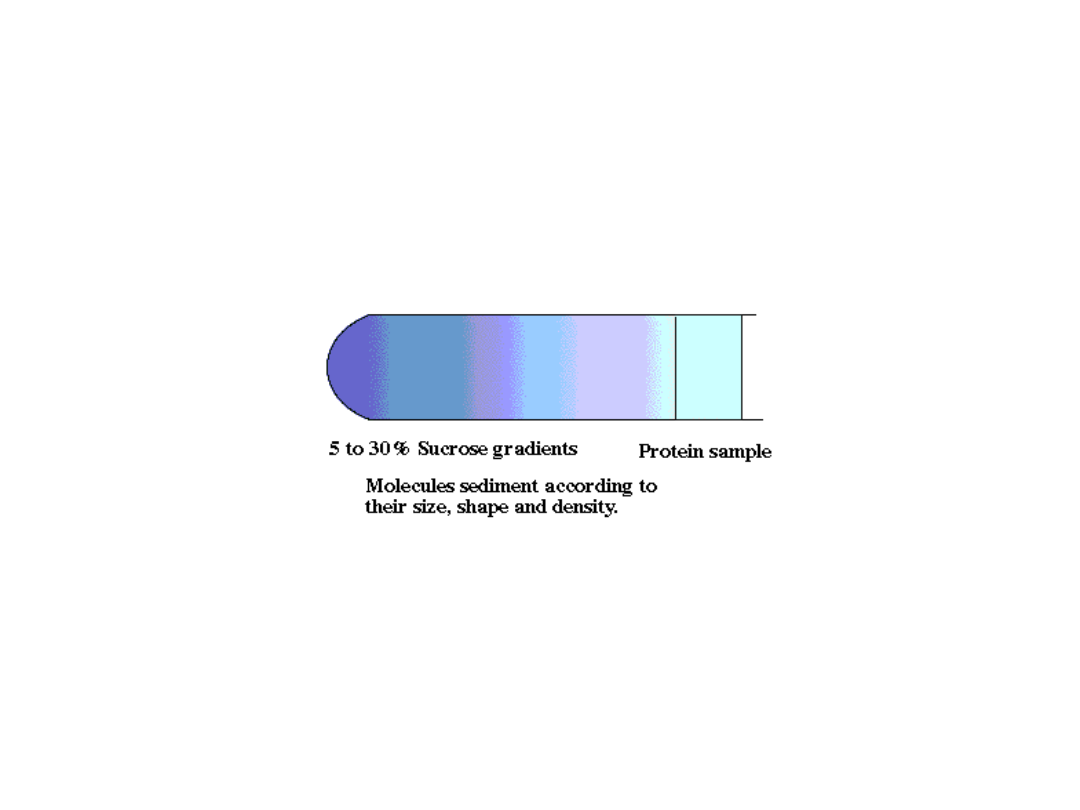
Centrifugation
• A centrifuge is a device for
separating particles from a solution
according to their size, shape,
density, viscosity of the medium and
rotor speed
• In biology, the particles are usually
cells, sub cellular organelles, viruses,
large molecules such as proteins and
nucleic acids
• Instrumental in working out the
functions of organelles
Centrifuge

.
CELLS Alive!
Tutorial
http://www.cellsalive.com/
is a highly visual site, where you'll find movies and animated
illustrations on cell processes, parasites, penicillin and more.
• cell.de
http://www.cells.de/index_e.htm
Online-Service for Cell Biology includes digital media
in internet quality and further information for university and
high school on cellular and molecular biology. The IWF -
Institute for Scientific Film, Göttingen
(Germany) prepares
educational
media about cellular and molecular biology
didactically and technically for different media carriers.
• C. elegans Movies
http://www.bio.unc.edu/faculty/goldstein/lab/movies.html
A visual introduction to C. elegans and its development. This page
has links to movies made by C.elegans researchers worldwide.
• Biology Mad
http://www.biologymad.com/
This website is mainly aimed for students studying AQA (spec. A)
Biology in the UK. It is informative, beautifully designed and
easy to use.
Further Help

.
• Virtual Cell
http://personal.tmlp.com/Jimr57/tour/cell/cell.htm
• Comparison of Prokaryote, Animal and Plant Cells
http://www.wiley.com/legacy/college/boyer/0470003790/animations/cell_structure/c
ell_structure.htm
• Interactive Cell Models
http://www.cellsalive.com/cells/3dcell.htm
• Organize It!
http://biologyinmotion.com/organize-it/
• MODELING LIMITS TO CELL SIZE
This investigation provides students with a 'hands-on' activity that simulates the
changing relationship of Surface areas -to- Volume for a growing cell.
http://www.accessexcellence.org/AE/AEC/AEF/1996/deaver_cell.html
• Endosymbiotic Theory
http://dekalb.dc.peachnet.edu/~pgore/students/w96/joshbond/symb.htm
• A Short History of the Microscope
http://www.microscope.org/micro/sm101.htm
• Centrifugation
http://ntri.tamuk.edu/centrifuge/centrifugation.html

Review Questions
1.
Which of these is not a type of cell? a) bacterium; b) amoeba; c) sperm;
d) virus
2.
The oldest fossil forms of life are most similar to _____. a) animals; b)
modern bacteria; c) archaebacteria; d) fungi
3.
A prokaryotic cell would not have which of these structures? a)
ribosome; b) nucleus; c) cell membrane; d) cell wall
4.
Ribosomes are cellular structures involved in ____. a) photosynthesis; b)
chemosynthesis; c) protein synthesis; d) carbohydrate synthesis
5.
The earliest microscopes used to image the specimens. a) high energy
electron beams; b) interatomic forces; c) low energy electron beams; d)
light
6.
Plant cells have ___ and ___, which are not present in animal cells. a)
mitochondria, chloroplasts; b) cell membranes, cell walls; c)
chloroplasts, nucleus; d) chloroplasts, cell wall
7.
The ___ is the membrane enclosed structure in eukaryotic cells that
contains the DNA of the cell. a) mitochondrion; b) chloroplast; c)
nucleolus; d) nucleus
8.
The mitochondrion functions in ____. a) lipid storage; b) protein
synthesis; c) photosynthesis; d) DNA replication; e) ATP synthesis
9.
Which of these cellular organelles have their own DNA? a) chloroplast;
b) nucleus; c) mitochondrion; d) all of these
For answers click on notes
Document Outline
- Slide 1
- Lesson Objectives
- Slide 3
- Slide 4
- Slide 5
- .
- Tenets of the Cell Theory
- Slide 8
- Slide 9
- Slide 10
- Slide 11
- Slide 12
- Slide 13
- Why are cells so small?
- Slide 15
- Slide 16
- Smaller Particles React Faster Than Larger Particles in Chemical Reactions
- Slide 18
- Microscope
- Slide 20
- Slide 21
- Slide 22
- Slide 23
- Cells Have Evolved Two Basic Architectural Plans
- Prokaryotes
- Slide 26
- Slide 27
- Slide 28
- Eukaryotes
- Slide 30
- Mango Fruit & Cell
- Slide 32
- Slide 33
- Slide 34
- Slide 35
- Slide 36
- Organelles
- Endosymbiont Theory Symbiosis = "living together“
- Slide 39
- Slide 40
- Slide 41
- Slide 42
- Slide 43
- Slide 44
- Slide 45
- Slide 46
- Slide 47
- Centrifugation
- Slide 49
- Slide 50
- Slide 51
- Review Questions
Wyszukiwarka
Podobne podstrony:
Fluorescencja chlorofilu
W4 Mitochondria i chloroplasty
chloroform eros rc105
chlorowcop mat dla stud
chloroplasty
chlorofilantocyjany
alfa Naftyloaminy chlorowodorek
Chininy chlorowodorek 2×hydrat
cw 4 Izolacja chloroplastów
chloro
Aluminium chlorohydrate
KWAS CHLOROWY(VII), BHP KARTA CHARAKTERYSTYKI SUBSTANCJI NIEBEZPIECZNEJ
2-CHLORO-1, Chemia -BHP
2-CHLOROANILINA, Chemia -BHP
Wykres zależności?sorpcji od długości?li dla roztworu chlorofilu
Chloroform
więcej podobnych podstron