
Chapters 11 (Part II)
Metal Alloys

•
Part I:
Thermal Processing of Metal
Alloys
–
Heat Treatment
–
Precipitation Hardening
•
Part II:
Metal Alloys and Fabrication of
Metals
Outline of Chapter 11

•
Ferrous Alloys: Alloys containing more than 50wt.%Fe
–
Classification of Steels
–
Designation of Steels
•
Nonferrous Alloys: Alloys containing less than 50wt.
%Fe
–
Aluminum
–
Copper
–
Magnesium
–
Titanium
–
Refractory metals
–
Superalloys
–
Noble metals
Metal Alloys

Metal Alloys
Ferrous
Nonferrous
Steels
Cast Irons
Low Alloy
Low-carbon Medium-
carbon
High-
carbon
High Alloy
Plai
n
High
strengt
h, low
alloy
Heat
treatab
le
Plai
n
Tool
Plai
n
Stainles
s
Gra
y
iron
Whit
e
iron
Malleabl
e iron
Ductil
e iron
Classification of Ferrous
Alloys
–
Steels
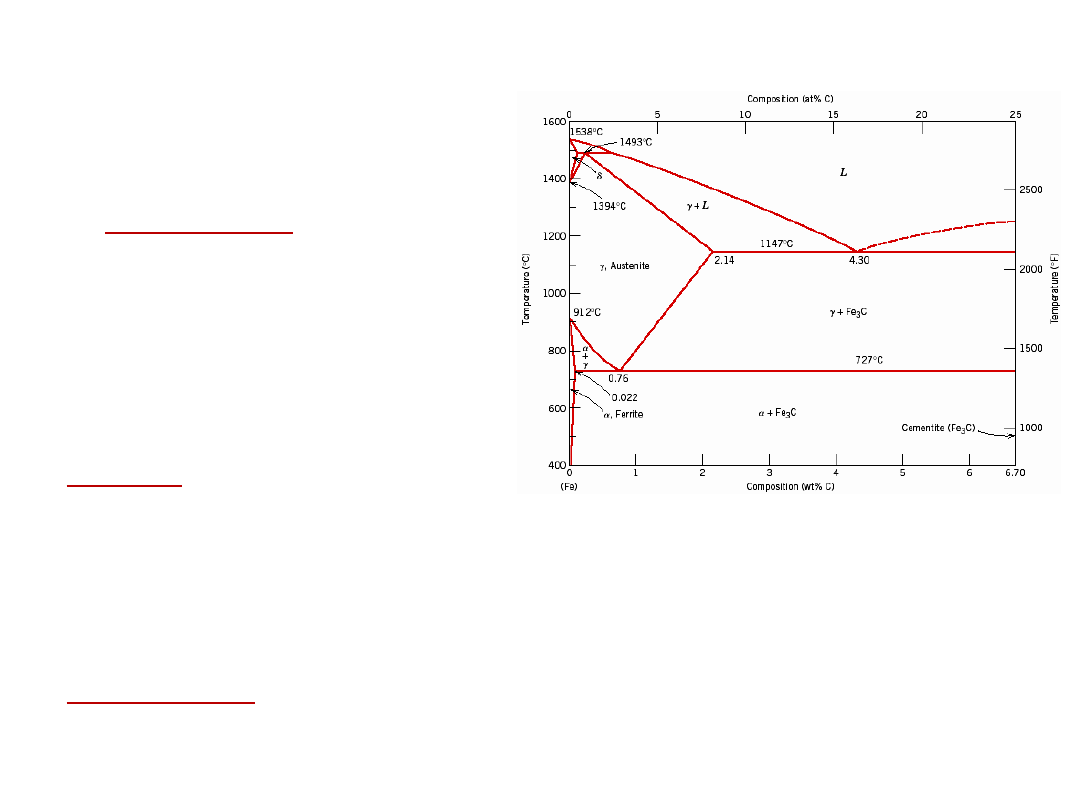
(0.008 ~ 2.14wt% C)
In most steels the microstructure consists of both and
Fe
3
C phases.
Carbon concentrations in commercial steels rarely
exceed 1.0 wt%.
–
Cast irons
(2.14 ~ 6.70wt% C)
Commercial cast irons normally contain less than 4.5wt
% C
Classification of Ferrous
Alloys
•
Based on carbon
content
–
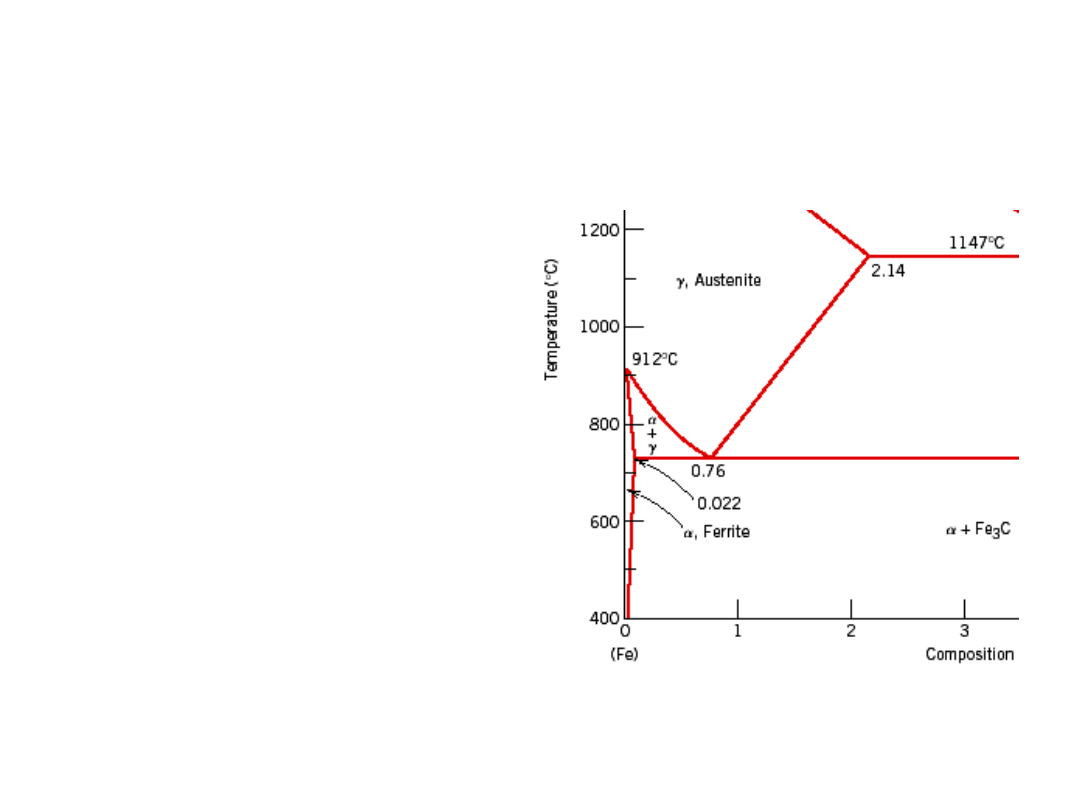
Pure iron
(<
0.008wt% C)
From the phase
diagram, it is
composed almost
exclusively of the
ferrite phase at room
temperature.

•
The carbon content is normally less than
1.0 wt%.
•
Plain carbon steels:
containing only
residual concentrations of impurities other
than carbon and a little manganese
About 90% of all steel made is carbon steel.
•
Alloy steels:
more alloying elements are
intentionally added in specific
concentrations.
•
Stainless steels
Ferrous Alloys — Steels
•
Low-carbon steels
–
Less than 0.25 wt%C
•
Medium-carbon steels
–
0.25 ~ 0.60 wt%C
•
High-carbon steels
–
0.60 ~ 1.4 wt%C
Classification of Steels
According to Their Carbon Contents

•
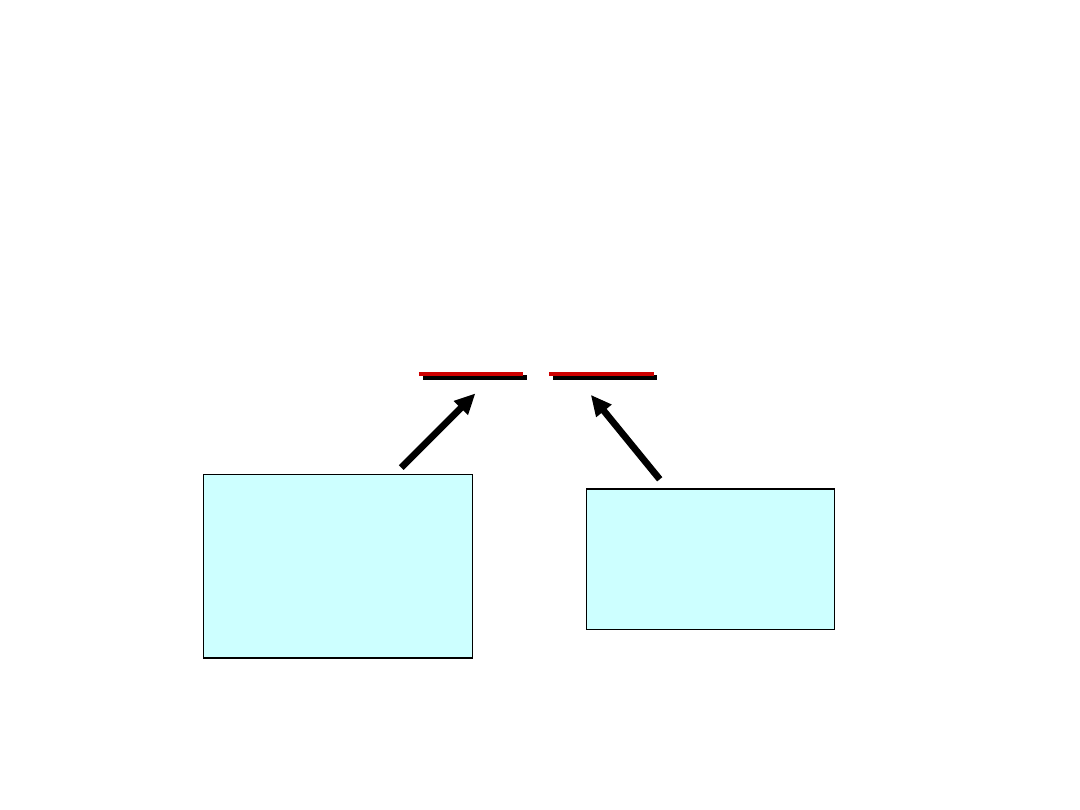
A
four-digit number:
–
the first two digits indicate the alloy
content;
–
the last two, the carbon concentration
•
For plain carbon steels, the first two digits
are 1 and 0;
alloy steels are designated by
other initial two-digit combinations (e.g., 13,
41, 43)
•
The third and fourth digits represent the
weight percent carbon multiplied by 100
For example, a 1040 steel is a plain carbon
steel containing 0.40 wt% C.
The Designation of Steels
•
A
four-digit number
: the first two digits
indicate the alloy content; the last two,
the carbon concentration
41
41
40
40
Identifies
major
alloying
element(s)
Percentag
e of
carbon
The Designation of Steels
•
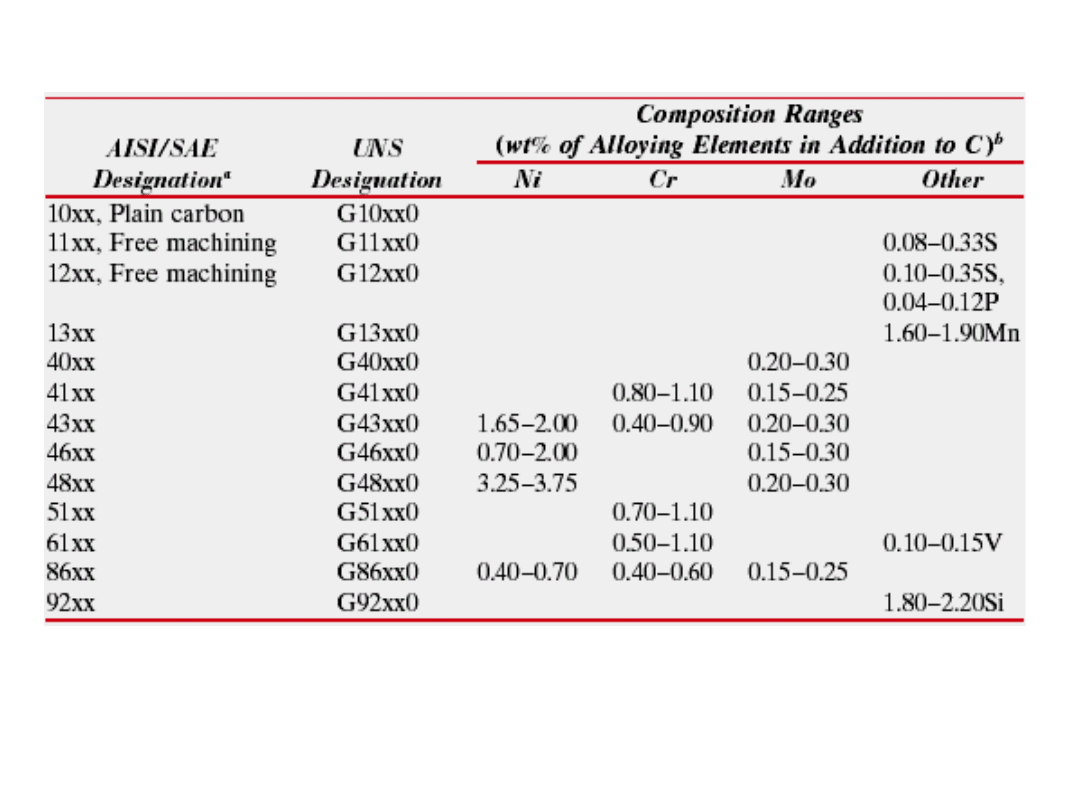
AISI:
A
merican
I
ron and
S
teel
I
nstitute
•
SAE:
S
ociety of
A
utomotive
E
ngineers
•
UNS:
U
niform
N
umbering
S
ystem
Table 11.2a AISI/SAE and UNS Designation
Systems

Steel Alloys
Steel Numerical Name
Key Alloys
10XX, 11 XX
Carbon only
13XX
Manganese
23XX, 25 XX
Nickel
31XX, 33XX, 303XX
Nickel-Chromium
40XX
Mo
41XX
Cr-Mo
43XX & 47XX
Ni-Cr-Mo
44XX
Mn-Mo
48XX
Ni-Mo
50XX, 51XX, 501XX, 521XX,
514XX, 515XX
Cr
61XX
Cr-V
81XX, 86XX, 87XX, 88XX
Ni-Cr-Mo
92XX
Si-Mn
93XX, 98XX
Ni-Cr-Mo
94XX
Ni-Cr-Mo-Mn
XXBXX
Boron
XXLXX
Lead
94XX Ni-

•
Less than 0.25 wt%C
•
Unresponsive to heat treatments intended to
form martensite;
strengthening is
accomplished by cold work
•
Microstructures:
ferrite and pearlite
•
Relatively soft and weak, but having
outstanding ductility and toughness
•
Typically,
y
= 275 MPa,
UT
= 415~550 MPa,
and ductility = 25%EL
•
Machinable, weldable, and, of all steels, are
the least expensive to produce
•
Applications:
automobile body components,
structural shapes, and sheets used in
pipelines, buildings, bridges, etc.
Low-Carbon Steels
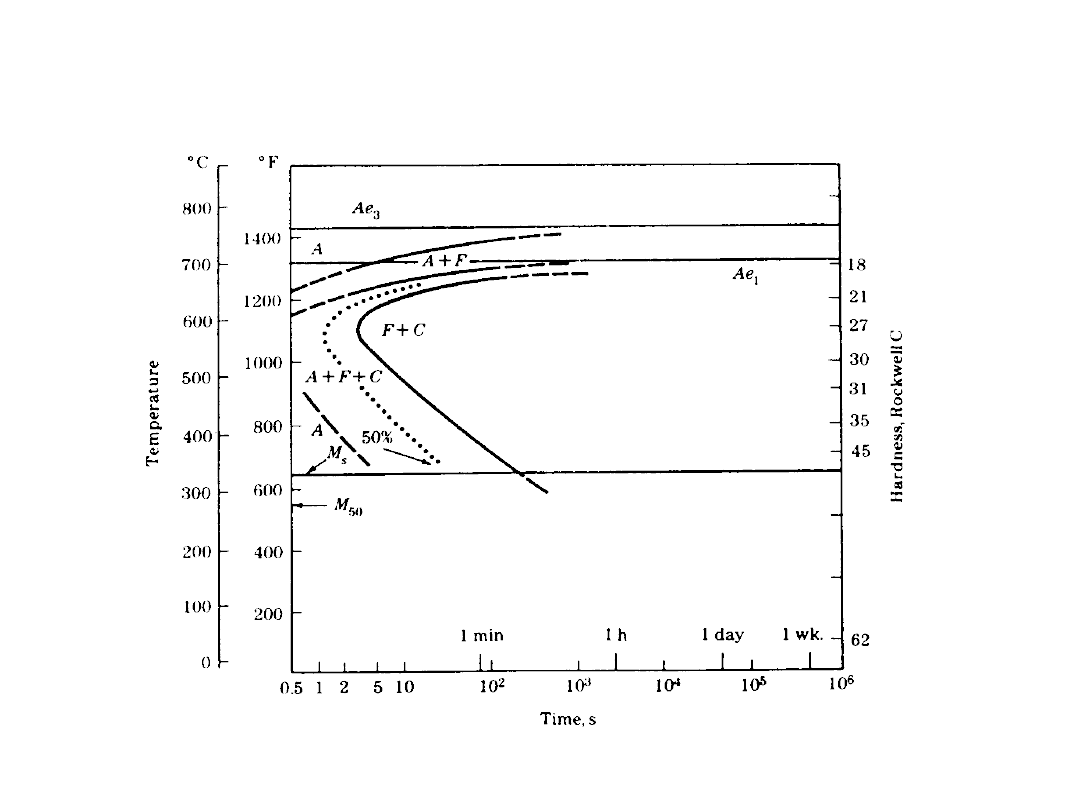
TTT Diagram of Some Hypoeutectoid
Alloys
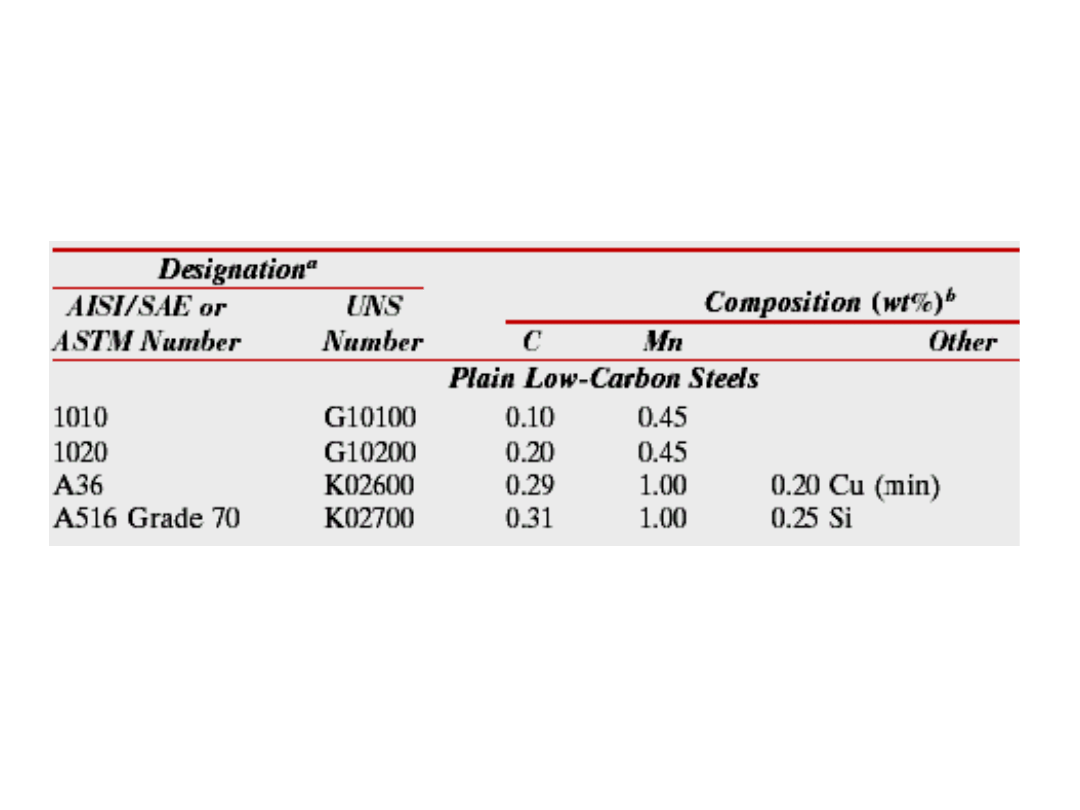
Table 11.1a
Compositions of Five Plain Low-Carbon
Steels
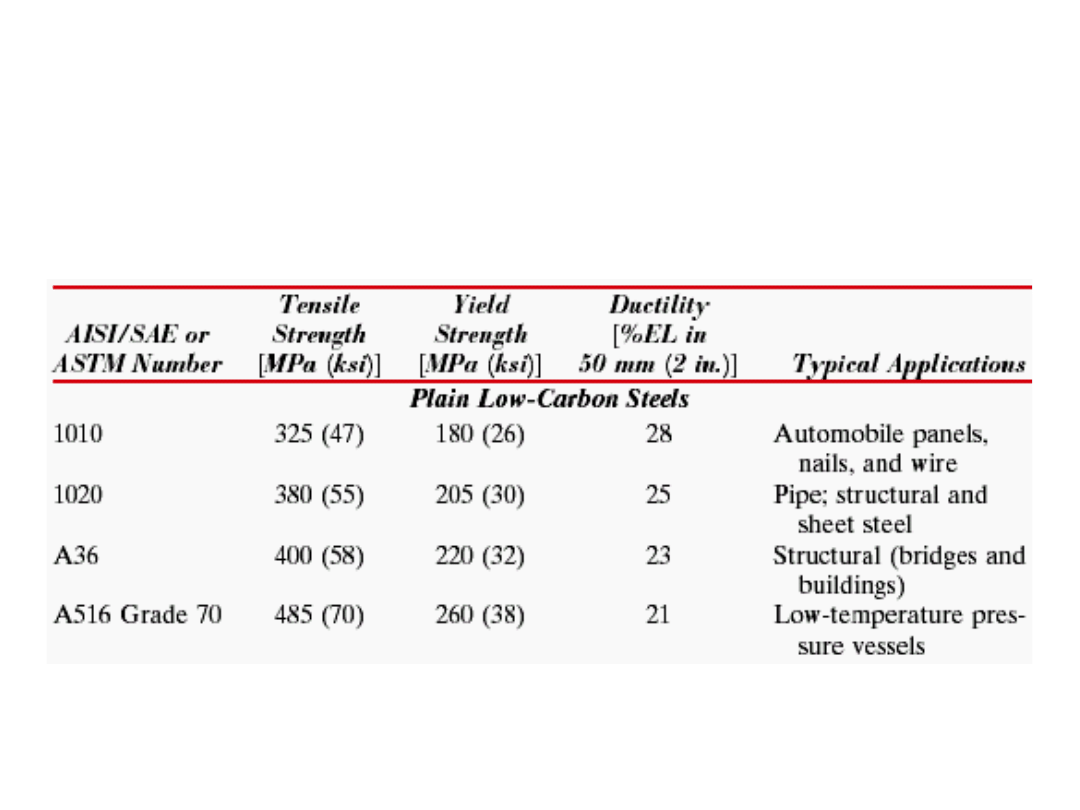
Table 11.1b
Mechanical Characteristics of Hot-Rolled Material
and Typical Applications for Various Plain Low-
Carbon Steels
•
0.25 ~ 0.60 wt%C
•
May be
heat treated
by austenitizing,
quenching, and then tempering to improve
their mechanical properties
•
Stronger than low-carbon steels and weaker
than high-carbon steels
a
Classified as high-carbon steels
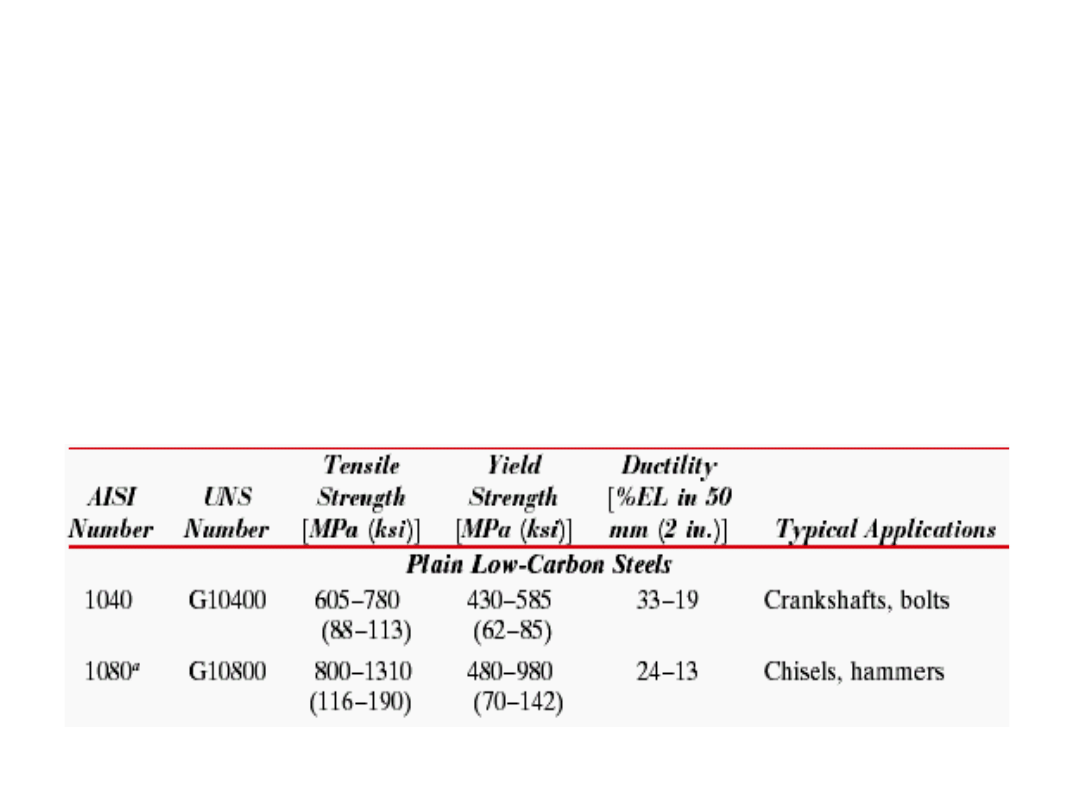
Typical Tensile Properties for Oil-Quenched and Tempered Plain
Carbon
Medium-Carbon Steels

•
0.60 ~ 1.4 wt%C
•
Used in a
hardened and tempered
condition
•
Hardest, strongest, and yet least ductile;
especially wear resistant and capable of
holding a sharp cutting edge
•
Containing Cr, V, W, and Mo; these alloying
elements combine with carbon to form very
hard and wear-resistant carbide compounds
(e.g., Cr
23
C
6
, V
4
C
3
, and WC)
•
Applications:
cutting tools and dies for
forming and shaping materials, knives,
razors, hacksaw blades, springs, and high-
strength wire
High-Carbon Steels
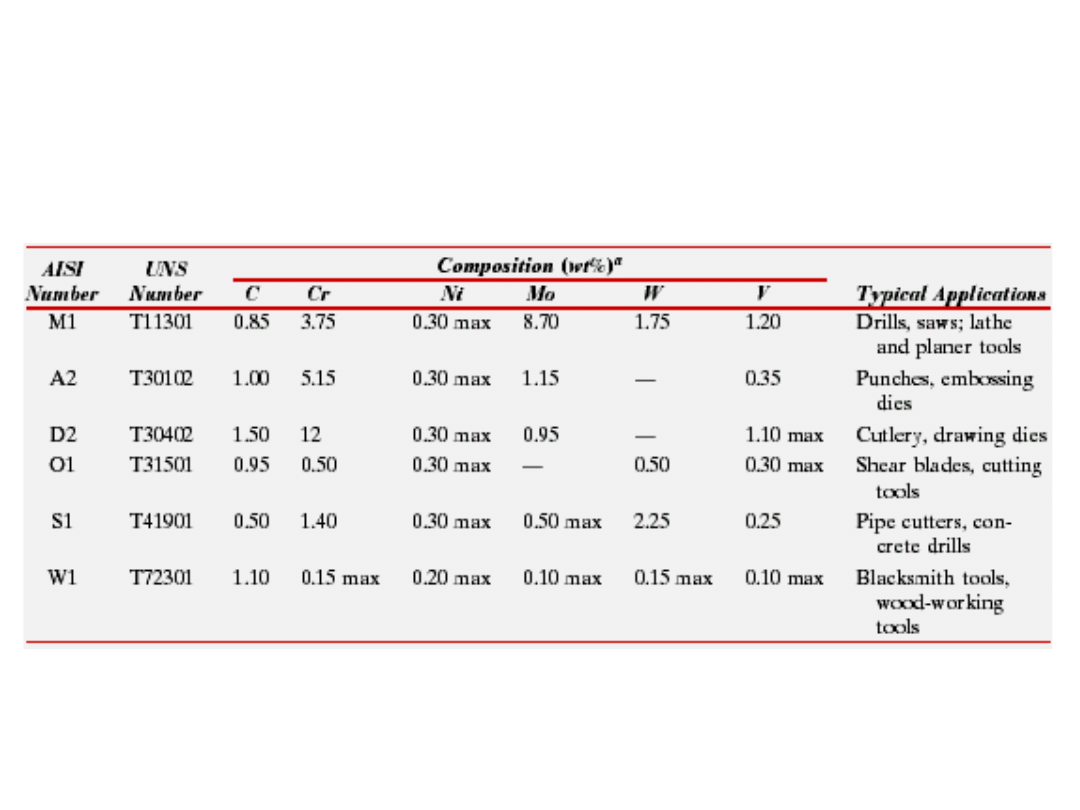
Table 11.3 Designations, Compositions,
and Applications for Six Tool Steels

Carbon Steel
Alloy Steel
Lower cost
Higher strength
Greater availability
Better wear
Toughness
Special high temperature
behavior
Better corrosion
resistance
Special electrical
properties
94XX Ni-
•
Alloy steel is more expensive than carbon steel; it should
be used only when a special property is needed.
Comparison of the Advantages
Offered by Carbon Steels and Alloy
Steels
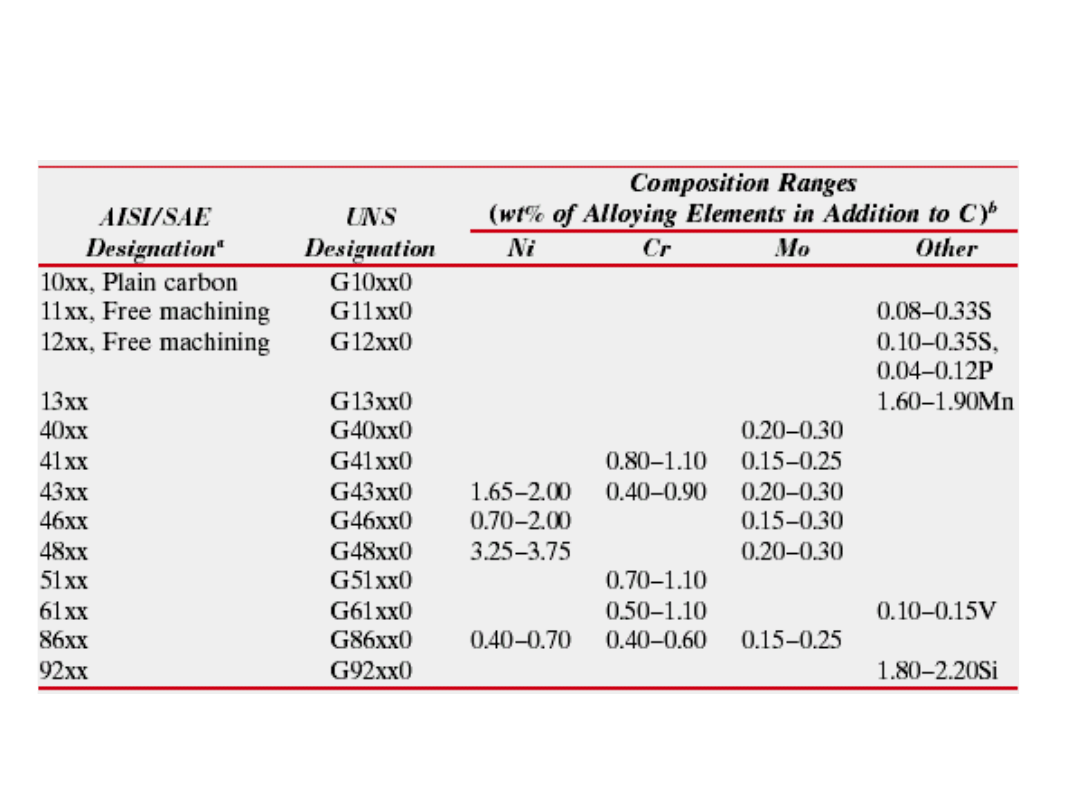
Table 11.2a AISI/SAE and UNS Designation
Systems

What makes stainless steels
“stainless”?

•
Stainless steels are selected for their
excellent resistance to corrosion.
•
Stainless steels are divided into three
classes: martensitic, ferritic, or austenitic
•
The predominant alloying element is
chromium
; a concentration of at least 11 wt%
Cr is required
–
It permits a thin, protective surface layer
of chromium oxide to form when the steel
is exposed to oxygen.
–
The chromium is what makes stainless
steel stainless!
Stainless Steels

•
Aluminum and aluminum alloys are the most widely
used nonferrous metals.
•
Aluminum alloys:
strengthened by cold working and
alloying (Cu, Mg, Si, Mn, and Zn)
–
Nonheat-treatable: single phase, solid solution strengthening
–
Heat treatable: precipitation hardening (MgZn
2
)
•
Properties
–
Low density (2.7 g/cm
3
), as compared to 7.9 g/cm
3
for steel
–
High electrical and thermal conductivity
–
Resistant to corrosion in some common environments
–
Easily formed and thin Al foil sheet may be rolled
–
Al has an FCC crystal structure; its ductility is retained even
at very low temperatures
–
Limitation: low melting temperature (660°C)
Aluminum and Its Alloys

Aluminum Alloy Desginations
Material
Number
Al (99.00% minimum and
greater)
1XXX
Al alloys are grouped by
major alloying elements
Copper
2XXX
Manganese
3XXX
Silicon
4XXX
Magnesium
5XXX
Magnesium and Silicon
6XXX
94XX Ni-

Aluminum’s use in vehicles is rapidly increasing
due to
the need for fuel efficient, environmentally friendly
vehicles
•
Al alloys can provide a
weight savings of up to
55% compared to an
equivalent steel
structure
•
It can match or exceed
crashworthiness
standards of similarly
sized steel structures
•
The Ford Motor
Company now has
aluminum-intensive test
vehicles on the road,
providing 46% weight
savings in the structure,
with no loss in crash
protection.

Aluminum plate is used in the
manufacture of aircraft and for fuel
tanks in spacecraft
•
Aircraft manufacturers use high-strength alloys
(principally alloy 7075)
to strengthen aluminum
aircraft structures.
•
Alloy 7075 has
zinc and copper
added for ultimate
strength, but because of the copper it is very
difficult to weld.
•
7075 has the best machinability and results in the
finest finish.
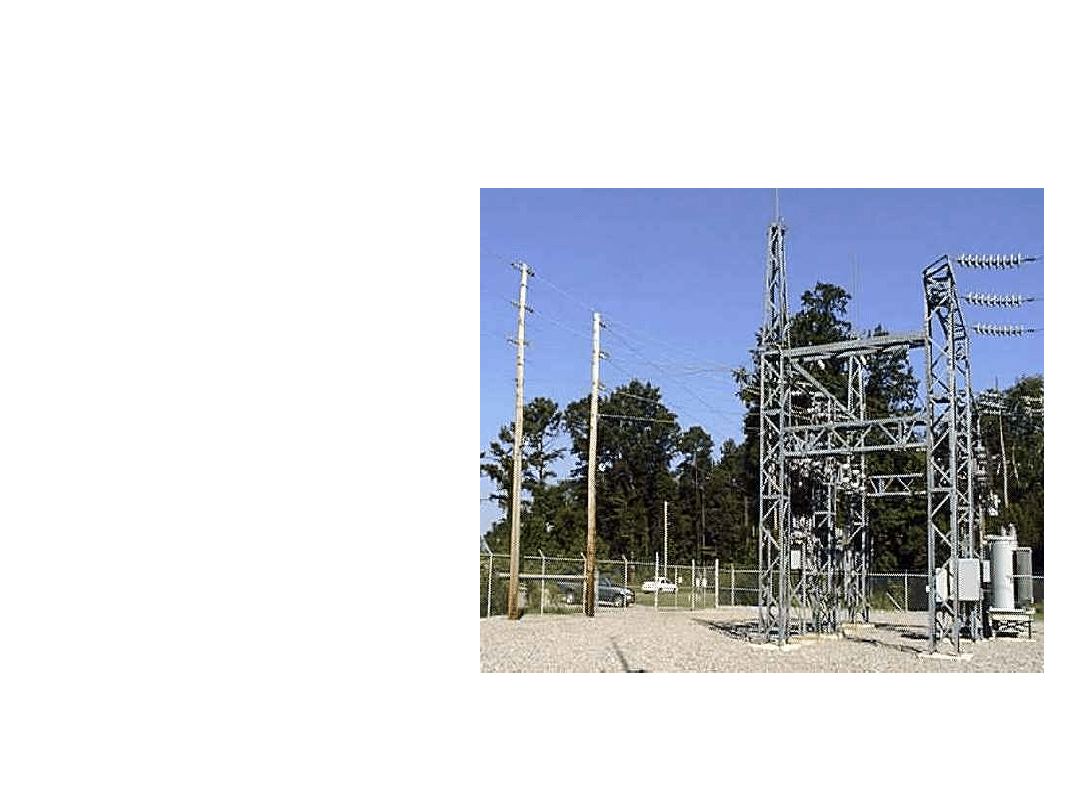
Lightweight aluminum is a
good material for conductor
cables
•
Electrical transmission
lines are the largest
users of aluminum
rod/bar/wire products.
•
In fact, this is the one
market in which
aluminum has virtually
no competition from
other metals.
•
Aluminum is simply
the most economical
way to deliver
electrical power.

•
Unalloyed copper:
–
So soft and ductile that it is difficult to machine
–
Unlimited capacity to be cold worked
–
Highly resistant to corrosion in diverse
environments
•
Copper alloys:
strengthened by cold working
and/or solid-solution alloying.
•
Bronze and brass
are two common copper alloys.
•
Applications:
costume jewelry, cartridge casings,
automotive radiators, musical instruments,
electronic packaging, and coins
Copper and Its Alloys
•
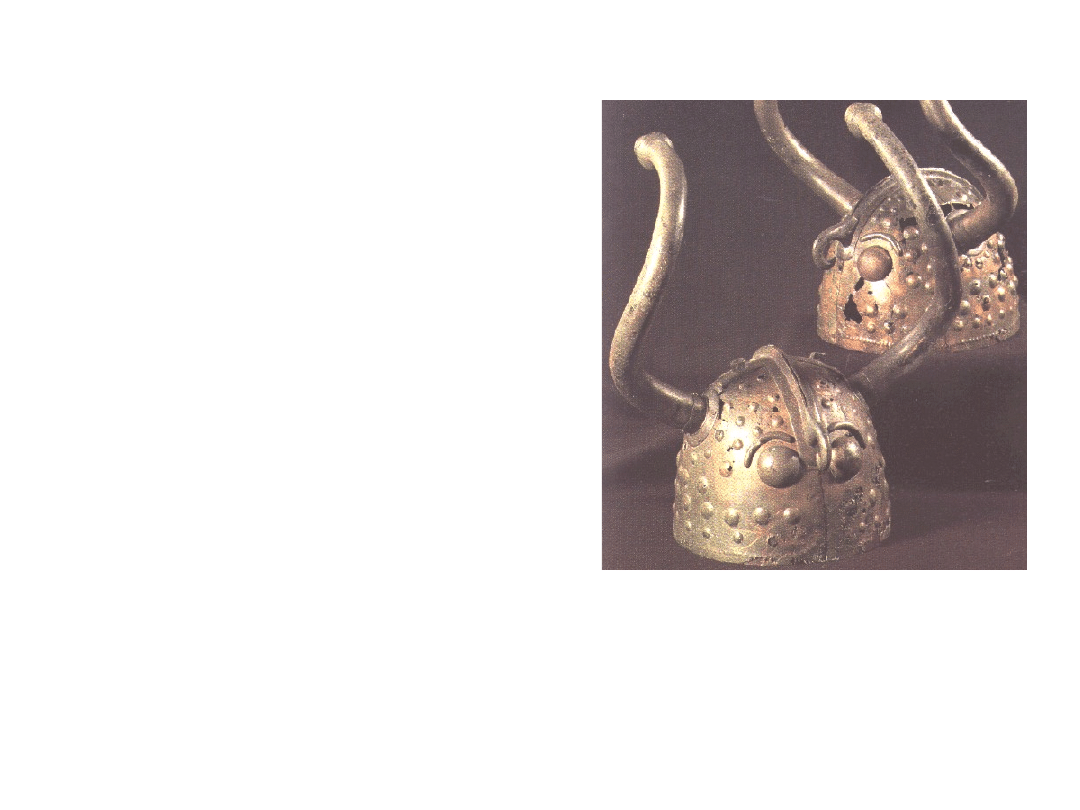
Bronze
is an alloy of
copper and tin
.
–
The first metal
purposely alloyed
by the smith
–
May contain up to
25% tin
•
Brass
is an alloy of
copper
and zinc
.
–
Contain 5-30% zinc
–
The zinc increases the strength of the
copper.
–
Ductility and formability are also
increased.
Bronz
e
Mask
Bronze and Brass
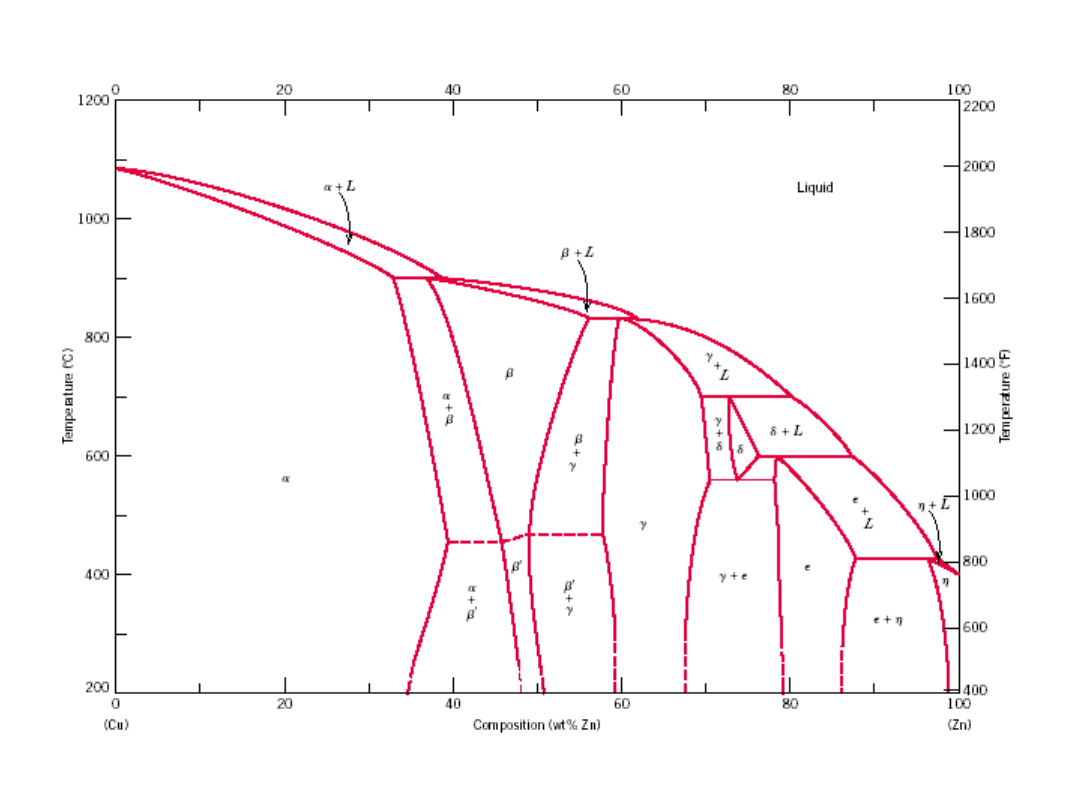
Brass — An Alloy of Copper and Zinc
Fig. 9.17
The copper-zinc phase
diagram.

•
Relatively new engineering materials that
possess an extraordinary combination of
properties
–
Low density (4.5 g/cm
3
)
–
High melting temperature (1668°C), high elastic
modulus (107 GPa)
–
Extremely strong: 1400 MPa tensile strength at
room temperature, highly ductile and easily
forged and machined
–
Limitations
Chemical reactivity with other materials and
oxidation problem at elevated temperatures
Cost
•
Applications:
airplane structures, space vehicles,
and in the petroleum and chemical industries
Titanium and Its Alloys

Alloy
Type
Common
Name
(UNS
Numbser)
Composition
(wt%)
Condition
Tensile
Strength
(MPa)
Yield
Strength
(MPa)
Ductility
(%EL)
Ti-6Al-4V
(R564000)
6Al, 4V,
balance Ti Annealed
947
877
14
94XX Ni-
•
Typical Applications:
High-strength prosthetic
implants, chemical-processing equipment,
airframe structural components
An Example of Titanium Alloy (Table
11.9)
•
Superlative combinations of
properties
–
Nickel-based alloys
–
Other alloying elements: Nb, Mo,
W, Ta, Cr, and Ti
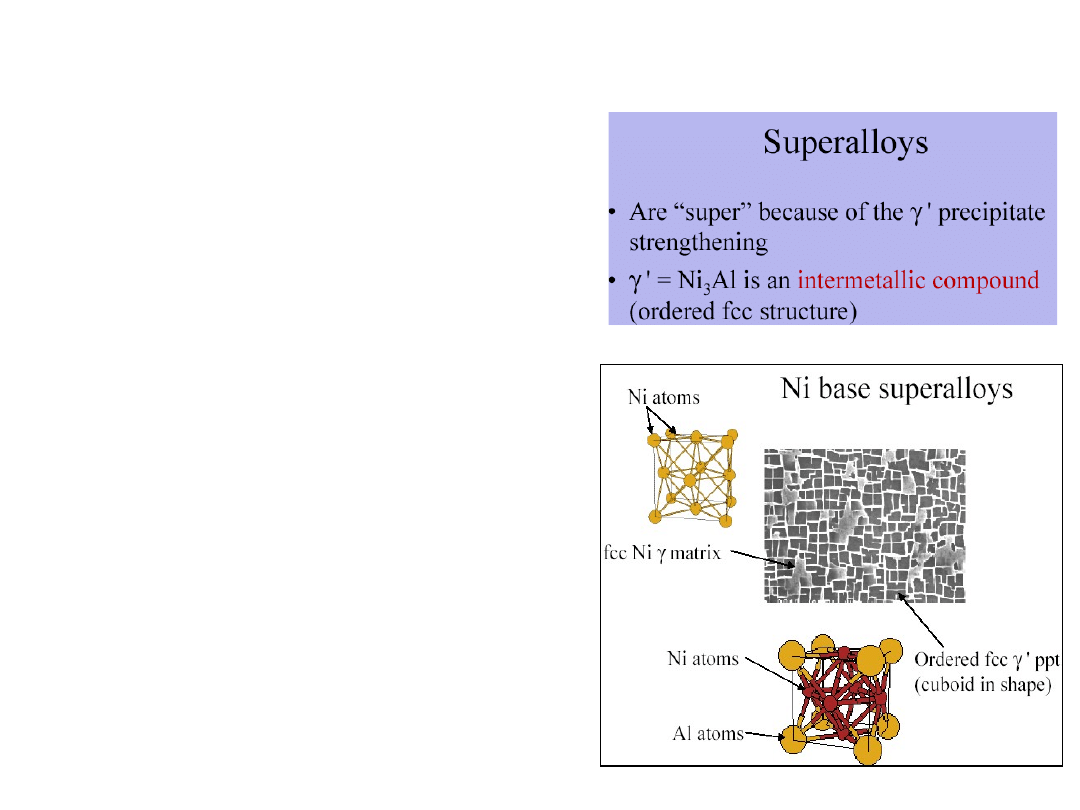
IN792: Ni-12Cr-10Co-2Mo-4W-
3.5Al-4Ti-4Ta- 0.01B-0.09Zr-
0.1C-0.5Hf
•
Applications:
aircraft turbine
components
–
Turbine blades and discs, high
creep and oxidation resistance
at elevated temperatures
(1000°C)
–
Density
is an important
consideration because
centrifugal stresses are
diminished in rotating parts
when the density is reduced
Ni-Base Superalloys
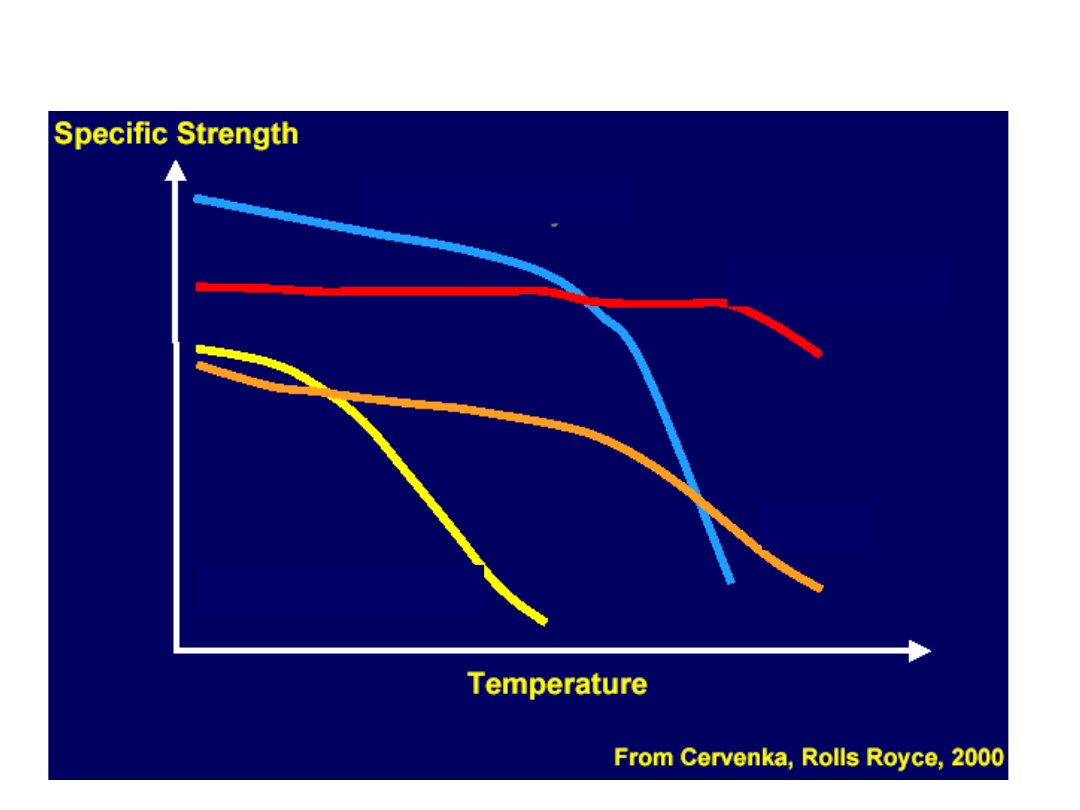
Titanium Alloy
Steel
Aluminum Alloy
Nickel Alloy
Material Strength with Increased
Temperature
•
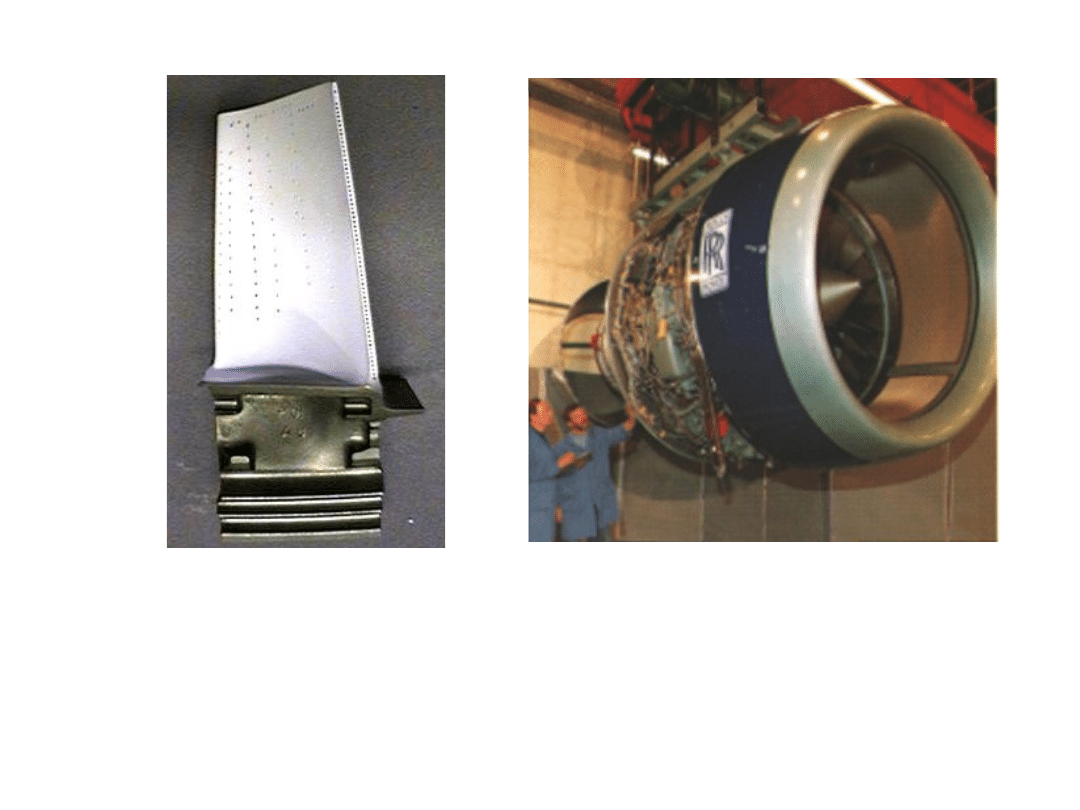
Modern aeroengine design constantly seeks to increase
the engine operating temperature to improve overall
efficiency.
•
Materials for turbine blades are required to perform at
higher and higher temperatures.
•
Use of advanced nickel-based alloys, together with
innovative cooling design
Ni-Based Superalloys Used for Turbine
Blades
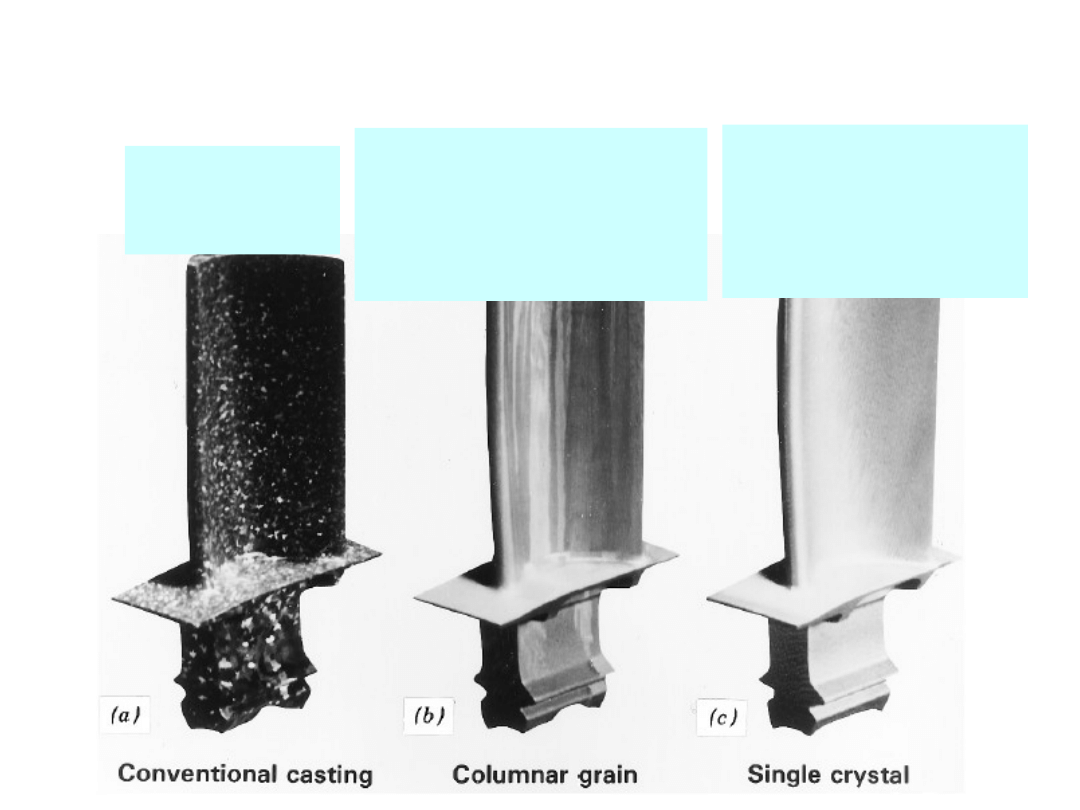
Polycrystalli
ne turbine
blade
Improvement in Creep Resistance of
Turbine Blades through Casting
Technologies
Columnar grain
structure produced
by a directional
solidification
technique
Creep resistance
is further
enhanced with
single-crystal
blades.
Thermal Barrier Coatings (TBCs)
•
Demands for higher efficiency and lower emission require
higher operating temperatures
in aeroengines
•
The typical melting points of the superalloys used for the
turbine components range from 1230-1315°C
•
The temp. in a combustion gas environment is > 1370°C
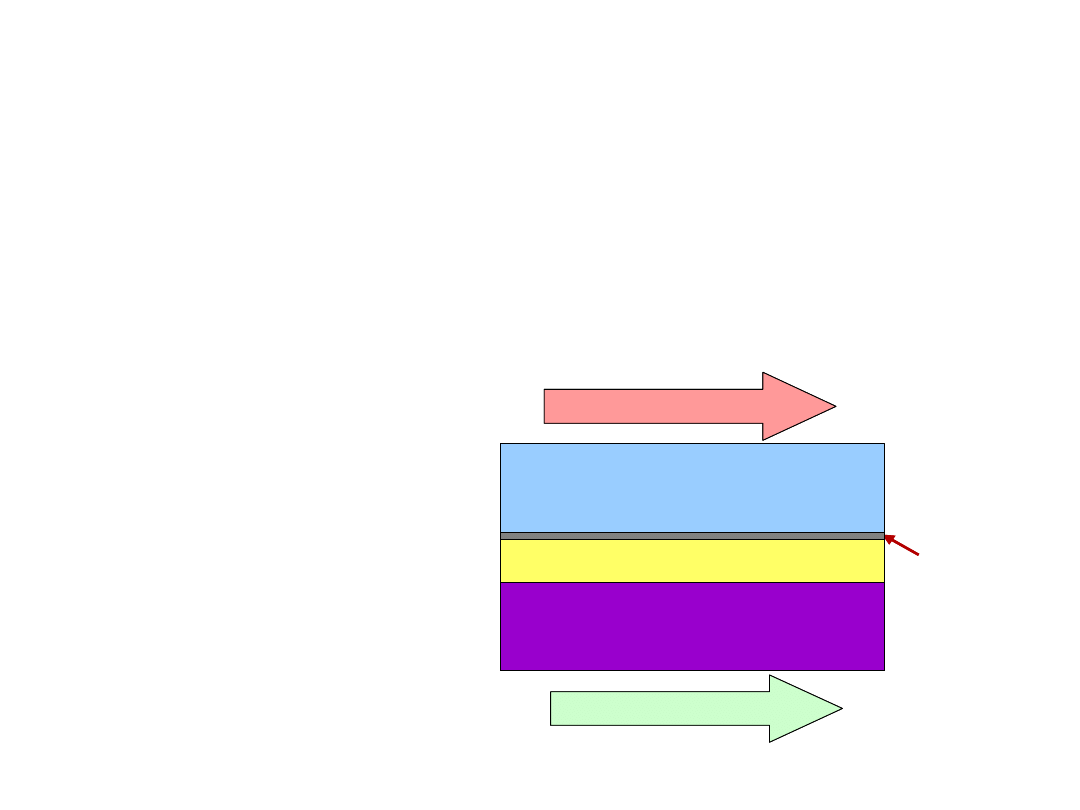
Thermally Grown
Oxide (TGO)
(1-10m)
Ceramic Top Coat (100-400m)
(Y
2
O
3
-Stabilized ZrO
2
)
Bond Coat (~100m)
Substrate
Cooling Air
Hot Gases
Thermally Grown
Oxide (TGO)
(1-10m)
Ceramic Top Coat (100-400m)
(Y
2
O
3
-Stabilized ZrO
2
)
Bond Coat (~100m)
Substrate
Cooling Air
Hot Gases
The key to meeting
the higher
temperature
requirements lies in
providing an
insulating ceramic
thermal barrier
coating (TBC)
to
lower the surface
temperature of
superalloy
underneath

•
Melting temperatures range between 2468°C for
niobium (Nb) and 3410°C for tungsten (W)
–
Interatomic bonding is extremely strong.
–
Large elastic moduli and high strength and
hardness at ambient and elevated
temperatures
•
Applications:
–
Ta and Mo are alloyed with stainless steel to
improve its corrosion resistance.
–
Molybdenum alloys: extrusion dies and
structural parts in space vehicles
–
Tungsten alloys: filaments, X-ray tubes,
welding electrodes
Refractory Metals

It is necessary to select a steel alloy for a gearbox
output shaft. The design calls for a 1-in diameter
cylindrical shaft having a surface hardness of at
least 38 HRC and a minimum ductility of 12%EL.
Specify an alloy and treatment that meet these
criteria.
Design Example 11.1

•
To select a steel alloy for a gearbox output shaft,
a 1-in diameter cylindrical shaft.
–
Surface hardness 38 HRC
–
Ductility >12%EL
•
Specify an alloy and treatment that meet these
criteria
•
Cost is always an important design consideration.
–
This would eliminate relatively expensive
steels, such as stainless steels.
–
Examine
plain-carbon and low-alloy steels
, and
what treatments are available to alter their
mechanical properties.
•
Two approaches
–
Cold work
–
Heat treatment martensite
Design Example 11.1
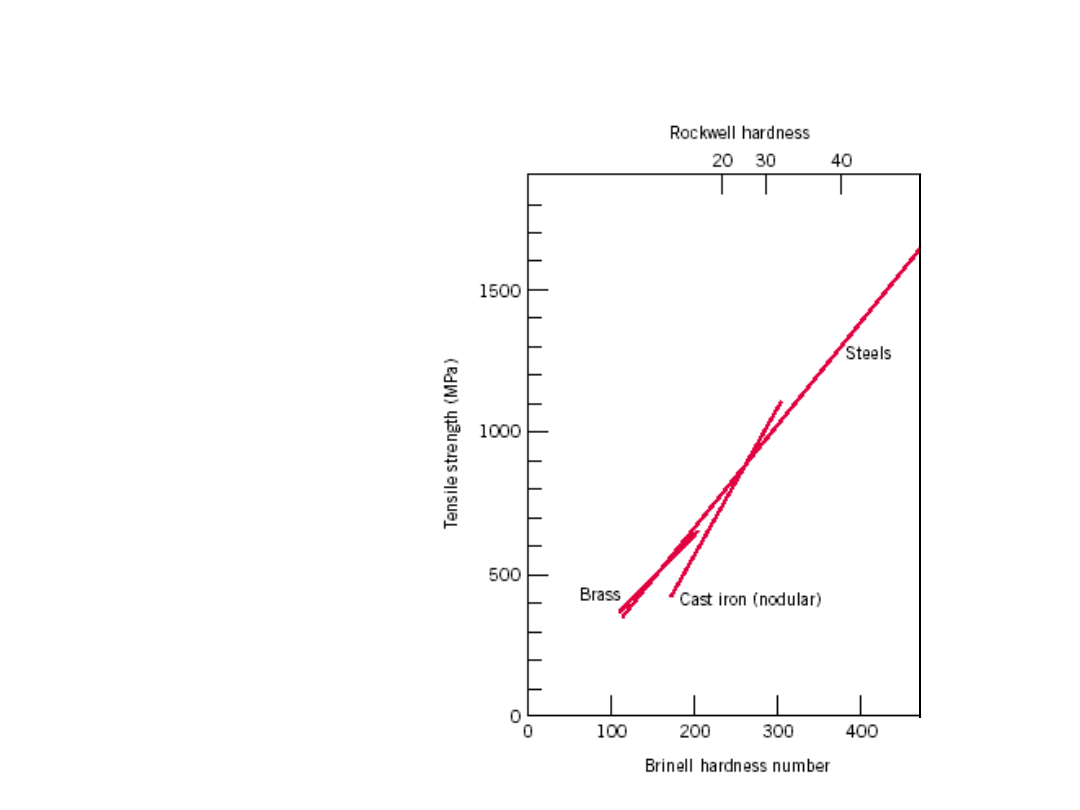
Relationships between Hardness and
Tensile Strength for Steel, Brass, and
Cast Iron
Adapted from Fig.
6.19, Callister 6e.
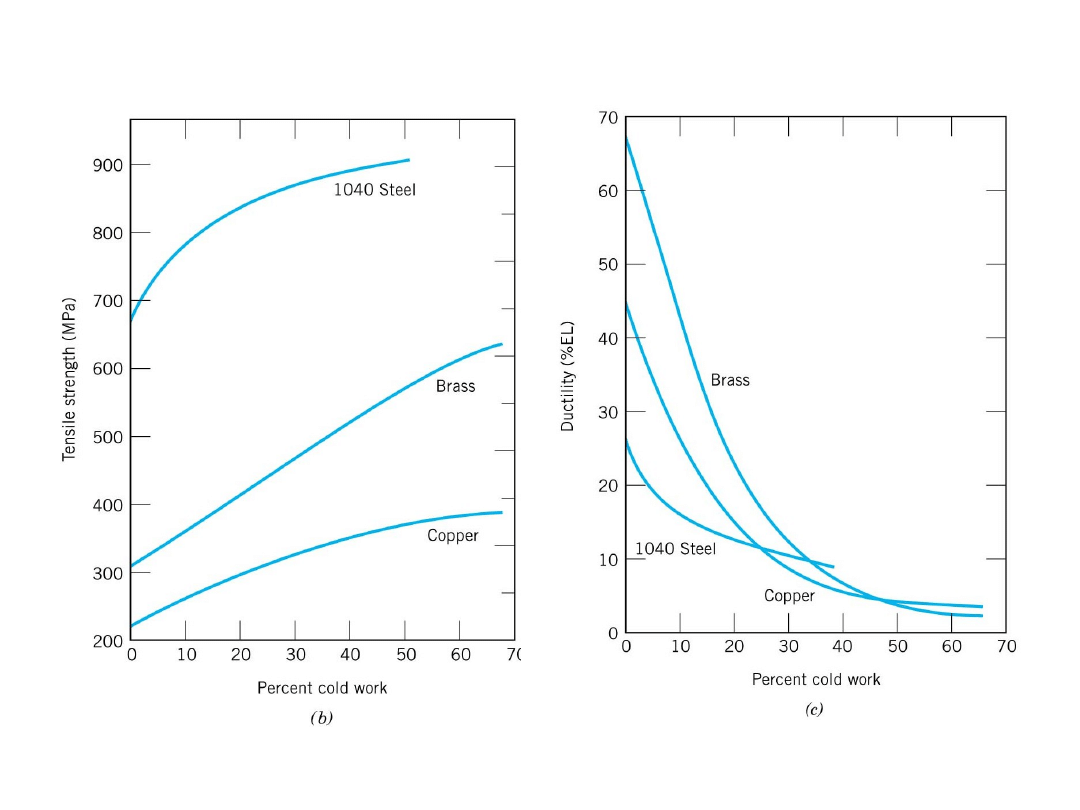
Fig. 7.17
For 1040 steel, brass, and copper, (b) the increase
in tensile strength, and (c) the decrease in ductility (%EL)
with percent cold work
The Correlation between Cold Work and
Tensile Strength and Ductility for Various
Alloys

Design Example 11.1
•
1-in diameter cylindrical shaft.
•
Having a surface hardness of at least 38 HRC
and a minimum ductility of 12%EL
•
Cold work
–
From Fig. 6.19, a hardness of 38 HRC
corresponds to a tensile strength of 1200
MPa
.
–
From Fig. 7.17(b), at 50% cold work, a
tensile strength is only ~900 MPa and
the ductility is ~10%EL.
–
Both of these properties fall short of
those specified in the design.
•
Cold working other plain-carbon or low-alloy steels
would probably not achieve the required minimum
values.
•
To perform a series of heat treatments in which the
steel is austenitized, quenched (to form martensite),
and finally tempered.
–
Examine the mechanical properties of various
plain-carbon and low-alloy steels that have been
treated in this manner.
–
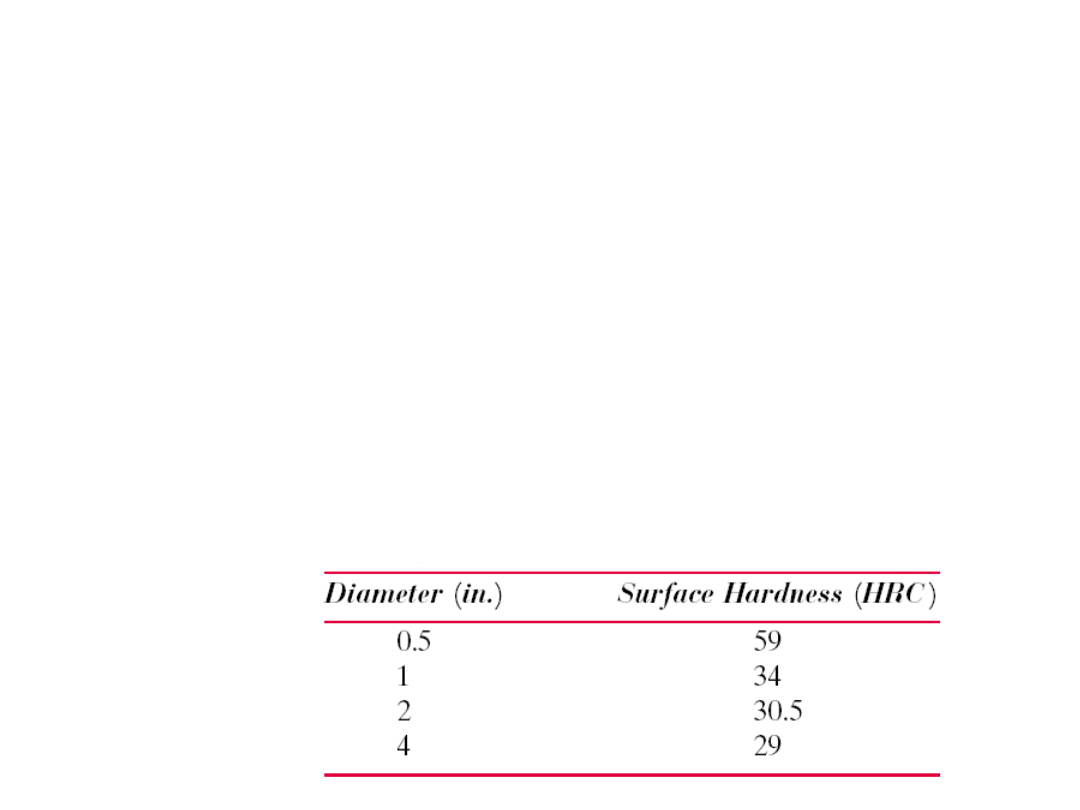
The surface hardness of the quenched material will
depend on both alloy content and shaft diameter.
Design Example 11.1
Table 11.10
Surface hardnesses for oil-quenched cylinders of
1060 steel having various diameters.
Design Example 11.1
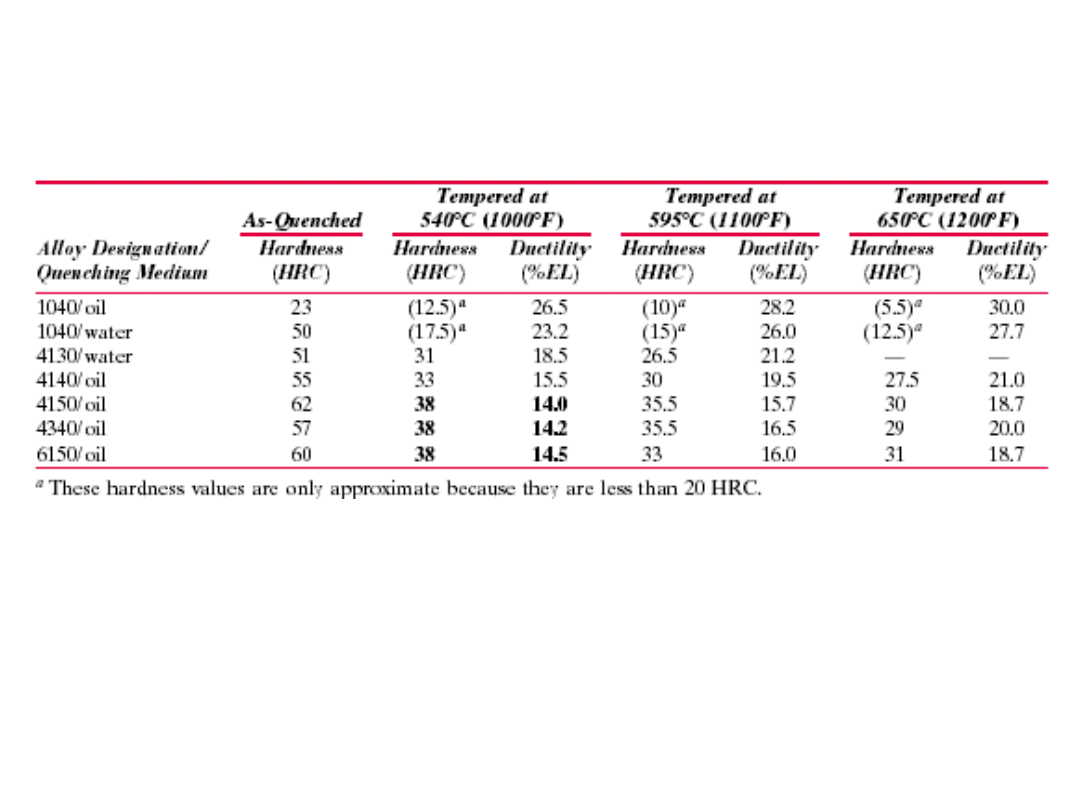
Table 11.11
Rockwell hardness (surface) and percent
elongation values for 1-in. diameter cylinders of six steel
alloys, in the as-quenched condition and for various tempering
heat treatments.
•
The only alloy-heat treatment combinations that meet the
stipulated criteria are 4150/oil-540°C temper, 4340/oil-540°C
temper, and 6150/oil-540°C temper.
•
The costs of these three materials are probably comparable.
•
The 6150 alloy has the highest ductility (by a narrow
margin), which would give it a slight edge in the selection
process.

Steel Alloys
Steel Numerical Name
Key Alloys
10XX, 11 XX
Carbon only
13XX
Manganese
23XX, 25 XX
Nickel
31XX, 33XX, 303XX
Nickel-Chromium
40XX
Mo
41XX
Cr-Mo
43XX
& 47XX
Ni-Cr-Mo
44XX
Mn-Mo
48XX
Ni-Mo
50XX, 51XX, 501XX,
521XX, 514XX, 515XX
Cr
61XX
Cr-V
81XX, 86XX, 87XX, 88XX
Ni-Cr-Mo
92XX
Si-Mn
93XX, 98XX
Ni-Cr-Mo
94XX
Ni-Cr-Mo-Mn
94XX Ni-

Steel Alloys
Alloying
Element
4150
4340
6150
C
0.48-0.53
0.38-0.43
0.48-0.53
Mn
0.75-1.00
0.60-0.80
0.70-0.90
P
0.035
0.035
0.035
S
0.040
0.040
0.040
Si
0.15-0.35
0.15-0.35
0.15-0.35
Ni
--
1.65-2.00
--
Cr
0.80-1.10
0.70-0.90
0.80-1.10
Mo
0.15-0.25
0.20-0.30
--
V
--
--
0.15 min
94X X Ni-
Document Outline
- Slide 1
- Slide 2
- Slide 3
- Slide 4
- Slide 5
- Slide 6
- Slide 7
- Slide 8
- Slide 9
- Slide 10
- Slide 11
- Slide 12
- Slide 13
- Slide 14
- Slide 15
- Slide 16
- Slide 17
- Slide 18
- Slide 19
- Slide 20
- Slide 21
- Slide 22
- Slide 23
- Slide 24
- Slide 25
- Slide 26
- Slide 27
- Slide 28
- Slide 29
- Slide 30
- Slide 31
- Slide 32
- Slide 33
- Slide 34
- Slide 35
- Slide 36
- Slide 37
- Slide 38
- Slide 39
- Slide 40
- Slide 41
- Slide 42
- Slide 43
- Slide 44
- Slide 45
- Slide 46
- Slide 47
Wyszukiwarka
Podobne podstrony:
Metallurgy Chemical Compositions of Alloys
Offenzellige Metallschaume
16 197 208 Material Behaviour of Powder Metall Tool Steels in Tensile
Blacksmith The Origins Of Metallurgy Distinguishing Stone From Metal(1)
Metallica Discography Lyrics
Metallic Text Gimp
METALLICA BLACK TEKSTY
metallica enter sandman level 2z5
Metallographic Methods for Revealing the Multiphase Microstructure of TRIP Assisted Steels TŁUMA
Powder Metallurgy
Report on precipitation Hardening of Al Alloys
Metallica Nothing Else Matters
Aluminum Metallurgy
Ancient Blacksmith, The Iron Age, Damascus Steel, And Modern Metallurgy Elsevier
Metallica
83 1183 1198 Influence of Non Metallic Inclusions in Super Finish Wire Cutting
Metallocenes
więcej podobnych podstron