
Chandler/Brown: Conditioning for Strength and Human Performance
© 2008 T. Jeff Chandler and Lee E.
Brown
Chapter 9
Chapter 9
Warm-up and Flexibility

Chandler/Brown: Conditioning for Strength and Human Performance
© 2008 T. Jeff Chandler and Lee E.
Brown
Objectives
Objectives
•
Understand the difference between warm-up and
flexibility.
•
Describe types of stretching.
•
Describe how to stretch.
•
Describe outcomes of stretching.
Chandler/Brown: Conditioning for Strength and Human Performance
© 2008 T. Jeff Chandler and Lee E.
Brown
Chandler/Brown: Conditioning for Strength and Human Performance
© 2008 T. Jeff Chandler and Lee E.
Brown

Chandler/Brown: Conditioning for Strength and Human Performance
© 2008 T. Jeff Chandler and Lee E.
Brown
Warm-up & Flexibility
Warm-up & Flexibility
•
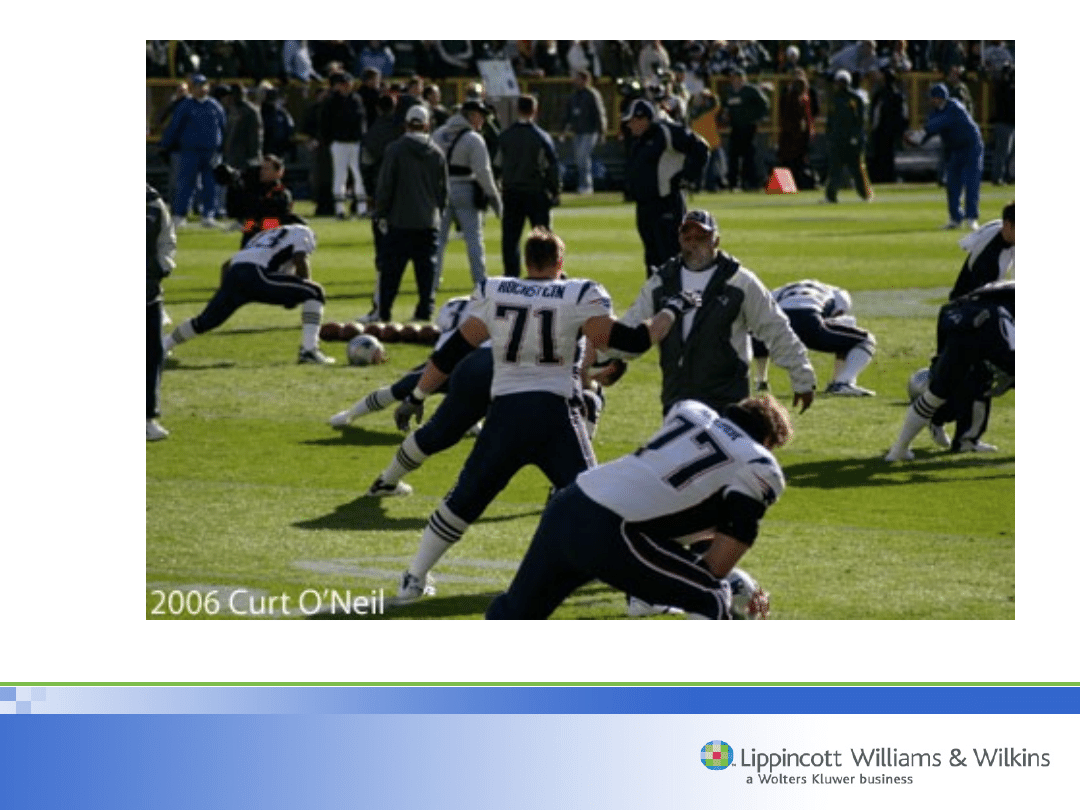
Athletes looking to improve sport
performance or lengthen their athletic
careers by
modifying the risk of injury
often focus on the warm-up and
flexibility routines in their training
•
Common
beliefs
about flexibility,
however, are
changing

Chandler/Brown: Conditioning for Strength and Human Performance
© 2008 T. Jeff Chandler and Lee E.
Brown
Warm-up
Warm-up
•
Warm-up is designed to
elevate
core
body
temperature
•
Warm-up activities are necessary to
prepare the body for vigorous physical
activity because they
increase
performance
and
decrease
the
risk
of
muscular injury

Chandler/Brown: Conditioning for Strength and Human Performance
© 2008 T. Jeff Chandler and Lee E.
Brown
Warm-up
(cont.)
Warm-up
(cont.)
•
In
general
, warm-up routines should use
general, whole-body movements up to
40% to 60% of aerobic capacity for 5 to
10 minutes followed by 5 minutes of
recovery
•
Most warm-up sessions should begin
with general body movements of
gradually increasing intensity,
focusing
on the
muscles
and joints to be used in
training
or competition

Chandler/Brown: Conditioning for Strength and Human Performance
© 2008 T. Jeff Chandler and Lee E.
Brown
Types of Warm-up
Types of Warm-up
•
Active
warm-up: consists of low-intensity
movements that are effective in
elevating body temperature, warming
tissue, and producing a variety of
improvements in physiological function
•
Passive
warm-up: includes external heat
sources like heating pads, whirlpools, or
ultrasound

Chandler/Brown: Conditioning for Strength and Human Performance
© 2008 T. Jeff Chandler and Lee E.
Brown
Types of Warm-up
(cont.)
Types of Warm-up
(cont.)
•
General
warm-up: general body
movements
with progressively
increasing intensity
•
Specific
warm-up: low-intensity
movement specific to the sport or
activity

Chandler/Brown: Conditioning for Strength and Human Performance
© 2008 T. Jeff Chandler and Lee E.
Brown
Flexibility
Flexibility
•
Important
component
of fitness and
physical performance
•
Flexibility
is the intrinsic property of
body tissues which determines the
range of motion
achievable without
injury at a joint or series of joints

Chandler/Brown: Conditioning for Strength and Human Performance
© 2008 T. Jeff Chandler and Lee E.
Brown
Measuring Flexibility
Measuring Flexibility
•
Can be measured in a variety of ways,
several variables of interest have emerged
–
Static
flexibility: estimated by linear or angular
measurements of the limits of motion in a joint
or joint complex; tests of static flexibility have
several limitations
–
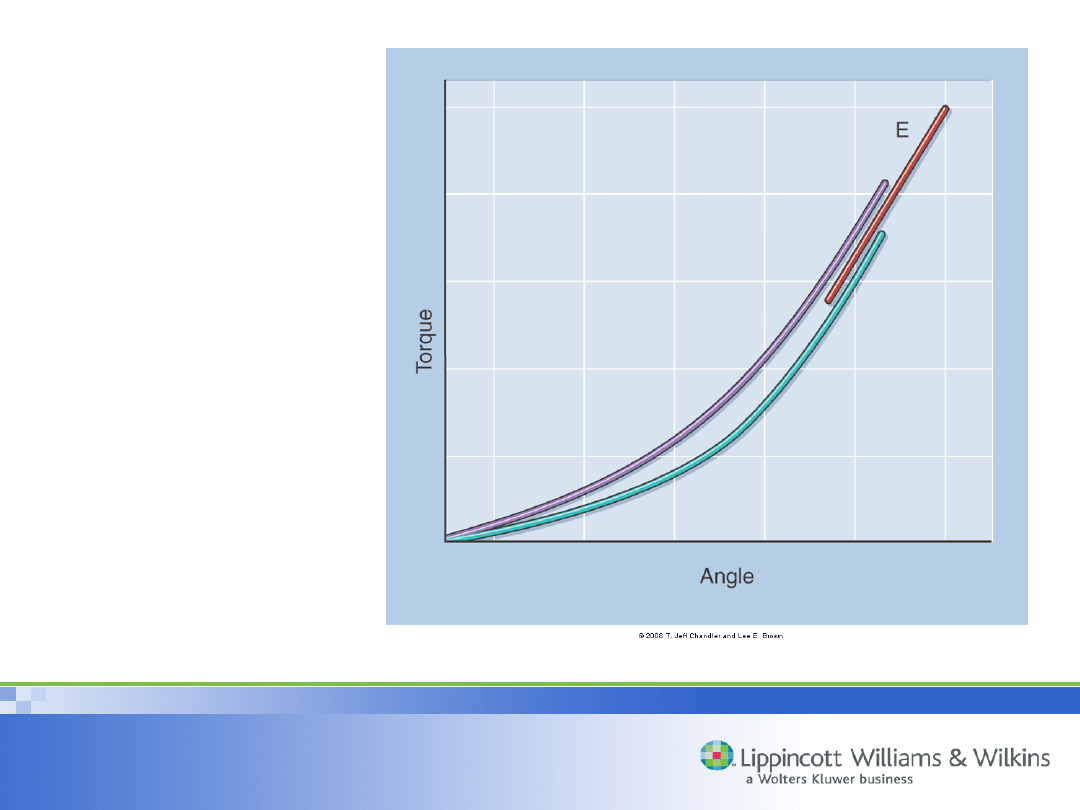
Dynamic
flexibility: also known as stiffness,
refers to how quickly tissue resistance rises
during a movement that requires the muscle-
tendon unit to stretch
Chandler/Brown: Conditioning for Strength and Human Performance
© 2008 T. Jeff Chandler and Lee E.
Brown
First stretch
Vs.
Second stretch

Chandler/Brown: Conditioning for Strength and Human Performance
© 2008 T. Jeff Chandler and Lee E.
Brown
Aspects of Flexibility
Aspects of Flexibility
•
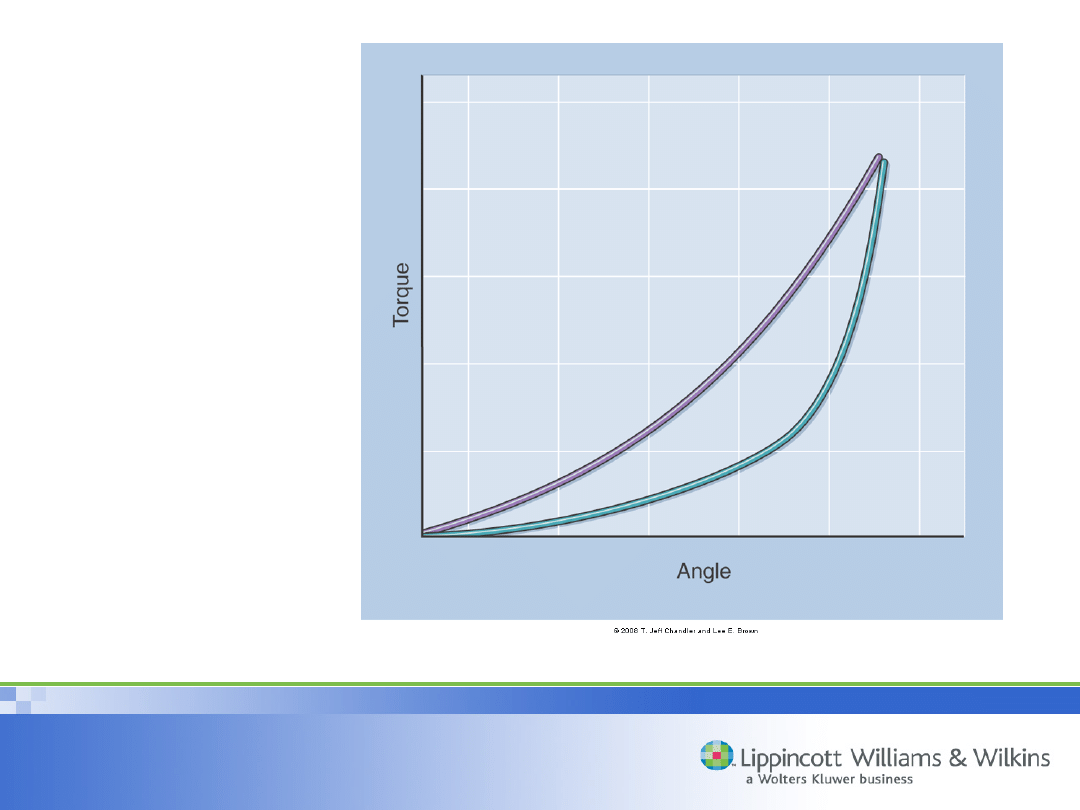
Viscoelastic
: the muscle-tendon unit can
extend immediately when a tensile stress
is applied and that it also
continues to
elongate
with continued application of the
stress
•
Elasticity
: synonymous with stiffness; a
muscle with a quick rise in tension during
stretch will tend to
recover
rapidly when
the stretch is released
Chandler/Brown: Conditioning for Strength and Human Performance
© 2008 T. Jeff Chandler and Lee E.
Brown
First stretch
Vs.
Second stretch

Chandler/Brown: Conditioning for Strength and Human Performance
© 2008 T. Jeff Chandler and Lee E.
Brown
Normal Static Flexibility
Normal Static Flexibility
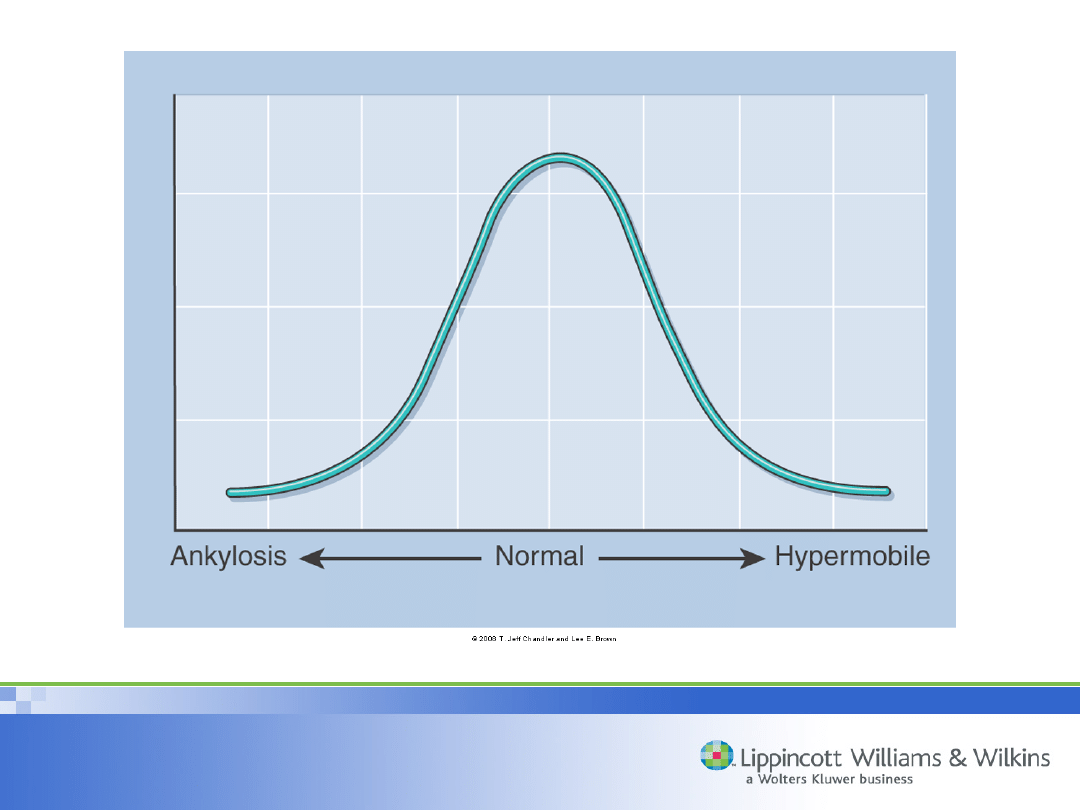
•
Normal static flexibility is the typical joint
movement allowed between two
extremes: anklyosis and hypermobility
•
Anklyosis
is pathological loss of ROM
•
Hypermobility
is excessive ROM
•
Static flexibility is not a whole-body
characteristic but is
specific to joints and
directions
of movement
Chandler/Brown: Conditioning for Strength and Human Performance
© 2008 T. Jeff Chandler and Lee E.
Brown

Chandler/Brown: Conditioning for Strength and Human Performance
© 2008 T. Jeff Chandler and Lee E.
Brown
Flexibility and Injury Risk
Flexibility and Injury Risk
•
Athletes and exercisers at both
extremes
of static flexibility may be at a higher
risk for musculoskeletal injuries
•
Complex relationship exists between
static flexibility and risk of muscular
injury
•
Higher injury rates appear to be related
to
very
flexible
or
very
inflexible muscles

Chandler/Brown: Conditioning for Strength and Human Performance
© 2008 T. Jeff Chandler and Lee E.
Brown
Assessing Flexibility
Assessing Flexibility
•
Static flexibility tests are based on both
linear and angular measurements of the
motion of a joint or group of joints
•
Single-joint static flexibility tests are
commonly used in medical professions
–
Involve angular measurements rather than
linear measurements
–
Better measurements of static flexibility than
compound tests because they better isolate
specific muscles and are less affected by
anthropometric differences

Chandler/Brown: Conditioning for Strength and Human Performance
© 2008 T. Jeff Chandler and Lee E.
Brown
Assessing Flexibility
(cont.)
Assessing Flexibility
(cont.)
•
Static flexibility scores are subjective and
highly dependent on the subject’s
tolerance of the high muscle tension
(
discomfort
) during testing
•
The clinical measurement of dynamic
flexibility is not ordinarily practical; it is
limited to research setting because of
problems related to expensive equipment,
insufficient standardization, and the lack
of normative data

Chandler/Brown: Conditioning for Strength and Human Performance
© 2008 T. Jeff Chandler and Lee E.
Brown
Development of Flexibility
Development of Flexibility
•
Normal levels of flexibility can be
maintained
by regular physical activity
and through specific programs of
stretching and strengthening exercises
•
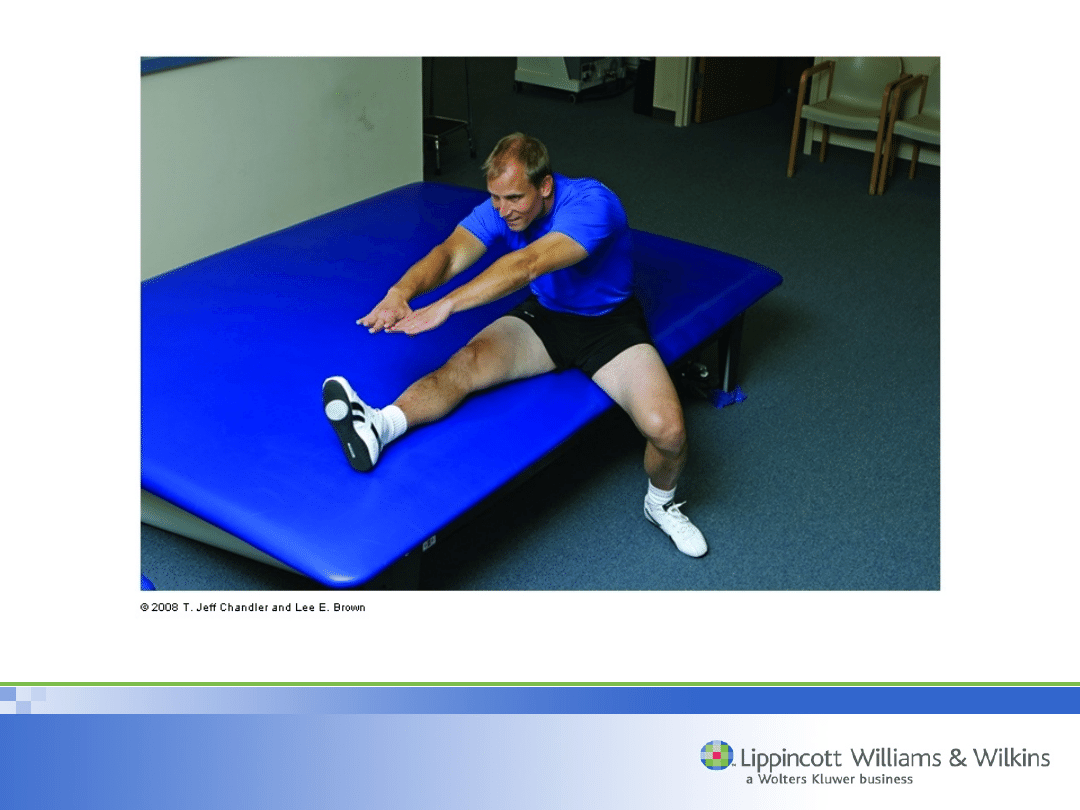
Stretching exercises are usually
classified into four types:
passive
,
static
,
ballistic
(dynamic), and proprioceptive
neuromuscular facilitation or
PNF

Chandler/Brown: Conditioning for Strength and Human Performance
© 2008 T. Jeff Chandler and Lee E.
Brown
Types of Stretching
Types of Stretching
•
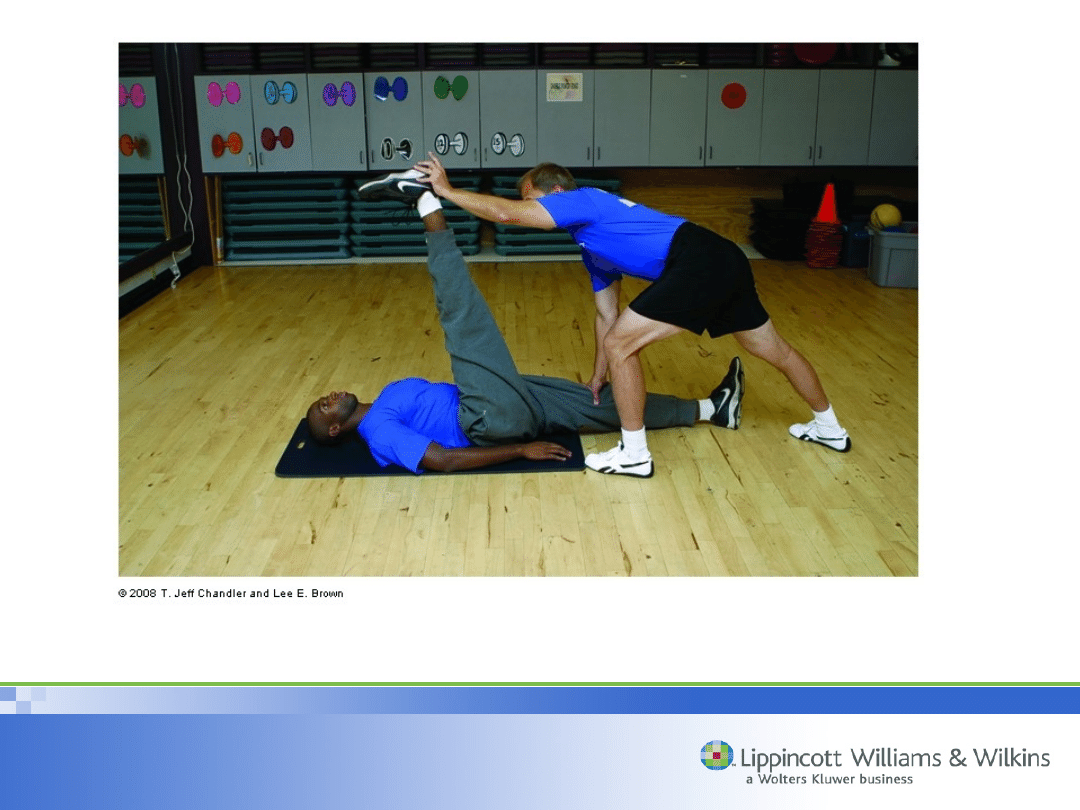
Passive
: uses an external force, usually
another person, to stretch muscle groups
•
Static
: involves a slow increase in muscle
group length and holding the stretched
position at that length for a short time

Chandler/Brown: Conditioning for Strength and Human Performance
© 2008 T. Jeff Chandler and Lee E.
Brown
Types of Stretching
(cont.)
Types of Stretching
(cont.)
•
Ballistic
: fast, momentum-assisted, and
bouncing stretching movements
•
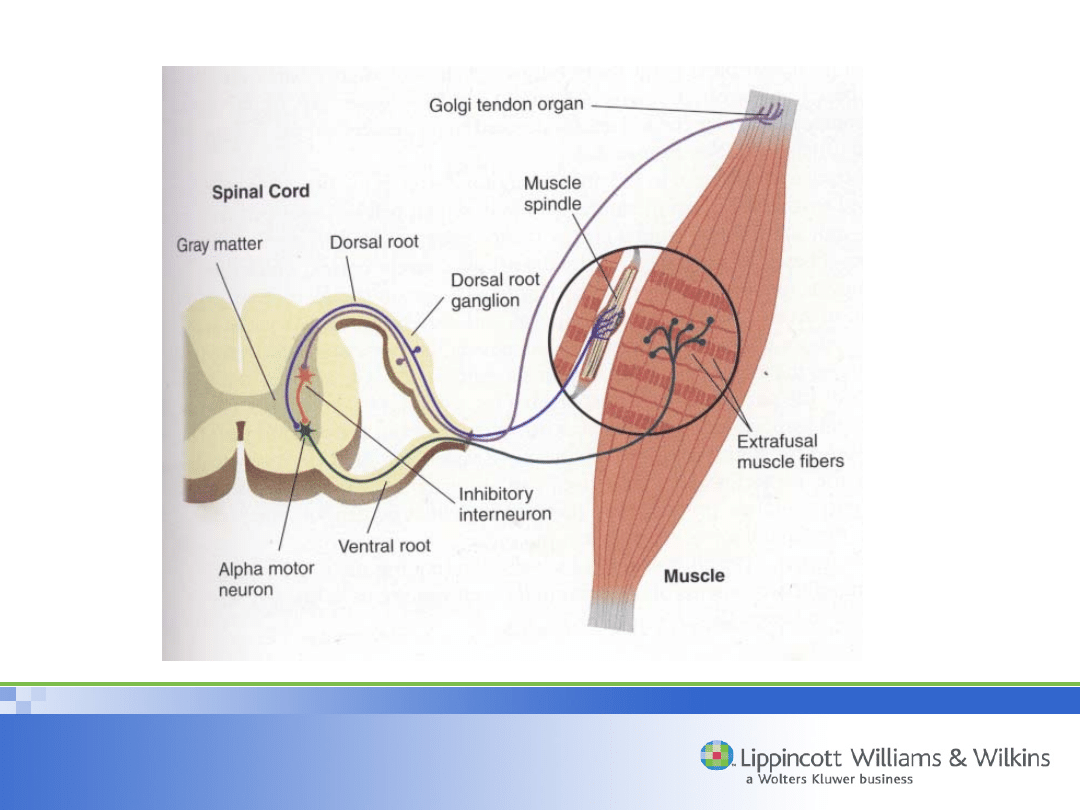
PNF
: use a specific series of movements
and contractions to use neuromuscular
reflexes to relax the muscles being
stretched (
GTO
)
Chandler/Brown: Conditioning for Strength and Human Performance
© 2008 T. Jeff Chandler and Lee E.
Brown
Golgi Tendon Organ
Golgi Tendon Organ
Chandler/Brown: Conditioning for Strength and Human Performance
© 2008 T. Jeff Chandler and Lee E.
Brown

Chandler/Brown: Conditioning for Strength and Human Performance
© 2008 T. Jeff Chandler and Lee E.
Brown
Stretching
Stretching
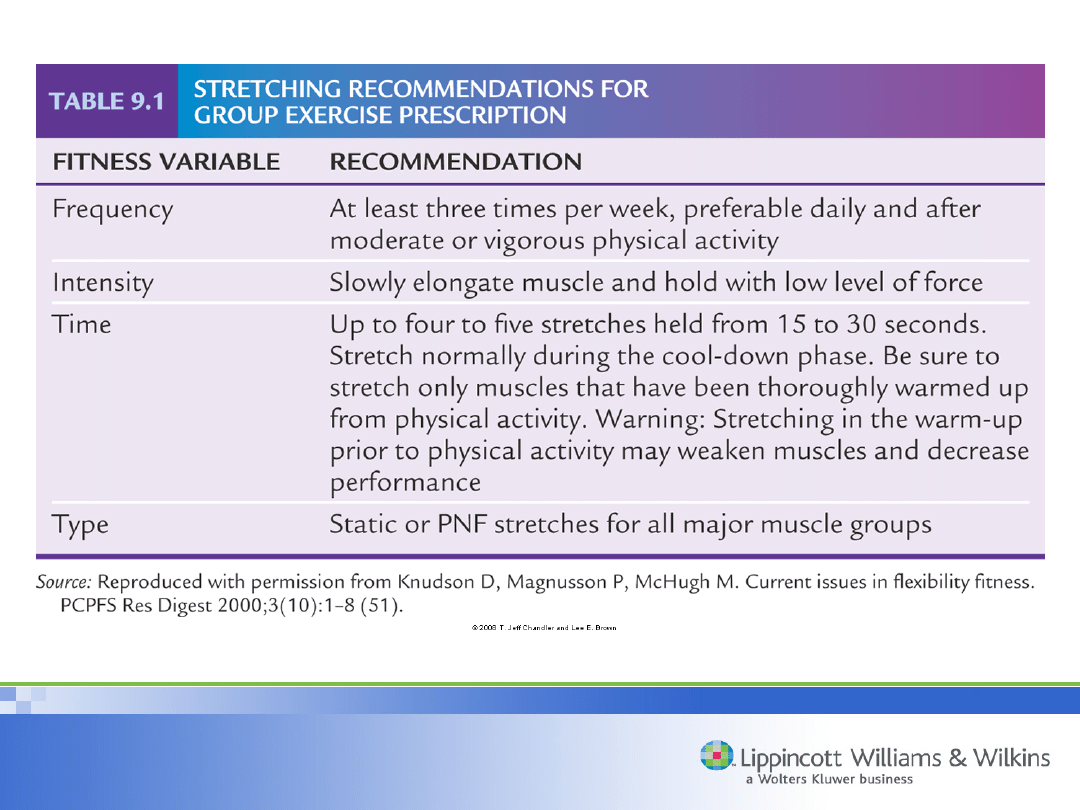
•
Static or PNF stretching should be
performed at least
three times per week
,
preferably daily and
after
moderate or
vigorous physical activity
•
Stretching programs should include up to
four or five stretches
for
each
major
muscle
group
, with each stretch held for
15 to 30 seconds

Chandler/Brown: Conditioning for Strength and Human Performance
© 2008 T. Jeff Chandler and Lee E.
Brown
How Long?
How Long?
•
Neck-AP/LAT=4
•
Shoulders-AP/LAT=4
•
Back scratch=2
•
U. Back-AP/LAT=4
•
L. Back-twist=2
•
Hips-ABAD/FE=4
•
Quad/Ham=4
•
Toe touch=1
•
Hurdle=2
•
Butterfly=1
•
Calf=2
30 stretches x 10 reps x 30 secs
=150 minutes

Chandler/Brown: Conditioning for Strength and Human Performance
© 2008 T. Jeff Chandler and Lee E.
Brown
Stretching
(cont.)
Stretching
(cont.)
•
The intensity (
force
) of each stretch should
be minimized, slowly elongating and
holding the stretched position just
before
the point of
discomfort
•
Slow elongation of muscles creates less
reflex contraction through the action of
muscle
spindles

Chandler/Brown: Conditioning for Strength and Human Performance
© 2008 T. Jeff Chandler and Lee E.
Brown
Stretching
(cont.)
Stretching
(cont.)
•
Static stretching will create a
short-term
increase
in ROM and a decrease in
passive tension in the muscle at a
particular joint angle due to stress
relaxation
•
Stress relaxation: the gradual decrease in
stress (force per unit area) in a material
stretch and held at a constant length
Chandler/Brown: Conditioning for Strength and Human Performance
© 2008 T. Jeff Chandler and Lee E.
Brown

Chandler/Brown: Conditioning for Strength and Human Performance
© 2008 T. Jeff Chandler and Lee E.
Brown
Stretching During Cool
Down
Stretching During Cool
Down
•
Stretching should be performed during
cool-down
because of three important
factors:
–
1. Warm-up tissues are less likely to be injured
–
2. Placement of stretching within the workout
does not affect gains in static flexibility
–
3. There are documented performance
decrements following static stretching in power
activities

Chandler/Brown: Conditioning for Strength and Human Performance
© 2008 T. Jeff Chandler and Lee E.
Brown
Biomechanical Effects of
Stretching
Biomechanical Effects of
Stretching
•
Stretching can provide increases in static
flexibility of
5-20%
, but
short-term
and
over the course of several weeks
•
Stretching
has minimal effect on the
stiffness of muscle,
decreases muscular
performance
, and modifies the energy
recovery of stretched muscle

Chandler/Brown: Conditioning for Strength and Human Performance
© 2008 T. Jeff Chandler and Lee E.
Brown
Biomechanical Effects of
Stretching
(cont.)
Biomechanical Effects of
Stretching
(cont.)
•
Passive stretching can create large tensile
loads in the muscle, so it is possible to
weaken and injure muscle with vigorous
stretching programs
•
Stretching prior to activity decreases
muscular performance in ballistic
activities

Chandler/Brown: Conditioning for Strength and Human Performance
© 2008 T. Jeff Chandler and Lee E.
Brown
Stretching and Injury Risk
Stretching and Injury Risk
•
Research
has not
confirmed that stretching
decreases risk of muscular injury, so
stretching prior to physical activity probably
confers no protective effect
•
More research on effects of stretching and
the associations between various flexibility
levels and injury rates are needed
•
Guidelines for how much flexibility is
needed for a specific athlete/sport will likely
be sport-specific

Chandler/Brown: Conditioning for Strength and Human Performance
© 2008 T. Jeff Chandler and Lee E.
Brown
Next Class
Next Class
•
Chapter 8 Testing
Document Outline
- Chapter 9
- Objectives
- Slide 3
- Slide 4
- Warm-up & Flexibility
- Warm-up
- Warm-up (cont.)
- Types of Warm-up
- Types of Warm-up (cont.)
- Flexibility
- Measuring Flexibility
- Slide 12
- Aspects of Flexibility
- Slide 14
- Normal Static Flexibility
- Slide 16
- Flexibility and Injury Risk
- Assessing Flexibility
- Assessing Flexibility (cont.)
- Development of Flexibility
- Types of Stretching
- Types of Stretching (cont.)
- Golgi Tendon Organ
- Slide 24
- Stretching
- How Long?
- Stretching (cont.)
- Slide 28
- Slide 29
- Stretching During Cool Down
- Biomechanical Effects of Stretching
- Biomechanical Effects of Stretching (cont.)
- Stretching and Injury Risk
- Next Class
Wyszukiwarka
Podobne podstrony:
01 02 warm up and speaking
Athletics omnibus warm up and streching
Sensory difference tests Overdispersion and warm up
JNC 2013 Chapter 18 Matthews and Anwar
Stretching And Flexibility
CHAPTER 1 HRM, strategy and the global context
Warm up początek roku
Fitness Martial Arts Stretching And Flexibility
70 Warm up 2
kingdoms of kalamar hurry up and wait (osloskop net) 5UK4ZG6N2IV33SPYUFLA775QE2DHVPNJVURF7DY
Warm up
140 Shooting Warm up Practice
JNC 2013 Chapter 18 Matthews and Anwar
wake up and smell the coffee rory en 36408
up and down again
tekst Selena Gomez Hurry Up and Save Me po polsku
Racism, Racial Discrimination, Xenophobia and Related Forms of Intolerance, Follow up and Implementa
warm up game
128 Warm up – Running with the ball in a 10 x 10m grid
więcej podobnych podstron