
Native American
Groups
Grade 4
Social Studies Online

Tennessee
Blueprint Skill
Identify pre-Colonial Native American
groups (i.e., Cherokee, Creek,
Chickasaw, Aztec, Mayans, Olmec,
and Mississippi Mound Builders).
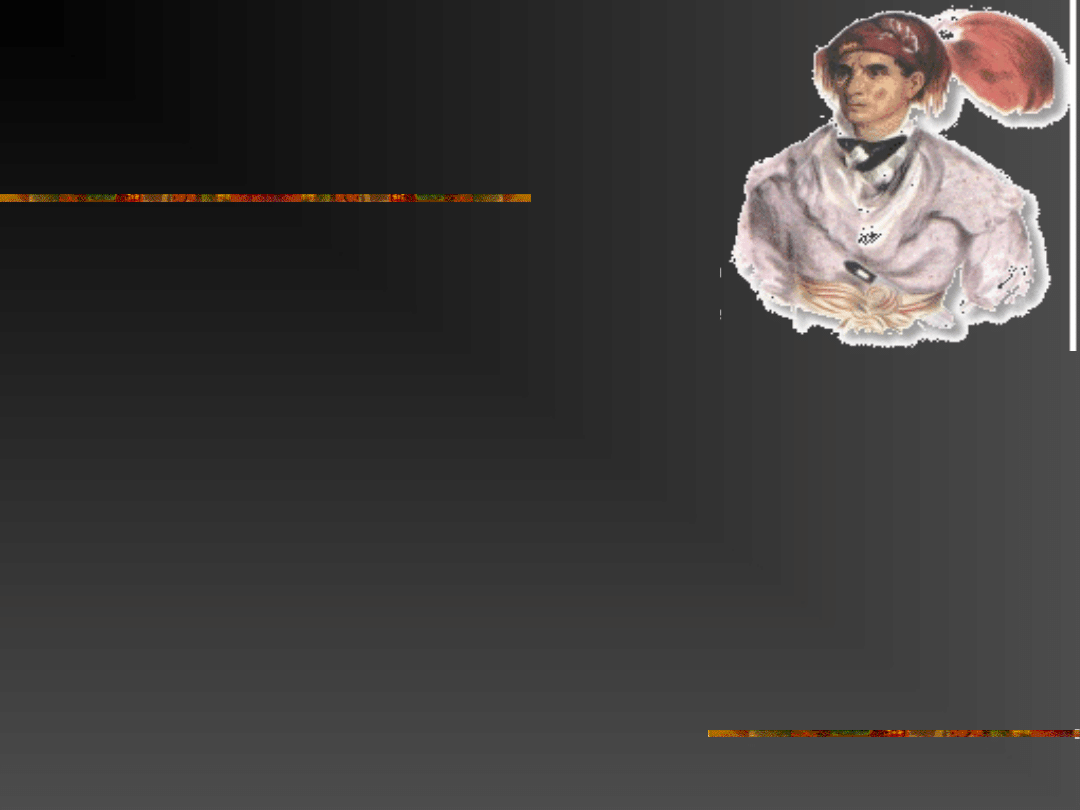
Cherokee
Government:
Leaders, called chiefs, governed the
villages. The villages were also apart
of a larger Cherokee confederation.
Religion:
The shamans, or priests, led
ceremonies for the community.

Creeks
Government:
A mico or village chief was the leader. In
addition to providing domestic leadership,
micos served as diplomatic representatives.
They welcomed traders, diplomats, and
other sojourners, served as representatives
at treaty negotiations, and led warriors into
battle. Micos could not coerce their villages
into obedience. Instead they used various
methods to persuade Creeks to follow their
lead.

Creeks
Religion:
Religion was very important and central
to the life of the Creeks. Medicine ways
dominated the culture. Charms, omens,
and sacred, mythical creatures
occupied niches in the thinking of all
Creeks. Much of their religion revolved
around various festivals.

Chickasaw
Government:
Those chosen to lead the tribe were
elected based on specific qualities
and attributes desired to fulfill the
needs created by imposed change.
The Chickasaw government found
unique ways to survive and prosper.

Chickasaw
Religion:
Chickasaw religion explained, interpreted, and provided
answers for the mystifying aspects of life processes --
birth, puberty, marriage, and death -- and natural
phenomena. Their methods for relating themselves
to nature and one another were crystallized in set
patterns or practices. All things in the Chickasaw
universe had natural and religious overtones. Like
other Indian tribes in the native state, the
Chickasaws had no written language. Thus the tribal
elders transmitted traditions, customs, lore, and
accumulated knowledge to the young orally and by
example.

Aztec
Government:
The Aztecs lived on a huge empire, a
conquered land, that was governed by one
ruler. That ruler was called an emperor.
(The emperor demanded tributes each year)

Aztec
Religion:
Aztecs beliefs were based in their
perception of nature, its time space,
and cycles. They were particularly
concerned with the destructive aspect
of nature, and most of their rituals are
means of avoiding the destructive and
chaotic forces of nature, and finding
harmony within nature.

Mayans
Government:
The Mayan civilization was not one
unified empire, but rather a multitude
of separate entities with a common
cultural background. They were
religiously and artistically a nation,
but politically sovereign states

Mayans
Religion:
Religious rituals were elaborate, with
frequent festival occasions in honor of the
gods of the winds, the rain, the cardinal
points, the harvest, of birth, death, and
war. The whole country was dotted with
temples, usually great stone-built
pyramids, while certain places . There
was a special "feast of all the gods".

Olmec
Government:
Powerful priests ruled the Omecs
Religion:
They worshipped many gods,
including the rain god; constructed
centrally located stone temples

Mississippi Mound Builders
Government:
Mound Builders’ priests were also
rulers.
Religion:
Built huge burial mounds; held
elaborate ceremonies and placed
good such as beads and pipes with
the dead

Resources
http://www.civilization.ca/civil/maya/m
mc01eng.html
Document Outline
- Slide 1
- Slide 2
- Slide 3
- Slide 4
- Slide 5
- Slide 6
- Slide 7
- Slide 8
- Slide 9
- Slide 10
- Slide 11
- Slide 12
- Slide 13
- Slide 14
Wyszukiwarka
Podobne podstrony:
African and Native American Slavery
Native American Designs Apache Tray
The History of the USA 2 Native Americans (unit 1)
The native american
Who were the Native American2s
Matthew J Kelley Native Americans, Neurofeedback and Substance Abuse Theory
(ebook) cookbook native american health recipes
The American Society for the Prevention of Cruelty
American government presidential elections
50 Common Birds An Illistrated Guide to 50 of the Most Common North American Birds
Lista odpowiedników FM Group
FEDERICO MAHORA-katalog, PRASA, FM Group
A New American Acupuncture Acu Nieznany
American Style Barn
americas phys
pedagogika Piaget i Wygotski, 2009-2012 (Graduates), GROUP 6, Pedagogika
więcej podobnych podstron