SPECIALTY POLYMERS
Prof. Andrzej W. Trochimczuk
Laboratory of Polymer and
Carbonaceous Materials
Faculty of Chemistry
Wroclaw University of
Technology
•Building H6 room 110, Wt i Czw 11.15-
13.00

SPECIALTY POLYMERS
• In this introductory lecture we will try to
define the basic terms in polymer chemistry
• To find out how apparently small changes in
polymer chemistry of physical structure
make these polymers unique
• Try to find out how polymers are so
different when compared to other classes of
materials

SPECIALTY POLYMERS
•What are the polymers?
•Molecules that are formed by linking of the
repeating units through covalent bonds
•MW below 1000 Da, 1000-10 000 and >10 000
•Properties are determined by:
•molecular weight
•backbone structure
•side chains presence and position
•crystallinity
•Macromolecules have huge molecular weights
(up to few millions Da)
SPECIALTY POLYMERS
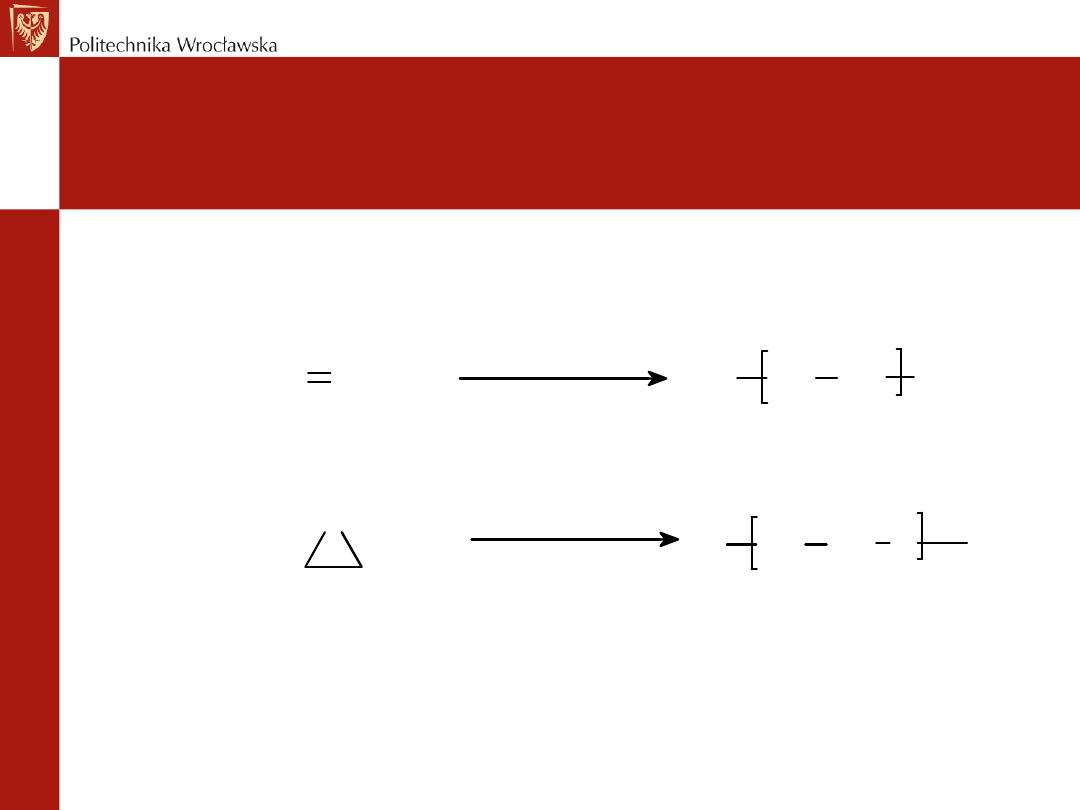
Polymers
are large molecules made up of repeating
units called
Monomers
The synthetic process is
Polymerization.
E.g.
C
H
2
CH
2
CH
2
CH
2
O
CH
2
CH
2
O
Monomer
Polymerization
Polymer
n
Monomer
Polymerization
Polymer
n
Note – define repeating unit in terms of monomer structure
Degree of Polymerization
is the number of monomer units in a Polymer
However, for synthetic polymers it is more accurate to state
average degree of polymerization ( ¯ )
DP
SPECIALTY POLYMERS
?
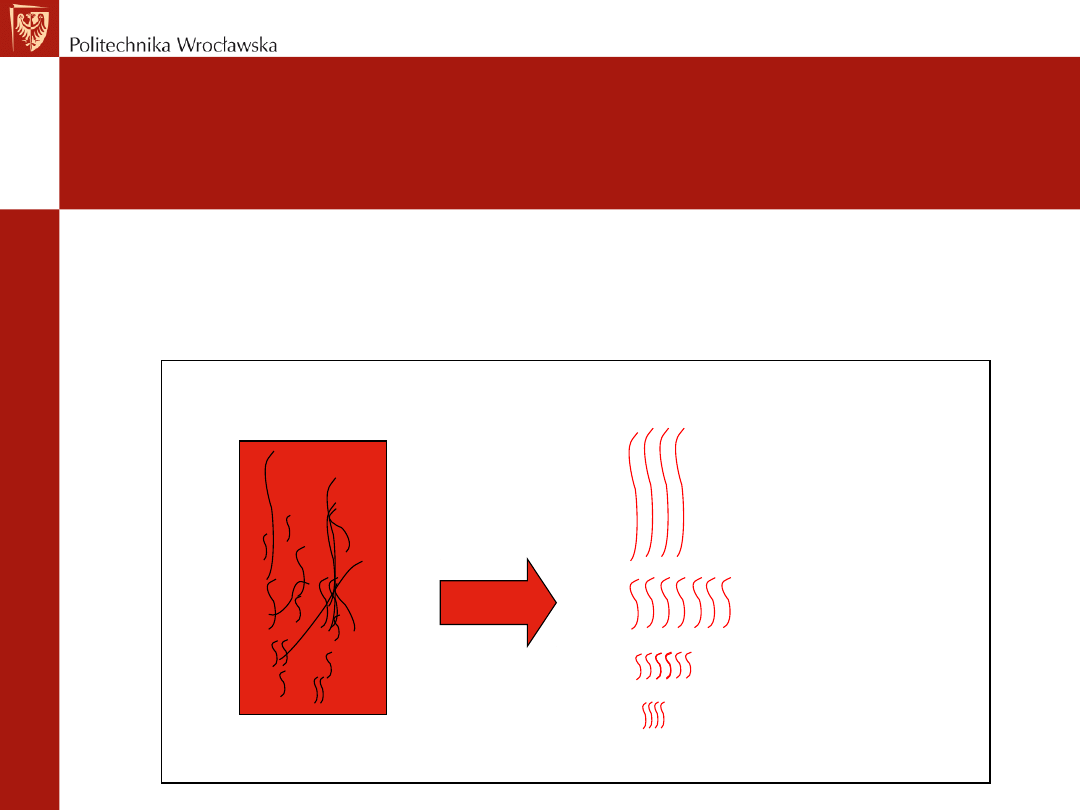
•The use of average degree of polymerization is a must
because in one batch of synthesis you obtain molecules
of different size
•This feature is
unique to polymers!
SPECIALTY POLYMERS
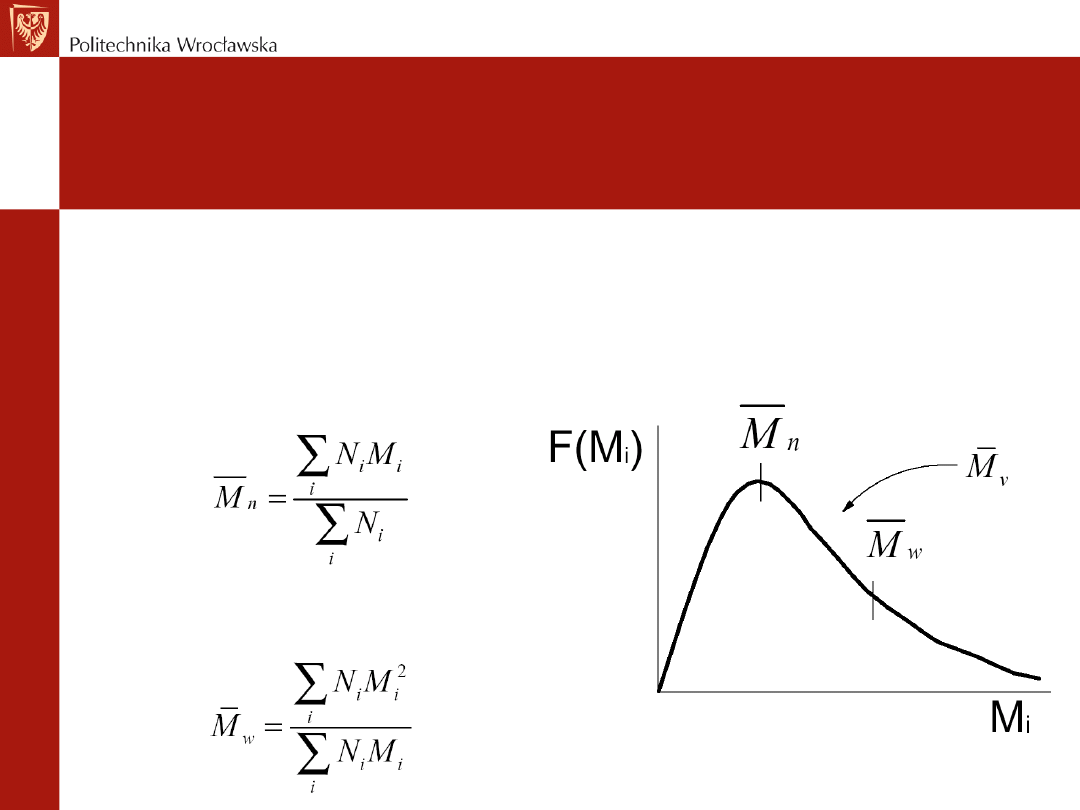
• number average,
M
n
• weight average, M
w
N
i
: # of molecules with degree of
polymerization of i
M
i
: molecular weight of i

SPECIALTY POLYMERS
• Ratio of M
w
to M
n
is known as the
polydispersity index (PI)
– a measure of the distribution of the
molecular weight
– PI = 1 indicates M
w
= M
n
, i.e. all
molecules have equal length
(monodispersive polymer)
– PI = 1 is typical for some natural
polymers, whereas synthetic polymers
have 1.5 < PI < 5
– At best PI = 1.05 can be attained with
special techniques
SPECIALTY POLYMERS
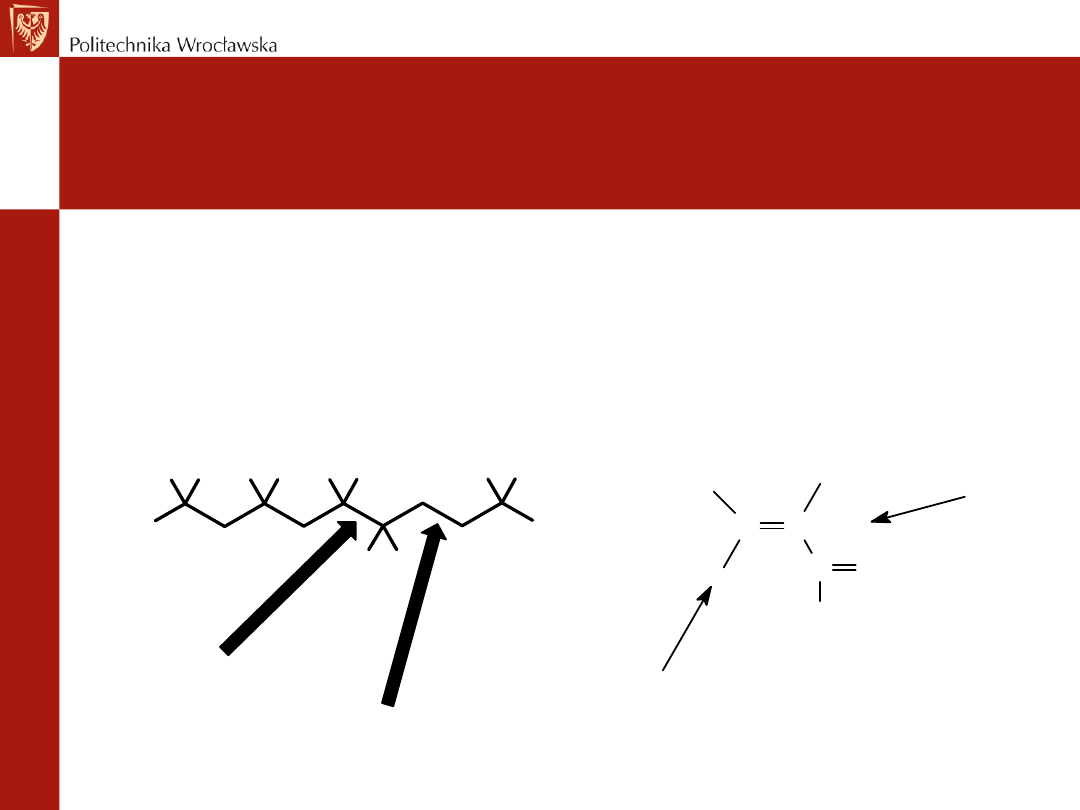
• Asymmetric substitution pattern of
most monomers
• Addition may not be completely
regiospecific
; not 100% head-to-tail
Y
X
*
X Y
X Y
Y X
Y
*
X
head-to-head
tail-to-tail
C C
C O
OH
tail
head
SPECIALTY POLYMERS
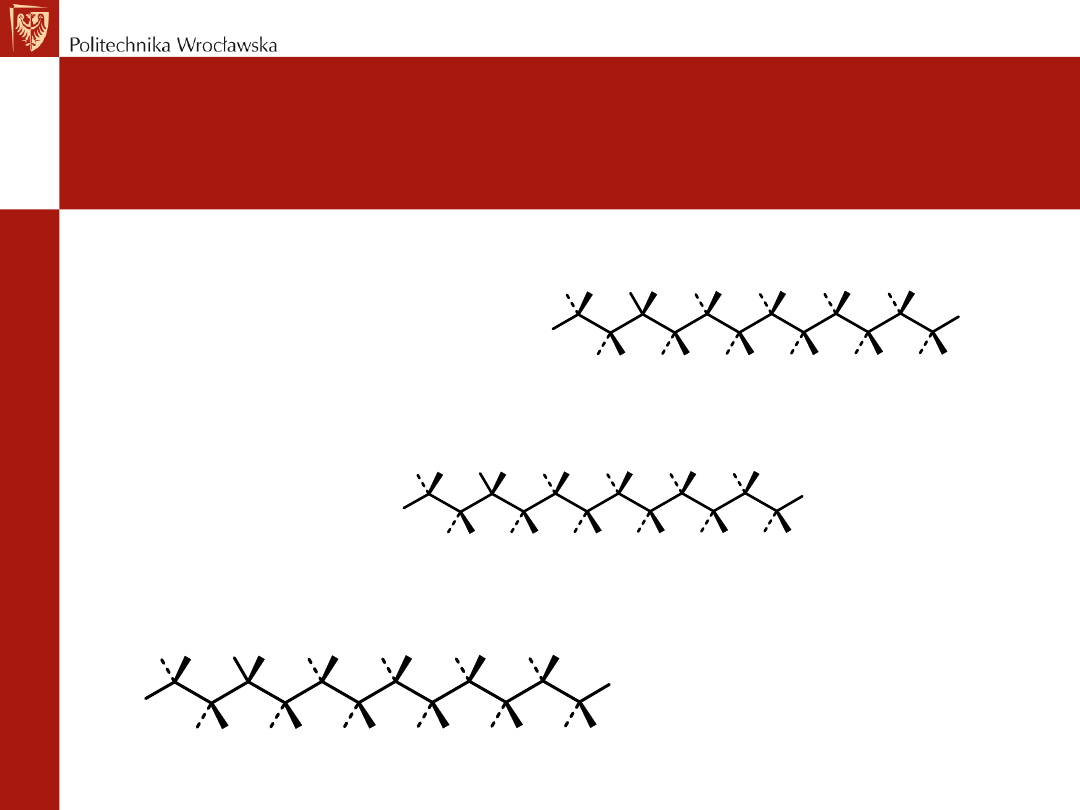
• Isotactic:
all side groups in one side of main
chain zig-zag
R
H
R
H
R
H
H R
H R
H R
R
H
H R
R
H
R
R
H
H R
*
*
H
Syndiotactic:
side groups alternating
R
H
R
H
R
H
R H
R H
R H
R
H
R H
R
H
H
R
H
R H
*
*
R
•Atactic:
side groups in random
order
R
H
R
H
H
R
R H
R H
H R
H
R
R H
H
R
R
R
H
H R
*
*
H

SPECIALTY POLYMERS
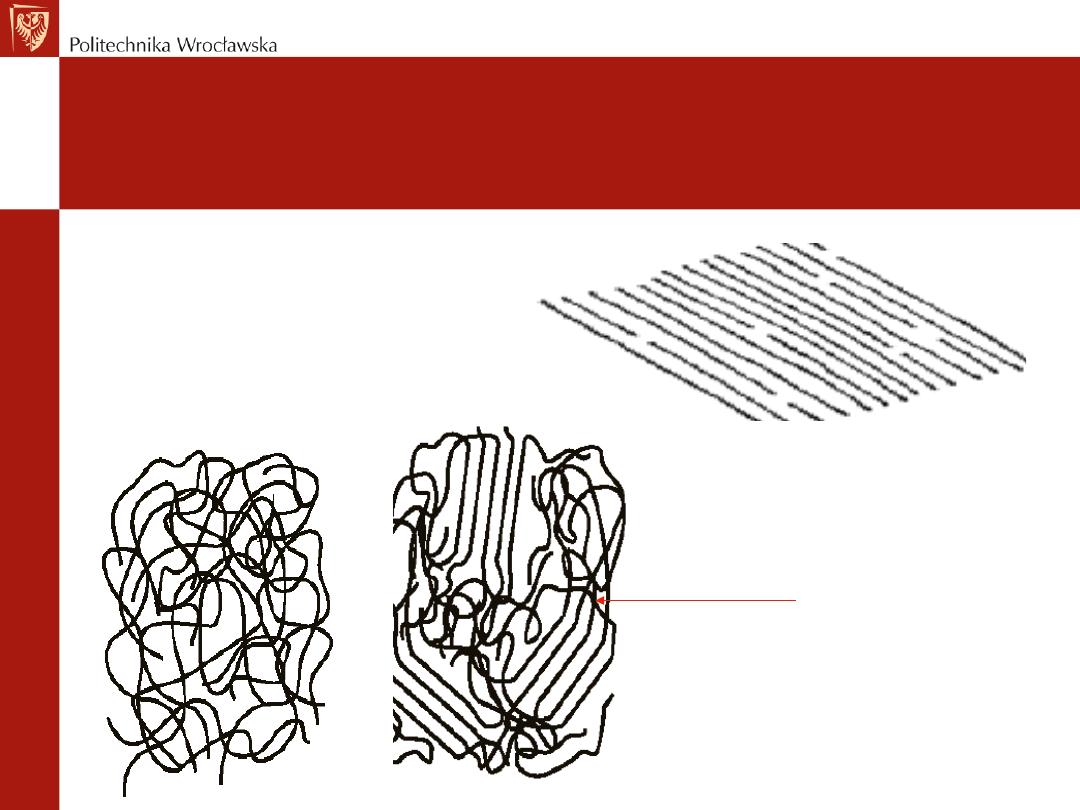
• Polymers can be either
amorphous
or
semi-crystalline
• Tacticity
, i.e. arrangements of substituents
around the backbone, determines the
degree of crystallinity
• Atactic polymers are amorphous
• Isotactic and syndiotactic may crystallize
• Crytallinity depends on:
– size of side groups (smaller,
↑crystallinity)
– regularity of chain
• Increased crystallinity enhances
mechanical properties
• Amorphous
• Semi-crystalline
• Crystalline
SPECIALTY POLYMERS
•Mesophas
e, another
feature
characteris
tic for
polymers
Polymers
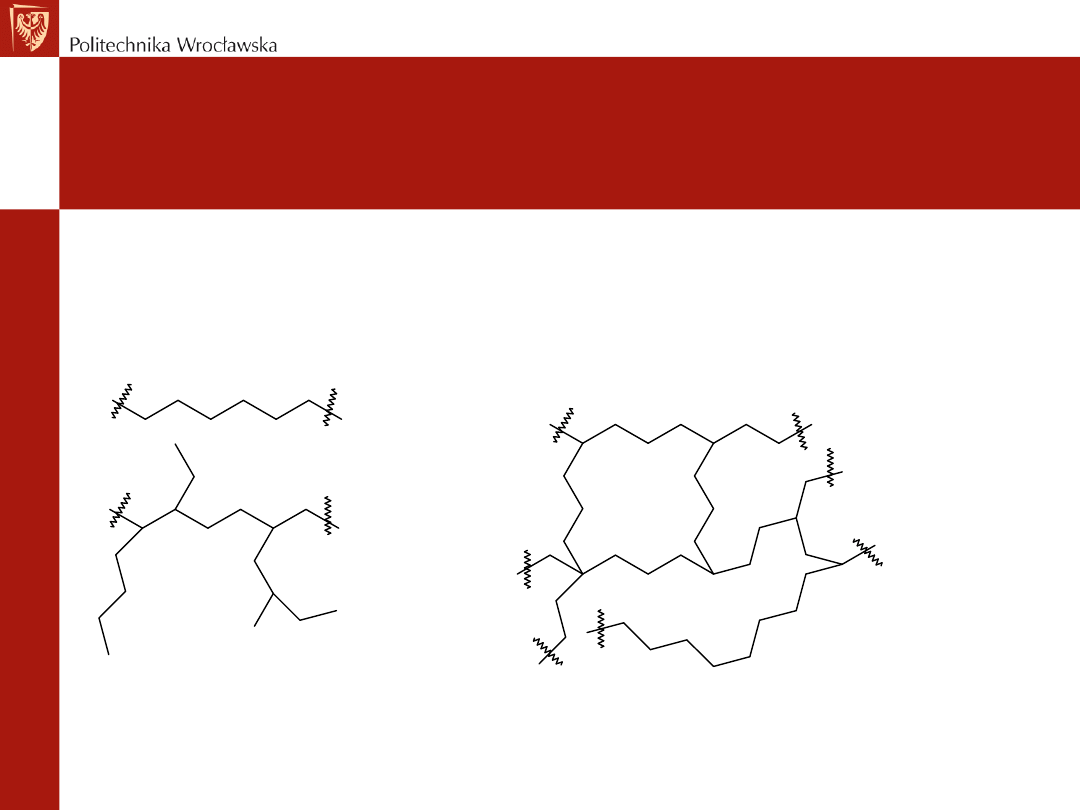
• Common topologies of polymers
linear
branched
crosslinked
Polymers
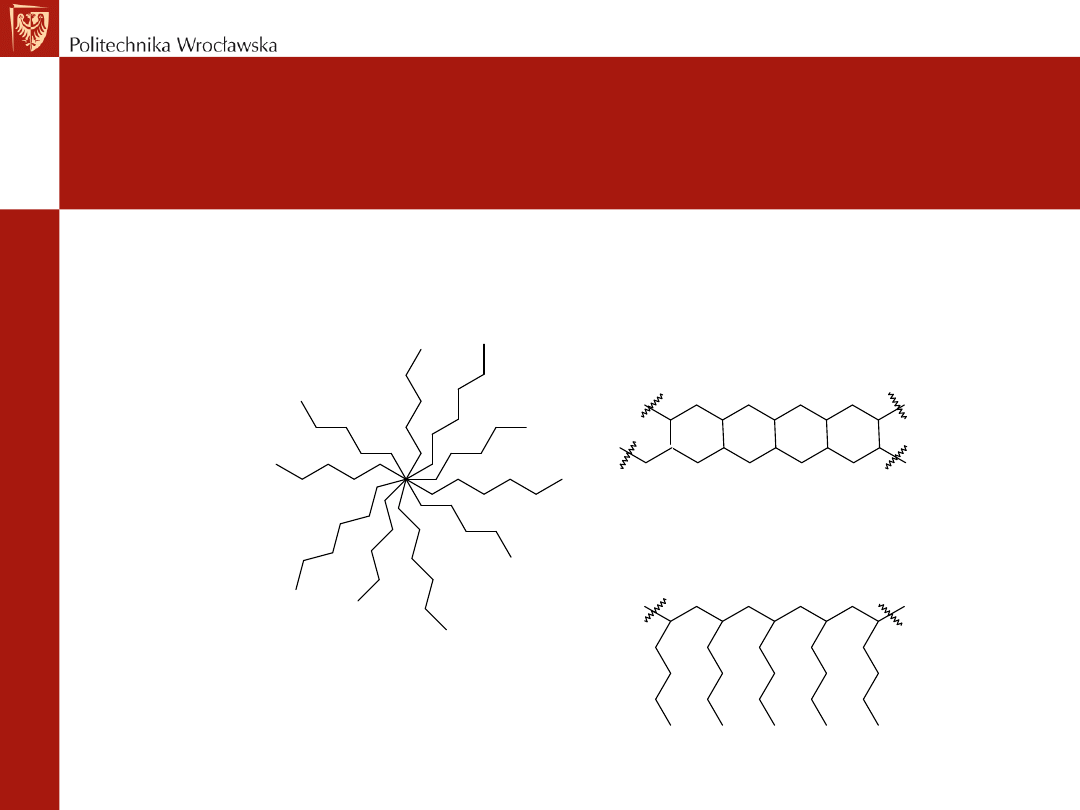
• Common topologies of polymers
(cont.)
star
ladder
comb
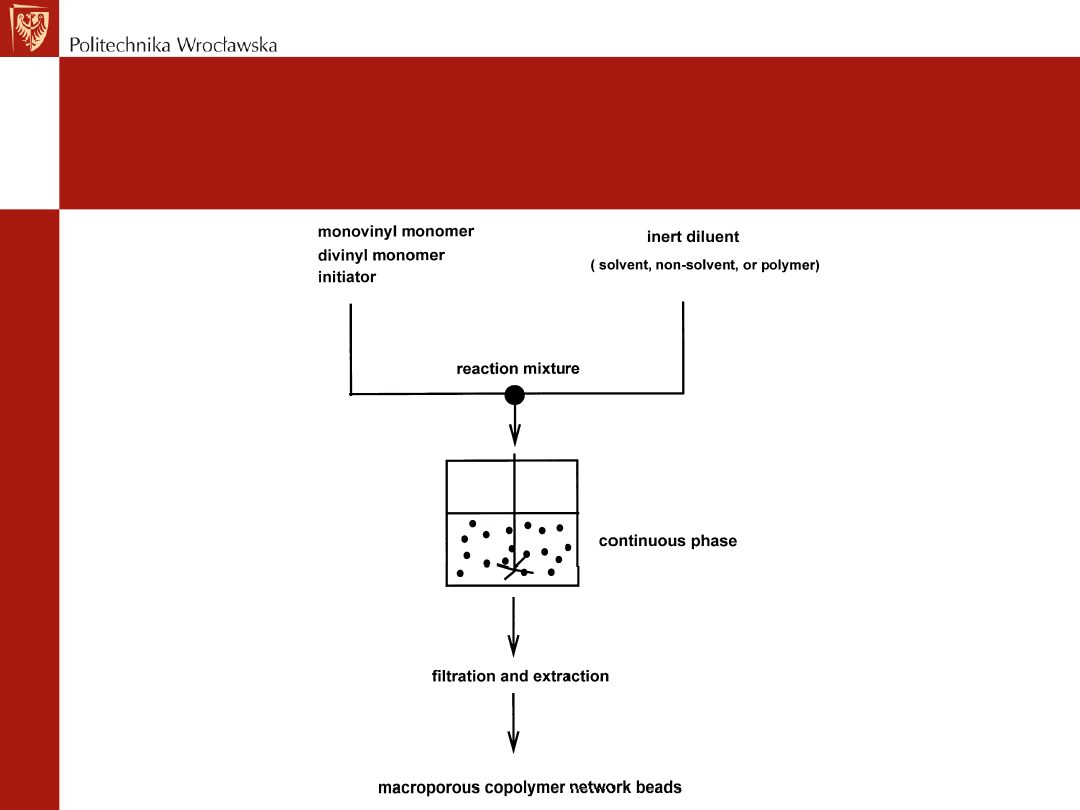
Polymers - suspension
Polymers - suspension
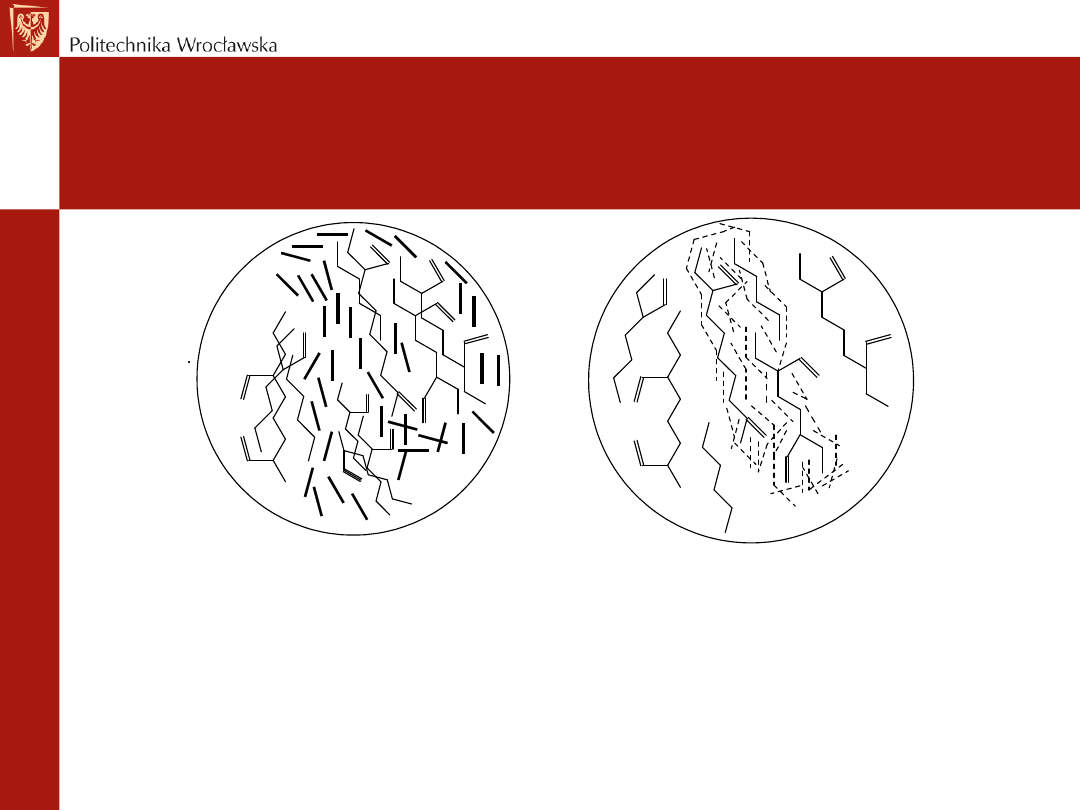
Bad solvent
induces
early phase
separation, chains
try to interact with
each other. High
chances of
crosslinking.
Good solvent
‘’separates’’ chains
thus delaying phase
separation. Even
distribution of chains
in a droplet – no
cavities.
Polymers - suspension
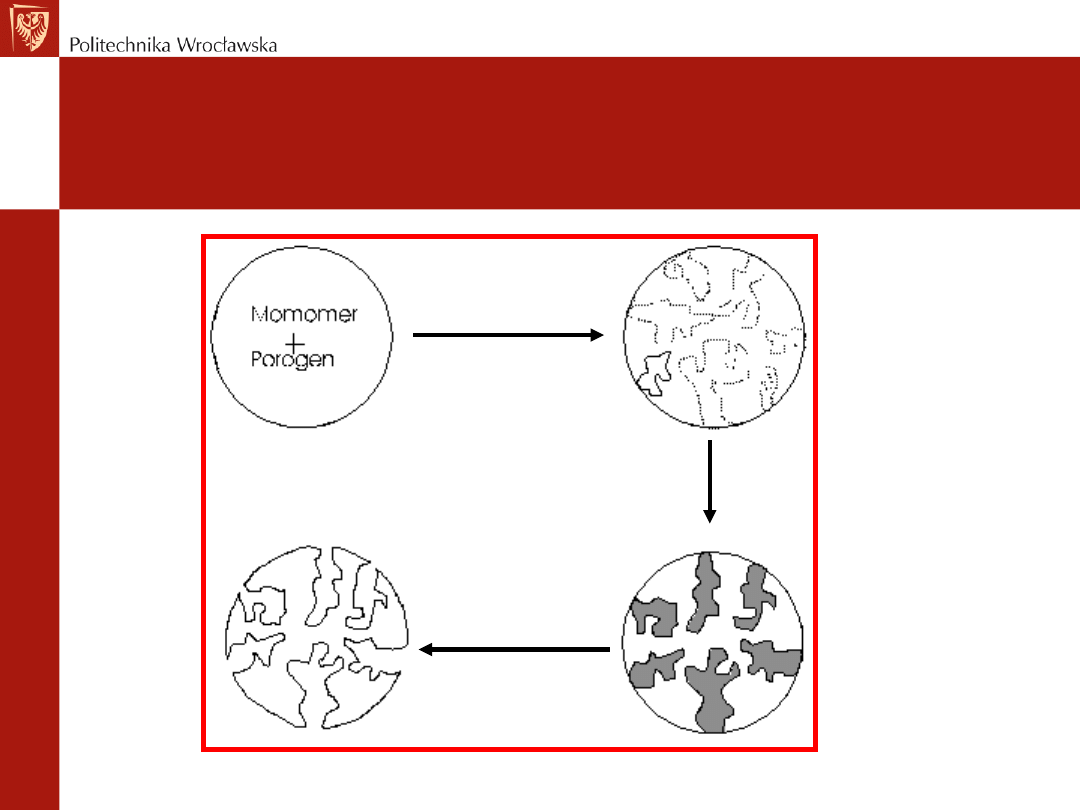
Polymerization
Polymerization
Removal of
Removal of
Porogen
Porogen
Phase separation
Phase separation
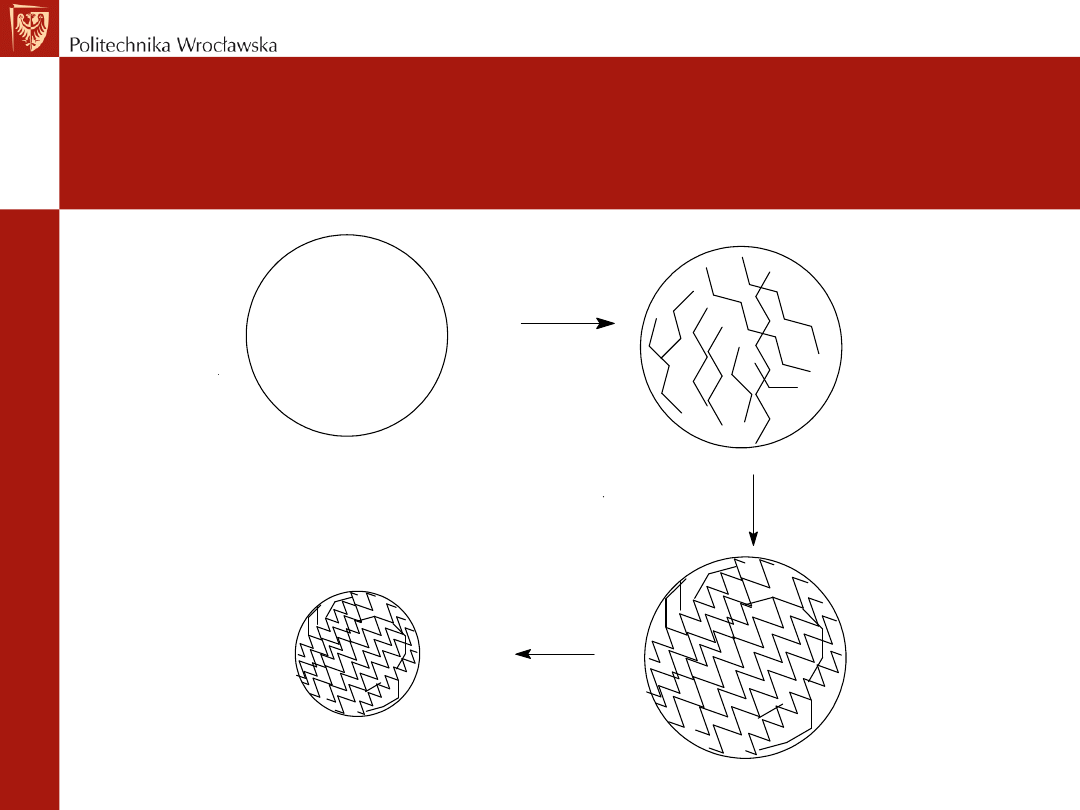
Polymers - suspension
polymerization
phase separation
monomer(s)
+
porogen(s)
porogen removal
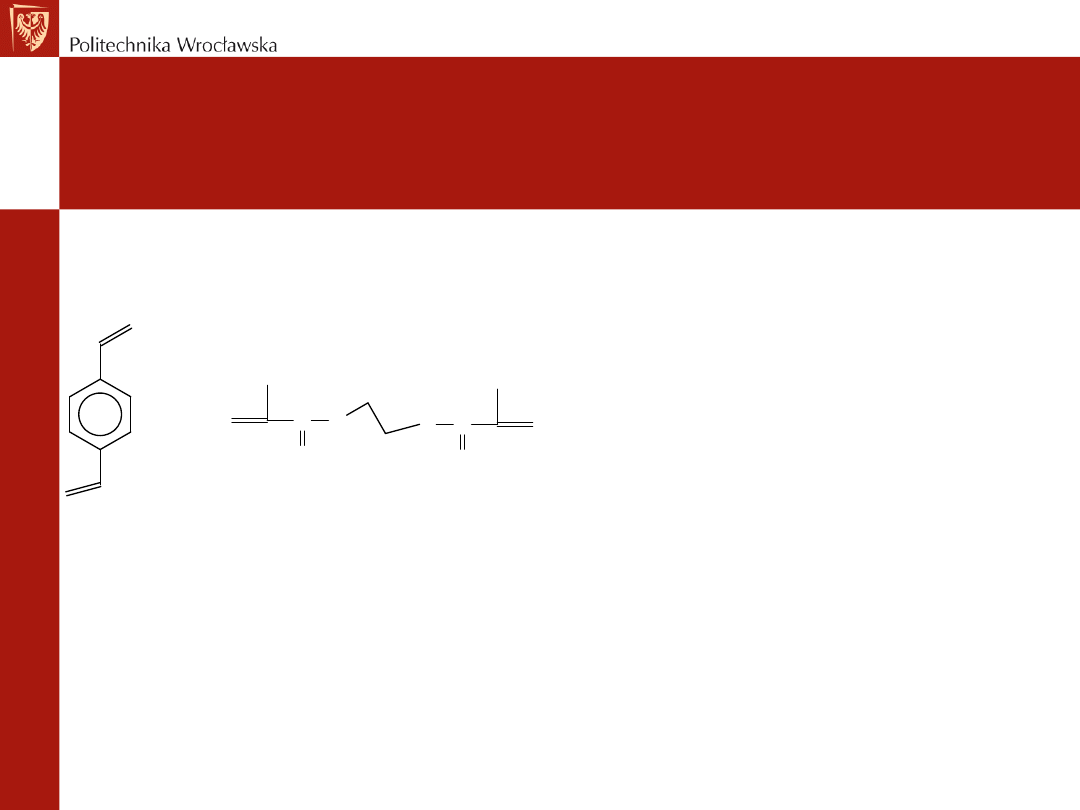
Polymers - suspension
• The above was
possible only due
to the presence of
sufficient amount
of the
crosslinker
.
• What happens
when there is no
crosslinker?
C
O
O
C
O
O
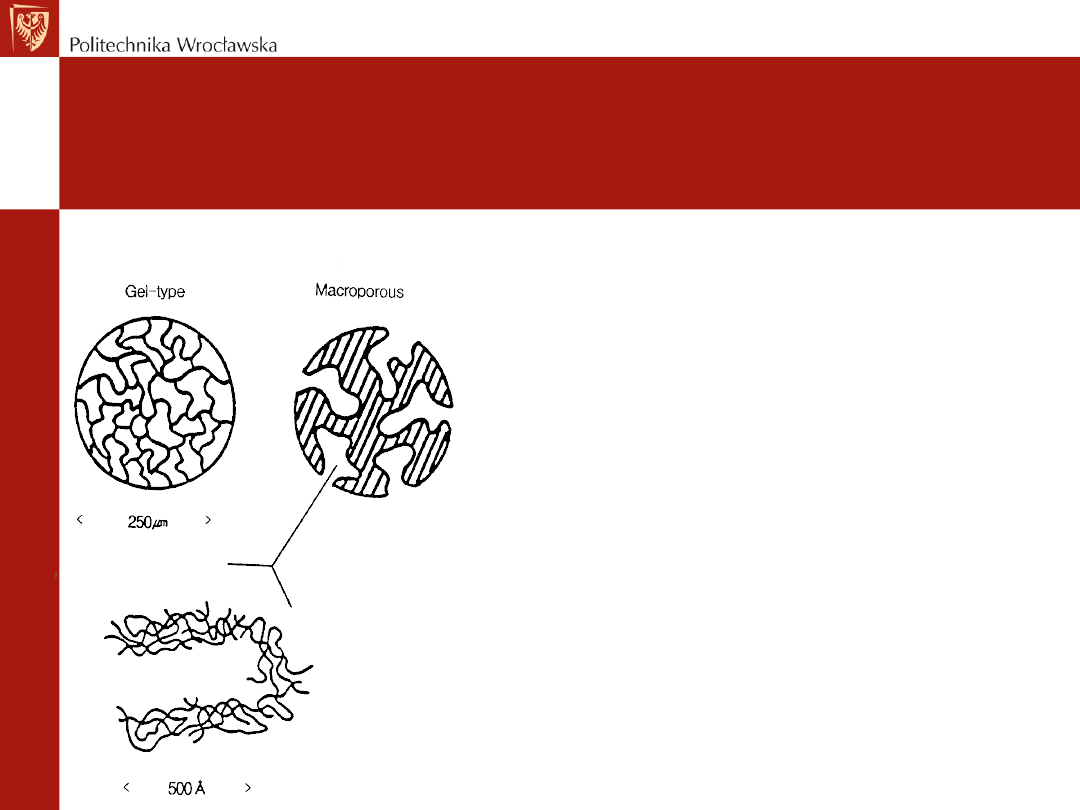
Polymers - suspension
•
Structure of gel and
Structure of gel and
macroporous type polymer
macroporous type polymer
Gel-type polymer beads
Gel-type polymer beads
- clear and glass-like
- clear and glass-like
- lightly crosslinked(~
- lightly crosslinked(~
2%)
2%)
-
no surface area in dry
no surface area in dry
state
state
-swells in good solvents
-swells in good solvents
-
modification up to ~
modification up to ~
100%
100%
possible
possible
Macroporous resins
Macroporous resins
-opaque
-opaque
-highly crosslinked(>
-highly crosslinked(>
20%)
20%)
-
permanent pore and
permanent pore and
high surface area
high surface area
-pores accessible to
-pores accessible to
all
all
solvents
solvents
-modification limited
-modification limited
to
to
ca.30-40%
ca.30-40%
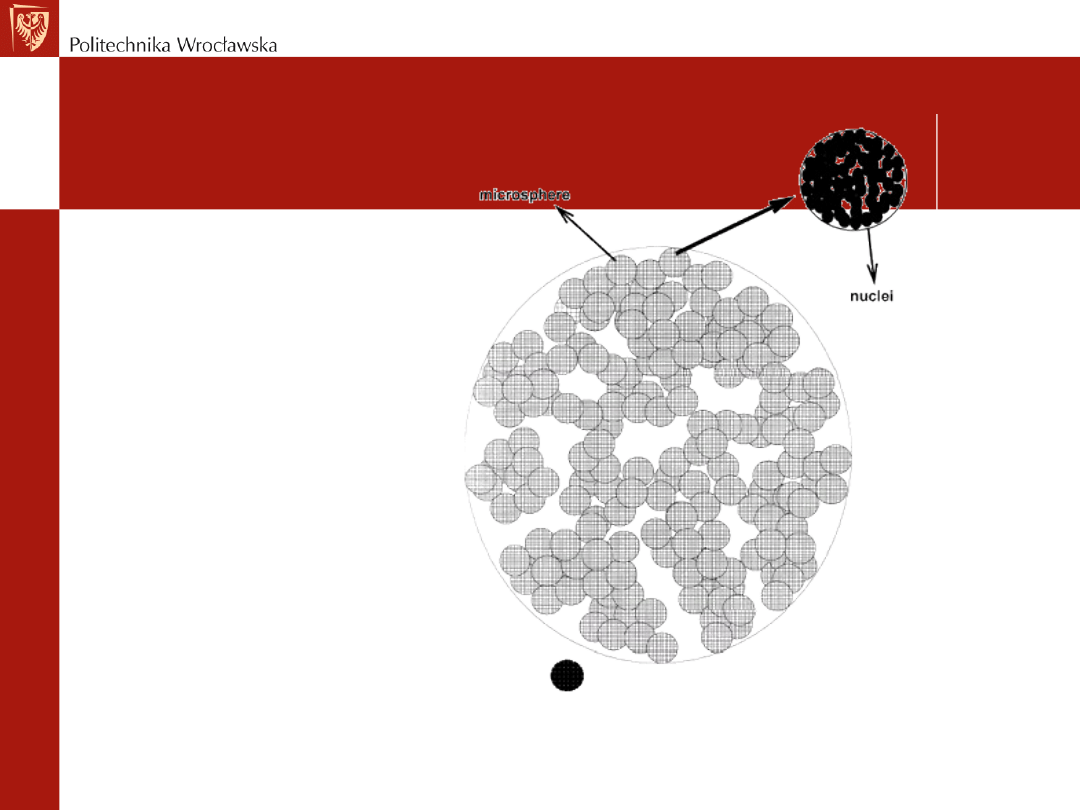
Polymers - suspension
Schematic representation of various agglomerates in
Schematic representation of various agglomerates in
macroporous copolymer network
macroporous copolymer network
The smallest
The smallest
particles are
particles are
called
called nuclei
nuclei
.
.
The nuclei
The nuclei
are nonporous
are nonporous
and consitute
and consitute
the highly
the highly
crosslinked
crosslinked
regions of the
regions of the
network.
network.
Micropores
Micropores
defined with
defined with
widths of up to
widths of up to
2 nm appear
2 nm appear
between the
between the
nuclei
nuclei
.
.

Polymers – suspension
•
The agglomerations of nuclei are
The agglomerations of nuclei are
called
called microspheres
microspheres
.
. Mesopores
Mesopores
are between the microspheres.
are between the microspheres.
•
Microspheres are agglomerated
Microspheres are agglomerated
again into larger
again into larger irregular
irregular
moieties
moieties
of
of
250~1000 nm inside the polymer
250~1000 nm inside the polymer
material.
material. Meso and macropores
Meso and macropores
appear between the
appear between the
agglomerates of the
agglomerates of the
microspheres.
microspheres.

Polymers – suspension
• Porous polymers
are used mainly as
adsorbents and
mainly as obtained
from suspension
polymerization
• Gel polymers are
used mainly as ion-
exchangers,
chelating resins,
support for organic
syntheses. In most
cases they have to
be modified after
suspension
polymerization.
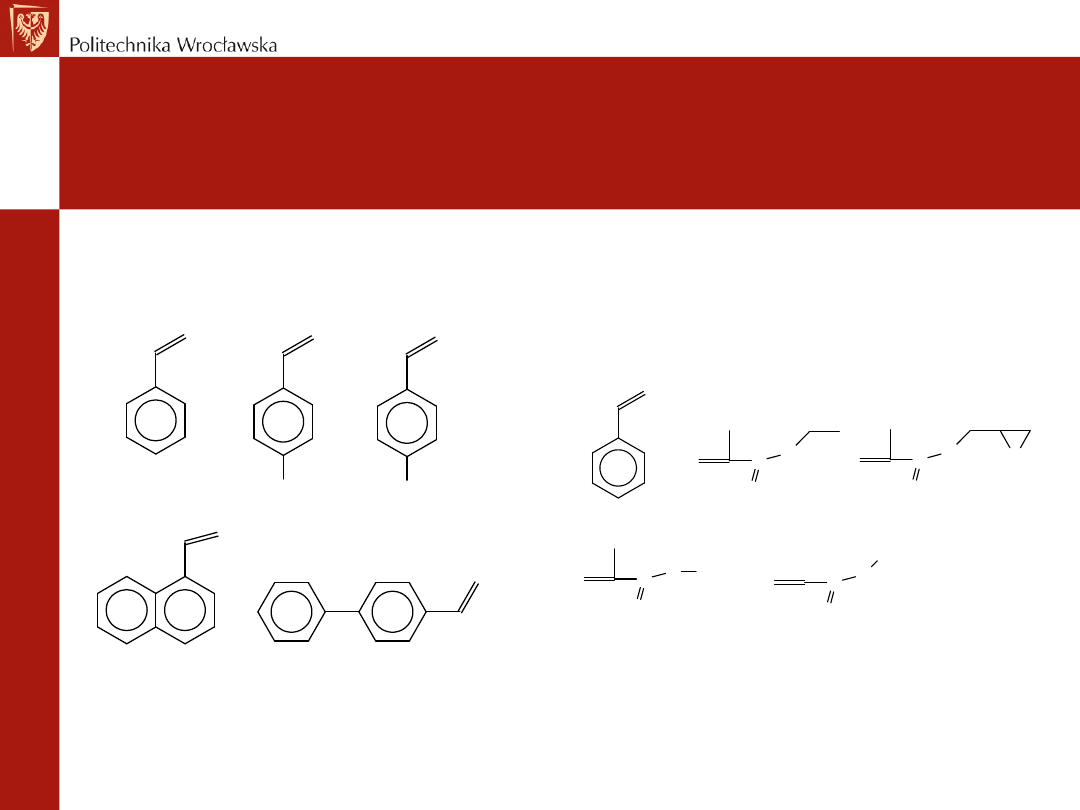
Polymers – suspension
CH
2
Cl
CH
2
CN
C
O
O
C
O
O
O
C
O
O H
C
O
O
H
In the synthesis of
adsorbents
In the synthesis of gel
type polymers

SPECIALTY POLYMERS
• Thermoplastic
:
– polymers that flow
when heated
– easily reshaped
and recycled
– due to presence of
long chains with
no crosslinks
– polyethylene,
polyvinylchloride
• Thermosets
:
– High
crosslinking
when heated
– can not be reformed
or recycled
– presence of
extensive crosslinks
between long chains
– induce
decomposition upon
heating and renders
thermosetting
polymers brittle
– epoxy

SPECIALTY POLYMERS
• Elastomers
:
– some crosslinking
– can undergo
extensive elastic
deformation
– natural rubber,
silicone
– intermediate
between
thermoplastic and
thermosetting
polymers
• Our specialty
polymers can
belong to any of
these groups
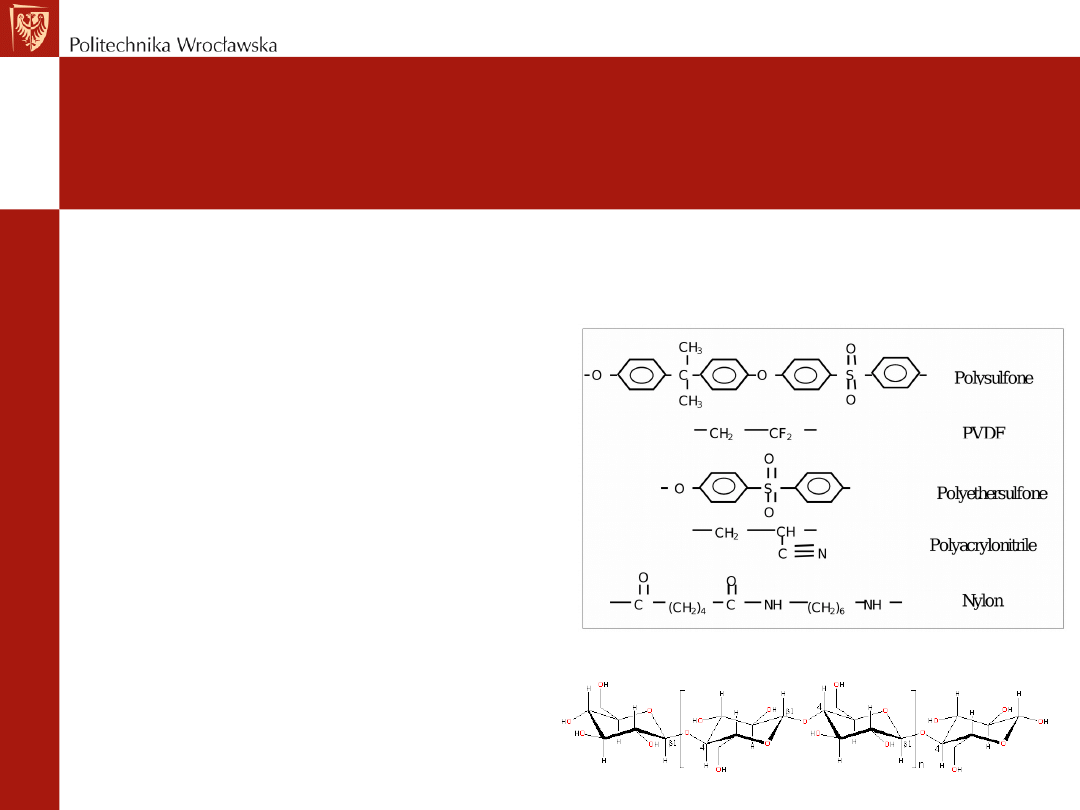
SPECIALTY POLYMERS
•Are they important?
•Reasons for their
presence everywhere
•Annual production
worldwide
1,5x10E11
kg
•(120 years ago was
almost 0)
•Annual ‘production’
in nature
4x10E14 kg
•Now, when we know a little bit about
polymers
…
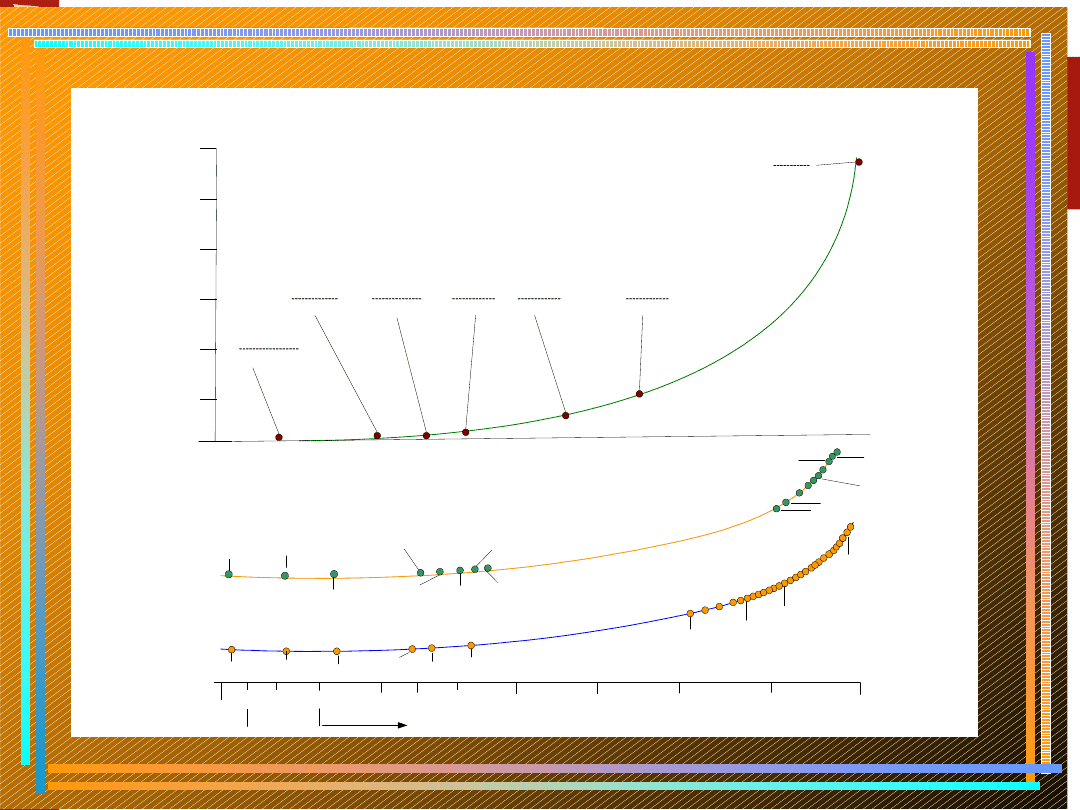
CZŁOWIEK
MATERIAŁY
6
5
4
3
2
1
0
Populacja
[mld]
~100 tyś.
~100 000 p.n.e.
10 mln
4 000 p.n.e
100 mln
750 p.n.e.
200 mln
400 n.e.
1600 n.e.
600 mln
1 mld
1820 n.e
6 mld
~2000 n.e.
TECHNOLOGIE
Półprzewodniki
Ceramika
Materiały
syntetyczne
Stal
Aluminium
Zn, Pb, Au, Ag
Szkło
Brąz
Mosiądz
Żelazo
Kamień
Drewno
Glina
-1.85 mln
Australopitekus
-500 000 -100 000 -35 000
Neandertalczyk Homo sapiens
-8 600
-4 000
0
1700
1000
1800
1900
2000 rok
Nauki przyrodnicze
Nauki techniczne
Nauki społeczne
Inżynieria materiałowa
Maszyna
parowa
Samochód
Samolot
Komputer
Socha
Ogień
Koło
Naczynia
Narzędzia
kościane
Narzędzia
kamienne
Zwiazek miedzy wzrostem populacji ludnosci i dostepnoscia materialów oraz
ich wykorzystaniem do wytwarzania narzedzi i jako surowce we wspólczesnych procesach technologicznych
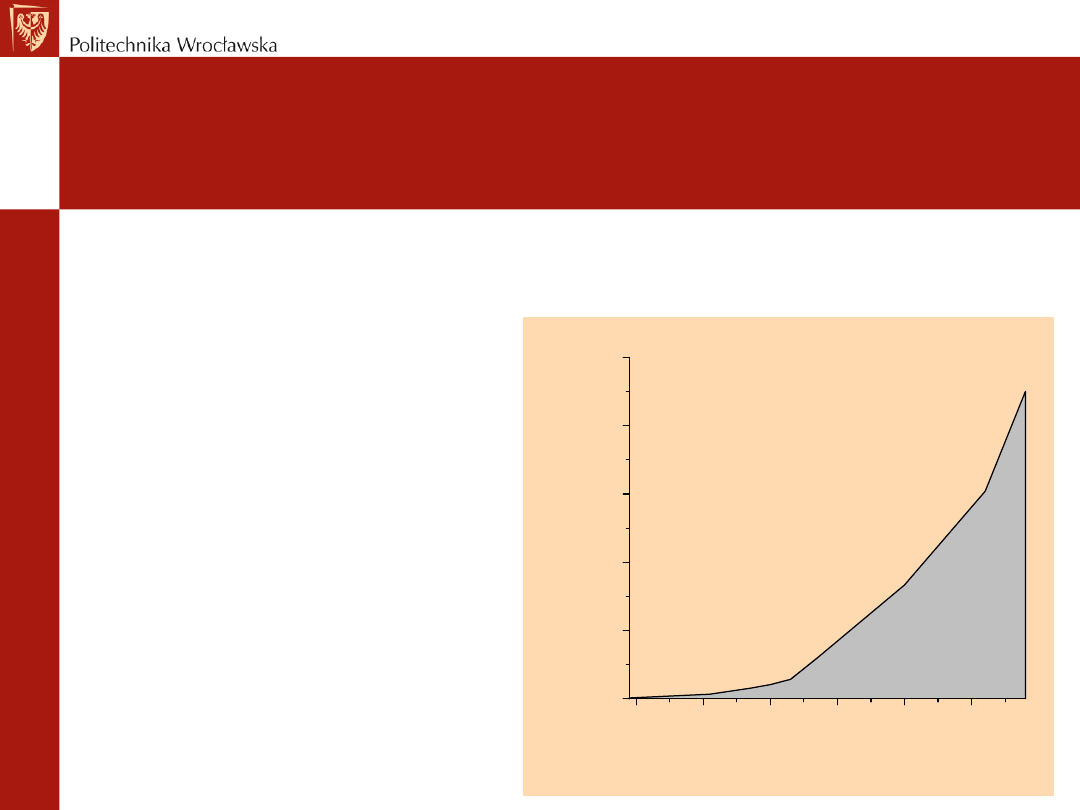
SPECIALTY POLYMERS
1940
1950
1960
1970
1980
1990
0
30
60
90
120
150
p
o
ly
m
er
×
1
0
-9
/ k
g
Year
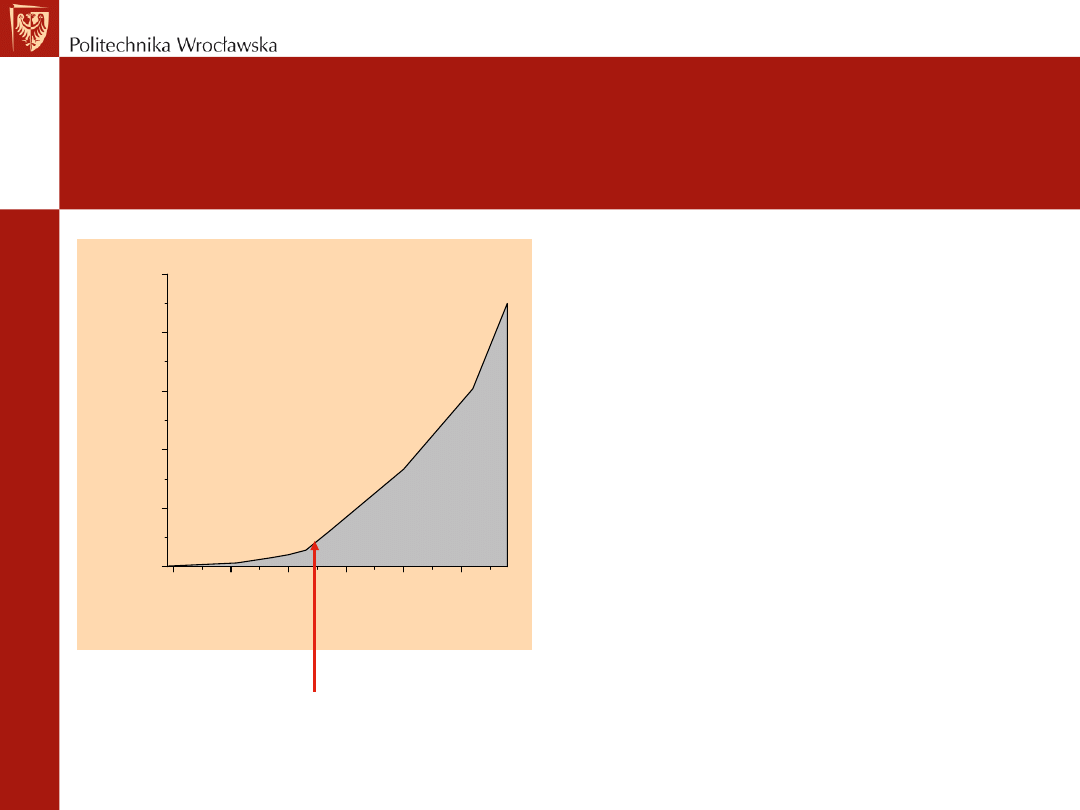
•Worldwide Polymer
Production
•Commodity
polymers
•Engineering
polymers
•Specialty
polymers
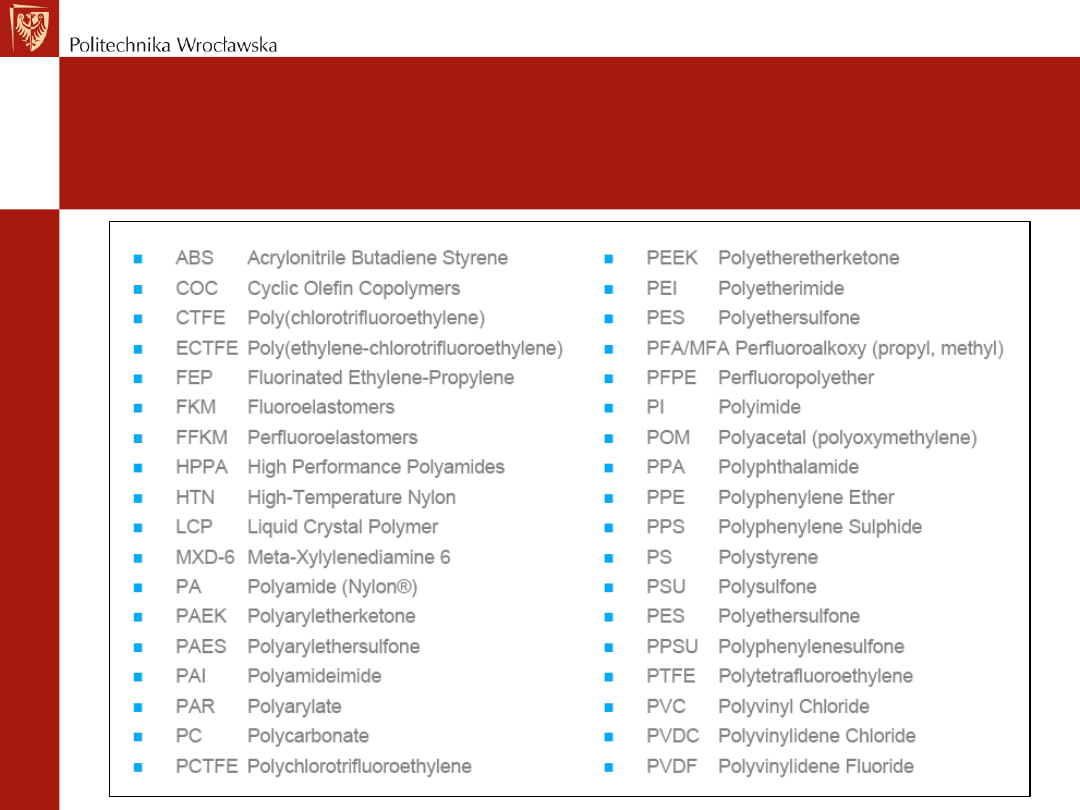
SPECIALTY POLYMERS
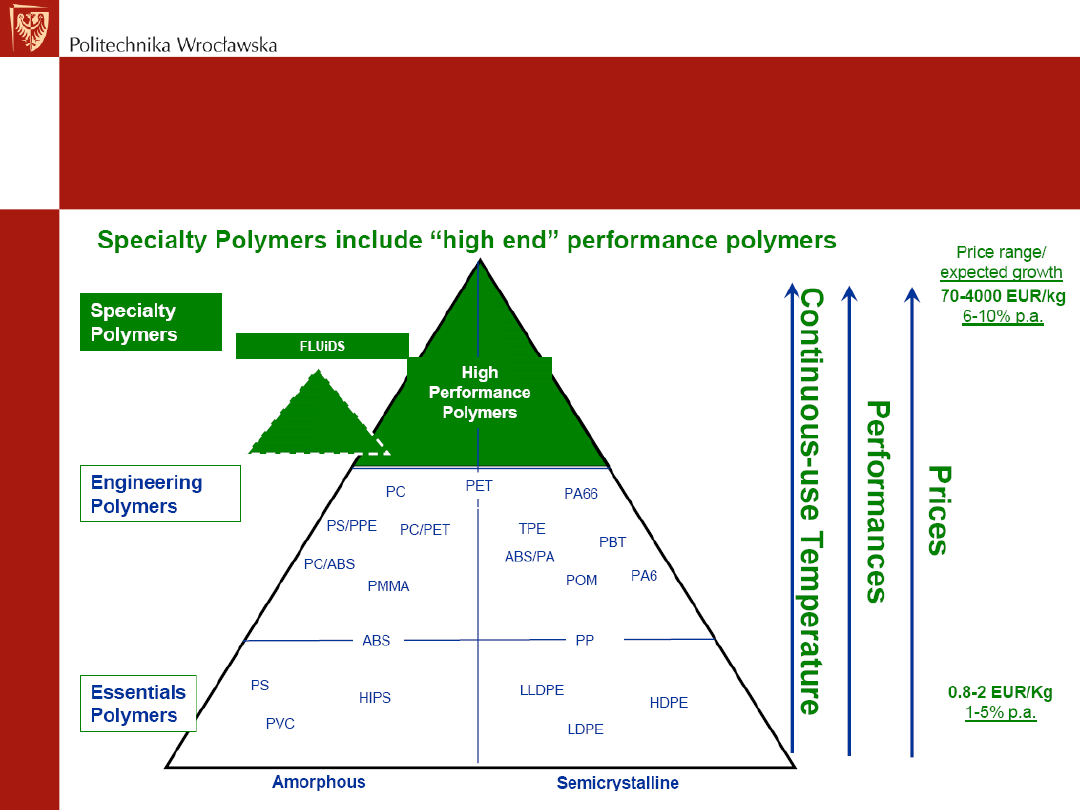
SPECIALTY POLYMERS
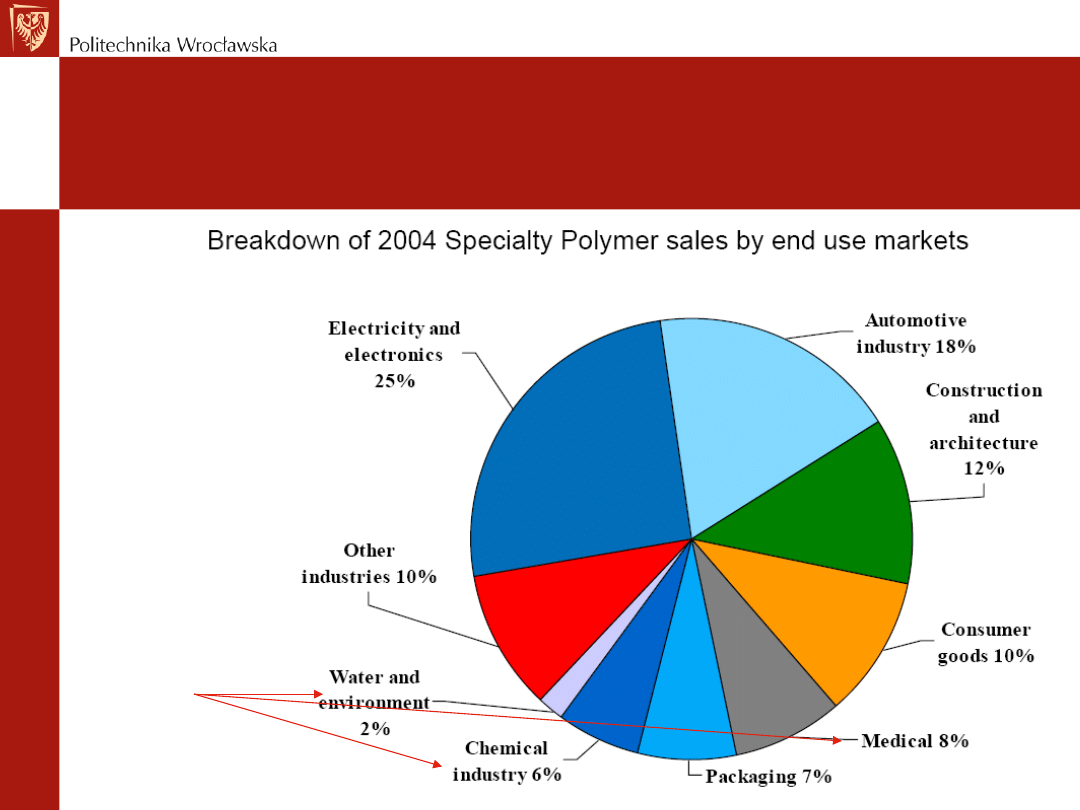
SPECIALTY POLYMERS
•Our
intere
st
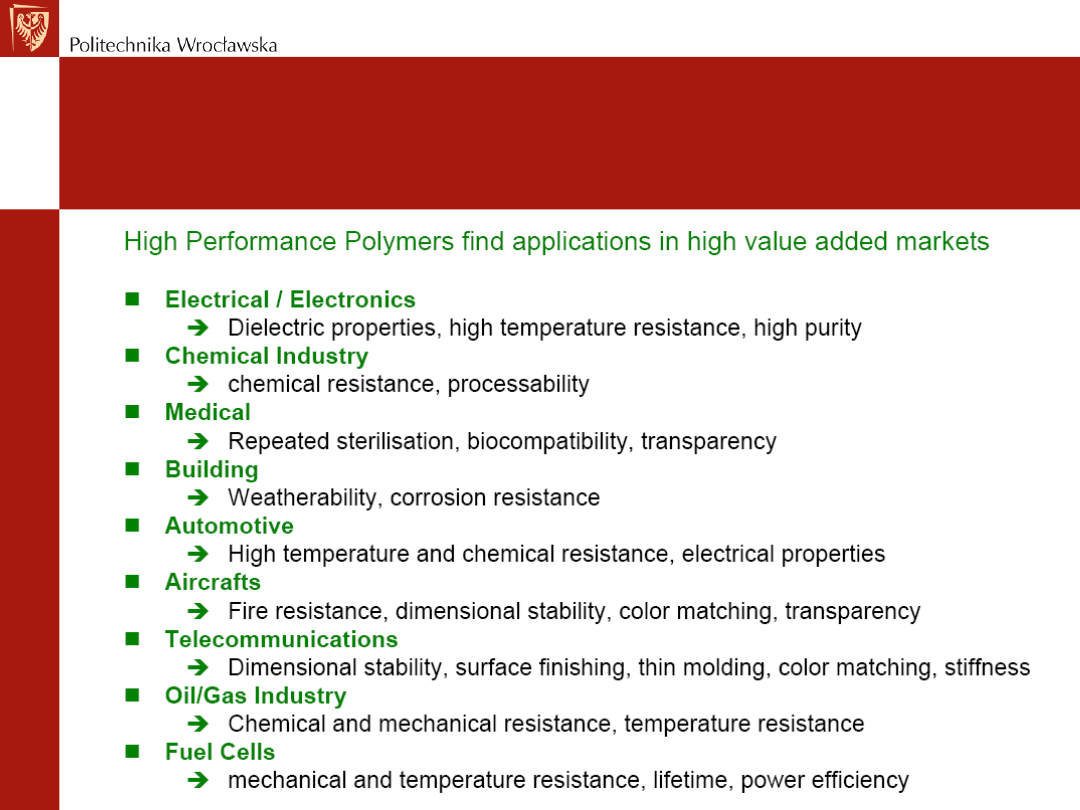
SPECIALTY POLYMERS

SPECIALTY POLYMERS
• And here comes the question – what really
is a specialty (reactive) polymer?
• The is no definition and since the reason
for the syntheses of specialty polymers is
the dissatisfaction with the role given to
the „ordinary” polymers and the desire to
add sophisticated function to polymers we
can conclude that all materials except
commodity and construction polymers are
specialty ones.

SPECIALTY POLYMERS
• This desire to add sophisticated function to
polymers was present from the very start
of the polymer science
• History of polymer science is very young
but dynamic and can be plotted as it was in
the case of technologies and materials
earlier in this lecture
• The appreciation of polymers resulted in
few Nobel Prizes

• “Polymeric Nobel
Prizes”
• 1953 Hermann
Staudinger
• 1963 Giulio Natta,
Karl Ziegler
• 1974 Paul J. Flory
• 2000 Alan J.
Heeger, Alan G.
MacDiarmid,
Hideki Shirakawa
• Polymer science
as
a
separate branch of
science can be dated at
the end of XIX century.
• From that time the use
of polymers become so
popular that their
production in XX century
increased ca. 800
000%
• The
participation of
specialty
polymers in
the total production is
growing.
•SPECIALTY POLYMERS

SPECIALTY POLYMERS
• Prof. Hermann Staudinger (1881 - 1965),
Univ. of Freiburg, Germany. Started his
carrier in Federal Institute of Technology,
Zurich, Switzerland. Professor of organic
chemistry, known for his work on
diazomethane. Ca.1920 decided to shift his
scientific interest and devoted his time to
macromolecules. This decision brought him
Nobel Prize and fame, but had to be very
difficult.
• Among chemsits the idea of macromolecules
was not popular. For example Heinrich
Wieland (Nobel 1927) wrote to Staudinger ‘…
forget the idea of macromolecules, organic
molecules with MW bigger than 5000 simply
do not exist. Try to purify rubber and it will
crystallize then.’

SPECIALTY POLYMERS
• Another Nobel Prize winner - Paul Carrer
(Nobel 1937) for many year was saying that
‘…cellulose, starch, proteins and rubber are
aggregates of molecules, displaying ‘colloidal
character’’. And vast majority of chemists
used the term ‘chemistry of grease’ talking
about experiments with compounds, which
can not be purified neither by distillation nor
by crystallization.

SPECIALTY POLYMERS
• Prof. Giulio Natta
(1903 - 1979), Institute of
Technology, Milan, Italy. Before polymers he was
working in crystallography and heterogeneous
catalysis. From 1954 experiments on polymerization
with the use of Ziegler’s catalysts led to the
semicrystalline polymers (PP, PS, poli α-butylene), he
also worked of stereoregularity and crystallinity of
polymers.
• Prof. Karl Ziegler
(1898 - 1973), Max Planck
Institute for Carbon Research, Mulheim, Germany. The
research on anionic polymerization of butadiene was
carried out in 1928-1934, and using butyllithium in
50’. He discovered that ethylene can attach itself to
this compounds, thus increasing the length of alkyl
chain. This chain can be abstracted from the catalyst
giving α-olefines and LiH. Further work resulted in the
discovery of metalloorganic catalysts used in the
production of low density PE.
1940
1950
1960
1970
1980
1990
0
30
60
90
120
150
p
o
ly
m
er
×
1
0
-9
/ k
g
Year
SPECIALTY POLYMERS
•Their work had the vast influence on polymeric materials –
stereoregularity ~ crystallinity ~ mechanical properties

SPECIALTY POLYMERS
• Professor Paul J. Flory (1910 - 1985), Stanford Univ.,
USA. Started his work in the R&D laboratory of
DuPont, Delaware, USA. He investigated the kinetics
and molecular weight distribution in polycondensation
processes, Described the gelation in multifunctional
monomer polymerization, worked on theory of
polymers in solutions, conformation of polymeric
chains and their hydrodynamic properties.

SPECIALTY POLYMERS
• Professor Alan J. Heeger (1936), Univ. of California,
Santa Barbara, USA. PhD in theoretical physics from
UCB. Work in the Dept. of Physics Univ. of
Pennsylvania included physics of molecular crystals,
from 1975 poly(sulfur nitride), a year later
polyacetylene (brought from Japan by H. Shirakawa).
• Professor Alan J. MacDiarmid (1927), Univ. of
Pennsylvania, USA. MSc from Univ. of New Zealand,
PhD from Univ. of Wisconsin and from Cambridge
Univ., works in conducting polymers (synthesis,
doping, electrochemistry, their magnetic and optical
properties).
• Professor Hideki Shirakawa, Tsukuba Univ., Tsukuba,
Japonia. B.S, MSc and PhD from Tokyo Institute of
Technology. Investigations of the mechanisms of
polymerization on Ziegler-Natta catalysts using
acetylene as monomer. In 1967 he succeded (by
chance!) in obtaining polyacetylene in the for of a
film. In 1976/77 comes to Univ. of Pennsylvania and
works on the chemical doping of polyacetylene.
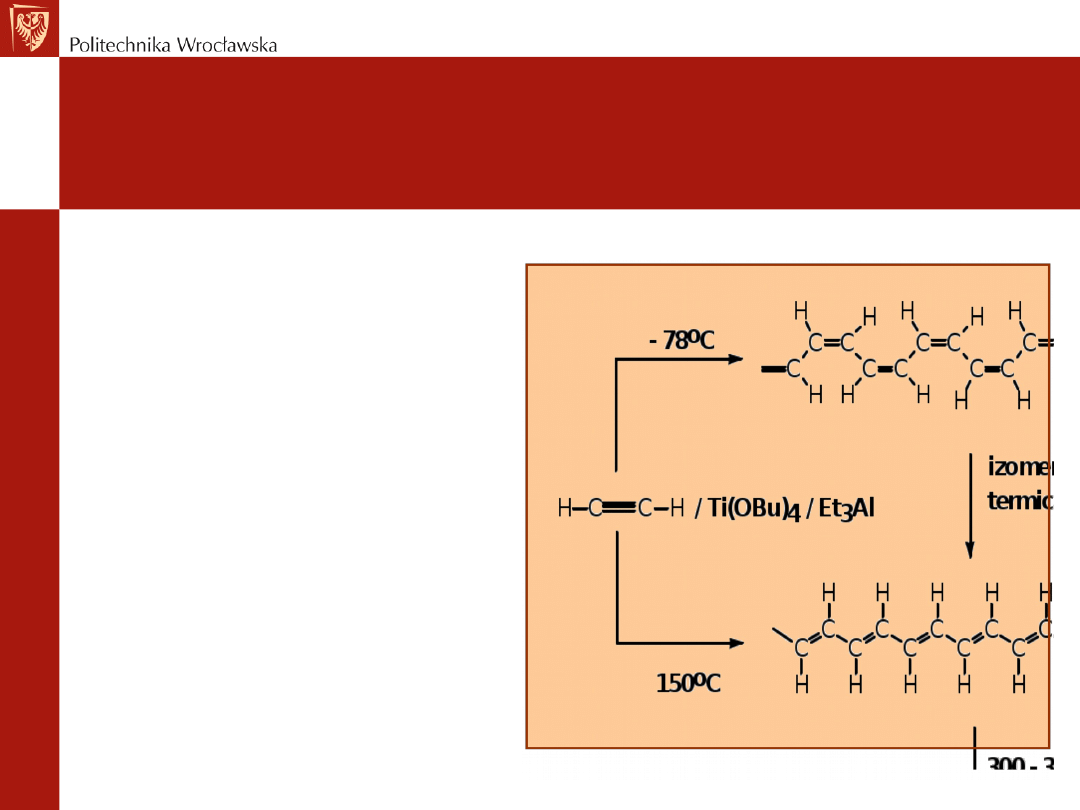
•Obtained
using Ziegler –
Natta catalyst
•Trans form is
the stable one
•Attempts to
graphitize
polyacetylene
SPECIALTY POLYMERS
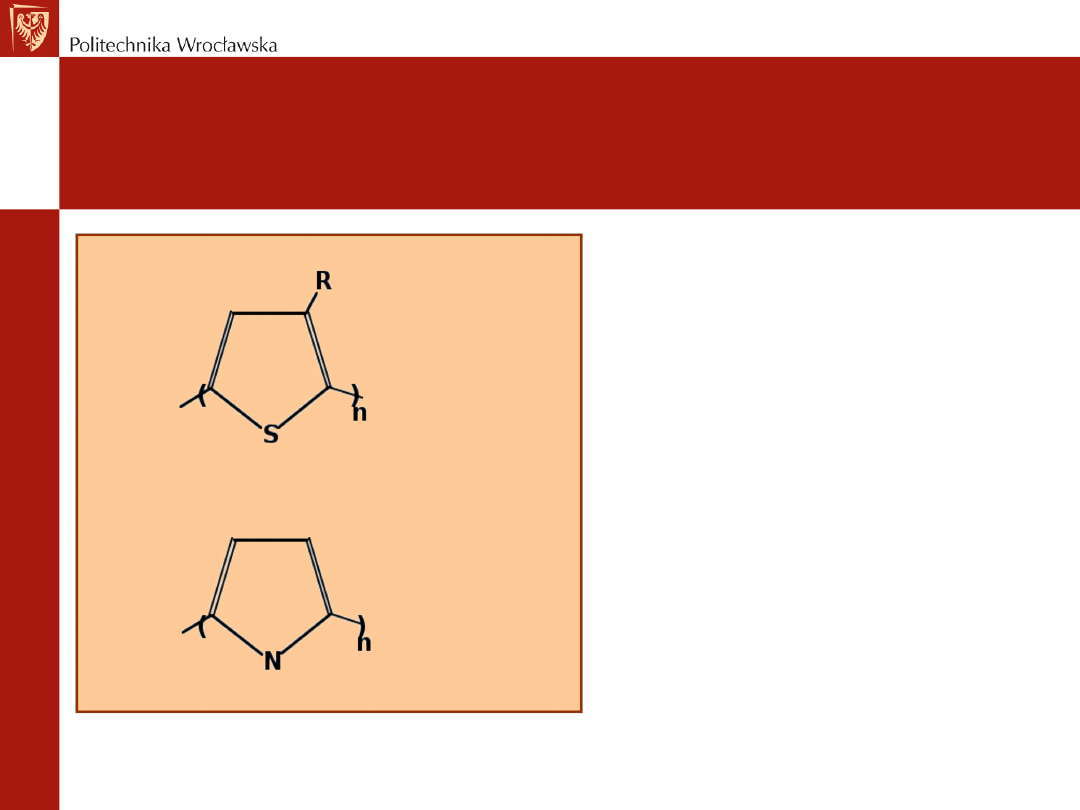
•New polymeric
systems are
investigated
•Those polymers
are used in
photovoltaic units,
luminescent diods
•Possible
superconductivity
SPECIALTY POLYMERS
SPECIALTY POLYMERS
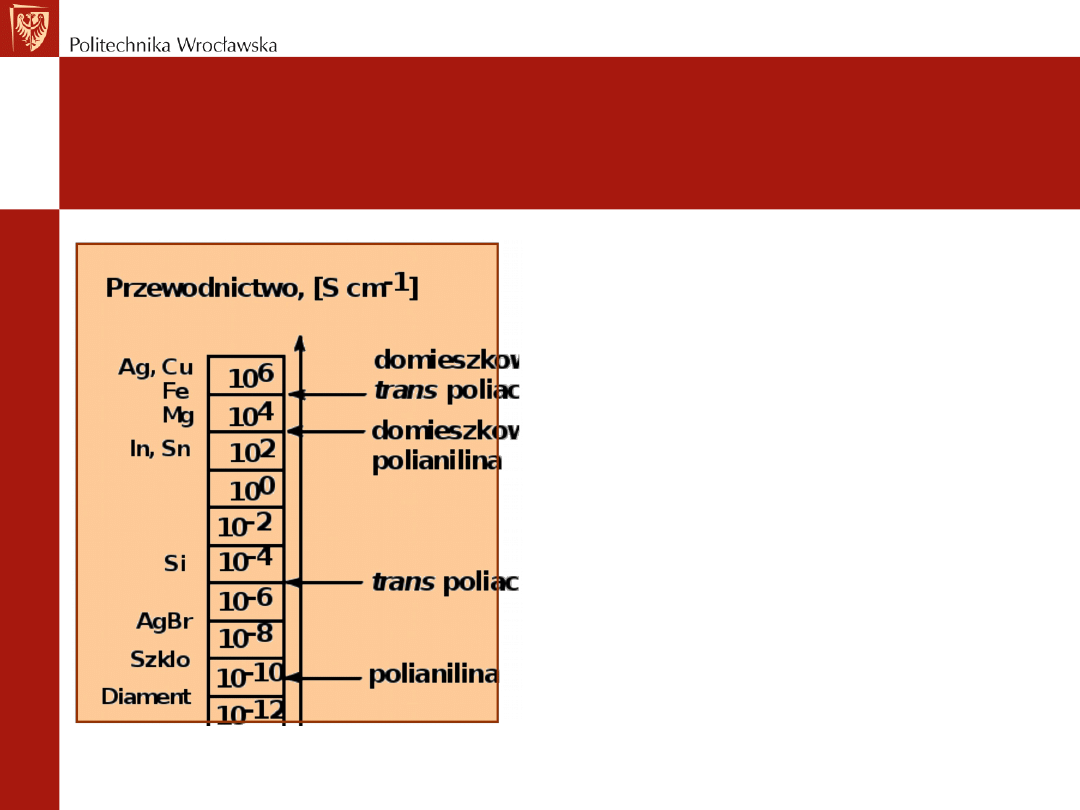
•Finally, after
doping it was
possible to
increase the
conductivity to the
level of metals
•Pure polyaniline
is an insulator,
polyacetylene is an
semi conductor
•SPECIALTY POLYMERS
N
N
N
N
C
C
C C
Si
CH
3
CH
3
CH
3
( ) ( )
m n
Si
CH
3
CH
3
CH
3
Pt
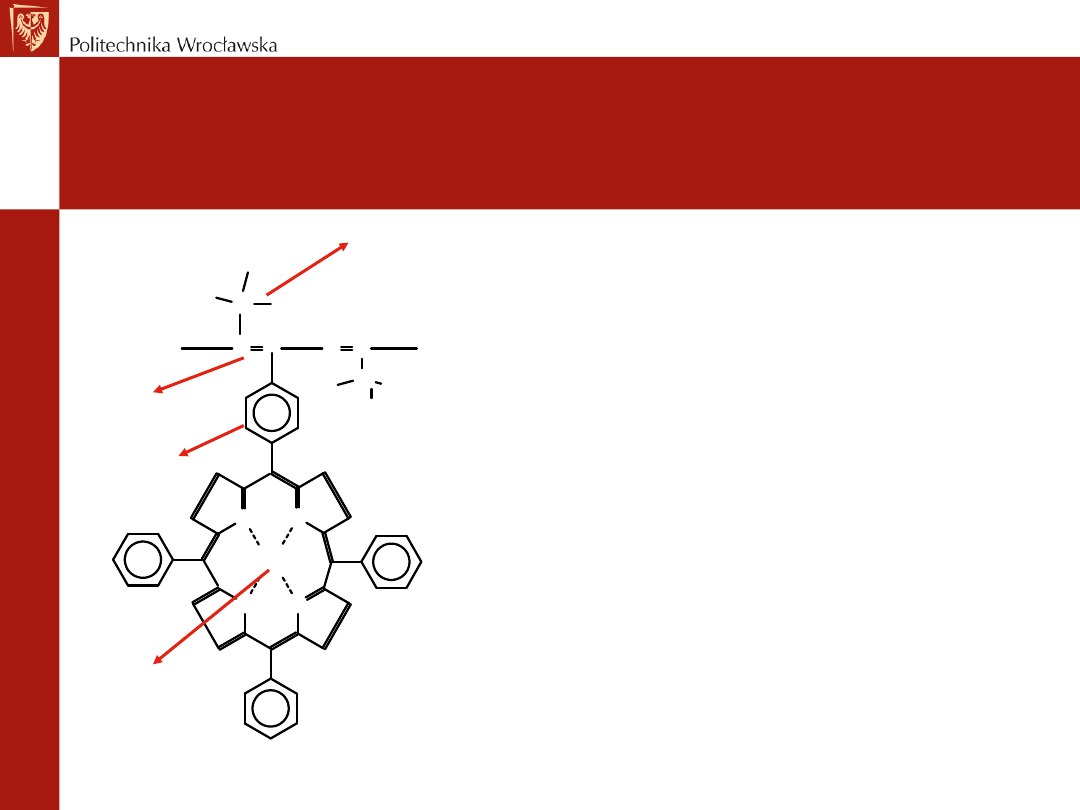
•Conducting polymers
can be further
modified
•Pendant groups can
be selected in a way
to perform specific
task
•Here, the
organometallic ring
can contribute to the
conductivity of the
main chain
Permeabili
ty for
gases
conductivi
ty
Complexin
g
attachemen
t
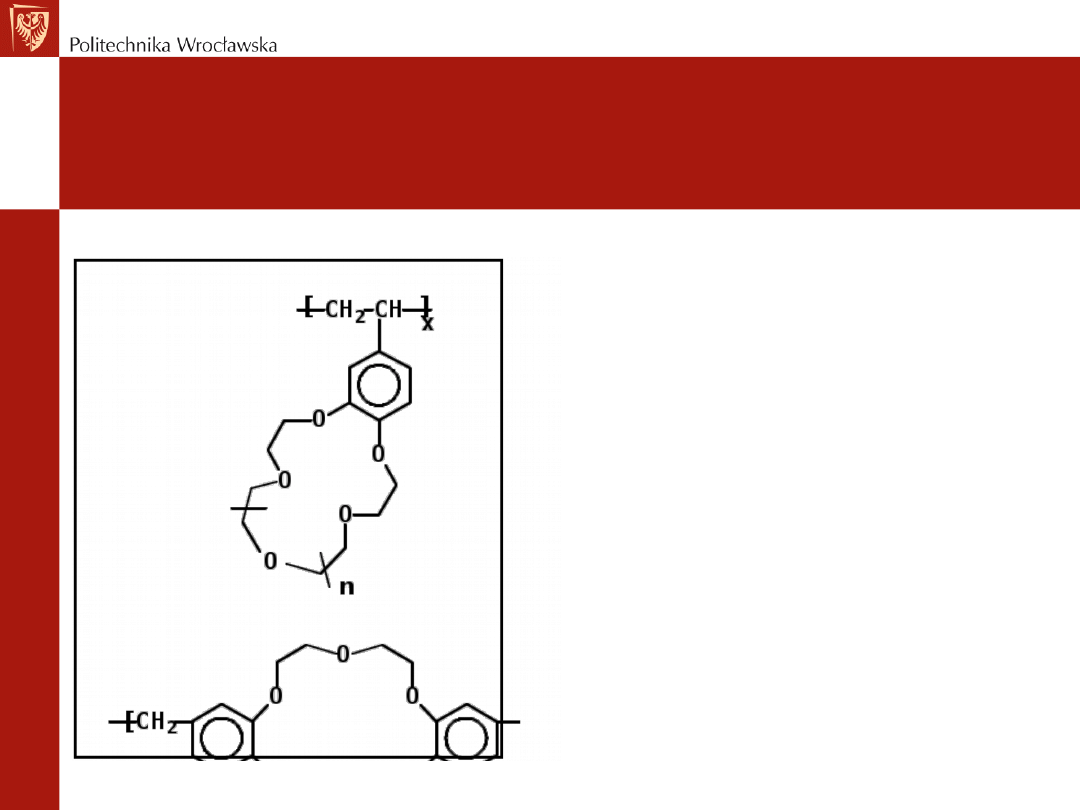
SPECIALTY POLYMERS
• Ion separation
• Elution of various
cations is
different,
depending on
their affinity to
the crown ether
N
N
O
O
H
H
N
N
O
O
H
H
N
N
O
O
H
H
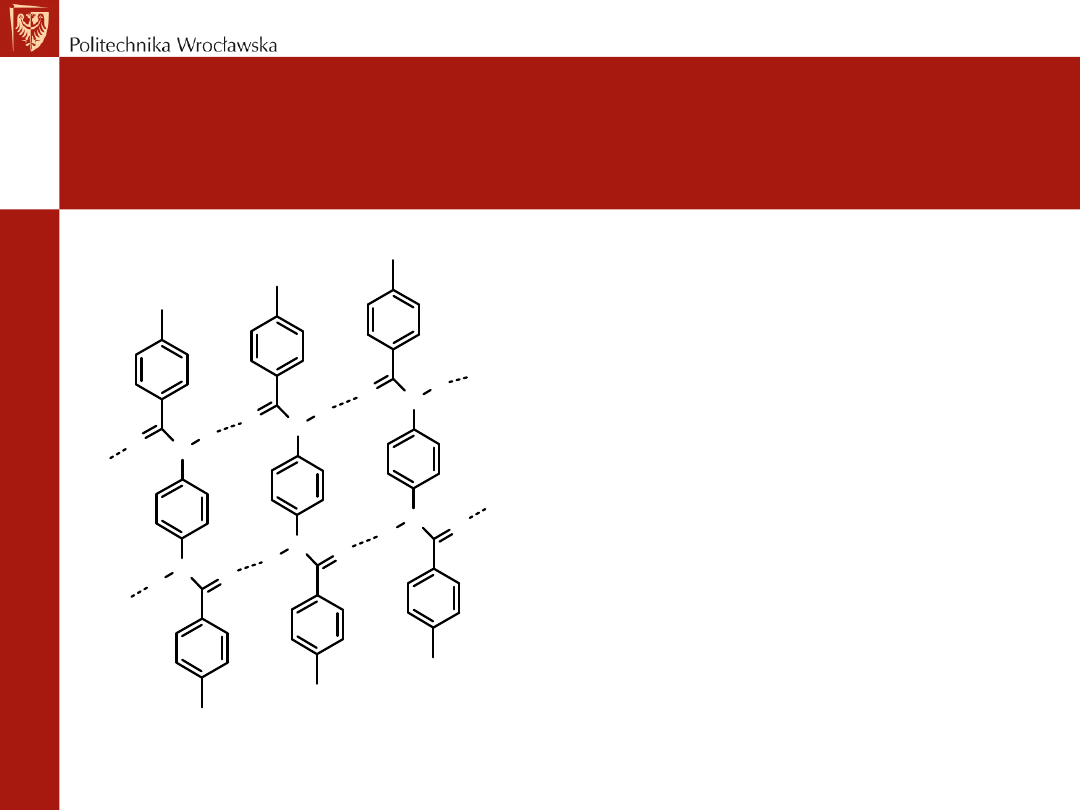
SPECIALTY POLYMERS
•Sometimes it is
enough to
synthesize
known polymer
(polyamide) in a
way that
interchain
interactions are
maximized
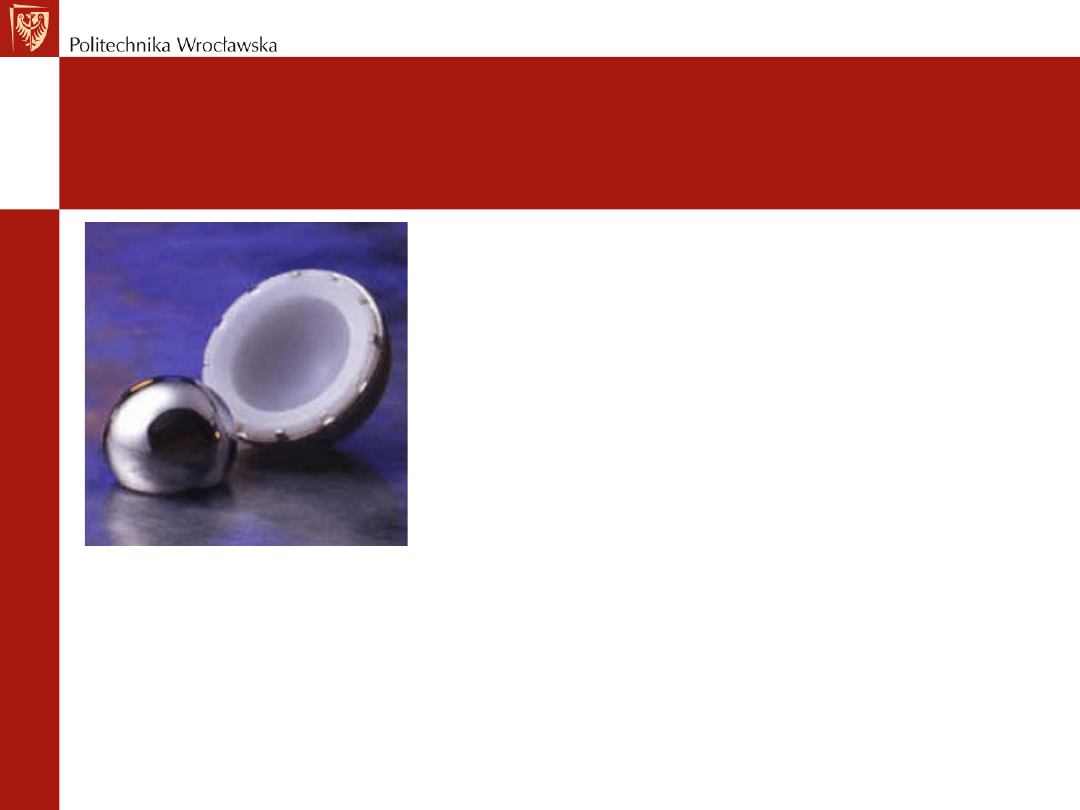
SPECIALTY POLYMERS
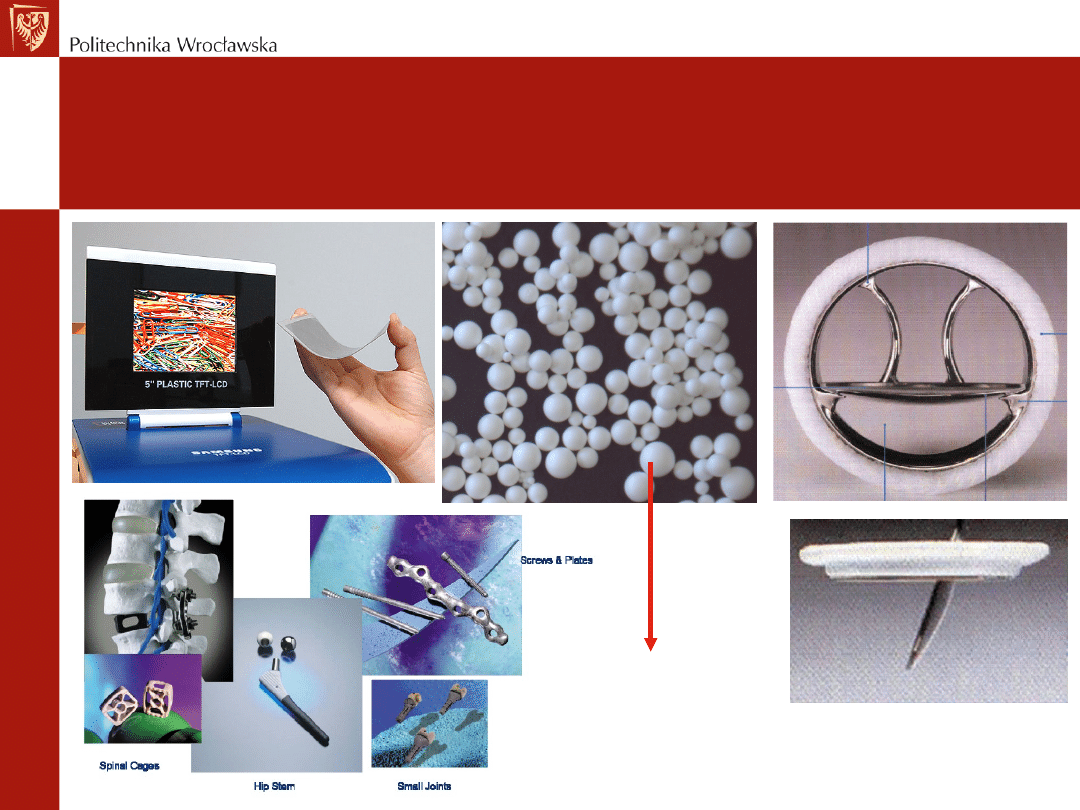
• Hip joint socket –
stiff, strong, wear
resistant and low
friction -UHMWPE
•UHMWPE – ultra high
molecular weigth PE
(ca. 6 mln Da)
•So, from chemical
point of view is just as
PE used in the
sandwich bags
SPECIALTY POLYMERS
•Our
interest in
specialty
polymers

SPECIALTY POLYMERS
• The „specialty” of the polymer is
determined by the property given to
it when synthesized for a particular
application
• Even a small change in chemical
and/or physical structure can cause
the „upgrade” of the polymer from
commodity or engineering to the
specialty class.
Document Outline
- Slide 1
- Slide 2
- Slide 3
- Slide 4
- Slide 5
- Slide 6
- Slide 7
- Slide 8
- Slide 9
- Slide 10
- Slide 11
- Slide 12
- Slide 13
- Slide 14
- Slide 15
- Slide 16
- Slide 17
- Slide 18
- Slide 19
- Slide 20
- Slide 21
- Slide 22
- Slide 23
- Slide 24
- Slide 25
- Slide 26
- Slide 27
- Slide 28
- Slide 29
- Slide 30
- Slide 31
- Slide 32
- Slide 33
- Slide 34
- Slide 35
- Slide 36
- Slide 37
- Slide 38
- Slide 39
- Slide 40
- Slide 41
- Slide 42
- Slide 43
- Slide 44
- Slide 45
- Slide 46
- Slide 47
- Slide 48
- Slide 49
- Slide 50
Wyszukiwarka
Podobne podstrony:
Auxiliary Materials for Level B Student's Version id 73821 (2)
Grammar Practice For Elementary Students (Longman) (Osloskop Net)
norsk grammatik for internasjonale studenter
Academic Writing for Graduate Students Swales and?ak 1
Auxiliary Materials for Level B Student's Version id 73821 (2)
Mathematical Proficiency For All Students RAND (2003) WW
English Essays Writing Course for Advanced Students 2
english essays writing course for advanced students
Reger Four Special Studies for the left hand
history vocabulary for esl students the middle ages
The use of electron beam lithographic graft polymerization on thermoresponsive polymers for regulati
Honing the Tip of the Spear Developing an Operational Level Intelligence Preparation of the Battlefi
Florian Lemaitre PhD student in photonic integration
0415454972 Routledge Theory for Classics A Students Guide Adapted from Theory for Religious Studies
więcej podobnych podstron