SOI/DT 2005-01 dmm
1
599 36 86 11
SERVICE MANUAL
WASHING
This Manual updates and replaces Service Manual 599 35 93-18
ELECTROLUX HOME PRODUCTS
ITALY S.p.A.
Spares Operations Italy
Corso Lino Zanussi, 30
Publication no.
I - 33080 PORCIA /PN
599 36 86-11
Fax +39 0434 394096
Edition: 2005-01-27
EN
Washing machines with
EWM 1000 PLUS
electronic control system
and
“Full SMD” display board
With sensor
Production ZP (Porcia-Italy)

SOI/DT 2005-01 dmm
2
599 36 86 11

SOI/DT 2005-01 dmm
3
599 36 86 11
CONTENTS
1
Purpose of this manual .............................................................................................................................. 5
2
PRECAUTIONS ......................................................................................................................................... 5
3
GENERAL CHARACTERISTICS............................................................................................................... 5
4
CONTROL PANEL..................................................................................................................................... 6
4.1
Control/display board.......................................................................................................................... 7
4.1.1
Version with display..................................................................................................................... 7
4.1.2
Versions without display .............................................................................................................. 7
4.2
Washing programmes......................................................................................................................... 8
4.2.1
Configuration of the programmes................................................................................................ 8
4.3
Programme selector ........................................................................................................................... 8
4.4
Start/Pause ......................................................................................................................................... 8
4.5
Functions of the buttons ..................................................................................................................... 8
5
WASHING PROGRAMMES AND OPTIONS ............................................................................................ 9
5.1
Programmes ....................................................................................................................................... 9
5.2
Description of options ....................................................................................................................... 11
5.2.1
Night cycle ................................................................................................................................. 11
5.2.2
Rinse-hold.................................................................................................................................. 11
5.2.3
Pre-wash.................................................................................................................................... 11
5.2.4
Soak........................................................................................................................................... 11
5.2.5
Stains......................................................................................................................................... 11
5.2.6
Short (daily) ............................................................................................................................... 11
5.2.7
Very short .................................................................................................................................. 11
5.2.8
Economy / Energy label............................................................................................................. 11
5.2.9
Sensitive .................................................................................................................................... 12
5.2.10
Extra rinse.................................................................................................................................. 12
5.2.11
Bleach........................................................................................................................................ 12
5.2.12
“Half load” button ....................................................................................................................... 12
5.2.13
Easy-Iron ................................................................................................................................... 12
5.2.14
Reduced spin speed.................................................................................................................. 12
5.2.15
No spin....................................................................................................................................... 12
5.2.16
Modifying the spin speed........................................................................................................... 12
5.2.17
Time reduction (Quick) .............................................................................................................. 13
5.2.18
Temperature adjustment ........................................................................................................... 13
5.2.19
Delayed-start time ..................................................................................................................... 13
5.2.20
Exclude buzzer .......................................................................................................................... 13
5.3
Modification of rinses according to the options selected .................................................................. 13
5.4
Display (some models) ..................................................................................................................... 14
5.5
LEDs ................................................................................................................................................. 14
6
WASHING PROGRAMMES .................................................................................................................... 15
6.1
Base programmes for Cotton / Linen: cold-30-40-60-90
° (without options) ..................................... 15
6.2
Cotton / Linen Cycles: 90 Eco, 60 - 40/50 “energy label” (without options) ..................................... 16
6.3
Base programmes for Synthetics Cycles: cold - 30- 40 – 50 - 60
° (without options) ....................... 17
6.4
Delicates Cycles: cold – 30
° - 40° (without options)......................................................................... 18
6.5
Wool Cycles: cold - 30
° - 40°.......................................................................................................... 19
6.6
Hand wash Cycles: cold - 30
° - 40° .................................................................................................. 19
6.7
Drum movements at low speed and during spin .............................................................................. 20
6.7.1
D55 Delicate movement ............................................................................................................ 20
6.7.2
N55 Normal movement.............................................................................................................. 20
6.7.3
E55 Vigorous movement ........................................................................................................... 20
6.7.4
PWL_1 (wool) Delicate movement ............................................................................................ 20
6.7.5
PWL_4 (hand wash) Delicate movement .................................................................................. 20
6.7.6
Cotton/Linen, Synthetics – C0 Intermediate Synthetics Prewash Spin..................................... 21
6.7.7
C1 Cotton/Linen Wash Spin ...................................................................................................... 21
6.7.8
C2 Cotton/Linen Intermediate Spin ........................................................................................... 21
6.7.9
COT_CF Cotton/Linen Final Spin.............................................................................................. 21
6.7.10
SYN_CF Synthetics Intermediate and Final Spin...................................................................... 21
6.7.11
DEL_ CF Delicates Final Spin................................................................................................... 22
6.7.12
WOOL_CF Hand Wash and Wool Final Spin............................................................................ 22
6.7.13
Easy iron Impulse Cycle ............................................................................................................ 22
6.7.14
Intermediate Spin for Cotton/Linen CSR with Super-rinse option ............................................. 22
6.8
Control of water level in tub .............................................................................................................. 23
6.8.1
Time water fill ............................................................................................................................ 23

SOI/DT 2005-01 dmm
4
599 36 86 11
7
TECHNICAL CHARACTERISTICS.......................................................................................................... 24
7.1
EWM1000 Plus Electronic control .................................................................................................... 24
7.1.1
Functions of the circuit board .................................................................................................... 24
7.1.2
Memory in the control system.................................................................................................... 24
7.2
Power supply and programme selection .......................................................................................... 25
7.3
Door interlock.................................................................................................................................... 25
7.3.1
Voltmetric interlock with PTC..................................................................................................... 25
7.3.2
Instantaneous door interlock ..................................................................................................... 26
7.4
Control pressure switch for water level in the tub............................................................................. 27
7.4.1
Pressure switch settings............................................................................................................ 27
7.5
Detergent dispenser ......................................................................................................................... 27
7.6
Water fill system ............................................................................................................................... 28
7.6.1
Calculation of flow rate .............................................................................................................. 28
7.7
Drain pump ....................................................................................................................................... 29
7.8
Anti-flooding device .......................................................................................................................... 29
7.9
Water Control.................................................................................................................................... 30
7.10
Heating .......................................................................................................................................... 31
7.10.1
Heating element ........................................................................................................................ 31
7.10.2
Temperature sensor .................................................................................................................. 31
7.11
Motor ............................................................................................................................................. 32
7.12
Power supply to motor .................................................................................................................. 32
7.13
Anti-foam control system............................................................................................................... 32
7.14
“FUCS” (Fast Unbalance Control System).................................................................................... 33
8
DEMO Mode ............................................................................................................................................ 35
8.1
Exiting demo mode ........................................................................................................................... 35
9
DIAGNOSTICS SYSTEM ........................................................................................................................ 36
9.1
Access to diagnostics system........................................................................................................... 36
9.2
Exiting diagnostics system................................................................................................................ 36
9.3
Phases of the diagnostics test.......................................................................................................... 36
9.3.1
Display board diagnostics.......................................................................................................... 38
9.3.2
Programme selector .................................................................................................................. 39
10
ALARMS............................................................................................................................................... 40
10.1
Displaying the alarms to the user.................................................................................................. 40
10.1.1
Alarms displayed during normal operation ................................................................................ 40
10.2
Reading the alarm codes .............................................................................................................. 41
10.2.1
Displaying the alarm .................................................................................................................. 41
10.2.2
Examples of alarm displays....................................................................................................... 41
10.2.3
Operation of alarms during diagnostics..................................................................................... 42
10.3
Notes about some alarms ............................................................................................................. 42
10.4
Rapid reading of alarm codes ....................................................................................................... 42
10.5
Cancelling the last alarm............................................................................................................... 42
10.6
Table of alarm codes..................................................................................................................... 43
11
Operating time counter......................................................................................................................... 45
11.1.1
Operating time reading .............................................................................................................. 45
11.1.2
Displaying the operating time .................................................................................................... 45
12
BASIC CIRCUIT DIAGRAM ................................................................................................................. 46
12.1
Diagram (without aqua control)..................................................................................................... 46
12.1.1
Key to circuit diagram ................................................................................................................ 47
12.2
Diagram (with aqua control) .......................................................................................................... 48
12.2.1
Key to circuit diagram ................................................................................................................ 49
SOI/DT 2005-01 dmm
5
599 36 86 11
1 Purpose of this manual
The purpose of this manual is to provide service engineers who are already familiar with the repair procedures
for traditional washing machines with information regarding appliances fitted with the EWM 1000 plus electronic
control system and produced in Porcia (Italy).
The electronic control system plus EWM1000 plus consists of a main electronic board and one
control/display board, “Full SMD” version.
The following are described:
• General
characteristics
• Control panel and washing programmes
• Technical
characteristics
• Guide to the diagnostics
For detailed information concerning hydraulic circuit, structural characteristics of the appliances and
accessibility, please refer to Service Manual of washing machines and washer-dryers Series P6000/Nexus
(publication no. 599 35 23-17).
2 PRECAUTIONS
Electrical appliances must be serviced only by qualified Service Engineers.
Always remove the plug from the power socket before touching internal
components.
3 GENERAL
CHARACTERISTICS
Programme selector
12/16/21/24 positions with incorporated main switch
12/16/21/24 positions with separated on/off button
Serial port
DAAS-EAP communications protocol up to 38400 baud
Power supply
220/240V
50/60 Hz (configurable)
Type of washing
Traditional
with “eco-ball” sphere
Rinsing system
Traditional
Motor
Collector, with tachimetric generator
Spin speed
850
÷ 1600 rpm
Anti-unbalancing
system
FUCS
Water fill
1 solenoid valve with 1 inlet – 2 or 3 outlets
Detergent drawer
3 compartments: prewash/stains, wash, conditioners
4 compartments: prewash/stains, wash, conditioners, bleach
Control of water level in
the tub
two-level pressure switch: 1st level and anti-boiling safety level (the other
levels refer to fixed-time fills)
possibility of three-level pressure switch: 1st level, anti-boiling and anti-
flooding safety levels
Door safety device
Traditional (with PTC)
Instantaneous
Power of heating
element
Up to 1950W
Temperature control
NTC
sensor
SOI/DT 2005-01 dmm
6
599 36 86 11
4 CONTROL
PANEL
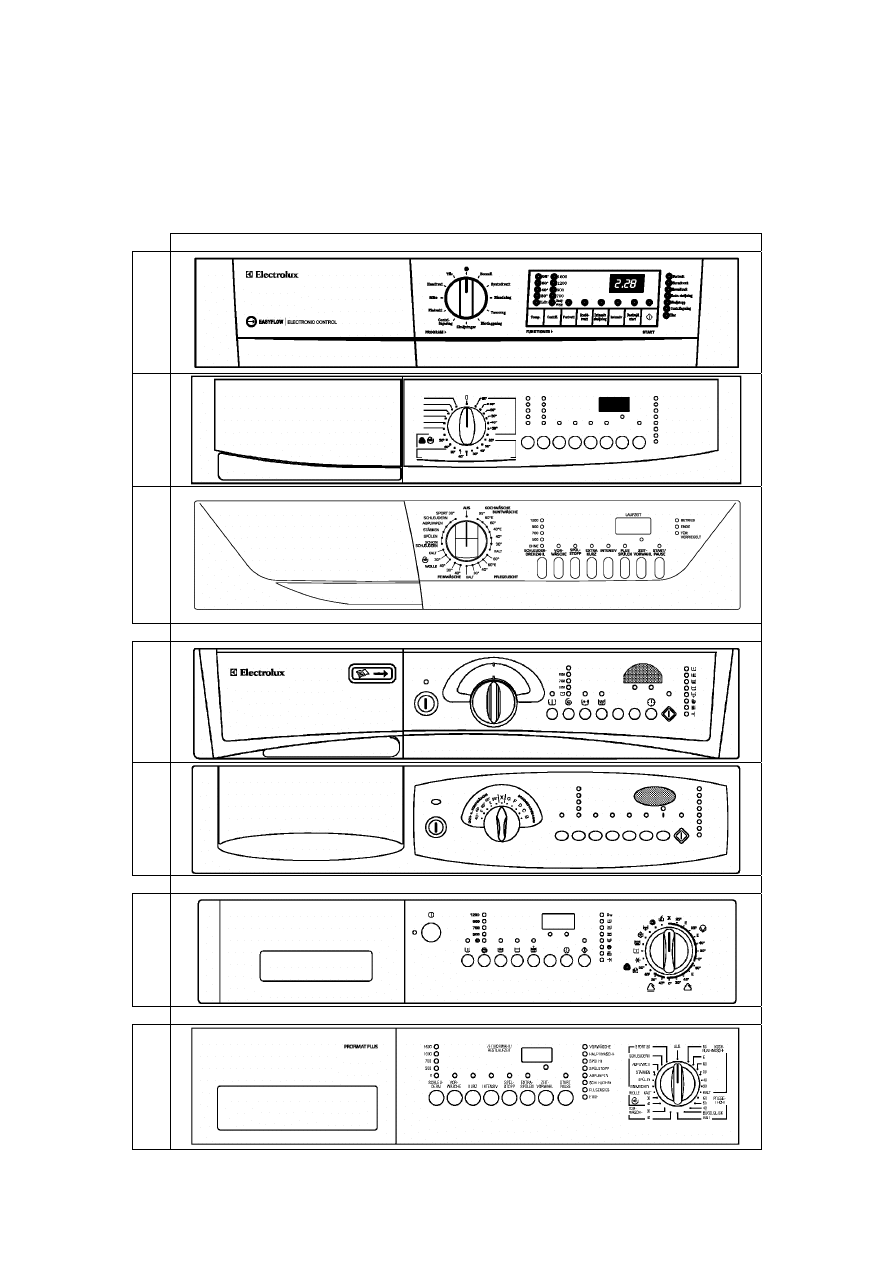
The configuration of the control panel depends on the following:
ª
Type of control/display board (with or without display)
ª
Design of the control panel and position of the programme selector (right or left of the buttons)
ª
Number and configuration of the buttons (max. 8)
ª
ON/OFF switch: incorporated in the programme selector or with separated button
Version with left selector and incorporated ON/OFF button
Alpha
-Ri
m
Sigm
a
Delta
Con ma
nop
ol
a
Version with left selector and button ON/OFF switch
Alpha
Ellipse
Version with right selector and button ON/OFF switch
Multipanel
Built-in
Version with right selector and incorporated ON/OFF switch
Sigma/ZK
SOI/DT 2005-01 dmm
7
599 36 86 11
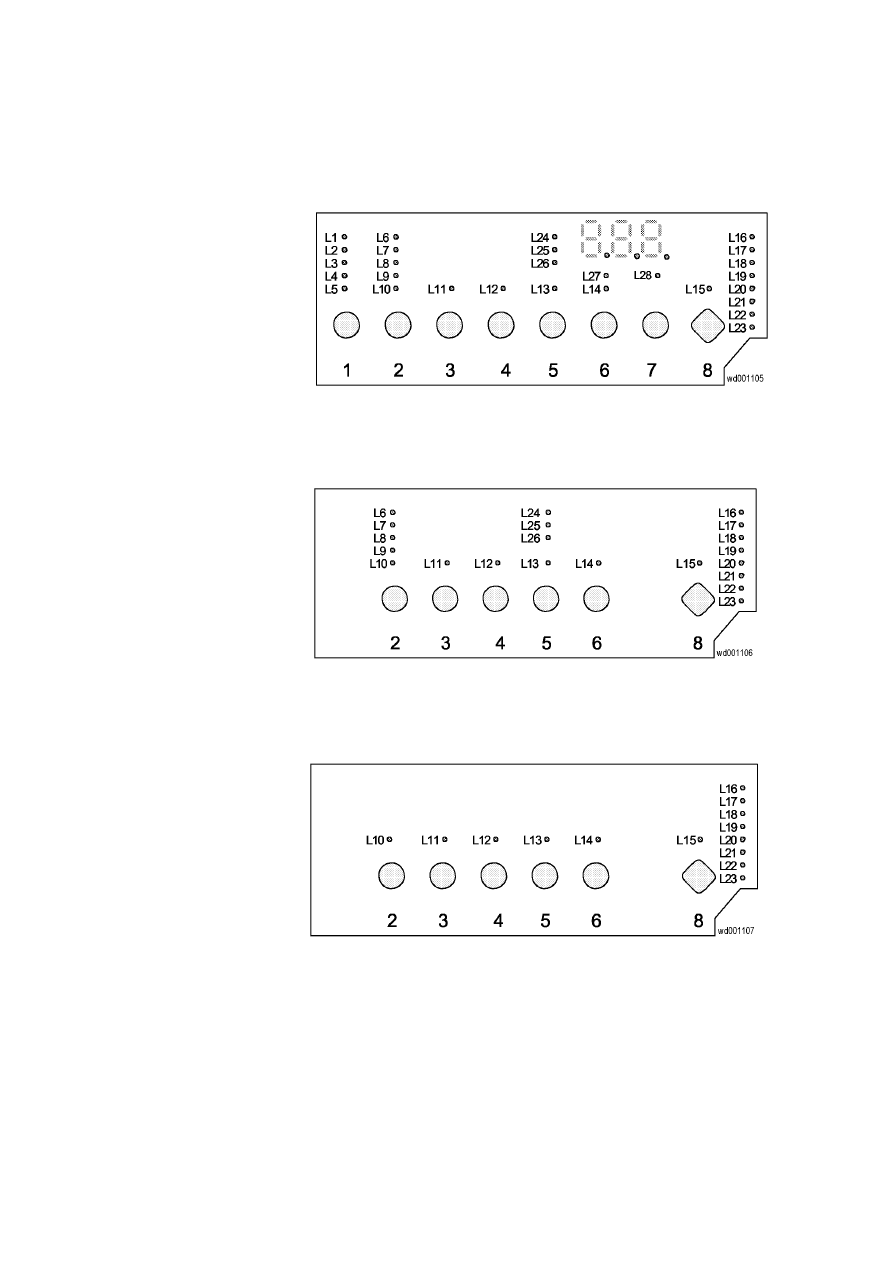
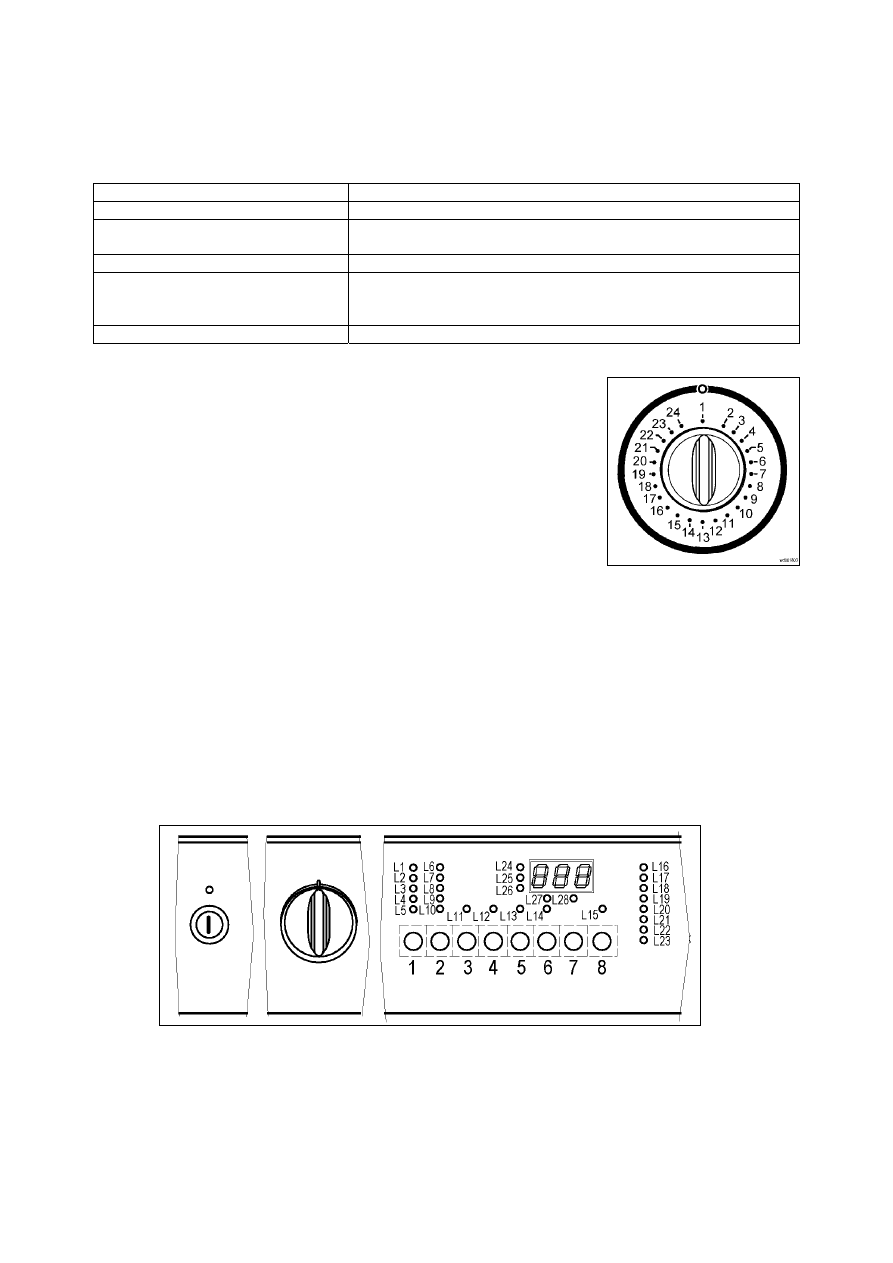
4.1 Control/display
board
4.1.1 Version
with
display
Ö
3 digits
Ö
28 LEDs
Ö
8 buttons
4.1.2 Versions
without
display
Ö
21 LEDs
Ö
6 buttons
⇒ 14 LEDs
⇒ 6 buttons
SOI/DT 2005-01 dmm
8
599 36 86 11
4.2 Washing
programmes
4.2.1 Configuration of the programmes
The table below lists the parameters that can be used to define the washing programmes.
Types of fabrics
Cotton/linen, Synthetics, Delicates, Wool, Hand-wash
Special programmes
Soak, Rinses, Spin, Drain, Conditioner
Temperature
Normal, Maximum: the initial temperature is the maximum that
can be selected for a specific washing programme
Spin
Normal, Minimum, Maximum
Options (Normal/Possible)
Bleach, Economy (energy label), Stains, Short, Very short,
Reduced spin speed, Night-time cycle, Half-load, Easy-Iron,
Rinse Hold, Extra rinse, Pre-wash, Sensitive
Programme phases
Pre-wash, Wash, Rinses, Spin, Economy, Delayed start
4.3 Programme
selector
The programme selector defines the type of washing cycle (ex: water level,
drum movement, no of rinses) and washing temperature to be selected
according to the type of wash.
The programme selector can be rotated both clockwise and anti-clockwise.
The first position is used to cancel the current programme (and to switch the
appliance off, if the main switch is incorporated in the selector).
4.4 Start/Pause
Start: after selecting the programme and the desired options, press this button to start. If the delay time ahs
been selected, the countdown will begin and the display will indicate it. The LED stops flashing and
remains lit for the whole duration of the programme.
Pause: by pressing the button again, the current programme is interrupted and the display, or the
corresponding LED starts flashing. During the pause phase it is possible to open the door only if the
machine is not during the heating phase, the water level is not high and the drum is not moving.
During the pause it is possible to modify the programme as follows:
- the OPTIONS of the cycle can be modified before the phase by which they have to be performed
- the SPIN can be modified before the final spin
To re-start the programme press the START/PAUSE button again.
4.5 Functions of the buttons
The washing programmes and the functions of the single buttons vary for the different models,
since they are determined by the configuration operation of the appliance.
SOI/DT 2005-01 dmm
9
599 36 86 11
5 WASHING
PROGRAMMES
AND
OPTIONS
5.1 Programmes
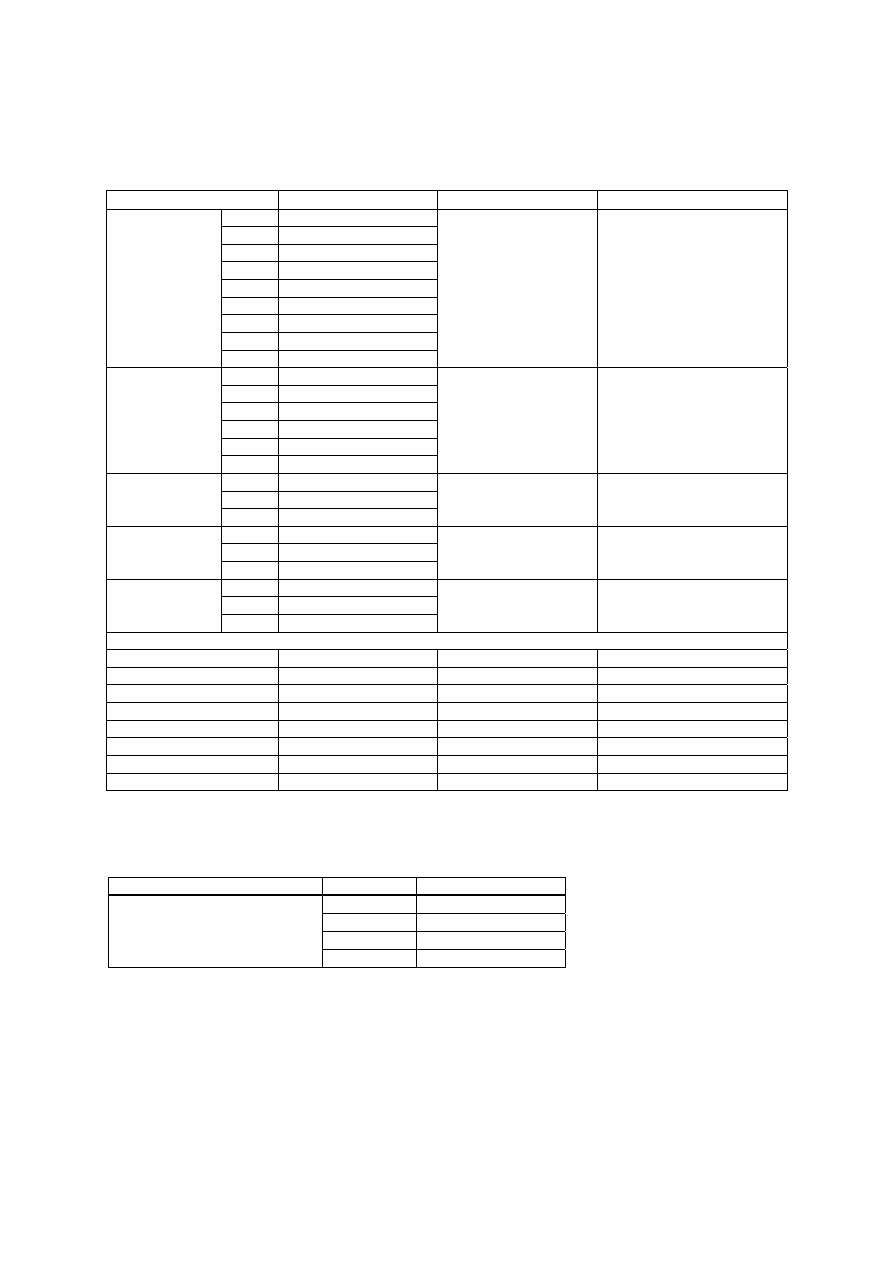
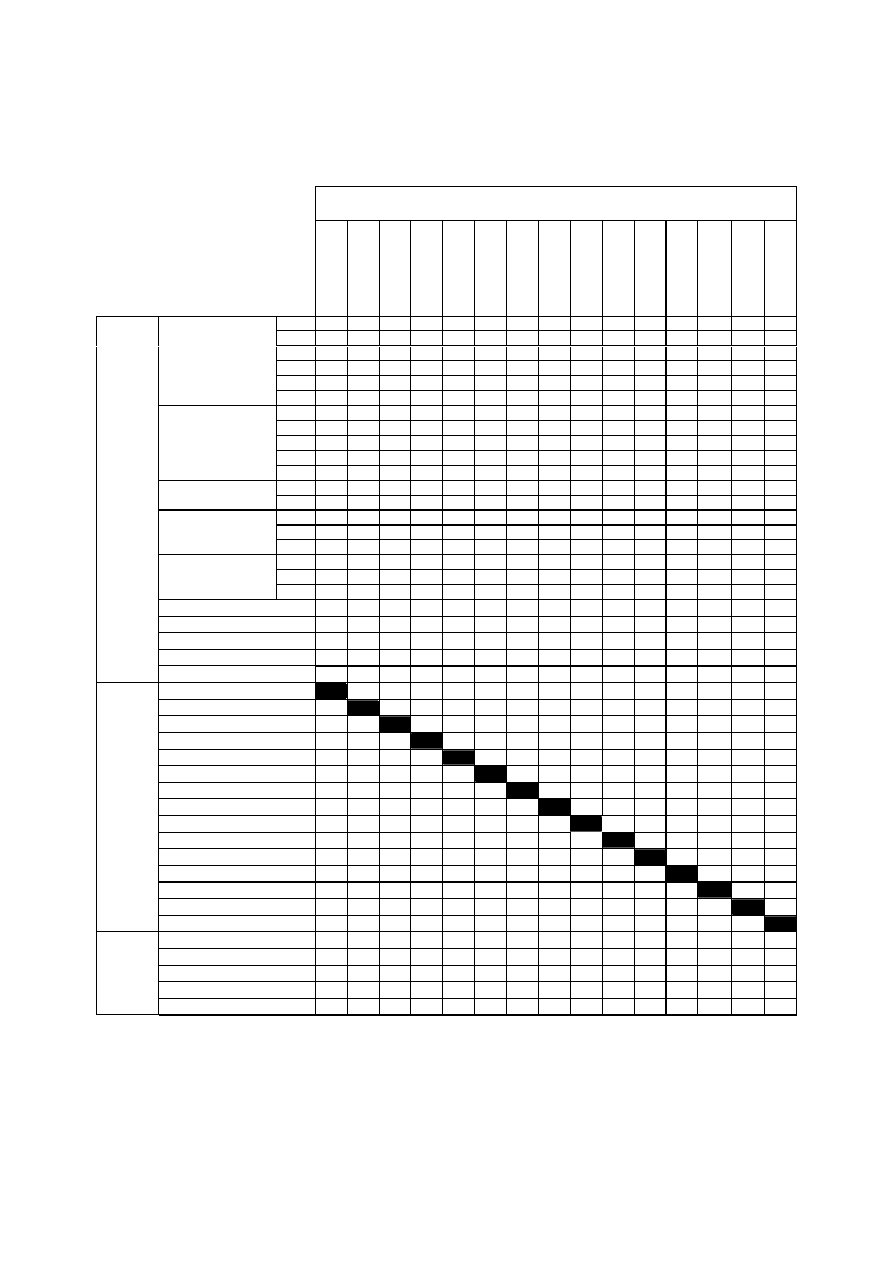
The washing programmes can be configured. The basic programmes are listed in the table below.
Programme
Temperature (
°C)
Number of rinses
Final spin (rpm)
90
87
90E
67
60
60
60E
50 (*)(**)
50
50
50/40E
44 (*)
40
40
30
30
Cotton
cold
20
3
450/650/850/1000/1200/
1300/1400/1600
60
60
60/50E
42 (*)
50
50
40
40
30
30
Synthetic
fabrics
cold
20
3 Max.
900
40
40
30
30
Delicates
cold
20
3 450/700
40
40
30
35
Wool
cold
20
3 Max.
1000
40
40
30
35
Hand-wash
cold
20
3 Max.
1000
Soak
30/20 ----
----
Rinses
---- 3
Max.
1600
Delicate rinses
---- 3 Max.
700
Conditioner
---- 1
Max.
1600
Drain
---- ---- ----
Spin
---- ----
Max.
1600
Delicate spin
---- ---- Max.
700
Mini
30 2
Max.
1000
(*) “energy label” programmes
(**)
Programme Group
Temperature (°C)
G18 50
G19 53
G20 45
COTTON 60 E
G22 47
SOI/DT 2005-01 dmm
10
599 36 86 11
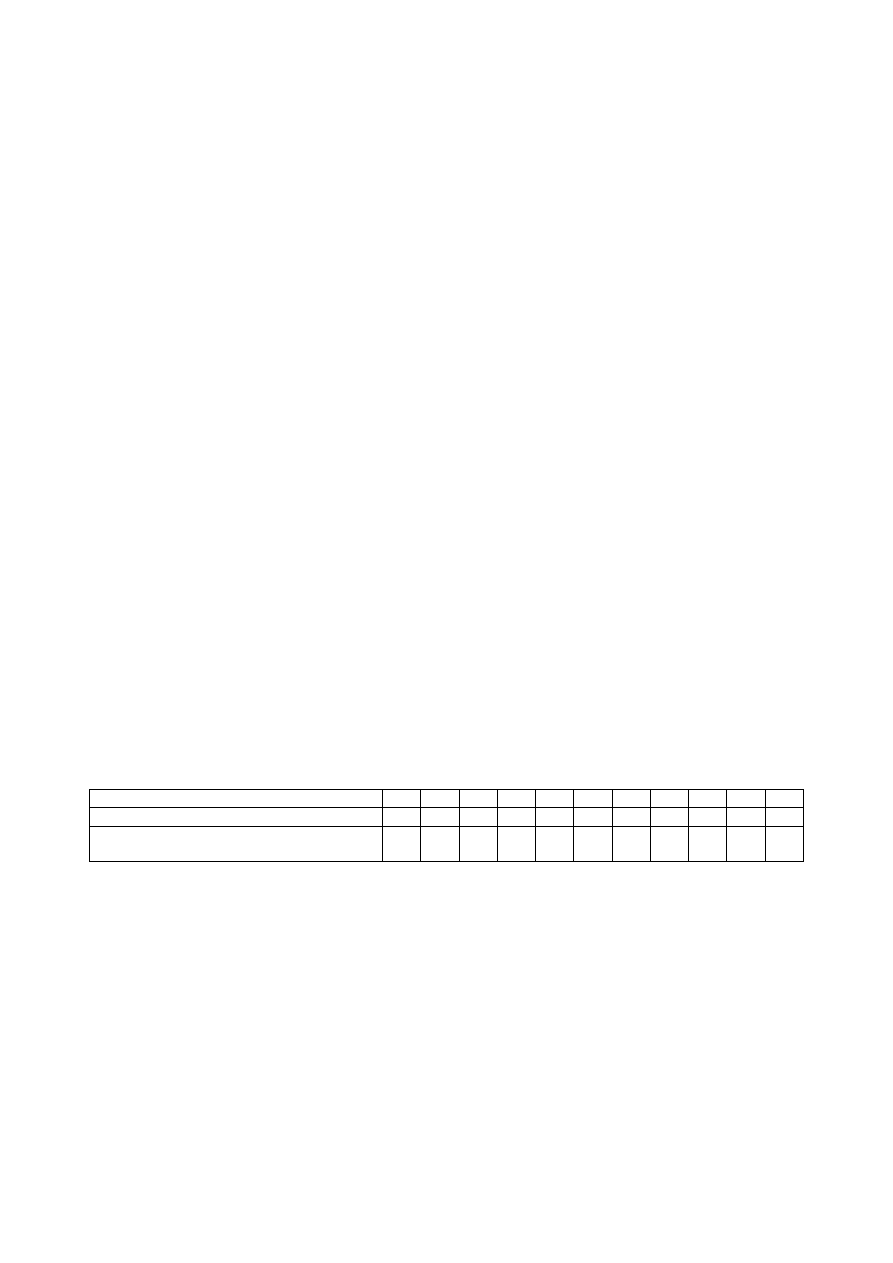
Options of the washing cycle
The selection of the options is to be carried out after switching on the appliance and setting the desired
programme with the selector and before pressing the start/pause button.
When the button is pressed, the corresponding LED lights; by pressing it again the LED switches off.
Possible options according the selected programme
OPTIONS
Rinse-
hol
d
Night cycle
Pre-wash
Soak
Stains
Daily
Short
Econo
my
Sensitive
Extra rinse
Bleach
Half-l
oad
Easy iron
Reduce
d spi
n
sp
eed
No spi
n
90°C X X X X X X X X X X X X X X X
60°C X X X X X X X X X X X X X X X
50°C X X X X X X X X X X X X X X X
40°C X X X X X X X X X X X X X X X
30°C X X X X X X X X X X X X X
COTTON
Cold X X X X X X X X X X X X X
60°C X X X X X X X X X X X X X
50°C X X X X X X X X X X X X X
40°C X X X X X X X X X X X X
30°C X X X X X X X X X X X
SYNTHETIC
FABRICS
Cold X X X X X X X X X X X
30°C
X
X X
X
MINI PROGRAMME
Cold
X
X X
X
40°C X X X X X X X X
30°C X X X X X X X X
DELICATES
Cold X X X X X X X X
40°C
X
X X
X
30°C
X
X X
X
WOOL – HAND-
WASH
Cold
X
X X
X
SOAK
RINSES
X
X X
X
X X X
X
CONDITIONER
X
X X X
X
DRAIN
Com
p
atibility with PROGRAMMES
SPIN
X
RINSE HOLD
X X X X X X X X X X X X X
NIGHT CYCLE
X X X X X X X X X X X
PRE-WASH
X X X X X X X X X X X X
SOAK
X X X X X X X X X X X X
STAINS
X X X X X X X X X X X X
DAILY
X X X X X X
X
X
X
X X
X
SHORT
X X X X X X X X X X X X
ECONOMY
X X X X X X X X X X X X
SENSITIVE
X X X X X X X X X X X X X
EXTRA RINSE
X X X X X X X X X X X X X X
BLEACH
X X X X X X X X X X X
HALF LOAD
X X X X X X X X X X X X X X
EASY IRON
X X X X X X X X X X X X X
REDUCED SPIN SPPED
X X X X X X X X X X X X
Com
p
atibility with OPTI
ONS
NO SPIN
X X X X X X X X X X X X
PRE-SELECTION
X X X X X X X X X X X X X X X
PRE-WASH
X X X X X X X X X X X X X
WASH
X X X X X X X X X X X X X
RINSES
X
X
X
Ph
ases
in
whic
h
selection is
possi
ble
SPIN
X
X

SOI/DT 2005-01 dmm
11
599 36 86 11
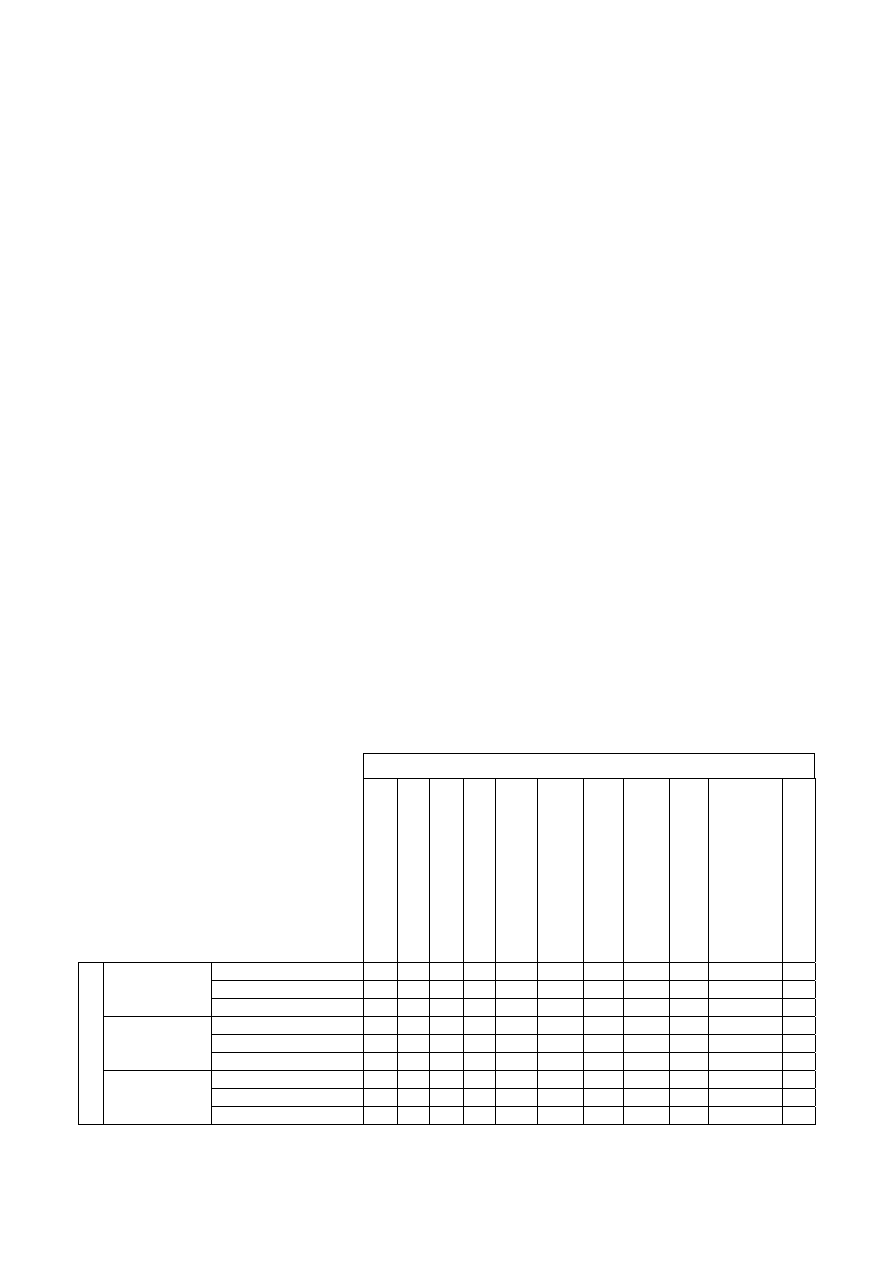
5.2 Description of options
5.2.1 Night
cycle
ª
Eliminates all spin phases and adds three rinses in COTTON cycles and two rinses in SYNTHETICS
cycles.
ª
Stops the appliance with water in the tub before the final rinse.
ª
Switches off the buzzer (if configured)
ª
To drain the water select a drain or spin cycle.
5.2.2 Rinse-hold
ª
Stops the appliance with water in the tub before the final spin cycle.
ª
Switches off the buzzer (if configured)
ª
To drain the water select a drain or spin cycle.
5.2.3 Pre-wash
ª
Adds a pre-wash phase at the start of the cycle with water heating to 30°C (or cold, if selected).
ª
In COTTON and SYNTHETICS cycles, performs a short spin before passing to the washing phase.
ª
This option cannot be selected for WOOL and HAND-WASH cycles.
5.2.4 Soak
ª
Adds a pre-wash phase (30’ duration with wool cycle movement) at the start of the cycle with water
heating at 30°C (or cold, if selected).
ª
In COTTON and SYNTHETICS cycles, performs a short spin (impulse) before passing to the washing
phase.
ª
Together with the delayed start option it is possible to select a soak time from 30 minutes up to 10 hours.
ª
This option cannot be selected for WOOL and HAND-WASH cycles.
5.2.5 Stains
ª
Adds a 5-minute motor movement phase after heating to 40°C.
ª
Ducts water to the pre-wash/stains compartment in order to introduce the special stain-removal product.
ª
This option cannot be selected for DELICATES, WOOL and HAND-WASH cycles.
ª
The movements during the washing phase change from vigorous to normal.
5.2.6 Short
(daily)
ª
Modifies the structure of the washes in the COTTON and SYNTHETICS programmes in order to obtain
good washing performance with a very short cycle (optimization for small loads).
5.2.7 Very
short
ª
Modifies the structure of the COTTON, SYNTHETICS and DELICATES programmes in order to obtain
short washing times (optimization for small or lightly-soiled loads).
ª
Reduces the number of rinse cycles (one less).
ª
Increases the water level in the remaining two rinse cycles.
5.2.8 Economy / Energy label
ª
Modifies the structure of the COTTON 40°/50°/60°/90° - SYNTHETIC FABRICS 50°/60° programmes in
order to reduce energy consumption.
ª
Reduces the washing temperature in 90°/60°/50° programmes, while for the 40° programme the
temperature is increased by 4°.
ª
Increases the duration of the wash phase.
SOI/DT 2005-01 dmm
12
599 36 86 11
5.2.9 Sensitive
ª
Adds a rinse in the COTTON – SYNTHETIC FABRICS.
ª
During the cotton cycles the movements pass from vigorous to normal.
ª
Eliminates the intermediate spins except from the last two which are reduced
.
5.2.10 Extra rinse
ª
Adds two rinses in the COTTON, SYNTHETICS and DELICATES cycles.
ª
Eliminates the intermediate spin cycles, with the exception of the last rinse, which is reduced to 450
rpm.
5.2.11 Bleach
ª
Ducts water through the bleach compartment at the beginning of the first rinse in COTTON cycles.
ª
Pre-wash possible only where there are three solenoids.
ª
In models with two solenoids the bleach is not compatible with the pre-wash option.
5.2.12 “Half load” button
ª
Eliminates a rinse in the COTTONS programmes.
5.2.13 Easy-Iron
• In COTTON programmes:
ª
Adds three rinses.
ª
Eliminates the intermediate spins.
ª
Performs an impulse spin phase.
ª
Adds an “untangling” phase after the spin cycle.
• In SYNTHETICS cycles:
ª
Reduces the heating temperature in 50/60° cycles to 40°C.
ª
Increases the washing time.
ª
Prolongs the cooling phase at the end of the washing phase.
ª
Adds one rinse without spin cycle.
ª
Adds an “untangling” phase after the impulse spin cycle.
5.2.14 Reduced spin speed
ª
Reduces the speed of all spins as shown in the table.
Maximum spin speed (rpm)
600 700 800 900 1000 1100 1200 1300 1400 1500 1600
Reduction for COTTON (rpm)
450 450 450 450 500 550 600 650 700 750 800
Reduction for ALL OTHER CYCLES
(rpm)
450 450 450 450 450 450 450 450 450 450 450
5.2.15 No spin
ª
Eliminates
all the spin phases.
ª
If selected, three rinses are added in the COTTON cycle and one in the SYNTHETICS cycle.
5.2.16 Modifying the spin speed
ª
Reduces the speed of all spin cycles.
ª
The last position can be used for NO SPIN, RINSE-HOLD.
ª
If the NO-SPIN option is selected, three rinses are added in the COTTON cycle, and one in the
SYNTHETICS cycle.
SOI/DT 2005-01 dmm
13
599 36 86 11
5.2.17 Time reduction (Quick)
ª
Modifies the structure of the COTTON - SYNTHETICS– DELICATES programmes to obtain washing
time very short (optimization for small or lightly-soiled loads).
ª
Reduces the no. of rinses (one rinse less).
ª
Increases the water level of the other two rinses.
ª
Corresponds to the SHORT- VERY SHORT cycles on the basis of the configuration of the appliance.
5.2.18 Temperature adjustment
ª
Used to select the washing temperature compatibly with the limit temperature for the cycle.
ª
Can be used during the cycle selection phase: the temperature can be modified only if the heating
phase has not started (in pause mode).
5.2.19 Delayed-start time
• Models with digit
ª
It is possible to select, during the programme selection phase, a delayed start from 30 minutes up to 24
hours () 30’) 60’) 90’) 2h) 3h...) 24h) 0h).
ª
During the delay phase, the time decreases every hour up to 2h, then by 30minutes.
ª
To start the cycle immediately, after the delay time began: press the Start/Pause button, cancel the
delay time by pressing the relative button and press Start/Pause again.
• Models with led
ª
Insert a pause before the start of the programme, the delay time is indicated by the corresponding
LEDs.
ª
To start the cycle immediately, after the delay time began: press the Start/Pause button, cancel the
delay time by pressing the relative button and press Start/Pause again.
5.2.20 Exclude buzzer
ª
The buzzer can be deactivated by pressing a combination of two buttons simultaneously for 5 seconds.
This option depends on the configuration; as a result, the buttons may vary according to the model.
ª
If the buzzer is deactivated, the appliance will emit no acoustic signal during selection or at the end of
the cycle; however, the alarm signalling system remains operative.
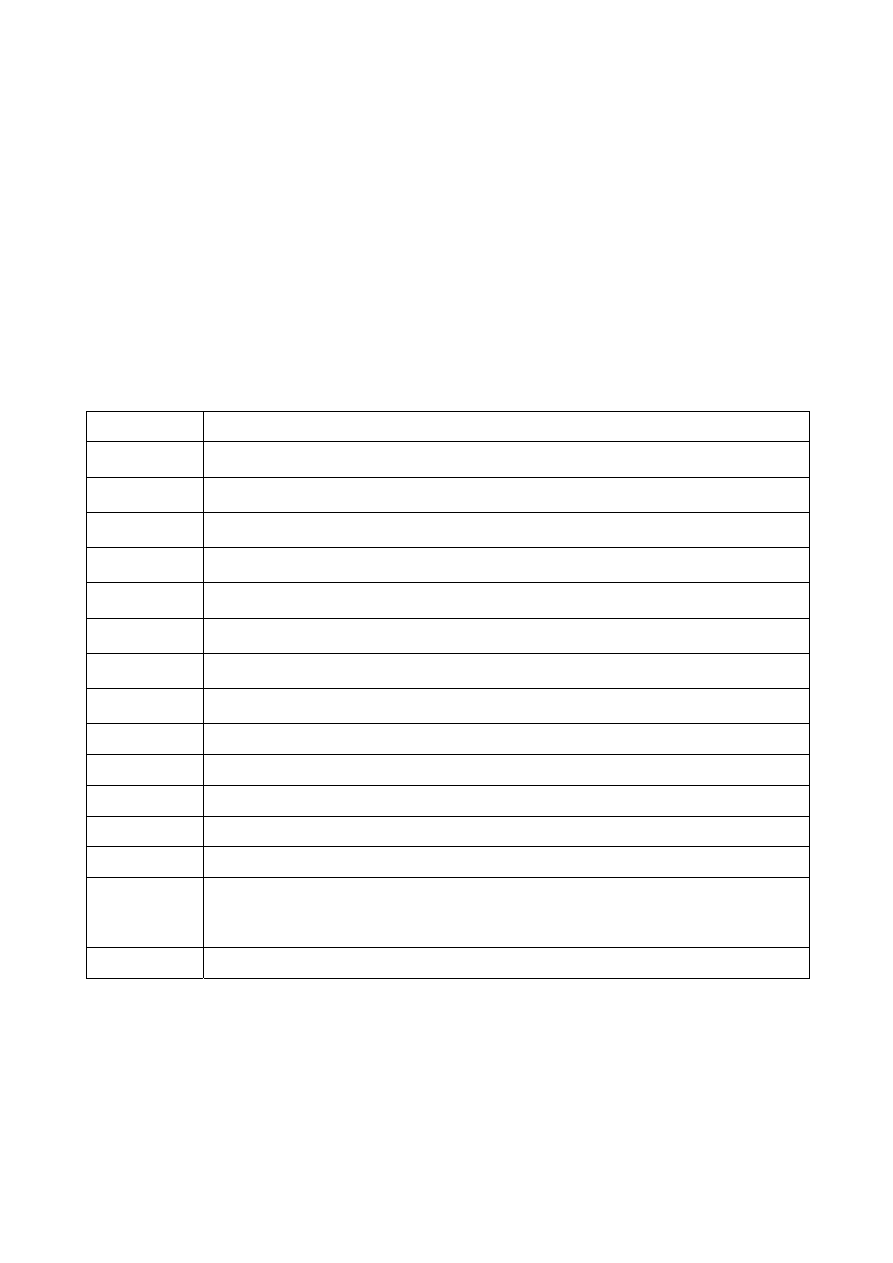
5.3 Modification of rinses according to the options selected
Number of rinses for the options
Nor
m
al
Half-load
Super-rin
se
Night c
ycle
Easy-iro
n
No spin
Super-rin
se +
half-load
Super-rin
se +
night cycle
Night c
ycle
+ half-load
Night c
ycle
+ supe
r
rinse + half-l
oad
Sensitive
Normal
3
2
5
6 6 6 4 8 5 7 4
Eco – Energy label
3
2
5
6 6 6 4 8 5 7 4
COTTON
Very short
2
2
4
5 5 5 4 7 5 7 3
Normal
3
-
5
4 4 4 - 6 - - 4
Eco – Energy label
3
-
5
4 4 4 - 6 - - 4
SYNTHETIC
FABRICS
Very short
2
-
4
3 3 3 - 6 - - 3
Normal
3
-
5
3 - 3 - 5 - - 4
Eco – Energy label
-
-
-
- - - - - - - -
PROGRAMMES DELICATES
Very short
2
-
4
2 2 - 4 - - 3
SOI/DT 2005-01 dmm
14
599 36 86 11
5.4 Display (some models)
The display shows the following information:
Ö
three
flashing
digits, when the appliance is switched on.
Ö
the duration of the washing programme, which appears after selecting it. This time corresponds to
that necessary for the maximum load for every type of programme. After starting the programme, the
time diminishes (and updates) by every minute.
Ö
the end of the programme indicated by a "0" (when it is possible to open the door).
Ö
the
delayed
start, selected by the relative button. After pressing the START/PAUSE button, the
countdown starts and the delayed time diminishes by every hour. In the last 2 hours diminishes by
30min.
Ö
an alarm code, indicating anomalies in the functioning of the machine.
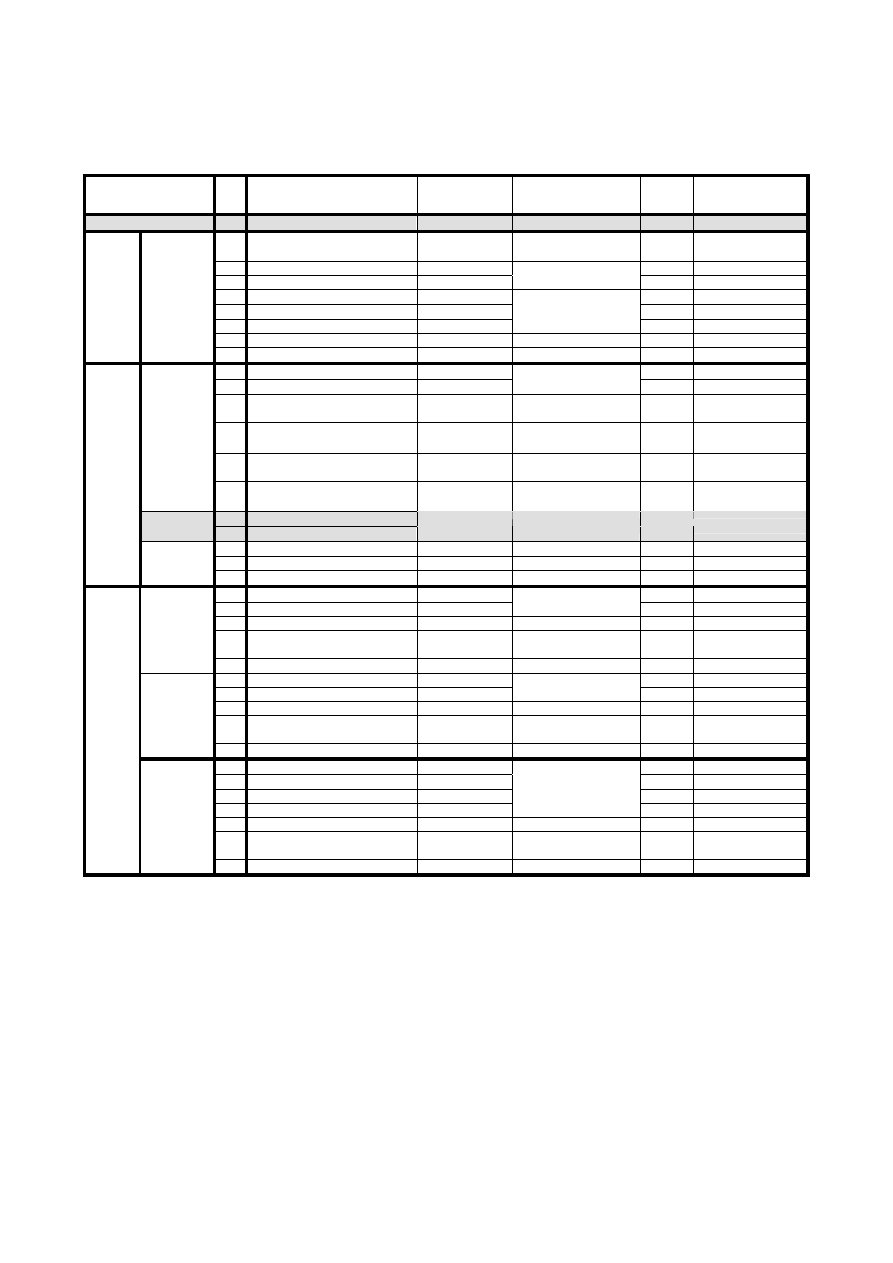
5.5 LEDs
The LEDs indicate different information according to the type of configuration; the End-of-cycle Led is
featured in all models.
Type of Led
Functions
Pre-wash
Lights during selection mode if the programme includes the pre-wash phase, and during
the execution of the pre-wash.
Wash
Lights during selection mode if the programme includes the wash phase, and during the
execution of the wash.
Pre-wash/Wash
Lights during selection mode if the programme includes the pre-wash or wash phases, and
during the execution of these phases.
Rinse
Lights during selection mode if the programme includes rinse phases, and during the
execution of the rinse.
Spin
Lights during selection mode if the programme includes the spin phase, and during the
execution of the spin.
Drain
Lights during selection mode if the programme includes the drain phase, and during the
execution of the drain
Extra rinse
Lights when this option has been memorized (if included in the cycle) during the execution
of the rinse.
Rinse hold
Lights if the programme includes the rinse-hold option and at the end of the cycle, when
the appliance stops with water in the tub.
Current cycle Lights during execution of the cycle
End of cycle Lights when the programme has been completed; also used to display alarm conditions
Blocked filter Lights at the end of the cycle if the drain filter is blocked.
Overdosing Lights at the end of the cycle if an overdosing alarm of detergent occurs.
ON/OFF
Lights when the appliance is switched on
Door
ª
Lights when the door is locked by the interlock.
ª
Switches off when the door is locked.
ª
Flashes when the door is about to unlock (it is clear above all in models with safety
device with PTC)
Door locked Lights when the display shows the time-to-end
SOI/DT 2005-01 dmm
15
599 36 86 11
6 WASHING
PROGRAMMES
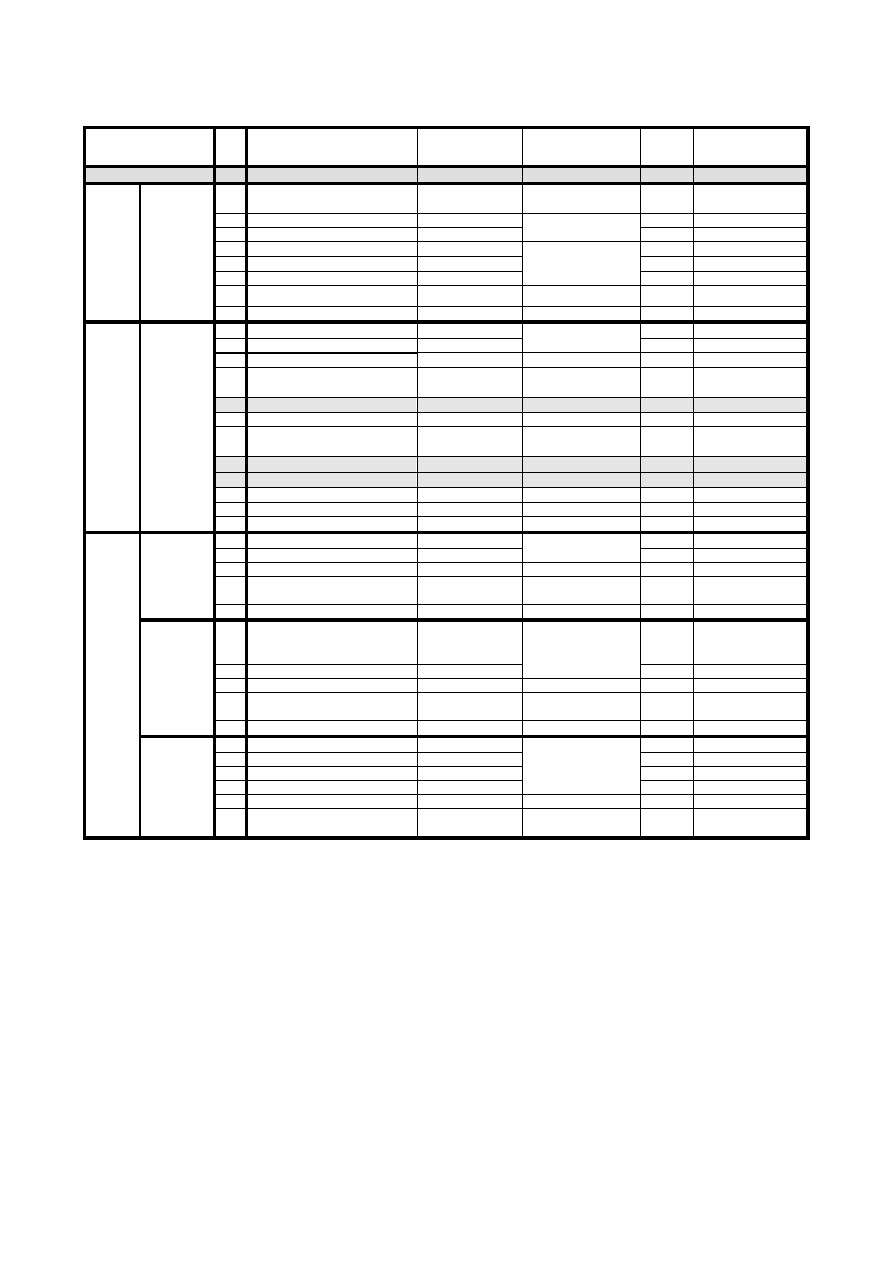
6.1 Base programmes for Cotton / Linen: cold-30-40-60-90
° (without options)
Phase N. Function
Time/
control
Movement
Heat.
°C
Notes
Delay
- Delayed start
Delay time
No Mov
0 Drain
VAE + 2”+
6” pause
No mov
1 Water fill
P1 + QPW1 (*)
2 Cold
wash
5’
D55 from full
Refill:
P1
3 Water fill
QPW2 (*)
4 Heating T
30°
Cold = 20
°C
5 Maintenance
10’
D55
6 Drain + spin
VAE + 14” + 4,5’
C0
300/450/650 rpm
Pre-w
as
h
7 Drain
20”
No
Mov
8 Cotton water fill
P1 + Qhl (*)
9 Cold
wash
10’
N55 from full
Refill:
P1+Qw
10 Cotton
heating
T
N55
20/30/40/
60/87
11 Maintenance
4’(87
°)/5’(20-40°)
/10’(60
°)
N55
12 Cotton
heating
T
E55
30/40/60/
87
13 Maintenance
14’(87
°)/35’(20-
40
°) /20’(60°)
E55
14 Cooling water fill
Qc (*)
Cooling
15 Movement
2’
D55
Only if >67
°C
16 Drain
VAE + 14”
No Mov
17 Drain + spin
5’
C1
450/650/850 rpm
Wash
18 Drain
20”
No Mov
No Mov
19 Cotton
water
fill
P1
20 Movement
5’
N 55 from full
Refill:
P1+Qn1
21 Drain
VAE + 15”
No Mov
22 Drain + spin
5’
C2
450/650/850/1000rp
m
1st
rinse
23 Drain
20“
No
Mov
24 Cotton
water
fill
P1+Qn2
25 Movement
5’
N 55 from full
Refill:
P1+Qne
26 Drain
VAE + 15”
No Mov
27 Drain + spin
5’
C2
450/650/850/1000rp
m
2nd
rinse
28 Drain
20“
No
Mov
29 Cotton
water
fill
P1
30 Movement
30”
31 Time
water
fill
Qn3
32 Movement
8’
N 55 from full
Refill:
P1
33 Drain
VAE + 15”
No Mov
34 Drain + spin
9’
COT_CF
450/650/850/1000/
Max.
Rinses
Last rinse
(conditioner
)
35 Detach
movement
1’
N55
SW W1A3C005
Notes
:
P1
time needed to 1
st
level water fill
(*)
time water fills are changeable and calculated by the electronic on the basis of the delivery rate
(see specific table)
T
time needed to heat the water at the set temperature
” seconds
‘ minutes
VAE
time needed to drain the water till “empty” position of anti- boiling (safety heater) pressure
switch
Movement: in this column are described the drum movements at low speed and during spin. (See
paragraph “drum movements”)
The times of drain phases with spin cycle are indicative and do not take into consideration the
intervention of antiunbalance and antifoam protections.
SOI/DT 2005-01 dmm
16
599 36 86 11
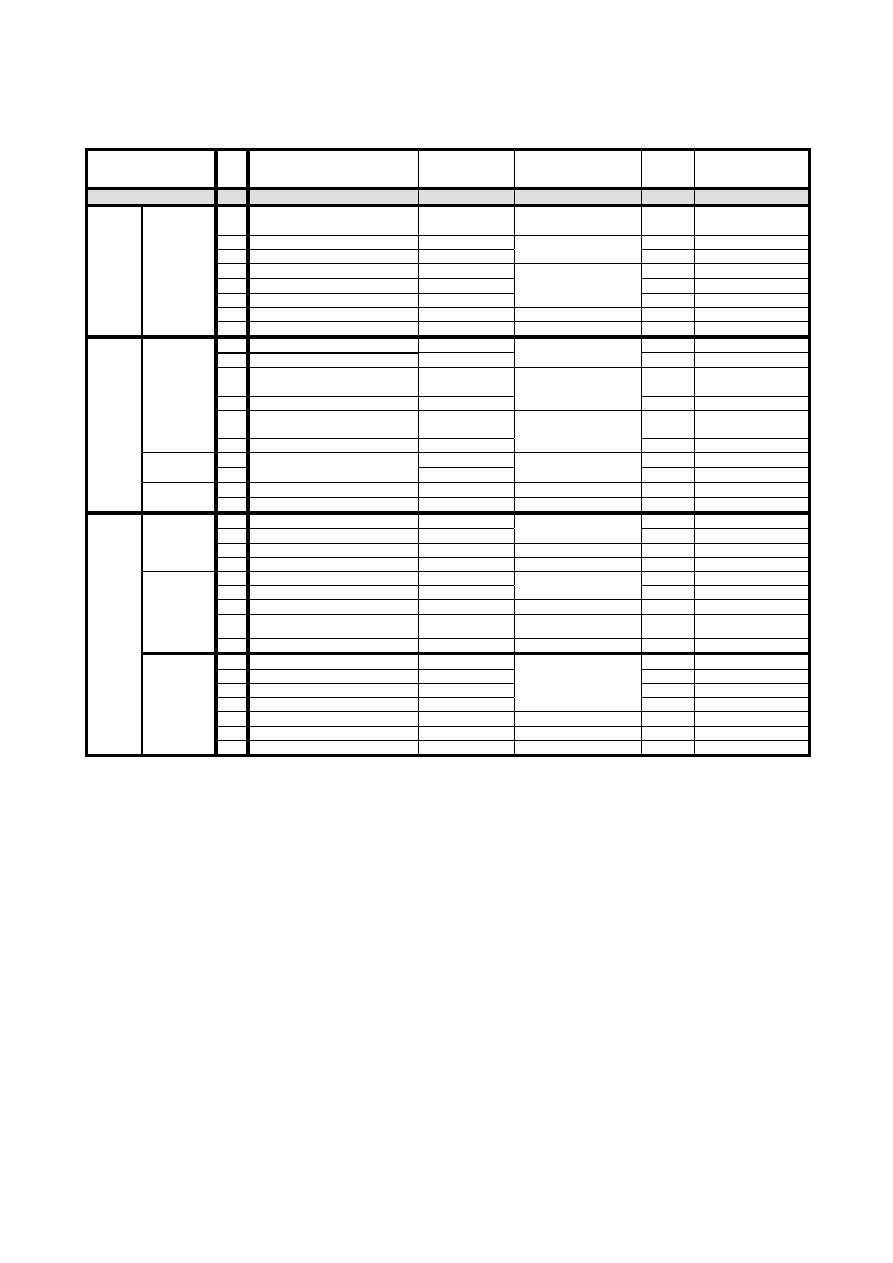
6.2 Cotton / Linen Cycles: 90 Eco, 60 - 40/50 “energy label” (without options)
Phase N. Function
Time/
Control
Movement
Heat.
°C
Notes
Delay
- Delayed start
Delay time
No Mov
0 Drain
VAE + 2”+
6” pause
No Mov
1 Water fill
P1 + QPW1 (*)
2 Cold
wash
5’
D55 from full
Refill:
P1
3 Water fill
QPW2 (*)
4 Heating T 30
Cold = 20
°C
5 Maintenance
10’
D55
6 Drain + spin
VAE + 14” + 4,5’
C0
300/450/650 rpm
Pre-w
as
h
7 Drain
20”
No
Mov
8 Cotton water fill
P1 + Qe (*)
9 Cold
wash
10’
N55 from full
Refill:
P1+Qwe
10 Cotton heating
T
N55
67/50/44 E55 per 50º
11 Maintenance
10’(67
°) / 10’(50°) /
40’(44
°)
E55
11a Maintenance 44
T 15’ (44º)
N55 (44º)
Only for 45
°C
12 Cotton heating
T
E55
67/44
13 Maintenance
30’(67
°)/(15’ - 50º)/
20’(44
°)
E55
N55 for 67º
13a Maintenance
5’
N55
Only for 50
°C
Maintenance
15’
E55
Only for 50
°C
14 Drain
VAE + 14”
No Mov
15 Drain + spin
5’
C1
450/650/850 rpm
Wash
16 Drain
20”
No
Mov
17 Cotton
water
fill
P1
18 Movement
5’ (2xG22 a 60°)
N 55 from full
Refill:
P1+Qne
19 Drain
VAE + 15”
No Mov
20 Drain + spin
5’
C2
450/650/850/1000rp
m
1st
rinse
21 Drain
20”
No
Mov
22 Cotton
water
fill
P1 (C1
≥850 g/’)
P1+Qn2 (C1<850
g/’)
23 Movement
5’
N 55 from full
Refill:
P1+Qne
24 Drain
VAE + 15”
No Mov
25 Drain + spin
5’
C2
450/650/850/1000rp
m
2nd
rinse
26 Drain
20”
No
Mov
27 Cotton
water
fill
P1
28 Movement
30”
29 Time water fill
Qn3
Qn3e for cycle 60°
30 Movement
8’
N 55 from full
Refill:
P1
31 Drain
VAE + 15”
No Mov
Rinses
Last rinse
(conditioner
)
32 Drain + spin
9’
COT_CF
450/650/850/1000/
Max.
SW W1A3C005
Notes
:
P1
time needed to 1
st
level water fill
(*)
time water fills are changeable and calculated by the electronic on the basis of the delivery rate
(see specific table)
T
time needed to heat the water at the set temperature
” seconds
‘ minutes
VAE
time needed to drain the water till “empty” position of anti- boiling (safety heater) pressure
switch
Movement: in this column are described the drum movements at low speed and during spin. (See
paragraph “drum movements”)
The times of drain phases with spin cycle are indicative and do not take into consideration the
intervention of antiunbalance and antifoam protections.
SOI/DT 2005-01 dmm
17
599 36 86 11
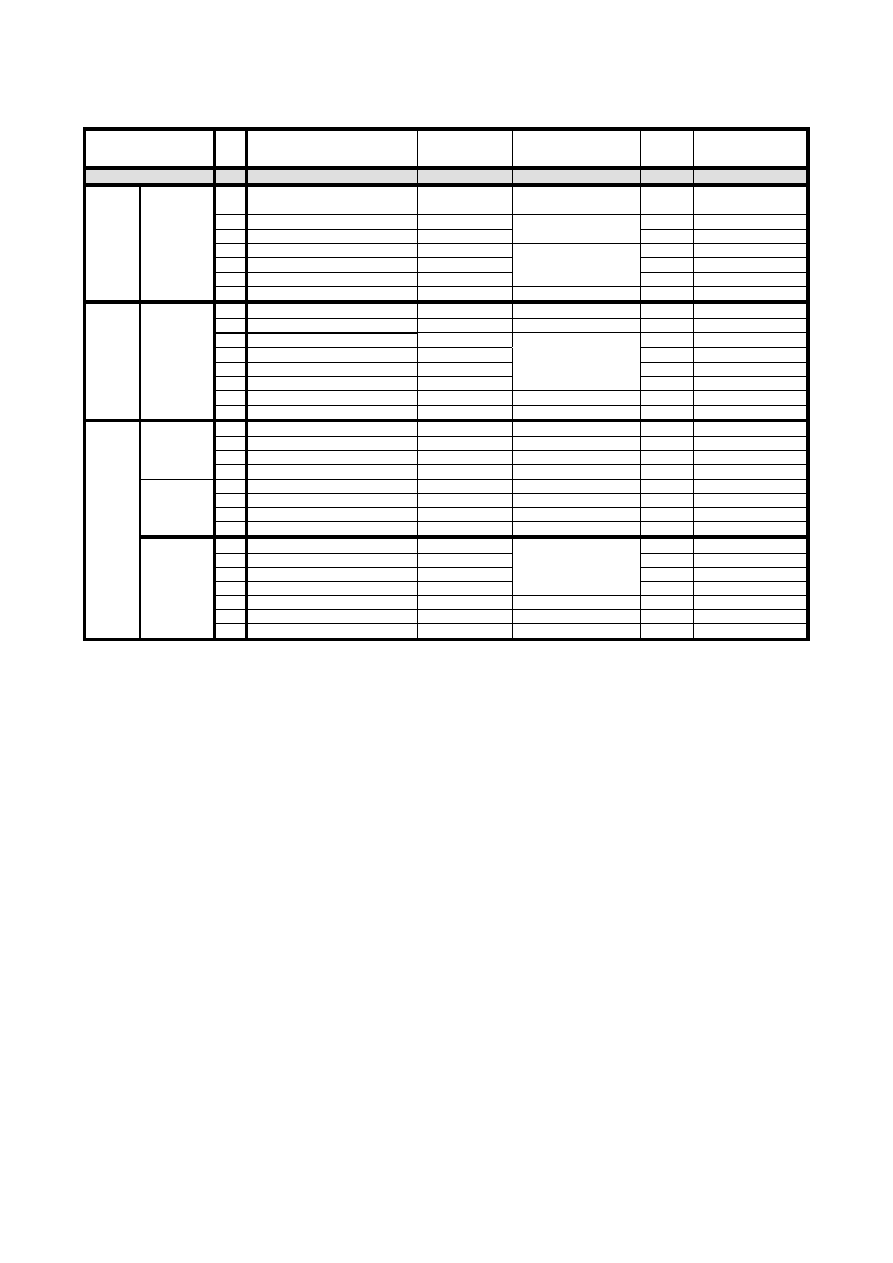
6.3 Base programmes for Synthetics Cycles: cold - 30- 40 – 50 - 60
° (without
options)
Phase N. Function
Time/
control
Movement
Heat.
°C
Notes
Delay
- Delayed start
Delay time
No Mov
0 Drain
VAE + 2”+
6” pause
No mov
1 Water fill
P1 + QPW1 (*)
2 Cold
wash
5’
D 55 from full
Refill:
P1
3 Water fill
QPW2 (*)
4 Heating
T
30° Cold = 20
°C
5 Maintenance
10’
D 55
6 Drain + spin
VAE + 15” + 4,5’
C0
300/450/650 rpm
Prewash
7 Drain
20”
No
mov
8 Synthetics water fill
P1 + Qsy (*)
9 Cold
wash
5’
N 55 from full
Refill:
P1+Qy1
10 Heating
T
20/30/40/
50/60 Economy = 42°C
11 Maintenance
10’
N55 for T>40
°
E55 for T< / = 40
°
Economy = E55
12 Heating
T
30/40/50/
60
Economy = 42
°C
13 Maintenance
15’
E55
Economy = 25’
14 Cooling water fill
Qc (*)
Cooling
15 Movement
1’
N55
16 Drain
VAE
No
mov
Wash
17 Drain
1’
D55
18 Water fill
P1+ Qyr1 (*)
19 Movement
3’
E55 from full
Refill:
P1
20 Drain
VAE
No
mov
1st
rinse
21 Drain
1’
D55
22 Water fill
P1+ Qyr2 (*)
23 Movement
3’
E 55 from full
Refill:
P1
24 Drain
VAE
No
mov
25 Drain
1’
D55
2nd
rinse
26 Drain + spin
4’
C0
300/450/650 rpm
27 Water fill
P1
28 Movement
30”
29 Time
water
fill
Qyr3
30 Movement
5’
E55 from full
Refill:
P1
31 Drain
VAE + 14”
No mov
32 Drain + spin
4,5’
SYN_CF
(max. 900rpm)
Rinses
Last rinse
(softener)
33 Detach movement
1’
N55
Not for Economy
SW W1D00102
Notes
:
P1
time needed to 1
st
level water fill
(*)
time water fills are changeable and calculated by the electronic on the basis of the delivery rate
(see specific table)
T
time needed to heat the water at the set temperature
” seconds
‘ minutes
VAE
time needed to drain the water till “empty” position of anti- boiling (safety heater) pressure
switch
Movement: in this column are described the drum movements at low speed and during spin. (See
paragraph “drum movements”)
The times of drain phases with spin cycle are indicative and do not take into consideration the
intervention of antiunbalance and antifoam protections.
SOI/DT 2005-01 dmm
18
599 36 86 11
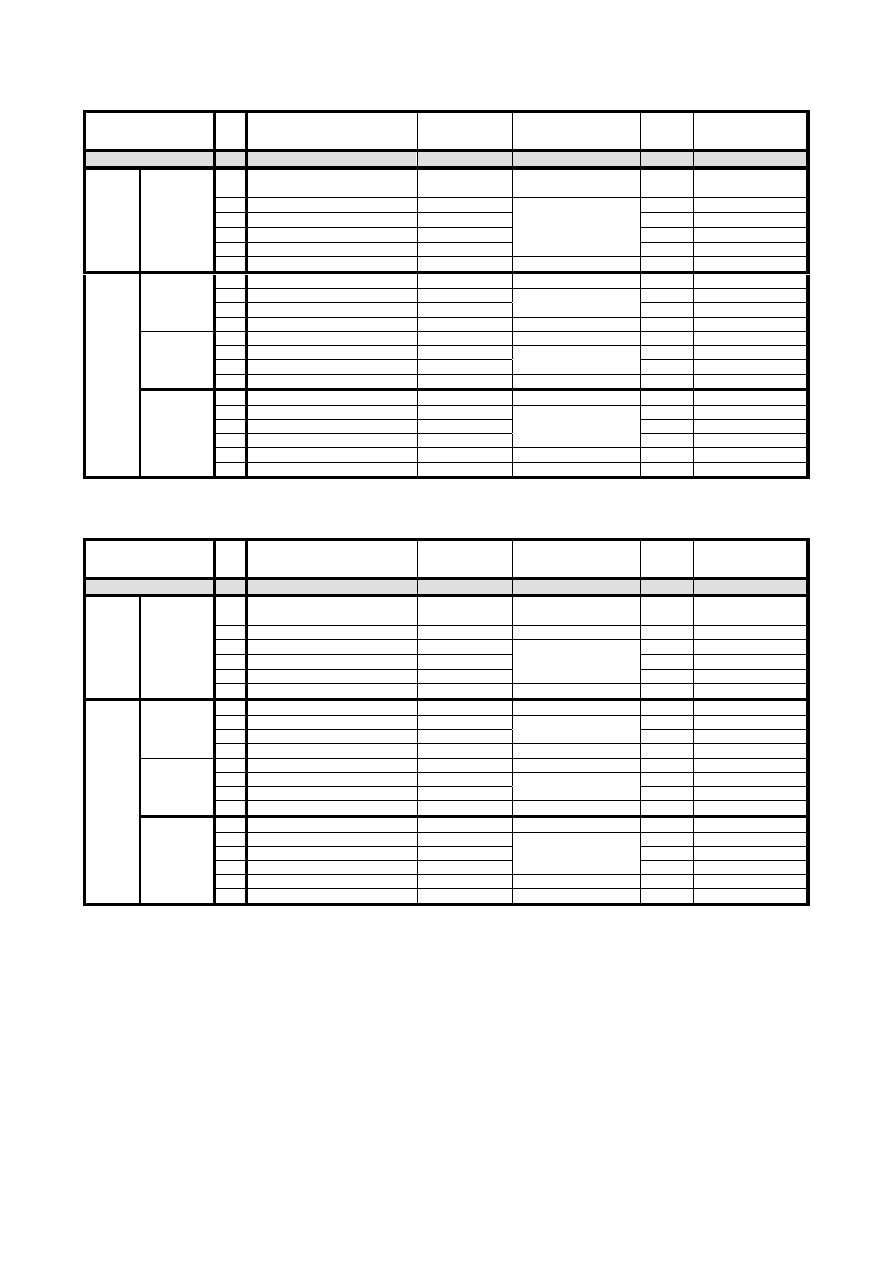
6.4 Delicates Cycles: cold – 30
° - 40° (without options)
Phase N. Function
Time/
control
Movement
Heat.
°C
Notes
Delay
- Delayed start
Delay time
No Mov
0 Drain
VAE + 2”+
6” pause
No mov
1 Water fill
P1 + QPW1 (*)
2 Cold
wash
5’
D55 from full
Refill:
P1
3 Water fill
QPW2 (*)
4 Heating
T
30 Cold = 20
°C
5 Maintenance
3’
D55
Pre-w
as
h
6 Drain
VAE + 15”
No mov
7 Delicates water fill
P1 + Qdw1 (*)
D55 from full
8 Cold
wash
1’
D55
Refill:
P1+Qdw2
9 Heating
T
20/30/40
10 Maintenance
10’
11 Heating
T
20/30/40
12 Maintenance
10’
D55
13 Drain
VAE
No
mov
Wash
14 Drain
1’
D55
15 Water fill
P1+ Qrd1 (*)
D55
16 Movement
5’
D55
Refill:
P1
17 Drain
VAE
No
mov
1st
rinse
18 Drain
1’
D55
19 Water fill
P1+ Qrd1 (*)
D55
20 Movement
5’
D55
Refill:
P1
21 Drain
VAE
No
mov
2nd
rinse
22 Drain
1’
D55
23 Water fill
P1
24 Movement
30”
25 Time water fill
Qrd2 (*)
26 Movement
3’
D55 from full
Refill:
P1
27 Drain
VAE
No
mov
28 Drain + spin
3,8’
DEL_CF
(450/700rpm)
Rinses
Last rinse
(softener)
29 Detach
movement
1’
N55
SW W1D00102
Notes
:
P1
time needed to 1
st
level water fill
(*)
time water fills are changeable and calculated by the electronic on the basis of the delivery rate
(see specific table)
T
time needed to heat the water at the set temperature
” seconds
‘ minutes
VAE
time needed to drain the water till “empty” position of anti- boiling (safety heater) pressure
switch
Movement: in this column are described the drum movements at low speed and during spin. (See
paragraph “drum movements”)
The times of drain phases with spin cycle are indicative and do not take into consideration the
intervention of antiunbalance and antifoam protections.
SOI/DT 2005-01 dmm
19
599 36 86 11
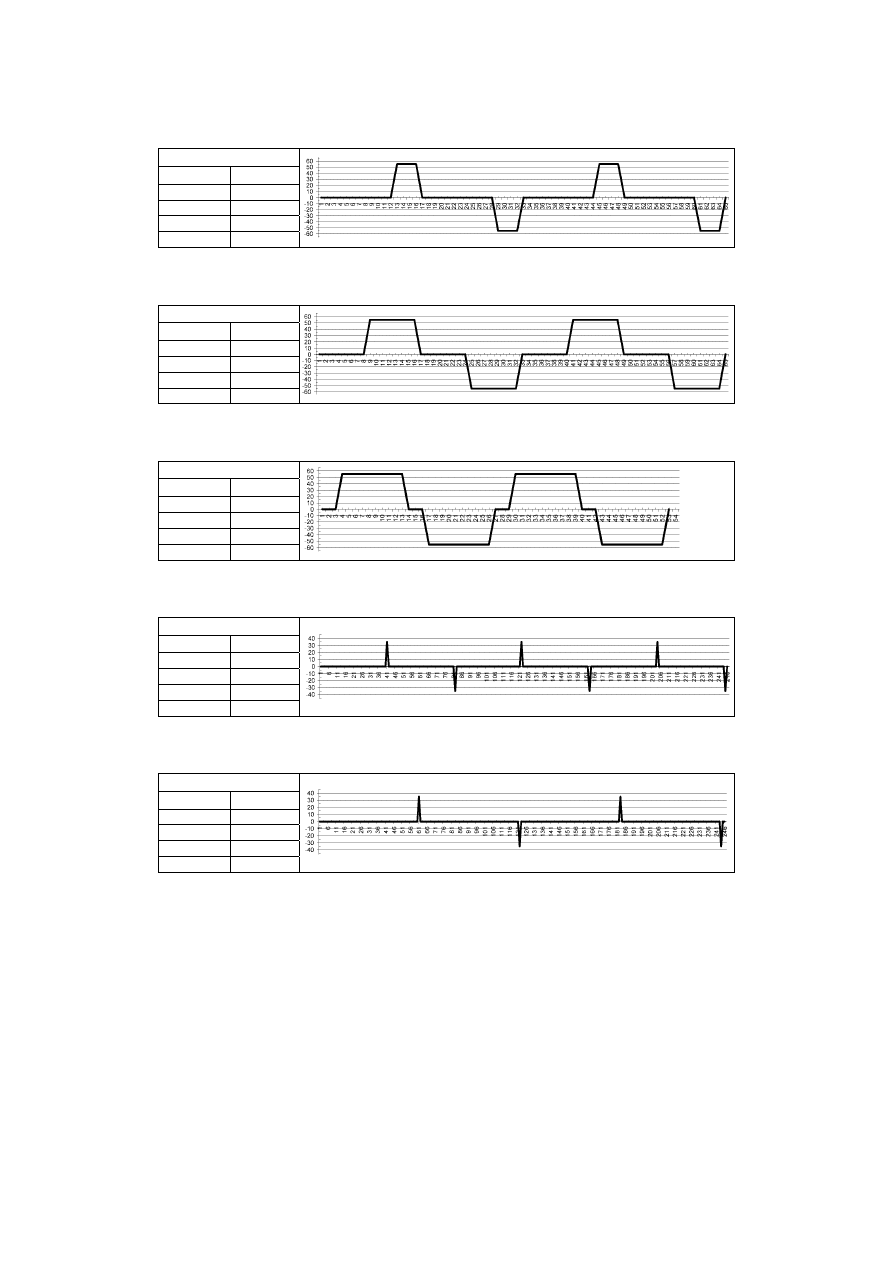
6.5 Wool Cycles: cold - 30
° - 40°
Phase N. Function
Time/
control
Movement
Heat.
°C
Notes
Delay
- Delayed start
Delay time
No Mov
0 Drain
VAE + 2”+
6” pause
No mov
1 Wool water fill
P1 + Qwo (*)
2 Cold
wash
1’
Refill:P1+Qwo1
3 Heating
T
20/33/38
4 Maintenance
14’
Pwl_1 from full
Wash
5 Drain
VAE+14”
v
6 Water fill
P1
No mov
7 Time water fill
Qwor1 (*)
8 Movement
3’
Pwl_1
Refill:P1
1st
rinse
9 Drain
VAE+14”
No
mov
10 Water fill
P1
No mov
11 Time water fill
Qwor1 (*)
12 Movement
3’
Pwl_1
Refill:P1
2nd
rinse
13 Drain
VAE+14”
No
mov
14 Water fill
P1
No mov
15 Movement
30”
16 Time water fill
Qwor2 (*)
17 Movement
5’
Pwl_1
Refill:P1
18 Drain
VAE+14”
No
mov
Rinses
Last rinse
(softener)
19 Drain + spin
3,5’
WOOL_CF
(max. 1000rpm)
SW W1D00102
6.6 Hand wash Cycles: cold - 30
° - 40°
Phase N. Function
Time/
control
Movement
Heat.
°C
Notes
Delay
- Delayed start
Delay time
No Mov
0 Drain
VAE + 2”+
6” pause
No mov
1 Wool water fill
P1 + Qwh (*)
No mov
2 Cold
wash
1’
Refill:P1+Qwh1
3 Heating
T
20/33/38
4 Maintenance
14’
Pwl_4
Wash
5 Drain
VAE+14”
No
mov
6 Water fill
P1
No mov
7 Time water fill
Qwor1 (*)
8 Movement
3’
Pwl_4
Refill:P1
1st
rinse
9 Drain
VAE+14”
No
mov
10 Water fill
P1
No mov
11 Time water fill
Qwor1 (*)
12 Movement
3’
Pwl_4
Refill:P1
2nd
rinse
13 Drain
VAE+14”
No
mov
14 Water fill
P1
No mov
15 Movement
30”
16 Time water fill
Qwor2 (*)
17 Movement
5’
Pwl_4
Refill:P1
18 Drain
VAE+14”
No
mov
Rinses
Last rinse
(softener)
19 Drain + spin
3,5’
WOOL_CF
(max. 1000rpm)
SW W1D00102
Notes
:
P1
time needed to 1
st
level water fill
(*)
time water fills are changeable and calculated by the electronic on the basis of the delivery rate
(see specific table)
T
time needed to heat the water at the set temperature
” seconds
‘ minutes
VAE
time needed to drain the water till “empty” position of anti- boiling (safety heater) pressure
switch
Movement: in this column are described the drum movements at low speed and during spin. (See
paragraph “drum movements”)
The times of drain phases with spin cycle are indicative and do not take into consideration the
intervention of antiunbalance and antifoam protections.
SOI/DT 2005-01 dmm
20
599 36 86 11
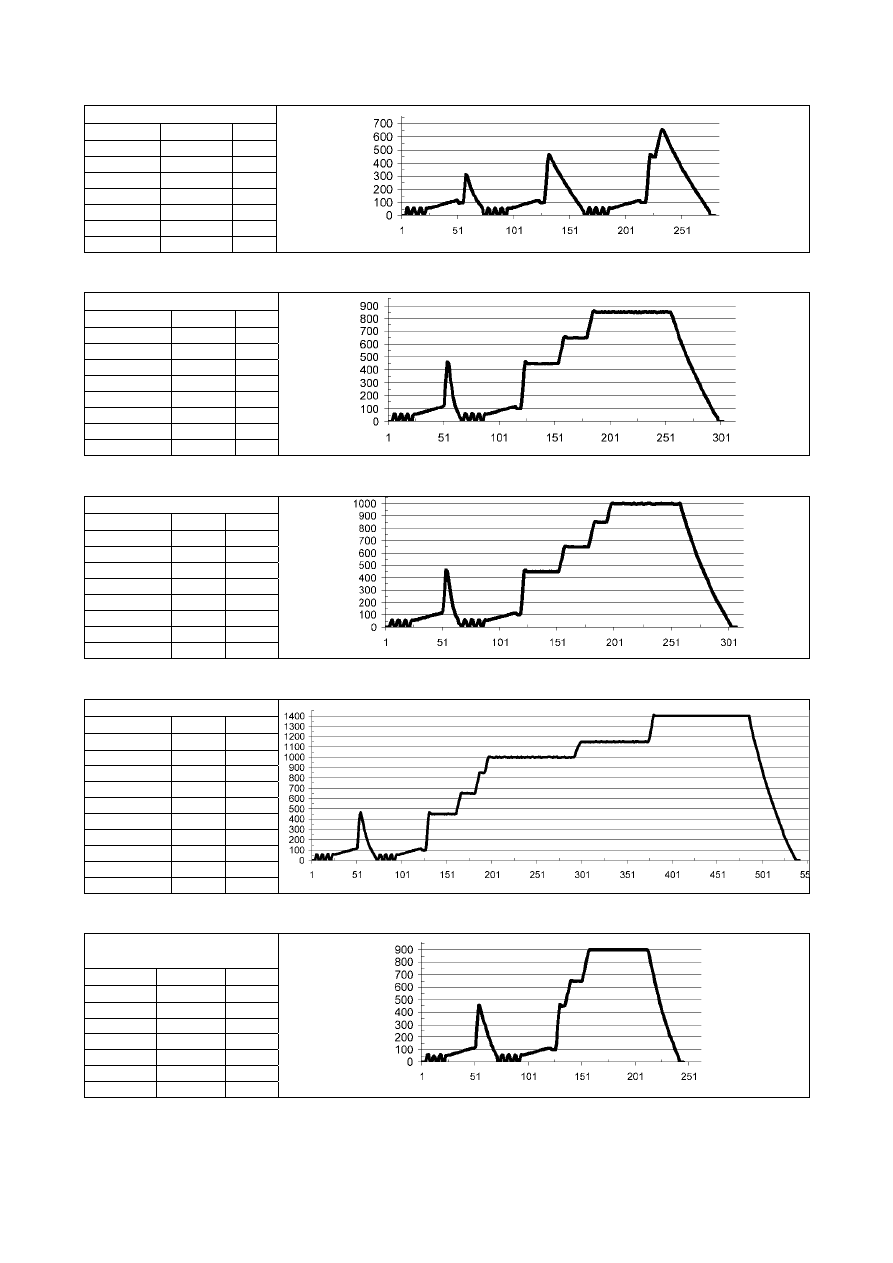
6.7 Drum movements at low speed and during spin
6.7.1 D55
Delicate
movement
D55
sec rpm
12 0
4 55
12 0
4 -55
6.7.2 N55
Normal
movement
N 55
sec rpm
8 0
8 55
8 0
8 -55
6.7.3 E55 Vigorous movement
E 55
sec rpm
3 0
10 55
3 0
10 -55
6.7.4 PWL_1 (wool) Delicate movement
PWL_1
sec rpm
40 0
1 35
40 0
1 -35
6.7.5 PWL_4 (hand wash) Delicate movement
PWL_4
sec rpm
57 0
1 35
57 0
1 -35
SOI/DT 2005-01 dmm
21
599 36 86 11
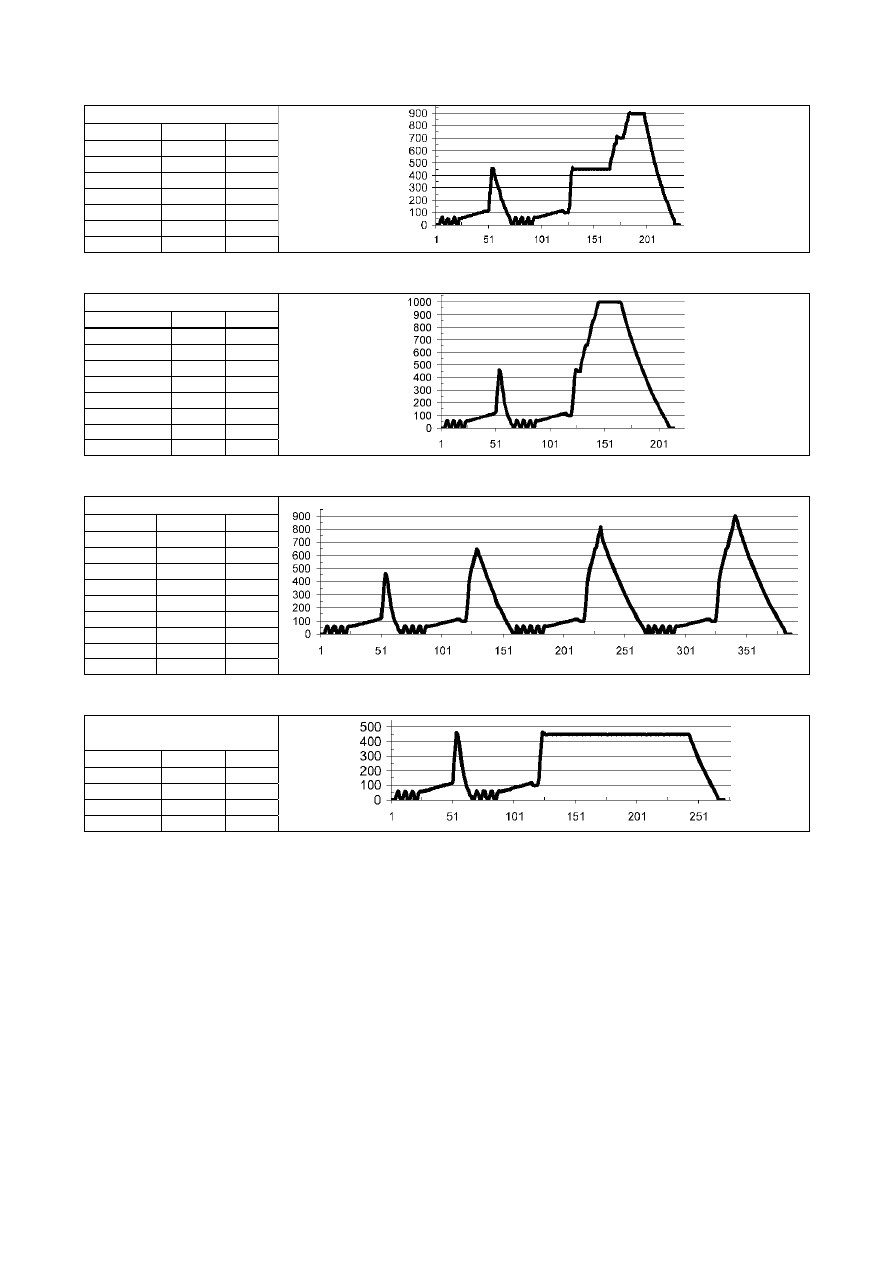
6.7.6 Cotton/Linen, Synthetics – C0 Intermediate Synthetics Prewash Spin
C0 (Prewash)
rpm sec.
AF
FUCS x no
300 0
no
FUCS x no
450 0
no
FUCS x no
450 5
no
650 0
no
6.7.7 C1 Cotton/Linen Wash Spin
C1 (wash)
rpm sec
AF
FUCS x
no
FUCS imp
x
no
FUCS x
no
450 30
AF
650 15
AF
850 10
AF
850 60
no
6.7.8 C2 Cotton/Linen Intermediate Spin
C2 (intermediate)
rpm sec
AF
FUCS x no
FUCS imp
x
no
FUCS x no
450 30
AF
650 20
AF
850 10
AF
1000 60
no
6.7.9 COT_CF Cotton/Linen Final Spin
COT_CF (cotton final)
rpm sec
AF
FUCS x no
FUCS imp
x
no
FUCS x no
450 30
AF
650 15
AF
850 5
AF
1000 95
no
1150 75
no
1400 110
no
6.7.10 SYN_CF Synthetics Intermediate and Final Spin
SYN_CF
(intermediate/final)
rpm sec AF
FUCS x no
FUCS imp
x
no
FUCS x no
450 5 no
650 10 no
900 55 no
SOI/DT 2005-01 dmm
22
599 36 86 11
6.7.11 DEL_ CF Delicates Final Spin
CF (delicates final)
rpm sec
AF
FUCS x no
FUCS imp
x
no
FUCS x no
450 35
AF
700 5
AF
900 20
AF
6.7.12 WOOL_CF Hand Wash and Wool Final Spin
CF (wool final)
rpm sec
AF
FUCS x no
FUCS imp
x
no
FUCS x no
450 5
AF
650 1
AF
850 1
AF
1000 20
no
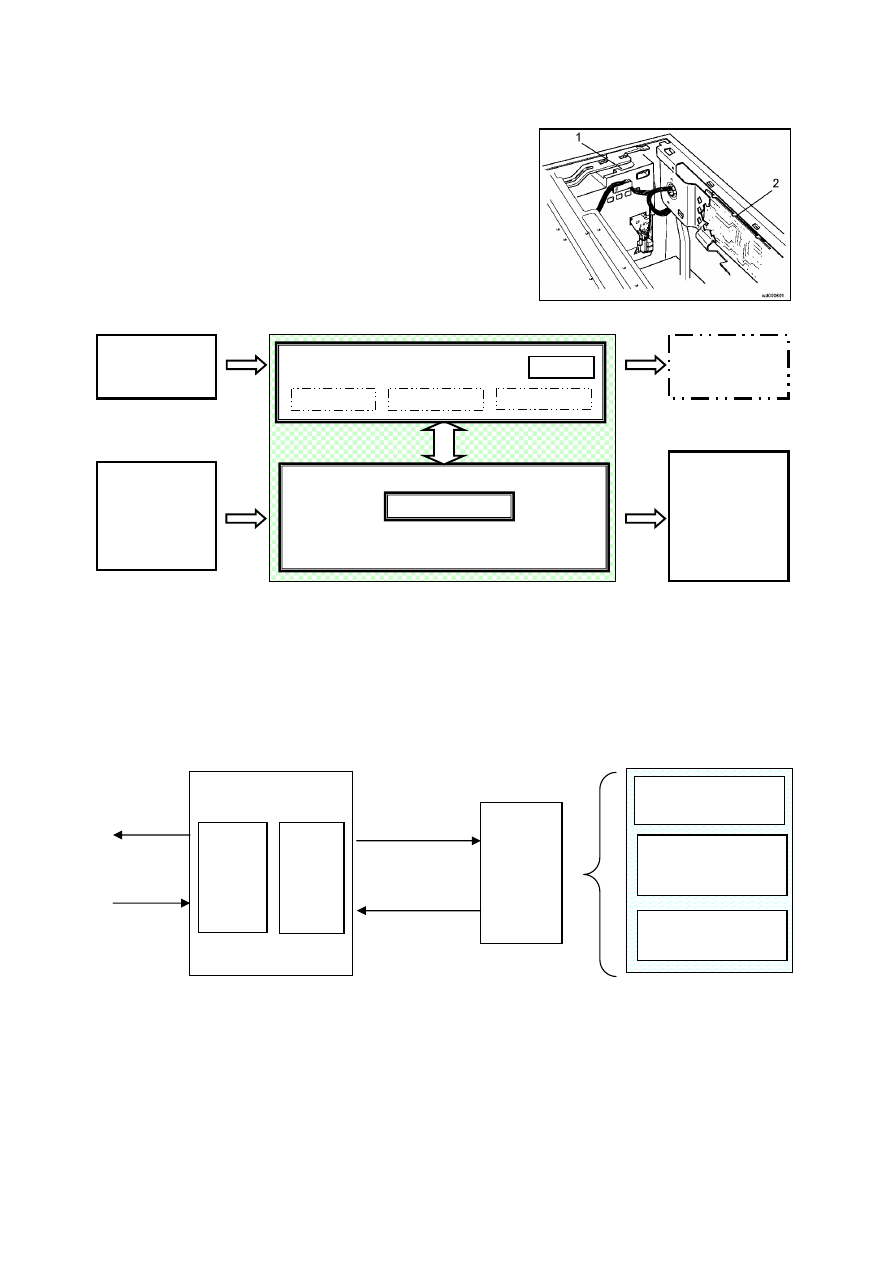
6.7.13 Easy iron Impulse Cycle
EASY_IRON_IMP
rpm sec AF
FUCS x no
450 0 no
FUCS x no
650 0 AF
FUCS x no
800 0 AF
FUCS x no
900 0 AF
6.7.14 Intermediate Spin for Cotton/Linen CSR with Super-rinse option
CSR
rpm sec
AF
FUCS x no
FUCS imp
x
no
FUCS x no
450 120
AF
Notes
:
AF
indicates if antifoam function is active
FUCS antiunbalance function before spin phase
x variable
duration
• In the diagrams the speed is indicated as rotations per minute and the time in seconds

SOI/DT 2005-01 dmm
23
599 36 86 11
6.8 Control of water level in tub
The water fill is carried out in two phases:
• level fill: is controlled by the closure of 1
st
level pressure switch in full position
• time fill: the duration is calculated by the electronic to fill the set quantity.
The different levels are determined by the model configuration and depend on the type of tub used.
6.8.1 Time
water
fill
Type
Description of time fill
G20
litres
G19
litres
G21/2
litres
G18
litres
Levels for COTTON/LINEN
Qpw1
First prewash water fill (all cycles)
3,5 5,0 3,5 5
Qpw2
Prewash water fill after cold wash (all cycles)
3,5 3.5 3,5 3,5
Qhl
Normal water fill/half load
3,5 5,0 3,5 0
Qhl2
Half load water fill for “VERY SHORT” cycle
4,5 5,5 4,5 5,5
Qe
Water fill for “energy label” cycle
4,5 2,5 3,5 0
Qec
Water fill for maintenance cold wash “energy label” cycle
0 0 0 0
Qwe
Refill for “energy label” cycle if prewash has not been selected
0 0 0 0
Qw
Wash refill if the cycle is not “energy label”
1,5 1,0 1,5 2,0
Qc
Cooling water fill
3,0 4,0 3,0 4,0
Qs
“Stains” compartment water fill
1,5 1,0 1,5 1,5
Qk
Water fill for “quick cycle” rinses
12,5 12,0 12,5 11,0
Qn1
Normal water fill for 1
st
rinse
7,5 8,0 8,5 7,0
Qn2
Normal water fill for other rinses
9,0 9,0 9,5 7,0
Qn3
Normal water fill for last rinse
10,0 10,0 12,5 7,0
Qn3e
Water fill for economy last rinse
10,0 10,0 12,5 7,0
Qne
Normal water fill for rinse of “energy label” cycle
4,0 7,0 4,0 0
Qne_60
Water fill for rinse of “energy label” cycle
4,0 7,0 4,0 0
Qsr1
Water fill for super-rinse and night cycle if no spin has occurred
5,5 8,0 5,5 7,0
Qsr2
Water fill for super-rinse and night cycle if spin has occurred
6,0 6,0 6,0 8,0
Levels for SYNTHETICS
Qsy
Wash water fill
1,0 0 1,0 3,0
Qsy1
Wash water fill for VERY SHORT cycle
3,5 2,5 4,0 2,5
Qy1
Wash water fill if prewash has not been selected
2,0 3,0 2,0 3,0
Qyr1
Normal water fill for 1
st
rinse
8,0 8,0 8,5 6,0
Qyr2
Normal water fill for other rinses
8,0 8,0 8,5 6,0
Qyr3
Normal water fill for last rinse
9,5 8,0 10,0 6,0
Levels for DELICATES
Qdw1
Wash water fill
8,5 9,0 9,0 9,5
Qdw2
Wash refill
0 0 0 0
Qrd1
Normal water fill for 1
st
rinse and other rinses
10,0 9,5 11,0 9,0
Qrd2
Normal water fill for last rinse
11,0 11,5 11,5 10,5
Levels for WOOL
Qwo
Wash water fill
10,0 8,5 10,5 9,0
Qwo1
Wash refill
0 0 0 0
Qwor1
Normal water fill for 1
st
rinse and other rinses
8,0 9,5 8,5 7,5
Qwor2
Normal water fill for last rinse
8,0 10,0 8,5 8,0
Levels for HAND WASH
Qwh
Wash water fill
10,0 8,5 10,5 8,5
Qwh1
Wash refill
0 10,0 0 0
(The data in the table are indicative)
SOI/DT 2005-01 dmm
24
599 36 86 11
7 TECHNICAL CHARACTERISTICS
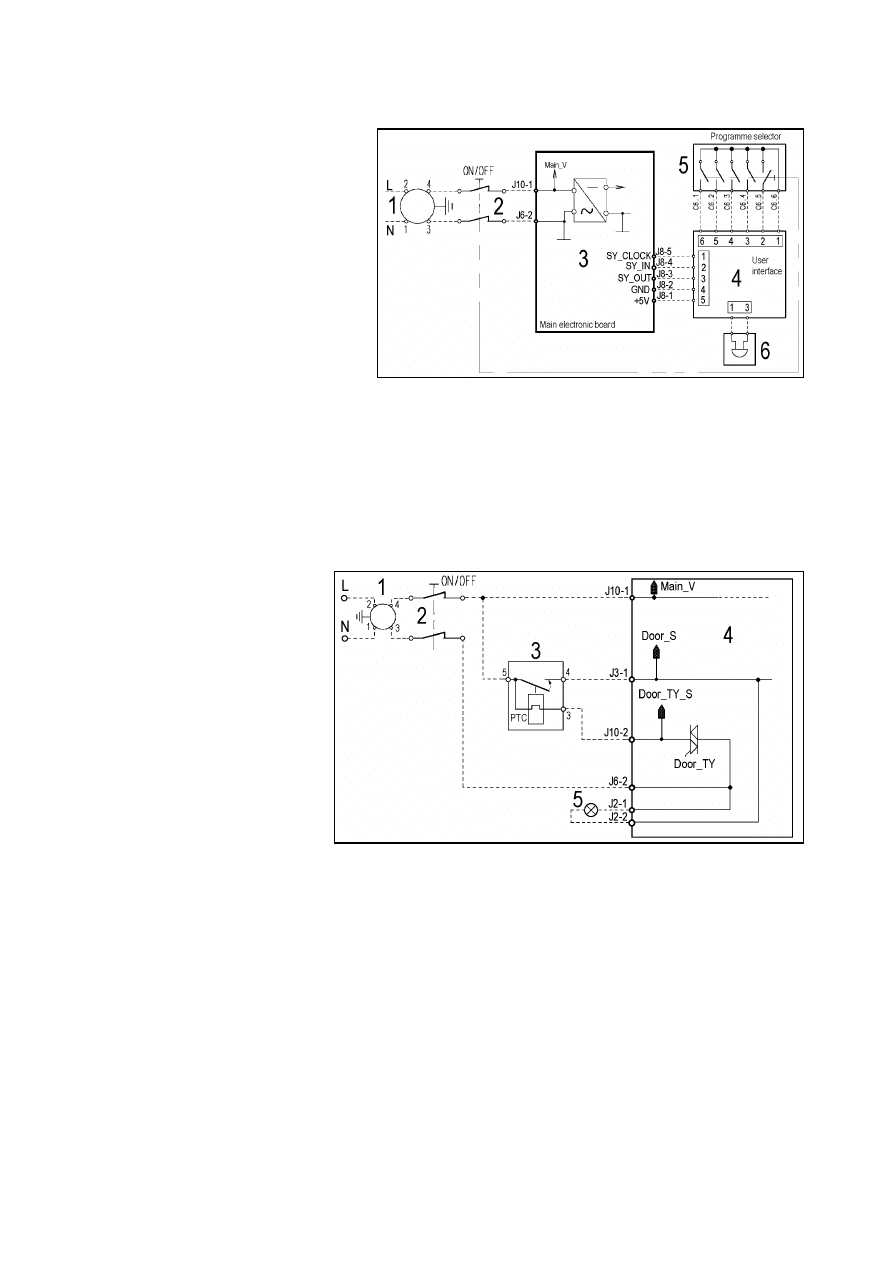
7.1 EWM1000 Plus Electronic control
The EWM1000 Plus electronic control consists of a main PCB
(1) and a control/display board (2).
7.1.1 Functions of the circuit board
Ö
The circuit board receives signals relative to the cycle settings via the control/display board. The
buttons, the LEDs and the display are also mounted on this board which is connected to the programme
selector.
Ö
The board also powers all the electrical components (solenoid valves, washing motor, drain pump,
heating element, door interlock).
Ö
The board controls the temperature of the washing water via an NTC sensor, as well as the speed of
rotation of the washing pump according to the signal received from the tachymetric generator.
Ö
It checks the water level in tub via the level pressure switch and the safety one.
7.1.2 Memory in the control system
The main circuit board features an EEPROM memory (external to the microprocessor) which stores in
memory data relative to the configuration, description of the cycle, cycle status in case of a power failure,
and any alarm conditions.
The configuration data (entered in the factory using a computer with a DAAS interface) determine the
functionalities of the appliance (number and type of programmes, options, LEDs etc.).
µP
ROM
RAM
EEPROM
(external
to the
µP)
Asynchronous
external serial
port
Synchronous
internal serial
port
Power Fail and
machine status
Configuration of
the appliance
Description of the
cycle
SENSORS
ELECTRICAL
LOADS
PROGRAMM
E
SELECTOR
Buzzer
MAIN CIRCUIT BOARD
µP
DISPLAY BOARD
µP
Buttons
LEDs
Display
SOI/DT 2005-01 dmm
25
599 36 86 11
7.2 Power supply and programme selection
The main board (3) is powered by the
interference suppressor (1) and by the
closure of the contacts of the main switch
(2). The affected connectors are J6-2
(neutral) and J10-1 (line).
The control/display board (4) is powered
at 5V by the main board: through the
programme selector (5) it is possible to
select the programme. The selection of
the options / start is performed through
the board buttons (4).
The buzzer (if featured) (6) is powered by
the display board.
7.3 Door
interlock
There are two types of door interlock:
• voltmetric with PTC: it is always necessary to wait from 1 to 3 minutes before opening the door.
• instantaneous: the door can be opened as soon as the cycle ends.
7.3.1 Voltmetric
interlock
with
PTC
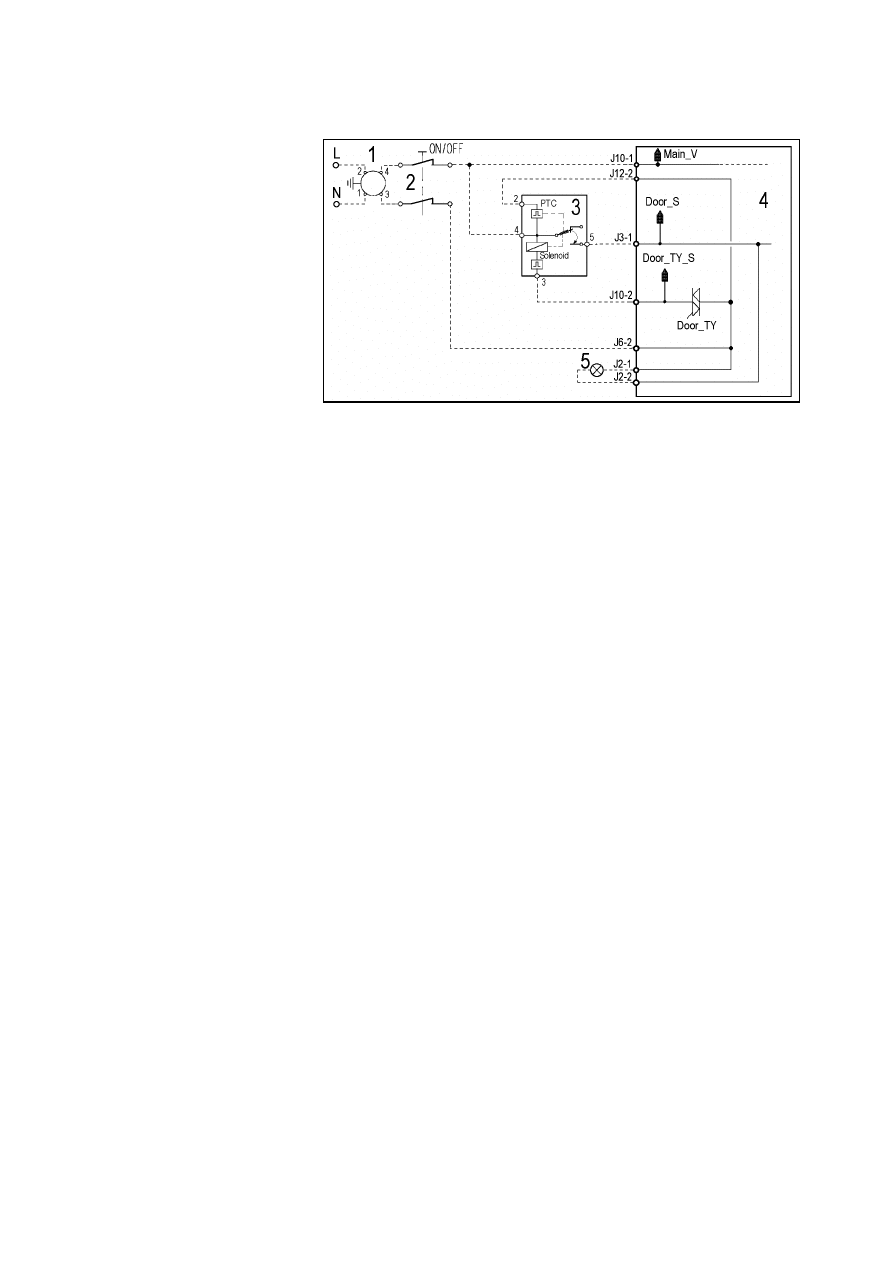
1. Suppressor
2. Main switch (button or
programme selector)
3. Door
interlock
4. Main
PCB
5. Door pilot lamp closed
• Operating principle
ª
When the washing programme is started by pressing the START/PAUSE button, the bi-metal PTC
(contacts 3-5) is powered by the triac on the PCB (J6-2 connector): after 2 – 4 seconds, this closes the
switch (5-4) which powers the electrical components of the appliance (only if the door is closed).
ª
The door interlock prevents aperture of the door while the appliance is in operation.
ª
At the end of the washing programme, the PCB disconnects the interlock from the power supply, but
the door remains locked for 1 to 2 minutes (PTC cooling time).
Door locked” pilot lamp
ª
Certain models feature a pilot lamp which lights to indicate that the door is locked. This pilot lamp
switches off when the door can be opened
SOI/DT 2005-01 dmm
26
599 36 86 11
7.3.2 Instantaneous door interlock
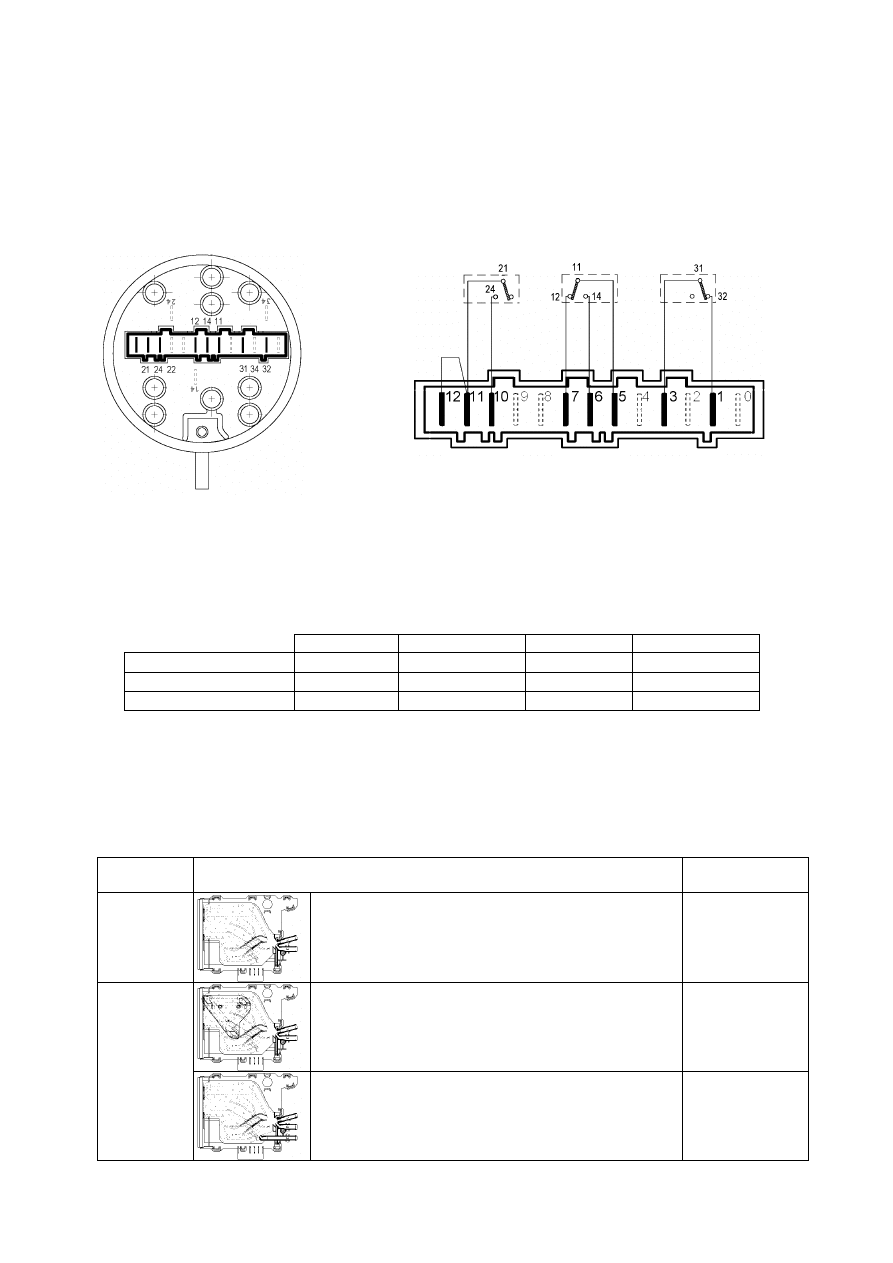
1. Suppressor
2. Main switch (button or
programme selector)
3. Door
interlock
4. Main
PCB
5. Door pilot lamp off
• Operating principle
ª
When the appliance is switched on, the ON/OFF switch closes and the bi-metal PTC (contact 4-2) is
powered; the door, however, is not locked.
ª
When the programme starts (START/PAUSE button), the PCB transmits a 20 msec voltage signal to
contacts 4-3 of the solenoid valve (J10-2 connector of the board) (at least 6 seconds must elapse after
switching on); this signal locks the door and, at the same time, closes the main switch (contacts 4-5)
which powers all the components in the appliance.
• At the end of the programme, the PCB transmits two 20 msec signals (at an interval of 200 msec).
-
the first signal does not release the door.
- the second signal (which is transmitted only if the system functions correctly) releases the door
interlock and at the same time the contacts of the main switch are opened.
• Conditions necessary for door release
ª
Before transmitting the door release signals, the main PCB checks for the following conditions:
-
the drum must be stationary (no signal from the tachometric generator)
-
the water level must not be higher than the lower edge of the door
-
the temperature of the water must not exceed 50°C.
• Automatic release device
ª
In the event of a power failure, if the appliance is switched off, or if the solenoid should malfunction, the
bi-metal PTC cools over a period of 1 to 4 minutes, and then releases the door.
• “Door locked” pilot lamp
ª
Certain models feature a pilot lamp which lights to indicate that the door is locked. This pilot lamp
switches off when the door can be opened.
SOI/DT 2005-01 dmm
27
599 36 86 11
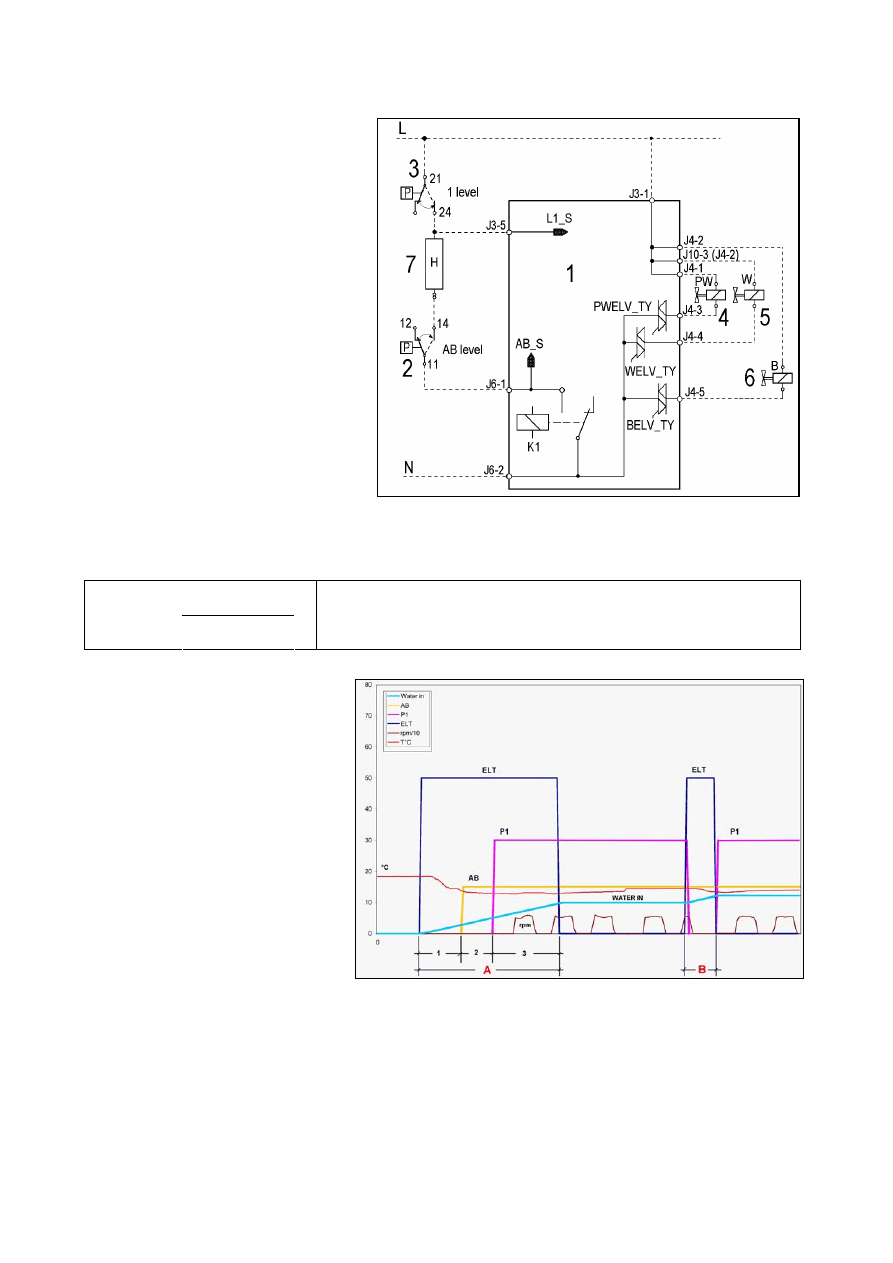
7.4 Control pressure switch for water level in the tub
Control of the water level is performed by a two or three-level pressure switch which functions as follows:
• contact 11-14: anti-boiling safety level
• contact 21-24: first level
• contact 31-32: anti-overflow safety level (not all models)
7.4.1 Pressure switch settings
Full (mm)
Refill (mm)
Full (mm)
Refill (mm)
Anti-boiling level
60
± 3
35
± 3
55
± 3
35
± 3
1st level
95
± 3
65
± 3
80
± 3
55
± 3
Anti- overflow level
390
± 15
240
±50 390± 15
240
±50
7.5 Detergent
dispenser
The EWM 1000 plus electronic system can control different types of dispensers:
Type
Detergent dispenser
No. of solenoid
valves
3 compart-
ments
Pre-wash/Stains – Wash – Conditioner
(pre-wash and stain are in alternance)
2
Pre-wash/Stains – Wash – Bleach - Conditioner
(the pre-wash/stain and conditioner compartment are
linked together with a “intersection”)
2
4 compart-
ments
Pre-wash/Stains – Wash – Bleach - Conditioner
(pre-wash and stain are in alternance)
3
SOI/DT 2005-01 dmm
28
599 36 86 11
7.6 Water fill system
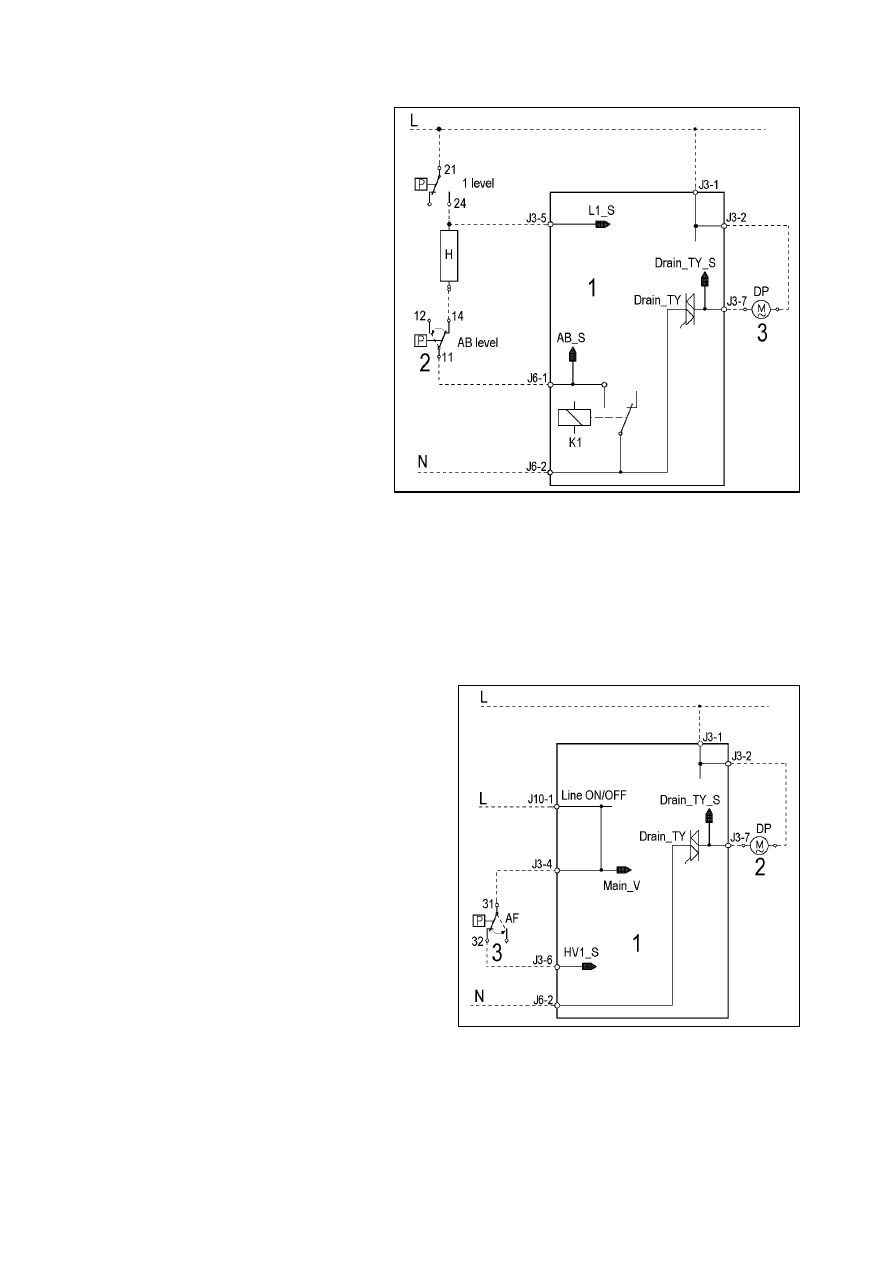
The solenoid valves are powered by the
PCB via two or three triacs. The status
of the pressure switch (empty/full) is
detected by two “sensing” lines”.
1. PCB
2. Anti-boiling
level
3. 1st
level
4. Pre-wash
solenoid
5. Wash
solenoid
6. Bleach
solenoid
(some
models)
7. Heating
element
AB_S Anti-boiling level sensor
L1_S 1st level sensor
7.6.1 Calculation of flow rate
Calculation of the capacity – necessary to determine the time for the supplementary fill – is performed by
measuring the time that elapses between the closure of the anti-boiling contact on FULL and the closure of
the 1st level contact.
Volume
Flow rate =
Time (T1-T2)
Volume = Volume of the tub between the two levels (anti-boiling and
1st level)
T1 –T2 = The time that elapses between the closure of the anti-boiling
and 1st level contacts on FULL
• Water fill diagram
ELT = solenoid valve
P1 = 1st level
AB = anti-boiling level
rpm = drum rotation
speed
Water in = water fill
Phase A: The phase during which the initial fill takes place:
1. Water fill until the anti-boiling pressure switch closes on FULL.
2. Water fill until the 1st level pressure switch closes on FULL: the delivery of the solenoid is
calculated during this phase.
3. Water fill for time Q, which varies according to delivery and cycle phase.
Phase B: If the 1st level pressure switch returns to EMPTY, a supplementary fill is performed until the
pressure switch returns to close on FULL. This phase may be followed by a further timer-
controlled fill.
SOI/DT 2005-01 dmm
29
599 36 86 11
7.7 Drain
pump
1. PCB
2. Anti-boiling pressure switch
8. Drain
pump
AB_S Anti-boiling level sensor
The PCB powers the drain pump via a triac as follows:
ª
for a pre-determined period.
ª
until the anti-boiling pressure switch closes on EMPTY, after which the pump is actioned for a brief
period or passes to the subsequent phase.
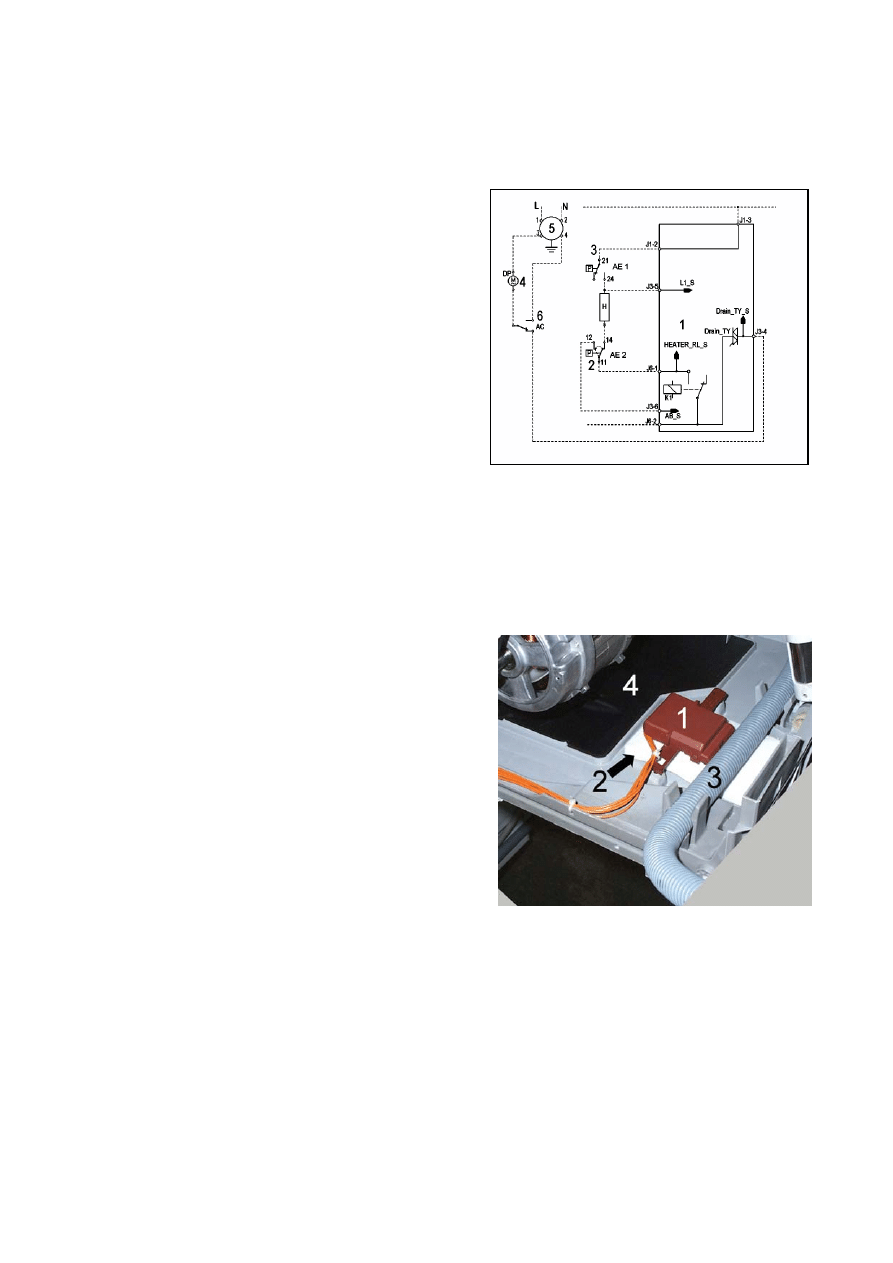
7.8 Anti-flooding device
1. PCB
8. Drain
pump
9. Anti-overflow pressure switch
HV1_S Anti-overflow level sensor
The third pressure switch level (if featured) is used as an anti-overflow safety device: if the pressure switch
contact should open in the FULL position, the PCB actions the drain pump until the pressure switch returns
to the EMPTY position.
SOI/DT 2005-01 dmm
30
599 36 86 11
7.9 Water
Control
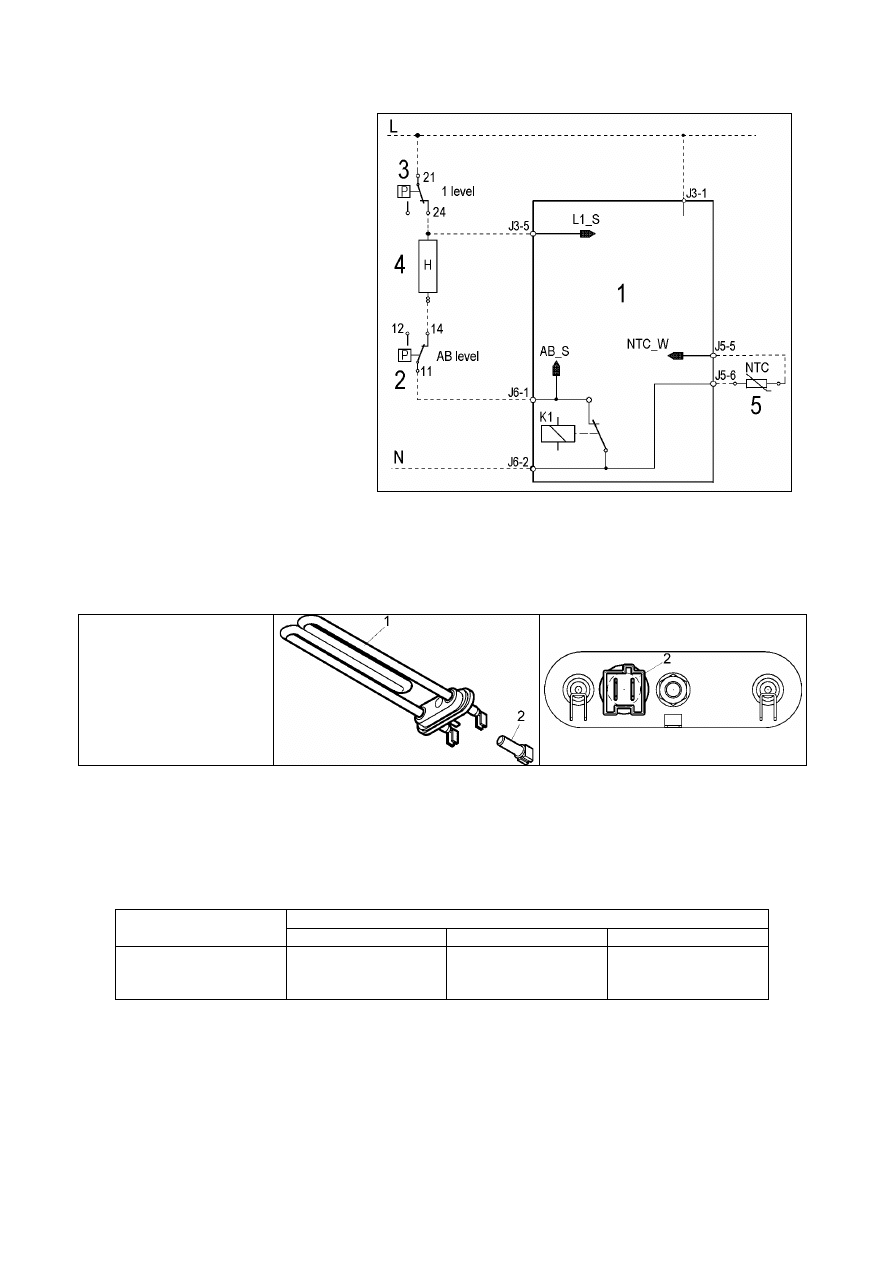
The Water Control system is a sensor located in contact with the base frame. The sensor detects water
leaks inside the machine (not only during normal operation, but also when the unit is off and plugged in) and
starts the drain pump if a leak occurs.
1. Main
board
2. Antiboiling pressure switch
AE2
3. Antiboiling pressure switch
AE1
4. Drain
pump
5. Interference
filter
6. Water
Control
Besides supporting the various components on the appliance (drain pump, recirculation pump, shock
absorbers, etc.), the base frame is designed to be a container that collects any water leaks that may occur
(from the tub, from a tube or pipe, etc.). These leaks are directed into an area where a float is installed.
When this float is raised by water, it actuates a microswitch that starts the drain pump. When the switch is
tripped, an alarm is also signaled (if the machine is switched on).
Important: When replacing the drain pump or tube,
arrange the tube so that it doesn’t interfere with the float.
1. microswitch actuated by float
2. float
3. drain tube
4. cover
SOI/DT 2005-01 dmm
31
599 36 86 11
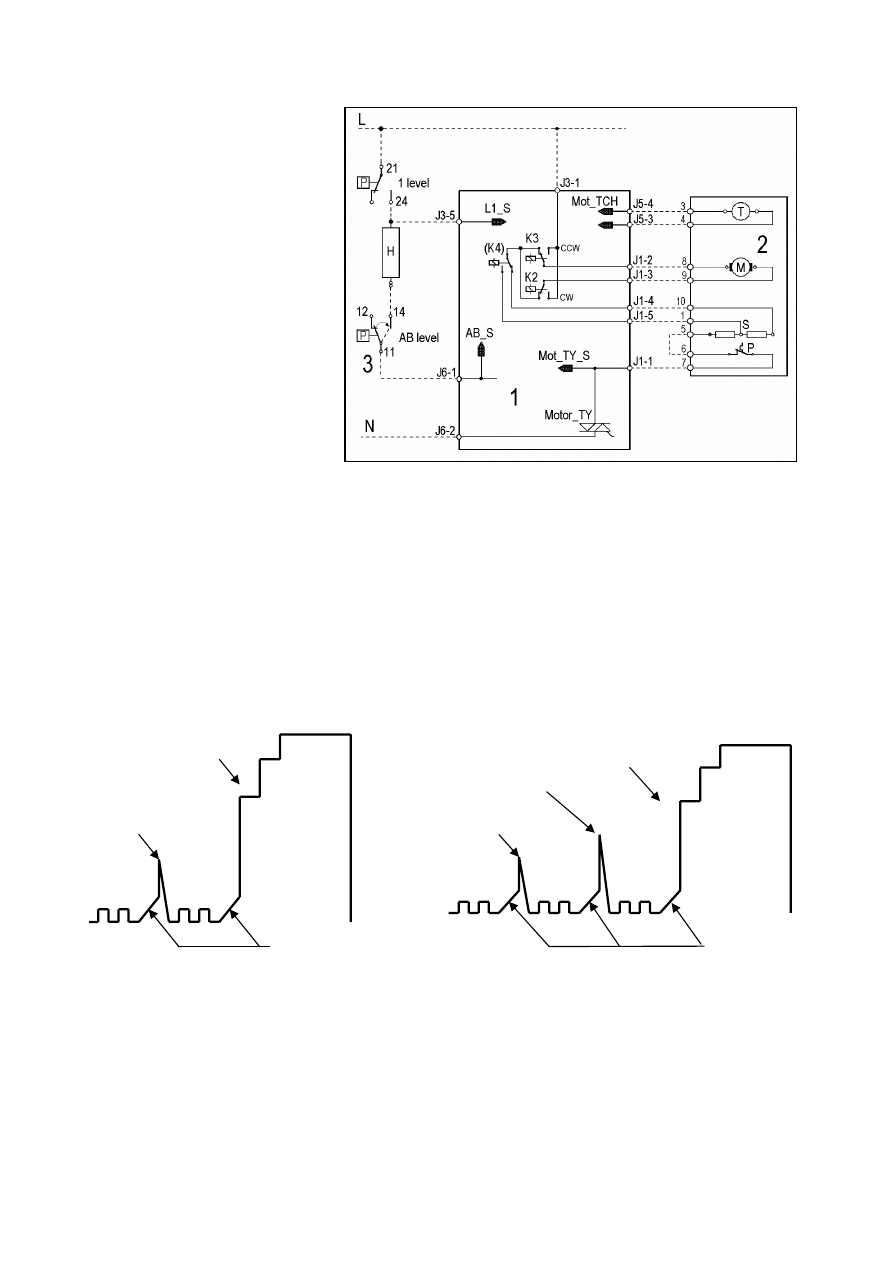
7.10 Heating
1. PCB
2.
Anti-boiling pressure switch
3.
1st level pressure switch
6. Heating
element
7.
NTC temperature sensor
K1 Relay
AB_S Anti-boiling level sensor
L1_S 1st level sensor
The heating element is powered by a relay on the PCB via the contacts of the pressure switch when closed
on FULL.
7.10.1 Heating element
1. Heating
element
(1950W)
2. NTC-Sensor
7.10.2 Temperature sensor
The temperature is controlled by the PCB by means of a NTC temperature sensor.
RESISTANCE(
Ω)
TEMPERATURE
(ºC)
Nominal value
Maximum value
Minimum value
20
60
80
6050
1250
640
6335
1278
620
5765
1222
660
SOI/DT 2005-01 dmm
32
599 36 86 11
7.11 Motor
1. PCB
2. Motor
3. Anti-boiling/anti-foam
pressure switch
M = rotor
P = motor safety cut-out
S = stator
T = tachometric generator
AB_S Anti-boiling/anti-
foam level sensor
7.12 Power supply to motor
The PCB powers the motor via a triac. The direction of rotation is reversed by switching of the contacts on
the two relays (K2-K3), which modify the connection between the rotor and the stator.
In certain models (1200-1600rpm), a third relay (K4) is used to power the stator (full or half field) according
to the spin speed
The speed of rotation of the motor is determined by the signal received from the tachometric generator.
During the spin phases, the microprocessor, depending on the software configuration, may perform the
anti-foam control procedure (if featured) and the anti-unbalancing control procedure.
7.13 Anti-foam control system
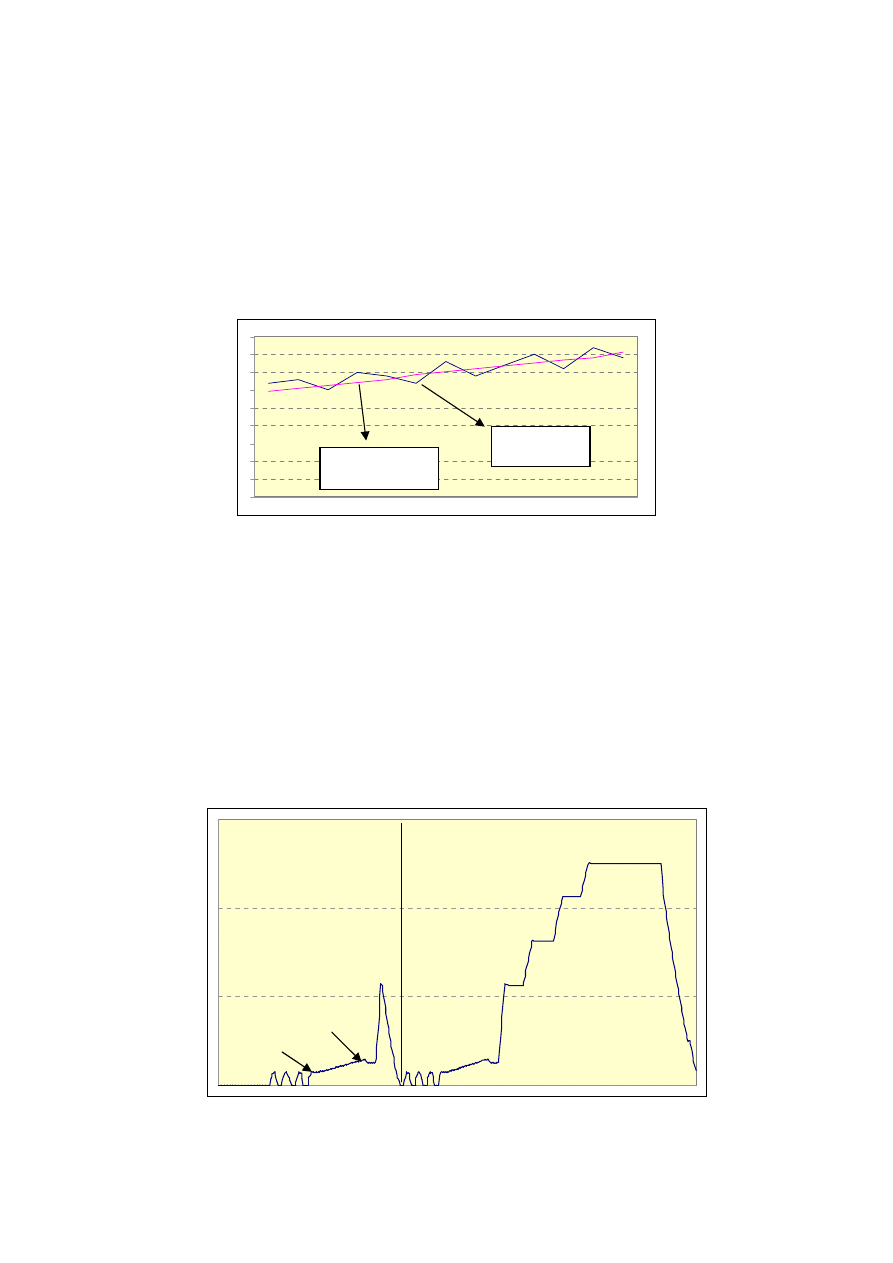
The anti-foam control procedure (if featured) is performed via the anti-boiling pressure switch (AB).
Spin phase without foam
Spin phase with little foam
• Spin with little foam: if the contact of pressure switch AB closes on FULL, the spin phase is
interrupted; the drain pump continues to operate and, when the contact returns to EMPTY, the spin
phase is resumed.
• Spin with excessive foam in the tub (critical situation): The control system detects whether the
pressure switch commutates 5 times to FULL. In this case, the spin phase is skipped, and a one-
minute drain cycle is performed with the motor switched off; in the case of a washing phase, a
supplementary rinse is added.
FUCS
300 rpm pulses
Spin
Anti-foam
( Level AB )
300 rpm
pulses
FUCS
Spin
SOI/DT 2005-01 dmm
33
599 36 86 11
7.14 “FUCS” (Fast Unbalance Control System)
The control procedure for unbalanced loads is performed dynamically, before each spin cycle, as follows:
ª
The phase begins at a speed of 55 rpm; the speed can never fall below this threshold, otherwise the
check is repeated.
ª
At intervals of 300 ms, the balance is calculated and compared with predetermined limits. If the value is
less than the lower limit, the speed of the drum is increased by a certain value depending on the
transmission relation between motor pulley/drum; if the unbalancing is higher, it is decreased by the
same value. The reduction in the speed of the drum distributes the washing correctly; this procedure is
repeated until the wash load is completely balanced.
ª
Correct balancing of the wash load is achieved at a speed of 115 rpm, after which the spin cycle
begins.
The Unbalancing Control function takes place in different phases: each phase is characterized by:
ª
an unbalancing index (0-1-2-3)
ª
an unbalancing threshold value (ex: 350, 650, 850, 1200rpm)
ª
a time out (max. time)
• Ending of the FUCS balancing phase
The phase is ended when:
ª
The drum rotation speed is 115 rpm (or 85rpm in some cases of unbalancing index). In this case the
spin is performed.
ª
In some cases the optimal balancing value is not reached: a reduced spin is performed depending on
the unbalancing.
ª
In the worst case, in which all phases are not sufficient to reach a minimum balancing value, the spin is
not performed.
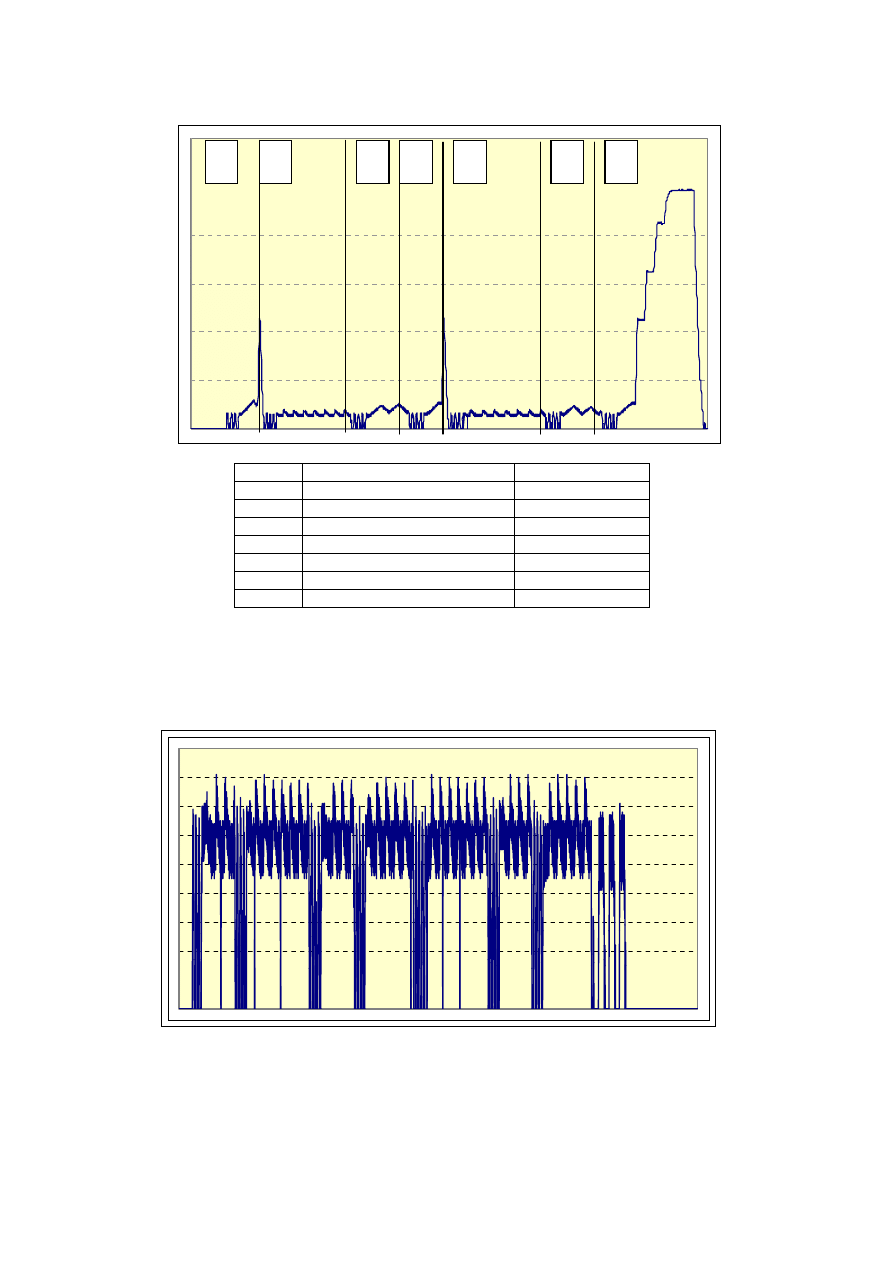
• Example of perfect balancing
Phase 0,
Time-out=60 sec
Phase 1
Time-out=60 sec
55 rpm
115 rpm
rpm
Real speed
Selected speed
SOI/DT 2005-01 dmm
34
599 36 86 11
• Balancing in the available longer interval
Phase Unbalancing
index Time-out
(sec)
1 0
60
2 1
120
3 2
60
4 3
90
5 1
120
6 2
90
7 3
90
• Unbalancing after all phases
In this case the spin (or impulse) is not performed.
1
2
3
4
5
6
7
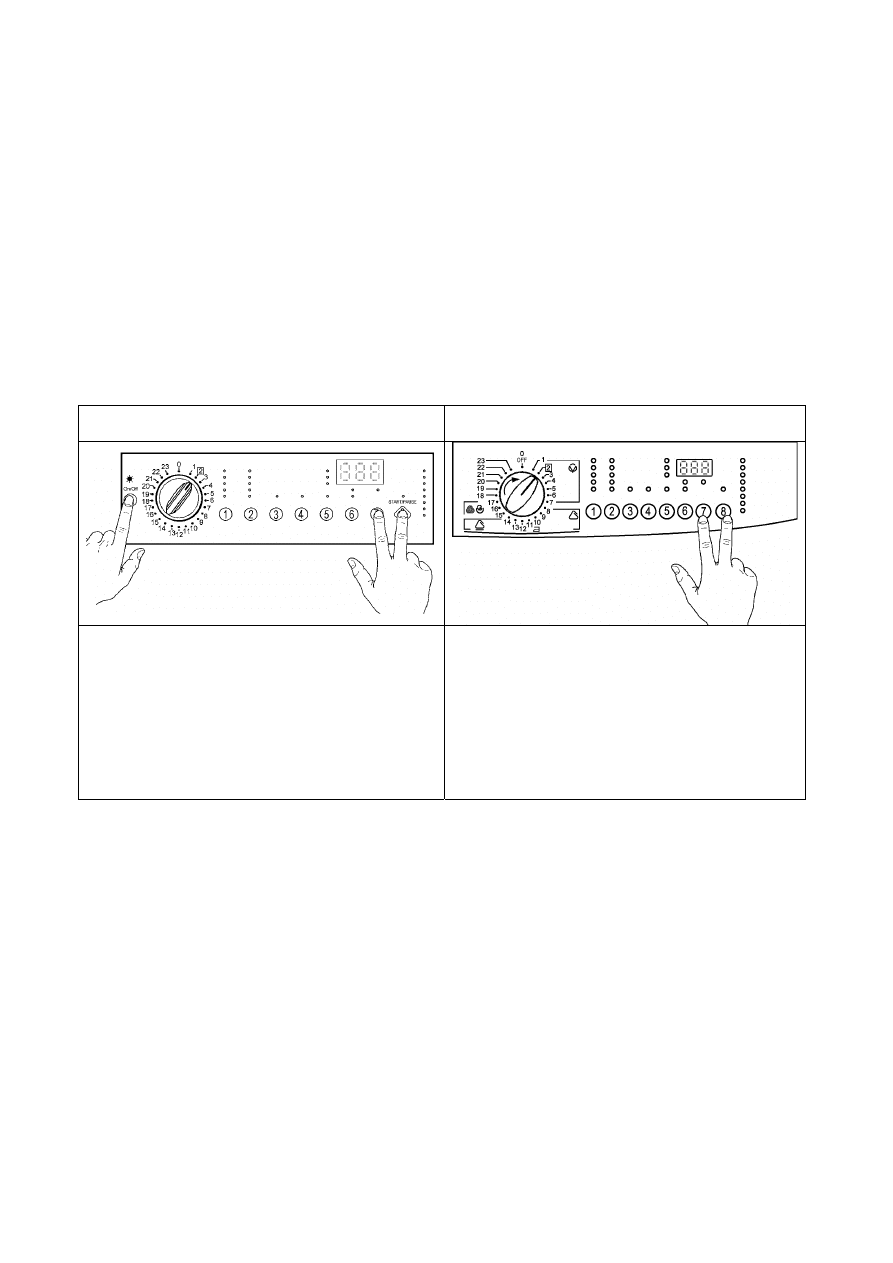
SOI/DT 2005-01 dmm
35
599 36 86 11
8 DEMO
Mode
A special cycle has been created for demonstration of the operation of these appliances in retail outlets
without connecting the appliance to the water supply. In this way, the salesman can select any programme;
after starting the cycle by pressing START, the appliance will perform certain phases only, and will skip
those which cannot be performed (water fill, drain, heating).
The cycle takes place as follows:
ª
the door locking device is actioned in the normal way (i.e. the door remains locked while the appliance
is in operation, and can be opened at the end of the cycle or in pause mode)
ª
motor: all low-speed movements are enabled, while the pulse signals and the spin cycle are excluded
ª
the water fill solenoids and the drain pump are disabled
ª
display: since the phases of the cycle take place in rapid succession (1 second of the demo cycle is
equivalent to 1 minute of the actual cycle), the time-to-elapse decreases by 1 unit per second.
Remember that the time-to-elapse does not always correspond to the actual cycle time
ª
alarms: for reasons of safety, the following groups of alarms remain enabled: E40 (door closed), E50
and E90 (communication between the boards/configuration).
Version with ON/OFF button
Version with ON/OFF button incorporated in the
selector
1. Cancel the set programme and switch the
appliance off.
2. Rotate the programme selector of two
positions clockwise.
3. Press
the
start/pause (8) button and any of the
option button simultaneously and then, keeping
them pressed, switch the appliance on
through the ON/OFF button (on/off).
4. Hold the start/pause and option buttons down till
the LEDs start flashing (about 5 seconds).
1. Cancel the set programme switching the
appliance off.
2. Press
the
start/pause (8) button and any of the
option button simultaneously and then, keeping
them pressed, switch the appliance on
rotating the programme selector of two
positions clockwise.
3. Hold the start/pause and option buttons down
till the LEDs start flashing (about 5 seconds).
Attention: the programme selector is not always in the position indicated in the picture; it can be on the
right or on the left of the display board!
8.1 Exiting demo mode
ª
Switch the appliance off to exit the demo mode.
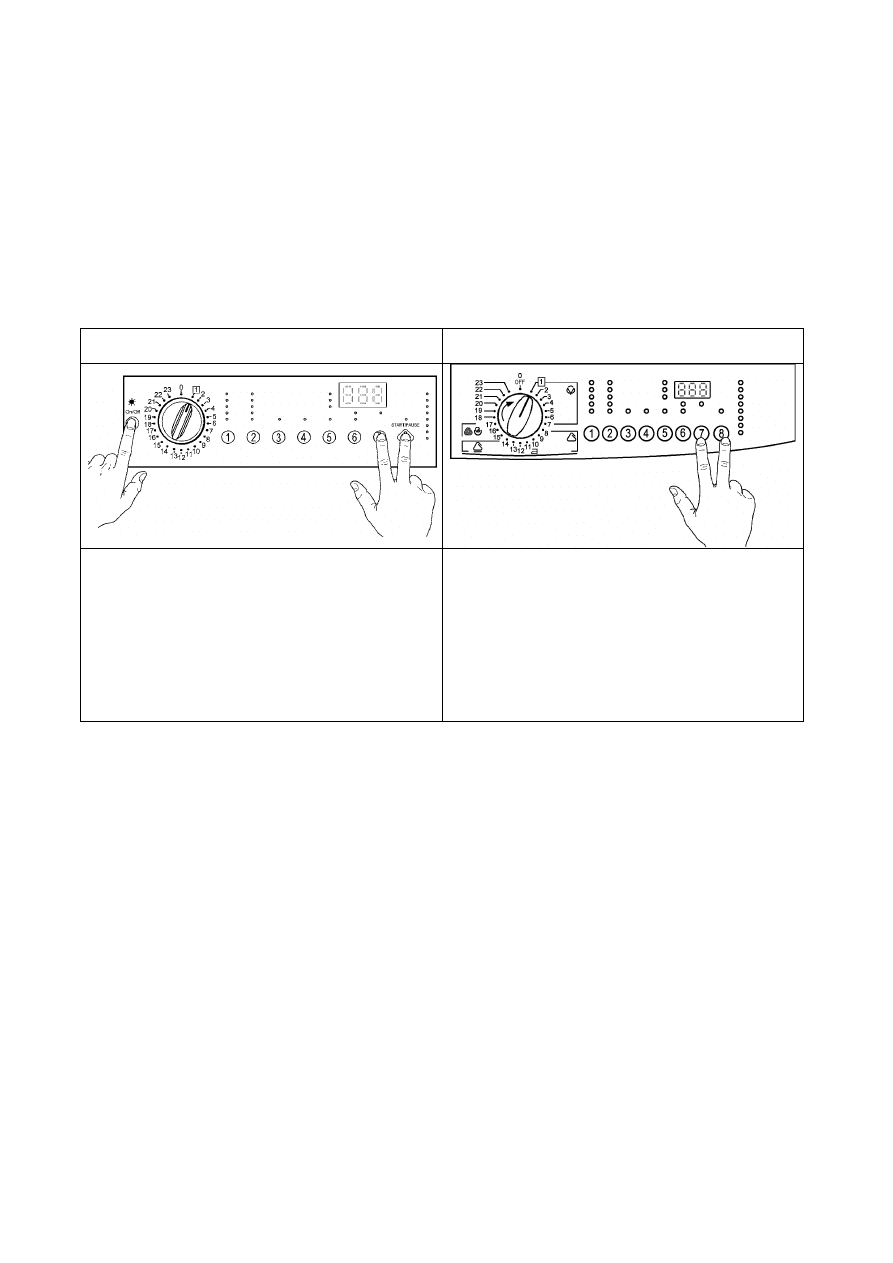
SOI/DT 2005-01 dmm
36
599 36 86 11
9 DIAGNOSTICS
SYSTEM
9.1 Access to diagnostics system
Using a single procedure, it is possible to access to the diagnostics system. After accessing this function,
the following operations can be performed:
control of the operation of each of the components in the appliance
read / cancel the alarms
The diagnostics cycles are available only if the communication between the main PCB and the display
board is correct; moreover there should not be configuration errors of the appliance.
To access:
Version with ON/OFF button
Version with ON/OFF button incorporated in the
selector
5. Cancel the set programme and switch the
appliance off.
6. Rotate the programme selector of one
positions clockwise.
7. Press
the
start/pause (8) button and any of the
option button simultaneously and then, keeping
them pressed, switch the appliance on
through the ON/OFF button (on/off).
1. Hold the start/pause and option buttons down
till the LEDs start flashing (about 5 seconds).
4. Cancel the set programme switching the
appliance off.
5. Press
the
start/pause (8) button and any of the
option buttons simultaneously and then,
keeping them pressed, switch the appliance
on rotating the programme selector of one
position clockwise.
1. Hold the start/pause and option buttons down
till the LEDs start flashing (about 5 seconds).
Attention: the programme selector is not always in the position indicated in the picture; it can be on the
right or on the left of the display board!
In the first position the function test of the buttons and the corresponding LEDs is performed; by rotating
the programme selector clockwise the operation diagnostics of each component and the reading of the
alarms is carried out.
9.2 Exiting diagnostics system
ª
To exit the diagnostics system switch the appliance off, on and then off again.
9.3 Phases of the diagnostics test
Independently of the type of selector, after activating the diagnostics system, the operation diagnostics of
the different components and the reading of the alarms can be performed, by rotating the selector
clockwise.
In models with digit the code of the selector position is displayed for a second.
In the diagnostics cycle all alarms are activated. If during the cycle operation an alarm occurs, the
appliance blocks and the LEDs (and the display) flash indicating the relative code.
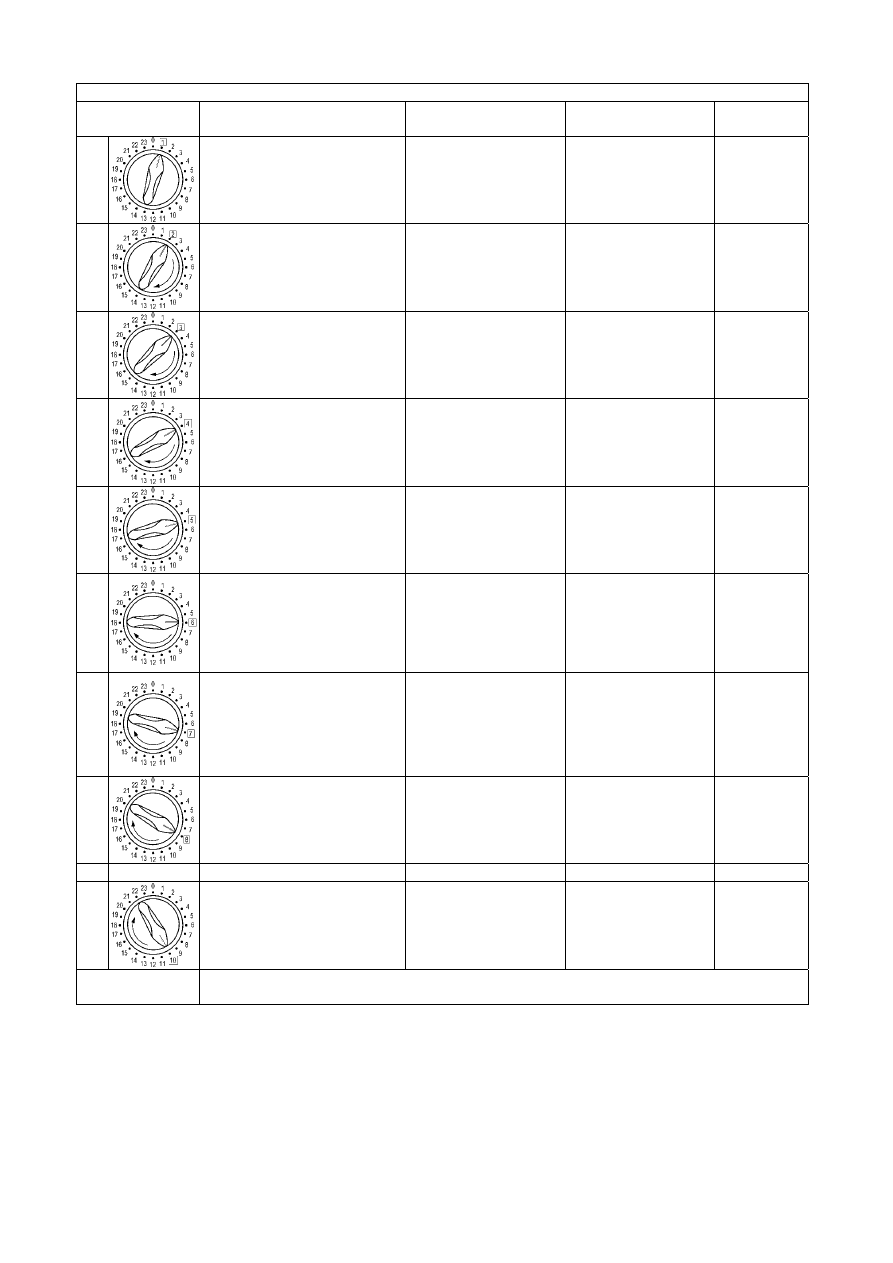
SOI/DT 2005-01 dmm
37
599 36 86 11
Diagnostics phases
Selector position
Components actioned
Operating conditions
Function checked
Displayed
parameters (1)
1
All the LEDs light in
sequence. When a button is
pressed, the corresponding
LED lights (and the buzzer, if
featured, sounds)
Always activated
Operation of the
user interface
Button
codification
2
Door interlock
Washing solenoid
Door locked
Water level below
anti-flooding level
Maximum time 5
minutes
Water ducted
through washing
compartment
(**)Selection
position code
3
Door interlock
Pre-wash solenoid
Door locked
Water level below
anti-flooding level
Maximum time 5
minutes
Water ducted
through pre-wash
compartment
(bleach)
(**)Selection
position code
4
Door interlock
Pre-wash and wash solenoids
Door locked
Water level below
anti-flooding level
Maximum time 5
minutes
Water ducted
through conditioner
compartment
(**)Selection
position code
5
Door interlock.
Bleach/stains solenoid.
Door locked
Water level below
anti-flooding level
Maximum time 5
minutes
Water ducted through
bleach/stains
compartment
(**)Selection
position code
6
Door interlock
Washing solenoid if the level
of water in the tub is below
1st level
Heating element.
Door locked.
Water at 1st level.
Maximum time 10 min.
or up to 90ºC. (*)
Heating
(**)Selection
position code
7
Door interlock.
(Washing solenoid if the level
of water in the tub is below 1st
level). Motor (55 rpm
clockwise, 55 rpm counter-
clockwise, 250 rpm impulse)
Door locked
Water level at 1st level.
Check for leaks from
the tub
(**)Selection
position code
8
Door interlock
Drain pump
Motor up to 650 rpm then at
maximum spin speed
Door locked
Water level lower than
anti-boiling level for
spinning
Drain and spin;
control of
congruence in
closure of level
pressure switches
(**)Selection
position code
9
--- ---
--- ---
---
10
Reading/cancelling last alarm
---
---
Alarm code
11, 12 ...24
All LEDs light in sequence. Pressing a button the corresponding LED lights (and the Buzzer
sounds, if featured)
(*)In most cases, this time is sufficient to check the heating. However, the time can be increased by
repeating the phase without draining the water: for a moment to a different phase of the diagnostics cycle
and then back to the heating control phase (if the temperature is higher than 80°C, heating does not take
place).
(**) See tables of following pages.
(1) Models with Display.
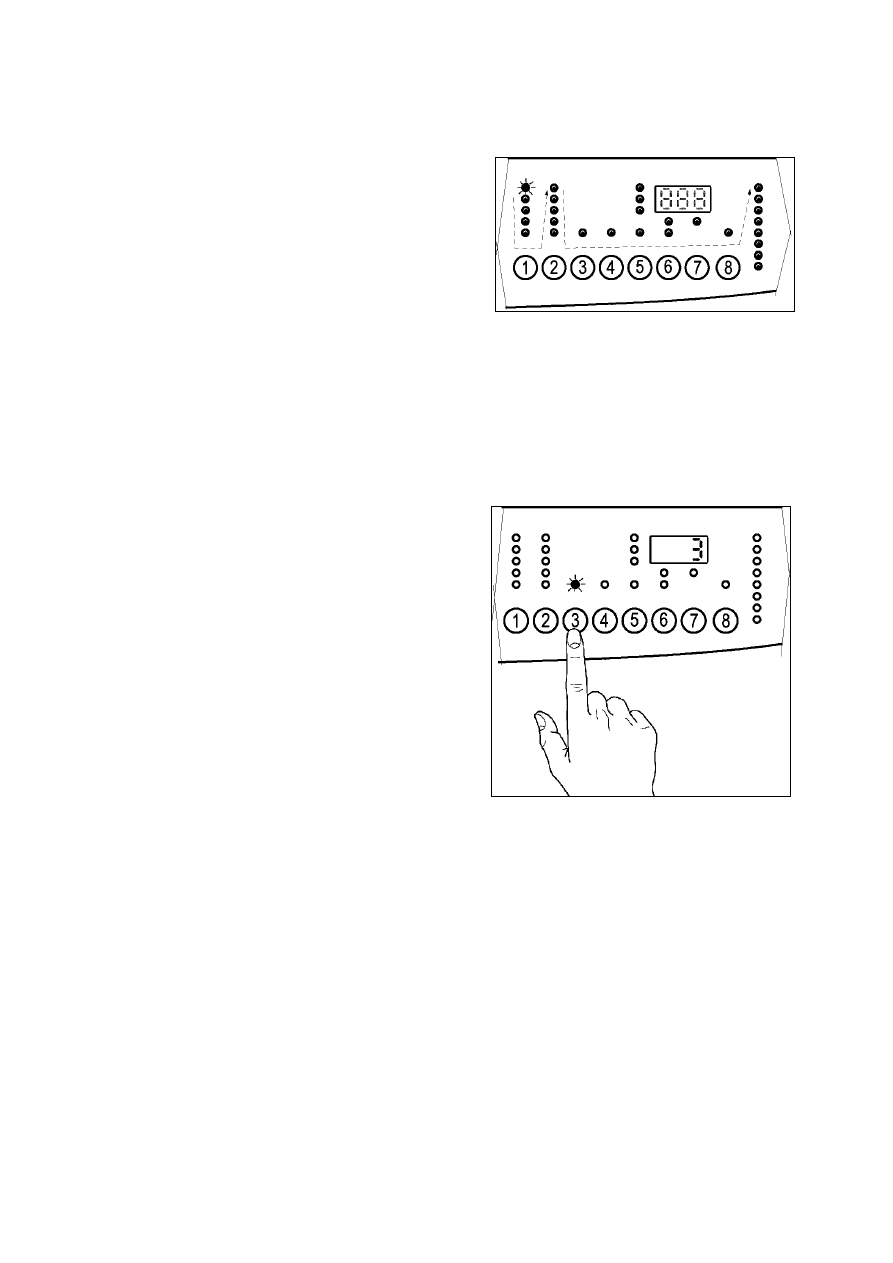
SOI/DT 2005-01 dmm
38
599 36 86 11
9.3.1 Display board diagnostics
After entering the diagnostics system, the display board is checked: all LEDs and the display light in
sequence (if featured).
Pressing all buttons, the corresponding LEDs switch on or
those closer; the display shows the hexadecimal code
corresponding to the button codification.
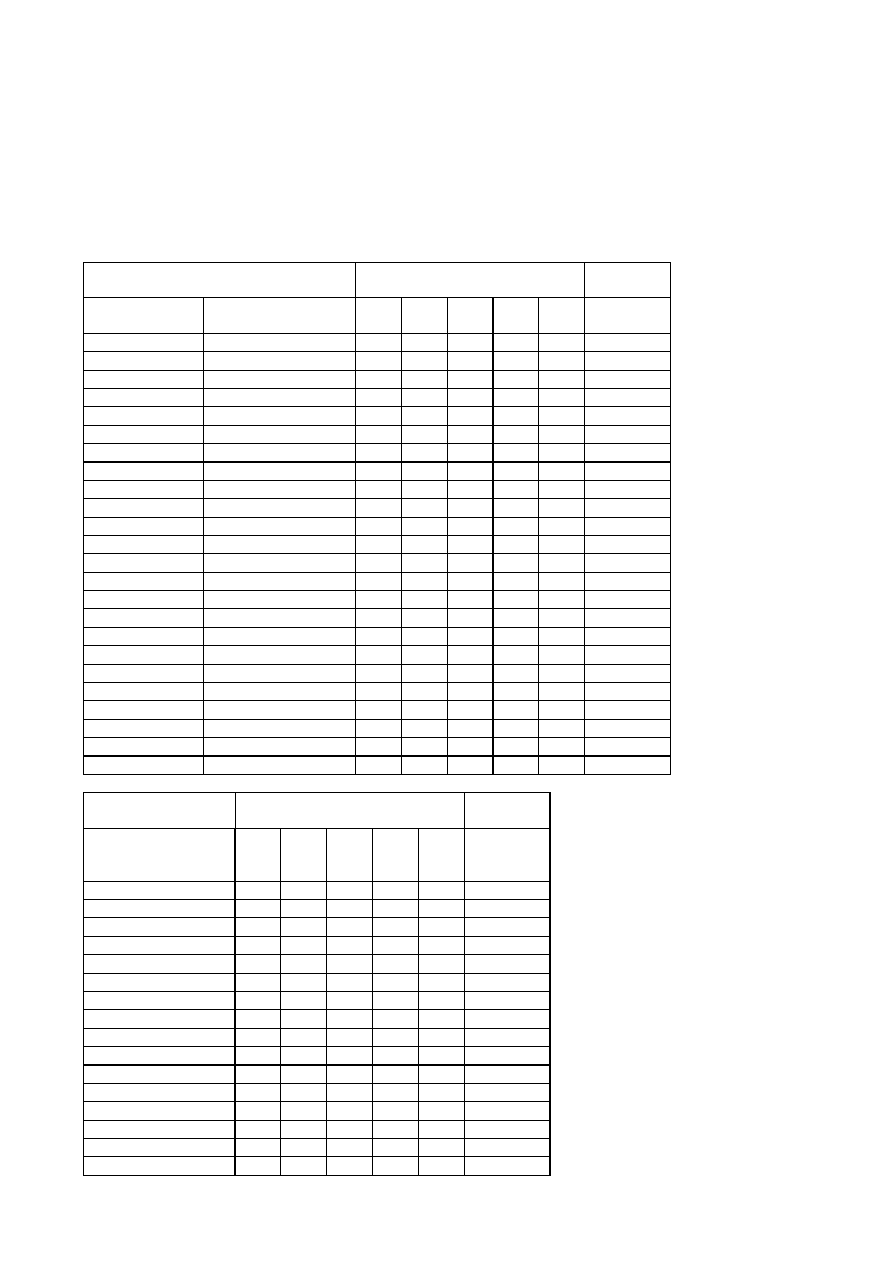
SOI/DT 2005-01 dmm
39
599 36 86 11
9.3.2 Programme
selector
In the table are indicated the closures between the contact
C6 (common) and the other contacts (C
1−C5) of the
programme selector in the different positions and the
corresponding codification. The code is displayed only in the
appliances with display.
Selector position
Closure of selector contacts
(C6 is the common)
Display
code
Type 24
positions
Type 12 positions
(C1 is not featured)
C1 C2 C3 C4 C5
1 - Cancel
1 - Cancel
0 1 1 1 1 1 E
2 2
0 1 0 0 1 0 6
3 -
0 1 1 0 0 1 4
4 3
0 1 0 1 0 0 C
5 -
0 1 1 1 0 1 C
6 4
0 0 0 1 1 0 A
7 -
1 0 0 0 0 0 1
8 -
1 0 0 0 1 0 3
9 -
1 0 0 1 0 0 9
10 5
0 1 0 1 1 0 E
11 6
0 0 1 0 1 1 2
12 -
1 0 0 1 1 0 b
13 -
1 0 1 0 0 1 1
14 7
0 0 1 1 0 1 8
15 -
1 0 1 0 1 1 3
16 8
0 0 1 1 1 1 A
17 -
1 0 1 1 0 1 9
18 -
1 0 1 1 1 1 b
19 -
1 1 0 0 0 0 5
20 9
0 1 1 0 1 1 6
21 -
0 0 0 0 1 0 2
22 10
0 1 0 0 0 0 4
23 11
0 0 0 1 0 0 8
24 12
0 0 1 0 0 1 0
Selector position
Closure of selector contacts
(C6 is the common)
Display
code
Type 16
Positions
(C1 is not featured)
C1 C2 C3 C4 C5
1 - Cancel
0 1 1 1 1 1 F
2
0 1 0 0 1 0 7
3
0 1 1 0 0 1 5
4
0 1 0 1 0 0 D
5
0 0 0 1 1 0 B
6
0 1 0 1 1 0 F
7
0 0 1 0 1 1 3
8
0 0 1 1 0 1 9
9
0 0 1 1 1 1 B
10
0 1 1 0 1 1 7
11
0 1 1 1 0 1 D
12
0 0 0 0 0 0 1
13
0 1 0 0 0 0 5
14
0 0 0 1 0 0 9
15
0 0 0 0 1 0 3
16
0 0 1 0 0 1 1
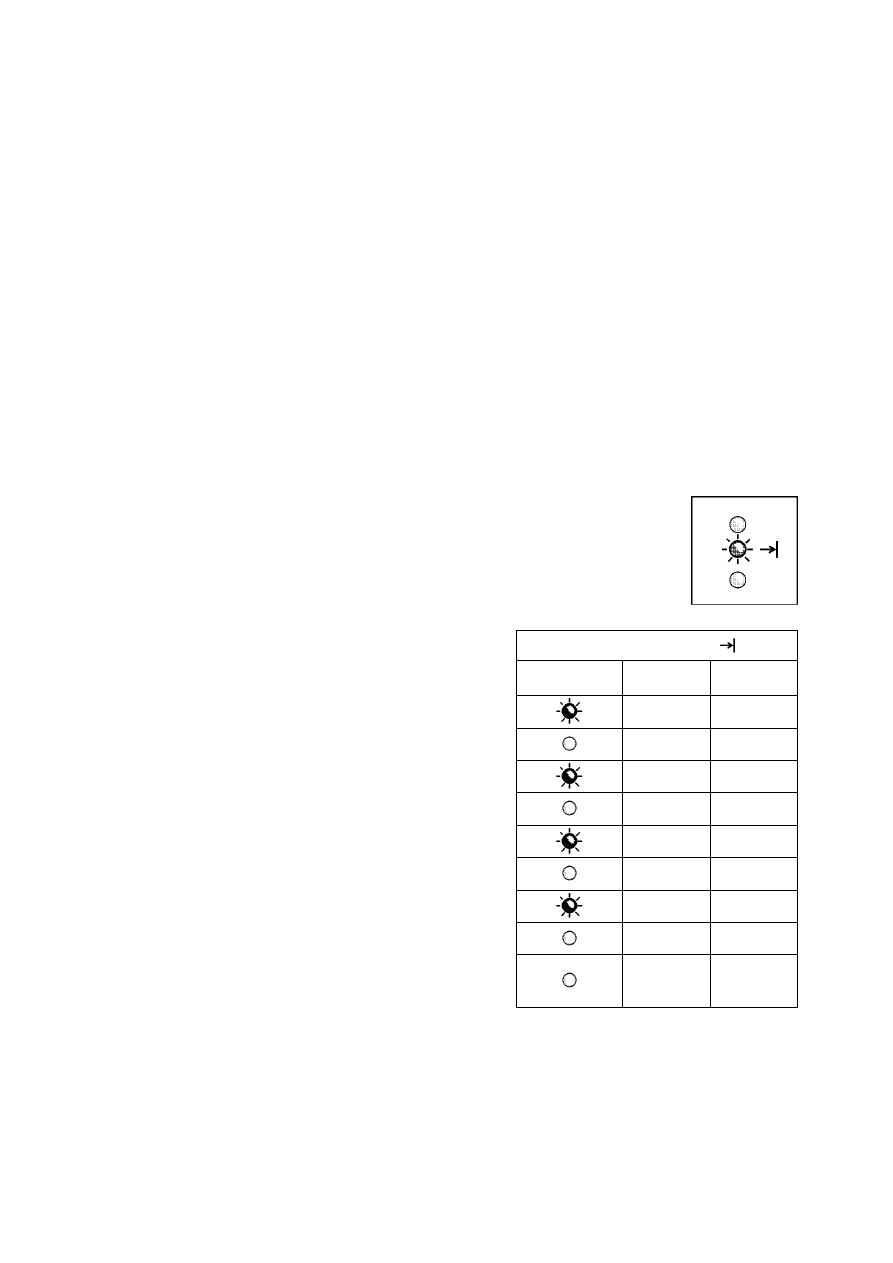
SOI/DT 2005-01 dmm
40
599 36 86 11
10 ALARMS
10.1 Displaying the alarms to the user
Control of the alarm system can be configured; according to the model, therefore, some or all of the alarms
may be displayed to the user.
Normally all the alarms are displayed to the user except for:
-
E61 (insufficient heating during the washing phase),
-
E83 (error in the reading of the selector)
The alarms are active during the execution of the washing programme; except for the alarms
relative to the configuration and power/frequency supply which are displayed also in the selection
phase.
The door can normally be opened (except where specified) when an alarm condition has occurred on
condition that:
• The level of the water in the tub is below 1st level
• The temperature of the water is lower than 55°C
Certain alarm conditions require that a drain phase be performed before the door can be opened:
• Cooling water fill if the temperature is in excess of 65°C
• Drain until closure of both pressure switch contacts (1st level and anti-boiling safety system) on
EMPTY within a maximum of 3 minutes.
10.1.1 Alarms displayed during normal operation
The type of alarm condition is displayed to the user by the repeated flashing of the END
OF CYCLE LED (0.4 seconds lit, 0.4 seconds off, with an interval of 2.5 seconds
between sequences). This LED is featured on ALL MODELS, though configured in
different positions.
LED end of cycle
On/Off
Time
(Sec.)
Value
0.4 1
0.4
0.4 2
0.4
0.4 3
0.4
0.4
4
0.4
If, for example, the user should forget to close the door, the
control system will detect alarm E41 about 15 seconds after the
start of the cycle; the cycle remains in PAUSE mode and the
display, if featured, would display E40.
Simultaneously the LED end-of-cycle flashes repeating the
sequence indicated in the table.
The four flashing indicate the first of the two digits of the alarm
E
4
1 (the alarms relative to a same function are grouped by
families).
In this case, once the door has been closed, it is sufficient to
press the start button to start the programme.
2.5
Pause
between
sequences
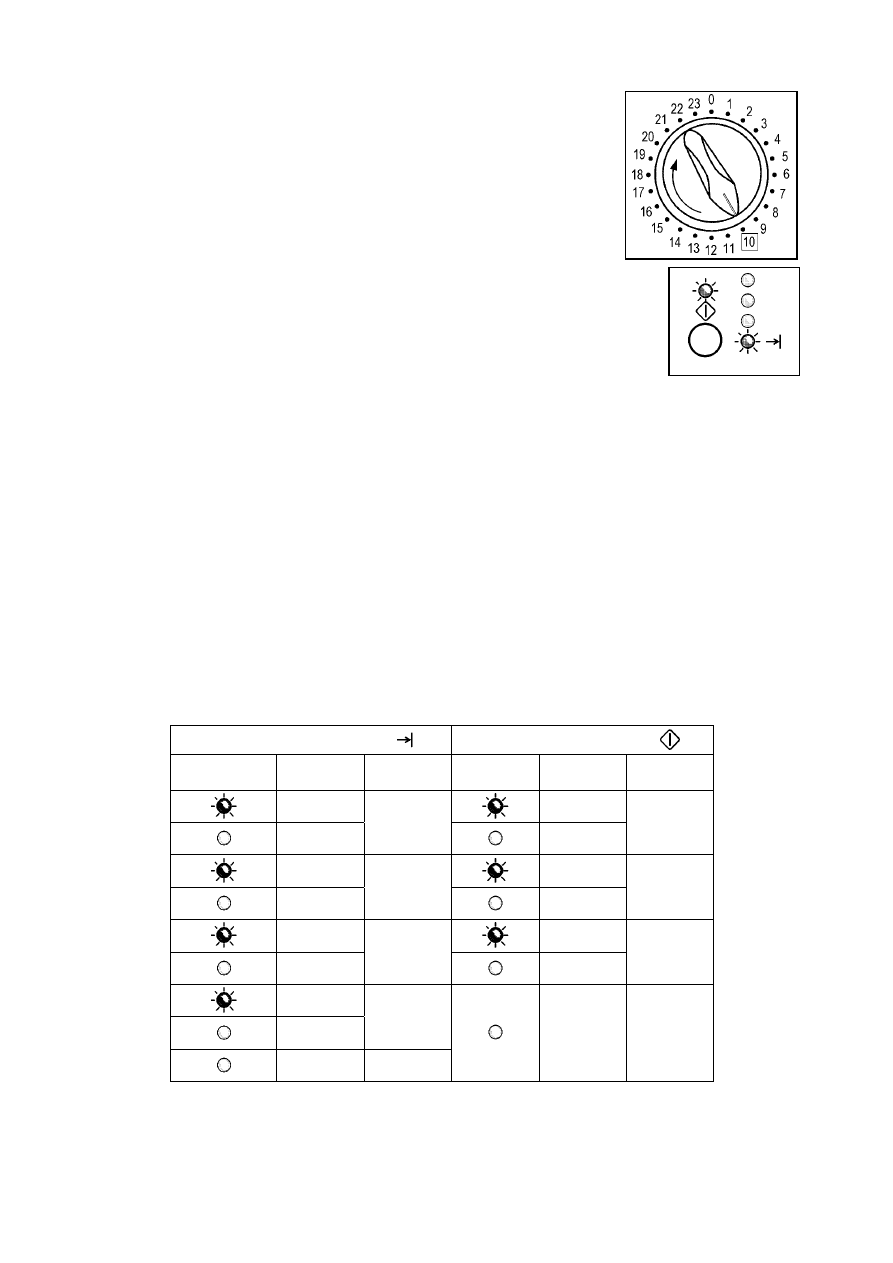
SOI/DT 2005-01 dmm
41
599 36 86 11
10.2 Reading the alarm codes
In order to read the last alarm code memorized in the EEPROM on the PCB:
• Enter diagnostics mode
• Irrespective of the type of PCB and configuration, turn the programme
selector clockwise to the tenth position.
10.2.1 Displaying the alarm
The alarm is displayed by a repeated flashing sequence of the two LEDs (0.4
seconds lit, 0.4 seconds off, with an interval of 2.5 seconds between
sequences).
The buzzer (if featured) will sound “bips” in synchronization with the flashing of
the LEDs.
• END OF CYCLE LED → indicates the first digit of the alarm code (family)
• START/PAUSE → indicates the second digit of the alarm code (number
within the family)
These two LEDs are featured on all models (though they are configured
differently), and flash simultaneously.
Notes:
• The first letter of the alarm code “E” (Error) is not displayed, since this letter is common to all alarm
codes.
• The alarm code “families” are shown in hexadecimal; in other words:
→ A is represented by 10 flashes
→ B is represented by 11 flashes
→ ...
→ F is represented by 15 flashes
• Configuration errors are shown by the flashing of a series of LEDs.
10.2.2 Examples of alarm displays
Example: Alarm E43 will display the following:
• On the display, if featured, E
4
3
• The sequence of four flashes of the End-of-cycle LED indicates the first number E
4
3;
• The sequence of three flashes of the Start/Pause LED indicates the second number E4
3
;
END-OF-CYCLE LED
START/PAUSE LED
On/Off
Time
(Sec.)
Value On/Off
Time
(Sec.)
Value
0.4
0.4
0.4
1
0.4
1
0.4
0.4
0.4
2
0.4
2
0.4
0.4
0.4
3
0.4
3
0.4
0.4
4
2.5 Pause
3,3 Pause
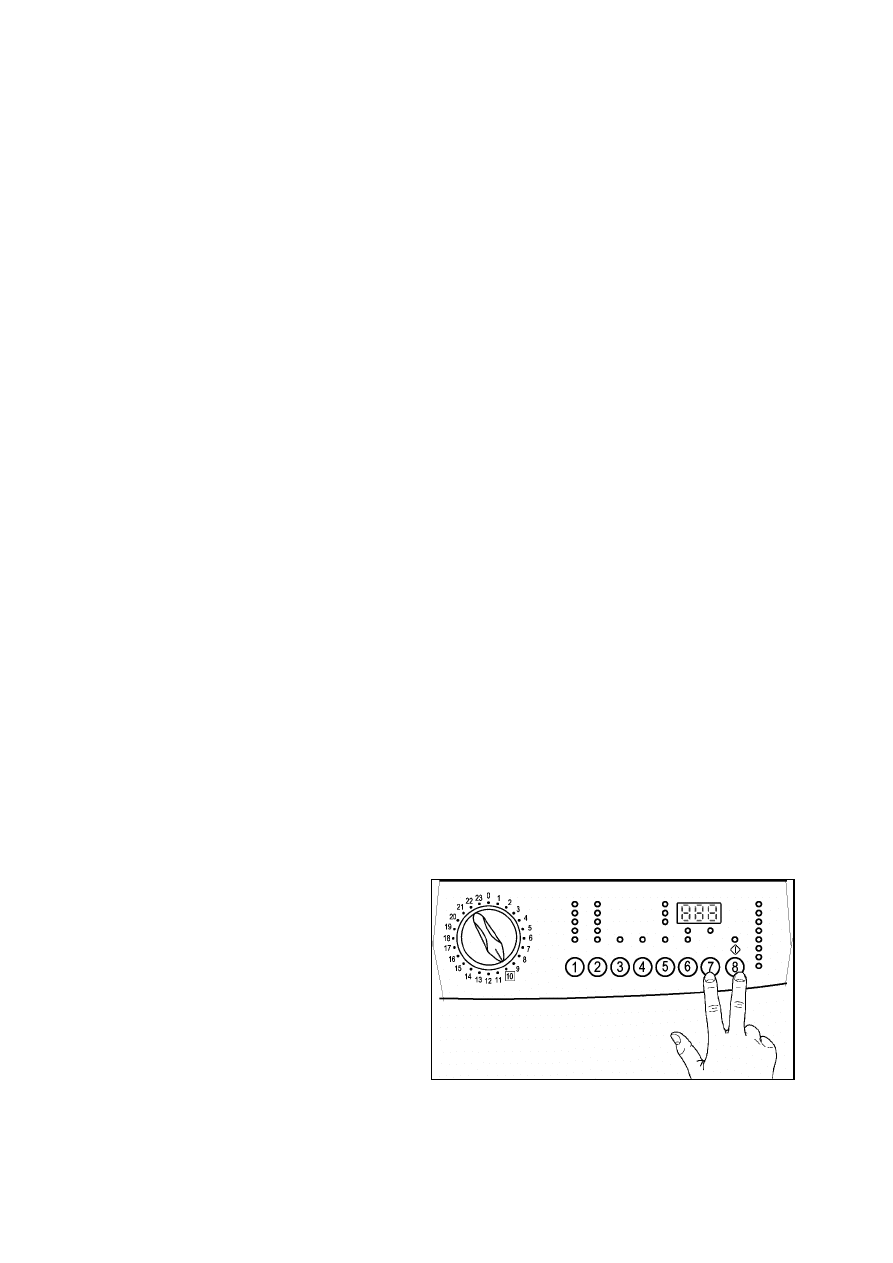
SOI/DT 2005-01 dmm
42
599 36 86 11
10.2.3 Operation of alarms during diagnostics
All alarms are enabled during the components diagnostics phase. Moving the selector to pass from one
control phase to the other, the appliance exits the alarm condition and performs the selected phase (if the
alarm does not occur again).
10.3 Notes about some alarms
Configuration alarms
ª
E91: the error is indicated by the flashing of all the LEDs, E90 is displayed on the display, if
featured
ª
E92: the error is indicated by the flashing of the LEDs placed over the buttons, E90 is displayed
on the display, if featured
ª
E93: the error is indicated by the flashing of the phase/warning LEDs, E90 is displayed on the
display, if featured
ª
EB1-EB2-EB3 alarms: in case of problems with the power supply, the machine remains in alarm
condition till the frequency or the power supply voltage returns to correct values or the appliance
is switched off. “EB0” alarm family is displayed and it is not possible to enter the diagnostics or to
use “alarm fast display” mode: the alarm complete can be read only when the abnormal situation
terminated.
E51- E52 alarms: during the diagnostics test all alarms are displayed: normally, moving the selector to
pass from one control phase to the other, the appliance exits the alarm condition and performs the
selected phase. This does not happen for the E51 alarms (motor power triac short-circuited) and E52
(no signal of motor tachimetric generator): the only possibility to exit from the alarm condition is to
switch the appliance off.
10.4 Rapid reading of alarm codes
The last alarm code can be displayed even if the programme selector is not in the tenth position
(diagnostics) or if the appliance is in normal operating mode (e.g. during the execution of the washing
programme):
ª
Press and hold down START/PAUSE and the option button nearest to the START/PAUSE button for at
least two seconds: the LEDs initially switch off, and then display the flashing sequence corresponding
to the alarm; if the display is featured, it will display the alarm code
ª
The alarm sequence is displayed for the time in which the buttons are hold down
ª
The reading system is the same as that indicated in paragraph. 10.2
ª
During the time the alarm is displayed, the appliance continues to perform the cycle or, if it is in the
selection phase, it keeps in memory the options previously chosen.
10.5 Cancelling the last alarm
It is good practice to cancel the last alarm, after reading the alarm code to check whether the alarm re-
occurs during the diagnostics control after the reparation of the appliance.
1. Select diagnostics mode and turn the
programme selector to the tenth position
(reading of alarm)
2. Press and hold down START/PAUSE and any
of the option buttons at the same time for
two seconds.
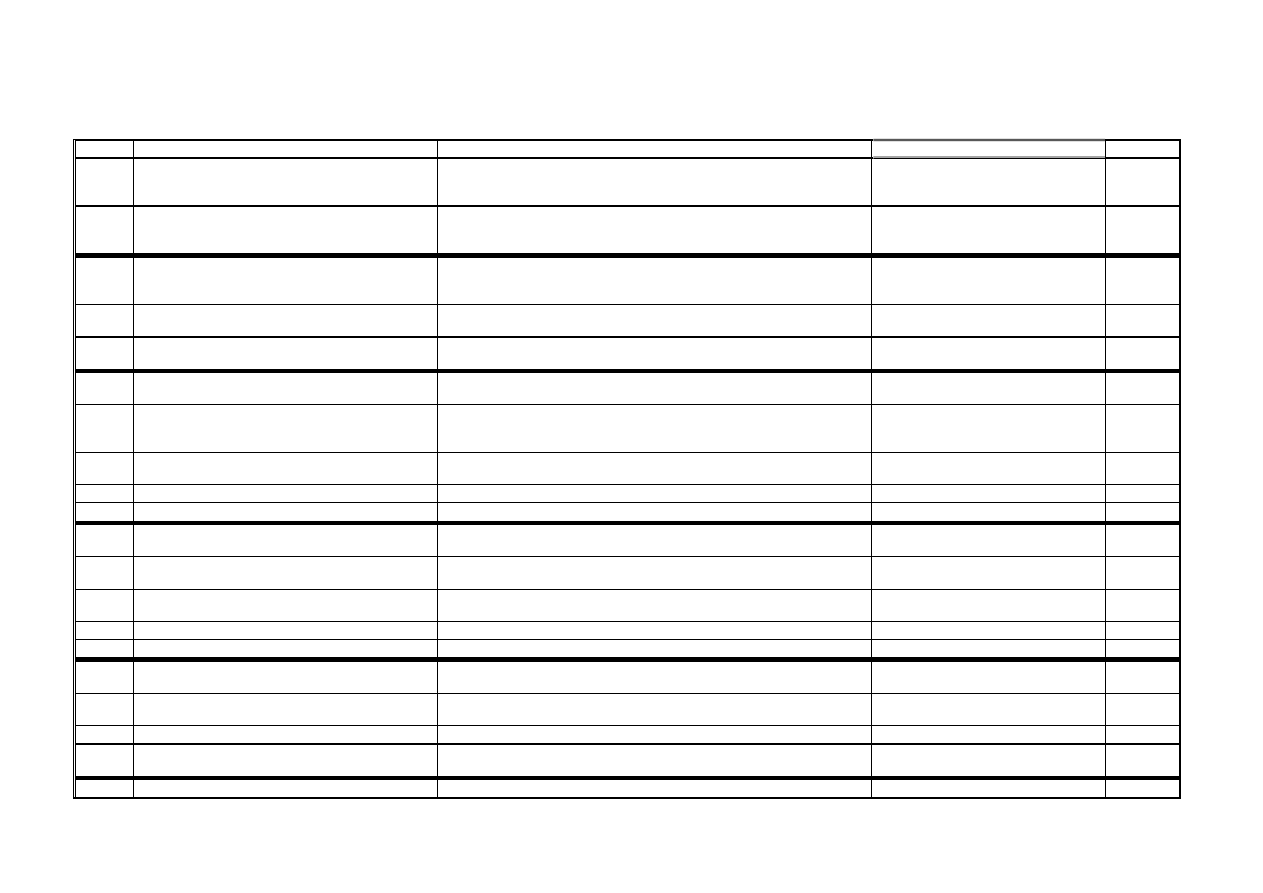
SOI/DT 2005-01dmm
43
599 36 86 11
10.6 Table of alarm codes
Alarm
Description
Possible fault
Action/machine status
Reset
E11
Difficulties in water fill for washing
Tap closed or mains pressure insufficient; drain hose incorrectly
positioned; water fill solenoid faulty; leaks from the hydraulic circuit of
the pressure switch; pressure switch faulty; wiring faulty; PCB faulty.
Cycle paused with door closed
Start
E13
Water leakage
Drain hose incorrectly positioned; mains pressure insufficient; water fill
solenoid faulty; leakage/blockage of pressure switch hydraulic circuit;
pressure switch faulty.
Cycle paused with door closed
Start
E21
Difficulties in draining
Drain hose kinked/blocked/incorrectly positioned; drain filter
blocked/dirty; drain pump faulty; wiring faulty; PCB faulty; current
leakage from heating element to ground.
Cycle paused
Start
E23
Drain pump triac faulty
Drain pump faulty; wiring faulty; PCB faulty.
Safety drain cycle – Cycle stopped
with door open
OFF
E24
Fault in “sensing” circuit of drain pump triac PCB faulty.
Safety drain cycle – Cycle stopped
with door released
OFF
E33
Incongruence between closure of anti-boiling
and 1st level pressure switch contacts
Pressure switch faulty; current leakage from heating element to ground;
heating element; wiring faulty; PCB faulty.
Safety drain cycle – Cycle stopped
with door open
OFF/reset
E35
Water overflow (flooding)
Water fill solenoid faulty; leakage from pressure switch hydraulic circuit;
pressure switch faulty; wiring faulty; PCB faulty.
Cycle blocked. Safety drain cycle.
Drain pump always in operation (5
minutes on, 5 minutes off etc.)
OFF/reset
E36
Fault in “sensing” circuit of anti-boiling
pressure switch
PCB faulty.
Cycle blocked, door locked.
OFF/reset
E37
1st level sensing circuit faulty
PCB faulty.
Cycle blocked, door locked.
OFF/reset
E39
“HV” sensor of anti-overflow level faulty
PCB faulty.
Cycle blocked, door locked.
OFF/reset
E41
Door open
Door interlock faulty; wiring faulty;
PCB faulty.
Cycle paused
Start
E42
Problems of door closure
Door interlock faulty; wiring faulty;
PCB faulty.
Cycle paused
Start
E43
Interlock power supply triac faulty
Door interlock faulty; wiring faulty;
PCB faulty.
(Safety drain cycle) Cycle blocked
OFF
E44
Door interlock sensor faulty
PCB faulty.
(Safety drain cycle) Cycle blocked
OFF
E45
Door interlock sensing circuit triac faulty
PCB faulty
(Safety drain cycle) Cycle blocked
OFF
E51
Motor power supply triac short-circuited
PCB faulty; current leakage from motor or from wiring.
Cycle blocked, door locked (after 5
attempts)
OFF/reset
E52
No signal from motor tachometric generator Motor faulty; wiring faulty; PCB faulty
Cycle blocked, door locked (after 5
attempts)
OFF/reset
E53
Motor triac sensing circuit faulty
PCB faulty.
Cycle blocked, door locked
OFF
E54
Motor relay contacts sticking
PCB faulty; current leakage from motor or from wiring
Cycle blocked, door locked (after 5
attempts)
OFF
E61
Insufficient heating during washing
NTC sensor faulty; heating element faulty; wiring faulty; PCB faulty.
The heating phase is skipped
---
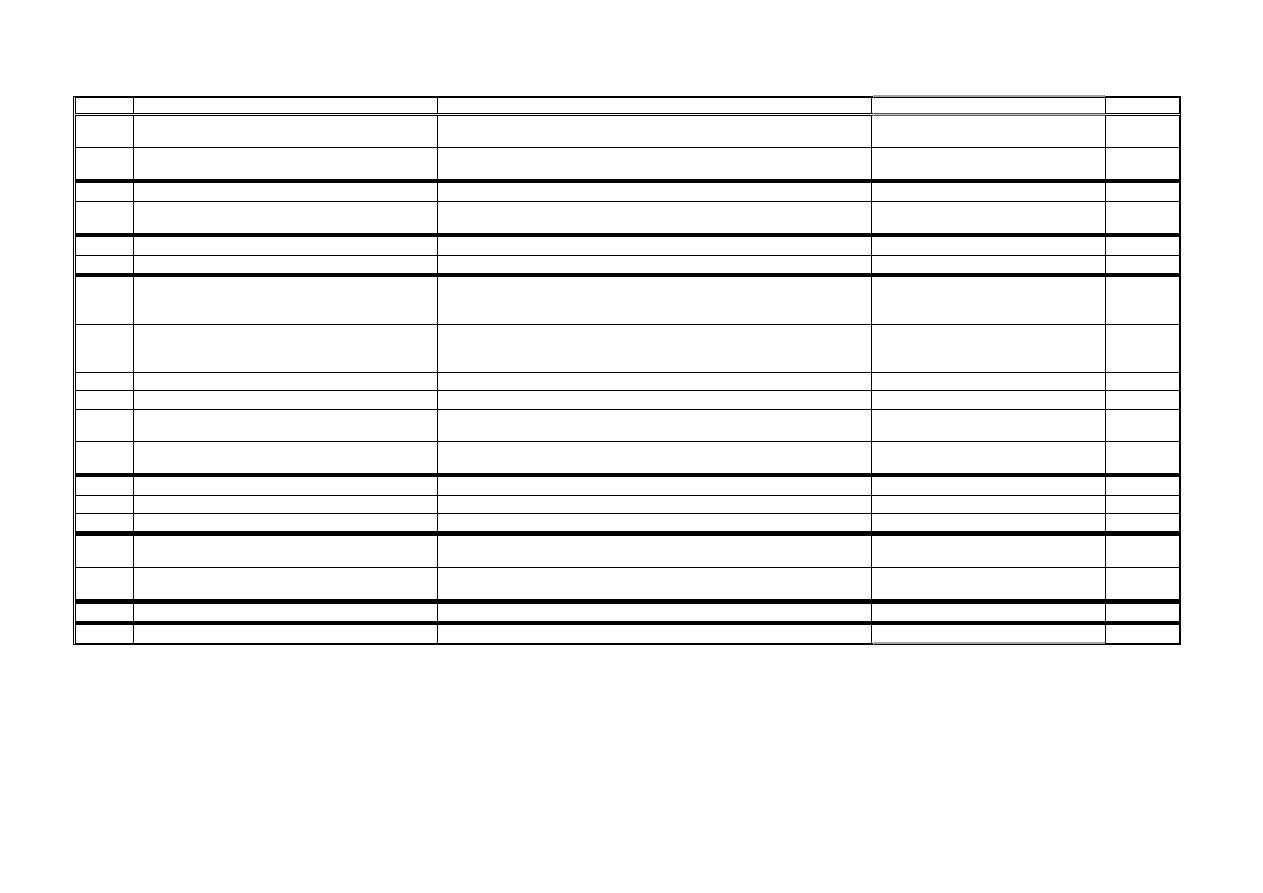
SOI/DT 2005-01dmm
44
599 36 86 11
Alarm
Description
Possible fault
Action/machine status
Reset
E62
Overheating during washing
NTC sensor faulty; heating element faulty; wiring faulty; PCB faulty.
Safety drain cycle – Cycle stopped
with door open
OFF
E66
Heating element power relay faulty
PCB faulty; current leakage from heating element to ground.
Safety drain cycle – Cycle stopped
with door open
OFF
E71
Washing NTC sensor faulty
NTC sensor faulty; wiring faulty; PCB faulty.
The heating phase is skipped
Start
E74
Washing NTC-sensor badly positioned
NTC sensor badly positioned; NTC sensor faulty; wiring faulty; PCB
faulty.
The heating phase is skipped
Start
E82
Error in selector reset position
PCB faulty (Wrong configuration data). Selector, wiring
---
OFF/reset
E83
Error in reading selector
PCB faulty (Wrong configuration data). Selector, wiring
Cycle cancelled
---
E91
Communication incongruence between main
PCB- display board
(versions not compatible)
Wiring faulty; Faulty control/display board
Main PCB faulty.
Cycle interrupted
---
E92
Communication incongruence between main
PCB- display board
(versions not compatible)
Wrong control/display board;
Wrong PCB (do not correspond to the model).
Cycle interrupted
---
E93
Incorrect configuration of appliance
Incorrect configuration data; PCB faulty.
Cycle interrupted
OFF/reset
E94
Incorrect configuration of washing cycle
Incorrect configuration data; PCB faulty.
Cycle interrupted
OFF/reset
E95
Communication error between microprocessor
and EEPROM
PCB faulty.
Cycle interrupted
OFF/reset
E97
Incongruence between programme selector
and cycle configuration
Faulty PCB (Wrong configuration data).
Cycle interrupted
OFF/reset
EB1
Frequency of appliance incorrect
Power supply problems (incorrect / disturbance); PCB faulty.
Cycle interrupted
---
EB2
Voltage too high
Power supply problems (incorrect / disturbance); PCB faulty.
Cycle interrupted
---
EB3
Voltage too low
Power supply problems (incorrect / disturbance); PCB faulty.
Cycle interrupted
---
EF1
Drain filter blocked
(too long drain phase)
Drain tube blocked/kinked/too high;
Drain filter dirty/blocked.
Warning displayed at the end of cycle
(specific LED)
---
EF2
Overdosing of detergent
(too much foam during drain phases)
Excessive detergent dosing; drain tube kinked/blocked;
Drain filter dirty/blocked.
(specific LED)
---
EF3
Control water intervention
Water leakage on the base; faulty water control device.
Water drain and cycle blocked
OFF/reset
E00
No alarm
--- ---
---
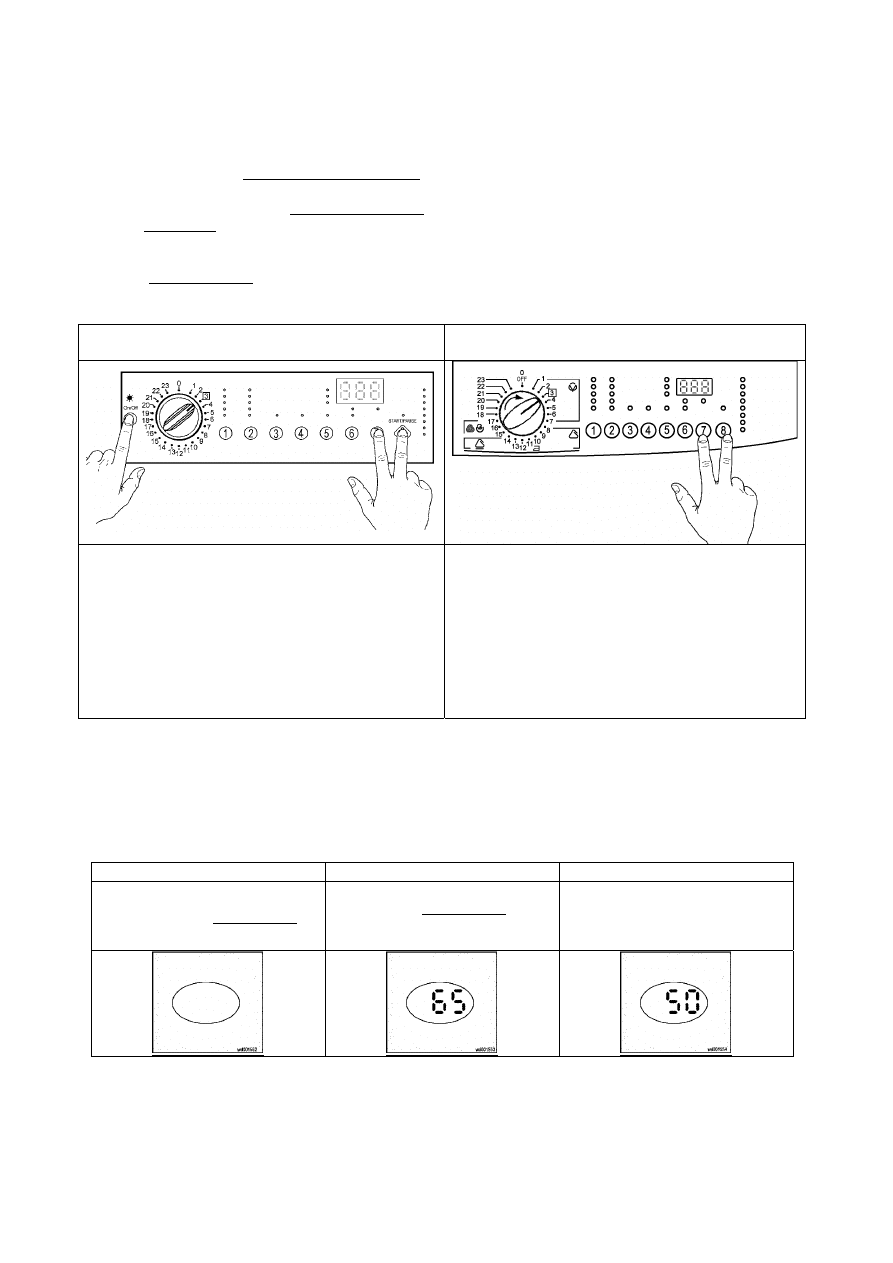
SOI/DT 2005-01-dmm
45/49
599 36 86-11
11 Operating time counter
It is possible to display, with a specific procedure, the operating time of the appliance, which is counted
from the first switching on.
This option is available only in models with display. The maximum memorization capacity is 6550 operating
hours.
Only the operating time of normal programmes is displayed (not diagnostics cycles)
The actual time of the cycle performed is counted (not the pauses, the delayed start time, rinse hold
and the soak phases)
The memorization is 30 seconds for each programme
Only operating hours are displayed (1h and 59min = 1h)
11.1.1 Operating time reading
Version with ON/OFF button
Version with ON/OFF button incorporated in the
selector
1. Reset the set programme and switch the
appliance off.
2. Rotate the programme selector of three
positions clockwise.
3. Press
the
start/pause (8) and anyone of the
option buttons simultaneously and then, holding
the buttons down, switch the appliance on
with the ON/OFF button (on/off)
4. Keep the start/pause and option buttons down
till the LEDs start flashing (about 5 seconds).
1. Cancel the set programme and switch the
appliance off.
2. Press
the
start/pause (8) and anyone of the
option buttons simultaneously and then, holding
the buttons down, switch the appliance on
rotating the programme selector of three
positions clockwise.
3. Keep the start/pause and option buttons down
till the LEDs start flashing (about 5 seconds).
11.1.2 Displaying the operating time
The operating time is displayed two digits at a time: the first pair of digits shows the thousands and
hundreds; the second pair shows tens and units.
For example, a total operating time of 6,550 hours will be displayed as follows:
1
→ 2
→ 3
→
Blank display for two seconds
The first pair of digits is
displayed for two seconds:
- thousands (6)
- hundreds (5)
The second pair of two digits is
displayed for two seconds:
- tens (5)
- units (0)
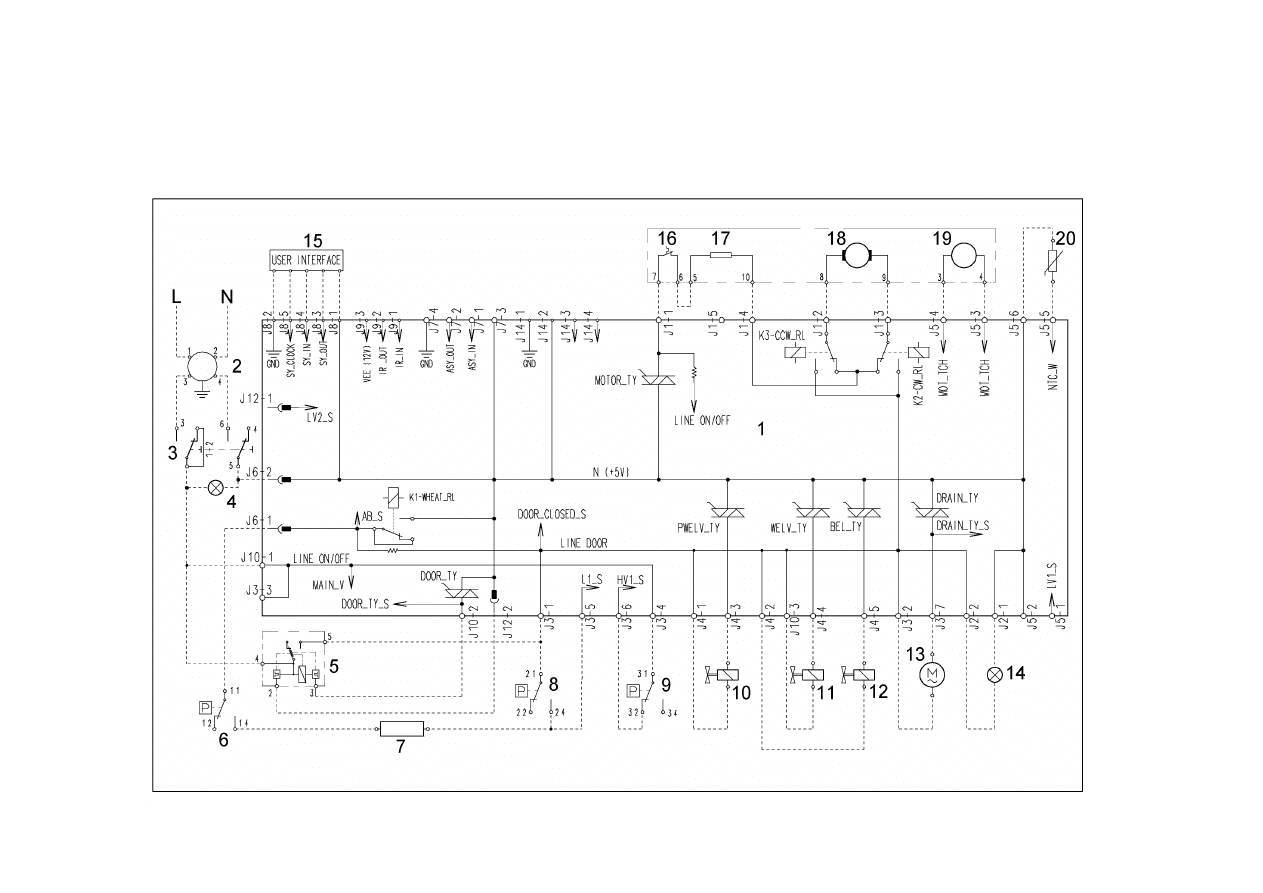
SOI/DT 2005 01 dmm
46/49
599 36 86 11
12 BASIC CIRCUIT DIAGRAM
12.1 Diagram (without aqua control)
SOI/DT 2005 01 dmm
47/49
599 36 86 11
12.1.1 Key to circuit diagram
Components in the appliance
Components of the PCB
1. Electronic
board
2. Suppressor
3. ON/OFF
switch
4. ON/OFF pilot lamp
5. Door
interlock
6. Anti-boiling pressure switch
7. Heating
element
8. 1st level pressure switch
9. Anti-overflow pressure switch (not all models)
10. Pre-wash solenoid valve
11. Wash solenoid valve
12. Bleach solenoid valve (not all models)
13. Drain pump
14. Closed door lamp (not all models)
15. Control/display board
16. Thermal cut-out (motor)
17. Stator (motor)
18. Rotor (motor)
19. Tachometric generator (motor)
20. NTC temperature sensor
BELV_TY Bleach
solenoid
Triac
DOOR_TY
Door interlock Triac
DRAIN_TY
Drain pump Triac
K1
Heating element relay
K2
Motor relay: clockwise rotation
K3
Motor relay: anti-clockwise rotation
K4
Motor relay: half field power supply (models with higher spin at
1200 rpm)
MOTOR_TY
Motor Triac
PWELW_TY
Pre-wash solenoid Triac
Serial interface
Asynchronous serial interface
WELV_TY
Wash solenoid Triac
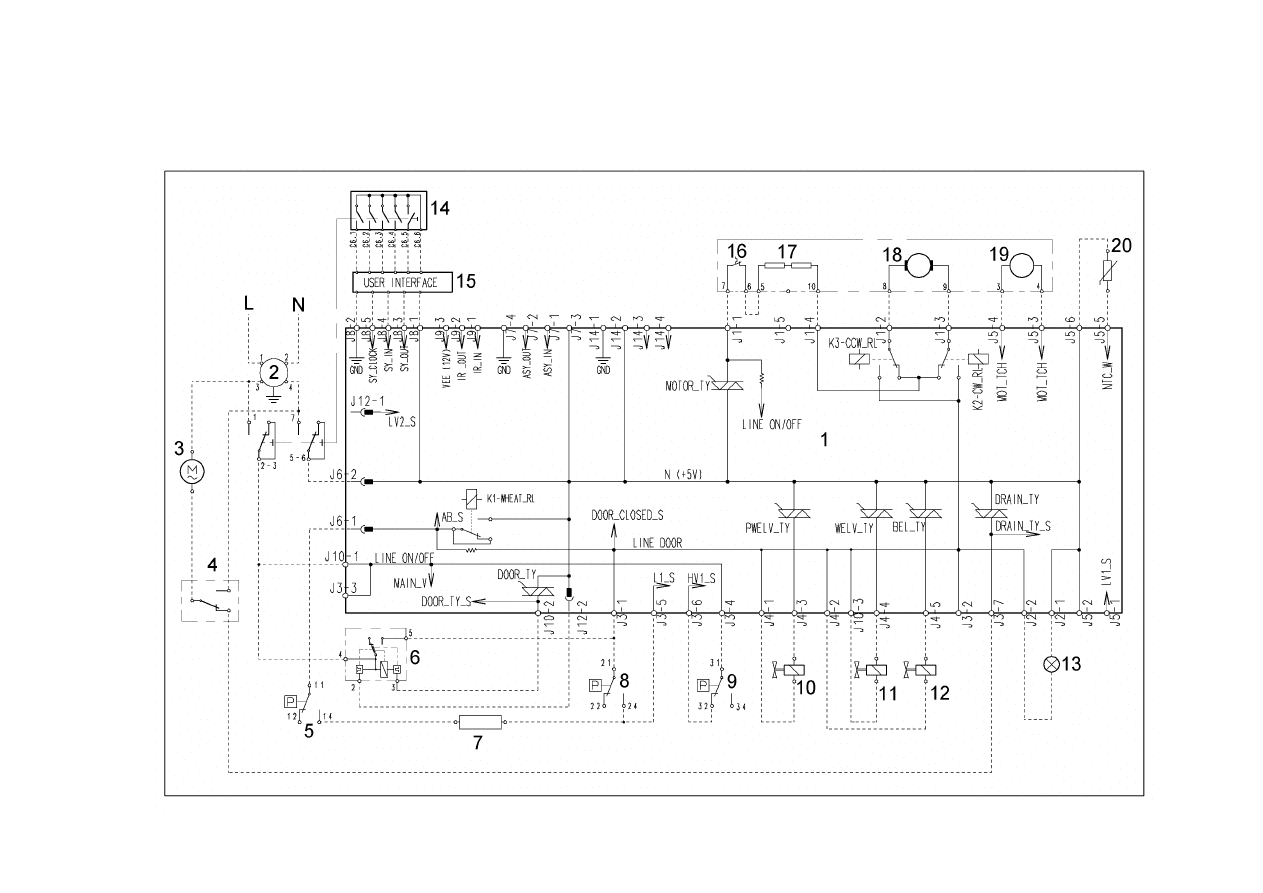
SOI/DT 2005 01 dmm
48/49
599 36 86 11
12.2 Diagram (with aqua control)

SOI/DT 2005 01 dmm
49/49
599 36 86 11
12.2.1 Key to circuit diagram
Components in the appliance
Components of the PCB
1. Electronic
board
2. Suppressor
3. Drain
pump
4. Aqua
control
5. Anti-boiling pressure switch
6. Door
interlock
7. Heating
element
8. 1st level pressure switch
9. Anti-overflow pressure switch (not all models)
10. Pre-wash solenoid valve
11. Wash solenoid valve
12. Bleach solenoid valve (not all models)
13. Closed door lamp (not all models)
14. Selector
15. Control/display board
16. Thermal cut-out (motor)
17. Stator (motor)
18. Rotor (motor)
19. Tachometric generator (motor)
20. NTC temperature sensor
BELV_TY Bleach
solenoid
Triac
DOOR_TY
Door interlock Triac
DRAIN_TY
Drain pump Triac
K1
Heating element relay
K2
Motor relay: clockwise rotation
K3
Motor relay: anti-clockwise rotation
K4
Motor relay: half field power supply (models with higher spin at
1200 rpm)
MOTOR_TY
Motor Triac
PWELW_TY
Pre-wash solenoid Triac
Serial interface
Asynchronous serial interface
WELV_TY
Wash solenoid Triac
Wyszukiwarka
Podobne podstrony:
1040
1040
1040
1040
Apokryfy - Ewangelia wg Tomasza, Ewangelia Filipa (EwF) (fragmenty)
Apokryfy Nowego Testamentu, Logion Freera, Ewangelia Filipa (EwF) (fragmenty)
FUCHS AGRIFARM STOU 1040 MC V
Apokryfy Nowego Testamentu, Ew. Tomasza, Ewangelia Filipa (EwF) (fragmenty)
UMYSŁ, A OXY654, Ewangelia Filipa (EwF) (fragmenty)
Casio 1040
Elektrolux EWF
UMYSŁ, A FREER, Ewangelia Filipa (EwF) (fragmenty)
UMYSŁ, A OXY655, Ewangelia Filipa (EwF) (fragmenty)
1040
1040
więcej podobnych podstron