Certified LabVIEW Associate Developer Sample Exam 1
Test Booklet
Note: The use of the computer or any reference materials is NOT allowed during the exam.
Instructions:
Please do not detach the binding staple of any section. If any part of the exam paper is missing
or detached when returned to National Instruments, you will be deemed to have failed the
exam.
Please follow the instructions on the Answer Sheet. If you fill in your Candidate ID incorrectly, your
test will be invalidated.
Indicate ALL answers on the Answer Sheet. Answers recorded in this test booklet will NOT be
evaluated.
Please do not ask the proctor for help answering questions.
This examination may not be taken from the examination area or reproduced in any way. You may
not keep any portion of this exam after you have completed it.
Exam Details:
Time allocated: 1 hour
Type of exam items: Multiple choice
Number of exam items: 40 questions
Passing Grade: 70%
IMPORTANT: When you have completed this exam, place it in the provided envelope with you
answer sheet and SEAL the envelope. Give the sealed envelope to your proctor.

Answer Sheet:
To quickly check your answers against the solutions in the Solutions Section, record your answers on this Answers Sheet.
Detach this page and record your answers as you go along. This page is not included in the actual CLAD exam; it is
included here for practice purposes only. The Solutions Section is at the end of the Sample Exam.
1. _____
2. _____
3. _____
4. _____
5. _____
6. _____
7. _____
8. _____
9. _____
10. _____
11. _____
12. _____
13. _____
14. _____
15. _____
16. _____
17. _____
18. _____
19. _____
20. _____
21. _____
22. _____
23. _____
24. _____
25. _____
26. _____
27. _____
28. _____
29. _____
30. _____
31. _____
32. _____
33. _____
34. _____
35. _____
36. _____
37. _____
38. _____
39. _____
40. _____
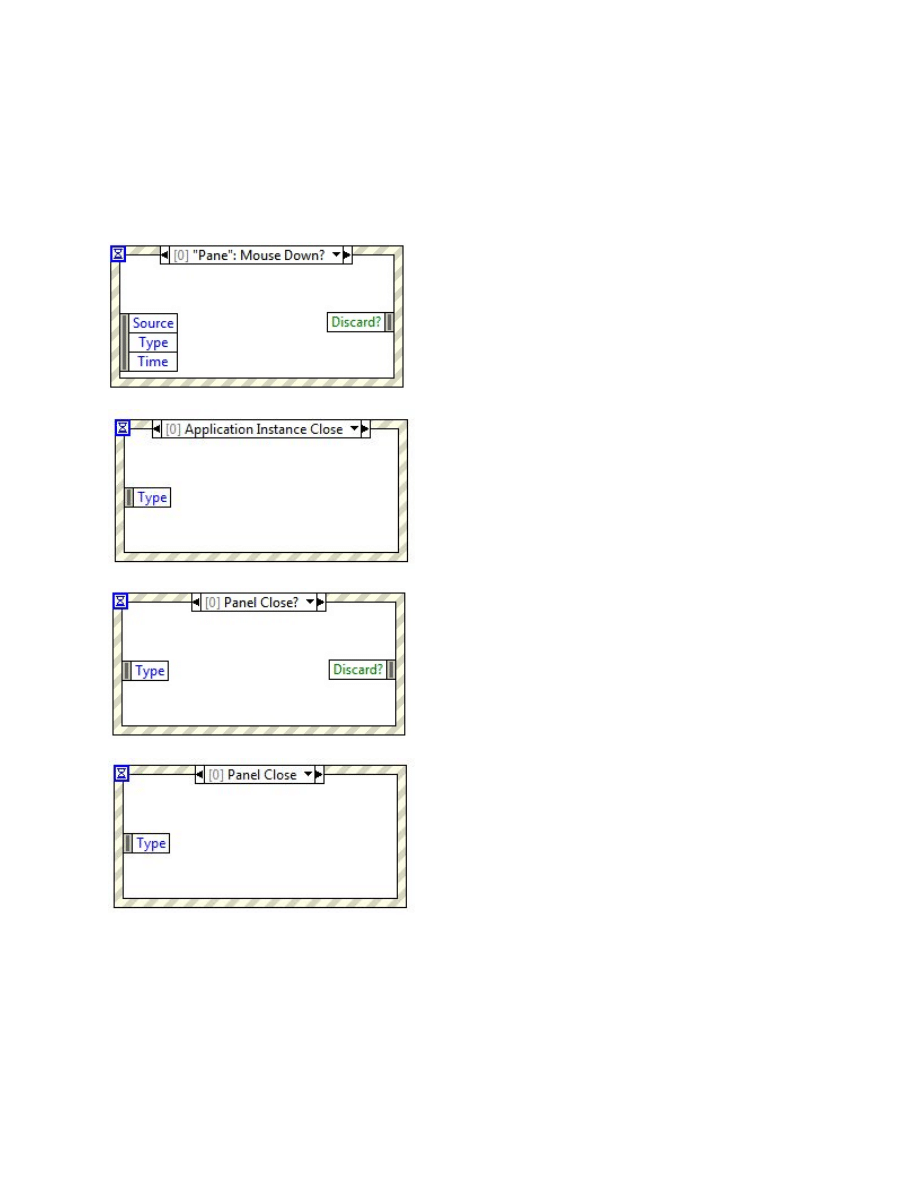
Q1:
You must include the option to cancel when a user attempts to interactively close the front panel by
selecting File>>Close.
Which Event case allows this functionality?
A
B
C
D
Q2:
You must generate code that responds to multiple value change events using a Boolean control
while maintaining a latching mechanical action.
Which programming step is NOT required?
A
Including or reading the Boolean control terminal in a loop
B
Including the Event Structure within a loop
C
Configuring a Timeout case within the Event Structure
D
Configuring a Value Change event case for the Boolean control
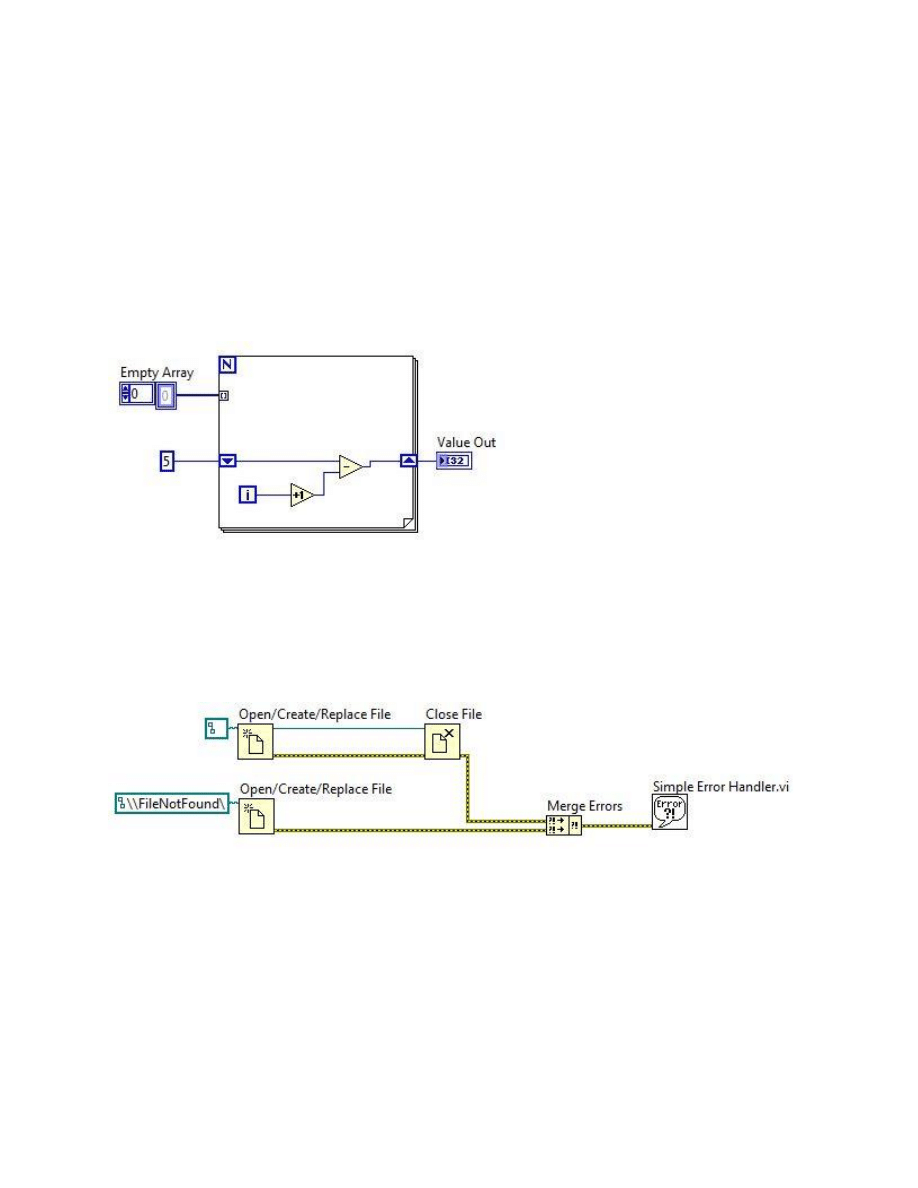
Q3:
What value is displayed in the Value Out indicator after the VI completes execution?
A
0
B
4
C
5
D
6
Q4:
How many errors does LabVIEW display at the end of execution?
A
No Errors
B
One Error
C
Two Errors
D
Three Errors
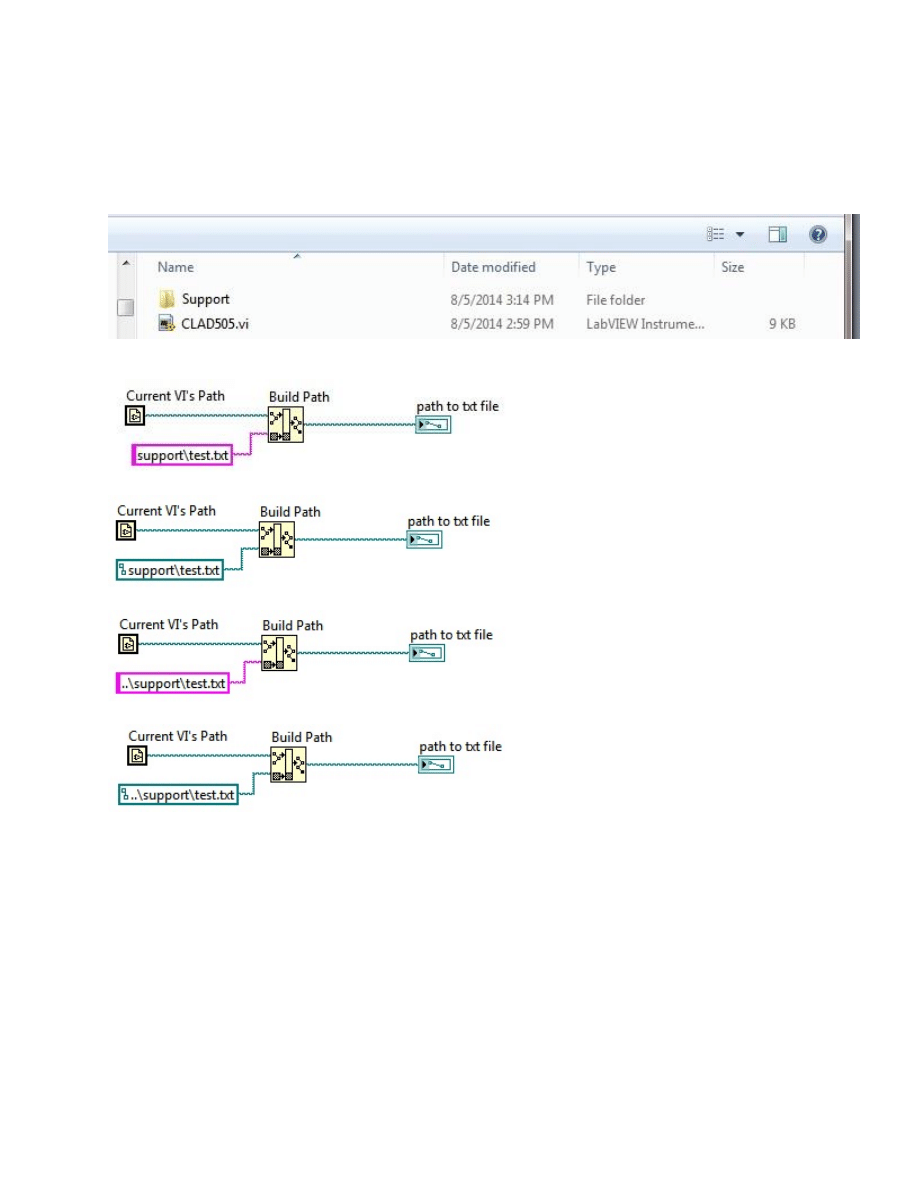
Q5:
You have been asked to write a VI called CLAD505 that will generate a path to test.txt. This txt file
is in a folder called CLAD505_Support, and the folder is next to your VI. The VI must run on multiple
platforms (Windows, Linux, etc.).
Which diagram best illustrates how you should write the VI?
A
B
C
D
Q6:
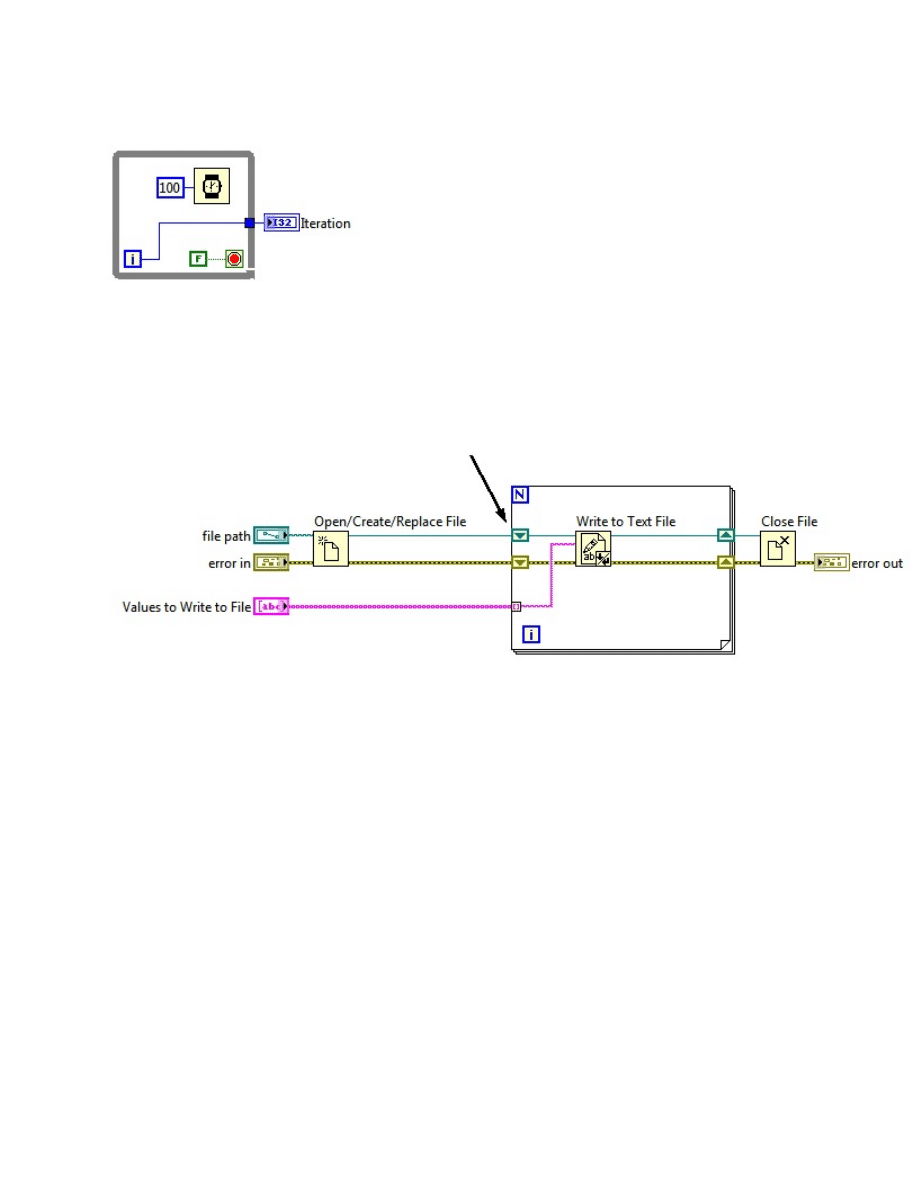
Which of the following statements is TRUE about the following code segment?
A
The loop will execute once and the indicator Iteration will have a value of one
B
The loop will execute once and the indicator Iteration will have a value of zero
C
The loop will execute continuously and the program will have to be aborted
D
The loop will not execute and the indicator Iteration will have a value of zero
Q7:
Why is a shift register used for the file refnum input on the For Loop?
A
If the Values to Write to File array is empty, the For Loop will run zero times, but the refnum
value will be passed through to the shift register output
B
The Write to Text File function modifies the value of the refnum on each For Loop iteration
C
It is the only way to prevent the For Loop from building an array at the refnum output terminal
D
No reason. A regular tunnel would provide identical functionality to the shift register
Q8:
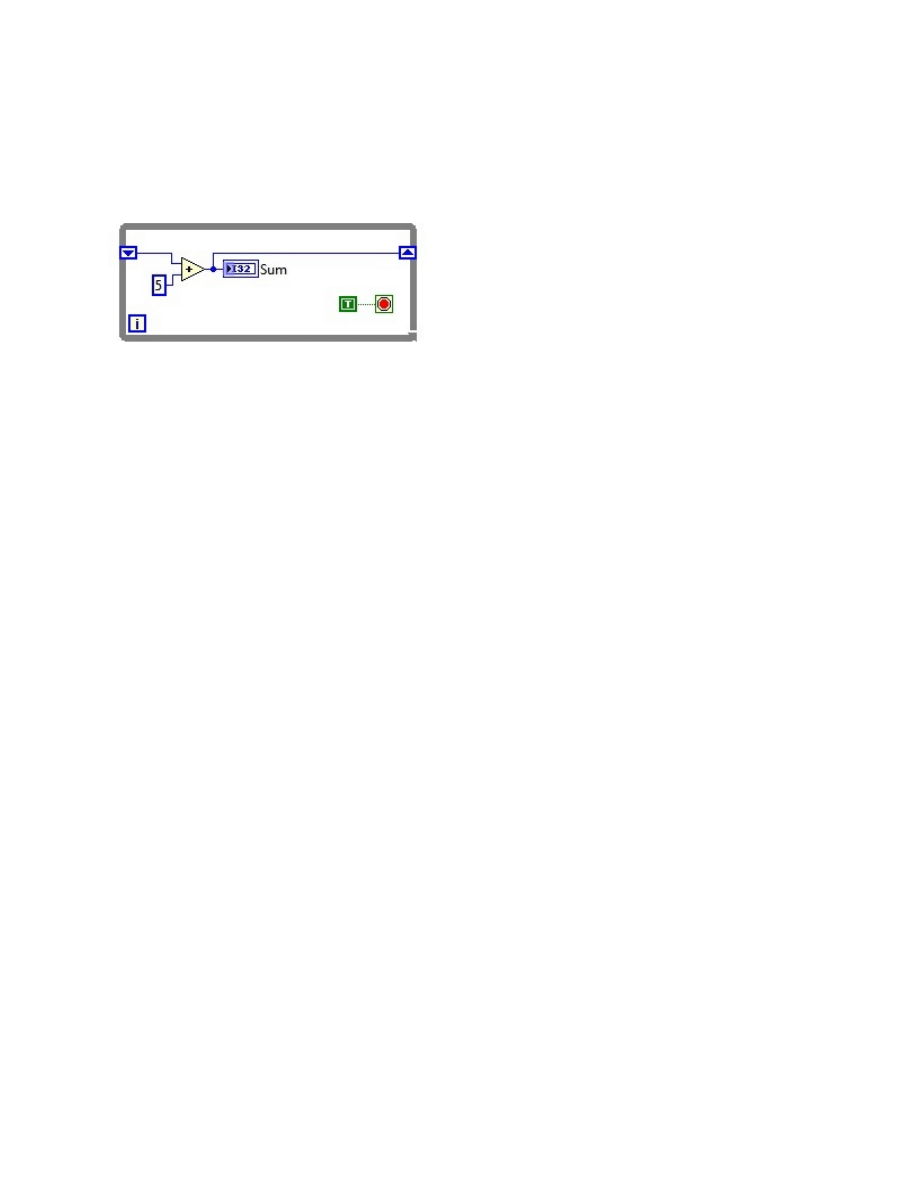
The following SubVI is loaded into memory and then run. At some later time it is still in memory and
is run a second time.
What is the value is displayed in the Sum indicator when the SubVI completes execution the second time
it is run?
A
5
B
10
C
There is no way to know
D
0
Q9:
Which of the following is FALSE about File I/O using binary or TDMS file formats?
A
Binary files can accept any LabVIEW data type
B
TDMS can accept any LabVIEW data type
C
TDMS is generally faster in writing than binary
D
Binary file I/O can be used by all versions of LabVIEW
Q10:
How does a producer consumer design pattern process excessive amounts of data?
A
Using a single element queue the Producer Consumer processes only current data.
B
Using a queue for storage the Consumer loop processes all data when it has time.
C
The Producer loop will slow its cycle time to allow the consumer loop to catch up.
D
The consumer loop will increase its processing time to match the producer loop.
Q11:
Unlike graphs, which display an entire waveform that ________ the data already displayed, charts
update periodically and __________ the data previously displayed.
A
Maintains a history of; overwrite
B
Overwrites; maintain a history of
C
Appends to; overwrite
D
None of the above
Q12:
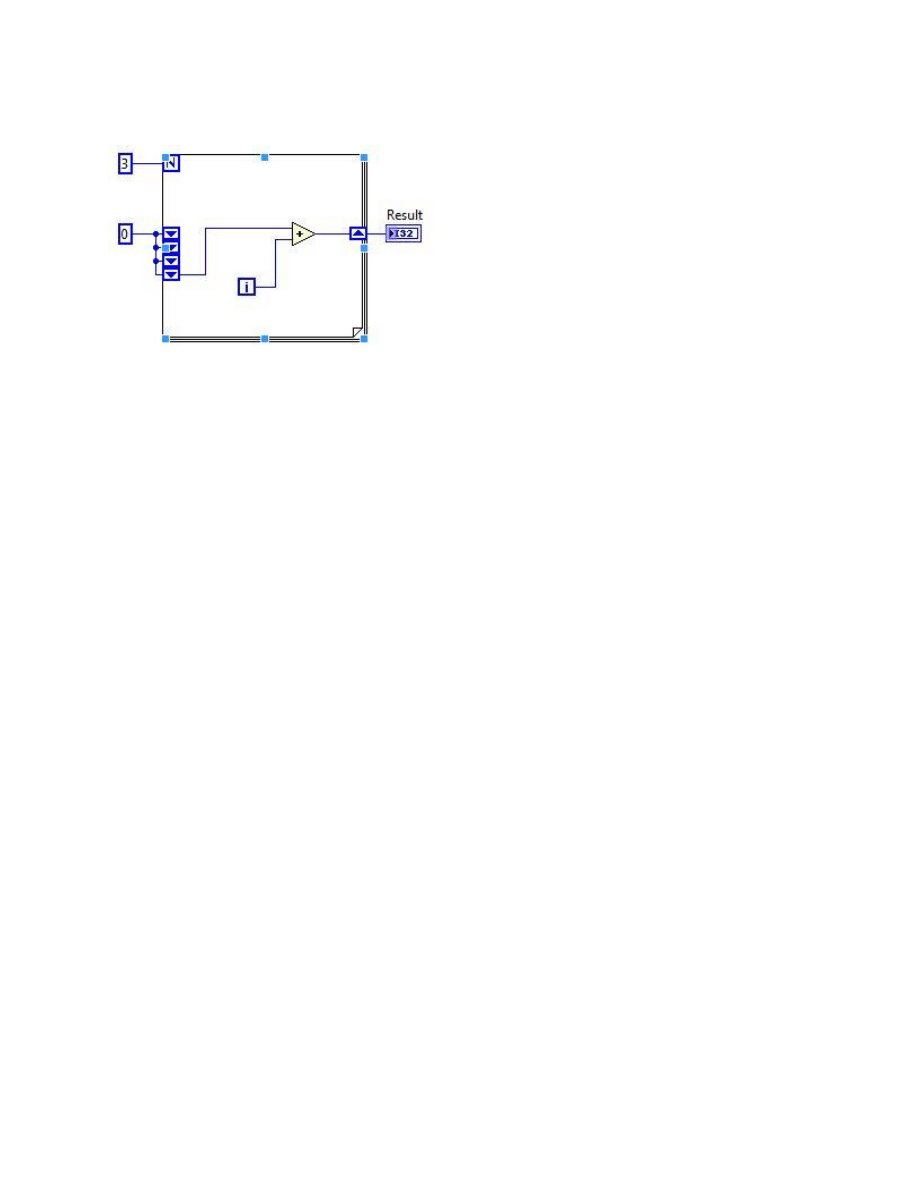
What value is displayed in the Result indicator after the VI completes execution?
A
3
B
2
C
1
D
0
Q13:
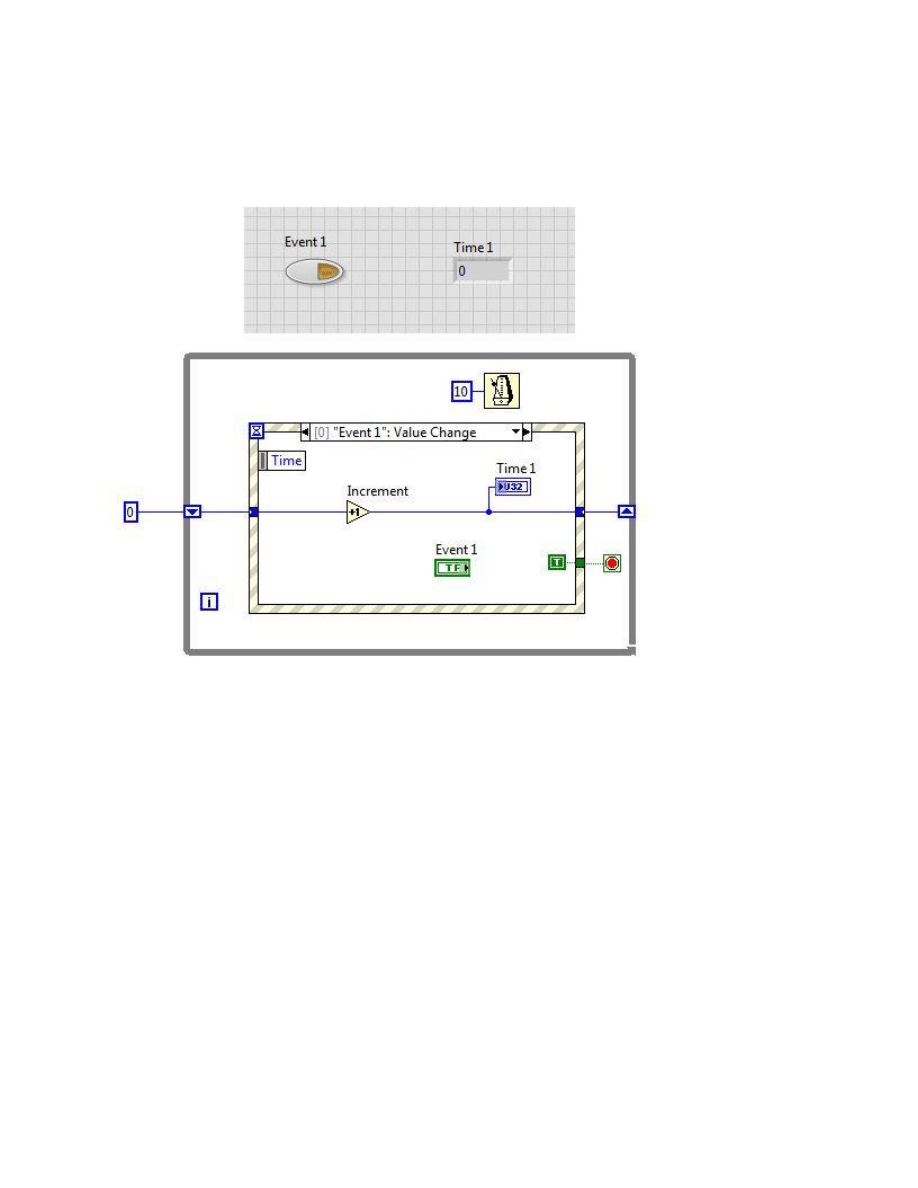
After the VI starts running, the user clicks the "Event1" button twice. The event structure has no
other event cases.
What will be displayed in the "Time 1" indicator when the VI stops executing?
A
0
B
1
C
2
D
Undetermined
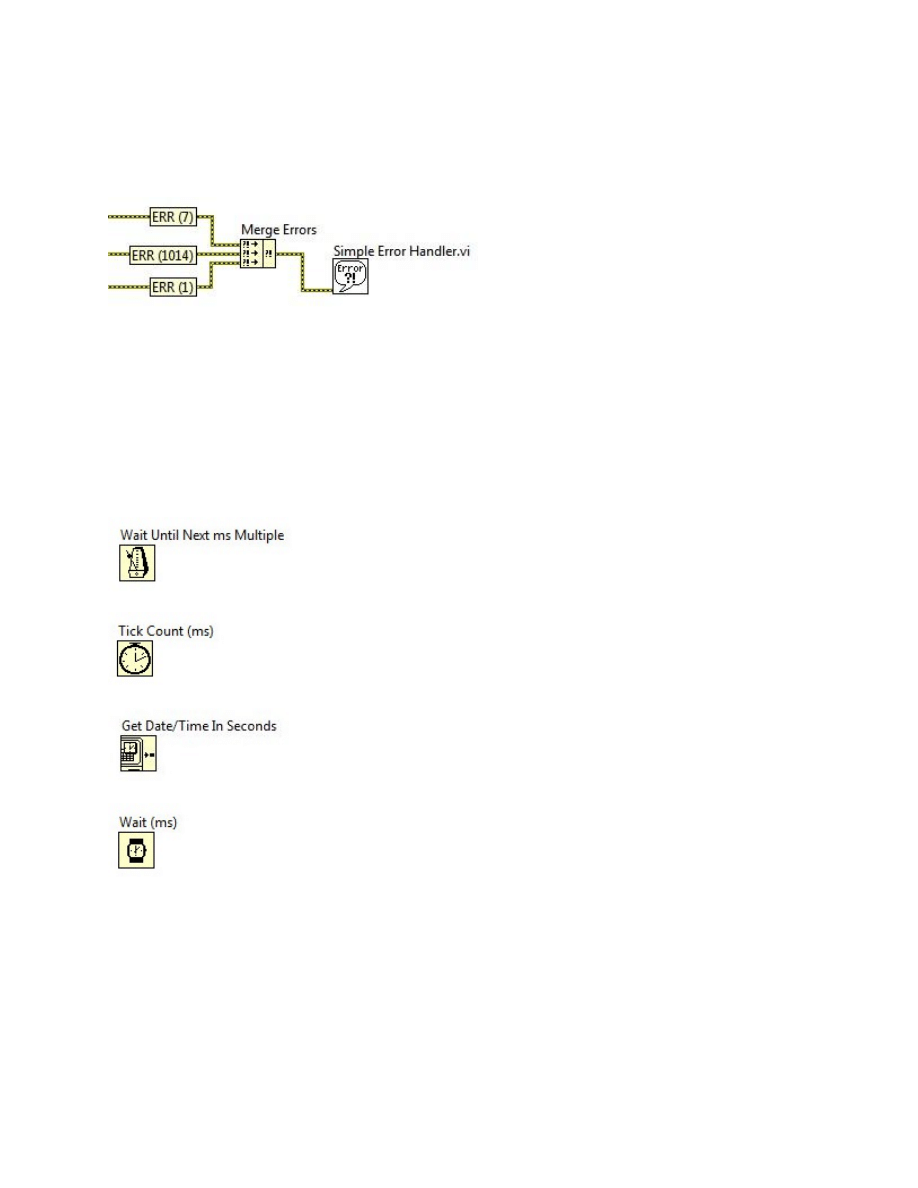
Q14:
You have written a LabVIEW VI with three parallel code paths. All three error cluster wires are
wired into a Merge Errors function.
What error is reported to the user?
A
Error 1014, because Merge Errors outputs the first error to occur chronologically
B
Error 7, because Merge Errors outputs the first error wired in to it from the top down
C
Error 1, because Merge Errors outputs the most significant error of the errors wired in to it
D
All three errors are reported, because Merge Errors concatenates the errors into a single error
message to display to the user
Q15:
Which timing function can result in logic errors when it rolls over to zero?
A
B
C
D
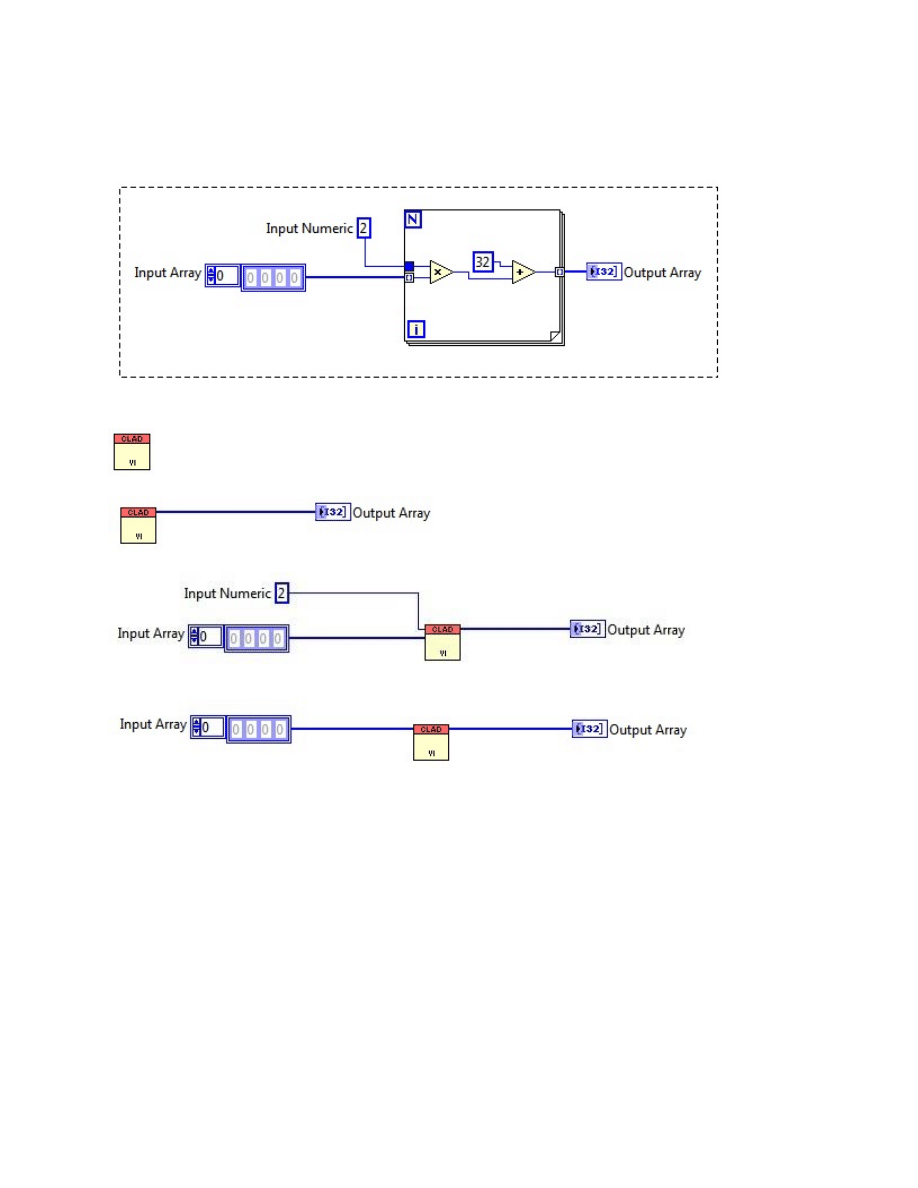
Q16:
You select "Create SubVI" from LabVIEW's Edit menu with the code below selected.
What will the resulting block diagram look like?
A
B
C
D
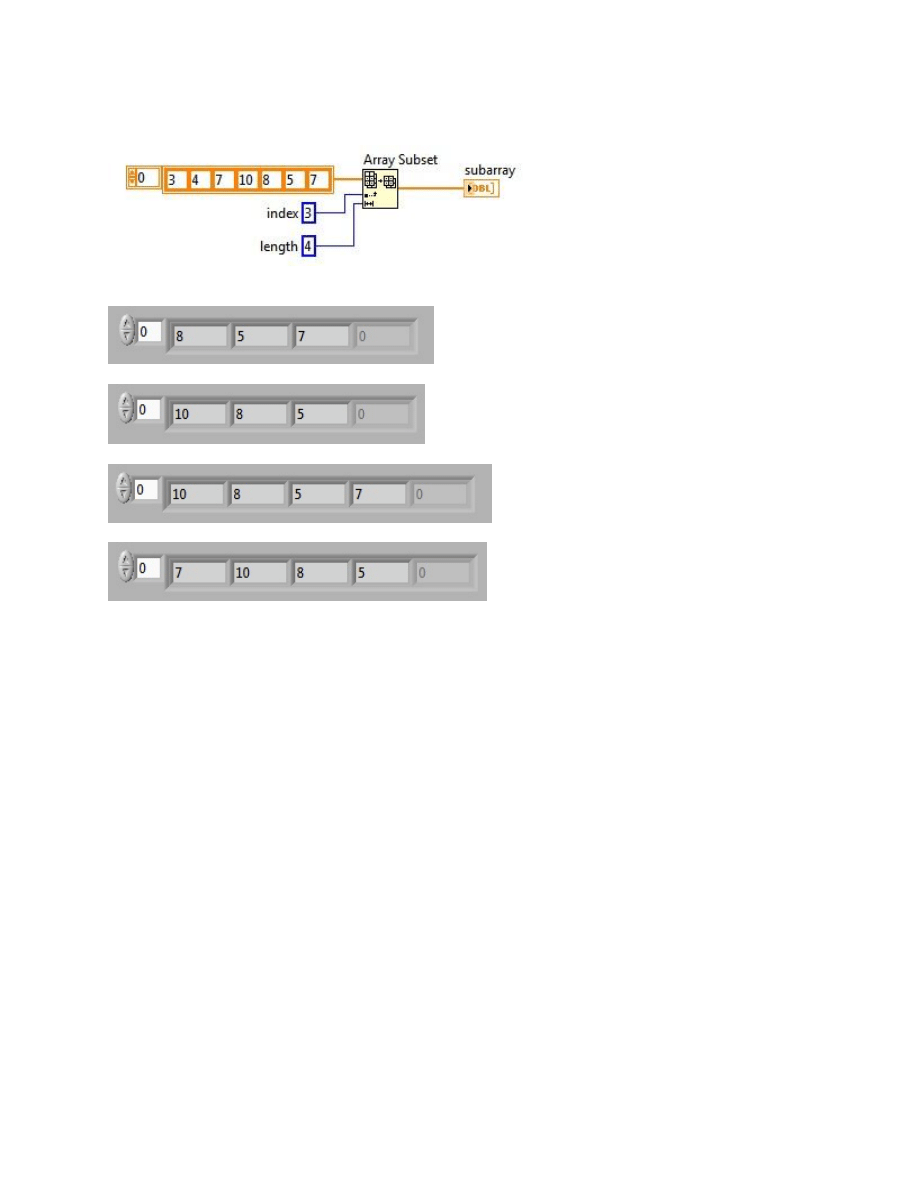
Q17:
What value will be displayed in the subarray indicator after the following code has executed?
A
B
C
D
Q18:
Which of the following statements is NOT valid?
A
You can make a Cluster of Clusters
B
You can make an Array of Arrays
C
You can make a Cluster of Arrays
D
You can make an Array of Clusters
Q19:
Which of the following cannot be used to transfer data between two parallel loops?
A
Wires
B
Queues
C
Notifiers
D
Local variables
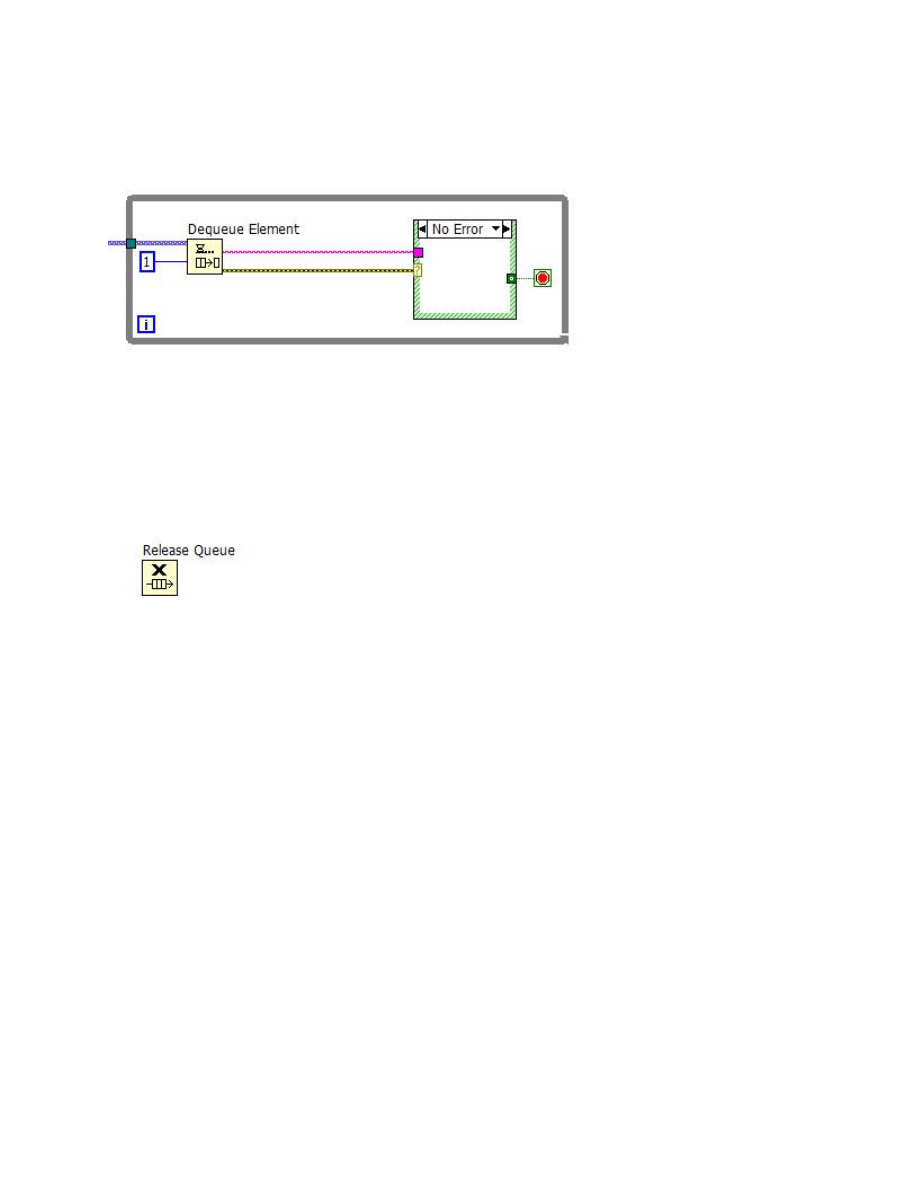
Q20:
The time out input terminal of the Dequeue Element function is wired with the value 1.
While the VI is running, how long does this Dequeue Element function wait to receive data?
A
1 millisecond
B
1 second
C
Indefinitely
D
It does not wait. It returns immediately
Q21:
What does this function do?
A
Transfers the queue reference to other callers
B
Sorts all queue elements in order and returns them as an array
C
Clears all elements from the queue
D
Removes one reference to the queue and returns any remaining elements
Q22:
When a VI is paused, clicking on the _________ button allows you to bypass a node in the Block
Diagram without single-stepping through the node.
A
Step Into
B
Step Over
C
Step Out
D
Step Through
Q23:
Which is a native debugging feature in LabVIEW?
A
Step Back
B
Step Over
C
Step Around
D
Step Above
Q24:
Which data type is not accepted by the case selector terminal on a case structure?
A
Arrays
B
Enumerated type values
C
Strings
D
Integers
Q25:
Which statement about sequence structures is FALSE?
A
Sequence structures support parallel operations within frames.
B
Terminating the execution of a sequence structure before the entire sequence is completed is
not possible without aborting.
C
Sequence structures execute frames in a sequential order.
D
Sequence structures stop when an error is detected.
Q26:
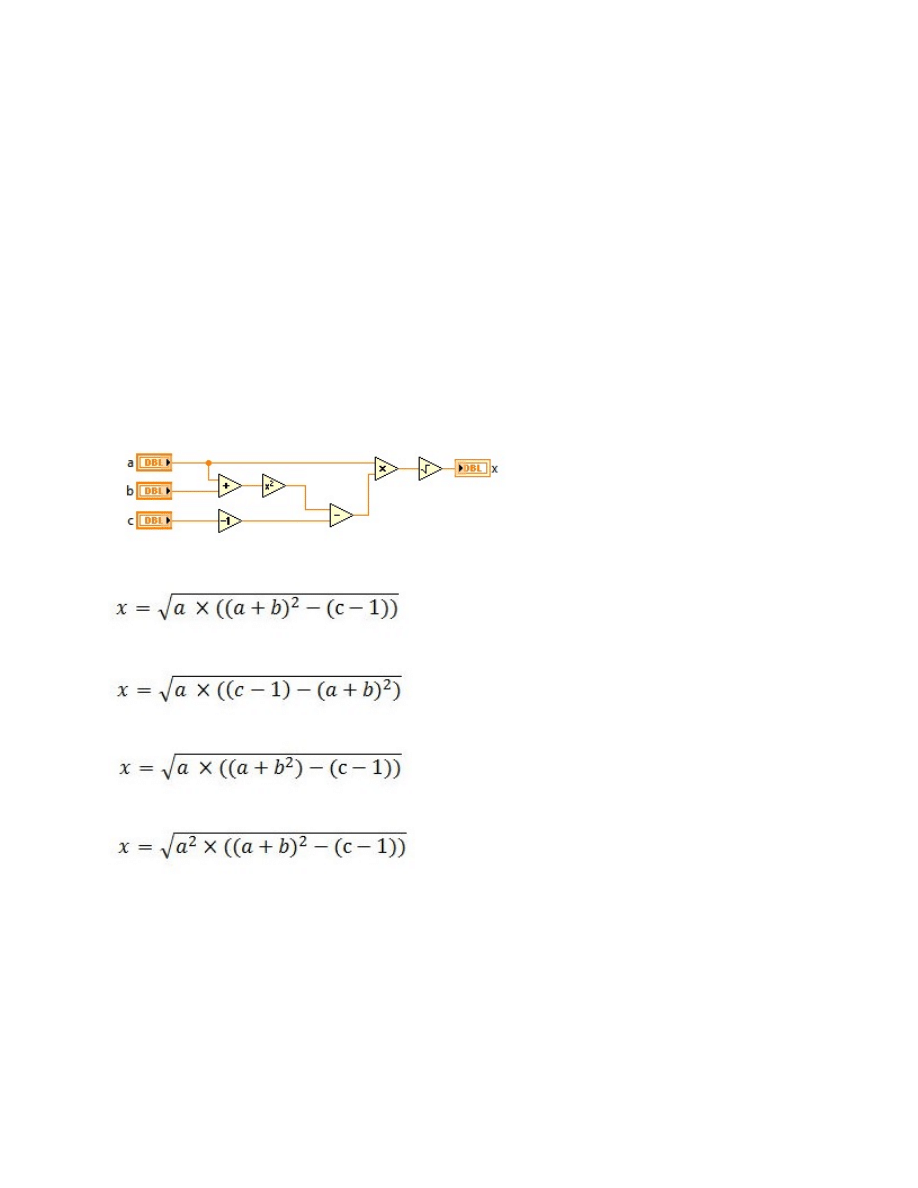
Which equation is equivalent to the code?
A
B
C
D
Q27:
When clicking a broken run arrow, the Error list window shows all of the following EXCEPT:
A
Items with errors
B
Errors and warnings
C
Details about the warnings
D
Error Codes
Q28:
How do you document a VI so that the description appears in the Show Context Help popup
window?
A
Use the VI Properties Documentation window
B
Type in the Show Context Help window
C
Create a free label on the front panel
D
Edit the LabVIEW help files
Q29:
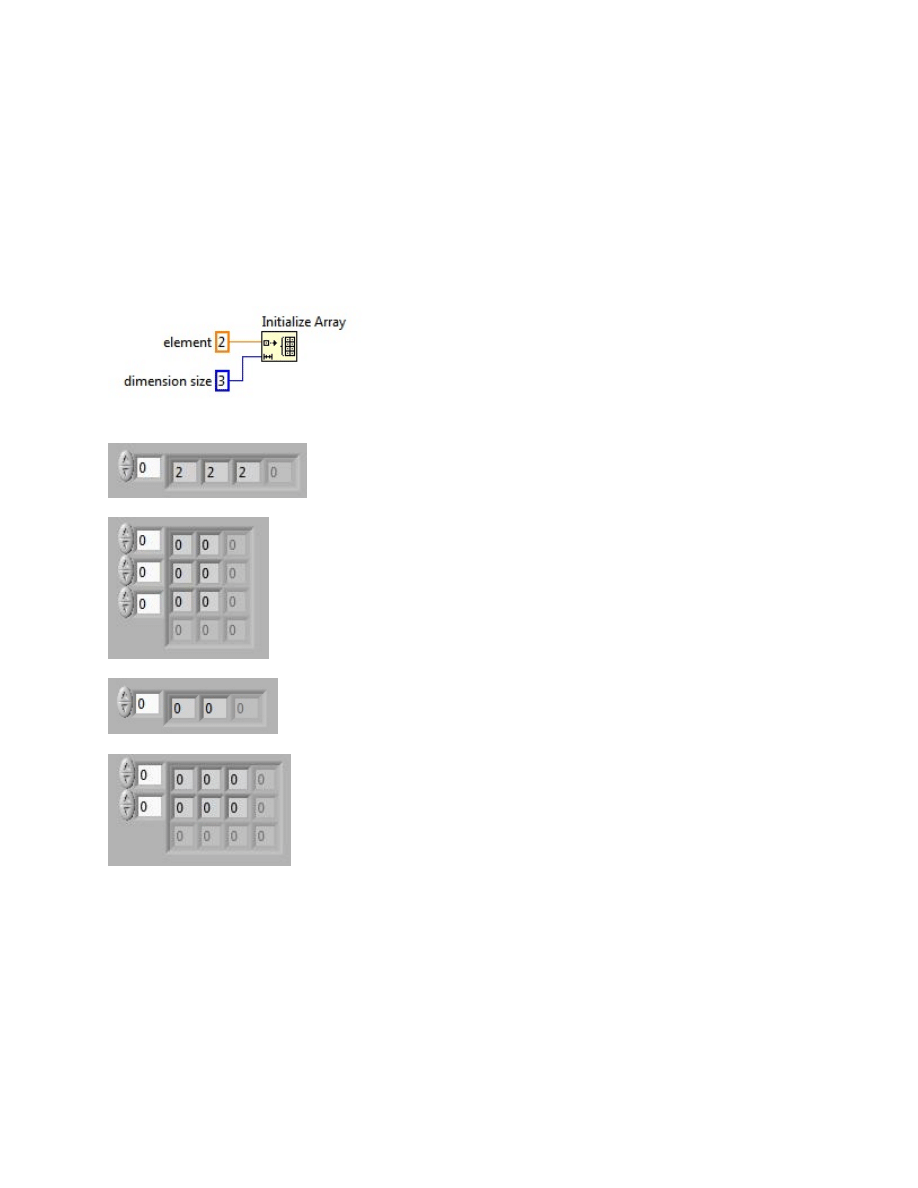
What is the output of the Initialize Array function after the following code has completed execution?
A
B
C
D
Q30:
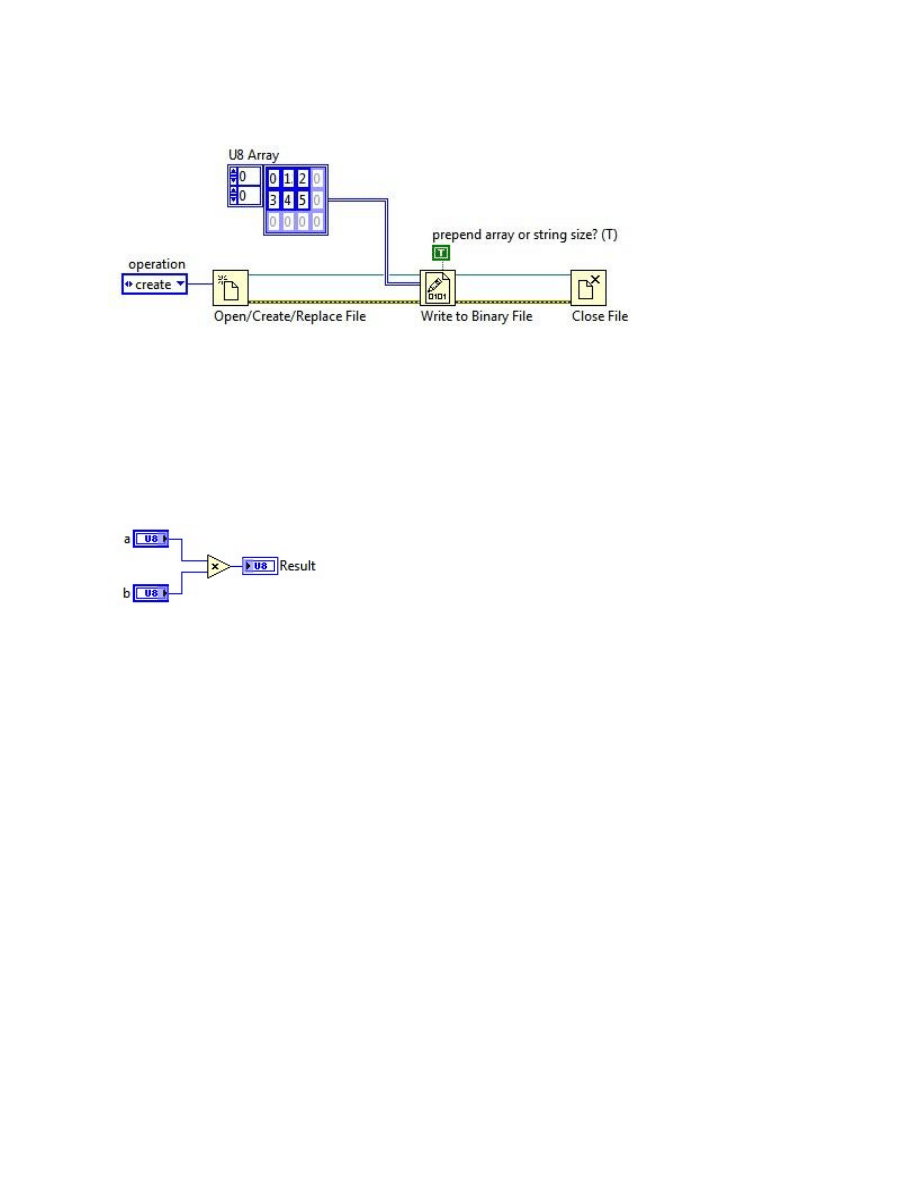
How many bytes does LabVIEW write to the file when the code executes?
A
5 Bytes
B
6 Bytes
C
12 Bytes
D
14 Bytes
Q31:
The value in Control a is 2 and in Control b is 128.
What value does the Result indicator display after the VI executes?
A
-128
B
0
C
255
D
256
Q32:
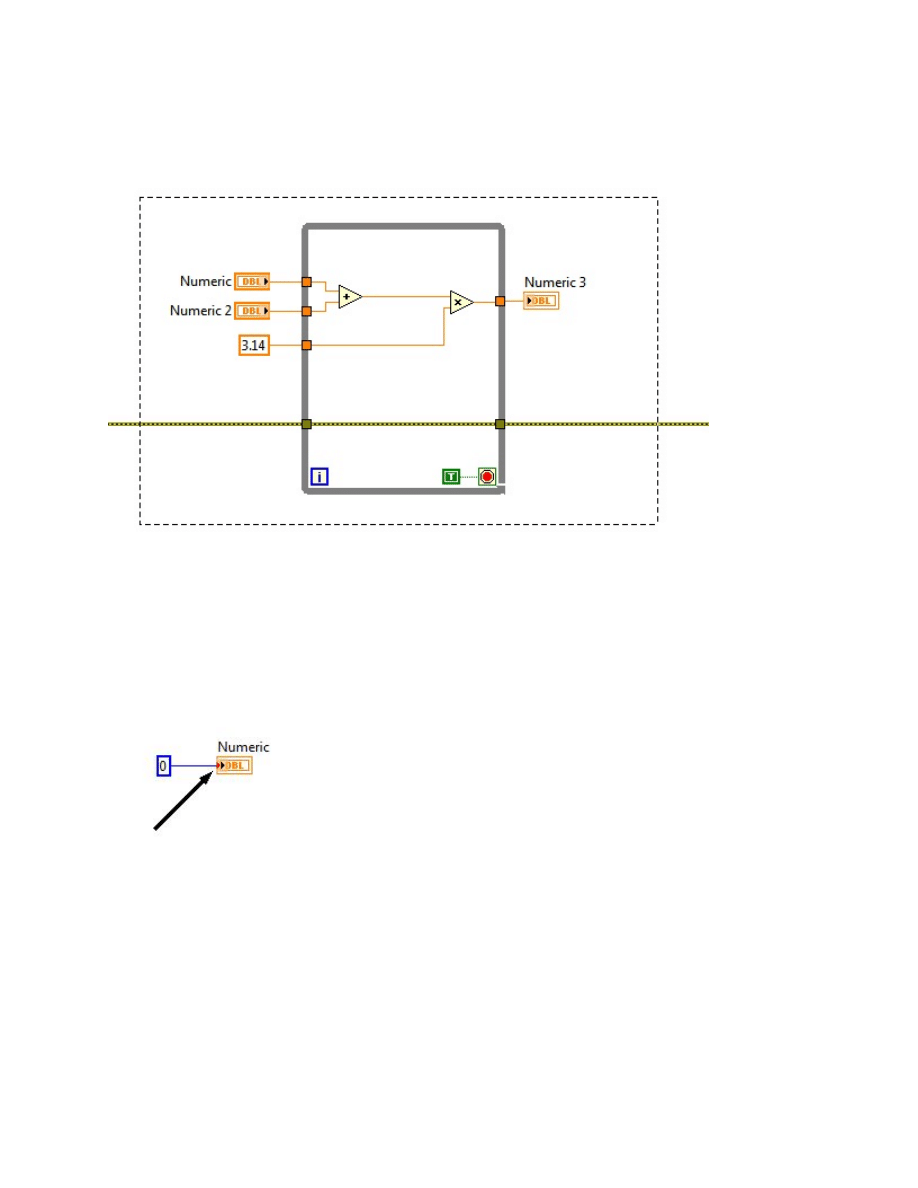
A SubVI is created by selecting the code from a block diagram.
How many terminals will the SubVI have?
A
3
B
4
C
5
D
6
Q33:
What is the red dot called?
A
Coercion Dot
B
Data truncation Dot
C
Data typecast Dot
D
Buffer allocation Dot

Q34:
What do coercion dots indicate?
A
Incompatible data types
B
A mathematical operation will be performed on the data
C
The input data will be copied and converted to a different data type
D
The location where an error will occur
Q35:
What settings should be selected for a custom control so that all copies of the control are of the
same data type yet have the flexibility to use different colors and styles?
A
Control
B
Type Def.
C
Strict Type Def.
D
Flex Def.
Q36:
In a Simple State Machine design pattern, which of the following stores the state information?
A
Shift Register
B
Queue
C
Notifier
D
Functional global variable
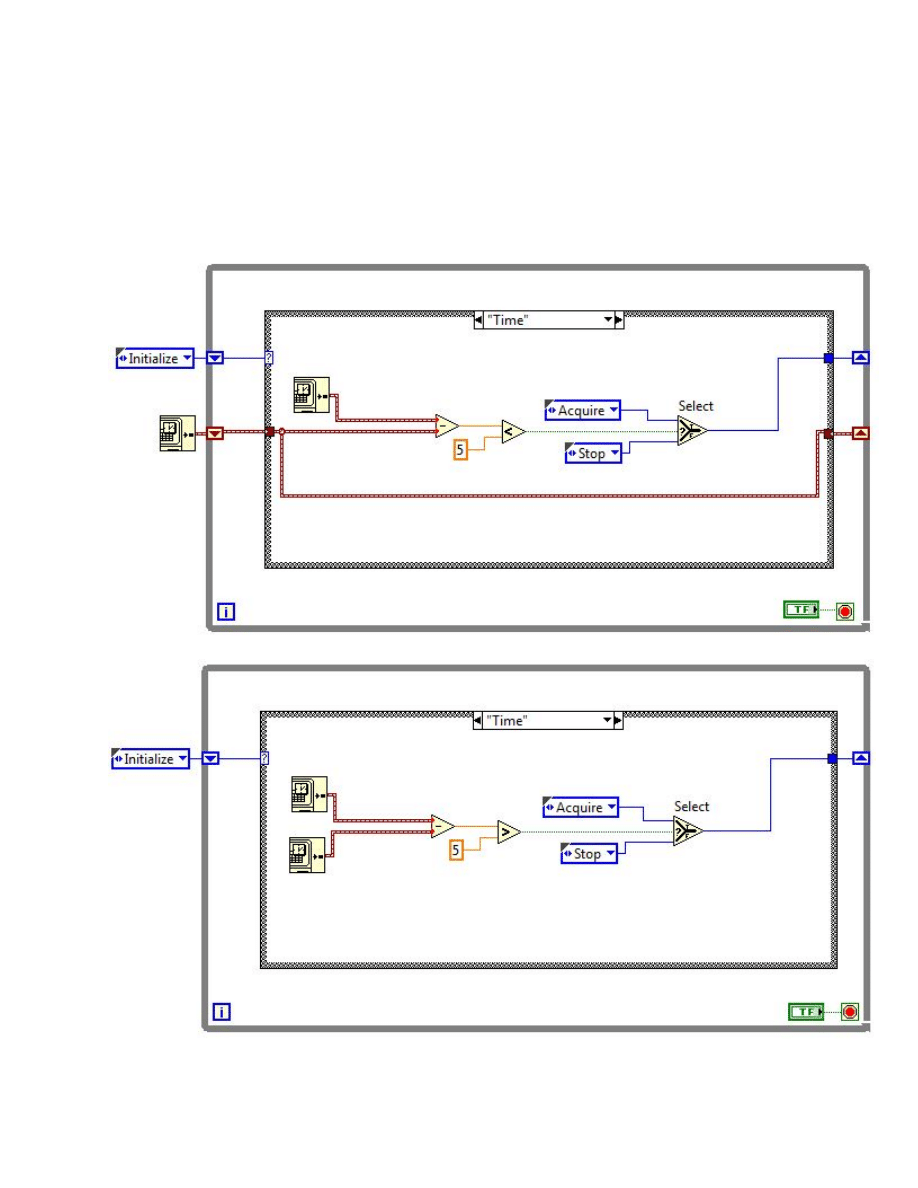
Q37:
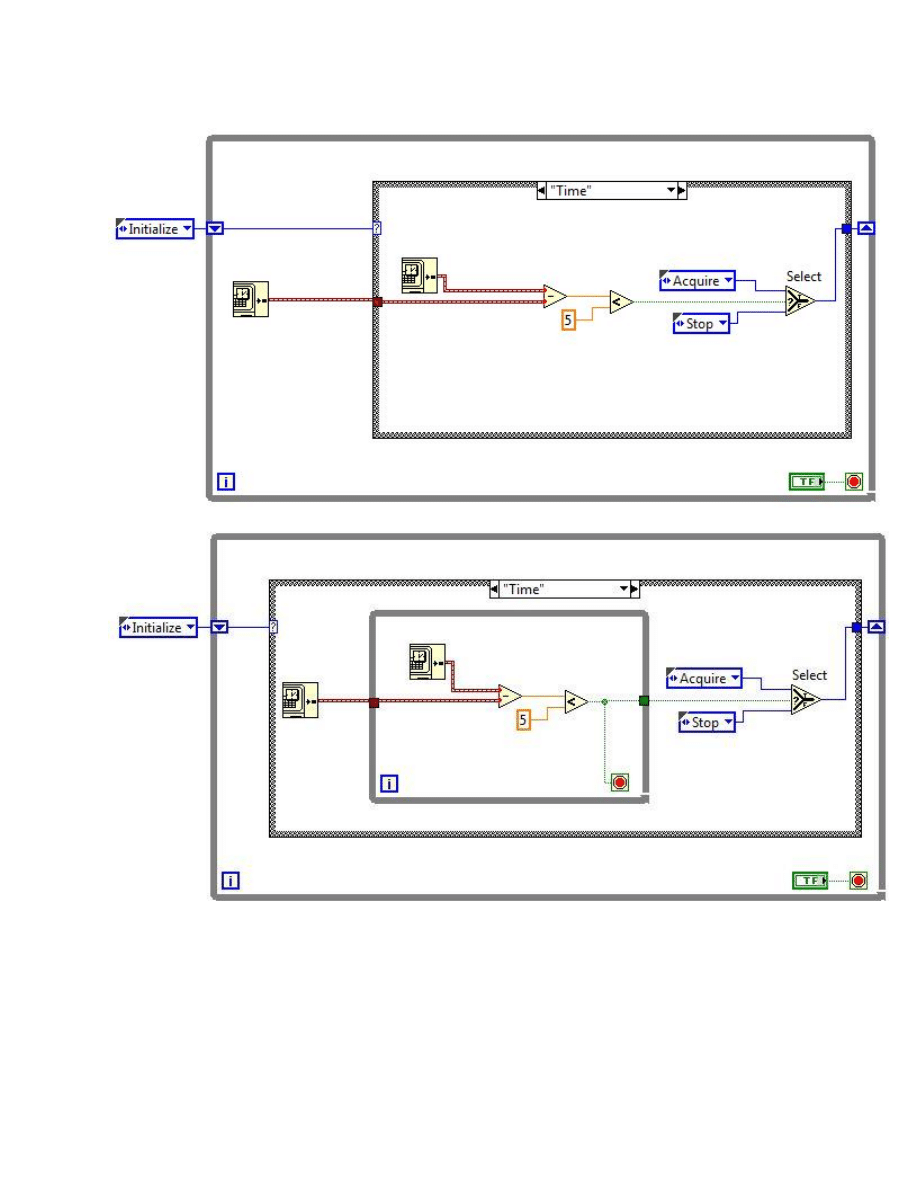
You are required to use the Get Date/Time in Seconds function for timing in a state machine. The
state machine has an acquire state and must acquire for 5 seconds. If the hardware fails during
acquisition the state machine must be able to transition to the stop state.
Which of the following design patterns will provide timing for a state machine and allow responsiveness to
acquire state requirements?
A
B
C
D
Q38:
Which of the following apply to Property Nodes?
Property Nodes:
A
allow attributes of files on disk to be programmatically manipulated
B
can be used to update the value of a front panel control or indicator
C
return an error if you attempt to read a property before it has been written
D
can be used to invoke methods on a control
Q39:
You have a front panel control on a top-level VI that you must manipulate from within a SubVI.
Which of the following could you pass to the SubVI to accomplish this?
A
The control's properties
B
The control's methods
C
The control's reference
D
The control's data type
Q40:
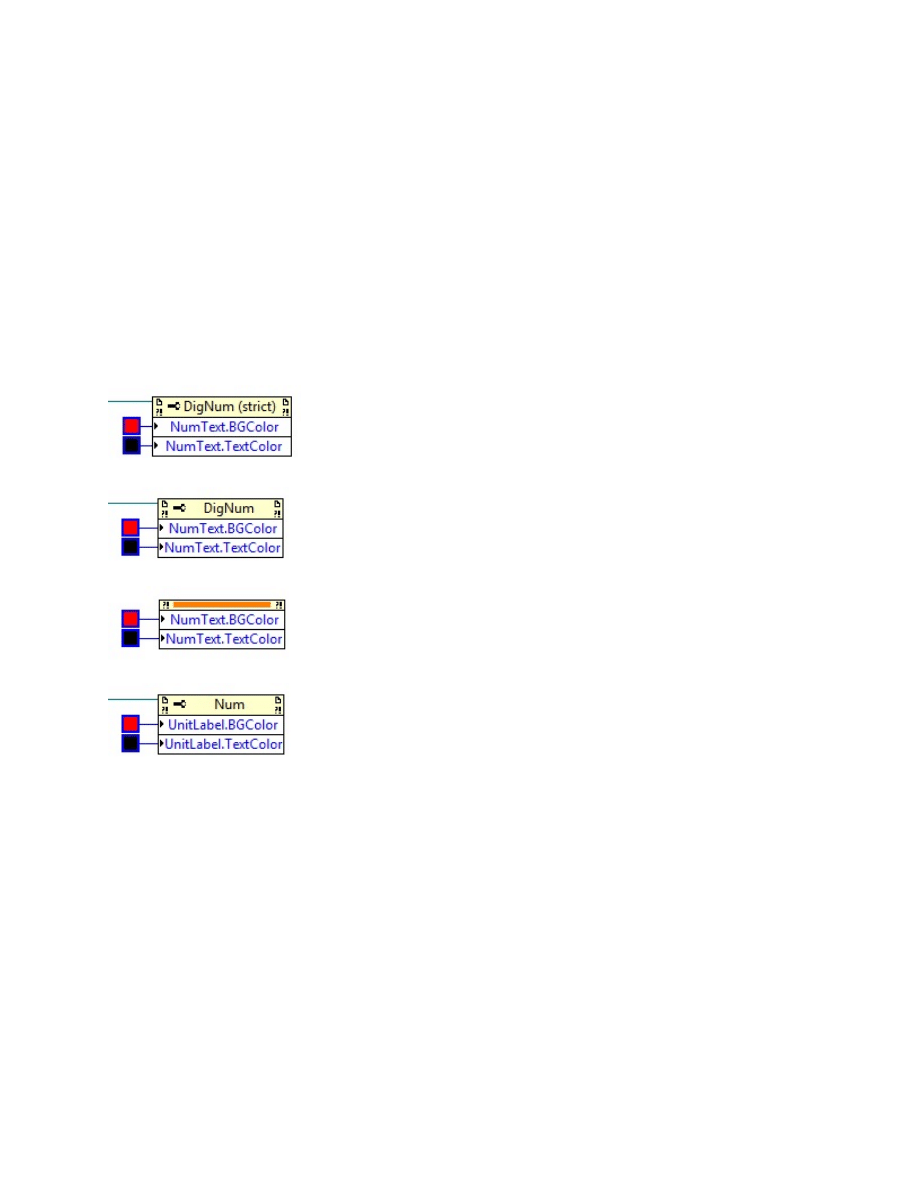
Which Property Node can change the text color attributes of ANY digital numeric control used on
the panel of a VI?
A
B
C
D

Q41:
Solutions Page:
Below are the answers and explanations for the CLAD Sample Exam. To quickly check your answers,
record them on the Answer Sheet, detach the Answer Sheet, and compare it, side-by side, with the
Solutions Page. This Solutions Page is not included in the actual CLAD exam; it is included here for
practice purposes only.
1.
Correct Answer: C
Topic: Event Structures
Justification: It is the only case with a filter event that applies to the Panel Close event. Since no
Boolean is wired into the Filter Event terminal, LabVIEW opens a dialogue box to collect the value of the
Boolean input.
2.
Correct Answer: C
Topic: Event Structures
Justification: The requirements have no timeout action specified. Answer C is best practice, but is not
required to accomplish the stated goal.
3.
Correct Answer: C
Topic: Loops
Justification: An empty array is wired to the For Loop using an auto-indexing tunnel. This causes the For
Loop to iterate once for every element in the array, which, in this case, is zero. However, the value 5 is
written to the shift register before loop execution, and since the loop iterates zero times, the same value
of 5 is present at the output shift register.
4.
Correct Answer: B
Topic: Error Handling
Justification: The Merge Errors VI only passes on the first error encountered, counting from the top
node down.
5.
Correct Answer: D
Topic: General Programming Functions
Justification: A and B are wrong because they do not strip the current VI filename from the path. C would
work on Windows, but not other platforms, due to the different path separator. D is the only answer that
correctly generates the path *and* will work on multiple platforms, since path separators in the path data
type are automatically converted on different platforms.
6.
Correct Answer: C
Topic: Loops
Justification: The While Loop has a FALSE Boolean wired to its conditional terminal, which is set to Stop
if TRUE. Thus, there is no condition that causes this While Loop to stop. So, the While Loop could run
infinitely and the VI must be aborted.
7.
Correct Answer: A
Topic: Loops
Justification: For Loops can run zero times, and using a shift register is the recommended way to
preserve pass-through data in this scenario.
8.
Correct Answer: B
Topic: Data communication and synchronization
Justification: The shift register value will be 5 on the second call. 5 + 5 = 10.
9.
Correct Answer: B
Topic: General Programming Functions
Justification: TDMS read/write is limited to a specific subset of LabVIEW data types. For example, it
cannot read or write multidimensional arrays or arrays of timestamps. See the LabVIEW help for details.

10.
Correct Answer: B
Topic: Design Patterns
Justification: Textbook use of queue in Producer Consumer.
11.
Correct Answer: B
Topic: General Programming Functions
Justification: Answer B is the difference between charts and graphs.
12.
Correct Answer: B
Topic: Loops
Justification:
In three loops only zeros will pass from the register, but the iteration will count 0, then 1 &
then 2. Therefore the output from the addition function will be 0+2=2.
13.
Correct Answer: B
Topic: Event Structures.
Justification: The events queue up, so if it were not for the TRUE wired to the loop condition, the answer
would be 2. However, the loop ends before we can process the second event that is still in the queue.
14.
Correct Answer: B
Topic: Error Handling
JUSTIFICATION: Merge Errors outputs the first error it finds in the errors clusters wired into it in a
top-down fashion. Error 7 is wired into the top input, so it is the error outputted by Merge Errors.
15.
Correct Answer: B
Topic: General Programming Functions
Justification: The Tick Count (ms) is the only timer that rolls over to 0.
16.
Correct Answer: B
Topic: SubVI Creation
Justification: Input Numeric and Input Array are constants, so they are internal to the SubVI and do not
have input terminals.
17.
Correct Answer: C
Topic: General Programming Functions
Justification: The Array Subset function takes an input array and returns a section of that array as
specified, starting at the given index and continuing for a number of elements equal to length. Here, the
index value 3 specifies the fourth element of the array, or 10. Since the specified length is value 4, an
array of length 4 is returned as follows: {10, 8, 5, 7}.
18.
Correct Answer: B
Topic: General Programming Functions
Justification: LabVIEW will not allow creation of an array of arrays -- There is no need to make an array of
arrays since you can simply add dimensions to an existing array.
19.
Correct Answer: A
Topic: Data Synchronization and Communication
Justification: Queues, notifiers, and local variables are all designed to transfer data. Wires can not pass
data between parallel loops.
20.
Correct Answer: A
Topic: Data Communication and Synchronization
Justification: The time out input terminal of the Dequeue Element function is in milliseconds, so with an
input of 1, the Dequeue Element function will wait 1 millisecond to receive data.
21.
Correct Answer: D
Topic: Data communication and synchronization

Justification:
One reference is removed from memory, and the remaining elements are returned. It
can be used to destroy the queue, but this is not an option in the question.
22.
Correct Answer: B
Topic: Debugging tools
Justification: Clicking the Step Into button causes LabVIEW to open up the node or subVI. The Step Out
button is used to return from a subVI to a main VI while single-stepping. There is no Step Through button.
Step Over provides the functionality stated by the question, therefore this is the correct answer.
23.
Correct Answer: B
Topic: Debugging tools
Justification: Stepping back, around,or above are not single step actions, stepping Over is the only
correct choice.
24.
Correct Answer: A
Topic: Case Structures
Justification: Arrays are not accepted by the case selector terminal because the case selector terminal
requires a scalar value.
25.
Correct Answer: D
Topic: Sequence Structures
Justification: Sequence Structures have no error terminals.
26.
Correct Answer: A
Topic: LabVIEW Programming Principles
Justification: Because LabVIEW is a Dataflow language, we can trace the flow of data in the block
diagram to see which operations execute first, second, and so forth.
27.
Correct Answer: D
Topic: LabVIEW Environment
Justification: You must either look at an output error cluster or an error dialog to find the error code.
28.
Correct Answer: A
Topic: LabView Environment
Justification: The documentation window in VI Properties is the only place to edit the information about
the VI that appears in Context Help.
29.
Correct Answer: A
Topic: Data Types
Justification: The "element" input terminal contains the value each element of the initialized array will
contain, and the "dimension size" input terminal dictates the size of each dimension of the initialized
array. Since there is only one dimension size input terminal, the array will be only 1 dimensional. The
array elements will be initialized to the value of the element.
30.
Correct Answer: D
Topic: Data Types
Justification: LabVIEW represents arrays as a list of bytes containing a header and array data. The
header contains a 4-byte integer for each dimension that specifies the length of that dimension. Following
the header is the actual array data. In the question, the array has two dimensions. There are 4 bytes in
the header for each dimension for a total of 8 bytes in the header. Since the array is composed of six
8-bit, or 1-byte integers, there is a total of 6 bytes of actual array data. This makes a total of 14 bytes
being written to file.

31.
Correct Answer: B
Topic: Data Types
Justification: The integers shown are unsigned 8-bit integers. The range for 8-bit integers is 0-255. The
product of 2 times 128 is 256. As 256 is a number larger than the allowable 255, thus 256 wraps to 0.
32.
Correct Answer: C
Topic: SubVI Creation
Justification: The subVI will have Error In/Out terminals as well as the three controls, for a total of 5
terminals.
33.
Correct Answer: A
Topic: Data Types
Justification: Definition of Coercion Dot
34.
Correct Answer: C
Topic: Data Types
Justification: Definition of Coercion Dots
35.
Correct Answer: B
Topic: Data Types
Justification: Definition of Type Def
36.
Correct Answer: A
Topic: Design Patterns
Justification: Definition of Shift Register
37.
Correct Answer: A
Topic: Design Patterns
Justification: A is the only case that checks the data and leaves the timing state, and has persistent start
time (stored in the shift register)
38.
Correct Answer: B
Topic: VI Server
Justification: Deffinition of a property node.
39.
Correct Answer: C
Topic: VI Server
Justification: The only answer option that can be passed from calling VI to subVI is the control reference.
The reference can then be used with Property Nodes and Invoke Nodes to call properties and methods,
respectively. The data type is a property of the control.
40.
Correct Answer: B
Topic: VI Server
Justification: Strict property nodes require precise knowledge of the numeric representation. Since the
question asks for the means to change the text color of any control, a strict Property Node does not
suffice. An implicit Property Node (C), can only be used locally. Answer D shows a property that is not
even relevant to the question. Thus, option B is the best answer.
Wyszukiwarka
Podobne podstrony:
więcej podobnych podstron