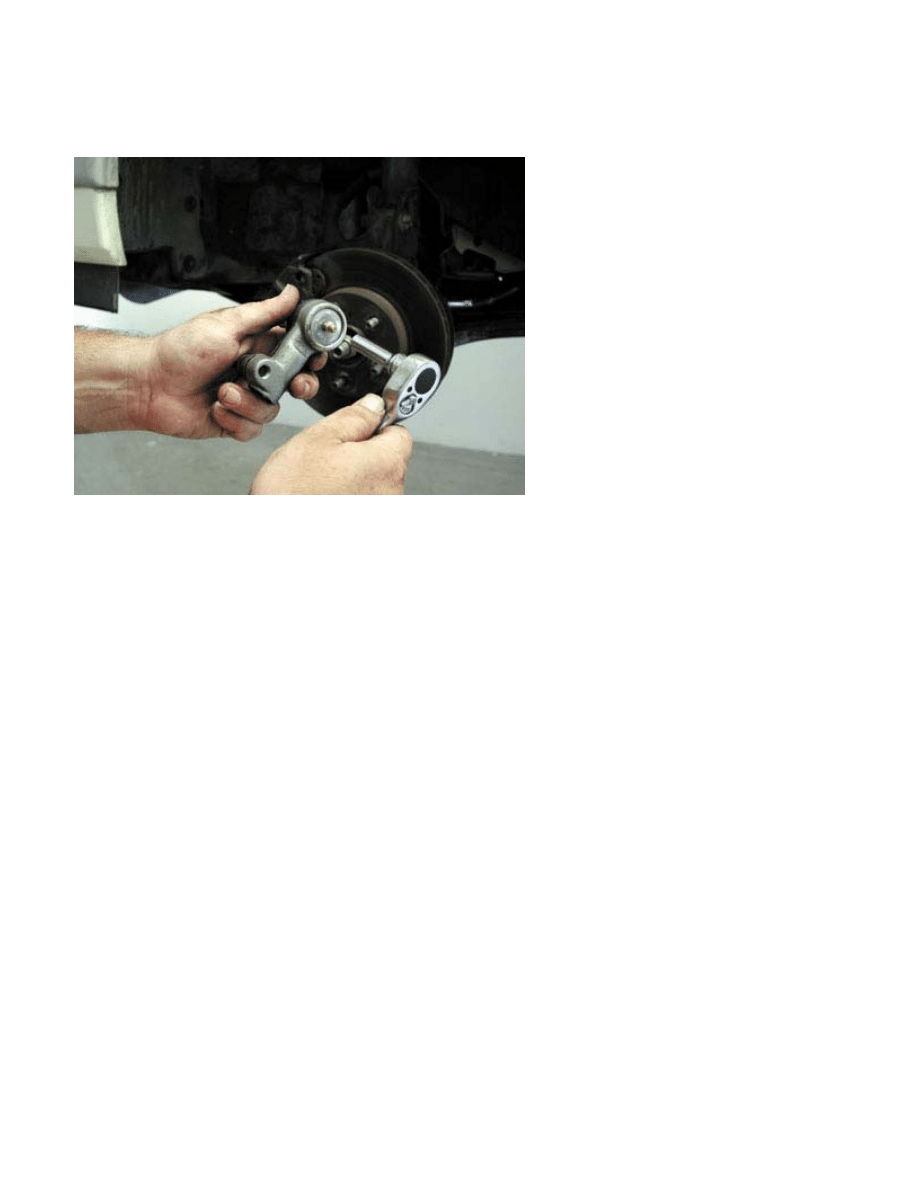
Replacing Tie-Rod Ends
http://www.extremehowto.com/xh/printpage.asp?article_id=60252
1 of 4
17/09/2006 12:58 PM
Replacing Tie-Rod Ends
Tom Morr
Steering and brakes are two vehicular
systems that are often best left to
professional mechanics to diagnose and
repair. However, certain
routine-maintenance procedures in these
areas don't require any special knowledge
or skill.
Tie-rod ends are steering-system
components that can often be easily
replaced by the average-skilled car owner.
The only non-standard tool necessary for
the job is a puller: either a special
tie-rod-end puller or a two-jaw unit. (The
necessary puller can often be borrowed or rented from your local auto-parts store.)
Installation Tips
• Refer to a service manual for fastener torque specifications and for any procedures that are unique to
your vehicle.
• Unlock the steering wheel before jacking up the vehicle. This allows the steering linkage to be moved
for the best possible access to the ends' fasteners by grabbing one of the axle hubs (especially on
front-wheel-drive cars such as the one shown here).
• Secure the vehicle on jackstands before removing the wheels.
• Buy name-brand tie-rod ends. Saving a few dollars on cheaply made parts isn't worth the risk.
• Mark the tie-rod ends' positions on their threaded adjusters before removing the old ends. This way, the
new ends can be screwed in to approximately the same position as the old ones to get wheel alignment in
the ballpark.
• Have the vehicle professionally aligned afterward, especially if the steering wheel isn't centered or the
vehicle pulls one direction when attempting to drive straight.
Signs of Failure
• Front-end shimmy, shake or vibration.
• Abnormal front-end noise.
• Hard steering.
• Steering wheel doesn't return to center properly.
• Vehicle wanders.
• Steering feels unstable, loose or has excessive play.
Replacing Tie-Rod Ends
http://www.extremehowto.com/xh/printpage.asp?article_id=60252
2 of 4
17/09/2006 12:58 PM
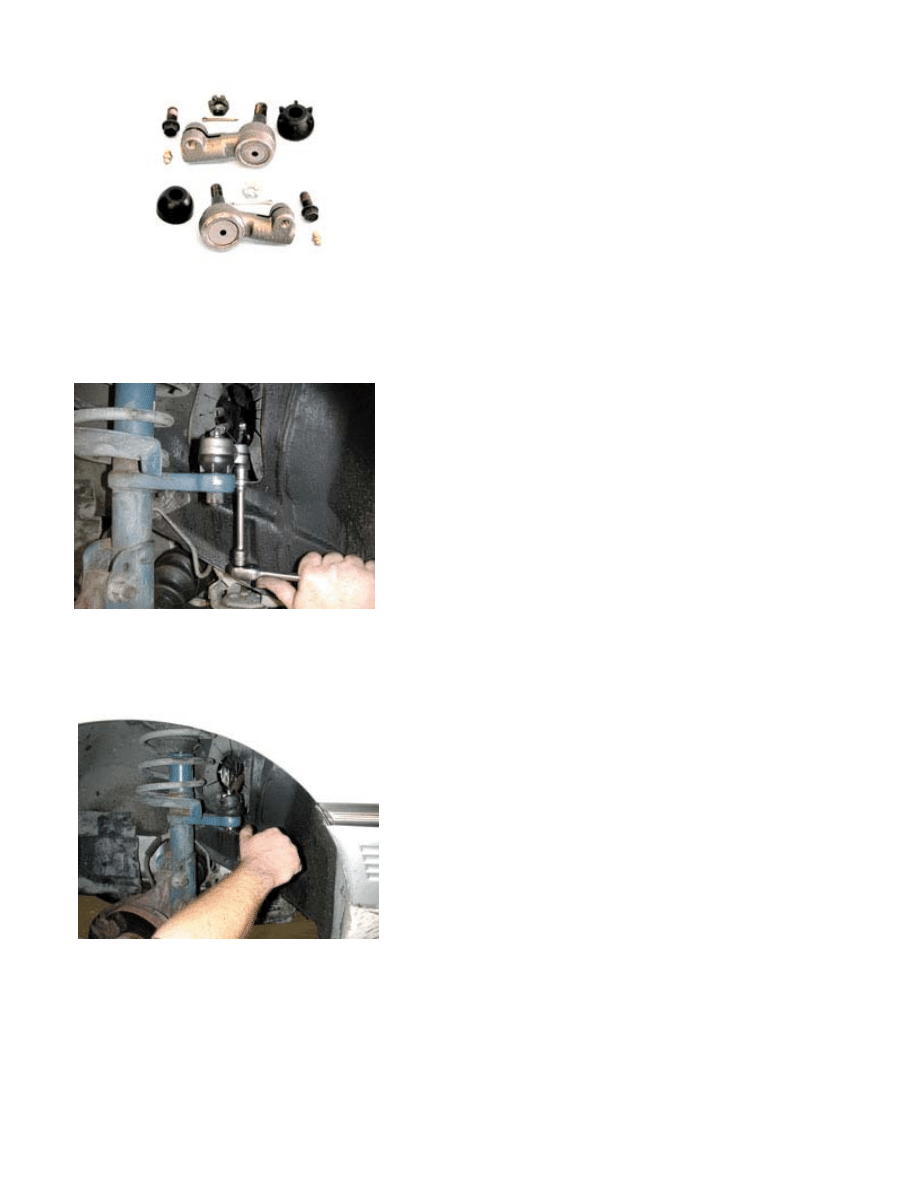
Step 1 Always buy name-brand tie-rod ends. Also beware that each side is threaded differently, so the part
numbers should be different. Ask the parts person to label left and right.
Step 2 With the vehicle raised, secured, and its front wheels removed, begin the tie-rod-end job by
loosening the pinch bolt on the end itself or on the adjuster sleeve (depending on end style).
Step 3 Remove the cotter pin and castellated nut from the old end.
Replacing Tie-Rod Ends
http://www.extremehowto.com/xh/printpage.asp?article_id=60252
3 of 4
17/09/2006 12:58 PM
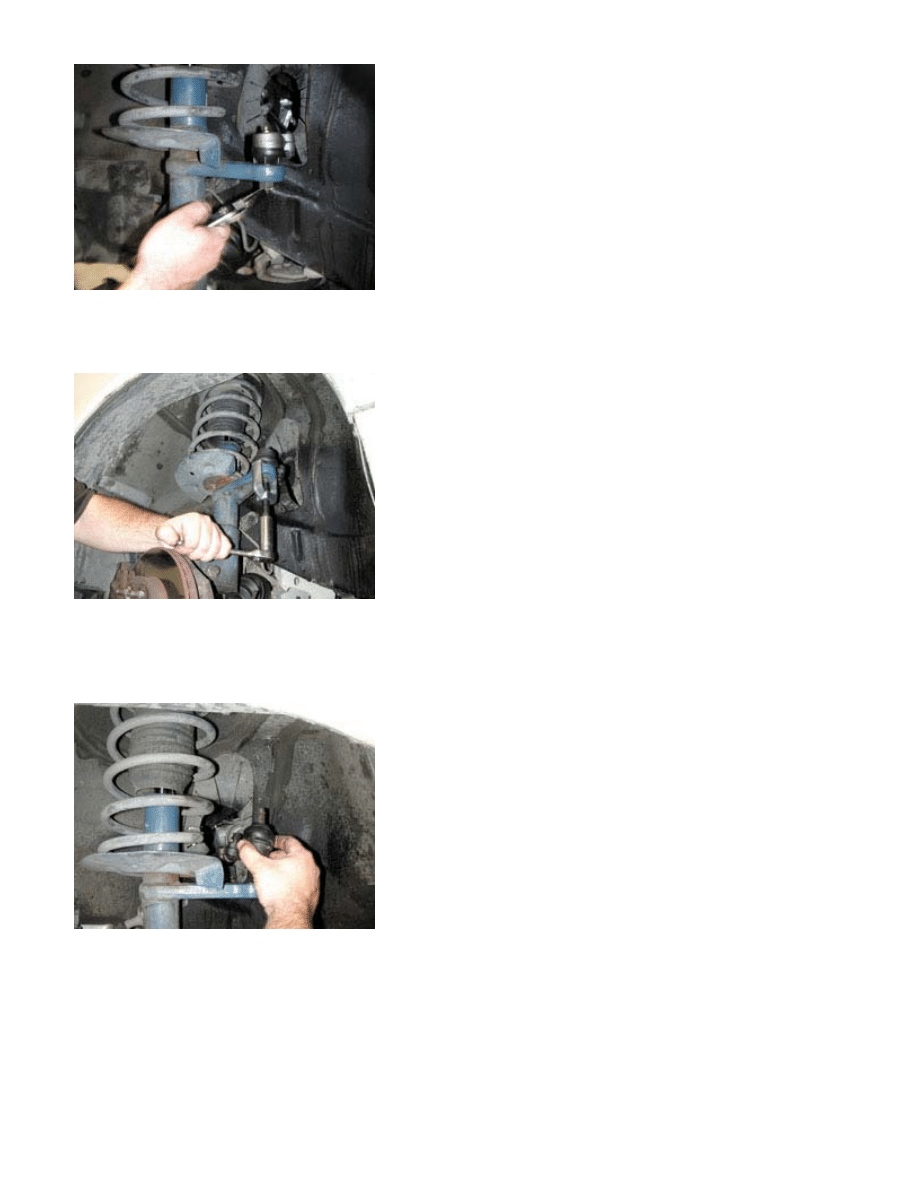
Step 4 Use a 2-jaw or tie-rod puller (shown) to disconnect the end.
Step 5 Before unscrewing the old ends, mark their positions so the new ones can be installed in roughly
the same positions. Install the grease fittings into the new ends, if applicable.
Step 6 Install the new rubber boots on the replacement tie-rod ends and then reverse the disassembly
procedure. Always use the new hardware and cotter pins that come with the replacement ends and torque
all fasteners to factory spec.
Replacing Tie-Rod Ends
http://www.extremehowto.com/xh/printpage.asp?article_id=60252
4 of 4
17/09/2006 12:58 PM
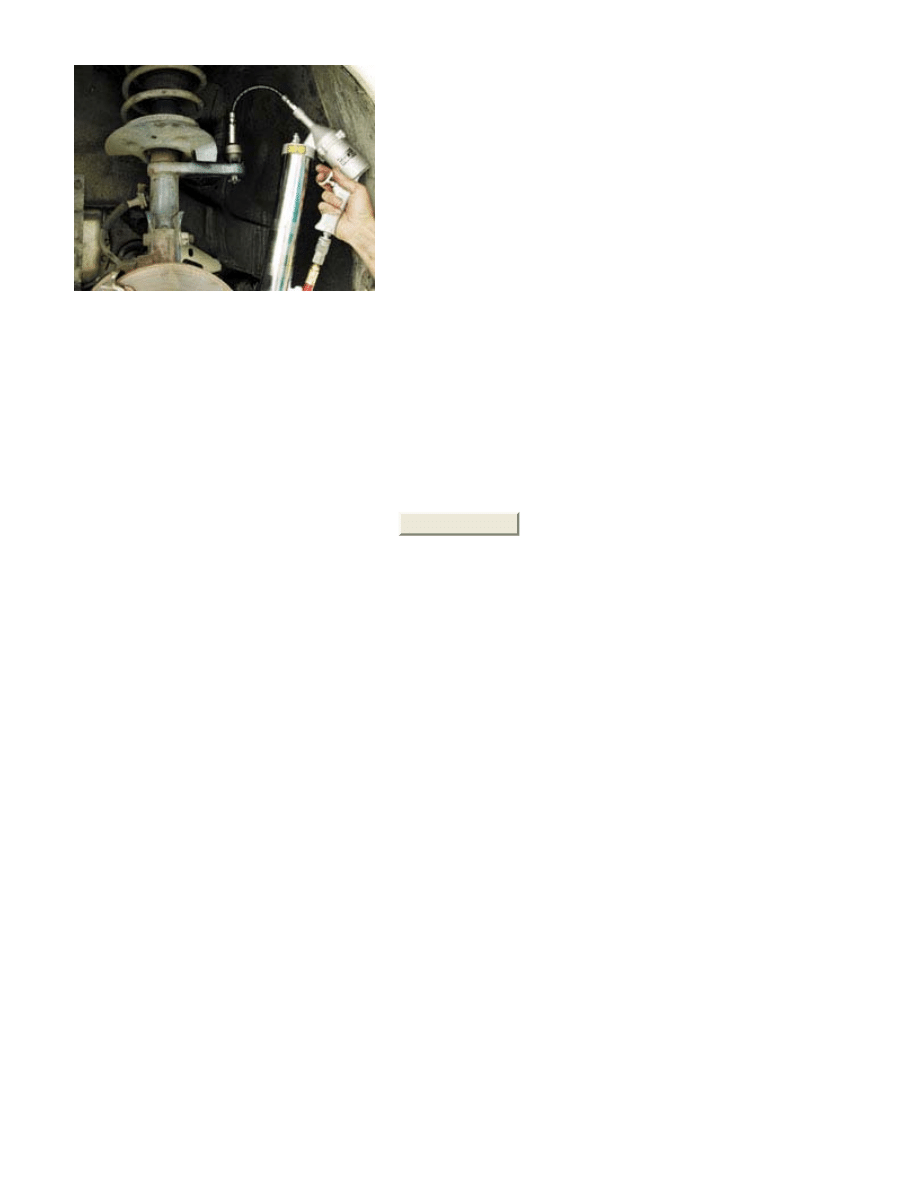
Step 7 Lube the new ends until the grease seeps from behind the boots. Then wipe off any excess external
grease.
Close Window
Wyszukiwarka
Podobne podstrony:
Front End Replacing Ball Joints
Front End Alignment Basics
Front End Alignment Tests For
Front End
M39r Body Front End
Brakes Front Brakes Replacement
FRONT END 28072004
FT 221 FT 225 Mutek Front end
BODY FRONT END SECTION 9R 14
5 Crankshaft Rod Ends Pistons
2002 09 Creating Virtual Worlds with Pov Ray and the Right Front End
Front End
więcej podobnych podstron