
c
IB DIPLOMA PROGRAMME
PROGRAMME DU DIPLÔME DU BI
PROGRAMA DEL DIPLOMA DEL BI
N06/5/MATHL/HP3/ENG/TZ0/XX/M+
MARKSCHEME
November 2006
MATHEMATICS
Higher Level
Paper 3
19 pages

N06/5/MATHL/HP3/ENG/TZ0/XX/M+
- 2 -
This markscheme is confidential and for the exclusive use of
examiners in this examination session.
It is the property of the International Baccalaureate and
must not be reproduced or distributed to any other person
without the authorization of IBCA.

N06/5/MATHL/HP3/ENG/TZ0/XX/M+
- 3 -
Instructions to Examiners
Abbreviations
M
Marks awarded for attempting to use a correct Method; working must be seen.
(M) Marks awarded for Method; may be implied by correct subsequent working.
A
Marks awarded for an Answer or for Accuracy: often dependent on preceding M marks.
(A)
Marks awarded for an Answer or for Accuracy; may be implied by correct subsequent working.
R
Marks awarded for clear Reasoning.
N
Marks awarded for correct answers if no working shown (or working which gains no other marks).
AG
Answer given in the question and so no marks are awarded.
Using the markscheme
1
General
Write the marks in red on candidates’ scripts, in the right hand margin.
• Show the breakdown of individual marks awarded using the abbreviations M1, A1, etc.
• Write down the total for each question (at the end of the question) and circle it.
2
Method and Answer/Accuracy marks
• Do not automatically award full marks for a correct answer; all working must be checked, and
marks awarded according to the markscheme.
• It is not possible to award M0 followed by A1, as A mark(s) depend on the preceding M mark(s), if
any.
• Where M and A marks are noted on the same line, e.g. M1A1, this usually means M1 for an
attempt to use an appropriate method (e.g. substitution into a formula) and A1 for using the
correct values.
• Where the markscheme specifies (M2), N3, etc., do not split the marks.
• Once a correct answer to a question or part-question is seen, ignore further working.
3
N marks
Award
N marks for correct answers where there is no working, (or working which gains no other
marks).
• Do not award a mixture of N and other marks.
• There may be fewer N marks available than the total of M, A and R marks; this is deliberate as it
penalizes candidates for not following the instruction to show their working.
• For consistency within the markscheme, N marks are noted for every part, even when these match
the mark breakdown. In these cases, the marks may be recorded in either form e.g. A2 or N2.

N06/5/MATHL/HP3/ENG/TZ0/XX/M+
- 4 -
4 Implied
marks
Implied marks appear in brackets e.g. (M1), and can only be awarded if correct work is seen or
if
implied in subsequent working.
• Normally the correct work is seen or implied in the next line.
• Marks without brackets can only be awarded for work that is seen.
5 Follow
through
marks
Follow through (FT) marks are awarded where an incorrect answer from one part of a question is
used correctly in subsequent part(s). To award FT marks, there must be working present and not
just a final answer based on an incorrect answer to a previous part.
• If the question becomes much simpler because of an error then use discretion to award fewer FT
marks.
• If the error leads to an inappropriate value (e.g. sin
1.5
θ
=
), do not award the mark(s) for the final
answer(s).
• Within a question part, once an error is made, no further dependent A marks can be awarded, but
M marks may be awarded if appropriate.
• Exceptions to this rule will be explicitly noted on the markscheme.
6 Mis-read
If a candidate incorrectly copies information from the question, this is a mis-read (MR). Apply a MR
penalty of 1 mark to that question. Award the marks as usual and then write –1(MR) next to the total.
Subtract 1 mark from the total for the question. A candidate should be penalised only once for a
particular mis-read.
• If the question becomes much simpler because of the MR, then use discretion to award fewer
marks.
• If the MR leads to an inappropriate value (e.g. sin
1.5
θ
=
), do not award the mark(s) for the final
answer(s).
7
Discretionary marks (d)
An examiner uses discretion to award a mark on the rare occasions when the markscheme does not
cover the work seen. The mark should be labelled (d) and a brief note written next to the mark
explaining this decision.
8
Alternative methods
Candidates will sometimes use methods other than those in the markscheme. Unless the question
specifies a method, other correct methods should be marked in line with the markscheme. If in doubt,
contact your team leader for advice.
• Alternative methods for complete questions are indicated by METHOD 1, METHOD 2, etc.
• Alternative solutions for part-questions are indicated by EITHER . . . OR.
• Where possible, alignment will also be used to assist examiners in identifying where these
alternatives start and finish.

N06/5/MATHL/HP3/ENG/TZ0/XX/M+
- 5 -
9 Alternative
forms
Unless the question specifies otherwise, accept equivalent forms.
• As this is an international examination, accept all alternative forms of notation.
• In the markscheme, equivalent numerical and algebraic forms will generally be written in
brackets immediately following the answer.
• In the markscheme, simplified answers, (which candidates often do not write in examinations), will
generally appear in brackets. Marks should be awarded for either the form preceding the bracket or
the form in brackets (if it is seen).
Example: for differentiating
( )
2sin (5
3)
f x
x
=
− , the markscheme gives:
(
)
( )
2 cos (5
3) 5
f
x
x
′
=
−
(
)
10 cos (5
3)
x
=
−
A1
Award
A1 for
(
)
2 cos (5
3) 5
x
−
, even if 10 cos (5
3)
x
− is not seen.
10
Accuracy of Answers
If the level of accuracy is specified in the question, a mark will be allocated for giving the answer to
the required accuracy.
• Rounding errors: only applies to final answers not to intermediate steps.
• Level of accuracy: when this is not specified in the question the general rule applies: unless
otherwise stated in the question all numerical answers must be given exactly or correct to three
significant figures.
Candidates should be penalized
once only IN THE PAPER for an accuracy error (AP). Award the
marks as usual then write
(AP) against the answer. On the front cover write –1(AP). Deduct 1 mark
from the total for the paper, not the question.
• If a final correct answer is incorrectly rounded, apply the AP.
• If the level of accuracy is not specified in the question, apply the AP for correct answers not given
to three significant figures.
If there is no working shown, and answers are given to the correct two significant figures, apply the
AP. However, do not accept answers to one significant figure without working.
11
Crossed out work
If a candidate has drawn a line through work on their examination script, or in some other way
crossed out their work, do not award any marks for that work.
12 Examples
Exemplar material is available under examiner training on http://courses.triplealearning.co.uk.
Please refer to this material before you start marking, and when you have any queries. Please also
feel free to contact your Team Leader if you need further advice.

N06/5/MATHL/HP3/ENG/TZ0/XX/M+
- 6 -
SECTION A
Statistics and probability
1.
(a)
0
H : Mean loss
5 kg
=
A1
1
H : Mean loss
5 kg
<
A1
[2 marks]
(b)
The losses are
6.8 4.7 3.9 4.3 2.0 5.9 3.6 3.3 2.8 4.2
(M1)(A1)
Using a one-sided t-test on difference between weights before and after
1.90
t
=
(accept
+ or
− )
A1A1
p-
value
0.0447
=
A2
N4
(i)
At 1 % , insufficient evidence to reject
0
H (critical value 2.821)
A1
(ii)
At 10 % , reject
0
H
(critical value 1.383)
A1
[8 marks]
(c)
The differences are a random sample from a normal distribution.
R1
[1 mark]
Total [11 marks]
2.
(a)
12.6
x
=
(A1)
SE
2.5
0.5
5
=
=
(A1)
90 % confidence limits are using 1.645
(A1)
12.6
1.645 0.5
±
×
M1A1
giving [11.8, 13.4]
A1
N6
[6 marks]
(b)
14
P (
14)
0.55
2.5
X
µ
−
⎛
⎞
≤
= Φ
=
⎜
⎟
⎝
⎠
M1A1
14
0.1256...
2.5
µ
− =
M1A1
13.7
µ
=
A1
Not consistent because outside confidence interval.
A1
[6 marks]
Total [12 marks]
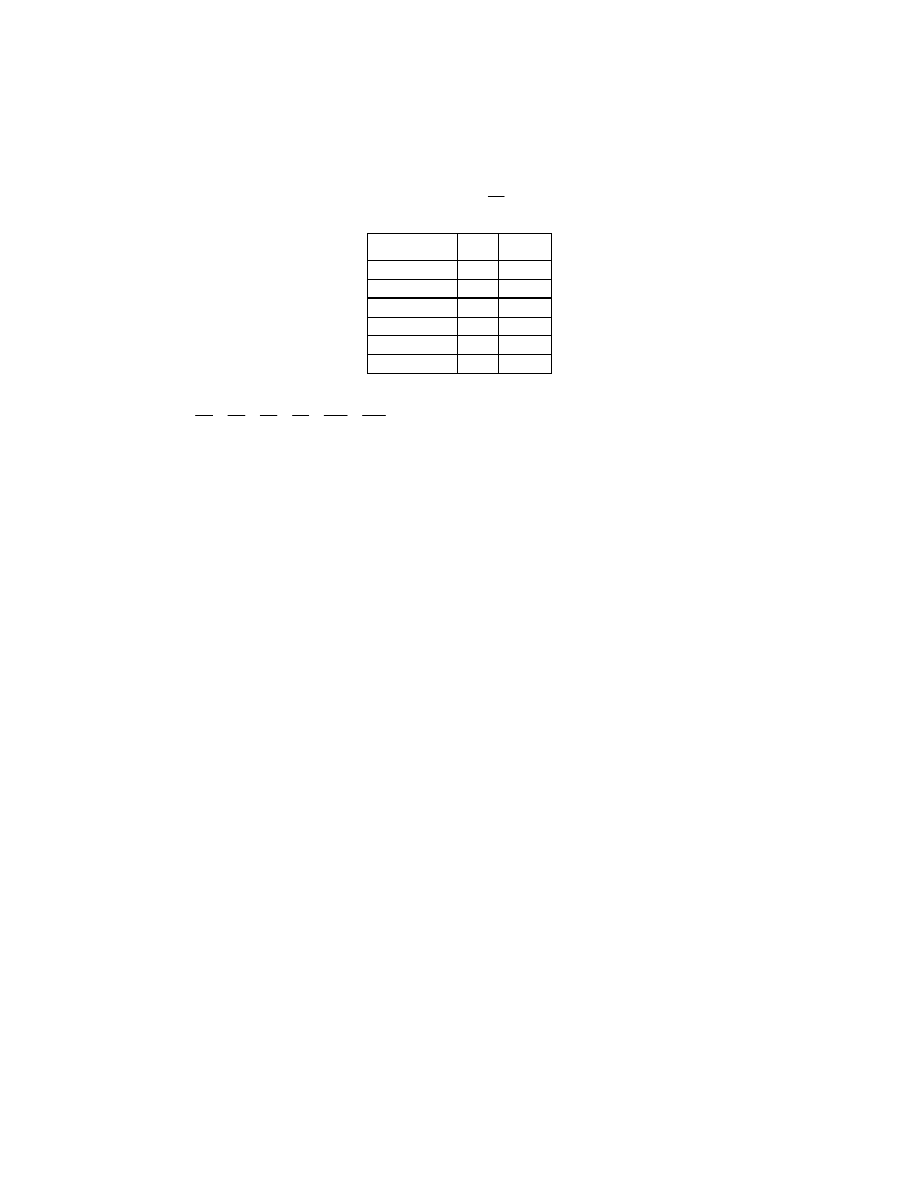
N06/5/MATHL/HP3/ENG/TZ0/XX/M+
- 7 -
3.
The hypotheses are
0
H
: The model fits the data
A1
1
H
: The model does not fit the data
A1
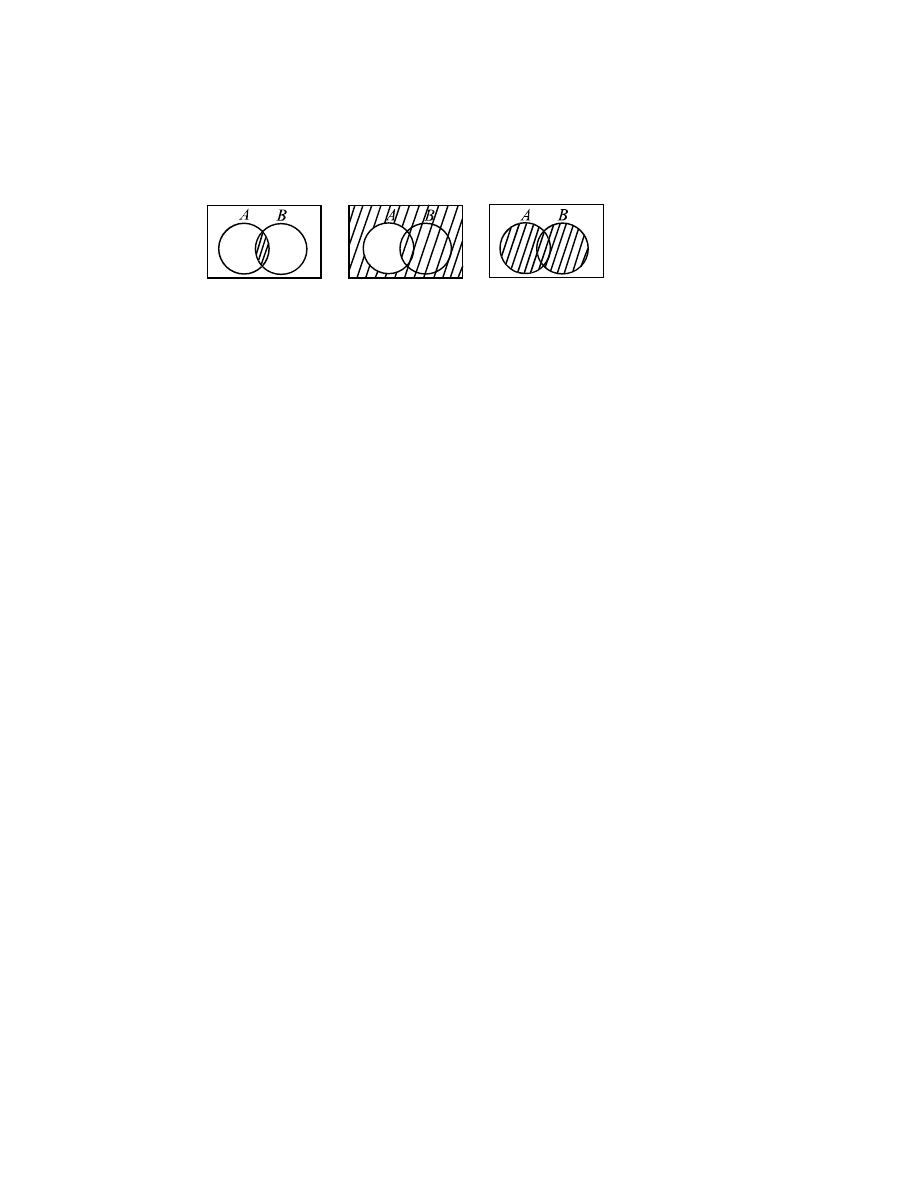
Expected frequencies are given by E (
)
420
21
x
X
x
= =
×
(M1)(A1)
x
o
f
e
f
1 25
20
2 46
40
3 64
60
4
82
80
5 99
100
6 104
120
2
2
2
2
2
2
2
5
6
4
2
1
16
20
40
60
80
100
120
χ
=
+
+
+
+
+
M1A1
4.61
=
A1
DF
5
=
A1
Critical value 11.07
=
at the 5 % level.
A1
We conclude that the claim is accepted.
R1
[14 marks]
A4

N06/5/MATHL/HP3/ENG/TZ0/XX/M+
- 8 -
4.
(a)
B(20, 0.15)
X ∼
(M1)
Using gdc, P (
5)
0.170
X
≥ =
A2 N2
[3 marks]
(b)
By trial and error around sensible values of
n,
M1
P (
5 30 bought)
0.476
X
≥
=
A1
P (
5 31 bought)
0.506
X
≥
=
A1
∴
Minimum number 31
=
A1 N4
[4 marks]
(c) (i)
5
5
1
P (
)
0.15
0.85
4
x
x
X
x
−
−
⎛
⎞
= =
×
⎜
⎟
⎝
⎠
A2
(ii)
X is negative binomial with
5, 0.15
r
p
=
=
(A1)
E ( )
33.3
r
X
p
= =
M1A1
(iii)
5
5
5
6
1
0.15 0.85
4
P (
)
2
P (
1)
0.15 0.85
4
x
x
x
X
x
x
X
x
−
−
−
⎛
⎞
⎜
⎟
=
⎝
⎠
=
−
= −
⎛
⎞
⎜
⎟
⎝
⎠
M1A1
(
1)! (
6)!
0.85
(
5)! (
2)!
x
x
x
x
−
−
=
−
−
M1A1
0.85(
1)
5
x
x
−
=
−
AG
(iv)
P (
)
P (
1)
X
x
X
x
=
>
= − as long as
0.85(
1)
1
5
x
x
− >
−
M1A1
4.15
0.15
x
<
A1
83
3
=
AG
It follows that
27
26
p
p
>
M1A1
but
28
27
p
p
≤
A1
It follows that the most probable value of
X is 27.
R1
[16 marks]
Total [23 marks]
N06/5/MATHL/HP3/ENG/TZ0/XX/M+
- 9 -
SECTION B
Sets, relations and groups
1.
(a)
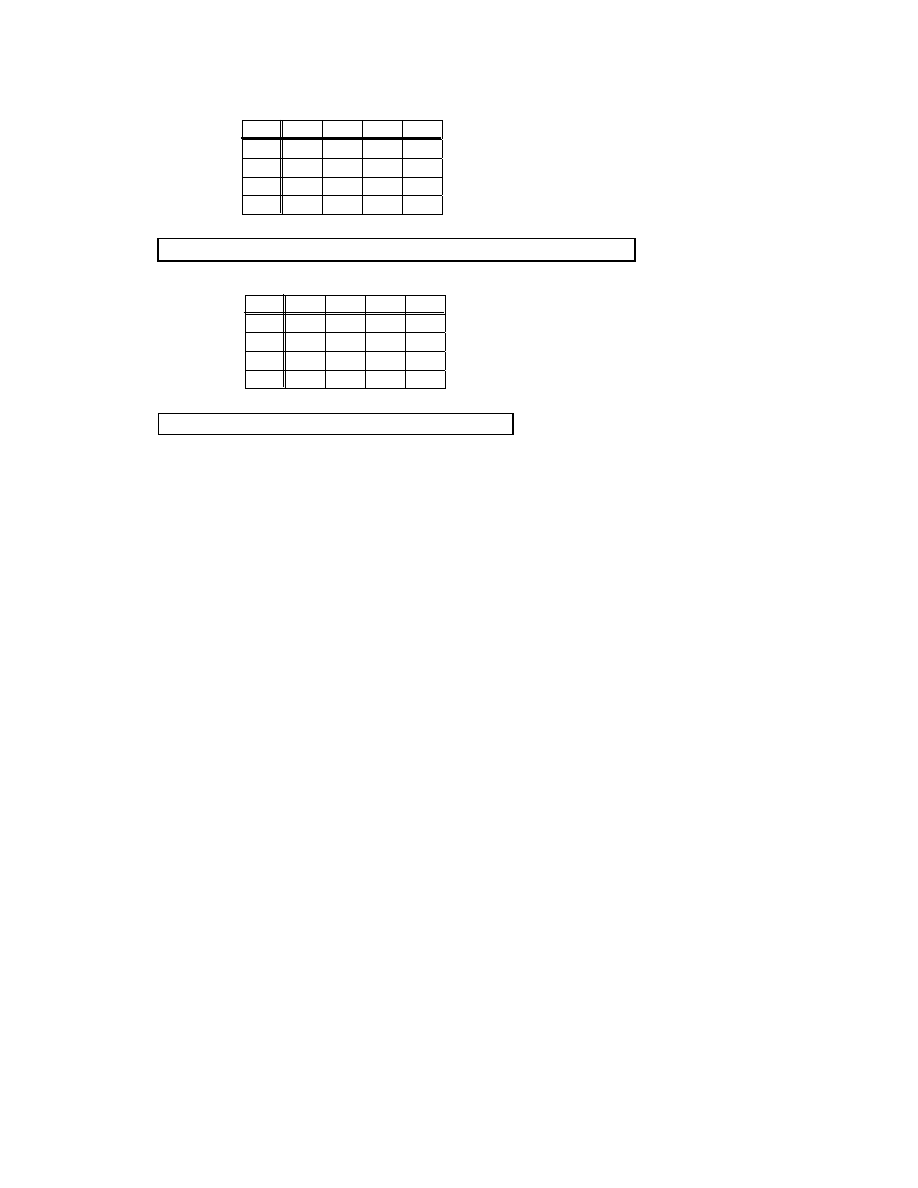
A1A1A1
C
D
E
[3 marks]
(b)
D
C
′∪
(
)
(
)
A
B
A
B
′
′
=
∪
∪
∩
M1A1
(
)
(
)
A
B
A
B
′
=
∩
∪
∩
A1
A
=
AG
[3 marks]
(c)
D
E
∩
(
)
(
)
A
B
A
B
′
=
∪
∩
∪
M1
(
)
(
)
(
)
(
)
A
A
A
B
B
A
B
B
′
′
=
∩
∪
∩
∪
∩
∪
∩
A1
(
)
B
A
A
′
= ∪
∩
(A1)
B
= ∪ ∅
B
=
AG
[3 marks]
Total [9 marks]
U
U
U
N06/5/MATHL/HP3/ENG/TZ0/XX/M+
- 10 -
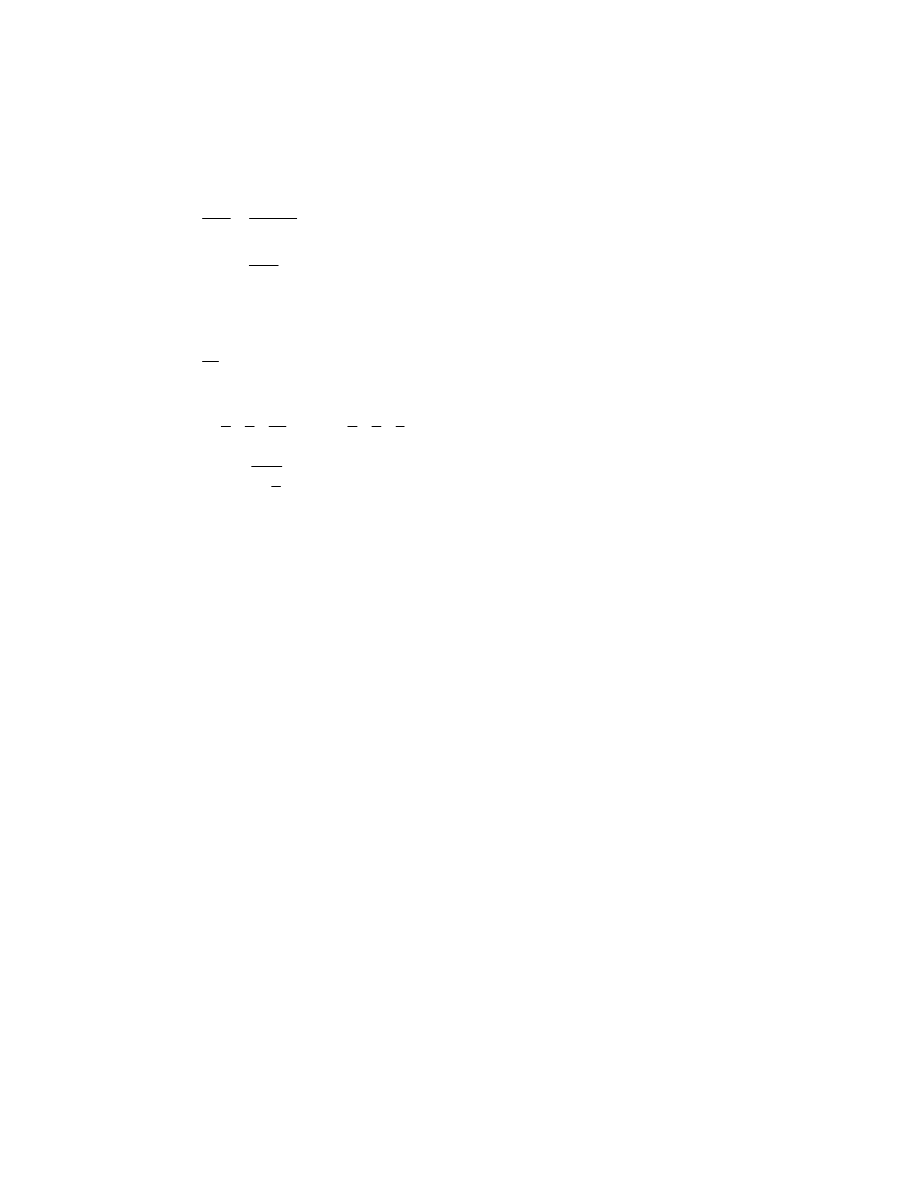
2. (a) (i)
•
8
1 3 5 7
1
1 3 5 7
3
3 1 7
5
5 5 7 1 3
7
7 5 3 1
Note:
Award
A3 for 1 error, A2 for 2 errors and A0 for 3 or more errors.
(ii)
∗
15
3 6 9 12
3 9 3
12
6
6
3 6 9 12
9
12 9 6 3
12
6 12 3
9
Note: Award A1 for 1 error, A0 for 2 or more errors.
[6 marks]
(b)
H: Identity is 6: order of 3 is 4
A2
order
of
9
is
2
order
of
12
is
4
G: Identity is 1: order of 3 is 2
A1
order
of
5
is
2
order
of
7
is
2
The
orders
of
G and H are not comparable.
(M1)
Hence the two groups are not isomorphic.
A1
[5 marks]
Total [11 marks]
A2
A4
G
H

N06/5/MATHL/HP3/ENG/TZ0/XX/M+
- 11 -
3.
(a)
1
R is not an equivalence relation
A1
because it is not reflexive (
aRa does not hold).
R1
2
R is not an equivalence relation
A1
because it is not symmetric
R1
BRA is true whereas ARB does not hold.
A1
3
R
is not an equivalence relation
A1
because it is not transitive
R1
dRf and fRe are true, whereas dRe does not hold.
A2
Note: For all 3 conditions, accept any counter example.
4
R
is an equivalence relation
A1
because it is reflexive (there are only 1s on the diagonal),
A1
symmetric (the table is symmetric with respect to the diagonal)
A1
transitive (all the 0 on the square of the matrix are also 0 on the matrix)
A3
(other method: checking all the cases).
[15 marks]
(b) The
equivalence
classes
are
{ ,
}
D F and { , }
E G .
A1A1
[2 marks]
Total [17 marks]

N06/5/MATHL/HP3/ENG/TZ0/XX/M+
- 12 -
4. (a)
Range of
f is
2
y
> therefore f is not surjective on
+
R2
[2 marks]
(b) If ( , )
( , )
g a b
g c d
=
then
3
2
3
2
a
b
c
d
+
= +
(1)
and
2
2
a b
c
d
+ =
+ (2)
M1
(1)
2 (2)
− ×
gives a
c
= A1
hence b
d
= A1
therefore
g is injective
let
( , )
( , )
g x y
u v
=
then 3
2
u
x
y
=
+
2
v
x
y
=
+
M1
solving simultaneous equations gives
2
x
u
v
= − +
A1
2
3
y
u
v
=
−
A1
therefore
g is surjective
R1
and hence
1
( , )
(
2 , 2
3 )
g
u v
u
v
u
v
−
= − +
−
A2
[9 marks]
(c) (i)
h is not injective A1
because, ( , )
x y and ( , )
y x have the same image, x
y
≠
R1
(ii)
h is not surjective A1
Any counter example satisfying
{
}
2
( , )
4
x y
x
y
<
A2
[5 marks]
Total [16 marks]
5.
Let e be the identity element of G.
Let
,
a b
G
∈
M1
Then
2
a
e
=
2
b
e
=
A1
abab
e
=
A1
Hence (
)
a abab b
aeb
=
M1A1
2
2
a bab
ab
=
A1
ba
ab
=
A1
So G is abelian
AG
[7
marks]
N06/5/MATHL/HP3/ENG/TZ0/XX/M+
- 13 -
SECTION C
Series and differential equations
1.
(a)
)!
1
(
!
1
+
=
+
n
n
u
u
n
n
M1A1
1
1
n
=
+
0 as n
→
→ ∞
A1A1
Therefore series convergent by ratio test.
AG
[4 marks]
(b)
2
1 ,
3
!
n
n
n
< ∀ >
(M1)
2
! ,
3
n
n
n
<
∀ >
1
1
1
1
1
1
1
1
2
6
24
2
4
8
+ + +
+ < + + + +
…
…
M1A1
so
1
( 2)
1
1
2
S
∞
<
=
−
A1
that is
2
S
∞
<
AG
[4 marks]
(c)
e 1
−
A1
[1 mark]
Total [9 marks]

N06/5/MATHL/HP3/ENG/TZ0/XX/M+
- 14 -
2.
(a) Putting
( )
ln
f x
x
=
(1)
0
f
=
A1
1
( )
,
(1) 1
f x
f
x
′
′
=
=
A1
2
1
( )
,
(1)
1
f
x
f
x
′′
′′
= −
= −
A1
3
2
( )
,
(1)
2
f
x
f
x
′′′
′′′
=
=
A1
2
3
(
1)
(
1)
ln
(
1)
( 1)
2
2
6
x
x
x
x
−
−
≈ − +
× − +
×
M1A1
2
3
2
1
1
1
(
2
1)
(
3
3
1)
2
3
x
x
x
x
x
x
= − −
−
+ +
−
+
−
A1
3
2
3
11
3
3
2
6
x
x
x
=
−
+
−
AG
[7 marks]
(b)
Integrating both sides of the above result
4
3
2
3
11
ln
12
2
2
6
x
x
x
x
x
x
x
C
− ≈
−
+
−
+
M1A1
Putting ln1 0
= gives
1
4
C
= − so
(M1)A1
3
2
3
5
1
ln
12
2
2
6
4
x
x
x
x
x
≈
−
+
− −
A2
[6 marks]
(c) When 1.5
x
=
ln
0.4054...
x
=
A1
3
2
3
11
3
0.4166...
3
2
6
x
x
x
−
+
−
=
A1
3
2
3
5
1
0.4062...
12
2
2
6
4
x
x
x
x
−
+
− −
=
A1
The
second
approximation
is
nearer
the time value and therefore better.
A1
[4
marks]
Total [17 marks]

N06/5/MATHL/HP3/ENG/TZ0/XX/M+
- 15 -
3.
(a)
METHOD 1
2
d
1
(1
) (1
1
)
ln
d
1
(1
)
(1
)
x
x
x
x
x
x
x
x
⎛
⎞
+
−
− + +
⎛
⎞ =
⎜
⎟
⎜
⎟
−
+
−
⎝
⎠
⎝
⎠
M1A2
2
2
1 x
=
−
AG
METHOD 2
(
)
d
1
1
ln (1
)
ln (1
)
d
1
1
x
x
x
x
x
+ −
−
=
+
+
−
M1A2
2
2
1 x
=
−
AG
[3 marks]
(b) Put
y
vx
=
so that
x
v
x
v
x
y
d
d
d
d
+
=
(M1)A1
Substituting
2
2
2
d
(1
)
d
v
x
v
x
x
v
v
x
⎛
⎞
+
=
+ −
⎜
⎟
⎝
⎠
(M1)(A1)
2
d
1
d
v
x
v
x
= −
A1
2
d
d
1
x
v
x
v
=
−
A1
2
d
ln
1
v
x
C
v
=
+
−
∫
M1A1
1
1
ln
2
1
v
C
v
+
⎛
⎞
=
+
⎜
⎟
−
⎝
⎠
A1
Substituting
1
1,
2
⎛
⎞
⎜
⎟
⎝
⎠
1
0
ln 3
2
C
=
+
giving
1
ln 3
2
C
= −
(M1)A1
2
ln
ln
3(
)
x
y
x
x
y
⎛
⎞
+
= ⎜
⎟
−
⎝
⎠
M1A1
y
x
y
x
x
−
+
=
2
3
A1
giving
3
2
3
3
1
x
x
y
x
−
=
+
A2
[16 marks]
Total [19 marks]

N06/5/MATHL/HP3/ENG/TZ0/XX/M+
- 16 -
4.
(a) (i)
2
2
d
1
ln (1
)
1
2
n
n
n
n
x x
x
x
α
α
−
−
⎡
⎤
=
+
⎣
⎦
+
∫
M1A1
2
2
2
1
1
ln
2
1
n
n
α
⎛
⎞
+
=
⎜
⎟
+
⎝
⎠
M1A1
(ii)
2
1
ln
or ln
2
α
α
→
as n
→ ∞
M1A1
[6 marks]
(b) Limit
2
2
0
sec
sec
lim
cos
cos
x
x
x
x
x
β
β
β
β
β
β
→
⎛
⎞
−
=
⎜
⎟
−
⎝
⎠
M1A1A1
2
2
0
2 sec
tan
2sec
tan
lim
sin
sin
x
x
x
x
x
x
x
β
β
β
β
β
→
⎛
⎞
−
=
⎜
⎟
−
+
⎝
⎠
A1A1
2
4
2
2
2
4
2
2
2
0
2
sec
4
sec
tan
2sec
4sec
tan
lim
cos
cos
x
x
x
x
x
x
x
x
x
β
β
β
β
β
β
β
→
⎛
⎞
+
−
−
=
⎜
⎟
−
+
⎝
⎠
A1A1
2
2
2
2
1
β
β
−
=
−
+
A1
2
= −
A1
[9 marks]
Total [15 marks]
N06/5/MATHL/HP3/ENG/TZ0/XX/M+
- 17 -
SECTION D
Discrete mathematics
1.
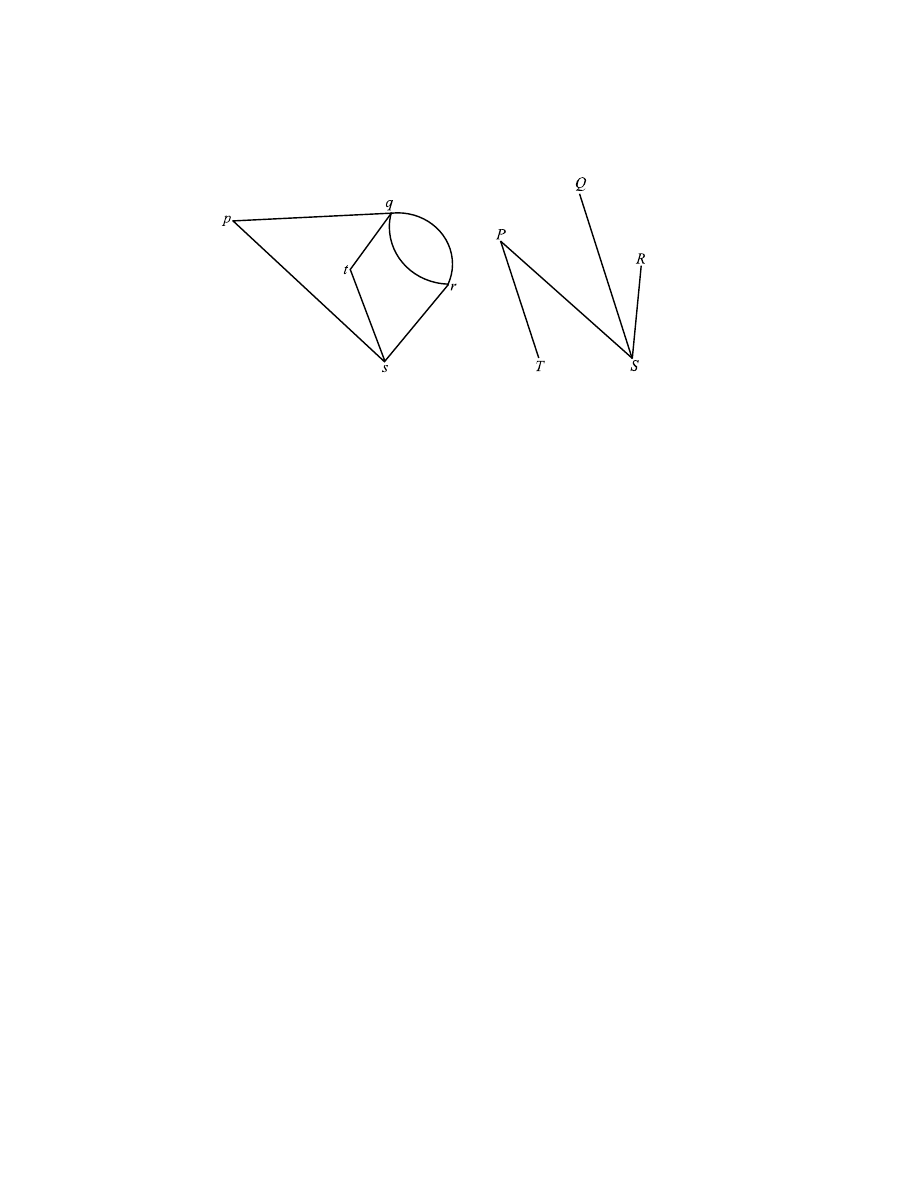
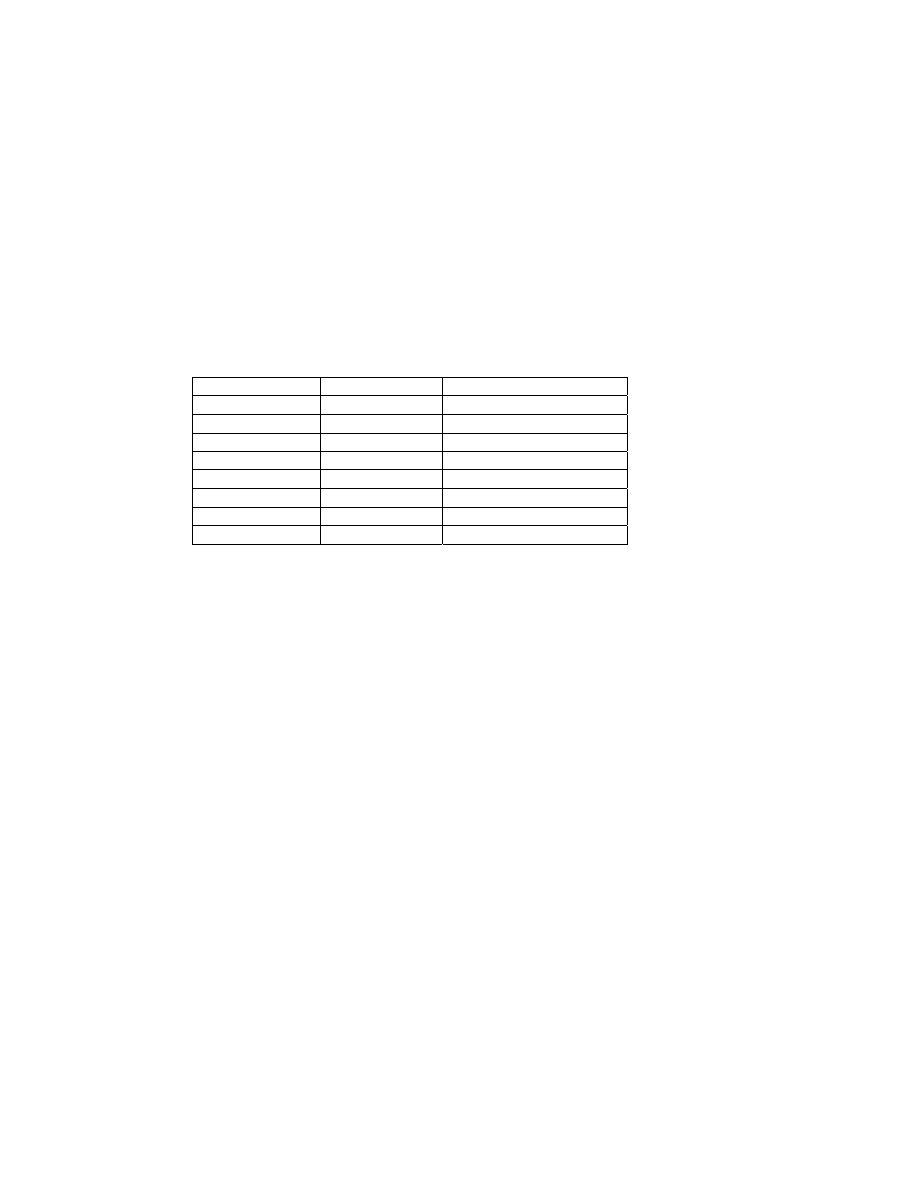
(a)
A2A2
[4 marks]
(b) (i)
G
1
is not simple (some entries are “2”s)
R1
G
2
is simple (no entries on the diagonal and no double edge)
R1
(ii)
G
1
is connected
(
p connected to q connected to r connected to s connected to t)
R1
G
2
is connected (
E connected to H connected to F and H connected to G;
and
E connected to K)
R1
(iii)
G
1
is bipartite (take {
p, r, t} and {q, s})
M1A1
G
2
is bipartite (take {
P, R, Q} and {T, S})
M1A1
(iv)
G
1
is not a tree (it contains two edges)
G
2
is a tree
P
S
Q
T
R
→
→
↓
↓
R1R1
(v)
G
1
contains a Eulerian trail (only two vertices have an odd degree)
M1
Example: r
q
p
s
r
q
t
s
→ → → → → → →
A1
G
2
does not contain an Eulerian trail (it has more than two vertices
of odd degree)
M1A1
[14 marks]
Total [18 marks]
G
1
G
2
N06/5/MATHL/HP3/ENG/TZ0/XX/M+
- 18 -
2.
This is equivalent to solving 19
13
4
x
y
−
+
=
(R1)
Using Euclid’s algorithm 19 13 6
= +
M1A1
13
2 6 1
= × + A1
Hence
1 13 2 6 13 2 (19 13)
= − × = −
−
(A1)
3 13 2 19
= × − ×
A1
Therefore 19 8 13 12
4
− × + × =
A1
The general solution is
8 13
x
k
= −
12 19
y
k k
= −
∈
M1A2
[10 marks]
3.
(a)
There are 7 vertices so 6 choices must be made
(A1)
Edge Weight
Choice
BG 1
1
st
M2A1
EF 1
2
nd
ED 2
3
rd
A1
AB 4
4
th
A1
BC 5
5
th
A1
GC 5
Reject
DF 5
Reject
A1
CF 6
6
th
A1
[9 marks]
(b) Total
weight
1 1 2
4
5 6 19
+ + + + + =
A2
[2 marks]
Total [11 marks]
4.
(a)
If a graph is not simple then it must contain either a loop or a double
edge and therefore contains a cycle so that it cannot be a tree. Hence
if it is a tree it must be simple.
M1A1R1
[3 marks]
(b) (i) Let
A and B be the two subsets of vertices of the bipartite
graph
G. Then in the complement of G, A will have no edge
linking any of its elements to
B. Hence the complement of G
is not connected since it contains two unconnected subgraphs.
M1A2
(ii) Let
H be the graph consisting of three vertices and no edge.
Its complement is obviously not bipartite.
A2
[5 marks]
Total [8 marks]

N06/5/MATHL/HP3/ENG/TZ0/XX/M+
- 19 -
5.
Since
p divides
p
p
x
y
+
,
p
x
x
− and
p
y
y
− ,
then
p
divides (
)
(
)
(
)
p
p
p
p
x
x
y
y
x
y
x
y
−
+
−
+
+
= +
R2A1
So x
y
kp
+ =
where
k is an integer
M1A1
and y
kp
x
=
−
M1A1
Therefore
2
1
(
)
p
p
p
p
p
p
p
x
y
x
kp
x
x
Ap
pkpx
x
−
+
=
+
−
=
+
+
−
where
A is an integer.
M1A3
So
1
2
(
)
p
p
p
x
y
A
kx
p
−
+
=
+
and therefore is divisible by
2
p .
M1A1
[13 marks]
Wyszukiwarka
Podobne podstrony:
Mathematics HL Nov 2006 TZ1 P3
Mathematics HL Nov 2006 TZ1 P2$
Mathematics HL Nov 2006 TZ1 P1
Mathematics HL Nov 2006 TZ1 P2
Mathematics HL Nov 2006 TZ1 P1$
Mathematics HL Nov 2006 TZ1 P2$
Mathematics HL Nov 2006 TZ1 P1
Mathematics HL Specimen 2006 P1, P2, P3 $
Mathematics HL May 2004 TZ1 P1
Mathematics HL Nov 2002 P1 $
Mathematics HL May 2004 TZ1 P2 $
Mathematics HL Nov 2004 P1 $
więcej podobnych podstron