Presents:
Presents:
Presents:
Presents:
THE ULTIMATE MARTIAL ARTS LIST
A Master guide to the martial arts of Cyberpunk 2020 and comprehensive rules for melee weapons of every variety
.
Written by Deric Bernier (
droc@mc2k.com
)
This is just one of many articles for the Cyberpunk 2020 Roleplaying Game you can find on Datafortress 2020,
the largest, most Comprehensive Cyberpunk 2020 site in the world.
Visit it at:
http://datafortress2020.110mb.com/
D-ROC'S MASTER MARTIAL ARTS LIST
COMPILED AND WRITTEN BY DERIC "D-ROC"BERNIER.
Warning: Because of the HUGE table on this page, it may take a while to load.
INTRODUCTION
Ok, for all you punks who like a little variety in your ass whippin' I have compiled
the master martial arts list. Using the format in the PACIFIC RIM SOURCEBOOK
, this list includes every martial art you could imagine, including some I made up
just to add some spice to the mix. The hardest part was setting the difficulty
modifier. Originally my system was based on how hard the style was to learn, and
how hard it was to find, but after several comments I have decided to revise this.
Now the IP modifier is based strictly on how hard the art is to learn. The
difficulty of finding someone to teach the character the art is something that
should be roleplayed. If you don't own a copy of PAC RIM I strongly urge you to
go out and buy it right now. It specifies in detail the hand to hand and melee rules
for CP 2020. Ok, got your cup in place, let's go.
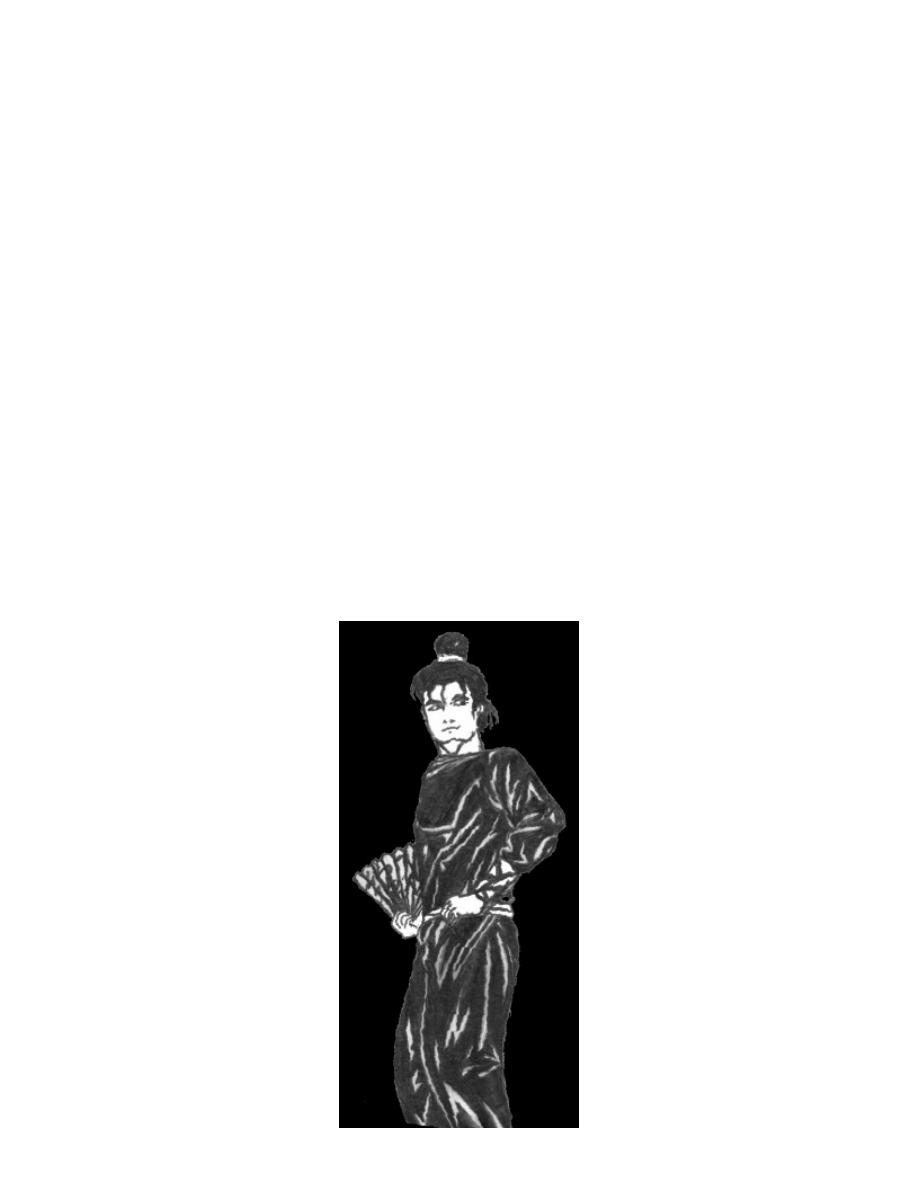
Chin Lu, student and teacher at Momma Sifu's
and Papa Sensei's School of Martial Arts.
STATS
Style
IP
Mod
Strike/
Cast
Punch Kick Disarm Sweep Block Dodge Grapple Throw Hold Choke Escape Ram
African
Kickfighting
(3)
-
1
3
-
2
3
2
-
-
-
-
-
-
African Monkey
Style
(2)
-
2
1
-
1
-
1
-
-
-
-
-
-
Aikido
(5)
-
-
-
3
3
1
3
4
4
3
1
3
-
Aikijitsu
(4)
-
2
1
3
-
1
2
2
2
1
-
-
-
American
Kickboxing
(2)
-
1
3
-
-
1
-
-
-
-
-
-
-
An Ch'I
(5)
3
3
3
1
1
2
1
1
1
1
2
2
-
Animal Kung-
Fu
(2)
2
2
2
-
-
2
-
-
-
-
-
-
-
Arasake-Te
(3)
1
1
1
1
-
1
1
1
1
1
2
1
-
Bando
(4)
1
2
3
1
2
1
1
1
-
1
1
-
-
Baraqah
(4)
-
1
2
-
2
2
-
3
2
3
-
3
-
BCT
(3)
-
2
1
1
-
1
-
1
1
1
1
1
-
Bersilat
(3)
1
2
2
-
-
2
1
-
1
-
-
1
-
Bok Pai
(3)
-
3
2
-
1
2
2
-
2
-
-
1
-
Boxing
(2)
-
3
-
-
-
3
1
-
-
-
-
-
-
Brazillian
Juijitsu
(4)
-
-
-
-
2
1
1
4
1
4
3
3
-
Capeoria
(3)
-
1
2
-
3
2
2
-
-
-
-
-
-
Catchascatchcan
(3)
-
1
1
-
1
1
-
1
1
1
1
1
-

Style
IP
Mod
Strike/
Cast
Punch Kick Disarm Sweep Block Dodge Grapple Throw Hold Choke Escape Ram
Cha Chu'an
(4)
-
3
3
-
1
2
2
-
2
-
-
1
-
Cha Hsuin Men
(4)
4
2
1
2
-
2
2
-
-
-
1
1
-
Ch'in Na
(4)
-
1
-
1
-
2
2
2
2
2
2
1
-
Choi Li Fut
(4)
2
2
2
1
2
2
1
1
1
-
-
-
-
Chu Fen Do
(2)
-
1
1
1
-
1
1
1
-
-
-
-
-
Chulukua
(2)
2
1
2
-
1
1
1
1
1
1
1
-
-
Cornu Breton
(2)
-
-
-
-
-
-
1
2
1
1
1
1
-
Coung Nhu
(3)
2
2
2
-
1
1
1
2
1
1
-
-
Dambe
((2)
-
3
3
-
-
1
-
-
-
-
-
-
-
El Cuchillo
(2)
3
-
1
1
-
1
1
-
-
-
-
-
-
Escrima
(3)
3
1
1
3
-
1
1
-
-
-
-
-
-
Fong Ngan
(3)
-
4
2
1
-
1
1
-
-
1
1
-
-
Fu Chiao Pai
(3)
1
4
4
-
-
1
1
-
-
-
-
1
-
Gatka
(3)
3
1
1
-
-
2
2
-
-
-
1
-
-
Goju Ryu
(3)
1
2
1
1
-
1
1
1
1
1
-
1
-
Gun Fu
(4)
1
-
-
2
3
2
4
4
-
-
-
2
1
Hakoko
(2)
-
-
-
-
1
-
-
1
3
1
1
-
-
Hashishin Style
(2)
2
-
-
-
-
-
1
1
-
1
1
-
-
Hisardut
(4)
-
2
2
1
-
1
-
2
2
1
2
1
-
Hsing-Yi Chuan
(4)
-
3
2
1
1
1
2
1
1
1
-
1
-
Hoppkido
(2)
-
1
1
-
1
1
-
1
-
-
1
-
-
Hwarang-Do
(4)
3
2
2
-
1
1
1
-
1
1
2
1
-
Irish Cudgel
Fighting
(2)
3
1
-
1
-
1
1
-
-
-
-
-
-
Ishin Ryu
(3)
1
2
2
1
-
1
1
-
-
-
-
1
-
Jailhouse Rock
(3)
-
2
2
1
1
1
2
-
-
-
-
1
-
Jattenhand
(5)
2
2
1
-
3
1
4
-
2
-
-
4
3
Jeet Kun Do
(3)
3
3
2
1
1
2
-
-
-
-
-
-
-
Jitte
(5)
4
1
2
-
2
-
1
2
3
2
1
2
-
Jogo De Pau
(3)
3
-
1
2
-
2
3
-
-
-
-
-
-
Judo
(3)
-
-
-
-
2
-
1
2
3
2
1
1
-
Jui Jitsu
(3)
-
1
1
1
1
3
1
1
1
1
1
1
-
Kajukenbo
(3)
1
2
2
1
1
2
2
2
-
-
-
1
-
Kalari
(3)
1
2
2
-
1
1
1
-
-
-
-
3
-
Karate
(2)
-
2
2
1
-
2
-
-
-
-
-
-
-
Kaliope
(4)
1
3
3
2
1
2
1
-
1
1
-
3
-
Kendo
(3)
4
-
1
-
2
3
3
-
-
-
-
-
-
Kenjutsu
(3)
4
-
-
3
-
3
2
-
-
-
-
-
-
Kenpo
(3)
-
2
2
1
1
1
-
1
1
1
-
1
-
Kobujutsu
(3)
3
-
1
1
1
1
1
-
-
-
-
-
-

Style
IP
Mod
Strike/
Cast
Punch Kick Disarm Sweep Block Dodge Grapple Throw Hold Choke Escape Ram
Koppo
(4)
-
4
2
-
3
3
-
2
-
2
1
2
-
Krabi Krabong
(4)
5
-
1
3
2
3
1
-
-
-
-
-
-
Krav Maga
(4)
2
3
1
3
1
2
-
2
-
-
1
2
-
Kuk Sool Won
(3)
3
1
1
-
-
1
1
1
1
1
-
-
-
Kuntao
(3)
2
2
2
-
1
1
1
1
1
1
-
1
-
Kung Fu (US)
(3)
2
2
2
1
1
2
-
-
-
-
-
-
-
Kuo-Chu'an
(4)
-
3
1
2
3
2
3
-
-
-
-
-
-
Kupigana
Ngumi
(4)
-
2
2
-
1
3
1
1
2
1
1
2
-
Kyokoshinkai
(4)
-
3
2
-
-
1
1
1
2
2
-
2
-
Lee Kwan Choo
(no damage)
(5)
-
4
1
3
-
3
4
2
4
3
-
1
-
Li-Chia
(3)
-
3
2
-
-
2
1
-
-
-
-
1
-
Lua
(5)
-
2
2
2
1
3
-
4
2
3
2
2
-
Maratabeen
(3)
1
2
1
1
-
1
-
2
2
1
2
-
-
Mien-Chu'an
(4)
-
3
1
3
-
3
2
-
-
2
-
2
-
Moo Gi Gong
(3)
1
1
2
3
2
4
-
-
-
-
-
-
-
Muay Thai
(3)
-
3
4
-
-
-
2
-
1
-
-
-
-
Ninjutsu
(3)
3
3
1
2
2
1
2
1
1
1
1
1
-
Nuba Stick
Fighting
(3)
3
-
2
-
-
2
2
-
-
-
-
-
-
Nuba Wrestling
(3)
-
1
-
-
1
-
-
2
2
2
2
2
-
Null Boxing
(2)
-
3
3
1
1
1
1
1
-
-
-
1
1
Pakua
(4)
-
3
3
1
2
1
3
1
1
1
-
1
-
Pao Pat Mei
(3)
-
3
3
-
3
-
-
1
1
-
1
-
-
Panzer Faust
(full borg only)
(5)
-
3
3
-
1
-
3
3
1
-
-
4
3
Panzer Kunst
(full borg only)
(5)
3
3
3
-
2
1
3
1
1
1
-
2
1
Pentjak Silat
(5)
3
1
2
-
-
2
3
1
-
1
2
1
-
Sankukai
(4)
-
1
3
-
1
2
1
2
2
2
-
3
-
Sambo
(4)
2
2
2
2
2
-
-
2
3
2
-
2
-
Savate
(2)
-
-
4
-
-
1
1
-
-
-
-
-
-
S.C.A.R.S.
(5)
-
4
2
2
-
-
-
2
3
2
3
2
-
Shao Lin
(3)
2
2
2
-
2
3
1
-
-
-
-
-
-
Sinanju
(5)
-
4
1
3
1
2
4
1
1
1
1
1
-
Snake Style
Kung Fu
(4)
-
4
-
-
-
3
3
-
-
3
-
3
-
Streetfighting
(3)
1
2
2
1
1
2
1
1
1
1
1
1
1
Sumo
(4)
-
2
-
-
2
-
2
2
3
1
-
1
4
Tae Kwan Do
(3)
-
3
3
-
2
2
1
-
-
-
-
-
-
Tai Chi Chuan
(3)
2
2
1
-
2
1
1
-
-
-
-
-
-

Style
IP
Mod
Strike/
Cast
Punch Kick Disarm Sweep Block Dodge Grapple Throw Hold Choke Escape Ram
Taido
(6)
2
3
3
-
3
3
3
2
3
1
-
1
4
Tai Sing Pek
Kwar
(4)
-
3
2
1
1
2
3
1
1
-
-
3
2
T'ang Su
(5)
-
2
2
2
-
3
4
3
1
-
2
1
-
Te
(3)
2
2
1
1
2
-
1
-
-
-
-
-
-
Thamoc
(3)
1
-
-
3
-
1
1
3
-
3
-
1
-
Trash Boxing
(3)
-
2
3
-
3
-
1
-
1
-
-
2
1
Tien-Hsueh
Touch
(4)
-
5
-
1
-
2
3
1
-
1
-
1
-
Tsui Pa Hsien
(4)
1
2
2
2
1
2
2
1
1
2
-
1
1
Uechi Ryu
(3)
-
3
3
-
1
1
1
1
1
1
-
-
-
U-Ra-Do
(3)
1
1
1
-
3
2
-
-
-
1
1
-
-
Varmannie
(3)
-
1
1
-
1
-
-
2
1
1
1
1
-
Wai Wing Chun
(4)
2
2
2
-
1
2
2
1
-
2
-
2
-
Wrestling
(3)
-
-
-
-
1
-
-
2
2
2
1
2
-
Wudong
(3)
-
3
2
1
1
1
1
1
-
1
-
1
-
Wu Shu T'sung
(3)
2
2
2
1
-
1
1
-
-
1
-
2
-
Xing-Chiao
(3)
-
3
3
-
2
1
-
-
-
1
-
-
-
Yu-Sool
(5)
-
3
1
-
-
2
2
4
3
-
3
1
2
Zanji
Shinjenken-Ryu
(4)
5
1
2
-
-
2
2
2
-
-
-
-
-
Zero Gee
Combat
(3)
-
1
1
-
-
1
2
2
2
1
-
1
2
DESCRIPTIONS
AFRICAN KICKFIGHTING- A popular form of sparring
on the subcontinent, basically involving two tribesmen
kicking each other senseless. Not a formal style, and almost
unheard of outside of Africa.
AFRICAN MONKEY STYLE - Similiar to the Chinese
monkey boxing only in that it tries to emulate the behavior
of the primate, African monkey style is far more bestial and
savage, but not as refined or polished. No forms, really just
a very primal outburst, complete with scratching and biting,
and lots of noise. Unheard of outside of Africa.
AIKIDO - Defensive martial art. Fairly common anywhere
in the free world it teaches it users to wait until attacked and
then proceed to break the offending arm, leg or whatever.
Taught everywhere, though the techniques are very difficult
to master. Lesser forms, which aren't as extensive, are often
passed off as aikido.
AIKIJITSU - An ancient Japanese art, taught to samurai so
they would not be defenseless when unarmed. It focuses on
strikes, pressure points, disarms, and throws, and is meant to
be used until a samurai can procure himself a weapon. Very
rarely taught outside of Japan, and even in Japan it is fairly
rare, the few practitioners who do teach it are generally
Feudal enthusiasts.
AMERICAN KICKBOXING - A very watered down form
of Muay Thai. When someone tells you they are an expert
Kickboxer this is usually what they are talking about. It
does not have the conditioning exercises or rigorous, almost
torturous, training of the Thai martial art, and is instead more
for tournament fighting along the tamer American and
European rules. Taught Everywhere.
AN CH'I - This is the style of the Lin Kuei, the Chinese
version of the shinobi, it is rumored that the very origins of
Ninjutsu came from the Lin Kuei. Like its Japanese
counterpart, An Ch'i is considered an assassin’s art, suited
for attack and withdraw fighting. This style teaches the use
of many weapons, especially those that can be easily
concealed. Taught only in secret remote locations in China.
ANIMAL KUNG-FU - A bastardized version of the Five
Style Fist. This version is common worldwide, and is easy
to learn, though not very balanced.

ARASAKA-TE - developed by instructors at Arasaka to be
an all-purpose, fast, and easy to learn martial art, this new
style has enjoyed immense popularity among the corporate
and security circles. Considered weak by other martial artists
due to its corporate origins. Taught at all Arasaka training
Facilities as well as Dojos in any city they have major
holdings.
BANDO - The martial art of the infamous Nepalese soldiers,
the Gurkha. Actually the art is ancient, consisting of 3
separate forms until they were fused in the 1930's. Its
attacks are centered around incapacitation above death. This
means a practitioner will most likely go for an unprotected
leg before attempting to strike a defended head or torso.
Their are many animal forms to this style, each with slight
variations. It also places emphasis on use of the Kukri blade,
a heavy knife which acts as both a combat weapon and
machete.
BARAQAH - A Muslim Martial art originating in North
Africa. Generally taught only in the Muslim community it
focuses on grappling and quick strikes.
BCT - Basic Combat Training, this is the general, all
purpose, martial art taught to American servicemen.
Derived mostly from Karate and Judo, it is also commonly
taught around the U.S. by retired military personnel.
BERSILAT - A Malaysian martial art similar, and possibly
derived from, Pentjak Silat. Like Choi Li Fut and Capoeira
it resembles a dance, as is often performed as such at
weddings and other celebrations, however it is also a deadly
martial art, with focus on striking, armed and unarmed.
Rarely taught outside of India or Indian Communities.
BOK PAI - Crane style kung fu, emulating the graceful,
fluid movements of the great bird for which it is named. It is
a soft style and the moves are sweeping arm attacks and
roundhouse kicks, all while the artist is constantly pivoting
and spinning
BOXING - The manly art of fisticuffs. Completely geared
around upper body strength and powerful punches.
BRAZILLIAN JUIJITSU - Made famous by the Gracie
family, Brazilian Ju-Jistu is possibly the ultimate in the
grapping arts, allowing smaller fighters to take down men
twice their size and weight with relative ease. Once a
practitioner has a successful grapple, he will hold on
tenaciously, slowly crawling and maneuvering around the
opponents body until he has the best position possible to put
his opponent down. It biggest weakness however, is that
against an armed opponent, or multiple opponents, it is
virtually useless. Taught almost mostly in Brazil, though its
popularity has been steadily increasing. Many times you
will see people trying to pass off an inferior martial art as
Brazilian Jujitsu.
CAPEORIA - Developed by Caribbean slaves this style
resembles a tribal dance. (During the 19th century, slave
owners would stage gladiatorial bouts between their slaves
for gambling purposes. The slaves would sometimes be
dressed as roosters and wore metal claws on their fingers and
spurs tied to their calves.)
CATCHASCATCHCAN - A hybrid competition martial art
that tried to encompass everything, though not very well. It
lacks the discipline and focus of more traditional martial
arts, and has zero spiritual considerations. It is only slightly
more respected than professional wrestling. But it is oddly
popular as a martial art, especially to those who care little for
expanding their mental and spiritual repertoire along with
their physical.
CHA CH'UAN - From the outer reaches of Mongolia this
form was born centuries ago. Mongolia is still the only place
known where this relatively secret art can be taught. It uses
the hit and run principle of attack. Practitioners will jump in
attack the retreat, repeating when opportunity presents itself.
CHA HSIUN MEN - (white jade fan) A very rare martial
art this is geared towards the mastery of the iron fan weapon.
It is the art of surprise; a practitioner will calm his enemy
then attack when he is off guard. Not very effective against
multiple attackers it can be devastating to a single opponent
who lets his guard down.
CH'IN NA - Another rare art, this is an ancient wrestling
style. It teaches the bodies weak points and how to best
attack them, a master will know every nerve cluster, the
precise way to attack a limb to leave it broken or dislocated.
An extremely dangerous form it is taught only in secrecy and
only after tokens of fealty are given and an oath given to
never reveal its practitioners. If the oath is broken the
penalty is death.
CHOI-LI FUT- A style of kung fu directly descended from
the Shaolin this style teaches when a fight is eminent to
attack first with lightning speed and ferocious kicks and
punches. It is a fairly common form taught almost
everywhere in the free world.
CHU FEN DO - Similar in concept to Jeet Kun Do, but
lacking Master Lee's spiritual concepts and background, Chu
Fen Do is an average all around martial arts with an open
philosophy towards eliminating form and embracing
function and efficiency. Taught across America, Canada and
Europe.
CHULUKUA - The only Native American martial art still in
existence, and really a conglomeration of over 150 Native
American tribal martial arts, melded into one system.
Taught not only as a form of self-defense, but also as a form
of cultural pride. Only official Native American tribe
members are taught this, though it has spread to almost
reservation in North America, and among the nomad
community as well.

CORNU BRETON - An obscure English grappling art, all
but forgotten except for historical aficionados and Cornish
cultural adherents.
COUNG NHU - A Vietnamese martial art melding the
basic principles and forms of many other martial arts,
including those from China, Japan, and Korea. Rare outside
of Vietnam and Vietnamese communities.
DAMBE -A very savage martial art from Nigeria consisting
of kicks, punches, knees and headbutts. Almost unheard of
outside of Africa.
EL CUCHILLO - A Spanish martial art revolving around
the knife. Jitte is derived and expanded from this art.
Taught in Spanish, Mexican, and South American back
alleys, and anywhere else there is a large latin community.
ESCRIMA - This is a basic description of the Filipino
martial arts. While it does teach unarmed techniques, its
center of focus is around a short stave called an Escrima
stick, and the Balisong knife (incorrectly referred to as the
butterfly knife). The first goal of Escrima is to disarm an
opponent, and the art is categorized by it quick multiple
attacks to the arms and wrists, followed by a devastating
attack to the head and body.
FONG NGAN- (Phoenix Eye Kung Fu) A common style
emphasizing on getting in too close for your opponent to
make an effective attack while giving the student of the form
ample opportunity to decimate his enemy. Weapons become
useless once the artist gets in his preferred range, which is
usually almost chest-to-chest with his attacker. Intimidation
also plays a big part of this style and before the fight begins
a practitioner will try to stare his opponent down.
FU CHIAO PAI- (Tiger Claw Kung Fu) Students of this
style imitate the powerful tiger when in combat. With fierce
attacks and devastating blows always trying to do the most
amount of damage he can to his opponent. A very hard form
developed without many of inner peace teachings common
in most eastern martial arts.
GATKA - An ancient martial art from India, practiced by
Sihk warriors. It is centered around the use of the saber, but
hand to hand techniques were also taught. Rare now,
practiced mostly by traditionalists, and almost unheard of
outside of India.
GOJU RYU - A relatively new martial art, deeply rooted in
the Tao philosophy. It's principles involve retaliation with
the exact opposite amount of force as your opponent, if an
attaker throws a punch, instead of grabbing ther punch, a
practitioner will grab the arm, and break it, or use pressure
points to attack him. If the offender tries to grapple with
him, he will deliver a swift blow to the forehead, or a kick to
the chest. It also teaches some weapon forms, favoring the
more defensive weapons. A good brutal, defensive based
martial art.
GUN FU - Completely geared around mastery of the
handgun, this form makes a firearm truly an extension of the
user. Students are only taught the basics of surviving a
gunfight - stay constantly moving, fire till your opponent is
dead, (preferably from as close a distance as possible) count
your shots, when your out don't hesitate to find another
weapon instead of taking the time to reload yours (the dead
guy on the floor won't be needing his anymore right) if your
hit don't think about it till your dead or your enemies are,
never panic, and above all keep your opponent on the
defensive. Once a student has learned the basics the only
way for him to advance in his art is through combat, so
beginners don't stay beginners long, they are either killed or
they become better. A master is a truly magnificent sight in a
gun battle.
HAKOKO - Hawaiian wrestling, generally taught only on
the islands.
HASHISHAN STYLE - This is the martial art of the
dreaded Fedavi cult of the Middle East. A cult very similar
to the Thugee of India. It is an assassins cult, and members
are typically brainwashed and fed a strong concoction of
Hashish. This form doesn't have any defensive techniques,
as the cult members fully intend to either succeed or die.
Both the Fedavi and the Thuggee were partial to the use of
the knife, and of a special weighted sash used to strangle.
HOPPKIDO- A form of karate taught almost everywhere in
the world. It's only major difference is that it is a tad more
diverse than the basic karate although somewhat less
powerful. It is a good form for beginners.
HISARDUT - Developed in Israel for Mossad and the
Israeli military, Hisardut is an effective martial art and has
grown in popularity due to its efficiency and effectiveness.
Taught mainly in Israel, but it has been spreading through
North America, Europe and Australia.
HSING-YI CHUAN - A very violent and harsh Chinese
form, training its disciples to hit hard and fast, and to take a
hit without pain. While Eagle Claw was created for foot
soldiers, Hsing-Yi Chuan was said to be created for officers,
and as such is a more complex and refined martial art,
though still very similiar. It also exchanges freely with
Pakua, and the two arts are so similar that they are often
mistaken for each other. Hsing-Yi Chuan revolves around
its"12 Sacred Animals" styles, namely, dragon, dove, tiger,
crane bear, tiger, horse, monkey, turtle, snake, eagle falcon,
swallow, and rooster.
HWARANG DO- An incredibly diverse form of karate, an
attacker of someone using this martial art had better stay on
his or her toes. A practitioner will wait to be attacked then
counter attack with the opposite of whatever is coming - if
kicked he will grab his opponent's leg and throw him, if

grabbed instead of trying to break free he will simply punch
the offender. Originally from Korea this form is still taught
almost exclusively there.
IRISH CUDGEL FIGHTING - This Irish fighting art
revolving around the use of a heavy club, commonly referred
to as a shillelagh, has undergone resurgence in popularity in
Ireland as of late. Mostly due to an upswing in Irish
traditionalists. Taught in Ireland and in Irish communities.
ISHIN-RYU - Another common though relatively new form
of karate it is taught around the principles of the bo staff and
emphasizes quick blows snap kicks followed by a hasty
withdrawal only to be repeated again and again till the
opponent can no longer attack.
JAILHOUSE ROCK - A martial art developed in prison,
by the inmates. It's simple and straight to the point, which is
usually the avoidance of ending up on the point of
someone’s Shiv. Taught in any prison, anywhere.
JATTENHAND - Derived from Parkour and made into a
philosophical martial art for full conversions. Tracers, as
practitioners of Jattenhand are known, can often be
recognized illuminated bands of color worn somewhere on
the Tracers body. Most commonly these illuminated bands
are displayed on wrists and ankles, so that when in motion a
Tracer literally leaves behind a light trail. Basic training
generally involves a series of "follow the leader" type
sessions, where the mästare starts out in charge, running an
ever different and varying obstacle course through the city.
As the students learn to keep up they eventually progress to a
level where they take the leader position for other students,
with the mästare watching from the sidelines, for technique
and inventiveness. Graduation to mastery come when the
Student can challenge the mästare, and successfully lose him
in a chase, whether by making him fall or by simply losing
him. The rules of the chases are simple, no "civilian"
interference, no property damage. Among the student led
chases, the "leader" position can be challenged to unarmed
combat at any time, but the chase has to keep moving, even
during the fight. If a combatant falls, is separated from the
chase he loses all rights of challenge that day. A fall is
defined as cessation of controlled motion for longer than one
round. If the leader of the chase hits a dead end or can't
continue the chase he loses leadership rights to any chases
for a week (or more at the mästare's discretion). The
philosophy Jattenhand is simple, "Always keep moving, no
matter, what, to rest is to die'!" (Note: Jattenhand created by
Mort and the other members of
VFTE
) For more information
see
CHEAP FBC
.
JEET KUN DO- The style of kung fu developed and made
famous by the legendary Bruce Lee. The reason he
developed it was because he was sick of the forms
recognized in most other styles of kung fu, his thoughts
being that the forms let your opponent know your moves in
advance and that gave away too much of an advantage so he
developed his own style. The name literally means "no
form". The style is incredibly fast and ferocious, its moves
are very difficult to predict making its user a very dangerous
foe indeed. Taught everywhere.
JITTE - Centered around the use of the knife or dagger this
is a new style developed by European nomads. In many
places in Europe firearms are very hard to come by and very
expensive, knives however are easy to obtain legal
everywhere and you must be very skilled or very sneaky to
use them well. Originally developed for trial by combat
arenas where any dispute can be settled whether it be as
small as an argument between to people or as large as
territorial disputes. Also called the gypsy blade fighting style
due to its nomadic origins. Taught only in the nomad
community.
JOGO DE PAU - Portuguese stick fighting, taught almost
exclusively in Portugal.
JUDO- Perhaps the most common eastern martial art in the
world, it is taught everywhere to anyone. It is a required
course in many military branches, police forces and even
school as part of the phys-ed program. A Japanese form of
wrestling, it teaches to use your opponent's weight and
momentum against him. Taught everywhere.
JUI JITSU - Another fairly common Japanese art this takes
the anything goes approach to fighting. Not considered to be
very honorable but very effective. A good all around martial
art. Taught Everywhere.
KAJUKENBO - Also known as Hawaiian street fighting.
Combines native arts with those taught by Japanese
immigrants into an effective means of self-defense. The art
came about during a particularly violent time in Hawaiian
history, when during the 1940's and 50's street thugs and
organized crime families were fighting for control. Taught
mostly in Hawaii, though schools have popped up in Japan,
Tahiti, and the US Mainland.
KALARI - An Indian martial art rarely very rarely taught to
outsiders. Closely related to the Hindu religion, it works
well with the body and mind mastering techniques of the
Yogi's. Practitioners are trained with many different
weapons, as well as in unarmed combat. For the optimum
effectiveness the artist will cover his body in oil before a
fight, to make himself hard to grab. Rare outside of India
and Hindu communities.
KALIOPE- A martial art taught only to women, and taught
in secrecy. Its primary philosophy is to defend against
larger, heavier, usually armed, and usually male, opponents.
This kata for this skill is a very graceful, dance, that
resembles a cross between ballet, and tribal dances. The
skill is most effective when the artist enters the dance,
because the dance moves in a circular motion, masking the
oncoming attacks and defenses, and disorienting the
attacker. The art is equally effective against group as it is
single opponents. In more desperate times the art also

teaches dirty tricks, and escape tactics. Very rare, but taught
worldwide, new students are generally chosen after a careful
screening process.
KARATE - Your basic karate, if you don't know about this
one you've been on an island all your life. Taught
everywhere.
KENDO - The Japanese style of fencing. This has its
students get geared up in bamboo armor and proceed to
whack the hell out of each other with their bamboo swords
(shinae's). Not very common outside of Japan this is the
country's way of keeping the art of bushido alive. A safer
direct descendent of zanji shinkenjen-ryu and Kenjutsu.
KENJUTSU - This is the sword art of the Samurai, not as
intensive as the harsher Zanji Shinjenken-Ryu, this art was
the one preffered by soldiers and footmen among the
samurai ranks. Very rare, even in Japan.
KENPO- Another form of karate also very common. It has
more of an emphasis on grappling skills. Taught
Everywhere.
KOBUJUTSU - This is an Okinawan style centered on
armed combat techniques, and many of the tradition martial
arts weapons are included in this training. Taught in
Okinwana, Japan, Europe, America, and Australia.
KOPPO- An ancient Japanese martial art, the forerunner of
modern karate and judo. It is a rare and obscure form and
more deadly than its predecessors. Taught exclusively in
Japan to a very select student body that must prove
themselves worthy of the honor. Thought by some to be
developed to combat the ninja clans of feudal Japan.
KRABI KRABONG - Quite possibly the fastest and most
dangerous weapons art in the world. Originating in Burma
and Thailand, Krabi Krabong is the armed version of Muay
Thai. While spears, staves, and other weapons are among its
arsenal, the main Weapon of Krabi Krabong is the Daab (or
Dha), a short, light curved blade with long handle (usually
over half the length of the blade). The Daab's are wielded in
pairs, and are used much like (and with the same amazing
speed) Escrima sticks. Traditional forms have included
some rather odd looking leaping attacks that look like hops,
but in combat these are discarded in favor of more effective
movement. Where Kenjutsu is graceful and fluid, Krabi
Krabong is furious and frenzied. Note: Whereas Katana's
are somewhat heavy (though not as heavy as it's European
counterparts) Daab's are short bladed and very thin. Blade
lengths vary from 1 1/2 to 2 1/2 feet in length, and
ceremonial daabs are often intricately carved. Very rarely
found outside of Thailand.
KRAV MAGA - This Israeli martial art was founded after
WWII by a Jewish holocaust survivor. It incorporates the
most deadly and effective moves from the various martial
arts and street fighting techniques around the world. Every
member of the Israeli Army trains in it, Mossad operatives
train to expert level. It is quite possibly the most deadly
form of martial arts in existence, meant to take on multiple
and armed attackers, there is no sport version, there are no
submission moves, it is entirely geared to either kill or
incapacitate your opponent as quickly and efficiently as
possible.
KUK SOOL WON - A popular Korean form, similar to that
of the Japanese Samuria sword art, Zanji Shinjinken-Ryu.
This is the weapon art of the legendary Korean warriors, the
Hwarrang knights. Taught everywhere in Korea, but not
generally known outside the country.
KUNG FU- (American) This is your basic kung fu taught
all over the United States and Europe. It is a bastardized
mutt of many different forms with each school seeming to
specialize in its own style. While not as advantageous as
other forms of kung fu it is a good martial art in its own
right, it is very indistinct and easier to learn. Taught
everywhere.
KUNTAO - An Indonesian martial art, the chief competitor
to Pentjak Silat, a competition which spawns often bloody
rivalry. Teaching numerous weapon styles, as well an hand
to hand, this is a well rounded, effective art. Unfortunately,
like Pentjak Silat, it is not commonly taught outside of
Indonesia.
KUO-CHU'AN- (Dog Style Kung Fu) Perhaps the most
comedic of all martial arts don't be fooled, for it is also one
of the most effective. Practitioners, upon being attacked, will
feign injury to the point of obvious melodrama - falling to
the ground, rolling around, wailing like a child, and
generally giving the appearance of a fool who is overly
sensitive and has no business fighting. But it's all an
elaborate ruse to get the opponent to underestimate them,
thus causing the opponent to be of guard, and when their
opponent is sufficiently lulled into sense of superiority the
silliness ceases and the attacks become very fierce often
destroying the attacker before he knew what happened. To
further this deception, in any fight that is not a serious
student of dog boxing will always purposely lose. Almost
unheard of outside of China, and even in the country it is
very rare.
KUPIGANA NGUMI- Known as the "Essence of African
Martial Arts," Kupigana Ngumi is representative of many
African martial arts. It is a very dance like system, and
focuses on style over substance.
KYOKUSHINKAI - This form of karate is based on
striking power and the ability to take a blow. Powerful blows
are honed to perfection by demonstrations where the
students punch and kick through wood boards, cinder blocks,
bricks, rocks, trees, whatever... Body hardening also plays an
important part and students subject themselves to having

things broken over them or hurled at them or whatever else
their masters can think of. Common all over the world.
LEE KWAN CHOO- This is perhaps the greatest martial
art of all, because it truly is only for defense. It is impossible
to damage an opponent using this form. Meditation and
spiritual enlightenment are a big part of this completely non-
violent martial art. Geared completely towards avoidance
attacks are made but cause no damage whatsoever, stopping
just before contact and effectively stunning an opponent
without actually striking him. When someone attacks a
master of this style the master will usually dodge and parry
their attacks until either they have beaten themselves up by
running into other things, pass out from exhaustion, or
simply give up. This form is only taught in remote Chinese
monasteries.
LI-CHIA - (Short Hand Kung Fu) Always remaining
within arms reach of his opponent, the practitioner of this
martial art attacks straight on with as many punches and
snap kicks as possible until his opponent has been beaten
into submission. A fairly common form of kung fu schools
and can be found through out the US and Europe.
LUA - Once strictly prohibited to anyone but the Hawaiian
royal family, Lua has now become popular in America due
to its bone breaking techniques. Oddly enough, it is still
illegal to teach in Hawaii.
MARATABEEN - An Arabian martial art originating from
Morocco, taught in most Arab communities.
MIEN CH'UAN - (Cotton Fist Kung Fu) The master
chooses the student for this art, which is centered on counter
attacking with equal or greater force. This is done by
dodging and parrying attacks until an opening presents itself,
and then attacking the opponent's weak spots with full force.
Common in China, and taught though rarely in Europe,
Australia, and North America.
MOO GI GONG - A martial art that specializes in using
anything as a melee weapon. From a pair of chopsticks, to a
stepladder. (JACKIE CHAN is the foremost example of this
type of fighting where in every movie he makes he does
something of this nature- in RUMBLE IN THE BRONX he
used a ski, FIRST STRIKE the aforementioned stepladder,
watch his Chinese flicks for better examples, I only used
these films because they can be found in video stores
everywhere.) As long as a practitioner of this martial art is
not trapped in an empty room he is never helpless. Taught in
monasteries and schools throughout China and Japan, as well
as rare schools in Europe and America.
MUAY THAI- (Thai kick boxing) One of the deadliest
martial arts in the world. While it involves many spiritual
aspects and ceremonies, the art itself is simply brutal. From
the age where they can walk young children in Thailand are
taught this ultraviolet form of kick boxing. The death toll
from this sport in Thailand is staggering, especially today
where bloodports are the most sought after forms of
entertainment. As if that wasn't enough, organized crime
controls the sport completely and lives are traded daily for
the entertainment of the crowds and the money they lose
gambling. Fixing a fight is common and if the fighter refuses
to throw it they are killed along with their families and
friends. True Muay Thai is rare outside of Thailand, though
not unheard of.
NINJUTSU - This is not the fake ninjutsu you find in
survivalist camps that cater to the paranoid. This is the real
thing. The ancient Japanese art of assassination. On the
whole the world thinks there are no ninja left in the world,
this is a cultivated lie. The ninja clans are still there doing
the dirty work for the highest bidder, and while they usually
only work for Japanese customers they have been know to
make exceptions. The ninja are the most feared assassins in
the world, and this is a fear they have exploited to its full
potential. Deadly and silent, beware the ninja, for he will
never attack when expected, never give you a fair fight and
never show any mercy. Ninjutsu is only taught at secret
schools in Japan.
NUBA STICK FIGHTING - Stick fighting, like wrestling,
is popular and traditional in almost every part of Africa.
Nowadays however stick fighting is used almost entirely for
ceremony, as the horrors of constant civil war in most of
Africa make it all but useless.
NUBA WRESTLING - Wrestling is more than just a sport
to the Nubas—it is a seminal part of their culture with both
social and religious purposes. Boys prepare for manhood
through wrestling competitions. Successful wrestlers achieve
a higher status that follows them through life. Wrestling also
has connections with fertility rites, ancestral worship, and
animistic beliefs. It is so intertwined with all aspects of Nuba
culture, it is feared that if the Nuba were to lose wrestling, it
might cause them to lose other customs.”- National
Geographic This is very rare outside of Africa, and is
closely tied to Nuba Stick Fighting.
NULL BOXING - A recently developed martial art, with
little philosophical influence. This style was developed by
the combatants the underground gladiatorial pits sponsored
by wealthy corporates. The style is very new, and is still
evolving, and it has a duel purpose of being very cinematic,
and very lethal. The practitioner will first make small
attacks to gauge the skill of his enemy, then after playing
with him long enough for the crowd to have a show, he will
move in quickly with a barrage of fast powerful attacks,
trying to kill or incapacitate the opponent as quickly as
possible. (Created by Steven Barnes for his Aubry Night
series of books.) Taught in underground death match circles
all over the world.
PAKUA - An art very similar to T'ai Chi Chuan. Common
inside China and taught with growing popularity all over the
world.

PAO PAT MEI - (Leopard Style Kung Fu) Emulating the
cunning and ferocity of the leopard a practitioner of this art
will gauge his enemy carefully then attack this incredible
speed and deadly force. Taught only in remote monasteries
in China, Laos, and Vietnam.
PANZER FAUST- (for full conversions only) A martial art
developed exclusively for use by full borgs, it centers on the
enormous power and fantastic speed only a full body
conversion could stand. The stress in the joints would tear a
human apart even if he could learn it. Once learned this is
the only martial art a borg can know due to the rigorous
training. Originally taught only to US military full
conversion cyborgs, it has grown in popularity and begun
being taught in private schools all over the world.
PANZER KUNST - A martial art developed by one of the
original students of Panzer Faust. Whereas Panzer Faust is
geared for stand up fighting, and centers on the ability of a
heavy borg to deliver powerful blows, Panzer Kunst was
developed to make use of the lighter borgs speed and
agility. It suffers from the same drawbacks as Panzer Faust.
Taught in private schools wherever there is a high population
of Full Conversion cyborgs.
PENTJAK SILAT- The eastern art of assassination, this
martial art is shrouded in secrecy and deceit. It has been said
that to learn its secret is to lose your soul, no one knows
where this is taught. Watered down versions can be found
almost everywhere.
SANKUKAI- Restricted only to Buddhist monks this
martial art is designed to subdue an opponent until his anger
has passed, or until the hold placed on his pressure points
has caused him to pass out. This form of karate is only
taught in Buddhist temples in Japan to monks who have
served for no less than a year.
SAMBO- The Russian art of wrestling. It really just
amounts to do whatever it takes to win. While it used to only
be taught in the Soviet Union, it is becoming more common
around the world since its collapse.
SAVATE- The French art of kickboxing, this is another
martial art that has enjoyed success throughout Europe but
has never hit iit big anywhere else. As a martial art it is not
as fluid as most of the eastern martial arts due to its
European background although it is devastatingly effective
and impressive to view in use.
S.C.A.R.S. - The Scientific Combat Auto-Reactionary
System, also known as Autokinetics, is the martial art taught
exclusively to Navy S.E.A.L.'s and Air Force Rescue teams.
It is among the most brutal and effective learn martial arts on
the planet, and is completely geared towards offense, in fact
it teaches no defense, instead it focuses on killing moves,
delivered as quickly and efficiently as possible. Training for
this art is so harsh in fact, that many would be practitioners,
including seasoned martial artists and combat veterans, quit
during the first day. Outside of military training grounds,
only one school exists, and it charges a 5,000eb per week fee
for training.
SHAO-LIN KUNG FU- The original kung fu, all other
forms have their base here. One of the oldest martial arts still
in existence. It is only taught in china in Shao-lin
monasteries. The art is free to learn but one must go through
the rigorous training and harsh discipline of the Shao-Lin
monks.
SINANJU- The Korean art of assassination. This martial art
is rumored to date back to the time of Christ. Although
Koreans are known to exaggerate when it comes to this
subject. It is said that masters of Sinanju have staged the
perfect assassinations and left there victims as nothing more
than a fairy tale. Robin Hood was said to have been killed by
a master of Sinanju. There is only one master of Sinanju per
generation and his students spend their whole lives learning
to take his place until he chooses one of them. All the other
students are banished from the master’s village forever.
SNAKE STYLE KUNG FU - Practitioners of this art keep
their hands open when attacking and strike with their fingers.
The attacking hand looks like a snake striking and is very
hard to get a lock on. The strikes will always be aimed at
vital spots on the enemies body, eyes, throat, nerve clusters,
etc...This ancient style of kung fu is taught only in China.
STREETFIGHTING - Not a formal martial art, but it is a
trained one, practitioners generally work with their own
strengths and weaknesses. Dirty fighting at its finest. Every
street fighters art will be as individual as the practitioner, and
the stats given are merely representative.
SUMO- The ancient style of two fat guys in their undies
trying to push each other out of a circle Taught mainly in
Japan. This is their national sport and great care and
ceremony goes into each bout. The wrestlers aren't just fat
either, there is quit a bit of muscle in their enormous bodies.
Fighting a sumo wrestler is not a good idea, a slap from a
sumo could break your neck and you could hit him 30 times
before he feels it. The worst thing would be if he fell on you,
so be careful around the big guys. Taught in Hawaii and
Japan.
TAE KWAN DO- A Korean form of karate that is centered
on offensive attacks. Schools for this form can be found
anywhere.
TAI-CHI CH'UAN- The single most common martial art in
the world and the national physical fitness program in China.
In fact it is the only martial art you can get instructional
tapes for at any video store. While widely perceived as
simply an exercise routine or meditation technique it is a
legitimate martial art. Taught absolutely everywhere.

TAIDO- Only one school in the world teaches this martial
art and its found in Korea. It is a relatively new art and has
attracted enormous popularity. Last year the school had a
student body of over 2 thousand. The main reason for this is
the amount of style involved. All attacks are aerial, and
when performed properly are spectacular to observe.
TAI SING PEK KWAR- (Monkey Style Kung Fu) He
who learns this form will act like a monkey during a fight,
roll on the ground, flail his arms and make monkey sounds.
Another martial art that takes advantage of a ruse designed
to confuse or enrage the opponent, and then attack him when
he is off guard. Rare even in China, outside the country it is
almost unheard of.
T'ANG-SU- This is oldest form of Korean martial arts
known, and the precursor to all forms of karate. Exclusively
an offensive martial art this style has no defensive moves at
all. It is the most difficult form of karate and it is taught only
in remote areas of Korea.
TE - The oldest Okinawan karate is a weapon based form,
the weapons are what the martial arts weapons of today are
based upon but then they were simply agricultural tools that
the people learned to use as weapons. A form primarily
focused on avoidance of aggression a practitioner of this art
will never attack until he himself is attacked. It can be
learned anywhere there is a large Okinawan community.
THAMOC - The Art Of Modern Confrontation. This martial
art was developed for police officers. The primary moves are
geared towards self-preservation. Disarming techniques,
blocks and holds used to subdue a criminal without resorting
to deadly force. Taught at police academies and self-defense
courses throughout the world.
THRASH BOXING- This martial art comes from the
streets and dance clubs of the world and is really nothing
more than a combative dance. Even when engaged in a fight
to death it will appear as though the combatants are merely
dancing, until the blood starts to flow no untrained observer
will be able to tell there is a fight going on. It seems that in
the dance clubs of 2020 it is unlikely anyone would care, on
the contrary such fight are often a spectator event. Learned
only on the dance floor.
TIEN-HSUEH TOUCH- This is the feared death touch
technique. This is the most kept secret in the world of
martial arts. Learning it involves signing your freedom away
to a black society and spending the rest of your life as a
servant to the dark community of assassins. If the
practitioner ever refuses a task or tries to leave he is hunted
down and killed, such are the rules for the masters of the
death touch. Also since this technique takes a lifetime to
master, no other martial art can be learned after this art is
taken. But from the start of your training until your death,
you spend your time mastering the death touch. You can kill
someone with a touch, not just instantly but up too weeks
later. Not all practitioners however, are malevolent, in fact
some practitioners are well respected healers, due to their
innate knowledge of human anatomy and the flow of chi.
Students are chosen for this art, and it is highly
recommended that GM's NEVER allow characters to take it
as a starting skill. If they want it they must seek out the
masters and prove themselves worthy through gameplay
only.
TSUI PA HSIEN -(Drunken Style Kung Fu) This martial
art is designed to resemble a drunken stupor. The
practitioner wobbles about mumbling, looking like he is
barely able to stand, making carefully orchestrated attacks
and defensive maneuvers. Onlookers will be completely
fooled, putting a master's victory down to sheer luck and his
opponent will be battered, humiliated and dumbfounded.
Taught only in China.
UECHI RYU - Another form of karate, originating in
Okinawa.
U- RA - DO - This is a nomad martial art developed by the
under ground population using an amalgam of all the martial
arts brought in from around the world by the roving clans. It
is said no two people know the same style and differences in
bonuses may vary. (What’s given is an average set of
bonuses) this gives practitioners an advantage in that there
moves are incredibly diverse and unpredictable. Moves are
traded as favors or as courtesy and when ever two clans meet
there will always be the exchange of forms and kata's. This
martial art is also becoming popular in the street where
youth's trade move's like skating tricks. Its users are known
for their love of the game footbag, which they play whenever
they get the chance. Taught only in the nomad community.
VARMANNIE - Taught only in remote villages in india,
and almost unheard of anywhere else, this martial art has no
distinct forms, and is geared towards an individuals own
strenghts and weaknesses. Mostly it is a grappling art, oddly
enough geared towards multiple attackers. The idea behind
it is, you grab an opponent and move him into the path of
oncoming attackers, and use your feet to disable them while
they are unable to rush.
WAI WING CHUN- A popular form of Kung Fu, and one
of the oldest in the world. Very effective, and very fast.
This was Bruce Lee's style before he developed Jeet Kun
Do. Commonly taught in most civilized countries of the
world.
WRESTLING- Greco roman wrestling taught in every high
school in America.
WUDONG - A Chinese style, combining the art of
deceptive fighting, with that of quick fierce strikes designed
to end a fight quickly. Common in China, and found
sparsely in Europe, North America and Australia.
WU SHU T'SUNG- (People's Republic Of China's Kung
Fu) Is the official martial art of Red China. To learn you
must travel to China and enroll yourself in the communist
doctrine. A formidable and very hard style kung fu.
XING CHIAO - (Eagles Claw Kung Fu) Once again an
animal style whereupon practitioners imitate the actions of
an eagle, making leaping attacks with kicks and using there
hands to make gouging and clawing attack, and then making
a quick retreat to re-evaluate the situation before once again
joining the fight. Taught in china by masters who live the
hermits life, the student must struggle through the lack of his
teaches presence and mostly teach himself.
YU-SOOL - A mixture of karate and Aikido this form
teaches to counter with opposite resistance, a punch with a
sweep, a parry with a kick etc...Taught only in Korea.
ZANJI SHINJINKEN-RYU- The samurai art of the katana.
The Japanese swordsmen are undeniably the best in the
world and this is their art. Completely geared towards the
use of the katana and the bushido way of life, the student
must first prove to the master that he is worthy. Almost
never taught outside of Japan, where even there it is growing
increasingly more rare.(for more info read the book
AUTUMN LIGHTNING)
ZERO GEE COMBAT - Only effective in a 0-G
environment this is the art of fighting without gravity.
Momentum and inertia are the major philosophies behind
this martial art. Taught at any orbital station and at any
military space camp.
FENCING AND ARCHERY
I don't include fencing and archery in my martial arts list,
due to the fact that outside their chosen weapon, they offer
little to no training in other areas. Therefore, fencing and
archery do not gain the benefits of the martial arts.

MELEE WEAPONS
To make my life, and the life of all CP 2020 GM's, far easier, I am giving an extensive list of melee weapons. However, with this
list the weapons will be classed by type. So as opposed to having stats for each and every weapon, I will merely be giving damage
based of the general type of groups of weapons, along with rules for customization, options, and quality, and all the things that
that entails. Hopefully the following lists, while not complete by any means, will give you enough information to place any other
weapons you might be curious about.
1. BLADED WEAPONS
LIGHT KNIVES = 1 point of Damage, general cost
of 10eb
Pocket Knives, Scalpels, Pen Knives, Boxcutters,
Knitting Needle, Ice Pick
MEDIUM KNIVES = 1/2 D6 Damage, general cost
of 25eb
Steak Knife, Balisong, Fillet Knife, Small Throwing
knife, Boot Knife, Stilleto, Small Kris, Push Knife,
Folding Knife, Dirk, Bagh Nahks, Teko, Ashiko,
HEAVY KNIVES = 1D6 Damage, general cost of
50eb
Combat knife, Hunting knife, Butcher knife, Tanto,
Bowie, Dagger, Large Throwing Knife, Large Kris
LIGHT SWORD = 2D6 Damage, general cost of
100eb
European Short Sword, Tai Chi Sword, Wakizashi,
Daab, Machete, Kuhkri, Ninja-to, Gladius, Large
Survival Knife, Large Bowie, Butterfly knife, Chinese
War Sword, Epee', Foil, Barong, Sword Cane,
MEDIUM SWORD = 3D6 Damage, general cost of
200eb
Katana, Broadsword, Dao, Chinese Hook Sword, Tachi,
Cavalry Saber, Scimitar, Cutlass, Rapier, Longsword,
Rapier, Shamshir, Small Scimitar,
HEAVY SWORD = 4D6 Damage, General cost of
300eb
Claidmore, Zweihander, No-Dachi, Bastard Sword,
Greatsword, Flamberge, Executioners Sword, Large
Scimitar,
LIGHT THROWN WEAPON = 1 point Damage,
general cost of 5eb
Bar Dart, Shuriken, Asian Throwing Spike, Hyo,
MEDIUM THROWN WEAPON = 1/2 d6 Damage,
general cost of 10eb
Small Throwing Knife, Heavy Shuriken, Boot knife,
Bowie Knife,
HEAVY THROWN WEAPON = 1D6 Damage,
general cost of 20eb
Heavy Throwing Knife, Tomahawk, Throwing Ax,
Chakram,
VERY HEAVY THROWN WEAPON = 2D6
Damage, General cost of 40eb
Heavy Throwing Axe, Mongwanga, Spear, Javelin, Lawn
Dart
LIGHT AXE = 1D6 Damage, general cost of 20eb
Hatchet, Tomahawk, Hand Axe, Hunga Munga, Kama
MEDIUM AXE = 2D6 Damage, general cost of 40eb
Mongwanga, Battleaxe, Woodsmans Axe, Splitting Axe,
Carvers Axe,
HEAVY AXE = 3D6 Damage, general cost of 60eb
Great Axe, Executioners Axe, Double Bit Axe
LIGHT POLEARMS = 3D6 Damage, general cost of
50eb
Spear, Hook Spear, Imperial Polearm, Asegai, Boar
Spear, Samburu Spear, Zulu Spear, Native American
Spear, Wu Cha
HEAVY POLEARMS = 4D6 Damage, general cost
of 100eb
Naginata, Kwan-Do, Lance, Halberd, Poleaxe, Yari
2. BLUDGEONING WEAPONS:
LIGHT BLUDGEONING = 1D6 Damage, general
cost of 0-30EB
Short club, sap, Escrima Stick, Brass Knuckles,
Weighted Gloves,
MEDIUM BLUDGEONING = 2D6 Damage, general
cost of 50eb
Tonfa, Club, Cudgel, Cane, Nightstick, Small Mace,
Baton, Jo-Staff, Sai, Jitte, Hanbo
HEAVY BLUDGEONING = 3D6 Damage, general
cost of 25-75eb
Baseball bat, Nunchaku, Flail, Mace, Bo-Staff, Large
Club, Heavy Pommeled Cane,
VERY HEAVY BLUDGEONING = 4D6 Damage,
general cost of 100eb
Heavy Mace, Heavy Flail, Great Club, 3 Sectional Staff,
3. FLEXIBLE WEAPONS
LIGHT FLEXIBLE WEAPON = 1/2 D6 Damage,
general cost of 30eb
Riding Crop, Kangaroo Rat, Switch Whip, Bamboo
Whip, Weighted Sleeve or Sash,
MEDIUM FLEXIBLE WEAPON = 1d6 Damage,
general cost of 50eb
Short Bullwhip, Cat-O-nine-tails, Bicycle chain,
HEAVY FLEXIBLE WEAPON = 2d6 Damage,
general cost of 100eb
Bullwhip, Heavy Chain, Manrikigusari, Jie Jui Ban,
Monowhip
MELEE WEAPON QUALITY
1
Cheap, breaks on a roll of 4 on a 1D10 after any
fumble or parry
2
Poor Quality-breaks on 2 or less on a 1d10 after a
fumble or parry
3
Standard Quality, hard to damage, breaks only on a
critical fumble
4
High Quality, long lasting, can take abuse, military
quality tool, almost impossible to damage without
specifically intending to.
5
Masterwork Quality, even trying, it is near
impossible to damage. Only the finest weapons can
achieve this.
4. MELEE WEAPON RULES
Melee weapons are assumed to be of standard
quality, however you can upgrade or degrade the
quality.
A weapon with a quality of 1 is 1/5th the price listed.
A weapon with a quality rating of 2 drops the weapon
price by half.
A weapon with a quality rating of 3 is standard.
A weapon with a quality rating of 4 raises the weapon
price x3
A weapon with a quality rating of 5 raises the weapon
price x10
(certain weapons, especially improvised ones such as
most glass bottles have a quality rating of zero and
break upon impact)
All hafted weapons can also do damage as a Jo or Bo
staff, depending on length.
Weapon Pommels can be used to make bludgeoning
attacks and do 1/2 D6 damage.
Improvised weapons are to be compared to the above
list using common sense to figure out what would be
the best category of comparison for the improvised
weapon. For really odd bludgeoning weapons, damage
is figured at 1/2d6 for every 2lbs of weapon weight.
You can throw any weapon, but throwing any bladed
weapon not specifically designed for it results in a -5 to
hit.
5. MELEE WEAPON OPTIONS
Jagged, spikey, edges add +3 to damage of bladed
weapons, cost an extra 20% of weapon cost.
Monoblades add 1d6 to damage of bladed weapons,
weapon cost x5, drop quality down to 1, if orbital
crystal is used cost is x7 and quality only drops to 2.
For x10 weapon cost you can have only the edge of a
bladed weapon covered with Monocrystal, even if the
mono edge shatters the weapon will still have a
working blade. Using this method only the actual edge
of the blade suffers a quality loss. (this can be done to
any bladed weapon) (orbital crystal can be used for x15
the cost of the weapon)
For every 50 years of age of the weapon, add 100eb to
the price.
If the weapon was created by a known Mastersmith,
add 1,000 eb to price, and improve weapon quality by
one rank. You can do this up till you achieve
Masterwork quality.
Spikes add +3 to damage of any bludgeon weapon.
A knuckle guard (25eb) or handbasket (50eb SP:6) can
be added to any melee weapon, protecting the hand and
allowing for 1/2 D6 bludgeon damage.
You can add 10% extra weight to the end of a weapon
for an additional 20% of the weapon cost. This gives an
additional 1 point of damage for every weight increase
up to a maximum of 5.
Custom Engraving, precious metal inlay, gem setting,
and special material handles (such as bone or ivory) are
possible, at a steep fee (determined by GM)
Many weapons can be used to entangle, Hook swords,
tonfa, Jitte's, whips, chains.... even a towel. Weapons
such as these provide a +1 to grapple, hold, and choke
check
ADDITIONAL RULES
CREATING YOUR OWN MARTIAL ARTS: Until now there has never been a working system for how the Martial
Arts and their difficulty modifiers worked, according to inside sources this is because Mike Pondsmith just winged it
and hoped no one would ever notice. Well, I noticed, and decided we needed something a little more streamlined,
something that actually works. Because of the formula I created, several martial arts difficulties had to be changed, and
the modifiers now actively reflect the bonuses given by martial arts. It is also important to note, that now, absolutely
no martial art has less than a (2) modifier. This is far more realistic and in line with the point of martial arts. After all,
why would anyone take brawling if they could get a martial art for the same price. The formula for existing the
existing martial arts presented above, as well as for creating your own new martial arts is as follows:
MARTIAL ARTS
DIFFICULTY
MODIFIERS:
DIFFICULTY MODIFIER
(2)=
1+1D6 in MA
bonuses
DIFFICULTY MODIFIER
(3)=
7+1D6 in MA
bonuses
DIFFICULTY MODIFIER
(4)=
13+1D6 in MA
bonuses
DIFFICULTY MODIFIER
(5)=
19+1D6 in MA
bonuses
Using a die allows for differential between any new
martial arts created, otherwise everyone would just
max out their martial arts bonuses. For an example
of a new martial art, choose the difficulty modifier.
ATHLETICS AND ENDURANCE: Having skill in
Endurance AND Athletics allows you to drop the
Difficulty modifier by 1 point (minimum +2 modifier).
However this only works as long as your Athletics and
Endurance skills are equal or higher than your martial
arts skill. If your martial art skill raises high than these
two skill the difficulty modifier reverts to normal.
Obviously Full conversion Cyborgs ignore this rule,
and instead all martial arts EXCEPT those which are
considered BORG only have a difficulty modifier of
one point lower (minimum of +2 modifier). Full borg
only martial arts are unaffected, their difficulty modifier
cannot be changed.
MULTIPLE MARTIAL ARTS: When reading the
rules you may say to yourself, "What's the point you
can only use one at a time anyway, so one offensive and
one defensive is all I need, its all I can use anyway
right?" Well.... kinda. True if you have a 4 in karate and
a 2 in koppo you can't add them together to get a 6
when trying to kick someone, but what you can do is
take the highest value bonus from your various martial
arts. So say you have a martial art with a punch of 4
and a block of 1, and you take another martial art with a
punch of 2 and a block of 3, you keep the punch of 4
from the first martial art, and use the block of 3 from
the second, so you keep the highest bonus given of any
martial art you know. I know a lot of people are going
to disagree with me on this but listen up. The reason
someone takes more than one martial art in real life is
to increase their physical arsenal, the more ways you
know how to do something the better you can do it. So
you say, "Well gee, if i take a bunch of martial arts at
level 1 I will be invincible right?"...WRONG. First off,
most people don't have the time, money or resources to
devote to the rigorous training. Even if a character does
he will spend all his time practicing. GM'S worrying
about this upsetting the power balance of your game
take note- if the characters can do it so can the bad
guys- or the good guys depending on what kind of
characters you have running around in your game. And
if they don't keep practicing they begin to forget and
their skill level drops and they're screwed. Make their
sensei's a strong influence in their lives. Role-play their
training- that's where they will be spending most of
their time anyway. If they do take multiple martial arts
have their schools clash. There are all sorts of things
you can do to discourage your players from getting out
of hand. Use your imagination.
"WHAT IS STEEL COMPARED TO THE HAND
THAT WEILDS IT" Conan The Barbarian
DAMAGE: Here is a sensitive issue - damage is
figured by adding the level of your martial arts skill
(only the applicable one dufus) to your body damage
modifier and the roll of the dice. Exactly as it says on
page 100 of the CYBERPUNK 2020 RULEBOOK (page
102 of the updated version)and page 137 of the
PACIFIC RIM SOURCEBOOK
. Again a lot of people
are gonna disagree here too, but not only is it the
official rules - it is also a fact that a properly trained
hand can do more damage then any conventional
handgun round. Even a .50 AE bullet won't destroy a
cinder block but I personally know people who can
break several at the same time with their bare hands.
NUFF SAID!
GRAPPLE, HOLD, THROW AND CHOKE:
Grapple is meraly used to initiate a grab action,
afterwards you can choose whether to Hold (continue
grab), Throw (fling your opponent), or Choke (use the
grappling action to do damage, either through a choke,
joint manipulation, arm breaks, etc.) The most
dangerous martial artists in the world do most of their
damage through joint locks and breaks, when you can
grab a persons arm, and break it in four places, then
proceed to work your way down the body, you have
effectively won the confrontation. As such, the Choke
action gets the damage bonus that applies to kicks,
punches, rams, and throws as well (Martial Art skill
plus STR bonus, plus weapon if applicable).
WEAPONS: Depending on the martial art learned, it
also might teach the use of a variety of weapons.
Anything with a strike bonus offers weapons training.
There are also some, like THAMOC that have no
bonus, but train in specific weapons anyway (in this
case the tonfa/nightstick).
For every point of MA skill you have (providing it has
a strike bonus, or is somehow otherwise tied to a
weapon) you may choose 2 melee weapons to master.
At a Skill of 10 you are assumed to have mastered all
weapons tied to that martial art.
FORMLESS MARTIAL ARTS: Some martial arts,
like Jeet Kun Do, Krav Maga, Streetfighting, and U-Ra-
Do, don't teach specific techniques and forms, instead
they teach moves tailored to the individual’s strengths
and weaknesses. In situations like this, it is best to add
up the bonus points of the art, and re-apply them to suit
the practitioner’s needs.

SPECIAL ABILITIES OF THE MARTIAL ARTIST:
Falling- This is an ability common to every martial art
available, basically it is just knowing the proper way to
fall and take the least amount of damage, a martial artist
can divide the dice value of damage taken from falling
by half.
Katas- Kata's serve duel purposes, in one sense they
are away to work out, stretch and meditate
simultaneously, in another sense they accustom the
artist to his art, till it becomes a second nature.
Meditation- While meditation is not singular to the
martial arts, it is a very important part of it to many of
them, although most of the western arts do not place
much importance on the benefits of meditation.
One-Inch Punch- This is an ability made famous by
the legendary Bruce Lee, and involves focusing all the
energy and momentum of your body into one place,
then starting with the fingers extended and touching the
target, you quickly close your fist and punch the
distance of your closed fingers. While in combat it
doesn't offer many benefits, it does act as a full-fledged
punch, doing the same amount of damage.
Iron Fist- This takes years of conditioning the hands.
It starts with the artist pounding his fists and feet into
the sand, then graduating to trees, to rock, in some
cases going as far as glass and burning coals. The
purpose of this is to build up hard calluses on the hands
and feet, which will allow the artist to drive his hand
through wood, blocks of ice, etc... While it really
provides no combat benefits, it can be used to shatter
barriers and to show off skills.
Pressure Points- Most eastern martial arts teach the
locations of the pressure points and nerve clusters on
the human anatomy. For more detail of this area see
my
Master Rules List Volume 2.
Dim Mak- This is the deadly touch of death, available
only to disciples of the Tsien Hsueh Touch. To use the
touch of death you must first concentrate for 3 rounds.
During these three rounds you may mot make any other
actions, and if you do, or are interrupted, you must start
all over again. Next roll a successful punch, and this
roll must succeed by at least 5 points over your
opponents block/parry or dodge roll. A successful roll
indicates that the strike was performed correctly. To
determine how long it will take for the effect of the
strike to take place roll 2D6 with an additional day for
every level of the artist’s skill. (At a 10 skill level the
artist can choose how long it takes up to 25 days.) The
victim can roll a save, (bod + luck + resist torture/drugs
*or endurance, whichever you feel is more applicable*
+ roll.) but it must be higher than the attackers total
strike roll +1 point per day that goes by. The victim
can only roll once per day, and unless the victim
recognized teh technique he or she will be unaware
anything is wrong (so the GM should probably make
their save rolls without telling the character what is
happening). The victim will feel perfectly normal until
the fated day arrives, then suddenly and without
warning he will he will suffer an aneurysm and die.
(While Tsien Hsueh Touch is the only art in the world
that actively teaches this technique, it has spread very
rarely to other forms, and is usually kept as a closely
guarded written secret, kept only in the most remote of
temples and dojo's, and known only to the eldest, most
revered masters. In these situations the technique was
usually stolen as a means to defend against the masters
of the death touch, and it is under no circumstances
actually taught unless the master feels a very real threat
from the Tsien Hsueh Touch.)
Healing- Martial artists can use their knowledge of the
human body to heal as well as to hurt. For the rules on
this refer to the Rough Guide To The Pacific Rim
sourcebook.
Gun Fu- Gun fu is centered around the use of the
handgun, and offers many bonuses to close combat
firefights. For the complete rules of Gun Fu, please
refer to Listen Up You Primitive Screwheads, The
Referee's guide.
Borg Arts- Artists with a full conversion package are
physically superior to most men, and their bodies allow
for a much greater range of ability, therefore the borg
arts Panzerfaust, Panzer Kunst, and Jattenhand, are
geared specifically towards borgs, and allow for greater
damage and a wider range of maneuvers. For more on
this please refer to Solo of Fortune 2.
Feel free to
e-mail me
and let me know what you
think, if you have any questions or even to complain,
and remember, keep your feet on the ground and
don't reach for moving Shuriken.
(Created and written by Deric Bernier, all images by Deric Bernier,)
For more of the best Cyberpunk 2020 goodness available, go to
http://datafortress2020.110mb.com/
To e-mail the author:
droc@mc2k.com
Wyszukiwarka
Podobne podstrony:
Cyberpunk 2020 Slang
Cyberpunk 2020 What Goes Up
Cyberpunk 2020 American Military Arms
Cyberpunk 2020 Tiger
Cyberpunk 2020 Character Sheet
Cyberpunk 2020 Calibers in Cyberpunk 2020
Cyberpunk 2020 The Moon's Dark Side
Cyberpunk 2020 Advanced Hit Locations Sheet
Cyberpunk 2020 Mordercza Stal (OCR)
Cyberpunk 2020 Slang
[Cyberpunk 2020] Expanded Character Creation
Cyberpunk 2020 Ammo & Add Ons
Cyberpunk 2020 Timeline 1990 2020
Cyberpunk 2020 Gangs Gary Astleford (ocelot@connectnet com)
Cyberpunk 2020 American Military Arms
Cyberpunk 2020 Combat Sheet
więcej podobnych podstron