7.1
Chapter Seven
Continuity, Derivatives, and All That
7.1 Limits and Continuity
Let x
R
0
n
∈
and r > 0. The set B
r
r
( ; )
{
:|
|
}
a
x
R
x
a
n
=
∈
− <
is called the open
ball of radius r centered at x
0
. The closed ball of radius r centered at x
0
is the set
B
r
r
( ; )
{
:|
|
}
a
x
R
x
a
n
=
∈
− ≤
. Now suppose D
R
n
⊂
. A point a
D
∈
is called an
interior point of D if there is an open ball B
r
( ; )
a
D
⊂
. The collection of all interior
points of D is called the interior of D, and is usually denoted int D. A set U is said to be
open if U = int U.
Suppose f : D
R
p
→
, where D
R
n
⊂
and suppose a
R
n
∈
is such that every
open ball centered at a meets the domain D. If y
R
p
∈
is such that for every
ε
> 0, there
is a
δ
> 0 so that | ( )
|
f x
y
− < ε
whenever 0
< − <
|
|
x
a
δ
, then we say that y is the limit of
f at a. This is written
lim ( )
x
a
x
y
→
=
f
,
and y is called the limit of f at a.
Notice that this agrees with our previous definitions in case n = 1 and p =1,2, or 3.
The usual properties of limits are relatively easy to establish:
lim( ( )
( ))
lim ( )
lim ( )
x
a
x
a
x
a
x
x
x
x
→
→
→
+
=
+
f
g
f
g
, and
lim
( )
lim ( )
x
a
x
a
x
x
→
→
=
af
a
f
.
Now we are ready to say what we mean by a continuous function f : D
R
p
→
,
where D
R
n
⊂
. Again this definition will not contradict our previous lower dimensional
7.2
definitions. Specifically, we say that f is continuous at a
D
∈
if lim ( )
( )
x
a
x
a
→
=
f
f
. If f is
continuous at each point of its domain D, we say simply that f is continuous.
Example
Every linear function is continuous. To see this, suppose f : R
R
n
p
→
is linear
and a
R
n
∈
. Let
ε
> 0. Now let M
f
f
f
=
max{| (
)|,| (
)|,
,| (
)|}
e
e
e
1
2
n
K
and let
δ
ε
=
nM
.
Then for x such that 0
< − <
|
|
x
a
δ
, we have
| ( )
( )| | (
)
(
)|
|(
) (
)
(
) (
)
(
) (
)|
|
|| ( )| |
|| (
)|
|
|| (
)|
(|
| |
|
|
|)
f
f
f x
x
x
f a
a
a
x
a
f
x
a
f
x
a
f
x
a
f
x
a
f
x
a
f
x
a
x
a
x
a
M
n
n
n
n
n
n
n
n
n
n
n
n
x
a
e
e
e
e
e
e
e
e
e
e
e
e
−
=
+
+ +
−
+
+ +
=
−
+
−
+ +
−
≤
−
+
−
+ +
−
≤
− +
− + +
−
1 1
2
2
1
1
2
2
1
1
1
2
2
2
1
1
1
2
2
2
1
1
2
2
K
K
K
K
K
≤
−
<
n
M
|
|
x
a
ε
Thus lim ( )
( )
x
a
x
a
→
=
f
f
and so f is continuous.
Another Example
Let f : R
R
2
→
be defined by
f
f x x
x x
x
x
x
x
( )
(
,
)
,
,
x
=
=
+
+
≠
1
2
1
2
1
2
2
2
1
2
2
2
0
0
for
otherwise
.
Let’s see about lim
( ).
( , )
x
x
→
0 0
f
Let x
= α
( , )
11 . Then for all
α ≠
0, we have
f
f
( )
( , )
x
=
=
+
=
α α
α
α
α
2
2
2
1
2
.

7.3
Now. let x
=
=
α
α
( , )
( , )
10
0 . It follows that all
α ≠
0, f ( )
x
=
0 . What does this tell
us? It tells us that for any
δ
> 0 , there are vectors x with 0
00
< −
<
|
( , )|
x
δ
such that
f ( )
x
=
1
2
and such that f ( )
x
=
0 . This, of course, means that lim
( )
( , )
x
x
→
0 0
f
does not
exist.
7.2 Derivatives
Let f : D
R
p
→
, where D
R
n
⊂
, and let x
D
0
∈
int
. Then f is differentiable at
x
0
if there is a linear function L such that
lim
| |
[ (
)
(
)
( )]
h
0
0
0
h
x
h
x
L h
0
→
+
−
−
=
1
f
f
.
The linear function L is called the derivative of f at x
0
. It is usual to identify the linear
function L with its matrix representation and think of the derivative at a
p
n
×
matrix.
Note that in case n = p = 1, the matrix L is simply the 1 1
×
matrix whose sole entry is the
every day grammar school derivative of f .
Now, how do find the derivative of f ? Suppose f has a derivative at x
0
. First, let
h
e
=
=
t
t
j
( , ,
, , , ,
, )
00
0
0
0
K
K
. Then
f
f x x
x
t
x
f x x
x
t
x
f
x x
x
t
x
f
x x
x
t
x
j
n
j
n
j
n
p
j
n
(
)
(
,
,
,
,
,
)
(
,
,
,
,
,
)
(
,
,
,
,
,
)
(
,
,
,
,
,
)
x
h
+
=
+
=
+
+
+
1
2
1
1
2
2
1
2
1
2
K
K
K
K
K
K
M
K
K
,
and

7.4
Lh
=
=
m
m
m
m
m
m
m
m
m
t
m t
m t
m t
n
n
p
p
pn
j
j
pj
11
12
1
21
22
2
1
2
1
2
0
0
0
L
L
M
L
M
M
M
,
where x
0
=
(
,
,
,
)
x x
x
n
1
2
K
, etc.
Now then,
1
| h |
[ f (x
0
+
h)
−
f (x
0
)
−
L(h)]
=
1
t
f
1
(x
1
, x
2
,
K, x
j
+
t,
K,x
n
)
−
f
1
(x
1
,x
2
,
K, x
n
)
−
m
1 j
t
f
2
(x
1
, x
2
,
K, x
j
+
t,
K, x
n
)
−
f
2
(x
1
, x
2
,
K, x
n
)
−
m
2 j
t
M
f
p
(x
1
, x
2
,
K, x
j
+
t,
K,x
n
)
−
f
p
(x
1
, x
2
,
K, x
n
)
−
m
pj
t
=
f
1
(x
1
,x
2
,
K, x
j
+
t,
K, x
n
)
−
f
1
(x
1
, x
2
,
K,x
n
)
t
−
m
1 j
f
2
(x
1
, x
2
,
K, x
j
+
t,
K, x
n
)
−
f
2
(x
1
,x
2
,
K,, x
n
)
t
−
m
2 j
M
f
p
(x
1
,x
2
,
K, x
j
+
t,
K, x
n
)
−
f
p
(x
1
,x
2
,
K,, x
n
)
t
−
m
pj
Meditate on this vector. For each component,
lim
t
→
0
f
i
(x
1
, x
2
,
K,x
j
+
t,
K, x
n
)
−
f
i
(x
1
,x
2
,
K,, x
n
)
t
=
d
ds
f
i
(x
1
, x
2
,
K, s,K, x
n
)
s
=
x
j
This derivative has a name. It is called the partial derivative of
f
i
with respect to the j
th
variable. There are many different notations for the partial derivatives of a function
g x x
x
n
(
,
,
,
)
1
2
K
. The two most common are:

7.5
g
x x
x
x
g x x
x
j
n
j
n
,
(
,
,
,
)
(
,
,
,
)
1
2
1
2
K
K
∂
∂
The requirement that lim
| |
[ (
)
(
)
( )]
h
0
0
0
h
x
h
x
L h
0
→
+
−
−
=
1
f
f
now translates into
m
f
x
ij
i
j
=
∂
∂
,
and, mirabile dictu, we have found the matrix L !
Example
Let f : R
R
2
2
→
be given by f x x
x
x
x
x x
(
.
)
sin
1
2
1
2
1
3
1
2
2
3
=
+
. Assume f is differentiable
and let’s find the derivative (more precisely, the matrix of the derivative. This matrix will,
of course, be 2
2
×
: L
=
m
m
m
m
11
12
21
22
. Now
f x x
x
x
f
x x
x
x x
1
1
2
1
2
2
1
2
1
3
1
2
2
3
(
,
)
sin
,
(
,
)
=
=
+
and
Compute the partial derivatives:
∂
∂
∂
∂
f
x
x
f
x
x
x
1
1
2
2
1
1
2
2
2
3
3
=
=
+
sin
,

7.6
and
∂
∂
∂
∂
f
x
x
x
f
x
x x
1
2
1
2
2
2
1
2
3
2
=
=
cos
.
The derivative is thus
L
=
+
3
3
3
2
2
1
2
1
2
2
2
1
2
sin
cos
x
x
x
x
x
x x
.
We now know how to find the derivative of f at x if we know the derivative exists;
but how do we know when there is a derivative? The function f is differentiable at x if the
partial derivatives exist and are continuous. It should be noted that it is not sufficient
just for the partial derivatives to exist.
Exercises
1. Find all partial derivatives of the given functions:
a) f x y
x y
( , )
=
2
3
b) f x y z
x yz
z
xy
( , , )
cos(
)
=
+
2
c) g x x x
x x x
x
(
,
,
)
1
2
3
1
2
3
2
=
+
d) h x x x x
x
e
x
x
x
(
,
,
,
)
sin(
)
1
2
3
4
3
2
4
1
=
+
2. Find the derivative of the linear function whose matrix is
1
2
3
7
2
0
−
.
3. What is the derivative a linear function whose matrix is A ?

7.7
4. Find the derivative of R
i
j
k
( )
cos
sin
t
t
t
t
=
+
+
.
5. Find the derivative of f x y
x y
( , )
=
2
3
.
6. Find the derivative of
f (x
1
, x
2
, x
3
)
=
x
1
x
3
+
e
x
2
x
3
log(x
1
+
x
2
2
)
x
2
x
1
x
3
2
+
5
.
7.3 The Chain Rule
Recall from elementary one dimensional calculus that if a function is differentiable
at a point, it is also continuous there. The same is true here in the more general setting of
functions f : R
R
n
p
→
. Let’s see why this is so. Suppose f is differentiable at a with
derivative L. Let h
x
a
= −
. Then lim ( )
lim (
)
x
a
h
0
x
a
h
→
→
=
+
f
f
. Now,
f
f
f
f
h
(
)
( ) | |
(
)
( )
( )
| |
( )
a
h
a
h
a
h
a
L
h
L h
+ −
=
+ −
−
−
Now look at the limit of this as | |
h
→
0 :
lim
(
)
( )
( )
| |
h
0
a
h
a
L h
h
0
→
+ −
−
=
f
f
7.8
because f is differentiable at a, and lim ( )
( )
h
0
L h
L 0
0
→
=
=
because the linear function L is
continuous. Thus lim( (
)
( ))
h
0
a
h
a
0
→
+ −
=
f
f
, or lim (
)
( )
h
0
a
h
a
→
+
=
f
f
, which means f is
continuous at a.
Next, let’s see what the celebrated chain rule looks like in higher dimensions. Let
f : R
R
n
p
→
and g: R
R
p
q
→
. Suppose the derivative of f at a is L and the derivative of
g at f ( )
a is M. We go on a quest for the derivative of the composition g
f
o : R
R
n
q
→
at a . Let r
g
f
=
o , and look at r
r
g f
g f
(
)
( )
( (
))
( ( ))
a
h
a
a
h
a
+
−
=
+
−
. Next, let
k
a
h
a
=
+ −
f
f
(
)
( ) . Then we may write
r
r
g f
g f
g f
g f
g f
g f
(
)
( )
( )
( (
))
( ( ))
( )
( ( )
)
( ( ))
( )
( )
( )
( ( )
)
( ( ))
( )
(
( ))
a
h
a
ML h
a
h
a
ML h
a
k
a
M k
M k
ML h
a
k
a
M k
M k
L h
+
−
−
=
+
−
−
=
+
−
−
+
−
=
+
−
−
+
−
.
Thus,
r
r
g f
g f
(
)
( )
( )
| |
( ( )
)
( ( ))
( )
|
(
( )
| |
)
a
h
a
ML h
h
a
k
a
M k
h
M
k
L h
h
+
−
−
=
+
−
−
+
−
|
Now we are ready to see what happens as | |
h
→
0 . look at the second term first:
lim
(
( )
| |
)
lim
(
)
( )
( )
| |
(lim
(
)
( )
( )
| |
)
( )
h
0
h
0
h
0
M
k
L h
h
M
a
h
a
L h
h
M
a
h
a
L h
h
M 0
0
→
→
→
−
=
+ −
−
=
+ −
−
=
=
f
f
f
f
since L is the derivative of f at a and M is linear, and hence continuous.
Now we need to see what happens to the term
lim
( ( )
)
( ( ))
( )
|
h
0
a
k
a
M k
h
→
+
−
−
|
g f
g f
.
7.9
This is a bit tricky. Note first that because f is differentiable at a , we know that
| |
| |
| (
)
( )|
| |
k
h
a
h
a
h
=
+
−
f
f
behaves nicely as | |
h
→
0 . Next,
lim
( ( )
)
( ( ))
( )
|
| |
| |
lim
( ( )
)
( ( ))
( )
|
| |
| |
h
0
h
0
a
k
a
M k
h
k
k
a
k
a
M k
k
k
h
0
→
→
+
−
−
⋅
=
+
−
−
=
|
|
g f
g f
g f
g f
since the derivative of g at f ( )
a is M, and
| |
| |
k
h
is well-behaved. Finally at last, we have
shown that
lim
(
)
( )
( )
| |
h
0
a
h
a
ML h
h
0
→
+ −
−
=
r
r
,
which means the derivative of the composition r
g
f
=
o is simply the composition, or
matrix product, of the derivatives. What could be more pleasing from an esthetic point of
view!
Example
Let f t
t
t
( )
( ,
)
=
+
2
3
1
and g x x
x
x
(
,
)
(
)
1
2
1
2
3
2
=
−
, and let r
g
f
=
o . First, we
shall find the derivative of r at t
=
2 using the Chain Rule. The derivative of f is

7.10
L
=
2
3
2
t
t
,
and the derivative of g is
[
]
M
=
−
−
−
6 2
3 2
1
2
2
1
2
2
(
)
(
)
x
x
x
x
.
At t
=
2 , L
=
4
12
; and at g f
g
( ( ))
( , )
2
4 9
=
,
[
]
M
=
−
6
3 . Thus the derivative of the
composition is
[
]
ML
=
−
= −
= −
6
3
4
12
12
12
[
]
.
Now for fun, let’s find an explicit recipe for r and differentiate:
r t
g f t
g t
t
t
t
( )
( ( ))
(
,
)
(
)
=
=
+
=
− −
2
3
2
3 3
1
2
1
. Thus r t
t
t
t
t
'( )
(
) (
)
=
− −
−
3 2
1
4
3
2
3
2
2
,
and so r'( )
( )(8
)
.
2
3 1
12
12
=
−
= −
It is, of course, very comforting to get the same answer
as before.
There are several different notations for the matrix of the derivative of
f : R
R
n
p
→
at x
R
n
∈
The most usual is simply f '( )
x .
Exercises
7. Let g x x x
x x x x
(
,
,
)
(
,
)
1
2
3
1
3
2
3
1
=
+
and f x x
x x
x x
x x
x
(
,
)
(
sin
,
,
)
1
2
1
2
1
1
2
2
1
2
3
2
=
+
−
.
Find the derivative of g
f
o at (2,-4).
8. Let u x y z
x
y
xy x
y x y
( , , )
(
,
, sin ,
)
=
+
2
3
2
2
and v r s t q
r
s
q
r
t e
s
( , , , )
(
,(
)
)
= + −
−
3
.
a)Which, if either, of the composition functions u v
o or v u
o is defined? Explain.
b)Find the derivative of your answer to part a).
9. Let f x y
e
e
x y
x y
( , )
(
,
)
(
)
(
)
=
+
−
and g x y
x
y
x
y
( , )
(
,
)
=
−
+
3
2
.
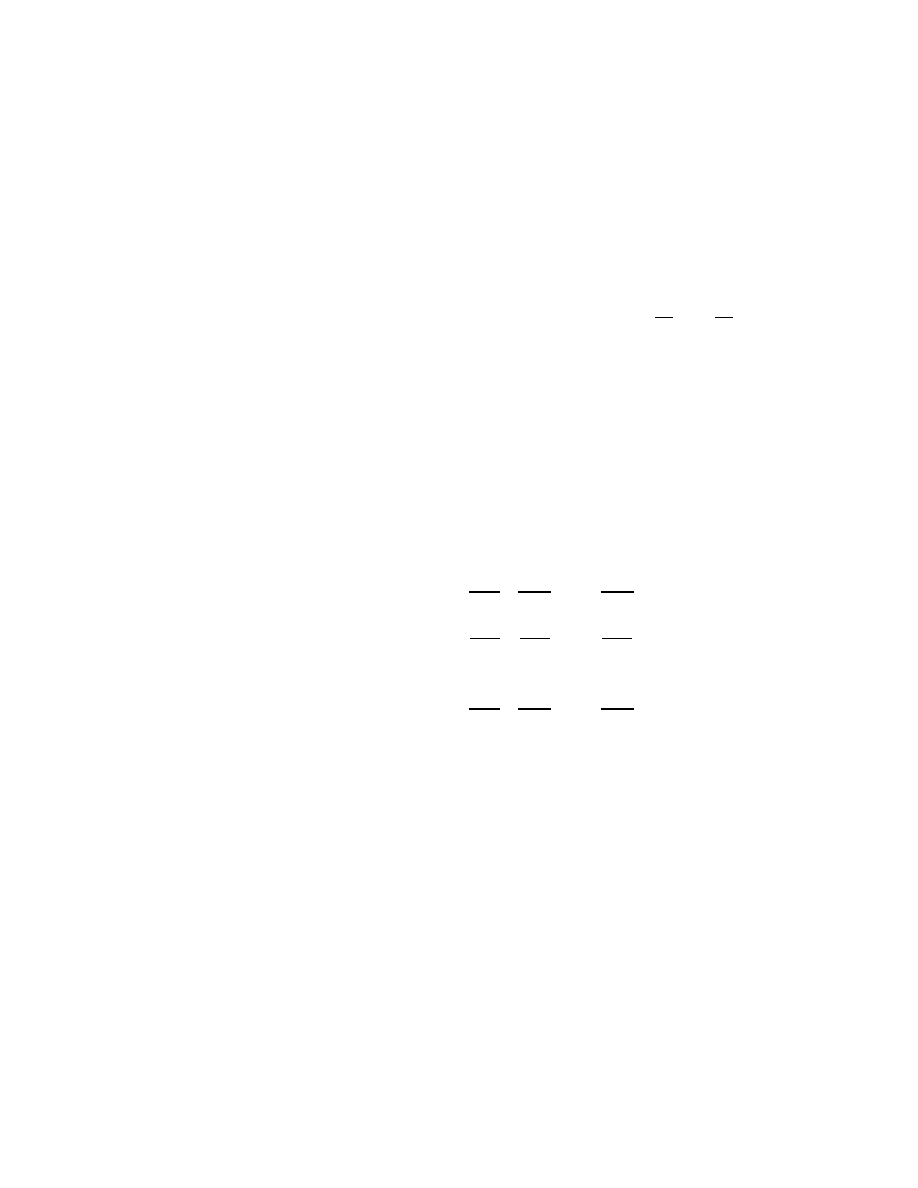
7.11
a)Find the derivative of f
g
o at the point (1,-2).
b)Find the derivative of g
f
o at the point (1,-2).
c) Find the derivative of f
f
o at the point (1,-2).
d) Find the derivative of g g
o at the point (1,-2).
10. Suppose r
t
t
=
2
cos and t
x
y
=
−
2
2
3
. Find the partial derivatives
∂
∂
r
x
and
∂
∂
r
y
.
7.4 More Chain Rule Stuff
In the everyday cruel world, we seldom compute the derivative of the
composition of two functions by explicitly multiplying the two derivative matrices.
Suppose, as usual, we have r
g
f
=
→
o : R
R
n
q
. The the derivative is, as we now know,
r
r x x
x
r
r
r
r
x
r
x
r
x
r
r
r
n
n
n
p
p
p
n
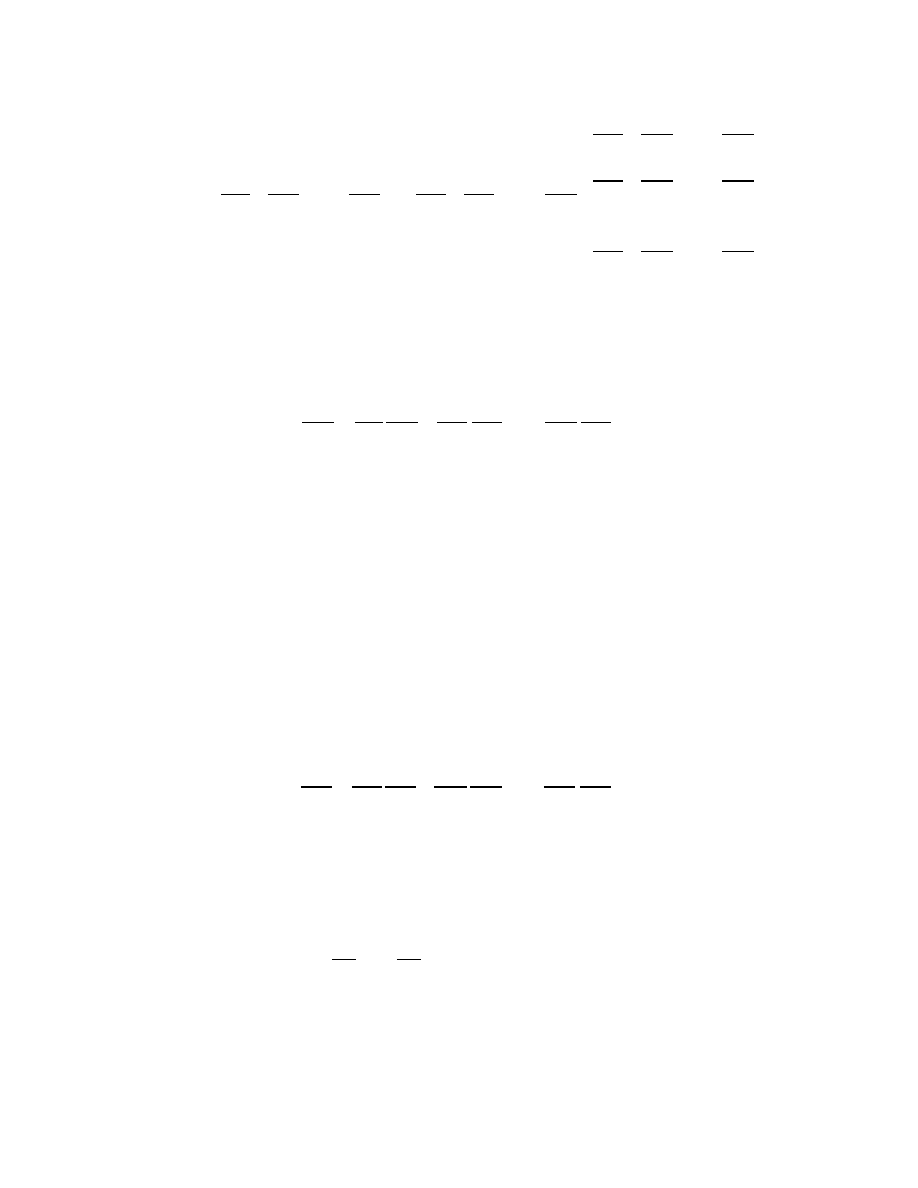
'( )
'(
,
,
,
)
x
=
=
1
2
1
1
1
2
1
2
1
2
2
2
1
2
K
L
L
M
L
∂
∂
∂
∂
∂
∂
∂
∂
∂
∂
∂
∂
∂
∂
∂
∂
∂
∂
x
x
x
x
x
x
.
We can thus find the derivative using the Chain Rule only in the very special case in
which the compsite function is real valued. Specifically, suppose g: R
R
p
→
and
f : R
R
n
p
→
. Let r
g
f
=
o . Then r is simply a real-valued function of
x
=
(
,
,
,
)
x x
x
n
1
2
K
. Let’s use the Chain Rule to find the partial derivatives.
7.12
r
r
x
r
x
r
x
g
y
g
y
g
y
x
x
x
x
x
x
x
x
x
n
p
n
n
n
'( )
x
=
=
∂
∂
∂
∂
∂
∂
∂
∂
∂
∂
∂
∂
∂
∂
∂
∂
∂
∂
∂
∂
∂
∂
∂
∂
∂
∂
∂
∂
∂
∂
f
f
f
f
f
f
f
f
f
1
1
1
2
2
2
p
p
p
1
2
1
2
1
2
1
2
1
2
L
L
L
L
M
L
Thus makes it clear that
∂
∂
∂
∂
∂
∂
∂
∂
∂
∂
∂
∂
∂
∂
g
g
g
r
x
y
f
x
y
f
x
y
f
x
j
j
j
p
p
j
=
+
+ +
1
1
2
2
L
.
Frequently, engineers and other malefactors do not use a different name for the
composition g
f
o , and simply use the name g to denote both the composition
g
f x x
x
g f x x
x
f
x x
x
f
x x
x
n
n
n
p
n
o
K
K
K
K
K
(
,
,
,
)
(
(
,
,
,
),
(
,
,
,
),
,
(
,
,
,
))
1
2
1
1
2
2
1
2
1
2
=
and the
function g given by g
g y y
y
p
( )
(
,
,
,
)
y
=
1
2
K
. Since y
f
x x
x
j
j
n
=
(
,
,
,
)
1
2
K
, these same
folks also frequently just use
y
j
to denote the function
f
j
. The Chain Rule given above
then looks even nicer:
∂
∂
∂
∂
∂
∂
∂
∂
∂
∂
∂
∂
∂
∂
g
g
g
g
x
y
y
x
y
y
x
y
y
x
j
j
j
p
p
j
=
+
+ +
1
1
2
2
L
.
Example
Suppose g x y z
x y
ye
z
( , , )
=
+
2
and x
s
t
= +
, y
st
=
3
, and z
s
t
=
+
2
2
3
. Let us
find the partial derivatives
∂
∂
g
r
and
∂
∂
g
t
. We know that
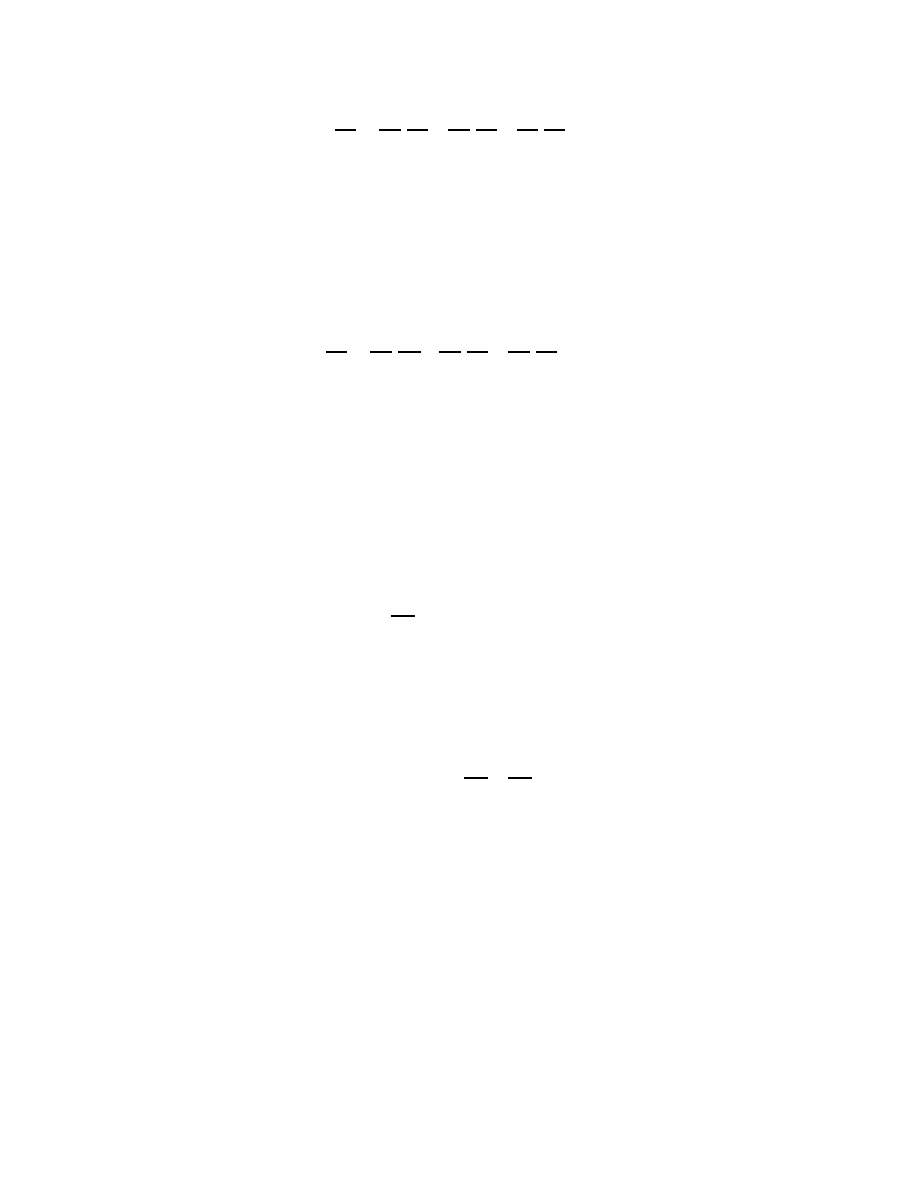
7.13
∂
g
∂
s
= ∂
g
∂
x
∂
x
∂
s
+ ∂
g
∂
y
∂
y
∂
s
+ ∂
g
∂
z
∂
z
∂
s
=
2xy(1)
+
(x
2
+
e
z
)t
3
+
ye
z
(2s)
=
2xy
+
(x
2
+
e
z
)t
3
+
2sye
z
Similarly,
∂
g
∂
t
= ∂
g
∂
x
∂
x
∂
t
+ ∂
g
∂
y
∂
y
∂
t
+ ∂
g
∂
z
∂
z
∂
t
=
2xy(1)
+
(x
2
+
e
z
)3st
2
+
ye
z
(6t)
=
2xy
+
3(x
2
+
e
z
)st
2
+
6tye
z
These notational shortcuts are fine and everyone uses them; you should, however,
be aware that it is a practice sometimes fraught with peril. Suppose, for instance, you
have g x y z
x
y
z
( , , )
=
+
+
2
2
2
, and x
t
z
= +
, y
t
z
= +
2
2 , and z
t
=
3
. Now it is not at all
clear what is meant by the symbol
∂
∂
g
z
. Meditate on this.
Exercises
11. Suppose g x y
f x
y y
s
( , )
(
,
)
=
−
−
. Find
∂
∂
∂
∂
g
x
g
y
+
.
12. Suppose the temperature T at the point ( , , )
x y z in space is given by the function
T x y z
x
xyz zy
( , , )
=
+
−
2
2
. Find the derivative with respect to t of a particle moving
along the curve described by r
i
j
k
( )
cos
sin
t
t
t
t
=
+
+
3
.

7.14
13. Suppose the temperature T at the point ( , , )
x y z in space is given by the function
T x y z
x
y
z
( , , )
=
+
+
2
2
2
. A particle moves along the curve described by
r
i
j
k
( )
sin
cos
(
)
t
t
t
t
t
=
+
+
− +
π
π
2
2
2
. Find the coldest point on the trajectory.
14. Let r x y
f x g y
( , )
( ) ( )
=
, and suppose x
t
=
and
y
t
=
. Use the Chain Rule to find
dr
dt
.
Wyszukiwarka
Podobne podstrony:
Multivariable Calculus, cal14
Multivariable Calculus, cal6
Multivariable Calculus, cal19
Multivariable Calculus, cal2
Multivariable Calculus, cal16
Multivariable Calculus, cal8
Multivariable Calculus, cal18
Multivariable Calculus, cal12
Multivariable Calculus, cal15
Multivariable Calculus, cal1
Multivariable Calculus, cal9
Multivariable Calculus, cal11
Multivariable Calculus, cal5
Multivariable Calculus, cal10
Multivariable Calculus, ta
Multivariable Calculus, cal3
Multivariable Calculus, cal13
Multivariable Calculus, cal4
Multivariable Calculus, cal17
więcej podobnych podstron