
PALM BEACH
PERFECT SKIN
The Quest for Ideal Skin Health & Beauty
KENNETH BEER, MD, FAAD
Palm Beach Perfect FINAL 1
Palm Beach Perfect FINAL 1
8/16/06 5:38:59 AM
8/16/06 5:38:59 AM

DISCLAIMER
The information contained in this book represents the opinions of the author and
should by no means be construed as a substitute for the advice of a qualifi ed medi-
cal professional. The information contained in this book is for general reference and
is intended to offer the user general information of interest. The information is not
intended to replace or serve as a substitute for any medical or professional consulta-
tion or service. Certain content may represent the opinions of Kenneth Beer, MD,
FAAD based on his training, experience, and observations; other physicians may have
differing opinions.
All information is provided “as is” and “as available” without warranties of any kind, ex-
pressed or implied, including: accuracy, timeliness, and completeness. In no instance
should a user attempt to diagnose a medical condition or determine appropriate
treatment based on the information contained in this book. If you are experiencing
any sort of medical problem or are considering cosmetic or reconstructive surgery,
you should base any and all decisions only on the advice of your personal physician
who examined you and entered into a physician-patient relationship with you.
This book is designed to provide information of a general nature about cosmetic
procedures. The information is provided with the understanding that the author
and publisher are not engaged in rendering any form of medical advice, profes-
sional services, or recommendations. Any information contained herein should not
be considered a substitute for medical advice provided person-to-person and/or in
the context of a professional treatment relationship by qualifi ed physician, surgeon,
dentist, and/or other appropriate healthcare professional to address your individual
medical needs. Your particular facts and circumstances will determine the treatment
that is most appropriate to you. Consult your own physician and/or other appropri-
ate healthcare professional on specifi c medical questions, including matters requir-
ing diagnosis, treatment, therapy or medical attention. Any use of the information
contained within is solely at your own risk. MDPress, Inc. assumes no liability or re-
sponsibility for any claims, actions, or damages resulting from information provided
in the context contained herein.
ISBN: 0-9748997-3-9
Copyright © 2006 by Kenneth Beer, MD, FAAD
All Rights Reserved
The contents of this book including, but not limited to text, graphics, and icons, are
copyrighted property of Kenneth Beer MD, FAAD. Reproduction, redistribution, or
modifi cation in any form by any means of the information contained herein for any
purpose is strictly prohibited.
No part of this book may be reproduced, stored, or introduced into a retrieval
system, or transmitted, in any form, or by any means (electronic, mechanical, photo-
copying, recording, or otherwise), without the prior written permission of both the
copyright owner and the publisher of this book.
Printed in the United States of America.
Book design by StarGraphics Studio
MD PUBLISH.COM
350 Fifth Avenue, Suite 7619 | New York, New York 10118
Palm Beach Perfect FINAL 2
Palm Beach Perfect FINAL 2
8/16/06 5:39:06 AM
8/16/06 5:39:06 AM

Acknowledgements
I would like to thank my wife Jennifer, my sons Jacob
and Michael, and my daughter Gillian for putting up with
me during the writing of this book. You have been a
source of inspiration with each passing day, and for this I
am eternally grateful. To my patients, thank you for your
faith in me and my work. I hope that I may continue to
help you, with the very best resources available, in your
quest for beauty and skin health. A special thanks to the
MDPublish team for their skillful collaboration.
Palm Beach Perfect FINAL 3
Palm Beach Perfect FINAL 3
8/16/06 5:39:06 AM
8/16/06 5:39:06 AM

To my wife,
with love, honor, and admiration.
To my sons and daughter,
with pride in everything you do
and everything you will become.
To my parents
Myrna and Daniel Beer, M.D.,
for giving me the encouragement
to exceed my own dreams.
To my colleagues and friends,
with gratitude for the lessons
you have taught me along the way.
To my staff,
who as a team have taught me
to become a better dermatologist.
Palm Beach Perfect FINAL 4
Palm Beach Perfect FINAL 4
8/16/06 5:39:06 AM
8/16/06 5:39:06 AM

Contents
Introduction 13
Chapter
1
The Structure of the Skin & How
This Changes with Aging
19
Skin Overview
20
Under the Microscope with Normal Skin
22
Skin Structure
23
How Changes in Skin Structure
Lead to Wrinkles
26
Fine (Superfi cial) Wrinkles
27
Deep Wrinkles
27
Creases
27
Dynamic Wrinkles
28
Static Wrinkles
28
Skin Through the Ages
29
Chapter
2
The Sun & Your Skin
35
Preventing Sun Damage
38
Sun Protection Factors
40
Selecting an SPF
42
Sun Protection Checklist
43
What to Do If You Get Burned
44
Palm Beach Perfect FINAL 5
Palm Beach Perfect FINAL 5
8/16/06 5:39:07 AM
8/16/06 5:39:07 AM

Chapter
3
Skin Maintenance & Improvement:
Damage Control & Repair
45
Advancements in Cosmeceutical Skincare
46
Moisturizers
46
Cosmeceutical Creams
47
Glycolic Acid
48
Vitamin C
48
Growth Factors
49
Antioxidants
49
The Palm Beach Peel
®
System
50
The Palm Beach Peel
®
Steps:
Exfoliation, Nourishment, Cleansing,
Moisturizing & Exfoliation
51
Skin Nourishment
52
An Overview of Cosmeceuticals
54
Chapter
4
A Lifetime of Perfect Skin: Why You
Need a Cosmetic Dermatologist
59
What Is a Cosmetic Dermatologist?
60
Know Your Skin Type
62
Fitzpatrick Classifi cation
63
How to Choose an Ideal Skin Regimen
65
Before You Buy
65
The Basics: Six Steps for Ideal Skin
66
Seasonal Skincare
69
Palm Beach Perfect FINAL 6
Palm Beach Perfect FINAL 6
8/16/06 5:39:07 AM
8/16/06 5:39:07 AM

Chapter
5
Maintaining Clear Skin
When You Have Acne
71
Understanding Acne
72
Oral Acne Treatments
73
Accutane
®
and Its Generic Versions
74
Hormonal Therapy
75
Topical Acne Treatments: Prescription,
Over-the-Counter Products, Light Based
Treatments, and Daily Care for
Acne Prone Skin
76
A prescription from a dermatologist
76
Non-prescription options
76
Light based treatments
77
Photodynamic Therapy (PDT)
77
Daily Care for Acne Prone Skin
78
Dr. Beer’s Daily Anti-Acne Regimen
78
Chapter
6
Common Conditions That Interfere
with the Perfect Skin Plan: Rosacea,
Sensitive Skin, Eczema, Psoriasis
79
Rosacea
80
Daily Care for Rosacea Prone Skin
81
Sensitive Skin
82
Eczema (Atopic Dermatitis)
84
Psoriasis
85
Palm Beach Perfect FINAL 7
Palm Beach Perfect FINAL 7
8/16/06 5:39:07 AM
8/16/06 5:39:07 AM

Chapter
7
Lasers & Light Sources:
The New Waves
87
Lasers for Skin Rejuvenation
89
Non-Laser, Light Based Rejuvenation:
Intense Pulsed Light, Radiofrequency,
Photodynamic Therapy, LED, and Fraxel
™
89
Intense Pulsed Light 90
Radiofrequency Waves
91
Syneron ELOS
™
System
92
Photodynamic Therapy
92
LED Technology
93
Fractional Resurfacing Including Fraxel
™
94
Summary of Lasers, IPL, and LED Devices
94
Combination Treatments That Work
in Conjunction with Laser, LED & IPL
95
Chapter
8
All About Botulinum Toxin
97
What Is the Difference Between
Botox
®
, Myobloc
®
, and Reloxin
®
?
98
How Botulinum Toxins Work
99
After an Injection
102
How to Avoid Problems with Botox
®
103
Limitations of Botox
®
: Where Fillers
Are Needed
103
Palm Beach Perfect FINAL 8
Palm Beach Perfect FINAL 8
8/16/06 5:39:07 AM
8/16/06 5:39:07 AM

Chapter
9
Fillers for Facial Rejuvenation
105
A Brief History of
Soft Tissue Augmentation
106
How Fillers Work
107
How Long Do Fillers Last?
108
What Are the Side Effects?
108
How Long Is the Recovery?
109
What Goes Where?
109
Fillers in Detail
110
Hyaluronic Acids
110
Restylane
®
110
Hylaform
®
and Hylaform
®
Plus 112
Captique
™
112
Juvederm
®
112
Collagens 112
Zyderm
®
and Zyplast
®
113
Human Collagen
113
CosmoDerm
®
/CosmoPlast
®
113
AlloDerm
®
and Cymetra
®
114
Products Derived from Your Body
114
Isolagen 115
Volumizers: Long-Term Soft
Tissue Augmentation
115
Sculptra
®
115
Facts About Fat Transfer 117
Palm Beach Perfect FINAL 9
Palm Beach Perfect FINAL 9
8/16/06 5:39:08 AM
8/16/06 5:39:08 AM

Semi-Permanent and Permanent Fillers
117
Artefi ll
®
117
Radiesse
™
118
Injectable Liquid Silicone 119
The Spectrum of Dermal Fillers
120
Chapter
10
Holding on by a Thread
121
Contour Threadlift
™
122
Who Is a Good Candidate?
122
Who Is Not a Good Candidate?
122
What Areas Can Be Lifted?
123
How Is the Procedure Performed?
123
What to Expect After the Procedure
123
How Long Do the Results Last?
124
Chapter
11
Tumescent Liposuction
125
How Safe Is Liposuction?
127
Who Is the Ideal Candidate?
128
The Liposuction Procedure
130
What to Expect After Liposuction
130
Fat Transplantation
131
The Fat Transfer Procedure
132
Palm Beach Perfect FINAL 10
Palm Beach Perfect FINAL 10
8/16/06 5:39:08 AM
8/16/06 5:39:08 AM

Chapter
12
Eradicating Veins, Unwanted Hair,
& Stretch Marks
133
Leg Veins
134
Hair Reduction Strategies
135
Hair Removal Methods
138
Laser Hair Removal
140
The Laser Hair Removal Procedure
141
Improving Stretch Marks
143
Chapter
13
Advances in the Diagnosis
& Treatment of Skin Cancers
145
Early Detection
147
Actinic Keratoses
149
Origins of Actinic Keratoses
149
Symptoms of Actinic Keratoses
149
Types of Actinic Keratoses
150
Treatment of Actinic Keratoses
150
Basal Cell Carcinoma
151
Origins of Basal Cell Carcinoma
151
Symptoms of Basal Cell Carcinoma
152
Types of Basal Cell Carcinoma
152
Treatment of Basal Cell Carcinoma
153
Palm Beach Perfect FINAL 11
Palm Beach Perfect FINAL 11
8/16/06 5:39:08 AM
8/16/06 5:39:08 AM

Squamous Cell Carcinoma
153
Origins of Squamous Cell Carcinoma
154
Symptoms of Squamous Cell Carcinoma 154
Types of Squamous Cell Carcinoma
154
Treatment of Squamous Cell Carcinoma
155
Melanoma
155
The Origin of Melanoma
155
Symptoms of Melanoma
156
Four Basic Melanoma Types
156
Treating Melanoma
157
Non-Surgical Treatments for Skin Cancer
157
Surgical Approaches to Skin Cancer
158
Excisional Surgery
159
Electrodessication and Curettage
159
Mohs Surgery
160
In Summary
162
Chapter
14
What the Future Holds
in the Quest for Perfect Skin
163
Glossary
166
Resources
180
Index
181
About the Author
184
Appendix
185
Order Form
190
Palm Beach Perfect FINAL 12
Palm Beach Perfect FINAL 12
8/16/06 5:39:09 AM
8/16/06 5:39:09 AM

Introduction
Perfect skin is a goal that many seek but few attain. Perfect
skin must be healthy on the inside as well as on the outside.
The outer (epidermal) layers should be blemish-free and
radiant, the middle layers resilient, and the inner layers must
provide support, structure, and nutrition. Any defi ciency in
this triad will result in skin with sub-optimal appearance
and wellness. Some people are born with perfect skin.
Others need help from cosmetic dermatologists and plas-
tic surgeons. This book will help you navigate your path to
perfect skin. We will discuss skin treatments and products
designed to help you look your best as well as information
and some common problems that may be barriers to your
goal.
The renaissance underway in cosmetic dermatology
makes this an ideal time to begin your quest for perfect skin.
Presently available techniques, procedures, and products can
rejuvenate your skin while avoiding the risks and downtime
of invasive surgery. Non-invasive procedures are constantly
improving, and we will review what is presently avail-
able and glimpse into the near future. We will discuss skin
function when it is healthy and present information about
common skin diseases and problems. To help you choose the
best skincare products for your skin, information about cos-
meceuticals and prescription skincare products is presented.
If, after reading this book, you can make educated decisions
about what is and is not right for your skin and know what
questions to ask your dermatologist or plastic surgeon, I will
have succeeded in my goal for writing it.
In order to provide some background, let me offer a brief
biography: I attended medical school at the University of
Pennsylvania School of Medicine, and after completing one
year of internal medicine I spent four years at the University
Introduction
13
Palm Beach Perfect FINAL 13
Palm Beach Perfect FINAL 13
8/16/06 5:39:09 AM
8/16/06 5:39:09 AM

of Chicago in a dermatology residency and dermatopath-
ology fellowship. During those four years, I learned most of
what I know about the skin. My pathology training taught
me about the microscopic structure of the skin and, dur-
ing my fellowship, I began to wonder about how to create
healthier skin at a microscopic level and more youthful
appearing skin at a clinical level. I spent years learning how
to diagnose and treat melanomas, basal cell carcinomas, and
squamous cell carcinomas. The transformation from damaged
cell to pre-cancerous cell to cancer fascinated me, and I
studied the prevention of this process. As I learned more
about skin cancers, I realized that the development of these
lesions and the process of aging is closely interrelated and
that preventing skin cancers could also help the skin appear
more youthful. In my dermatological surgery practice, I
specialize in cosmetic dermatology as well as in the diagno-
sis and treatment of skin cancer ; I enjoy both. I teach at the
University of Miami in the Department of Dermatology, and
my research interests encompass both areas. The Cosmetic
Boot Camp—a course that I direct with Mary Lupo, M.D.—
keeps me on the “cutting edge” of the newest products and
procedures in cosmetic dermatology.
Some background about dermatology in general—and
cosmetic dermatology in particular—will help you to under-
stand the information contained in this book. Dermatology is
the ONLY branch of medicine dedicated to the skin. Derma-
tologists are physicians who have completed four years of
medical school (if they are medical doctors; there are also
osteopathic dermatologists who have not gone to medical
school). If they are Board Certifi ed by the American Board of
Dermatology, they have completed a year of internal medi-
cine, pediatrics, or surgery prior to spending three years
studying the skin at a university hospital where they are
supervised by other dermatologists. After this training, they
must pass a board certifi cation exam to state that they are
“Board Certifi ed by the American Board of Dermatology”.
14
PALM BEACH PERFECT SKIN
Palm Beach Perfect FINAL 14
Palm Beach Perfect FINAL 14
8/16/06 5:39:09 AM
8/16/06 5:39:09 AM

To maintain profi ciency, they must recertify at least every ten
years if they have completed their training after about 1992
(older dermatologists are exempted from this requirement).
Some dermatologists spend additional time completing fellow-
ships in dermatopathology (the study of the skin using a
microscope), dermatologic surgery, or pediatric dermatology.
Recently, there has been a proliferation of internists, family
practice doctors, gynecologists, and a host of other practi-
tioners who call themselves skin specialists, cosmetic
surgeons, or even dermatologists without being board certi-
fi ed by the American Board of Dermatology. Unfortunately,
this practice is not closely regulated in many states, but
patients should be aware that these individuals do not
have the training or experience required to take care of
your skin.
Dermatology experienced a renaissance from the days
when it was dominated by acne and warts. Part of this revo-
lution in dermatology was actually brought about by man-
aged care and healthcare reform. As insurance companies
moved skin cancer surgery from the hospital to the derma-
tologists’ offi ces, the specialty became primarily surgical.
Dermatologists became more knowledgeable about skin can-
cer reconstruction. This experience prompted interest and
research into lasers, fi llers, liposuction, and other cosmetic
procedures that could also be performed in the offi ce. The
evolution of surgical dermatology occurred as I was training.
During my residency I became interested in research, skin
cancer reconstruction, liposuction, lasers, chemical peels,
soft tissue augmentation using collagen, fat, and hyaluronic
acids. How much the fi eld of dermatology has changed is
demonstrated by Medicare statistics which show that the
majority of skin cancers treated in the United States are now
treated by dermatologists.
Surgical dermatologists are represented by the American
Society for Dermatologic Surgery (www.asds-net.org), and
they are now known as Dermasurgeons. We have our own
Introduction
15
Palm Beach Perfect FINAL 15
Palm Beach Perfect FINAL 15
8/16/06 5:39:09 AM
8/16/06 5:39:09 AM

16
PALM BEACH PERFECT SKIN
meetings, research, and journals. Dermatologic surgeons
differ from plastic surgeons (who specialize in procedures
such as hand reconstruction, facelifts, burns, and breast aug-
mentation) because we focus only on the skin.
Cosmetic dermatology has added several major prod-
ucts and procedures in the past few years, including novel
uses for botulinum toxins such as Botox
®
, Myobloc
®
, and
Reloxin®. Until recently, these proteins were used exclu-
sively for frown lines. Now they are used to treat wrinkles
of the chin, forehead, lip and to minimize crow’s feet, neck
bands and drooping breast skin. These toxins are used to
treat excessive sweat, headaches, and medical problems rang-
ing from back spasms to urinary incontinence. Revolutionary
fi llers such as Restylane
®
, Restylane
®
Sub Q, Perlane
®
, Sculp-
tra
®
, Hylaform
®
, Captique
™
, Hylaform
®
Plus, Juvederm
®
,
Isolagen, silicone and Radiesse
™
have expanded a universe
of fi llers once limited to collagen. New lasers, intense pulsed
lights, and radiofrequency devices including Thermage
®
and
Fraxel
™
, have opened up new possibilities for non-invasive
skin rejuvenation. Dermatologists and plastic surgeons are
just beginning to discover the full potential of these devices,
products, and procedures, and learning what can be accom-
plished when they are used together.
“The ‘injected facelift’ is now a foreseeable reality.”
Until recently a facelift was the best way to rejuvenate an
aging face. Now, novel techniques including fat transfer, soft
tissue fi llers, volumizers such as Sculptra
®
, lasers, and botu-
linum toxins can reverse the signs of aging without surgery.
The “injected facelift” is now a foreseeable reality. Suspension
sutures used to directly reposition the skin upward eliminate
the need for cutting with some patients. For others, there
will never be a substitute for a facelift but those numbers are
dwindling. Even for individuals requiring a facelift, the judicious
Palm Beach Perfect FINAL 16
Palm Beach Perfect FINAL 16
8/16/06 5:39:10 AM
8/16/06 5:39:10 AM

use of lasers, fi llers, botulinum toxins, peels, and a good skin-
care regimen can ensure the best possible results.
Throughout the course of this book, I will identify trends,
treatments, and products that make sense. Thus, we will
discuss the rationale for what is used in cosmetic derma-
tology. My cosmetic dermatology practice draws upon a
palette from which I create an individualized program for
each patient based on their goals, tolerance for downtime,
and budget. Typical patients rejuvenate the outer layers of
skin with intense pulsed light, laser, chemical peels, and/or
topical treatments that include prescription and non-pre-
scription products. My patients with wrinkles due to muscle
activity (including frown lines and crow’s feet) get treated
with botulinum toxins such as Botox
®
. Wrinkles due to
loss of subcutaneous tissue are fi lled with hyaluronic acids
(including Restylane
®
, Hylaform
®
, Captique
™
, Juvederm
®
, and
others), Sculptra
®
, Radiesse
™
, collagen and/or fat transfer. I
perform body contouring with tumescent liposuction and fat
transfer. Lasers and intense pulsed light sources are utilized
to treat pigment irregularity, spider veins and unwanted hair
as well as to tighten the skin by rejuvenating the collagen
and elastic fi bers. Two new lasers are able to help success-
fully treat cellulite.
My book will also help readers to understand how the
skin functions when it is well and what happens when it is
diseased. I will discuss the structure and function of normal
skin and then contrast this to skin effected by acne, psoria-
sis, eczema, rosacea, skin cancer and other common skin
ailments. Hopefully, this will provide enough information to
enable you to have a meaningful discussion with your der-
matologist and to help you take better care of your skin.
Skincare products consume signifi cant amounts of time
and money. While some products are marketed by unscrupu-
lous means, others result from years of research and develop-
ment at companies with impeccable reputations and great
scientists. Frequently, it is diffi cult for consumers to tell the
Introduction
17
Palm Beach Perfect FINAL 17
Palm Beach Perfect FINAL 17
8/16/06 5:39:10 AM
8/16/06 5:39:10 AM

18
PALM BEACH PERFECT SKIN
difference between these two extremes, and I will provide
some pointers in the skin product section.
My own product line began with a few glycolic acid
products, but expanded as it was embraced by my patients,
their friends, and their relatives. As the circle of users has
expanded, I have increased my offerings, which now include
the Palm Beach Peel
®
integrated product system. The goal of
my skincare system is to provide the type of skincare that
was, until recently, only available at a cosmetic dermatology
offi ce. With The Palm Beach Peel
®
, one can customize the
frequency and duration needed to peel, exfoliate, cleanse
and apply nutrients and vitamins to the skin. I continue to
change my products as newer research discovers better
ingredients. My ability to do this is one reason that I devel-
oped my own line of products.
Each patient who walks into a cosmetic dermatologist’s
offi ce wants to look his or her best. Whether in my offi ce or
in this book, it is my job to provide information about the
products and procedures that will help accomplish this goal
and to provide information about some of the obstacles that
can stand in your way.
Palm Beach Perfect FINAL 18
Palm Beach Perfect FINAL 18
8/16/06 5:39:10 AM
8/16/06 5:39:10 AM

CHAPTER
1
The Structure of
the Skin & How
This Changes
with Aging
“In cosmetic dermatology,
a little knowledge will help you
to have a lifetime of perfect skin.”
Palm Beach Perfect FINAL 19
Palm Beach Perfect FINAL 19
8/16/06 5:39:10 AM
8/16/06 5:39:10 AM

20
PALM BEACH PERFECT SKIN
In order to comprehend skincare products, and treatments
and the various conditions that affect the skin, it is necessary
to understand some basic skin anatomy. While it is not pos-
sible to compress three years of dermatology residency and
one year of dermatopathology fellowship into one book, it is
reasonable to get some insight regarding the basic structure
and function of the skin. This will help you understand why
a treatment such as a superfi cial chemical peel, which treats
the outer layers of the epidermal layer, will not have any
effect on deep wrinkles or creases. To improve blotchy skin
associated with sun damage (a frequent sign of aging), it is
important to know where the pigment causing the problem
resides so that appropriate care can be selected. Any laser,
medication, or cosmetic procedure that does not address the
part of the skin anatomy causing the problem is destined to
be a waste of your time, effort, and money.
Skin Overview
“There is a lot going on inside what appears to be a bland
organ system called the skin, which is the body’s shield
against a hostile environment.”
The skin is the body’s barrier; it defends against diseases,
environmental challenges, and infection. It helps to regulate
body temperature and contains a vast array of chemical mes-
sengers and hormones used to communicate with various
cells in the body. Every square inch of skin contains about 15
feet of blood vessels, 100 oil glands, and two different kinds
of sweat glands. As you can already see, there is a great deal
of activity within the skin.
The best way to appreciate the differences between old
skin and new skin is under the microscope.
Palm Beach Perfect FINAL 20
Palm Beach Perfect FINAL 20
8/16/06 5:39:11 AM
8/16/06 5:39:11 AM

The Structure of the Skin & How This Changes with Aging
21
(Photo Gallery Page 1, middle) A photomicrograph of
new skin demonstrates skin with an organized outer (epi-
dermal) layer as well as collagen and elastic fi bers (the thick
pink layer) that provide structure and support. When these
fi bers are young and intact, the skin is elastic and devoid of
wrinkles. As the collagen and elastic fi bers degenerate, this
layer becomes thin and disorganized, and the skin begins to
wrinkle and sag.
From a microscopic perspective, we can begin to under-
stand how what goes on at a cellular level translates into
visible signs of aging and think about logical means of
reversing them. If we look at a deeper biopsy, (such as pho-
tomicrograph 10 normal skin, no sun damage ) subcutaneous
adipose (fat) is visible in the bottom parts of the biopsy. Fat
provides a source of energy storage, insulation, and also sup-
port for the contour of the skin. As this fat diminishes with
age, the skin loses volume, and deep creases will begin to
appear. Treatments aimed at restoring volume and replacing
fat must address these deep layers of the skin if they are to
succeed. Procedures or products designed to treat wrinkles
need to replace or replenish the collagen and elastic fi bers
of the middle layers. Improvements of the canvas (outer
layer of the skin) must alter the epidermis in a manner that
restores a more youthful structure.
A photomicrograph taken from aging skin demonstrates
skin that is older and sun damaged. The epidermis is only a
few cells thick (two cells in most of this image). It is easy
to see that this thin skin is going to be more susceptible to
damage such as tears. This thinning of the epidermal layer
will leave an aged appearance to the surface of the skin.
Beneath this ragged epidermal layer, the collagen is no
longer pink and organized but rather bluish and raveled.
Deeper still, we see that the adipose layer is thinner than
it was when the skin was younger. These changes in the
deeper layers and loss of skin elasticity correspond to a
Palm Beach Perfect FINAL 21
Palm Beach Perfect FINAL 21
8/16/06 5:39:11 AM
8/16/06 5:39:11 AM

22
PALM BEACH PERFECT SKIN
southward drift of the face. They are also responsible for
producing wrinkles and creases around the mouth and jowls.
Procedures designed to tighten the skin, replace lost connec-
tive tissue, or renovate the surface of the skin must deal with
the anatomic changes visualized and discussed here to have
a chance of obtaining their objectives.
These photomicrographs graphically illustrate what hap-
pens to the skin as it ages. Products and procedures used in
cosmetic dermatology and plastic surgery promise to restore
youthful skin and frequently make claims that they will
repair damage due to aging. While these products (such as
Retin-A
®
) will actually cause the collagen and epidermis to
rejuvenate (this has been confi rmed with biopsies), others
simply prey on the quest for youth.
Under the Microscope
(Photo Gallery Page 1, top) The skin is only two cells
thick in areas, and the epidermal cells are disorganized. In
addition, the pink collagen that provides support for the skin
is thin. As support structures and epidermis thin, wrinkles
and precancerous growths develop.
(Photo Gallery Page 1, middle) This is in contrast to the
second photograph that demonstrates youthful skin which is
thicker and more organized.
My dermatopathology training solidifi ed my understand-
ing of the skin in health, in disease and in aging. I have
analyzed thousands of skin biopsies, each of which graphi-
cally reveals subtle changes that speak to the pathologist.
To a dermatopathologist, middle age is a transition between
organized and disorganized skin. Depending on the color of
the skin and the amount of sun damage that it has sustained,
biopsies performed during middle age have small precancer-
ous growths called actinic keratoses. These biopsies show loss
of thickness from the dermal layers, which translates into
Palm Beach Perfect FINAL 22
Palm Beach Perfect FINAL 22
8/16/06 5:39:11 AM
8/16/06 5:39:11 AM

The Structure of the Skin & How This Changes with Aging
23
visible fi ne lines around the mouth and eyelids. Increased
pigment visible in biopsies at the base of the epidermal layer
(basal layer) is seen on the skin as “liver spots.” Clearly, what
we learn about the skin under the microscope has reper-
cussions for clinical dermatology in general and cosmetic
dermatology in particular.
As with other parts of the body, the skin can age at a
normal chronological rate (in which case people will appear
as old as they are), at an accelerated rate (in which case
they appear older than their years), or at a decreased rate
(in which case they appear younger than they are). The
pace of skin aging is determined by genetics, sun damage,
skincare, and many factors that are just now beginning to be
understood by dermatologists. I consider these issues when
designing a skincare program for my patients, and it is worth-
while to think about them when deciding which products or
procedures are worth trying on your skin.
Skin Structure
A rational approach to skincare and skin wellness
requires an understanding of the structure of the skin.
Beginning at the outer layer, the skin is comprised of:
1. Epidermis
2. Dermis
3. Subcutaneous tissue
The epidermal layer may be further subdivided into four sub-
layers. The outer layer, called the stratum corneum is com-
prised of dead skin cells. Basket weave in appearance, this is
the body’s shield and fi rst line of defense against dehydration,
Palm Beach Perfect FINAL 23
Palm Beach Perfect FINAL 23
8/16/06 5:39:11 AM
8/16/06 5:39:11 AM

24
PALM BEACH PERFECT SKIN
infection, ultraviolet damage, and a host of other environ-
mental insults. Its health is obviously important not only for
how your skin appears but also for how it ages and functions.
Stratum corneum cells may be polished by microdermabra-
sion, chemical peels, topical medications, and cosmeceuticals.
Proceeding inward from the stratum corneum are three layers
of cells: the stratum granulosum, stratum spinosum, and basal
layer.
Cells in these layers are in a constant state of fl ux with a
28-day cycle for the bottom cells to reach the top layer. The
timing of the cellular cycle governs the frequency of many
procedures and treatments used in cosmetic dermatology.
For instance, there is no point in trying a skincare product
for less than one month if you believe it is going to rejuve-
nate the entire epidermal layer. Nor does it make sense to
have chemical peels several times per week as some overly
aggressive practitioners advocate.
The stratum spinosum and granulosum are the middle
epidermal layers that are the thickest portion of the epider-
mis. These layers give rise to skin cancers known as squa-
mous cell carcinomas. Deep to these layers is the basal layer
of epidermal cells. It is this layer that forms the boundary
between the epidermis on the outside of the skin and the
dermis on the inside. Basal cells are a frequent source of
skin cancers known as basal cell carcinomas, the most com-
mon of all skin cancers.
Scattered amongst the basal cells at about every eight
cells are melanocytes. These cells produce the pigment
known as melanin, which is the pigment responsible for
the color of your skin and hair (or in some cases where it
is responsible only for the color of the roots of the hair).
Melanocytes cause the age spots that appear on the face
and hands. They also allow the body to tan in an attempt to
Palm Beach Perfect FINAL 24
Palm Beach Perfect FINAL 24
8/16/06 5:39:12 AM
8/16/06 5:39:12 AM

The Structure of the Skin & How This Changes with Aging
25
shield itself from ultraviolet (UV) radiation. Melanomas, the
most deadly form of skin cancer, result from melanin cells
gone awry.
Beneath the epidermal layer is the dermal layer (dermis).
The dermis contains collagen and elastic fi bers that provide
strength and support for the skin. Blood vessels and nerves
traverse the dermis as they provide the skin with oxygen,
nutrition, and sensation. Beneath the dermis and epidermis
lies the subcutaneous layer, comprised of fat and other sup-
port structures that form the layer between skin and muscle.
It is within the dermal and subcutaneous layers that wrinkles
and folds form.
Treatments for wrinkles and folds are designed to restore
collagen, fat, and other support structures that have been
lost. Injectable products designed to replenish the der-
mal and subcutaneous layers include collagen, Isolagen,
Restylane
®
, Perlane®, Restylane
®
Sub Q, Hylaform
®
, Hyla-
form
®
Plus, Captique
™
, Juvederm
®
, silicone, Radiesse™,
and Sculptra
®
. Insight into the structure and function of the
skin layers helps to understand just how critical the experi-
ence and training of the injecting physician are to successful
outcomes. The right products placed at the wrong level may
produce either no result or lumps and bumps. Treatments
such as Fraxel
™
and Thermage
®
use energy to tighten exist-
ing collagen fi bers and stimulate the formation of new ones.
Treatments and products that address facets of aging at each
layer of the skin, allow cosmetic dermatologists to produce
dramatic results.
The subcutaneous layer also contains hair follicles, sweat
glands, and a host of other important structures. Fat cells
(adipocytes) found in this layer are a rich source of mate-
rial used for soft tissue augmentation. Cells may be removed
from areas such as the buttocks, thighs, or abdomen and relo-
Palm Beach Perfect FINAL 25
Palm Beach Perfect FINAL 25
8/16/06 5:39:12 AM
8/16/06 5:39:12 AM

26
PALM BEACH PERFECT SKIN
cated to the hands or face with dramatic results. Adipoctyes
are a rich source for stem cells that may one day provide
replacement tissue for any part of the skin that is defi cient
or diseased.
Deep within the subcutaneous tissue are the roots of the
hair follicles. These roots (or matrix cells) are the targets
for lasers and intense pulsed lights that treat unwanted hair.
Wavelengths and energies are constantly being improved to
more effectively target the matrix cells (located in a region
of the follicle known as the bulge) so that hair removal is
safer and more effective. Treatments for hair removal that do
not have the energy to reach this deep level have no chance
of success.
How Changes in Skin Structure
Lead to Wrinkles
Changes in the skin structure directly lead to visible changes
at the surface of the skin. As muscles frown and scowl, push
and pull the skin, wrinkles become etched into the face.
Botox
®
, now the most common cosmetic procedure in
America, relaxes these muscles, minimizing the appearance
of these wrinkles. Degeneration of collagen, and elastic fi bers
translates to the appearance of jowls and creases. Changes
at the microscopic level that result in alterations at the vis-
ible level may be repaired with fi llers including Restylane
®
,
Sculptra
®
, fat, collagen and others presently under develop-
ment. The best way to understand cosmetic products and
procedures is to fi rst understand the skin changes that they
are trying to reverse. To help with this understanding, I will
fi rst discuss the various types of wrinkles and damage that
effects the skin, and then present various ways to reverse
the damage.
Palm Beach Perfect FINAL 26
Palm Beach Perfect FINAL 26
8/16/06 5:39:12 AM
8/16/06 5:39:12 AM

The Structure of the Skin & How This Changes with Aging
27
Fine (Superfi cial) Wrinkles
Etched in, superfi cial lines extend only to the upper der-
mis. They are typically caused by sun damage and smoking,
which accelerate the degeneration of collagen and elastic
fi bers. The best examples are the little lines around the
mouth that cause lipstick to bleed. Treatments directed at
fi xing superfi cial wrinkles must target the upper layers of
the dermis; if they affect the epidermis or deeper layers, they
will not be fruitful. Thus, when you are concerned about
these types of lines and someone recommends a superfi cial
chemical peel, you should understand that this most likely
will not be productive because it does not address the defi -
ciency at the dermal level. In contrast, appropriately selected
fi llers, medium strength chemical peels, and a few lasers will
act at the correct part of the skin to make a difference. They
are worth trying.
Deep Wrinkles
Deep wrinkles extend through the upper dermis into the
mid and lower dermis. Repairing these wrinkles requires
either a resurfacing procedure that will remove all of the
layers above the wrinkle or fi llers designed to replace the
support structures that have been lost. Fillers appropriate for
deep wrinkles might include hyaluronic acids, collagens, fat,
Sculptra
®
, and several others presently undergoing clinical
trials. Radiofrequency devices that stimulate fi broblasts to
produce more collagen and devices that tighten fi bers can
repair damage at this level.
Creases
Creases are caused by the loss of deep subcutaneous tissue. They
require more substantial replacement of volume. One good
Palm Beach Perfect FINAL 27
Palm Beach Perfect FINAL 27
8/16/06 5:39:12 AM
8/16/06 5:39:12 AM

28
PALM BEACH PERFECT SKIN
example of these are deep smile lines. These are caused not
only by loss of subcutaneous tissue but also by the laxity of
the connective tissue above it. Repairing creases involves
replacing lost tissue with thick fi llers designed for placement
at a deep level. These include autologous fat, Restylane
®
Sub
Q, Juvederm
®
, Perlane
®
, or Sculptra
®
.
Dynamic Wrinkles
Wrinkles caused by muscle movement are entirely differ-
ent from those caused by loss of connective tissue. Without
an understanding of these differences or the tools to treat
them differently, attempts to correct them are destined to
be a waste of time and money. The best example of dynamic
wrinkles is a frown line. Frown lines are the most commonly
treated wrinkles and the only FDA approved indication for
Botox
®
. These lines are the result of a series of muscles
(known as the corrugator, procerus, and depressor supercilii
muscles) that pull on the skin. As the skin moves, wrinkles
are formed. It is easy to understand why botulinum toxins,
which inhibit muscle activity, are the perfect treatment for
these wrinkles. For this type of wrinkle, injecting fi llers with-
out a botulinum makes little sense because the muscle activ-
ity will simply continue to wrinkle and the frown line will
be back in short order. Thus, treatment of dynamic wrinkles
should involve Botox
®
, Reloxin
®
, or Myobloc
®
. Frown lines
are one example of the fact that the successful treatment of
wrinkles frequently requires multiple modalities.
Static Wrinkles
In contrast to wrinkles seen with movement, static wrinkles
are evident at rest. These will not be helped by botulinum
toxins. They require fi llers to replace lost volume, and/or
Palm Beach Perfect FINAL 28
Palm Beach Perfect FINAL 28
8/16/06 5:39:13 AM
8/16/06 5:39:13 AM

The Structure of the Skin & How This Changes with Aging
29
treatment with radiofrequency, laser or chemical peels to
tighten the connective tissues. Static wrinkles are diffi cult to
treat but when they are correctly addressed, their resolution
yields the most rewarding changes in appearance.
Skin Through the Ages
The skin changes with age and the skin you had in your
childhood is signifi cantly different from the skin of your adult
years. Understanding the skin at various points in time will
help you to have the best possible skin at each stage of life.
Let us look at the skin during various times in life:
Childhood, Teens, and 20s—Protection, prevention, and
medication are the keys to success in these years. Parents
of young children need to be vigilant with sun protection
and discuss the risks of sunburns with children. Information
regarding protection from the sun may be found at the web-
site for the American Academy of Dermatology (www.aad.
org) as well as the Weather Channel (www.weather.com).
Teens should be responsible for their sun protection. Gentle
coaxing as well as additional information from parents may
be helpful (sometimes this must be tied to the car keys)
when trying to get teens to prevent skin cancers that are
decades away. Damage done during early years is especially
signifi cant for aging skin and skin cancers. Early intervention
and education can have the most impact on skin wellness in
later life.
Teenage years are typically the fi rst time that the hor-
mones responsible for acne begin to affect the skin. This
may require prescription medications as well as a discussion
about skincare and skincare products. A dermatologist can
be very helpful during these years. There are many newer
Palm Beach Perfect FINAL 29
Palm Beach Perfect FINAL 29
8/16/06 5:39:13 AM
8/16/06 5:39:13 AM

30
PALM BEACH PERFECT SKIN
treatments for acne including laser, IPL, and photo dynamic
therapy, in addition to more traditional treatments such as
topical and oral medications. The Palm Beach Peel
®
Exfolia-
tion Pads can help to unclog pores.
30s—The 30s are the branch point in the life of your skin.
The early 30s are a continuation of the 20s—basic skincare
with some focus on prevention and early treatment. By the
age of 35, however, most people hit a dermatologic (and met-
abolic) wall. The exact age that this transformation occurs is
not etched in stone, and it depends on genetics, health, skin-
care regimen, and external infl uences such as smoking, sun,
and stress. Skin color also plays a role, as darker skin tends to
look better at a given age than lighter skin.
How do you know when you hit the transition point?
When you begin to notice infomercials for age defying diets
and skincare programs you have begun middle age for the
skin. Once this occurs, the fi ght against aging begins in
earnest.
During the 30s good skincare includes visits to the
dermatologist for rejuvenation and prevention. This may
consist of chemical peels or intense pulsed light. Topical
medications such as Retin-A
®
or Avage
®
may become part
of your daily routine. Skincare products containing antioxi-
dants such as vitamin C and green tea, as well as exfoliation
products (such as The Palm Beach Peel
®
Home Microderm-
abrasion system) are added to your skincare regimen. Injec-
tions at a dermatologist’s offi ce with Restylane
®
, Perlane
®
,
Botox
®
, Reloxin
®
, Hylaform
®
, Juvederm
®
, and Captique
™
become part of the struggle to fi ght off wrinkles. Lasers and
light based therapies may be used to renovate the outer layers
of skin. This decade typically has a metabolic slowdown and
some people begin to seek liposuction of fat deposits that
were not even there ten years earlier. Smokers should give
serious consideration to stopping as doing so will reverse
Palm Beach Perfect FINAL 30
Palm Beach Perfect FINAL 30
8/16/06 5:39:13 AM
8/16/06 5:39:13 AM

The Structure of the Skin & How This Changes with Aging
31
many of the bad changes in ones lungs and prevent a lot of
wrinkles as well.
40s—Serious skin maintenance begins in earnest in the 40s.
Accumulated damage is now apparent in the mirror and
under the microscope. Fine lines around the mouth and
eyes are an early hallmark of this period. Fortunately, these
are easily treated. Loss of subcutaneous elasticity causes the
smile lines to become prominent, and the entire face begins
to descend. Hormonal changes associated with menopause
begin to cause breakouts in women. Menopause may also be
the cause of breakouts for men living with women at this
point in life. Medications used to treat high blood pressure,
diabetes, and increased cholesterol may cause your skin
to develop various types of skin problems including hair
loss, hyperpigmentation, bruising, rashes, and sensitivity to
the sun.
Skin cancers begin to appear in fair skinned people as
they enter their third and especially their fourth decades.
Dermatologic care is now at least an annual affair (usually
more likely to be at six month intervals). Treatments men-
tioned during the 30s are used in greater combinations and
quantities. Soft tissue augmentation of smile lines and cor-
ners of the mouth in addition to botulinum toxin treatments
for frown lines, neck bands, and crow’s feet are routine
treatments for my patients in their 40s. Volume replacement
becomes a consideration, and volumizers (products that
create volume rather than replace it) such as Sculptra
®
are
helpful. Brown spots and capillaries of the face, which result
from accumulated sun damage, hormones, and genetics may
be safely and effectively treated with lasers, intense pulsed
lights, and topical medications and cosmeceuticals.
50s and 60s—The epic struggle begins. If you have wor-
shipped at the altars of good skincare and prevention and
Palm Beach Perfect FINAL 31
Palm Beach Perfect FINAL 31
8/16/06 5:39:13 AM
8/16/06 5:39:13 AM

have a good rapport with your cosmetic dermatologist, you
will be well positioned to look and feel great at this point in
life. Embrace the 50s and 60s with visits to the dermatologist
three to four times per year instead of two. Whereas prior
appointments may have required one syringe of fi ller and 25
units of Botox
®
, two to three times that amount will now
be required. To provide the best surface appearance as well
as optimum tone and texture, Retin-A
®
or Avage
®
combined
with green tea and exfoliation should be part of your daily
regimen. Fortunately, the available options increase every
year as the technology continuously improves.
“Patients in their 50s and 60s are frequently the most fun
for a cosmetic dermatologist to care for because we can
make a huge impact.”
If you have not taken care of your skin, or if you have
been a sun worshipper or smoker or simply have bad genes,
you may require more than fi llers and Botox
®
. In this case, a
facelift with ablative laser resurfacing may be needed.
Changes seen on the surface of the skin during the 50s
and 60s correspond with signifi cant changes seen under
the microscope. Oil glands begin to lose their function and
the skin becomes drier. The collagen and elastic fi bers have
become ragged and thin. Epithelial cells damaged by years
of sun become disorganized and form small scaly bumps on
the ears, nose, and lips. These actinic keratoses—precancer-
ous growths that may progress if they are not treated—are
common in sun damaged skin. Put simply, people that spent
a great deal of time in the sun will age faster than those
who did not. Menopause causes changes in the skin that
mirror the hot fl ashes and night sweats of the rest of the
body. Decreasing estrogen levels are associated with skin
32
PALM BEACH PERFECT SKIN
Palm Beach Perfect FINAL 32
Palm Beach Perfect FINAL 32
8/16/06 5:39:14 AM
8/16/06 5:39:14 AM

The Structure of the Skin & How This Changes with Aging
33
that becomes thinner and dryer. Rational skincare must take
these changes into account. In addition to these changes,
conditions such as rosacea and seborrheic dermatitis
become more noticeable. Supplemental hormones includ-
ing testosterone may cause abnormal hair growth and acne.
With all of these changes, it is common to require a change
in your skincare regimen. This may include the addition of
prescription medications and the use of products that are
milder and more emollient. Medications prescribed for non-
dermatologic conditions are used with increasing frequency
and these may cause side effects including hyperpigmenta-
tion, hair loss, and rashes.
Volume replacement with fat transfers, Sculptra
®
, col-
lagen, hyaluronic acids, and Radiesse
™
permit restoration
of a more youthful appearance. Chemical peels will rejuve-
nate the outer layers of skin. Lasers and radiofrequency can
tighten collagen and elastic fi bers. Botulinum toxin treat-
ments with Botox
®
and Reloxin
®
previously confi ned to
frown lines and crow’s feet are used to treat the neck, lips,
and chin.
Palm Beach Peel
®
products were designed for skin
rejuvenation. Green tea, retinol, growth factors, vitamin C,
and glycolic acids provide the skin with the nutrients
and antioxidants required to help turn back the hands
of time.
“If Emeril were a dermatologist, this is when he would ‘Kick
it up a notch!’”
70s and beyond– During these years, surgical intervention
in the form of a facelift may be required to remove excess
skin and reposition a sagging face. Treatments used during
the 50s and 60s are utilized with increasing frequency and
Palm Beach Perfect FINAL 33
Palm Beach Perfect FINAL 33
8/16/06 5:39:14 AM
8/16/06 5:39:14 AM

greater volumes. This may include Botox
®
, fi llers, lasers,
intense pulsed lights, and chemical peels. Skincare regi-
mens that previously consisted of one or two products may
require twice that many.
In the following chapters, we will examine both topical
treatments, prescription therapies, as well as the most
advanced options for rejuvenation on the market today.
34
PALM BEACH PERFECT SKIN
Palm Beach Perfect FINAL 34
Palm Beach Perfect FINAL 34
8/16/06 5:39:14 AM
8/16/06 5:39:14 AM

CHAPTER
2
The Sun &
Your Skin
“Start wearing a broad spectrum
sunscreen everyday and your face
will love you forever.”
Palm Beach Perfect FINAL 35
Palm Beach Perfect FINAL 35
8/16/06 5:39:14 AM
8/16/06 5:39:14 AM

36
PALM BEACH PERFECT SKIN
The leading cause of preventable skin damage is ultravio-
let radiation. Since we can prevent and sometimes treat
this damage we will begin with a discussion of the effects
of the sun on skin and proceed with a discussion of treat-
ment. Common sense dictates that two people with differ-
ent types of skin will have different results from the same
degree of sun exposure. Fair skinned, blue eyed people
(Fitzpatrick Skin Type 1) have skin that evolved to live in
England, Ireland, Scandinavia, and places without signifi -
cant ultraviolet exposure. Darker skin with more melanin
(Fitzpatrick Type 6) is better adapted to sun exposure and
designed for tropical latitudes. These differences in pigmen-
tation translate to requirements for high SPF for people
with fair skin and lower SPF for those with darker skin. The
requirement for differing degrees of protection depend-
ing on skin type is my main fault with skincare moistur-
izers that include SPF 15 and are marketed as “daily wear.”
They are not adequate for the daily activities of most of the
people who purchase them. For instance, skin that needs
SPF 50 will burn with only an SPF 15 on. My skincare prod-
ucts leave out sunscreen and require the user to choose
the sunscreen specifi c to their location, season, and type of
skin. This, I believe, ensures that they get the best protection
while enjoying the best products.
In order to understand why sun protection is necessary,
consider what ultraviolet light does to the skin. Ultraviolet
light interacts with the skin by radiating it. Different types of
ultraviolet light penetrate to different levels and have inter-
actions with molecules and cells. One signifi cant interaction
is with the DNA of the skin. As DNA is affected by sunlight,
it is altered and the information contained in the DNA is
changed. Most of the time, the damage can be repaired but
as we get older our ability to repair DNA decreases and
mistakes begin to accumulate. As this occurs, faulty genetic
information is translated into defective proteins and abnor-
Palm Beach Perfect FINAL 36
Palm Beach Perfect FINAL 36
8/16/06 5:39:14 AM
8/16/06 5:39:14 AM

malities in the cells are seen. Abnormalities including skin
cancer may result from the damage. Ultraviolet radiation
also damages collagen and this is seen on the surface as
wrinkles. Liver spots are also seen following exposure to
sunlight as the body tries to shield itself.
However, the sun is not entirely without benefi t. Its role
in the production of vitamin D as well as producing a gen-
eralized feeling of well being has been known to dermatolo-
gists for years. How then to reconcile these two confl icting
facts? For me, the answer is simple: moderation. Specifi cally,
I believe it is important to avoid sunburns because they
infl ict signifi cant damage in a short time. Since the num-
ber of blistering sunburns correlates with the incidence
of melanoma, it is reasonable to do everything possible
to avoid blistering sunburns for you and your family. Early
sun damage has the most impact on the skin so teach your
children about sun protection and use adequate sun block,
sunscreen, or sun protective clothing to avoid early skin
damage. Although early damage is the most important, later
ultraviolet exposure also impacts the skin. Prudent sun pro-
tection throughout ones life will help to avoid wrinkles and
cancers. I advise my patients not to become hermits (which
some in my profession would advocate) and to enjoy
themselves but also to be cautious and avoid sunburns and
prolonged sun exposures at all costs.
One question frequently asked by patients in their 60s
and 70s is whether they can have any sun exposure. Usu-
ally, these patients want to participate in water sports, golf,
or tennis but are worried about skin cancer and wrinkles.
I believe that since the risk for wrinkles and skin cancer
has largely been determined by sun exposure prior to the
age of 60, the benefi ts of exercising in the sun (including
decreased rates of depression and osteoporosis) outweigh
the risks at that age.
I have found that many of my skin cancer patients, par-
The Sun & Your Skin
37
Palm Beach Perfect FINAL 37
Palm Beach Perfect FINAL 37
8/16/06 5:39:15 AM
8/16/06 5:39:15 AM

38
PALM BEACH PERFECT SKIN
ticularly those with basal and squamous cell carcinomas, also
have macular degeneration. This makes some sense since
the same ultraviolet light responsible for damaging the skin
also damages the retina. In order to protect against macular
degeneration, I recommend that adults and children wear
polarized sunglasses (think of them as an SPF 30 for your
eyes).
Preventing Sun Damage
“The best way to deal with wrinkles is avoidance.”
Preventing sun damage is an important aspect of any skin-
care program. Although prevention is particularly important
when we are young, it plays a part in skin wellness at every
age. Using SPF 30 when you are 20 is going to trump using
SPF 100 when you are 60, so do everything in your power to
avoid sunburns while you are young, and protect your chil-
dren while they are too young to protect themselves.
Sun protection is an evolving concept. One great discus-
sion of photoprotection (protection from the sun) was writ-
ten by Kullavanijaya and Lim
1
. They explain that sunlight
consists of different components. These include UVA, UVB,
and UVC. UVA is the radiation that penetrates deeply but
does not produce sunburns. It is the ultraviolet light used
by tanning booths to induce the production of melanin.
UVB causes sunburns and is responsible for a fair amount of
damage seen as wrinkles, liver spots, and thinned skin with
bruises (due to damage to the connective tissue). UVC is
fi ltered by the ozone in the atmosphere, and it typically does
not affect our skin. Recent holes in the ozone layer are now
allowing the dangerous UVC rays to reach the earth’s surface
with consequences that will not be known for years.
1
Kullavanijaya, P Lim, H JAAD 2005;52:937-58
Palm Beach Perfect FINAL 38
Palm Beach Perfect FINAL 38
8/16/06 5:39:15 AM
8/16/06 5:39:15 AM

The concept of sun protection has evolved with our
understanding of how ultraviolet light interacts with the
skin. The leader in this area is Australia. With their fair-
skinned population and love of outdoor activities, they
have become the leaders in many skin cancer treatments.
Recently, they have developed the concept of “UV Protection
Factor” which is meant to be analogous to SPF.
The concept of “SPF” is one frequently used by physi-
cians, manufacturers and consumers when deciding which
sunscreen to use. Unfortunately, this concept only measures
protection from UVB and was originally designed as a means
of avoiding sunburns. SPF has no relevance to UVA—the
deeply penetrating radiation.
Ultraviolet Protection Factor (UPF), on the other hand,
refers to the amount of total ultraviolet fi ltration a type of
clothing provides. This is a much better and more rational
scale to use when considering skin protection factors. If you
have any doubts about why UVA should be considered, take
a look at the 40-year-olds who have been to the tanning beds
and been regularly exposed to UVA—they tend to “hit the
wall” early and look 20 years older than people who have
never used tanning booths. For those who have any linger-
ing doubts about whether behavior infl uences skin health
and appearance, take a look at the people that not only go
to tanning beds but also smoke—they look twice their age.
These patients are the most diffi cult to treat because there is
not enough Botox
®
, fi llers, or peels to reverse the profound
damage that has been done.
When considering which sun protection product to use,
remember that SPF applies only to UVB and look for products
that have UVA protection as well. Unfortunately, there is no
agreed upon UVA rating scale and one may need to resort
to trial and error. Products that have micronized titanium or
zinc dioxide (known as sun blocks or “sensitive skin” prod-
The Sun & Your Skin
39
Palm Beach Perfect FINAL 39
Palm Beach Perfect FINAL 39
8/16/06 5:39:15 AM
8/16/06 5:39:15 AM

40
PALM BEACH PERFECT SKIN
ucts) have particles that provide physical barriers, and they
are good at blocking both UVA and UVB. When selecting
sunscreens, I try to use products that offer UVB protection of
at least 45 and usually higher (as measured by SPF) and that
contain a UVA protection ingredient such as Parsol
®
1789,
zinc, or titanium dioxides or Mexoryl
®
—which although not
approved in the United States is a great product. I also like and
recommend protective clothing sold by Radicool, Solumbra
and Columbia. Ignoring, sun protection produces conse-
quences that depend on ones exposure history, genetics, and
environment. Given the same degree of sun exposure, light
skinned people who do not protect themselves will begin to
see signs of premature aging at earlier ages. Wrinkles and thin
skin will begin in the late 20s instead of the mid-30s. At about
the same time, small scaly lesions will begin to appear on the
ears, lips, nose as well as on the hands and arms. These actinic
keratoses, are the warning signs that signifi cant damage has
resulted in cancerous cells. The topic of skin cancer and
actinic keratoses is discussed more in later chapters.
Sun protection produces no immediate results but is still
an essential part of any good skin wellness and anti-aging
program.
“When is comes to sun protection, more is better.”
Sun Protection Factors
What does high SPF really mean?
Sunscreens are labeled with SPF numbers meant to serve
as a guide to the protection offered by the contents within.
SPF ratings are calculated by comparing the time needed to
Palm Beach Perfect FINAL 40
Palm Beach Perfect FINAL 40
8/16/06 5:39:15 AM
8/16/06 5:39:15 AM

produce a burn on skin covered with a given sunscreen com-
pared to unprotected skin. A sunscreen with an SPF 15 would
allow skin that would develop a sunburn in fi ve minutes to
burn in 75 minutes instead. Despite what your neighbors or
relatives (notoriously poor sources of dermatology research)
tell you, there are differences between 15, 30, and 60 SPFs. SPF
15 provides 93 percent absorption of UVB, while SPF 30 may
absorb 97 percent of the sun’s rays. SPF 50 takes the protec-
tion up to 98 percent. Many of my patients select an SPF 60
to minimize the damage from ultraviolet radiation, and I agree
with this approach. Even if the difference is only a few per-
cent of protection, more is defi nitely better. It is also impor-
tant to consider UVA protection when selecting a product;
and one containing Mexoryl
®
, Parsol
®
1789 or titanium/zinc
dioxide will afford you the best protection for UVA. Differ-
ent products are better for different seasons and different
activities so do not stay married to one tube or bottle. You will
need a different product when fi shing in Florida in July than
when you are walking your dog in New York in October. I use
SPF 50 on my own children. Many dermatologists use this in
conjunction with sun-protective clothing for themselves and
their families.
Choosing the correct sunscreen will not help if you
do not use the product correctly. Studies have shown that
most people do not apply adequate amounts of sunscreen.
The average person requires approximately one shot glass
of product to cover them. Another pitfall with sunscreen
use is not applying it frequently enough. Many products are
designed for about four hours of ultraviolet exposure. Others
(such as Neutrogena Sport) are designed for longer expo-
sures. The daily wear products with SPF 15 are not designed
for lasting protection, and people who rely on them for
protection will get burned. Products designed for water
resistance are essential when you plan to swim or sweat. A
product that is not water resistant will wash off at the beach,
The Sun & Your Skin
41
Palm Beach Perfect FINAL 41
Palm Beach Perfect FINAL 41
8/16/06 5:39:16 AM
8/16/06 5:39:16 AM

42
PALM BEACH PERFECT SKIN
pool, or sporting event leaving you and your family without
any signifi cant sunscreen. Despite old wives’ tales to the con-
trary, water provides very little sun protection. Thus, swim-
ming requires the use of waterproof sun protection. Many
of my skin cancer patients have skin cancers on their lower
legs as a result of sunlight that refl ected off sand and water
during younger years spent at the beach.
Sunscreens (which absorb the sun) must be applied at
least 30 minutes before going outside so they have time to
become activated. This is in contrast with sun blocks which
function as physical barriers to the sun and work instantly.
Sun protection hints: Avoid the sun between 10 a.m. and 4
p.m., as these are the peak hours for harmful UV rays. Wear
protective clothing, such as a “French Legionnaire” hat with
a large brim and neck and ear coverage to spare your skin.
One fi nal word about sun protection: fi nd a product that
you do not hate. You may never love to use sunscreen or
sun block but with so many products available, you should
at least be able to live with one. Try gels, sticks, creams, and
foams until you fi nd one that works well for you. Several
great sun protection products are available on my website
(www.idealskin.com), and I change my offerings based on
the technology available and what my patients want.
Selecting an SPF
To help fi gure out which SPF to use, log onto the Weather
Channel’s website www.weather.com each morning and
look at the health section. I helped develop this service to
provide information about sun hazards in any location, on
any day. The site will suggest an SPF based on your skin type
and the weather for your location.
Palm Beach Perfect FINAL 42
Palm Beach Perfect FINAL 42
8/16/06 5:39:16 AM
8/16/06 5:39:16 AM

SUN PROTECTION CHECKLIST
• Cover up with clothing, including a broad-brimmed hat, long
pants, a long-sleeved shirt, and UV-blocking sunglasses
• Avoid tanning parlors and all artifi cial tanning devices
• Examine your skin from head to toe once a month. If you
notice a change, see a dermatologist
• Have an annual skin examination by a dermatologist board
certifi ed by The American Board of Dermatology
• When outdoors, apply SPF 30 or higher liberally, uniformly,
and frequently
• Avoid unnecessary sun exposure, especially between
10:00 a.m. and 4:00 p.m
• Teach your children good sun protection habits at an early
age; the damage that leads to adult skin cancers and wrinkles
begins in childhood
• Sunscreens may be used on babies over the age of six
months (I use chemical-free on my own children)
• Year-round sun protection is vital—especially on vacations
to the beach or skiing where sun exposure is intermittent
and intense
• UV radiation can penetrate many types of clothing—one good
rule of thumb is to hold clothing up to a bare light bulb. If you
can see your hand, it is less than SPF 15 equivalent. I recom-
mend sun protective clothing and hats for children. Many
great products are now available from Solumbra or Radicool
who make great “French Legionnaire” hats that cover the
back of the neck and ears
• UV radiation penetrates automobile and residential windows
so if you are fair skinned, have children, or live in a high sun
exposure environment, you need to have your windows tinted
• UV radiation can damage your eyes, contributing to cataracts,
macular degeneration, and eyelid cancers
• Snow or ice refl ect UV radiation, which damage the face and
eyes at twice the normal rate
The Sun & Your Skin
43
Palm Beach Perfect FINAL 43
Palm Beach Perfect FINAL 43
8/16/06 5:39:16 AM
8/16/06 5:39:16 AM

44
PALM BEACH PERFECT SKIN
• Sun protection is important for all skin types; the amount of
sun protection depends on your skin type, where you live and
the season you are in. Your dermatologist can provide some
guidance for you as to what would be reasonable for your
situation. In my practice, my patients use a lot of SPF 60
(La Roche Posay Anthelios) and Palm Beach
®
Esthetic
Sunscreens with SPF of at least 15 for basic protection
year-round
What to Do If You Get Burned
It happens to the best of us. In an effort to spend time with
our family or get some exercise, we go outdoors without
adequate sun protection. If this happens to you, take an over-
the-counter anti-infl ammatory such as aspirin or ibuprofen to
minimize the redness and infl ammation. Blistered skin may
be indicative of a second-degree burn and this requires medi-
cal attention. Over-the-counter hydrocortisone creams may
help soothe the skin and decrease swelling. A severe burn, or
one accompanied by fever requires immediate medical atten-
tion, as these conditions may be associated with heatstroke.
Palm Beach Perfect FINAL 44
Palm Beach Perfect FINAL 44
8/16/06 5:39:17 AM
8/16/06 5:39:17 AM

CHAPTER
3
Skin
Maintenance &
Improvement:
Damage Control &
Repair
“This is the dawn of a new day in
cosmetic dermatology when we
have the ability to make visible and
meaningful changes to the skin with
topical treatments.”
Palm Beach Perfect FINAL 45
Palm Beach Perfect FINAL 45
8/16/06 5:39:17 AM
8/16/06 5:39:17 AM

46
PALM BEACH PERFECT SKIN
A great deal of my professional life is spent discussing
creams, injections, lasers, and other techniques to reverse the
signs of aging. This chapter is an overview of some areas that
will be important for years to come. Included in this discus-
sion are prescription anti-aging creams, glycolic acid prod-
ucts, vitamin C products, green tea products, growth factors,
and other topical ingredients with signifi cant promise.
Advancements in
Cosmeceutical Skincare
The cosmeceutical market consists of products designed to
improve appearance. Traditionally, this was the province of
prescription medications, but new ingredients have made some
great products available to mass consumers. Cosmeceuticals
have grown exponentially over the past few years, and this
trend is expected to continue. They are the fastest-growing seg-
ment of the multi-billion dollar per year personal care industry.
For the mass consumer, new products are rapidly appear-
ing that contain the same high-end technology previously
reserved for elite prestige brands. This has resulted in a fl ood
of new products on the market and a new, large group of con-
sumers who has access and interest in them.
When considering any new product, trust your instincts.
Before purchasing a skincare product, learn about it and the
company selling it. Decide if it makes sense to invest in the
product based on the company’s track record in skincare
and the ingredients they are using. This section will serve as
a reference for skincare products but it is helpful to consult
your dermatologist for specifi c questions about your indi-
vidual skincare needs.
Moisturizers
Many skincare regimens will occasionally dry out the skin.
For this reason, it is important to use a moisturizer that does
not irritate your skin. Suggestions include: Theraplex Hydro-
lotion, Palm Beach Peel
®
Antioxidant Moisturizing Formula,
Palm Beach Perfect FINAL 46
Palm Beach Perfect FINAL 46
8/16/06 5:39:17 AM
8/16/06 5:39:17 AM

Eucerin, Neutrogena, SkinMedica, and Clinique. You should be
able to fi nd something you like among the products available.
When considering several products, understand some basic
differences between them. The most basic difference among
moisturizers is whether it is an ointment, lotion, cream, or oil.
Ointments are the thickest and greasiest. They are used to pro-
vide the greatest moisture and the strongest barrier protection.
While they might be appropriate for the hands and feet, they
would not be great for the face. Creams are lighter than oint-
ments but heavier than lotions. They seal in moisture and may
be used on most parts of the body, including the face. Lotions
are thinner and lighter than creams. Absorbed rapidly, they tend
to be the most commonly used products because they are sim-
ple to apply and easy to spread. Oils are easily absorbed when
applied to damp skin but are less moisturizing than ointments,
creams, or lotions. They are great to apply after bathing.
Cosmeceutical Creams
Creams promising eternal youth have been around since
Cleopatra. At that time these creams used fermentation
to produce glycolic acids to treat wrinkles. Some present
day products still use glycolic acid, but many more utilize
molecules developed specifi cally to fi ght wrinkles. In this
section, we will consider some ingredients and products that
might be worth a try.
Prescription creams, including Retin-A
®
and Avage
®
,
should be part of any skincare program. Both are retinoids
derived from vitamin A (also known as retinol). They cause
the epidermis to remodel and rejuvenate. Following sev-
eral months of use, the underlying dermis becomes more
youthful and organized. Changes seen under the microscope
refl ect changes seen in the mirror.
Over-the-counter products that should be considered
include those containing antioxidants, vitamins, growth
factors, and other biologically active ingredients. Included
in this list are green tea (my favorite), licorice (a naturally
Skin Maintenance & Improvement
47
Palm Beach Perfect FINAL 47
Palm Beach Perfect FINAL 47
8/16/06 5:39:17 AM
8/16/06 5:39:17 AM

48
PALM BEACH PERFECT SKIN
occurring steroid), glycolic acids, and epidermal growth
factors. Newer ingredients such as idebenone (found in
Prevage
™
) are antioxidants now marketed to the mass
consumer.
Glycolic Acid
Glycolic acids are usually derived from fruits or plants.
Results obtained from glycolic acid products depend on the
strength of the acid, the duration of contact with the skin,
and the type of acid used. These products can remove layers
of skin and the depth of penetration depends on the con-
centration of acid. Glycolic acids improve the appearance
of fi ne lines and wrinkles by causing some mild swelling of
the dermis. At lower concentrations (less than 20%), mild
exfoliation occurs in the outer epidermal layers. This concen-
tration is typically found in products sold at drug stores and
salons. Peels offered in dermatology offi ces use an increased
concentration of acid, and may produce peels that extend
into the upper- and mid-dermis. Day spa peels are usually in
between the concentrations available in over-the-counter
products and peels offered by dermatologists. They may be
strong enough to cause burns, particularly when the “medi-
cal director” has no training in dermatology. Several people
have been permanently scarred by these types of peels
performed in a spa environment.
When selecting a glycolic acid for home use, it is important
to determine the concentration of acid in the product as well
as its pH (which has an effect on the concentration of acid).
Glycolic acids come in washes (which tend to be mild), lotions
and creams (which may be stronger), and pads (which can peel
the skin and produce great results when used correctly).
Vitamin C
More than a decade ago, vitamin C products became the fi rst
“primetime” cosmeceutical. Developed at the Duke University
Palm Beach Perfect FINAL 48
Palm Beach Perfect FINAL 48
8/16/06 5:39:18 AM
8/16/06 5:39:18 AM

Department of Dermatology, they quickly became commer-
cial successes. Clinical research demonstrated that vitamin C
stimulates collagen growth and provides some sun protection.
Incorporating vitamin C into skincare made perfect sense in
retrospect since it had been known for decades to be impor-
tant for collagen production. Vitamin C remains an essential
ingredient in many skincare products to this day.
Growth Factors
Growth factors hold a great deal of potential for skin rejuve-
nation. These compounds attempt to stimulate skin cells to
grow and replenish support structures (including collagen)
to a more youthful state. One early product from Skinmedica
includes epidermal growth factor, which stimulates epider-
mal cells to grow. More recent products including those
made by Neocutis* contain more growth factors, and they
are specifi cally targeting epidermal rejuvenation with their
technology. In theory this will produce new, undamaged
cells that can replace dead or damaged cells. A fair amount
of scientifi c research went into these products, and patients
who have tried them are generally happy with the results.
Newer products have increased concentrations of growth
factors and molecules that directly stimulate cellular growth.
Products on the horizon will likely contain ingredients to
prevent chromosomal endcaps (known as telomeres) from
unraveling. Overall, this is an exciting time to be involved in
cosmeceutical research.
Antioxidants
Antioxidants fi ght many effects of harmful free radicals that
damage DNA and result in aging. Although green tea has
been part of Eastern medicine for centuries, this rich source
of antioxidants has only recently been incorporated into
Western medicine and skincare. According to one recent
Skin Maintenance & Improvement
49
* Disclosure: I serve on the scientifi c advisory board for Neocutis
Palm Beach Perfect FINAL 49
Palm Beach Perfect FINAL 49
8/16/06 5:39:18 AM
8/16/06 5:39:18 AM

50
PALM BEACH PERFECT SKIN
review, multiple ingredients found in green tea inhibit
the formation of skin cancers. These ingredients also have
anti-infl ammatory and anti-aging effects on the skin as well.
Unlike black tea, green tea is not fermented and this key
difference results in high levels of antioxidant polyphenols
contained in green tea. Made from the dried leaves of the
camellia sinensis plant, green tea, black tea, and oolong tea
are simply processed differently. Populations that consume
large amounts of green tea have a lower than expected
incidence of oral, bladder, prostate, and colon cancers. Ingre-
dients from green tea reduce damage caused by sunburns
when applied to the skin in a topical form. They hold prom-
ise as topical anti-cancer drugs and can cause apoptosis (pro-
grammed cell death) of malignant skin cells. These numerous
benefi cial effects of green tea are the reason that I have
included it into many of my Palm Beach Peel
®
products.
My patients love these products because of their anti-aging
qualities as well as the calming effects the products have
on the skin. People using these products have reported an
improvement of skin problems, including rosacea and mild
dermatitis.
The Palm Beach Peel
®
System
The Palm Beach Peel
®
System is to cosmetic dermatology
what teeth bleaching strips are to cosmetic dentistry. Before
the advent of whitening strips, you had to spend consider-
able time and money in the dentist’s chair to get whiter
teeth. Everything from expensive bleaching trays to high-
tech lasers were utilized in the pursuit of perfect teeth, but
all this changed with the arrival of home bleaching kits. As
a result, brighter and whiter teeth—once available only to
those who had the time and money to see a cosmetic den-
tist—are now available to everyone.
My goal with my skincare products is to make profes-
sional skincare available to anyone who wants healthier and
more beautiful looking skin. While there is no substitute for
Palm Beach Perfect FINAL 50
Palm Beach Perfect FINAL 50
8/16/06 5:39:18 AM
8/16/06 5:39:18 AM

a visit with a professional dermatologist, the comprehensive
Palm Beach Peel
®
Skincare System can help you reach your
skincare goals.
Developed using my years of experience and training, the
Palm Beach Peel
®
Skincare System delivers innovative formu-
lations containing the highest quality ingredients designed to
exfoliate, nourish, and moisturize your skin
The Palm Beach Peel
®
Steps:
Exfoliation, Nourishment, Cleansing,
Moisturizing & Exfoliation
Exfoliation of the outer dead skin cell layer is either minor
or major with selected Palm Beach Peel
®
products. Minor
exfoliation is obtained with easy to use Palm Beach Peel
®
Exfoliation Pads. These pads have strengths of glycolic acid
ranging from 10% to 20%, combined with witch hazel to
tone the skin. At the higher glycolic acid percentages, these
unique pads are comparable to peels obtained in a spa or
salon. I recommend starting with the Palm Beach Peel
®
Exfoliation 10% pads unless your skin is extremely oily. These
pads should be used either once or twice daily depending
upon the oiliness and sensitivity of your skin. After using
one strength for about a month, you can then move up to
the next higher strength.
Major exfoliation is obtained with the Palm Beach Peel
®
Home Dermabrasion Formula. This contains self-heating
crystals for professional strength microdermabrasion. The
crystals, made from micronized bamboo, gently but thor-
oughly remove dirt, oil, dead skin cells, and surface debris
that can clog the pores. Since these crystals provide signifi -
cant exfoliation, they should only be used once or twice a
week and they should not be used on the same day as the
Palm Beach Peel
®
Exfoliation pads. Self-tanning products
will look better and last longer when applied after the Home
Dermabrasion Formula.
Skin Maintenance & Improvement
51
Palm Beach Perfect FINAL 51
Palm Beach Perfect FINAL 51
8/16/06 5:39:18 AM
8/16/06 5:39:18 AM

52
PALM BEACH PERFECT SKIN
Skin Nourishment
Skin nourishment is a critical component of any effective
skincare regimen. The Palm Beach Peel
®
System has several
products designed to provide different types of nourishment
to the skin. Each is designed with a different key ingredient
for a different type of skin. My products include Eye Rescue
Formula, Retinol Recovery Serum, Antioxidant Rescue Serum,
and Growth Factor Serum. After reading about the products,
you should be able to select a skincare program that will help
you obtain skin that looks and feels great.
The Palm Beach Peel
®
Eye Rescue Formula was created
especially for the delicate skin under the eyes. This thin skin
is one of the most frequent sources for patient consultations,
and the Eye Rescue Formula addresses many of the issues
unique to this area. Eye Rescue Formula contains hyaluronic
acid to hydrate and plump the skin. Also found within this
serum are green tea and vitamins to nourish the skin. This
serum should be used twice a day (morning and evening)
but may be applied more frequently when traveling or in a
dry environment.
The Palm Beach Peel
®
Retinol Recovery Serum contains
retinol, hyaluronic acid, and green tea. Retinol is the vitamin
A derivative that is the precursor to Retin-A
®
. These ingre-
dients help to minimize the appearance of fi ne lines and
wrinkles and improve skin tone and texture. I have included
three strengths of retinol (0.2%, 0.3% and 0.5%). Begin with
the 0.2% and increase concentration after about four weeks.
If you experience skin irritation, decrease the usage to every
other night for about three weeks.
The Palm Beach Peel
®
Green Tea Rescue Serum com-
bines the hydrating qualities of hyaluronic acid with the
antioxidant benefi ts of green tea and caffeine. Although this
mix of ingredients may sound like something to order at
Starbucks, it has signifi cant levels of antioxidants that help
neutralize free radical damage to the skin. This product is
the cornerstone for any skin nutrition program.
Palm Beach Perfect FINAL 52
Palm Beach Perfect FINAL 52
8/16/06 5:39:19 AM
8/16/06 5:39:19 AM

Apply the Antioxidant Rescue Serum after cleansing your
skin (or at least twice per day). A small amount (about the
size of a pea) is all that is required for the average face or
neck. The Palm Beach Peel
®
Antioxidant Rescue Serum has
a dark color due to its high antioxidant content. Rather than
add a coloring agent to make it look more attractive, I chose
not to dye the product.
The Palm Beach Peel
®
Growth Factor Serum contains
the human growth factor TGF-beta1 which stimulates col-
lagen production. Growth Factor Serum should be used on
skin that shows signs of moderate to severe aging. It should
be applied each evening, when the skin repairs itself. Palm
Beach Peel® Growth Factor Serum is available in concentra-
tions of 10% or 15%. Begin with the lower concentration for
about one month and then increase the concentration to
maximize your results.
Cleanser—My soap free Palm Beach Peel
®
cleanser is an
alternative to the harsh, drying soaps that are part of most
skincare systems. This unique product gently cleanses and
moisturizes the skin while delivering green tea and Coen-
zyme Q 10 to help nourish the skin.
Instructions for using the cleanser are simple. Apply a mod-
erate amount to moistened skin and gently massage the sur-
face with your fi ngertips or a soft washcloth. Gently dry your
skin with a soft towel and apply the antioxidant and moistur-
izer if your skin tends to be dry. Both of these products will
work better when applied to slightly moist skin. To maximize
skin hydration, do not allow your skin to dry completely
before applying moisturizers. It is much easier to seal moisture
into the skin than to replace it once it has been lost.
Note: If you are using a prescription acne product, let
your skin dry completely before applying this product.
If you do not, you greatly increase the risk of irritating
your skin.
Skin Maintenance & Improvement
53
Palm Beach Perfect FINAL 53
Palm Beach Perfect FINAL 53
8/16/06 5:39:19 AM
8/16/06 5:39:19 AM

54
PALM BEACH PERFECT SKIN
Moisturizer—The Palm Beach Peel
®
Antioxidant Moistur-
izing Formula contains the natural emollients squalene and
glycerin which attract water to the skin and help soothe and
soften. The antioxidants vitamins A, C, E, green tea extract,
and CoQ10 are incorporated into this product so that your
skin gets the nutrition it needs.
AN OVERVIEW OF COSMECEUTICALS
Cosmeceutical
Indications
Effects
Other Forms
Retinoid
Precursors
& Derivatives
• Treat skin
disorders such
as acne, psoriasis,
and icthyosis
• Improve the
appearance
of aged and
photo-damaged
skin
• Reduce wrinkles
• Decrease laxity
• Bleach hyper-
pigmented spots
• Derivative of
vitamin A Retinol
• Carotenoids
Alpha/Beta
Hydroxy Acids
• Enhance
epidermal
shedding
• Improve quality
of elastic fi bers
• Increase collagen
density
• Reduce signs
of aging
• Smooth skin
• Can increase
sensitivity to
UV rays
• Alpha or Beta,
depending on
molecular
structure
• AHAs or fruit
acid including:
glycolic acid, lactic
acid, citric acid,
mandelic acid,
malic, acid and
tartaric acid
• BHA include
salicylic acid
Antioxidants
• Needed to
maintain the
equilibrium
between the
pro-oxidants,
or damaging
agents, and the
antioxidants, or
protective agents
• Normalize
changes caused
by photo damage
• Repair collagen
• Protect cell
membrane
• Normalize cell
turnover
• Vitamin C
(L-ascorbic acid)
• Vitamin E
• Panthenol
• Lipoic acid
• Ubiquinone
• Niacinamide
Palm Beach Perfect FINAL 54
Palm Beach Perfect FINAL 54
8/16/06 5:39:19 AM
8/16/06 5:39:19 AM

Skin Maintenance & Improvement
55
Cosmeceutical
Indications
Effects
Other Forms
Antioxidants
• Intervene at
different levels
in the protective
process
• Speed up cell
growth, aid in
healing process
• Retard aging
process
• Dimethylamino-
ethanol
• Spin traps
• Melatonin
• Catalase
• Superoxide
dismutase
• Peroxidase
• Glucopyranosides
• Polyphenols
• Cysteine
• Allantoin
• Furfuryladenine
• Uric acid
• Glutathione
Depigmenting
Agents
• Remove excess
pigment, reduce
discoloration and
blotches, sun
damage
• Most effective
when the increase
of melanocytes
or melanin is
restricted to the
epidermis
• Can irritate the
skin
• Chemical peels
use a combination
of these agents
to remove excess
layers of the skin
or excess pigment
• Hydroquinone
• N-acetyl-4-S-
cysteanimylphenol
• Vitamin C
• Kojic acid
• Arbutin
• Azaleic acid
• Paper-mulberry
compound
• Tretinoin
• Chemical peeling
agents
• Chemical
compounds
Botanicals
• Use ingredients that
occur naturally for
the same purposes
as other cosmeceu-
ticals
• Soothe skin
• Protect cells
• Stimulate lipids
• Chamomile
• Avocado
• Aloe vera
• Ginkgo biloba
Palm Beach Perfect FINAL 55
Palm Beach Perfect FINAL 55
8/16/06 5:39:20 AM
8/16/06 5:39:20 AM

56
PALM BEACH PERFECT SKIN
Cosmeceutical
Indications
Effects
Other Forms
Glycosamino-
glycans
• Decreased
amounts are
present in aged
skin so when
topically applied,
it replenishes lost
supply
• Stimulate wound
repair
• Rejuvenate skin
• Hyaluronic Acid
Enzymes
• Chemically digest
inter-cellular bonds
• Exfoliate keratotic
skin
• Repair sun
damaged skin
• Papain
• Deoxyribonucleic
acid
Growth Factors
• Stimulate cell
growth and repair
• Treat burns and
wounds
• Epidermal
growth
• Transforming
growth factor
Hormones
• Claim to reverse
the skin’s loss of
tone and elasticity;
not proven
• Claim to heal
skin conditions,
such as: acne,
psoriasis, rosacea,
seborrhea, and
keratoses; not
proven
• Estrogens
• Progesterone
• Testosterone
• Growth hormone
Peptides
• Stimulate collagen
and elastin
production
• Reduce appear-
ance of fi ne lines
and wrinkles
• Microcollagen
pentapeptides
• Copper peptides
Antimicrobial
Agents
• Fight bacteria as-
sociated with skin
conditions
• Clear up skin
• Triclosan
• Chlorhexidine
• Povidone iodine
• PCMX
(para-chloro-
meta-xylenol)
• Hydrogen peroxide
• Antidandruff
preparations
• Zinc pyrithione
• Deodorants
• Other antimicrobial
preparations
Palm Beach Perfect FINAL 56
Palm Beach Perfect FINAL 56
8/16/06 5:39:20 AM
8/16/06 5:39:20 AM

Skin Maintenance & Improvement
57
Cosmeceutical
Indications
Effects
Other Forms
Topical
Anesthetics
& Antipruritics
• Relieve local
discomfort and
reduce pruritis
(itching)
• Help reduce
sunburn and acne
• Ethyl
aminobenzoate
• Benzyl alcohol
• Diperodon
hydrochloride
• Pramoxine
hydrochloride
• Menthol
• Capsaicin
Hair Removal
Agents
• Disrupt bonds
of hair keratin,
causing the hair
to break in half
and allowing it to
separate from the
skin
• Block the enzymes
or hormones that
stimulate hair
growth
• Depilatory agents
• Efl ornithine HCl
13.9% cream
• Ketoconazole
• Spironolactone,
fl utamide and
cyproterone
acetate
Hair Loss
Treatments
• Bind to receptors,
preventing the
binding of natural
androgens to
receptors
• Increase the
diameter of the
hair shaft
• Induce hair growth
• Promote cell
growth
• Create new hair
fi bers
• Spironolactone
• Cyproterone
acetate
• Flutamide
• Azelaic acid
• Ketoconazole
• Pinacidil, P-1075,
cromakalim, and
nicorandil
• Tretinoin
• FK 506-
tacrolimus
• Cysteine and
arginine
• Saw palmetto
(Serenoa repens)
Palm Beach Perfect FINAL 57
Palm Beach Perfect FINAL 57
8/16/06 5:39:20 AM
8/16/06 5:39:20 AM

58
PALM BEACH PERFECT SKIN
Cosmeceutical
Indications
Effects
Other Forms
Scar
Management
• Silicone gel
sheeting
• Adhesive micro-
porous hypoaller-
genic paper tape
• Vitamin E
• Onion extract
cream
• Allantoin-sulfomu-
copolysaccharide
gel
• Glycosamino-
glycan gel
• Extracts of
Bulbine frutescens
• Extracts of
Centella asiatica
• Topical retinoic
acid
• Colchicine
• Systemic
antihistamines
Palm Beach Perfect FINAL 58
Palm Beach Perfect FINAL 58
8/16/06 5:39:21 AM
8/16/06 5:39:21 AM

CHAPTER
4
A Lifetime of
Perfect Skin:
Why You Need a
Cosmetic Dermotologist
Palm Beach Perfect FINAL 59
Palm Beach Perfect FINAL 59
8/16/06 5:39:21 AM
8/16/06 5:39:21 AM

60
PALM BEACH PERFECT SKIN
Perfect skin begins with the conscious decision to seek a
youthful, healthy appearance. It can be accomplished with
sensible living, advanced skincare, and the occasional visit
to a cosmetic dermatologist or plastic surgeon. Controlling
your diet, stress level, sleep (during which the body and the
skin repair themselves), sun exposure, smoking and alcohol
consumption will also help you get the best skin possible.
What Is a Cosmetic Dermatologist?
Cosmetic dermatology is the branch of medicine devoted
to optimizing the health and appearance of the skin. This
branch of dermatology is a division of dermatologic surgery,
the part of dermatology devoted to surgical treatments of
the skin. Cosmetic dermatologists use many techniques,
procedures, and products to enhance the appearance of the
skin. In this section I will discuss the various procedures and
products used by a cosmetic dermatologist.
Products used by cosmetic dermatologists are varied; some
represent cutting edge skincare while others are traditional
products designed to maintain healthy skin. When consider-
ing new products it is helpful to think about the research
behind them. Do not assume that more expensive products are
necessarily better than less expensive ones. Several extremely
expensive products are not signifi cantly different than others
that are available at less than half the price.
A complete skincare program combines in offi ce treat-
ments with products and procedures that are used at home.
The home-based portion of my program uses the Palm Beach
Peel
®
pads instead of some offi ce-based chemical peels.
The green tea serum, green tea cleansers and moisturizers
supplement prescription medications such as Retin-A
®
or Avage
®
.
A cosmetic dermatology consultation begins with a dis-
cussion of your particular goals and an examination of your
skin. Discussions of downtime associated with any potential
Palm Beach Perfect FINAL 60
Palm Beach Perfect FINAL 60
8/16/06 5:39:21 AM
8/16/06 5:39:21 AM

procedures as well as any budgetary constraints should also
take place at the consultation. If your skin has good tone and
even color with minimal sun damage, resurfacing procedures
such as TCA (trichloroacetic acid) peels or lasers may not be
indicated. Frown lines, crow’s feet or forehead wrinkles can
be treated easily and thoroughly with injections of Botox
®
,
Myobloc
®
, or Reloxin
®
. Lasers, photodynamic therapy, or
intense pulse light devices might be utilized to restore a
more youthful appearance to the surface of the skin when
there has been a great deal of sun damage.
Wrinkles and folds due to loss of soft tissue are treated
with soft tissue augmentation. The material selected depends
on the goals, area to be treated, budget, and tolerance
for downtime. Superfi cial wrinkles may be treated with
Restylane
®
, Restylane
®
Fine Line, Juvederm
®
, Captique™,
Hylaform
®
, or a collagen product. Moderate lines might be
treated with Restylane
®
, Perlane
®
, Hylaform
®
Plus or Juve-
derm
®
. When loss of volume is the main problem, I might
recommend fat transfer, Perlane
®
, Sculptra
®
, or Sub Q. Using
combinations of treatments enables the cosmetic dermatolo-
gist to treat a variety of conditions, and make a great deal of
difference. In Palm Beach, perfect skin involves an integrated
approach to healthier and more youthful skin.
As with any medical procedure, it is important to remem-
ber that no two people and no two procedures performed
on the same person are exactly the same. It is impossible
to obtain perfect results with every patient or with every
procedure. If you begin a treatment program that does not
live up to your goals, you should discuss this with your
dermatologist. Sometimes a minor change in how a product
or procedure is used, or an enhancement procedure may
give you the results you desire. In some instances the goals
rather than the procedure must be adjusted to the reality of
a particular situation. One common scenario where goals
must be adjusted involves a patient with limited ability to
A Lifetime of Perfect Skin
61
Palm Beach Perfect FINAL 61
Palm Beach Perfect FINAL 61
8/16/06 5:39:22 AM
8/16/06 5:39:22 AM

62
PALM BEACH PERFECT SKIN
undergo a procedure. For instance, he or she can only afford
one syringe of Restylane
®
or 25 units of Botox
®
and is then
not satisfi ed with the fact that they still have wrinkles. This
type of scenario may be minimized during your consultation.
Know Your Skin Type
The type of skin that you have has a great deal of impact on
the types of treatments and products that your skin needs.
Skin types can be categorized in a variety of methods. Two
that I fi nd helpful are the Fitzpatrick scale for “fairness” of
skin, and a scale that measures the amount of oiliness or dry-
ness of the skin.
If one type of skincare product were perfect for all skin
types, the cosmetics department of any retail store would
consist of one large, expensive bottle. Subtle differences
among different skin types make dermatology so fascinat-
ing and skincare products so complicated. Understanding
your particular skin type and its unique needs will help to
maintain ideal skin.
The Fitzpatrick grading scale is useful in describing
sensitivity to the sun. In general, people with low Fitzpat-
rick skin types (for example,Type 1 or 2) have different
skincare issues than darker skin types. The Fitzpatrick scale
breaks skin types into six basic categories. On one end of
the spectrum is a Type 1 skin. These people never tan and
always burn. They tend to have very sensitive skin, are prone
to rosacea, and require signifi cant sun protection in order
to maintain ideal skin. The other end of the spectrum is
identifi ed as a Type 6 skin type. This is typically an African-
American skin type that has a great degree of pigment. Sun
protection is less important here than it is in Type 1 or fair,
thin skin. In addition, this type of skin tends to age better
and have fewer problems than lighter toned skin. Toward
the middle of the scale are people with olive skin and dark
eyes who tan easily.
Palm Beach Perfect FINAL 62
Palm Beach Perfect FINAL 62
8/16/06 5:39:22 AM
8/16/06 5:39:22 AM

FITZPATRICK CLASSIFICATION
Type Description
I
Very fair skin, I never tan, I burn
II
Light skin, I may tan, but I usually burn
III
Light to medium complexion, sometimes I tan,
sometimes I burn
IV
Medium complexion, I usually tan, rarely burn
V
Dark complexion, I usually tan, rarely burn
VI
Black complexion, I never burn
With respect to the degree of oil found in the skin, there
are four basic types of skin: normal, oily, dry, and combina-
tion. At the two extremes are oily skin and dry skin. Oily skin,
common in some Hispanic and Mediterranean skin types, has
a greater number of sebaceous glands than dry skin. Interest-
ingly, oily skin tends to have fewer wrinkles than dry skin of
the same age and sun exposure. Dry skin typically gets fl aky
and irritated especially in dry weather. It tends to be more
susceptible to sun damage and other environmental injuries.
Obviously, products designed for darker, oily skin are not
good for lighter, dry skin. For instance, oily skin does quite
well with products that contain salicylic acid but sensitive
skin does not tolerate this ingredient. These distinctions are
also a factor for a dermatologist prescribing medications
such as Retin-A
®
or topical antibiotics. The strength and
vehicle must take the skin type into consideration if the
product will be used on an ongoing basis.
Midway between the oily and dry extremes is normal
skin, the skin type shared by most people. Normal skin pro-
duces enough oil to retain moisture without appearing shiny
or greasy. Pores are medium sized and not prominent. This
A Lifetime of Perfect Skin
63
Palm Beach Perfect FINAL 63
Palm Beach Perfect FINAL 63
8/16/06 5:39:22 AM
8/16/06 5:39:22 AM

64
PALM BEACH PERFECT SKIN
contrasts with pores found in oily skin types which tend to
be large and prominent. Salicylic acid products such as Palm
Beach Esthetic Acne Pads and Wash are helpful for oily skin
but would not be appropriate for dry skin. When selecting
a sunscreen, a gel based formulation may be appropriate for
oily skin. For an antioxidant, the Palm Beach Peel
®
Green Tea
Serum is appropriate for oily skin.
Dry skin requires gentle care and a well thought out
skincare program. Products and procedures that are fi ne for
normal skin will irritate dry skin. Topical drugs such as Retin-
A
®
that are used by many people without a problem will
cause dry skin to become red. Cleansers for dry skin must be
soap free and moisturizers should not contain high con-
centrations of glycolic acids or vitamin C (even mild acids
may not be tolerated). Bland emollients will help dry skin to
maintain its health.
Combination skin contains some areas that are oily and
others that are dry or normal. The “T-zone” adjacent to the
nose is the most frequent combination skin zone and this area
may require separate products than the surrounding skin.
In my practice, a typical skincare regimen looks like this:
DAY NIGHT
Cleanser (the type of cleanser used
depends on the condition of your
skin—astringent based for oily and
non-detergent based for dry)
Cleanser
Eye Cream
Toner (optional for oily skin)
Moisturizer Eye
Cream
SPF30 if you are planning to be
outside
Thicker moisturizer
Palm Beach Perfect FINAL 64
Palm Beach Perfect FINAL 64
8/16/06 5:39:23 AM
8/16/06 5:39:23 AM

How to Choose an Ideal Skin Regimen
When selecting skincare products, choose products that you
can live with both emotionally and fi nancially. Select prod-
ucts that you can use month after month without feeling
that you need to mortgage your home. Also, choose prod-
ucts that can provide results in a time frame that is accept-
able to you.
Before You Buy
Answering a few simple questions about your skin will help
you choose the best products for you:
Identify your skin type—Is your skin predominantly oily,
dry, normal, sensitive, or some combination of these? Are you
light skinned with blue eyes or dark skinned with dark eyes?
(see The Fitzpatrick scale on page 63). Skin that is dry will
need products designed to retain moisture, while skin that is
oily requires products that are drying. This seemingly obvi-
ous statement of fact is frequently overlooked by consumers
and salespeople selling skincare products. Once you have
begun to understand your skin type, begin to defi ne your
goals.
Identify your skincare goals—Do you need a wellness
program that will forestall aging, or do you need a treatment
program for a specifi c problem such as acne, rosacea, or
hyperpigmentation? Defi ning the issues that are important to
you is half of the struggle for perfect skin.
Assess your lifestyle—If you smoke, have a poor diet, and
spend a lot of time in the sun and you are not willing to
change these behaviors, it will be diffi cult to have optimal
skin (or any other part of your body for that matter). If you
are too busy to apply moisturizer once a day, it is going to
A Lifetime of Perfect Skin
65
Palm Beach Perfect FINAL 65
Palm Beach Perfect FINAL 65
8/16/06 5:39:23 AM
8/16/06 5:39:23 AM

66
PALM BEACH PERFECT SKIN
be diffi cult to transition to a program that utilizes fi ve or six
steps. Perhaps beginning with one or two products would
be a more realistic starting point. A sensible perspective on
the quest for perfect skin is as important as the products and
dermatologist you select. The best products will not do any
good if they sit on a shelf.
Adopt a regimen approach—When trying skin products,
remember that you should use a one month trial period to
allow for fl uctuations due to hormones (menstrual cycle for
women) and varying environmental conditions. Begin with
a combination of three or four products (cleanser, toner,
moisturizer, exfoliator, and/or eye cream). Add one new
product at a time to determine how it interacts with your
skin. This enables you to isolate a problem product if your
skin reacts poorly. Another reason to try products for a full
month is that the skin cycle takes about 28 days to get cells
from the bottom of the epidermal layer to the top of the
epidermal layer. Thus, a full cycle is needed in order to give
a new regimen a reasonable chance. Most of my patients use
our Palm Beach Peel
®
Home Exfoliation system with Green
Tea Cleanser and the Antioxidant Moisturizer. In addition,
many use the Eye Rescue Serum and the Retinol Recovery
or Growth Serum.
THE BASICS: Six Steps for Ideal Skin
1. Exfoliate using the Palm Beach Peel
®
2. Cleanse and/or tone using green tea cleanser
3. Apply medication for dermatologic issues (prescriptions may
be necessary)
4. Apply an antioxidant such as the Green Tea Serum
5. Apply a moisturizer
6. Protect from the elements with sun protection products
Palm Beach Perfect FINAL 66
Palm Beach Perfect FINAL 66
8/16/06 5:39:23 AM
8/16/06 5:39:23 AM

1) Exfoliate—As discussed previously, the Palm Beach Peel
®
is the perfect way to remove debris from the skin. You can
control the extent of exfoliation by using this system more
or less frequently. As with any part of a good skincare regi-
men, the key here is moderation—do not scrub so hard that
your skin is raw. Other methods of exfoliation available at
the dermatologist’s offi ce may be used to augment the Palm
Beach Peel
®
. These include chemical peels and microderm-
abrasion. Products containing salicylic acid also exfoliate to
some degree, and these may be helpful for skin that is oily or
prone to acne.
2) Cleanse/Tone—In addition to the peel pads other
products are helpful for removing debris from the skin.
The green tea cleanser is one such product. Salicylic acid
washes may be helpful for oily or acne prone skin. The right
cleanser or toner is the one that works for you. There is no
perfect product that works for all skin types and all environ-
ments. Ask your dermatologist for suggestions based on his
or her experience.
3) Apply Medications—Skin conditions that require
prescription strength medications require additional care. If
your dermatologist is using topical medications to treat acne,
eczema, dark spots, precancerous growths, skin cancers, or
other skin conditions, you will need to apply this medica-
tion before application of other topical products and after
the skin has been cleansed. In the event of irritation or other
skin reaction, you should discontinue use of all products and
check with your doctor.
4) Apply Antioxidants—At the present time, green tea is
the richest source of antioxidants and should be used on
a regular basis. Other antioxidants such as vitamin C are
also important, and you may want to use them as well. As
A Lifetime of Perfect Skin
67
Palm Beach Perfect FINAL 67
Palm Beach Perfect FINAL 67
8/16/06 5:39:23 AM
8/16/06 5:39:23 AM

68
PALM BEACH PERFECT SKIN
new ingredients are developed, they will be incorporated
into my skincare products.
5) Moisturize—The amount of moisture required by the
skin depends on the amount of oil it produces and how dry
the surrounding environment is. Having enough moisture in
the skin is vital to maintain an effective barrier and to ensure
the integrity of the skin. Some diseases impair the barrier
function and these impose increased moisturizing require-
ments. For the face, the Antioxidant Moisturizer will deliver
moisture deep into the skin and it contains antioxidants
as well. When considering moisturizers for the body, there
are many fi ne products available. These include Theraplex,
Eucerin, Cetaphil, and several others that can replace mois-
ture without causing skin irritation.
Different seasons and locations require different products
so do not be surprised if you need separate products for
the summer and the winter. Women may fi nd that they need
different moisturizers at different points in their hormonal
cycle. Further complicating skincare is the fact that differ-
ent parts of the face require different degrees of moisture
because they have different densities of oil glands. The
“T-zone” frequently requires drying agents, while the eyelid
area an inch away needs extra moisture. My suggestion is to
try a few products and then discuss your response to each
with your dermatologist during an appointment set up for a
cosmetic consultation.
6) Protect—All types of skin require protection but the
amount of protection depends on genetics as well as internal
and external conditions. Protection from the elements ranges
from sunscreen and sun block to moisturizers, exfoliating
peels, and medications with sun protection in them. A more
complete discussion of sun protection is in Chapter 2, so I
will summarize by stating that repairing damage without pro-
tection from further insults is a fruitless exercise.
Palm Beach Perfect FINAL 68
Palm Beach Perfect FINAL 68
8/16/06 5:39:24 AM
8/16/06 5:39:24 AM

Doctor’s Advice: Do not try to cram in a cosmetic consulta-
tion during a routine skin cancer or eczema evaluation. You
will end up frustrating yourself as well as the physician.
Seasonal Skincare
Skincare needs to take into account not only your type of
skin but also where you live and the time of year. If you
are lucky enough to live in San Diego, which enjoys near
perfect temperature and humidity, skip this section. When I
lived in Chicago, I noticed that many conditions were much
worse during the cold, dry winter months and improved
during the summer. Many of my patients there needed dif-
ferent products as each season arrived. This made me think
about seasonal skincare. Thin moisturizers that were fi ne
in Florida were not suffi cient during winters in Chicago.
Products that were perfect in January were too thick for the
summer months.
One frequent problem in dry environments is a type of
dermatitis (known as xerotic dermatitis) characterized by
dry, cracking skin. Treatment for this required using topical
steroids and moisturizers. Other treatments such as Elidel
®
(Pimecrolimus) and Protopic
®
(Tacrolimus) may also be
helpful. Simple changes can also help your skin when living
in dry environments. A humidifi er will replenish moisture
when placed in the bedroom. Applying moisturizers to skin
that is slightly damp will help the skin retain moisture with
more effi ciency than simply applying products at random.
One myth that should be addressed is that drinking more
water will increase the moisture of your skin. No matter how
much you drink, you will not make a signifi cant difference in
your skin’s moisture content unless there happens to be a jar
of moisturizer in the bathroom.
As winter comes to an end, daylight and humidity
increase. As this occurs, it is a good idea to modify your
A Lifetime of Perfect Skin
69
Palm Beach Perfect FINAL 69
Palm Beach Perfect FINAL 69
8/16/06 5:39:24 AM
8/16/06 5:39:24 AM

70
PALM BEACH PERFECT SKIN
skincare. You should do so every time you add or remove
an hour from your clock at daylight savings time. Increased
humidity during spring and summer means that thick mois-
turizers may be replaced by thinner products. As mold, trees,
and fl owers begin to come to life, allergies may fl are and
the skin may experience rashes not seen at other times of
the year. During the summer, sun protection is increasingly
important. Warmer months may also require astringent and
toners to help clear excess oils that may be produced during
the summer.
In summary, an ideal skincare regimen is different for
different types of skin, as well as at different points in life.
I recommend re-evaluating your skincare regimen annually
and consulting with your dermatologist when you need
assistance.
Palm Beach Perfect FINAL 70
Palm Beach Perfect FINAL 70
8/16/06 5:39:24 AM
8/16/06 5:39:24 AM

CHAPTER
5
Maintaining
Clear Skin When
You Have Acne
“Most people are affected by acne
at some point in their lives. It is a
chronic condition that requires
consistent daily maintenance.”
Palm Beach Perfect FINAL 71
Palm Beach Perfect FINAL 71
8/16/06 5:39:24 AM
8/16/06 5:39:24 AM

72
PALM BEACH PERFECT SKIN
Over one billion dollars is spent every year on over-the-coun-
ter acne products with an estimated $600 million spent on
one product touted by telemarketers alone. To put this in per-
spective, there was only one segment of the skincare industry
that spent more than acne: the anti-wrinkle segment.
Understanding Acne
Acne is caused by three factors: bacteria, hormones, and
sebum (oil). Increased adhesion of the epidermal cells also
contributes to acne. Recently, some studies have demonstrated
that diet may play a role in acne, although the fi ndings are
preliminary and more work needs to be done in this area.
Not every pimple is acne, and an occasional breakout
should not prompt you to demand Accutane
®
from a derma-
tologist. Understanding the various types of acne and the
treatments for each will help you to take better care of your
skin. Conditions other than acne, including infections with
yeast and unusual bacteria, can produce pimples without
being acne. Rosacea can mimic acne, and even some dermatol-
ogists have diffi culty distinguishing between the two. Occupa-
tional exposures to chemicals can also lead to conditions that
stimulate acne. Only a dermatologist is trained to consider
these and a variety of other factors when evaluating your skin.
What is acne?
In its most simple form acne consists of blocked hair follicles,
which dermatologists call a comedone. Comedones come
in two varieties: open and closed. Closed comedones (white-
heads or “zits”) form when a follicle is blocked beneath the
surface of the skin. Debris such as oil and dead skin cells build
up under the plug. As the pore swells, breaches in the wall of
the follicle occur. Material leaks into the adjacent skin and the
body produces an infl ammatory response. From the outside
this appears as pus fi lled bumps.
Open comedones (blackheads) are follicles blocked by
dead skin cells and oil. In contrast with closed comedones,
Palm Beach Perfect FINAL 72
Palm Beach Perfect FINAL 72
8/16/06 5:39:25 AM
8/16/06 5:39:25 AM

the surface of the follicle is open to the air. Dead skin cells
and other debris react with the air and gradually change color.
This oxidation produces chemicals that turn dark in much the
same way that an apple changes color when exposed to the
air. Contrary to popular belief, blackheads are not the result of
dirt. Scrubbing them in an effort to “clean” them will simply
irritate the skin or make the situation worse.
Acne may also have predominantly pustular or cystic sub
types. Pustular and cystic acne are notable for collections
of dead skin cells, bacteria, white blood cells, and oil. These
forms of acne may be helped by oral antibiotics, topical
antibiotics, IPL, PDT, hormone blockers, or Accutane
®
and its
generic equivalents.
Oral Acne Treatments
The most popular acne treatments are oral antibiotics, which
kill the p. acnes bacteria found in many acne lesions. P. acnes
lives in the skin where it metabolizes sebum (skin oil) to
form infl ammatory substances. Normal doses of antibiotics
have been used for decades in the treatment of acne and
they are known to be relatively safe and effective. New data
on smaller doses of antibiotics reveal that these doses may
also be effective. These low doses avoid many of the com-
mon side effects seen with traditional acne treatments.
The antibiotic with the longest history of acne treatment
is tetracycline. It has been used for decades and remains
popular among dermatologists to this day. It may be used for
months or years with minimal side effects. Lab tests should
be performed on a regular basis when long-term antibiotic
usage is prescribed by your dermatologist. In addition, preg-
nancy should be avoided when antibiotics (or most other
medications) are prescribed (especially tetracycline and sulfa
based products). Minocycline and doxycycline are derived
from tetracycline and are also effective for the treatment of
acne. Minocycline may cause blue-gray discoloration of the
skin and teeth, headaches, and dizziness. If this happens,
Maintaining Clear Skin When You Have Acne
73
Palm Beach Perfect FINAL 73
Palm Beach Perfect FINAL 73
8/16/06 5:39:25 AM
8/16/06 5:39:25 AM

74
PALM BEACH PERFECT SKIN
stop taking the drug immediately and notify your dermatolo-
gist. Doxycycline can increase the risk of sunburns, so use
caution if you are taking this drug and plan to be outside.
Oral erythromycin is one alternative to tetracycline that is
considered safe for pregnant women. Sulfa-based antibiotics
are used by some dermatologists, but I prefer to avoid them
in most cases due to the side effects (known as erythema
multiforme) that may rarely occur.
Accutane
®
and Its Generic Versions
Accutane
®
, a vitamin A derivative, is a cure for severe scar-
ring acne. Generic versions of Accutane
®
are available,
although I tend to use the original because of my experience
with this product and the extensive monitoring program
that Roche has developed.
Recent Congressional inquiries about Accutane
®
have
placed this drug in the regulatory cross hairs. Although I
tend to be conservative in my use of drugs, if my children
develop severe scarring acne, I will prescribe Accutane
®
for
them. My experience with this drug spans a decade, and I am
impressed with the transformation that I have seen in many
teens and young adults. Previously introverted people have
higher self esteem when they have a better appearance. If
you are considering using Accutane
®
, you must consider the
associated risks, and discuss them with your dermatologist
before beginning a course of therapy.
Accutane
®
works by decreasing oil in the skin, adhesion
of skin cells and bacteria in the follicle. It is the only drug
that effectively addresses these different steps in the produc-
tion of acne. We all know people with deep pockmarks and
scars from acne. These permanent scars become a part of the
person’s personality. Extensively scarred people may become
shy and sometimes even depressed. Fortunately, a variety of
dermatologic treatments are available such as laser, derm-
abrasion, surgery, and injections of Sculptra®, Restylane®,
and a variety of other fi llers.
Palm Beach Perfect FINAL 74
Palm Beach Perfect FINAL 74
8/16/06 5:39:25 AM
8/16/06 5:39:25 AM

Depression is one of the major side effects associated
with acne. This can occur from time to time in any person,
but the incidence of depression in those who have severe
scarring acne is signifi cant. People on Accutane
®
who expe-
rience depression should consult their dermatologist and
psychiatrist immediately. If you have a history of depression
and are considering using Accutane
®
, you should talk to
your dermatologist and/or psychiatrist about whether this
treatment is appropriate for you.
It is imperative to avoid pregnancy while taking Accu-
tane
®
, which causes severe birth defects. Two forms of birth
control are recommended for any sexually active woman tak-
ing Accutane
®
. The long list of potential problems associated
with Accutane
®
, combined with advertisements by attorneys
who want to sue doctors, are the two major reasons that
physicians avoid prescribing it. This is a shame because Accu-
tane
®
can be a miracle drug in the right situation.
Hormonal Therapy
Hormones play a key role in the development of acne, and
manipulating these hormones can clear up acne. Medications
such as birth control pills can trick the body into making less
acne inducing male hormones, while other drugs may block
the male hormones from binding to their receptors. Dermatol-
ogists have known for years that excessive male hormones may
cause acne. Any parent can verify this during the teen years
when hormones and acne simultaneously fl are up. Recent
steroid scandals in professional sports have shown a curious
connection between steroid use and acne, which can be seen
on players at press conferences.
The diuretic spironolactone is a mild anti-androgen, and it
helps some women (especially those with polycystic ovary
disease) combat hormonal based acne. Some birth control
pills such as Ortho TriCyclen and Yasmin also fi ght acne, so
they are sometimes included in acne treatments.
Maintaining Clear Skin When You Have Acne
75
Palm Beach Perfect FINAL 75
Palm Beach Perfect FINAL 75
8/16/06 5:39:25 AM
8/16/06 5:39:25 AM

Topical Acne Treatments:
Prescription,
Over-the-Counter Products, Light Based
Treatments and Daily Care for Acne Prone Skin
A prescription from a dermatologist
Prescription medications available for topical application
include retinoids, benzoyl peroxides, antibiotics, and various
combinations of all of the above. The retinoid family consists
of Retin-A®, Tazorac
®
(Allergan), and Differin
®
(Galderma).
These products normalize epidermal turnover, allowing
skin cells to slough off more easily. Retinoids may initially
cause the skin to appear worse as debris moves through the
follicle. Retinoids will also make your skin more sensitive to
chemical peels, waxing, microdermabrasion, and facials.
Topical antibiotics are available in a variety of formula-
tions including: gels, creams, foams, lotions, and solutions
so it should be easy to fi nd a product that is suited to your
skin type. Frequently used antibiotics include clindamycin,
erythromycin, and sulfa based compounds. Benzoyl peroxides
are available in prescription strengths as well as in over-the-
counter versions. These products have a long history of safety
and effi cacy. Like antibiotics, they are available in everything
from gels to creams and a variety of formulations in between.
Topical prescription medications have a signifi cant role in the
treatment of acne as they can frequently deliver antibiotics to
the hair follicle without systemic side effects.
Non-prescription options
There are many over-the-counter products available to treat
acne, and this industry is a large business. Over-the-counter
acne medications typically utilize salicylic acid, benzoyl
peroxide, or drying agents such as colloidal sulfur. Salicylic
acid is frequently used because it can gently unclog pores.
This product is available in a variety of formulations includ-
ing gels and washes, as well as in different concentrations.
The most common concentration is two percent. Palm Beach
76
PALM BEACH PERFECT SKIN
Palm Beach Perfect FINAL 76
Palm Beach Perfect FINAL 76
8/16/06 5:39:26 AM
8/16/06 5:39:26 AM

Esthetic Center acne products are medicated and contain
benzoyl peroxide or salicylic acid.
Light based treatments
These acne treatments use lasers and intense pulsed lights
(IPL) to destroy bacteria in the skin. Light energy is converted
into heat which kills the bacteria and probably degrades some
of the infl ammatory materials in the hair follicle. Lasers and IPL
may also target oil glands themselves, reducing the produc-
tion of sebum. Both of these treatments may shrink the size of
pores, thereby improving their appearance.
These treatment alternatives for acne take about 15 minutes,
and may be performed by a dermatologist, a physician’s assis-
tant, or a nurse. Costs vary from $200 to more than $500 per
treatment, so it is important to discuss this with the dermatolo-
gist before beginning treatments. Many insurance companies
cover some types of treatment but not others, so if you use
insurance for your dermatologic care, you should fi nd out in
advance whether your treatments will be covered. Treatments
are repeated at intervals of two and four weeks.
Photodynamic Therapy (PDT)
Complications of oral medications have sparked interest
into non-antibiotic treatments. Photodynamic therapy com-
bines light or laser with topical dyes to safely and effectively
treat acne.
The dye used for PDT is known as aminolevulinic acid.
This product is painted onto the skin where it is metabolized
into a substance (protoporphyrin) that reacts with light.
This reaction generates reactive molecules that kill bacteria.
Typical schedules for the treatment of acne include monthly
treatments for about four to six months. Success rates for
this treatment are impressive although more research will
most likely increase them even further.
For more information on photodynamic therapy, see
Chapter 6.
Maintaining Clear Skin When You Have Acne
77
Palm Beach Perfect FINAL 77
Palm Beach Perfect FINAL 77
8/16/06 5:39:26 AM
8/16/06 5:39:26 AM

78
PALM BEACH PERFECT SKIN
Daily Care for Acne Prone Skin
“Taking care of acne prone skin is complicated and involves
coordinating washing and application of many products.”
My recommendation for acne prone skin is to fi nd products
that you like and stick with them. Oily skin will typically
benefi t from a salicylic acid wash and salicylic acid pads used
twice a day. Skin that is dry or normal can use a mild, fragrance-
free cleanser once or twice daily. Products that are not clearly
labeled as being “non-comedogenic” or “non-acnegenic” should
be avoided, as they may worsen the very problem you are try-
ing to treat. Products in my Palm Beach Esthetic Center Line
include salicylic acid wash and salicylic acid pads, benzoyl per-
oxide products, and mild cleansers. Non-comedogenic moistur-
izers are also included for the occasional bout of skin irritation.
DR. BEER’S DAILY ANTI-ACNE REGIMEN
1. Do not squeeze or pick at acne, which can cause scarring.
You will not make the lesions go away by scratching them off
2. Gently wash your face once or twice a day with an acne
wash such as Neutrogena, Purpose or the Palm Beach
Esthetic Center Cleanser. Avoid vigorous scrubbing
3. If your skin is oily or you have a lot of blackheads use an
acne treatment pad that has salicylic acid. These are avail-
able from a variety of sources including idealskin.com
4. Use only non-comedogenic, non-acnegenic products on
your skin
5. Avoid products and foods that cause your acne to fl are up
6. Be patient. If your dermatologist is treating your acne with
topical or oral medications or photodynamic therapy, give
them some time to help your skin. If the medications cause
side effects, discuss them with your dermatologist. Do not
simply abandon medications, doctors, or procedures. Doing
this will simply waste your time and your dermatologist’s time
Palm Beach Perfect FINAL 78
Palm Beach Perfect FINAL 78
8/16/06 5:39:26 AM
8/16/06 5:39:26 AM

CHAPTER
6
Common
Conditions
That Interfere
with the Perfect
Skin Plan:
Rosacea, Sensitive Skin,
Eczema, Psoriasis
“At certain times, all skin types may
be prone to reactions from various
internal and external sources.”
Palm Beach Perfect FINAL 79
Palm Beach Perfect FINAL 79
8/16/06 5:39:27 AM
8/16/06 5:39:27 AM

80
PALM BEACH PERFECT SKIN
Rosacea
Rosacea is a complicated disease affecting 14 million Americans.
Research shows that many of these people do not know that
they have rosacea or that treatments are available for this disease.
Rosacea is typically seen in people with fair skin such as those
with Scotch and Irish skin types. Hormones play a strong role in
the development of rosacea, and many women notice rosacea
fl ares around their menses or with the onset of menopause.
There are many different sub-types and appearances of
rosacea. Most people with rosacea have pus bumps and tel-
angiectasias. These broken capillaries are frequently the most
conspicuous and embarrassing aspect of rosacea because of the
perception that this disease is linked to excessive alcohol con-
sumption. Telangectasias will worsen with repeated sun expo-
sure, spicy foods, or alcohol consumption. Fortunately, treatments
such as lasers and intense pulsed lights are widely available.
Treatments for rosacea range from topical antibiotics, to topi-
cal Retin-A
®
to oral medications to meditation to lasers. Most der-
matologists will begin treatment with a topical antibiotic such as
metronidazole (Metrogel). This product is available in gel, lotion,
and cream forms, and it has a long history of safety. Recently, der-
matologists have begun to use another topical medication called
Finacea with increasing frequency. This drug has been demon-
strated to improve many forms of rosacea. Clinical trials combin-
ing Finacea with low dose oral doxycycline (Oracea) have begun
to see whether this combination will be effective.
An interesting new potential treatment was suggested in
a recent article by Drs. Michelle Pelle GH Crawford and WD
James.
2
This article suggests that Retin-A
®
, which was consid-
ered to aggravate rosacea, can actually signifi cantly improve
many types of rosacea.
Severe forms of rosacea require oral antibiotics. These may
include products from the tetracycline family such as doxy-
cyline, minocycline, or tetracycline. As previously discussed in
regard to acne, each of these medications is subtly different, and
2
J Am Acad Dermatol. 2004 Oct;51(4):499-512;)
Palm Beach Perfect FINAL 80
Palm Beach Perfect FINAL 80
8/16/06 5:39:27 AM
8/16/06 5:39:27 AM

each has its own risks and benefi ts. For instance, doxycyline can
increase the risk of sunburn and irritate the esophagus, so it
should never be taken just before going to bed. Minocycline may
cause dizziness, discolor teeth, and make skin appear blue-gray.
Tetracycline must be taken an hour before meals or two hours
after meals. Oracea is another promising drug for which I have
done some clinical trials. This is a low dose of doxycyline, and it
works by a mechanism entirely different from the same medica-
tion when given at higher doses. In the low (or subantimicro-
bial) dose, doxycyline inhibits enzymes responsible for rosacea
fl are ups. More research needs to be done in this area, but this
regimen may offer patients the opportunity to avoid the side
effects seen with traditional doses of antibiotics.
My rosacea patients who start therapy with oral and topical
antibiotics are weaned from the oral medications over the span
of a few months whenever possible. If you are pregnant, nurs-
ing, or planning to become pregnant, you should avoid taking
many of the medications used to treat rosacea with the excep-
tion of topical erythromycin.
Pulsed dye laser and intense pulsed light are great treatments
for rosacea. The pulsed dye laser is better for thicker blood ves-
sels but leaves bruising and swelling for a few days, while the
intense pulsed light is better for diffuse redness with fi ne vessels.
Future treatments for rosacea may include new low dose
antibiotics, photodynamic therapy, and lasers. Fortunately, even
though the etiology is not well defi ned, the treatments for
rosacea are very good and most patients control their symptoms
with quarterly visits to their dermatologist and daily medications.
The large bulbous nose and other excessive oil gland
proliferations associated with rosacea may do well with oral
and topical antibiotics but sometimes require procedures to
remove the excess oil glands. Lasers and electrocautery devices
typically do quite well in these cases.
Daily Care for Rosacea Prone Skin
Daily care for rosacea prone skin is quite different from daily
care for normal skin types. Some types of rosacea will fl are
Common Conditions That Interfere with the Perfect Skin Plan
81
Palm Beach Perfect FINAL 81
Palm Beach Perfect FINAL 81
8/16/06 5:39:27 AM
8/16/06 5:39:27 AM

82
PALM BEACH PERFECT SKIN
up with application of rich emollients or astringents contain-
ing alcohol, and these should be avoided. Utilize mild cleans-
ers such as Neutrogena Foaming face wash, glycerin based
soaps, Purpose, or Palm Beach Peel
®
Green Tea Cleanser. Palm
Beach Peel
®
Green Tea Serum is rich in antioxidants and many
patients fi nd that this calms their rosacea and helps them to
avoid medications.
Products with glycolic acid or a high percentage of alcohol
should be avoided as they tend to make your skin redder. A skin-
care journal may help you to identify triggers that make your
skin worse. If you elect to keep a skincare journal, note what
foods you eat to see if there is an association with fl are ups.
To avoid increased prominence of dilated blood vessels,
avoid anything that causes your facial skin to become red or
irritated. Sun exposure is one leading cause of redness. These
products contain minimal alcohol and other chemicals, which
tend to irritate the skin.
Variants of rosacea are common, and they are commonly
misdiagnosed. One of the most widespread variants is known
as perioral dermatitis. I usually see people with this condi-
tion after their primary care physician has treated them for
a few months with various cortisone creams and antifungal
medications. Perioral dermatitis is notable for small pimples
located around the mouth. The telltale sign of perioral derma-
titis is pimples that typically spare a small rim around the lips.
Although there are no studies to prove this, many patients ben-
efi t when they switch from tartar control toothpaste to Tom’s
of Maine or another brand that has few additives. Topical or
oral antibiotics are also helpful in treating perioral dermatitis,
and they are a cornerstone of my initial therapy.
Sensitive Skin
Sensitive skin is easily irritated and frequently red and
infl amed. It is prone to blemishes, fl akiness, chafi ng, and crack-
ing. Patients often complain that their infl amed skin feels
uncomfortably tight and that it burns or stings. The underly-
ing infl ammation may be due to dry skin, psoriasis, sebor-
Palm Beach Perfect FINAL 82
Palm Beach Perfect FINAL 82
8/16/06 5:39:27 AM
8/16/06 5:39:27 AM

rheic dermatitis, contact dermatitis, eczema, or any one of a
few hundred conditions that result in red irritated skin. Many
people with sensitive skin have fair skin that burns easily in
the sun and is irritated by products used for treating aging skin
or acne (especially those containing glycolic acids or benzoyl
peroxides). Allergies may make the skin sensitive. They may be
triggered by a neighbor burning poison ivy or sumac, or by the
chrysanthemums sitting in a vase at your dining room table.
A recent patient had a rash that covered his entire body for
over three years. He had seen many dermatologists and had many
treatments, none of which helped for more than a few days. The
extent of his skin irritation effected his quality of life as well as
his health. After speaking with him and performing skin biopsies
to rule out psoriasis and some types of skin lymphoma known as
mycosis fungoides, I asked him how he spent his day. I inquired
about which fl owers and plants he had in his house. When he
returned the following week, I learned that two of the plants
had been irritating his skin because he was allergic to them. He
got rid of the plants and the skin irritation. Other patients are
irritated by newspaper ink, dyes found in leather, coins in their
pockets, and wooden handles from knives in their kitchen.
Treatments for sensitive skin are varied and they depend
on the cause of the sensitivity. No matter what the etiology of
the sensitive skin, scratching is the worst thing to do. Avoid
scratching and instead apply ice or Sarna or Aveeno Itch
lotions. Oatmeal can be very helpful in soothing irritated skin
but do not try to put Quaker Oats into a bathtub (as one of
my friends did). Rather, invest in Aveeno Oatmeal for bathing.
Depending on the level of sensitivity, your dermatologist may
prescribe topical steroids or drugs such as Elidel or Protopic to
help calm the skin. In addition, antihistamines and oral steroids
may be needed in severe cases.
Skincare for sensitive skin should focus on the minimalist
approach: less is more. Do not purchase products with a laun-
dry list of ingredients that are not designed for sensitive skin.
Use soaps and detergents that are fragrance free (even though
some that are labeled as such are not truly fragrance free but
Common Conditions That Interfere with the Perfect Skin Plan
83
Palm Beach Perfect FINAL 83
Palm Beach Perfect FINAL 83
8/16/06 5:39:28 AM
8/16/06 5:39:28 AM

84
PALM BEACH PERFECT SKIN
mask the use of a fragrance as a preservative). The fewer the
ingredients, the safer you are. Keep a diary of products and
your reaction to them to try to help determine a program that
works for you. One misconception is that very hot water helps
sensitive skin. Hot water will actually remove the natural pro-
tective oils of the skin and make the skin more prone to infec-
tion and irritation. Warm water and soap-free cleansers used
once a day are the best way to minimize irritation if you have
sensitive skin. A thin layer of hypoallergenic moisturizer should
be applied to the skin while it is still moist. To help maintain
the skin’s integrity, sleep in a room with a humidifi er when you
are in a dry environment.
Eczema (Atopic Dermatitis)
Atopic dermatitis or eczema affects between 10 and 20
percent of the world’s population, with about 15 million
people affected in the United States, according to the National
Institute of Health. Many people with eczema do not even
realize that they have the disease. They frequently see a non-
dermatologist who diagnoses them with “dermatitis” (transla-
tion: it itches and we do not know why) and treats them with
whatever cream is in fashion that month. Signs and symptoms
of eczema include a family or personal history of asthma or
hay fever (which frequently accompanies eczema) and itching
in folds of the elbows, sides of the neck, and behind the knees.
An extra crease in the lower eyelid (known as a Denny-Morgan
pleat) and extra lines in the palms of the hands may indicate
eczema in children. Many patients with eczema notice small
bumps on the sides of their upper arms and thighs. These
bumps are known to dermatologists as keratosis pilaris and are
actually hair follicles clogged by epidermal cells. Treatments
for this condition, which is worse in dry environments, include
topical moisturizers with lactic or glycolic acids (AmLactin, Lac
Hydrin, Palm Beach Esthetic Center Glycolic Body lotion and
cleansers from Idealskin.com). Urea based products as well as
topical steroids and Retin-A® may also be helpful for treating
this condition.
Palm Beach Perfect FINAL 84
Palm Beach Perfect FINAL 84
8/16/06 5:39:28 AM
8/16/06 5:39:28 AM

Eczema is a chronic, infl ammatory skin disorder resulting
from an immune response. Its treatment is evolving. In my
practice I rely on oral antihistamines including: Claritin, Zyrtec,
Zantac, and others. Drugs such as Singulair (which blocks
infl ammatory transmitters) are also helpful with eczema and
frequently decrease the symptoms of asthma that accompany
eczema. I rely on topical medications, including topical ste-
roids and immunomodulators such as Elidel and Protopic, to
control eczema in the majority of my patients. Despite recent
news reports about Elidel and Protopic, I believe they are safe
for use in children when used for appropriate amounts of time.
Despite treatment with aggressive oral and topical medica-
tions, some people fail to improve. Many of these patients have
bacterial infections which limit the skin’s ability to heal. Using
antibiotics that treat Staphylococcus and Streptococcus will
dramatically improve eczema fl ares in these patients. Patients
with recurring infections will need to have their nostrils
cultured because this area is a frequent harbor for bacteria.
Topical antibiotics such as Bactroban are helpful in reducing
the presence of bacteria for affected patients.
Future treatments for atopic dermatitis will target the
infl ammatory cells that cause the disease and will be more
targeted than present therapies. For the many patients with
eczema, this will be a welcome relief.
Psoriasis
Psoriasis is a chronic autoimmune disease (the body’s immune
system is attacking itself) and affects approximately two per-
cent of the American population. Highly visible, thick, red, scaly
infl amed patches on the skin are the stigmata of this disease.
Because of the huge physical, emotional, and fi nancial bur-
den imposed by this disease, it consumes a great deal of time,
effort, and money. Moderate to severe psoriasis may be associ-
ated with lowered self-esteem, days lost from work, moderate
to severe depression, and debilitating arthritis. Psoriasis is not
contagious (despite popular beliefs to the contrary), but it
defi nitely impacts those that help care for patients.
Common Conditions That Interfere with the Perfect Skin Plan
85
Palm Beach Perfect FINAL 85
Palm Beach Perfect FINAL 85
8/16/06 5:39:28 AM
8/16/06 5:39:28 AM

86
PALM BEACH PERFECT SKIN
Patches of psoriasis may be small and limited to one part of
the body (such as the elbows) or they can be large and cover
the entire body. Common sites for psoriasis include the elbows,
scalp, knees, buttocks, and nails. However, the disease may
have varied presentations and may affect any part of the body
including the tongue.
Psoriasis is mediated by immune cells known as T lympho-
cytes. These cells communicate with other immune cells and
epidermal cells, signaling them to proliferate in a very abnor-
mal manner. Many treatments for psoriasis work by shutting
down parts of the immune system. This explains why so many
psoriasis drugs began as drugs used for organ transplantation.
Topical steroids, which are still a mainstay of therapy, affect
several parts of the immune system. Other topical treatments
include vitamin D analogues such as Dovonex. Ultraviolet light
treatments function by diminishing the immune cells in the
skin, and are effective in treating psoriasis. Light therapy may
involve ultraviolet B (either as a broad or narrow band) or
ultraviolet A (which is used in conjunction with an oral medi-
cation known as psoralen to boost its effectiveness).
Newer treatments involve biologic modifi ers, which target
specifi c immune cells or molecules used for cellular commu-
nication. These drugs (including Enbrel, Raptiva, Amevive, and
Remicade) are exciting new therapies for psoriasis, but I do not
use these drugs with great frequency as I have some concerns
over the long-term safety data of several of them. Methotrexate
is a chemotherapy drug that has a long history of effective-
ness in treating psoriasis, although it may damage the liver and
requires liver biopsies when used for long periods of time.
Other medications used for the treatment of psoriasis
include cyclosporine, a drug used for suppressing the immune
system following organ transplantation. This medication may
affect the kidneys which is a frequent limiting factor in its use.
Future treatments for psoriasis may involve topically applied
biologic modifi ers, lasers, or medications that inhibit immune
cells as they traverse the skin.
Palm Beach Perfect FINAL 86
Palm Beach Perfect FINAL 86
8/16/06 5:39:28 AM
8/16/06 5:39:28 AM

CHAPTER
7
Lasers & Light
Sources:
The New Waves
“There will soon come a time
when lasers will dominate all
cosmetic practices.”
Palm Beach Perfect FINAL 87
Palm Beach Perfect FINAL 87
8/16/06 5:39:29 AM
8/16/06 5:39:29 AM

88
PALM BEACH PERFECT SKIN
Laser technology is improving every year, but it is still
worth considering the pronouncement of one of the lead-
ing laser surgeons, who remarked that: “Lasers are
not erasers
.”
To best understand which lasers or light sources might
be helpful in obtaining perfect skin, it is worthwhile to
fi rst understand what these devices are and how they
work. A laser is a high energy light beam that is extremely
focused and capable of delivering high amounts of energy
to a small area. These devices have revolutionized cosmetic
dermatology by targeting particular colors or molecules.
This ability enables dermatologists and plastic surgeons to
perform light based surgery at a microscopic level. When
undergoing laser treatment, it is important to have the cor-
rect device selected since different devices target differ-
ent molecules. For instance, the red hemoglobin found in
blood vessels is best treated by a pulsed dye laser while the
brown pigment found in freckles is typically best treated
by YAG laser. In order to remove sun damaged skin, lasers
absorbed by water might be utilized to vaporize the dam-
aged layers. Other light sources, such as intense pulsed
lights, deliver energy capable of treating many different
skin problems. However, they are not technically lasers.
The popularity of lasers arises from the fact that they
are able to provide a high degree of selectivity in cosmetic
dermatology. Lasers of different colors (frequencies) and
energy levels can treat a variety of skin problems including:
unwanted hair, acne, port wine stains, scars, psoriasis, skin
cancers, tattoos, blood vessels, wrinkles, laxity of the skin,
freckles, scars, and stretch marks.
If you are considering laser or intense pulsed light treat-
ment, it is important to consider your goals, your budget,
and your tolerance for downtime and risk. Each of these
is a factor in deciding which treatment to have, and they
should be discussed with your physician prior to beginning
a treatment.
Palm Beach Perfect FINAL 88
Palm Beach Perfect FINAL 88
8/16/06 5:39:29 AM
8/16/06 5:39:29 AM

Lasers for Skin Rejuvenation
The two main categories of lasers used for skin rejuvena-
tion are ablative and non-ablative. Ablative techniques
utilize CO2 or Erbium light sources to ablate (destroy) the
outer layers of skin. These lasers target water found inside
the cells of the skin and vaporize them. After this proce-
dure, the skin replenishes itself using epidermal stem cells
located deep within the hair follicle. This procedure is a
controlled burn, and it has many of the risks associated with
a burn, including scar formation, changes in pigment and
infection. Used by the right physician on the right patient,
CO2 or erbium lasers offer dramatic results. However, the
complication rate has curbed enthusiasm among many cos-
metic dermatologists and plastic surgeons.
Non-ablative (“cold”) techniques use lasers that pass
through the skin without vaporizing it. These devices heat
collagen and other connective fi bers to tighten the skin. Non-
ablative techniques carry fewer risks than ablative techniques
but require several treatments. New non-ablative “miracles”
pop on the market about every two years with claims that
compare them to facelifts without the surgery. Typically,
these devices are popular for a year and are then replaced by
the next fad. When considering one of these new “miracle”
devices, it is worth asking about which publications back up
their claims. This will help to determine which devices merely
have good marketing but little to no proof of effi cacy.
Future directions for laser skin rejuvenation will most
likely remove skin layers in a more gentle and precise
method and will tighten collagen and elastic fi bers to a
greater degree and with a better safety profi le.
Non-Laser, Light Based Rejuvenation:
Intense Pulsed Light, Radiofrequency,
Photodynamic Therapy, LED, and Fraxel
™
Energy can be delivered to the skin using lasers, light, sound,
microwave, and many other sources. The non- laser systems
Lasers & Light Sources
89
Palm Beach Perfect FINAL 89
Palm Beach Perfect FINAL 89
8/16/06 5:39:29 AM
8/16/06 5:39:29 AM

90
PALM BEACH PERFECT SKIN
described here tend to rejuvenate with minimal destruction
and minimal downtime.
Intense Pulsed Light
Intense pulsed light (IPL) is exactly what it sounds like:
intense light. It differs from a laser—which utilizes coherent
light of a single color (wavelength)—by using light that is
neither coherent nor of a single wavelength.
Different wavelengths (colors) of light interact with the
skin in different ways. To treat red discolorations of the skin
(such as telangectasias or rosacea), light or laser absorbed by
the color of hemoglobin (found within the blood vessels) is
the best choice. Freckles, brown spots, and unwanted hair
may all be treated with light of a different color. Skin tighten-
ing is accomplished with lights that tighten the collagen and
elastic fi bers by gently heating them. To accomplish specifi c
goals, most intense pulsed lights have different hand pieces
that emit different colors of light. In my practice we use a
device that is so well received that there is a waiting list to
get an appointment for treatment. Intense pulsed light is also
helpful for treating acne and actinic keratoses, and it may be
combined with Levulan for increased effi cacy. IPL has also
been helpful in treating age spots on the face and hands as
well as for the treatment of neck discoloration that is preva-
lent in Florida. The next generation of IPL devices has the
promise to deliver signifi cantly better wrinkle treatments as
well as treatment for unwanted hair.
Typical IPL treatments are performed every three to six
weeks and a series of four to six treatments is recommended.
Costs vary depending on the location being treated. An aver-
age treatment for the face is approximately $500. Expect to
pay more for a quality device used under the supervision of
a dermatologist. Minor discomfort—comparable to a rubber
Palm Beach Perfect FINAL 90
Palm Beach Perfect FINAL 90
8/16/06 5:39:29 AM
8/16/06 5:39:29 AM

band snapping on your skin—is typical for treatment with
IPL. Following a treatment, dark spots may appear darker as
they lift through the skin and migrate off. Red lesions may
appear slightly bruised. Treatments for skin tightening or
acne may look like a mild sunburn for a few days. Follow-
ing IPL treatments, you should expect a more even tone and
texture. Treatments for acne and rosacea produce gradual
improvements over the span of a few months.
A note of caution: The use of these devices has become a
recent trend among centers run by non-dermatologists
and non-plastic surgeons. The risk for problems increases
when IPL lasers are used by doctors who do not possess the
training to understand how to use these devices properly;
so be wary of the gynecologist or allergist who wants to
laser your skin.
Radiofrequency Waves
Like light, radio waves may be used to deliver energy to the
skin. They have been successfully used for years to tighten
the skin, and newer devices appear to have a great deal of
potential. Radiofrequency devices deliver a precise amount
of energy to an exact portion of the skin without injuring
the layers above it. Energy is produced by a radiofrequency
generator instead of a light source, and a cooling device
delivers coolant to protect the skin. Thermage
®
, the most
recent innovator in this fi eld, uses a computer to create a
“layer” of energy with a consistent shape that is delivered to
a particular location on the skin. In theory, this means that
the energy is precisely delivered to the intended location
without interfering with the layers of skin above or below
it. Thermage
®
is a good fi rst step in focused energy deliv-
ery. Patients undergoing Thermage
®
typically describe it
Lasers & Light Sources
91
Palm Beach Perfect FINAL 91
Palm Beach Perfect FINAL 91
8/16/06 5:39:30 AM
8/16/06 5:39:30 AM

92
PALM BEACH PERFECT SKIN
as moderately painful, so oral and topical medications are
often used to relieve discomfort. Some of my patients who
have had this procedure experienced mixed results, ranging
from no appreciable difference to signifi cant changes. I do
not know if the variation refl ects differences in the experi-
ence of the physician using the device, or variations due to
patient skin types and settings used.
Syneron Elos
™
System
Electro-optical synergy (ELOS) delivers energy by combin-
ing radiofrequency with light waves. This unique system
treats unwanted hair, acne, wrinkles, and telangectasias safely.
To date, they are considered “lunch time” procedures with
minimal downtime and a mild amount of risk. I believe that
this technology has a great deal of promise for the future,
including the potential to treat cellulite effectively.
Photodynamic Therapy
Photodynamic therapy (PDT) marries intense light or laser
with an energy absorbing chemical. This treatment was fi rst
used for precancerous actinic keratoses but is now used to
treat acne, wrinkles, sun damage, large pores, and prominent
oil glands. In photodynamic therapy, light interacts with Levu-
lan (5 aminolevulinic acid) painted on the skin. This interac-
tion generates reactive oxygen that kills nearby cells. The
remodeling that follows replaces the damaged cells with new
ones derived from follicular stem cells. PDT is in its infancy.
However, I think it will be great for early skin cancers, cancers
that are unrelated to the skin, and for cosmetic uses.
If you plan to undergo photodynamic therapy, your skin
will fi rst be cleaned to remove dirt and oil which can impair
Palm Beach Perfect FINAL 92
Palm Beach Perfect FINAL 92
8/16/06 5:39:30 AM
8/16/06 5:39:30 AM

penetration of the dyes. The Levulan will be painted onto
your skin for anywhere from 15 minutes to 12 hours. Then
a light (most commonly a specialized device known as
Blu U), laser, or IPL will be used to activate the Levulan.
Afterwards, the skin will look and feel as though it was
burned by the sun. Since the procedure may activate cold
sores, it is important to let your dermatologist know if you
have a history of outbreaks so that he or she may prescribe
medication to decrease the risk of a new outbreak. You
should also tell your doctor if you are taking thiazide diru-
retics or antibiotics (such as doxycycline) that might react
with light.
Perfect Skin Hint: Following treatment, mild emollients such
as Palm Beach Peel® Green Tea Serum and chemical-free
sun block should be used to help the skin heal.
LED Technology
Light emitting diodes (LED) use low light energy to stimulate
the skin to promote renewal. This technology is exciting
because it does not generate heat or damage the skin. One
LED device already on the market is GentleWaves
®
, and
this has been shown to increase collagen production and
decrease the activity of enzymes (collagenase) that break
collagen down. The procedure lasts only a few seconds, is
painless, and has no downtime. It can be used with low dose
antibiotics (which also inhibit collagenase), chemical peels,
microdermabrasion, fi llers, and Botox
®
. For these reasons,
moving into the future I believe that LED will play an
increasingly large role in cosmetic dermatology.
Lasers & Light Sources
93
Palm Beach Perfect FINAL 93
Palm Beach Perfect FINAL 93
8/16/06 5:39:30 AM
8/16/06 5:39:30 AM

94
PALM BEACH PERFECT SKIN
Fractional Resurfacing Including Fraxel
™
Fractional resurfacing refers to a process known as frac-
tional photothermolysis to resurface the skin in tiny incre-
ments. The fi rst system to do this is known as Fraxel
™
and it
was made by Reliant. Fraxel
™
has been likened to improving
the picture on a television screen one pixel at a time. Instead
of removing all of the skin, this system uses microscopic
laser wounds which spare intervening skin. This enables the
skin to repair itself rapidly and reliably. Fraxel
™
and other
fractional thermolysis systems including those made by Palo-
mar and other manufacturers are in-offi ce treatments. They
require topical anesthesia for pain control. Most patients
experience a mild sunburn sensation that lasts about an hour
after the treatment. The skin remains pink for fi ve to seven
days following treatment. Epidermal regeneration is rapid,
beginning within 24 hours of the treatment. After a treat-
ment, the use of sun block and antioxidants such as green
tea will help to protect and nourish the regenerating skin.
Many more fractional thermolysis devices are scheduled for
release in the near future, and they should bring interesting
improvements with each generation.
SUMMARY OF LASERS, IPL, AND LED DEVICES
Device Type
Brand Names
Application
LED
GentleWaves, Omnilux,
MediLite, Revitalight
Skin rejuvenation,
acne
Erbium:YAG
MediDerm, FriendlyLight,
Venus, Profi le Contour,
Profi le S Contour, Burane
Skin rejuvenation,
wrinkle reduction
Nd:YAG
Cooltouch, Varia, Vas-
culight, CT3, CoolGlide
XEO, CoolGlide Vantage,
Genesis Pulse, SmartEpil
II, Acclaim 7000, TriStar,
Skin rejuvenation,
vascular therapy,
wrinkle reduction,
pigmented lesions,
veins, hair removal
Palm Beach Perfect FINAL 94
Palm Beach Perfect FINAL 94
8/16/06 5:39:30 AM
8/16/06 5:39:30 AM

Device Type
Brand Names
Application
Nd:YAG
Apogee Elite, Friendly
Light, Medlite C3, Lyra I,
Gemini, VascuLight Elite,
Lumenis One, StarLux
System, Profi le-ClearScan,
Profi le ThermaScan,
Profi le-S ClearScan, Profi le
–S ThermaScan, Profi le-D
ClearScan, MYDON,
GentleYAG, VARIA,
Coolglide Excel, Coolglide
Vantage, IPL Quantum DL,
Harmony, Profi le Consul,
Profi le 1064 Module, Solo
1.0 + chiller
Pulsed Light
CoolGlide XEO, XEO SA,
Genesis Plus, PhotoLight,
Quadra Q4, IPL Quantum
SR, VascuLight Elite,
Lumenis One, Prolite II,
EpiCool-Platinum HRSR,
MediLux System, EsteLux
System, NeoLux LuxY,
StarLux System, Profi le
BBL, Profi le-S BBL
Skin rejuvenation,
vascular treatment,
pigmented lesions,
veins
Pulsed Dye
PhotoGenica V, TriStar,
Vbeam, N-Lite V, Cbeam
Skin rejuvenation,
vascular treatment
Q-Switched Ruby
Medlite C3, Q-switch:
YAGk, SINON, Medlite C3
Pigmented lesions,
skin rejuvenation,
vascular treatment
Diode
LightSheer, Smootbeam,
Fraxel™ SR, Galaxy, Po-
laris WR, Quantel Viridis
Skin rejuvenation,
vascular treatment
Alexandrite
GentleLase, Apogee Elite
Pigmented lesions,
skin rejuvenation,
vascular treatment
Lasers & Light Sources
95
Palm Beach Perfect FINAL 95
Palm Beach Perfect FINAL 95
8/16/06 5:39:31 AM
8/16/06 5:39:31 AM

96
PALM BEACH PERFECT SKIN
Combination Treatments That Work
in Conjunction with Laser, LED & IPL
People who want to look better never have a single issue they
wish to correct. Each person requires his or her own solution,
which is why cosmetic dermatology is never boring.
FREQUENTLY USED COMBINATIONS
Combination Therapy
Logic
Botulinum Toxin & Fillers
Wrinkles due to muscle actions
are relaxed by botulinum toxin
(Reloxin
®
, Botox
®
) while fi llers puff
out the wrinkles caused by tissue
loss. Minimal downtime and risk.
Botulinum Toxin & IPLs
IPL helps to improve the tone and
texture of the outer layers of skin
while botulinum toxins decrease
the wrinkling. High yield with low
downtime and low risk.
IPLs & Microdermabrasion
Both will help with surface texture
and pigment irregularity by using
different techniques so adding
them together is helpful.
Microdermabrasion & Peels
Microdermabrasion and peels both
are used for resurfacing and can
be combined to harness some of
the benefi ts for each. Great for skin
that has a lot of sun damage.
Botox
®
, Fillers, IPL,& Palm
Beach Peel
®
Products
The “blue plate special”—this
combination addresses lines due
to muscle movement, wrinkles
from volume loss and sun damage,
while providing the tools to main-
tain the benefi ts between visits to
the offi ce.
Fat Transfer & IPL
Fat transfer allows for large volume
restoration while IPL restores the
luster to the surface.
Palm Beach Perfect FINAL 96
Palm Beach Perfect FINAL 96
8/16/06 5:39:31 AM
8/16/06 5:39:31 AM

CHAPTER
8
All About
Botulinum Toxin
“Botulinum toxin revolutionized
cosmetic dermatology and
dermatologic surgery in ways
that few procedures before or
since have done.”
Palm Beach Perfect FINAL 97
Palm Beach Perfect FINAL 97
8/16/06 5:39:32 AM
8/16/06 5:39:32 AM

98
PALM BEACH PERFECT SKIN
I have learned a great deal about botulinum toxins from
some of the leaders in this fi eld including Tom Rohrer, Ken
Arndt, Jeff Dover, and Alastair and Jean Carruthers, as they
have graciously allowed me to collaborate with them on
books such as Procedures in Cosmetic Dermatology
(Elsevier 2005).
Botox
®
is the most popular cosmetic procedure for good
reason. The drug has a long (approximately 20 year) history
of safety and effi cacy for many indications. Yet few proce-
dures are more widely misunderstood than the injection of
botulinum toxins. To that end, I will attempt to separate fact
from fi ction regarding botulinum toxin, and clarify what it is
and what it can and cannot do.
What Is the Difference Between
Botox
®
, Myobloc
®
& Refl oxin
®
?
Botox
®
, Reloxin
®
and Myobloc
®
are different types of
Botulinum toxin. Botox
®
and Reloxin
®
are type A, while
Myobloc
®
is a type B. They are different in how long they
last, how fast they begin to work, and how much they cost.
All botulinum toxins work by relaxing muscles that cause
wrinkles.
Botox
®
and Reloxin
®
are highly purifi ed proteins
manufactured the same way as other bio-engineered drugs.
Despite what your hair dresser, nail tech, or neighbor
says, there are no bacteria in a bottle of either Botox
®
or
Reloxin
®
. Each product arrives as a freeze-dried powder
that must be reconstituted before it can be injected. The
container is sealed to make tampering impossible. Each box
is also sealed, and there is a holographic image and serial
number on each bottle to prevent copying of the product.
Botox
®
and Reloxin
®
doses are measured in units, not
Palm Beach Perfect FINAL 98
Palm Beach Perfect FINAL 98
8/16/06 5:39:32 AM
8/16/06 5:39:32 AM

syringes. If someone is selling you a “syringe” of Botox
®
or Reloxin
®
at a discount, you need to make sure that it
is the product you think it is and inquire as to the number
of units it contains. Purchasing a cheap treatment that has
only a few units is no deal, and unfortunately, some marginal
cosmetic injectors will dilute their products to increase
their profi ts.
Each bottle of Botox
®
contains 100 units and each physi-
cian dilutes these 100 units differently. Many dermatologists
use 2 cc of saline to reconstitute the Botox
®
. Others use 4
cc, and still others use as much as 10 cc to dilute each bottle.
Obviously, the bottle diluted with 10 cc will be able to be
used on many more people than the bottle diluted with 2 cc,
and each person that gets a “syringe” from the 10 cc bottle
will only get 10 units. This results in a Botox
®
treatment that
“does not work”. Any time you have something injected,
into your body, common sense dictates that you should fi nd
out what the product is, how much of it is being injected
and where it came from. Injections of Botox
®
or Reloxin
®
should only be done by a dermatologist, plastic surgeon,
oculoplastic surgeon or head and neck surgeon who has the
knowledge and experience to understand the anatomy of
the areas being treated. These simple guidelines will ensure
safe and effective treatments.
How Botulinum Toxins Work
Once injected, botulinum toxin is taken up by the nerves
at the site of injection. After absorption, it blocks transmis-
sion of a chemical (acetylcholine) from a particular nerve to
the muscle that it controls. Without this signal, the muscle
relaxes and the wrinkle it caused begins to fade. No poi-
soning occurs during this procedure and no infection is
All About Botulinum Toxin
99
Palm Beach Perfect FINAL 99
Palm Beach Perfect FINAL 99
8/16/06 5:39:32 AM
8/16/06 5:39:32 AM

100
PALM BEACH PERFECT SKIN
possible from the material, which is a freeze dried powder.
The process is a simple interruption of the communication
traffi c between a nerve and the muscle it controls. Botox
®
and Reloxin
®
are not permanent because the nerves begin
to sprout new connections to the muscle after a few months,
and the muscle once again begins to contract. Only motor
nerves and nerves that control sweating are affected leaving
the sensation for the area intact.
Wrinkles such as those found in frown lines, crow’s feet,
forehead lines, and deep smoker’s lines are caused by muscle
contractions. Relaxing the muscles involved allows the
wrinkles to relax. Typical injections of Botox
®
or Reloxin
®
take about two minutes to perform. Many physicians apply a
topical anesthetic prior to injection to minimize any discom-
fort. An average treatment of the crow’s feet involves about
four small injections on each side while treatment of a frown
line will involve about fi ve injections. Injecting a forehead
is more variable since some people have high foreheads
and require a brow lift while others have a low forehead
and want fl at brows. A Botox
®
brow lift is performed by
injecting muscles that pull the eyebrow downward, allowing
opposing muscles to raise the brow. Over the past few years,
this has become one of the most popular indications for
Botox
®
injections in my offi ce.
Injections of the chin (correction of “scrotal chin”), neck
bands, and of down turned mouth corners have also become
quite popular. Injections to treat migraines and excessive
sweating are commonly done for patients affected by these
conditions. Deep “smokers lines” around the lip respond
beautifully to a small amount of Botox
®
, and while most
of my patients love the results some dislike the fact that
they may not be able to use a straw or participate in other
lip intensive activities. In my practice, the most commonly
Palm Beach Perfect FINAL 100
Palm Beach Perfect FINAL 100
8/16/06 5:39:32 AM
8/16/06 5:39:32 AM

injected areas include those around the eyes, forehead,
frown lines, and neck. Most of my patients combine Botox
®
with other fi llers to maximize the correction, and I will
typically inject both in the same visit. Botox
®
should be
repeated at intervals of about three to four months and fi ll-
ers need to be repeated depending on the product used.
The amount of Botox
®
injected varies from person
to person. An average woman getting treated for frown
lines will have 25 units injected in each area treated. Men
typically require more (up to 35 units). Foreheads and crow’s
feet in women require about 25 units per area while lips
typically use about four units for the upper and the same
amount for the lower lip. Neck treatments are variable and
use anywhere from 25 to 75. The bands of the neck on most
people do well with between 25 and 50 units, although
some people need more.
It is important to realize that Botox
®
and Reloxin
®
treat-
ments improve with time and each subsequent injection will,
most likely, have a better effect and last for a longer amount
of time. However, not every procedure will be perfect, even
in the hands of the best injectors. If you have a sub-optimal
treatment, discuss the situation with the physician who
performed your treatment. Botox
®
takes at least one week
to work fully and may require up to two weeks, so do
not despair if your treatment has not worked after a few
days. Reloxin
®
requires less time to work, typically only
a few days.
Other brands of botulinum toxin are used in Europe and
some of these will be approved for use in the United States
in 2006. One key difference among the various types of tox-
ins is that they may be different strains. Although each strain
works by the same mechanism, each type will perform with
greater or lesser effi ciency. Pricing for the various products
All About Botulinum Toxin
101
Palm Beach Perfect FINAL 101
Palm Beach Perfect FINAL 101
8/16/06 5:39:33 AM
8/16/06 5:39:33 AM

102
PALM BEACH PERFECT SKIN
is also variable, and this greatly effects how much one should
expect to pay for a treatment.
Botox
®
was approved by the FDA in 2002 for the treat-
ment of glabella rhytids (frown lines) and in 2004 for
excessive sweating. Reloxin
®
(Dysport in Europe) will be
approved for use in early 2006. Botulinum toxin Type B is
used in Europe and may be introduced in the United States.
Each of these proteins is slightly different in terms of effi -
cacy, duration, and cost, but the addition of alternative treat-
ments will be welcome by physician and consumer alike.
After an Injection
Typically, there is minimal redness and swelling for a few
minutes after an injection. Rarely, there may be mild bruis-
ing, which can be worse when the areas around the eyes are
injected. This may persist for up to one week. I recommend
that my patients do not lie down or exercise for four hours
after an injection, but this is based solely on intuition. In order
to enhance the uptake of the protein into the muscles, exer-
cise the areas treated by smiling and frowning.
Complications reported after Botox
®
injections may
include bruising, headaches and fl u like symptoms. Fortu-
nately, these are rare and self limiting. One complication that
occurs in about two to three percent of patients is a droopy
eyelid. This occurs when the injection interferes with
muscles that hold the eyelid up. This problem lasts for about
two or three weeks, and eye drops will help restore the lid
to its normal position. In an effort to avoid this complication,
many physicians will not treat the lines immediately above
the eyebrow and prefer to stay about one-half inch above
that location.
Palm Beach Perfect FINAL 102
Palm Beach Perfect FINAL 102
8/16/06 5:39:33 AM
8/16/06 5:39:33 AM

How to Avoid Problems with Botox
®
The fi rst rule of avoiding problems with cosmetic treat-
ments is simple: If you cannot afford quality cosmetic
dermatology or plastic surgery, do not have a procedure
done. Do not shop for a bargain when it comes to injecting
something into your body. If you are being injected with
Botox
®
, inquire about the physician’s training and the num-
ber of units of Botox
®
you will receive. Do not get injected
by someone who has not graduated from medical school or
who is practicing in an area in which they are not trained
and certifi ed.
In 2004, several patients in Florida ended up on life sup-
port after being injected with a toxin that was NOT Botox
®
,
at an offi ce that did NOT have a dermatologist, a plastic sur-
geon, or a physician who had an M.D. after his or her name.
They were injected with a product designed for research but
cheaper than Botox
®
. Although they saved some money, they
ended up on life support. The bottom line: get your cosmetic
treatments from a reputable physician practicing within the
specialty for which he or she was trained, and do not look
for bargains when seeking healthcare.
Limitations of Botox
®
:
Where Fillers Are Needed
Botulinum toxin is great for relaxing lines caused by mus-
cles, but it does nothing to replace volume lost with aging.
One example of this is the nasal labial creases (smile lines)
caused by loss of support structure and volume. For patients
for whom Botox
®
type treatments alone will not be suf-
fi cient, I combine fi llers with botulinum toxins. I frequently
use hyaluronic acids, collagens, Radiesse
™
, and fat. Each has
All About Botulinum Toxin
103
Palm Beach Perfect FINAL 103
Palm Beach Perfect FINAL 103
8/16/06 5:39:33 AM
8/16/06 5:39:33 AM

104
PALM BEACH PERFECT SKIN
it own limitations and indications. For instance, I rarely use
Radiesse™ in the lips because I am concerned that it will
form nodules. Thin fi llers are a good choice for frown lines
because thicker ones have an increased risk of complica-
tions in this area. Thus, the choice of which fi ller to use in
combination with Botox
®
depends on many factors.
Palm Beach Perfect FINAL 104
Palm Beach Perfect FINAL 104
8/16/06 5:39:33 AM
8/16/06 5:39:33 AM

CHAPTER
9
Fillers for Facial
Rejuvenation
“Until recently, facial rejuvenation
meant a facelift with the associated
risks, pain, and downtime. We are in
a new era of cosmetic dermatology
when safe and effective fi llers offer
compelling alternatives to surgery.”
Palm Beach Perfect FINAL 105
Palm Beach Perfect FINAL 105
8/16/06 5:39:33 AM
8/16/06 5:39:33 AM

106
PALM BEACH PERFECT SKIN
Fillers work by replacing soft tissue lost during normal
aging. To help visualize how they work, imagine that a
beach ball that has begun to lose air (to borrow a metaphor
from Dr. Gary Monheit). Various fi llers have different compo-
sition, longevity, side effects, and expenses associated with
their use.
Previously the high cost and low duration made the fi llers
approved for use in the United States limited in popularity.
Newer products are more durable, cost effective, and forgiv-
ing than those from previous generations and with their
advent, non-surgical alternatives to facelifts are increasing.
“The key to facial rejuvenation is the “Three ‘R’s”:
renovation of the surface texture, restoration of lost
volume, and relaxation of wrinkles.”
Before discussing particular fi llers in detail, let us begin
with a discussion of the history of fi llers, how fi llers work,
and the origin of a wrinkle.
A Brief History of
Soft Tissue Augmentation
Injection of various products into wrinkles has been
performed for at least a century. Early on, the treatment of
choice was fat, and this was particularly popular in the early
20th century. Fat transplantation is very popular at the pres-
ent time as cosmetic dermatologists and plastic surgeons
improve techniques enabling patients to have consistent
and durable corrections. Paraffi n enjoyed a brief window
of popularity until its high rate of deforming granulomas
became apparent. In the 1940s and ’50s, silicone injec-
tions were used to augment soft tissue. The love affair with
silicone continued for several decades until complications
removed it from the market. Recently, highly purifi ed silicone
has returned as a dermal fi ller. Fillers seem to cycle in and
Palm Beach Perfect FINAL 106
Palm Beach Perfect FINAL 106
8/16/06 5:39:34 AM
8/16/06 5:39:34 AM

out of popularity, and this is something to consider when
deciding which product is appropriate for you.
The history of dermal fi llers can help you avoid some of
the “fl avors of the month” that although popular, can be also
quite dangerous. Understanding the pedigree of each fi ller is
important since some products may have been used safely
and effectively by reputable physicians in Canada and Europe
prior to introduction in the United States. This foreign experi-
ence often allows American physicians to select products with
known safety and effi cacy. Other products are used with mini-
mal experience within the dermatologic and plastic surgery
communities. These should be avoided.
Remember, although FDA approval does not guarantee
that a product is appropriate for you, some products are not
FDA approved for good reasons. Conversely, there are prod-
ucts which are not approved that are safe and effective.
How Fillers Work
Soft tissue augmentation products work by replacing differ-
ent materials lost over time. Imagine your skin as the beach
ball previously mentioned. It gradually loses air over time.
Sometimes a little puff can get back the original shape. Other
times, an air hose is required. Fillers run the gamut from puff
to air hose, and they can either smooth a few wrinkles or fi ll
deep hollows and creases. Each product has its own proper-
ties, and your particular needs and skin type will determine
which is appropriate for you. For deep wrinkles and creases
Perlane
®
, Juvederm
®
30, Restylane
®
Sub Q, and Radiesse
™
might be helpful. More superfi cial lines might be addressed by
Restylane
®
, Restylane
®
Touch, Hylaform
®
, Captique
™
, or Cos-
moDerm
®
. Sculptra
®
is part of a new category of fi llers that
stimulate the body to produce its own collagen. This tends to
provide a more durable correction than many other products.
Isolagen is a new product made from one’s own cells. These
cells are grown in culture, and they produce a matrix that can
replace collagen and other support structures.
Fillers for Facial Rejuvenation
107
Palm Beach Perfect FINAL 107
Palm Beach Perfect FINAL 107
8/16/06 5:39:34 AM
8/16/06 5:39:34 AM

108
PALM BEACH PERFECT SKIN
Before discussing each product in depth, let us answer a
few general questions about fi llers.
How Long Do Fillers Last?
Each product has its own duration. Some are short acting
(such as collagen, Hylaform
®
and Captique
™
). Restylane
®
,
Perlane
®
, Restylane
®
Touch and Juvederm® can last for
between six and twelve months (although I have seen
Restylane
®
last for as long as 16 months). Products such as
Radiesse
™
and Sculptra
®
may persist for years. Finally, fi llers
such as silicone and Artefi ll
®
are permanent.
What Are the Side Effects?
In general, injections are associated with minimal side
effects. The most frequent of these is bruising (which can
last for about one week) as well as the formation of small
bumps. People with a tendency to get cold sores may have
a fl are up when they are injected and should take antivi-
ral medications such as Valtrex or Famvir before getting
injected. Discomfort associated with the actual injection
may be minimized by the use of topical anesthetic creams
and dental injections to numb the areas being treated. Let
your doctor know if you are allergic to sulfa before anything
is applied to your skin, as some anesthetics contain sulfa
related compounds.
Lumps, bumps, and asymmetry may be associated with
any injection, no matter how skilled the injector. If these
occur with one of the non-permanent products, it will
disappear rapidly or can be treated. When lumps and bumps
occur with permanent fi llers, they are diffi cult to fi x and may
need to be surgically removed. Injections into the lips may
be associated with swelling that is impressive. This angio-
edema may be rapidly treated with steroids, antihistamines,
and ice. I tend to see bumps most frequently in the lips
because the small, corkscrew shaped glands (Fordyce glands)
get fi lled with whatever is being injected. Cleaning out these
Palm Beach Perfect FINAL 108
Palm Beach Perfect FINAL 108
8/16/06 5:39:35 AM
8/16/06 5:39:35 AM

glands is simple and typically involves making a small nick
to extract the material. Subcutaneous papules (small white
bumps) may be seen in about three to fi ve percent of people
injected with Sculptra
®
.
How Long Is the Recovery?
Recovery time following soft tissue augmentation depends
upon the amount of material injected, the location of the
injection, and the type of material used. Patients tend to have
mild swelling after collagen, Captique
™
, Radiesse
™
, or Hyla-
form
®
, and slightly more swelling after Restylane
®
. When
more than 2 ml of any product is used, swelling occurs due
to the volume of material introduced into the skin. Bruising
and swelling are important considerations when scheduling
injections—although rare, the rate of complications seems to
increase the closer one gets to a major even such as a wed-
ding. If they occur, they can be covered with makeup such
as Physician’s Formula Green Cover, Dermablend, or Clinique
Continuous Coverage. Taking Advil, Motrin or generic ibupro-
fen (Costco’s brand is my favorite).
What Goes Where?
“Ultimately, the choice of what product goes where is
yours. The key to a good outcome is in selecting an
experienced injector.”
In general, products such as Restylane
®
, Perlane
®
, Juve-
derm
®
30, Sculptra
®
and Radiesse
™
tend to be good choices
for deep creases and areas that need long lasting correction,
as well as for sculpting cheekbones. Thinner substances such
as Restylane
®
Touch, Juvederm
®
18, Captique™, Hylaform
®
,
CosmoDerm
®
, and Zyderm
®
are appropriate for fi ne lines
and superfi cial wrinkles. Thinner products are also appropri-
ate for people with thin skin.
Fillers for Facial Rejuvenation
109
Palm Beach Perfect FINAL 109
Palm Beach Perfect FINAL 109
8/16/06 5:39:35 AM
8/16/06 5:39:35 AM

110
PALM BEACH PERFECT SKIN
Before having soft tissue augmentation with any fi ller, dis-
cuss the duration, cost, risks, and benefi ts of the various options
under consideration. It is also important to inquire about the
experience and training of the person doing your injections.
Fillers in Detail
There are two basic types of fi llers: absorbable and non-
absorbable. The former are gradually broken down by the
body while the latter are not. Absorbable materials include
Hyaluronic Acids such as Juvederm
®
, Restylane
®
, Captique
™
,
Hylaform®, Collagen, Sculptra
®
, and Radiesse
™
.
Hyaluronic Acids
Hyaluronic acid gels have been widely used in Europe,
Canada, and South America to treat facial wrinkles and for lip
augmentation for about a decade. They are clear, viscous gels
made from sugar molecules strung together. These mole-
cules, normally found in skin, subcutaneous tissues, and joint
fl uid, are a normal part of the skin. During the manufactur-
ing process, the chains of sugar molecules are cross-linked
to provide stability. Without the cross-linkage, the molecules
would rapidly disintegrate.
The density of particles as well as the origin of the mol-
ecules account for the differences between various hyaluronic
acids. Hyaluronic acid may be manufactured (Restylane
®
,
Juvederm
®
and Captique
™
) or harvested from animal sources
(Hylaform
®
). No matter what their source, hyaluronic acid is
an ideal replacement for materials lost from aging skin.
Restylane
®
Restylane
®
was approved by the FDA in 2004, and its arrival
sparked a renaissance in soft tissue augmentation. Before
this, no safe and effective long-term correction was available.
To date, more than 1.5 million treatments have been per-
formed worldwide, and Restylane
®
remains twice as popular
as the next leading fi ller.
Palm Beach Perfect FINAL 110
Palm Beach Perfect FINAL 110
8/16/06 5:39:35 AM
8/16/06 5:39:35 AM

Restylane
®
, Perlane
®
and Restylane
®
Touch are chemi-
cally identical gels cut up into different size particles.
Perlane
®
has 10,000 gel particles per ml; Restylane
®
has
100,000 gel particles per ml; and Restylane
®
Touch has
200,000 gel particles per ml. In order to understand this
concept, imagine a block of Jello being pushed through a
screen. If the screen size is larger, the particles will be big
(Perlane
®
). If the screen size is smaller, the size of the Jello
particles will be smaller (Restylane
®
). No matter how you
push the gel through the screen, it is the same gel when it
comes out. Since all hyaluronic acid products are gels, they
are malleable and allow for smoothing of the product after it
is injected.
Of the Restylane
®
family of products, only Restylane
®
is
presently FDA approved. It is wonderful for treating nasola-
bial creases (smile lines), lip augmentation, correcting frown
lines, and for scar revision. By injecting Restylane
®
—and
probably other fi llers—into the cheek bones, I can perform a
“Restylane
®
facelift”, restoring the mid-face to a more youth-
ful position. Restylane® Touch treats fi ne lines above the
lip (frequently seen in smokers) as well as those around the
crow’s feet. When used with tiny amounts of Botox
®
, dramatic
results may be achieved. Perlane
®
is wonderful for replacing
volume and for fi lling deep creases. Thicker than Perlane
®
is
Restylane
®
Sub Q, which will be used for deep tissue renova-
tion. As you can see, hyaluronic acid products are varied in
their composition and indications, and selecting the correct
product for your goals is part of having a great outcome—
there are few bad products but lots of bad injectors.
A Restylane
®
treatment begins with cleansing the area
and, usually, application of an anesthetic cream or injection
of a small amount of lidocaine or Septocaine into the gums.
The Restylane
®
is then gently and slowly injected. Once
injected, I mold or sculpt the product into the confi guration
that I want. Following the procedure, I usually apply ice and
tell my patients to take ibuprofen.
Fillers for Facial Rejuvenation
111
Palm Beach Perfect FINAL 111
Palm Beach Perfect FINAL 111
8/16/06 5:39:36 AM
8/16/06 5:39:36 AM

112
PALM BEACH PERFECT SKIN
Hylaform
®
and Hylaform
®
Plus
Hylaform
®
and Hylaform
®
Plus are hyaluronic acids made from
rooster combs. They are less dense than Restylane
®
and tend to
be softer and not as long lasting. The difference between Hyla-
form
®
and Hylaform
®
Plus is the size of the molecule. In addi-
tion, Hylaform
®
Plus is indicated for the treatment of deeper
wrinkles. In clinical trials, Hylaform
®
Plus lasted about half as
long as Restylane
®
for the treatment of smile lines. Approxi-
mately three months’ duration is typical for Hylaform
®
.
Captique
™
Captique™ is the same as Hylaform
®
except that it is manu-
factured rather than harvested from roosters. This allows the
product to be produced with no animal proteins, limiting
the potential for allergic reactions. Captique™ has the same
concentration, thickness, and duration as Hylaform
®
.
Juvederm
®
Juvederm
®
is a homogenous hyaluronic gel (in contrast to
Restylane
®
and Hylaform
®
which are particulate). It is pres-
ently approved for use in Europe but not in the United States.
Three versions are available: Juvederm
®
18, 24, and 30. They
vary in the concentration of hyaluronic acid. They also have
different indications, ranging from the treatment of deep
creases, to lip augmentation, and fi ne line fi lling. Juvederm
®
is
presently undergoing clinical trials in the United States, and I
am looking forward to using it when it is available.
Collagens
Collagen has been used to treat wrinkles since 1982 and
it was a revolution for cosmetic dermatology at that time.
Since collagen is the main ingredient of the dermal support
layer, it seems logical to use it to fi ll wrinkles. Collagen may
be harvested from cows (Zyderm
®
and Zyplast
®
), humans
(CosmoDerm
®
and CosmoPlast
®
), or cultured from the per-
son getting the injection (Isolagen).
Palm Beach Perfect FINAL 112
Palm Beach Perfect FINAL 112
8/16/06 5:39:36 AM
8/16/06 5:39:36 AM

Zyderm
®
and Zyplast
®
Zyderm
®
, derived from cows, was approved for use in the
United States in 1982. Corrections with this product last
between three and fi ve months. Differences in bovine col-
lagen include different concentrations and cross linkage.
Zyderm
®
I has a concentration of 35 mg/ ml. Zyderm
®
II
has a concentration of 65 mg/ml. Zyplast
®
is cross linked
for additional stability. Injection styles also vary with each
material. Zyderm
®
I is injected into the superfi cial dermis. It
is useful for treating fi ne lines such as those around the lips
and eye. Zyderm
®
II is injected into the mid-dermis, and it is
helpful for slightly deeper lines. Zyplast
®
is placed into the
deep dermis and is intended for smile lines and deep wrinkles.
Each of these contains lidocaine for anesthetic. One techni-
cal aspect of injecting collagen requires more skill than some
other products is the overcorrection needed to compensate
for liquid mixed into the syringes. Since these collagens are
foreign proteins, allergy testing must be performed prior to
their use.
A collagen injection begins with cleansing of the skin.
Injections are made with small needles and the wrinkles are
overcorrected by anywhere from 50–100%. The degree of
overcorrection depends on the material selected and site
of injection. The decision of how much to overcompensate
depends on the skill and experience of the injector.
Human Collagen
Collagen harvested from cows is obviously foreign and one
alternative is human derived collagen. Human collagen may
be obtained from either cultured cells (CosmoDerm
®
and
CosmoPlast
®
), from cadaveric tissue banks (AlloDerm
®
and
Cymetra
®
), or grown from biopsies taken from the person
undergoing the treatment (Isolagen).
CosmoDerm
®
/CosmoPlast
®
These are similar to Zyplast
®
and Zyderm
®
in concentration
Fillers for Facial Rejuvenation
113
Palm Beach Perfect FINAL 113
Palm Beach Perfect FINAL 113
8/16/06 5:39:36 AM
8/16/06 5:39:36 AM

114
PALM BEACH PERFECT SKIN
and cross linkage but are derived from skin cell cultures.
They contain lidocaine for anesthetic. One benefi t of these
products is that, unlike fi llers derived from cows, they do
not require allergy testing and may be injected on the day of
consultation. The duration of correction with these products
is between three to four months, making them fairly expen-
sive on an annual basis. CosmoDerm
®
and CosmoPlast
®
are
injected the same way as Zyderm
®
or Zyplast
®
, respectively
so an injector skilled with these latter products will be able
to inject the former ones with ease.
AlloDerm
®
and Cymetra
®
Neither of these has garnered a large share of the soft tissue
augmentation market. This is because neither has had stellar
results. AlloDerm
®
is human cadaveric dermis that has been
freeze-dried. Originally used for the treatment of burns, it is
processed in sheets and may be used for soft tissue augmen-
tation. It requires a surgical procedure to implant, and it lasts
about six to twelve months. I have never used this material.
Cymetra
®
is a micronized, injectable form of AlloDerm
®
.
It is reconstituted in the physician’s offi ce with lidocaine.
Like AlloDerm
®
, no allergy testing is required according
to the manufacturer, and no known hypersensitivity to the
product has been reported. Cymetra
®
is injected into the
dermis to treat deeper rhytids and acne scars. It is also
used in lip augmentation and produces a smooth result.
According to physicians who use the product, results typi-
cally last for between three to six months. I do not use this
product either.
Products Derived from Your Body
These products utilize cells obtained from a biopsy taken
from behind the ear and sent to a facility where it is cultured
and expanded. In the future, stem cells will be used to accom-
plish this, and a more long lasting correction will be obtained.
Palm Beach Perfect FINAL 114
Palm Beach Perfect FINAL 114
8/16/06 5:39:37 AM
8/16/06 5:39:37 AM

Isolagen
Isolagen is made with cultured autologous (derived from the
person getting the material) fi broblasts to produce viable
connective tissue cells, collagen, and other products needed
for dermal support. The process begins with a 3 mm punch
biopsy typically taken from behind the ear. The specimen is
sent to the manufacturer where it is grown, and then shipped
back to the physician’s offi ce where it is injected into the skin.
This product makes sense to me, and I think it has great poten-
tial for long-term correction of soft tissue defects. Clinical trials
are underway that may eventually lead to FDA approval.
Volumizers:
Long-Term Soft Tissue
Augmentation
Sculptra
®
Sculptra
®
is the fi rst of a new category of products that
replaces lost volume by stimulating new collagen produc-
tion rather than by directly fi lling. Initially used to treat the
sunken faces of people with chronic disease, Sculptra
®
was
quickly adopted by cosmetic dermatologists. They realized
that it is an almost ideal product for long-term soft tissue
augmentation. Sculptra
®
works well in the temples, nasola-
bial creases, eyelids (“tear troughs”), scars, cheekbones, and
the backs of the hands. It is a sugar based molecule that has
been used for decades in the form of absorbable sutures.
Sculptra
®
has been used in Europe for a few years when
physicians there realized its potential for cosmetic usage.
Sculptra
®
is profoundly different from other fi llers. For
instance, there is no way to predict how much fi lling will
occur after an injection since each person produces a differ-
ent amount of collagen in response to the same injection. In
contrast with most injected materials, a Sculptra
®
treatment
is planned as several injection sessions, each spaced about a
month apart.
Fillers for Facial Rejuvenation
115
Palm Beach Perfect FINAL 115
Palm Beach Perfect FINAL 115
8/16/06 5:39:37 AM
8/16/06 5:39:37 AM

116
PALM BEACH PERFECT SKIN
Another key difference is that a correction obtained with
Sculptra
®
is durable and can last for years. Potentially, Sculp-
tra
®
may restore volume to areas that have drifted south
or sunken in. For instance, it lifts the cheeks upward when
injected into the cheekbones. Sculptra
®
, like Botox
®
, is mixed
by the physician using it, and it does not arrive ready to inject.
This provides the physician using it with a variety of ways
to mix it. It also means that patients must inquire about the
concentration and amount they are receiving. As with Botox
®
,
some physicians will be concerned with providing patients
with optimal results while others will be concerned with
maximizing profi ts. Thus it is imperative that you understand
exactly what you are getting when you undergo treatment
with Sculptra
®
. Very dilute Sculptra
®
(or worse, a product
that is not Sculptra
®
) might save some money in the short run
but will not give you the results you are looking for. It can lead
to complications if the product is counterfeit.
A Sculptra
®
session begins with a thorough skin cleansing
using either alcohol or surgical scrub. Anesthetic injections
are typically not required because anesthetic is added to the
material during the reconstitution process. The patient is
usually positioned in an upright, seated position as the mate-
rial is injected into the deep dermis. Following the injection,
there is minimal discomfort or bruising. One unique aspect
of Sculptra
®
injections is the fact that immediately following
the procedure, the treated area looks great. This is some-
what deceptive because as the water and lidocaine used to
mix the material get absorbed, the areas begin to look as if
nothing had been injected. After about the third week, the
body begins to make collagen as wrinkles and creases begin
to fade. With each additional treatment, the improvement
becomes more noticeable.
Average Sculptra
®
treatments require three or four injec-
tions and last for several years.
When measured on a cost-per-month basis, Sculptra
®
may
be more cost effective than treatments lasting a few months.
Palm Beach Perfect FINAL 116
Palm Beach Perfect FINAL 116
8/16/06 5:39:37 AM
8/16/06 5:39:37 AM

Facts About Fat Transfer
Autologous fat transplantation was one of the earliest tech-
niques used to erase wrinkles. Under the right circumstances
it is great. I compare it to using a broad paintbrush capable
of treating large areas. Fat transfer allows the physician to
use large amounts of fi ller, something not practical with
small, pre-packaged syringes.
Semi-Permanent & Permanent Fillers
“Permanent fi llers hold great potential for cosmetic derma-
tology. In the future, they may be molded, dissolved, or even
augmented after implantation.”
Fillers engineered to last for years or even decades are pres-
ently in use. Some offer safe and effective treatments that
can be repeated. However, there are not many studies on the
long-term consequences of most of these products, and I use
them cautiously. Despite having FDA approval, I will not use
some of these until I am convinced they are safe (my rule
is that if I would not inject it into my family, I will not use it
on my patients). I am concerned about potential migration
with some of these products. I also have serious reserva-
tions about how they will look as the face continues to age.
Permanent fi llers presently in use or under consideration for
use include Artefi ll
®
and silicone. The semi-permanent fi ller
that is presently having the most impact in cosmetic derma-
tology is Radiesse
™
.
ArteFill
®
ArteFill
®
is made from polymethylmethacrylate microspheres
(PMMA) suspended in bovine collagen. PMMA is chemically
similar to acrylic. Following injection, the collagen degrades,
leaving behind microspheres as a permanent fi ller. PMMA has
been safely used in dental and orthopedic applications. Its use
Fillers for Facial Rejuvenation
117
Palm Beach Perfect FINAL 117
Palm Beach Perfect FINAL 117
8/16/06 5:39:37 AM
8/16/06 5:39:37 AM

118
PALM BEACH PERFECT SKIN
as a cosmetic device has been studied in Europe, Canada, and
the United States. Artefi ll
®
is implanted into the deep dermis
with a needle and then massaged and molded to the contour
desired. This product is used for the treatment of acne scars
and for correction of creases including the nasolabial folds.
Complications include lumps, infl ammation, granulomas, local-
ized hardening, rashes, and migration of the microspheres.
Although it was approved by an FDA panel, it is presently not
approved for use by the FDA. I intend to observe the results
obtained with this product for a while before I integrate it
into my cosmetic practice.
Radiesse
™
Radiesse
™
(formerly known as Radiance FN
™
) is composed of
calcium hydroxylapatite (CAHA). This material is comprised of
calcium and phosphate, and it forms the scaffolding for bones.
It is highly biocompatible and has been safely and effectively
used for years in non-cosmetic indications. It is approved by
the FDA for craniofacial surgery, and it has been extensively
used in the United States. Radiesse
™
is injected into the deep
dermis in locations such as the nasolabial creases, marionette
lines, chin, and cheekbones. It is not a good product for lip
augmentation or for placement in the crow’s feet, where it has
a tendency to migrate and form granulomas (lumps). At the
present time, several studies are being conducted to deter-
mine the duration of correction obtained with this product
when it is used for cosmetic indications (we are involved with
some of these). My belief is that the product is safe and effec-
tive and that it will provide correction that is durable for at
least one year and perhaps longer.
An injection of Radiesse
™
begins by preparing the area
with alcohol or surgical scrub. The patient is seated upright
or slightly reclined. Anesthesia is obtained with injections
similar to those made by a dentist and then a series of small
injections are made. Following the procedures, some bruis-
ing or swelling may occur, but typically this is minimal.
Palm Beach Perfect FINAL 118
Palm Beach Perfect FINAL 118
8/16/06 5:39:38 AM
8/16/06 5:39:38 AM

Injectable Liquid Silicone
Perfect Skin Hint: Stay away from permanent fi llers such
as silicone unless you are sure that you are pleased with
the way you look with fi llers in your face. Start a soft tissue
augmentation program with an absorbable product to see if
fi llers are right for you.
Silicones are man-made polymers containing silica. They may
exist as solids, gels, or liquids. Liquid silicone has been used
for decades to treat wrinkles and scars. Unfortunately, the
purity and density have been variable and this has resulted
in widely variable results. One attraction of silicone is that
it is inert (when pure) and permanent so corrections by
using it will last forever. Present formulations of silicone are
approved for use inside the eye. They are more pure than
prior products and are more suited for dermal injection. Sili-
cone is experiencing a resurgence of popularity among cos-
metic dermatologists and several respected dermatologists
swear by it. I have had the privilege of authoring an article
on silicone with David Duffy, M.D. and Rhoda Narins, M.D.,
and this experience taught me a great deal about the prod-
uct. When considering silicone injections it is imperative to
make certain that the dermatologist or plastic surgeon has a
great deal of experience. Silicone injections, more than any
other product, are exquisitely technique dependent.
A silicone injection begins with a cleansing of the area
to be treated. Tiny injections of silicone (known as “micro-
droplets”) are injected with small needles. The procedure is
repeated every few weeks, gradually building up the treated
area. Adatosil-5000 and Silikon-1000 are presently available for
ophthalmic usage in the United States. They are being injected
into the skin in an “off label” usage by many physicians with
differing degrees of success. When considering treatment with
silicone, remember that like diamonds, silicone is forever.
Fillers for Facial Rejuvenation
119
Palm Beach Perfect FINAL 119
Palm Beach Perfect FINAL 119
8/16/06 5:39:38 AM
8/16/06 5:39:38 AM

120
PALM BEACH PERFECT SKIN
The Spectrum of Dermal Fillers
Trade
Names
What Is It
Made From?
How Long
Does It
Last?
FDA
Approval
Post-op
Hyaluronic
Acid
Bio-
engineered
Restylane
®
,
Perlane1 pt,
Captique™
Biocompat-
ible substance
found in all liv-
ing organisms
6–12
months
depending
on formu-
lation
Restylane
®
is FDA
approved;
other forms
are under
investigation;
Captique™
is FDA
approved;
Juvederm
®
is under
investigation
None; for
extensive
treatments;
up to 48
hours
Hyaluronic
Acid
Animal
Origin
Hylaform
®
,
Hylaform
®
Plus
Biocompat-
ible substance
found in all liv-
ing organisms
4–6
months de-
pending on
formulation
Hylaform
®
and Hyla-
form
®
Plus
are FDA
approved
None; for
extensive
treatments;
up to 48
hours
Bovine
Based
Colagen
Zyderm
®
,
Zyplast
®
Derived from
purifi ed bovine
(cow) collagen
2–6
months
FDA
approved
None
Human
Based
Collagen
Cosmo-
Derm
®
,
Cosmo-
Plast
®
Derived from
human
collagen
2–6
months
FDA
approved
None
Calcium
Hydroxly
Apatite
Radiesse™
Calcium Hy-
droxylapatite
–the synthetic
form of
material found
in bone and
teeth
2–4 years
FDA
approved;
off-label
cosmetic use
None
Poly-
L-Lactic
Acid
Sculptra
®
/
NewFill
®
Polylactic
acid, found in
suture material
12–24
months
FDA ap-
proved;
off-label cos-
metic use
None
Injectable
Liquid
Silicone
Adatosil
5000,
Silikon 1000
Liquid inject-
able silicone
Permanent
FDA
approved;
off-label
cosmetic use
None
Palm Beach Perfect FINAL 120
Palm Beach Perfect FINAL 120
8/16/06 5:39:38 AM
8/16/06 5:39:38 AM

CHAPTER
10
Holding on
by a Thread
“The experience and skill
of the dermatologist or
plastic surgeon using threads
for facial rejuvenation is critical
to achieving a good outcome.”
Palm Beach Perfect FINAL 121
Palm Beach Perfect FINAL 121
8/16/06 5:39:39 AM
8/16/06 5:39:39 AM

122
PALM BEACH PERFECT SKIN
Sometimes the search for perfect skin takes unusual twists
and turns. One new method for facial rejuvenation involves
the placement of tiny threads under the skin. I have recently
begun to use this innovative technique that literally lifts the
face. Although not as invasive as a traditional face or brow
lift, this procedure is more invasive than fi llers or Botox
®
.
Contour Threadlift
™
This procedure provides both lifting and shaping by using
tiny “barbed” threads that resemble porcupine quills. These
threads are inserted into the subcutaneous tissue using a
long needle inserted into tiny incisions in the skin. As the
needle is withdrawn, the barbed threads engage the skin
allowing the dermasurgeon to lift, sculpt, and shape brows,
cheeks, and jowls. The effects of the procedure are immedi-
ate and the risks and recovery time are minimal.
Threads designed to lift the skin come in various forms,
each with its own loyal following. In the United States, the
leader in thread technology is the Contour Thread, devel-
oped by plastic surgeon Dr. Gregory Ruff. The Contour
Thread is FDA approved, and it is used by specially trained
dermatologic surgeons and plastic surgeons.
Who Is a Good Candidate?
Threadlifting is appropriate for patients whose face has
begun to sag but whose skin retains good tone and texture.
In these individuals, threads can lift the face without the cut-
ting required by a traditional facelift. Ideal candidates for this
procedure are typically between 35 and 65.
Who Is Not a Good Candidate?
A threadlift is not appropriate for patients with redundant
skin that needs to be excised. Poor candidates include
patients with unrealistic expectations, uncontrolled medi-
cal illnesses, those who are grossly overweight (with heavy
faces) or those who have excessively thin skin.
Palm Beach Perfect FINAL 122
Palm Beach Perfect FINAL 122
8/16/06 5:39:39 AM
8/16/06 5:39:39 AM

What Areas Can Be Lifted?
This procedure is appropriate for the forehead, cheeks, jowls,
and neck.
How Is the Procedure Performed?
Prior to inserting the threads the areas are cleansed with
surgical cleanser. Some hair from the hairline must be
trimmed to allow for insertion of the threads. Anesthesia
is obtained with injections of local anesthetic, and patients
are awake during the procedure. The procedure begins with
a small incision and insertion of a long, thin needle that
traverses the area to be lifted. The needle is removed away
from the site of insertion and pulled through to engage
the barbs. When lifting the brow, the needle is inserted in
the hairline of the temple and removed at the base of the
eyebrow. As the quills engage the skin, the forehead is lifted
upward. Threads are inserted on each side of the face with
results that are symmetric. Two to four threads may be
used in each area treated. Each area requires about 15–30
minutes. Costs for the procedure vary depending on the
number of threads utilized but average about $500–$700
per thread inserted. An average full face procedure may
require 12 to 16 threads.
What to Expect After the Procedure
Following a thread lift, patients usually experience minimal
discomfort. Most are able to return to work after two days.
Many patients experience minor swelling or bruising that lasts
for about one week. Strenuous exercise should be avoided
for at least one week following the insertion of the threads, as
vigorous motion may cause the threads to move. The insertion
sites must be kept clean with antibiotic ointment applied for
one week after the procedure. It is best for patients to keep
their heads elevated on several pillows when in bed and avoid
resting on the treated areas for at least two weeks. Aspirin
should be avoided for one week after a procedure. Vigorous
Holding on by a Thread
123
Palm Beach Perfect FINAL 123
Palm Beach Perfect FINAL 123
8/16/06 5:39:39 AM
8/16/06 5:39:39 AM

124
PALM BEACH PERFECT SKIN
rubbing or washing of the skin may dislodge the threads and
should be avoided for two weeks.
How Long Do the Results Last?
The threads are plastic and theoretically last forever. How-
ever, as the body continues to age wrinkles, and creases will
begin to recur. In addition, the threads will stretch over time
and additional procedures will be required after several
years. After a few years, additional threads can be inserted to
“tweak” the original procedure.
Threadlift can be used in conjunction with other mini-
mally invasive cosmetic procedures, including Sculptra
®
and
Restylane
®
, liposuction of the neck and jowls, Botox
®
, and
radiofrequency skin tightening. At the present time, absorb-
able sutures are being investigated as lifting materials and I
believe that this will offer an exciting opportunity for physi-
cians and patients alike.
Palm Beach Perfect FINAL 124
Palm Beach Perfect FINAL 124
8/16/06 5:39:39 AM
8/16/06 5:39:39 AM

CHAPTER
11
Tumescent
Liposuction
“Liposuction, when performed
properly, is among the most
gratifying procedures offered
by cosmetic dermatologists.”
Palm Beach Perfect FINAL 125
Palm Beach Perfect FINAL 125
8/16/06 5:39:40 AM
8/16/06 5:39:40 AM

126
PALM BEACH PERFECT SKIN
Liposuction is the most frequently performed cosmetic surgery
procedure in the United States with approximately 250,000 pro-
cedures performed each year. Despite the popularity of the pro-
cedure, there are many misconceptions regarding the safety and
effi cacy of liposuction, as well as what type of physician should
perform the procedure. The procedure is safe when performed
using local anesthetic, and it has a very high satisfaction rate. The
procedure is not a substitute for weight loss and is a sculpting
process that removes pockets of unwanted fat.
Put simply, liposuction is the removal of fat through a vacuum.
Two basic variations exist and may be classifi ed, for lack of better
terminology, as wet and dry. Wet liposuction refers to the tumes-
cent technique of liposuction, which uses large volumes of dilute
anesthetic to numb the area and minimize the risk of bleeding.
Dry liposuction uses general anesthesia, and is associated with
signifi cantly greater risk than the tumescent technique.
Tumescent liposuction was developed by dermatologist Jeff
Klein, M.D., as a safe and effective alternative to liposuction
involving general anesthesia. After the initial skepticism which
accompanies any signifi cant advance, the dermatologic surgery
community embraced tumescent body sculpting. Dermatologic
surgeons typically perform this procedure with mild or no seda-
tion. To further increase patient safety, they do not typically per-
form liposuction in conjunction with other procedures such as
a tummy tuck or facelift. One other safety feature utilized by der-
matologists is the avoidance of large volume liposuction. These
factors are responsible for the fantastic safety profi le of tumes-
cent liposuction when performed by dermatologic surgeons.
As with any cosmetic procedure, fads come and go. As an
example, a few years ago, ultrasonic liposuction was in high
demand, and patients were led to believe that it would melt
away excess fat. Results obtained from studies of ultrasonic
liposuction demonstrated results that were no better than
those obtained with traditional methods. However, the rate of
complications increased.
At the present time, there is a debate among physicians
regarding who should perform liposuction. Although the dis-
Palm Beach Perfect FINAL 126
Palm Beach Perfect FINAL 126
8/16/06 5:39:40 AM
8/16/06 5:39:40 AM

cussion is veiled in concerns about patient safety, it is really
about money because the safety and effi cacy of the procedure
performed by dermatologists has been well documented.
Despite data to the contrary, plastic surgeons believe that they
are the only physicians qualifi ed to perform the procedure.
Dermatologists point to the data demonstrating better safety
when they do the procedure, and the fact that they pioneered
the tumescent technique. I have seen great results from both
dermatologists and plastic surgeons, and I believe that out-
comes with liposuction depend on the particular physician
rather than the specialty. When considering liposuction, it may
be helpful to speak with patients who have had the procedure
performed by the doctor you are considering. At the very least,
you should know how many procedures a doctor performs
each year and how long he or she has been doing liposuction.
How Safe Is Liposuction?
This question has been asked on numerous occasions, gener-
ally following sensational stories in the media about liposuc-
tion gone awry. The most comprehensive study evaluating
the safety of tumescent liposuction was performed in 2004
(Hanke, William, Cox, Sue Ellen, Kuznets, Naomi & Coleman,
William P. (2004) Tumescent Liposuction Report Performance
Measurement Initiative: National Survey Results
3
). The fi ndings
of this study demonstrate a remarkable degree of safety and
satisfaction of liposuction performed by a dermatologist. The
overall complication rate was found to be 0.57 percent, and
most of these complications were minor. Major complications
included one instance in which a patient required hospitaliza-
tion. No long-term complications or deaths were reported.
Eighty-four percent of the patients surveyed were very satis-
fi ed with the outcome of their liposuction.
What about the stories reporting deaths from liposuction?
Deaths from liposuction were reviewed in a study evaluat-
ing 19 months in Florida. During this time eight deaths due
Tumescent Liposuction
127
3
Dermatologic Surgery 30 (7), 967-978. doi: 10.1111/j.1524-4725.2004.)
Palm Beach Perfect FINAL 127
Palm Beach Perfect FINAL 127
8/16/06 5:39:40 AM
8/16/06 5:39:40 AM

128
PALM BEACH PERFECT SKIN
to liposuction occurred. The common denominator in each
case was general anesthesia (Coldiron, Brett (2002) Offi ce
Surgical Incidents: 19 Months of Florida Data)
4
. NONE of these
deaths could be attributed to liposuction performed only with
local anesthetic by a dermatologist (this less sensational news
was not reported).
If studies show that liposuction is safe and effective, why
are there so many stories in the news about procedures gone
awry? Simply put, all liposuction procedures, including those
done with general anesthesia, are lumped together despite
the fact that they have totally different safety profi les. Making
matters more confusing is the fact that there are gynecologists,
anesthesiologists, and family practice doctors performing the
procedure with little or no formal training.
Consider the following:
• large volume liposuction has increased risks when compared
with low volume
• the use of general anesthetic increases the risk of the
procedure
• combining liposuction with other procedures such as tummy
tucks or facelifts increases the amount of time for surgery and
simultaneously increases the complication rates
Who Is the Ideal Candidate?
The best candidates for tumescent liposuction are close to their
ideal body weight (within about 20 percent) who need help
getting rid of a few pockets of fat resistant to diet and exercise.
Liposuction is not for patients who are greatly overweight unless
he or she commits to a program of weight loss and exercise. It is
a waste of time, effort, and money to remove between two to fi ve
pounds from someone who will not see any change.
The ideal liposuction patient is between the ages of 20 and
65, with good skin tone. A woman or man with a good fi gure
4
Dermatologic Surgery 28 (8), 710-713.doi: 10.1046/j.1524-4725.2002
Palm Beach Perfect FINAL 128
Palm Beach Perfect FINAL 128
8/16/06 5:39:41 AM
8/16/06 5:39:41 AM

and disproportionately large love handles, hips, abdomen, or
other part of the body is a great candidate. Patients with one
particular area of fat that does not fi t with the rest of their
body will usually have great results. It is also very important
to have realistic expectations and a good self image before
undergoing this procedure. A thorough understanding of the
procedure is also important for good outcomes.
A liposuction consultation begins with a discussion of
the risks, benefi ts and limitations of the procedure. I do this
at the outset of the discussion to eliminate patients look-
ing for a quick fi x. When I tell people that they can expect
about a 50 percent reduction of any pockets of fat that can
be grabbed, about 50 percent of the people are no longer
interested. I make sure that those who remain are healthy,
are free of hernias (a risk factor), are not pregnant, and do
not have allergies to any of the materials I plan to use. Most
importantly, I try to make sure that the patient and I have
a good rapport. I see my patients frequently following the
procedure, and it is mutually benefi cial to have a positive
relationship for the questions and concerns that arise follow-
ing the procedure. During a consultation, I review the risks,
benefi ts, and limitations of tumescent liposuction. These are
also clearly spelled out in a lengthy consent form. A video of
an actual procedure is available for those patients who wish
to view it (Visit www.palmbeachcosmetic.com).
Inevitably, the fi rst question patients ask is; “will the fat sim-
ply move to another part of the body after liposuction?
” The
answer is no. However, if you consume an unhealthy and fatten-
ing diet, you will put on weight, and the new fat deposits will
settle on your body. A common misconception is that liposuc-
tion predisposes you to put on fat in other areas of your body.
The reality is that if you maintain a stable body weight after
liposuction, your body will not develop new pockets of fat.
My staff discusses fees and scheduling for the procedure.
My fees are based on the number of areas treated, with a
baseline fee for the fi rst area and additional fees for each
new area. Fees for liposuction depend on how many areas
Tumescent Liposuction
129
Palm Beach Perfect FINAL 129
Palm Beach Perfect FINAL 129
8/16/06 5:39:41 AM
8/16/06 5:39:41 AM

130
PALM BEACH PERFECT SKIN
will be treated, the region of the country in which the proce-
dure is performed, the type of facility utilized, and the indi-
vidual physician involved. Typical procedures cost upward of
$5,000 for multiple areas.
“Never shop for a bargain when you are considering liposuc-
tion; choose a doctor who has the experience, personality,
and staff that is right for you.”
The Liposuction Procedure
Prior to the procedure, I take photographs of the areas that will
be treated. Areas to be treated are then cleansed with a surgical
cleanser, and outlines of the fat pockets are marked with a mark-
ing pen. Diluted anesthetic is then slowly injected to numb the
areas. This anesthetic also decreases bleeding. After 15–30 min-
utes small (3–4 mm) cannulae are introduced under the skin and
the fat is gradually removed. The procedure is very quiet, and
most patients watch a movie during the procedure. As I remove
the fat, I pinch the areas to help fi nd any remaining fat. It is not
possible to visualize directly the fat since we use tiny incisions.
At some point in the future, I have no doubt that cameras will be
placed on the tips of the cannulae, enabling direct visualization
of the procedure. The procedure is very gentle when it is per-
formed with the tumescent technique, and patients are generally
able to get up and walk following the procedure.
After the procedure (which typically takes about 15 to 30
minutes per area treated) I look for areas that may need more
attention. When everything looks good, my medical assistants
express excess fl uid and apply dressings to the sites. Some
incisions are sutured while others are left open to drain the
anesthetic material. There is no conclusive evidence that either
of these approaches is superior.
What to Expect After Liposuction
Following the procedure, patients should receive very explicit
Palm Beach Perfect FINAL 130
Palm Beach Perfect FINAL 130
8/16/06 5:39:41 AM
8/16/06 5:39:41 AM

instructions. Supplies should also be provided so you do
not have to run to the store afterward. In my offi ce, printed
instructions are provided during the consultation so that
patients know exactly what to expect. In addition, we pro-
vide a gym bag containing pads, tape, and a body garment
designed for the treated areas.
Liquid anesthetic typically drains for about 24 hours after
the procedure. It is reasonable to resume most normal activi-
ties including work. Vigorous exercise may be resumed after
about one week. Walking is encouraged almost immediately
after the procedure. My patients are routinely surprised by
their lack of discomfort. Most return to work in a day or two.
It is important not to lie down constantly after any proce-
dure, as this will increase the chance of developing blood
clots. Women undergoing liposuction may have irregular
periods which tend to begin earlier than normal.
Results of liposuction are apparent one month after the
procedure. However, the fi nal contour requires between six
and 12 months as the body gradually remodels the treated
areas. Lumps and asymmetry are commonly noted for between
two to 20 weeks but usually disappear after six months. I
recommend massaging the treated areas to speed the healing
process. Massage should be done daily for about six weeks.
Fat Transplantation
The procedure was initially used to disguise spies during
World War I. Its ability to mold and sculpt the face became
a valuable asset during the War, and soon thereafter, it was
introduced for cosmetic use. In the late 1980s, there was a
resurgence of interest in the procedure as dermatologists and
plastic surgeons demonstrated consistent and durable results.
Fat transplantation has seen a renaissance, and many excellent
practitioners in the plastic surgery and dermatologic surgery
communities perform this procedure daily. Newer variations
in technique have rekindled public interest for the procedure.
Synthetic fat substitutes are presently available in Europe and
will be introduced into the United States in the near future.
Tumescent Liposuction
131
Palm Beach Perfect FINAL 131
Palm Beach Perfect FINAL 131
8/16/06 5:39:41 AM
8/16/06 5:39:41 AM

132
PALM BEACH PERFECT SKIN
Fat is one of the most widespread materials used for rejuve-
nation. This stems from its ability to restore signifi cant volume
loss while having no potential for allergic reaction. Fat remains
my fi rst choice for patients who need large amounts of volume
for facial rejuvenation.
The procedure requires several, separate procedures, each
spaced between one and three months apart. Fat is har-
vested from the hips, buttocks, or abdomen using dilute local
anesthetic. After it is washed in saline, it is transferred into
syringes. Some may be frozen for later use while others are
immediately injected into the face or hands. Fat transplantation
has many variations. Some physicians centrifuge the fat while
others remove solid cores of material. I use gentle suction to
remove the fat and wash it with saline prior to either freezing
or implanting.
The Fat Transfer Procedure
I perform fat transplantation in the offi ce rather than the
hospital and begin with a thorough cleansing of the donor and
recipient sites. The site from which fat is removed is anesthe-
tized with dilute anesthetic, and the receiving area is then
injected with standard lidocaine. Fat is removed using small
cannulae especially designed for this procedure. Once cleaned,
the fat is ready for injection or storage.
Results depend on your overall health, whether or not you
smoke, and the method of harvesting and implantation utilized.
It is reasonable to expect 50 percent viability of transplanted
fat after three injection sessions. Of the fat transferred, some
will last for a few months or years. Variations in the viability of
transferred fat are diffi cult to predict and vary not only with
the type of procedure but also from individual to individual.
Mild to moderate swelling and bruising are common after this
procedure. Symptoms that should prompt a call to your physi-
cian include fever, chills, pain at the sites of treatment, shortness
of breath, or lethargy. Although the risk of infection is quite low,
many physicians prescribe antibiotics prophylactically.
Palm Beach Perfect FINAL 132
Palm Beach Perfect FINAL 132
8/16/06 5:39:42 AM
8/16/06 5:39:42 AM

CHAPTER
12
Eradicating Veins,
Unwanted Hair
& Stretch Marks
“New technology including lasers
and radiofrequency can remove
unwanted hair, stretch marks
and veins.”
Palm Beach Perfect FINAL 133
Palm Beach Perfect FINAL 133
8/16/06 5:39:42 AM
8/16/06 5:39:42 AM

134
PALM BEACH PERFECT SKIN
Perfect skin may be complicated by unwanted hair, blood
vessels, and stretch marks. Fortunately, new lasers, light
sources, medications, and treatments can eradicate each of
these concerns.
Leg Veins
These unsightly discolorations are one of the most common
causes for visits to a dermatologist. Although I have two dif-
ferent lasers approved to treat blood vessels, I use injections
for treating most leg veins because of the superior outcomes
it offers.
These injections are known as sclerotherapy, and
utilize salt water, glycerin, or a detergent. The materials
are injected into vessels with very small needles. They cause
a low-grade irritation of the vessel wall and this causes
them to become infl amed and seal. No matter which agent
is selected, multiple treatments are needed. Typical treat-
ments require between three and six visits spaced about a
month apart.
My preferred injection solution is saline because it is safe
and effective. Unfortunately, it is also uncomfortable. When
Aethoxysclerol (used in Europe and Canada) is approved by
the FDA, this may offer better results with less discomfort.
Many dermatologists use Sotradechol, which is approved for
use in the United States and is less painful. However, it can
cause hyperpigmentation and allergic reactions, so therefore
I use it cautiously. One common side effect with any injec-
tion is blushing. This occurs when small vessels multiply and
the area looks worse. The treatment for blushing is to either
continue injections or use a laser to treat the area. Either
way, it is important to continue treatment in order to avoid
legs that look worse than when the treatments began.
If you plan to undergo sclerotherapy, you should not be
pregnant or nursing or have a history of blood clots. Before
Palm Beach Perfect FINAL 134
Palm Beach Perfect FINAL 134
8/16/06 5:39:42 AM
8/16/06 5:39:42 AM

beginning sclerotherapy, budget the time, money, and com-
mitment to come to an offi ce for two to ten visits. If you are
taking estrogens (such as oral contraceptives), which can
stimulate growth of blood vessels, sclerotherapy may not be
maximally effective. Although discontinuation of birth con-
trol pills is not warranted, some extra visits may be needed
to get the desired results. One additional consideration
for women who take oral contraceptives and smoke is the
increased risk of developing blood clots.
Depending on state regulations, sclerotherapy may be
performed by a physician, nurse or physician’s assistant. As
with any procedure, the outcome depends on the skill of the
injector so make sure that the person treating you is quali-
fi ed and experienced.
To date, lasers have not lived up to their promise for
treating leg veins because they require such high energy
that scarring, hyperpigmentation (increased pigment), and
hypopigmentation (decreased pigmentation) may result from
treatment. Lasers currently being developed may be able to
treat vessels with a low risk of scarring.
The most exciting development for erasing leg veins is
the use of radiofrequency waves to seal vessel walls. Using
ultrasound guidance, dermatologists, vascular surgeons, and
radiologists introduce small catheters into blood vessels to
heat them. Dilute lidocaine is administered as an anesthetic.
Recovery time for this procedure is minimal, and my patients
that have had it are thrilled with the results.
Hair Reduction Strategies
“Laser hair reduction remains one of the most popular cos-
metic dermatology procedures.”
Eradicating Veins, Unwanted Hair & Stretch Marks
135
Palm Beach Perfect FINAL 135
Palm Beach Perfect FINAL 135
8/16/06 5:39:42 AM
8/16/06 5:39:42 AM

136
PALM BEACH PERFECT SKIN
Since humans fi rst stood upright they have been trying to
eliminate hair on certain parts of their body while attempting
to grow hair on others. Hair desirability is subject to a variety
of cultural and personal preferences, but the overall demand
for reducing unwanted hair is huge. According to Medical
Insight, the market for laser hair removal has now exceeded
$2 billion per year. Waxing accounts for another $3.5 billion
dollars spent. More than 70 percent of women in the United
States use one or more methods to remove unwanted hair.
The most common areas for hair reduction in women
are the upper lip, chin, cheeks, legs, armpits, and bikini area.
Many factors, including genetics and hormones, control hair
density in these areas. Some ethnic groups have increased
hair density above the lip. Diseases such as polycystic ovary
disease and certain medications may also stimulate excessive
hair growth in distinctly unfeminine patterns.
To understand how to get rid of hair, it is important to
understand how hair grows. Hair growth is cyclical and
begins with the growth cycle known as anagen. Anagen
may last for two to seven years (the duration of this cycle
determines the maximum hair length). Following anagen is
catagen, a transition cycle that lasts for about 10 to 14 days
5
.
Telogen (the resting phase) follows catagen and lasts from
two to four months. According to Barnhill et al, there are
about 100,000 hairs on the human head. On an average day,
about 100 of these are shed (and hopefully replaced).
Hair growth and hair reduction depend on the follicular
stem cell, which is responsible for generating hair. This stem
cell was discovered by George Cotsarelis, M.D., who I believe
will eventually discover how to switch hair growth on and
off at will.
Shaving is the most basic method of hair removal. Shaving
works no matter which part of the cycle the hair is in, and
5
Barnhill R, Textbook of Dermatopathology, p201, 1998 McGraw Hill
Palm Beach Perfect FINAL 136
Palm Beach Perfect FINAL 136
8/16/06 5:39:43 AM
8/16/06 5:39:43 AM

unlike lasers, it does not discriminate based on the color
of the hair. The major disadvantages of shaving are that it is
time consuming—my sister estimates that using the laser
instead of shaving saves her about four to six hours of time
per month—and expensive, if you add up all the material
used for blades, creams, and band aids. Presently, shaving is
the most popular method of hair removal. Complications
from shaving are rare except for darker skin which has a
tendency to develop “shaving bumps” (keloids).
Tweezing is another simple and inexpensive way to
remove hair. This process may be acceptable for a small area
such as the lip but it obviously is not practical for larger
areas, and suggesting it for the bikini may result in bodily
harm. Tweezed areas remain free of hair for a few weeks.
Potential complications from tweezing are scarring and
infection. Avoid tweezing nose hairs; infections in this area
are dangerous and may require intravenous antibiotics.
Depilatories are chemicals that break up the structure
of the hair shaft, causing the hair to fall out. These creams
and lotions (such as Nair) provide relief from hair for two to
six weeks. The downside to these products is that they may
cause skin irritation.
Waxing remains one of the more popular methods of
controlling hair growth. Application of either hot or cold
wax to areas of unwanted hair is followed by removal of the
wax and the hair attached to it. In addition to discomfort,
occasional infections of the hair follicle irritation may follow
this treatment.
Sugaring is similar to waxing except that a sugar paste is
used instead of wax. It pulls out the hair shaft at the level of
the root and lasts for about one to two months.
Vaniqa is a topical medication approved for the reduction
of hair. This prescription drug inhibits hair growth to some
degree, but it is not effective enough for most women to
consider it worthwhile. It has been around for several
Eradicating Veins, Unwanted Hair & Stretch Marks
137
Palm Beach Perfect FINAL 137
Palm Beach Perfect FINAL 137
8/16/06 5:39:43 AM
8/16/06 5:39:43 AM

138
PALM BEACH PERFECT SKIN
years and has never really caught on. Future versions will
inhibit hair growth more effectively and probably be
more popular.
The last hair reduction strategy we will consider is
electrolysis, which uses tiny needles inserted into the root
sheath of each hair. Electric current is applied to the needle,
creating a chemical reaction that releases hydrogen per-
oxide which kills the hair follicle. This procedure is user
dependent ,and the risks and results depend on the skill of
the person performing the procedure. When poorly done,
the procedure may result in scarring, infection, and pigment
irregularity. Electrolysis is time consuming and expensive
when applied to large areas, and these limitations preclude
widespread use.
HAIR REMOVAL METHODS
Method
How It
Works
What It
Treats
Duration of
Results
Side
Effects
Shaving
Sharp-edged
cutting instru-
ment (razor) or
electric device
with a vibrat-
ing or rotating
cutter (shaver)
slices off hair
Beards,
mustaches,
legs, underarms
1–3 days
Minor cuts,
irritation,
ingrown hairs
Tweezing
Tweezers grasp
and remove hair
from its root
Eyebrows, facial
hair
2–8 weeks
Momentary
pain, infected
follicles, skin
discoloration,
ingrown hairs,
scarring
Chemical
Depilatories
Chemicals in
these creams or
lotions dissolve
hair shafts
Some products
for legs only;
others for
underarms,
face, bikini line
Up to 2 weeks
Swollen, itchy,
reddened skin
Waxing
Hot or cold wax
adheres to
Legs, under-
arms, bikini line,
2–8 weeks
Momentary
pain, irritation,
Palm Beach Perfect FINAL 138
Palm Beach Perfect FINAL 138
8/16/06 5:39:43 AM
8/16/06 5:39:43 AM

Eradicating Veins, Unwanted Hair & Stretch Marks
139
Method
How It
Works
What It
Treats
Duration of
Results
Side
Effects
Waxing
hair, removing
hair shafts from
roots when
peeled off
eyebrows, chin,
upper lip, chest,
back
burns from hot
wax, infected
follicles, skin
discoloration,
scarring, allergic
reactions
Sugaring
Sugar paste
adheres to hair,
removing hair
shafts from
roots when
pulled off
Eyebrows,
upper lip, un-
derarms, legs,
arms, abdomen,
bikini line
4–6 weeks
Stinging,
redness
Mechanical
Epilators
Electric device
with rubber
roller or coiled
spring catches
hair and pulls it
from roots.
Less sensitive
areas, espe-
cially legs
Up to 1 week
Momentary
pain, irritation,
missed hair
Efl ornithine
(Vaniqa)
Chemical in this
prescription
cream inhibits
hair growth
Only approved
for slowing
down exces-
sive facial
hair growth in
women
Permanent
with continued
use; takes 1–2
months to see
initial results;
can be used
with other
hair removal
methods
Acne, irritation,
ingrown hairs
Electrolysis
Electrifi ed
needle destroys
follicles either
by causing
a chemical
reaction or by
burning them
Lips, chin,
eyebrows,
neck, ears,
shoulders, bikini
line, abdomen,
breasts, arms,
underarms
Usually perma-
nent after sev-
eral treatments,
but depends
on method and
operator
Swelling,
redness,
permanent skin
discoloration,
pain and scar-
ring (particularly
with home kits);
may interfere
with pacemaker
function
Laser
Laser beam tar-
gets dark pig-
ment (melanin)
in hair follicle,
destroying fol-
licle with heat
Face, upper
lip, neck,
chest, breasts,
underarms,
back, abdomen,
bikini line, legs
Usually
permanent
after
several
treatments
Swelling,
redness,
burning pain,
permanent skin
discoloration
Palm Beach Perfect FINAL 139
Palm Beach Perfect FINAL 139
8/16/06 5:39:44 AM
8/16/06 5:39:44 AM

140
PALM BEACH PERFECT SKIN
Laser Hair Removal
Laser hair removal is a safe, effective way to permanently
get rid of unwanted hair. This is technically called reduction
rather than removal, because it reduces rather than rids the
hair in a given area. Hair reduction is used to mean an 80
percent reduction of the hair density.
The principle underlying laser hair removal is known
as selective thermolysis, and it was fi rst proposed by Rox
Anderson, M.D. Selective photothermolysis refers to a light
(or laser) that can target one color or tissue without affect-
ing another. When applied to hair reduction, lasers or strong
lights target pigment at the base of the follicle to destroy the
matrix stem cells. Present lasers work well when used on
light skin and dark hair. This combination allows energy from
the laser to pass through the skin and get absorbed by the
dark hair. When used on dark skin, the energy gets absorbed
by the skin and may cause loss of pigment or scarring with-
out affecting the hairs.
Many different lasers can be used to treat unwanted hair.
They vary in their use of a cooling device (used to increase
comfort and minimize complications) as well as in the
wavelength used. When considering laser hair removal, learn
about the type of machine being used and whether or not a
cooling device is employed. Devices that chill the skin cost
more than those that do not since they require continu-
ous supply of coolant. I have used the Candela Gentlase for
years, and I have been impressed with its safety, effi cacy, and
patient satisfaction. Recently I have begun to use the Palo-
mar Starlux system and it has performed quite well.
“Beware of clinics and salons offering hair removal lasers
by untrained staff without medical supervision. Find out if
there is a true Medical Director on site and if he or she is a
dermatologist or plastic surgeon.”
Palm Beach Perfect FINAL 140
Palm Beach Perfect FINAL 140
8/16/06 5:39:44 AM
8/16/06 5:39:44 AM

When considering laser hair removal, do not shop for a
“deal”—these tend to be expensive when you factor in the
cost of complications. Choose the device and physician’s
offi ce that has the experience and knowledge to treat you
safely and effectively. As with any cosmetic procedure, be
wary of the gynecologist or family practice doctor who
dabbles in procedures for which they are not trained. One
trend spreading across the United States is the use of “medi-
cal directors” to supervise laser clinics. These may be retired
physicians, ones who have lost licenses in other states or
doctors renting out their licenses. Complications are more
frequent in this scenario, and these facilities are the least
prepared to handle them.
The Laser Hair Removal Procedure
A light beam about the size of a dime is used to treat large
areas in minimal time. Treating a face may take 10 to 15
minutes while an average sized back takes about 30 to 45
minutes. Eye goggles are worn whenever a laser is used to
protect the eyes from light bouncing off metal objects. Even
in the best practices, laser treatments have some risk, and it
is important to understand the risks of the procedure before
having it. Typical treatment sessions require four to six visits
spaced about a month apart.
Prior to a laser hair removal procedure, one should not
pluck or tweeze hairs for about a month. Chemical depilato-
ries and waxing should also be avoided for the same amount
of time.
The sensation of laser hair removal has been compared
to a rubber band snapping. A hand or foot trigger is used to
control the laser. Each patient has individualized settings
that depend on his or her skin color, hair color, and degree
of sun exposure. Cryogen (a freezing spray) may be used to
maintain patient comfort.
Eradicating Veins, Unwanted Hair & Stretch Marks
141
Palm Beach Perfect FINAL 141
Palm Beach Perfect FINAL 141
8/16/06 5:39:44 AM
8/16/06 5:39:44 AM

142
PALM BEACH PERFECT SKIN
LASER HAIR REMOVAL IN A NUTSHELL
• Light is used to heat the base of the hair follicle
• Treatments require several sessions spaced about a
month apart
• The best candidates have light skin and dark hair
• Risks include scarring, infection, and increased or decreased
pigment of the skin
• The procedure may be performed by a physician, nurse,
physician assistant, or by a totally untrained technician,
depending on state regulations
• Laser hair removal centers are proliferating and many offer
skincare. Most employ physicians with no dermatology or
plastic surgery training
If you are considering laser hair removal, you should
minimize your sun exposure for at least one month prior.
This will let the skin become as light as possible allowing
the laser to pass through it without being absorbed. Follow-
ing the procedure, it is important to minimize sun exposure
to decrease the chances of pigment changes. Sun exposure
tends to be a particular problem during the summer (when
people typically want the procedure).
Various lasers may be used for hair reduction. One of the
fi rst was the ruby, which had a tendency to scar and was
replaced by lasers using alexandrite. Alexandrite lasers have
a wavelength (color) of 755 nm which is absorbed by pig-
ment at the base of the hair follicle. Newer devices utilize
intense pulsed light, and unlike lasers, they are able to treat
lightly colored hair. I have been using the Starlux IPL system
for hair reduction and have been impressed with the results.
Complications from laser hair reduction are infrequent
and occur in less than fi ve percent of people treated. The
Palm Beach Perfect FINAL 142
Palm Beach Perfect FINAL 142
8/16/06 5:39:45 AM
8/16/06 5:39:45 AM

most common problems are changes in pigment (either
increased pigment of decreased pigment). Increased pigment
may be treated with medications such as Triluma which con-
tains cortisone, bleaching medication, and tretinoin (Retin-
A
®
). Decreased pigment usually resolves spontaneously after
a few months. In rare instances, the decreased pigment is
due to permanent loss of the pigment cells and this may
result in permanent depigmentation.
Future directions for laser hair reduction may involve the
introduction of medications or pigments that are selectively
absorbed by the hair stem cells. These cells could then be
targeted by special lasers. As lasers get more selective, the
procedure will get increasingly better.
Improving Stretch Marks
Stretch marks (striae) are caused by changes of collagen and
elastic fi bers. These changes tend to occur following preg-
nancy, weight loss, or exposure of the skin to excess hor-
mones. Although they begin as red or purple stripes, most
stretch marks end up as porcelain colored streaks. Common
areas for striae include the abdomen, thighs, hips, breasts,
upper arms, and lower back.
A great deal of time and money are invested in treating
stretch marks. Treating striae while they are red or purple
can be accomplished with a pulse dye laser. Once the lesions
have turned beige, there is less that can be done. Micro-
dermabrasion, Retin-A
®
, Intense Pulsed Light, and injections
of fi llers are used on older, pale stretch marks with varying
degrees of success. Glycolic acid products and green tea
products are also helpful in minimizing the appearance of
stretch marks.
Treatments presently being developed include lasers that
lighten and repigment stretch marks. I anticipate that these
will be the fi rst truly effective treatment available.
Eradicating Veins, Unwanted Hair & Stretch Marks
143
Palm Beach Perfect FINAL 143
Palm Beach Perfect FINAL 143
8/16/06 5:39:45 AM
8/16/06 5:39:45 AM

144
PALM BEACH PERFECT SKIN
If you develop stretch marks without an obvious rea-
son you should consult your dermatologist. Rare hormone
abnormalities can cause them, and this may be detected with
simple blood tests.
Palm Beach Perfect FINAL 144
Palm Beach Perfect FINAL 144
8/16/06 5:39:45 AM
8/16/06 5:39:45 AM

The Structure of the Skin & How This Changes with Aging
145
CHAPTER
13
Advances in
the Diagnosis &
Treatment of
Skin Cancers
“Skin cancer is the most common
cancer in the United States. When
detected and treated early, the rate
of cure is almost 100 percent.”
Palm Beach Perfect FINAL 145
Palm Beach Perfect FINAL 145
8/16/06 5:39:45 AM
8/16/06 5:39:45 AM

146
PALM BEACH PERFECT SKIN
Detection and treatment of skin cancer has been one of
the most signifi cant advances in dermatologic surgery in
the past decade. Public awareness regarding skin cancer
has increased due to programs sponsored by the American
Academy of Dermatology and the American Society for
Dermatologic Surgery. Many of my patients come in with a
mole or other growth that has changed. These people notice
a change in their skin, and if they are not restricted from
doing so by managed care, they come in almost immediately.
Unfortunately, I also encounter patients who ignore their
symptoms, do not recognize that something is wrong, or are
told by an ill-informed healthcare provider that watchful
waiting (rather than a biopsy) is appropriate. One common
denominator for delayed diagnosis or treatment of skin
cancer is skincare received from non-dermatologists who
tend not to recognize the cancer or, if they do, do not treat it
appropriately.
An average skin cancer patient comes to me with a “spot”
that is changing. Sometimes it is “a bump that will not heal”,
“a mole that changed color” or “a sore that is bleeding.” Other
times it is a mole that is growing, bleeding, or itching (this
signals that the immune system is trying to kill the lesion).
For whatever reason, I see a fair number of people who
bang their legs on a car door and later develop a skin cancer
called keratoacanthoma at that site.
When evaluating a lesion, I sometimes use a device
known as a dermatoscope to better visualize it. This device
provides polarized light and magnifi cation which enables
me to see deep into the skin. If the lesion is suspicious, I
perform a biopsy (since these tend not to be planned, we
usually run a little behind schedule). During a skin biopsy,
a small piece of skin (typically smaller than a pencil eraser)
is removed. The procedure uses local anesthetic and takes
a few minutes. The information obtained from the biopsy
allows me to decide whether skin cancer surgery is indi-
Palm Beach Perfect FINAL 146
Palm Beach Perfect FINAL 146
8/16/06 5:39:45 AM
8/16/06 5:39:45 AM

cated. Interpreting skin biopsies is an art form that depends
on the skill of the person who looks at the slide. When I am
able to do so, I personally evaluate my patients’ biopsies, or I
rely on another dermatopathologist to interpret the biopsy.
You should always consider several issues for any
biopsy including:
• Is the physician reading your biopsy a board certifi ed derma-
topathologist? Unfortunately, there is no law mandating that
the person evaluating your slide must be trained to do so.
• Would your dermatologist trust this same person to look at his
or her own skin biopsy?
SKIN CANCER DETECTION HINT
As with Voting in Chicago, go early, go often
Anything that changes size, shape, color, or begins to itch
should be seen by a board certifi ed dermatologist.
Early Detection
The best strategy for beating skin cancer is early detection
and treatment. Several dermatology organizations, including
the American Academy of Dermatology and the American
Society for Dermatologic Surgery, recommend monthly skin
self exams and annual visits to your dermatologist. During a
self exam, you should monitor your entire body for changes
in the size, shape, and color of any spots. When you are not
certain about a lesion, visit your dermatologist to see if it
needs a biopsy. During a skin cancer screening, do not be
too bashful to undress completely. Ask your dermatologist
about any spots or marks that concern you and remember
Advances in the Diagnosis & Treatment of Skin Cancers
147
Palm Beach Perfect FINAL 147
Palm Beach Perfect FINAL 147
8/16/06 5:39:46 AM
8/16/06 5:39:46 AM

148
PALM BEACH PERFECT SKIN
that a biopsy is always a good way to get an answer.
Many dermatologists believe that sun exposure is associ-
ated with the most common types of skin cancer. Prevailing
wisdom says that most damage occurs during early years,
and that sunburns are much more damaging than moder-
ate exposure. Common skin cancers include basal cell
carcinoma, squamous cell carcinoma, and melanoma. These
will be discussed at length in the following section. A brief
discussion is presented here for purposes of discussing treat-
ments. Of all types of skin cancer, basal cell carcinoma is the
most common. One million of these cancers will be diag-
nosed in the United States this year. Fortunately, they tend
to grow slowly and remain localized. They frequently appear
on sun-exposed parts of the body. Common appearances of a
basal cell include a fl eshy bump with a pearly surface, a scar-
like lesion or a bump that bleeds.
A more severe but less frequent type of skin cancer is
known as squamous cell carcinoma. It frequently appears as
a scaly, red patch or nodule that grows. Common locations
include the nose, ears, hands, and scalp (especially in men
who have lost their hair).
Malignant melanoma is the most serious type of common
skin cancer. Typically, it appears as a mole that changes size,
bleeds, or begins to itch. Most melanomas are asymmetric
due to cells growing at different rates. Many have an irregu-
lar border, are more than one color, and have a diameter of
more than 5 mm. However, not every melanoma follows the
rules, and I have seen several melanomas that had no color;
I would have missed them had the patient not told me they
were changing.
If you have a mole that is changing or itching, ask your
dermatologist to look at it. If he or she is suspicious, ask for a
biopsy. Early detection and prompt intervention by a derma-
tologist, plastic surgeon, or general surgeon remain the best
treatment for melanoma.
Palm Beach Perfect FINAL 148
Palm Beach Perfect FINAL 148
8/16/06 5:39:46 AM
8/16/06 5:39:46 AM

The three most frequent types of skin cancer are mela-
noma, basal cell carcinoma and squamous cell carcinoma.
Actinic keratoses are considered the precursor to squamous
cell carcinoma.
Actinic Keratoses
(Photo Gallery Page 1) Actinic keratoses are considered
precancerous lesions which, if left untreated, can become
squamous cell carcinomas. Actinic keratoses are small, scaly
lesions typically found in sun exposed areas. These lesions
tend to form in groups, and it is not uncommon to fi nd 10 or
15 on the backs of the hands or top of the scalp.
Origins of Actinic Keratoses
Actinic keratoses arise most commonly in sun-exposed
areas. It is believed that the ultraviolet radiation from the
sun causes damage to the skin cells. Once the damaged cells
proliferate, they form scaly bumps known as actinic kerato-
ses. Under the microscope, actinic keratoses appear to be
mini-squamous cell carcinomas. Once again, the importance
of protecting your skin from sun damage cannot be empha-
sized strongly enough.
Symptoms of Actinic Keratoses
“Golfers, tennis players, equestrians, and water sports
enthusiasts will frequently fi nd these lesions on the backs
of their hands.”
Actinic keratoses look and feel like scaly or rough patches.
Those most commonly affected have skin types that evolved
from northern latitude climates; they have fair skin, light hair,
Advances in the Diagnosis & Treatment of Skin Cancers
149
Palm Beach Perfect FINAL 149
Palm Beach Perfect FINAL 149
8/16/06 5:39:46 AM
8/16/06 5:39:46 AM

150
PALM BEACH PERFECT SKIN
and light eyes. The lesions vary in color from beige to red to
pink. Patients often complain of itching or irritation at the
site of an actinic keratosis. Many patients tell me that after
sun exposure they notice a small area that looks different or
feels irritated. During a skin examination, I can sometimes
discern these lesions by touch rather than sight, and my skin
examination often includes touching the nose or ears to
feel for rough skin. Another area that is frequently affected
by actinic keratoses is the lower lip. In this area, the lip will
become rough, and people typically try to use lip balm to
help a spot heal. These lesions need to be treated because
when they evolve into squamous cell carcinomas, they can
be aggressive. The differences between actinic keratoses and
squamous cell carcinomas are frequently subtle, one reason
why only a board certifi ed dermatologist with the proper
training should care for your skin.
Types of Actinic Keratoses
Some actinic keratoses form thick growths and are referred
to as hyperkeratotic actinic keratoses. Others may become
eroded and thin. When an actinic keratosis is located on the
lip, it is referred to as actinic cheilitis.
Treatment of Actinic Keratoses
Treatment of actinic keratoses is varied and changing all the
time. The simplest treatment involves the application of liquid
nitrogen using a sprayer or applicator at the site. There is
typically some blistering which removes the damaged cells,
allowing new skin to replace it. When there are numerous
actinic keratoses, I frequently use a more global approach and
try to fi x the entire area. This involves using one of a variety of
creams that causes the precancerous cells to be replaced. The
most common topical treatment for actinic keratoses involves
Palm Beach Perfect FINAL 150
Palm Beach Perfect FINAL 150
8/16/06 5:39:46 AM
8/16/06 5:39:46 AM

application of a topical chemotherapy know as 5 fl uorouracil.
This ingredient in found in Effudex, Carac, and a few other
medications. It is applied once or twice daily for about 30
days or until the skin looks like hamburger. Although it does
a great job of fi xing the skin, the unsightly appearance and
discomfort are problematic for most patients.
In an effort to fi nd a gentler treatment, a cream called
Solaraze was developed. It uses a topical form of a non-steroi-
dal anti-infl ammatory agent that causes the precancerous cells
to remodel. Aldara is another topical medication that works by
stimulating the immune system to kill the precancerous cells.
Other treatments include photodynamic therapy using
aminolevulinic acid and a light source to kill the cells. Novel
therapies for actinic keratoses are presently being developed.
Basal Cell Carcinoma
Basal cell carcinoma arises in the basal (bottom) cell layer of
the skin. The incidence of basal cell carcinoma skin cancers
has increased over the past few decades, and the rate of
incidence in women in particular has increased. The average
age of onset has also steadily decreased. More women have
basal cell carcinoma than in the past; yet men still outnum-
ber them greatly.
Origins of Basal Cell Carcinoma
Chronic exposure to sunlight is a major contributing factor for
all basal cell carcinomas. It is not a coincidence that they tend
to occur most frequently on the face, ears, neck, scalp, shoul-
ders, and back. Basal cell carcinoma can masquerade as acne
bumps, eczema lesions, or scars. I recommend that you look
at your skin on a monthly basis and notice any changes that
occur. In addition, I recommend yearly total body skin exams
(more frequently if there are increased risks for skin cancer).
Advances in the Diagnosis & Treatment of Skin Cancers
151
Palm Beach Perfect FINAL 151
Palm Beach Perfect FINAL 151
8/16/06 5:39:47 AM
8/16/06 5:39:47 AM

152
PALM BEACH PERFECT SKIN
SYMPTOMS OF BASAL CELL CARCINOMA
Some telling signs that a spot on your skin might be a
basal cell carcinoma include:
• Open Sore that bleeds, oozes, or crusts and remains open
for three or more weeks. A persistent, non-healing sore is a
very common sign of an early basal cell carcinoma.
• Reddish Patch or irritated area, frequently occurring on the
chest, shoulders, arms, or legs. Sometimes the patch crusts.
It may also itch or hurt. At other times, it persists with no
noticeable discomfort.
• Shiny Bump or nodule that is pearly or translucent and is
often pink, red, or white. The bump can also be tan, black, or
brown, especially in dark-haired people, and can be confused
with a mole.
• Pink Growth with a slightly elevated rolled border and a
crusted indentation in the center. As the growth slowly en-
larges, tiny blood vessels may develop on the surface.
• Scar-Like Area that is white, yellow, or waxy, and often has
poorly defi ned borders. The skin itself appears shiny and taut.
Although a less frequent sign, it can indicate the presence of
an aggressive tumor.
Types of Basal Cell Carcinoma
Nodular Basal Cells—Under the microscope, these look
like a ball of deep blue cells. Sometimes, when I look at the
slides, I can see that the biopsy has removed most or all of a
nodular basal cell carcinoma, and my treatment of the lesion
will be much more conservative. These are relatively slow
growing and non-invasive.
Infi ltrative Basal Cell Carcinoma—These lesions look like
an advancing army under the microscope, and I treat them
more aggressively, usually with Mohs surgery when they are
Palm Beach Perfect FINAL 152
Palm Beach Perfect FINAL 152
8/16/06 5:39:47 AM
8/16/06 5:39:47 AM

on the face. They may dissect into the deeper planes of the
skin and recur. Although they do not normally spread, they
can do so in rare instances.
Superfi cial Basal Cell Carcinoma—Superfi cial lesions are
barely getting started and are small foci in the base of the
epidermis. Depending on their size and location, they may
be treated with excision, freezing, electrodessication, and
curettage or with topical Aldara.
Pigmented Basal Cell Carcinoma—These look like shiny
brown or black bumps and are frequently mistaken clinically
for melanoma because of their color and growth pattern.
They are treated based on their pattern of growth.
Treatment of Basal Cell Carcinoma
Treatment depends on the type of basal cell carcinoma, the
depth to which it has penetrated, the location of the lesion,
the size of the lesion, and a variety of other factors includ-
ing the experience of the dermatologist involved in the care.
Most basal cell carcinomas are excised and sutured closed. If
they occur on the face, I usually treat them with Mohs sur-
gery to provide the highest cure rate possible. If the lesion
is on the trunk or extremities and appears to be almost gone
under the microscope, I will curette the lesion out. In rare
instances, I will treat the lesions with Aldara, cryosurgery, or
radiation (usually in patients who are too old to have surgery
or for lesions that are superfi cial in nature).
Squamous Cell Carcinoma
Squamous cell carcinoma is the second most common skin
cancer. It affects more than 200,000 Americans each year. It
arises from the middle layers of the epidermis and occurs
Advances in the Diagnosis & Treatment of Skin Cancers
153
Palm Beach Perfect FINAL 153
Palm Beach Perfect FINAL 153
8/16/06 5:39:47 AM
8/16/06 5:39:47 AM

154
PALM BEACH PERFECT SKIN
on all areas of the body, including the lips and nails. It is
most frequently seen in areas that have been exposed to
the sun. Squamous cell carcinomas vary in their behavior,
and the aggressive subtypes can metastasize with fatal
outcomes.
Origins of Squamous Cell Carcinoma
Chronic exposure to sunlight is associated with increased
risks of squamous cell carcinoma. As is the case with basal
cells, these tumors appear most frequently on the face, neck,
scalp, hands, shoulders, arms, and back. The rims of the ear
and the lower lip are especially vulnerable. Burns, immune
suppression (for example, the use of steroids or drugs for
organ transplantation) scars, long-standing sores, radiation,
and certain chemicals (such as arsenic and petroleum
by-products) increase the incidence of squamous cell
carcinoma.
Symptoms of Squamous Cell Carcinoma
Squamous cell carcinomas typically appear as scaly bumps
that grow or bleed. They may arise among a fi eld of precan-
cerous growths known as actinic keratoses. Sometimes, they
grow rapidly and are painful (the keratoacanthoma subtype),
and sometimes they smolder.
Types of Squamous Cell Carcinoma
The least invasive lesion is called an in situ lesion. It is lim-
ited to the epidermal layers and does not breach the base-
ment membrane so it is contained. Invasive squamous cell
carcinomas vary in the degree of differentiation—the more
differentiated, the more they look like normal skin cells. Less
differentiation means that the cells are very unsightly under
Palm Beach Perfect FINAL 154
Palm Beach Perfect FINAL 154
8/16/06 5:39:48 AM
8/16/06 5:39:48 AM

the microscope, and they neither appear nor behave like
normal skin cells. The keratoacanthoma type of squamous
cell carcinomas tends to grow rapidly (over the span of a
few weeks) but tends to behave well with few incidences of
spreading.
Treatment of Squamous Cell Carcinoma
Treatment of these types of skin cancers is primarily surgical
and utilizes the modalities mentioned above. Other treat-
ments are available especially for in situ lesions which may
be treated with Aldara, 5 fl uorouracil, photodynamic therapy,
radiation, or cryotherapy. The appropriate type of treatment
depends on the type of squamous cell, the location of the
lesion, and the pathologic pattern.
Melanoma
Melanoma is the most deadly form of skin cancer. How-
ever, if diagnosed and removed while in its early stages, it is
almost 100 percent curable. Unfortunately, once it spreads
it is diffi cult to treat and is frequently deadly. Melanoma has
increased more rapidly than any other form of cancer during
the past decade, with more than 51,000 new cases reported
in the United States each year.
The Origin of Melanoma
The cells that give rise to melanoma are known as melano-
cytes. These cells produce melanin, the pigment responsible
for tanning and producing the color of the skin, hair, and
eyes. Typically, melanocytes occupy one out of every eight
cells of the basement membrane of the skin epidermis. When
they proliferate, they may produce freckles or moles. If they
become malignant, they produce melanomas.
Advances in the Diagnosis & Treatment of Skin Cancers
155
Palm Beach Perfect FINAL 155
Palm Beach Perfect FINAL 155
8/16/06 5:39:48 AM
8/16/06 5:39:48 AM

156
PALM BEACH PERFECT SKIN
Symptoms of Melanoma
Melanomas may have a myriad of possible appearances
ranging from an irregularly colored lesion to an unremark-
able beige spot. In general, a pigmented spot that is changing
should be considered a potential melanoma and be evalu-
ated by a dermatologist.
MELANOMA DETECTION USES THE “ABCD” RULE
Lesions that are Asymmetric, have Border irregularity, Color
variation (two or more colors), and Diameter equal to or greater
than 6 mm are considered to be suspicious.
While these guidelines are valuable, there are always
exceptions. I have removed several melanomas that were 4
mm or smaller within the past year. For this reason, when
someone tells me that a mole is itching or changing, I usually
biopsy it. Recently, I have begun to use a new type of derma-
toscope that helps to identify early melanomas.
FOUR BASIC MELANOMA TYPES
There are four basic types of melanoma. Each has a
similar prognosis for a given depth of invasion:
1. Superfi cial spreading melanoma is the most common and
accounts for about 70 percent of all cases. This melanoma
travels along the top layer of the skin horizontally before go-
ing vertical where it has access to blood vessels. Superfi cial
spreading melanoma is detected by its irregular borders and
color. This type of melanoma may be seen anywhere on the
body but is most frequently found on the trunk or backs of
men, and on the legs and backs of women.
2. Lentigo maligna is usually seen in fair skinned people with
lots of sun damage. A typical patient will say that a brown
spot has been present for years, has been slowly growing,
and that it has been ignored by other physicians. Usually,
these large brown or black patches are on the face and ears.
These tend to grow slowly and remain superfi cial for long
periods of time.
Palm Beach Perfect FINAL 156
Palm Beach Perfect FINAL 156
8/16/06 5:39:48 AM
8/16/06 5:39:48 AM

3. Acral lentiginous melanoma occurs on the hands, feet,
or nails. They are diffi cult to diagnose and may require a
nail biopsy, so there is often a delay in fi nding them. Most
patients who have discolored nails have a history of drop-
ping something on the nail to injure it. However, some will
come in with a brown or black streak in the nail and a cuticle
that is discolored. It is the cuticle discoloration that usually
mandates a biopsy. Interestingly, this type of melanoma is the
most common melanoma in African-Americans and Asians
and the least common among Caucasians.
4. Nodular melanoma is invasive at an early stage and usually
begins as a black, blue, or pink bump. This aggressive type
of melanoma accounts for 10 to 15 percent of cases.
Treating Melanoma
The treatment of melanoma is surgical. In recent years,
the recommended margins have changed, but the basic
approach has not. If a lesion is not cured with surgery, the
survival rate is poor.
Non-Surgical Treatments
for Skin Cancer
“Until recently, skin cancer meant surgery. Now, creams and
light sources can treat skin cancer without cutting. If you
have skin cancer, you should fi nd out if these treatments
are appropriate for you.”
Today, treatment for early skin cancers may consist of apply-
ing a cream to the lesion. New treatments harness the body’s
immune system to avoid cutting.
The fi rst product in this class of drugs is Aldara (3M). This
drug may be used to treat precancerous growths or actinic
Advances in the Diagnosis & Treatment of Skin Cancers
157
Palm Beach Perfect FINAL 157
Palm Beach Perfect FINAL 157
8/16/06 5:39:48 AM
8/16/06 5:39:48 AM

158
PALM BEACH PERFECT SKIN
keratoses, basal cell carcinomas, early squamous cell carcino-
mas, and in some cases, melanomas. Clinical trials are being
conducted on the next generation of topical medications,
and these appear to be more effective than those pres-
ently on the market. Aldara and similar compounds work by
stimulating the body to produce interferon (the “on” switch
for the immune system). Once this occurs, the body sees the
cancer cells as foreign and tries to kill them. The immune
response produces irritation and redness at the treatment
sites. Some patients develop fevers as a result of the inter-
feron made by their bodies. Aldara treatment consists of
applying medication daily or every other day, for a period of
several days to several months. There are no defi nite rules
for how long to use this treatment, and each dermatologist
bases his or her regimen on the appearance of the skin as it
undergoes treatment. When I treat a skin cancer on the face,
I follow the patient closely and may repeat the skin biopsy
at the conclusion of the treatment to determine whether the
cancer is gone.
Another non-surgical skin cancer treatment is photody-
namic therapy. This treatment uses a dye known as aminolev-
ulinic acid to make the skin susceptible to light. The dye is
painted onto the skin and allowed to incubate from several
minutes to several hours. Then a bright light or laser is used
to activate the molecule. Photodynamic therapy is used for
early squamous cell carcinomas and basal cell carcinomas. It
is not presently used for melanomas.
Surgical Approaches to Skin Cancer
“Surgical removal of skin cancers permits an evaluation
of the margins of the specimen, which enables the derma-
tologist to determine whether the skin cancer has been
completely removed.”
Palm Beach Perfect FINAL 158
Palm Beach Perfect FINAL 158
8/16/06 5:39:49 AM
8/16/06 5:39:49 AM

The Structure of the Skin & How This Changes with Aging
159
Until dermatology became a surgical specialty, the treatment
of skin cancer was done by plastic surgeons. However, as der-
matology has become surgical in nature, most skin cancers are
treated by dermatologists. Cutting out skin cancers remains
the treatment of choice for the vast majority of skin cancers
diagnosed in the United States. There are many different
surgical techniques to treat skin cancer, and we will review
the most important ones. Excisional surgery, electrodessica-
tion and curettage, and Mohs surgery are the most frequent
modalities for treating cancer.
Excisional Surgery
This refers to excising (cutting out with a scalpel) a lesion,
and then suturing the defect closed. A dermatopathologist
or pathologist evaluates the edges of the tissue removed to
determine whether the margins of the specimen are free of
cancer. Excisional surgery is performed in a dermatologist’s
offi ce using local anesthesia. A typical procedure takes
about 15 to 30 minutes. Common cancers treated with exci-
sions include: basal cell carcinoma, squamous cell carci-
noma, and melanoma.
Electrodessication and Curettage
This method uses a curette (a rounded metal object with a
sharp edge) to scrape out the skin cancer. Electrical current
is then used to burn (electrodessicate) the base of the lesion.
This process is repeated three times to obtain a margin
around the skin cancer. Older dermatologists believe that
they can feel the difference between normal skin and skin
cancer. I am not a big believer in this ability and prefer to
have a pathologist examine the margins for me. I use elec-
trodessication and curettage in my practice for very early
skin cancers or skin cancers with very indolent features.
Palm Beach Perfect FINAL 159
Palm Beach Perfect FINAL 159
8/16/06 5:39:49 AM
8/16/06 5:39:49 AM

160
PALM BEACH PERFECT SKIN
Warning: Mohs surgery is only performed by dermatolo-
gists. Some dermatologists complete training after their
residency in dermatology. Others learn the procedure
during residency and take courses to supplement their
training. The skill of the dermatologist performing Mohs
may be quite variable. At the current time, there are no
regulations as to who may or may not perform this type
of surgery.
Mohs Surgery
Mohs surgery utilizes slides prepared while the patient
is in the offi ce to evaluate the margins of a skin cancer
specimen. It is performed to minimize the amount of tissue
removed from cosmetically important areas such as the face.
By defi nition, the surgeon also functions as the pathologist,
and it is his or her responsibility to determine when the
cancer is entirely removed. Mohs uses repeated excisions to
remove small pieces of cancer from the skin. Each piece is
evaluated under the microscope, and the procedure contin-
ues until there is no cancer. On average, two to three stages
(one stage involves removal of skin, preparation of slides
from that skin, and evaluation of the slides) are required to
obtained clear margins.
Mohs surgery is frequently used to remove skin cancer
from the face, ears, and neck. Basal cell and squamous cell
carcinoma are the two most frequent skin cancers removed
using Mohs surgery. Mohs is also used for skin cancer that
has recurred, skin cancer with aggressive pathology or skin
cancers that are bigger than 2 cm.
Palm Beach Perfect FINAL 160
Palm Beach Perfect FINAL 160
8/16/06 5:39:49 AM
8/16/06 5:39:49 AM

MOHS SURGERY INVOLVES 5 STEPS
1. Numbing the skin with a local anesthetic
2. Surgical removal of a thin layer of skin containing the skin
cancer
3. Dividing the specimen into slices that are numbered,
mapped, color-coded, sectioned, and stained in the lab
(this is done in the laboratory while you wait).
4. Examination of the tissue by the Mohs Surgeon under
the microscope to determine if the entire tumor has
been removed
5. If the tumor is removed completely, the skin defect is
repaired. Steps 1 through 4 are repeated until the skin
is free of cancer
Mohs evaluates nearly 100 percent of the edge of a
cancer and this is responsible for the high cure rates.
However, the surgery is only as good as the physician
performing it, and the laboratory technician making the
slides. If either is not very skilled, there may be gaps in the
evaluation, which result in recurrences. Following surgery,
there are several options to repair the hole left in the skin.
In many cases, the dermatologic surgeon will repair the
defect using skin from nearby areas (fl aps) or skin from a
distant area (grafts). Some dermatologists only perform the
excision of the skin cancer and leave the repair work to a
plastic surgeon.
Finally, there are instances when no intervention provides
the best outcome, known as secondary intention healing. The
decision of who should repair the defect should be made by
you in concert with your Mohs surgeon. I tend to repair them
myself, unless the patient requests a plastic surgeon.
Advances in the Diagnosis & Treatment of Skin Cancers
161
Palm Beach Perfect FINAL 161
Palm Beach Perfect FINAL 161
8/16/06 5:39:50 AM
8/16/06 5:39:50 AM

162
PALM BEACH PERFECT SKIN
“No matter how skilled the physician, a scar is inevitable.”
Each stage of Mohs requires between 30 to 50 minutes for
tissue preparation, which means that a Mohs procedure may
take the better part of a full day, depending on the extent
of the skin cancer. If you are scheduled for this procedure,
bring a sweater, some food, and a book.
In Summary
Better public education and early detection and treat-
ment have resulted in a mortality rate that has not risen as
rapidly as the occurrence rate. To protect yourself and your
family from skin cancer, use sunscreens appropriate for your
skin type and environment, and learn the signs of melanoma.
Non-surgical treatment of skin cancer is the focus of a great
deal of research. Vaccines and other experimental treatments
offered by the National Cancer Institute, Duke, Dana Farber,
Memorial Sloan Kettering and MD Anderson are beginning to
offer promise for treatment. In the near future, the treatment
of these common skin cancers will most likely involve apply-
ing a cream instead of surgery.
More information on clinical trials for melanoma and all
cancers may be found at www.cancer.gov.
Palm Beach Perfect FINAL 162
Palm Beach Perfect FINAL 162
8/16/06 5:39:50 AM
8/16/06 5:39:50 AM

CHAPTER
14
What the Future
Holds in the
Quest for
Perfect Skin
“Our never ending quest for
perfect skin is only in its infancy.
The future looks bright.”
Palm Beach Perfect FINAL 163
Palm Beach Perfect FINAL 163
8/16/06 5:39:50 AM
8/16/06 5:39:50 AM

164
PALM BEACH PERFECT SKIN
Feeling good about your appearance radiates confi dence and
improves your chances for success. We are fortunate to have
so many choices available to achieve these goals, beginning
with topical skincare and continuing to dermal fi llers, botuli-
num toxins, resurfacing agents, and cosmetic surgery.
The proliferation of non-surgical and minimally invasive
procedures has revolutionized the fi eld of cosmetic derma-
tology. Growth is being driven by scientifi c advancements
and new technologies, as well as consumer demands for
less invasive procedures with shorter healing times. New
technologies developed over the next few years will enable
us to achieve these goals faster, safer, and more effectively.
Advances in laser technologies, fi ller materials, and cosme-
ceuticals are promising developments. Some of these treat-
ments will stimulate the skin’s own regenerative processes
to achieve a younger appearance without relying on invasive
surgery.
Our ongoing quest for perfect skin is fueling revolution-
ary treatments. Medicine in general treats all people as if
they need the same exact procedures and products. Over
the next few years, this will change as therapies for the skin
more accurately refl ect the requirements of your individual
skin type and condition. The trend toward customization and
combination therapies will produce perfect skin.
The goal of my practice, my skincare products, and my
publications is to provide scientifi cally sound information. I
do not embrace trends because they are fashionable; nor do
I advocate procedures or products where the risks outweigh
the benefi ts.
As a dermatologist, my most rewarding outcomes are
happy and satisfi ed patients. Dermatologic surgeons strive
to take our patients’ concerns very seriously. The simplest
procedure can take on great signifi cance to the person
undergoing it. I hope that my enthusiasm for my profession
is transmitted clearly to my staff as well as to my patients
Palm Beach Perfect FINAL 164
Palm Beach Perfect FINAL 164
8/16/06 5:39:50 AM
8/16/06 5:39:50 AM

and colleagues. It is gratifying to me to help my patients look
their best and have healthy skin.
In an age of tremendous advancement in the knowledge
and tools available for treating aging skin, changes in basic
science, technology and products come at a rapid pace. The
Internet and telemedicine allow us to share experiences and
discoveries with colleagues all over the world in real time.
Growth within the fi eld of cosmetic dermatology over the
past decade has been dramatic and shows no sign of slowing
down. It is an evolving specialty limited only by the creativ-
ity and talent of those who practice within the specialty.
What the Future Holds in the Quest for Perfect Skin
165
Palm Beach Perfect FINAL 165
Palm Beach Perfect FINAL 165
8/16/06 5:39:50 AM
8/16/06 5:39:50 AM

166
PALM BEACH PERFECT SKIN
Glossary
A
Ablation—Vaporization of the most superfi cial layers of skin
Acne—A chronic skin condition characterized by an infl am-
matory eruption of the skin that occurs when a hair follicle
gets plugged with sebum and dead cells. Rising hormone
levels stimulate oil glands, which cause clogged pores and
infl ammation
Actinic Keratosis—(Solar keratosis) A lesion that is dry,
scaly, rough, and tan or pink caused by sun exposure; consid-
ered precancerous
Alkaline—A non-acid substance with a pH greater than 7
Allantoin—A botanical extract said to heal and soothe. Used
in creams and topical preparations for the skin
Allergen—A substance that can cause allergic reaction
Allograft—A graft from the same species as the recipient; as
in human skin
Alopecia—A condition of hair loss
Alpha Hydroxy Acid—(AHA) A group of acids derived from
foods such as fruit and milk, which can improve the texture
of the skin by removing layers of dead cells and encourag-
ing cell regeneration. There are many AHAs but the most
common forms are Lactic Acid, Glycolic Acid, Pyruvic Acid,
Tartaric Acid, and Maleic Acid
Anemia—A pathological defi ciency in the oxygen-carrying
component of the blood; measured in unit volume concen-
trations of hemoglobin, red blood cell volume, or red blood
cell number
Antioxidant—A substance designed to prevent a chemical
reaction with oxygen, e.g. vitamins C, E, A, grape seed, and
green tea
Palm Beach Perfect FINAL 166
Palm Beach Perfect FINAL 166
8/16/06 5:39:51 AM
8/16/06 5:39:51 AM

Arnica—A botanical derived from a mountain plant with
antiseptic, astringent, antimicrobial, and anti-infl ammatory
properties
Ascorbyl Palmitate—A synthetic form of vitamin C that
can reach tissue areas which ascorbic acid cannot
Autologous—Occurring naturally in a certain type of tissue
of the body
B
Basal Cell Carcinoma—Cancer of one of the innermost
cells of the deeper epidermis of the skin
Benzoyl Peroxide—An antibacterial ingredient commonly
used to treat acne
Beta Hydroxy Acid (Salicylic Acid)—A family of acids that
enhance cell renewal; found naturally in willow bark
Bioactive—Substances that achieve cosmetic results by
some degree of physiological action, e.g. fruit acids
Bleaching Agents—Substances which slow down or block
the production of melanin to lighten age spots and fade
areas of hyperpigmentation, i.e. Hydroquinone, Kojic Acid,
and Azelaic Acid
Botanical—Refers to products derived from plants
Botulinum Toxin—A naturally occurring toxin that is injected
into facial muscles to paralyze them temporarily and eliminate
expression lines of the face, around the eyes, and the neck
Buffer—An additive that adjusts the pH balance of a skin
preparation
C
Capillary—The smallest type of blood vessel in the body;
spider veins, for instance, are actually small capillaries com-
monly found on the face or legs
Carbon Dioxide—Laser technology that can be used to
resurface moderate to deep facial wrinkles, scars, and can
also be used as a cutting tool
Glossary
167
Palm Beach Perfect FINAL 167
Palm Beach Perfect FINAL 167
8/16/06 5:39:51 AM
8/16/06 5:39:51 AM

168
PALM BEACH PERFECT SKIN
Cauterize—To burn or sear abnormal tissue with a cautery
or caustic instrument such as a laser
Cellulite—Deposits of fat, toxins, and fl uids trapped in
pockets beneath the skin; more common in women
Chemical Peel—A procedure in which a solution of varying
strengths is applied to the entire face or to specifi c areas, such as
around the mouth, to peel away the skin’s top layers. Common
peeling agents include—Alpha Hydroxy Acid, Beta Hydroxy
Acid, Trichloroacetic Acid (TCA), Jessner’s Solution, and Phenol
Co Enzyme Q10—A renewal agent that stimulates natural
cell energy production and regenerates vitamin E
Collagen—A primary component of human skin that gives
it resiliency, suppleness and tone, and breaks down with age
due to muscle movement and environmental damage
Comedones—Open (blackheads) and closed (whiteheads)
formed when pores become clogged with oils and impurities
Commissure—The area where two anatomic parts meet,
as in the corner of the eye or the lips; typically referring to a
fold or crease
Corrugator—Muscle that is responsible for causing the
glabellar (vertical) lines that form between the eyebrows
Cosmeceutical—A substance that falls between the classifi -
cation of a drug and a cosmetic, i.e. non-prescription over-the-
counter formulations that provide pharmaceutical benefi ts
Crust—Surface layer formed by the drying of a bodily
secretion
Cryosurgery—Surgery in which diseased or abnormal
tissue (as a tumor or wart) is destroyed or removed by
freezing (as by the use of liquid nitrogen)
Cupid’s Bow—The double curve of the upper lip that
resembles a curved bow with reversed curve ends
D
Dermabrasion—Non-surgical resurfacing procedure in
which a hand-held rotary wheel is used to remove the top
layer of skin
Palm Beach Perfect FINAL 168
Palm Beach Perfect FINAL 168
8/16/06 5:39:51 AM
8/16/06 5:39:51 AM

Dermal Fillers—A category of substances that are either
injected or implanted to shape and form overlying tissue
Dermatitis—An infl ammatory condition of the skin that is
characterized by itching and redness. Three categories of
dermatitis are: atopic, contact, and seborrheic
Dermatopathology—Pathology of the skin
Dermis—The layer of skin composed of collagen and
elastin, lying beneath the epidermis (outer layer) and above
the subcutaneous layers
Diode—Contact laser technology that cuts and coagulates
tissue
E
Ecchymosis—The passage of blood from ruptured blood
vessels into subcutaneous tissue, marked by a purple discol-
oration of the skin
Echinacea—A natural substance thought to boost the
immune system, and have anti-itching and soothing
properties
Eczema—A chronic skin condition characterized by super-
fi cial infl ation in areas of the skin and scalp
Edema—An excess accumulation of fl uid in the connective
tissue
Elastin—A protein that is similar to collagen and the chief
constituent of elastic fi bers; also used as a surface protective
agent in cosmetics to alleviate dry skin
Electrolysis—Use of electric current to permanently
destroy the hair’s root bulb
Electromyograph—An instrument used in the diagnosis of
neuromuscular disorders that produces an audio or visual
record of the electrical activity of a skeletal muscle by
means of an electrode inserted into the muscle or placed
on the skin
Electromyography—The diagnosis of neuromuscular
disorders with the use of an electromyograph
Epidermis—The outermost layer of the skin
Glossary
169
Palm Beach Perfect FINAL 169
Palm Beach Perfect FINAL 169
8/16/06 5:39:52 AM
8/16/06 5:39:52 AM

170
PALM BEACH PERFECT SKIN
Epinephrine—A white to brownish crystalline compound
isolated from the adrenal glands of certain mammals, or
synthesized and used in medicine as a heart stimulant,
vasoconstrictor, and bronchial relaxant
Epithelialization—Regeneration of the epithelium or super-
fi cial layer of the skin, as occurs after laser resurfacing
Erbium—YAG: A type of ablative laser that produces energy
in a wavelength that penetrates the skin, is readily absorbed
by water (a major component of tissue cells), and scatters
the heat effects of the laser light
Erythema—Redness of the skin, as in post laser or other
resurfacing
Exfoliant—A material that removes dead surface skin cells
Exfoliation—To remove a layer of skin in fl akes; peel
Extrusion—The erosion of skin that causes an implant
(chin, lip, breast, etc.) to become partially exposed
F
Fibroblast—A cell from which connective tissue develops
Filler—A category of substances that are either injected
or implanted to shape and form overlying tissue. Common
fi llers include—hyaluronic acid gel, bovine collagen, the
patient’s own fat or collagen from skin, and human donor
collagen.
Follicle—A sheath that surrounds the root of the hair
Forehead Lift—Also called a brow lift; pulls up droopy
brows and upper lids, and improves wrinkling and vertical
and horizontal frown lines. The open forehead lift is more
invasive than the endoscopic brow lift. An ‘open’ lift means
that you have an incision placed at or behind the ear through
which excess skin is removed and muscles are tightened.
An ‘endoscopic’ lift utilizes from three to fi ve tiny incisions
(1/2 to 1 inch) placed behind the hairline to remove muscles
that cause frowning and wrinkles and/or elevate your brows
Free Radicals—A destructive form of oxygen generated by
each cell in the body that destroys cellular membranes
Palm Beach Perfect FINAL 170
Palm Beach Perfect FINAL 170
8/16/06 5:39:52 AM
8/16/06 5:39:52 AM

Frontalis—The muscle that enables the brows to move up
and down, and contributes to the formation of horizontal
wrinkles of the forehead
G
Glabella—The area between the eyebrows in the center
of the forehead where deep vertical lines and creases often
develop
Graft—A piece of tissue that is totally removed from one
part of the body and transferred to another area of the body,
e.g. fat, cartilage, bone, and skin
Glaucoma—Any of a group of eye diseases characterized
by abnormally high intraocular fl uid pressure, damaged
optic disk, hardening of the eyeball, and partial to complete
loss of vision
Glycerin—Used in moisturizers due to its water binding
capabilities
Glycolic acid—An organic substance found naturally in
unripe grapes and in the leaves of the wild grape, and pro-
duced artifi cially in many ways, as by the oxidation of glycol
Green Tea—An antioxidant rich in catechin polyphenols,
particularly epigallocatechin gallate (EGCG)
H
Hematoma—A localized accumulation of blood in the skin
caused by a blood vessel wall rupture; possible complication
of surgery that may have to be drained
Hirsuitism—Excessive growth of hair of normal or abnor-
mal distribution
Hyaluronic Acid—An acid found naturally in the body and
helps retain the skin’s natural moisture
Hydrocortisone—A glucocorticoid that is a derivative of
cortisone and is used in the treatment of rheumatoid arthritis
Hydroquinone—A bleaching agent that slows down or
blocks the production of melanin to lighten age spots and to
fade darkness and blotchiness
Glossary
171
Palm Beach Perfect FINAL 171
Palm Beach Perfect FINAL 171
8/16/06 5:39:52 AM
8/16/06 5:39:52 AM

172
PALM BEACH PERFECT SKIN
Hyperpigmentation—Darkening of certain skin areas
through overproduction of melanin
Hypertrophic Scar—Thickened, raisedGlycolic acid— or
red scar tissue
Hypertrophy—Enlarged or thickened area
Hypoallergenic—A substance with a low chance of causing
allergy or skin irritation
Hypopigmentation—Reduction in the pigment cells in the
skin resulting in skin lightening
Hypoplasia—Incomplete or arrested development of an
organ or a part
I
Intense Pulsed Light—Very strong light without a light
beam that is one wavelength (color) or coherent. Different
wavelengths of light are sent into the skin to interact with
different targets in different tissues
Isolagen—Autologous fi ller fashioned from collagen from
your own skin that is grown in a laboratory, processed and
liquefi ed for later injection into wrinkles and folds
J
Jessner’s Solution—Pronounced ‘yes-nerz’; a pre-measured
solution formulated with Resorcinol, Salicylic AcidGlycolic
acid— and Lactic Acid with Ethanol; originally developed for
the treatment of acne
K
Keloid—Enlarged, permanentGlycolic acid— and thick-
ened scar formations that are more common in darker skin
types, and often run in families
Keratin—A surface protective agent with fi lm-forming and
moisturizing action
Kojic Acid—Natural skin-lightening agent derived from a
Japanese mushroom
Palm Beach Perfect FINAL 172
Palm Beach Perfect FINAL 172
8/16/06 5:39:52 AM
8/16/06 5:39:52 AM

L
Lactic Acid—A component of the skin’s natural moistur-
izing factor
L-ascorbic Acid—The purest form of vitamin C; when
applied topically it is an antioxidant, anti-irritant and anti-
infl ammatory
Lentigo—Benign tan or brown colored lesion on the skin
from sun exposure
Lidocaine—A local anesthetic (trade name Xylocaine) used
topically on the skin and mucous membranes
Local Anesthesia—Medications (usually in the ‘caine’
family) that are injected into a surgical or treatment site to
cause temporary localized numbness
Lymphatic System—A network of structures, including
ducts and nodes that carry lymph fl uid from tissues to the
bloodstream
M
Malic Acid—A glycolic acid derived from apples
Marionette Lines—The vertical creases that form in the
corners of the mouth toward the jowls
Melanin—The pigment that gives skin its color
Melanocytes—An epidermal cell that produces melanin
Melanoma—The deadliest form of skin cancer character-
ized by a black or dark brown pigmented tumor
Melasma—A dark skin discoloration found on sun-exposed
areas of the face
Mentalis—A muscle that originates in the incisive fossa of
the mandible, inserts in the skin of the chin, raises the chin-
Glycolic acid— and pushes up the lower lip
Mexoryl
®
—Broad absorption UVA fi lter that protects
human skin from the effects of repeated suberythemal doses
of UVA
Micro-Dermabrasion—Also referred to as ‘derma-peeling’
or ‘micro-abrasion’; a mechanical blasting of the face with
Glossary
173
Palm Beach Perfect FINAL 173
Palm Beach Perfect FINAL 173
8/16/06 5:39:53 AM
8/16/06 5:39:53 AM

174
PALM BEACH PERFECT SKIN
sterile microparticles that abrade or rub off the top skin
layer, then vacuum out the particles and the dead skin
Microabrasion—A tooth-whitening procedure using an
abrasive combined with hydrochloric acid
Milia—Tiny skin cysts that resemble whiteheads
Mohs Surgery—The destruction of malignant, infected or gan-
grenous tissue by the application of chemicals. The technique is
used successfully to remove superfi cial skin cancers using fi xa-
tion with a caustic or corrosive substance such as zinc chloride
Monitored Anesthesia Care—Also called ‘local with
intravenous sedation’ and ‘twilight’; medications are given
intravenously to induce a state of sleepiness and relieve pain,
supplemented with local anesthetic injections
Musculature—The system or arrangement of muscles in a
body or a body part
N
Nasion—The depression at the root of the nose that indi-
cates the junction where the forehead ends and the bridge
of the nose begins
Nasolabial Folds—The region of the face between the nose
and the corners of the lip; commonly referred to as ‘smile lines’
Necrosis—Dead skin cells
Non-Ablative Laser Resurfacing—A new class of lasers
that do not produce a deep burn and provide a much less
invasive treatment
Non-Comedogenic—Products that are formulated not to
clog the pores and cause pimples
O
Occlusive—Blocked
Orbicularis Oculi—The muscular body of the eyelid encir-
cling the eye and comprising the palpebral, orbital and lac-
rimal muscles. The palpebral muscle functions to close the
eyelid gently; the orbital muscle functions to close it more
energetically, as in winking
Palm Beach Perfect FINAL 174
Palm Beach Perfect FINAL 174
8/16/06 5:39:53 AM
8/16/06 5:39:53 AM

Orbit—The cavity in the skull where the eyeballs, eye
muscles, nerves, and blood vessels rest.
Outpatient Surgery—Ambulatory surgery in which you are
discharged later the same day from the recovery room in a
hospital, offi ce surgical suite, or clinic
P
PABA—Para-aminobenzoic acid; found in the vitamin B com-
plex; used as an ingredient in some sunscreen products
Petrolatum—Used in creams, it softens and soothes skin,
and forms a fi lm to prevent moisture loss
Ph—The degree of acidity or alkalinity in the solution of
products
Phenol—Peeling formula applied to the skin to lighten pig-
ment, soften wrinkles, and improve scars; considered to be a
deep and more invasive peel
Phlebitis—Infl ammation of a vein
Photo Aging—Damage to the skin due to cumulative expo-
sure to the sun, i.e. wrinkles, age spots, and fi ne lines
Photosensitivity—Chemicals or topical ingredients that
cause the skin to be reactive when exposed to sunlight, such
as infl ammation, hyperpigmentation, and swelling
Platysma—A thin sheet of muscle located just beneath the
skin of the chin and neck
Platysmal Bands—Vertical strands of the muscle of the
neck that can become more prominent with age and are
often sutured or tightened during a face- or necklift
Polyphenol—A polyhydroxy phenol; especially an anti-
oxidant phytochemical (as chlorogenic acid) that tends to
prevent or neutralize the damaging effects of free radicals
Polysaccharide—Any of a class of carbohydrates, such as
starch and cellulose, consisting of a number of monosaccha-
rides joined by glycosidic bonds
Pore—Small opening of the sweat glands of the skin
Procerus—Muscle that works with the corrugator muscles and
contributes to the vertical frown lines between the eyebrows
Glossary
175
Palm Beach Perfect FINAL 175
Palm Beach Perfect FINAL 175
8/16/06 5:39:53 AM
8/16/06 5:39:53 AM

176
PALM BEACH PERFECT SKIN
Porphyryl—A light activated photosynthesizer produced by
the drug ALA that reduces acne by disrupting activity in the
sebaceous glands
Psoriasis—A non-contagious infl ammatory skin disease
characterized by recurring reddish patches covered with
silvery scales
Ptosis—Pronounced (toe-sis); a term for drooping as in
eyelids, breasts, and brows
R
Resorcinol—In mild solutions, used as an antiseptic and as
a soothing preparation for itchy skin
Retin-A
®
(Tretinoin)—A topical medication derived from
vitamin A that is used to treat photoaging and acne
Retinol—A gentler non-prescription strength alternative to
Retinoic Acid. Retinol is a fast, active form of vitamin A that
works deep under the surface of the skin to visibly reduce
lines and wrinkles
Retinyl Palmitate—The reaction of Retinol and Palmitic
Acid, which normalizes skin by signifi cantly changing skin
composition to increase collagen, DNA, skin thickness, and
elasticity
Rhytidectomy (Facelift)—Surgical procedure which reju-
venates the face by tightening the underlying musculature,
removing excess fat deposits, and redraping sagging skin of
the lower face and neck. Incisions are placed in the hairline
and around the ears and/or under the chin
Rosacea—A common skin condition of the face, nose,
cheeks, and forehead that results in redness, pimples, dilated
blood vessels, and occasional pustules
S
Salicylic Acid—Used in many over-the-counter acne medi-
cations and to treat other skin disorders including dandruff,
psoriasis, calluses, corns, and warts
Palm Beach Perfect FINAL 176
Palm Beach Perfect FINAL 176
8/16/06 5:39:54 AM
8/16/06 5:39:54 AM

Saline—Salt water commonly used as a fi ller for breast
implants and in the course of administering intravenous
fl uids
Schirmer’s Test—A test that assesses tear production in the
eyes and is helpful in treating dry eye syndrome
Sclerotherapy—The injection of one of several solutions
through a small needle directly into a vein to cause it to col-
lapse
Seborrheic Keratoses—A benign form of skin tumor that
commonly appears after age 40. The tumors are usually pain-
less and benign, but may become irritated and itch. They may
be cosmetically disfi guring and psychologically distressing as
a result
Septoplasty—An operation to unblock clogged sinuses in
order to improve breathing
Septum—The separating wall in the nose between the left
and right nasal passages
Silastic Sheeting—Patches or strips of silicone that may be
applied to the skin for extended time periods to soften and
reduce scarring
Silicone—A synthetic substance used in a gel-like form in
silicone breast implants, in a liquid injectable form for facial
areas and in other medical devices
SPF (Sun Protection Factor)—A scale used to rate the
level of protection sunscreens provide from UVB rays of the
sun
Spider Veins (Telangiectasias)—Dilated or broken blood
vessels near the surface of the skin
Squamous Cell Carcinoma—The second most common
skin cancer associated with chronic exposure to the sun. It
arises in the middle layers of the epidermis and occurs on
all areas of the body, including the lips and nails. Aggressive
subtypes can metastasize with fatal outcomes
Steroids—Any of a large number of hormonal substances
with similar basic chemical structure; produced mainly in
the adrenal cortex and gonads
Glossary
177
Palm Beach Perfect FINAL 177
Palm Beach Perfect FINAL 177
8/16/06 5:39:54 AM
8/16/06 5:39:54 AM

178
PALM BEACH PERFECT SKIN
Stratum Corneum—Surface layer of epidermis
Striae—Commonly known as stretch marks; caused by thin-
ning of the underlying skin layer (dermis); appear fi rst as red,
raised lines, and then darken and fl atten gradually to form
shiny whitened streaks
Suction Assisted Lipectomy (Liposuction)—A proce-
dure in which localized collections of fat are removed from
the face and/or body by using a high vacuum device through
small incisions
Sun Block—A physical sunscreen or barrier against the
sun’s UV rays; available in creams or ointments
T
Tartaric Acid—A type of glycolic acid derived from apples
Tazarotene—A prescription topical retinoid (vitamin A
derivative) approved for treating mild to moderate plaque
psoriasis and photo aging
Tissue Engineering—The science of production of human
tissue ex vivo, (outside of the human body) as in growing
cartilage in tissue culture
Titanium Dioxide—A non-chemical, common agent used
in sunscreen products that works by physically blocking
the sun. It may be used alone or in combination with other
agents
Tocopherol—Chemical name for vitamin E; an antioxidant
Tretinoin—A derivative of vitamin A
Trichloroacetic Acid—A colorless, deliquescent, corrosive,
crystalline compound used topically as an astringent and
antiseptic
Tumescent—A method of anesthesia where large volumes
of local anesthetic and saline solution are injected to swell
the area to be operated on; commonly used in liposuction
and body contouring procedures
T-Zone—The area of the face that consists of the forehead,
nose, and the area around the mouth, including the chin
Palm Beach Perfect FINAL 178
Palm Beach Perfect FINAL 178
8/16/06 5:39:54 AM
8/16/06 5:39:54 AM

U
Ultrasound—Application of a sound wave, a mechanical
vibration of more than 16,000 cycles per second
UVA—Long wavelengths emitted by the sun which take lon-
ger to produce a burn than UVB but penetrate deeper into
the skin to cause sun damage
UVB—Short wavelengths emitted by the sun which are
known to cause premature aging and skin cancer
V
Varicose Veins—Enlarged, swollen, and dilated veins just
below the surface of the skin, commonly found in the legs
and caused by the valves becoming fi lled with blood
Vermillion Border—The external pinkish-to-red area of the
upper and lower lips. It extends from the junction of the
lips with surrounding facial skin on the exterior to the labial
mucosa within the mouth
W
Wavelength—The distance between a given point on one
wave cycle and the corresponding point on the next succes-
sive wave cycle; the light of the wavelength produces a pure
color
X
Xanthoma—A fatty deposit in the skin that may appear on
the lower eyelids or elsewhere
Y
YAG—Abbreviation for yttrium aluminum garnet; a crystal
used in some types of lasers
Z
Zinc Oxide—Chemical ingredient that has soothing and
astringent qualities that can block the sun’s UV rays
Glossary
179
Palm Beach Perfect FINAL 179
Palm Beach Perfect FINAL 179
8/16/06 5:39:55 AM
8/16/06 5:39:55 AM

180
PALM BEACH PERFECT SKIN
Resources
www.asds-net.org
www.aad.org
www.palmbeachcosmetic.com
www.weather.com
www.mohssurgery.org
Palm Beach Perfect FINAL 180
Palm Beach Perfect FINAL 180
8/16/06 5:39:55 AM
8/16/06 5:39:55 AM
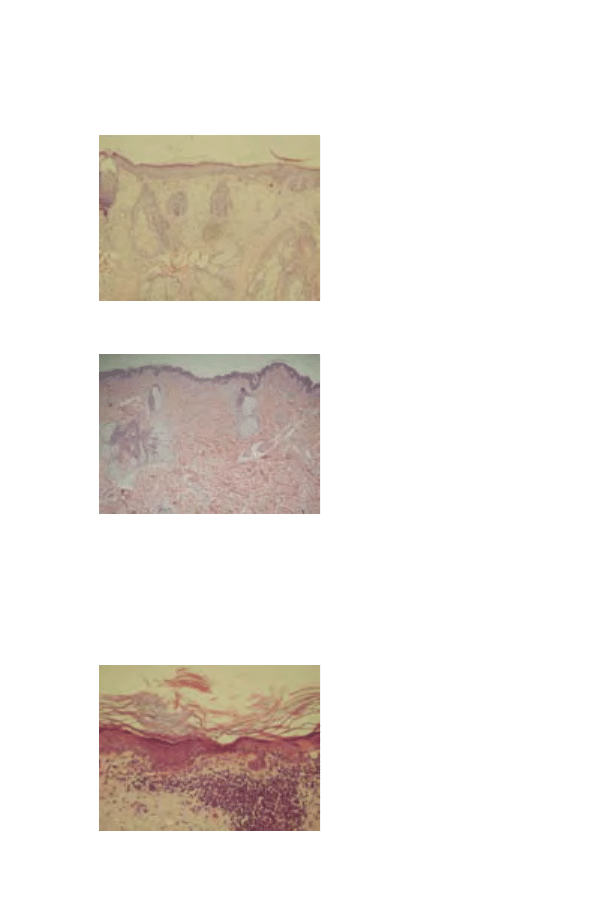
SKIN PATHOLOGY
Micrograph of Atrophic, Aged Skin
Here the epidermis has
become thinned while
the dermis has become
disorganized. This skin is
prone to bruising and will
appear old and thin.
Normal Skin Close Up Oil Gland
This is a photomicrograph
that demonstrates the
various layers of the skin.
At the top of the skin is
a basket weave layer of
dead skin cells known
as the stratum corneum.
Beneath this lies the viable
epidermal layer (purplish
in this photomicrograph). Deeper still is the thick organized
connective tissue composed of collagen and elastic fibers that
support the outer epidermal layer. The vertically oriented white
structure is a sebaceous (oil) gland that is associated with a
hair follicle.
Micrograph of Actinic Keratosis
This photomicrograph
demonstrates disorganization
of the epidermal cells with
early signs of skin cancer.
The damage from the sun in
the dermis is evident in the
discoloration of the normally
pink staining collagen which
is blue here.
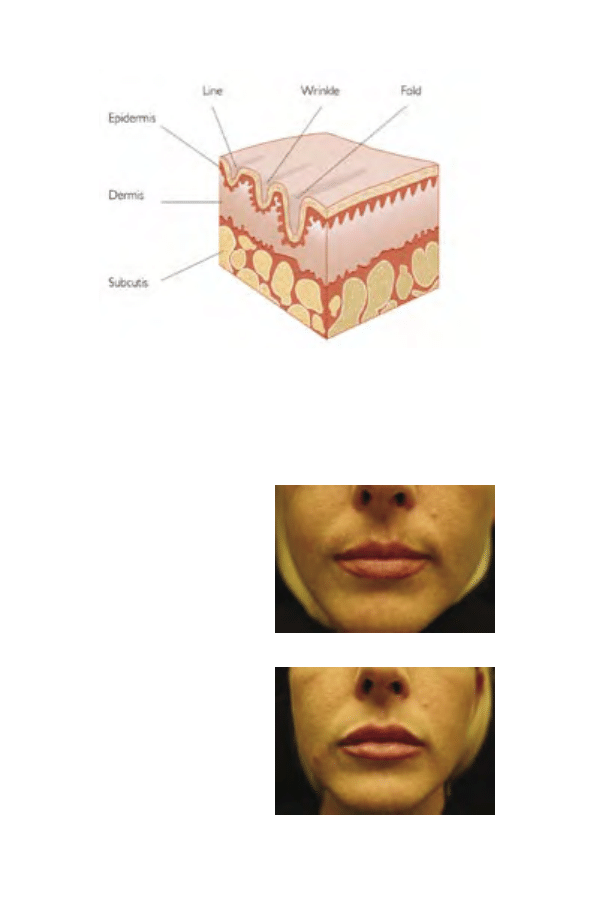
Lines, wrinkles
and folds graphically
illustrated
Courtesy of Medicis
RESTYLANE
Lip Augmentation
This woman had great
shape and contour of her
lips but wanted slightly
increased volume. I
accomplished this by
injecting Restylane.
Before
After
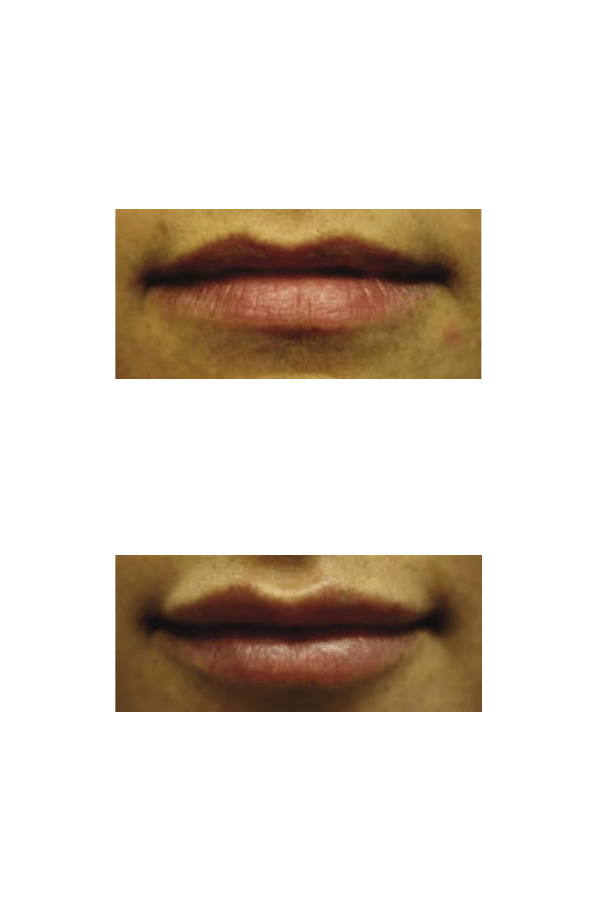
Before
Lip augmentation may also be performed for individuals
with small lips. In this woman, I injected two ml of
Hyaluronic acid to increase the size of her upper and
lower lips and give her the definition that she desired. This
improvement will last for between six and twelve months
in most individuals.
After
LIP AUGMENTATION
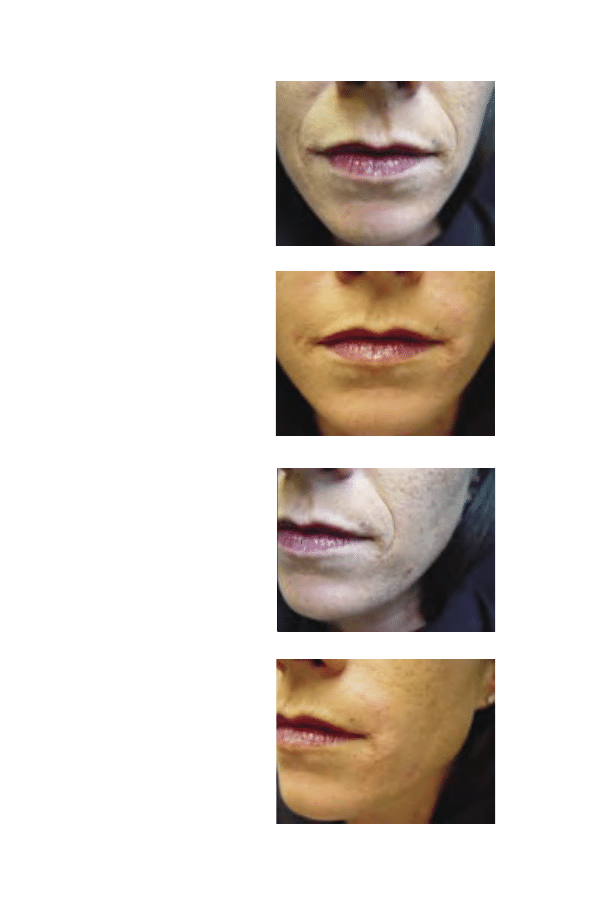
This is the same person
seen from the left side.
The deep wrinkles are
almost completely gone
in this view.
These are before and after
photographs of a 28 year
old woman treated with
Restylane. This treatment
significantly reduced her
deep wrinkles and makes
her look and feel her age.
DEEP WRINKLES
Before
After
Before
After
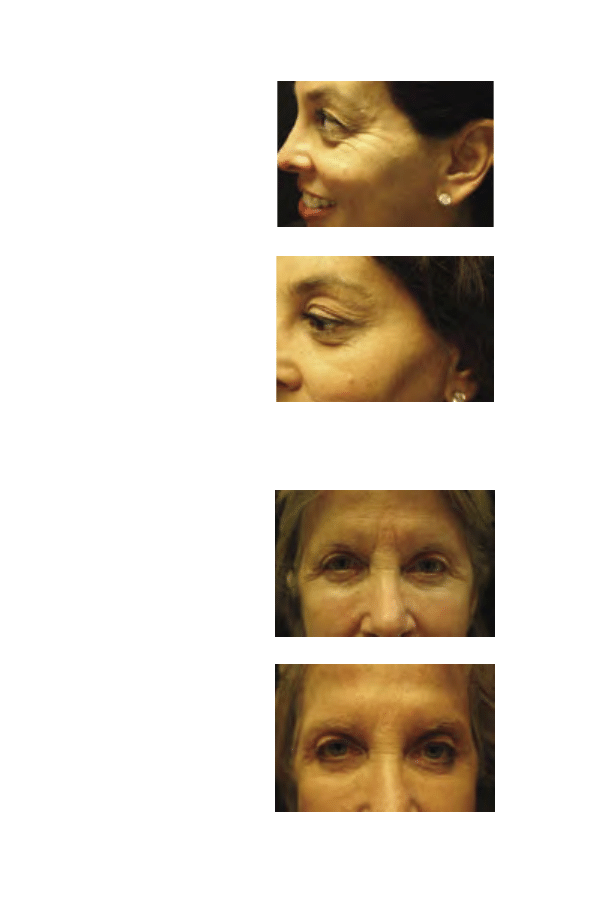
BOTOX
Crows Feet
Botox used to treat the
crow’s feet. This woman
had overactive muscles
around her eyes causing
her wrinkles to worsen.
This made her appear
older and fatigued. By
using Botox to relax these
muscles a more youthful
and relaxed appearance is
obtained.
Wrinkles/Frown Lines
Botox used to treat the
crow’s feet. This woman
had overactive muscles
around her eyes causing
her wrinkles to worsen.
This made her appear
older and fatigued.
Before
After
Before
After

Sometimes Botox is not enough and a filler is required
to smooth out wrinkles. This is the case in this instance
where years of frowning have etched in lines that need
to be filled. Fillers that can be used here include collagens,
Hyaluronic acids and Radiesse. In this instance, Restylane
was used in conjunction with Botox. (Studies show
that this combination results in increased duration of
correction for each.)
Before
After
BOTOX/COMBINATION THERAPIES
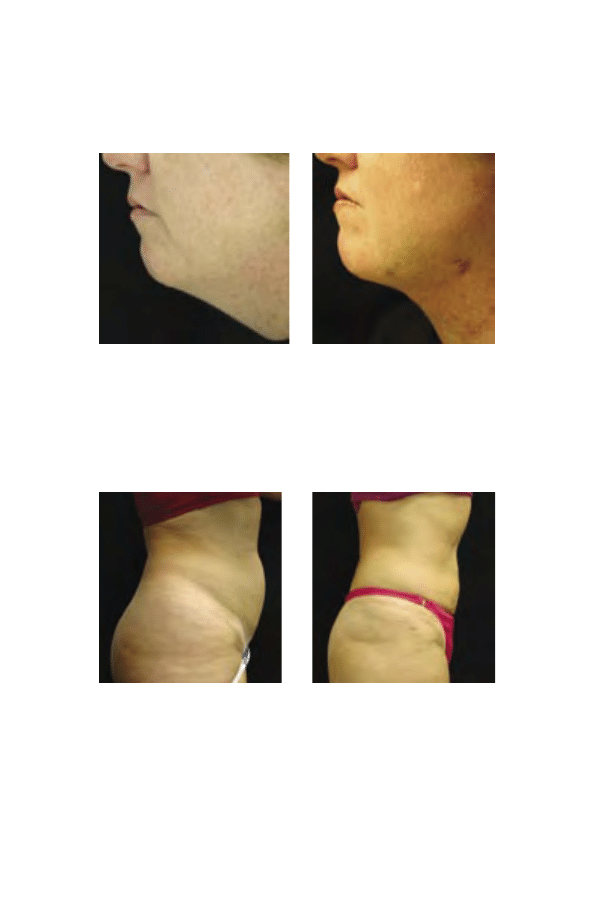
Liposuction is a safe and effective method of removing unwanted
fat. In this series of photographs, the significant improvement
obtained in this woman’s neck and chin was accomplished in my
office in about one hour.
Other areas that I treat with liposuction include the waist, hips,
thighs and arms. Men and women are treated although women
tend to be treated more frequently. These photographs show
results that I achieved in a middle aged woman that wanted to
lose some of the fat from her abdomen. She was not overweight
and needed to be sculpted—an ideal patient for liposuction.
LIPOSUCTION
Before
After
Before
After
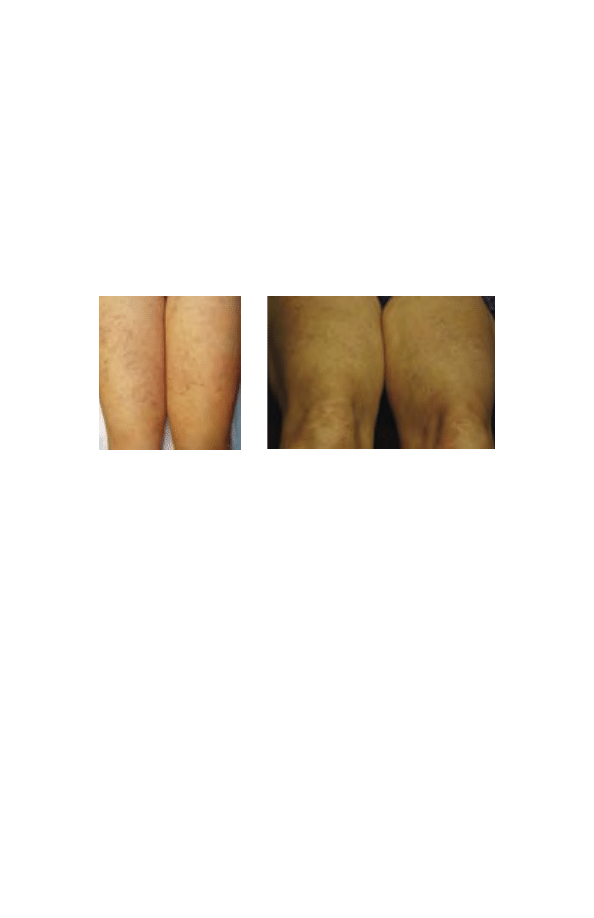
SCLEROTHERAPY
Sclerotherapy is one of the most popular cosmetic dermatology
procedures performed in the United States. These photographs
show how injections of saline can safely and effectively eradicate
the tiny vessels that appear on the legs. This procedure was
performed about four times, spaced one month apart to obtain
this result.
Before
After

Accutane
®
, 7, 72-5
Acne, 7, 15, 17, 29, 30, 33, 53-4,
56-7, 64-5, 67, 71-8, 81, 83, 88,
90-2, 94, 114, 118, 139, 151,
166, 167, 172, 176, 188
cystic,
73
pustular,
73
Actinic keratoses, 11, 23, 32, 40,
90, 92, 149-51, 154, 181
Age spots, 24, 90, 167, 171, 175
Aging skin (See skin.)
Aldara, 151, 153, 155, 157-58
AlloDerm
®
, 9, 113-14
American Academy of
Dermatology, 29, 147, 184
Amevive, 86
Aminolevulinic acid, 77, 92, 151,
158
Anagen, 136
Antibiotics, 63, 73-4, 76, 80-2, 85,
93, 132, 137
Antioxidants, 6, 30, 47-49, 52,
54-5, 67-8, 82, 94, 185, 187
Artefi ll
®
, 117
Atopic dermatitis, 7, 84-5
Autologous fat, 28, 117
Avage
®
, 30, 32, 47, 60
Aveeno, 83
Basal cell carcinoma, 11, 14, 24,
149, 151-53, 158-59, 167
Benzoyl peroxides, 76
Blackheads, 72, 73, 78, 168
Botox
®
, 8, 28, 33, 62, 98-104,
Botulinum toxin, 8, 16-7, 28, 31,
33, 96-9, 101, 103, 164, 167, 181
Captique
TM
, 9, 16-7, 25, 30, 61,
107-10, 112, 120, 181
Carbon dioxide (CO2) laser, 89
Carruthers, Alastair, 98
Carruthers, Jean, 98
Cetaphil, 68
Claritin, 85, 98
Collagen, 9, 15-7, 21, 22, 25-7,
33, 37, 49, 53-4, 56, 61, 89,
90, 93, 103, 107-110, 112-13,
115-17, 120, 143, 168-70, 172,
176, 187
Collagenase, 93
Comedones, 72, 168
Contour ThreadliftTM, 10, 122
Cosmeceuticals, 6, 13, 24, 31,
46-9, 54-5, 164, 168
Cosmetic Boot Camp, 14
CosmoDerm
®
, 9, 107, 109,
112-14, 120
CosmoPlast
®
, 9, 112-14, 120
Curettage, 12, 153, 159
Cymetra
®
, 9, 113-14
Dermasurgeon, 15, 122
Dermatopathology, 14-5, 20, 22,
136, 147, 159, 169, 184
Dermal fi llers, 10, 106-7, 120,
164, 169
Dermis, 23-5, 27, 33, 37, 47-8, 55,
113-14, 116, 118, 169, 178
Differin
®
, 76
Doxycycline, 73, 74, 80-1, 93
Eczema, 7, 17, 67, 69, 79, 83-5,
151, 169
Electrodessication, 12, 153, 159
Electrolysis, 138, 139, 169
Electro-optical synergy (ELOS),
8, 92
Enbrel, 86
Index
181
Index
Palm Beach Perfect FINAL 181
Palm Beach Perfect FINAL 181
8/16/06 5:39:55 AM
8/16/06 5:39:55 AM

182
PALM BEACH PERFECT SKIN
Epidermis, 21-25, 27, 47, 55, 153,
155, 167, 169, 177-78
Erythromycin, 74, 76, 81
Eucerin, 46, 68
Fat, 15, 21, 25-8, 30, 33, 61, 96,
103, 106, 117, 126, 128-32,
154, 168, 170-71, 176-79
Fat transfer, 16-7, 33, 61, 96, 117,
132
Fitzpatrick Classifi cation, 36,
62-3, 65
Fraxel
TM
, 8, 16, 25, 89, 94-5
Gentlewaves
®
, 93-4
Glycolic acid, 6, 18, 24, 33, 46-8,
51, 54, 64, 82-4, 143, 166, 171,
173, 178, 185, 190
Green tea, 30, 32-3, 46-7, 49-50,
52-4, 60, 66-8, 82, 93-4, 143,
166, 171, 185-191
Hair
growth, 33, 57, 136-39
reduction, 11, 135-36, 138,
140, 142-43
removal, 11, 26, 57, 136-42
Hormonal therapy, 7, 75
Hylaform
®
, 9, 16-7, 25, 30, 61,
107-10, 112, 120
Hylaform
®
Plus, 9, 16, 25, 61,
112, 120
Hyaluronic acid, 9, 15, 17, 27, 33,
52, 56, 103, 110-12, 120, 170-
71, 185-87
Hypopigmentation, 135, 172
Ideal Skin, 1, 6, 62, 65-6, 70
Intense pulsed light (IPL), 8, 28,
30, 50, 73, 77, 90-2, 94-6, 130,
134, 140, 142
Isolagen, 9, 16, 25, 66, 107,
112-13, 115, 170, 172
Juvederm
®
, 9, 16-7, 25, 28, 30,
61, 107-10, 112, 120
Levulan, 90, 93
Liposuction, 10, 15, 17, 30, 54,
124-31, 178, 185-86
Liquid silicones, 10, 119
Melanoma, 12, 14, 25, 37, 148-49,
153, 155-59, 162, 173, 184
Melasma, 173
Mexoryl, 40-1, 173
Microdermabrasion, 24, 30, 51,
67, 76, 93, 96, 143, 186, 190
Minocycline, 73, 80-1
Mohs surgery, 12, 152-53,
159-61, 174, 180, 184
Monheit, Gary, 106
Narins, Rhoda, 119
N-lite, 95
Non-ablative lasers, 89, 174
P. Acnes, 73
Palm Beach Peel®, 6, 18, 30, 33,
50-4, 64, 66-7, 82, 93, 185-91
Peels, 15, 17-8, 24, 27, 29-30,
33-4, 39, 48, 51, 55, 60-1, 67-8,
76, 93, 96
Perioral dermatitis, 82
Perlane
®
, 16, 25, 28, 30, 61,
107-9, 111, 120
Photothermolysis, 93, 140
Photodynamic therapy, 7, 8, 61,
77, 78, 81, 89, 92, 151, 155, 158
Pigment, 17, 20, 23-4, 31, 33, 36,
54-5, 62, 65, 88-9, 94-6, 134-35,
138-40, 142-43, 153, 155-56,
167, 172-73, 175, 186
Psoriasis, 7, 17, 54, 56, 79, 83,
85-6, 88, 176, 178
RadiesseTM, 10, 16-7, 25, 33,
103, 107-10, 117-18, 120
Radiofrequency, 8, 16, 27, 29, 33,
89, 91-2, 124, 133, 135
Raptiva, 86
Reloxin
®
, 8, 16, 28, 30, 33, 61,
96, 98-102
Remicade, 86, 153
Palm Beach Perfect FINAL 182
Palm Beach Perfect FINAL 182
8/16/06 5:39:55 AM
8/16/06 5:39:55 AM

Restylane
®
, 9, 16-7, 25-6, 28, 30,
61-2, 74, 107-12, 120, 124
Restylane
®
Sub Q, 16, 107
Restylane
®
Touch, 107-09, 111
Retin-A
®
, 22, 30, 32, 47, 52, 60,
63-4, 76, 80, 85, 143, 176, 186
Retinoids, 47, 54, 76, 178
Rosacea, 7, 17, 33, 50, 56, 62, 65,
72, 79, 80-2, 90-1, 176, 189
Salicylic acid, 54, 63, 64, 67, 76-
8, 167, 172, 176
Sclerotherapy, 134-35, 177
Sculptra
®
, 9, 16-7, 25-8, 31, 33, 61,
74, 107-10, 115-16, 120, 124
Seasonal skincare, 6, 69
Sensitive skin (See skin.)
Shaving, 136-38
Singulair, 85
Skin cancer, 11, 12, 14-5, 17,
24-5, 39, 31, 37-40, 42-3, 50,
67, 69, 92, 145-49, 151, 153,
155, 157-62, 173-74, 177, 179
Skin layers, 25, 89, 178
Skin type, 6, 36, 43, 44, 62-5, 67,
76, 79-80, 82, 92, 107, 149,
162, 164, 172, 187
combination,
64
normal,
21
oily, 51, 63-5, 67, 78
sensitive, 7, 39, 62-3, 65, 76,
79, 82-4, 139, 189
Skincare, 6, 17-8, 23, 30, 32-4, 38,
46, 50, 52, 60, 65, 67, 69, 70,
72, 83
products, 17, 46, 65
SPF (See sun protection factor.)
Spider veins, 17, 167, 177
Squamous cell carcinoma, 12, 14,
38, 148-50, 153-55, 158-59, 177
Stretch marks, 11, 88, 133-35,
137, 139, 141, 143-44, 178
Striae, 143, 178
Subcutaneous tissue, 17, 23,
26-7, 110, 122, 169
Sulfa, 73-4, 76, 108, 189
Sun block, 37, 39, 42, 68, 93-4,
178
Sun damage, 5, 20-3, 27, 31-2, 38,
61, 63, 88, 92, 96, 149, 156, 179
Sun protection factor, 5, 36, 38-
44, 64, 177, 188, 189
Sunburn, 29, 37-9, 41, 50, 57, 74,
81, 91, 94, 148
Sunscreen, 35-7, 39-44, 64, 68,
162, 175, 177-78
chemical free, 188-89
Tazorac
®
, 76
Telangectasias, 80, 90, 92
Tetracycline, 73, 74, 80-1
Theraplex, 46, 68
Thermage
®
, 16, 25, 91
Threading, 10, 121-24
Tweezing, 137-38, 141
Vitamin C, 6, 30, 33, 46, 48-9,
54-5, 64, 67, 167, 173, 187
Weather Channel, 29, 42-3, 63,
180
Wrinkles, 5, 16, 17, 20-2, 25-31,
37-8, 40, 43, 47-8, 52, 54, 56,
61-3, 88, 92, 96, 98, 100, 106-7,
109-10, 112-13, 116-17, 119,
124, 167, 170-72, 175-76,
185-86, 190
creases, 20, 21-22, 26-8, 36,
91, 103, 107, 109, 111-12,
115-16, 118, 124, 128, 130,
171, 173
deep, 5, 20, 27, 107, 113
dynamic,
5,
28
static,
5,
28-9
Zantac, 85
Zyderm
®
, 9, 109, 112-14, 120
Zyplast
®
, 9, 112-14, 120
Zyrtec, 85
Index
183
Palm Beach Perfect FINAL 183
Palm Beach Perfect FINAL 183
8/16/06 5:39:56 AM
8/16/06 5:39:56 AM

184
PALM BEACH PERFECT SKIN
About
the Author
Dr. Kenneth R. Beer grew up in Woodmere, New York. He was
an A.B. Duke Scholar at Duke University, where he graduated
Phi Beta Kappa. Dr. Beer received his medical degree from
the University of Pennsylvania in 1989. After an internship
in internal medicine, he completed his dermatology resi-
dency and dermatopathology fellowship at the University
of Chicago. Dr. Beer is board certifi ed in dermatology by the
American Board of Dermatology and is also board certifi ed
in dermatopathology. At the present time, Dr. Beer is a clini-
cal instructor of dermatology at the University of Miami. He
has published numerous articles in medical journals, is a fre-
quent writer for popular magazines such as Elle and Allure,
and can be seen on television news programs. Dr. Beer is a
fellow of the American Academy of Dermatology (where he
serves on the Melanoma and Recredentialing Committees),
the American Society for Dermatopathology, the American
Society for Dermatologic Surgery, the American Society for
Mohs Surgery, and many other professional organizations.
Palm Beach Perfect FINAL 184
Palm Beach Perfect FINAL 184
8/16/06 5:39:56 AM
8/16/06 5:39:56 AM

Appendix
The Palm Beach Peel
®
System
Palm Beach Peel
®
Exfoliation Pads
(5%, 10% and 15%)
These convenient and easy to use exfoliation pads contain
glycolic acid. By using a gradually progressive three step sys-
tem, you can take control of your skincare regimen. To help
clear the outer layer of dead skins that can clog pores and
give the skin a dull appearance, the pads gently exfoliate and
remove oil from the surface of the skin. Witch hazel provides
astringent to the pads and this will help your skin look and
feel refreshed. Exfoliation pads are an integral part of any
anti-aging skincare program.
Directions for use: Remove a pad from the jar and wipe
the textured pad over the desired area to be cleansed, one
to two times daily.
Palm Beach Peel
®
Eye Rescue Formula
A nourishing serum formulated for the delicate skin under
the eye. There are few products that can effectively help
minimize the appearance of fi ne lines and wrinkles around
the eye. Eye Rescue Serum combines the hydrating benefi ts
of hyaluronic acids with antioxidants such as Green Tea
Extract, Coenzyme Q10, and liposomal vitamins A, C and E.
Directions for use: Apply Eye Rescue Serum at least twice
a day. If you are traveling, you should apply the Eye Rescue
Serum prior to fl ying and then at least once every three
hours.
Palm Beach Peel
®
Green Tea Antioxidant Cleanser
In order to avoid drying the skin and stripping vital oils
Appendix
185
Palm Beach Perfect FINAL 185
Palm Beach Perfect FINAL 185
8/16/06 5:39:57 AM
8/16/06 5:39:57 AM

186
PALM BEACH PERFECT SKIN
while cleansing, the Green Tea Antioxidant Cleanser is formu-
lated to gently cleanse and moisturize without leaving your
skin dry and irritated. I have combined liposomal vitamins A,
C and E as well as Green Tea and White Tea with Coenzyme
Q-10 in order to nourish the skin while cleansing it. This
cleanser should be part of any anti-aging skincare regimen.
Directions for use: Apply a tablespoon of cleanser to
moistened facial skin and gently massage for one to two
minutes. Rinse with lukewarm water and gently pat dry.
Cleanse twice a day.
Palm Beach Peel
®
Home Microdermabrasion Formula
We harnessed the power of bamboo to provide self-heating
crystals to enable our patients to obtain dermatology quality
microdermabrasion at home. The bamboo crystals deliver
a soothing wave of cleansing warmth as they remove dirt,
debris, oils, and other impurities that can clog the pores. As
with other types of microdermabrasion, the Home Micro-
dermabrasion system will help to minimize the appearance
of fi ne lines and pigment irregularities. It is the cornerstone
of any anti-aging skincare system.
Directions for use: Apply a pea size amount to face once
or twice a week. Gently massage into skin in a circular
motion, rinse with lukewarm water, and pat dry. Using
the Home Microdermabrasion Formula more than recom-
mended may result in skin irritation.
Palm Beach Peel
®
Retinol Recovery Serum
(.2%, .3% and .5%)
Retinol is the vitamin A derivative found in many prescrip-
tion and over-the-counter wrinkle treatments. It is the
precursor to Retin-A
®
. Retinol assists in minimizing the signs
of aging by reducing the appearance of fi ne lines, wrinkles,
and mottled pigmentation. Palm Beach Peel
®
Retinol Recov-
ery Serum also uses green tea hyaluronic acid (which will
increase moisture of the skin) to achieve smoother, fi rmer,
Palm Beach Perfect FINAL 186
Palm Beach Perfect FINAL 186
8/16/06 5:39:57 AM
8/16/06 5:39:57 AM

and more evenly toned skin. Increasing the concentration
of Retinol from .2% up to .5% will allow you to control the
Retinol Recovery for your skin (caution—higher concentra-
tion may cause irritation so proceed gradually). The Retinol
Recovery Serum is as close to a prescription strength anti-
aging cream as possible.
Directions for use: Apply to clean skin once every evening.
Palm Beach Peel
®
Antioxidant Rescue Serum
Rescue Serum is a lightweight, fast absorbing formula
combining hyaluronic acid with green tea and caffeine. The
green tea with caffeine maximizes the amount of antioxi-
dants delivered to the skin while the hyaluronic acid boosts
the hydration of the skin. Rescue Serum may help to reduce
skin redness and diminish pore size, while leaving the skin
smoother and more radiant. Palm Beach Peel
®
Rescue Serum
is recommended for all skin types.
Directions for use: Apply a pea size amount to skin after
cleansing in the morning and evening.
Palm Beach Peel
®
Growth Factor Serum
(10% & 15%)
Human growth factor TGF-beta-1 may help to stimulate col-
lagen synthesis and initiate skin repair mechanisms. I have
also included vitamin C (in either a 10% or 15% strength)
because this has also been shown to stimulate collagen
production. Growth Factor Serum may be slightly irritat-
ing when applied. It is intended to be used on skin that has
damage due to aging, sun, stress, smoking, or a combination
of these.
Directions for use: Apply a small amount to face, neck, and
chest after cleansing.
Palm Beach Peel
®
Moisturizing Formula
Moisturizing Formula is specifi cally designed to help add
moisture to dry skin. It is great for skin that is normally dry,
Appendix
187
Palm Beach Perfect FINAL 187
Palm Beach Perfect FINAL 187
8/16/06 5:39:57 AM
8/16/06 5:39:57 AM

188
PALM BEACH PERFECT SKIN
for when you are fl ying, or when you are in an area with low
humidity. I have included vitamins A, C, E, Green Tea Extract,
and Co-Q10 to help nourish your skin while moisturizing it.
Glycerin and Squalene, two natural humectants, are included
to draw moisture into the skin.
Directions for use: Apply any time your skin feels dry.
ANTI-AGING SKINCARE REGIME
AM
PM
Palm Beach Peel
®
Green Tea
Antioxidant Cleanser
Palm Beach Peel
®
Green Tea
Antioxidant Cleanser Palm
Beach Peel
®
Antioxidant Rescue
Serum
Palm Beach Peel
®
Exfoliation
Pads
Palm Beach Peel
®
Antioxidant
Moisturizing Formula
Palm Beach Peel
®
Growth Factor
Serum
Palm Beach Peel
®
Eye Rescue
Formula
Palm Beach Peel
®
Antioxidant
Moisturizing Formula
Chemical Free SPF 30
Palm Beach Peel
®
Eye Rescue
Formula
ACNE SKINCARE REGIME
AM
PM
Acne Cleanser
Acne Cleanser
Acne Treatment Pads
Acne Treatment Pads
Palm Beach Peel
®
Antioxidant
Moisturizing Formula
Palm Beach Peel
®
Antioxidant
Moisturizing Formula
Palm Beach Peel
®
Eye Rescue
Formula
Palm Beach Peel
®
Eye Rescue
Formula
Chemical Free SPF 30
Palm Beach Peel
®
Home
Dermabrasion Formula
Palm Beach Perfect FINAL 188
Palm Beach Perfect FINAL 188
8/16/06 5:39:58 AM
8/16/06 5:39:58 AM

SENSITIVE SKIN & ROSACEA CARE REGIME
AM
PM
Palm Beach Peel
®
Green Tea
Antioxidant Cleanser
Palm Beach Peel
®
Green Tea
Antioxidant Cleanser
Palm Beach Peel
®
Antioxidant
Rescue Serum
Palm Beach Peel
®
Retinol
Recovery Serum
Palm Beach Peel
®
Antioxidant
Moisturizing Formula
Palm Beach Peel® Antioxidant
Moisturizing Formula
Chemical Free SPF 30
Palm Beach Peel
®
Home
Dermabrasion Formula
Palm Beach Peel
®
Crystal
INGREDIENTS: Butylene Glycol, Sodium Silicoaluminate,
Bambusa arundinacia (Bamboo) Stem Extract, PEG-8,
Camellia sinensis (Green Tea), White Tea, Ascorbyl Palmi-
tate, Retinyl Palmitate, Tocopheryl Acetate, Dimethicone,
Methyl Gluceth-20, Hydroxyproplcellulose, Hydroxypropyl-
methylcellulose, Petrolatum, Titanium Dioxide.
Palm Beach Peel
®
Antioxidant Cleanser
INGREDIENTS: Purifi ed Water, Sorbitol, Cetyl Alcohol, Stea-
ryl Alcohol, Ammonium Lauryl Sulfate, Camellia sinensis
(Green Tea) Leaf Extract, White Tea, Camellia Sinensis
(Green Tea) Polyphenols, Soy Phospholipids, Citrus auran-
tium dulcis (Orange) Fruit Extract, Retinyl Palmitate,
Ascorbyl Palmitate, Tocophenyl Acetate, Coenzyme Q10,
Superoxide Dismutase, Ascorbyl Glucosamine, Disodium
EDTA, Bisabolol, Methylparaben, Propylparaben, Imidaz-
olidinyl Urea.
Appendix
189
Palm Beach Perfect FINAL 189
Palm Beach Perfect FINAL 189
8/16/06 5:39:58 AM
8/16/06 5:39:58 AM

Order Form
THE PALM BEACH PEEL SYSTEM ORDER FORM
Product Name
Price
Quantity
Palm Beach Peel
®
Exfoliation Pads 10%
Convenient easy-to-use pads contain 10%
glycolic acid.
$40.00
___________
Palm Beach Peel
®
Exfoliation Pads 15%
Convenient easy to use pads contain 15%
glycolic acid.
$40.00
___________
Palm Beach Peel
®
Exfoliation Pads 20%
Convenient easy to use pads contain 20%
glycolic acid.
$40.00
___________
Palm Beach Peel
®
Retinol Recovery Serum 2x
Retinol assists in minimizing signs of aging.
$80.00
___________
Palm Beach Peel
®
Retinol Recovery Serum 3x
Retinol assists in minimizing signs of aging.
$90.00
___________
Palm Beach Peel
®
Retinol Recovery Serum 5x
Retinol assists in minimizing signs of aging.
$100.00 ___________
Palm Beach Peel
®
Eye Rescue Formula
Nourishing serum effectively minimizes the
appearance of fi ne lines and wrinkles around
the eye.
$45.00
___________
Palm Beach Peel
®
Green Tea Antioxidant Cleanser
Gentle cleanser moisturizes without drying the
skin and stripping vital oils.
$45.00
___________
Palm Beach Peel
®
Home Dermabrasion Formula
Microdermabrasion at home. A soothing
wave of cleansing warmth.
$65.00
___________
Palm Beach Peel
®
Antioxidant Moisturizing Formula
Specially designed to help add moisture to dry skin.
Contains vitamins A, C, E Green Tea Extract
and Co-Q10.
$40.00
__________
Palm Beach Peel
®
10% Growth Factor Serum
Antioxidant serum delivers skin enhancing
benefi ts.
$120.00
__________
Palm Beach Peel
®
15% Growth Factor Serum
Antioxidant serum delivers skin enhancing
benefi ts.
$135.00
__________
Palm Beach Peel
®
Green Tea Rescue Serum
Serum has a high concentration of antioxidants
which may help reverse aging.
$135.00
__________
Palm Beach Perfect FINAL 190
Palm Beach Perfect FINAL 190
8/16/06 5:39:58 AM
8/16/06 5:39:58 AM

Product Name
Price
Quantity
Palm Beach Peel
®
Green Tea Collection
Collection includes Green Tea Cleanser, Home
Dermabrasion Formula, Green Tea Serum and
Palm Beach Peel
®
Antioxidant Moisturizing
Formula
$160.00
__________
Palm Beach Peel
®
Skin Resuscitation Collection
Collection includes Palm Beach Peel
®
Home
Dermabrasion, Eye Rescue Formula, Retinol
Recovery Serum 5x Green Tea Cleanser
$195.00 __________
Palm Beach Peel
®
Ultimate Collection
Collection includes Green Tea Antioxidant
Cleanser, Growth Factor 10% Palm Beach
Peel
®
Home Dermabrasion, Eye Rescue
Formula, Palm
Beach Peel
®
Antioxidant
Moisturizing Formula
$245.00
__________
Order Total
_______________________________
Florida Sales Tax (6%)
_______________________________
Total Amount Enclosed
_______________________________
Billing Address:
Full Name
__________________________________________________________
Address
__________________________________________________________
Address Line 2 _____________________________________________________
City ____________ State/Province _______ ZIP or Postal Code _________
Country
__________________________________________________________
Daytime Telephone ______________ Daytime Telephone ______________
E-mail Address ____________________________________________________
Shipping Address (if different from above):
Full Name
__________________________________________________________
Address
__________________________________________________________
Address Line 2 _____________________________________________________
City ____________ State/Province _______ ZIP or Postal Code _________
Country
__________________________________________________________
Credit Card Information
____________________________________
Name on Credit Card
____________________________________
Type
____________________________________
Number
____________________________________
Expiration Date
____________________________________
MAIL, FAX, EMAIL or CALL IN YOUR ORDER TO:
Kenneth R. Beer, MD
Palm Beach Esthetic Center • 1500 North Dixie Highway, Suite 305
West Palm Beach, FL 33401-2717
Phone 561-655-9055 • Fax 561-655-9233
contactus@idealskin.com
Monthly shipments available. If you elect to do this check here
and your credit card will be charged monthly for each shipment.
Palm Beach Perfect FINAL 191
Palm Beach Perfect FINAL 191
8/16/06 5:39:59 AM
8/16/06 5:39:59 AM

Notes
Palm Beach Perfect FINAL 192
Palm Beach Perfect FINAL 192
8/16/06 5:39:59 AM
8/16/06 5:39:59 AM
Document Outline
- Title
- Acknowledgements
- Contents
- 1 The Structure of the Skin & How This Changes with Aging
- 2 The Sun & Your Skin
- 3 Skin Maintenance & Improvement
- 4 A Lifetime of Perfect Skin
- 5 Maintaining Clear Skin When You Have Acne
- 6 Common Conditions That Interfere with the Perfect Skin Plan: Rosacea, Sensitive Skin, Eczema, Psoriasis
- 7 Lasers & Light Sources
- 8 All About Botulinum Toxin
- 9 Fillers for Facial Rejuvenation
- 10 Holding on by a Thread
- 11 Tumescent Liposuction
- 12 Eradicating Veins, Unwanted Hair, & Stretch Marks
- 13 Advances in the Diagnosis & Treatment of Skin Cancers
- 14 What the Future Holds in the Quest for Perfect Skin
- Glossary
- Resources
- Images
- Index
- About the Author
- Appendix
- Order Form
Wyszukiwarka
Podobne podstrony:
141 Future Perfect Continuous
Architecting Presetation Final Release ppt
159 Present Perfect
Opracowanie FINAL miniaturka id Nieznany
Art & Intentions (final seminar paper) Lo
CONDITIONAL PERFECT
FINAŁ, 3 rok, edukacja ekologiczna
pyt contr final
KRO Final
FInal pkm 3
Past Perfect Simple Użycie
Czas Present Perfect
Raport FOCP Fractions Report Fractions Final
FINAL
fizyka egzamin paja final
Present Perfect esp
CCNA 2 Final Exam v
więcej podobnych podstron