
5
Greek Phonology
Sight and Sounds of Words (Part 3)
Consonants, Vowels and Diphthongs
5.0 Introduction
Lesson Five concludes an introductory three-part study of Greek phonology.
Lesson Three presented a bird’s-eye view of Greek vowels and consonants.
Lesson Four concentrated on the organization of the Greek consonants and their
phonetic relationship to one another. Finally, this lesson focuses on the vowel
sounds, including the diphthongs and their phonetic relationship with words
beginning with other vowel sounds, and several editorial diacritical phonetic
markings associated with vowels and diphthongs.
Whereas Greek consonants are the most stable phonetic sounds among the
letters, pronunciation of the Greek vowels proposes a formable challenge to any
NTGreek student. For the beginning Greek student, however, learning a few
diacritical phonetic markings will aid in pronouncing consistently the vowel
sounds and syllables in words. These diacritical markings primarily include
breathing marks (smooth and rough), accent marks (acute, grave, and
circumflex) and the punctuation marks (comma, colon, period and interrogative).
It must be pointed out from the outset that these diacritical markings are editorial.
By editorial, it is meant that the earliest manuscripts of NTGreek did not contain
any of the breathing, accentual or punctuation markings. They were added later
than NTGreek times by copyists of the Greek manuscripts to assist in the
phonetic pronunciation of Greek by those to whom the language was foreign.
Therefore, these markings are not part of the inspired text. This should not
insinuate, however, they are arbitrary or of little benefit, and therefore should be
ignored. For the beginning Greek student these editorial diacritical markings
distinguish between words that would otherwise appear the same (fo/bou - “of
fear”, fobou= - “Fear!”; o( - “the”, o3 - “which”; h3n - “which”, h]n - “was”).
Many Greek instructors choose to teach NTGreek without utilizing any of the
before mentioned editorial diacritical markings. Nevertheless, they are excellent
phonological tools for the nonnative speaker when it is remember why ancient
copyists employed them in the first place. Therefore, this grammar will follow the
copyists’ pedagogical approach and make the most of the diacritical markings to
aid in the pronunciation of NTGreek vowels and diphthongs where applicable.

LESSON 5: Greek Phonology: Consonants, Vowels and Diphthongs Page 76
5.1 The Greek Breathing Marks
A very important diacritical phonological marking is the breathing. There are two
breathing marks, the smooth breathing ( 0 ) and the rough breathing ( ().
These complementary breathing marks modulate or regulate the aspiration of
every initial vowel and diphthong. A smooth breathing specifies that there is no
aspiration; a rough breathing indicates aspiration. When aspiration occurs (as in
only the rough breathing mark), it is pronounced as the aspirated “h” in English.
There is not a Greek letter to represent the phonological aspirated “h”
sound (as in English; “heat”, “helix”, “hinge”, etc.). It is believed that the
bisection of the Greek capital letter, H (
├ ┤
), became to represent the two
breathing marks (
├
= rough and
┤
= smooth; ca. VII A.D.) after the letter
had lost its original aspiration long before the NTGreek Era. These
diacritical marks later evolved to
└
and
┘
(ca. XI A.D.) to the modern
breathing marks, 9 (rough breathing) and 0 (smooth breathing).
Because the breathing marks are phonologically important to every initial vowel
and diphthong, it would be wise to learn and use these markings until you know
Greek vocabulary very well. Under no circumstances should breathing marks be
omitted when practicing writing Greek words in the exercises.
5.1.1 The Smooth Breathing Mark. If the breathing mark over the vowel or
diphthong is curled to the left like a closing single quotation,
0
, then it is the
smooth breathing mark, indicating that the initial vowel or diphthong is not
aspirated. The smooth breathing never effects the aspiration of an initial vowel
or diphthong. The following examples are the names of the Greek vowels.
a)lfa, e0yilon, h0ta, i0wta, o0mikron, u0yilon, w)mega
When a word begins with a vowel which is also a capital letter, the smooth
breathing cannot go above it because of the letter’s size; therefore, it is placed
before the letter.
0Alfa, 0Eyilon, 0Hta, 0Iwta, 0Omikron, 0Uyilon, 0Wmega
When a word begins with an initial diphthong, the smooth breathing mark always
appears over the second vowel whether or not the initial vowel is capitalized.
au0toj, Au0tou, oi0kei, Oi0koj, ai0wn, Ai0wnia

LESSON 5: Greek Phonology: Consonants, Vowels and Diphthongs Page 77
5.1.2 The Rough Breathing Mark. If the breathing mark over the vowel or
diphthong is curled to the right like an opening single quotation, 9, then it is the
rough breathing mark, indicating that the initial vowel or diphthong is aspirated.
The rough breathing always effects the aspiration of an initial vowel or diphthong.
o9, oi9, ai9, e9c, o9dov, r(w, a(gioj
(ho) (hoi) (hai) (hexs) (hodos) (rho) (hagios)
When a vowel begins a word which is also a capital letter, the rough breathing
cannot go above it because of the letter’s size; it is placed before the letter.
9O, 9H, 9Ec, 9Odoj, 9Oj, 9Wra|, (Eteroj
When a word begins with an initial diphthong, the rough breathing mark always
appears over the second vowel whether or not the initial vowel is capitalized.
au9th, Au9th, ou9tov, Ou9tov, eu9riskw, Eu9riskw
5.1.3 Special Considerations. There is also a consonant associated with a
breathing mark. When rho (R r) begins a word, it always carries the rough
breathing mark. However, it is pronounced as "rh" instead of “hr”. Paragraph
4.3.5 (page 70) introduced the semi-consonant rho (R r). At the beginning of a
word, rho acquires characteristics of a vowel. This is the reason its alphabetical
name is spelled with an aspirated “r” (rho). A number of English words that have
been brought over from Greek begin with “rh”, instead of “r” (“rhapsody”, “rhino”,
“rheostat”, “rhetoric”, “rhubarb”, “rhythm”, etc.). As in the case of initial vowels,
the rough breathing occurs before a capitalized letter.
r9apizw, 9Rebekka, r9hgma, 9Riza, r9iptw
When upsilon (U u) or the diphthong upsilon + iota (Ui/ui) begins a word, it
always has a rough breathing mark. There is never an exception!
u9per, (Ualov, u9brizw, u9po, ui9oj, Ui9oqesia
The alphabetical name of U u (upsilon) is technically not a contradiction
to the above principle. Whereas U u is spelled as upsilon (not as
“hupsilon”) in English, the actual Greek spelling of the letter’s name is
u0 yilon with a space between “u0” and “yilon”.

LESSON 5: Greek Phonology: Consonants, Vowels and Diphthongs Page 78
5.2 Syllabification
Syllabification is the division of words into their individual syllables. In order to
pronounce Greek words phonetically and consistently correct, one must first be
able to divide words into their individual syllables. Many Greek words have only
one syllable. However, most words have more than one syllable, and therefore,
guidelines of syllable division are needed to manage their division. Hyphens are
used in the examples below to indicate a word’s correct syllable division.
5.2.1 Principles of syllabification. The following general principles of
syllabification are an attempt to describe the phonetic and linguistic process. An
apparent exception to these principles may appear time to time, indicating only
that there is another principle involved to be perceived and understood. The
following eight principles of syllabification are in their order of importance.
1. Every word has as many syllables as it has separate vowels and/or
diphthongs. Thus, every syllable must have one (and only one) vowel or
diphthong.
The following words have only one syllable.
e0n, oi9, de, h9n, ei0j, e0k, kai, su, gar
The above examples exemplify that a syllable may begin with a consonant,
a vowel, or diphthong. A syllable may end with a consonant, a vowel, or
diphthong. In fact, a syllable may not have any consonant at all. The
combined quantity of vowels or diphthongs determines the number of
syllables in a word. Therefore, the vowel or diphthong stands at the focal
point of every Greek syllable. Study the following examples.
The following words have two syllables.
sw|zw, e0ti, qhta, ou0te, e0kei, sigma
The following words have three syllables.
merizw, Maria, lalew, i0wta
The following words have four or more syllables.
fobeomai, a)khkoamen, e9wrakamen

LESSON 5: Greek Phonology: Consonants, Vowels and Diphthongs Page 79
2. Two consecutive vowels which do not form a diphthong are divided.
e0qeasameqa
e0-qe-a-sa-me-qa
a)khkoamen
a)-kh-ko-a-men
e9wrakamen
e9-w-ra-ka-men
kenow
ke-no-w
qee
qe-e
dia
di-a
eu0wdia
eu0-w-di-a
Spania
Spa-ni-a
i9eron
i9-e-ron
luomen
lu-o-men
3. A single consonant surrounded by vowels normally begins a new syllable.
Another way of stating this principle, a single consonant is pronounced
with the following vowel or diphthong.
maqhthj
ma-qh-thj
lumainw
lu-mai-nw
qelete
qe-le-te
logoj
lo-goj
palai
pa-lai
h0geto
h0-ge-to
e0geneto
e0-ge-ne-to
e0pexw
e0-pe-xw
leipomeqa
lei-po-me-qa
a)gorazw
a)-go-ra-zw

LESSON 5: Greek Phonology: Consonants, Vowels and Diphthongs Page 80
4. Syllables are divided between double consonants with their respective
consonant being pronounced with their vowel or diphthong.
Qaddaioj
qad-dai-oj
a)ggeloj
a0g-ge-loj
glwssa
glws-sa
sabbasin
sab-ba-sin
porrw
por-rw
e0kkleiw
e0k-klei-w
Maqqaioj
Maq-qai-oj
gamma
gam-ma
kappa
kap-pa
5. Two or more consonants together within a word begin a syllable if they can
begin a word. This inseparable grouping of consonants is called a
consonant cluster. NTGreek neophytes do not know what constitutes
inseparable consonant clusters, because Greek words can begin with
many consonant combinations that English does not. A catalog of all the
common consonant clusters is provided on the following page.
r(abdon
r(a-bdon
e0stin
e0-stin
teknon
te-knon
Xristoj
Xri-stoj
a)nqrwpoj
a0n-qrw-poj
zwgrew
zw-gre-w
lelusqe
le-lu-sqe
fobhtra
fo-bh-tra
e0plhrwqh
e0-plh-rw-qh

LESSON 5: Greek Phonology: Consonants, Vowels and Diphthongs Page 81
GREEK CONSONANT CLUSTERS
Any potential consonant cluster can be verified by a
consonant cluster is established by whether or not it begins a Greek word. For
example, the consonants ql in the table below constitute a cluster because they
can begin a Greek word (qliyij). Therefore, consonant clusters are never to be
divided between syllables, and are always pronounced in conjunction with their
following vowel or diphthong (they never end a syllable).
A consonant cluster is pronounced like their individual consonants, except that
they are quickly blended together. Fluency with consonant clusters will be
gained in time by practicing of reading NTGreek.
Nine consonant clusters below are not attested in NTGreek as beginning a word.
Their attestation is derived, however, from Classical Greek words. These
clusters have been included because of their frequency within NTGreek words.
They are indicated by an asterisk to the right of the consonant cluster.
bd
br
gl
gn
gr
dm
*
dn
*
dr
zb
zm
ql
qn
qr
kl
km
*
kn
kr
kt
mn
bdelugma
blepw
brefoj
glwssa
gnouj
grafw
dmhtoj
dnofeoj
dragma
zbennumi
Zmurna
qliyij
qric
kleptw
kmhtoj
knisa
krinon
ktisij
mna
pl
pn
pr
pt
sb
sg
*
sq
sk
skl
skn
*
sm
sp
spl
st
stl
*
str
sf
sfr
sx
plhgh
pneuma
presbeuthj
ptwxeia
sbennumi
sgalh
sqenow
skandalon
sklhroj
sknipoj
smurna
spoudh
splagxnon
stoma
stlic
strefw
sfodra
sfragij
sxisma
tl
*
tm
*
tr
fq
fl
fn
fr
xq
xl
xn
xr
yx
*
tlhmwn
tmhgw
trefw
fqartoj
flegw
fnei
fronew
xqej
xleuh
xnouj
Xristoj
yxent
bl
qnh|skw

LESSON 5: Greek Phonology: Consonants, Vowels and Diphthongs Page 82
6.
A grouping of consonants that does not constitute a consonant cluster is divided,
with the first consonant pronounced with the preceding vowel or diphthong.
Thus, the first consonant closes the syllable before; the second consonant
begins the following syllable.
e0mprosqen
e0m-pro-sqen
fobhqentej
fo-bh-qen-tej
sugxairw
sug-xai-rw
o9rkwmosia
o9r-kw-mo-si-a
a)rxhj
a)r-xhj
porfura
por-fu-ra
o9rkoj
o9r-koj
kentron
ken-tron
7.
Any consonant (except for
L l
and R
r
) plus
M m
or
N n
accompanies the
following vowel or diphthong. The nasal consonants do not divide when
they are the second consonant in a consonant pair.
teknon
te-knon
not
tek-non
mimnhskomai
mi-mnh-sko-mai
tolmaw
tol-ma-w
(l-exception)
kosmoj
ko-smoj
not
kos-moj
e0qnoj
e0-qnoj
not
e0q-noj
pragma
pra-gma
o0fqalmoj
o0-fqal-moj
(l-exception)
dusnohta
du-sno-h-ta
qermoj
qer-moj
(r-exception)
a)rneomai
a)r-ne-o-mai
(r-exception)

LESSON 5: Greek Phonology: Consonants, Vowels and Diphthongs Page 83
8. Compound words are normally divided where joined. A compound word
is two distinct words combined together. Normally the first word will be a
Greek preposition such as
a)na
,
a)po
,
dia
,
ei0j
,
e0k
,
e0pi
,
kata
and
pro
.
New students to NTGreek do not know what constitutes compound words.
Therefore, it is only necessary to be acquainted with this principle.
ei0shlqon
ei0s-hl-qon
ei0sferw
ei0s-fe-rw
a)nagw
a)na-gw
katelaben
kat-e-la-ben
a)postellw
a)po-stel-lw
sunexw
sun-e-xw
e0kpiptw
e0k-pi-ptw
proserxetai
pros-er-xe-tai
There are obvious instances necessitating compound words not to be divided
according to guideline #8. An important case in point is where double
consonants follow an initial vowel after the first word of a compound word
(
diaggellw
<
dia
+
a)ggellw
). Since Greek syllables cannot begin with
double consonants, other considerations must be taken into account to divide
the word phonetically correct. Consider the following examples.
diaggellw
di-ag-gel-lw
NOT
dia-ggel-lw
diallaghqi
di-al-la-gh-qi
NOT
dia-lla-gh-qi
e0pirraptei
e0-pir-ra-ptei
NOT
e0pi-rra-ptei
a)pollumeqa
a)-pol-lu-me-qa
NOT
a)po-llu-me-qa
kataggellein
ka-tag-gel-lein
NOT
kata-ggel-lein
In most cases, intuition and a little bit of common sense will serve as a good
guide where to divide Greek syllables. The easier way of pronouncing a
Greek word with the above eight guidelines in mind is 99.9% the phonetic
correct and proper way. Therefore, be wise and learn these guidelines.
LESSON 5: Greek Phonology: Consonants, Vowels and Diphthongs Page 84
In order to move to the next important diacritical phonological marking, which is
Greek accents (5.3), further knowledge concerning Greek syllables is necessary.
Accentuation is inextricably bound to a syllable’s designation and position
(ultima, penult and antepenult), and to its quantity (long or short).
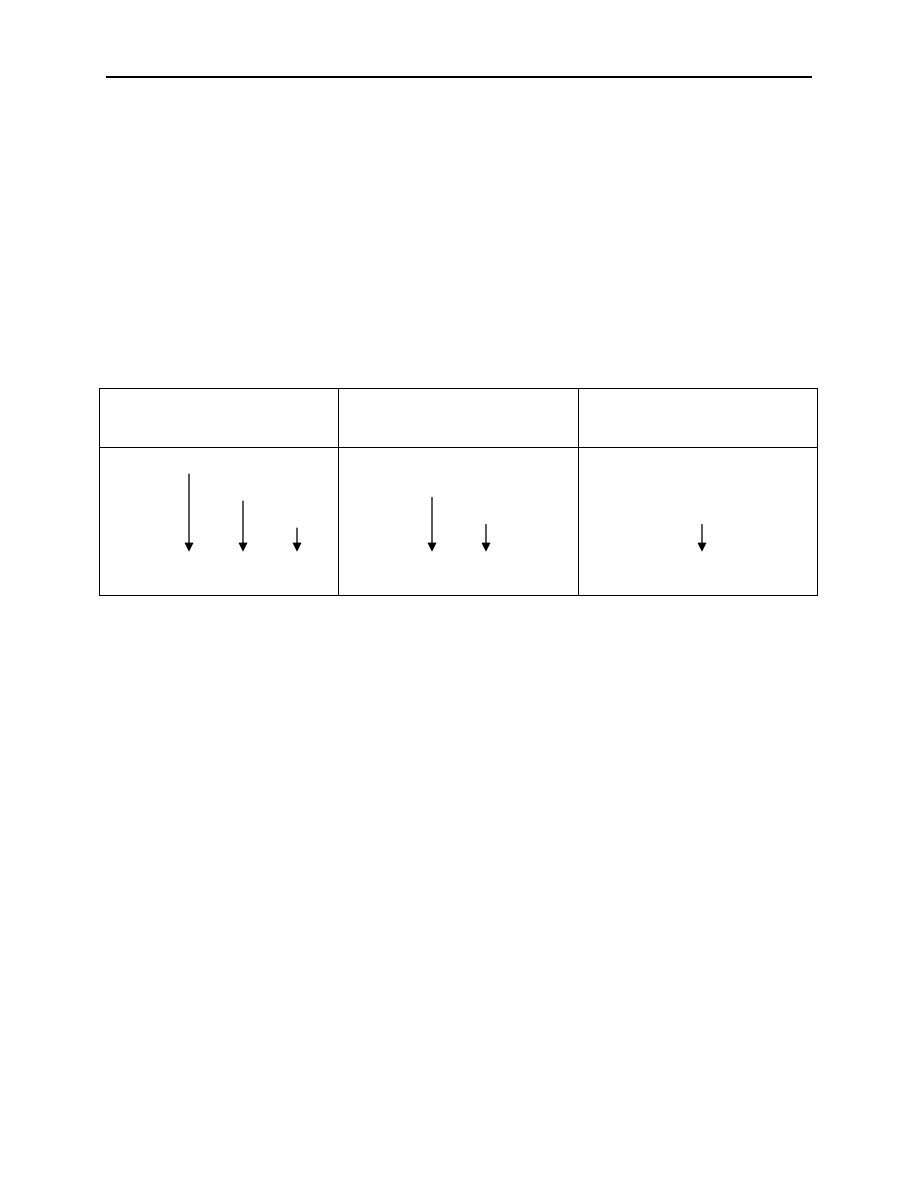
5.2.2 Designation and position of syllables. A Greek word with three or more
syllables is polysyllabic. A disyllabic word has two syllables; a word with only
one syllable is monosyllabic. Only the last three syllables of a Greek word are
labeled and the only three that may be accented. The last syllable of a word is
called the ultima, the next to the last syllable the penult and the syllable before
the penult is the antepenult (“before the penult”).
Polysyllabic
leluketw
Disyllabic
logoi
Monosyllabic
su
antepenult
penult
ultima
le lu ke tw
penult
ultima
lo goi
ultima
su
Only words with three syllables or more require all three of the above definitions.
Whether a word is polysyllabic, disyllabic, or monosyllabic, the last syllable is the
ultima. Thus, a monosyllabic word such as
su
has an ultima, but it has neither
penult nor antepenult. The disyllabic word
logoi
has an ultima and a penult, but
no antepenult. A polysyllabic word such as
leluketw
has all three, as do longer
words (
a)khkoamen, e9wrakamen, e0qeasameqa
).
A syllable is considered closed if it terminates with a consonant, and open if its
syllable ends with a vowel or diphthong. Thus in the word,
logoj
(
lo
-
goj
), the
ultima is closed and the penult is open. In the polysyllabic word,
a)nqrwpoj
(
a)n-qrw-poj
), both the ultima and antepenult are closed and the penult is open.
5.2.3 Syllable quantity. Syllable quantity depends on the vowel or diphthong in
a syllable. If a syllable contains a long vowel (H h, W w) or diphthong, its
quantity is long; if it contains a short vowel (E e, O o), its quantity is short. The
only exception is when ai and oi end a word (i.e.,
kai
,
magoi
). These two
diphthongs are considered short for accenting purposes. Syllables with A a, I i
or U u may be long or short, determined by further considerations (see 5.3.6).

LESSON 5: Greek Phonology: Consonants, Vowels and Diphthongs Page 85
5.3 Introduction to Greek Accents
Similar to breathing marks, Greek accents are associated with vowels and
diphthongs, but never with R r (rho). Also like breathing marks, accents were
employed later than NTGreek times by copyists of Greek manuscripts to assist in
the pronunciation of Greek words by those to whom the language was foreign.
Although accents were not part of the original NTGreek text, their importance lies
in their phonological benefit for the beginning Greek student. This will become
evidently clear before the close of this lesson. For example, the variable vowel,
iota, may be pronounced either long or short. After learning a few principles of
Greek accentuation, you will learn that iota in
u9mi=n
is long, whereas in a)sebe/si the
iota is short. Moreover, learning Greek accents will increase appreciation for the
intonated beauty and history of the Greek language.
In the end, the best students will be those who learn proper accentuation in the
early stages, for they will go the farthest distance the fastest. Do not be
dissuaded by former students who use their Greek text as a doorstop and
espouse that accents are not important. To learn NTGreek effectively, the ear
and voice need to carry as much of the burden as possible, and not only the eye.
Aristophanes of Byzantium (ca. 200 B.C.) is credited with inventing
accents to aid foreigners in their Greek pronunciation. The Greek
accents originally denoted musical pitch. By NTGreek times, however,
they had diminished to ordinary stress accents.
5.3.1 Names of the accents. Except for specific exceptions (introduced in later
lessons), Greek words are written with one of three possible accents. The three
Greek accents are, the acute (
&
), grave (
\
) and the circumflex: (
~
).
5.3.2 Position of accents. Just like breathing marks, all accents are written
over the vowel which forms the nucleus of the stressed syllable. In instances of
a diphthong, however, the accent is written over the second vowel, unless the
second vowel is an iota subscript.
listen
(acute):
e0pi/, kata/, a)new&|xqh, lo/goj, au0tou/j
listen
(grave):
para\, yuxh\, a)delfo\j, qeo\j, tou\j, au0to\j
listen
(circumflex):
nu=n, pu=r, 0Ihsou=j, bh=ta, dei=, au0tw~|
LESSON 5: Greek Phonology: Consonants, Vowels and Diphthongs Page 86
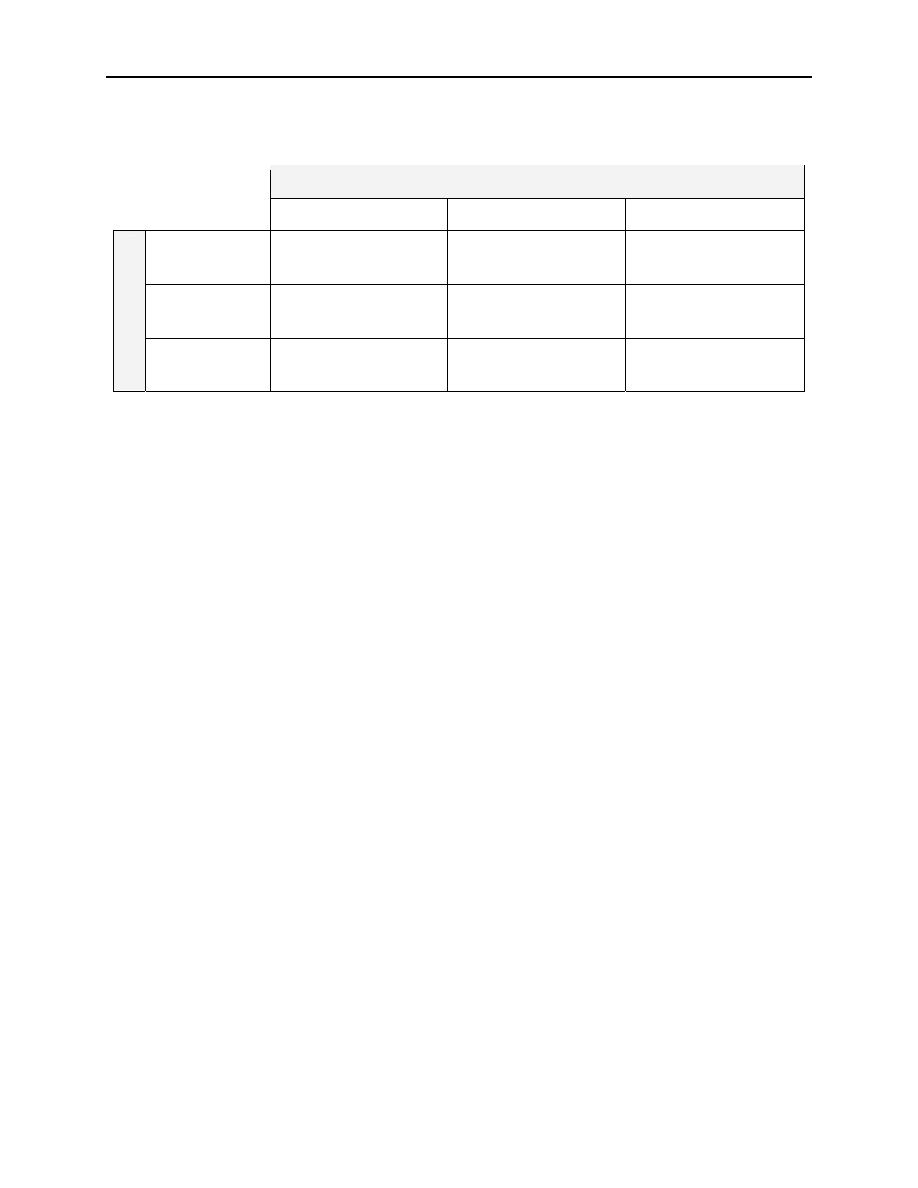
Study the chart below of the possible accentual positions.
Possible Accent Positions
Antepenult Penult
Ultima
Acute
/
/
/
Circumflex
=
=
A
C
C
E
N
T
Grave
\
A very important rule of accentuation can be summarized: the antepenult rule.
As stated before (cf. 5.2.2) a Greek accent cannot fall further from the end of the
word than the antepenult. An accent may fall on the last syllable (the ultimate),
or the one before the last (penult) or the third syllable from the end (antepenult).
However, which accent can stand over what vowel or diphthong? Two significant
determiners are the syllable’s quantity (5.3.3) and an accent’s sustention (5.3.4).
5.3.3 Syllable quantity. Syllable quantity (as long or short) affects accents.
Both the acute and grave accents can stand over either a long or a short syllable.
These two accents are not restricted by syllable quantity. The circumflex accent,
on the other hand, can stand over long syllables only.
Acute over a short syllable:
de/lta, si/gma, patri/j, a!nqrwpoj
Acute over a long syllable:
Kw&j, e0gklei/w, oi3, pei/saj, fh/mh
Grave over a short syllable:
au0toi\, Xristo\n, xwri\j, h0li\
Grave over a long syllable:
kai\, xrw_j, katabolh\n, legiw_n
Circumflex over only a long syllable:
bh=ta, zh=ta, h]ta, i0w~ta, mu=, ci=
5.3.4 Maximum Accent Sustention. Sustention is the accent’s ability to carry
the syllable or syllables that follow. The acute can sustain three syllables;
therefore, it may stand over an ultima, a penult or an antepenult. The circumflex
can sustain two syllables; therefore, its accent may stand over only an ultima or a
penult. In either instance, the syllable is always long. The grave accent can
sustain only one syllable; therefore, its accent is always over the ultima.
LESSON 5: Greek Phonology: Consonants, Vowels and Diphthongs Page 87
5.3.5 The de-evolution of accents. Greek was not always written with accents.
First introduced by ancient grammarians, they attempted to preserve a phonetic
record of their language when it was in danger of obscuration. Ancient Greek
words and word-groups were intonated; meaning voice pitch within them rose
and fell during speaking. Intonation was in danger of extinction (i.e., changing
from a phonetic pitch to a simple stress) therefore, they created a set of
diacritical accent marks to preserve representatively the language’s sound.
Greek grammarians accented syllables that were pitched higher than unaccented
syllables, and not because of stress (as in English). It was this rising and falling
of pitch that made the language sound musical. The Greek word for “accent” is
prosw|di/a
, a term used for “a song (words) sung to music”. These “musical”
accents represented a higher pitch in voice. Thus, one syllable was not
emphasized by stress over another as it was by pitch or a lack of it.
English also has this musical accent, but dependant on the shade of meaning
intended by the speaker. The rising inflection in the second syllable of the
English word, Really? (surprise), captures the acute accent (
/
) intonation rise.
The falling tone in the same syllable of Really! (displeasure), embodies the falling
intonation of the grave accent (
\
). Finally, the circumflex accent (
=
) blended
the acute and grave accents. It was confined only to long syllables in which the
voice rose in pitch during the first half and fell in the second. Since the
circumflex was roughly equivalent to a combined acute and grave accent
(therefore, in effect two syllables) it never could stand over the antepenult.
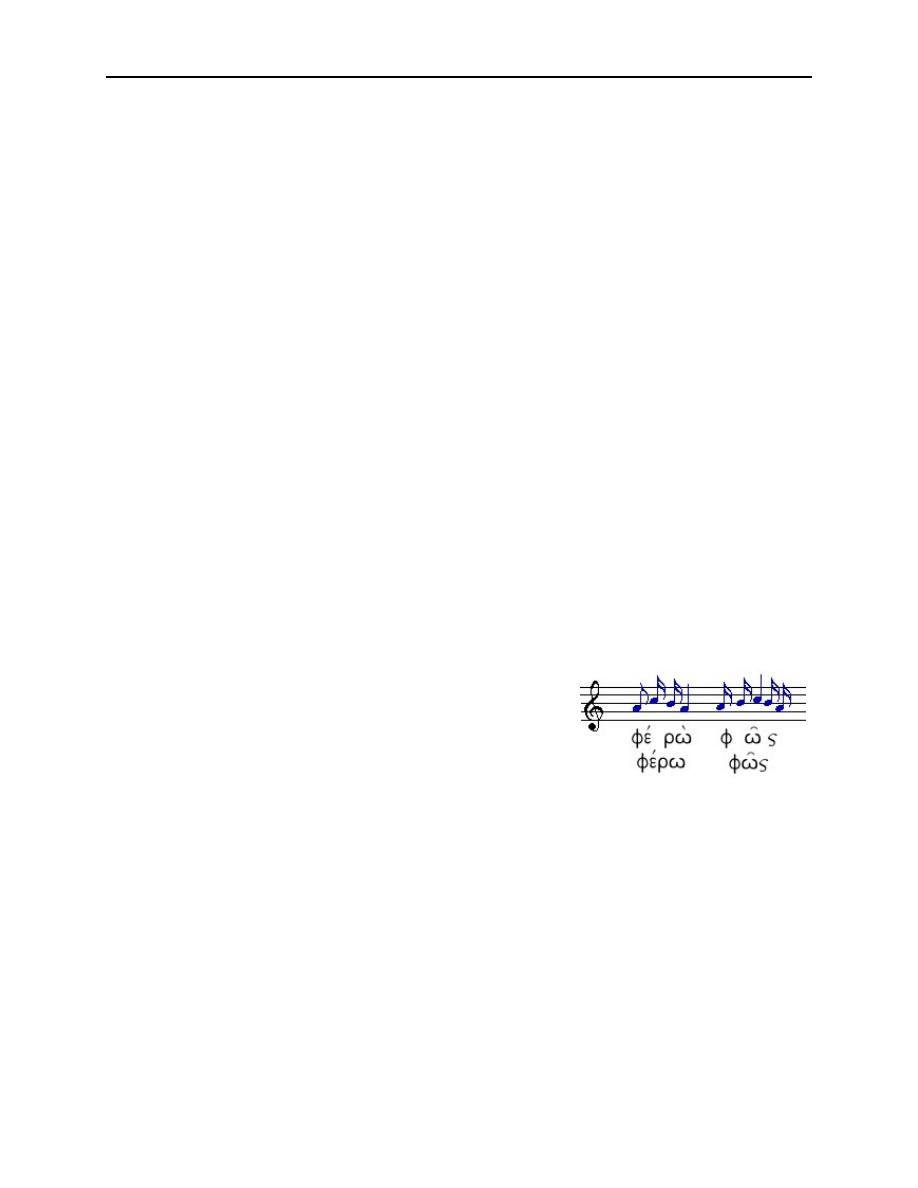
These three Greek accents may be represented in
musical notation to the right. Pitch would vary with
individuals, and the intervals would not be the same.
Interestingly, these accents were rigidly observed by
those who produced the Greek classics.
Sometime before NTGreek times, however, the grammarians had lost their battle
partly because of the assimilation of conquered nations’ influence. All three
accents eventually became to represent stress and not pitch. Thus, when we
pronounce NTGreek words today—no matter what accent is represented—stress
is manifested by extra loudness on the accented syllable, clearer quality of the
vowel and some slight lengthening (just as in English). An abridged monotonic
accentual system was officially adopted in 1982 by Modern Greek classrooms.

LESSON 5: Greek Phonology: Consonants, Vowels and Diphthongs Page 88
Since ancient Greek accentual intonation has been irretrievably lost, the three Greek
accents, the acute, grave and circumflex, will be stressed identically in this grammar.
lu/w, ti/na, kai\, e0gw_, Xristou=, qeou=
What is to be understood and emphasized now is that, even though the ancient
accentual pitch has been lost, NTGreek may be read successfully without
knowing any more about accents and the rules by which they are governed other
than what is presented in this lesson. So why learn the Greek accents?
As stated in the introduction to this lesson, accents in Greek are distinctive. Greek
words may be differentiated simply by the position and type of the accent as in the
following word pairs:
h#n
(“which”),
h]n
(“was”),
o9
(“the”),
o3
(“which”),
a)lla&
(“but”),
a!lla
(“others”), and
fobou=
(“Fear!”),
fo&bou
(“of fear”). In English, compare the word pair
“min /ute” (a unit of time) with “minute /” (something very small). The shift of accent not
only changes the manner in which these words are divided (“min-ute” and “mi-nute”,
respectively), but also lengthens the vowel quality in “i” and “u” in the latter case! Greek
vowel quantity shift also occurs when an accent shifts within the same word.
5.3.6 Capital letters and accents. When a vowel begins a word that is also a
capital letter, the accent mark cannot go above it because of the letter’s size (just
like breathing marks). Therefore, the accent is placed before the letter (see
examples under 5.3.7).
Accents (as well as breathing marks) are not normally used
with words written entirely in capital letters. Very rarely, however, they may be written
over a capital in order to emphasize the position of the accent in the word.
5.3.7 Combination of breathing marks and accents. When a breathing mark
and either the acute or the grave accent occur over the same vowel or diphthong,
the accent is written beside and just after it. In the case of a circumflex, the
accent is written over the breathing mark.
a1nqrwpoj, e3n, u3dwr, e1ti, ei[j, h]n, oi]da, ai[ma
When a word begins with a vowel and it is capitalized, both the breathing mark
and accent are placed before the word because of the letter’s size. In cases of a
diphthong, the breathing and accent marks are placed over the second vowel.
3Ellhn, 1Erastoj, }Hmen, Eu1bouloj, Ai1guptoj
For those interested, rules for accenting Greek words and further advanced
information about accents will be presented in later lessons where applicable.

LESSON 5: Greek Phonology: Consonants, Vowels and Diphthongs Page 89
5.3.8 Accents and the long variable vowels. Learning the different Greek
accents will introduce uniformity in the phonetic pronunciation of the Greek
variable vowels (
A a
,
I i
,
U u
) when read aloud.
It has been stated before that three of the seven Greek vowels cannot be
distinguished by their form whether to be pronounced short or long. These three
variable vowels are
a!lfa
(
A a
),
i0w~ta
(
I i
) and
u] yilo/n
(
U u
). The following
guidelines in combination with Greek accents will guide in the pronunciation of
these variable vowels.
5.3.8.1
A, a 1Alfa
1. Regardless what syllable is accented, when
a!lfa
has the iota subscript
written under it (
a|
) in a word, the vowel is always long. In this instance,
the
a!lfa
is an improper diphthong (see 3.3.2).
a#|dhj, satana|~, genna~|, sunhqei/a|, 0Iou/da|
2. Since the circumflex accent can only stand over a long vowel, it follows
that whenever
a!lfa
carries the circumflex, it is long.
u9ma~j, h9ma~j, pa~j, pa~sa, pa~n, tima~te
3. Because of crasis, the
a!lfa
is always long. Crasis is the merging of a
word into the one following by the omission and contraction of a final vowel
or diphthong with the next word’s initial vowel or diphthong. Crasis is
marked by the retention of the breathing of the second word, which is
called the coronis.
ka!n
(for
kai/
+
a!n
),
ka)gw
&
(for
kai/
+
e0gw
&
)
Be sure to differentiate between the smooth breathing mark ( ' )
and the coronis when crasis occurs (crasis is not common in
NTGreek). The coronis ( ' ) is not the same as the smooth
breathing mark that stands over initial vowels and diphthongs.
The coronis marks the omission and contraction of final vowels
and diphthongs with the next word’s initial vowel or diphthong.

LESSON 5: Greek Phonology: Consonants, Vowels and Diphthongs Page 90
4. In both instances, the
a!lfa
in its own alphabetical name is long, as well
as the final
a!lfa
in the other alphabetical names.
a!lfa, 1Alfa, ga&mma, de/lta, zh=ta, h=ta, qh=ta
5. The
a!lfa
is long in a word when its transliterated corresponding long
vowel in proper names and places has been carried over into Greek from
another language. These will be learned on a case-by-case examination.
0Ada/m, 0Abraa/m, 0Abiaqa/r, 9Agar
Other determining (and advanced) factors for distinguishing the long
a!lfa
from
the short will be introduced in later lessons when applicable. For now, if you are
not sure when the vowel should be pronounced long or short in the exercises
accompanying this lesson, choose short and you will probably be correct.
5.3.8.2
I, i 0Iw~ta
1.
0Iw~ta
in the following Greek letter names are always long.
e2 yilo/n, o@ mikro/n, u] yilo/n
2. Since the circumflex accent can only stand over a long vowel, it follows
that whenever
i0w~ta
carries the circumflex, it is long.
ci=, pi=, fi=, xi=, yi=, u9mi=n, qli=yij, xri=sma
This guideline governs why the
i0w~ta
in the five Greek alphabetical names
(
C c, P p, F f, X x,
and
Y y
) are pronounced long, and not short.
3. The
i0w~ta
is long when the transliterated corresponding long vowel in
proper names and places has been borrowed from another language.
These will be learned on a case-by-case examination.
Mixah_l
(from “Michael” in Hebrew)
0Hli
/
(for “Eli” in Hebrew)
Other determining (and advanced) factors for distinguishing the long
i0w~ta
from
the short will be introduced in later lessons when applicable. For now, if you are
not sure when the vowel should be pronounced long or short in the exercises
accompanying this lesson, choose short and you will probably be correct.

LESSON 5: Greek Phonology: Consonants, Vowels and Diphthongs Page 91
5.3.8.3
U u ]U yilo/n
Many Greek grammarians do not attempt to make a distinction between the short
and long pronunciation of
u] yilo&n
. When accents are discussed in depth,
however, it will made a decisive difference whether or not this vowel is long or
short within a syllable in order to determine the word’s proper accentuation.
1. Since the circumflex accent can only stand over a long vowel, it follows
that whenever
u] yilo&n
carries the circumflex, it is long.
mu=, nu=, nu=n, tanu=n, pu=r, tu=foj, u[j
This principle governs why the
u] yilo&n
in the two Greek alphabetical
names,
mu=
and
nu=,
are pronounced long and not short.
2. The
u] yilo&n i
n its own alphabetical name is long. Of course, this follows
because of the circumflex over the “u”.
u] yilo&n, ]U yilo&n
Other determining factors for distinguishing the long
u] yilo&n
from the short will
be introduced in later lessons where applicable. For now, if not sure when the
vowel should be pronounced long or short in the exercises accompanying this
lesson, choose short and you will probably be correct.
5.3.9 Long by position. The two natural short vowels (
E e
,
O o
) and the three
variable vowels (
A a
,
I i
,
U u
) may become long when followed by two or more
consonants, a double consonant, or a compound consonant. If however, the first
of two consonants following these vowels is a stop consonant and the second a
liquid or a nasal consonant, the vowel may be either long or short.
eu0aggeli/on, o0rgh/, pisto/j, i9ppo/j, o!yin
o0rqa&j, o0rfano/j, e1skhken, u9sterei=, u9yo/w
5.3.10 Elision. Usually when Greek words end with a short vowel (
A a
,
E e
,
I i
,
O o
, or
U u
) which immediately precedes another word beginning with a vowel or
diphthong, the final accented vowel of the preceding word is dropped, or elided.
This omission is indicated by an apostrophe ( 0 ).

LESSON 5: Greek Phonology: Consonants, Vowels and Diphthongs Page 92
Greek was highly conscious of hiatus, which is the open clash of vowels
between words. Because Greeks disliked the immediate succession of two
vowel sounds between words, elision normally occurred. Elision greatly affects
the manner of pronunciation in which words are sounded together. Words are
pronounced in quick succession together without a pause. The examples of
elision that follow on this page show the manner the last consonant of the first
word pair glides easily into the syllable of the adjoining word.
Classical Greek used elision to a greater degree than NTGreek. Elision
is comparatively infrequently employed in Modern Greek.
1.
a)po\ au0tou=
is written
a)p 0 au0tou
and pronounced
a)-pau-tou=
=
2.
a)po\ a)rxh=v
is written
a)p 0 a)rxh=v
and pronounced
a)-par-xh=v
3.
meqa h9mw~n
is written
meq 0 h9mw~n
and pronounced
me-qh-mw~n
4.
meta/ au0tou=
is written
met 0 au0tou=
and pronounced
me-tau-tou=
5.
meta/ a)llh/lwn
is written
met 0 a)llh/lwn
and pronounced
me-tal-lh/-lwn
6.
de\ a@n
is written
d 0a@n
and pronounced
da/n
7.
a)lla\ e0ntolh\n
is written
a)ll 0 e0ntolh\n
and pronounced
a)l-len-to-lh\n
8.
a)lla\ e0k
is written
a)ll 0 e0k
and pronounced
a)l-lek
Whenever elision occurs with the contraction resulting with an initial variable
vowel in the second word (as in #s 2, 5, 6 above), the variable vowel is long.
Below are excerpts from the NTGreek illustrating elision. There are other
examples of elision than illustrated above.
1 Jn 1:1:
4O h]n a)p 0 a)rxh=v
1 Jn 1:3:
u9mei=v koinwni/an e1xhte meq 0 h9mw~n
1 Jn 1:5:
h4n a)khko/amen a)p 0 au0tou= kai\ a)nagge/llomen u9mi=n
1 Jn 1:6:
o3ti koinwni/an e1xomen met 0 au0tou= kai\ tw~| sko/tei
1 Jn 1:7:
koinwni/an e1xomen met 0 a)llh/lwn kai\ to_ ai[ma 0Ihsou=
1 Jn 2:5:
o4v d 0 a@n thrh=| au0tou= to_n lo/gon
1 Jn 2:16:
ou0k e1stin e0k tou= patro_v a0ll 0 e0k tou= ko/smou e0sti/n
1 Jn 2:27:
a0ll 0 w(v to\ au0tou= xri=sma dida/skei u9ma=v
3 Jn 13:
Polla_ ei]xon gra&yai soi, a)ll 0 ou0 qe/lw dia_ me/lanov
3 Jn 15:
a)spa&zou tou_v fi/louv kat 0 o1noma
Jn 12:30:
Ou0 di 0 e0me\ h9 fwnh_ au3th ge/gonen a)lla\ di 0 u9ma~v
Jn 13:10:
a)ll 0 e1stin kaqaro_v o3lov: . . . a)ll 0 ou)xi\ pa&ntev

LESSON 5: Greek Phonology: Consonants, Vowels and Diphthongs Page 93
5.4 Punctuation
The last and least important of the diacritical marks is punctuation. The oldest
NTGreek manuscripts had few indications of punctuation. The earliest
authorities are patristic comments and early versions. Writing during NTGreek
times was done with all capital letters, without the modern convention of spaces
between words, and without any indication between sentences, paragraphs and
chapters (an example may be found on page 12). Most modern editions of
NTGreek texts have included four punctuation marks (for better or worse).
Fe/rei
is used below as an example before these punctuation marks.
•
(
fe/rei.
) period, used like the English period (full stop)
•
(
fe/rei,
) comma, used like the English comma (minor pause)
•
(
fe/rei:
) colon or semicolon, indicates a major pause
•
(
fe/rei;
) question mark – identical in form to the English semicolon (;).
In addition, contemporary editors of the NTGreek text capitalize proper names,
the first letter of direct quotations, the first letter of an Old Testament quote and
the first letter of words that begin a new paragraph. Most editors do not
capitalize words that begin a new sentence as in English usage.
5.5 Transliteration
Transliteration is the transcription of alphabetical characters of one language into
the equivalent characters of another language. Transliteration may sometimes
aid in learning the
pronunciation
of a difficult Greek word, as well as assisting in
learning to recognize English words that are derived from Greek words. The
common equivalencies used in Greek – English transliteration are below.
A, a
=
A, a
H, h
=
Ē, ē
N, n
=
N, n
T, t
=
T, t
B, b
=
B, b
Q, q
=
Th, th
C, c
=
X, x
U, u
=
U, u
or
Y, y
G, g
=
G, g
I, i
=
I, i
O, o
=
O, o
F, f
=
Ph, ph
D, d
=
D, d
K, k
=
K, k
P, p
=
P, p
X, x
=
Ch, ch
E, e
=
E, e
L, l
=
L, l
R, r
=
R, r
Y, y
=
Ps, ps
Z, z
=
Z, z
M, m
=
M, m
S, s, j
=
S, s, s
W, w
=
Ō, ō
To reflect proper Greek phonetic pronunciation when it is transliterated into
English, the following special matters need to be addressed.

LESSON 5: Greek Phonology: Consonants, Vowels and Diphthongs Page 94
5.5.1 Accents. It is always good practice to place the proper accent over the
transliterated vowel or diphthong. However, in many texts where authors have
transcribed Greek, they are not included, as well as not the macron to
differentiate between the improper and proper diphthongs (cf. 5.5.7).
5.5.2 Breathing marks. The rough breathing mark ( 9 ) is transliterated as an
“h”, and except for rho (“rh”), always occurs before the letter or diphthong that it
is over. The smooth breathing mark never affects the pronunciation of a vowel or
diphthong, and therefore, need not to be represented in the transliteration.
5.5.3 Nasal gamma. In combination with
K k
,
G g
,
C c
and
X x
, the nasal
gamma is transliterated as “n”:
gg
= ng,
gk
= nk,
gx
= nch, and
gc
= nx.
a!ggeloj
= ángelos
o1gkoj
= ónkos
e0le/gxei
= elénchei
sa&lpigc
= sálpinx
5.5.4 Double letters. Four individual Greek letters,
Q q, F f, X x,
and
Y y
,
are
represented by two English letters:
q
= th,
f
= ph,
x
= ch
and
y
= ps.
qri/c
= thríx
fa&sij
= phásis
xqe/j
= chthés
yixi/on
= psichíon
5.5.5 Long vowels. When
H h
and
W w
are transliterated into English (both
small and capital letters), they must be marked long with the macron to
differentiate between their corresponding short vowels,
E e
and
O o
.
qe/lhte
= thélēte
be/lh
= bélē
lo/gwn
= lógōn
o0pi/sw
= opísō
5.5.6 The vowel upsilon. The Greek U
u
is transliterated by “u” when part of a
diphthong (
au, eu, ou, ui,
and
hu
); otherwise by “y”.
ui9o/j
= huiós
u9pe/r
= hypér
u3dati
= hy/dati
eu3romen
= heúromen
pneu=ma
= pneûma
yuxh/
= psyché
ou0ranoj
= ourano/s
ku/rioj
= ky/rios
5.5.7 Improper diphthongs. The improper diphthongs,
a h
and
w
| are
transliterated as āi, ēi, and ōi respectively. The macron over the initial vowel
distinguishes them from the proper diphthongs ai (
ai
), ei (
ei
) and oi (
oi
). Special
care must be exercised when pronouncing the transliterated improper
diphthongs. The adscript does not affect its pronunciation (cf. 3.3.2).
|, |,
tima~
| = timāî
th
| = tēi
tw~| lo&gw
| = tōî lógōi
h!|dei
= ē/idei
Click
for other Greek lessons in this series.

LESSON 5: Greek Phonology: Consonants, Vowels and Diphthongs Page 95
5
Study Guide
Greek Phonology (Part 3)
Consonants, Vowels and Diphthongs
Having now been exposed to all of the necessary introductory phonological
information for NTGreek, you are ready to be launched into a formal study of the
language. This means that from this point on, all Greek illustrations will have
their appropriate breathing and accentual marks. Therefore, you will be expected
to properly pronounce and divide correctly nearly all Greek words.
The following exercises integrate the material covered in this lesson. In addition,
there are further lesson
available which are associated with this lesson for
those who wish to pursue additional study.
I. The Greek alphabetical letter names.
Let us begin with the twenty-four Greek alphabetical letters. Concentrate on
good penmanship and the proper pronunciation of each letter. As you write each
alphabetical letter’s name, memorize the placement of its accent and place the
appropriate stress on its syllable as you say the letter’s name.
A a, a!lfa ________________________________________
B b, bh=ta _________________________________________
G g, ga&mma _______________________________________
D d, de/lta ________________________________________
E e, e2 yilo/n _______________________________________
Z z, zh=ta _________________________________________
H h, h]ta _________________________________________
Q q, qh=ta ________________________________________

LESSON 5: Greek Phonology: Consonants, Vowels and Diphthongs Page 96
I i, i0w~ta __________________________________________
K k, ka&ppa ________________________________________
L l, la&mbda _______________________________________
M m, mu= ___________________________________________
N n, nu= ___________________________________________
C c, ci= ____________________________________________
O o, o2 mi/kron ______________________________________
P p, Pi= __________________________________________
R r, r9w~ ___________________________________________
S s, si/gma ________________________________________
T t, tau= __________________________________________
U u, u] yilo/n _______________________________________
F f, fi= ___________________________________________
X x, xi= ___________________________________________
Y y, yi= ___________________________________________
W w, w} me/ga ______________________________________

LESSON 5: Greek Phonology: Consonants, Vowels and Diphthongs Page 97
II. Divide the following Greek words into their appropriate syllables. In
addition, indicate what guideline(s) apply which you learned in 5.2.1.
a.
pneu=ma
b.
a!ggeloj
g.
dia&
d.
kardi/a
e.
a!nqrwpoj
z.
a)mh/n
h.
luome/nwn
q.
e1kpalai
i.
bo/truj
k.
gunaika&ria
l.
kaqelo/ntej
m.
o0yw&nion
n.
pagi/da
c.
e1ti
o.
eu]
p.
loidore/w
r.
u9pota&ssw
s.
w)felhqh/setai

LESSON 5: Greek Phonology: Consonants, Vowels and Diphthongs Page 98
III. Circle the variable letters known to be long because of their accent.
a.
u9mi=n
b.
genna~|
g.
h9ma~j
d.
u] yilo/n
e.
tu=foj
z.
qli=yij
IV. Transliterate the following words into Greek capital letters.
a.
KAINĒ _____________
e.
TAXIN ______________
b
. PSEUDOS _____________
z.
KOINON ______________
g.
KURIOS ______________
h.
ŌMEGA ______________
d.
TAPHEI ______________
Q.
IĒSOUS ______________
V. Transliterate the following Greek words into English small letters.
a.
ko/smou ____________
h.
a#gioj ____________
b.
e3cw ____________
q.
do/ca ____________
g.
a)rxw~n ____________
i.
e9pta ____________
d.
a)lhqh/j ____________
k.
la&rugc _____________
e.
dh/ ____________
l.
xa&rij ____________
z.
lu/tra ____________
m.
zwh/ ____________

LESSON 5: Greek Phonology: Consonants, Vowels and Diphthongs Page 99
VI. Dictation. First listen to the instructor pronounce the word, then complete
the spelling of the word. There are no iota subscripts in the exercise and
each blank represents a missing letter.
a.
le/g _
e.
e1leg
_ _
qe _ _
z.
ku/ri _ _
Xrist _ _
h.
kw _ _ _
z _ _
q.
pre/ _ _
VII. Multiple choice. Circle the answer that best completes the question.
1. The two Greek breathing marks are:
a. monosyllabic and disyllabic
g. acute and circumflex
b. crasis and coronis
d. smooth and rough
2. The breathing mark which indicates the lack of aspiration is the
a.
smooth
g. circumflex
b. rough
d. acute
3. When
u] yilo/n
(
U u
) begins a word, it always has
a. a smooth breathing mark
g. a rough accent
b. a rough breathing mark
d. a rough breathing and an accent
4. Every Greek word that begins with a vowel or diphthong must have
a. an accent
g. a breathing mark and accent
b. a breathing mark
d. a breathing mark if accented

LESSON 5: Greek Phonology: Consonants, Vowels and Diphthongs Page 100
5. What are the three Greek accents?
a.
/ \ ]
g.
/ \ [
b.
. 0 ]
d.
/ \ =
6. Which word has the smooth breathing mark and the grave accent?
a.
e2 yilo/n
g.
e1ti
b.
eu0qe/wj
d.
eu9ri/skw
7. How many syllables does
e9wra&kamen
have?
a. 3
g. 5
b. 4
d. 6
VIII. Fill in the blank.
1. Give any ten of the fifty-one Greek consonant clusters.
a. ____ b. ____
g. ____
d. ____
e. ____
z. ____
h. ____
q. ____
i. ____
k. ____
2. Every word has as many ____________ as it has separate vowels and/or
_____________.
3. A single consonant surrounded by vowels normally begins a new ______.
4. Two or more consonants together within a word begin a syllable if they
can begin a ___________.
5. A word that has three or more syllables is called _______________.
6. If a syllable contains a long vowel (
H h, W w
) or diphthong, its quantity is
_____________.
If you wish to see the answers for this exercise, go
.
For more lesson aids associated with Lesson Five, go
Wyszukiwarka
Podobne podstrony:
Learn greek (4 of 7) Greek phonology, part II
Learn greek (3 of 7) Greek phonology, part I
Learn greek (6 of 7) The nominal system, part I
Learn greek (2 of 7) The greek alphabet, part II
Learn greek (7 of 7) The nominal system, part II
Learn Greek (1 Of 7) The Greek Alphabet, Part I
Learn greek (6 of 7) The nominal system, part I
(ebook pdf) Learn Greek Lesson 07
(ebook pdf) Learn Greek Lesson 08(1)
(ebook pdf) Learn Greek Lesson 02(1)
(ebook pdf) Learn Greek Lesson 03
(ebook pdf) Learn Greek Lesson 04
więcej podobnych podstron