STEADY MANUAL
Page 1
B:\STEADY\CBT\TEEN\STEADY THERAPIST MANUAL 2000.DOC Page 1 of 107 Last saved 3/21/2001 10:07 AM IRB approved April 3 2000
STEADY PROJECT
INTERVENTION MANUAL
COLLABORATIVE CARE, COGNITIVE-BEHAVIORAL
PROGRAM FOR DEPRESSED YOUTH
IN A PRIMARY CARE SETTING
Version June 14, 2002
Authors:
Greg Clarke, Ph.D.
Lynn DeBar, Ph.D.
Evette Ludman, Ph.D.
Joan Asarnow, Ph.D.
Lisa Jaycox, Ph.D.
Acknowledgements (alphabetical): Lynnette Currie, M.A., Stephanie Hertert, B.A.,
Alison Firemark, M.A.
This manual borrows from several source manuals, including:
Asarnow, Clarke, Hops,
Jaycox, Lewinsohn,
Rhode (1999). Cognitive-
Behavior Therapy For
Depressed Youth In A
Managed Care Setting:
UCLA.
Clarke, Lewinsohn, Hops
(1990). Instructor’s
Manual For The
Adolescent Coping With
Depression Course.
Robinson (1993). A
Behavioral Health
Intervention for
Depressed Primary Care
[adult] Patients
Lewinsohn, Antonuccio,
Steinmetz, Teri (1984).
The Coping With
Depression Course: A
Psycho-Educational
Intervention For [adult]
Unipolar Depression
The present
program
Ernst, Brenneman,
Berg-Smith, Schwab
(1999) Brief
Negotiation: Skills to
Motivate Change

STEADY MANUAL
Page 2
B:\STEADY\CBT\TEEN\STEADY THERAPIST MANUAL 2000.DOC Page 2 of 107 Last saved 3/21/2001 10:07 AM IRB approved April 3 2000
Table of Contents
Treatment Model Diagram
Guidelines for Counselors
Introduction, Choice Module
Fun Activities Module
Session 1: Tracking Mood and Activities
Session 2: Learning How to Change
Session 3: Setting Goals
Session 4: Making a Plan Work
Changing Your Thinking Module
Session 1: Thoughts & Feelings
Session 2: Arguing Against Negative Thoughts
Session 3: Practice in Arguing Against Negative Thoughts
Session 4: Other Ways to Handle Negative Thoughts
Appendices
Appendix 1: Negative Situations and Thoughts
Appendix 2: Common Cognitive Distortions
STEADY MANUAL
Page 3
B:\STEADY\CBT\TEEN\STEADY THERAPIST MANUAL 2000.DOC Page 3 of 107 Last saved 3/21/2001 10:07 AM IRB approved April 3 2000
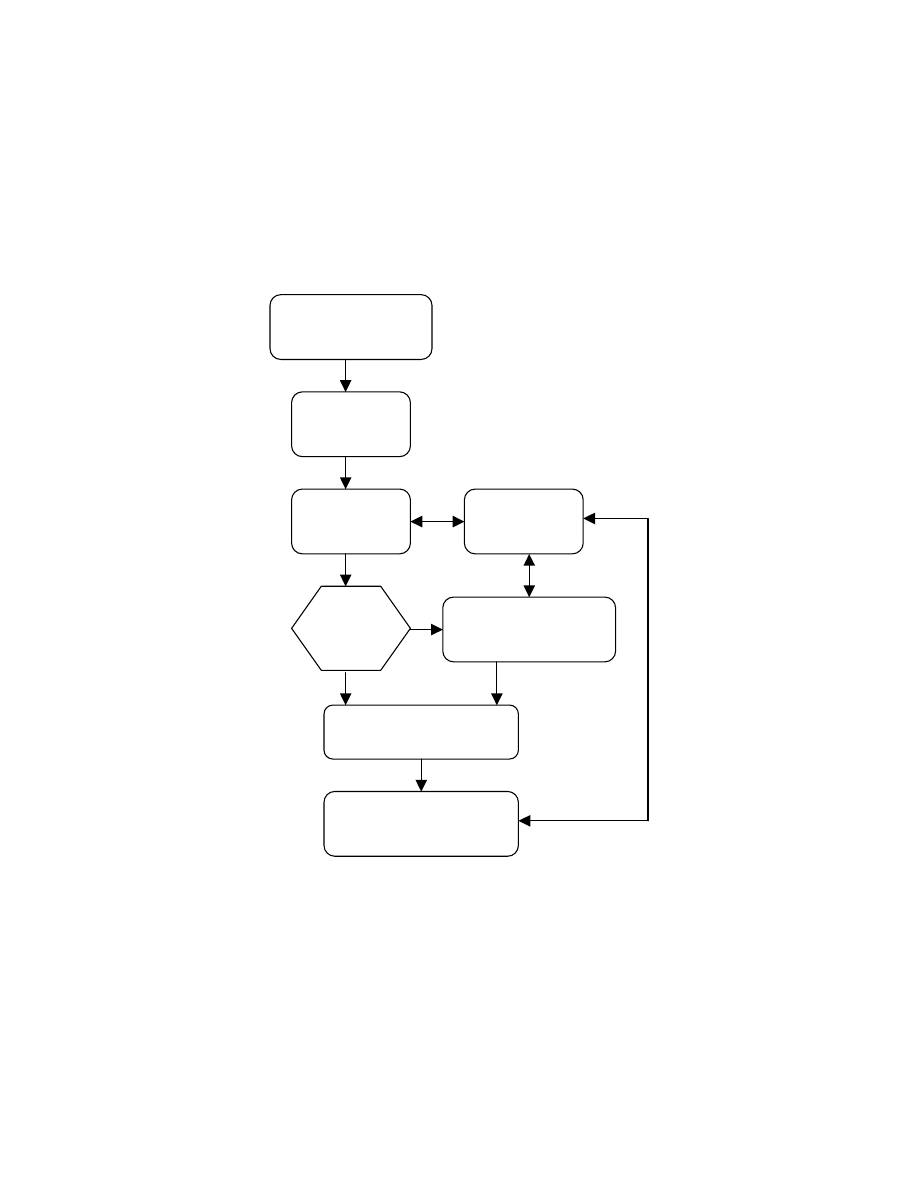
STEADY Intervention Model Diagram
Is youth
recovered,
as defined
(see p. 43)
No
Yes
Progress to remaining
module at next session
(Sessions 6 - 9)
Terminate Active
Phase treatment
Introduction,
Choice module
(session 1)
First Choice
Skill Module
(sessions 2 - 5)
Continuation Phase: monthly
phone calls, up to six optional
sessions as needed.
Ongoing Primary
Care Provider
consultation
Active Phase, Stepped
Care Collaborative
Treatment

STEADY MANUAL
Page 4
B:\STEADY\CBT\TEEN\STEADY THERAPIST MANUAL 2000.DOC Page 4 of 107 Last saved 3/21/2001 10:07 AM IRB approved April 3 2000
Guidelines for Counselors:
1.
Encourage Participation and Keep Youth Actively Involved.
The more active and involved youth are the more likely they are to process the
information provided in sessions. Rather than lecturing at youth try to convey information
in the form of questions and use real life examples they provide whenever possible.
2.
Emphasize links between feelings, actions, and thoughts
in all modules.
Although the emphasis in different modules is on one of two components(thoughts or
activities), it is important to highlight the links between feelings, actions, and thoughts
across components. This is important for two reasons: 1) It is artificial to think of any
situation only in terms of one aspect of the situation. For example, different thoughts
about situations are likely to lead to different actions in a situation, which is likely to lead
to different outcomes. 2) Different youth will have different patterns of responding. For
some youth, it will be important to emphasize thoughts - for other youth actions may be
more critical. Consequently, by emphasizing the links between all components of the
intervention you will be more likely to address the needs of all youth.
3.
Feedback on Medication
Never give medical directions specifically for that individual, unless you are asked to
convey a message by the primary care provider (PCP) or psychiatric consultant to the
study. When describing medication issues, be careful to state information in generic
terms. For example, rather than tell a given youth to stay on their anti-depressant
medications for six months, state "Usually, six months is the shortest time that doctors
want their patients to stay on medications - this gets people past the point where they are
most likely to fall back into depression." If pressed by youth or parent(s) for specific
recommendations, remind them that you are not a medical doctor, but that you are happy
to carry their question to their PCP, and relay the answer back to them.
4. Normalize
Youth’s
Experiences
A potentially curative aspect of these sessions is the normalization of each youth's
experiences. Assure your participant that depression is very common; it is the most
common emotional problem in both adolescents and adults, affecting as much as 25% to
35% of all persons at least once in their lifetime. Assure youth that they are "not crazy"
for feeling this way. Depression may be a normal reaction to life stresses, but one that
they may have become "stuck" in.
5.
Following the Manual
The text in the therapist manual is meant to be a guide. The first few times you do the
intervention you may want to follow the text fairly specifically but once you become
familiar with the concepts just make sure that you cover these main points and feel free to
express the ideas in your own words. The important thing is that the general material and

STEADY MANUAL
Page 5
B:\STEADY\CBT\TEEN\STEADY THERAPIST MANUAL 2000.DOC Page 5 of 107 Last saved 3/21/2001 10:07 AM IRB approved April 3 2000
concepts are covered and that you are able to customize the specific examples to meet the
participants needs and not feel stilted in your presentation of the material.
6.
Using Motivational Interviewing
There may be a number of times over the course of working with an individual that he or
she seems discouraged, resistant, and/or ambivalent (e.g., about how things are going
overall, continuing with the intervention, or taking his or her psychotropic medication).
Brief motivational interviewing techniques are useful ways to respond to such reactions.
These approaches give the counselor tools for helping the youth get “unstuck” without
getting into a push-pull process with the counselor cajoling and the youth resisting these
efforts. The aim is to build a collaborative relationship with the youth in which the youth
actively participates in setting the agenda for the intervention. Listed below are some
general motivational interviewing strategies that may prove useful.
General MI Strategies
FRAMES Components:
(Try to incorporate as many of the FRAMES components as possible into your
discussions with the youth. Acknowledge and express appreciation for the youth’s
willingness to discuss their perspective on change)
Feedback- Provide youth with personal feedback regarding their individual status and
where they stand in relationship to norms and standards.
Responsibility- Emphasize the youth’s freedom of choice and personal responsibility for
their choices.
Advice/Education- Provide clear recommendations or advice in a supportive, non-
threatening manner.
Menu- Provide options for youth to chose from.
Empathy- Express empathy; accurate reflective listening, warm and genuine manner,
non-judgmental approach.
Self-Efficacy- Reinforce the youth’s sense of self-efficacy regarding their ability to make
or maintain behavioral or lifestyle changes.
General Guidelines for Discussion:
Share personalized feedback in a neutral manner. Offer professional advice/opinion in a
motivation-enhancing manner. Offer new information to help the teen’s decision making
process, for example:
“This is what we/your doctor recommends, and our experience is that _(taking
medication/counseling)_ is one of the best ways people can improve/manage their mood.”
“We strongly encourage you to (consider increasing your pleasant activities).
Experience has shown that this is one of the most important things a person can do to
help manage their moods.”
Some particular MI approaches to medication compliance issues
Assessing and Exploring Medication Adherence:
“On a scale from 0-10, with 0 being “not at all ready” and 10 being “very ready”, how
ready are you to consider taking your medication everyday?”

STEADY MANUAL
Page 6
B:\STEADY\CBT\TEEN\STEADY THERAPIST MANUAL 2000.DOC Page 6 of 107 Last saved 3/21/2001 10:07 AM IRB approved April 3 2000
“Why did you pick a _(4)_? What does a _(4)_ mean to you?
“Why did you pick a _(3)_ and not a _(1)_?”
“What would need to be different for you to move from a _(2)_ to a _(5)_?”
“Let’s suppose you decided to _____sometime in the future. Why would you want to do
it? How would your life be different?”
Exploring Ambivalence about Taking Antidepressant Medication:
(Generally want to help youth verbalize and clarify conflicting thoughts and feelings
about the behavior)
“What are some of the things you dislike about taking _(Paxil)_?”
“What are some of the things you like about taking (Paxil)_?”
“What are some of the reasons that you find it difficult to (take your medication)_?”
“What are some of the reasons that make it easier to take your medication?”
“What are some of the reasons you would want things to stay the same as they are now?”
“What are some of the reasons for making a change?”
STEADY MANUAL
Page 7
B:\STEADY\CBT\TEEN\STEADY THERAPIST MANUAL 2000.DOC Page 7 of 107 Last saved 3/21/2001 10:07 AM IRB approved April 3 2000
INTRODUCTION, CHOICE MODULE
Materials needed for this session:
1. Workbook
2. Extra pens and pencils
3. Synapse
picture
4. “Beliefs about Medications” form
5. “Beliefs & Knowledge about Medication”
cards
6. “Important Information about Using These
Medications” Handout
7. “Some Common Side Effects” Handout
8. Medication
Plan
AGENDA
I. INTRODUCTIONS,
OVERVIEW
II. MOOD QUESTIONNAIRE
III. MEDICATIONS CHECK
IV. CHOOSING HOW TO CHANGE YOUR LIFE
V.
MOOD DIARY
I. INTRODUCTIONS,
OVERVIEW
I’m ___________. I’m very happy that we’ll be meeting together to help you
find solutions to any problems or issues you have.
Confidentiality
• Anything you say in these meetings is confidential.
• However, I will be sharing information about how you’re doing with your doctor
(who prescribed your medication). This includes information about your
medication, side effects, etc.
• Also, if there is a medical emergency, or abuse going on, or someone may be
hurt, or a legally approved law enforcement request I would have to break
confidentiality.

STEADY MANUAL
Page 8
B:\STEADY\CBT\TEEN\STEADY THERAPIST MANUAL 2000.DOC Page 8 of 107 Last saved 3/21/2001 10:07 AM IRB approved April 3 2000
Briefly, today and each session we’ll be meeting between 30 and 45 minutes.
• First, I'd like to take a bit of time to get to know each other, talk about how
things are going for you and how our meeting together might be most helpful for
you.
• Then, I’ll ask you to fill out a short questionnaire about your mood.
• After that, we’ll talk about your medications, and how that has been going – any
side effects or improvements you’ve noticed (or not). This is something we’ll do
at every session.
• Then I’ll describe some choices we have about what to work on in these
meetings, and you can choose or start to think about which approach you like
best.
?
How does that sound? Anything else you’d like to work on, or talk about?
First, a quick overview of your Workbook. Learning new skills in these
meetings sometimes takes practice. The workbook helps with this, with
pages to write your notes on, practice skills you’ve learned, and more. The
pages are numbered for each session; for example, C.1 is the first session for
this module the “choice” module, A.4 is the fourth session of the “activities”
module, and T.2 is the second session of the “thinking” module. Later in our
meeting today, I will explain more about what each of these modules are
about.
II.
MOOD QUESTIONNAIRE
WORKBOOK
Ask youth to turn to the Mood Questionnaire #1 at the end of his or
her workbook.
In these sessions I’m going to teach you some ways to control the way you
feel. Before we start, we need to measure how you feel about yourself and
your life now. After we meet several times, we will measure how you feel
again to see how much change there is. Can you fill out the Mood
Questionnaire right now? I will be the only one reading your responses, so
please answer the questions honestly.
When you're done, tear out that page and give it to me. I'll write down your total,
and return the questionnaire back to you. I will keep your scores private.
Counselor: Collect the completed Mood Questionnaire; check youth's addition of the
score, record it, and return it. If appropriate, give them feedback about ranges of scores:
Mild = 0-15
Moderate = 16-27
Significant = 28 or higher
Remind youth that no score on any question can really "classify" someone as having
something or not.
WORKBOOK
STEADY MANUAL
Page 9
B:\STEADY\CBT\TEEN\STEADY THERAPIST MANUAL 2000.DOC Page 9 of 107 Last saved 3/21/2001 10:07 AM IRB approved April 3 2000
III. MEDICATION CHECK
• Encouragement
• Medications often take time before you begin to feel better. Stick with it!
• The skills you’ll learn in these sessions, starting today, will help you feel
better now while the medication may be still taking time to “kick in.”
• Sometimes people have side effects – I’ll ask you about these in a minute.
There are useful things we can do to cope with side effects that bother you –
don’t give up on your medications just because of side effects.
• Medication Issues
Ask youth to turn to page C.1
• There is a biological aspect to depression or its symptoms (sleep and appetite
problems, sadness, irritability, pain) that medications may help with.
• Using medications often makes it easier for people to start behaving and
thinking in ways that will improve their lives.
• The medication you are taking (Youth's medication) affects one of the most
important brain chemicals that is related to mood: serotonin. (Look at the
synapse picture on page C.1).
• These chemicals are represented by these little dots in this picture.
Medications may help your brain use these chemicals more efficiently.
• Medication History
• Let's talk about your use of ________ for a few minutes.
• This program is designed to help you use _________ successfully.
First, have you used an antidepressant medication before? What? How long did
you use it? Did you have any side effects? What beneficial effects did you
experience? How much improvement did you get from your medication?
• Steps to Success
• There are two steps we can take to help your medication be more successful:
(1) Having accurate beliefs and knowledge about your medication, or drugs
in general
(2) Having a specific plan to cope with side effects
WORKBOOK
STEADY MANUAL
Page 10
B:\STEADY\CBT\TEEN\STEADY THERAPIST MANUAL 2000.DOC Page 10 of 107 Last saved 3/21/2001 10:07 AM IRB approved April 3 2000
• Beliefs And Knowledge
• First, let's look at your beliefs about medications for a moment
Ask youth to turn to page C.2
[Counselor: Have youth complete the Beliefs about Medications form. Discuss any
beliefs the youth endorsed. Use Motivational Interviewing techniques to examine the
evidence pro and con, regarding the specific beliefs about the medication.]
Another important area is your knowledge about use of the ______. While your
doctor probably told you these things, I want to make sure that you know that:
(1) It will take 2 to 3 weeks for you to begin to experience beneficial effects from
the medication;
(2) You will need to take the medicine everyday;
(3) Stop the medicine only when you decide with your doctor that it is OK to
stop;
(4) Call you doctor or myself if you are concerned about an unpleasant
sensation that you think might be related to you medication.
This information is written here page C.3 in your workbook.
Ask youth to turn to page C.3
Review Medication Information
[Counselor: Review information on page C.3: "Important Information about Using
These Medications."]
?
Do you have any questions about ______?
SIDE EFFECT PLAN:
Ask youth to turn to pages C.4 and C.5
As you may know, side effects are common during the initial phase of treatment
with medications. Many of these are listed on page C.4 -along with ways to deal
with them.
WORKBOOK
WORKBOOK
WORKBOOK
STEADY MANUAL
Page 11
B:\STEADY\CBT\TEEN\STEADY THERAPIST MANUAL 2000.DOC Page 11 of 107 Last saved 3/21/2001 10:07 AM IRB approved April 3 2000
[Counselor: (Ask youth about side effects that are currently bothersome and how well
he/she has been able to adhere to medications. Suggest how youth's success in adhering
to previous prescriptions, even if not antidepressants, may give ideas for strategies to use
now. Record side effects on Medication Plan (page C.5), along with specific coping
strategies the youth wants to use in the “Plan for coming week” section (the coping skills
are listed in the Side Effects handout). Ask youth about specific beneficial effects they
are hoping to experience in the coming week and encourage attention to small changes in
these areas. Complete all sections of Medication Plan - Page C.5.]
IV. MAKING A CHOICE
A little background information about personality can help you choose one of
two approaches to overcoming sadness and distress to work on over the next
few sessions.
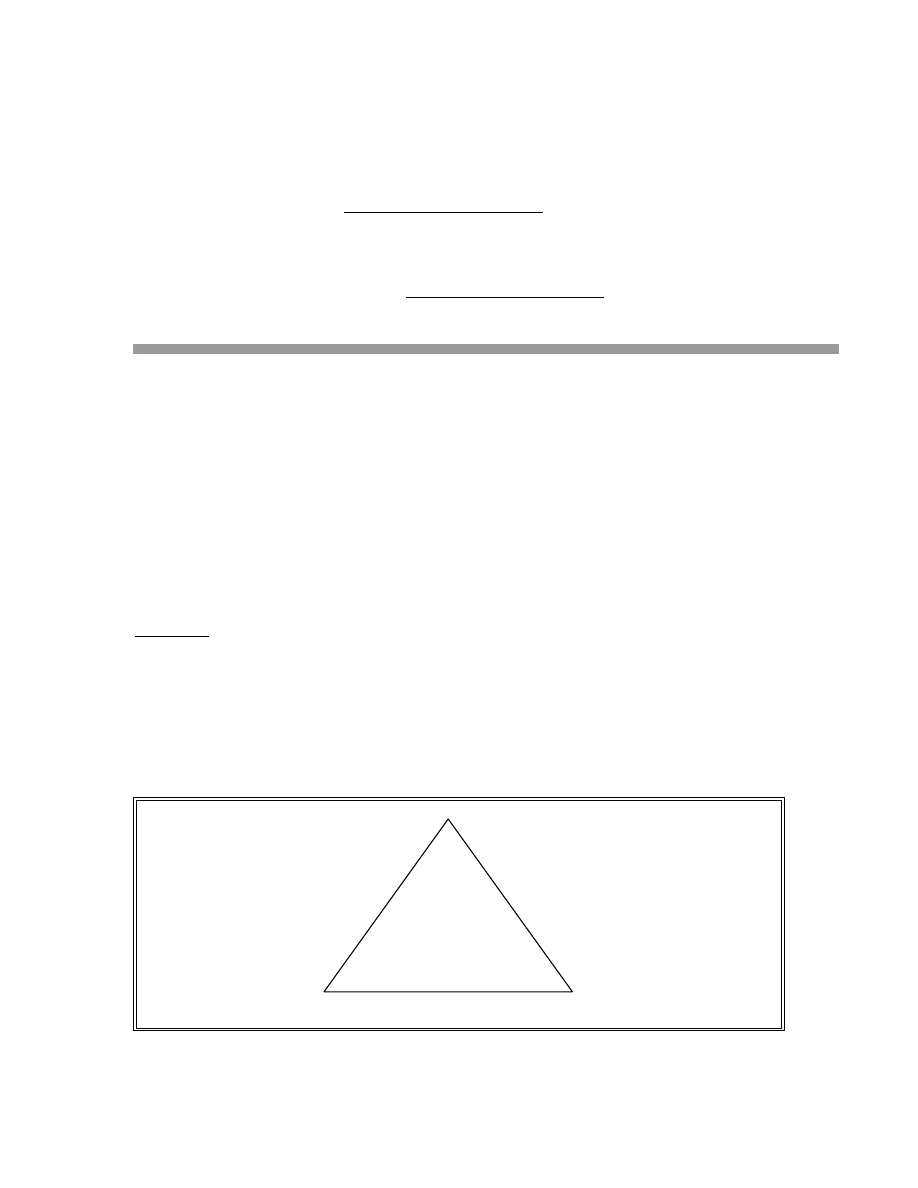
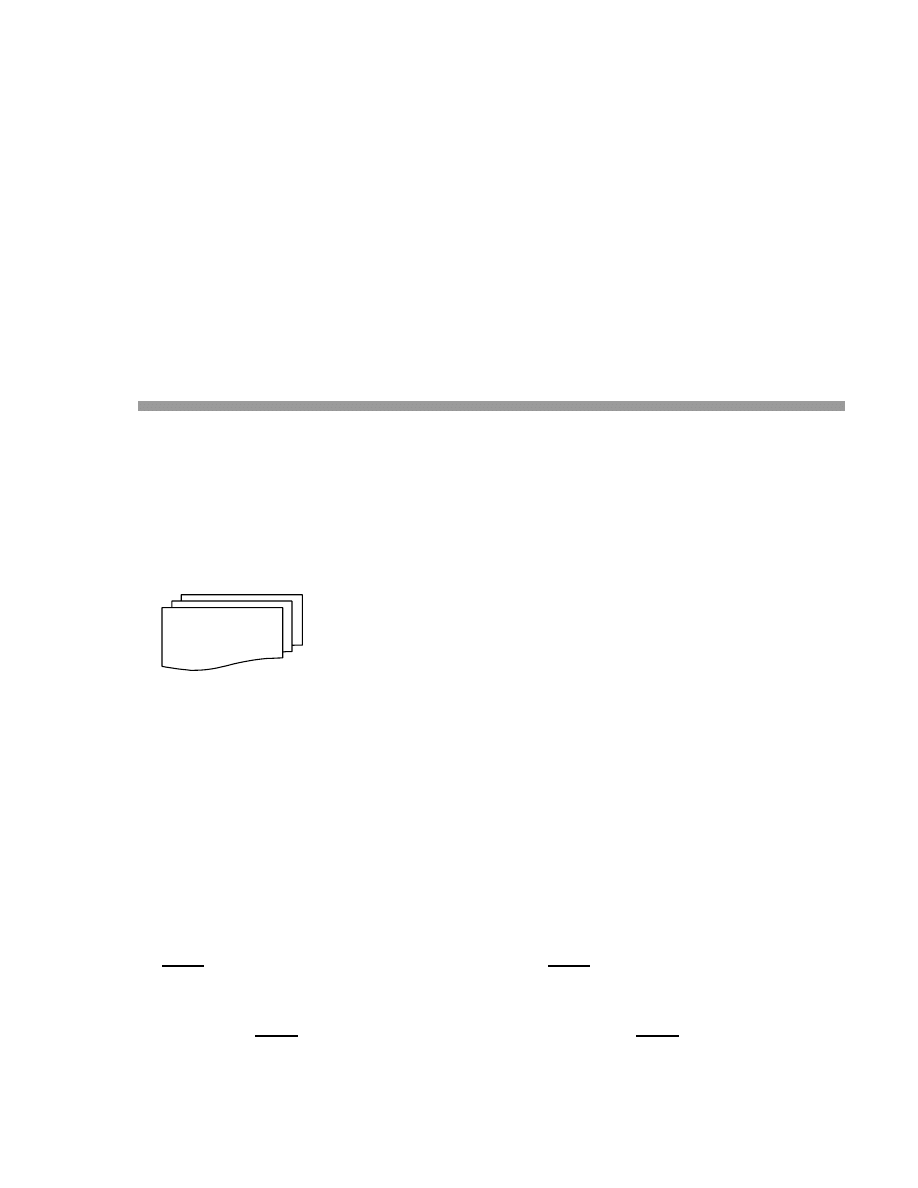
Your Personality Has Three Parts
We believe that each of us has a personality with three parts. This is
important, because it helps us think about how to get control over
depression.
Counselor: Show teen the following diagram in their workbook, or draw it on a paper
pad.
Depression can start in any of these three areas: Feelings and Emotions,
Actions, or Thoughts. Each area affects the other two. Which of these
three parts do you think are easiest to control, or change?
[from workbook]
Actions or
Behavior
Thoughts,
Beliefs
Feelings,
Emotions

STEADY MANUAL
Page 12
B:\STEADY\CBT\TEEN\STEADY THERAPIST MANUAL 2000.DOC Page 12 of 107 Last saved 3/21/2001 10:07 AM IRB approved April 3 2000
Counselor: If youth focuses on changing emotions first, respond by saying, “Most people
try to change their emotions; for example, they try to feel better first, but this is the
hardest part to change. It is much easier to learn skills to change your thoughts and
actions, and this will, in turn, change how you feel.”
DEPRESSING actions and thoughts have unpleasant and depressing
results. POSITIVE actions and thoughts make us feel good.
?
Can you think of any Depressing actions and thoughts?
?
How about positive actions and thoughts?
[Counselor: here are examples if youth cannot generate any.
-
1. Withdrawing from friends.
+ 2. Having fun with friends.
-
3. Telling yourself that you are boring.
+ 4. Reminding yourself about someone who cares about you.]
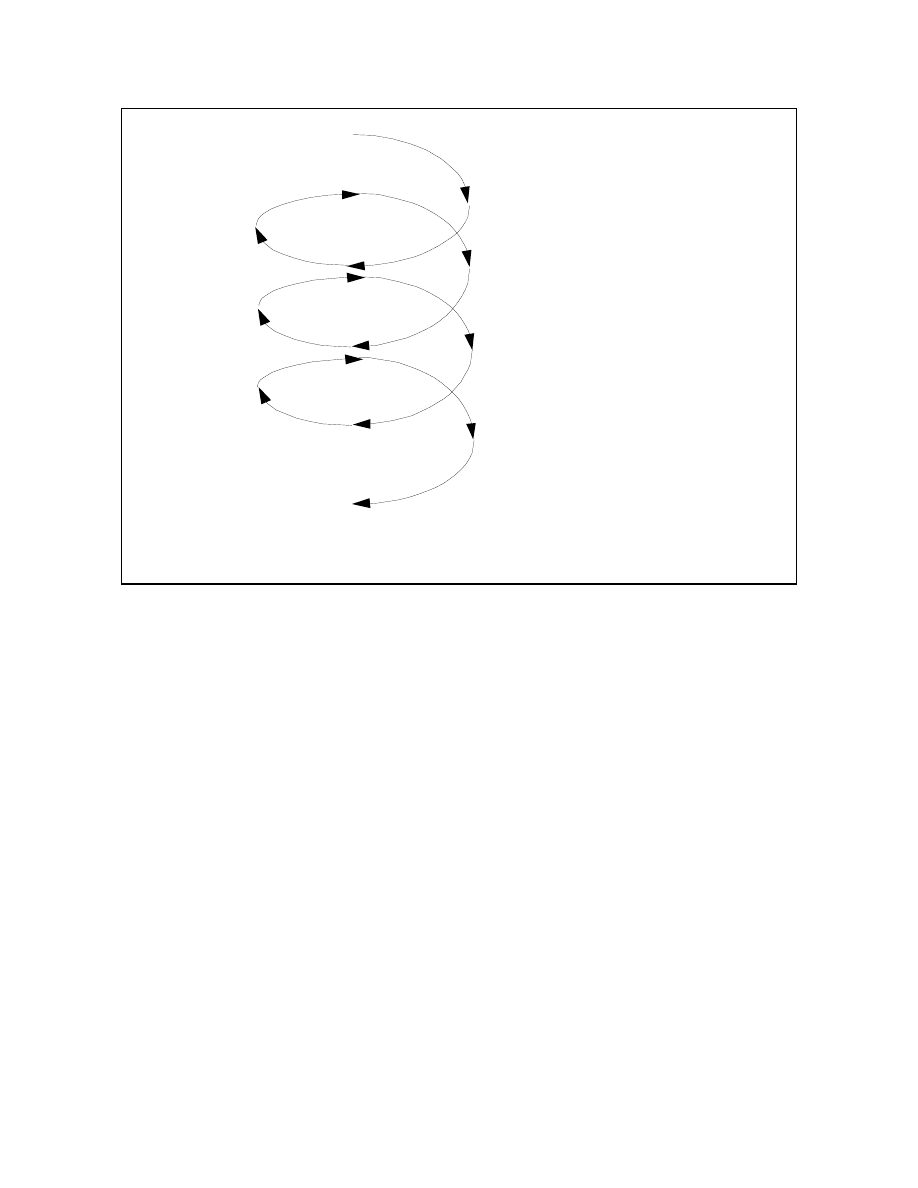
Emotional Spirals
When we feel BAD, we're less likely to do things we enjoy, and we then
have doubts about our ability to be successful doing those things (for
example, making new friends). This can lead to doing fewer positive things
in the future.
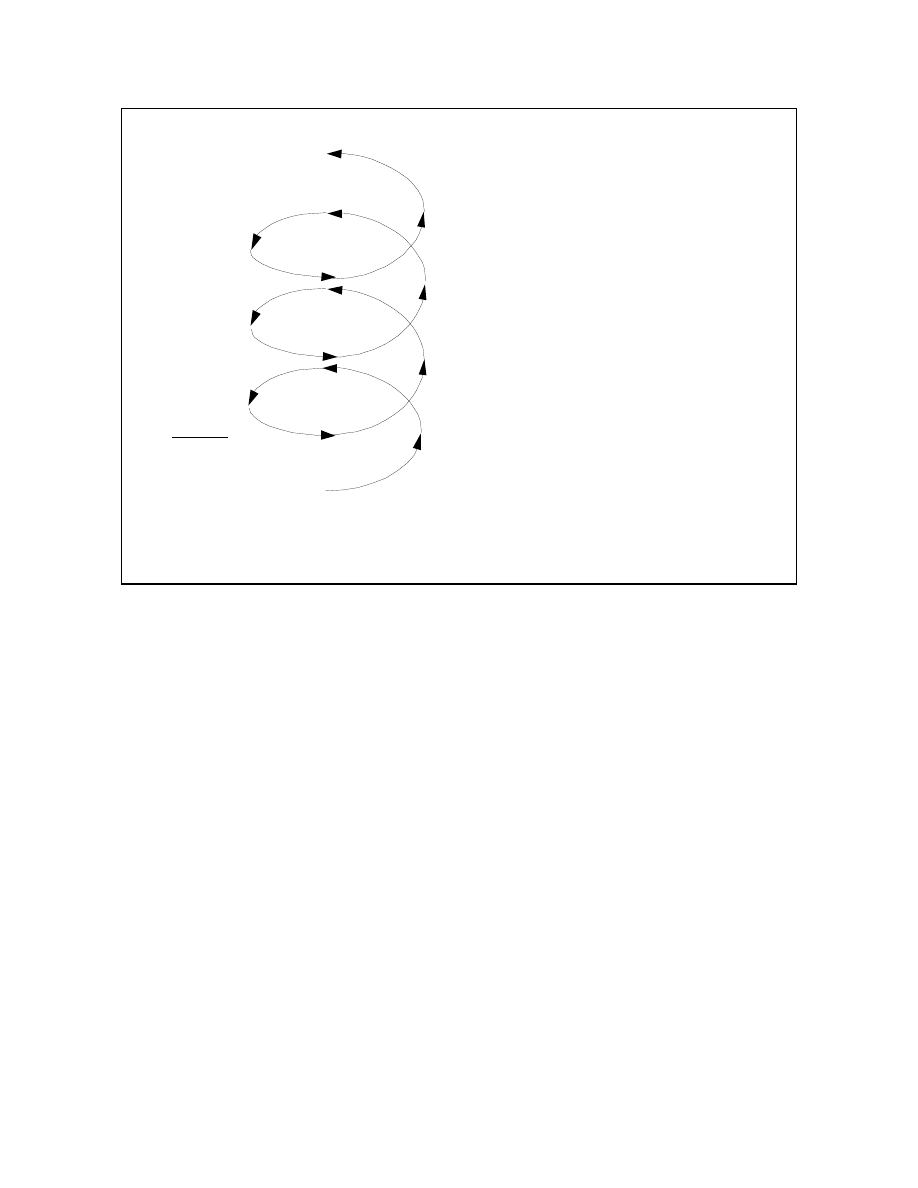
When we're SUCCESSFUL at doing something, we feel good, we gain self-
confidence, and are encouraged to do more positive things in the future.
Show youth the emotional spiral diagrams on pages C.6 and C.7,
or draw then on a paper pad.
You can think of either of these as A SPIRAL that can move in one direction
or the other. How you feel affects how you think and behave, which then
affects how you feel and think, and so on. Remember the triangle that
represents the three parts of your personality? How each part affected the
other?
WORKBOOK
STEADY MANUAL
Page 13
B:\STEADY\CBT\TEEN\STEADY THERAPIST MANUAL 2000.DOC Page 13 of 107 Last saved 3/21/2001 10:07 AM IRB approved April 3 2000
Normal Mood
Poor grades
Feels sad
Does fewer
fun things
Thinks “I’m
a failure”
Feels worse
Think s“No
one likes me”
Avoids friends
Cries all
the time
Stops caring
about appearance
Thinks of
harming self
CLINCAL DEPRESSION
Moody
Downward Spiral
?
What are some things that can start a spiral DOWNWARD into
depression?
Some possible answers to note if none are generated:
1. Participating in few positive or fun activities.
2.
Feeling
depressed.
3.
Doing
less.
4. Thinking negative thoughts.
5. Feeling even worse, then doing less, etc.
More specific examples:
6. You have been receiving bad grades
7. You need a job.
8. Breakup with a boyfriend or girlfriend.
9. You had an argument with your best friend.
10. You have been fighting with your parents
STEADY MANUAL
Page 14
B:\STEADY\CBT\TEEN\STEADY THERAPIST MANUAL 2000.DOC Page 14 of 107 Last saved 3/21/2001 10:07 AM IRB approved April 3 2000
Normal Mood
CLINCAL DEPRESSION
Gets out
of bed
Feels less sad
Thinks “Maybe
I’m not a failure
at everything”
Takes a call
from a friend
Laughs for first
time in months
Enjoys a movie
Crying less
Starts working
again
Thinks “Maybe
I can be happy?”
Invites friends
over for dinner
Almost no
depression
Positive Spiral
?
What are some of the things that can start a spiral UPWARD?
Some possible answers to add if none are generated:
1. Being successful at something.
2.
Feeling
confident.
3. Doing more fun things.
4.
Having
friends.
More specific examples:
6. Exercise more often.
7. Studying harder.
I'm going to read some examples to you. While you listen, think about two
things: First, what kind of spiral is represented in each example? Second,
what keeps the spiral going?
EXAMPLE 1. a (for a younger client): Mark, a 13-year-old, was doing poorly
at school for many months. Mark was beginning to feel like a failure
and that he would never be successful at anything. Over the next few
months, Mark started pulling away from his friends and family and
spending more time alone in his room, thinking that no one liked him
or wanted to spend time with him. He began feeling depressed, gloomy,

STEADY MANUAL
Page 15
B:\STEADY\CBT\TEEN\STEADY THERAPIST MANUAL 2000.DOC Page 15 of 107 Last saved 3/21/2001 10:07 AM IRB approved April 3 2000
and tired. He also had difficulty concentrating, and his grades got even
worse. He skipped school several days a week, spending the days alone,
unhappy and confused.
EXAMPLE 1.b (for an older client): Sara, an 18-year-old living on her own and out
of school, has been out of a job for many months since she was let go from her
last job. When she was first laid off, she was sure she would find another job
right away. However, with each failed interview she began to lose confidence
in herself and feel that she wasn’t qualified to do anything. As a consequence,
she has begun to spend less time with her friends and family. Bills are also
beginning to pile up. She feels gloomy, depressed, and tired. She is so
affected by her feelings that she has given up on going to job interviews and
just doesn’t care about her money problems anymore.
OPTIONAL:
EXAMPLE 2.a. (for a younger client) When Mark began coming to the
sessions, he was sure that things would never get better for him.
However, he worked with his counselor to develop a plan to change
his thoughts, feelings, and actions. In the past, Mark had enjoyed
playing his guitar with some musician friends, but when he became
depressed he stopped doing this altogether. With encouragement
from his counselor, Mark started playing guitar with his friends
again. As Mark became more socially active and spent less time
thinking negative thoughts about himself, he found his depression
lifting and his mood improving, even though he'd done nothing
directly to change his mood.
EXAMPLE 2.b: (for an older client) When Sara began coming to the sessions,
she was sure that things would never get better for her. However, she
worked with her counselor to develop a plan to change her thoughts,
feelings and actions. In the past, Sara had enjoyed dancing with her
friends, but when she became depressed she stopped doing this altogether.
With the encouragement from her counselor, Sara started dancing with her
friends again. As Sara became more socially active and spent less time
thinking negative thoughts about herself, she found her depression lifting
and her mood changing, even though she’d done nothing directly to change
her mood.

STEADY MANUAL
Page 16
B:\STEADY\CBT\TEEN\STEADY THERAPIST MANUAL 2000.DOC Page 16 of 107 Last saved 3/21/2001 10:07 AM IRB approved April 3 2000
Counselor: Review the section below on the ways in which these sessions will
impact the spiral of depression. Highlight the two counseling modules (“Fun
Activities” and “Changing Your Thinking”).
In these sessions, we have the choice of starting with one of two skills
approaches to change the downward spiral to an upward one. Both work
about equally well.
(1) We can work on changing ACTIONS or BEHAVIORS by increasing
pleasant activities—doing more fun things. This involves making a
plan, and choosing fun things to do that are realistic – that you can do
often, and can afford. Pages A1.5, A1.6, A3.3 and A3.4 in your
workbook are good examples of this approach.
(2) We could also work on changing THOUGHTS by learning skills to
uncover and stop negative or unrealistic thinking, and to increase
realistic and positive thinking. Pages T1.3, T1.5, T2.4 and T2.6 in your
workbook are good examples of this approach.
Doing either one of these two approaches will help to change your
mood or FEELINGS.
Don’t worry about making the “perfect” choice. You can't lose - If
the first skill you learn doesn’t work for you (that is, you don’t feel
better), we will automatically move on to the other skill.
The information above is summarized on workbook page C.8
GATHERING INFORMATION:
In making this choice, it is often helpful to think about what has worked well for
you in the past.
?
Have you been in counseling or therapy before?
?
[if yes] What have you tried before? Does either of the two approaches I just
described sound familiar?
?
What worked for you before? What didn't work?
?
What do you do for yourself (not in counseling) that helps you feel better?
?
When you feel down, what do you notice yourself doing to feel better? Does
it help?
WORKBOOK

STEADY MANUAL
Page 17
B:\STEADY\CBT\TEEN\STEADY THERAPIST MANUAL 2000.DOC Page 17 of 107 Last saved 3/21/2001 10:07 AM IRB approved April 3 2000
?
Are you a "doer" or a "thinker?" When you feel down, do you find yourself
trying to think things through, or doing stuff to distract yourself?
?
What have you seen other people try that you might like to try?
MAKING THE CHOICE AT THE NEXT SESSION
• This is a lot of information to think about right away.
• You don't have to make a choice right now.
• When we meet next week, I'll ask you then which of these two approaches is
more appealing to you.
[Counselor: If the youth wants to make a choice right now, they are
free to do so. However, encourage them to think it over during the next
week.
If the youth persists in wanting to make a choice right now, you are free
to offer advice here, using discretion. However, the choice is ultimately
up to the youth. If the youth is indecisive, try a motivational
interviewing approach - examine their readiness to try any skill training
at all. If they are hesitant, explore the barriers or risks they perceive,
and what would help them feel more ready to try a new skill. Reflect
this back to them.
If they are ready to try a new skill, but are having difficulty choosing an
approach, remind them that they do not have to make a perfect choice.
If they need to, they can try both approaches. Explore their reasons for
and against choosing either approach - summarize this for them in a
"pro" and "con" list.
Once they make their choice, GATHER INFORMATION ON
REASON FOR MAKING THEIR CHOICE, AND RECORD ON THE
"CBT PROCESS DATA RECORDING FORM"]
V.
MOOD DIARY
Monitoring How You Feel and What you Do
Ask youths to turn back to the Mood Diary at the front of their
workbooks (point out that there are several pages of this same
form, for up to 9 weeks- start with Week 1).
WORKBOOK

STEADY MANUAL
Page 18
B:\STEADY\CBT\TEEN\STEADY THERAPIST MANUAL 2000.DOC Page 18 of 107 Last saved 3/21/2001 10:07 AM IRB approved April 3 2000
Before we get started on your first “Skills” area, you will be keeping track
of how you feel through the next few weeks by filling out a Mood Diary. As
you can see, there are two boxes for each day of the week: one labeled
“Mood”, and another labeled “Fun Activities”. We’ll talk about how to fill
in the Mood boxes first.
The Mood part of the Diary uses a SEVEN-POINT SCALE. Before we talk
about the seven-point scale of the Mood Diary, let's see how you would use a
scale like this with other things. On a scale of 1 to 7, how warm are you right
now? A rating of 7 is very, very hot, and 1 is very, very cold.
Counselor: Try to determine whether the youth knows how to use a seven-point scale by
the way he or she answers this question. If youth seems confused, go through several
more examples that are based on information that is relatively objective so you can check
the results. The following are some suggestions: How warm is it at the North Pole?
How warm is it in the desert? How warm is it in [Oregon] on the average? How warm is
it today (more or less than the average?)
IF NECESSARY, consider some examples that are based on continuous dimensions such
as difficulty, brightness, speed, redness, and so on. Keep doing this until you are sure the
youth knows how to use a seven-point scale. Use the examples below only if it is not
evident that the youth understands.
Examples, if necessary:
?
How fast can you go on a bicycle?
?
How fast can you go on a car?
?
How fast can you go on an airplane?
Mood Anchors
The seven-point Mood scale in the Diary in your workbook is used in a
similar way. It's harder to decide what number our moods should have,
however, without something to anchor the numbers to. So think of the
BEST YOU HAVE EVER FELT IN YOUR LIFE. Now give this mood a
number. If you think it's possible for you to feel even better than this, give
it a 5.5 or maybe a 6.
Counselor: Write an example of a good mood anchor on a pad of paper.
Examples:
1. Money from the lottery.
2. Scored a winning touchdown, or had a solo performance in a musical.
STEADY MANUAL
Page 19
B:\STEADY\CBT\TEEN\STEADY THERAPIST MANUAL 2000.DOC Page 19 of 107 Last saved 3/21/2001 10:07 AM IRB approved April 3 2000
Now think of the WORST YOU HAVE EVER FELT. If you think it would
be impossible for you to feel any worse, give it a 1. If you might be able to
feel worse, give it a 2.
Counselor: Write an example of a depressed mood anchor on a pad of paper.
Examples:
1. Pet died.
2. Best friend moved away.
Now compare how you feel today with these two feelings. Give today's
feeling a number, and write the number in the correct Mood box on the
Mood Diary in your workbook. Then circle the corresponding number
above the box.
Counselor: Model this process with a personal example.
Next time we meet you can compare how you feel with how you felt today.
Every day at about the same time you should compare how you feel with
the worst and best moments of your life and with how you felt the day
before, too. Then write a number in the box for that day. You will be
filling this form out throughout our sessions together. IT’S IMPORTANT
TO DO THIS AT THE SAME TIME EVERY DAY. We suggest doing this at
the end of the day, so that you can average your mood over the entire day.
[Counselor: If youth reports feeling very different in the AM and PM, ask if
they would be comfortable averaging. If not, they can divide their mood boxes
into two parts (with a diagonal line) and record the AM and PM mood ratings
separately - with separate lines.]
V. LIFE
EXPERIMENT
Ask youth to turn to the Mood Diary (in a separate section at the
front of their workbook)
In most of these meetings, I'll be asking you to try a "life experiment" - to test out
whether or not the ideas and skills we just talked about are useful for you. I'm
hopeful they are - but the best way to find out is for you to "try them on for size." I
will never ask you to complete anything between sessions that we will not be using
during our meetings together. Hopefully this will eliminate unnecessary “busy
work”. We will use the information you gather through your “Life Experiments” to
focus on the particular issues that are important to you, so try to make sure that you
go through these life experiments at home each week.
WORKBOOK

STEADY MANUAL
Page 20
B:\STEADY\CBT\TEEN\STEADY THERAPIST MANUAL 2000.DOC Page 20 of 107 Last saved 3/21/2001 10:07 AM IRB approved April 3 2000
Your life experiment for this session is to do the following:
1. Keep track of how you feel by filling out your Mood Diary. Let's
do this for today, right now.
2. During our next meeting you can let me know whether you would
rather start with the “activities” or “thinking” module. You may
want to review each section in your workbook before then to try to
figure out which you would like to begin with.
3. I will also be calling you by telephone before our next meeting just
to check in and make sure you don’t have any additional questions.
What are good times and days to best reach you by telephone?
4. Remember to bring your workbook to every meeting!!
?
Do you have any questions?
?
Other things you want to talk about?
Counselor: Remember to send an epic e-mail message to the youth’s primary care
provider about the youth’s progress with the intervention and any other pertinent
information (e.g., reported side effects, level of functioning) following this session.

STEADY MANUAL
Page 21
B:\STEADY\CBT\TEEN\STEADY THERAPIST MANUAL 2000.DOC Page 21 of 107 Last saved 3/21/2001 10:07 AM IRB approved April 3 2000
Phone Contact (week 1): Preserver
Overview: 10 minutes
This phone call is to be offered to all youths and strongly recommended to youths with
more severe symptoms and less strong social support resources.
The purpose of the call is to encourage adherence to the medication and to increasing fun
activities. Introduce the idea that motivation often comes from doing; that even small
behavior changes may lead to mood change. The counselor should record the contact on
the "CBT PROCESS DATA RECORDING FORM" and communicate resulting
treatment plans (if any) to other providers.

STEADY MANUAL
Page 22
B:\STEADY\CBT\TEEN\STEADY THERAPIST MANUAL 2000.DOC Page 22 of 107 Last saved 3/21/2001 10:07 AM IRB approved April 3 2000
CHOICE MINI-MEETING C-2
Confirming the Choice
Counselor: this brief, 5-minute section (at the beginning of your second meeting with
each youth) is to confirm or complete the choice of which skill to work on: cognitions or
fun activities. This is always the second session, but is then followed in the same meeting
by either session T-1 or A-1, depending on which of two skill areas the youth has
selected.
Last time we met, we talked about two approaches to feeling better. Both
work about equally well. Your job was to think about which of these you
wanted to work on first (today, and for the next three meetings).
Just as a reminder:
(1) We can work on changing ACTIONS or BEHAVIORS by increasing
pleasant activities—doing more fun things. This involves making a plan,
and choosing fun things to do that are realistic – that you can do often,
and can afford. Pages A1.5, A1.6, A3.3 and A3.4 in your workbook are
good examples of this approach.
(2) We could also work on changing THOUGHTS by learning skills to
uncover and stop negative or unrealistic thinking, and to increase
realistic and positive thinking. Pages T1.3, T1.5, T2.4 and T2.6 in your
workbook are good examples of this approach.
Doing either one of these two approaches will help to change your
mood or FEELINGS.
Don’t worry about making the “perfect” choice. You can't lose - If
the first skill you learn doesn’t work for you (that is, you don’t feel
better), we will automatically move on to the other skill.
? Which of these two approaches is more appealing to you?
[Counselor: you are free to offer advice here, using discretion.
However, the choice is ultimately up to the youth. If the youth is
indecisive, try a motivational interviewing approach - examine their
readiness to try any skill training at all. If they are hesitant, explore the
barriers or risks they perceive, and what would help them feel more
ready to try a new skill. Reflect this back to them.

STEADY MANUAL
Page 23
B:\STEADY\CBT\TEEN\STEADY THERAPIST MANUAL 2000.DOC Page 23 of 107 Last saved 3/21/2001 10:07 AM IRB approved April 3 2000
If they are ready to try a new skill, but are having difficulty choosing an
approach, remind them that they do not have to make a perfect choice.
If they need to, they can try both approaches. Explore their reasons for
and against choosing either approach - summarize this for them in a
"pro" and "con" list.
Once they make their choice, GATHER INFORMATION ON
REASON FOR MAKING THEIR CHOICE, AND RECORD ON THE
"CBT PROCESS DATA RECORDING FORM"]
STEADY MANUAL
Page 24
B:\STEADY\CBT\TEEN\STEADY THERAPIST MANUAL 2000.DOC Page 24 of 107 Last saved 3/21/2001 10:07 AM IRB approved April 3 2000
FUN ACTIVITIES SESSION A-1
Tracking Mood and Activities
Materials needed for this session:
1. Extra
workbook
(in case youth forgot theirs).
2. Extra pens and pencils.
3 Counselor's "Sharing Activity"
4 A copy of the Pleasant Events Schedule—
Adolescent Version.
Counselor: Write the Agenda on a pad of paper at the beginning of each class session.
[FROM WORKBOOK]
AGENDA
I. PROVIDER CONTACT / MEDICATION PLAN
II. CHECK-IN
III. INTRODUCTION TO THE MODULE
IV. KEEPING TRACK OF FUN ACTIVITIES
V.
LIFE
EXPERIMENT
I.
PROVIDER CONTACT / MEDICATION PLAN
Provider Contact
• Encourage youth (or offer) to contact primary care provider during coming week
if any medication side effects etc., also check if youth had any contact with health
care provider since previous meeting
• Reinforce idea of youth (and counselor) being an active team with primary care
provider
• Discuss youth’s progress and their plans for the future
Ask youth to turn to workbook page A1.1.
WORKBOOK

STEADY MANUAL
Page 25
B:\STEADY\CBT\TEEN\STEADY THERAPIST MANUAL 2000.DOC Page 25 of 107 Last saved 3/21/2001 10:07 AM IRB approved April 3 2000
Review Medication Plan
•
How has it gone taking your medication since we last met?
•
If applicable: Last time we talked you were having problems with “x”
(e.g., dry mouth) and “y” (e.g., jitteriness), but you were beginning to
notice that you also were “z” (e.g., sleeping better).
- or -
•
How have side effects been for you this week? Have the things we talked
about to deal with the side effects worked?
•
Have you noticed any new or continuing positive changes in how
you feel this week?
[
Counselor: Help youth create a plan for coping with expected side effects and other
medication barriers over the next week. Record youth’s reported side effects,
beneficial effects, and plan for coping on the “Counselor Medication Review” form.
Calculate a total risk adherence score as indicated on the form. Compliment the youth
on their continuing to take medication, and/or attentiveness to beneficial effects.]
[Optional: Use motivational interviewing approach to help youth step up / down the
scale on “side effects”, “benefits”, and/or “commitment to medication”]
II.
CHECK-IN
(not more than five minutes)
Today we will focus on activities. First, I’d like to check in with you to find out how
you’ve been since our last meeting together and whether there is anything we
discussed last time or that has happened since we last met that you’d like to talk
about.
?
How are you feeling?
?
How is your depression - any improvement?
?
Any thoughts of harming yourself? Harming others?
Our expectations are important. Realistic expectations help us to succeed in what
we choose to do. The important parts of change are:
1.
Labeling something as a problem;
2.
Accepting that something can be done about it;
3.
Having the desire to change; and
4.
Being willing to work to make a change.
?
Where are you? Which of these steps have you done on your own, so far?
[If youth seems discouraged and/or resistant, counselor may consider using
motivational interviewing techniques to encourage youth’s [continued] participation
in the intervention.]
STEADY MANUAL
Page 26
B:\STEADY\CBT\TEEN\STEADY THERAPIST MANUAL 2000.DOC Page 26 of 107 Last saved 3/21/2001 10:07 AM IRB approved April 3 2000
III. LIFE EXPERIMENT REVIEW
Review Youth Progress/Record Forms
A. Mood and Activity Diary
?
Did you have any problems keeping track of mood or activities?
Counselor: If youth forgot to make ratings, have he or she make retroactive ratings for the
past two to four days. Emphasize, however, that the most accurate ratings are those made
on a daily basis.
?
Looking at the last few days in your Mood Diary, do you see any
improvement in your mood?
IV. INTRODUCTION TO THE FUN ACTIVITIES MODULE
Counselor: Remind youth of the triangle figure – show them the figure in their
workbook, or the version shown below.
Today, and for the next three sessions, we are going to focus on ACTIVITIES.
When people are depressed, they often stop doing fun things. But doing fun
things is one way to begin to feel better, and to protect yourself from getting
depressed.
?
How does that sound to you?
?
Do you think this is going to helpful? Fun? Hard work?
Actions or
Behavior
Thoughts,
Beliefs
Feelings,
Emotions
STEADY MANUAL
Page 27
B:\STEADY\CBT\TEEN\STEADY THERAPIST MANUAL 2000.DOC Page 27 of 107 Last saved 3/21/2001 10:07 AM IRB approved April 3 2000
Emotional Spirals
Remember emotional spirals? When we feel BAD, we're less likely to do
things we enjoy, and we then have doubts about whether we can do those
things (for example, making new friends). This can lead to doing fewer
positive things in the future.
When we're SUCCESSFUL at doing something, we feel good, we feel more
confident, and are encouraged to do more positive things in the future.
We are going to be working on increasing fun activities over the next several
meetings.
V. KEEPING TRACK OF FUN ACTIVITIES
Objectives
1. To demonstrate how to do a simple baseline count.
2. To help youths understand how to look for and interpret patterns in mood and
activity charts.
Ask youths to look at Mood and Activity Diary (in a separate
section at the front of their workbook).
You remember the “Fun Activities” boxes on the Mood and Activity Diary?
We’re going to use those boxes to keep track of how many fun activities you
do each day.
Why Is This Important?
Keeping track of your fun activities and your mood over the next few weeks
is helpful because we can use this information to SET GOALS. Try to think
about doing more fun activities.
?
Think of a day when you felt really great - a “7" day on the Mood scale. What
kinds of things were you doing on that day? How many fun things did you do
that day?
?
Think of a day when you felt really low or sad - a “1" or “2" day on the Mood
scale. What kinds of things were you doing on that day? How many fun things
did you do that day?
WORKBOOK

STEADY MANUAL
Page 28
B:\STEADY\CBT\TEEN\STEADY THERAPIST MANUAL 2000.DOC Page 28 of 107 Last saved 3/21/2001 10:07 AM IRB approved April 3 2000
Counselor: What you’re looking for here is for youth to understand the relationship
between mood and activities - feeling good and doing fun things, or conversely doing
very few fun activities and feeling down.
Ask youth to turn to page A1.2.
Page 1.2 is an example of a Mood and Activity Diary filled out by a youth
called Susan. She has connected the mood and activity numbers from day to
day, so it is easier to see what changes there are over time.
?
Do you think the changes in her mood and fun activities are related?
Look at Susan's chart. The dashed line is her daily mood score, and the
solid line is the daily total of fun activities.
You might notice patterns when you fill out this type of chart. For example,
you might tend to feel worse on Mondays when you have to go back to
school. Or you might feel worse on weekends when you don't have a
regular routine.
?
Can you think of any patterns that you might have?
WORKBOOK
OPTIONAL - IF YOUTH DOESN'T UNDERSTAND THE CONCEPT
?
Is Susan's mood related to the number of fun activities she does?
(Answer: Yes, mood and the number of fun activities are
usually closely related. See how both lines tend to move up
and down together? This means that one is probably
related to the other.)
?
When you're sad, are you likely to do more or less fun activities?
(Answer: Most people are likely to do fewer fun activities
and be less active. You may be similar or different.)
?
If you do fewer fun activities, how do you usually feel afterwards?
Better or worse?
(Answer: Most people will generally feel worse.)
?
If you do more fun activities, how do you usually feel afterwards?
(Answer: Most people will feel better.)

STEADY MANUAL
Page 29
B:\STEADY\CBT\TEEN\STEADY THERAPIST MANUAL 2000.DOC Page 29 of 107 Last saved 3/21/2001 10:07 AM IRB approved April 3 2000
IMPORTANT FUN ACTIVITIES
There are some fun activities that have been found to be especially
important for counter-acting depression. These are called MOOD-
RELATED ACTIVITIES. There are two types of fun activities that are
particularly effective in reducing depression.
1.
FUN SOCIAL ACTIVITIES. Time spent with other people
(friends, family) that are positive, pleasurable, and fun.
2.
SUCCESS ACTIVITIES. Experiences that make us feel like
we've done a good job at something
?
Can you think of any social activities or success activities important to
you?
The activities that don't fall in either category are generally not mood-related
activities such as working or being alone. Doing these activities are NOT likely to
change your mood.
Now I want you to answer the question at the bottom of page A1.3. Think
about yourself for a moment.
OPTIONAL ACTIVITIES - IF YOUTH DOES NOT UNDERSTAND ABOVE
Social
activities:
1. Going to the movies with friends.
2. Playing a sport on a team.
Success Activities:
1. Saving enough money to buy something for yourself.
2. Helping a younger sibling with his/her homework.
WORKBOOK
Together, complete the activity on page A1.3
Counselor: Review the correct answers when the youth has finished.
STEADY MANUAL
Page 30
B:\STEADY\CBT\TEEN\STEADY THERAPIST MANUAL 2000.DOC Page 30 of 107 Last saved 3/21/2001 10:07 AM IRB approved April 3 2000
?
What kind of activity would make you feel happiest if you did more of it—
social activities or success activities?
Selecting Fun Activities
Now you're going to decide which fun activities you will keep track of.
Let's fill out a diary like Susan's. We'll use the diary later to make a plan
for doing more fun activities.
Ask youth to turn back to first "Mood & Activity Diary page (in a
separate section at the front of their workbook)
At the bottom of each Mood and Activity Diary page is a place to write
down fun activities which you will keep track of during the next three or
four weeks. You can add more activities later on, during the week.
Ask youth to turn to pages A1.4, A1.5 and A1.6
Imagine that you have a day off from school, and have nothing scheduled.
?
What would you do to have fun, with no limits placed on you?
Counselor: Act as secretary and write these down. Below, you and the youth will see
which of these "fit" the guidelines for fun activities to track.
Follow the directions on page A1.4. If you need more ideas, look at the list
of fun activities on pages A1.5 and A1.6 (this is an optional list). Select 10
fun activities to keep track of. Write these down on the bottom of your
Mood and Activity Diary. Remember: you can add more later to this list,
if you want.
TIP:
You might also want to fill in the last line with "OTHER FUN
ACTIVITY," to remind yourself to count other fun activities that happened
that day that weren't on your list.
Counselor: Take about 10-minutes for the youth to read the directions and fill out the
tracking form with your help. Try for a minimum of 10 activities. At least 2/3rds of the
activities should be Social or Success activities, but some solitary activities are also
allowed. If the youth has brainstormed enough fun activities during the "day off from
WORKBOOK
WORKBOOK

STEADY MANUAL
Page 31
B:\STEADY\CBT\TEEN\STEADY THERAPIST MANUAL 2000.DOC Page 31 of 107 Last saved 3/21/2001 10:07 AM IRB approved April 3 2000
school" exercise, then s/he may not need the lists on pages A1.5 and A1.6 (these are
optional).
Use the guidelines on page A1.4 (that is, activities that are frequent, fun, low cost, not
objectionable to parents or teachers, observable, and under the control of the youth) to
generate a list of activities that youths can track on their mood diary (emphasize the social
activities, since these are the most important for lifting depression).
How to Keep Track of Fun Activities
Part of this session is to keep track of your mood each day, and how many
fun activities you do each day. This is how you do it. Look at the list of fun
activities at the bottom of your Mood and Activity Diary. Count up how
many of these you did that day, and write that total number in the box
marked “Fun Activities” for that day.
For example, if you listen to the radio once or twice in one day, and then talked
to a friend on the phone, you would write the number 2 in the “Fun Activities”
box for that day. At the end of each day, just sit down and think through the
day, and get a total of the fun activities you did.
At the same time, you should also fill out your “Mood” boxes on the Diary.
If you notice any patterns or reasons for doing more or fewer activities,
write some notes about this in the margin of the diary.
Try to record activities accurately. The goal is for you to learn something
about yourself. You are not trying to prove anything to anybody, and you
are not attempting to change at this point. You are just trying to get a good
look at your own behavior, to see how your number of activities and mood
are related.
Before we go on, I'd like to check in with you:
?
How do you think it will be to keep track of your fun activities?
?
What might make it difficult to do this?
?
Do you think it will be helpful for you? Or not?
Counselor: use MI techniques to judge the youth's commitment to starting this life
experiment. If necessary, explore ambivalence and reasons for hesitancy. Try to suggest
to youth that this is an "experiment" - to test out whether or not the ideas and skills are
useful for them. You are uncertain too - and the best way to find out is to "try them on
for size."
STEADY MANUAL
Page 32
B:\STEADY\CBT\TEEN\STEADY THERAPIST MANUAL 2000.DOC Page 32 of 107 Last saved 3/21/2001 10:07 AM IRB approved April 3 2000
VI. LIFE EXPERIMENT
Ask youth to turn to the Life Experiment assignment on page A1.7
In most of these meetings, I'll be asking you to try a "life experiment" - to test out
whether or not the ideas and skills we just talked about are useful for you. I'm
hopeful they are - but the best way to find out is for you to "try them on for size."
Notice that the life experiment for this session is described on page A1.7.
Your life experiment for this session is to do the following:
1. Keep track of how you feel by filling out your Mood and Activities
Diary .
a. Let's do this for today, right now.
2. Remember to bring your workbook to every meeting!!
?
Do you have any questions?
?
Other things you want to talk about?
WORKBOOK
STEADY MANUAL
Page 33
B:\STEADY\CBT\TEEN\STEADY THERAPIST MANUAL 2000.DOC Page 33 of 107 Last saved 3/21/2001 10:07 AM IRB approved April 3 2000
FUN ACTIVITIES SESSION A-2
Learning How to Change
Materials needed for this session:
1. Extra
workbook
2. Calculator
3. Colored pencils or pens
AGENDA
I. PROVIDER CONTACT / MEDICATION PLAN
II. CHECK-IN
III. LIFE EXPERIMENT REVIEW
IV. LOOKING AT MOOD and ACTIVITIES
V. CONTRACTING
VI. LIFE EXPERIMENT
I.
PROVIDER CONTACT / MEDICATION PLAN
Provider Contact
• Encourage youth (or offer) to contact primary care provider during coming week
if any medication side effects etc., also check if youth had any contact with health
care provider since previous meeting
• Reinforce idea of youth (and counselor) being an active team with primary care
provider
• Discuss youth’s progress and their plans for the future
Ask youth to turn to workbook page A2.1
WORKBOOK

STEADY MANUAL
Page 34
B:\STEADY\CBT\TEEN\STEADY THERAPIST MANUAL 2000.DOC Page 34 of 107 Last saved 3/21/2001 10:07 AM IRB approved April 3 2000
Review Medication Plan
•
How has it gone taking your medication since we last met?
•
If applicable: Last time we talked you were having problems with “x”
(e.g., dry mouth) and “y” (e.g., jitteriness), but you were beginning to
notice that you also were “z” (e.g., sleeping better).
- or -
• How have side effects been for you this week? Have the things we talked
about to deal with the side effects worked?
• Have you noticed any new or continuing positive changes in how
you feel this week?
• How is your depression - any improvement?
• Any thoughts of harming yourself? Harming others?
[
Counselor: Help youth create a plan for coping with expected side effects and other
medication barriers over the next week. Record youth’s reported side effects,
beneficial effects, and plan for coping on the “Counselor Medication Review” form.
Calculate a total risk adherence score as indicated on the form. Compliment the youth
on their continuing to take medication, and/or attentiveness to beneficial effects.]
[Optional: Use motivational interviewing approach to help youth step up / down the
scale on “side effects”, “benefits”, and/or “commitment to medication”]
II.
CHECK-IN / REVIEW
Check-in (not more than five minutes)
Today we will continue to look at moods and fun activities but, first, I’d like to
discuss how your life experiment went and check in with you to find out how you’ve
been since our last meeting together and whether there is anything we discussed last
time or that has happened since we last met that you’d like to talk about.
[If youth seems discouraged and/or resistant, counselor may consider using motivational
interviewing techniques to encourage youth’s [continued] participation in the
intervention]
III. LIFE EXPERIMENT REVIEW
Review Youth Progress/Record Forms
A. Mood and Activity Diary
?
Did you have any problems keeping track of mood or activities?

STEADY MANUAL
Page 35
B:\STEADY\CBT\TEEN\STEADY THERAPIST MANUAL 2000.DOC Page 35 of 107 Last saved 3/21/2001 10:07 AM IRB approved April 3 2000
Counselor: If youth forgot to make ratings, have him or her make retroactive ratings for
the past two to four days. Emphasize, however, that the most accurate ratings are those
made on a daily basis.
?
Looking at the last few days in your Mood Diary, do you see any
improvement in your mood?
IV. LOOKING AT MOOD and ACTIVITIES
Objectives
1. To demonstrate how to chart lines for pleasant activities and mood.
2. To help youth learn how to analyze mood and activity data.
Today, we'll look at your mood and fun activity information, and decide
which changes to work on first. Then we'll talk about how to make those
changes.
LEARNING TO CHANGE IS DIFFERENT THAN WILLPOWER.
Learning to change is a SKILL you can improve with practice. It's not a
question of willpower.
?
What do you think about this idea?
?
Do you believe you can learn how to change the way you are?
There are two important ingredients for learning to change:
1. BELIEVING THAT YOU CAN CHANGE. It's important to have
confidence that you can change.
2. MAKING A PLAN FOR CHANGE. This is what we're going to do
today.
The first step is to find out what you are doing now. You've been doing that
for several days with your mood and fun activities. The next step is to look
at this information, and see what's happening.
Counselor: Charting information may be difficult for some adolescents. Refer frequently
to the sample mood diary on page A1.2 - you may need to color the lines in different
colors to clarify the relationship between the written numbers and the lines.
Using Mood and Activity Information
Ask youth to look at the sample completed Mood diary on page A1.2.
WORKBOOK

STEADY MANUAL
Page 36
B:\STEADY\CBT\TEEN\STEADY THERAPIST MANUAL 2000.DOC Page 36 of 107 Last saved 3/21/2001 10:07 AM IRB approved April 3 2000
1.
First, we'll connect your daily totals of fun activities and mood to make
two lines, similar to Susan’s Mood and Activity Diary.
2.
Look at the vertically-stacked numbers above the “fun activities” box. There
are only even numbers: 0, 2, 4, 6 and so on. If you have an odd number of fun
activities on any day, like 5 activities, you’ll have to circle the space between 4
and 6.
Counselor: (Point to various places on the sample scale; for example, 5 activities, etc.).
Ask youth to turn to their own Mood Diary.
3.
Now, turn to your own Mood and Activity Diary, and circle the number of fun
activities you’ve done each day. Then, connect those circled numbers. Be
careful to connect only the fun activity numbers across each day, not the mood
numbers!
Counselor: Confirm that youth is doing it correctly.
4.
Finally, let’s do the same thing for your daily mood ratings: circle the
vertically-stacked number above the “mood” box which matches your daily
mood for that day. Then, connect the circled mood numbers across each day -
be careful not to connect any daily activity total to this “mood” line! Use a
different colored pen than you used for the fun activities, so you can tell the
lines apart.
Is there a Relationship?
?
Look at your mood and fun activity lines. Do they go up and down together?
?
Do you have mood and activity lines which don’t seem to go up and down
together?
?
If so, why do you think these don’t go up and down together?
A: Pleasant activities might not be too important for you. Or, you might not be keeping
track of the type of fun activities that really matter to your mood - may need to change
those activities.
WORKBOOK
STEADY MANUAL
Page 37
B:\STEADY\CBT\TEEN\STEADY THERAPIST MANUAL 2000.DOC Page 37 of 107 Last saved 3/21/2001 10:07 AM IRB approved April 3 2000
CHOOSING A MOOD GOAL
Now that you've looked at how your mood and fun activities are related, it is
time to chose a goal for both. This is where you want to be each day over the
next week or two.
Now you need to decide on a goal for your mood. This involves choosing a
mood level that you would like to stay above.
Work though the questions on Page A2.2 with the youth.
Counselor: Help youth select a goal of 3, 4, or 5 (essentially, somewhere in the middle -
stay away from the extremes). A good starting place is one point higher than his or her
lowest mood level in the last week (e.g., with a low mood of 2 in the past week, the mood
goal would be 3). However, this starting mood goal can be changed up or down, if youth
and therapist think there are good reasons. Encourage youth to discuss the reasons for
their choice. Use the following questions to guide the discussion.
?
Why did you choose this number as your goal?
?
Is it just a little bit higher than your lowest mood level last week? If not,
you should consider choosing another goal. We want you to be
successful in meeting your goal, so it's important to be realistic.
You can always raise your goal to a higher mood level later on. This is just the
first, small step to your final goal.
CHOOSING A FUN ACTIVITY GOAL
Now you need to decide on a goal for your ACTIVITIES. This involves
choosing a level of fun activities you would like to do each day.
Work though the questions on Page A2.3 with the youth.
Counselor: Show the youth how to add up the daily totals of pleasant activities, then how
to get an average. Calculate the low and high points [bookends, or brackets] for their
WORKBOOK
WORKBOOK

STEADY MANUAL
Page 38
B:\STEADY\CBT\TEEN\STEADY THERAPIST MANUAL 2000.DOC Page 38 of 107 Last saved 3/21/2001 10:07 AM IRB approved April 3 2000
pleasant activities goals: The "low point" is their lowest daily total plus 1. Their "high
point" is their average (rounded) minus 1. Ultimately, their pleasant activity goal will be
between these two bookends.
During our next meeting we will continue to look at your mood and
activities, and make a plan to increase the number of fun activities you do.
V. CONTRACTING
Objectives
1. To have each youth create a list of rewards that he or she has control over.
2. To help each youth develop a personal contract.
Most people are more likely to meet goals if they make a written contract
with themselves. In this case, the contract is an agreement to reward
yourself if you accomplish your goals.
Selecting a Reward
Selecting a good reward is an important part of making your contract
work. There are certain rules for selecting good rewards.
Here are four things that make a good reward:
1. They should be SOMETHING YOU REALLY ENJOY. Don't pick
them because you think you should enjoy them. For example,
going to a party would be a bad reward if you hate parties.
2. They should be UNDER YOUR CONTROL. The reward shouldn't
be something that someone else has to get for you. For example,
driving the car would be a bad reward if you don't have a car.
3. They should be POWERFUL. The reward should be equal to the
effort you put into meeting your goals. For example, going to a
movie would be a more powerful reward than chewing gum.
However, you should be able to afford them (see "Under your
Control")
4. They should be AVAILABLE RIGHT AWAY when you meet your
goal. Don't make yourself wait for the reward. For example,
STEADY MANUAL
Page 39
B:\STEADY\CBT\TEEN\STEADY THERAPIST MANUAL 2000.DOC Page 39 of 107 Last saved 3/21/2001 10:07 AM IRB approved April 3 2000
listening to your favorite tape or CD would be a bad reward if you
won't be able to do it until tomorrow.
?
Do rewards work for you?
?
If they do, what are some of your favorite rewards?
?
If they don't, why do you think this is? Are you getting rewards
you don't really care about?
Work with youth to complete the Reward Menu on page A2.4
Writing a Contract
Ask youth to turn to page A2.5. Work with youth to write a
contract, using all the information from earlier in today's session.
VI. LIFE EXPERIMENT
Ask youth to turn to the life experiment on page A2.6
1. Continue tracking your daily mood and fun activities in your Diary.
2. Try to maintain your fun activities at a specific level. Follow the terms of your
contract (page A2.5) by keeping track of whether you achieve your goals on a
daily and weekly basis; give yourself the reward you have selected if you're
successful.
?
Do you have any questions?
?
Other things you want to talk about?
WORKBOOK
WORKBOOK
WORKBOOK
STEADY MANUAL
Page 40
B:\STEADY\CBT\TEEN\STEADY THERAPIST MANUAL 2000.DOC Page 40 of 107 Last saved 3/21/2001 10:07 AM IRB approved April 3 2000
FUN ACTIVITIES SESSION A-3
Setting
Goals
Materials needed for this session:
1. Extra
workbooks.
2. Colored pencils or pens (preferably the
same two colors).
3. “Short-term Change” handout
AGENDA
I. PROVIDER CONTACT / MEDICATION PLAN
II. CHECK-IN
III. LIFE EXPERIMENT REVIEW
IV. REVIEWING YOUR GOAL FOR FUN ACTIVITIES
V. LOOKING FOR HIGH IMPACT ACTIVITIES and CAUSES
VI. LIFE EXPERIMENT
I.
PROVIDER CONTACT / MEDICATION PLAN
Provider Contact
• Encourage youth (or offer) to contact primary care provider during coming week
if any medication side effects etc., also check if youth had any contact with health
care provider since previous meeting
• Reinforce idea of youth (and counselor) being an active team with primary care
provider
• Discuss youth’s progress and their plans for the future
Ask youth to turn to workbook page A3.1
WORKBOOK

STEADY MANUAL
Page 41
B:\STEADY\CBT\TEEN\STEADY THERAPIST MANUAL 2000.DOC Page 41 of 107 Last saved 3/21/2001 10:07 AM IRB approved April 3 2000
Review Medication Plan
?
How has it gone taking your medication since we last met?
?
If applicable: Last time we talked you were having problems with “x”
?
(e.g., dry mouth) and “y” (e.g., jitteriness), but you were beginning to
?
notice that you also were “z” (e.g., sleeping better).
or -
?
How have side effects been for you this week? Have the things we talked about
to deal with the side effects worked?
?
Have you noticed any new or continuing positive changes in how you feel this
week?
?
How is your depression - any improvement?
?
Any thoughts of harming yourself? Harming others?
[
Counselor: Help youth create a plan for coping with expected side effects and other
medication barriers over the next week. Record youth’s reported side effects,
beneficial effects, and plan for coping on the “Counselor Medication Review” form.
Calculate a total risk adherence score as indicated on the form. Compliment the youth
on their continuing to take medication, and/or attentiveness to beneficial effects.]
[Optional: Use motivational interviewing approach to help youth step up / down the
scale on “side effects”, “benefits”, and/or “commitment to medication”]
II.
CHECK-IN / REVIEW
Check-in (not more than five minutes)
As we discussed during our last meeting together, today we will continue to look at
your mood and activities, and make a plan to increase the number of fun activities
you do. First, I’d like to check in with you to find out how you’ve been since our
last meeting together and whether there is anything we discussed last time or that
has happened since we last met that you’d like to talk about.
[If youth seems discouraged and/or resistant, counselor may consider using
motivational interviewing techniques to encourage youth’s [continued] participation
in the intervention]
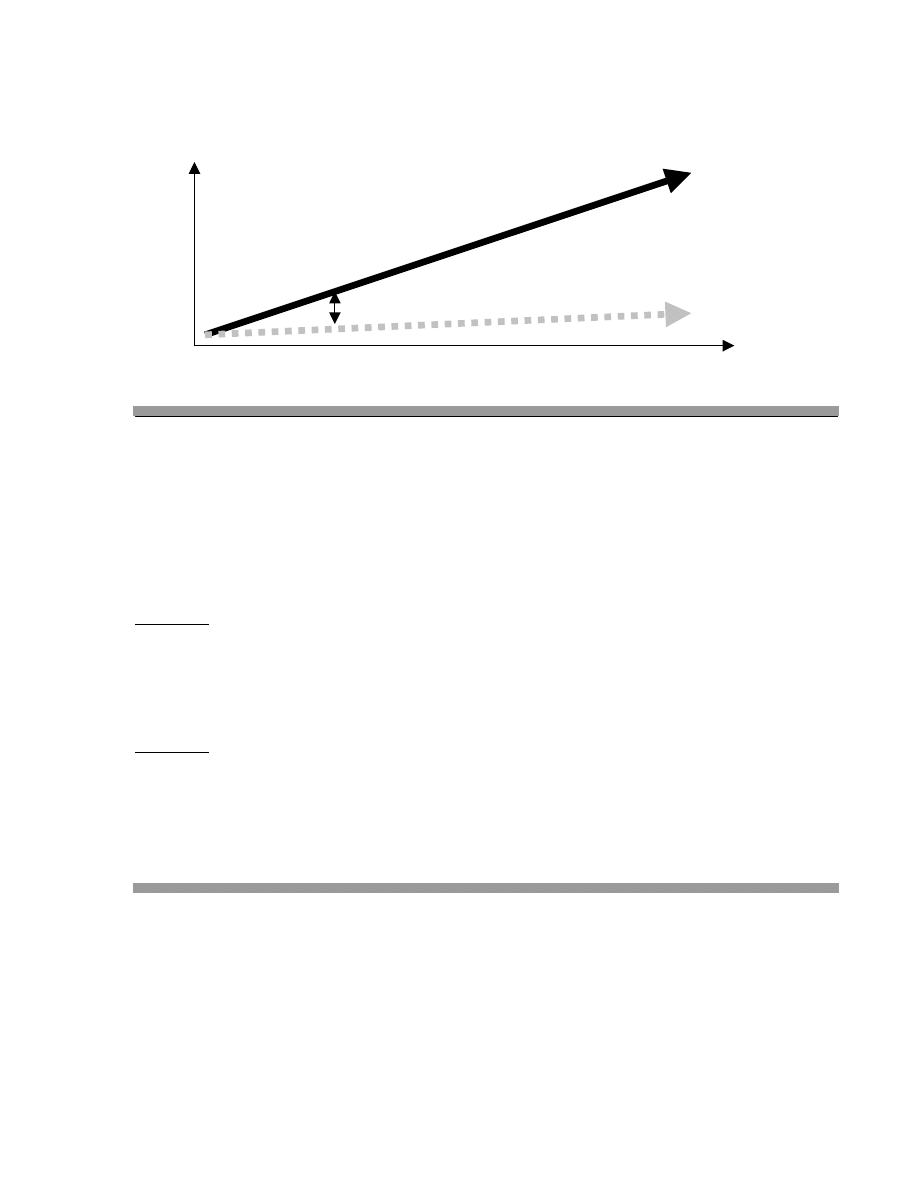
Large goals are reached one small step at a time. [show the youth the Short-Term
Change figure (below). It may help to draw it, to show the changing course over time in a
more dynamic way.] A tiny bit of change at one point in our lives may result in our
taking a totally different path months or years down the road. That's what this
program is all about.
STEADY MANUAL
Page 42
B:\STEADY\CBT\TEEN\STEADY THERAPIST MANUAL 2000.DOC Page 42 of 107 Last saved 3/21/2001 10:07 AM IRB approved April 3 2000
Short-Term Change figure
III. LIFE EXPERIMENT REVIEW
Review Youth Progress/Record Forms
Mood and Activity Monitoring
1. Did you have any problems keeping track of mood or activities?
Counselor: If youth forgot to make ratings, have him or her make retroactive ratings for
the past two to four days. Emphasize, however, that the most accurate ratings are those
made on a daily basis.
2. Were you able to keep your contract? Did you reward yourself?
Counselor: if youth did not meet their goals, delay details until the next section
on setting realistic goals.
3. Look at the last few days in your Mood Diary. Do you see any
improvement in your mood?
IV. REVIEWING YOUR GOAL FOR FUN ACTIVITIES
Objectives
1. To review the characteristics of good goals.
2. To help youth identify the fun activities that would have the most impact on his or
her mood if they were increased.
3. To assist youth in developing strategies for increasing the number of fun activities.
Much more
improvement
Not as much
improvement
Making a small
change early has
big effects later
Where you
are a year
from now
Where you
are today
>>>>> A YEAR PASSES >>>>>
Amount of
Improvement
STEADY MANUAL
Page 43
B:\STEADY\CBT\TEEN\STEADY THERAPIST MANUAL 2000.DOC Page 43 of 107 Last saved 3/21/2001 10:07 AM IRB approved April 3 2000
Last week, you picked some goals for your mood, and for your level of fun activities.
?
Did you met your goals last week?
IF NO
IF YES
Let's take a closer look at your goals,
and see if they were reasonable goals for
you.
This is great! Congratulations. I hope
this continues to be the case.
Even though you did meet your goals,
let's spend the next few minutes talking
about what makes a good goal.
This is in case you set goals for yourself
in the future that are difficult to make.
In that case, it would be a good idea to
look at your goals, and see if they were
reasonable for you.
Setting Appropriate Goals
Goals Must Be Specific
First, let's look at some goals that are not very reasonable, and try to figure out
why that is the case.
Poor Goals:
I want to do more fun activities.
I want to succeed.
I want to feel good about myself.
I want to be a good baseball player.
?
Do you have any thoughts about why these may be poor goals?

STEADY MANUAL
Page 44
B:\STEADY\CBT\TEEN\STEADY THERAPIST MANUAL 2000.DOC Page 44 of 107 Last saved 3/21/2001 10:07 AM IRB approved April 3 2000
[Answer: The reason these are examples of poor goals is that they are NOT
SPECIFIC ENOUGH. This means it would be very difficult to know whether
you have actually reached the goal. The following are some examples of good
goals.]
Good Goals:
I want to call my best friend once every day.
I want to join a rock and roll band.
I want to enroll in an aerobics class.
I want to practice batting more to improve my
baseball game.
?
Do you have any thoughts about why these may be good goals?
[Answer: they are specific - you can easily tell when you have reached them]
Goals Must Be Realistic
?
Here are some other goals. These are specific, but they have another
problem with them. Can you guess what it is?
Poor Goals:
I want to increase my daily average of fun activities from
2 per day to 10 per day.
I want to get straight A's every semester.
I want to exercise 7 days a week.
I want to hit 20 home-runs this season.
?
How might you change these to good goals? [from 2 to 4 fun activities; etc.]
Good goals lead to improvement through SMALL, REALISTIC STEPS.

STEADY MANUAL
Page 45
B:\STEADY\CBT\TEEN\STEADY THERAPIST MANUAL 2000.DOC Page 45 of 107 Last saved 3/21/2001 10:07 AM IRB approved April 3 2000
.
Good goals are a SMALL IMPROVEMENT over your normal, starting
level. You can have a LONG-TERM GOAL which involves a major or
large change. However, it is easier if you break it down into small, realistic
goals for each week or month. Over time, as you make each small goal, you
can set the next goal a little bit higher, and eventually reach your LARGE
GOAL.
REVIEW YOUR PERSONAL GOAL FOR FUN ACTIVITIES
Ask youth to review their personal goal for fun activities (the bottom
of page A2.3)
?
Given what has happened over the past week, is this a good fun
activities goal for you?
?
Is it specific?
?
Is it realistic?
You may find it useful to review the goal you set for mood level (on
workbook page A2.2). Make certain your goal is realistic!
OPTIONAL
Counselor: Convert the examples of poor goals to good goals (for example, increase
the level of fun activities from 2 per day to 4 per day). Solicit suggestions from youth
about how to change the examples, and guide the process by providing feedback and
explanations. Examples: I want to exercise 2 or 3 times a week; I want to improve my
batting average this season
WORKBOOK

STEADY MANUAL
Page 46
B:\STEADY\CBT\TEEN\STEADY THERAPIST MANUAL 2000.DOC Page 46 of 107 Last saved 3/21/2001 10:07 AM IRB approved April 3 2000
V. LOOKING FOR HIGH IMPACT ACTIVITIES AND CAUSES
“High Impact” Activities
There are certain activities that make the most difference in your mood if
you increase them. Some activities are just more “powerful” than other,
more ordinary activities.
?
What are some “high impact” or “powerful” activities for you?
Examples:
dancing, exercising---makes me happy, energizes me
keeping up with schoolwork, preparing well for a test---makes me feel proud,
successful
Counselor: Write the youth's answers on a pad of paper.
You should try to focus on increasing these activities.
Looking for Causes
Sometimes it is hard to do as many fun activities as we'd like. We are
limited by other things. For example, we might not do many fun activities
on Mondays because we have to get back to the school routine and we feel
down, or we might not do social activities unless someone invites us.
OPTIONAL - IF YOUTH ACTIVITY GOAL IS NOT REALISTIC
If this is not a realistic goal, then you should make a new contract with
yourself.
WORKBOOK
Ask youth to turn to workbook page 3.2
Let's pick a more realistic fun activities goal, and complete a new contract using
that goal.

STEADY MANUAL
Page 47
B:\STEADY\CBT\TEEN\STEADY THERAPIST MANUAL 2000.DOC Page 47 of 107 Last saved 3/21/2001 10:07 AM IRB approved April 3 2000
Together, read questions #1 and #2 on page A3.3
?
Did you find that there are some situations, or weekly or daily patterns,
associated with your level of fun activities?
?
How might you get around these problems, to increase your fun
activities?
Counselor: Use the information offered by youth to generate examples for the optional
discussion that follows. Only use the optional exercise if youth has trouble identifying
strategies for getting around barriers to more fun activities. Brainstorm many solutions
with youth. Build on their statements of what they already do. E.g., "How could you do
X and Y more often?"
WORKBOOK

STEADY MANUAL
Page 48
B:\STEADY\CBT\TEEN\STEADY THERAPIST MANUAL 2000.DOC Page 48 of 107 Last saved 3/21/2001 10:07 AM IRB approved April 3 2000
OPTIONAL: IF YOUTH IS HAVING TROUBLE INCREASING ACTIVITIES
Increasing Fun Activities
Think of some ways to do more fun activities. The simplest would be to try to do fun
activities more often. But for you, it may not be that easy. There might be a
PATTERN in your life that will make it difficult for you to do more activities, unless
we come up with some ideas for making it easier.
For example, if fun SOCIAL ACTIVITIES would make you feel happiest, but you
never do anything with people except go to classes where you're not supposed to talk,
it might be difficult for you to increase those activities. One way to improve the
situation would be for you to set a goal to JOIN A CLUB. This could be a school club,
a church youth group, a sports program, or some other group that would give you an
opportunity to be with other people in a casual situation.
If SUCCESS ACTIVITIES would make you feel happiest, but there aren't enough
things that you feel you do well, then you might need to SET A GOAL TO LEARN
HOW TO DO SOMETHING BETTER. This may involve taking lessons, or joining a
hobby group.
If you don't do a fun activity unless it's SOMEONE ELSE'S IDEA and he or she invites
you, then you might need to begin thinking of fun activities and INVITE OTHERS TO
JOIN YOU.
Counselor: Create additional examples that relate directly to the youth's responses to questions #1 and
#2.
WORKBOOK
Together, read question #3 on page A3.3
?
What could you do to make it more likely that you can do more fun activities?
Write your ideas in the space provided after question #3.
Now decide which idea you listed under question #3 would make the most difference
for you in terms of increasing fun activities. Place a STAR by that idea or strategy.

STEADY MANUAL
Page 49
B:\STEADY\CBT\TEEN\STEADY THERAPIST MANUAL 2000.DOC Page 49 of 107 Last saved 3/21/2001 10:07 AM IRB approved April 3 2000
VI. LIFE EXPERIMENT
Ask youths to turn to the life experiment on page A3.4
1. Try to maintain your fun activities at a specific level. Follow the
terms of your contract (either page A2.5 or page A3.2) by keeping
track of whether you achieve your goals on a daily and weekly
basis; give yourself the reward you have selected if you're
successful.
2. Continue recording your mood and fun activities in your Diary
?
Do you have any questions?
?
Any other issues you want to talk about?
WORKBOOK
STEADY MANUAL
Page 50
B:\STEADY\CBT\TEEN\STEADY THERAPIST MANUAL 2000.DOC Page 50 of 107 Last saved 3/21/2001 10:07 AM IRB approved April 3 2000
FUN ACTIVITIES SESSION A-4
Making A Plan Work
Materials needed for this session:
1. Extra
workbook
2. Colored pencils or pens
AGENDA
I.
PROVIDER CONTACT / MEDICATION PLAN
II. CHECK-IN
III. LIFE EXPERIMENT REVIEW
IV. HOW TO MAKE A PLAN WORK
V. INCREASING SOCIAL SUPPORT
VI. EVALUATION OF PROGRESS
VII. LIFE EXPERIMENT (if continuing)
VIII. ENDING ACTIVE SESSIONS (if applicable)
I.
PROVIDER CONTACT / MEDICATION PLAN
Provider Contact
• Encourage youth (or offer) to contact primary care provider during coming week
if any medication side effects etc., also check if youth had any contact with health
care provider since previous meeting
• Reinforce idea of youth (and counselor) being an active team with primary care
provider
• Discuss youth’s progress and their plans for the future
Ask youth to turn to workbook page A4.1
WORKBOOK

STEADY MANUAL
Page 51
B:\STEADY\CBT\TEEN\STEADY THERAPIST MANUAL 2000.DOC Page 51 of 107 Last saved 3/21/2001 10:07 AM IRB approved April 3 2000
Review Medication Plan
?
How has it gone taking your medication since we last met?
?
If applicable: Last time we talked you were having problems with “x”
?
(e.g., dry mouth) and “y” (e.g., jitteriness), but you were beginning to
?
notice that you also were “z” (e.g., sleeping better).
or -
?
How have side effects been for you this week? Have the things we talked about
to deal with the side effects worked?
?
Have you noticed any new or continuing positive changes in how you feel this
week?
?
How is your depression - any improvement?
?
Any thoughts of harming yourself? Harming others?
[
Counselor: Help youth create a plan for coping with expected side effects and other
medication barriers over the next week. Record youth’s reported side effects,
beneficial effects, and plan for coping on the “Counselor Medication Review” form.
Calculate a total risk adherence score as indicated on the form. Compliment the youth
on their continuing to take medication, and/or attentiveness to beneficial effects.]
[Optional: Use motivational interviewing approach to help youth step up / down the
scale on “side effects”, “benefits”, and/or “commitment to medication”]
II.
CHECK-IN / REVIEW
Check-in (not more than five minutes)
First, I’d like to check in with you to find out how you’ve been since our last
meeting together and whether there is anything we discussed last time or that has
happened since we last met that you’d like to talk about.
Waiting for improvement can be hard. We often want things to get better right
away. I'm impressed with your willingness to stick with these sessions, to put in the
time to improve your future.
[If youth seems discouraged and/or resistant, counselor may consider using
motivational interviewing techniques to encourage youth’s [continued] participation
in the intervention]
III. LIFE EXPERIMENT REVIEW
?
Did you have any problems tracking mood or activities in your diary?

STEADY MANUAL
Page 52
B:\STEADY\CBT\TEEN\STEADY THERAPIST MANUAL 2000.DOC Page 52 of 107 Last saved 3/21/2001 10:07 AM IRB approved April 3 2000
Counselor: If youth forgot to make ratings, have them make retroactive ratings for the
past two to four days. Emphasize, however, that the most accurate ratings are those made
on a daily basis.
Look at the last few days in your Mood Diary. Do you see any
improvement in your mood?
C
ONTRACT
(
WORKBOOK PAGE
A2.5
OR
A3.2)
Counselor: go over these four points with youth.
?
Were you able to meet your daily goal for fun activities on page A2.5 or
A3.2? Did you reward yourself? What did you chose?
?
Will you be able to meet your weekly goal tomorrow? If you are
successful, be sure to give yourself the bigger reward.
?
If you need just a few more activities to meet your weekly goal, take a moment to
pick a few activities from the list at the bottom of your Mood and Activity Diary.
Pick activities you'd like to do (and you can do) by the end of the week. This will
help you meet your contract. When will you do these things? Where? With
whom?
?
Do you feel that increasing fun activities is helping you change your mood?
IV. HOW TO MAKE A PLAN WORK
Objectives
1. To help youth develop one important strategy for improving his or her success rate
on the Fun Activities Contract.
2. To have youth evaluate his or her goal for fun activities, and make appropriate
adjustments.
?
What were some things that helped you meet your fun activity goals?
?
What were some of the problems?
Counselor: brainstorm with youth how to overcome their problems. Take 10 minutes to
write youth's suggestions on a pad of paper, and discuss. If youth runs out of ideas, use
the following other possible solutions. Only use this list if youth cannot not generate his
or her own ideas. These ideas are listed on workbook page A4.2, but don't have youth
turn to this page until they have had a chance to problem solve on their own:

STEADY MANUAL
Page 53
B:\STEADY\CBT\TEEN\STEADY THERAPIST MANUAL 2000.DOC Page 53 of 107 Last saved 3/21/2001 10:07 AM IRB approved April 3 2000
The rule for this session is to PLAN FOR SUCCESS.
Ask youth to turn to page A4.2
As you can see, some of the basic ideas that you came up with are already
printed on page A4.2, although they may be worded a bit differently.
Take a moment to write down any other ideas that you believe will help you
reach your fun activity goals. Write them in the space provided on page A4.2.
1. Schedule activities in advance.
2. Don't let yourself back out or make excuses.
3. Make a commitment, even for a small increase in your fun activities.
2. Plan ahead (e.g., arrange for transportation ahead of time, make reservations,
etc.)
4. Name the time and place.
5. Make a “to do” list - make certain to include fun activities as well as obligations
6. Anticipate problems and try to prevent them.
7. If parents object, make "a deal" (e.g., "If I do my chores, can I go to the movies?")
8. Balance what you have to do with what you want to do.
9. Make reservations.
10. Begin to keep a calendar or datebook.
11. Find a "partner" - someone who is also trying (or willing) to do more fun stuff
12. Make a "quickies" list of fun activities that can be done in 10 minutes or less
Counselor: Time limit: 10 minutes.
1. Have youth review and revise their fun activities goals on their contracts on
workbook page A3.2. Youths who were able to meet their goals should keep them at
the same level or raise them slightly, and those who were not successful should lower
their goals.
2. Help youths who were not able to meet their goals. Look at the solutions on page
A4.2, or come up with other strategies that address the factors that got in the way of
achieving the goal.
3. Ask youths to circle the one or two solutions on page A4.2 which will help them the
most.
WORKBOOK
STEADY MANUAL
Page 54
B:\STEADY\CBT\TEEN\STEADY THERAPIST MANUAL 2000.DOC Page 54 of 107 Last saved 3/21/2001 10:07 AM IRB approved April 3 2000
V. INCREASING SOCIAL SUPPORT
So far, we’ve been talking about all kinds of fun activities. We are going to take
a few minutes to talk more about SOCIAL SUPPORT. The support we receive
from friends, family members, and others is important for our health.
Generally, the more social support you have, the better you can cope with more
difficult life situations.
Turn to workbook page A4.3.
Your social support includes your family, friends, neighbors, acquaintances,
co-workers etc. Let's fill out this page of the workbook together.
?
How much social support do you have?
?
Are you satisfied with your social support?
Two important ideas to keep in mind are:
1. If you have too little social support, get some more! Your social support is
too small a) if you don't have any one that you can trust for help with personal
matters, b) if you don't have anyone to go to if you need help, or c) if you have
no friends or acquaintances to do things with.
2. If your social support system is a good size, appreciate it and keep it going
by continuing social activities.
Respond to questions on workbook page A4.3
?
Any ideas on how to get more social support?
Counselor: Write youth answers on pad of paper, and highlight effective answers. If
"joining groups" is an answer, use this as link to next topic.
WORKBOOK
WORKBOOK

STEADY MANUAL
Page 55
B:\STEADY\CBT\TEEN\STEADY THERAPIST MANUAL 2000.DOC Page 55 of 107 Last saved 3/21/2001 10:07 AM IRB approved April 3 2000
JOINING GROUPS
The easiest way to meet people without feeling too self-conscious is to do
something that you like to do with other people. This could include hobby
groups, sports groups, etc.
?
Any idea why might this be true?
Counselor: Write youth answers on pad of paper, and highlight the following:
1. When you do something you like, you are more likely to be in a good mood,
and it will be easier to be friendly to others.
2. At least you will be doing something you like to do and you won't feel that
you have wasted your time, even if you don't find anyone that you would
like to get to know better.
3. The focus is on the activity you are doing, not just meeting people. So, you
will probably feel less pressure than you would if you were only just trying
to meet people.
4. The people you meet are likely to share a common interest, the activity that
brought you together.
Counselor: Discuss responses to these items and encourage youth to work on improving
their social support system.
?
How comfortable do you feel about getting more social support for yourself?
?
What are some of the barriers?
VII. EVALUATION of PROGRESS
Now we come to the end of working on increasing fun activities. However, I want to
encourage you to continue to do more fun things. Use your contract to reward
yourself for doing more fun things.
Ask youth to turn to Mood Questionnaire #2 or #3 at the end of his
or her workbook, whichever is appropriate to this time point.
WORKBOOK

STEADY MANUAL
Page 56
B:\STEADY\CBT\TEEN\STEADY THERAPIST MANUAL 2000.DOC Page 56 of 107 Last saved 3/21/2001 10:07 AM IRB approved April 3 2000
If you remember, you filled out this same questionnaire at our first session
together. Now, please fill it out again. Then, we'll compare it to the first
one and see whether there is any change [don't say improvement]. I will be
the only one reading your responses, so please answer the questions
honestly.
When you're done, hand me your workbook and I'll write down your total, and
return your workbook to you. I will keep your scores private.
Counselor: Collect the completed Mood Questionnaire; check youth's addition of the
score, record it , and return it. If appropriate, give them feedback about ranges of scores.
ALSO, ask youth about their subjective sense of any changes, positive or negative, since
the start of treatment.
For the present (and Session 1) totals, here are rough classifications:
Mild = 0-15
Moderate = 16-27
Significant = 28 or higher
The following categorizations are only relevant if the youth has completed only ONE of the
two skill modules, and there is a decision to be made about whether to continue on to the
second module or terminate the Active Phase of treatment and progress to the Continuation
Phase (brief, monthly phone check-ups with in-person sessions as needed).
RECOVERED: In order to be considered "recovered," youth have to (a) have a score
below 12, and (b) at least a 50% reduction. These youth may be terminated at the end
of this session (and progress to Continuation phase). HOWEVER, a youth who
officially meets the definition of "Recovered" may still continue on in therapy (up to the
maximum of nine Active Phase sessions) if the subjective judgement of the Counselor
and youth is that they have still not yet achieved sufficient improvement.
Typically, when someone improves this much, we usually stop these weekly
meetings and go to monthly "check-in" phone calls. Of course, some people do
continue - what do you think?
Counselor: If youth wants to continue intervention but counselor doesn’t think he or
she needs additional sessions and youth has not made it clear why he or she wants to
continue:
Tell me a little more about what your needs are so I can be of more help.
Counselor: Identify which of three situations below best fit the youth and proceed
accordingly:

STEADY MANUAL
Page 57
B:\STEADY\CBT\TEEN\STEADY THERAPIST MANUAL 2000.DOC Page 57 of 107 Last saved 3/21/2001 10:07 AM IRB approved April 3 2000
1) Youth requesting more sessions to please counselor, parents, or provider
⇒ review with youth the progress they have made to date and the goal of giving them
tools to use independently)
2) Youth requesting more sessions for mental health/psychosocial need that not
appropriate to address through intervention
⇒ Refer to primary care provider or another source for case management or additional
services
3) Youth requesting more sessions for concerns that can be addressed through
intervention and perceives a real need for additional intervention
⇒ Continue to second module in intervention
IMPROVING: In order to be considered "improving," youth have to at least a 30%
reduction from their original score, and NOT meet the Recovered category. These
youth should continue on in Active treatment, to consolidate their gains.
It seems that you've made some good progress. I think now is the time to keep
meeting for a few more weeks, and learn some additional, new skills to help you to
improve even more. What do you think?
NOT IMPROVING: Youth who do not meet either of the two above conditions. These
youth should continue on in Active treatment, to attempt to achieve gains.
It doesn't seem like you've improved as much as we would like. What do you think?
I would like to keep meeting with you for another four weeks. We would start
learning the additional, new skills that you didn't chose at the beginning of these
meetings. This new approach may help "kick-start" some improvement. What do
you think about that?
Examples of Recovered youth:
1.
Session 1 score of 24, and session 4 score of 11.
2.
Session 1 score of 60, and session 4 score of 10.
Examples of youth who do not meet full Recovered criteria:
1.
Session 1 score of 60, and session 4 score of 19 (would be considered Improved)
2.
Session 1 score of 29, and session 4 score of 13 (would be considered Improved)
VII. LIFE EXPERIMENT (only for those youth who are continuing on
to additional Active sessions).
Turn to the life experiment on page A4.4
WORKBOOK
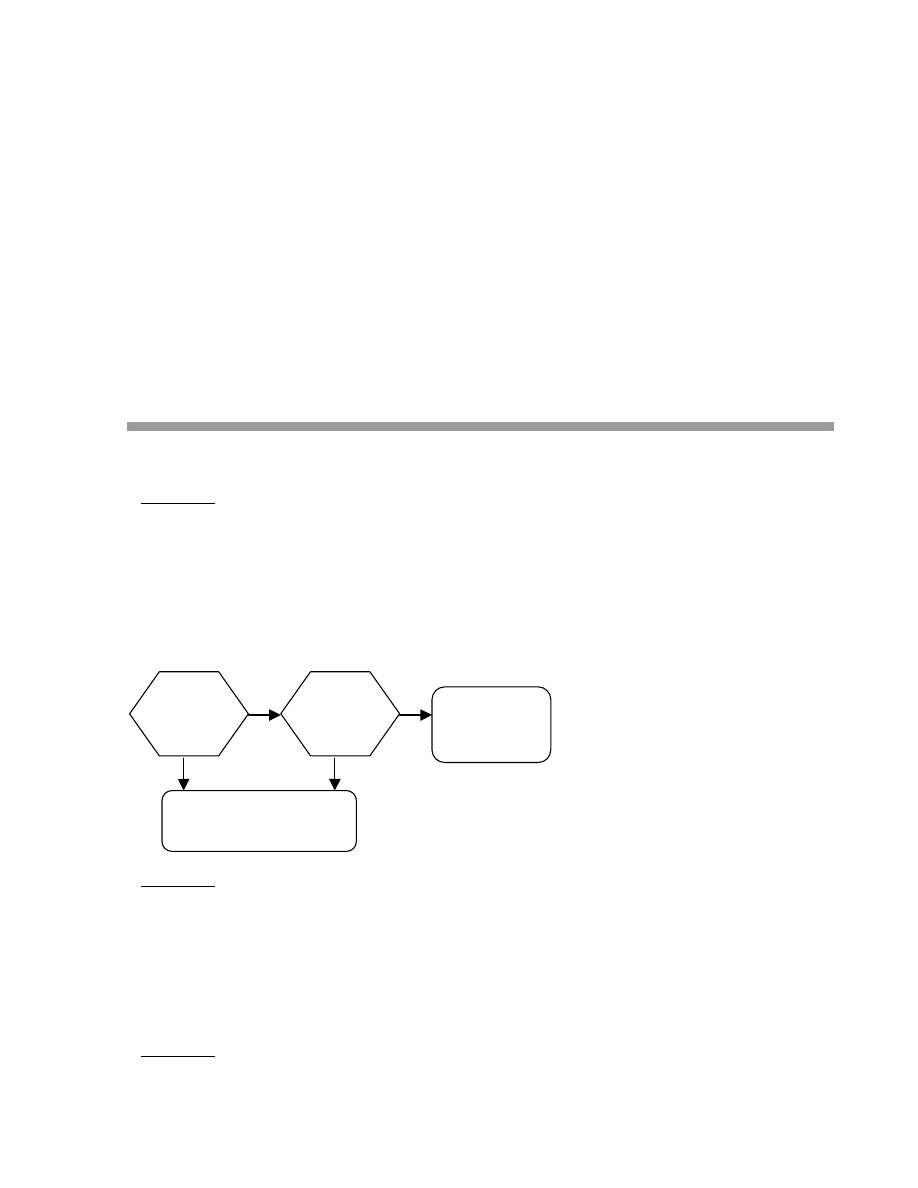
STEADY MANUAL
Page 58
B:\STEADY\CBT\TEEN\STEADY THERAPIST MANUAL 2000.DOC Page 58 of 107 Last saved 3/21/2001 10:07 AM IRB approved April 3 2000
1. Try to maintain your fun activities at a specific level. Follow the
terms of your contract on workbook page 3.3 by keeping track of
whether you achieve your goals on a daily and weekly basis; give
yourself the reward you have selected if you're successful.
2. Continue recording your mood and fun activities in your Diary
?
Any other questions?
?
Any other issues you want to talk about?
VIII. ENDING ACTIVE SESSIONS (if applicable)
[Counselor: if youth has made good to excellent progress [met "recovered"
criteria in previous section on "EVALUATION of PROGRESS"], then this may
be the time to end the Active Phase weekly sessions, and transition to monthly
phone check-up contacts during the Continuation Phase.
If the youth has not made sufficient recovery, and has only completed one skills
training module, then continue on to the changing your thinking module. Follow
the decision tree below.]
[Counselor: use the following script only if youth has recovered from their
depression, or because they have completed both the fun activities and cognitive
Active Treatment modules. ]
Because you've made such great progress, this is our last weekly
session. However, I will call you each month to check on your
continuing progress. If needed, we can meet from time to time.
[Counselor: use the following script if youth has completed both the fun
activities and thoughts modules. ]
Is youth
recovered,
as defined
above?
No
Yes
Has youth
completed
changing
your thinking
No
Yes
Progress to
changing your
thinking module
at next session
Terminate treatment. Use
script below. Begin
continuation phase.

STEADY MANUAL
Page 59
B:\STEADY\CBT\TEEN\STEADY THERAPIST MANUAL 2000.DOC Page 59 of 107 Last saved 3/21/2001 10:07 AM IRB approved April 3 2000
You have now completed both portions of the skills training we set out
to do several weeks ago. You have spent several weeks working on
increasing pleasant activities and have also worked hard on changing
your thinking to stop negative or unrealistic thinking and to increase
realistic and positive thinking. Although you have already made
progress in both of these areas, continuing to practice the skills on your
own will be an important part of continuing to see improvements in
how you feel.
[Counselor: use the following script for both youths who have recovered from
their depression, and youths who have completed both the fun activities and
thinking modules. ]
Before we end, let’s take a few minutes to review:
1. What you got out of these sessions.
2. What you see as the biggest challenges you’ll face in the next few
months or few years.
3. How you can apply the skills you learned here to tackle those challenges.
Counselor: Use this time to help those ending these sessions to summarize his
or her experiences. Work on relapse prevention by anticipating future problems
and how they will handle them. Make sure to highlight youth's strengths as well
as areas in which they should continue to practice skills.
Counselor: Remember to send an epic e-mail message to the youth’s primary care
provider about the youth’s progress with the intervention and any other pertinent
information (e.g., reported side effects, level of functioning) following this session.
STEADY MANUAL
Page 60
B:\STEADY\CBT\TEEN\STEADY THERAPIST MANUAL 2000.DOC Page 60 of 107 Last saved 3/21/2001 10:07 AM IRB approved April 3 2000
CHANGING YOUR THINKING - SESSION T-1
Thoughts and Feelings
Materials needed for this session:
1. Extra workbook
2. 3 x 5 index cards
AGENDA
I.
PROVIDER CONTACT / MEDICATION PLAN
II. CHECK-IN
III.
LIFE EXPERIMENT REVIEW
IV.
INTRODUCTION TO “THINKING” MODULE
V.
THOUGHTS & FEELINGS
VI.
CHANGING NEGATIVE THOUGHTS
VII. LIFE
EXPERIMENT
I.
PROVIDER CONTACT / MEDICATION PLAN
Provider Contact
• Encourage youth (or offer) to contact primary care provider during coming week
if any medication side effects etc., also check if youth had any contact with health
care provider since previous meeting
• Reinforce idea of youth (and counselor) being an active team with primary care
provider
• Discuss youth’s progress and their plans for the future
Ask youth to turn to workbook page T1.1
Review Medication Plan
?
How has it gone taking your medication since we last met?
?
If applicable: Last time we talked you were having problems with “x”
?
(e.g., dry mouth) and “y” (e.g., jitteriness), but you were beginning to
?
notice that you also were “z” (e.g., sleeping better).
or -
WORKBOOK

STEADY MANUAL
Page 61
B:\STEADY\CBT\TEEN\STEADY THERAPIST MANUAL 2000.DOC Page 61 of 107 Last saved 3/21/2001 10:07 AM IRB approved April 3 2000
?
How have side effects been for you this week? Have the things we talked about
to deal with the side effects worked?
?
Have you noticed any new or continuing positive changes in how you feel this
week?
?
How is your depression - any improvement?
?
Any thoughts of harming yourself? Harming others?
[
Counselor: Help youth create a plan for coping with expected side effects and other
medication barriers over the next week. Record youth’s reported side effects,
beneficial effects, and plan for coping on the “Counselor Medication Review” form.
Calculate a total risk adherence score as indicated on the form. Compliment the youth
on their continuing to take medication, and/or attentiveness to beneficial effects.]
[Optional: Use motivational interviewing approach to help youth step up / down the
scale on “side effects”, “benefits”, and/or “commitment to medication”]
II.
CHECK-IN / REVIEW
Check-in (not more than five minutes)
As we discussed during our last meeting together, today we will explore how
both depressing and positive thoughts make you feel and how you might change
your thinking to help yourself feel better. First, I’d like to check in with you to find
out how you’ve been since our last meeting together and whether there is anything
we discussed last time or that has happened since we last met that you’d like to talk
about.
[If youth seems discouraged and/or resistant, counselor may consider using
motivational interviewing techniques to encourage youth’s [continued] participation
in the intervention.]
III. LIFE EXPERIMENT REVIEW
Review Youth Progress/Record Forms
A. Mood and Activity Diary
?
Did you have any problems keeping track of mood or activities?
Counselor: If youth forgot to make ratings, have he or she make retroactive ratings for the
past two to four days. Emphasize, however, that the most accurate ratings are those made
on a daily basis.
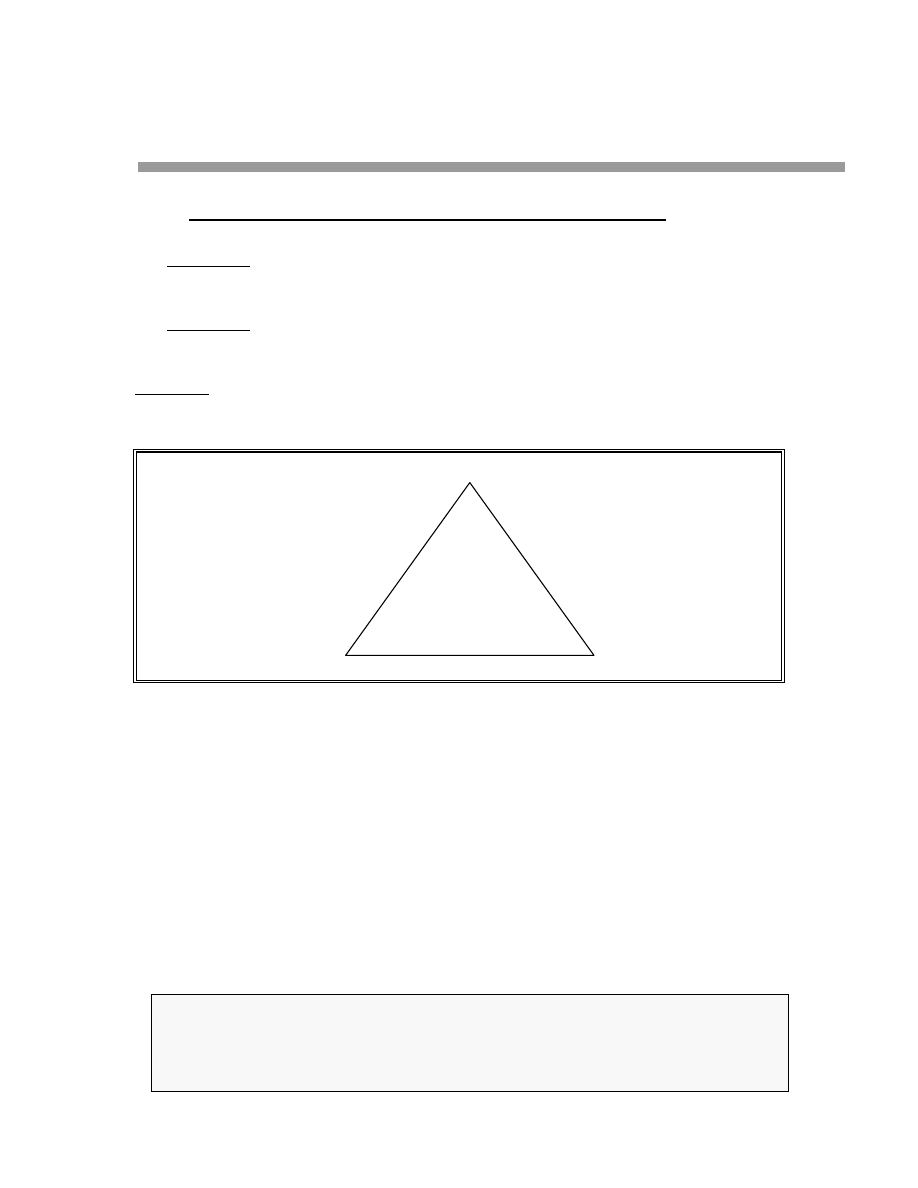
STEADY MANUAL
Page 62
B:\STEADY\CBT\TEEN\STEADY THERAPIST MANUAL 2000.DOC Page 62 of 107 Last saved 3/21/2001 10:07 AM IRB approved April 3 2000
Looking at the last few days in your Mood Diary, do you see any improvement in
your mood?
IV. INTRODUCTION TO THE THOUGHTS MODULE
If Session 2: Do you remember during our last meeting together how we
described the three parts of your personality?
If Session 6: Do you remember during our first meeting together how we
described the three parts of your personality?
Counselor: Remind youth of the triangle figure – show them the figure in their
workbook, or the version shown below.
During the remainder of our meeting today and in the next three sessions, we
are going to focus on depressing THOUGHTS.
DEPRESSING thoughts have unpleasant results. They make you feel bad
because they focus your attention on the negative side of a situation.
POSITIVE thoughts make you feel better, by focusing on the positive sides
of a situation
So for example, “Telling yourself that you are boring” is an example of a
thought that makes you feel bad
-and-
“Reminding yourself about someone who cares about you” would make you
feel? (have the youth respond, if any confusion use optional examples
below).
Actions or
Behavior
Thoughts,
Beliefs
Feelings,
Emotions
Optional:
1. Thinking about the times that you have embarrassed yourself would
make you feel _______?
2. Thinking about ways to solve a problem would make you feel _____?

STEADY MANUAL
Page 63
B:\STEADY\CBT\TEEN\STEADY THERAPIST MANUAL 2000.DOC Page 63 of 107 Last saved 3/21/2001 10:07 AM IRB approved April 3 2000
V. THOUGHTS AND FEELINGS
Objectives
1. To help each youth understand the link between thoughts and feelings.
2. To help each youth identify his or her most frequent negative and positive thoughts.
3. To have youths record daily (for the following week) their worst negative thoughts,
the activating events that made them think that way, and the number of times they
catch themselves thinking negatively.
How Thoughts Affect Your Mood
Today and in the next few meetings, we are going to talk about how thinking
affects the way that you feel. Let’s start with taking an example of a problem
that you have faced:
Counselor: Use youth’s own examples if possible, or one of the examples provided
below. Examples for achievement stressors and social stressors are included. Some youth
will be most sensitive to achievement stresses and other youth will be more sensitive to
social stresses. Over the course of the sessions try to match the stresses addressed with
those that are most problematic for the youth.
If youth unable to describe any problems:
How about something where you felt that you failed to accomplish something
important to you?
-or-
How about a problem you might have experienced with other people for example
a family member or a friend?
Optional: If youth still unable to generate any examples use examples below:
Example 1: (Achievement Stressor)
You work hard on a project for school/work, and get it done just in
time for the deadline. But you leave it at home . When you get to school/work
and tell the teacher/boss, she yells at you in front of everyone.
Example 2: (Social Stressor)
You hear some of your friends talking about going to a party that
another friend is having, but you haven’t been invited.
What are some ways that you might feel if this happened to you?

STEADY MANUAL
Page 64
B:\STEADY\CBT\TEEN\STEADY THERAPIST MANUAL 2000.DOC Page 64 of 107 Last saved 3/21/2001 10:07 AM IRB approved April 3 2000
Counselor: List feelings, elicit several different types, on a pad of paper.
So this is interesting. We have the same situation, but it’s causing all kinds of
different feelings. Why is this? Let’s take a look at the way that you might
be thinking about this situation, that would lead to the different feelings.
Counselor: Fill in the thoughts that would lead to each of the different emotions listed.
Make the point that different thoughts lead to different feelings, even if the situation is
exactly the same.
What might you be saying to yourself that would make you feel _______?
Optional: The examples listed below are to help the youth connect thoughts to feelings if they have
difficulty doing so without prompting. Many of the feelings listed below are common ones that may
come up for either achievement or social stressors and the “possible thoughts” likely to correspond
to some of the youth’s own thoughts. If the youth is easily able to come up with thoughts connected
with their stated feelings, none of the examples below are necessary.
Example 1 (Achievement Stressor):
Feelings Possible
Thoughts
Angry
She has no right to embarrass me this way
She should understand that I left it at home.
Sad
I never do anything right.
Embarrassed
Everyone thinks I didn’t do it.
OK
She just doesn’t realize that I did it but left it at
home. I can pick it up at lunch time, and hand it in this
afternoon.
Good or
I’ll just call my Mom and see if she can drop it Effective
off when she goes out.
Example 2 (Social Stressor):
Feelings Possible
Thoughts
Angry
What a jerk! She/he is really disgusting!.
Sad or
They must not like me very much.
Rejected
I have lost all of my friends. I’m all alone.
OK
They probably forgot to invite me. I’ll go
anyway.
Good or
I’ll ask them about the party. If they really
Effective
don’t want to invite me, I can make plans with
my other friend who I haven’t seen in a while.

STEADY MANUAL
Page 65
B:\STEADY\CBT\TEEN\STEADY THERAPIST MANUAL 2000.DOC Page 65 of 107 Last saved 3/21/2001 10:07 AM IRB approved April 3 2000
Exercise – Controlling your thinking
Now that you’ve worked on identifying negative thoughts, I’d like you to
shift gears and identify some positive thoughts you have about yourself or
other things. These can be pleasant experiences, thinking about your
favorite places, or positive things about yourself.
Counselor: Provide some examples of positive thoughts if youth has difficulty
coming up with their own examples. Ask youth to identify some positive thoughts
about themselves, but to "put them aside for a moment".
Now I’m going to ask you to put these positive thoughts aside for the
moment and take some of the negative thoughts we talked about back out
and to think about them hard, that is worry to yourself about them until I
tell you to stop
Counselor: Stop youth after about 10 seconds of covert worrying
Now stop and put the negative thoughts away and think about the
POSITIVE THOUGHTS you identified. Concentrate as hard as you can on
these POSITIVE THOUGHTS until I tell you to stop
Counselor: Stop youth after about 20 seconds of positive thoughts
What did you experience? Did your mood change? This is a simple
example of how you can control your thinking.
Before we can control our thoughts, we must become aware of them. In
particular, we need to know which negative thoughts we have most often.
Everyone has negative thoughts sometimes, and there are understandable
reasons to have them every now and then. But NEGATIVE THOUGHTS
CAN BECOME A PROBLEM IF THEY OCCUR TOO FREQUENTLY
because they make us feel sad or down. The most effective way to work on
negative thoughts is to identify the ones that occur most often.
When we become aware of our thoughts, we should notice whether we're
thinking more positive thoughts or more negative thoughts. As a general
rule of thumb, we should have at least TWICE AS MANY POSITIVE
THOUGHTS AS NEGATIVE THOUGHTS (although this can vary
somewhat from one person to the next).

STEADY MANUAL
Page 66
B:\STEADY\CBT\TEEN\STEADY THERAPIST MANUAL 2000.DOC Page 66 of 107 Last saved 3/21/2001 10:07 AM IRB approved April 3 2000
Identifying Frequent Negative Thoughts
Ask youths to turn to pages T1.2
On page T1.2 there is a list of negative thoughts that tend to occur
frequently. Have you had any of these? Check the ones that are
familiar to you.
At the bottom of page T1.2, write down any other negative thoughts
that you have had.
Counselor: Give youth some time to work.
WORKBOOK
Optional: (if youth unable to generate other examples)
To help you identify other negative thoughts, I'm going to
describe some situations. I want you to write down any
negative thoughts you might have ABOUT YOURSELF in each
situation. Add these thoughts to the list you have started at the
bottom of page T1.2.
a. It's Monday, and you find out that some
friends of yours went to a movie on Saturday
and didn't invite you.
b. Your parents won't let you go to a party on
Friday night.
c. You have just finished a very hard exam, and
your best friend tells you that he or she
thought the exam was fairly easy.
d. You see a group of friends having fun
together, and you're not with them.
e. You have just been turned down for a
promotion at work
STEADY MANUAL
Page 67
B:\STEADY\CBT\TEEN\STEADY THERAPIST MANUAL 2000.DOC Page 67 of 107 Last saved 3/21/2001 10:07 AM IRB approved April 3 2000
Do you have some of these thoughts much more often than the others?
Now look at your list of negative thoughts. Pay particular attention to the
thoughts you have about YOURSELF. These are called “personal”
thoughts because they are about you as a person. Personal thoughts usually
have the word “I”, “me”, “my” or “we” in it.
You may want to put a star or an asterisk by the most frequent
thoughts so that you can quickly remind yourself of the negative
thoughts that are most frequent or troublesome for you when you
review this list.
Identifying Positive Thoughts
Ask youths to turn to pages T1.3
There is a list of positive thoughts on page T1.3.
Read through the list and check the thoughts that you have had during the
past month. At the bottom of page T1.3, list some other positive thoughts
that you have had.
Comparing the Totals
Ask youths to look at page T1.4
Count the number of positive thoughts you have identified from the list on
page T1.3 and write the total on the line provided on page T1.4. Then
count up the negative thoughts you identified from the list on page T1.2 and
write that total on the next line. Which total is higher—the one for negative
thoughts or the one for positive thoughts?
Ideally, our goal is for you to have twice as many positive thoughts as
negative thoughts. Where are you at?
WORKBOOK
WORKBOOK

STEADY MANUAL
Page 68
B:\STEADY\CBT\TEEN\STEADY THERAPIST MANUAL 2000.DOC Page 68 of 107 Last saved 3/21/2001 10:07 AM IRB approved April 3 2000
It may take some time before the balance between your negative and
positive thoughts changes so that you have close to twice as many
positive thoughts as negative thoughts. This is part of what we will
continue to work on and monitor over our next few meetings together.
VI. CHANGING FROM NEGATIVE TO POSITIVE THINKING
Objectives
1. To discuss how to use positive thoughts to counter negative thoughts.
2. To provide feedback as youths identify unrealistic beliefs in cartoon sequences and
suggest more positive, rational beliefs.
3. To help youths develop positive counter-thoughts and beliefs for his/her negative
thoughts.
Using Positive Counter-thoughts
Negative thoughts can make you feel depressed and unhappy. Positive
thoughts make you feel “up” and cheerful. When you think positively
about yourself and the world, you feel better. The techniques we're going
to learn next have to do with CHANGING YOUR NEGATIVE THOUGHTS
in order to control your feelings. The first technique involves the use of
POSITIVE COUNTER-THOUGHTS.
When you catch yourself thinking negatively, replace the negative thought
with a positive “counter-thought.”
Definition: A POSITIVE COUNTER-THOUGHT relates to the SAME
TOPIC as the negative thought, but it's MORE POSITIVE and often MORE
REALISTIC. Negative thoughts and positive counter-thoughts have the
same sort of relationship between them as “Good News” and “Bad News”
stories. The “News” itself is neutral. It is the way we THINK about the
“News” that makes it either “Good News” or “Bad News”. Another way
people sometimes think of this is thinking about a cup as either “half
empty” or “half full” – “half empty” would be a more negative way of
looking at a situation than “half full”.
WORKBOOK

STEADY MANUAL
Page 69
B:\STEADY\CBT\TEEN\STEADY THERAPIST MANUAL 2000.DOC Page 69 of 107 Last saved 3/21/2001 10:07 AM IRB approved April 3 2000
Ask youth to read the Herman cartoon on page T1.5.
1. What is the “good news” or positive counter-thought?
(Answer: “He won't be scratching my furniture anymore.” This is
obviously not really good news, but this is just an example of this
technique.)
2. What do you suppose the “bad news” is?
(Answer: “Your pet is dead.” This is also the activating event.)

STEADY MANUAL
Page 70
B:\STEADY\CBT\TEEN\STEADY THERAPIST MANUAL 2000.DOC Page 70 of 107 Last saved 3/21/2001 10:07 AM IRB approved April 3 2000
Recording Negative Thoughts
OPTIONAL
Ask youth to read the Wizard of Id cartoon on page T1.6.
3. What is the negative thought in the Wizard of Id cartoon?
(Answer: “I have a 105° temperature [I'm sick].”)
4. What is the positive counter-thought?
(Answer: “The fungus in my cell may dry up.”)
5. Are these two thoughts on the same topic?
(Answer: Although unrealistic and silly, Yes.)
Counselor: Ask youth to fill in the thought diagram at the bottom of page T1.8. Briefly review
the youth’s answer on the thought diagram. Youth may want to argue about whether
"scratching furniture" is really a good positive counter-thought. Briefly agree with them that it
probably isn't the best, but this is just a silly cartoon and in later examples we will do a much
better job generating good positive counter-thoughts.
6. In these two cartoons (Herman and Wizard of Id), one positive counter-
thought is more realistic than the other. Which one is it?
(Answer: “My pet won't be scratching the furniture anymore.” Fevers don't
really dry up fungi, so this thought is not as realistic.)
7. What are some positive counter-thoughts to the following negative
thoughts?
Negative Thought: “Why do so many bad things happen to me?”
(Possible counter-thought: “Last week I saw a disabled veteran with no legs.
I'm relatively lucky.”)
Counselor: Allow youth to come up with some alternative answers.
Negative Thought: “I don't have enough willpower.”
(Possible counter-thought: “Last week I met my pleasant activities goal.”)

STEADY MANUAL
Page 71
B:\STEADY\CBT\TEEN\STEADY THERAPIST MANUAL 2000.DOC Page 71 of 107 Last saved 3/21/2001 10:07 AM IRB approved April 3 2000
Ask youth to turn to page T1.7.
The form on page T1.7 is for recording information on how often you have
negative thoughts. You will use this form to write down your MOST
NEGATIVE THOUGHTS each day and the situation that came before each
thought (we call this the ACTIVATING EVENT).
Every day for a week, I want you to RECORD AT LEAST ONE NEGATIVE
THOUGHT—preferably the worst, most depressing thought you had that
day. This will be hard to remember from one day to the next, so you'll need
to fill out the form every day.
When you realize that you are thinking negatively, also try to identify the
activating event, or situation, where you began thinking this way. Write
down some notes about this as well.
Your goal is to record at least one thought for each day.
When you catch yourself thinking negatively, try to think positive thoughts
instead. I know this can be very difficult, but give it a try anyway. We'll
show you some techniques to make this easier in the coming weeks. Write
down some of these positive thoughts in the column labeled positive
counter-thoughts.
OPTIONAL: Another useful but OPTIONAL piece of information is HOW
MANY TIMES you caught yourself thinking negatively; write this down in
the space provided on the form.
Counselor: Emphasize that recording one negative thought each day is critical because the
exercises in subsequent sessions are based on this information. The counting part is not
as important, but it will also be helpful. Optional: If you feel comfortable, give personal
examples of negative thoughts which would be recorded on page T1.7.
Discuss some ways to take notes on negative thoughts right after they occur. Give the
youth blank 3" x 5" cards, and suggest using the cards to record thoughts. Help youth
think of a place in their notebook or purse to carry the cards. Show some examples of
good record keeping.
WORKBOOK

STEADY MANUAL
Page 72
B:\STEADY\CBT\TEEN\STEADY THERAPIST MANUAL 2000.DOC Page 72 of 107 Last saved 3/21/2001 10:07 AM IRB approved April 3 2000
VII. LIFE EXPERIMENT
Ask youth to turn to the Life Experiment on pages T1.8.
Notice that the Life Experiment for this session is described on page T1.8.
1. Keep track of how often you have negative thoughts, using page
T1.7.
a. Write down your worst negative thought for the day and
the event or situation that activated it. Try using the 3" x
5" card to take notes right after the thought occurs, then
transfer the notes to page T1.7. Note any positive thoughts
that you used to counter the negative thoughts. Remember
a positive counterthought relates to the same topic as the
negative thought, but is more realistic, more positive, and
focuses your attention on what you can do to resolve the
problem or cope with the stress.
Counselor: Pass out 3" x 5" cards to youth.
b. OPTIONAL. Count the number of times you catch
yourself thinking negatively every day and record it on
page T1.7.
Your life experiment for this session is to do the following:
1. Fill out the “Negative Thoughts Chart” Chart on page T1.7
2. Continue tracking your daily mood in your Diary
3. Remember to bring your workbook to every meeting!!
?
Do you have any questions?
?
Other things you want to talk about?
_________________________________________________
WORKBOOK
STEADY MANUAL
Page 73
B:\STEADY\CBT\TEEN\STEADY THERAPIST MANUAL 2000.DOC Page 73 of 107 Last saved 3/21/2001 10:07 AM IRB approved April 3 2000
CHANGING YOUR THINKING - SESSION T-2
Arguing Against Negative Thoughts
Materials needed for this session:
1. Extra
workbook.
2.
Extra pens and pencils.
AGENDA
I. PROVIDER CONTACT / MEDICATION PLAN
II. CHECK-IN
III. LIFE EXPERIMENT REVIEW
IV. THE A-B-C TECHNIQUE
V. HOW TO ARGUE AGAINST NEGATIVE THOUGHTS
VI. LIFE EXPERIMENT
I.
PROVIDER CONTACT / MEDICATION PLAN
Provider Contact
• Encourage youth (or offer) to contact primary care provider during coming week
if any medication side effects etc., also check if youth had any contact with health
care provider since previous meeting
• Reinforce idea of youth (and counselor) being an active team with primary care
provider
• Discuss youth’s progress and their plans for the future
Ask youth to turn to workbook page T2.1
Review Medication Plan
?
How has it gone taking your medication since we last met?
?
If applicable: Last time we talked you were having problems with “x”
?
(e.g., dry mouth) and “y” (e.g., jitteriness), but you were beginning to
?
notice that you also were “z” (e.g., sleeping better).
or -
WORKBOOK

STEADY MANUAL
Page 74
B:\STEADY\CBT\TEEN\STEADY THERAPIST MANUAL 2000.DOC Page 74 of 107 Last saved 3/21/2001 10:07 AM IRB approved April 3 2000
?
How have side effects been for you this week? Have the things we talked about
to deal with the side effects worked?
?
Have you noticed any new or continuing positive changes in how you feel this
week?
?
How is your depression - any improvement?
?
Any thoughts of harming yourself? Harming others?
[
Counselor: Help youth create a plan for coping with expected side effects and other
medication barriers over the next week. Record youth’s reported side effects,
beneficial effects, and plan for coping on the “Counselor Medication Review” form.
Calculate a total risk adherence score as indicated on the form. Compliment the youth
on their continuing to take medication, and/or attentiveness to beneficial effects.]
[Optional: Use motivational interviewing approach to help youth step up / down the
scale on “side effects”, “benefits”, and/or “commitment to medication”]
II.
CHECK-IN / REVIEW
Check-in (not more than five minutes)
Today we will talk about how to figure out what makes us feel sad or upset and
how to argue against negative thoughts, but, first, I’d like to check in with you to
find out how you’ve been since our last meeting together and whether there is
anything we discussed last time or that has happened since we last met that you’d
like to talk about.
[If youth seems discouraged and/or resistant, counselor may consider using
motivational interviewing techniques to encourage youth’s [continued] participation
in the intervention]
III. LIFE EXPERIMENT REVIEW
During our last meeting we talked about how depressing and positive thoughts
make you feel and how you might change your thinking to help yourself feel
better.
So, for example, telling yourself “I can’t do that!” or “It’s my fault” are examples of
negative thoughts. Can you think of what might be examples of positive
counterthoughts?

STEADY MANUAL
Page 75
B:\STEADY\CBT\TEEN\STEADY THERAPIST MANUAL 2000.DOC Page 75 of 107 Last saved 3/21/2001 10:07 AM IRB approved April 3 2000
Review Youth Progress/Record Forms
Counselor: Keep the review moving along. The time limit for each question is 1-2
minutes.
A. Daily Mood Diary
1. Did you have any problems keeping track of mood?
Counselor: If youths forgot to make ratings, have them make retroactive ratings for the
past two to four days. Emphasize, however, that the most accurate ratings are those made
on a daily basis.
2. Look at the last few days in your Mood Diary. Do you see any
improvement in your mood?
B. Negative Thoughts Tracking (page T1.7)
1. Did you record at least one negative thought each day?
2. Did you record the activating event for that thought?
3. Did you record positive counterthoughts? Did they relate
to the same topic? Were they more realistic than the
negative thought?
Now we know how to recognize negative thoughts. The next step is to try
some strategies for developing more positive thinking styles.
IV. USING THE A-B-C METHOD
Objective
1. To demonstrate how to analyze negative feelings using the A-B-C approach.
When we're sad or upset, it is sometimes difficult to figure out what is
making us feel that way. In this type of situation, the A-B-C method is a
useful technique for analyzing our feelings.
Ask youth to turn to workbook page T2.2
WORKBOOK
STEADY MANUAL
Page 76
B:\STEADY\CBT\TEEN\STEADY THERAPIST MANUAL 2000.DOC Page 76 of 107 Last saved 3/21/2001 10:07 AM IRB approved April 3 2000
[FROM WORKBOOK]
2
nd
3rd 1
st
A (Activating Event)
B (Belief)
C (Consequence)
The Three Steps
Even though this is called the A-B-C method, C-A-B is usually the way you notice
things and the order in which things happen. For example:
1. The first step is to notice the Consequence.
The CONSEQUENCE is the emotional RESULT of some situation or
thought, what prompts us to take action. We notice that we're upset or
depressed, and we want to change the situation.
2. The second step is to identify the Activating Event.
Then we look at what has happened to find out what's affecting us. This
can be difficult. THE ACTIVATING EVENT is the situation that “triggers”
an emotional reaction, such as depression.
EXAMPLE. Bill and Steve live across the street from each other. Bill feels
depressed, while Steve feels happy. Let's do the A-B-C method. The first
step is to identify their emotional Consequences. What are the emotional
consequences for Bill and Steve?
Counselor: Have youth write the answer in the “C” column in the workbook.
[FROM WORKBOOK]
A
B
C
Depression
(Bill)
Happiness (Steve)
Bill and Steve both look out the window. It's October, and it's raining
again. They both notice that the rain affects their feelings.

STEADY MANUAL
Page 77
B:\STEADY\CBT\TEEN\STEADY THERAPIST MANUAL 2000.DOC Page 77 of 107 Last saved 3/21/2001 10:07 AM IRB approved April 3 2000
The second step in the A-B-C method is to ask: What are the Activating Events
for Bill and Steve?
Counselor: Have youth copy their “C” column answer and write the answer in the “A”
column in the workbook.
[FROM WORKBOOK]
A
B
C
October
rain
Depression
(Bill)
October
rain
Happiness
(Steve)
Notice that the same Activating event resulted in different Consequences
for Bill and Steve.
3. The third step is to determine the Beliefs that led from the activating
event to the consequences.
This is often the most difficult step. To find the beliefs, you must ask
yourself, “What was going on in my head when I was feeling depressed?”
[
Note: The following example was adapted from Kranzler, Gerald. You can change how you feel. Eugene,
OR: RETC Press, 1974.
]
EXAMPLE. It's October and it's raining again. Bill looks out the window
and thinks to himself, “This is awful! Summer is over and now it's going to
rain nonstop for six months! I can't stand the clouds and the cold! This is
horrible! I'll never have any fun now!”
Across the street, Steve is looking out his window. He is thinking to himself,
“This is great! When it's raining here, that means it's snowing in the
mountains. I'll be skiing again soon! I can't wait!”
What are Steve's and Bill's beliefs?
Counselor: Have youth copy their “A” and “C” column answer and write the answer in
the “B” column in the workbook.
Ask youth to turn to workbook page T2.3
WORKBOOK
STEADY MANUAL
Page 78
B:\STEADY\CBT\TEEN\STEADY THERAPIST MANUAL 2000.DOC Page 78 of 107 Last saved 3/21/2001 10:07 AM IRB approved April 3 2000
[from workbook]
A
B
C
October rain
“The rain means I
Depression (Bill)
can't
have
any
fun
for
six
months.”
October rain
“The rain means I'll
Happiness (Steve)
be skiing soon.
”
What actually caused the different consequences for Steve and Bill?
(Answer: Their different beliefs.)
Counselor: If youth suggests that Steve can ski and Bill can't, indicate that for this
example they both know how to ski; the only difference is how they interpret the rain.
This example demonstrates that it is not the SITUATION that makes you sad or
upset but the MEANING you give it.
V. HOW TO ARGUE AGAINST NEGATIVE THOUGHTS
Optional:
Let's review the three steps in the A-B-C Method.
1. What is the first step?
(Answer: Notice the feeling or Consequence—depression, anger, guilt,
happiness, etc. This is easiest to notice first. Most of the time people
notice their emotional upset before anything else.)
2. What do we do next?
(Answer:
Identify
the
Activating Event.)
3. What do we do third?
(Answer:
Determine
the
Belief that led to the Consequence.)
The next step is to ARGUE WITH YOURSELF to decide whether the belief
is unrealistic.

STEADY MANUAL
Page 79
B:\STEADY\CBT\TEEN\STEADY THERAPIST MANUAL 2000.DOC Page 79 of 107 Last saved 3/21/2001 10:07 AM IRB approved April 3 2000
How can you argue with these negative thoughts? There are a few different ways to
make sure that the thought isn’t totally unrealistic.
Ask youth to turn to page T2.4 in the workbook.
Counselor: Use the questions on page T2.4 to guide the
discussion below. For each topic, there will be corresponding
questions listed on page T2.4. You will review the topic (alternatives, implications, etc.),
review the pertinent questions on page T2.4, and then practice using those questions via
the Hot Seat activity. The Hot Seat can be cumulative, so that each time you use it the
youth uses all the questions reviewed to that point. Use the Hot Seat exercise as often as
needed to keep the youth engaged in the process.
1. The first approach is to ask yourself if there are any OTHER WAYS OF
THINKING (ALTERNATIVES) about this situation that make sense. The
questions on page T2.4 that help you figure this out are:
Is there another way to look at this?
Is there another reason why this would happen?
For example:
Maybe your good friend says he’ll call you before 7 to arrange to go out that
night. Its almost 8, and he still hasn’t called.
Your first thought may be, “He isn’t going to call…he went out
without me”
How might this make you feel? (answer: sad / disappointed)
What are some negative thoughts you might have about this situation?
Counselor: Write all youth’s negative thoughts on a pad of paper. Make sure the
alternatives “make sense” and are not completely unrealistic.
Now let’s try to come up with some “alternative thoughts”. What are some
other, more positive things you might think when your good friend hadn’t called
yet?
Counselor: Encourage youth to come up with own alternative thoughts. Make sure the
alternatives “make sense” and are not completely unrealistic. If youth has difficulty
coming up with alternatives, you can offer possibilities such as the following:
your friend’s older sister is talking on the telephone and won’t get off he is
WORKBOOK

STEADY MANUAL
Page 80
B:\STEADY\CBT\TEEN\STEADY THERAPIST MANUAL 2000.DOC Page 80 of 107 Last saved 3/21/2001 10:07 AM IRB approved April 3 2000
still waiting to call you
he got held up doing errands with his parents and isn’t home yet
your friend always runs late, he probably will call anytime
2. Another way to work on unrealistic negative thoughts is to look at WHAT WILL
HAPPEN (IMPLICATIONS), or to ask yourself (see page T2.4):
Even if this thought is true, what’s the worst thing that can happen?
Even if this thought is true, what’s the best thing that can happen?
What will be the most likely thing to happen?
The trick is to look at both the positive and negative things that could
happen, to make sure you aren’t only thinking about the bad things that
could happen. For instance, in the example above, you thought “He isn’t
going to call …. He went out without me.”
First, ask yourself, “Even if this thought is true, what’s the WORST thing
that could happen?”
Counselor: Elicit ideas and write on a pad of paper, such as the following:
I won’t have anything to do tonight.
He doesn’t like me anymore / we won’t be friends anymore
I am losing all my friends.
Next ask yourself, “If this thought is true, what’s the BEST thing that could
happen?”
Counselor: List these, for example:
I’ll make better friends, who are more reliable.
I’ll have more fun without him.
I’ll have a chance to do some things at home (read, watch tv, sleep).
Living well is the best revenge.
Finally, ask yourself, “What will be the most likely thing to happen?”
Counselor: List these on a pad of paper, for example:
We won’t go out tonight, but we’ll do it another time.
I’ll figure out something else to do tonight.
3. Another way to work on unrealistic negative thoughts is to look for any possible
PLAN OF ATTACK. Even if your most negative thought seems true, there
might be something you can do about it. Continuing with the example above,

STEADY MANUAL
Page 81
B:\STEADY\CBT\TEEN\STEADY THERAPIST MANUAL 2000.DOC Page 81 of 107 Last saved 3/21/2001 10:07 AM IRB approved April 3 2000
what are some things you could do if you decide that it really is true that he’s not
going to call, and that he’s going out without you? Ask yourself (see page T2.4):
Is there anything I can do about this?
Counselor: List possible plans for attack on a pad of paper, such as:
I can call him and see what’s going on.
I can call another friend and make arrangements to go out.
I can make sure next time that we figure things out earlier.
I can tell him that it made me really mad.
I can find something fun to do at home, and try to make plans for
tomorrow night.
I can try to make friends with people that won’t do this to me.
4. Another way to make sure you’re not believing totally unrealistic negative
thoughts is to look for EVIDENCE for the thought. Evidence consists of facts,
not feelings or guesses about things. Sometimes when we are feeling down or
stressed out, we tend to focus on negative evidence and ignore evidence that
might lead to a more positive approach to the situation. You need to look at all
of the evidence clearly in order to decide whether your thoughts in the situation
are RATIONAL AND REALISTIC OR DISTORTED AND UNREALISTIC.
The key here is to look for all kinds of evidence. Not only do you need to list
evidence FOR the belief (evidence that supports the belief), but you also need
to list evidence AGAINST the belief. The kinds of questions you can ask
yourself to find evidence are (see page T2.4):
Has this happened to you before?
Has this happened with other people?
Take the example we used a minute ago. I’ll list some evidence and you tell
me whether this evidence is FOR or AGAINST the thought “He isn’t going to
call... he’s going to dump me.”

STEADY MANUAL
Page 82
B:\STEADY\CBT\TEEN\STEADY THERAPIST MANUAL 2000.DOC Page 82 of 107 Last saved 3/21/2001 10:07 AM IRB approved April 3 2000
Counselor: List pieces of evidence, such as the ones below. Help the youth put them into
categories on a pad of paper: “Evidence FOR” and “Evidence AGAINST.”
1. He never did this before. (AGAINST)
2. He seems to be hanging out a lot with a different group of kids that I don’t get
along with very well. (FOR)
3. He said he was going out to dinner with his parents at 5:30. (AGAINST)
4. He is frequently late for things. (AGAINST)
5. He had a track meet this afternoon out of town. (AGAINST)
6. He has canceled some dates recently. (FOR)
7. He came over and you had a really good time yesterday. (AGAINST)
8. He doesn’t do as many things with you as he used to. (FOR)
9. You have been good friends for a long time. (AGAINST)
10. He has been having car trouble. (AGAINST)
Let’s take another example. You see your good friend laughing with another
person and looking over at you. You think, “They are laughing at me. He
doesn’t like me anymore.”
Let’s list the kinds of evidence that you could look for, both for and against
this thought.
Counselor: Write the thought on a pad of paper and then make two columns:
EVIDENCE FOR and EVIDENCE AGAINST. Help youth generate pieces of evidence
that would fit under both columns. Examples are as follows:
Evidence FOR: Evidence
AGAINST:
He keeps doing this day after day.
He comes over and talks to you next.
He doesn’t do things with you anymore.
It turns out they were laughing about
something else.
He says no when you ask him to do something.
He is still friendly with you.
To review, all of these things can be used to make sure you’re not getting too
upset about an unrealistic negative thought. They’ll help you check out how
true the thought is, other ways to think about it, what it will mean for the
future, and how to handle it. In our upcoming meetings together we will
keep talking about these ways of challenging negative thoughts.

STEADY MANUAL
Page 83
B:\STEADY\CBT\TEEN\STEADY THERAPIST MANUAL 2000.DOC Page 83 of 107 Last saved 3/21/2001 10:07 AM IRB approved April 3 2000
VI. LIFE EXPERIMENT
Ask youth to turn to the life experiment on page T2.5
1. Analyze a personal situation by using the A-B-C method and filling
out a thought diagram. Page T2.6 is filled in as an example of how
to use these worksheets. There are four additional copies of the
thought diagram in your workbook on pages T2.7 to T2.10.
2. Continue to fill out your Mood Diary.
?
Do you have any questions?
?
Other things you want to talk about?
_________________________________________________
WORKBOOK
Optional:
If helpful, go through the exercise above with the youth using youth generated
example(s) from Workbook page T1.7. –or-
Use one or more practice examples listed below with youth to generate
positive counter-thoughts using the methods discussed above (i.e.,
“thinking of alternatives”, “implications”, “plan of attack”, “checking
the evidence”)
Your friend has been away on a trip. He returns on Tuesday. It is now
Thursday and he still hasn’t called you.
You worked really hard on a school/work assignment and your teacher
gave you a bad grade (d) / your boss told you it had to be redone.
You have a part-time job waiting on tables. The schedule for next week
came out and you notice that your time has been cut back to 2 days. It
had been 4 days the week before.
STEADY MANUAL
Page 84
B:\STEADY\CBT\TEEN\STEADY THERAPIST MANUAL 2000.DOC Page 84 of 107 Last saved 3/21/2001 10:07 AM IRB approved April 3 2000
CHANGING YOUR THINKING - SESSION T-3
Practice in Arguing Against Negative Thoughts
Materials needed for this session:
1. Extra
workbook.
2.
Extra pens and pencils.
AGENDA
I. PROVIDER CONTACT / MEDICATION PLAN
II. CHECK-IN
III. LIFE EXPERIMENT REVIEW
IV. IDENTIFYING UNREALISTIC THOUGHTS
V. CHALLENGING UNREALISTIC THOUGHTS
VI. RAPID FIRE TECHNIQUE
VII. LIFE EXPERIMENT
I. PROVIDER CONTACT / MEDICATION PLAN
Provider Contact
• Encourage youth (or offer) to contact primary care provider during coming week
if any medication side effects etc., also check if youth had any contact with health
care provider since previous meeting
• Reinforce idea of youth (and counselor) being an active team with primary care
provider
• Discuss youth’s progress and their plans for the future
Ask youth to turn to workbook page T3.1
Review Medication Plan
?
How has it gone taking your medication since we last met?
?
If applicable: Last time we talked you were having problems with “x”
?
(e.g., dry mouth) and “y” (e.g., jitteriness), but you were beginning to

STEADY MANUAL
Page 85
B:\STEADY\CBT\TEEN\STEADY THERAPIST MANUAL 2000.DOC Page 85 of 107 Last saved 3/21/2001 10:07 AM IRB approved April 3 2000
?
notice that you also were “z” (e.g., sleeping better).
or -
?
How have side effects been for you this week? Have the things we talked about
to deal with the side effects worked?
?
Have you noticed any new or continuing positive changes in how you feel this
week?
?
How is your depression - any improvement?
?
Any thoughts of harming yourself? Harming others?
[
Counselor: Help youth create a plan for coping with expected side effects and other
medication barriers over the next week. Record youth’s reported side effects,
beneficial effects, and plan for coping on the “Counselor Medication Review” form.
Calculate a total risk adherence score as indicated on the form. Compliment the youth
on their continuing to take medication, and/or attentiveness to beneficial effects.]
[Optional: Use motivational interviewing approach to help youth step up / down the
scale on “side effects”, “benefits”, and/or “commitment to medication”]
II.
CHECK-IN / REVIEW
Check-in (not more than five minutes)
Today we will continue to talk about negative thoughts, how to recognize them
and change them but, first, I’d like to check in with you to find out how you’ve been
since our last meeting together and whether there is anything we discussed last time
or that has happened since we last met that you’d like to talk about.
[If youth seems discouraged and/or resistant, counselor may consider using
motivational interviewing techniques to encourage youth’s [continued] participation
in the intervention]
III. LIFE EXPERIMENT REVIEW
During our last meeting we talked about how to argue against negative
thoughts by thinking about Alternatives (are there other ways to think
about this?), Implications (what is the worst / best / most likely to happen?),
a Plan of Attack (what can I do about a situation?), or looking for Evidence
(what is the evidence for this belief?)
Review Youth Progress/Record Forms

STEADY MANUAL
Page 86
B:\STEADY\CBT\TEEN\STEADY THERAPIST MANUAL 2000.DOC Page 86 of 107 Last saved 3/21/2001 10:07 AM IRB approved April 3 2000
Counselor: Keep the review moving along. The time limit for each question is 1 to 2
minutes.
A-B-C Technique
1. Did you diagram your negative thoughts using the A-B-C forms (pages T2.7
through T2.10)?
2. Were you able to change your thinking about the event fairly consistently?
3. Did you feel differently after substituting a positive counterthought?
Mood Diary
1. Did you have any problems keeping track of mood or activities?
Counselor: If youth forgot to make ratings, have youth make retroactive ratings for the
past two to four days. Emphasize, however, that the most accurate ratings are those made
on a daily basis.
2. Looking at the last few days in your Mood Diary, do you see any
improvement in your mood?
IV. IDENTIFYING UNREALISTIC THOUGHTS
Today we’re going to take a closer look at some negative thoughts that are
especially problematic, because they are so negative and have the power to
make us feel so bad. We’re going to call these UNREALISTIC thoughts.
That’s the word I use. Later, I’m going to ask you your word for these
thoughts. Do you have any ideas what “unrealistic” might mean in this
instance?
Counselor: Elicit definition of unrealistic vs. realistic here, and make sure that youth has
an understanding of these terms.
Let’s take an example. The first kind of unrealistic thought is JUMPING TO
CONCLUSIONS. In this kind of thought, you automatically think that the
activating event will cause something else to happen, and that something is
usually bad.
For example, you get a C on a test, and your first thought is, “I’m going to
fail this class”. That’s an example of jumping to conclusions.
STEADY MANUAL
Page 87
B:\STEADY\CBT\TEEN\STEADY THERAPIST MANUAL 2000.DOC Page 87 of 107 Last saved 3/21/2001 10:07 AM IRB approved April 3 2000
Ask youth to look at cartoon on page T3.2.
Look at the cartoon on page T3.2. In this cartoon, Garfield ends up feeling
very ashamed. His belief is one that jumps to conclusions. What is that
thought? Fill out the top row of boxes on page T3.2
Counselor: Appropriate answers would be something like the following:
He looks like a clown, so everyone will laugh at us.
Does this remind you of anything in your own life? Are there times when
you think you might jump to conclusions when it might be unrealistic to do
so?
Counselor: Encourage youth to come up with an example from their own life that
illustrates “jumping to conclusions”.
Another type of unrealistic thought is OVERREACTING or
EXAGGERATING the problem. These types of beliefs can be easy to spot,
because they usually contain words such as ALWAYS, NEVER, ALL, or
NONE. These beliefs usually take a small problem and blow it up into a
never-ending pattern that affects everything.
WORKBOOK
Optional:
Look at the cartoon on page T3.3. In this one, Spiderman feels upset
because he jumped to conclusions. What belief did he have? Fill out the
top row of boxes on page T3.3.
Counselor: Appropriate answers would be something like the following:
“She’ll fall into my arms, hopelessly in love, when she finds out my true
identity.”

STEADY MANUAL
Page 88
B:\STEADY\CBT\TEEN\STEADY THERAPIST MANUAL 2000.DOC Page 88 of 107 Last saved 3/21/2001 10:07 AM IRB approved April 3 2000
For example,
Two different girls, Linda and Julie, both ask their friends to go out on
Friday night. Both girls' friends say they can't make it because they have
too much work to do.
Linda feels rejected and thinks, “Because my friend won't go out with me
tonight, she doesn't like me, and she will never want to go out with me
again.”
On the other hand, Julie thinks, “Well, my friend is busy tonight, but we
can go out some other night. She's still my friend.”
The same situation happened to both girls, but their reactions were very
different. It's not what happened but what they told themselves about what
happened that made the difference in how they felt. One girl's thoughts
were unrealistic, and the other girl's thoughts were more positive and more
realistic.
Which girl had the unrealistic thoughts?
(Answer: Linda [the first girl].)
V. CHALLENGING UNREALISTIC THOUGHTS
How do we argue with unrealistic beliefs? We use the same tools we learned
during our last meeting:
Other ways to think about it (Alternatives)
Evidence for and against the belief
The best/worst/most likely thing that will happen (Implications)
A plan of attack
Optional:
Thought: “If I don't get a date for Friday night, I'm a total failure
forever.”
Is this thought unrealistic?
(Answer: Yes, because of the over-generalization "I'm a total failure forever")
Thought: “Either I'm a wonderful person that everyone likes, or I'm a
real loser.”
Is this thought unrealistic?
(Answer:
Yes.)
STEADY MANUAL
Page 89
B:\STEADY\CBT\TEEN\STEADY THERAPIST MANUAL 2000.DOC Page 89 of 107 Last saved 3/21/2001 10:07 AM IRB approved April 3 2000
Ask youth to turn to page T3.2
Turn back to page T3.2. What positive-counter-thought can you supply for
this cartoon?
Counselor: Use the cartoon to develop positive counter-thoughts, using alternatives,
evidence, implications, and plans of attack.
Ask youth to turn to page T3.4.
The statements on this page may be unrealistic beliefs. What do you think?
If you believe they are unrealistic, let's come up with some beliefs that are
more realistic to replace them. What are some rational challenges to these
statements?
Counselor: Have youth answer at least a few of the questions on page T3.4 (do at least
three continuing with more examples only if the youth seems to be having difficulty
understanding the concept). This is a good time for discussing what is really unrealistic.
Note that many youth will have a difficult time recognizing that these are unrealistic
thoughts. Use the comments below to help guide discovery that these are in fact
unrealistic beliefs. Solicit ideas for thoughts that are more realistic, and have youth write
them down in their workbook. Allow youth to generate his or her own challenges to
these thoughts. Use the answers given below only if the youth is unable to generate his or
her own answers. Remember, you DON'T need to review all thoughts if the youth
appears to grasp the ideas. PAY ATTENTION TO THE TIME; REVIEWING THIS
WORKBOOK
WORKBOOK
Optional:
Turn back to page T3.3. What positive-counter-thought can you supply for
this cartoon?
Counselor: Use the cartoon to further develop positive counter-thoughts, using
alternatives, evidence, implications, and plans of attack.

STEADY MANUAL
Page 90
B:\STEADY\CBT\TEEN\STEADY THERAPIST MANUAL 2000.DOC Page 90 of 107 Last saved 3/21/2001 10:07 AM IRB approved April 3 2000
PAGE CAN RUN OVER. You still need about 10-15 minutes to complete the section
after this page.
1. “All the important people in my life (especially my parents and/or my
friends) must always approve of what I do.”
Why is this unrealistic? It's not really possible to always have the approval of
everyone in your life, in every situation. Even though most important people in
your life will care about you, not everyone in your life will always approve of
what you do. That doesn't mean they dislike you, only that they don't approve of
some of the things you do.
Think of your best friend. Have you always approved of everything they do? Even if
you don't like some of the things they do, you still like them as a friend. You
understand and accept them. Recognize that others will do the same for you.
Positive Counterthoughts:
"They may not always approve of what I do, but I
know that they care about me. I guess they get upset because they are
concerned."
2. “I have to be popular or smart (the smartest) all the time in everything I do
in order to feel like I'm worth something.”
Why is this unrealistic? It's just not possible for anyone to be the smartest or
most popular in everything. This is setting too high a standard for yourself.
Give yourself a break! If you want to be good at something, at least limit
yourself to one or two main things, but not everything! Just try your best!
Positive Counterthoughts:
"Even if I'm not the best at everything, I can do
____ pretty well. I'm as good or better at it than lots of other people who are
O.K. people."
3. “When I make a mistake, even a tiny one, I should be punished”
Why is this unrealistic? It's not possible to avoid all mistakes all the time.
Making lots of the same mistakes over and over may be worth being concerned
about, but even that doesn't merit severe punishment. And certainly doing just
one or two things wrong is no reason to feel extremely guilty. Everyone makes
mistakes; give yourself a break!
Positive Counterthoughts:
"Am I really making more mistakes than other
people? Maybe I'm judging myself too harshly. I'm a normal human being, who
makes occasional mistakes. I'll try harder next time, but I won't beat myself over
the head with this one mistake!"

STEADY MANUAL
Page 91
B:\STEADY\CBT\TEEN\STEADY THERAPIST MANUAL 2000.DOC Page 91 of 107 Last saved 3/21/2001 10:07 AM IRB approved April 3 2000
4. “My unhappiness is someone else's fault. I can't help feeling the way I do.”
Why is this unrealistic? While it is true that other people will do things that
you don't like, the way you feel about it is something that you control. That's the
basis of what we’re working on: you can gain control over how you feel. With
time, you can learn to control how you react, too.
Positive Counterthoughts:
"When other people do things I don't like, maybe
it's O.K. for me to get upset for a while. But when I'm down and depressed for a
long time, I'd rather change the way I feel. In the long run, it only hurts me
when I stay depressed (angry, hurt, upset, etc.)."
5. “It's
terrible when things aren't the way I'd like them to be.”
Why is this unrealistic? It may be upsetting, but is it really terrible? Who else
would find this terrible? This seems like an overexaggeration. Some things
really are terrible, such as someone dying, or an auto accident. But most
problems are usually much smaller than that, and are not really terrible or
horrible. Are your problems "horrible", or mostly just annoying or upsetting?
Positive Counterthoughts:
"It's annoying when things aren't the way I like
them, but it's not the end of the world. If it bothers me enough, I'll take steps to
change things."
6. “When something seems dangerous or something could go wrong, I must
constantly worry about it.”
Why is this unrealistic? Again, this is a matter of degree. It may make sense
to worry a little bit, and everyone does this sometimes. But it is no good to
worry constantly; that only makes you feel tense and miserable, and usually
doesn't solve the problem.
Positive Counterthoughts:
"I'll probably worry about this for a while, but
then I'll take some time to think about how to solve the problem. Worrying all
the time will just make me feel worse."
7. “There must be a perfect solution to human problems (including mine). I
can't settle for less than the perfect solution.”

STEADY MANUAL
Page 92
B:\STEADY\CBT\TEEN\STEADY THERAPIST MANUAL 2000.DOC Page 92 of 107 Last saved 3/21/2001 10:07 AM IRB approved April 3 2000
Why is this unrealistic? Unfortunately, there are no "perfect" solutions.
Perfect solutions are not possible because of two reasons. First, some solutions
which are "perfect" are just not humanly possible. For example, everyone wants
an end to world famine, but it is impossible to completely erase it (although we
can certainly work towards reducing it a great deal). The second reason is that
so many people want different things, it is never possible to come up with a
solution that fully satisfies everyone. If we waited for a "perfect" solution to
every problem, we'd never solve anything: we'd always be waiting.
Positive Counterthought: "I may not be totally happy with this solution, but I
can live with it. If possible, I'll keep working towards a better solution."
VI. RAPID FIRE TECHNIQUE
Now we are going to PRACTICE arguing with unrealistic thoughts and
finding more realistic positive thoughts. Remember because negative
thoughts come quickly, we need a way to begin to argue with ourselves on
the spot, quickly, so we can decide how to handle the problem. For instance,
if your friend calls you a name and you are getting really angry, you have to
handle it right then and there, or else you might overreact to the situation.
As usual, we’ll look for alternatives, evidence, implications, and plans of
attack to argue with ourselves. So, you’ll need to come up with a reason that
the thought isn’t true, or why it doesn’t matter so much, or what you can do
about it.
Before we begin, I’d like you to take an index card and note some typical
“activating events” that we can use for these exercises.
Ask youth to refer to pages T2.6 – T2.9 as needed for
“activating events and page T2.4 for
strategies to generate positive thoughts.
WORKBOOK

STEADY MANUAL
Page 93
B:\STEADY\CBT\TEEN\STEADY THERAPIST MANUAL 2000.DOC Page 93 of 107 Last saved 3/21/2001 10:07 AM IRB approved April 3 2000
This time I will read the negative thoughts and you will generate the positive
thoughts. Remember the questions on page T2.4 of the workbook can help
you to argue with negative thoughts.
Counselor: Ask youth to tell you a recent event or take one of the examples from
the cards. Review procedures and say negative thoughts one at a time, then let the
youth respond with a challenge that makes sense. If the youth is finding it
difficult to generate counter-thoughts / disputations, the counselor may act as
coach. When acting as coach, the counselor should try one or more of the
following: (a) allow the youth to try their own disputations first; (b) start by using
the questions in workbook (p.T2.4) to help the youth to argue with the negative
thoughts and offer direct counterthoughts only if the youth continues to have
difficulty finding a positive disputation, and C) allow the youth to accept or
decline the counselor’s suggestions.
Consider the following situation (use example from the youth or the one below):
Your parents are fighting a lot at home lately.
Negative Thought
Challenge
It’s my fault that they are
That’s not true: they are arguing about finances, and
fighting so much.
I haven’t done anything wrong. (EVIDENCE)
That’s not true because they would tell me if they
were mad at me.
(EVIDENCE).
It’s more likely that they are mad at each other
about something else.
(ALTERNATIVE)
They hate each other.
That’s not true because sometimes they are also
really nice to each other. (EVIDENCE)
They are angry, but don’t hate each other
(ALTERNATIVE)
My father is so mean.
He’s acting this way because he’s mad. He’s not
always mean.
(ALTERNATIVE)
My parents will get divorced.
It’s possible that they’ll get divorced, but also
possible that they are just stressed out right now.
(ALTERNATIVE)
STEADY MANUAL
Page 94
B:\STEADY\CBT\TEEN\STEADY THERAPIST MANUAL 2000.DOC Page 94 of 107 Last saved 3/21/2001 10:07 AM IRB approved April 3 2000
Even if they do get divorced, it might be for the
best.
(IMPLICATIONS)
I will talk to them and find out what’s going on.
(PLAN OF ATTACK).
Ask youth to turn to pages T3.5, T3.7 and T3.8.
Counselor: Introduce worksheets for practice of the RAPID FIRE TECHNIQUE on
pages T3.7 and T3.8. Work with the youth to identify two important “activating events”
that they could use to complete this exercise over the next week. Let youth know that it
may help for them to ask themselves the “Eight Tough Questions” on workbook page
T3.5 while doing this exercise.
V. LIFE
EXPERIMENT
Ask youth to turn to the homework assignment on page T3.6
1. Analyze a personal situation by using the A-B-C method and filling
out a thought diagram several times over the next week (there are
four copies of the thought diagram in your workbook on pages
T3.9 to T3.12).
2. Use the “Rapid Fire Technique” Practice worksheets for the
activating events you identified during today’s meeting as
particularly important for you (pages T3.7 and T3.8).
3. Continue to fill out your Mood Diary.
?
Do you have any questions?
?
Other things you want to talk about?
_________________________________________________
WORKBOOK
WORKBOOK
STEADY MANUAL
Page 95
B:\STEADY\CBT\TEEN\STEADY THERAPIST MANUAL 2000.DOC Page 95 of 107 Last saved 3/21/2001 10:07 AM IRB approved April 3 2000
CHANGING YOUR THINKING - SESSION T-4
Other Ways to Handle Negative Thoughts
Materials needed for this session:
1. Extra workbook.
2. Extra pens and pencils.
3. Index cards
4. Balloons
AGENDA
I. PROVIDER CONTACT / MEDICATION PLAN
II. CHECK-IN
III. LIFE EXPERIMENT REVIEW
IV. “RAPID FIRE TECHNIQUE” PRACTICE
V. OTHER WAYS TO DEAL WITH NEGATIVE
THOUGHTS
VI. REVIEWING WAYS TO DEAL WITH NEGATIVE
THOUGHTS
VII. EVALUATION OF PROGRESS
VIII. LIFE EXPERIMENT (if continuing)
IX.
ENDING ACTIVE MEETINGS (if applicable)
I.
PROVIDER CONTACT / MEDICATION PLAN
Provider Contact
• Encourage youth (or offer) to contact primary care provider during coming week
if any medication side effects etc., also check if youth had any contact with health
care provider since previous meeting
• Reinforce idea of youth (and counselor) being an active team with primary care
provider
• Discuss youth’s progress and their plans for the future
Ask youth to turn to workbook page T4.1
WORKBOOK

STEADY MANUAL
Page 96
B:\STEADY\CBT\TEEN\STEADY THERAPIST MANUAL 2000.DOC Page 96 of 107 Last saved 3/21/2001 10:07 AM IRB approved April 3 2000
Review Medication Plan
?
How has it gone taking your medication since we last met?
?
If applicable: Last time we talked you were having problems with “x”
?
(e.g., dry mouth) and “y” (e.g., jitteriness), but you were beginning to
?
notice that you also were “z” (e.g., sleeping better).
or -
?
How have side effects been for you this week? Have the things we talked about
to deal with the side effects worked?
?
Have you noticed any new or continuing positive changes in how you feel this
week?
?
How is your depression - any improvement?
?
Any thoughts of harming yourself? Harming others?
[
Counselor: Help youth create a plan for coping with expected side effects and other
medication barriers over the next week. Record youth’s reported side effects,
beneficial effects, and plan for coping on the “Counselor Medication Review” form.
Calculate a total risk adherence score as indicated on the form. Compliment the youth
on their continuing to take medication, and/or attentiveness to beneficial effects.]
[Optional: Use motivational interviewing approach to help youth step up / down the
scale on “side effects”, “benefits”, and/or “commitment to medication”]
II. CHECK-IN
Check-in (not more than five minutes)
First, I’d like to check in with you to find out how you’ve been since our last
meeting together and whether there is anything we discussed last time or that has
happened since we last met that you’d like to talk about.
[If youth seems discouraged and/or resistant, counselor may consider using
motivational interviewing techniques to encourage youth’s [continued] participation
in the intervention]
III. LIFE EXPERIMENT REVIEW
Let's begin by reviewing some of the ideas we have covered in previous
sessions.

STEADY MANUAL
Page 97
B:\STEADY\CBT\TEEN\STEADY THERAPIST MANUAL 2000.DOC Page 97 of 107 Last saved 3/21/2001 10:07 AM IRB approved April 3 2000
Review Youth Progress/Record Forms
A. Rapid Fire Technique
1. Were you able to complete the “Rapid Fire Technique” practice worksheets
(pages T3.7 and T3.8) ?
2. Do you feel more comfortable with your ability to challenge negative beliefs?
Were you able to come up with positive counter-thoughts quickly?
B. A-B-C
Technique
1. Did you diagram your negative thoughts using the A-B-C forms (pages T3.9
through T3.12)?
2. Were you able to change your thinking about the event fairly consistently?
3. Did you feel differently after substituting a positive counter-thought?
C. Mood
Monitoring
1. Did you remember to record your mood ratings?
2. Have you noticed any improvement in your mood?
IV. RAPID FIRE TECHNIQUE PRACTICE
Today we’re going to start by practicing the Rapid Fire Technique some more.
I’ll give you a situation, and say some negative thoughts that you might have.
Your job is to quickly come up with a realistic response to that thought that
could make you feel better and act most effectively in the situation.
Before we begin, I’d like you to take an index card and note some “TYPICAL
ACTIVATING EVENTS” that we can use for these exercises.
Counselor: Repeat rapid fire technique practice with real examples from the youth, and
pause to discuss problematic situations.
V. OTHER WAYS TO DEAL WITH NEGATIVE THOUGHTS
Objectives
1. To present four ways to deal with activating events.
2. To have youth determine the best way to handle activating events.
3. To present three new techniques that can be used to stop negative thinking.
4. To help youth select one of these techniques may work best for them.

STEADY MANUAL
Page 98
B:\STEADY\CBT\TEEN\STEADY THERAPIST MANUAL 2000.DOC Page 98 of 107 Last saved 3/21/2001 10:07 AM IRB approved April 3 2000
Ask youth to turn to workbook page T4.2
There are four ways we can deal with activating events.
[FROM WORKBOOK]
1. Change the way we respond to them.
2. Avoid them.
3. Don’t respond to them.
4. Cope with them.
1. Change the way we respond to Activating Events
We have already learned how to CHANGE the way we respond to
activating events by using the A-B-C method to change our thinking.
2. Avoid Activating Event
We can also simply AVOID activating events.
?
How can we avoid bad activating events?
(Answer: Schedule time to avoid problem situations, make clear decisions in
advance about the people you want to spend time with, and study or make other
necessary preparations in order to avoid stressful or negative situations such as
failing tests, etc.)
Counselor: Ask youth to offer some specific examples.
3.
Don’t Respond to Activating Events (Thought Interruption
Techniques)
Here are some additional techniques we can use to interrupt or block
negative thinking. These are ways to NOT RESPOND TO negative
thoughts.
WORKBOOK
WORKBOOK

STEADY MANUAL
Page 99
B:\STEADY\CBT\TEEN\STEADY THERAPIST MANUAL 2000.DOC Page 99 of 107 Last saved 3/21/2001 10:07 AM IRB approved April 3 2000
Ask youth to turn to workbook page T4.3
[FROM WORKBOOK]
A. Thought
stopping.
B.
The rubber band technique.
C.
Set aside some “worrying time.”
a. THOUGHT STOPPING. When you're alone and catch yourself
thinking negatively, yell “STOP” as loud as you can. Then say, “I'm
not going to think about that any more.” Gradually change from
yelling out loud to thinking “Stop” to yourself, or imagining someone
you respect telling you to stop (or a stop sign, etc.). Then you can use
the technique in public.
b. THE RUBBER BAND TECHNIQUE. Wear a rubber band on your
wrist and snap it every time you catch yourself thinking negatively.
This will help to prevent negative thoughts.
c.
SET ASIDE SOME WORRYING TIME. If you need to think about
certain negative things, then schedule a time for it once each week.
Make an appointment with yourself for worrying; fifteen minutes
should be plenty. Only allow yourself to worry about negative things
during that period of time. If you start worrying other times during
the week, tell yourself, "I'll think about that later, during my worry
time."
When you worry, don't do anything else—don't talk, eat, drink, work, or
play. Save up your worries during the rest of the week, and only worry
about them during this scheduled time. During the rest of the week, you
can also write your worries down on a piece of paper, and put it in a jar or
a drawer to take out later during your worry time. This helps "put it
aside" until later.

STEADY MANUAL
Page 100
B:\STEADY\CBT\TEEN\STEADY THERAPIST MANUAL 2000.DOC Page 100 of 107 Last saved 3/21/2001 10:07 AM IRB approved April 3 2000
At the bottom of the page, choose the ONE you think might best work for you.
Write this as your answer. If this technique doesn't seem to work, you'll need to
try one of the other techniques on the list. Choose which technique you'll use as
a back up, and write it on the second line.
4.
Cope with Activating Events
Ask youth to turn to workbook page T4.4
Now we’ll try an exercise that will give you a few ways to cope with negative
thoughts when they occur. This is partly a relaxation exercise and partly a
way of getting rid of negative thoughts. This exercise is called the “balloon
exercise”.
Counselor: Give the youth a balloon. Have them stretch it out, then hold it in their hand.
THE BALLOON EXERCISE:
FINDING THE NEGATIVE THOUGHT:
I. Make yourself comfortable.
II. Breathe in and out, slowly and deeply. Close your eyes.
III. Focus your attention inward, to your "minds eye". This is the place
in your mind where you can see images - the "movies".
IV. Think about one negative thought that is a problem for you; the main
negative thought that brings your mood down.
V. Ask yourself these questions, but save your answers for later:
A. What is this negative thought?
B. What happens when you think this negative thought?
C. How do you feel? What do you end up doing?
D. What does the negative thought feel like?
E. How much room does it take up, in your life or your mind?
F. How heavy is it? Does it have sound, or color? What does it look like?
WORKBOOK
STEADY MANUAL
Page 101
B:\STEADY\CBT\TEEN\STEADY THERAPIST MANUAL 2000.DOC Page 101 of 107 Last saved 3/21/2001 10:07 AM IRB approved April 3 2000
ELIMINATING THE NEGATIVE THOUGHT:
I. Now, take three deep breaths. With each breath move this negative thought
toward your lungs until your lungs are completely full of it.
II. When you can't hold it any longer in your lung, blow it all out into the
balloon. Do whatever it takes to empty your lungs. Blow the negative
thought into your balloon!
III. Open your eyes and tie the balloon.
DEBRIEF:
I. What's in the balloon?
II. Where did you find it in yourself? In your body? Your mind?
III. What did it look like, sound like, feel like?
IV. What do you want to do with your balloons?
A. Stomp
it?
B. Throw it away?
C. Hang it someplace?
D. Give it to someone?
V. What is most important is that you 've got the power to let go of negative
thoughts.
VI. How did this exercise work for you? Could you use it at home? At school?
Is there any way to do it without a balloon?
REPLACING IT WITH A POSITIVE THOUGHT:
I. Now that you've let go, you can replace the negative thought with a positive
one.
II. What is a positive thought (a counter-thought?) to put in place of the old,
negative belief?
VI. REVIEWING WAYS TO DEAL WITH NEGATIVE THOUGHTS
Ask youth to look at the examples on page T4.5
On page T4.5, there are examples of situations you might encounter when
you could use one of the techniques we just discussed. Decide which of the
four ways to deal with activating events would be best to use in each of
these examples.
WORKBOOK
STEADY MANUAL
Page 102
B:\STEADY\CBT\TEEN\STEADY THERAPIST MANUAL 2000.DOC Page 102 of 107 Last saved 3/21/2001 10:07 AM IRB approved April 3 2000
VII. EVALUATION of PROGRESS
Now we come to the end of working on changing your thinking. However, I want to
encourage you to continue to practice the techniques we’ve worked on over the past
four meetings. Although changing your thinking can be difficult to do at first, with
practice doing these things can become almost automatic.
Ask youth to turn to the Mood Questionnaire #2 or #3 at the end of
his or her workbook, whichever is appropriate to this timepoint.
If you remember, you filled out this same questionnaire at our first session
[and perhaps fifth session] together. Now, please fill it out again. Then,
we'll compare your repsonses and see whether there is any change [don't say
improvement]. I will be the only one reading your responses, so please
answer the questions honestly.
When you're done, hand me your workbook and I'll write down your total, and
return your workbook to you. I will keep your scores private.
Counselor: Collect the completed Mood Questionnaire; check youth's addition of the
score, record it , and return it. If appropriate, give them feedback about ranges of scores.
ALSO, ask youth about their subjective sense of any changes, positive or negative, since
the start of treatment.
For the present (and Session 1) totals, here are rough classifications:
Mild = 0-15
Moderate = 16-27
Significant = 28 or higher
The following categorizations are only relevant if the youth has completed only ONE of the
two skill modules, and there is a decision to be made about whether to continue on to the
second module or terminate the Active Phase of treatment and progress to the Continuation
Phase (brief, monthly phone check-ups with in-person sessions as needed).
RECOVERED: In order to be considered "recovered," youth have to (a) have a score
below 12, and (b) at least a 50% reduction. These youth may be terminated at the end
of this session (and progress to Continuation phase). HOWEVER, a youth who
officially meets the definition of "Recovered" may still continue on in therapy (up to the
maximum of nine Active Phase sessions) if the subjective judgement of the Counselor
and youth is that they have still not yet achieved sufficient improvement.
WORKBOOK

STEADY MANUAL
Page 103
B:\STEADY\CBT\TEEN\STEADY THERAPIST MANUAL 2000.DOC Page 103 of 107 Last saved 3/21/2001 10:07 AM IRB approved April 3 2000
Typically, when someone improves this much, we usually stop these weekly
meetings and go to monthly "check-in" phone calls. Of course, some people do
continue - what do you think?
Counselor: If youth wants to continue intervention but counselor doesn’t think he or
she needs additional sessions and youth has not made it clear why he or she wants to
continue:
Tell me a little more about what your needs are so I can be of more help.
Counselor: Identify which of three situations below best fit the youth and proceed
accordingly:
1) Youth requesting more sessions to please counselor, parents, or provider
⇒ Review with youth the progress they have made to date and the goal of giving them
tools to use independently)
2) Youth requesting more sessions for mental health/psychosocial need that not
appropriate to address through intervention
⇒ Refer to primary care provider or another source for case management or additional
services
3) Youth requesting more sessions for concerns that can be addressed through intervention
and perceives a real need for additional intervention
⇒ Continue to second module in intervention
IMPROVING: In order to be considered "improving," youth have to at least a 30%
reduction from their original score, and NOT meet the Recovered category. These
youth should continue on in Active treatment, to consolidate their gains.
It seems that you've made some good progress. I think now is the time to keep
meeting for a few more weeks, and learn some additional, new skills to help you to
improve even more. What do you think?
NOT IMPROVING: Youth who do not meet either of the two above conditions. These
youth should continue on in Active treatment, to attempt to achieve gains.
It doesn't seem like you've improved as much as we would like. What do you think?
I would like to keep meeting with you for another four weeks. We would start
learning the additional, new skills that you didn't chose at the beginning of these
meetings. This new approach may help "kick-start" some improvement. What do
you think about that?
Examples of Recovered youth:

STEADY MANUAL
Page 104
B:\STEADY\CBT\TEEN\STEADY THERAPIST MANUAL 2000.DOC Page 104 of 107 Last saved 3/21/2001 10:07 AM IRB approved April 3 2000
1.
Session 1 score of 24, and session 4 score of 11.
2.
Session 1 score of 60, and session 4 score of 10.
Examples of youth who do not meet full Recovered criteria:
1.
Session 1 score of 60, and session 4 score of 19 (would be considered Improved)
2.
Session 1 score of 29, and session 4 score of 13 (would be considered Improved)
VIII. LIFE EXPERIMENT (only for those youth who are continuing
on to additional Active sessions).
Turn to the life experiment on page T4.6
1. Next time we meet we will begin talking about how you can do more fun
activities. Between now and then, review the techniques for changing
your thinking that we have covered during our last four meetings
together and figure out which ones seem like the best fit for you and
how you can contiue practicing these things in a regular way.
2. Continue to use the A-B-C worksheets to write down and argue against
your negative thoughts (pages T4.7 – T4.10).
3. Continue to fill out your Mood Diary.
?
Do you have any questions?
?
Other things you want to talk about?
_________________________________________________
WORKBOOK
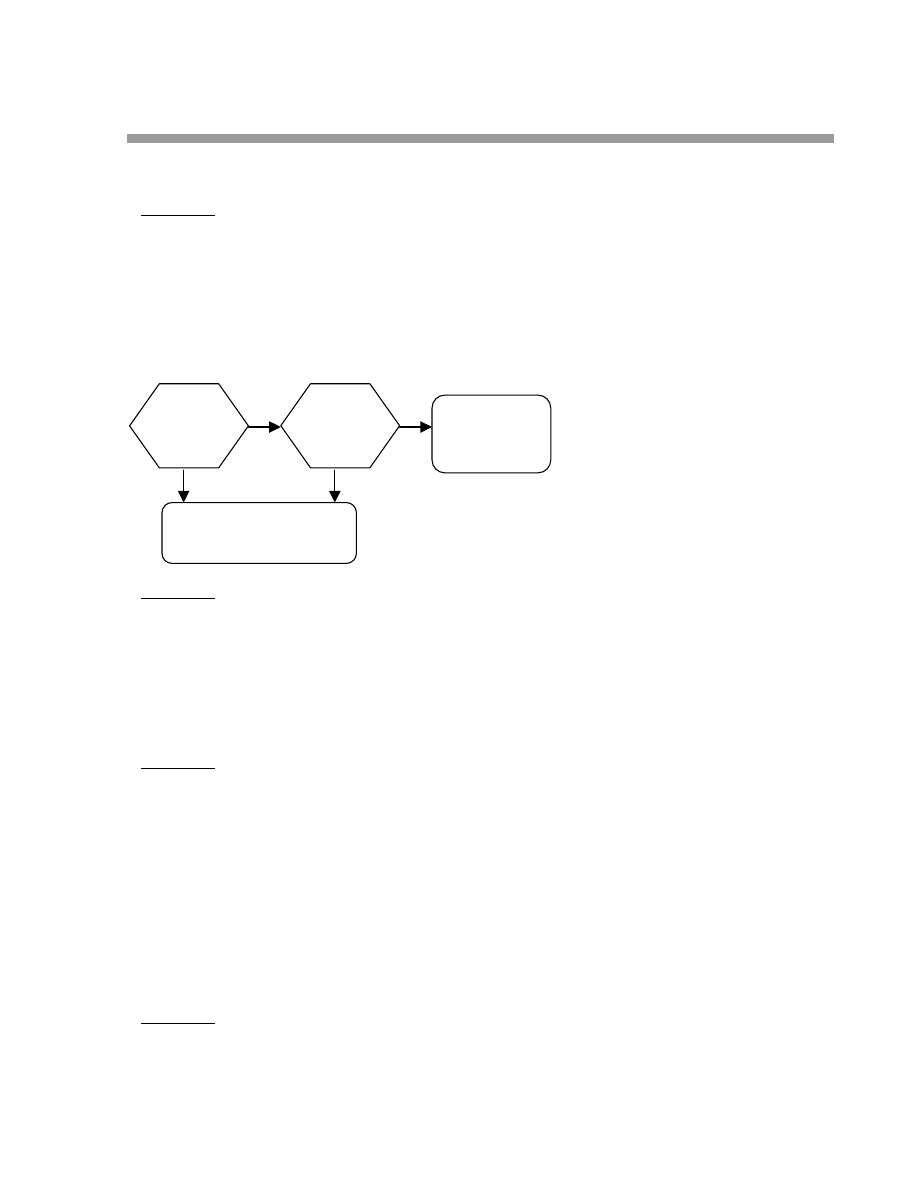
STEADY MANUAL
Page 105
B:\STEADY\CBT\TEEN\STEADY THERAPIST MANUAL 2000.DOC Page 105 of 107 Last saved 3/21/2001 10:07 AM IRB approved April 3 2000
IX. ENDING ACTIVE MEETINGS (if applicable)
[Counselor: if youth has made good to excellent progress [see previous section
on "EVALUATION of PROGRESS"], then this may be the time to end the
Active Phase weekly sessions, and transition to phone checkup contacts during a
Continuation Phase.
If the youth has not made sufficient recovery, then continue on to the pleasant
activities module, if you have not already done so. Follow the decision tree
below.]
[Counselor: use the following script only if youth has recovered from their
depression, or because they have completed both the fun activities and cognitive
Active Treatment modules. ]
Because you've made such great progress, this is our last weekly
meeting. However, I will continue to call you each month to check on
your continuing progress. If needed, we can meet from time to time.
[Counselor: use the following script if youth has completed both the fun
activities and thoughts modules. ]
You have now completed both portions of the skills training we set out
to do several weeks ago. You have spent several weeks working on
increasing pleasant activities and have also worked hard on changing
your thinking to stop negative or unrealistic thinking and to increase
realistic and positive thinking. Although you have already made
progress in both of these areas, continuing to practice the skills on your
own will be an important part of continuing to see improvements in
how you feel.
[Counselor: use the following script for both youths who have recovered from
their depression, and youths who have completed both the fun activities and
thinking modules. ]
Is youth
recovered,
as defined
above?
No
Yes
Has youth
completed
pleasant
activities
No
Yes
Progress to
pleasant
activities module
at next session
Terminate treatment. Use
script below. Begin
continuation phase.

STEADY MANUAL
Page 106
B:\STEADY\CBT\TEEN\STEADY THERAPIST MANUAL 2000.DOC Page 106 of 107 Last saved 3/21/2001 10:07 AM IRB approved April 3 2000
Before we end, let’s take a few minutes to review:
1. What you got out of these meetings.
2. What you see as the biggest challenges you’ll face in the next few
months or few years.
3. How you can apply the skills you learned here to tackle those challenges.
Counselor: Use this time to help those ending these meetings to summarize his
or her experiences. Work on relapse prevention by anticipating future problems
and how they will handle them. Make sure to highlight youth's strengths as well
as areas in which they should continue to practice skills.
Counselor: Remember to send an epic e-mail message to the youth’s primary care
provider about the youth’s progress with the intervention and any other pertinent
information (e.g., reported side effects, level of functioning) following this session.

STEADY MANUAL
Page 107
B:\STEADY\CBT\TEEN\STEADY THERAPIST MANUAL 2000.DOC Page 107 of 107 Last saved 3/21/2001 10:07 AM IRB approved April 3 2000
Document Outline
- Table of Contents
- 1. Encourage Participation and Keep Youth Actively Involved.
- 2. Emphasize links between feelings, actions, and thoughts in all modules.
- 3. Feedback on Medication
- 4. Normalize Youth’s Experiences
- 5. Following the Manual
- 6. Using Motivational Interviewing
- Which of these two approaches is more appealing to you?
- III. LIFE EXPERIMENT REVIEW
- IV. INTRODUCTION TO THE THOUGHTS MODULE
- VII. EVALUATION of PROGRESS
Wyszukiwarka
Podobne podstrony:
Nastolatek z depresją grupa dla rodziców podręcznik terapeuty
INDYWIDUALNY PROGRAM TERAPII PEDAGOGICZNEJ
ORGANIZACJA DZIAŁAŃ TERAPEUTYCZNYCH program, Terapia(1)
Program rewalidacji indywidualnej dla Dawida, Diagnoza i terapia
Diagnoza problemowa, Diagnoza problemowa - przygotowanie indywidualnego programu terapii:
Ramowy program terapii-pełny zestaw 2, ✹Terapia pedagogiczna✹
PROGRAM TERAPII LOGOPEDYCZNEJ, logopedia, ćw. mowy, języka słuchu fon
Program pracy indywidualnej
KONSPEKT LEKCJI PRZEPROWADZONEJ W TERENIE, Terapia pedagogiczna, Scenariusze terapeutyczne
Program terapii pedagogicznej, scenariusze
PROGRAM REWALIDACJI INDYWIDUALNEJ - do druku!!!, Autyzm
Programowanie strukturalne i obiektowe Podręcznik do nauki zawodu technik informatyk
21 Wykonywanie działań z zakresu terapii indywidualnej
więcej podobnych podstron